Results by title
1214 books match the query 'Subjects & Themes' and 53 start with r

READING THUCYDIDES
James V. Morrison
The Ohio State University Press, 2006
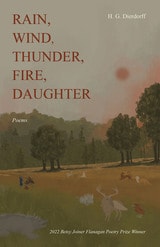
Rain, Wind, Thunder, Fire, Daughter
PoemsH. G. Dierdorff
University of Nevada Press, 2024
Rain, Wind, Thunder, Fire, Daughter is a story about leaving religion and coming of age in a world of accelerating climate apocalypses and environmental loss. In her debut collection of poems, H. G. Dierdorff interweaves an investigation of wildfires in Eastern Washington with a personal account of growing up in Christian fundamentalism, calling our attention to the violent histories undergirding both.
“I want you to touch the fire / sparking from my lips” the opening sonnet commands, daring the reader to abandon the safety of analytical distance and draw near to the moment of ignition itself. The voice that emerges is incessant, ecstatic, explosive. Fire erupts from every page, multiplying into rage, desire, judgement, responsibility, and renewal.
A love song to the forests of the Pacific Northwest, a dramatic portrait of a daughter struggling to find her place in her family, and a philosophical exploration of the limits of language and belief, this collection demands the necessity of both pleasure and grief as responses to a world on fire.
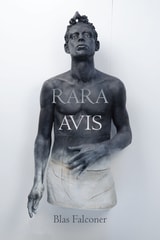
Rara Avis
Blas Falconer
Four Way Books, 2024
Regally bearing its Latin title, Rara Avis captures in sparse, moving verse both the splendor and the loneliness of what it means to be exceptional — a rarified specimen, a strange bird. A son, a husband, and now a father, seasoned poet Blas Falconer explores the relationships among men — between peers, lovers, parents and children — to consider and question existing models of authority and power. Falconer’s lucid but feeling gaze reveals social complexities with searing and graceful imagery, asking what it means to live outside the heteronormative experience while existing as a man, simultaneously a casualty and a participant in the project of masculinity.
These poems carefully delineate the casual cruelties of queer youth and the beautiful and bitter revelations of adulthood. The wisdom propelling Rara Avis is the knowledge that we are each of us that rare bird; we share our singularity. Everyone has a pancreas, but only one organ matters when Falconer learns his father is afflicted. Alchemized by love, one thing, unlike any other, becomes all things. “All day, everything, / no matter how / small, makes me // think of it” … The bee / crawling in / blossoms // scattered on / the glass/tabletop. The sound of // a pitcher fill- / ing slowly / with water.”
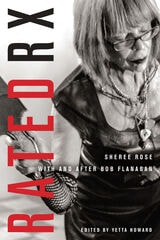
Rated RX
Sheree Rose with and after Bob FlanaganEdited by Yetta Howard
The Ohio State University Press, 2020
Curated with attention to queer-crip subjectivities and transgressive feminisms, Rated RX includes essays by and interviews with scholars, artists, and Rose’s collaborators that address gender politics, archival practices, minority embodiment, and disability in Rose’s work as well as more than eighty photographs and rare archival materials reflecting Rose’s recent and past performances. Offering a necessary corrective, Rated RX is the first collection to underscore Sheree Rose as a legendary figure in performance art and BDSM subcultural history, reflecting her lifetime of involvement in documenting the underground and the transformative role her work plays in sexual, subcultural, and art exhibitionism.
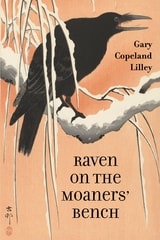
Raven on the Moaners' Bench
Gary Copeland Lilley
Four Way Books, 2025
Raven on the Moaners' Bench writes into grace, opening an exit from a violent cycle, making possible a lighter future while refusing to forget this country's incalculable debt. The inward searching and cross-country migration that Lilley's family, and many other African Americans, have experienced several times in their own histories form the desire for a livable place where safety and opportunity coincide. Jeff walked across America, all the way to the Pacific Ocean, only to die sleeping outside in Los Angeles; this book bears witness to that desperate pilgrimage. Addressing Jeff, Lilley pens a requiem for roadkill he encountered "in a Northwest pathway of [his] own / migration, far from [their] Southern roots": "I offer up the sacrifice of one doe sprawled / in the what-was-left-of-her on the pathway / where I had to meet her and bring her away / to show you I understood something of how / you bore a terrible cost for our family, / for this unholy country, a cost for which / I won't allow any repayment / by words, not mine or anyone's, / on any unstained page."
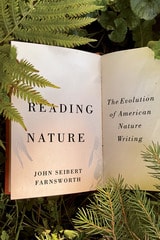
Reading Nature
The Evolution of American Nature WritingJohn Seibert Farnsworth
Michigan State University Press, 2025
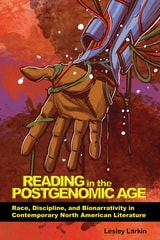
Reading in the Postgenomic Age
Race, Discipline, and Bionarrativity in Contemporary North American LiteratureLesley Larkin
The Ohio State University Press, 2025

Reading, Gender and Identity in Seventeenth-Century England
Hannah Jeans
University of London Press, 2025
This ambitious and interdisciplinary book redraws the history of early modern Englishwomen’s reading, exploring the connections between gender, reading habits, and genre throughout the seventeenth century. Reading, Gender and Identity in Seventeenth-Century England challenges accepted historiographical narratives about reading that have privileged male experience and the impact of the Civil War; the book highlights the multiplicity and complexity of women’s reading practices, focusing on how women used reading in constructing their gender identity. Reading was a gendered act in the early modern period; across genres, women were depicted negotiating a range of gendered behavioral norms. From religious texts, romances, and cookbooks, to news, household records, and scientific and medical treatises, Jeans draws on archival sources across a wide range of writing types to offer a more complete picture of women’s reading experiences, ultimately questioning the accepted notion of the woman reader itself.
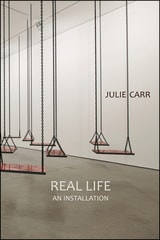
Real Life
An InstallationJulie Carr
Omnidawn, 2018
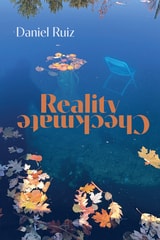
Reality Checkmate
Daniel Ruiz
Four Way Books, 2025
Rebel Poet
More Stories from a 21st Century IndianLouis V. Clark (Two Shoes)
Wisconsin Historical Society Press, 2019
Reciprocity, Truth, and Gender in Pindar and Aeschylus
Arum Park
University of Michigan Press, 2023
Reckon
Logan Phillips
University of Arizona Press, 2026
In Reckon, artist Logan Phillips returns to the fabled town to face the history he was raised on as a boy—gunfights, outlaws, and Hollywood cowboys—for a new, personal confrontation with the West’s foundational mythology. This hybrid memoir also explores sexuality, masculinity, parenting, and what it means to love a land rife with contradiction and “slathered in murder.”
As innovative as it is moving, this memoir is constructed of essays, photography, poetry, newspaper clippings from the Tombstone Epitaph Local Edition, and of course, movie screenplays. As he writes the characters of his past––including Youngfather and Teenme––Phillips finds the real history to be much more complex than the stories he was told. This is Tombstone in the 1980s and 90s, a century after the West’s most famous gunfight––a fifteen-second event still performed every day in historical reenactments––where Phillips’s father works as a historical exhibit designer at the Courthouse Museum and his uncle as a stuntman at Old Tucson Studios.
With an original, searing voice, Reckon is an essential answer to the tough questions of past and future, inheritance and reinvention, all from the perspective of a boy stuck in the middle.
Recognizing Reality
German Realism and the Mediation of PresenceJessica C. Resvick
Northwestern University Press, 2026
Reveals how literary scenes of recognition stage the process of coming to know reality
In this deeply researched and thought-provoking study, Jessica C. Resvick traces nineteenth-century German realist writing’s paradoxical investment in mediated accounts of the world and the direct, unfiltered experience of reality. Focusing on the motif and operation of recognition in its Aristotelean sense, Resvick examines self-reflexive narratives in which the authors struggle to resolve this tension between the media they choose and the immediacy they hope to create.
Through close readings of key works by canonical authors such as E. T. A. Hoffmann, Annette von Droste-Hülshoff, Adalbert Stifter, Gottfried Keller, and Wilhelm Raabe, Resvick demonstrates the medially influenced and historically contingent ways in which they represent reality. Each chapter focuses on a different form of recognition, reconstructing the techniques that allow these authors to generate an effect of presence. Exploring the history and poetics of knowledge exchange, Recognizing Reality: German Realism and the Mediation of Presence expands on recent media histories of realism, examining the material bases for realist aesthetics while also investigating media’s epistemological accomplishments, and astutely elaborates the role of recognition as a medium-specific tool.
Reconceiving Nature
Ecofeminism in Late Victorian Women's PoetryPatricia Murphy
University of Missouri Press, 2019
Red Clay Suite
Honoree Fanonne Jeffers
Southern Illinois University Press, 2007
Red Ocher
Jessica Poli
University of Arkansas Press, 2023
Red Planets
Marxism and Science FictionEdited by Mark Bould and China Mielville
Pluto Press, 2009
Covering a rich variety of examples from Weimar cinema to mainstream Hollywood films, and novelists from Jules Verne and H.G. Wells to Kim Stanley Robinson, Ken MacLeod and Charles Stross, this is an indespensible insight into how Marxism and science fiction go hand-in-hand.
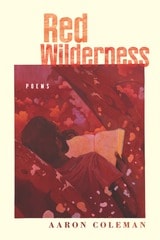
Red Wilderness
Aaron Coleman
Four Way Books, 2025
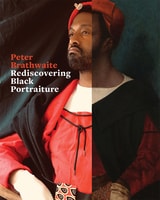
Rediscovering Black Portraiture
Peter Brathwaite
J. Paul Getty Trust, The, 0
“These mirror images with their uncanny resemblances traverse space and time, spotlighting the black lives that have been silenced by the canon of western art, while also inviting us to interrogate the present.” —Times (UK)
Since the beginning of the COVID-19 pandemic, Peter Brathwaite has thoughtfully researched and reimagined more than one hundred artworks featuring portraits of Black sitters—all posted to social media with the caption “Rediscovering #blackportraiture through #gettymuseumchallenge.”
Rediscovering Black Portraiture collects more than fifty of Brathwaite’s most intriguing re-creations. Introduced by the author and framed by contributions from experts in art history and visual culture, this fascinating book offers a nuanced look at the complexities and challenges of building identity within the African diaspora and how such forces have informed Black portraits over time. Artworks featured include The Adoration of the Magi by Georges Trubert, Portrait of an Unknown Man by Jan Mostaert, Rice n Peas by Sonia Boyce, Barack Obama by Kehinde Wiley, and many more. This volume also invites readers behind the scenes, offering a glimpse of the elegant artifice of Brathwaite’s props, setup, and process.
An urgent and compelling exploration of embodiment, representation, and agency, Rediscovering Black Portraiture serves to remind us that Black subjects have been portrayed in art for nearly a millennium and that their stories demand to be told.
An exhibition of Brathwaite’s re-creations is on view at the Bristol Museum & Art Gallery in Bristol, UK from April 14 to September 3, 2023.
Redreaming the Renaissance
Essays on History and Literature in Honor of Guido RuggieroMary Lindemann
University of Delaware Press, 2024
Refiguring Race and Risk
Counternarratives of Care in the US Security StateRoberta Wolfson
The Ohio State University Press, 2024
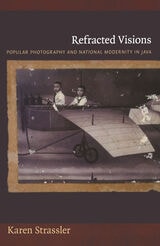
Refracted Visions
Popular Photography and National Modernity in JavaKaren Strassler
Duke University Press, 2010
Oriented to projects of selfhood, memory, and social affiliation, popular photographs recast national iconographies in an intimate register. They convey the longings of Indonesian national modernity: nostalgia for rural idylls and “tradition,” desires for the trappings of modernity and affluence, dreams of historical agency, and hopes for political authenticity. Yet photography also brings people into contact with ideas and images that transcend and at times undermine a strictly national frame. Photography’s primary practitioners in the postcolonial era have been Chinese Indonesians. Acting as cultural brokers who translate global and colonial imageries into national idioms, these members of a transnational minority have helped shape the visual contours of Indonesian belonging even as their own place within the nation remains tenuous. Refracted Visions illuminates the ways that everyday photographic practices generate visual habits that in turn give rise to political subjects and communities.
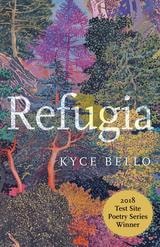
Refugia
PoemsKyce Bello
University of Nevada Press, 2019
Winner of the inaugural Interim 2018 Test Site Poetry Series Prize
Refugia is a bright and hopeful voice in the current conversation about climate change. Kyce Bello’s stunning debut ponders what it means to inhabit a particular place at a time of enormous disruption, witnessing a beloved landscape as it gives way to, as Bello writes, “something other and unknown, growing beyond us.” Ultimately an exploration of resilience, Refugia brings to life the author’s home ground in Northern New Mexico and carefully observes the seasons in parallel with personal cycles of renewal and loss. These vivid poems touch upon history, inheritance, drought, and most of all, trees—be they Western conifers succumbing to warming temperatures, ramshackle orchards along the Rio Grande, or family trees reaching simultaneously into the past and future.
Like any wilderness, Refugia creates a terrain that is grounded in image and yet many-layered and complex. These poems write us back into an ecological language of place crucial to our survival in this time of environmental crisis.
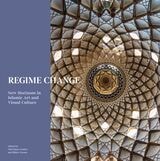
Regime Change
New Horizons in Islamic Art and Visual CultureEdited by Christiane Gruber and Bihter Esener
Gingko, 2024
The essays collected in this volume highlight some of the regimes of thought and changing trends that structure the field of Islamic art history. The authors present new research exploring the intentions of patrons, the agency of craftsmen, and their responses to previous artistic production, thereby allowing artifacts and monuments to be set within their historical, social, and artistic contexts.
In their contributions, Annabel Teh Gallop, Dmitry Bondarev, and Umberto Bongianino discuss significant changes to Qur’an production due to dynastic and political regime changes in Sumatra and the Malay Peninsula, as well as in Borno and Morocco in Africa. Corinne Mühlemann looks at changes in the role and status of designers and weavers making silk in Khurasan in the post-Mongol period. Lisa Golombek, Michael Chagnon, and Farshid Emami explore Safavid art and architecture, focusing on the material and sensorial qualities of a group of tiled arch panels tiles with narrative scenes, a delicately painted vase, and the clocks of the main square of seventeenth-century Isfahan. Regime change also comes about through technological shifts, and Ulrich Marzolph and Yasemin Gencer ask how the rise of photography and new printing techniques shaped the production, exchange, and transmission of images in Iran and Turkey.
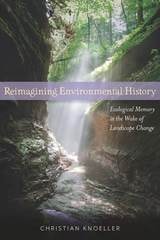
Reimagining Environmental History
Ecological Memory in the Wake of Landscape ChangeChristian Knoeller
University of Nevada Press, 2017
Reading across centuries and genres, Knoeller gives us a vibrant new appraisal of Midwestern/North American interior literary traditions and makes clear how vital environmental writing is to this region. To date, no one has written such an eloquent and comprehensive cross-genre analysis of Midwestern environmental literature.
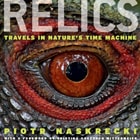
Relics
Travels in Nature's Time MachinePiotr Naskrecki
University of Chicago Press, 2011
On any night in early June, if you stand on the right beaches of America’s East Coast, you can travel back in time all the way to the Jurassic. For as you watch, thousands of horseshoe crabs will emerge from the foam and scuttle up the beach to their spawning grounds, as they’ve done, nearly unchanged, for more than 440 million years.
Horseshoe crabs are far from the only contemporary manifestation of Earth’s distant past, and in Relics, world-renowned zoologist and photographer Piotr Naskrecki leads readers on an unbelievable journey through those lingering traces of a lost world. With camera in hand, he travels the globe to create a words-and-pictures portrait of our planet like no other, a time-lapse tour that renders Earth’s colossal age comprehensible, visible in creatures and habitats that have persisted, nearly untouched, for hundreds of millions of years.
Naskrecki begins by defining the concept of a relic—a creature or habitat that, while acted upon by evolution, remains remarkably similar to its earliest manifestations in the fossil record. Then he pulls back the Cambrian curtain to reveal relic after eye-popping relic: katydids, ancient reptiles, horsetail ferns, majestic magnolias, and more, all depicted through stunning photographs and first-person accounts of Naskrecki’s time studying them and watching their interactions in their natural habitats. Then he turns to the habitats themselves, traveling to such remote locations as the Atewa Plateau of Africa, the highlands of Papua New Guinea, and the lush forests of the Guyana Shield of South America—a group of relatively untrammeled ecosystems that are the current end point of staggeringly long, uninterrupted histories that have made them our best entryway to understanding what the prehuman world looked, felt, sounded, and even smelled like.
The stories and images of Earth’s past assembled in Relics are beautiful, breathtaking, and unmooring, plunging the reader into the hitherto incomprehensible reaches of deep time. We emerge changed, astonished by the unbroken skein of life on Earth and attentive to the hidden heritage of our planet’s past that surrounds us.
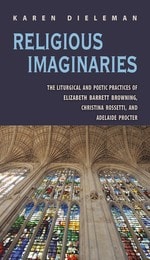
Religious Imaginaries
The Liturgical and Poetic Practices of Elizabeth Barrett Browning, Christina Rossetti, and Adelaide ProcterKaren Dieleman
Ohio University Press, 2012
Explores liturgical practice as formative for how three Victorian women poets imagined the world and their place in it and, consequently, for how they developed their creative and critical religious poetics.
This new study rethinks several assumptions in the field: that Victorian women’s faith commitments tended to limit creativity; that the contours of church experiences matter little for understanding religious poetry; and that gender is more significant than liturgy in shaping women’s religious poetry.
Exploring the import of bodily experience for spiritual, emotional, and cognitive forms of knowing, Karen Dieleman explains and clarifies the deep orientations of different strands of nineteenth-century Christianity, such as Congregationalism’s high regard for verbal proclamation, Anglicanism’s and Anglo-Catholicism’s valuation of manifestation, and revivalist Roman Catholicism’s recuperation of an affective aesthetic. Looking specifically at Elizabeth Barrett Browning, Christina Rossetti, and Adelaide Procter as astute participants in their chosen strands of Christianity, Dieleman reveals the subtle textures of these women’s religious poetry: the different voices, genres, and aesthetics they create in response to their worship experiences. Part recuperation, part reinterpretation, Dieleman’s readings highlight each poet’s innovative religious poetics.
Dieleman devotes two chapters to each of the three poets: the first chapter in each pair delineates the poet’s denominational practices and commitments; the second reads the corresponding poetry. Religious Imaginaries has appeal for scholars of Victorian literary criticism and scholars of Victorian religion, supporting its theoretical paradigm by digging deeply into primary sources associated with the actual churches in which the poets worshipped, detailing not only the liturgical practices but also the architectural environments that influenced the worshipper’s formation. By going far beyond descriptions of various doctrinal positions, this research significantly deepens our critical understanding of Victorian Christianity and the culture it influenced.
Remembering Is Not Enough
The Unfinished Korean War in Contemporary American LiteratureA. J. Yumi Lee
Temple University Press, 2027
Remembering Is Not Enough traces the emergence of a critical consciousness of the Korean War in American literature and culture over the past seventy-five years. A. J. Yumi Lee provides close readings of key texts from the post-Cold War era that remember and represent the “forgotten” Korean War, including Sook Nyul Choi’s Year of Impossible Goodbyes, Toni Morrison’s Home, Marie Myung-ok Lee’s The Evening Hero, and Paul Yoon’s Snow Hunters. She argues that rather than simply revisiting a known and settled history, contemporary Korean War literature is actively processing an unresolved conflict that is both past and not past.
Lee shows how literary works have challenged common understandings of the war as an American victory for freedom, from soldiering narratives that address the violence of U.S. imperialism to Korean diasporic novels that depict the surfacing of memory across generations. These examples ask readers to process, analyze, and critique as they remember, and Lee emphasizes that how and why we remember matters as much as what is being recalled.
Reflecting on the Korean War in new and often unexpected ways, Remembering Is Not Enough prompts us to reorient our memories, our storytelling, and our actions toward a more just and peaceful future.
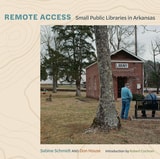
Remote Access
Small Public Libraries in ArkansasSabine Schmidt
University of Arkansas Press, 2021
Winner, 2024 Arkansiana Book Award, Arkansas Library Association
With their cameras and notebooks in hand, photographers Sabine Schmidt and Don House embarked on an ambitious project to document the libraries committed to serving Arkansas’s smallest communities. Remote Access is the culmination of this fascinating three-year effort, which took the artists to every region of their home state.
Schmidt’s carefully constructed color images of libraries and the communities they serve and House’s rich black-and-white portraits of library patrons and staff shine alongside the authors’ personal essays about their experiences. The pages here come alive with a deep connection to Arkansas’s history and culture as we accompany the authors on visits to a section of the Trail of Tears near Parkin, to the site of the tragic 1959 fire at the Arkansas Negro Boys Industrial School in Wrightsville, and to Maya Angelou’s childhood home in Stamps, among many other significant destinations.
Through this testament to the essential role of libraries in the twenty-first century, Schmidt and House have created a clear-eyed portrait of contemporary rural life, delving into issues of race, politics, gender, and isolation as they document the remarkable hard work and generosity put forth in community efforts to sustain local libraries.
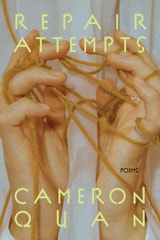
Repair Attempts
PoemsCameron Quan
Northwestern University Press, 2027
A poetic reckoning with personal, political, and historical wounds
The titular “repair attempts” describes the words and actions people use to heal broken connections and de-escalate conflict. In his debut collection, Cameron Quan transforms this concept into a powerful lens for examining moral responsibility in contemporary America. Quan’s Repair Attempts navigates Asian American identity, American exceptionalism, patriarchal violence, grief, and the nature of apologies. The speakers grapple with transgression and healing from unexpected angles, asking what kind of repair is possible in a world marred by atrocities. These poems dance across landscapes—from an imagined American holiday of atonement to the pope’s apology to Indigenous peoples, from a mother preparing to flee domestic violence to an unsettling childhood game boys play with butterflies. A chorus of repair attempts that toggle between the personal and political, this collection invites us into difficult territory where failure, wrongdoing, and shame require a collective reckoning and a collective effort to be better.
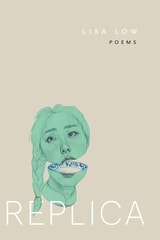
Replica
Lisa Low
University of Wisconsin Press, 2026
Stand-up comedy, a celebrity non-apology, observations of racism, and the slipperiness of nostalgia underpin Replica. In poignant, witty poems, Lisa Low navigates the tensions of solidarity and hostility in white spaces as she sets out to write differently about race.
“The problem of being with a white man is also a problem of writing,” Low says in a prose poem that turns writing about identity on its head. She peers in from outside the poem, as if through an open ceiling. The poem itself becomes a site of investigation—a counterpoint to constricting narratives about Asian American identity—reimagined as a dollhouse, a stage with props, an image the speaker wears like a bodysuit. Replica asks what it means to represent yourself and your experiences in a world where you are indistinguishable from others.
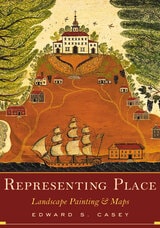
Representing Place
Landscape Painting And MapsEdward S. Casey
University of Minnesota Press, 2002
You are here, a map declares, but of course you are not, any more than you truly occupy the vantage point into which a landscape painting puts you. How maps and paintings figure and reconfigure space—as well as our place in it—is the subject of Edward S. Casey’s ambitious study, an exploration of how we portray the world and its many places.
Casey’s discussion ranges widely from Northern Sung landscape painting to nineteenth-century American and British landscape painting and photography, from prehistoric petroglyphs and medieval portolan charts to seventeenth-century Dutch cartography and land survey maps of the American frontier. From these culturally and historically diverse forays a theory of representation emerges. Casey proposes that the representation of place in visual works be judged in terms not of resemblance, but of reconnecting with an earth and world that are not the mere content of mind or language—a reconnection that calls for the embodiment and implacement of the human subject.
Representing Place is the third volume in Casey’s influential epic project of reinterpreting evolving conceptions of space in world thought. He combines history with philosophy, and cartography with art, to create a new understanding of how representation requires and thrives on space, ultimately renewing our appreciation of the power of place as it is set forth in paintings and maps.
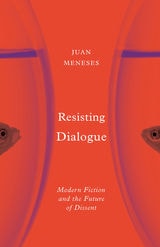
Resisting Dialogue
Modern Fiction and the Future of DissentJuan Meneses
University of Minnesota Press, 2019
A bold new critique of dialogue as a method of eliminating dissent
Is dialogue always the productive political and communicative tool it is widely conceived to be? Resisting Dialogue reassesses our assumptions about dialogue and, in so doing, about what a politically healthy society should look like. Juan Meneses argues that, far from an unalloyed good, dialogue often serves as a subtle tool of domination, perpetuating the underlying inequalities it is intended to address.
Meneses investigates how “illusory dialogue” (a particular dialogic encounter designed to secure consensus) is employed as an instrument that forestalls—instead of fostering—articulations of dissent that lead to political change. He does so through close readings of novels from the English-speaking world written in the past hundred years—from E. M. Forster’s A Passage to India and Jeanette Winterson’s The Passion to Indra Sinha’s Animal’s People and more. Resisting Dialogue demonstrates how these novels are rhetorical exercises with real political clout capable of restoring the radical potential of dialogue in today’s globalized world. Expanding the boundaries of postpolitical theory, Meneses reveals how these works offer ways to practice disagreement against this regulatory use of dialogue and expose the pitfalls of certain other dialogic interventions in relation to some of the most prominent questions of modern history: cosmopolitanism at the end of empire, the dangers of rewriting the historical record, the affective dimension of neoliberalism, the racial and nationalist underpinnings of the “war on terror,” and the visibility of environmental violence in the Anthropocene.
Ultimately, Resisting Dialogue is a complex, provocative critique that, melding political and literary theory, reveals how fiction can help confront the deployment of dialogue to preempt the emergence of dissent and, thus, revitalize the practice of emancipatory politics.
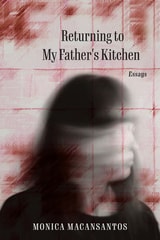
Returning to My Father's Kitchen
EssaysMonica Macansantos
Northwestern University Press, 2025
Feeling untethered after her beloved poet father passes away while she is living abroad, Monica Macansantos decides to return to the Philippines to regain her bearings. But with her father gone and her adult life rooted in the United States and New Zealand, can the land of her birth still serve as a place of healing?
In fifteen richly felt essays, Macansantos considers her family’s history in the Philippines, her own experiences as an exile, and the parent who was the heart of her family’s kitchen, whether standing at the stove to prepare dinner or sitting at the table to scribble in his notebook. Macansantos finds herself remaking her father’s chicken adobo, but also closely rereading his poems. As she reckons with his identity as an artist, she also comes into her own as a writer, and she invites us to consider whether it is possible to carry our homes with us wherever we go.
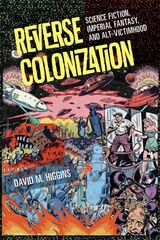
Reverse Colonization
Science Fiction, Imperial Fantasy, and Alt-victimhoodDavid M. Higgins
University of Iowa Press, 2021
Higgins shows that this reverse colonization stance depends upon a science fictional logic that achieved dominance within imperial fantasy during the 1960s and has continued to gain momentum ever since. By identifying with fantastic forms of victimhood, subjects who already enjoy social hegemony are able to justify economic inequality, expansions of police and military power, climatological devastation, new articulations of racism, and countless other forms of violence—all purportedly in the name of security, self-defense, and self-protection.

Rewild
Meredith Stricker
Tupelo Press, 2022
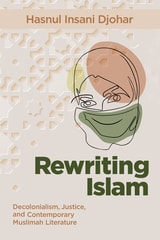
Rewriting Islam
Decolonialism, Justice, and Contemporary Muslimah LiteratureHasnul Insani Djohar
The Ohio State University Press, 2024
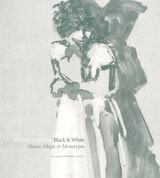
Richard Segalman Black & White
Muses, Magic & MonotypesRichard Segalman
The Artist Book Foundation, 2015
For many, the name Richard Segalman conjures up a vision of light-infused paintings of women gathered on a beach, gazing out the window of a New York City brownstone, or dressed in vcostumes from another era. But just as Edgar Degas, approaching his 60th year, surprised gallery goers with an exhibition not of ballerinas or race horses, but of highly atmospheric monotype landscapes, so too does Segalman surprise us with this exceptional collection of monotypes he began to produce in 1993, at nearly 60. "I reached a sort of plateau and needed a new direction," says the artist. "I came across a monotype... took a course... made one and I was hooked."
The significance of Segalman's shift into this medium is most powerfully conveyed through his arresting black-and-white prints that range from anonymous crowds on Coney Island beaches or New York City streets to a solitary figure in private contemplation. This monochromatic focus makes perfect sense: Segalman's first gallery appearance in New York—a sold-out show that gave him the courage to embrace the life of an artist—consisted entirely of black-and-white charcoal drawings, several stunning examples of which open this book.
Author Susan F. Castle's essay about the artist and his muses—the people, places, and things for which Richard Segalman has an abiding love—illuminates the exceptional work collected for this monograph. She combines excerpts from interviews with the artist and the three master printmakers with whom he has worked in Woodstock and Brooklyn, New York, and in Santa Fe, New Mexico. In addition, Anthony Kirk's insightful introudction provides an essential historical perspective on the artist and his printmaking process.
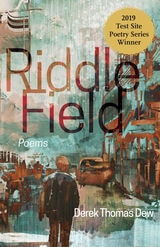
Riddle Field
PoemsDerek Thomas Dew
University of Nevada Press, 2020
"Dew is an exciting and complex new voice in contemporary poetry." —Publisher's Weekly
The beautifully crafted poems in Riddle Field explore two parallel themes, the impact of the impending destruction of a dam on a small town and the trauma of sexual abuse and eventual recovery from it. This work focuses on the environment, human and physical, in which the loss of nature and innocence is born and calls attention to the many ways we create both intimacy and distance when trauma is hidden or denied. Derek Thomas Dew’s language is harsh, honest, and sometimes heartbreaking. His poems capture the confusion and fatigue that must be navigated for a victim of abuse to piece himself back together and the internal strife that comes with carry-ing a traumatic secret that can no longer be ignored.
Rich with unforgettable images and the quiet strength of hard-won survival, Riddle Field tackles the complex process of achieving self-awareness and recovery in the wake of profound trauma.

Road Down Troublesome
Anita Skeen
Michigan State University Press, 2027
A poetic journey through memory, loss, and the stories that define us, Road Down Troublesome blends an unmistakable Appalachian voice with fierce emotional clarity. Through a series of poems that traverse emotional and physical landscapes, Skeen maps a journey toward insight in the wake of death, loss, and grief. The collection foregrounds the shaping forces of the mother-daughter relationship, ecological fragility, and the sustaining bonds of friendship. Opening with a nod to Lisel Mueller’s invitation to give grief language, the book culminates in “After,” a poem that embodies the stillness and transformation achieved through the act of telling.
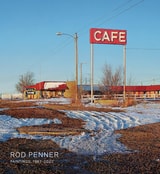
Rod Penner
Paintings, 1987–2022Rod Penner
The Artist Book Foundation, 2022
Rod Penner infuses his photorealistic paintings of the American southwest with a cinematic quality in the first major monograph on this contemporary realist artist.
The abandoned and forgotten landscapes of rural southwestern towns are the favored subjects of Rod Penner's paintings. His deft use of contrasts in his images—despondency and hope, isolation and nostalgia—evokes memories of The Last Picture Show and elicits complex responses from viewers. "I'm interested in the look of things and the quality of being there," he says. "A moment that is completely frozen with all the variety of textures; rust on poles, crumbling asphalt, light hitting the grass."
Penner's works are based on his photographs, digital video stills, and his experience of the rural landscapes of Texas and New Mexico. He depicts desolate, often deserted locations, the character of old houses and abandoned buildings, weather, and unique geography. His chosen scenes are infused with a cinematic quality that is the result of the exquisite light that he captures with his meticulous process. "The finished paintings should evoke contrasting responses of melancholy and warmth, desolation and serenity," he says.
Penner's hyperrealistic technique meticulously records both the iconic imagery and the beauty in the ashes of these once-prosperous streets and nighborhoods that still endure. The incredible poignant scenes evoke a universalism, a collective experience seen through the lens of Americana. "You won't find any hidden or overt socio-political meaning in my work and at the same time I hope that by utilizing what I find in the American landscape I'm able to connect to viewers on a deeper psychological level."
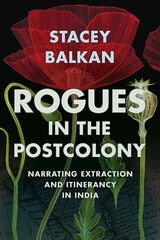
Rogues in the Postcolony
Narrating Extraction and Itinerancy in IndiaStacey Balkan
West Virginia University Press, 2022
Rogues in the Postcolony is a study of Anglophone Indian picaresque novels that dramatize the impacts of extractive capitalism and colonial occupation on local communities in several Indian states. In this materialist history of development on the subcontinent, Stacey Balkan considers works by Amitav Ghosh, Indra Sinha, and Aravind Adiga that critique violent campaigns of enclosure and dispossession at the hands of corporate entities like the English East India Company and its many legatees. By foregrounding the intersections among landscape ideology, agricultural improvement, extractive capitalism, and aesthetic expression, Rogues in the Postcolony also attends to the complicity of popular aesthetic forms with political and economic policy, as well as the colonial and extractivist logics that often frame discussions around the so-called Anthropocene epoch.
Bringing together questions about settler-colonial practices and environmental injustice, Rogues in the Postcolony concludes with an investigation of new extractivist frontiers, including solar capitalism, and considers the possibility of imagining life after extraction on the Indian subcontinent and beyond.
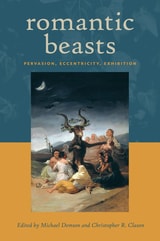
Romantic Beasts
Pervasion, Eccentricity, ExhibitionMichael Demson
Bucknell University Press, 2025
Published by Bucknell University Press. Distributed worldwide by Rutgers University Press.
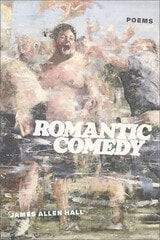
Romantic Comedy
James Allen Hall
Four Way Books, 2023
James Allen Hall returns to poetry with Romantic Comedy, a sophomore collection sounding the parameters of genre to subvert cultural notions of literary value and artistic legitimacy. What realities do stories authorize, and which remain untold? “This story,” they profess in “Biography,” “is mine: there was / a wound, then a world.” Rather than playing into the attention economy’s appetite for sensationalism, Hall’s poems resist the formulaic while paying homage to the oeuvre, a formal balancing act that celebrates queer life.The poems create liberatory narratives that break constraints or speak through them. Hall parses music from the blizzard — as when “one year / [they] watched the snow / pile to [their] door / all December, all / January,” “the year [they] wanted / to die,” and, faced with winter’s architecture, “learned / another song. Sang / another way.” Whether grieving the death of their father, documenting the survival of sexual assault, interrogating the scripts of addiction, or revisiting an ’80s crime thriller, Hall’s second collection constantly affirms the ingenuity of self-definition as a technology of survival.
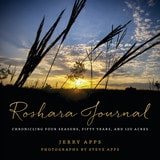
Roshara Journal
Chronicling Four Seasons, Fifty Years, and 120 AcresJerry Apps
Wisconsin Historical Society Press, 2016
A photographic diary of a small Midwestern farm and the family who’ve made it their home
In Roshara Journal, father-and-son team Jerry and Steve Apps share the monthly happenings at their family’s farm in central Wisconsin. Featuring Steve’s stunning photos and fifty years of Jerry’s journal entries, Roshara Journal captures the changes—both from month to month and over the decades—on the landscape and farmstead.
The Apps family has owned Roshara since 1966. There they nurture a prairie restoration and pine plantation, maintain a large garden that feeds three generations, observe wildlife species by the dozens, and support a population of endangered butterflies. In documenting life on this piece of land, Jerry and Steve remind us how, despite the pace and challenges of modern life, the seasons continue to influence our lives in ways large and small. Jerry explains that his journal entries become much more than mere observations: "It seems that when I write about something—a bur oak tree, for example—that old tree becomes a part of me. . . . Writing takes me to a place that goes beyond observation and understanding, a place filled with feeling and meaning."
In the tradition of Bernd Heinrich in Maine, Barry Lopez in the Canadian Arctic, and Aldo Leopold just an hour down the road in Baraboo, Jerry and Steve Apps combine observation, experience, and reflection to tell a profound story about one place in the world.

Round Lake
Grace Bonner
Four Way Books, 2016
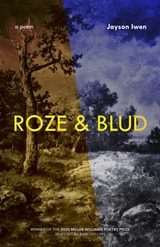
Roze & Blud
a poemJayson Iwen
University of Arkansas Press, 2020
Winner, 2020-2021 Northeastern Minnesota Book Award
In this long poem—almost a novel-in-verse—Jayson Iwen examines the intimate thoughts and feelings of two would-be poets: Roze Mertha, a teenage girl growing up in a trailer park, and William Blud, a veteran navigating age and loneliness in an apartment he shares with an Afghan refugee. Deftly crafting distinct voices for these characters in the upper midwestern terrain they inhabit, Iwen explores the quiet heartbreak and tenderly treasured experiences of two apparently unremarkable people using poetry to understand a world that doesn’t make much space for them.
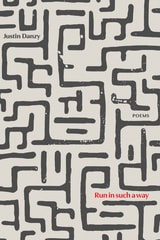
Run in Such a Way
PoemsJustin Danzy
Northwestern University Press, 2027
A poet’s candid and probing exploration of faith, Blackness, and masculinity
With poems that closely examine familial bonds and heritage, biblical teachings, a shifting understanding of home, and the violence of toxic masculinity, Justin Danzy’s Run in Such a Way sits at the crossroads of religion, race, gender, and more. A collection about pursuit, tracking the narrative of its speaker’s journey toward a deeper understanding of himself and of his community as he moves from child to man, the book wrestles with the way an identity is constructed, deconstructed, and reconstructed again throughout one’s life. Playful and sincere in equal measure, Danzy’s command of the line carries us through as we travel with the speaker to the precipice of belief. Danzy’s lyrical voice and fealty to his people pays homage to the world that made him, and considers all that the speaker of this tremendous debut has—both wisely and foolishly—run toward and away from in the search for truth.
Running to Stand Still
Kimberly Reyes
Omnidawn, 2019
These poems teem with life, a life rich with many selves and many histories that populate in the voice of Reyes’s poetic narrator. They sway between negotiations of hypervisibility and erasure, the inevitable and the chosen, and the perceived and the constructed. Reyes’s poems offer sharp observations and lyrical movement to guide us in a ballad of reconciliation and becoming.