Results by title
1185 books match the query 'Travel' and 34 start with r
RAGBRAI
Everyone Pronounces It WrongJohn Karras
University of Iowa Press, 2009
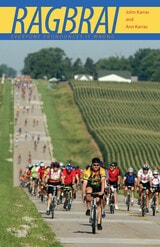
RAGBRAI: Everyone Pronounces It Wrong is a celebration, a memoir, an entertainment. The book deals with the first 25 years of the famous bike ride. It describes the genesis of an event that has drawn hundreds of thousands of people to Iowa from all over the world and attempts to explain the ride's continued charm and appeal.
RAGBRAI is different from all other bicycle tours. The others, and there are dozens of cross-state rides held in the United States, attract mostly serious, dedicated cyclists who clench their teeth and ride hard all day. RAGBRAI has its share of these cyclists, but it's more inclusive. It is a huge, week long celebration with dancing in the streets and evening entertainments. It is a love affair between bicycle riders and the people of Iowa. The book captures the essence of all that.
Race and Nation in Puerto Rican Folklore
Franz Boas and John Alden Mason in Porto RicoRafael Ocasio
Rutgers University Press, 2020
Raising Bilingual Bambini
The Art of Immersing Our Family in the la Dolce VitaEric Dregni
University of Minnesota Press, 2026
A father’s memoir of preparing a dual-language household for a stint living abroad—and all of the ensuing challenges and rewards
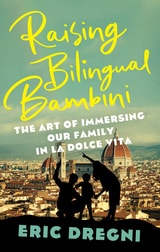
After living in Modena, Italy, for three years, Eric Dregni and his wife, Katy, dreamed of returning one day—future children in tow—to give their kids the experience of living abroad. When they become parents, they decide to raise their children with a global perspective in a bilingual household: Katy speaking only English to them and Eric speaking only Italian.
Despite their extended family’s confusion about this experiment, they persist through their three kids’ childhoods, sending them to an immersion language camp and preparing them for life abroad. Eventually, the family packs up and moves to Florence, where the bambini can stop to see Michelangelo’s David on the way home from school, indulge in fresh pasta and gelato, and learn how to argue like real Italians. Sooner than anyone would like, three months of la dolce vita comes to an end, and they head back to Minnesota, trying to bring a taste of Italian culture home with them.
A fast-paced memoir/travelogue, Raising Bilingual Bambini is Dregni’s passionate testament to the value of an international perspective, his loving tribute to the family’s time together in Italy, and a bittersweet reflection on what it meant to return to Minnesota (until their trip to Sicily several years later). Writing with his signature humor and sincerity, Eric Dregni offers a heartfelt story about family and finding a home together in a new place.
Retail e-book files for this title are screen-reader friendly with images accompanied by short alt text and/or extended descriptions.
Raptor
A Journey through BirdsJames Macdonald Lockhart
University of Chicago Press, 2017
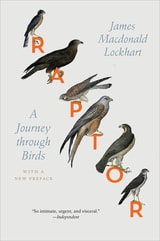
Taking as his guide the nineteenth-century Scottish naturalist and artist William MacGillivray, Lockhart loosely follows the historical trail forged by MacGillivray as he ventured from Aberdeen to London filling his pockets with plants and writing and illustrating the canonical A History of British Birds. Linking his journey to that of his muse, Lockhart shares his own encounters with raptors ranging from the scarce osprey to the successfully reintroduced red kite, a species once protected by medieval royal statute, revealing with poetic immediacy the extraordinary behaviors of these birds and the extreme environments they call home.
Creatures both worshipped and reviled, raptors have a talon-hold on the human heart and imagination. With his book, Lockhart unravels these complicated ties in a work by turns reverent and euphoric—an interweaving of history, travel, and nature writing at its best. A hymn to wanderers, to the land and to the sky, and especially to the birds, Raptor soars.
Reading the River
A Voyage Down the YukonJohn Hildebrand
University of Wisconsin Press, 1997
“John Hildebrand sets out in a canoe . . . to explore the great riverway of northwestern Canada and Alaska. . . . The geography is closely rendered and the characters especially sharply drawn. The country is filled with mad dropouts at river fish camps, good-hearted girls in the towns, sullen natives in tumbledown villages, cranky old-timers, terrible drunks and worse moralizers who live off the wild landscape and its abundant resources. . . . This is a fine work, and Hildebrand is a fine writer.”—Charles E. Little, Wilderness
Real Philly History, Real Fast
Fascinating Facts and Interesting Oddities about the City's Heroes and Historic SitesJim Murphy
Temple University Press, 2021
Philadelphia is known as the home of vibrant colonial history: the Liberty Bell, the Betsy Ross House, and Independence Hall. But the City of Brotherly Love is also home to—and less well known for—its quirky history. The country’s first quarantine station was located here. One of Philly’s clocks has a face larger than Big Ben’s in London. And a unique skill of Black abolitionist James Forten saved him from a life of West Indian servitude (and “Forten” was not even his real name).
In Real Philly History, Real Fast, Jim Murphy provides an original tour of the city. He highlights artistic gems including the Dream Garden Tiffany mosaic and Isaiah Zagar’s glittering Magic Gardens. He profiles intriguing historical figures from military leader Commodore Barry to civil rights heroes like Lucretia Mott. Murphy also explores neighborhoods from Chinatown to the Italian Market and the unique architectural details of Carpenters’ Hall and the PSFS building.
Each chapter provides a pithy story about a historical person or site, along with bullet points featuring interesting oddities, and nearby attractions along with fun facts such as: Why there are so many churches? What is the Philadelphia Eagles’ connection to the U.S. Custom House? Which famous artist may have been Philadelphia’s first nude model? And where was the Liberty Bell secretly damaged? (We didn’t do it!)
This is Philly history in bites that are as digestible as a soft pretzel with mustard.
Rebel Footprints
A Guide to Uncovering London's Radical HistoryDavid Rosenberg
Pluto Press, 2019
If you visit London, and you’ve only experienced Buckingham Palace, The Tower of London, and The Millennium Wheel, you’ve missed the true essence of London, and its politically-charged, rebellious history. A truly radical response to conservative heritage tours and banal day trips, Rebel Footprints brings to life the history of social movements in England's capital by providing lively commentary, maps, and walking tours you will not find anywhere else.
David Rosenberg transports readers from well-known landmarks to history-making hidden corners, while telling the story of protest and struggle in London from the early nineteenth to the mid-twentieth century.
From the suffragettes to the socialists, from the chartists to the trade unionists: Rosenberg invites us to step into the footprints of a diverse cast of dedicated fighters for social justice. Individual chapters highlight particular struggles and their participants, from famous faces to lesser-known luminaries. Chapters include:
*Writers and Rioters in the Fleet Street Precinct
*Trailblazers for Democracy in Clerkenwell Green
*The Spark of Rebellion in Bow
*Coming in from the Cold: Immigrant Agitators and Radicals in Spitalfields
*No Gods, No Masters: Radical Bloomsbury
*Life on the Boundary: Fighting for Housing in Bethnal Green and Shoreditch
*Stirrings from the South: The Battersea Four
*peaking Truth to Power: Suffragettes and Westminster
*Not Afraid of the Prison Walls: Rebel Women and Men of Poplar
*People's Power in Bermondsey
Rebel Footprints sets London's radical campaigners against the backdrop of the city's multi-faceted development. Self-directed walks pair with narratives that seamlessly blend history, politics, and geography, while specially commissioned maps and illustrations immerse the reader in the story of the city.
Whether you're visiting London for the first time, or born and raised there, Rosenberg invites you to see London as you never have before—the radical center of the English-speaking world.
Rebels and Outliers
Real Stories of the American WestJohn M Glionna
University of Nevada Press, 2025
This vibrant collection invites readers to journey through the rugged landscapes and tight-knit communities that define the American West. Along the way, you’ll meet individuals whose grit, resilience, and pioneering spirit embody the heart of this region’s legacy.
A captivating follow-up to Glionna’s 2022 book, Outback Nevada: Real Stories of the Silver State, Rebels and Outliers is a testament to the untamed, enduring character of the people who call the West home.
Reclaiming Travel
Ilan Stavans and Joshua Ellison
Duke University Press, 2015
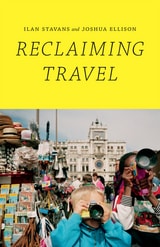
Tourism, Stavans and Ellison argue, is inauthentic, choreographed, sterile, shallow, and rooted in colonialism. They critique theme parks and kitsch tourism, such as the shantytown hotels in South Africa where guests stay in shacks made of corrugated metal and cardboard yet have plenty of food, water and space. Tourists, they assert, are merely content with escapism, thrill seeking, or obsessively snapping photographs. Resisting simple moralizing, the authors also remind us that people don’t divide neatly into crude categories like travelers and tourists. They provoke us to reflect on the opportunities and perils in our own habits.
In this powerful manifesto, Stavans and Ellison argue that travel should be an art through which our restlessness finds expression—a search for meaning not only in our own lives but also in the lives of others. It is not about the destination; rather, travel is about loss, disorientation, and discovering our place in the universe.
Reconnaissance in Sonora
Charles D. Poston’s 1854 Exploration of Mexico and the Gadsden PurchaseC. Gilbert Storms
University of Arizona Press, 2015
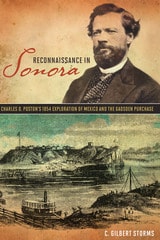
Poston led his party through Sonora and the territory of the 1854 Gadsden Purchase, which today encompasses southern Arizona and a portion of southern New Mexico. The syndicate’s charge to the young adventurer was to acquire land in Mexico in anticipation of the Gadsden Purchase and the building of the transcontinental railroad. Reconnaissance in Sonora details Poston’s expedition, including the founding of the town of Colorado City at the site of present-day Yuma, Arizona.
C. Gilbert Storms explores the American ideas of territorial expansion and Manifest Destiny, the national debate over a route for a transcontinental railroad, the legends of rich gold and silver mines in northern Mexico, and the French and American filibusters that plagued northern Mexico in the early 1850s.
Rediscover the Hidden New Jersey
Roberts, Russell
Rutgers University Press, 2015
Rediscovering the Maine Woods
Thoreau's Legacy in an Unsettled LandJohn J. Kucich
University of Massachusetts Press, 2019
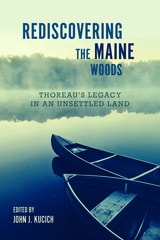
Inspired partly by this expedition, the accessible and engaging essays here offer valuable new perspectives on conservation, the cultural ties that connect Native communities to the land, and the profound influence the geography of the Maine Woods had on Thoreau and writers and activists who followed in his wake. Together, these essays offer a rich and multifaceted look at this special place and the ways in which Thoreau's Maine experiences continue to shape understandings of the environment a century and a half later.
Contributors include the volume editor, Kathryn Dolan, James S. Finley, James Francis, Richard W. Judd, Dale Potts, Melissa Sexton, Chris Sockalexis, Stan Tag, Robert M. Thorson, and Laura Dassow Walls.
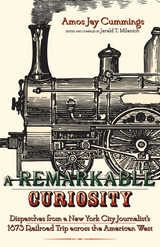
Remarkable Curiosity
Dispatches from a New York City Journalist's 1873 Railroad Trip across the American WestJerald T. Milanich
University Press of Colorado, 2008
Although today he is virtually unknown, during his lifetime Cummings was one of the most famous newspapermen in the United States, in part because of stories like these. Complete with a biographical sketch and historical introduction, A Remarkable Curiosity is an enjoyable read for anybody interested in the American West in the latter half of the nineteenth century.
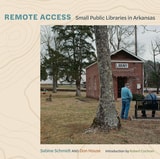
Remote Access
Small Public Libraries in ArkansasSabine Schmidt
University of Arkansas Press, 2021
Winner, 2024 Arkansiana Book Award, Arkansas Library Association
With their cameras and notebooks in hand, photographers Sabine Schmidt and Don House embarked on an ambitious project to document the libraries committed to serving Arkansas’s smallest communities. Remote Access is the culmination of this fascinating three-year effort, which took the artists to every region of their home state.
Schmidt’s carefully constructed color images of libraries and the communities they serve and House’s rich black-and-white portraits of library patrons and staff shine alongside the authors’ personal essays about their experiences. The pages here come alive with a deep connection to Arkansas’s history and culture as we accompany the authors on visits to a section of the Trail of Tears near Parkin, to the site of the tragic 1959 fire at the Arkansas Negro Boys Industrial School in Wrightsville, and to Maya Angelou’s childhood home in Stamps, among many other significant destinations.
Through this testament to the essential role of libraries in the twenty-first century, Schmidt and House have created a clear-eyed portrait of contemporary rural life, delving into issues of race, politics, gender, and isolation as they document the remarkable hard work and generosity put forth in community efforts to sustain local libraries.
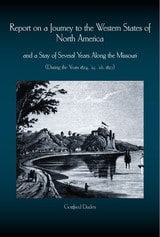
Report on a Journey to the Western States of North America
and a Stay of Several Years Along the Missouri (During the Years 1824-1827)Gottfried Duden; James W. Goodrich, General Editor; George H. Kellner, Elsa Nagel, Adolf E. Schroeder, and W. M. Senner, Editors and Translators
University of Missouri Press, 1980
The mass migrations to the United States from Europe that began in the 1830s were strongly influenced by what is known today as emigration literature--travelers' writings about their experiences in the New World. Such accounts were particularly popular with German readers; over 150 examples of the genre were published in Germany between 1827 and 1856. Gottfried Duden's Report on a Journey to the Western States of North America, published in 1829, was one of the most influential of these books. The timing, format, coverage, and literary qualities of the Report, and its idyllic descriptions of pioneer farming in Missouri, combined to make it an instant success. It attracted thousands of Germans to the Midwest, and particularly to Missouri, the focus of Duden's account. This edited and annotated translation is the first complete version to be published in English. It provides for the general public and the professional historian a significant contribution to U.S. immigration history and a unique and delightful fragment of Missouri's rich German heritage.
Duden presented his account in the form of personal letters, a style that helped make the book believable. The Mississippi- Missouri valley reminded him of his native Rhineland where the rivers facilitated trade and transportation, and fertile river bottomland offers the perfect environment for agriculture. Duden farmed the land he bought during his sojourn in Missouri, and his book includes meticulous descriptions of clearing, fencing, and harvesting. His pro-emigration bias, colored by the fact that he himself had been able to hire help on his Missouri farm, made his view of the farmer's life, it turned out, more idyllic than practical. Many would-be gentlemen farmers, inspired by his book to come to Missouri, found pioneer farming more strenuous than they had expected.
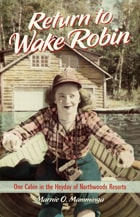
Return to Wake Robin
One Cabin in the Heyday of Northwoods ResortsMarnie O. Mamminga
Wisconsin Historical Society Press, 2012
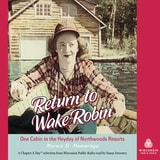
Five generations of Marnie O. Mamminga’s family have been rejuvenated by times together in Wisconsin’s Northwoods. In a series of evocative remembrances accompanied by a treasure trove of vintage family photos, Mamminga takes us to Wake Robin, the cabin her grandparents built in 1929 on Big Spider Lake near Hayward, on land adjacent to Moody’s Camp. Along the way she preserves the spirit and cultural heritage of a vanishing era, conveying the heart of a place and the community that gathered there.
Bookended by the close of the logging era and the 1970s shift to modern lake homes, condos, and Jet Skis, the 1920s to 1960s period covered in these essays represents the golden age of Northwoods camps and cabins—a time when retreats such as Wake Robin were the essence of simplicity. In Return to Wake Robin, Mamminga describes the familiar cadre of fishing guides casting their charm, the camaraderie and friendships among resort workers and vacationers, the call of the weekly square dance, the splash announcing a perfectly executed cannonball, the lodge as gathering place. By tracing the history of one resort and cabin, she recalls a time and experience that will resonate with anyone who spent their summers Up North—or wishes they had.
Return to Wake Robin
One Cabin in the Heyday of Northwoods ResortsMarnie O. Mamminga
Wisconsin Historical Society Press, 2013
Five generations of Marnie O. Mamminga’s family have been rejuvenated by times together in Wisconsin’s Northwoods. In a series of evocative remembrances accompanied by a treasure trove of vintage family photos, Mamminga takes us to Wake Robin, the cabin her grandparents built in 1929 on Big Spider Lake near Hayward, on land adjacent to Moody’s Camp. Along the way she preserves the spirit and cultural heritage of a vanishing era, conveying the heart of a place and the community that gathered there.
Bookended by the close of the logging era and the 1970s shift to modern lake homes, condos, and Jet Skis, the 1920s to 1960s period covered in these essays represents the golden age of Northwoods camps and cabins—a time when retreats such as Wake Robin were the essence of simplicity. In Return to Wake Robin, Mamminga describes the familiar cadre of fishing guides casting their charm, the camaraderie and friendships among resort workers and vacationers, the call of the weekly square dance, the splash announcing a perfectly executed cannonball, the lodge as gathering place. By tracing the history of one resort and cabin, she recalls a time and experience that will resonate with anyone who spent their summers Up North—or wishes they had.
Returning to My Father's Kitchen
EssaysMonica Macansantos
Northwestern University Press, 2025
Feeling untethered after her beloved poet father passes away while she is living abroad, Monica Macansantos decides to return to the Philippines to regain her bearings. But with her father gone and her adult life rooted in the United States and New Zealand, can the land of her birth still serve as a place of healing?
In fifteen richly felt essays, Macansantos considers her family’s history in the Philippines, her own experiences as an exile, and the parent who was the heart of her family’s kitchen, whether standing at the stove to prepare dinner or sitting at the table to scribble in his notebook. Macansantos finds herself remaking her father’s chicken adobo, but also closely rereading his poems. As she reckons with his identity as an artist, she also comes into her own as a writer, and she invites us to consider whether it is possible to carry our homes with us wherever we go.
Revolutionary Berlin
A Walking GuideNathaniel Flakin
Pluto Press, 2022
Few European cities can boast a history as storied and tumultuous as that of Berlin. For more than 150 years it has been at the center of revolutionary politics; of era-defining struggles between the Left and the Right. It has been bombed, rebuilt and carved in two.
In Revolutionary Berlin, veteran tour guide Nathaniel Flakin invites you to stand in the places where this history was written, and to follow in the footsteps of those who helped write it. Through nine self-guided tours illustrated with maps and photographs, readers enter the heady world of 19th century anti-colonial struggles, the 1918 November Revolution and the 1987 May Day riots - encountering the city's workers, queer community and radical women along the way.
The first English-language guidebook to tell the story of Berlin's radical history, this is a must-have for Berliners and visitors alike.
Rilke's Venice
Birgit Haustedt
Haus Publishing, 2019
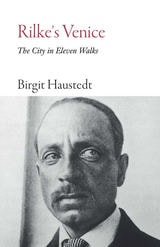
In eleven walks, Birgit Haustedt guides readers through Venice following the poet’s footsteps. Haustedt invites us to look on the beloved sights of the city through Rilke’s eyes, offering a new vision of this famed destination. Rilke’s Venice provides new insight into one of the finest and most widely recognized writers of the twentieth century. It also acts as a literary travel companion and guidebook to Venice, offering eleven detailed maps of walks through the city.
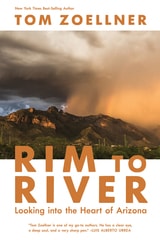
Rim to River
Looking into the Heart of ArizonaTom Zoellner
University of Arizona Press, 2023
Rim to River is the story of this extraordinary journey through redrock country, down canyons, up mesas, and across desert plains to the obscure valley in Mexico that gave the state its enigmatic name. The trek is interspersed with incisive essays that pick apart the distinctive cultural landscape of Arizona: the wine-colored pinnacles and complex spirituality of Navajoland, the mind-numbing stucco suburbs, desperate border crossings, legislative skullduggery, extreme politics, billion-dollar copper ventures, dehydrating rivers, retirement kingdoms, old-time foodways, ghosts of old wars, honky-tonk dreamers, murder mysteries, and magical Grand Canyon reveries.
In Rim to River, Zoellner does for Arizona what Larry McMurtry did for Texas in In a Narrow Grave and what Wallace Stegner did for Utah in Mormon Country: paint an enduring portrait of a misunderstood American state. An indictment, a love letter, and a homecoming story all at once.
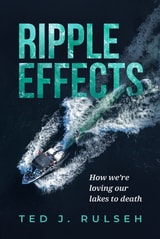
Ripple Effects
How We're Loving Our Lakes to DeathTed J. Rulseh
University of Wisconsin Press, 2022
In his engaging and conversational style, Ted Rulseh details each of these challenges and proposes achievable solutions. He draws on personal experience, interviews, academic research, and government reports to describe the state of the lakes, the stresses they are under, and avenues to successful lakeside living for a sustainable future. Ripple Effects will be a go-to source for all who love lakes and who advocate for their protection; its driving question is summed up by one of Rulseh’s interviewees: “We love this lake. What can we do to keep it healthy?”
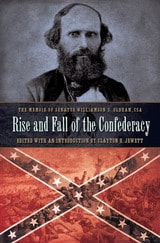
Rise and Fall of the Confederacy
The Memoir of Senator Williamson S. Oldham, CSAEdited & Intro by Clayton E. Jewett
University of Missouri Press, 2006
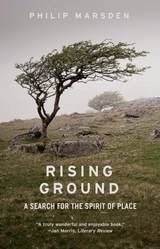
Rising Ground
A Search for the Spirit of PlacePhilip Marsden
University of Chicago Press, 2016
Rising Ground is a record of that journey, but it is also so much more: a beautifully written meditation on place, nature, and human life that encompasses history, archaeology, geography, and the love of place that suffuses us when we finally find home. Firmly in a storied tradition of English nature writing that stretches from Gilbert White to Helen MacDonald, Rising Ground reveals the ways that places and peoples have interacted over time, from standing stones to footpaths, ancient habitations to modern highways. What does it mean to truly live in a place, and what does it take to understand, and honor, those who lived and died there long before we arrived?
Like the best travel and nature writing, Rising Ground is written with the pace of a contemplative walk, and is rich with insight and a powerful sense of the long skein of years that links us to our ancestors. Marsden’s close, loving look at the small patch of earth around him is sure to help you see your own place—and your own home—anew.
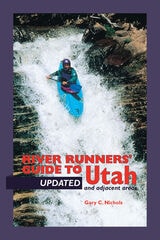
River Runners' Guide To Utah and Adjacent Areas
Gary C Nichols
University of Utah Press, 1986
A fully revised and updated edition of Gary Nichols’ widely used guide to river running in Utah. Major changes have occurred on Big and Little Cottonwood Creeks, which have many new drops with dangerous hydraulics. This edition accounts for these and other alterations in the state’s waterways over the past fifteen years. Also, several of the original river access points are now on private land. Alternative access points are presented and users are alerted to the necessity of requesting permission. All this and much more will once again make A River Runners’ Guide to Utah and Adjacent Areas the one source for vital and reliable information on more than ninety river trips for beginner and expert alike. It includes:
-Over 90 river trips with descriptions and maps
-Location of access and take-out points
-Instructions for all skill levels
-Ratings of all waterways by levels of difficulty
-Identification of danger areas and obstacles
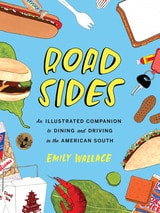
Road Sides
An Illustrated Companion to Dining and Driving in the American SouthBy Emily Wallace
University of Texas Press, 2019
An illustrated glovebox essential, Road Sides explores the fundamentals of a well-fed road trip through the American South, from A to Z. There are detours and destinations, accompanied by detailed histories and more than one hundred original illustrations that document how we get where we’re going and what to eat and do along the way.
Learn the backstory of food-shaped buildings, including the folks behind Hills of Snow, a giant snow cone stand in Smithfield, North Carolina, that resembles the icy treats it sells. Find out how kudzu was used to support a burgeoning highway system, and get to know Edith Edwards—the self-proclaimed Kudzu Queen—who turns the obnoxious vine into delicious teas and jellies. Discover the roots of kitschy roadside attractions, and have lunch with the state-employed mermaids of Weeki Wachee Springs in Florida.
Road Sides is for everyone—the driver in search of supper or superlatives (the biggest, best, and even worst), the person who cannot resist a local plaque or snack and pulls over for every historical marker and road stand, and the kid who just wants to gawk at a peach-shaped water tower.
Road Trip
A Pocket History of IndianaAndrea Neal
Indiana Historical Society Press, 2016
Robert Irwin Getty Garden
Lawrence Weschler
J. Paul Getty Trust, The, 2020
Roll With It
Brass Bands in the Streets of New OrleansMatt Sakakeeny
Duke University Press, 2013
Romancing Nevada's Past
Ghost Towns And Historic Sites Of Eureka, Lander, And White Pine CountiesShawn Hall
University of Nevada Press, 1993
Rome as a Guide to the Good Life
A Philosophical Grand TourScott Samuelson
University of Chicago Press, 2023
This is a guidebook to Rome for those interested in both la dolce vita and what the ancient Romans called the vita beata—the good life. Philosopher Scott Samuelson offers a thinker’s tour of the Eternal City, rooting ideas from this philosophical tradition within the geography of the city itself. As he introduces the city’s great works of art and its most famous sites—the Colosseum, the Forum, the Campo de’ Fiori—Samuelson also gets to the heart of the knotty ethical and emotional questions they pose. Practicing philosophy in place, Rome as a Guide to the Good Life tackles the profound questions that most tours of Rome only bracket. What does all this history tell us about who we are?
In addition to being a thoughtful philosophical companion, Samuelson is also a memorable tour guide, taking us on plenty of detours and pausing to linger over an afternoon Negroni, sample four classic Roman pastas, or explore the city’s best hidden gems. With Samuelson’s help, we understand why Rome has inspired philosophers such as Lucretius and Seneca, poets and artists such as Horace and Caravaggio, filmmakers like Fellini, and adventurers like Rosa Bathurst. This eclectic guidebook to Roman philosophy is for intrepid wanderers and armchair travelers alike—anyone who wants not just a change of scenery, but a change of soul.
Route for the Overland Stage
James H. Simpson's 1859 Trail Across the Great BasinJesse G. Petersen
Utah State University Press, 2008
The 1859 exploration of the Great Basin by army topographical engineer James Simpson opened up one of the West's most important transportation and communication corridors, a vital link between the Pacific Coast and the rest of the nation. It became the route of the Pony Express and the Overland Mail and Stage, the line of the Pacific telegraph, a major wagon road for freighters and emigrants, and, later, the first transcontinental auto road, the Lincoln Highway, now Highway 50.
No one has accurately tracked or mapped Simpson's original route, until now. Jesse Petersen shows in words, maps, and photos exactly where the explorer went. Sharing his detective-like reasoning as he walked or drove the entire trail west and Simpson's variant route returning east, Petersen takes readers on a mountain and desert trek through some of America's most remote and striking landscapes.

Runes Of The North
Sigurd F. Olson
University of Minnesota Press, 1997
Running After Paradise
Hope, Survival, and Activism in Brazil's Atlantic ForestColleen M. Scanlan Lyons
University of Arizona Press, 2022
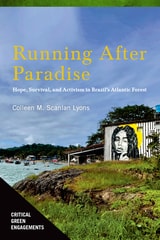
The pressures on this tropical forest are palpable. So are people’s responses to these pressures. What was once the state’s economic mainstay, cacao production, is only now beginning to make a comeback after a disease decimated the crops of large and small farmers alike. Tourism, another economic hope, is susceptible to economic crises and pandemics. And the threat of a massive state-led infrastructure project involving mining, a railroad, and an international port has loomed over the region for well over a decade.
Southern Bahia is at a crossroads: develop a sustainable, forest-based economy or run the risk of losing the identity and soul of this place forevermore. Through the lives of environmentalists, farmers, quilombolas, and nativos—people who are in and of this place—this book brings alive the people who are grappling with this dilemma.
Anthropologist Colleen M. Scanlan Lyons brings the eye of a storyteller to present this complex struggle, weaving in her own challenges of balancing family and fieldwork alongside the stories of the people who live in this dynamic region. Intertwined tales, friendships, and hope emerge as people both struggle to sustain their lives in a biodiversity hotspot and strive to create their paradise.