Results by title
18284 books match the query 'United States' and 833 start with r
Religious Liberty and the American Founding
Natural Rights and the Original Meanings of the First Amendment Religion ClausesVincent Phillip Muñoz
University of Chicago Press, 2022
The Founders understood religious liberty to be an inalienable natural right. Vincent Phillip Muñoz explains what this means for church-state constitutional law, uncovering what we can and cannot determine about the original meanings of the First Amendment’s Religion Clauses and constructing a natural rights jurisprudence of religious liberty.
Drawing on early state constitutions, declarations of religious freedom, Founding-era debates, and the First Amendment’s drafting record, Muñoz demonstrates that adherence to the Founders’ political philosophy would lead neither to consistently conservative nor consistently liberal results. Rather, adopting the Founders’ understanding would lead to a minimalist church-state jurisprudence that, in most cases, would return authority from the judiciary to the American people. Thorough and convincing, Religious Liberty and the American Founding is key reading for those seeking to understand the Founders’ political philosophy of religious freedom and the First Amendment Religion Clauses.
Religious Liberty in America
The First Amendment in Historical and Contemporary PerspectiveBruce T. Murray
University of Massachusetts Press, 2008
A nation founded on church-state separation is still debating where the line is drawn
In recent years a series of highly publicized controversies has focused attention on what are arguably the sixteen most important words in the U.S. Constitution: “Congress shall make no law respecting an establishment of religion, or prohibiting the free exercise thereof.” The ongoing court battles over the inclusion of the words “under God” in the Pledge of Allegiance, the now annual cultural quarrel over “Merry Christmas” vs. “Happy Holidays,” and the political promotion of “faith-based initiatives” to address social problems—all reflect competing views of the meaning of the religious liberty clauses of the First Amendment.
Such disputes, as Bruce T. Murray shows, are nothing new. For more than two hundred years Americans have disagreed about the proper role of religion in public life and where to draw the line between church and state. In this book, he reexamines these debates and distills the volumes of commentary and case law they have generated. He analyzes not only the changing contours of religious freedom but also the phenomenon of American civil religion, grounded in the notion that the nation's purpose is sanctified by a higher authority—an idea that can be traced back to the earliest New England colonists and remains deeply ingrained in the American psyche.
Throughout the book, Murray connects past and present, tracing the historical roots of contemporary controversies. He considers why it is that a country founded on the separation of church and state remains singularly religious among nations, and concludes by showing how the Supreme Court's thinking about the religious liberty clauses has evolved since the late eighteenth century.
Reload
Rethinking Violence in American LifeChristopher B. Strain
Vanderbilt University Press, 2011
When incidents of extreme violence flare in America, all too often they are framed as isolated aberrations. Nothing could be further from the truth, as Christopher Strain argues in his new book, Reload: Rethinking Violence in American Life. The unpleasant fact, as he reveals in this highly readable study, is that American violence is inextricably woven into the fabric of our national heritage and experience.
In Reload, Strain traces our modern-day conception of violence from the struggle to survive on the American frontier, through evolving gender roles in recent centuries, to the hysteria surrounding video and role-playing games and the more recent disturbing phenomenon of school shootings. Strain shapes nothing less than a profound meditation on American violence and a "primer" on understanding what can often appear to be a profoundly dangerous nation.
In addition to serving as a comprehensive overview of the state of violence in America, Reload also suggests ways of combating the trends that lead to tragedy.
Relocating Authority
Japanese Americans Writing to Redress Mass IncarcerationMira Shimabukuro
University Press of Colorado, 2015
Relocating Authority examines the ways Japanese Americans have continually used writing to respond to the circumstances of their community’s mass imprisonment during World War II. Using both Nikkei cultural frameworks and community-specific history for methodological inspiration and guidance, Mira Shimabukuro shows how writing was used privately and publicly to individually survive and collectively resist the conditions of incarceration.
Examining a wide range of diverse texts and literacy practices such as diary entries, note-taking, manifestos, and multiple drafts of single documents, Relocating Authority draws upon community archives, visual histories, and Asian American history and theory to reveal the ways writing has served as a critical tool for incarcerees and their descendants. Incarcerees not only used writing to redress the “internment” in the moment but also created pieces of text that enabled and inspired further redress long after the camps had closed.
Relocating Authority highlights literacy’s enduring potential to participate in social change and assist an imprisoned people in relocating authority away from their captors and back to their community and themselves. It will be of great interest to students and scholars of ethnic and Asian American rhetorics, American studies, and anyone interested in the relationship between literacy and social justice.
Reluctant Capitalists
Bookselling and the Culture of ConsumptionLaura J. Miller
University of Chicago Press, 2006
In Reluctant Capitalists, Miller looks at a century of book retailing, demonstrating that the independent/chain dynamic is not entirely new. It began one hundred years ago when department stores began selling books, continued through the 1960s with the emergence of national chain stores, and exploded with the formation of “superstores” in the 1990s. The advent of the Internet has further spurred tremendous changes in how booksellers approach their business. All of these changes have met resistance from book professionals and readers who believe that the book business should somehow be “above” market forces and instead embrace more noble priorities.
Miller uses interviews with bookstore customers and members of the book industry to explain why books evoke such distinct and heated reactions. She reveals why customers have such fierce loyalty to certain bookstores and why they identify so strongly with different types of books. In the process, she also teases out the meanings of retailing and consumption in American culture at large, underscoring her point that any type of consumer behavior is inevitably political, with consequences for communities as well as commercial institutions.
Reluctant Interveners
America's Failed Responses to Genocide from Bosnia to DarfurEyal Mayroz
Rutgers University Press, 2020
Featured in the 2020 Association of University Presses Book, Jacket, and Journal Show
Why do we allow our governments to get away with “bystanding” to genocide? How can we, when alerted to the mass slaughter of innocents, still not take a stand? Reluctant Interveners provides the most comprehensive answers yet to these confronting questions, focusing on the complex relationships between the citizenry, the media, the political elites, and institutions in the most powerful nation in the world, the United States of America.
Eyal Mayroz offers a sobering account of the interactions between the governing and the governed, and the dynamics which transformed moral concerns for the lives of faraway “others” into cold political calculations. Exposed are the processes that turned the promise of “never again” to a recurring reality of ever again, the role of the office of the presidency in their advancement, and the resultant image of America as seen by the rest of the world. In a time of ubiquitous social media and populist revival, a greater role for the U.S. citizenry in decision-making on responses to genocide may be in the cards. The question is, in which directions will these trends take American foreign policy?
Remaking America
Democracy and Public Policy in an Age of InequalityJoe Soss
Russell Sage Foundation, 2007
Remaking Chinese America
Immigration, Family, and Community, 1940-1965Zhao, Xiaojian
Rutgers University Press, 2001
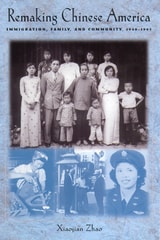
In Remaking Chinese America, Xiaojian Zhao explores the myriad forces that changed and unified Chinese Americans during a key period in American history. Prior to 1940, this immigrant community was predominantly male, but between 1940 and 1965 it was transformed into a family-centered American ethnic community. Zhao pays special attention to forces both inside and outside of the country in order to explain these changing demographics. She scrutinizes the repealed exclusion laws and the immigration laws enacted after 1940. Careful attention is also paid to evolving gender roles, since women constituted the majority of newcomers, significantly changing the sex ratio of the Chinese American population.
As members of a minority sharing a common cultural heritage as well as pressures from the larger society, Chinese Americans networked and struggled to gain equal rights during the cold war period. In defining the political circumstances that brought the Chinese together as a cohesive political body, Zhao also delves into the complexities they faced when questioning their personal national allegiances. Remaking Chinese America uses a wealth of primary sources, including oral histories, newspapers, genealogical documents, and immigration files to illuminate what it was like to be Chinese living in the United States during a period that—until now—has been little studied.
Remaking the American University
Market-Smart and Mission-CenteredZemsky, Robert
Rutgers University Press, 2005
At one time, universities educated new generations and were a source of social change. Today colleges and universities are less places of public purpose, than agencies of personal advantage. Remaking the American University provides a penetrating analysis of the ways market forces have shaped and distorted the behaviors, purposes, and ultimately the missions of universities and colleges over the past half-century.
The authors describe how a competitive preoccupation with rankings and markets published by the media spawned an admissions arms race that drains institutional resources and energies. Equally revealing are the depictions of the ways faculty distance themselves from their universities with the resulting increase in the number of administrators, which contributes substantially to institutional costs. Other chapters focus on the impact of intercollegiate athletics on educational mission, even among selective institutions; on the unforeseen result of higher education's "outsourcing" a substantial share of the scholarly publication function to for-profit interests; and on the potentially dire consequences of today's zealous investments in e-learning.
A central question extends through this series of explorations: Can universities and colleges today still choose to be places of public purpose? In the answers they provide, both sobering and enlightening, the authors underscore a consistent and powerful lesson-academic institutions cannot ignore the workings of the markets. The challenge ahead is to learn how to better use those markets to achieve public purposes.
Remaking the Democratic Party
Lyndon B. Johnson as a Native-Son Presidential CandidateHanes Walton Jr., Pearl K. Ford Dowe, and Josephine A. V. Allen
University of Michigan Press, 2016
Although ridiculed by contemporaries for his apparent lack of control over formal party politics and the national committee, Johnson excelled at leading the Democratic Party’s policy agenda. While a senator and as president, Johnson advocated for—and secured—liberal social welfare and civil rights legislation, forcing the party to break with its Southern tradition of elitism, conservatism, and white supremacy. In a way, Johnson set the terms for the continuing partisan battle because, by countering the Democrats’ new ideology, the Republican Party also underwent a transformation.
Remaking the Godly Marriage
Gender Negotiation in Evangelical FamiliesBartkowski, John
Rutgers University Press, 2001
While religious leaders often have enormous influence over their members’ beliefs and how they translate their beliefs into action in everyday life, the individual family remains the place where religious values are practiced through and ultimately transferred to the next generation. As such, the family is an extremely important, though frequently overlooked, topic of study for sociologists of religion.
In Remaking the Godly Marriage, John Bartkowski studies evangelical Protestants and their views on marriage and gender relations and how they are lived within individual families. The author compares elite evangelical prescriptions for godly family living with the day-to-day practices in conservative Protestant households. He asks: How serious are the debates over gender and the family that are manifested within contemporary evangelicalism? What are the values that underlie this debate? Have these internecine disputes been altered by the emergence of new evangelical movements such as biblical feminism and the Promise Keepers? And given the fact that leading evangelicals advance competing visions of godly family life, how do conservative religious spouses make sense of their own family relationships and gender identities?
Through in-depth interviews with evangelical married couples and an exhaustive study of evangelical family advice manuals, Bartkowski explores the disputes and ambivalence concerning traditional gender roles and patriarchal models of family life, which derive from the tension between evangelical Protestantism as a religious subculture and the broader American secular culture in which it is embedded. Bartkowski reveals how evangelical men and women jointly negotiate gender roles within their families and selectively appropriate values of the larger culture even as they attempt to cope with the conflicting messages of their own faith.
Remaking the Urban Social Contract
Health, Energy, and the EnvironmentEdited by Michael A. Pagano
University of Illinois Press, 2016
Contributors: Alba Alexander, Megan Houston, Dennis R. Judd, Cynthia Klein-Banai, William C. Kling, Howard A. Learner, David A. McDonald, David C. Perry, Emily Stiehl, Anthony Townsend, Natalia Villamizar-Duarte, and Moira Zellner.

Remapping Sovereignty
Decolonization and Self-Determination in North American Indigenous Political ThoughtDavid Myer Temin
University of Chicago Press, 2023
An examination of anticolonial thought and practice across key Indigenous thinkers.
Accounts of decolonization routinely neglect Indigenous societies, yet Native communities have made unique contributions to anticolonial thought and activism. Remapping Sovereignty examines how twentieth-century Indigenous activists in North America debated questions of decolonization and self-determination, developing distinctive conceptual approaches that both resonate with and reformulate key strands in other civil rights and global decolonization movements. In contrast to decolonization projects that envisioned liberation through state sovereignty, Indigenous theorists emphasized the self-determination of peoples against sovereign state supremacy and articulated a visionary politics of decolonization as earthmaking. Temin traces the interplay between anticolonial thought and practice across key thinkers, interweaving history and textual analysis. He shows how these insights broaden the political and intellectual horizons open to us today.
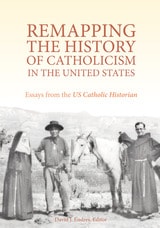
Remapping the History of Catholicism in the United States
David J. Endres
Catholic University of America Press, 2017
Timothy Matovina’s opening essay sets the theme for the volume, encouraging a remapping of U.S. Catholic history to more widely encompass its various localities and peoples, especially the significance of non-European ethnic groups and the role of Catholics in the American Southwest. Jeanne Petit explores Catholic womanhood’s strength and organizational zeal in the post-World War I era, noting the obstacles and successes of women’s attempts to be recognized fully as American citizens and members of the Church. Anne Klejment weaves together the lives of Dorothy Day and Cesar Chavez to illustrate their use of nonviolence and “weapons of the spirit” to respond to societal injustice. Amanda Bresie provides a window into the life of Mother Katharine Drexel, noting the generosity of the millionaire heiress, but also her meticulous record keeping and close supervision of her funding of educational and evangelization eorts among Native and African Americans. Kristine Ashton Gunnell analyzes the ways in which the Daughters of Charity crossed cultural boundaries to offer charitable assistance to Mexican and Japanese communities in Los Angeles. Matthew Cressler explores the intersection of Black Power and distinctive African American-inspired liturgies, arguing that the liturgy became a site of struggle as black self-determination and nationalism impacted worship and black Catholic identity. Finally, Joseph Chinnici offers an important essay on re-envisioning post-conciliar U.S. Catholicism in its global context, offering a new approach to how we consider the American Catholic narrative and write its history.
Together these path-breaking studies serve as a model for historians seeking to engage in the cartographic task of remapping the U.S. Catholic experience.
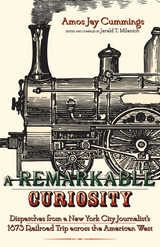
Remarkable Curiosity
Dispatches from a New York City Journalist's 1873 Railroad Trip across the American WestJerald T. Milanich
University Press of Colorado, 2008
Although today he is virtually unknown, during his lifetime Cummings was one of the most famous newspapermen in the United States, in part because of stories like these. Complete with a biographical sketch and historical introduction, A Remarkable Curiosity is an enjoyable read for anybody interested in the American West in the latter half of the nineteenth century.
Remarks on the Philosophy of Psychology, Volume 1
Ludwig Wittgenstein
University of Chicago Press, 1980
This bilingual edition of the Remarks on the Philosophy of Psychology presents the first English translation of an essential body of Wittegenstein's work. It elaborates Wittgenstein's views on psychological concepts such as expectation, sensation, knowing how to follow a rule, and knowledge of the sensations of other persons. It also shows strong emphasis on the "anthropological" aspect of Wittgenstein's thought. Philosophers, as well as anthropologists, psychologists, and sociologists will welcome this important publication.
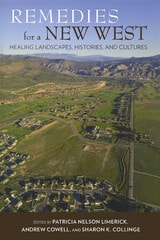
Remedies for a New West
Healing Landscapes, Histories, and CulturesEdited by Patricia Nelson Limerick, Andrew Cowell, and Sharon K. Collinge
University of Arizona Press, 2009
The signs of illness and trauma can seem omnipresent in today’s West: land and soil disrupted from mining, overgrazing, logging, and farming; wildlife habitat reduced and fragmented; native societies disturbed and threatened; open space diminished by cities and suburbs; wilderness destroyed by roads and recreation-seekers. But as these essays suggest, the “treatment program” for healing the West has many healthful side effects. Engaging in the kinds of projects suggested by contributors is therapeutic not only for the environment but for participants as well. Restoration, repair, and recovery can counter symptoms of despair with concentrated doses of promise and possibility.
The more “lesions” the West has, this book suggests, the more opportunities there are for westerners to revive and ultimately cure the ailing patient they have helped to create. The very idea of restoring the West to health, contributors and editors contend, unleashes our imaginations, sharpens our minds, and gives meaning to the ways we choose to live our lives. At the same time, acknowledging the profound difficulties of the work that lies ahead immunizes us against our own arrogance as we set about the task of healing the West.
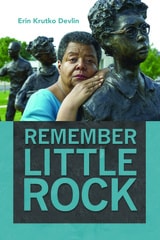
Remember Little Rock
Erin Krutko Devlin
University of Massachusetts Press, 2017
In Remember Little Rock Erin Krutko Devlin explores public memories surrounding the iconic Arkansas school desegregation crisis of 1957 and shows how these memories were vigorously contested and sometimes deployed against the cause. Delving into a wide variety of sources, from memoirs to televised docudramas, commemoration ceremonies, and the creation of Little Rock High museums, Devlin reveals how many white moderates proclaimed Little Rock a victory for civil rights and educational equality even as segregation persisted. At the same time, African American activists, students, and their families asserted their own stories in the ongoing fight for racial justice.
Devlin also demonstrates that public memory directly bears on law and policy. She argues that the triumphal narrative of civil rights has been used to stall school desegregation, support tokenism, and to roll back federal court oversight of school desegregation, voter registration, and efforts to promote diversity in public institutions. Remember Little Rock examines the chasm between the rhetoric of the “post–civil rights” era and the reality of enduring racial inequality.
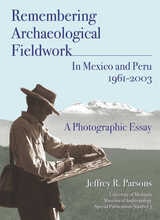
Remembering Archaeological Fieldwork in Mexico and Peru, 1961-2003
A Photographic EssayJeffrey R. Parsons
University of Michigan Press, 2019
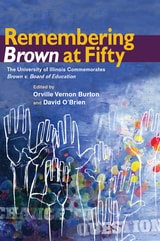
Remembering Brown at Fifty
The University of Illinois Commemorates Brown v. Board of EducationEdited by Orville Vernon Burton and David O'Brien
University of Illinois Press, 2009
Inspired by the University of Illinois's celebration of the Brown v. Board of Education decision's fiftieth anniversary, this collection addresses the significance of Brown in the contributors' lives or work in education and civil rights. Several authors describe their personal roles in the Brown case or similar cases, while others examine and illustrate events, performances, and exhibitions that were part of the anniversary commemoration. The book not only explores the repercussions of the Brown decision, but also stands as a historic document in its own right, preserving the reactions of many prominent intellectuals, artists, and activists fifty years after the decision.
Contributors are Kal Alston, Margaret L. Andersen, Kathryn H. Anthony, Nathaniel C. Banks, Bernice McNair Barnett, Christopher Benson, Ed Blankenheim, Julian Bond, Orville Vernon Burton, Jason Chambers, Constance Curry, Joseph A. De Laine Jr., Mary L. Dudziak, Joe R. Feagin, John Hope Franklin, Ophelia De Laine Gona, Lani Guinier, Darlene Clark Hine, Freeman A. Hrabowski III, John Jennings, Ralph Lemon, George Lipsitz, Jim Loewen, Laughlin McDonald, David O'Brien, James C. Onderdonk, Sekou Sundiata, Christopher Teal, Nicholas Watkins, Carrie Mae Weems, Juan Williams, and Joy Ann Williamson.
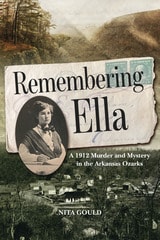
Remembering Ella
A 1912 Murder and Mystery in the Arkansas OzarksNita Gould
Butler Center for Arkansas Studies, 2018
This examination of the murder of Ella Barham and the trial of her alleged killer opens a window into the meaning of community and due process during a time when politicians and judges sought to professionalize justice, moving from local hangings to state-run executions. Davidson’s appeal has been cited as a precedent in numerous court cases and his brief was reviewed by the lawyers in Georgia who prepared Leo Frank’s appeal to the U.S. Supreme Court in 1915.
Author Nita Gould is a descendant of the Barhams of Boone County and Ella Barham’s cousin. Her tenacious pursuit to create an authoritative account of the community, the crime, and the subsequent legal battle spanned nearly fifteen years. Gould weaves local history and short biographies into her narrative and also draws on the official case files, hundreds of newspaper accounts, and personal Barham family documents. Remembering Ella reveals the truth behind an event that has been a staple of local folklore for more than a century and still intrigues people from around the country.
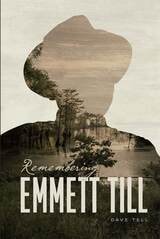
Remembering Emmett Till
Dave Tell
University of Chicago Press, 2019
In Remembering Emmett Till, Dave Tell gives us five accounts of the commemoration of this infamous crime. In a development no one could have foreseen, Till’s murder—one of the darkest moments in the region’s history—has become an economic driver for the Delta. Historical tourism has transformed seemingly innocuous places like bridges, boat landings, gas stations, and riverbeds into sites of racial politics, reminders of the still-unsettled question of how best to remember the victim of this heinous crime. Tell builds an insightful and persuasive case for how these memorials have altered the Delta’s physical and cultural landscape, drawing potent connections between the dawn of the civil rights era and our own moment of renewed fire for racial justice.
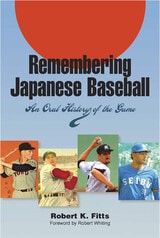
Remembering Japanese Baseball
An Oral History of the GameRobert K. Fitts. Foreword by Robert Whiting
Southern Illinois University Press, 2005
Remembering Japanese Baseball: An Oral History of the Game transports us onto diamonds and into dugouts on the other side of the globe, where the vigorous sportsmanship of the game and the impassioned devotion of its fans transcend cultural and geographic borders and prove that baseball is fast becoming an international pastime.
Called Yakyu, baseball has been played in Japan since the 1890s but has only recently gained a substantial global following. Robert K. Fitts chronicles the nation’s distinctive version of the sport as recounted by twenty-five of its players. Fitts’s careful choice of subjects represents the experiences of a mix of American and Japanese players—including stars, titleholders, and members of the Japanese Hall of Fame. Informal, candid, and remarkably specific, these recollections describe teammates and opponents, corporate owners and loyal fans, triumphs and frustrations, collectively capturing all the spirit and emotion engendered by the game from decidedly personal vantage points. Throughout, readers glimpse the unique traits of baseball in Japan and discern how the game has evolved since its inception as well as how it differs from its American counterpart.
An unparalleled introduction for an American audience, Remembering Japanese Baseball is augmented by photos of its twenty-five interviewees and a timeline demarking milestone moments in the game’s Japanese history. Robert Whiting, author of You Gotta Have Wa! and The Meaning of Ichiro, provides the foreword.
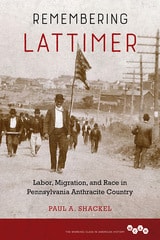
Remembering Lattimer
Labor, Migration, and Race in Pennsylvania Anthracite CountryPaul A. Shackel
University of Illinois Press, 2018
Paul A. Shackel confronts the legacies and lessons of the Lattimer event. Beginning with a dramatic retelling of the incident, Shackel traces how the violence, and the acquittal of the deputies who perpetrated it, spurred membership in the United Mine Workers. By blending archival and archaeological research with interviews, he weighs how the people living in the region remember--and forget--what happened. Now in positions of power, the descendants of the slain miners have themselves become rabidly anti-union and anti-immigrant as Dominicans and other Latinos change the community. Shackel shows how the social, economic, and political circumstances surrounding historic Lattimer connect in profound ways to the riven communities of today.
Compelling and timely, Remembering Lattimer restores an American tragedy to our public memory.
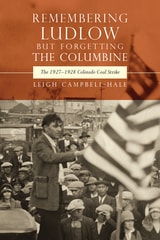
Remembering Ludlow but Forgetting the Columbine
The 1927-1928 Colorado Coal Strikeby Leigh Campbell-Hale
University Press of Colorado, 2025
Remembering Ludlow but Forgetting the Columbine examines the causes, context, and legacies of the 1927 Columbine Massacre in relation to the history of labor organizing and coal mining in both Colorado and the United States. While historians have written prolifically about the 1914 Ludlow Massacre, there has been a lack of attention to the violent event remembered now as the Columbine Massacre in which police shot and killed six striking coal miners and wounded sixty more protestors during the 1927–1928 Colorado Coal Strike, even though its aftermath exerted far more influence upon subsequent national labor policies.
This volume is a comparative biography of three key participants before, during, and after the strike: A. S. Embree, the IWW strike leader; Josephine Roche, the owner of the coal mine property where the Columbine Massacre took place; and Powers Hapgood, who came to work for Roche four months after she signed the 1928 United Mine Worker’s contract. The author demonstrates the significance of this event to national debates about labor during the period, as well as changes and continuities in labor history starting in the progressive era and continuing with 1930s New Deal labor policies and through the 1980s.
This examination of the 1927–1928 Colorado Coal Strike reorients understandings of labor history from the 1920s through the 1960s and the construction of public memory—and forgetting—surrounding those events. Remembering Ludlow but Forgetting the Columbine appeals to academic and general readers interested in Colorado history, labor history, mining history, gender studies, memory, and historiography.
Remembering the Alamo
Memory, Modernity, and the Master SymbolBy Richard R. Flores
University of Texas Press, 2002
"Remember the Alamo!" reverberates through Texas history and culture, but what exactly are we remembering? Over nearly two centuries, the Mexican victory over an outnumbered band of Alamo defenders has been transformed into an American victory for the love of liberty. Why did the historical battle of 1836 undergo this metamorphosis in memory and mythology to become such a potent master symbol in Texan and American culture?
In this probing book, Richard Flores seeks to answer that question by examining how the Alamo's transformation into an American cultural icon helped to shape social, economic, and political relations between Anglo and Mexican Texans from the late nineteenth to the mid-twentieth centuries. In the first part of the book, he looks at how the attempts of heritage society members and political leaders to define the Alamo as a place have reflected struggles within Texas society over the place and status of Anglos and Mexicans. In the second part, he explores how Alamo movies and the transformation of Davy Crockett into an Alamo hero/martyr have advanced deeply racialized, ambiguous, and even invented understandings of the past.
Remembering the Cajun Past
Memory, Race, and the Politics of Public History in LouisianaMarc David
University of Massachusetts Press, 2025
Exploring how public history creates collective memory of this white ethnic group through memorials
Cajuns arrived in southern Louisiana in the 18th century after the British exiled them from eastern Canada. Also known as Acadians, they retain a unique dialect of French, and their distinctive music, food, and other cultural traits characterized them as an ethnic group. Until the 1960s, authorities viewed them as a serious problem, allegedly blocking the state’s progress as they clung to their antiquated ways. Few Cajun residents in the region remembered the remote past of their ancestors, but by the 1970s, organizations ranging from local non-profits to the National Park Service created sites that commemorated their history, such as the Acadian Memorial in St. Martinville, allowing Cajuns to connect their lives to their past and claim it as their own.
In Remembering the Cajun Past, anthropologist Marc David studies the cultural and political dynamics that reconfigured Cajun memory and identity. Focusing on St. Martinville and the Acadian Memorial, he explores how authorities changed their minds about Cajuns and demonstrates how Cajuns’ historical memories took shape. Part ethnography and part history, David examines the racial aspects of the Memorial’s creation in the wake of the Civil Rights movement and the growth of a new Cajun history, one through which individual Cajuns rejected the label’s connotation of “white trash” and embraced belonging within a storied white ethnic group. Based on decades of fieldwork and deep engagement with public history practices, David explores how historical memory and the historic sites that foster it are intertwined with the politics of civic life.
Remembering the Forgotten War
The Enduring Legacies of the U.S.-Mexican WarMichael Scott Van Wagenen
University of Massachusetts Press, 2012
On February 2, 1848, representatives of the United States and Mexico signed the Treaty of Guadalupe Hidalgo, officially ending hostilities between the two countries and ceding over one-half million square miles of land to the northern victors. In Mexico, this defeat has gradually moved from the periphery of dishonor to the forefront of national consciousness. In the United States, the war has taken an opposite trajectory, falling from its once-celebrated prominence into the shadowy margins of forgetfulness and denial.
Why is the U.S.–Mexican War so clearly etched in the minds of Mexicans and so easily overlooked by Americans? This book investigates that issue through a transnational, comparative analysis of how the tools of collective memory—books, popular culture, historic sites, heritage groups, commemorations, and museums—have shaped the war's multifaceted meaning in the 160 years since it ended. Michael Van Wagenen explores how regional, ethnic, and religious differences influence Americans and Mexicans in their choices of what to remember and what to forget. He further documents what happens when competing memories clash in a quest for dominance and control.
In the end, Remembering the Forgotten War addresses the deeper question of how remembrance of the U.S.–Mexican War has influenced the complex relationship between these former enemies now turned friends. It thus provides a new lens through which to view today's cross-border rivalries, resentments, and diplomatic pitfalls.
Remembering the Holocaust
Michael E. Stevens
Wisconsin Historical Society Press, 1997
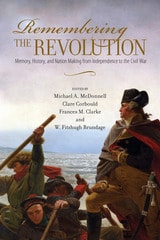
Remembering the Revolution
Memory, History, and Nation Making from Independence to the Civil WarMichael A. McDonnell
University of Massachusetts Press, 2013
In today's United States, the legacy of the American Revolution looms large. From presidential speeches to bestselling biographies, from conservative politics to school pageants, everybody knows something about the Revolution. Yet what was a messy, protracted, divisive, and destructive war has calcified into a glorified founding moment of the American nation. Disparate events with equally diverse participants have been reduced to a few key scenes and characters, presided over by well-meaning and wise old men.
Recollections of the Revolution did not always take today's form. In this lively collection of essays, historians and literary scholars consider how the first three generations of American citizens interpreted their nation's origins. The volume introduces readers to a host of individuals and groups both well known and obscure, from Molly Pitcher and “forgotten father” John Dickinson to African American Baptists in Georgia and antebellum pacifists. They show how the memory of the Revolution became politicized early in the nation's history, as different interests sought to harness its meaning for their own ends. No single faction succeeded, and at the outbreak of the Civil War the American people remained divided over how to remember the Revolution.
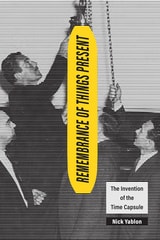
Remembrance of Things Present
The Invention of the Time CapsuleNick Yablon
University of Chicago Press, 2019
By offering a direct line to posterity, time capsules stimulated various hopes for the future. Remembrance of Things Present delves into these treasure chests to unearth those forgotten futures.
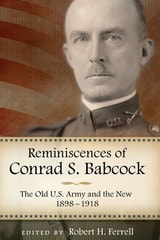
Reminiscences of Conrad S. Babcock
The Old U.S. Army and the New, 1898-1918Edited by Robert H. Ferrell
University of Missouri Press, 2012
Babcock’s original manuscript has been shortened by Robert H. Ferrell into eight chapters which illustrate the tremendous shift in warfare in the years surrounding the turn of the century. The first part of the book describes small actions against Filipinos and such assignments as taking a cavalry troop into the fire-destroyed city of San Francisco in 1906 or duty in the vicinity of Yuma in Arizona when border troubles were heating up with brigands and regular troops. The remaining chapters, beginning in 1918, set out the battles of Soissons (July 18–22) and Saint-Mihiel (September 12–16) and especially the immense battle of the Meuse-Argonne (September 26–November 11), the largest (1.2 million troops involved) and deadliest (26,000 men killed) battle in all of American history.
By the end of his career, Babcock was an adroit battle commander and an astute observer of military operations. Unlike most other officers around him, he showed an ability and willingness to adapt infantry tactics in the face of recently developed technology and weaponry such as the machine gun. When he retired in 1937 and began to write his memoirs, another world war had begun, giving additional context to his observations about the army and combat over the preceding forty years.
Until now, Babcock’s account has only been available in the archives of the Hoover Institution, but with the help of Ferrell's crisp, expert editing, this record of army culture in the first decades of the twentieth century can now reach a new generation of scholars.
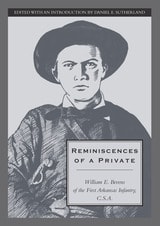
Reminiscences of a Private
William E. Bevens of the First Arkansas Infantry C.S.A.Daniel E. Sutherland
University of Arkansas Press, 1999
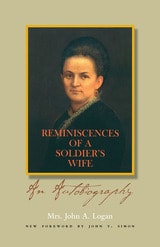
Reminiscences of a Soldier's Wife
An AutobiographyMrs. John A. Logan. Foreword by John Y. Simon
Southern Illinois University Press, 1997
"To tell my own story is to tell that of my famous husband, General John A. Logan," explains Mary S. Logan in the preface to her autobiography.
Married to John A. Logan for thirty-one years, Mary Logan shared in her distinguished husband’s career as a prosecutor in southern Illinois, as a Civil War general, and as a senator from Illinois. She observed firsthand the extraordinary events before, during, and after the Civil War, and she knew personally those world leaders who held the power to shape history. After the death of her husband, she maintained her influence in Washington, D.C. "Under the brightest and darkest skies," she explains, "I have passed than a half-century at the national capital."
Born in 1838, Logan writes of her early days growing up in southern Illinois through 1913, when this book was first published. A skillful observer, she recounts events that are personal, regional, and national in scope. In charming detail, she shares her courtship and subsequent marriage to a young prosecutor from Jackson County and the births of their children. She writes proudly of the Lincoln-Douglas debates in 1858 and her husband’s election to the Thirty-seventh Congress that same year. Logan tells of the coming of the Civil War and of her husband—formerly a Democrat and an enemy of Lincoln—casting his fate with the Union and raising a regiment in southern Illinois. She poignantly describes her brother’s defection to the Confederate Army, her life in war-torn Cairo, Illinois, and her horror at her husband’s severe war wounds. She recounts the battles, the political campaigns, and Lincoln’s reelection and subsequent assassination from her point of view—and, as the wife of a politician and general, hers is a decidedly privileged perspective.
In a position to observe and to participate in events ranging from momentous to minute throughout the latter half of the nineteenth and early twentieth centuries, she reports the essential episodes of history with the flair of journalism, a career she in fact embraced after the death of her husband. She writes movingly of a wounded captain on the road to recovery who suddenly died when the minié shifted next to his lung, amusingly of the excuses soldiers invented to wrangle a pass to town, and elegantly of her trips to Europe and of the pomp and circumstance of the parties attended by the great men and women of the time. Drawing on events grand and small, she re-creates history as only a skillful writer who was in the right place at the right time could.
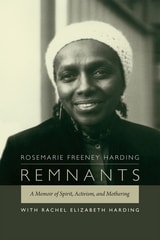
Remnants
A Memoir of Spirit, Activism, and MotheringRosemarie Freeney Harding with Rachel Elizabeth Harding
Duke University Press, 2015
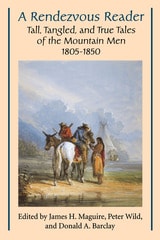
Rendezvous Reader
James H. Maguire
University of Utah Press, 1997
The early plans for Mount Rushmore called for blasting heroic likenesses of mountain men--Kit Carson, Jim Bridger, and John Colter-—into the solid mountain granite of South Dakota. Readers of this colorful volume will see the heroics and the brutally rugged individualism that made these fur trappers candidates for legend and infamy.
The accounts of the mountain men are spun from the experiences of a nation moving westward: a trapper returns from the dead; hunters feast on buffalo intestines served on a dirty blanket; a missionary woman is astounded by the violence and vulgarity of the trappers’ rendezvous. These are just a few of the narratives, tall tales, and just plain lies that make up A Rendezvous Reader.
The writers represented in this book include a dyed-in-the wool trappers, adventuring European nobles, upward-gazing eastern missionaries, and just plain hacks who never unsheathed a Green River knife or traveled farther west that the Ohio River. What these writers have in common is that all of them, whether they dealt mostly in fact of entirely in fantasy, helped to create a uniquely American icon: the mountain man.
Though A Rendezvous Reader will certainly be of interest to the historian and the historically curious, the true purpose of this anthology is to bring together in one volume the liveliest most readable accounts by and about the mountain men. Whether you sample or devour this anthology of mountain horrors and delights, it is a book guaranteed to entertain as well as inform.
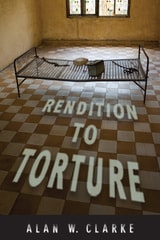
Rendition to Torture
Clarke, Alan W
Rutgers University Press, 2012
In Rendition to Torture, Alan W. Clarke explains how the United States adopted torture as a matter of official policy; how and why it turned to extraordinary rendition as a way to outsource more extreme, mutilating forms of torture; and outlines the steps the United States took to hide its abuses. Many adverse consequences attended American use of torture. False information gleaned from torture was used to justify the Iraq war, adding potency to the charge that the war was illegal under international law. Moreover, European nations and Canada aided, abetted, and became thoroughly enmeshed in U.S.-led torture and renditions, thereby spreading both the problem and the blame for this practice. Clarke offers an extended critique of these activities, placing them in historical and legal context as well as in transnational and comparative perspective.
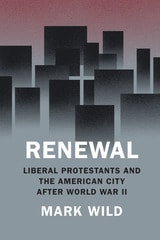
Renewal
Liberal Protestants and the American City after World War IIMark Wild
University of Chicago Press, 2019
Renewal explores the rise and fall of this movement, which began as an effort to restore the church’s standing but wound up as nothing less than an openhearted crusade to remake our nation’s cities. These campaigns reached beyond church walls to build or lend a hand to scores of organizations fighting for welfare, social justice, and community empowerment among the increasingly nonwhite urban working class. Church leaders extended their efforts far beyond traditional evangelicalism, often dovetailing with many of the contemporaneous social currents coursing through the nation, including black freedom movements and the War on Poverty.
Renewal illuminates the overlooked story of how religious institutions both shaped and were shaped by postwar urban America.
Renewal
Liberal Protestants and the American City after World War IIMark Wild
University of Chicago Press, 2019
In the decades following World War II, a movement of clergy and laity sought to restore liberal Protestantism to the center of American urban life. Chastened by their failure to avert war and the Holocaust, and troubled by missionaries’ complicity with colonial regimes, they redirected their energies back home.
Renewal explores the rise and fall of this movement, which began as an effort to restore the church’s standing but wound up as nothing less than an openhearted crusade to remake our nation’s cities. These campaigns reached beyond church walls to build or lend a hand to scores of organizations fighting for welfare, social justice, and community empowerment among the increasingly nonwhite urban working class. Church leaders extended their efforts far beyond traditional evangelicalism, often dovetailing with many of the contemporaneous social currents coursing through the nation, including black freedom movements and the War on Poverty.
Renewal illuminates the overlooked story of how religious institutions both shaped and were shaped by postwar urban America.
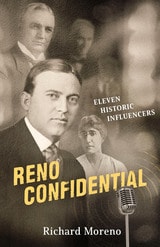
Reno Confidential
Eleven Historic InfluencersRichard Moreno
University of Nevada Press, 2027
In Reno Confidential, veteran Nevada historian Richard Moreno pulls back the curtain on the Biggest Little City to reveal eleven men and women who shaped its destiny—some celebrated, others nearly forgotten. Heavyweights like George Wingfield and William Harrah loom large, but Moreno digs deeper, spotlighting bold reformers, civil rights leaders, architects, club owners, and even underworld figures who steered Reno’s image in lasting ways.
From free-thinking mayor Edwin E. Roberts to trailblazing attorney Felice Cohn, from visionary designer Frederic DeLongchamps to colorful dealmakers working behind the scenes, these were the original influencers—long before social media—who used newspapers, politics, business, and sheer force of personality to leave their mark.
Lively, accessible, and rich with story, Reno Confidential brings the city’s past into sharp focus through eleven unforgettable characters whose ambitions, rivalries, and vision helped make Reno what it is today.
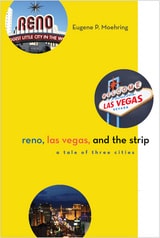
Reno, Las Vegas, and the Strip
A Tale of Three CitiesEugene P. Moehring
University of Nevada Press, 2024
Moehring brings the story of the three cities to the present day, examining lessons learned from the Great Recession and the efforts under way in all three metropolises to diversify their economies. Moehring makes an important contribution with the only current study of Nevada’s cities, focusing on urban development issues rather than social history or the gaming industry. As the service economy continues to grow, not only in Nevada but throughout the United States, Moehring’s work has many implications for urban studies and particularly the study of urban development in other metropolitan areas.
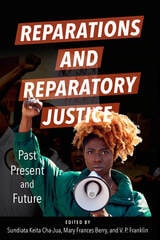
Reparations and Reparatory Justice
Past, Present, and FutureEdited by Sundiata Keita Cha-Jua, Mary Frances Berry, and V. P. Franklin
University of Illinois Press, 2024
Sharing a focus on reparations as an issue of justice, the contributors provide a historical primer of the movement; introduce the philosophical, political, economic, legal and ethical issues surrounding reparations; explain why government, corporations, universities, and other institutions must take steps to rehabilitate, compensate, and commemorate African Americans; call for the restoration of Black people’s human and civil rights and material and psychological well-being; lay out specific ideas about how reparations can and should be paid; and advance cutting-edge interpretations of the complex long-lasting effects that enslavement, police and vigilante actions, economic discrimination, and other behaviors have had on people of African descent.
Groundbreaking and innovative, Reparations and Reparatory Justice offers a multifaceted resource to anyone wishing to explore a defining moral issue of our time.
Contributors: Dedrick Asante-Muhammad, Hilary McDonald Beckles, Mary Frances Berry, Sundiata Keita Cha-Jua, Chuck Collins, Ron Daniels, V. P. Franklin, Danny Glover, Adom Gretachew, Charles Henry, Kamm Howard, Earl Ofari Hutchinson, Jesse Jackson, Sr., Brian Jones, Sheila Jackson Lee, James B. Stewart, the Movement 4 Black Lives, the National African American Reparations Commission, the National Coalition of Blacks for Reparations in America, the New Afrikan Peoples Organization/Malcolm X Grassroots Movement
Reparative Craft
Eve Kosofsky Sedgwick as a Textile ArtistJason Edwards
Duke University Press, 2026
Replaceable You
Engineering the Body in Postwar AmericaDavid Serlin
University of Chicago Press, 2004
Replaying Marc Anthony
Sonic, Political, and Cultural ResonancesFrances R. Aparicio
The Ohio State University Press, 2025

Replays, Rivalries, and Rumbles
The Most Iconic Moments in American SportsSteven Gietschier
University of Illinois Press, 2017
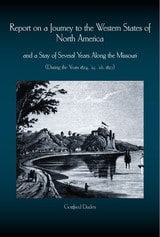
Report on a Journey to the Western States of North America
and a Stay of Several Years Along the Missouri (During the Years 1824-1827)Gottfried Duden; James W. Goodrich, General Editor; George H. Kellner, Elsa Nagel, Adolf E. Schroeder, and W. M. Senner, Editors and Translators
University of Missouri Press, 1980
The mass migrations to the United States from Europe that began in the 1830s were strongly influenced by what is known today as emigration literature--travelers' writings about their experiences in the New World. Such accounts were particularly popular with German readers; over 150 examples of the genre were published in Germany between 1827 and 1856. Gottfried Duden's Report on a Journey to the Western States of North America, published in 1829, was one of the most influential of these books. The timing, format, coverage, and literary qualities of the Report, and its idyllic descriptions of pioneer farming in Missouri, combined to make it an instant success. It attracted thousands of Germans to the Midwest, and particularly to Missouri, the focus of Duden's account. This edited and annotated translation is the first complete version to be published in English. It provides for the general public and the professional historian a significant contribution to U.S. immigration history and a unique and delightful fragment of Missouri's rich German heritage.
Duden presented his account in the form of personal letters, a style that helped make the book believable. The Mississippi- Missouri valley reminded him of his native Rhineland where the rivers facilitated trade and transportation, and fertile river bottomland offers the perfect environment for agriculture. Duden farmed the land he bought during his sojourn in Missouri, and his book includes meticulous descriptions of clearing, fencing, and harvesting. His pro-emigration bias, colored by the fact that he himself had been able to hire help on his Missouri farm, made his view of the farmer's life, it turned out, more idyllic than practical. Many would-be gentlemen farmers, inspired by his book to come to Missouri, found pioneer farming more strenuous than they had expected.
Reporting of Social Science in the National Media
Carol Weiss
Russell Sage Foundation, 1988

Reporting the Chinese Revolution
The Letters of Rayna ProhmeGregor Benton and Arthur J. Knodel
Pluto Press, 2007
The book consists of letters Prohme wrote to her closest friend and her husband in the period immediately before, during and after the Wuhan interlude. Her reporting brought her into contact with many major political figures including Madam Sun Yat-sen (a prominent figure in the opposition to Chiang Kai-shek) and Mikhail Borodin (a chief Soviet advisor in China).
This book provides an unusual and often moving insight into a fascinating period in modern Chinese history.

Represent and Destroy
Rationalizing Violence in the New Racial CapitalismJodi Melamed
University of Minnesota Press, 2011
In the global convulsions in the aftermath of World War II, one dominant world racial order broke apart and a new one emerged. This is the story Jodi Melamed tells in Represent and Destroy, portraying the postwar racial break as a transition from white supremacist modernity to a formally antiracist liberal capitalist modernity in which racial violence works normatively by policing representations of difference.
Following the institutionalization of literature as a privileged domain for Americans to get to know difference—to describe, teach, and situate themselves with respect to race—Melamed focuses on literary studies as a cultural technology for transmitting liberal racial orders. She examines official antiracism in the United States and finds that these were key to ratifying the country’s global ascendancy. She shows how racial liberalism, liberal multiculturalism, and neoliberal multiculturalism made racism appear to be disappearing, even as they incorporated the assumptions of global capitalism into accepted notions of racial equality.
Yet Represent and Destroy also recovers an anticapitalist “race radical” tradition that provides a materialist opposition to official antiracisms in the postwar United States—a literature that sounds out the violence of liberal racial orders, relinks racial inequality to material conditions, and compels desire for something better than U.S. multiculturalism.