Results by title
28164 books match the query 'History' and 1206 start with r
Religion in the New Europe
Krzysztof Michalski
Central European University Press, 2006
Religion in the Old South
Donald G. Mathews
University of Chicago Press, 1979
"A major achievement—a magnificently provocative contribution to the understanding of the history of religion in America."—William G. McLoughlin, Book Reviews
"A meticulous and well-documented study . . . In the changing connotations of the word 'liberty' lie most of the dilemmas of Southern (and American) history, dilemmas Dr. Mathews analyses with considerable penetration."—Times Literary Supplement
"The most compact and yet comprehensive view of the Old South in its religious dimension that is presently available. This is a pioneering work by one who is widely read in the sources and is creative enough to synthesize and introduce fresh themes. . . . He makes a unique contribution to southern historiography which will act as a corrective upon earlier works. . . . Boldly stated, every library that consults Choice should purchase this volume."—Choice
"Mathews presents us with the findest and grandest history of old southern religion that one could imagine finding in so short a book on so large a topic. . . . Here stands in its own right a masterpiece of regional historiography of religion in America."—William A. Clebsch, Reviews in American History
Religion is Not about God
How Spiritual Traditions Nurture our Biological Nature and What to Expect When They FailLoyal Rue
Rutgers University Press, 2006
Thousands of religious traditions have appeared over the course of human history but only a relative few have survived. Some speak of a myriad of gods, others of only one, and some recognize no gods at all. Volumes have been written attempting to prove the existence or nonexistence of supernatural being(s). So, if religion is not about God, then what is it about?
In this provocative book, Loyal Rue contends that religion, very basically, is about us. Successful religions are narrative (myth) traditions that influence human nature so that we might think, feel, and act in ways that are good for us, both individually and collectively. Through the use of images, symbols, and rituals, religion promotes reproductive fitness and survival through the facilitation of harmonious social relations. Drawing on examples from the major traditions—Judaism, Christianity, Islam, Hinduism, and Buddhism—Rue shows how each religion, in its own way, has guided human behavior to advance the twin goals of personal fulfillment and social coherence.
As all faiths are increasingly faced with a crisis of intellectual plausibility and moral relevance, this book presents a compelling and positive view of the centrality and meaning of religion.

Religion is Not about God
How Spiritual Traditions Nurture our Biological Nature and What to Expect When They FailLoyal Rue
Rutgers University Press, 2006
2006 Choice Outstanding Academic Title
Thousands of religious traditions have appeared over the course of human history but only a relative few have survived. Some speak of a myriad of gods, others of only one, and some recognize no gods at all. Volumes have been written attempting to prove the existence or nonexistence of supernatural being(s). So, if religion is not about God, then what is it about?
In this provocative book, Loyal Rue contends that religion, very basically, is about us. Successful religions are narrative (myth) traditions that influence human nature so that we might think, feel, and act in ways that are good for us, both individually and collectively. Through the use of images, symbols, and rituals, religion promotes reproductive fitness and survival through the facilitation of harmonious social relations. Drawing on examples from the major traditions—Judaism, Christianity, Islam, Hinduism, and Buddhism—Rue shows how each religion, in its own way, has guided human behavior to advance the twin goals of personal fulfillment and social coherence.
As all faiths are increasingly faced with a crisis of intellectual plausibility and moral relevance, this book presents a compelling and positive view of the centrality and meaning of religion.
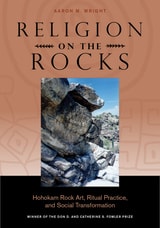
Religion on the Rocks
Hohokam Rock Art, Ritual Practice, and Social TransformationAaron M. Wright
University of Utah Press, 2014
We are nearly all intrigued by the petroglyphs and pictographs of the American Southwest, and we commonly ask what they “mean”. Religion on the Rocks redirects our attention to the equally important matter of what compelled ancient peoples to craft rock art in the first place. To examine this question, Aaron Wright presents a case study from Arizona's South Mountains, an area once flanked by several densely populated Hohokam villages. Synthesizing results from recent archaeological surveys, he explores how the mountains' petroglyphs were woven into the broader cultural landscape and argues that the petroglyphs are relics of a bygone ritual system in which people vied for prestige and power by controlling religious knowledge. The features and strategic placement of the rock art suggest this dimension of Hohokam ritual was participatory and prominent in village life. Around AD 1100, however, petroglyph creation and other ritual practices began to wane, denoting a broad transformation of the Hohokam social world. Wright’s examination of the South Mountains petroglyphs offers a novel narrative of how Hohokam villagers negotiated a concentration of politico-religious authority around platform mounds. Readers will come away with a better understanding of the Hohokam legacy and a greater appreciation for rock art's value to anthropology.
Religion, Empire, and Torture
The Case of Achaemenian Persia, with a Postscript on Abu GhraibBruce Lincoln
University of Chicago Press, 2007
Lincoln identifies three core components of an imperial theology that have transhistorical and contemporary relevance: dualistic ethics, a theory of divine election, and a sense of salvific mission. Beyond this, he asks, how did the Achaemenians understand their place in the cosmos and their moral status in relation to others? Why did they feel called to intervene in the struggle between good and evil? What was their sense of historic purpose, especially their desire to restore paradise lost? And how did this lead them to deal with enemies and critics as imperial power ran its course? Lincoln shows how these religious ideas shaped Achaemenian practice and brought the Persians unprecedented wealth, power, and territory, but also produced unmanageable contradictions, as in a gruesome case of torture discussed in the book’s final chapter. Close study of that episode leads Lincoln back to the present with a postscript that provides a searing and utterly novel perspective on the photographs from Abu Ghraib.
Religion, History, and Place in the Origin of Settled Life
Ian Hodder
University Press of Colorado, 2018
Contributors argue that the long-term social relationships characteristic of delayed-return agricultural systems must be based on historical ties to place and to ancestors. They define different forms of history-making, including nondiscursive routinized practices as well as commemorative memorialization. They consider the timing in the Neolithic of an emerging concern with history-making in place in relation to the adoption of farming and settled life in regional sequences. They explore whether such correlations indicate the causal processes in which history-making, ritual practices, agricultural intensification, population increase, and social competition all played a role.
Religion, History, and Place in the Origin of Settled Life takes a major step forward in understanding the adoption of farming and a settled way of life in the Middle East by foregrounding the roles of history-making and religious ritual. This work is relevant to students and scholars of Near Eastern archaeology, as well as those interested in the origins of agriculture and social complexity or the social role of religion in the past.
Contributors: Kurt W. Alt, Mark R. Anspach, Marion Benz, Lee Clare, Anna Belfer-Cohen, Morris Cohen, Oliver Dietrich, Güneş Duru, Yilmaz S. Erdal, Nigel Goring-Morris, Ian Hodder, Rosemary A. Joyce, Nicola Lercari, Wendy Matthews, Jens Notroff, Vecihi Özkaya, Feridun S. Şahin, F. Leron Shults, Devrim Sönmez, Christina Tsoraki, Wesley Wildman
Religion, Media, and Marginality in Modern Africa
Felicitas Becker
Ohio University Press, 2018
In recent years, anthropologists, historians, and others have been drawn to study the profuse and creative usages of digital media by religious movements. At the same time, scholars of Christian Africa have long been concerned with the history of textual culture, the politics of Bible translation, and the status of the vernacular in Christianity. Students of Islam in Africa have similarly examined politics of knowledge, the transmission of learning in written form, and the influence of new media. Until now, however, these arenas—Christianity and Islam, digital media and “old” media—have been studied separately.
Religion, Media, and Marginality in Modern Africa is one of the first volumes to put new media and old media into significant conversation with one another, and also offers a rare comparison between Christianity and Islam in Africa. The contributors find many previously unacknowledged correspondences among different media and between the two faiths. In the process they challenge the technological determinism—the notion that certain types of media generate particular forms of religious expression—that haunts many studies. In evaluating how media usage and religious commitment intersect in the social, cultural, and political landscapes of modern Africa, this collection will contribute to the development of new paradigms for media and religious studies.
Contributors: Heike Behrend, Andre Chappatte, Maria Frahm-Arp, David Gordon, Liz Gunner, Bruce S. Hall, Sean Hanretta, Jorg Haustein, Katrien Pype, and Asonzeh Ukah.
Religion, Order, and Law
David Little
University of Chicago Press, 1984
Religion, Politics, and Sugar
The LDS Church, the Federal Government, and the Utah-Idaho Sugar Company, 1907-1927Matthew C. Godfrey
Utah State University Press, 2007
Mary Lois Walker Morris was a Mormon woman who challenged both American ideas about marriage and the U.S. legal system. Before the Manifesto provides a glimpse into her world as the polygamous wife of a prominent Salt Lake City businessman, during a time of great transition in Utah. This account of her life as a convert, milliner, active community member, mother, and wife begins in England, where her family joined the Mormon church, details her journey across the plains, and describes life in Utah in the 1880s. Her experiences were unusual as, following her first husband's deathbed request, she married his brother as a plural wife in the Old Testament tradition of levirate marriage.
Mary Morris's memoir frames her 1879 to 1887 diary with both reflections on earlier years and passages that parallel entries in the day book, giving readers a better understanding of how she retrospectively saw her life. The thoroughly annotated diary offers the daily experience of a woman who kept a largely self-sufficient household, had a wide social network, ran her own business, wrote poetry, and was intellectually curious. The years of "the Raid" (federal prosecution of polygamists) led Mary and Elias Morris to hide their marriage on "the underground," and her to perjury during Elias's trial for unlawful cohabitation. The book ends with Mary Lois's arrival at the Salt Lake Depot after three years in exile in Mexico with a polygamist colony.
Religious Change in Post-Mao China
Toward a New Sociology of ReligionYanfei Sun
University of Chicago Press, 2026
In Religious Change in Post-Mao China, sociologist Yanfei Sun examines the transformation of major religions and the broader religious ecology in China in the wake of the death of Mao Zedong. Drawing on two decades of research that integrates ethnographic, historical, and comparative methods, this book explores the remarkable rise of Protestantism, the challenges faced by Catholicism, the revival of Chinese popular religion, the complex dynamics of Chinese Buddhism, and the unrealized potential of new religious movements. Why do some religions thrive and others struggle in post-Mao China? Sun describes both the internal institutional factors that allow some religions to flourish and the wider sociopolitical context that supports or discourages religious expansion. She thereby introduces an ambitious theoretical framework—one whose applicability extends beyond China, offering a template for analyzing religious dynamics in other parts of the world.
A must-read for scholars of religious studies, sociology, and China studies, Religious Change in Post-Mao China not only provides critical insights into China’s evolving religious landscape but also offers a powerful lens for examining the forces behind religious change, both past and present.
Religious Competition in the Greco-Roman World
Nathaniel P. DesRosiers
SBL Press, 2016
Essays that broaden the historical scope and sharpen the parameters of competitive discourses
Scholars in the fields of late antique Christianity, neoplatonism, New Testament, art history, and rabbinics examine issues related to authority, identity, and change in religious and philosophical traditions of late antiquity. The specific focus of the volume is the examination of cultural producers and their particular viewpoints and agendas in an attempt to shed new light on the religious thinkers, texts, and material remains of late antiquity. The essays explore the major creative movements of the era, examining the strategies used to develop and designate orthodoxies and orthopraxies. This collection of essays reinterprets dialogues between individuals and groups, illuminating the mutual competition and influence among these ancient thinkers and communities.
Features:
- Essays feature competitive discourse as the central organizing theme
- Articles present unique theoretical models that are adaptable to different contexts and highly applicable to religious discourses before and after the Late Antique Period
- Scholars cover a much wider range of traditions including Judaism, Christianity, paganism, and philosophy in order to provide the most complete portrait of the religious landscape
Religious Crisis and Civic Transformation
How Conflicts over Gender and Sexuality Changed the West German Catholic ChurchKimba Allie Tichenor
Brandeis University Press, 2016
Religious Entanglements
Central African Pentecostalism, the Creation of Cultural Knowledge, and the Making of the Luba KatangaDavid Maxwell
University of Wisconsin Press, 2023
Through the careful reconstruction of knowledge pathways, Maxwell brings into focus the role of Africans in shaping texts, collections, and images as well as in challenging and adapting Western-imported presuppositions and prejudices. Ultimately, Maxwell illustrates the mutually constitutive nature of discourses of identity in colonial Africa and reveals not only how the Luba shaped missionary research but also how these coproducers of knowledge constructed and critiqued custom and convened new ethnic communities.
Making a significant intervention in the study of both the history of African Christianity and the cultural transformations effected by missionary encounters across the globe, Religious Entanglements excavates the subculture of African Pentecostalism, revealing its potentiality for radical sociocultural change.
Religious Experience in the Work of Richard Wagner
Marcel Hebert
Catholic University of America Press, 2015
Religious Failure, Geopolitics, and Forced Displacement in Russia, Eastern Europe, and the South Caucasus
Lucian N. Leustean
Central European University Press, 2026
Religious Freedom after the Sexual Revolution
A Catholic GuideHelen Alvare
Catholic University of America Press, 2022
Religious Intolerance, America, and the World
A History of Forgetting and RememberingJohn Corrigan
University of Chicago Press, 2020
Religious Intolerance, America, and the World spans from Christian colonists’ intolerance of Native Americans and the role of religion in the new republic’s foreign-policy crises to Cold War witch hunts and the persecution complexes that entangle Christians and Muslims today. Corrigan reveals how US churches and institutions have continuously campaigned against intolerance overseas even as they’ve abetted or performed it at home. This selective condemnation of intolerance, he shows, created a legacy of foreign policy interventions promoting religious freedom and human rights that was not reflected within America’s own borders. This timely, captivating book forces America to confront its claims of exceptionalism based on religious liberty—and perhaps begin to break the grotesque cycle of projection and oppression.
Religious Intolerance, America, and the World
A History of Forgetting and RememberingJohn Corrigan
University of Chicago Press, 2020
This is an auto-narrated audiobook edition of this book.
As the news shows us every day, contemporary American culture and politics are rife with people who demonize their enemies by projecting their own failings and flaws onto them. But this is no recent development. Rather, as John Corrigan argues here, it’s an expression of a trauma endemic to America’s history, particularly involving our long domestic record of religious conflict and violence.
Religious Intolerance, America, and the World spans from Christian colonists’ intolerance of Native Americans and the role of religion in the new republic’s foreign-policy crises to Cold War witch hunts and the persecution complexes that entangle Christians and Muslims today. Corrigan reveals how US churches and institutions have continuously campaigned against intolerance overseas even as they’ve abetted or performed it at home. This selective condemnation of intolerance, he shows, created a legacy of foreign policy interventions promoting religious freedom and human rights that was not reflected within America’s own borders. This timely, captivating book forces America to confront its claims of exceptionalism based on religious liberty—and perhaps begin to break the grotesque cycle of projection and oppression.
Religious Knowledge, Authority, and Charisma
Islamic and Jewish PerspectivesDaphna Ephrat
University of Utah Press, 2014
The issue of religious authority has long fascinated and ignited scholars across a range of disciplines: history, anthropology, the sociology of religion, and political science. Religious Knowledge, Authority, and Charisma juxtaposes religious leadership in premodern and modern Islam with examples from the Judaic tradition. By illustrating various iterations of authority in numerous historical and cultural contexts, this volume offers fresh insights into the nature of institutions of learning and other systems of establishing and disseminating authority, the mechanisms for cultivating committed adherents, and the processes by which religious leadership is polarized and fragmented.
Religious Liberty and the American Founding
Natural Rights and the Original Meanings of the First Amendment Religion ClausesVincent Phillip Muñoz
University of Chicago Press, 2022
The Founders understood religious liberty to be an inalienable natural right. Vincent Phillip Muñoz explains what this means for church-state constitutional law, uncovering what we can and cannot determine about the original meanings of the First Amendment’s Religion Clauses and constructing a natural rights jurisprudence of religious liberty.
Drawing on early state constitutions, declarations of religious freedom, Founding-era debates, and the First Amendment’s drafting record, Muñoz demonstrates that adherence to the Founders’ political philosophy would lead neither to consistently conservative nor consistently liberal results. Rather, adopting the Founders’ understanding would lead to a minimalist church-state jurisprudence that, in most cases, would return authority from the judiciary to the American people. Thorough and convincing, Religious Liberty and the American Founding is key reading for those seeking to understand the Founders’ political philosophy of religious freedom and the First Amendment Religion Clauses.
Religious Liberty in America
The First Amendment in Historical and Contemporary PerspectiveBruce T. Murray
University of Massachusetts Press, 2008
A nation founded on church-state separation is still debating where the line is drawn
In recent years a series of highly publicized controversies has focused attention on what are arguably the sixteen most important words in the U.S. Constitution: “Congress shall make no law respecting an establishment of religion, or prohibiting the free exercise thereof.” The ongoing court battles over the inclusion of the words “under God” in the Pledge of Allegiance, the now annual cultural quarrel over “Merry Christmas” vs. “Happy Holidays,” and the political promotion of “faith-based initiatives” to address social problems—all reflect competing views of the meaning of the religious liberty clauses of the First Amendment.
Such disputes, as Bruce T. Murray shows, are nothing new. For more than two hundred years Americans have disagreed about the proper role of religion in public life and where to draw the line between church and state. In this book, he reexamines these debates and distills the volumes of commentary and case law they have generated. He analyzes not only the changing contours of religious freedom but also the phenomenon of American civil religion, grounded in the notion that the nation's purpose is sanctified by a higher authority—an idea that can be traced back to the earliest New England colonists and remains deeply ingrained in the American psyche.
Throughout the book, Murray connects past and present, tracing the historical roots of contemporary controversies. He considers why it is that a country founded on the separation of church and state remains singularly religious among nations, and concludes by showing how the Supreme Court's thinking about the religious liberty clauses has evolved since the late eighteenth century.

Reload
Rethinking Violence in American LifeChristopher B. Strain
Vanderbilt University Press, 2011
When incidents of extreme violence flare in America, all too often they are framed as isolated aberrations. Nothing could be further from the truth, as Christopher Strain argues in his new book, Reload: Rethinking Violence in American Life. The unpleasant fact, as he reveals in this highly readable study, is that American violence is inextricably woven into the fabric of our national heritage and experience.
In Reload, Strain traces our modern-day conception of violence from the struggle to survive on the American frontier, through evolving gender roles in recent centuries, to the hysteria surrounding video and role-playing games and the more recent disturbing phenomenon of school shootings. Strain shapes nothing less than a profound meditation on American violence and a "primer" on understanding what can often appear to be a profoundly dangerous nation.
In addition to serving as a comprehensive overview of the state of violence in America, Reload also suggests ways of combating the trends that lead to tragedy.
Relocating Authority
Japanese Americans Writing to Redress Mass IncarcerationMira Shimabukuro
University Press of Colorado, 2015
Relocating Authority examines the ways Japanese Americans have continually used writing to respond to the circumstances of their community’s mass imprisonment during World War II. Using both Nikkei cultural frameworks and community-specific history for methodological inspiration and guidance, Mira Shimabukuro shows how writing was used privately and publicly to individually survive and collectively resist the conditions of incarceration.
Examining a wide range of diverse texts and literacy practices such as diary entries, note-taking, manifestos, and multiple drafts of single documents, Relocating Authority draws upon community archives, visual histories, and Asian American history and theory to reveal the ways writing has served as a critical tool for incarcerees and their descendants. Incarcerees not only used writing to redress the “internment” in the moment but also created pieces of text that enabled and inspired further redress long after the camps had closed.
Relocating Authority highlights literacy’s enduring potential to participate in social change and assist an imprisoned people in relocating authority away from their captors and back to their community and themselves. It will be of great interest to students and scholars of ethnic and Asian American rhetorics, American studies, and anyone interested in the relationship between literacy and social justice.
Relocating Eden
The Image and Politics of Inuit Exile in the Canadian ArcticAlan Rudolph Marcus
Dartmouth College Press, 1995
Reluctant Interveners
America's Failed Responses to Genocide from Bosnia to DarfurEyal Mayroz
Rutgers University Press, 2020
Featured in the 2020 Association of University Presses Book, Jacket, and Journal Show
Why do we allow our governments to get away with “bystanding” to genocide? How can we, when alerted to the mass slaughter of innocents, still not take a stand? Reluctant Interveners provides the most comprehensive answers yet to these confronting questions, focusing on the complex relationships between the citizenry, the media, the political elites, and institutions in the most powerful nation in the world, the United States of America.
Eyal Mayroz offers a sobering account of the interactions between the governing and the governed, and the dynamics which transformed moral concerns for the lives of faraway “others” into cold political calculations. Exposed are the processes that turned the promise of “never again” to a recurring reality of ever again, the role of the office of the presidency in their advancement, and the resultant image of America as seen by the rest of the world. In a time of ubiquitous social media and populist revival, a greater role for the U.S. citizenry in decision-making on responses to genocide may be in the cards. The question is, in which directions will these trends take American foreign policy?
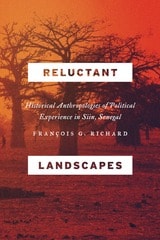
Reluctant Landscapes
Historical Anthropologies of Political Experience in Siin, SenegalFrancois G. Richard
University of Chicago Press, 2018
Reluctant Landscapes is an exploration of the making and remaking of political experience and physical landscapes among rural communities in the Siin province of Senegal between the late 1500s and the onset of World War II. By recovering the histories of farmers and commoners who made up African states’ demographic core in this period, Richard shows their crucial—but often overlooked—role in the making of Siin history. The book also delves into the fraught relation between the Seereer, a minority ethnic and religious group, and the Senegalese nation-state, with Siin’s perceived “primitive” conservatism standing at odds with the country’s Islamic modernity. Through a deep engagement with oral, documentary, archaeological, and ethnographic archives, Richard’s groundbreaking study revisits the four-hundred-year history of a rural community shunted to the margins of Senegal’s national imagination.
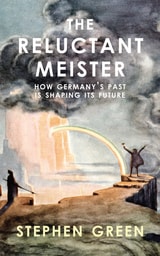
Reluctant Meister
How Germany's Past is Shaping Its European FutureStephen Green
Haus Publishing, 2014
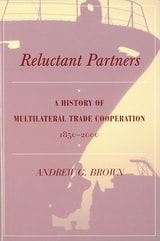
Reluctant Partners
A History of Multilateral Trade Cooperation, 1850-2000Andrew G. Brown
University of Michigan Press, 2003
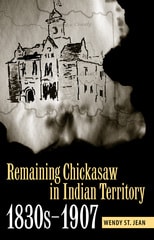
Remaining Chickasaw in Indian Territory, 1830s-1907
Wendy St. Jean
University of Alabama Press, 2011
In the early 1800s, the U.S. government attempted to rid the Southeast of Indians in order to make way for trading networks, American immigration, optimal land use, economic development opportunities, and, ultimately, territorial expansion westward to the Pacific. The difficult removal of the Chickasaw Nation to Indian Territory—later to become part of the state of Oklahoma— was exacerbated by the U.S. government’s unenlightened decision to place the Chickasaws on lands it had previously provided solely for the Choctaw Nation.
This volume deals with the challenges the Chickasaw people had from attacking Texans and Plains Indians, the tribe’s ex-slaves, the influence on the tribe of intermarried white men, and the presence of illegal aliens (U.S. citizens) in their territory. By focusing on the tribal and U.S. government policy conflicts, as well as longstanding attempts of the Chickasaw people to remain culturally unique, St. Jean reveals the successes and failures of the Chickasaw in attaining and maintaining sovereignty as a separate and distinct Chickasaw Nation.
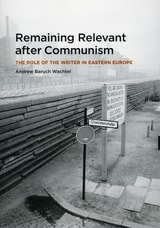
Remaining Relevant after Communism
The Role of the Writer in Eastern EuropeAndrew Baruch Wachtel
University of Chicago Press, 2005
According to Andrew Baruch Wachtel, the fall of the Berlin Wall and the creation of fledgling societies in Eastern Europe brought an end to the conditions that put the region's writers on a pedestal. In the euphoria that accompanied democracy and free markets, writers were liberated from the burden of grandiose political expectations. But no group is happy to lose its influence: despite recognizing that their exalted social position was related to their reputation for challenging political oppression, such writers have worked hard to retain their status, inventing a series of new strategies for this purpose. Remaining Relevant after Communism considers these strategies—from pulp fiction to public service—documenting what has happened on the East European scene since 1989.
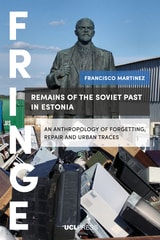
Remains of the Soviet Past in Estonia
An Anthropology of Forgetting, Repair and Urban TracesFrancisco Martinez
University College London, 2018
Francisco Martinez brings together a number of sites of interest to explore the vanquishing of the Soviet legacy in Estonia: a street market in Tallinn where concepts such as "market" and "employment" take on distinctly different meanings from their Western use; Linnahall, a multi-purpose venue, whose Soviet heritage now poses difficult questions of how to present the building’s history; Tallinn’s cityscape, where the social, spatial, and temporal coevolution of the city can be viewed and debated; Narva, a city that marks the border between the Russian Federation, NATO, and the European Union and represents a place of continual negotiation; and the new Estonian National Museum in Raadi, an area on the outskirts of Tartu that has avoided promoting a single narrative of the past.
By exploring these places of cultural and historical significance, which all contribute to our understanding of how the new generation in Estonia is not following the expectations and values of its predecessor, the book also demonstrates how we can understand generational change in a material sense.
Remake, Remodel
Women's Magazines in the Digital AgeBrooke Erin Duffy
University of Illinois Press, 2013
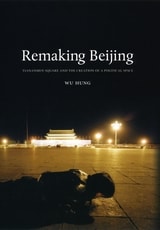
Remaking Beijing
Tiananmen Square and the Creation of a Political SpaceWu Hung
University of Chicago Press, 2005
Wu Hung grew up in Beijing and experienced much of the city's makeover firsthand. In this lavishly illustrated work, he offers a vivid, often personal account of the struggle over Beijing's reinvention, drawing particular attention to Tiananmen Square—the most sacred space in the People's Republic of China. Remaking Beijing considers the square's transformation from a restricted imperial domain into a public arena for political expression, from an epic symbol of socialism into a holy relic of the Maoist regime, and from an official and monumental complex into a site for unofficial and antigovernment demonstrations.
Wu Hung also explores how Tiananmen Square has become a touchstone for official art in modern China—as the site for Mao's monumental portrait, as the location of museums narrating revolutionary history, and as the grounds for extravagant National Day parades celebrating the revolutionary masses. He then shows how in recent years the square has inspired artists working without state sponsorship to create paintings, photographs, and even performances that reflect the spirit of the 1989 uprisings and pose a forceful challenge to official artworks and the sociopolitical system that supports them.
Remaking Beijing will reward anyone interested in modern Chinese history, society, and art, or, more generally, in how urban renewal becomes intertwined with cultural and national politics.
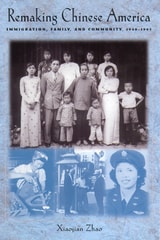
Remaking Chinese America
Immigration, Family, and Community, 1940-1965Zhao, Xiaojian
Rutgers University Press, 2001
In Remaking Chinese America, Xiaojian Zhao explores the myriad forces that changed and unified Chinese Americans during a key period in American history. Prior to 1940, this immigrant community was predominantly male, but between 1940 and 1965 it was transformed into a family-centered American ethnic community. Zhao pays special attention to forces both inside and outside of the country in order to explain these changing demographics. She scrutinizes the repealed exclusion laws and the immigration laws enacted after 1940. Careful attention is also paid to evolving gender roles, since women constituted the majority of newcomers, significantly changing the sex ratio of the Chinese American population.
As members of a minority sharing a common cultural heritage as well as pressures from the larger society, Chinese Americans networked and struggled to gain equal rights during the cold war period. In defining the political circumstances that brought the Chinese together as a cohesive political body, Zhao also delves into the complexities they faced when questioning their personal national allegiances. Remaking Chinese America uses a wealth of primary sources, including oral histories, newspapers, genealogical documents, and immigration files to illuminate what it was like to be Chinese living in the United States during a period that—until now—has been little studied.
Remaking Modernity
Politics, History, and SociologyJulia Adams, Elisabeth S. Clemens, Ann Shola Orloff, eds.
Duke University Press, 2005
The contributors represent a wide variety of theoretical orientations and a broad spectrum of understandings of what constitutes historical sociology. They address such topics as religion, war, citizenship, markets, professions, gender and welfare, colonialism, ethnicity, bureaucracy, revolutions, collective action, and the modernist social sciences themselves. Remaking Modernity includes a significant introduction in which the editors consider prior orientations in historical sociology in order to analyze the field’s resurgence. They show how current research is building on and challenging previous work through attention to institutionalism, rational choice, the cultural turn, feminist theories and approaches, and colonialism and the racial formations of empire.
Contributors. Julia Adams, Justin Baer, Richard Biernacki, Bruce Carruthers, Elisabeth Clemens, Rebecca Jean Emigh, Russell Faeges, Philip Gorski, Roger Gould, Meyer Kestnbaum, Edgar Kiser, Ming-Cheng Lo, Zine Magubane, Ann Shola Orloff, Nader Sohrabi, Margaret Somers, Lyn Spillman, George Steinmetz
Remaking Muslim Lives
Everyday Islam in Postwar Bosnia and HerzegovinaDavid Henig
University of Illinois Press, 2020
Provocative and laden with eyewitness detail, Remaking Muslim Lives offers a rare sustained look at what it means to be Muslim and live a Muslim life in contemporary Bosnia and Herzegovina.

Remaking Rwanda
State Building and Human Rights after Mass ViolenceScott Straus
University of Wisconsin Press, 2011
Remaking the Citizen for New Times
History, Pedagogy and the Amar Chitra KathaDeepa Sreenivas
Seagull Books, 2024
How does orthodoxy maintain its power over culture? In Remaking the Citizen for New Times, Deepa Sreenivas explores how the Amar Chitra Katha, a widely read comic series started in 1967 in India, influenced the historical and national consciousness of young readers in a conservative direction. Tacitly blaming Nehruvian welfarism of the time for the moral decline of the nation, the Amar Chitra Katha emerged as a literary articulation of the Indian right’s Hindu-nationalist ideology in a modern, bourgeois guise. To renew Hindutva hegemony, the comic series gave orthodox ideas a new sheen, both in its form and content, merging Western comic styles with Indian visual storytelling traditions on the one hand, and combining mythological characters with political figureheads into harmonious narratives on the other—making it difficult to sift history from myths and legends. Sreenivas deftly argues that these mythological-political tales emphasized the instructive rather than the informative potential of history, encouraging neoliberal values such as merit and hard work while ignoring caste or class as systemic issues.
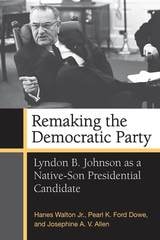
Remaking the Democratic Party
Lyndon B. Johnson as a Native-Son Presidential CandidateHanes Walton Jr., Pearl K. Ford Dowe, and Josephine A. V. Allen
University of Michigan Press, 2016
Although ridiculed by contemporaries for his apparent lack of control over formal party politics and the national committee, Johnson excelled at leading the Democratic Party’s policy agenda. While a senator and as president, Johnson advocated for—and secured—liberal social welfare and civil rights legislation, forcing the party to break with its Southern tradition of elitism, conservatism, and white supremacy. In a way, Johnson set the terms for the continuing partisan battle because, by countering the Democrats’ new ideology, the Republican Party also underwent a transformation.
Remapping Biblical Studies
CUREMP at ThirtyStephanie Buckhanon Crowder
SBL Press, 2023
Remapping Black Germany
New Perspectives on Afro-German History, Politics, and CultureSara Lennox
University of Massachusetts Press, 2016
In 1984 at the Free University of Berlin, the African American poet Audre Lorde asked her Black, German-speaking women students about their identities. The women revealed that they had no common term to describe themselves and had until then lacked a way to identify their shared interests and concerns. Out of Lorde's seminar emerged both the term “Afro-German” (or “Black German”) and the 1986 publication of the volume that appeared in English translation as Showing Our Colors: Afro-German Women Speak Out. The book launched a movement that has since catalyzed activism and scholarship in Germany.
Remapping Black Germany collects thirteen pieces that consider the wide array of issues facing Black German groups and individuals across turbulent periods, spanning the German colonial period, National Socialism, divided Germany, and the enormous outpouring of Black German creativity after 1986.
In addition to the editor, the contributors include Robert Bernasconi, Tina Campt, Maria I. Diedrich, Maureen Maisha Eggers, Fatima El-Tayeb, Heide Fehrenbach, Dirk Göttsche, Felicitas Jaima, Katja Kinder, Tobias Nagl, Katharina Oguntoye, Peggy Piesche, Christian Rogowski, and Nicola Lauré al-Samarai.
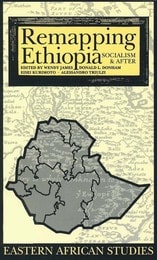
Remapping Ethiopia
Socialism & AfterWendy James
Ohio University Press, 2002
Governance everywhere is concerned with spatial relationships. Modern states “map” local communities, making them legible for the purposes of control. Ethiopia has gone through several stages of “mapping” in its imperial, revolutionary, and postrevolutionary phases.
In 1986 The Southern Marches of Imperial Ethiopia, a cross-disciplinary collection edited by Don Donham and Wendy James, opened up the study of center/periphery relations in the Ethiopian empire until the fall of the monarchy in 1974. This new volume examines similar themes, taking the story forward through the major changes effected by the socialist regime from the revolution of 1974 to its overthrow in 1991, and then into the current period that has been marked by moves toward local democracy and political devolution.
Topics include the changing fortunes of new and historic towns and cities, the impact of the Mengistu regime’s policies of villagization and resettlement, local aspects of the struggle against Mengistu and its aftermath, and the fate of border regions. Special attention is given to developments since 1991: to new local institutions and forms of autonomy, the links between the international diasporas of Ethiopia and the fortunes of their home areas. The collection draws on the work of established scholars as well as a new generation of Ethiopian and international researchers in the disciplines of anthropology, political science, history, and geography.
Remapping Sovereignty
Decolonization and Self-Determination in North American Indigenous Political ThoughtDavid Myer Temin
University of Chicago Press, 2023
An examination of anticolonial thought and practice across key Indigenous thinkers.
Accounts of decolonization routinely neglect Indigenous societies, yet Native communities have made unique contributions to anticolonial thought and activism. Remapping Sovereignty examines how twentieth-century Indigenous activists in North America debated questions of decolonization and self-determination, developing distinctive conceptual approaches that both resonate with and reformulate key strands in other civil rights and global decolonization movements. In contrast to decolonization projects that envisioned liberation through state sovereignty, Indigenous theorists emphasized the self-determination of peoples against sovereign state supremacy and articulated a visionary politics of decolonization as earthmaking. Temin traces the interplay between anticolonial thought and practice across key thinkers, interweaving history and textual analysis. He shows how these insights broaden the political and intellectual horizons open to us today.
Remapping the History of Catholicism in the United States
David J. Endres
Catholic University of America Press, 2017
Timothy Matovina’s opening essay sets the theme for the volume, encouraging a remapping of U.S. Catholic history to more widely encompass its various localities and peoples, especially the significance of non-European ethnic groups and the role of Catholics in the American Southwest. Jeanne Petit explores Catholic womanhood’s strength and organizational zeal in the post-World War I era, noting the obstacles and successes of women’s attempts to be recognized fully as American citizens and members of the Church. Anne Klejment weaves together the lives of Dorothy Day and Cesar Chavez to illustrate their use of nonviolence and “weapons of the spirit” to respond to societal injustice. Amanda Bresie provides a window into the life of Mother Katharine Drexel, noting the generosity of the millionaire heiress, but also her meticulous record keeping and close supervision of her funding of educational and evangelization eorts among Native and African Americans. Kristine Ashton Gunnell analyzes the ways in which the Daughters of Charity crossed cultural boundaries to offer charitable assistance to Mexican and Japanese communities in Los Angeles. Matthew Cressler explores the intersection of Black Power and distinctive African American-inspired liturgies, arguing that the liturgy became a site of struggle as black self-determination and nationalism impacted worship and black Catholic identity. Finally, Joseph Chinnici offers an important essay on re-envisioning post-conciliar U.S. Catholicism in its global context, offering a new approach to how we consider the American Catholic narrative and write its history.
Together these path-breaking studies serve as a model for historians seeking to engage in the cartographic task of remapping the U.S. Catholic experience.
Remarkable Curiosity
Dispatches from a New York City Journalist's 1873 Railroad Trip across the American WestJerald T. Milanich
University Press of Colorado, 2008
Although today he is virtually unknown, during his lifetime Cummings was one of the most famous newspapermen in the United States, in part because of stories like these. Complete with a biographical sketch and historical introduction, A Remarkable Curiosity is an enjoyable read for anybody interested in the American West in the latter half of the nineteenth century.
Remarkable Plants That Shape Our World
Helen Bynum and William Bynum
University of Chicago Press, 2014
Remarkable Plants celebrates the wonder and utility of the green kingdom, taking a detailed look at how plants have shaped our world. It focuses on eighty key species and richly explores their history, highlighting their importance and bringing to light surprising stories. Organized thematically into eight sections, the book starts with “Transformers” (including rice, beans, olives) and moves through sections such as “Heal and Harm” (poppy, aloe, strychnos) and “Revered and Adored” (lotus, frankincense, rose). Each species is introduced with its common and scientific names and followed by an exploration of its cultural, historical, botanical, and symbolic associations. Hundreds of botanical illustrations show full plants as well as highlight distinctive leaves, blooms, and fruits.
Rooted in one of the world’s most important and renowned temples of greenery, the Royal Botanic Gardens, Kew, Remarkable Plants is a symbiotic balance of science and art that will open readers’ eyes to the deep influence of the natural world on our modern one.
Remarks on the Philosophy of Psychology, Volume 1
Ludwig Wittgenstein
University of Chicago Press, 1980
This bilingual edition of the Remarks on the Philosophy of Psychology presents the first English translation of an essential body of Wittegenstein's work. It elaborates Wittgenstein's views on psychological concepts such as expectation, sensation, knowing how to follow a rule, and knowledge of the sensations of other persons. It also shows strong emphasis on the "anthropological" aspect of Wittgenstein's thought. Philosophers, as well as anthropologists, psychologists, and sociologists will welcome this important publication.
Rembrandt's Enterprise
The Studio and the MarketSvetlana Alpers
University of Chicago Press, 1990
"With the publication [of Rembrandt's Enterprise], Svetlana Alpers has firmly established herself in the front ranks of art historians at work today. . . . The book is not a long one. Yet, there is more perceptive scholarship packed into its four chapters than is typically found in a whole shelf of the more common outpourings of academic writers. Rembrandt's Enterprise is less a book of archival discoveries than of fresh interpretation of the revered artist and his milieu. . . . Alpers makes us see how Rembrandt's complex and enormously popular art has embedded itself in our ways of thinking about who we are and how we live, even in the late 20th century."—Christopher Knight, Los Angeles Herald Examiner
Rembrandt's Jews
Steven Nadler
University of Chicago Press, 2004
Rembrandt's Jews puts this myth to the test as it examines both the legend and the reality of Rembrandt's relationship to Jews and Judaism. In his elegantly written and engrossing tour of Jewish Amsterdam—which begins in 1653 as workers are repairing Rembrandt's Portuguese-Jewish neighbor's house and completely disrupting the artist's life and livelihood—Steven Nadler tells us the stories of the artist's portraits of Jewish sitters, of his mundane and often contentious dealings with his neighbors in the Jewish quarter of Amsterdam, and of the tolerant setting that city provided for Sephardic and Ashkenazic Jews fleeing persecution in other parts of Europe. As Nadler shows, Rembrandt was only one of a number of prominent seventeenth-century Dutch painters and draftsmen who found inspiration in Jewish subjects. Looking at other artists, such as the landscape painter Jacob van Ruisdael and Emmanuel de Witte, a celebrated painter of architectural interiors, Nadler is able to build a deep and complex account of the remarkable relationship between Dutch and Jewish cultures in the period, evidenced in the dispassionate, even ordinary ways in which Jews and their religion are represented—far from the demonization and grotesque caricatures, the iconography of the outsider, so often found in depictions of Jews during the Middle Ages and the Renaissance.
Through his close look at paintings, etchings, and drawings; in his discussion of intellectual and social life during the Dutch Golden Age; and even through his own travels in pursuit of his subject, Nadler takes the reader through Jewish Amsterdam then and now—a trip that, under ever-threatening Dutch skies, is full of colorful and eccentric personalities, fiery debates, and magnificent art.