Results by title
18284 books match the query 'United States' and 833 start with r
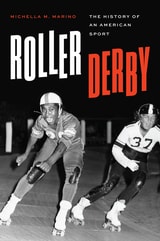
Roller Derby
The History of an American SportBy Michella M. Marino
University of Texas Press, 2021
Since 1935, roller derby has thrilled fans and skaters with its constant action, hard hits, and edgy attitude. However, though its participants’ athleticism is undeniable, roller derby has never been accepted as a “real” sport. Michella M. Marino, herself a former skater, tackles the history of a sport that has long been a cultural mainstay for one reason both utterly simple and infinitely complex: roller derby has always been coed.
Richly illustrated and drawing on oral histories, archival materials, media coverage, and personal experiences, Roller Derby is the first comprehensive history of this cultural phenomenon, one enjoyed by millions yet spurned by mainstream gatekeepers. Amid the social constraints of the mid-twentieth century, roller derby’s emphasis on gender equality attracted male and female athletes alike, producing gender relations and gender politics unlike those of traditional sex-segregated sports. In an enlightening feminist critique, Marino considers how the promotion of pregnancy and motherhood by roller derby management has simultaneously challenged and conformed to social norms. Finally, Marino assesses the sport’s present and future after its resurgence in the 2000s.
Rolling on the River
The Best of Steve NealSteve Neal. Foreword by Paul Simon
Southern Illinois University Press, 1999
The longtime political columnist for the Chicago Sun-Times, Neal covered Jane M. Byrne's election in 1979 as the city's first woman mayor and Harold Washington's 1983 triumph as Chicago's first African American mayor. Even people who are not interested in politics are drawn to Neal's column because of his hard-hitting style and lucid insights. Rolling on the River is the first published collection of his work.
In these pages, you'll meet the state legislator who never met a special interest he did not like, an alderman groveling to a mob boss, and the prosecutor who gained notoriety as a publicity hound. Of a junketing congressman, Neal writes: "Instead of sending out a congressional newsletter, [he] ought to be sending his constituents 'Wish you were here' postcards of sandy beaches."
Neal's beat is politics, but his interests are rich and varied. He also writes about sports, music, literature, and film with a point of view that is fresh and original. Neal shows how Muhammad Ali became the heavyweight champion who transcended sports and how Sid Luckman changed football. He writes of Kenny Washington's importance in breaking professional football's color barrier and Steve Prefontaine's courage in taking on the little gray men of the sports establishment. Neal chronicles Paul Robeson's struggles: "His name became a great whisper. . . . The injustices against Paul Robeson have not been righted."
Nobel laureate Saul Bellow tells Neal that comedy is the bright hope of American fiction because it is too difficult for writers in this country to grasp the worst of the human condition. Neal tells why Frank Sinatra called Chicago his kind of town and also shows how the city inspires the poetry of Gwendolyn Brooks.
Neal, a former White House correspondent, shares his perspective as one of the few reporters to have interviewed Ronald Reagan in four different decades. He recalls spending an evening with Richard M. Nixon, defends Harry Truman's most controversial decision, and writes from Ireland of John F. Kennedy's enduring legacy in the nation of his ancestors. Neal portrays William Jefferson Clinton as the "world's oldest teenager."
With vivid imagery, Neal makes his subjects come alive. Mayor Richard M. Daley is likened to Forrest Gump, and the legendary boxing announcer Ben Bentley is hailed as the last of the Damon Runyon characters.
Tough but fair. Illuminating. Compassionate. That's the best of Steve Neal.
Roman Holidays
American Writers and Artists in Nineteenth-Century ItalyRobert K. Martin
University of Iowa Press, 2001
Romance Of The Road
Literature Of The American HighwayRonald Primeau
University of Wisconsin Press, 1996
Writers examined include Jack Kerouac, Jim Dodge, Ralph Waldo Emerson, William Least Heat Moon, Robert M. Pirsig, Henry Miller, Joan Didion, Mona Simpson, and Walt Whitman.
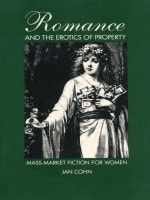
Romance and the Erotics of Property
Mass-Market Fiction for WomenJan Cohn
Duke University Press, 1988
Cohn argues that a full understanding of the contemporary romance requires an investigation of its literary and historical sources and analogues. Three principal sources are examined in the context of women's history in bourgeois society. Pride and Prejudice, Jane Erye, and Gone With the Wind demonstrate the development of romance fiction's themes, yet in all three the central love story is complicated by issues of property, the sign of male power. Jan Cohn further considers the development of the genre n the fictions of Harriet Lewis and May Agnes Fleming, prolific and popular American romance writers of the late nineteenth century who developed the role of the villain, thereby bringing into focus the sexual and economic struggles faced by the heroine.
Romance and the Erotics of Property sets romance fiction against a historic and literary background, arguing that contemporary romance disguises as tales of love the subversive fantasies of female appropriation and male property and power.
Romance of Commerce and Culture
Capitalism, Modernism, and the Chicago-Aspen Crusade for Cultural Reform, Revised EditionJames Sloan Allen
University Press of Colorado, 2002
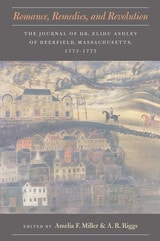
Romance, Remedies, and Revolution
The Journal of Dr. Elihu Ashley of Deerfield, Massachusetts, 1773-1775Edited by Amelia F. Miller and A. R. Riggs
University of Massachusetts Press, 2007
With flashes of humor and close attention to detail, Ashley describes a broad range of activities and experiences in the small village of Deerfield and the surrounding towns of the Connecticut River valley. Articulate as well as observant, this former schoolteacher conveys a sense of immediacy that brings even the most mundane daily events to life. He discusses medical theory and practice, revolutionary politics, farming, his family, his circle of friends, and amusements ranging from singing and dancing to sleigh riding and bouts of drunkenness. He also writes about his love life, including a dalliance with the older sister of his fiancee, Polly Williams, while the latter is away visiting relatives in the Berkshires.
For Ashley, personal relationships and politics were the prominent issues of 1773 and 1774, as events in Massachusetts drew the province toward rebellion. He discusses the gathering of angry mobs in response to the so-called Intolerable Acts, the stoppage of the courts in Hampshire County, the anarchy that ensued, and the persecution of loyalists, with or without the sanction of law. When the revolution breaks out in April 1775, he describes the departure of companies of minutemen as they set out for Boston to challenge the British Army.
Six months later, in November 1775, the journal abruptly ends. By then, however, Elihu Ashley had already bequeathed to posterity an extraordinary firsthand account of life in rural New England in the years immediately preceding the War of Independence.
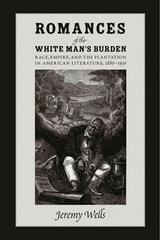
Romances of the White Man's Burden
Race, Empire, and the Plantation in American Literature, 1880-1936Jeremy Wells
Vanderbilt University Press, 2011
Romances of the White Man's Burden takes on works in American literature in which the proverbial "old plantation" is made to seem not a relic but a harbinger, a sign that the South had arrived at a multiracial modernity and harmony before the rest of the United States. Focusing on writers such as Joel Chandler Harris, Thomas Nelson Page, Henry W. Grady, Thomas Dixon, and William Faulkner, Jeremy Wells reveals their shared fixation on the figure of the white southern man as specially burdened by history. Each of these writers, in his own way, presented the plantation South as an emblem, not an aberration, of America.
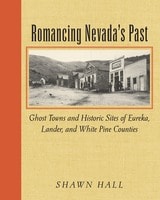
Romancing Nevada's Past
Ghost Towns And Historic Sites Of Eureka, Lander, And White Pine CountiesShawn Hall
University of Nevada Press, 1993

Romancing the Maya
Mexican Antiquity in the American Imagination, 1820-1915By R. Tripp Evans
University of Texas Press, 2004
During Mexico's first century of independence, European and American explorers rediscovered its pre-Hispanic past. Finding the jungle-covered ruins of lost cities and artifacts inscribed with unintelligible hieroglyphs—and having no idea of the age, authorship, or purpose of these antiquities—amateur archaeologists, artists, photographers, and religious writers set about claiming Mexico's pre-Hispanic patrimony as a rightful part of the United States' cultural heritage.
In this insightful work, Tripp Evans explores why nineteenth-century Americans felt entitled to appropriate Mexico's cultural heritage as the United States' own. He focuses in particular on five well-known figures—American writer and amateur archaeologist John Lloyd Stephens, British architect Frederick Catherwood, Joseph Smith, founder of the Church of Jesus Christ of Latter-Day Saints, and the French émigré photographers Désiré Charnay and Augustus Le Plongeon. Setting these figures in historical and cultural context, Evans uncovers their varying motives, including the Manifest Destiny-inspired desire to create a national museum of American antiquities in New York City, the attempt to identify the ancient Maya as part of the Lost Tribes of Israel (and so substantiate the Book of Mormon), and the hope of proving that ancient Mesoamerica was the cradle of North American and even Northern European civilization. Fascinating stories in themselves, these accounts of the first explorers also add an important new chapter to the early history of Mesoamerican archaeology.
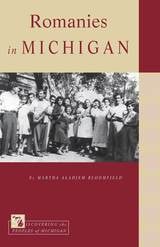
Romanies in Michigan
Martha Aladjem Bloomfield
Michigan State University Press, 2019
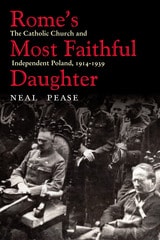
Rome’s Most Faithful Daughter
The Catholic Church and Independent Poland, 1914–1939Neal Pease
Ohio University Press, 2009
When an independent Poland reappeared on the map of Europe after World War I, it was widely regarded as the most Catholic country on the continent, as “Rome’s Most Faithful Daughter.” All the same, the relations of the Second Polish Republic with the Church—both its representatives inside the country and the Holy See itself—proved far more difficult than expected.
Based on original research in the libraries and depositories of four countries, including recently opened collections in the Vatican Secret Archives, Rome’s Most Faithful Daughter: The Catholic Church and Independent Poland, 1914–1939 presents the first scholarly history of the close but complex political relationship of Poland with the Catholic Church during the interwar period. Neal Pease addresses, for example, the centrality of Poland in the Vatican’s plans to convert the Soviet Union to Catholicism and the curious reluctance of each successive Polish government to play the role assigned to it. He also reveals the complicated story of the relations of Polish Catholicism with Jews, Freemasons, and other minorities within the country and what the response of Pope Pius XII to the Nazi German invasion of Poland in 1939 can tell us about his controversial policies during World War II.
Both authoritative and lively, Rome’s Most Faithful Daughter shows that the tensions generated by the interplay of church and state in Polish public life exerted great influence not only on the history of Poland but also on the wider Catholic world in the era between the wars.
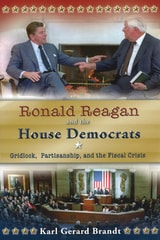
Ronald Reagan and the House Democrats
Gridlock, Partisanship, and the Fiscal CrisisKarl Gerard Brandt
University of Missouri Press, 2009
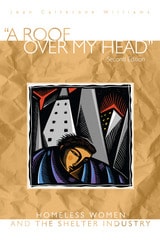
Roof Over My Head, Second Edition
Homeless Women and the Shelter IndustryJean Calterone Williams
University Press of Colorado, 2016
Based upon extensive ethnographic data, “A Roof Over My Head” examines the lives of homeless women who cope with domestic violence, low-income housing shortages, and poverty. The author draws upon interviews with homeless women, interviews with housed people, and, finally, evaluations of shelter services, philosophies, and policies to get at the causes and social constructions of homelessness. “A Roof Over My Head” is a groundbreaking study that unveils the centrality of abuse and poverty in homeless women’s lives and outlines ways in which societal responses can and should be more effective.
The second edition explores recent attempts to integrate homeless and battered women’s shelters and recent research on domestic violence as a cause of homelessness. It contains a new introduction that analyzes the most recent homeless policy developments and paints a picture of the homeless population today. With updated statistics and policy information throughout, the second edition of “A Roof Over My Head” illustrates why ending homelessness in the United States continues to present a thorny and complex challenge.
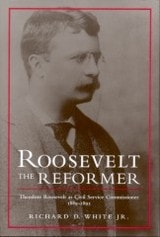
Roosevelt the Reformer
Theodore Roosevelt as Civil Service Commissioner, 1889-1895Richard D. White Jr
University of Alabama Press, 2003
Discover the overlooked years that forged Theodore Roosevelt’s reforming spirit, revealing how bureaucratic battles shaped a future president and transformed American government forever
Roosevelt the Reformer is a compelling scholarly biography that uncovers a neglected chapter of Theodore Roosevelt’s life: his six-year tenure as U.S. Civil Service Commissioner from 1889 to 1895. Rather than focusing on his presidency or battlefield exploits, the book reveals how Roosevelt’s administrative work shaped his reformist zeal, political skills, and enduring impact on American governance. Through vivid narrative and careful analysis, it shows how this “quiet” period contributed directly to the modernization of the federal government and the emergence of the merit-based civil service.
Structured chronologically, the book traces each year of Roosevelt’s commissionership while weaving together political events, personal life, and broader social context. It draws on rich primary sources—letters, speeches, and contemporary accounts—and includes scholarly features such as notes, bibliography, and index. Richard D. White Jr., a historian of American political development, combines narrative storytelling with rigorous research to illuminate Roosevelt’s battles with patronage politics, his reform strategies, and his growing administrative expertise.
This book will appeal to historians, political scientists, and general readers interested in the Gilded Age, the Progressive Era, and the origins of modern government. It is especially valuable for readers seeking fresh perspectives on Theodore Roosevelt, public administration, or reform movements, offering both an engaging biography and a nuanced study of how institutions and leaders are transformed.
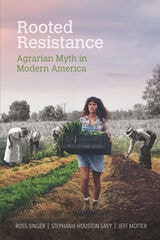
Rooted Resistance
Agrarian Myth in Modern AmericaNorie R. Singer
University of Arkansas Press, 2020
Through a careful examination of several case studies, Rooted Resistance traverses the ground of agrarian myth in modern America. The authors investigate key figures and movements in the history of modern agrarianism, including the World War I victory garden efforts, the postwar Country Life movement for the vindication of farmers’ rights, the Southern Agrarian critique of industrialism, and the practical and spiritual prophecy of organic farming put forth by J. I. Rodale. This critical history is then brought up to date with recent examples such as the contested South Central Farm in urban Los Angeles and the spectacular rise and fall of the Chipotle “Food with Integrity” branding campaign.
By examining a range of case studies, Singer, Grey, and Motter aim for a deeper critical understanding of the many applications of agrarian myth and reveal why it can help provide a pathway for positive systemic change in the food system.
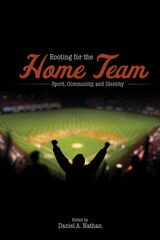
Rooting for the Home Team
Edited by Daniel A. Nathan
University of Illinois Press, 2013
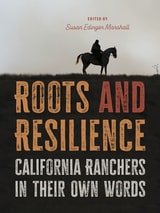
Roots and Resilience
California Ranchers in Their Own WordsSusan Edinger Marshall
University of Nevada Press, 2024
The editors have drawn together these stories, poems, and musings from ranchers across the state, calling upon real people to share their experiences, and beckoning readers to find a shared understanding concerning often divisive land-use topics. Many perspectives are considered, including those of transplanted suburbanites to seventh-generation heirs. Notably, many women’s writings are including in the book, offering unique and valuable perspectives on ranching culture.
Roots and Resilience gives voice to California’s Indigenous, Mexican American, Basque and other European American ranchers, asking the reader to find common ground in the name of land stewardship and conservation.
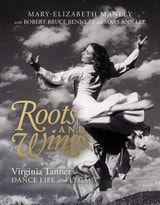
Roots and Wings
Virginia Tanner's Dance Life and LegacyMary-Elizabeth Manley with Mary Ann Lee and Robert Bruce Bennett
University of Utah Press, 2023
Roots and Wings recounts Virginia Tanner’s remarkable career as a dancer, artist, and educator. From her early experiences assisting at Evelyn Davis’s dance school in Washington, DC, to the creation of the Tanner Dance Program at the University of Utah, her influence on the field was pervasive. She channeled children’s energy, sharpened their senses, and encouraged youthful, authentic dance expression.
Manley’s extensive archival research and personal interviews depict Virginia Tanner as an innovative dance artist and ambitious leader in the field of modern dance. While exploring Tanner’s story, Roots and Wings emphasizes the value of unique instructional methodologies for teaching dance to young children and the vital role the arts play in children’s lives. Tanner’s work endures, continuing to echo with sensitivity and spirit in young dancers throughout the United States and abroad.

Roots of Disorder
Race and Criminal Justice in the American South, 1817-80Christopher Waldrep
University of Illinois Press, 1998
"Delivers what no other study has yet attempted. . . . Waldrep's book is one of the first systematically to use local trial data to explore questions of society and culture." -- Vernon Burton, author of "A Gentleman and an Officer": A Social and Military History of James B. Griffin's Civil War
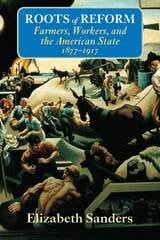
Roots of Reform
Farmers, Workers, and the American State, 1877-1917Elizabeth Sanders
University of Chicago Press, 1999
Based on new evidence from legislative records and other sources, Sanders shows that this tenuous alliance of "producers versus plutocrats" shaped early regulatory legislation, remained powerful through the populist and progressive eras, and developed a characteristic method of democratic state expansion with continued relevance for subsequent reform movements.
Roots of Reform is essential reading for anyone interested in this crucial period of American political development.
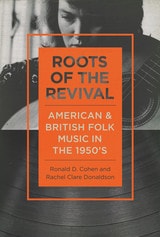
Roots of the Revival
American and British Folk Music in the 1950sRonald D. Cohen and Rachel Clare Donaldson
University of Illinois Press, 2014
After setting the stage with the work of music collectors in the nineteenth century, the authors explore the so-called recovery of folk music practices and performers by Alan Lomax and others, including journeys to and within the British Isles that allowed artists and folk music advocates to absorb native forms and facilitate the music's transatlantic exchange. Cohen and Donaldson place the musical and cultural connections of the twin revivals within the decade's social and musical milieu and grapple with the performers' leftist political agendas and artistic challenges, including the fierce debates over "authenticity" in practice and repertoire that erupted when artists like Harry Belafonte and the Kingston Trio carried folk into the popular music mainstream.
From work songs to skiffle, from the Weavers in Greenwich Village to Burl Ives on the BBC, Roots of the Revival offers a frank and wide-ranging consideration of a time, a movement, and a transformative period in American and British pop culture.
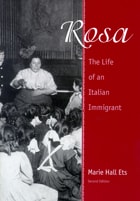
Rosa
The Life of an Italian ImmigrantMarie Hall Ets
University of Wisconsin Press, 1999
This is the life story of Rosa Cavalleri, an Italian woman who came to the United States in 1884, one of the peak years in the nineteenth-century wave of immigration. A vivid, richly detailed account, the narrative traces Rosa’s life in an Italian peasant village and later in Chicago. Marie Hall Ets, a social worker and friend of Rosa’s at the Chicago Commons settlement house during the years following World War I, meticulously wrote down her lively stories to create this book.
Rosa was born in a silk-making village in Lombardy, a major source of north Italian emigration; she first set foot in the United States at the Castle Garden immigrant depot on the tip of Manhattan. Her life in this country was hard and Ets chronicles it in eloquent detail—Rosa endures a marriage at sixteen to an abusive older man, an unwilling migration to a Missouri mining town, and the unassisted birth of a child, and manages to escape from a husband who tried to force her into prostitution. Rosa’s exuberant personality, remarkable spirit, and ability as a storyteller distinguish this book, a unique contribution to the annals of U.S. immigration.
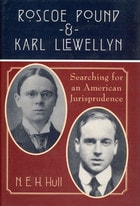
Roscoe Pound and Karl Llewellyn
Searching for an American JurisprudenceN. E. H. Hull
University of Chicago Press, 1997
Through meticulous archival research, Hull shows how the intellectual battles of the day took place against a network of private and public relationships and demonstrates how Pound's and Llewellyn's ideas of jurisprudence sprang from a kind of intellectual bricolage, the pragmatic assemblage of parts rather than the development of a unified whole, that is peculiarly American. Humorous, engaging, and provocative, Roscoe Pound and Karl Llewellyn uncovers the roots of American jurisprudence in the lives of two of its most compelling figures.
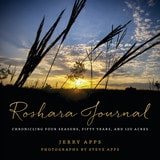
Roshara Journal
Chronicling Four Seasons, Fifty Years, and 120 AcresJerry Apps
Wisconsin Historical Society Press, 2016
A photographic diary of a small Midwestern farm and the family who’ve made it their home
In Roshara Journal, father-and-son team Jerry and Steve Apps share the monthly happenings at their family’s farm in central Wisconsin. Featuring Steve’s stunning photos and fifty years of Jerry’s journal entries, Roshara Journal captures the changes—both from month to month and over the decades—on the landscape and farmstead.
The Apps family has owned Roshara since 1966. There they nurture a prairie restoration and pine plantation, maintain a large garden that feeds three generations, observe wildlife species by the dozens, and support a population of endangered butterflies. In documenting life on this piece of land, Jerry and Steve remind us how, despite the pace and challenges of modern life, the seasons continue to influence our lives in ways large and small. Jerry explains that his journal entries become much more than mere observations: "It seems that when I write about something—a bur oak tree, for example—that old tree becomes a part of me. . . . Writing takes me to a place that goes beyond observation and understanding, a place filled with feeling and meaning."
In the tradition of Bernd Heinrich in Maine, Barry Lopez in the Canadian Arctic, and Aldo Leopold just an hour down the road in Baraboo, Jerry and Steve Apps combine observation, experience, and reflection to tell a profound story about one place in the world.
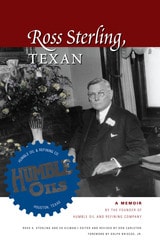
Ross Sterling, Texan
A Memoir by the Founder of Humble Oil and Refining CompanyBy Ross S. Sterling and Ed Kilman
University of Texas Press, 2007
Born on a farm near Anahuac, Texas, in 1875 and possessed of only a fourth-grade education, Ross Sterling was one of the most successful Texans of his generation. Driven by a relentless work ethic, he become a wealthy oilman, banker, newspaper publisher, and, from 1931 to 1933, one-term governor of Texas. Sterling was the principal founder of the Humble Oil and Refining Company, which eventually became the largest division of the ExxonMobil Corporation, as well as the owner of the Houston Post.
Eager to "preserve a narrative record of his life and deeds," Ross Sterling hired Ed Kilman, an old friend and editorial page editor of the Houston Post, to write his biography. Though the book was nearly finished before Sterling's death in 1949, it never found a publisher due to Kilman's florid writing style and overly hagiographic portrayal of Sterling.
In this volume, by contrast, editor Don Carleton uses the original oral history dictated by Ross Sterling to Ed Kilman to present the former governor's life story in his own words. Sterling vividly describes his formative years, early business ventures, and active role in developing the Texas oil industry. He also recalls his political career, from his appointment to the Texas Highway Commission to his term as governor, ending with his controversial defeat for reelection by "Ma" Ferguson. Sterling's reminiscences constitute an important primary source not only on the life of a Texan who deserves to be more widely remembered, but also on the history of Houston and the growth of the American oil industry.
Rotten Boroughs, Political Thickets, and Legislative Donnybrooks
Redistricting in TexasEdited by Gary A. Keith
University of Texas Press, 2013
Every ten years, the Texas legislature redistricts itself and the state’s congressional districts in an attempt to ensure equality in representation. With a richly textured cultural fabric, Texas often experiences redistricting battles that are heated enough to gain national attention. Collecting a variety of voices, including legislators themselves, in addition to lawyers, community organizers, political historians, and political scientists, Rotten Boroughs, Political Thickets, and Legislative Donnybrooks delivers a multidimensional picture of how redistricting works in Texas today, and how the process evolved.
In addition to editor Gary Keith’s historical narrative, which emphasizes the aftermath of the Warren Court’s redistricting decisions, longtime litigators David Richards and J. D. Pauerstein describe the contentious lines drawn from the 1970s into the 2000s. Former state legislator and congressman Craig Washington provides an insider’s view, while redistricting attorney and grassroots organizer Jose Garza describes the repercussions for Mexican Americans in Texas. Balancing these essays with a quantitative perspective, political scientists Seth McKee and Mark McKenzie analyze the voting data for the 2000 decade to describe the outcomes of redistricting. The result is a timely tour that provides up-to-date context, particularly on the role of the Voting Rights Act in the twenty-first century. From local community engagement to the halls of the Capitol, this is the definitive portrait of redistricting and its repercussions for all Texans.
Rough Justice
Lynching and American Society, 1874-1947Michael J. Pfeifer
University of Illinois Press, 2004
Rough Metaphysics
The Speculative Thought and Mediumship of Jane RobertsPeter Skafish
University of Minnesota Press, 2023
A powerful case for why anthropology should study outsiders of thought and their speculative ideas
What sort of thinking is needed to study anomalies in thought? In this trenchantly argued and beautifully written book, anthropologist Peter Skafish explores this provocative question by examining the writings of the medium and “rough metaphysician” Jane Roberts (1929–1984). Through a close interpretation of her own published texts as well as those she understood herself to have dictated for her cohort of channeled personalities—including one, named “Seth,” who would inspire the New Age movement—Skafish shows her intuitive and dreamlike work to be a source of rigorously inventive ideas about science, ontology, translation, and pluralism. Arguing that Roberts’s writings contain philosophies ahead of their time, he also asks: How might our understanding of speculative thinking change if we consider the way untrained writers, occult visionaries, and their counterparts in other cultural traditions undertake it? What can outsider thinkers teach us about the limitations of even our most critical intellectual habits?
Rough Metaphysics is at once an ethnography of the books of a strange and yet remarkable writer, a commentary on the unlikely philosophy contained in them, and a call for a new way of doing (and undoing) philosophy through anthropology, and vice versa. In guiding the reader through Roberts’s often hallucinatory “world of concepts,” Skafish also develops a series of original interpretations of thinkers—from William James to Claude Lévi-Strauss to Paul Feyerabend—who have been vital to anthropologists and their fellow travelers.
Seductively written and surprising in its turns of thought, Rough Metaphysics is a feast for anyone who wants to learn how to think something new, especially about thought.
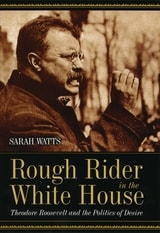
Rough Rider in the White House
Theodore Roosevelt and the Politics of DesireSarah Watts
University of Chicago Press, 2003
In this book, Sarah Watts probes this dark side of the Rough Rider, presenting a fascinating psychological portrait of a man whose personal obsession with masculinity profoundly influenced the fate of a nation. Drawing on his own writings and on media representations of him, Watts attributes the wide appeal of Roosevelt's style of manhood to the way it addressed the hopes and anxieties of men of his time. Like many of his contemporaries, Roosevelt struggled with what it meant to be a man in the modern era. He saw two foes within himself: a fragile weakling and a primitive beast. The weakling he punished and toughened with rigorous, manly pursuits such as hunting, horseback riding, and war. The beast he unleashed through brutal criticism of homosexuals, immigrants, pacifists, and sissies—anyone who might tarnish the nation's veneer of strength and vigor. With his unabashed paeans to violence and aggressive politics, Roosevelt ultimately offered American men a chance to project their longings and fears onto the nation and its policies. In this way he harnessed the primitive energy of men's desires to propel the march of American civilization—over the bodies of anyone who might stand in its way.
Written with passion and precision, this powerful revisioning of an American icon will forever alter the way we see Theodore Roosevelt and his political legacy.
"A superb scholarly study of how Roosevelt built his political base on the aspiration and fears of men in a rapidly changing nation and world."—Charles K. Piehl, Library Journal
"A thought-provoking and innovative study of the dark side of Roosevelt's personality. . . . [Watt's] arguments are clear, passionate, and thoroughly supported."—Elizabeth A. Bennion, Journal of Interdisciplinary History
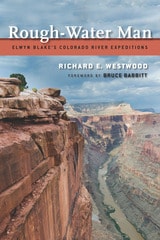
Rough-Water Man
Elwyn Blake'S Colorado River ExpeditionsRichard E. Westwood
University of Nevada Press, 2013
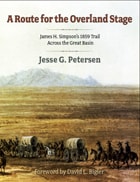
Route for the Overland Stage
James H. Simpson's 1859 Trail Across the Great BasinJesse G. Petersen
Utah State University Press, 2008
The 1859 exploration of the Great Basin by army topographical engineer James Simpson opened up one of the West's most important transportation and communication corridors, a vital link between the Pacific Coast and the rest of the nation. It became the route of the Pony Express and the Overland Mail and Stage, the line of the Pacific telegraph, a major wagon road for freighters and emigrants, and, later, the first transcontinental auto road, the Lincoln Highway, now Highway 50.
No one has accurately tracked or mapped Simpson's original route, until now. Jesse Petersen shows in words, maps, and photos exactly where the explorer went. Sharing his detective-like reasoning as he walked or drove the entire trail west and Simpson's variant route returning east, Petersen takes readers on a mountain and desert trek through some of America's most remote and striking landscapes.
Routing the Opposition
Social Movements, Public Policy, and DemocracyDavid S. Meyer
University of Minnesota Press, 2005
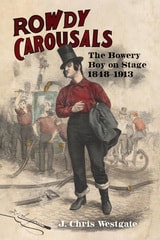
Rowdy Carousals
The Bowery Boy on Stage, 1848-1913J. Chris Westgate
University of Iowa Press, 2024
The book’s examination of working-class whiteness on stage, in the theatre, and in print culture invites theatre historians and critics to check the impulse to downplay or ignore questions about race and ethnicity in discussion of the Bowery Boy. J. Chris Westgate further explores links between the Bowery Boy’s rowdyism in the nineteenth century and the resurgence of white supremacy in the early twenty-first century.
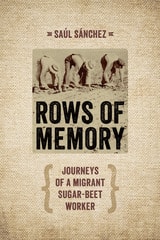
Rows of Memory
Journeys of a Migrant Sugar-Beet WorkerSaul Sanchez
University of Iowa Press, 2014
Rows of Memory tells his story and the story of his family and other migrant farm laborers like them, people who endured dangerous, dirty conditions and low pay, surviving because they took care of each other. Facing racism both on the road and at home, they lived a largely segregated life only occasionally breached by friendly employers.
Despite starting school late and leaving early every year and having to learn English on the fly, young Saúl succeeded academically. At the same time that Mexican Americans in South Texas upended the Anglo-dominated social order by voting their own leaders into local government, he upended his family’s order by deciding to go to college. Like many migrant children, he knew that his decision to pursue an education meant he would no longer be able to help feed and clothe the rest of his family. Nevertheless, with his parents’ support, he went to college, graduating in 1967 and, after a final display of his skill with a short hoe for his new friends, abandoned migrant labor for teaching.
In looking back at his youth, Sánchez invites us to appreciate the largely unrecognized and poorly rewarded strength and skill of the laborers who harvest the fruits and vegetables we eat. A first-person portrait of life on the bottom rung of the food system, this coming-of-age tale illuminates both the history of Latinos in the United States and the human consequences of industrial agriculture.
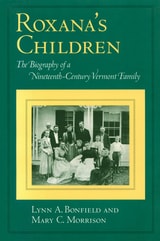
Roxana's Children
The Biography of a Nineteenth-Century Vermont FamilyLynn A. Bonfield
University of Massachusetts Press, 1995
Roy Orbison
Invention Of An Alternative Rock MasculinityPeter Lehman
Temple University Press, 2003
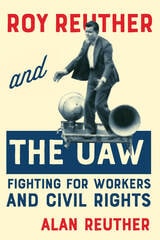
Roy Reuther and the UAW
Fighting for Workers and Civil RightsAlan Reuther
Michigan State University Press, 2025
Many of the injustices that Reuther fought continue to plague America today. This book provides important context for the current efforts of workers to organize, for the Black Lives Matter movement, and for efforts to reform the filibuster rule and stop voter suppression. It shows how dedicated individuals can overcome enormous odds to win great victories for social justice and emphasizes the potential connections between the labor and civil rights movements, offering hope for a more just future.
Rubbish!
The Archaeology of GarbageWilliam Rathje and Cullen Murphy
University of Arizona Press, 2001
Rube Tube
CBS and Rural Comedy in the SixtiesSara K. Eskridge
University of Missouri Press, 2022
Rude Democracy
Civility and Incivility in American PoliticsAuthored by Susan Herbst
Temple University Press, 2020
Democracy is, by its very nature, often rude. But there are limits to how uncivil we should be. In her timely and important book, Rude Democracy, Susan Herbst explores the ways we discuss public policy, how we treat each other as we do, and how we can create a more civil national culture.
Herbst uses the examples of Sarah Palin and Barack Obama to illustrate her case. She scrutinizes Palin as both victim and perpetrator of incivility, including close analysis of her speeches on the 2008 campaign trail, the tone at her rallies, and her interactions with her audience. Turning to Barack Obama, Herbst argues that a key 2009 speech reveals much about his own perspective on American civility as it pertains to contentious issues such as abortion, and notes, too, what the controversy surrounding the speech reveals about the nature of public opinion in the United States. She also dissects Palin’s and Obama’s roles in the 2009 health care debate. Finally, in a fascinating chapter, Herbst examines how young people come to form their own attitudes about civility and political argument.
In Rude Democracy, Susan Herbst insists that Americans need to recognize the bad tendencies and habits we have developed, use new media for more effective debate, and develop a tougher and more strategic political skin. She urges us to boost both the intelligence and productivity of our debates, noting that the effort demands a commitment to the nature of argument itself. Rude Democracy outlines a plan for moving forward and creating a more civil climate for American politics.
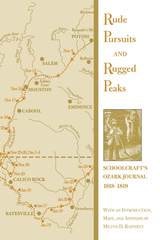
Rude Pursuits and Rugged Peaks
Schoolcraft's Ozark Journal, 1818-1819H. Schoolcraft
University of Arkansas Press, 1996
The journal kept by Schoolcraft as he traveled ninety days in the rugged terrain of southern Missouri and northern Arkansas was originally published in 1821 and has become an essential record of Ozark territorial society and natural history documenting some of the earliest American settlers in the region, the power and beauty of many lost portions of the White River, the majesty of the open prairies, and the wealth of wildlife once found in the Ozarks.
Rudo Ensayo
A Description of Sonora and Arizona in 1764Juan Nentvig; Translated, Clarified, and Annotated by Alberto Francisco Pradeau and Robert R. Rasmussen
University of Arizona Press, 1980
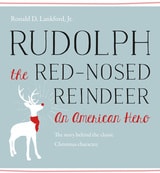
Rudolph the Red-Nosed Reindeer
An American HeroRonald D. Lankford
University Press of New England, 2016
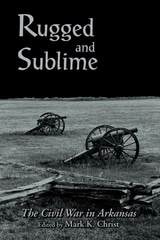
Rugged and Sublime
The Civil War in ArkansasMark Christ
University of Arkansas Press, 1994
When one thinks of the American Civil War, such names as Vicksburg, Gettysburg, and Chancellorsville come immediately to mind. Few recall the battles in the Trans-Mississippi theater.
Rugged and Sublime goes a long way toward filling regrettable blanks in our memory of Arkansas’s role in Civil War. It explore the major clashes and locales of the war, including the state secession convention, seizure of the Little Rock Arsenal, the Battle of Wilson’s Creek, the Pea Ridge campaign, Marmaduke’s invasion of Missouri, the Battle of Helena, and the fall of Little Rock, as well as other actions. Rounding out this new and very readable account are studies of the devolution of Arkansas society when bands of guerillas and jayhawkers menaced the state, the surrender of the Confederate armies, and an assessment of losses.
Rule Of Racialization
Class, Identity, GovernanceSteve Martinot
Temple University Press, 2002
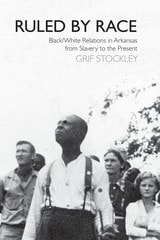
Ruled by Race
Black/White Relations in Arkansas From Slavery to the PresentGrif Stockley
University of Arkansas Press, 2008
Winner of the 2010 Booker Worthen Literary Prize, and the 2009 Ragsdale Award.
From the Civil War to Reconstruction, the Redeemer period, Jim Crow, and the modern civil rights era to the present, Ruled by Race describes the ways that race has been at the center of much of the state’s formation and image since its founding. Grif Stockley uses the work of published and unpublished historians and exhaustive primary source materials along with stories from authors as diverse as Maya Angelou and E. Lynn Harris to bring to life the voices of those who have both studied and lived the racial experience in Arkansas.
Topics range from the well-known Little Rock Central High Crisis of 1957 to lesser-known events such as the Elaine Race Massacres of 1919 and the shocking yet sadly commonplace attitudes found in newspaper reports and speeches. Through the words of the most powerful Arkansans such as racist Arkansas Govenor Jeff Davis (1901–1906) to the least powerful, including an unflinching look at the narratives of former slaves, readers will come away with increased awareness of the ways that race continues to affect where Arkansans live, send their children to school, work, travel, shop, spend leisure time, worship, and choose their friends and life partners.
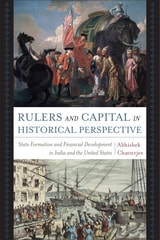
Rulers and Capital in Historical Perspective
State Formation and Financial Development in India and the United StatesAbhishek Chatterjee
Temple University Press, 2017
Rulers and Capital in Historical Perspective explains why modern banking and credit systems emerged in the nineteenth century only in certain countries that then subsequently industrialized and became developed.
Tracing the contemporaneous cases of India and the United States over time, Abhishek Chatterjee identifies the factors that were crucial to the development and regulation of a modern banking and credit system in the United States during the first third of the nineteenth century. He contrasts this situation with India’s, where the state never formally incorporated a sophisticated private credit system, and thus relegated it to the sphere of the informal economy.
Chatterjee identifies certain features in both societies, often—though not always—associated with colonialism, that tended to restrict the formation of modern institutionalized money and credit markets. Rulers and Capital in Historical Perspective demonstrates thatnotwithstanding the many other differences between the North American colonies (prior to independence), and India, the same facets of their relationships with Great Britain prevented the emergence of a modern banking system in the two respective societies.
Rules and Precepts of the Jesuit Missions of Northwestern New Spain
Charles W. Polzer
University of Arizona Press, 1976
Rules and Restraint
Government Spending and the Design of InstitutionsDavid M. Primo
University of Chicago Press, 2007
One reason budget rules are ineffective, David Primo shows, is that politicians often create and preserve loopholes to protect programs that benefit their constituents. Another reason is that legislators must enforce their own provisions, an arrangement that is seriously compromised by their unwillingness to abide by rules that demand short-term sacrifices for the sake of long-term gain. Convinced that budget rules enacted through such a flawed legislative process are unlikely to work, Primo ultimately calls for a careful debate over the advantages and drawbacks of a constitutional convention initiated by the states—a radical step that would bypass Congress to create a path toward change. Rules and Restraint will be required reading for anyone interested in institutional design, legislatures, and policymaking.