Results by title
28167 books match the query 'History' and 1206 start with r
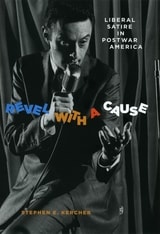
Revel with a Cause
Liberal Satire in Postwar AmericaStephen E. Kercher
University of Chicago Press, 2006
Revel with a Cause is their story. Stephen Kercher here provides the first comprehensive look at the satiric humor that flourished in the United States during the 1950s and early 1960s. Focusing on an impressive range of comedy—not just standup comedians of the day but also satirical publications like MAD magazine, improvisational theater groups such asSecond City, the motion picture Dr. Strangelove, and TV shows like That Was the Week That Was—Kercher reminds us that the postwar era saw varieties of comic expression that were more challenging and nonconformist than we commonly remember. His history of these comedic luminaries shows that for a sizeable audience of educated, middle-class Americans who shared such liberal views, the period’s satire was a crucial mode of cultural dissent. For such individuals, satire was a vehicle through which concerns over the suppression of civil liberties, Cold War foreign policies, blind social conformity, and our heated racial crisis could be productively addressed.
A vibrant and probing look at some of the most influential comedy of mid-twentieth-century America, Revel with a Cause belongs on the short list of essential books for anyone interested in the relationship between American politics and popular culture.

Revelation Occurs via Signs
God's Self-Communication to Humanity in Its Semiotic ConstitutionVincent Birch
Catholic University of America Press, 2027
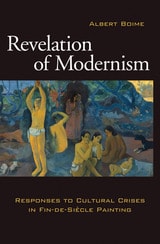
Revelation of Modernism
Response to Cultural Crises in Fin-de-Siécle PaintingAlbert Boime
University of Missouri Press, 2008
Among postimpressionist painters, Van Gogh, Seurat, Cézanne, and Gauguin produced a remarkable body of work that responded to a cultural and spiritual crisis in the avant-garde world—influences that pushed them toward an increasing reliance on science, literature, and occultism. In Revelation of Modernism, renowned art historian Albert Boime reappraises specific works by these masters from a perspective more appreciative of the individuals’ inner conflicts, offering the art world a new understanding of a period fraught with apocalyptic fears and existential anxieties.
Building on the seminal observations of Sven Lövgren from a half-century ago, Boime rejects popular notions of “art for art’s sake” and rethinks an entire movement to suggest that history, rather than expressive urge, is the driving force that shapes art. He reconsiders familiar masterpieces from a fresh perspective, situating the art in the contexts of history both real and speculative, of contemporary philosophy, and of science to depict modernism as a development that ultimately failed.
Boime expands on what we think we know about these figures and produces startling new revelations about their work. From the political history of Seurat’s Parade de cirque to the astronomical foundations of Van Gogh’s Starry Night, he draws analogies between literary sources and social, personal, and political strategies that have eluded most art historians. He offers a richer and more complex vision of Cézanne, considering the artist as an Old Testament figure in search of the Promised Landscape. And he provides a particularly detailed look at Gauguin—on whom Boime has never previously published—that takes a closer look at the artist’s The Vision after the Sermon and its allusions to Eliphas Lévi’s writings, sheds light on the sources for From whence do we come? and offers new thoughts about Gauguin’s various self-portraits.
Boime’s latest contribution further testifies to his status as one of our most important living art historians. As entertaining as it is eloquent, Revelation of Modernism is a bold and groundbreaking work that should be required reading for all who wish to understand the contradictory origins and development of modernism and its role in history.
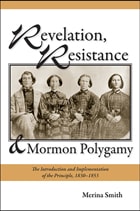
Revelation, Resistance, and Mormon Polygamy
The Introduction and Implementation of the Principle, 1830–1853Merina Smith
Utah State University Press, 2013
When Joseph Smith began to reveal and teach the doctrine of plural marriage in 1841, even stalwart members like Brigham Young were shocked and confused. In this thoughtful study, Smith argues that the secret introduction of plural marriage among the leadership coincided with an evolving public theology that provided a contextualizing religious narrative that persuaded believers to accept the principle.
This fresh interpretation draws from diaries, letters, newspapers, and other primary sources and is especially effective in its use of family narratives. It will be of great interest not only to scholars and the general public interested in Mormon history but in American history, religion, gender and sexuality, and the history of marriage and families.

Revels in Madness
Insanity in Medicine and LiteratureAllen Thiher
University of Michigan Press, 2004
---Louis Sass, author of Madness and Modernism
"The scope of this book is daunting, ranging from madness in the ancient Greco-Roman world, to Christianized concepts of medieval folly, through the writings of early modern authors such as Shakespeare, Cervantes, and Descartes, and on to German Romantic philosophy, fin de siècle French poetry, and Freud . . . Artaud, Duras, and Plath."
---Isis
"This provocative and closely argued work will reward many readers."
---Choice
In Revels in Madness, Allen Thiher surveys a remarkable range of writers as he shows how conceptions of madness in literature have reflected the cultural assumptions of their era. Thiher underscores the transition from classical to modern theories of madness-a transition that began at the end of the Enlightenment and culminates in recent women's writing that challenges the postmodern understanding of madness as a fall from language or as a dysfunction of culture.

Reverberations across Small-Scale British Theatre
Politics, Aesthetics and FormsEdited by Patrick Duggan and Victor Ukaegbu
Intellect Books, 2013

Reverberations of Racial Violence
Critical Reflections on the History of the BorderEdited by Sonia Hernández and John Morán González
University of Texas Press, 2021
Between 1910 and 1920, thousands of Mexican Americans and Mexican nationals were killed along the Texas border. The killers included strangers and neighbors, vigilantes and law enforcement officers—in particular, Texas Rangers. Despite a 1919 investigation of the state-sanctioned violence, no one in authority was ever held responsible.
Reverberations of Racial Violence gathers fourteen essays on this dark chapter in American history. Contributors explore the impact of civil rights advocates, such as José Tomás Canales, the sole Mexican-American representative in the Texas State Legislature between 1905 and 1921. The investigation he spearheaded emerges as a historical touchstone, one in which witnesses testified in detail to the extrajudicial killings carried out by state agents. Other chapters situate anti-Mexican racism in the context of the era's rampant and more fully documented violence against African Americans. Contributors also address the roles of women in responding to the violence, as well as the many ways in which the killings have continued to weigh on communities of color in Texas. Taken together, the essays provide an opportunity to move beyond the more standard Black-white paradigm in reflecting on the broad history of American nation-making, the nation’s rampant racial violence, and civil rights activism.
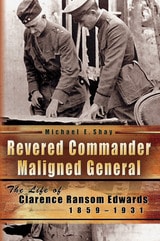
Revered Commander, Maligned General
The Life of Clarence Ransom Edwards, 1859-1931Michael E. Shay
University of Missouri Press, 2011

Reverend Addie Wyatt
Faith and the Fight for Labor, Gender, and Racial EqualityMarcia Walker-McWilliams
University of Illinois Press, 2016
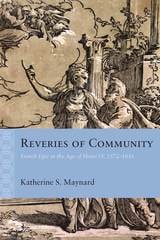
Reveries of Community
French Epic in the Age of Henri IV, 1572–1616Katherine S. Maynard
Northwestern University Press, 2018
Traditionally united by une foi, une loi, un roi (one faith, one law, one king), France under Henri IV was cleaved into warring factions of Catholics and Huguenots. The country suffered episodes of bloodshed such as the St. Bartholomew’s Day Massacre, even as attempts were made to attenuate the violence through frequent edicts, including those of St. Germain (1570) and Nantes (1598). Maynard examines the rich and often dismissed body work written during these bloody decades: Pierre de Ronsard’s Franciade, Guillaume Salluste Du Bartas’s La Judit and La Sepmaine, Sébastian Garnier’s La Henriade, Agrippa d’Aubigné’s Les Tragiques, and others. She traces how French poets, taking classics such as Virgil’s Aeneid and Homer’s Iliad as their models, reimagined possibilities for French reconciliation and unity.
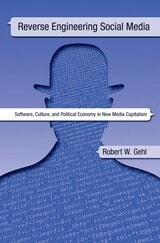
Reverse Engineering Social Media
Software, Culture, and Political Economy in New Media CapitalismRobert W Gehl
Temple University Press, 2014
Robert Gehl's timely critique, Reverse Engineering Social Media, rigorously analyzes the ideas of social media and software engineers, using these ideas to find contradictions and fissures beneath the surfaces of glossy sites such as Facebook, Google, and Twitter.
Gehl adeptly uses a mix of software studies, science and technology studies, and political economy to reveal the histories and contexts of these social media sites. Looking backward at divisions of labor and the process of user labor, he provides case studies that illustrate how binary "Like" consumer choices hide surveillance systems that rely on users to build content for site owners who make money selling user data, and that promote a culture of anxiety and immediacy over depth.
Reverse Engineering Social Media also presents ways out of this paradox, illustrating how activists, academics, and users change social media for the better by building alternatives to the dominant social media sites.
Reversing the Gaze
What If the Other Were You?Geneviève Makaping
Rutgers University Press, 2023
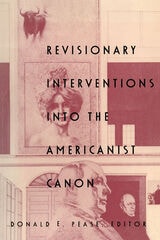
Revisionary Interventions into the Americanist Canon
Donald E. Pease
Duke University Press, 1994
Originally published as a special issue of boundary 2, the essays gathered here discuss writers as diverse as Kate Chopin, Frederick Douglass, Emerson, Melville, W. D. Howells, Henry James, W. E. B. DuBois, and Mark Twain, plus the historical figure John Brown. Two major sections devoted to the theory of romance and to cultural-historical analyses emphasize the political perspective of "New Americanist" literary and cultural study.
Contributors. William E. Cain, Wai-chee Dimock, Howard Horwitz, Gregory S. Jay, Steven Mailloux, John McWilliams, Susan Mizruchi, Donald E. Pease, Ivy Schweitzer, Priscilla Wald, Michael Warner, Robert Weimann
Revisiting Minjung
New Perspectives on the Cultural History of 1980s South KoreaSunyoung Park, Editor
University of Michigan Press, 2019
Revisiting Minjung brings new themes, new subjectivities, and new theoretical perspectives to the study of the rich ecosystem of 1980s Korean culture. Treated here is a wide array of topics, including the origins of minjung ideology, its critique by the right wing, minjung art and music, workers’ literary culture, women writers and the resurgence of feminism, erotic cinema, science fiction, transnational political travels, and the representations of race and queerness in 1980s popular culture. The book thus details the origins and development of some of the movements that shape cultural life in South Korea today, and it does so through analyses that engage some of the most pressing debates in current scholarship in Korea and abroad.
Revisiting U.S. Trade Policy
Decisions in PerspectiveAlfred E. Eckes Jr.
Ohio University Press, 2000
In trade policy, as in many other areas of public policy, decision makers often confront present and future problems with little understanding of how similar disputes were resolved in the past. Too often, busy public officials had no time to write or record negotiating histories. Revisiting U.S. Trade Policy, which is certain to become a classic in the literature of trade negotiations, is just such a record.
Built on the oral histories of thirty-five former U.S. trade policymakers—including Michael Blumenthal, Alonzo McDonald, William Roth, and Robert S. Strauss—this unique record, prepared for publication by Alfred E. Eckes, revisits some of the most important moments of America’s trade liberalization program in the years after World War II.
From GATT to the World Trade Organization, these major players look back in candid hindsight at their decisions concerning trade policy and the effects that those decisions had on shaping the new international economic order.
Revisiting Women's Cinema
Feminism, Socialism, and Mainstream Culture in Modern ChinaLingzhen Wang
Duke University Press, 2021
Revitalization Lexicography
The Making of the New Tunica DictionaryPatricia M. Anderson
University of Arizona Press, 2020
Revitalization Lexicography provides a detailed account of creating a dictionary meant to move a once-sleeping language into a language of active daily use. This unique look under the hood of lexicography in a small community highlights the ways in which the dictionary was intentionally leveraged to shape the Tunica language as it inevitably changes throughout revitalization. Tunica, one of the heritage languages of the Tunica-Biloxi Tribe of Marksville, Louisiana, has been undergoing active revitalization since 2010. The current generation of speakers began learning Tunica, a once-sleeping language, through written documentation. Now enough Tunica speakers to confer amongst themselves when questionable language use arises.
Marrying both the theoretical and the practical aspects that contributed to the Tunica dictionary, this book discusses complex lexicographic tasks in a manner accessible to both academic and community readers. This work is firmly backdropped in a fieldwork approach that centers the community as owners of all aspects of their revitalization project. This book provides concrete and practical considerations for anyone attempting to create a dictionary. Contrasting examples from Tunica and English dictionaries, this book challenges readers to rethink their relationship to dictionaries in general. A must-read for anyone who has ever touched a dictionary.
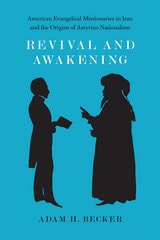
Revival and Awakening
American Evangelical Missionaries in Iran and the Origins of Assyrian NationalismAdam H. Becker
University of Chicago Press, 2015
American evangelicals arrived in Iran in the 1830s. Becker examines how these missionaries, working with the “Nestorian” Church of the East—an Aramaic-speaking Christian community in the borderlands between Qajar Iran and the Ottoman Empire—catalyzed, over the span of sixty years, a new national identity. Instructed at missionary schools in both Protestant piety and Western science, this indigenous group eventually used its newfound scriptural and archaeological knowledge to link itself to the history of the ancient Assyrians, which in time led to demands for national autonomy. Exploring the unintended results of this American attempt to reform the Orient, Becker paints a larger picture of religion, nationalism, and ethnic identity in the modern era.
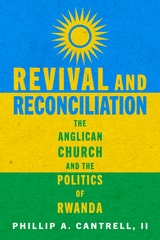
Revival and Reconciliation
The Anglican Church and the Politics of RwandaPhillip A. Cantrell II
University of Wisconsin Press, 2022
Drawing from new archival materials as well as on-the-ground field research, Revival and Reconciliation is a Rwanda-centered account of the country's ecclesiastical and national historiography. Cantrell calls attention to the harms the postgenocide church risks doing should it continue to support false narratives about Rwanda's colonial and postcolonial past—with dangerous consequences for the future.
Revivalism and Cultural Change
Christianity, Nation Building, and the Market in the Nineteenth-Century United StatesGeorge M. Thomas
University of Chicago Press, 1989
"Subtle and complex. . . . Fascinating."—Randolph Roth, Pennsylvania History
"[Revivalism and Cultural Change] should be read with interest by those interested in religious movements as well as the connections among religion, economics, and politics."—Charles L. Harper, Contemporary Sociology
"Readers old and new stand to gain much from Thomas's sophisticated study of the macrosociology of religion in the United States during the nineteenth century. . . . He has given the sociology of religion its best quantitative study of revivalism since the close of the 1970s."—Journal for the Scientific Study of Religion
Revivals, Awakening and Reform
William G. McLoughlin
University of Chicago Press, 1980
"This book is sensitive, thought-provoking and stimulating. It is 'must' reading for those interested in awakenings, and even though some may not revise their views as a result of McLoughlin's suggestive outline, none can remain unmoved by the insights he has provided on the subject."—Christian Century
"This is one of the best books I have read all year. Professor McLoughlin has again given us a profound analysis of our culture in the midst of revivalistic trends."—Review and Expositor
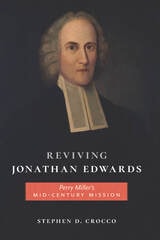
Reviving Jonathan Edwards
Perry Miller’s Mid-Century MissionStephen D. Crocco
University of Massachusetts Press, 2026
The untold story of how an unlikely Harvard atheist helped resurrect one of America’s greatest Puritans
Jonathan Edwards is widely regarded as one of America’s most important and original thinkers. Prior to the mid-twentieth century, however, he was largely unknown to the learned community, except, perhaps, as a preacher of terror due to his well-known sermon, “Sinners in the Hands of an Angry God.” In 1948 and 1949, Harvard professor of English Perry Miller published four pieces on him, including the acclaimed biography, Jonathan Edwards, and only a few years later he became the general editor of Edwards’s collected works. Miller’s efforts helped to resurrect Edwards as America’s greatest Puritan and to solidify him as central to the American experience, and their names have been closely intertwined ever since.
Miller, an iconoclastic scholar widely considered to be the founder of American studies, was known for his brilliant scholarship, devoted teaching, and hard living. Dying prematurely in 1963, he remains an enigmatic and controversial figure, with no biography available. In Reviving Jonathan Edwards, Stephen D. Crocco explores why this Harvard atheist, with an eerie sense that his time was short, delayed work on his planned magnum opus—a sweeping intellectual history of early America—to edit the works of the greatest of all American Puritans.
In a riveting history that combines biographical insight with a detailed look into mid-century academia, Crocco draws on a large body of unpublished correspondence to offer an intricate detective tale of a decades-long publishing endeavor. He provides fresh portraits of Miller and the editorial committee he assembled, which included Sydney Ahlstrom, Roland Bainton, H. Richard Niebuhr, Norman Holmes Pearson, Paul Ramsey, and John E. Smith, and follows the story long after Miller’s death, tracing the repeated, sometimes seemingly intractable challenges that publishing the many volumes on Edwards’s work faced. He concludes by tracing Edwards studies up to 2003, the 300th anniversary of his birth, when the quiet revival of this colonial minister had evolved into a full scholarly renaissance.
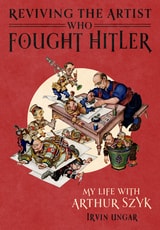
Reviving the Artist Who Fought Hitler
My Life with Arthur SzykIrvin Ungar
University of Texas Press, 2026
The intertwining story of a noted anti-Nazi artist and the former rabbi who revived his reputation.
During World War II, the Polish-Jewish immigrant Arthur Szyk became America’s leading anti-Nazi artist. His art was so effective that Adolf Hitler reportedly put a bounty on his head while the US military declared him a “citizen-soldier” of the free world. Szyk steadfastly fought for the rescue of European Jewry during the Holocaust, creating artworks like De Profundis, which imagines Jesus sharing the suffering of countless lifeless Jews. His civil rights art challenged segregation and his illuminated Declaration of Independence resides in the Library of Congress. Szyk’s masterwork, an illustrated Passover Haggadah, is considered by many to be one of the most beautiful books ever produced by human hands.
Once world-famous, Arthur Szyk was all but forgotten after his death in 1951. Reviving the Artist Who Fought Hitler recounts Irvin Ungar's decades-long journey to restore Szyk to public consciousness, and become the principal collector, dealer, scholar, and promoter of Szyk’s art in the United States, Europe, and Israel. Richly illustrated and full of forgotten history, this memoir is an inspiring story of artistic passion and an invitation to commune with a heroic advocate for all humanity.
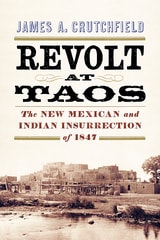
Revolt at Taos
The New Mexican and Indian Insurrection of 1847James A. Crutchfield
Westholme Publishing, 2025
On the morning of January 19, 1847, Charles Bent, the newly appointed governor of the American-claimed territory of New Mexico, was savagely killed at his home in Don Fernando de Taos, a small, remote town located north of Santa Fe. Those responsible for Bent’s murder were New Mexican settlers and Indians from nearby Taos Pueblo who refused to recognize the United States occupation. With emotions rubbed raw, the natives continued their bloodbath until five more leading citizens were massacred in Taos. During the ensuing months, American civilians and soldiers, along with scores of New Mexicans and Taos Indians, were killed and wounded throughout the region. Less than a month following Bent’s murder, in a two-day battle, volunteer and regular elements of an American army under the command of Colonel Sterling Price emerged victorious after bombarding the insurrectionists at their refuge in the church at Taos Pueblo. Surviving participants in the earlier Taos murders were arrested, tried in American-dominated courts, and, within weeks, hanged for their actions. The murder of Bent and the others at Taos and the subsequent trials and executions brought with them misunderstanding, controversy, mistrust, and recrimination on both sides of the issue. The events also subjected President James K. Polk’s administration to censure over what some critics believed was an overextension of presidential authority in claiming New Mexico as a territory.
In Revolt at Taos: The New Mexican and Indian Insurrection of 1847, writer and historian James A. Crutchfield explores the fast-moving events surrounding the bloody revolt which left native inhabitants of New Mexico wondering how their neighbors and kinsmen could be legally tried, found guilty, and executed for acts they considered to have been honorable ones committed in defense of their country. These concerns have never been adequately addressed and their struggle has been all but scrubbed from the history of American expansion.
Revolt of the Saints
Memory and Redemption in the Twilight of Brazilian Racial DemocracyJohn F. Collins
Duke University Press, 2015
Revolt
An Archaeological History of Pueblo Resistance and Revitalization in 17th Century New MexicoMatthew Liebmann
University of Arizona Press, 2014
Published in cooperation with the William P. Clements Center for Southwest Studies, Southern Methodist University.
The Pueblo Revolt of 1680 is the most renowned colonial uprisings in the history of the American Southwest. Traditional text-based accounts tend to focus on the revolt and the Spaniards' reconquest in 1692—completely skipping over the years of indigenous independence that occurred in between. Revolt boldly breaks out of this mold and examines the aftermath of the uprising in colonial New Mexico, focusing on the radical changes it instigated in Pueblo culture and society.
In addition to being the first book-length history of the revolt that incorporates archaeological evidence as a primary source of data, this volume is one of a kind in its attempt to put these events into the larger context of Native American cultural revitalization. Despite the fact that the only surviving records of the revolt were written by Spanish witnesses and contain certain biases, author Matthew Liebmann finds unique ways to bring a fresh perspective to Revolt.
Most notably, he uses his hands-on experience at Ancestral Pueblo archaeological sites—four Pueblo villages constructed between 1680 and 1696 in the Jemez province of New Mexico—to provide an understanding of this period that other treatments have yet to accomplish. By analyzing ceramics, architecture, and rock art of the Pueblo Revolt era, he sheds new light on a period often portrayed as one of unvarying degradation and dissention among Pueblos. A compelling read, Revolt's "blood-and-thunder" story successfully ties together archaeology, history, and ethnohistory to add a new dimension to this uprising and its aftermath.
Revolting Remedies from the Middle Ages
Edited by Daniel Wakelin and compiled by students of the University of Oxford
Bodleian Library Publishing, 2017
In late medieval England, ordinary people, apothecaries, and physicians gathered up practical medical tips for everyday use. While some were sensible herbal cures, many were weird and wildly inventive, prescribing elixirs and regimens for problems like how to make a woman love you and how to stop dogs from barking at you. The would-be doctors seemed oblivious to pain, and would recommend any animal, vegetable, or mineral, let alone bodily fluid, be ground up, smeared on, or inserted for medical benefit. Full of embarrassing ailments, painful procedures, icky ingredients, and bizarre beliefs, this book selects some of the most revolting and remarkable remedies from medieval manuscripts in the Bodleian Library. Written in the down-to-earth speech of the time, these remedies offer humorous insight into the strange ideas, ingenuity, and bravery of men and women in the Middle Ages, and a glimpse of the often gruesome history of medicine through time.
Revolution Around the Corner
Voices from the Puerto Rican Socialist Party in the U.S.Edited by José E. Velázquez, Carmen V. Rivera, and Andrés Torres
Temple University Press, 2021
Active from the late 1960s until the mid-1990s, the U.S. branch of the Puerto Rican Socialist Party (PSP) worked simultaneously to build support for Puerto Rican independence and to engage in radical social change within the United States.
Revolution Around the Corner chronicles this unique social movement, describing various mass campaigns and the inner workings of the organization. The editors and contributors—all former members, leaders, and supporters of the PSP—offer a range of views and interpretations of their experience.
Combining historical accounts, personal stories, interviews, and retrospective analysis, Revolution Around the Corner examines specific actions such as the National Day of Solidarity (El Acto Nacional), the Bicentennial without Colonies, the Save Hostos struggle, and the Vieques campaign. Testimonies recount the pros and cons of membership diversity, as well as issues of loyalty and compañerismo. In addition, essays describe the PSP’s participation in coalitions and alliances with Left and progressive movements. The book concludes with the editors’ reflections on the PSP’s achievements, mistakes, and contributions.
Revolution Beyond the Event
The Afterlives of Radical PoliticsEdited by Charlotte Al-Khalili, Narges Ansari, Myriam Lamrani, and Kaya Uzel
University College London, 2023
Revolution Beyond the Event brings together leading international anthropologists and emerging scholars to examine revolutionary legacies from the MENA region, Latin America, and the Caribbean. It explores the idea that revolutions have varied afterlives that complicate the assumptions about their duration, pace, and progression, and argues that a renewed focus on the temporality of radical politics is essential to our understanding of revolution. Through a careful selection of case studies, the book provides a critical perspective on the lived realities of revolutionary afterlives, challenging the liberal humanist assumptions implicit in the modern idea of revolution and reappraising the political agency of people caught up in revolutionary situations across a variety of ethnographic contexts.

Revolution Downeast
The War for American Independence in MaineJames S. Leamon
University of Massachusetts Press, 1993
The history of the Revolution in Maine is the story of a people who did not really want a revolution—at least at first.
Since the middle of the seventeenth century, the powerful Massachusetts Bay Colony had exercised an increasing hegemony over the settlements downeast—a hegemony legalized in the Massachusetts royal charter of 1691. From then until 1820, when it became a state, Maine remained an integral part of Massachusetts. Geographically isolated from the Bay Colony by the province of New Hampshire, and dependent on Massachusetts for its very existence, Maine was indeed a colony, in every sense of the word.
The larger Massachusetts context has tended to obscure Maine as a legitimate object of study, nowhere more than in the period of the American Revolution. Even historians in Maine have slighted the period of the American Revolution. Where appropriate, town historians devote a chapter or so to the event, but only in the context of a particular community.
In his book, Leamon aims to meet that deficiency by drawing together town and general histories, specialized studies, and primary sources, both published and unpublished. He examines why and how Maine fought the Revolution and the changes that occurred in Maine during and after the war.
Revolution From Without
Yucatan, Mexico, and the United States, 1880–1924Gilbert M. Joseph
Duke University Press, 1988
Revolution Interrupted
Farmers, Students, Law, and Violence in Northern ThailandTyrell Haberkorn; Foreword by Thongchai Winichakul
University of Wisconsin Press, 2011
In October 1973 a mass movement forced Thailand’s prime minister to step down and leave the country, ending nearly forty years of dictatorship. Three years later, in a brutal reassertion of authoritarian rule, Thai state and para-state forces quashed a demonstration at Thammasat University in Bangkok. In Revolution Interrupted, Tyrell Haberkorn focuses on this period when political activism briefly opened up the possibility for meaningful social change. Tenant farmers and their student allies fomented revolution, she shows, not by picking up guns but by invoking laws—laws that the Thai state ultimately proved unwilling to enforce.
In choosing the law as their tool to fight unjust tenancy practices, farmers and students departed from the tactics of their ancestors and from the insurgent methods of the Communist Party of Thailand. To first imagine and then create a more just future, they drew on their own lived experience and the writings of Thai Marxian radicals of an earlier generation, as well as New Left, socialist, and other progressive thinkers from around the world. Yet their efforts were quickly met with harassment, intimidation, and assassinations of farmer leaders. More than thirty years later, the assassins remain unnamed.
Drawing on hundreds of newspaper articles, cremation volumes, activist and state documents, and oral histories, Haberkorn reveals the ways in which the established order was undone and then reconsolidated. Examining this turbulent period through a new optic—interrupted revolution—she shows how the still unnameable violence continues to constrict political opportunity and to silence dissent in present-day Thailand.
Revolution Squared
Tahrir, Political Possibilities, and Counterrevolution in EgyptAtef Shahat Said
Duke University Press, 2024
Revolution and Disenchantment
Arab Marxism and the Binds of EmancipationFadi A. Bardawil
Duke University Press, 2020
Revolution and Genocide
On the Origins of the Armenian Genocide and the HolocaustRobert Melson
University of Chicago Press, 1992
Revolution and Subjectivity in Postwar Japan
J. Victor Koschmann
University of Chicago Press, 1996
In a major contribution to modern Japanese intellectual history, J. Victor Koschmann analyzes the debate over subjectivity. He traces the arguments of intellectuals from various disciplines and political viewpoints, and finds that despite their stress on individual autonomy, they all came to define subjectivity in terms of deterministic historical structures, thus ultimately deferring the possibility of radical change in Japan.
Establishing a basis for historical dialogue about democratic revolution, this book will interest anyone concerned with issues of nationalism, postcolonialism, and the formation of identities.

Revolution and World Politics
The Rise and Fall of the Sixth Great PowerFred Halliday
Duke University Press, 1999
Halliday begins by tracing the origins and evolution of the modern concept of “revolution” and placing it in historical context. Arguing that revolution is central to any understanding of international relations, he examines the internationalist ideology of revolutionaries who are committed to promoting change elsewhere by exposing revolution. In contrast with the claims of revolutionaries and counterrevolutionaries alike, he sees revolutions both as part of an internationalist social conflict and as a challenge to the system of states. Chapters on the distinct foreign policies of revolutionary states are followed by discussions of war, counterrevolution, and postrevolutionary transformation. The study concludes with a reassessment of the place of revolution within international relations theory and in modern history, drawing out implications for their incidence and character in the twenty-first century.
Students and scholars of international relations, political science, sociology, and history will value this major contribution to understanding worldwide developments in government and society.
Revolution as Reformation
Protestant Faith in the Age of Revolutions, 1688–1832Edited by Peter C. Messer and William Harrison Taylor
University of Alabama Press, 2021
Essays that explore how Protestants responded to the opportunities and perils of revolution in the transatlantic age
Revolution as Reformation: Protestant Faith in the Age of Revolutions, 1688–1832 highlights the role that Protestantism played in shaping both individual and collective responses to revolution. These essays explore the various ways that the Protestant tradition, rooted in a perpetual process of recalibration and reformulation, provided the lens through which Protestants experienced and understood social and political change in the Age of Revolutions. In particular, they call attention to how Protestants used those changes to continue or accelerate the Protestant imperative of refining their faith toward an improved vision of reformed religion.
The editors and contributors define faith broadly: they incorporate individuals as well as specific sects and denominations, and as much of “life experience” as possible, not just life within a given church. In this way, the volume reveals how believers combined the practical demands of secular society with their personal faith and how, in turn, their attempts to reform religion shaped secular society.
The wide-ranging essays highlight the exchange of Protestant thinkers, traditions, and ideas across the Atlantic during this period. These perspectives reveal similarities between revolutionary movements across and around the Atlantic. The essays also emphasize the foundational role that religion played in people’s attempts to make sense of their world, and the importance they placed on harmonizing their ideas about religion and politics. These efforts produced novel theories of government, encouraged both revolution and counterrevolution, and refined both personal and collective understandings of faith and its relationship to society.
Revolution at Querétaro
The Mexican Constitutional Convention of 1916–1917By E. V. Niemeyer, Jr.
University of Texas Press, 1974
In two of the most fateful months of Mexican history, the delegates to the Constitutional Convention of 1916–1917 came to grips with the basic problem of twentieth-century Mexico. They hammered out pragmatic solutions to establish the legal foundations of the Mexican Revolution, the definitive break between the old Mexico and the new, the constitutional bases for the socioeconomic changes from 1917 onward. Honored and obeyed, dishonored and disobeyed, many times amended, the constitution they wrote still serves as the instrument for achieving the national purpose.
Revolution at Querétaro is the first book in English to study in depth the remarkable convention that produced the Constitution of 1917. It chronicles the unfolding of ideas expressed in the debates on the most significant articles of the constitution, those that have given it a revolutionary flavor and have served the groundwork for the emergence of Mexico as a modern nation. These articles concern the Catholic church and its role in the sphere of education (Article 3); the relationship of the church to the state (Articles 24 and 130); the attack on vested interest and the establishment of guidelines for agrarian reform (Article 27); the drafting of a detailed labor code (Article 123); and attempts to implement municipal reform (Article 114). Other debates described in the book concern unsuccessful attempts to institute prohibition, outlaw bullfights, abolish capital punishment, and grant suffrage to women.
This study also sheds light on the delegates themselves, who they were and where they came from, their idiosyncrasies and attitudes, and their individual contributions to the writing of the constitution. Much material is taken from unpublished albums in which the delegates recorded their sentiments during the convention.

Revolution in Ireland
Popular Militancy, 1917 to 1923Conor Kostick
Pluto Press, 1996
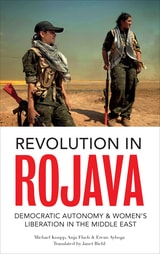
Revolution in Rojava
Democratic Autonomy and Women's Liberation in the Syrian KurdistanMichael Knapp, Ercan Ayboga, and Anja Flach
Pluto Press, 2016
Revolution in Rojava tells the story of Rojava's groundbreaking experiment in what they call democratic confederalism, a communally organized democracy that is fiercely anti-capitalist and committed to female equality, while rejecting reactionary nationalist ideologies.
Rooted in the ideas of imprisoned Kurdish leader Abdullah Ocalan, the system is built on effective gender quotas, bottom-up democratic structures, far-sighted ecological policies, and a powerful militancy that has allowed the region to keep ISIS at bay.
Given the widespread violence and suffering in Syria, it's not unreasonable that outsiders look at the situation as unrelentingly awful. And while the reality of the devastation is undeniable, there is reason for hope in at least one small pocket of the nation: the cantons of Rojava in Syrian Kurdistan, where in the wake of war people are quietly building one of the most progressive societies in the world today. Chapters here include:
*Rojava's Diverse Cultures
*Democratic Confederalism
*The Liberation
*A Women's Revolution
*Democratic Autonomy in Rojava
*Civil Society Associations
*The Theory of the Rose: Defense
*The New Justice System
*Democratization of Education
*Health Care
*The Social Economy
*Ecological Challenges
This first full-length study of democratic developments in Rojava tells an extraordinary and powerfully hopeful story of a little-known battle for true freedom in dark times. With excellent first-hand background information about this important, but little understood struggle, Revolution in Rojava will educate and inspire the reader to learn more about Rojava, Syria, and the fight for change in one of the world’s most dangerous regions.
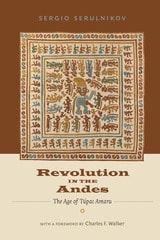
Revolution in the Andes
The Age of Túpac AmaruSergio Serulnikov
Duke University Press, 2013
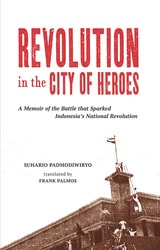
Revolution in the City of Heroes
A Memoir of the Battle that Sparked Indonesia's National RevolutionSuhario Padmodiwiryo
National University of Singapore Press, 2016
alias ‘Hario Kecik,” Revolution in the City of Heroes is an evocative first-hand
account of the popular uprising in Surabaya. It vividly portrays the chaotic swirl
of events and the heady emotion of young people ready to sacrifice their lives
for independence.
Newly liberated from nearly four brutal years under Japanese control, the
people of Indonesia faced great uncertainty in October 1945. As the British
Army attempted to take control of the city of Surabaya, maintain order and
deal with surrendered Japanese personnel, their actions were interpreted by
the young residents of Surabaya as a plan to restore Dutch colonial rule. In
response, the youth of the city seized Japanese arms and repelled the force sent
to occupy the city. They then held off British reinforcements for two weeks,
battling tanks and heavy artillery with little more than light weapons and sheer
audacity. Though eventually defeated, Surabaya’s defenders had set the stage
for Indonesia’s national revolution.

Revolution on the Pampas
A Social History of Argentine Wheat, 1860–1910By James R. Scobie
University of Texas Press, 1964
On the Argentine pampas, between the years 1860 and 1910, a dramatic social and agricultural revolution took place. The haunts of wild cattle, native peoples, and gauchos were transformed into cultivated fields and rich pastures. A land that had produced only scrawny sheep and cattle became one of the world’s leading exporters of wheat, corn, beef, mutton, and wool. A country that had had only a sparse and scattered Spanish and mestizo population now boasted a metropolis of one and a half million, and a national population of eight million people, nearly a third of whom were born in Europe. These were significant changes, and wheat growing played a major role in all of them. This study traces the development of the Argentine wheat zone, focusing on the part wheat played in forming the Argentina of today.
James R. Scobie begins his account with the first settlers who colonized Santa Fe in the 1850s and shows how they and thousands of other European immigrants converted this vast grassland into a world breadbasket. He explains why these small farmer-owners soon gave way to tenant farmers, and how crop farming developed primarily as servant to the predominant sheep and cattle interests. He expands on several factors responsible for this evolvement: the elimination of indigenous threat, the coming of the railroad, the agricultural policy—or lack of policy—of the Argentine government, and the urban orientation of the Argentine people.
The railroads, by suppressing the building of other roads through the pampas, had the effect of isolating the wheatgrowers. By making the products of the pampas available to world markets, the railroads opened up new trade, which helped the growth of cities tremendously; but this very prosperity pushed the cost of land far beyond the wheatgrower’s ability to buy it. The result was a pampas without settlers, a frontier filled with migrant sharecroppers and tenant farmers, a land exploited but not possessed. Transiency as well as isolation became the common denominators of these families, who were forced to move every few years to make way for more valued tenants—sheep and cattle. They left behind them no schools, no churches, no roads, no villages. Immigrants came to labor but not to sink their roots in the pampas.
Without sentimentality but with understanding and compassion, Scobie explores every facet of the lives of these laborers who created Argentina’s agricultural greatness. His examination of Argentina’s broad policies toward land, immigration, and tariffs shows that the national government had little lasting or effective interest in the country’s agricultural development. In a social sense, the thousands of immigrants who toiled the pampas were looked upon as the wild cattle or fertile soil—blessings which neither needed nor warranted official attention. Scobie’s conclusion is that Argentina got better than it deserved.
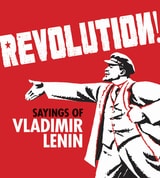
Revolution!
Sayings of Vladimir LeninEdited by the Bodleian Library
Bodleian Library Publishing, 2017
Revolution! Sayings of Vladimir Lenin is a compilation of Lenin’s most famous sayings, taken from speeches, lectures, letters, and recorded conversations. Together, they show his views on topics ranging from democracy to terrorism, from religion to Stalin’s untrustworthiness, and from education to music. Accompanied by a range of striking images, including contemporary propaganda posters, photographs, portraits, illustrations, and Soviet art, these aphoristic proclamations offer an insight into the atmosphere of pre- and post-revolutionary Russia and the mind of one of the twentieth century’s most defining political figures.
Revolution
Modern Uprisings in Ancient TimeMiriam Leonard
University of Chicago Press, 2025
Despite its Latin etymology, “revolution” in its modern understanding arguably did not exist in antiquity, and revolution as we know it today is considered by many theorists to be a term born in modernity. While they certainly had times of momentous political upheaval, the Greeks and Romans tended to understand such events as part of a narrative of political continuity rather than novelty or rupture. Nevertheless, modern revolutions have repeatedly appropriated tropes of classical discourse, such as freedom, tyranny, tragedy, and fraternity.
With this book, Miriam Leonard offers a conceptual history of revolution, unraveling modernity’s yearning for the new and questioning why ancient concepts continue to play such an important role in political uprisings. Leonard looks at examples of appeals to antiquity during the French and Haitian Revolutions, in anticolonial struggles, and feminist and queer movements and considers works of theorists such as Karl Marx, Hannah Arendt, and Sigmund Freud that foreground an engagement with antiquity.
Revolution
Structure and Meaning in World HistorySaïd Amir Arjomand
University of Chicago Press, 2019
In this authoritative new book, Saïd Amir Arjomand reaches back to antiquity to propose a unified theory of revolution. Revolution illuminates the stories of premodern rebellions from the ancient world, as well as medieval European revolts and more recent events, up to the Arab Spring of 2011. Arjomand categorizes revolutions in two groups: ones that expand the existing body politic and power structure, and ones that aim to erode—but paradoxically augment—their authority. The revolutions of the past, he tells us, can shed light on the causes of those of the present and future: as long as centralized states remain powerful, there will be room for greater, and perhaps forceful, integration of the politically disenfranchised.
Revolutionaries to Race Leaders
Black Power and the Making of African American PoliticsCedric Johnson
University of Minnesota Press, 2007
The Black Power movement represented a key turning point in American politics. Disenchanted by the hollow progress of federal desegregation during the 1960s, many black citizens and leaders across the United States demanded meaningful self-determination. The popular movement they created was marked by a vigorous artistic renaissance, militant political action, and fierce ideological debate.
Exploring the major political and intellectual currents from the Black Power era to the present, Cedric Johnson reveals how black political life gradually conformed to liberal democratic capitalism and how the movement’s most radical aims—the rejection of white aesthetic standards, redefinition of black identity, solidarity with the Third World, and anticapitalist revolution—were gradually eclipsed by more moderate aspirations. Although Black Power activists transformed the face of American government, Johnson contends that the evolution of the movement as a form of ethnic politics restricted the struggle for social justice to the world of formal politics.
Johnson offers a compelling and theoretically sophisticated critique of the rhetoric and strategies that emerged in this period. Drawing on extensive archival research, he reinterprets the place of key intellectual figures, such as Harold Cruse and Amiri Baraka, and influential organizations, including the African Liberation Support Committee, the National Black Political Assembly, and the National Black Independent Political Party in postsegregation black politics, while at the same time identifying the contradictions of Black Power radicalism itself.
Documenting the historical retreat from radical, democratic struggle, Revolutionaries to Race Leaders ultimately calls for the renewal of popular struggle and class-conscious politics.
Cedric Johnson is assistant professor of political science at Hobart and William Smith Colleges.
Revolutionary Berlin
A Walking GuideNathaniel Flakin
Pluto Press, 2022
Few European cities can boast a history as storied and tumultuous as that of Berlin. For more than 150 years it has been at the center of revolutionary politics; of era-defining struggles between the Left and the Right. It has been bombed, rebuilt and carved in two.
In Revolutionary Berlin, veteran tour guide Nathaniel Flakin invites you to stand in the places where this history was written, and to follow in the footsteps of those who helped write it. Through nine self-guided tours illustrated with maps and photographs, readers enter the heady world of 19th century anti-colonial struggles, the 1918 November Revolution and the 1987 May Day riots - encountering the city's workers, queer community and radical women along the way.
The first English-language guidebook to tell the story of Berlin's radical history, this is a must-have for Berliners and visitors alike.
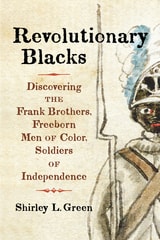
Revolutionary Blacks
Discovering the Frank Brothers, Freeborn Men of Color, Soldiers of IndependenceShirley L. Green
Westholme Publishing, 2026
In Revolutionary Blacks: Discovering the Frank Brothers, Freeborn Men of Color, Soldiers of Independence historian Shirley L. Green takes the reader on a journey based on her family’s history, rooted in its oral tradition. Putting together the pieces of this puzzle through archival research, interviews, and DNA evidence, the author authenticates and expands the family’s oral history. In addition to providing context and substance to the Black experience during the war years, the author underscores the significant distinction between free Blacks in military service and those who had been enslaved, and how they responded in different ways to the harsh realities of racism. An original and important contribution to American history, Revolutionary Blacks presents a complex account of Black life during the Revolutionary Era and demonstrates that free men of color shared with white soldiers the desire to improve their condition in life and to maintain their families safely in postcolonial North America.