Results by title
1947 books match the query 'Music' and 85 start with r
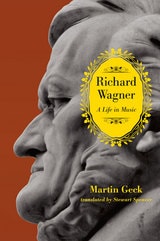
Richard Wagner
A Life in MusicMartin Geck
University of Chicago Press, 2013
Wagner has always inspired passionate admirers as well as numerous detractors, with the result that he has achieved a mythical stature nearly equal to that of the Valkyries and Viking heroes he popularized. There are few, if any, scholars today who know more about Wagner and his legacy than Geck, who builds upon his extensive research and considerable knowledge as one of the editors of the Complete Works to offer a distinctive appraisal of the composer and the operas. Using a wide range of sources, from contemporary scholars to the composer’s own words, Geck explores key ideas in Wagner’s life and works, while always keeping the music in the foreground. Geck discusses not only all the major operas, but also several unfinished operas and even the composer’s early attempts at quasi-Shakespearean drama.
Richard Wagner: A Life in Music is a landmark study of one of music’s most important figures, offering something new to opera enthusiasts, Wagnerians, and anti-Wagnerians alike.
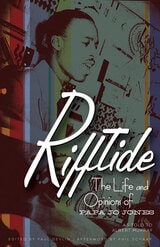
Rifftide
The Life and Opinions of Papa Jo JonesPapa Jo Jones
University of Minnesota Press, 2011
Finalist for Best Jazz Book of the Year Award from the Jazz Journalists Association
The things that I have, I’ll give to you. This is my legacy with you, Albert. This is my last hoo-rah. So begins the autobiography of Jonathan David Samuel Jones—or as the world better knows him, Papa Jo Jones. Playing with Count Basie and his orchestra when they exploded out of Kansas City in 1936 and took the world by storm, Jones went on to inspire generations of jazz drummers, but until now few have had access to his own remarkable story.
Rifftide presents Jones’s inimitable life and opinions, as originally told by Jones to the prominent jazz historian and novelist Albert Murray and now transcribed, arranged, and introduced by Paul Devlin. Drawn from fourteen tapes recorded over eight years beginning in 1977, Rifftide is an impressionistic series of riffs and tales by Jones: his life as a musician on the road in segregated America, his outstanding solo career following his years with the Basie band, and his interactions with iconic artists and cultural figures of the time, including Ralph Ellison, James Baldwin, Langston Hughes, Duke Ellington, Louis Armstrong, Bill “Bojangles” Robinson, and Satchell Paige.
A true American original and jazz luminary, Papa Jo Jones bedazzled and intrigued many with his outrageous, volatile personality and his innovative drumming—and nowhere does his fierce intellect and humor shine more marvelously than in his life’s telling. With a fascinating introduction and annotations by Paul Devlin and an afterword by Phil Schaap, jazz historian and longtime friend of Jones, Rifftide reveals a man at the forefront of both a whole new form of music and a country in the midst of incredible turmoil and opportunity. As Jones himself puts it: Listen man, I’ve had a hell of a time . . .

Right Back Where I Started
A Memoir in MusicDavid Itkin
University of North Texas Press, 2025
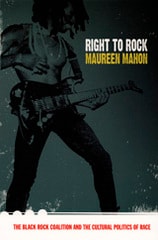
Right to Rock
The Black Rock Coalition and the Cultural Politics of RaceMaureen Mahon
Duke University Press, 2004
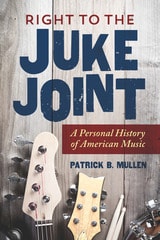
Right to the Juke Joint
A Personal History of American MusicPatrick B Mullen
University of Illinois Press, 2018
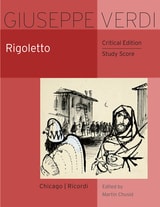
Rigoletto
Critical Edition Study ScoreGiuseppe Verdi
University of Chicago Press, 2017
The University of Chicago Press, in collaboration with Casa Ricordi, has undertaken to publish the first critical edition of the complete works of Giuseppe Verdi. The series, based exclusively on original sources, is the only one to present authentic versions of all of the composer’s works; together with his operas, the critical edition presents his songs, his choral music and sacred pieces, and his string quartet and other instrumental works.
The Works of Giuseppe Verdi will be an invaluable standard reference work—a necessary acquisition for all music libraries and a joy to own for all lovers of opera. The new series of study scores presents an adaptation of each critical edition that provides scholars with an affordable and portable option for exploring Verdi’s oeuvre. The study scores have been designed to distinguish editors’ marks from Verdi’s own notations while remaining clear enough for use in performance. The introduction to each score discusses the work’s sources, composition, and performance history, as well as performance practices, instrumentation, and problems of notation. The newest editions of the study scores examine two of Verdi’s three-act operas: La traviata and Rigoletto.
Rigoletto
Melodramma in Three Acts by Francesco Maria PiaveGiuseppe Verdi
University of Chicago Press, 1983

Rimbaud and Jim Morrison
The Rebel as PoetWallace Fowlie
Duke University Press, 1994
In 1968 Jim Morrison, founder and lead singer of the rock band the Doors, wrote to Wallace Fowlie, a scholar of French literature and a professor at Duke University. Morrison thanked Fowlie for producing an English translation of the complete poems of Rimbaud. He needed the translation, he said, because, "I don’t read French that easily. . . . I am a rock singer and your book travels around with me." Fourteen years later, when Fowlie first heard the music of the Doors, he recognized the influence of Rimbaud in Morrison’s lyrics.
In Rimbaud and Jim Morrison Fowlie, a master of the form of the memoir, reconstructs the lives of the two youthful poets from a personal perspective. In their twinned stories he discovers an uncanny symmetry, a pattern far richer than the simple truth that both led lives full of adventure and both made poetry of their thirst for the liberation of the self. The result is an engaging account of the connections between an exceptional French symbolist who gave up writing poetry at the age of twenty, died young, and whose poems are still avidly read to this day, and an American rock musician whose brief career ignited an entire generation and has continued to fascinate millions around the world in the twenty years since his death in Paris. In this dual portrait, Fowlie gives us a glimpse of the affinities and resemblances between European literary traditions and American rock music and youth culture in the late twentieth century.
A personal meditation on two unusual, yet emblematic, cultural figures, this book also stands as a summary of a noted scholar’s lifelong reflections on creative artists.
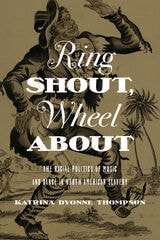
Ring Shout, Wheel About
The Racial Politics of Music and Dance in North American SlaveryKatrina D. Thompson
University of Illinois Press, 2014
In this ambitious project, historian Katrina Thompson examines the conceptualization and staging of race through the performance, sometimes coerced, of black dance from the slave ship to the minstrel stage. Drawing on a rich variety of sources, Thompson explicates how black musical performance was used by white Europeans and Americans to justify enslavement, perpetuate the existing racial hierarchy, and mask the brutality of the domestic slave trade. Whether on slave ships, at the auction block, or on plantations, whites often used coerced performances to oppress and demean the enslaved.
As Thompson shows, however, blacks' "backstage" use of musical performance often served quite a different purpose. Through creolization and other means, enslaved people preserved some native musical and dance traditions and invented or adopted new traditions that built community and even aided rebellion.
Thompson shows how these traditions evolved into nineteenth-century minstrelsy and, ultimately, raises the question of whether today's mass media performances and depictions of African Americans are so very far removed from their troublesome roots.

Ripple Effects
The Work That Music Festivals Do in the WorldEdited by Eric Fillion and Ajay Heble
Temple University Press, 2027
What is the work that music festivals do in the world? In asking this question, Ripple Effects explores the varied ways in which festivals can act as spaces where new social relations are cultivated, as places for envisioning and enacting repertories of embodied memory and care, as alternatives to fragmented private consumption of culture, as sites for unexpected conversations.
While some case studies discuss structures of dominance inside mammoth corporate-sponsored festivals, other chapters find insubordinate spaces in festivals designed to honor traditional folk musics, to protest the proliferation of nuclear weapons, to deploy cultural exchanges in defiance of Cold War politics, to build pan-African unity, and to embrace the links between humans and the more-than-human world.
Ripple Effects brings together leading and emerging scholars, artists, and arts presenters to consider the challenges, rewards, and responsibilities associated with the improvisational culture and ethos of music festivals as alternative public spheres.
Contributors: Amina Boubia, Jody H. Cripps, Chris Dodd, Ben Finley, Simon Frith, Maria Giaever Lopez, Chris Greencorn, Jo Haynes, Michael J. Kramer, David A. McDonald, Patricia Nicholson, Melissa Noventa, William Parker, Jeremy Reed, Andrew Snyder, Cheryl Thompson, Steve Waksman, Katharine White, Deborah Wong, and the editors.
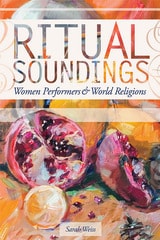
Ritual Soundings
Women Performers and World ReligionsSarah Weiss
University of Illinois Press, 2019
In Ritual Soundings, Sarah Weiss reads deeply into and across the ethnographic details of multiple studies while offering a robust framework for studying music and world religion. Her meta-ethnography reveals surprising patterns of similarity between unrelated cultures. Deftly blending ethnomusicology, the study of gender in religion, and sacred music studies, she invites ethnomusicologists back into comparative work, offering them encouragement to think across disciplinary boundaries. As Weiss delves into a number of less-studied rituals, she offers a forceful narrative of how women assert agency within institutional religious structures while remaining faithful to the local cultural practices the rituals represent.

Rituals of Fertility and the Sacrifice of Desire
Nazarite Women's Performance in South AfricaCarol Ann Muller
University of Chicago Press, 1999
Against the backdrop of South Africa's turbulent history, Muller shows how Shembe's ideas of female ritual purity developed as a response to a regime and culture that pushed all things associated with women, cultural expression, and Africanness to the margins.
Carol Muller breaks new ground in the study of this changing region and along the way includes fascinating details of her own poignant journey, as a young, white South African woman, to the "other" side of a divided society.
River of Tears
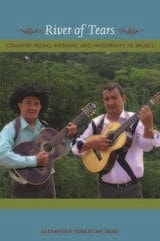
Country Music, Memory, and Modernity in BrazilAlexander Sebastian Dent
Duke University Press, 2009
Since 1998, Alexander Sebastian Dent has analyzed rural music in the state of São Paulo, interviewing and spending time with listeners, musicians, songwriters, journalists, record-company owners, and radio hosts. Dent not only describes the production and reception of this music, he also explains why the genre experienced such tremendous growth as Brazil transitioned from an era of dictatorship to a period of intense neoliberal reform. Dent argues that rural genres reflect a widespread anxiety that change has been too radical and has come too fast. In defining their music as rural, Brazil’s country musicians—whose work circulates largely in cities—are criticizing an increasingly inescapable urban life characterized by suppressed emotions and an inattentiveness to the past. Their performances evoke a river of tears flowing through a landscape of loss—of love, of life in the countryside, and of man’s connections to the natural world.
Roadrunner
A Song by Jonathan Richman and the Modern LoversJoshua Clover
Duke University Press, 2021
Robert Ashley
Kyle Gann
University of Illinois Press, 2012
Robert Johnson, Mythmaking, and Contemporary American Culture
Patricia R. Schroeder
University of Illinois Press, 2004
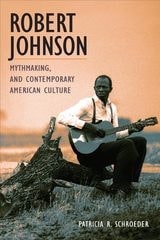
Merging literary analysis with cultural criticism and biographical study, Patricia R. Schroeder explores Johnson's ongoing role as a cultural icon. Schroeder's detailed analysis engages key images and myths about the blues musician (such as the Faustian crossroads exchange of his soul for guitar virtuosity). Navigating the many competing interpretations that swirl around him, Schroeder reveals the cultural purposes served by the stories and the storytellers. The result is a fascinating examination of the relationships among Johnson's life, its subsequent portrayals, and the forces that drove the representations.
Offering penetrating insights into both Johnson and the society that perpetuates him, Robert Johnson, Mythmaking, and Contemporary American Culture is essential reading for blues fans and cultural critics interested in a foundational musical figure.
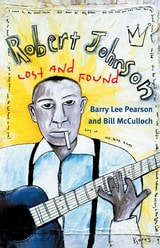
Robert Johnson
Lost and FoundBarry Lee Pearson and Bill McCulloch
University of Illinois Press, 2002
Even with just forty-one recordings to his credit, Robert Johnson (1911-38) is a towering figure in the history of the blues. His vast influence on twentieth-century American music, combined with his mysterious death at the age of twenty-seven, still encourage the speculation and myth that have long obscured the facts about his life. The most famous legend depicts a young Johnson meeting the Devil at a dusty Mississippi crossroads at midnight and selling his soul in exchange for prodigious guitar skills.
Barry Lee Pearson and Bill McCulloch examine the full range of writings about Johnson and weigh the conflicting accounts of Johnson's life story against interviews with blues musicians and others who knew the man. Their extensive research uncovers a life every bit as compelling as the fabrications and exaggerations that have sprung up around it. In examining the bluesman's life and music, and the ways in which both have been reinvented and interpreted by other artists, critics, and fans, Robert Johnson: Lost and Found charts the cultural forces that have mediated the expression of African American artistic traditions.
Robert Schumann's Advice to Young Musicians
Revisited by Steven IsserlisRobert Schumann
University of Chicago Press, 2017
There is no end to learning.
Originally published in1850, Advice to Young Musicians: Musical Rules for Home and in Life offered composer Robert Schumann’s (1810–56) combination of practical advice and poetic words of wisdom for young people beginning their musical education. Presented in aphorisms and short paragraphs, the book’s insights remain as valuable today as when it was written. Recognizing the continued resonance of Schumann’s words, world-renowned cellist Steven Isserlis, himself a writer of children’s books and many articles for young musicians, set out to rescue the work from history. Here, in this beautiful gift edition, he revisits Schumann’s work and contributes his own contemporary counsel for musicians and music lovers.
For this edition, Isserlis retranslated Schumann’s text and arranged it into four thematic sections: “On being a musician,” “Playing,” “Practicing,” and “Composing.” Each page is decoratively designed, and accompanying Schumann’s original quotation are Isserlis’s thoughtful and often humorous glosses. The book concludes with Isserlis’s own reflections on his life as a musician and performer: “My Own Bits of Advice (For What They’re Worth).” The result is a unique and thought-provoking book that will be treasured by aspiring musicians of any age.
Robert Schumann
The Life and Work of a Romantic ComposerMartin Geck
University of Chicago Press, 2012
Rock 'n' Roll Movies
Sterritt, David
Rutgers University Press, 2018
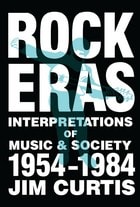
Rock Eras
Interpretations of Music and Society, 1954-1984Jim Curtis
University of Wisconsin Press, 1987
Paper is temporarily out of stock, Cloth (0-87972-368-8) is available at the paper price until further notice.
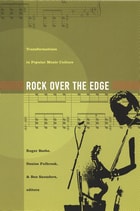
Rock Over the Edge
Transformations in Popular Music CultureRoger Beebe, Denise Fulbrook, and Ben Saunders, eds.
Duke University Press, 2002
Bridging the disciplines of musicology and cultural studies, the collection has two primary goals: to seek out a language for talking about music culture and to look at the relationship of music to culture in general. The editors’ introduction provides a backward glance at recent rock criticism and also looks to the future of the rapidly expanding discipline of popular music studies. Taking seriously the implications of critical theory for the study of non-literary aesthetic endeavors, the volume also addresses such issues as the affective power of popular music and the psychic construction of fandom.
Rock Over the Edge will appeal to scholars and students in popular music studies and American Studies as well as general readers interested in popular music.
Contributors. Ian Balfour, Roger Beebe, Michael Coyle, Robert Fink, Denise Fulbrook, Tony Grajeda, Lawrence Grossberg, Trent Hill, Josh Kun, Jason Middleton, Lisa Ann Parks, Ben Saunders, John J. Sheinbaum, Gayle Wald, Warren Zanes
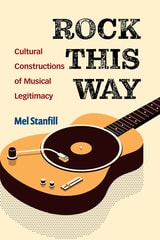
Rock This Way
Cultural Constructions of Musical LegitimacyMel Stanfill
University of Michigan Press, 2023
Any and all songs are capable of being remixed. But not all remixes are treated equally. Rock This Way examines transformative musical works—cover songs, remixes, mash-ups, parodies, and soundalike songs—to discover what contemporary American culture sees as legitimate when it comes to making music that builds upon other songs. Through examples of how popular discussion talked about such songs between 2009 and 2018, Mel Stanfill uses a combination of discourse analysis and digital humanities methods to interrogate our broader understanding of transformative works and where they converge at the legal, economic, and cultural ownership levels.
Rock This Way provides a new way of thinking about what it means to re-create and borrow music, how the racial identity of both the reusing artist and the reused artist matters, and the ways in which the law polices artists and their works. Ultimately, Stanfill demonstrates that the extent to which a work is seen as having new expression or meaning is contingent upon notions of creativity, legitimacy, and law, all of which are shaped by white supremacy.
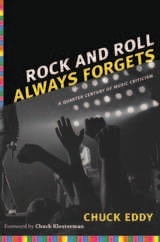
Rock and Roll Always Forgets
A Quarter Century of Music CriticismChuck Eddy
Duke University Press, 2011
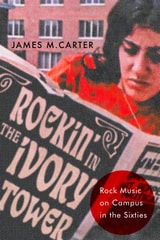
Rockin' in the Ivory Tower
Rock Music on Campus in the SixtiesJames M. Carter
Rutgers University Press, 2023
Histories of American rock music and the 1960s counterculture typically focus on the same few places: Woodstock, Monterey, Altamont. Yet there was also a very active college circuit that brought edgy acts like the Jefferson Airplane and the Velvet Underground to different metropolitan regions and smaller towns all over the country. These campus concerts were often programmed, promoted, and reviewed by students themselves, and their diverse tastes challenged narrow definitions of rock music.
Rockin’ in the Ivory Tower takes a close look at two smaller universities, Drew in New Jersey and Stony Brook on Long Island, to see how the culture of rock music played an integral role in student life in the late 1960s. Analyzing campus archives and college newspapers, historian James Carter traces connections between rock fandom and the civil rights protests, free speech activism, radical ideas, lifestyle transformations, and anti-war movements that revolutionized universities in the 1960s. Furthermore, he finds that these progressive students refused to segregate genres like folk, R&B, hard rock, and pop. Rockin’ in the Ivory Tower gives readers a front-row seat to a dynamic time for the music industry, countercultural politics, and youth culture.
Rocking My Life Away
Writing about Music and Other MattersAnthony DeCurtis
Duke University Press, 1998
Rocking the Closet
How Little Richard, Johnnie Ray, Liberace, and Johnny Mathis Queered Pop MusicVincent Stephens
University of Illinois Press, 2019
Roll Me in Your Arms
"Unprintable" Ozark Folksongs and Folklore, Volume I, Folksongs and MusicVance Randolph
University of Arkansas Press, 1992
Collected in the field from 1915 through 1955, these tales and songs were considered by the publisher at the time to be too salacious for inclusion in Vance Randolph’s Ozark Folksongs. Randolph came to doubt that they would ever appear in print, and they did not in his lifetime.
Roll Me in Your Arms, Volume I of “Unprintable” Ozark Folksongs and Folklore, includes 180 unexpurgated songs collected by Randolph with tunes transcribed from the original singers. Volume II, Blow the Candle Out, contains rhymes and songs without music as well as other unexpurgated Ozark folk materials, including children’s lore, elements in speech, graffiti, riddles, dance calls, and beliefs.
G. Legman’s painstaking and patient editing, annotating, and crossreferencing richly complement the Randolph collection. The result is a look into a previously neglected area in the study of folksong and folklore in the Ozarks and further evidence of Randolph’s preeminence in the field.
The late Vance Randolph lived in the Ozark Mountains from 1920 until his death in 1980. Although he taught folklore at the University of Arkansas in Fayetteville, he is best remembered for his many years of field research resulting in the national bestseller Pissing in the Snow & Other Ozark Folktales and more than a dozen other books on American folklore.
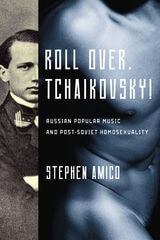
Roll Over, Tchaikovsky!
Russian Popular Music and Post-Soviet HomosexualityStephen Amico
University of Illinois Press, 2017
Centered on the musical experiences of homosexual men in St. Petersburg and Moscow, this ground-breaking study examines how post-Soviet popular music both informs and plays off of a corporeal understanding of Russian male homosexuality.
Drawing upon ethnography, musical analysis, and phenomenological theory, Stephen Amico offers an expert technical analysis of Russian rock, pop, and estrada music, dovetailing into an illuminating discussion of homosexual men's physical and bodily perceptions of music. He also outlines how popular music performers use song lyrics, drag, physical movements, images of women, sexualized male bodies, and other tools and tropes to implicitly or explicitly express sexual orientation through performance. Finally, Amico uncovers how such performances help homosexual Russian men to create their own social spaces and selves, in meaningful relation to others with whom they share a "nontraditional orientation."
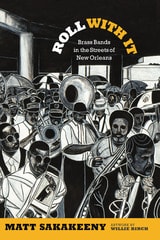
Roll With It
Brass Bands in the Streets of New OrleansMatt Sakakeeny
Duke University Press, 2013
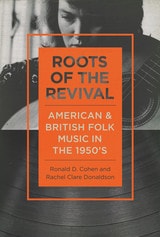
Roots of the Revival
American and British Folk Music in the 1950sRonald D. Cohen and Rachel Clare Donaldson
University of Illinois Press, 2014
After setting the stage with the work of music collectors in the nineteenth century, the authors explore the so-called recovery of folk music practices and performers by Alan Lomax and others, including journeys to and within the British Isles that allowed artists and folk music advocates to absorb native forms and facilitate the music's transatlantic exchange. Cohen and Donaldson place the musical and cultural connections of the twin revivals within the decade's social and musical milieu and grapple with the performers' leftist political agendas and artistic challenges, including the fierce debates over "authenticity" in practice and repertoire that erupted when artists like Harry Belafonte and the Kingston Trio carried folk into the popular music mainstream.
From work songs to skiffle, from the Weavers in Greenwich Village to Burl Ives on the BBC, Roots of the Revival offers a frank and wide-ranging consideration of a time, a movement, and a transformative period in American and British pop culture.
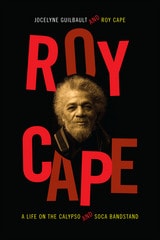
Roy Cape
A Life on the Calypso and Soca BandstandJocelyne Guilbault and Roy Cape
Duke University Press, 2014
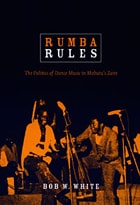
Rumba Rules
The Politics of Dance Music in Mobutu’s ZaireBob W. White
Duke University Press, 2008
Drawing partly on his experiences as a member of a local dance band in the country’s capital city Kinshasa, White offers extraordinarily vivid accounts of the live music scene, including the relatively recent phenomenon of libanga, which involves shouting the names of wealthy or powerful people during performances in exchange for financial support or protection. With dynamic descriptions of how bands practiced, performed, and splintered, White highlights how the ways that power was sought and understood in Kinshasa’s popular music scene mirrored the charismatic authoritarianism of Mobutu’s rule. In Rumba Rules, Congolese speak candidly about political leadership, social mobility, and what it meant to be a bon chef (good leader) in Mobutu’s Zaire.
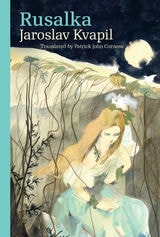
Rusalka
A Lyrical Fairy-tale in Three ActsJaroslav Kvapil
Karolinum Press, 2020
Transposed into the folkloric topos of a landlocked Bohemia, the mermaid is rendered here as a Slavic rusalka—a dangerous water nymph—who must choose between love and immortality. Thus, Rusalka, while certainly paying homage to the original story’s Scandinavian roots, is still a distinct work of modern Czech literature. Newly translated by Patrick Corness, Kvapil’s work will now find a fresh group of readers looking to get lost in one of Europe’s great lyrical fairy tale traditions.
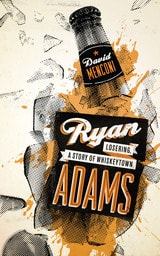
Ryan Adams
Losering, a Story of WhiskeytownBy David Menconi
University of Texas Press, 2012
Before he achieved his dream of being an internationally known rock personality, Ryan Adams had a band in Raleigh, North Carolina. Whiskeytown led the wave of insurgent-country bands that came of age with No Depression magazine in the mid-1990s, and for many people it defined the era. Adams was an irrepressible character, one of the signature personalities of his generation, and as a singer-songwriter he blew people away with a mature talent that belied his youth. David Menconi witnessed most of Whiskeytown’s rocket ride to fame as the music critic for the Raleigh News & Observer, and in Ryan Adams, he tells the inside story of the singer’s remarkable rise from hardscrabble origins to success with Whiskeytown, as well as Adams’s post-Whiskeytown self-reinvention as a solo act.
Menconi draws on early interviews with Adams, conversations with people close to him, and Adams’s extensive online postings to capture the creative ferment that produced some of Adams’s best music, including the albums Strangers Almanac and Heartbreaker. He reveals that, from the start, Ryan Adams had an absolutely determined sense of purpose and unshakable confidence in his own worth. At the same time, his inability to hold anything back, whether emotions or torrents of songs, often made Adams his own worst enemy, and Menconi recalls the excesses that almost, but never quite, derailed his career. Ryan Adams is a fascinating, multifaceted portrait of the artist as a young man, almost famous and still inventing himself, writing songs in a blaze of passion.