Results by title
3785 books match the query 'Poetry' and 163 start with r
Recalculating
Charles Bernstein
University of Chicago Press, 2013
Reckon
Logan Phillips
University of Arizona Press, 2026
In Reckon, artist Logan Phillips returns to the fabled town to face the history he was raised on as a boy—gunfights, outlaws, and Hollywood cowboys—for a new, personal confrontation with the West’s foundational mythology. This hybrid memoir also explores sexuality, masculinity, parenting, and what it means to love a land rife with contradiction and “slathered in murder.”
As innovative as it is moving, this memoir is constructed of essays, photography, poetry, newspaper clippings from the Tombstone Epitaph Local Edition, and of course, movie screenplays. As he writes the characters of his past––including Youngfather and Teenme––Phillips finds the real history to be much more complex than the stories he was told. This is Tombstone in the 1980s and 90s, a century after the West’s most famous gunfight––a fifteen-second event still performed every day in historical reenactments––where Phillips’s father works as a historical exhibit designer at the Courthouse Museum and his uncle as a stuntman at Old Tucson Studios.
With an original, searing voice, Reckon is an essential answer to the tough questions of past and future, inheritance and reinvention, all from the perspective of a boy stuck in the middle.
Reconceiving Nature
Ecofeminism in Late Victorian Women's PoetryPatricia Murphy
University of Missouri Press, 2019
Recursive Desire
Rereading Epic TraditionJeremy M. Downes
University of Alabama Press, 1997
A groundbreaking rethinking of epic tradition through recursive literary analysis.
Epic has often been seen as a dead genre, intrinsically patriarchal and nationalistic. Furthermore, the psychological model most frequently applied to the relations between poets has been a violent one--the Freudian masterplot of Oedipus slaying the father to possess the mother. The limited usefulness of such simplistic explanations of epic is readily apparent when confronted with the continuing production of epic poetry long after its so-called death; when confronted with the contemporary drive toward epic among women poets, people of color, and postcolonial poets; and when faced with epic's fundamentally recursive desire--obvious in oral epic, but common to the entire genre--to repeat rather than to kill or evade its precursors.
Recursive desire, rooted in more basic preoedipal negotiations of union and separation rather than in Oedipal conflict, provides an elegant and far more useful explanation. By rereading and substantially redefining epic in this way, this book recognizes and reinvests with meaning the vital recursive qualities of the genre. Examining a diverse array of texts from the Epic of Gilgamesh to Derek Walcott's Osmeros, from the Homeric epics to H.D.'s Helen in Egypt. The book develops a broadened, inclusive, and living tradition of epic poetry, demonstrating the continuities of that tradition across dramatic discontinuities in time, place, worldview, and technology.
Recursive Desire rereads epic tradition and specific epic poems in ways that challenge traditional notions of the genre and open up unexplored fields of endeavor to students of epic, of poetry, and of narrative. With its more powerful and comprehensive psychological model of poetic relations, the book provides readers with a new understanding of epic poetry and its vital, shifting, polyvocal array (and disarray) of textual forces.
Red Army Red
PoemsJehanne Dubrow
Northwestern University Press, 2012
Red Clay Suite
Honoree Fanonne Jeffers
Southern Illinois University Press, 2007
Red Ocher
Jessica Poli
University of Arkansas Press, 2023
Red Rover
Susan Stewart
University of Chicago Press, 2008
Red Rover is both the name of a children’s game and a formless spirit, a god of release and permission, called upon in the course of that game. The “red rover” is also a thread of desire, and a clue to the forces of love and antipathy that shape our fate. In her most innovative work to date, award-winning poet and critic Susan Stewart remembers the antithetical forces—falling and rising, coming and going, circling and centering—revealed in such games and traces them out to many other cycles. Ranging among traditional, open, and newly-invented forms, and including a series of free translations of medieval dream visions and love poems, Red Rover begins as a historical meditation on our fall and grows into a song of praise for the green and turning world.
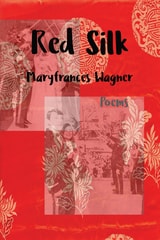
Red Silk
PoemsMaryfrances Wagner
BkMk Press, 2022
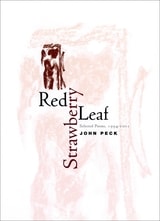
Red Strawberry Leaf
Selected Poems, 1994-2001John Peck
University of Chicago Press, 2005
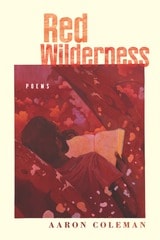
Red Wilderness
Aaron Coleman
Four Way Books, 2025
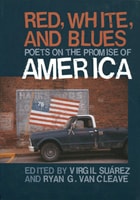
Red, White, and Blues
Poets on the Promise of AmericaVirgil & Ryan G. Suarez & Van Cleave
University of Iowa Press, 2004
Red, White, and Blues, a new anthology from the award-winning editors of Like Thunder: Poets Respond to Violence in America and Vespers: Contemporary American Poems of Religion and Spirituality, offers a chorus of contemporary American poets on the idea of liberty, democracy, patriotism, and the American Dream;a twenty-first-century "Song of Myself” for the entire country.
The poems in Red, White, and Blues reflect our collective memory—from icons of pop culture to national disasters and times of unrest. Yet they are not simply reflections of the headline news or political diatribes of the day; instead, they provide roadmaps of American history—roadmaps of where we’ve been, who we are, and where we’re going as a nation.
Poets as diverse as Martín Espada and Paisley Rekdal, J. P. Dancing Bear and Vivian Shipley seek to answer questions that resonate within the heart of our national identity—what does it mean to be an American? What is the American Dream? How does one define patriotism? Regardless of ethnicity, gender, or class, each poet’s answer to such questions proves that our experiences unite us more than they divide us.
Red, White, and Blues is an ambitious collection of the finest contemporary poetry on the subject of America and the indefatigable spirit of its citizens. Its poems don’t pull punches, nor do they celebrate without cause. They show spirit and excitement, outrage and joy, solemnity and ambiguity—all reflections of our wonderfully diverse nation.
Redoubted
Poems byR. Vincent Moniz Jr.
Michigan State University Press, 2018
Redstart
An Ecological PoeticsForrest Gander
University of Iowa Press, 2012
This innovative volume speaks to all people wanting to understand how artistic and critical endeavors can enrich, rather than impoverish, the imperiled world around us.
Reel to Reel
Alan Shapiro
University of Chicago Press, 2014
Reflections on the Pandemic
COVID and Social Crises in the Year Everything ChangedTeresa Politano
Rutgers University Press, 2024
Contributors include: Patricia Akhimie, Marc Aronson, Ulla D. Berg, Stephanie Bonne, Stephanie Boyer, Kimberly Camp, Jordan Casteel, Kelly-Jane Cotter, Mark Doty, David Dreyfus, Adrienne E. Eaton, Katherine C. Epstein, Leah Falk, Paul G. Falkowski, Rigoberto González, James Goodman, David Greenberg, Angelique Haugerud, Grace Lynne Haynes, Leslieann Hobayan, Jonathan Holloway, James W. Hughes, Naomi Jackson, Amy Jordan, Vikki Katz, Mackenzie Kean, Robert E. Kopp, Christian Lighty, Stephen Masaryk, Louis P. Masur, Revathi V. Machan, Yalidy Matos, Belinda McKeon, Susan L. Miller, Yehoshua November, Joyce Carol Oates, Mary E. O’Dowd, Katherine Ognyanova, David Orr, Gregory Pardlo, Steve Pikiell, Teresa Politano, en Purkert, Nick Romanenko, Evie Shockley, Caridad Svich, and Didier William.
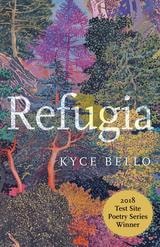
Refugia
PoemsKyce Bello
University of Nevada Press, 2019
Winner of the inaugural Interim 2018 Test Site Poetry Series Prize
Refugia is a bright and hopeful voice in the current conversation about climate change. Kyce Bello’s stunning debut ponders what it means to inhabit a particular place at a time of enormous disruption, witnessing a beloved landscape as it gives way to, as Bello writes, “something other and unknown, growing beyond us.” Ultimately an exploration of resilience, Refugia brings to life the author’s home ground in Northern New Mexico and carefully observes the seasons in parallel with personal cycles of renewal and loss. These vivid poems touch upon history, inheritance, drought, and most of all, trees—be they Western conifers succumbing to warming temperatures, ramshackle orchards along the Rio Grande, or family trees reaching simultaneously into the past and future.
Like any wilderness, Refugia creates a terrain that is grounded in image and yet many-layered and complex. These poems write us back into an ecological language of place crucial to our survival in this time of environmental crisis.

Rehumanization Litany
Jarrett Moseley
University of Arkansas Press, 2027
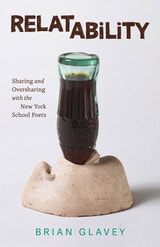
Relatability
Sharing and Oversharing with the New York School PoetsBrian Glavey
University of Chicago Press, 2026
An engaging account of how the New York School poets used art to imagine their queerness as something that might be shared with other people.
How did Frank O’Hara and other New York School poets—a small coterie associated with experimental art and gay culture —become fixtures in today’s culture, quoted on prestige television shows, in teen romances, and at the wedding ceremonies of straight celebrities? How, in other words, did these poets become so relatable? Brian Glavey’s Relatability tells the story of an aesthetic as it traveled from a cluster of mostly queer poets in the middle of the twentieth century to become increasingly central to everyday life in the early twenty-first century.
That the New York School poets are more relatable now than they were during their own lifetime speaks in part to the growing acceptance of same-sex desire in American culture. But Glavey argues that this transformation also tells the story of a shift in the way that aesthetic experience is understood to work. Moving away from forms of modernist impersonality, O’Hara, John Ashbery, James Schuyler, and Joe Brainard made sociability central to the experience of art and literature. Attempting to share their experience of works of art, they were willing to risk the reader’s judgment that they had, perhaps, overshared. Glavey advances an idea of aesthetic judgment that takes seriously its missed connections as well as its successes. Relatability adds a fresh perspective to current conversations around attachment and affect in literary studies.
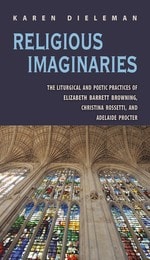
Religious Imaginaries
The Liturgical and Poetic Practices of Elizabeth Barrett Browning, Christina Rossetti, and Adelaide ProcterKaren Dieleman
Ohio University Press, 2012
Explores liturgical practice as formative for how three Victorian women poets imagined the world and their place in it and, consequently, for how they developed their creative and critical religious poetics.
This new study rethinks several assumptions in the field: that Victorian women’s faith commitments tended to limit creativity; that the contours of church experiences matter little for understanding religious poetry; and that gender is more significant than liturgy in shaping women’s religious poetry.
Exploring the import of bodily experience for spiritual, emotional, and cognitive forms of knowing, Karen Dieleman explains and clarifies the deep orientations of different strands of nineteenth-century Christianity, such as Congregationalism’s high regard for verbal proclamation, Anglicanism’s and Anglo-Catholicism’s valuation of manifestation, and revivalist Roman Catholicism’s recuperation of an affective aesthetic. Looking specifically at Elizabeth Barrett Browning, Christina Rossetti, and Adelaide Procter as astute participants in their chosen strands of Christianity, Dieleman reveals the subtle textures of these women’s religious poetry: the different voices, genres, and aesthetics they create in response to their worship experiences. Part recuperation, part reinterpretation, Dieleman’s readings highlight each poet’s innovative religious poetics.
Dieleman devotes two chapters to each of the three poets: the first chapter in each pair delineates the poet’s denominational practices and commitments; the second reads the corresponding poetry. Religious Imaginaries has appeal for scholars of Victorian literary criticism and scholars of Victorian religion, supporting its theoretical paradigm by digging deeply into primary sources associated with the actual churches in which the poets worshipped, detailing not only the liturgical practices but also the architectural environments that influenced the worshipper’s formation. By going far beyond descriptions of various doctrinal positions, this research significantly deepens our critical understanding of Victorian Christianity and the culture it influenced.

Reliquary
Abigail Wender
Four Way Books, 2021
In her debut collection, Reliquary, Abigail Wender addresses losing a brother to prison and, ultimately, opiate addiction. The text also considers womanhood, motherhood, and marriage in lyric poems that confront the complicated nature of grief, the effects of illness on family, and how love—even bliss—figure into grief’s equation. The collection suspends time, as the speaker weaves between flashbacks and the present, assembling fragments and vignettes of her childhood and marriage. In the book’s moments of solace and interiority, such as in the poem, “Hiking,” Wender contemplates how to hold on and to what. In this particular poem’s reflection on forgiveness, the speaker asks “Are there words for us, / high on an uppermost branch?,” and the collection responds with a resounding yes.

Remembering Elizabeth Bishop
An Oral BiographyGary Fountain
University of Massachusetts Press, 1994

Remembering Paris in Text and Film
Echoes of Baudelaire in Text and on ScreenEdited by Alistair Rolls and Marguerite Johnson
Intellect Books, 2021
Experiencing urban space conjures visions of the past alongside contemplation of the present. This edited volume investigates this feeling of seeing double by investigating Paris—a city that has come to embody the tension of this sensation—through a dual lens of nostalgia and modernity.
Contributors survey Paris in film, poetry, and prose in the nineteenth and twentieth centuries, presenting the city as both a concrete reality and as a collection of the myths associated with it. Interdisciplinary and deeply researched, the essays distill complex concepts of the urban, the textual, and the modern for a wide readership.

Remembering and Repeating
On Milton's Theology and PoeticsRegina M. Schwartz
University of Chicago Press, 1993
"A brilliant study that quietly but powerfully recharacterizes many of the contexts of discussion in Milton criticism. Particularly noteworthy is Schwartz's ability to introduce advanced theoretical perspectives without ever taking the focus of attention away from the dynamics and problematics of Milton's poem."—Stanley Fish
Renaissance Transactions
Ariosto and TassoValeria Finucci, ed.
Duke University Press, 1999
Resituating these writers’ works in the context of the Renaissance while also offering appraisals of their uncanny “postmodernity,” the contributors to this volume focus primarily on Ariosto’s Orlando furioso and Tasso’s Gerusalemme liberata. Essays center on questions of national and religious identity, performative representation, and the theatricality of literature. They also address subjects regarding genre and gender, social and legal anthropology, and reactionary versus revolutionary writing. Finally, they advance the historically significant debate about what constitutes modern literature by revisiting with new perspective questions first asked centuries ago: Did Ariosto invent a truly national, and uniquely Italian, literary genre—the chivalric romance? Or did Tasso alone, by equaling the epic standards of Homer and Virgil, make it possible for a literature written in Italian to attain the status of its classical Greek and Latin antecedents?
Arguing that Ariosto and Tasso are still central to the debate on what constitutes modern narrative, this collection will be invaluable to scholars of Italian literature, literary history, critical theory, and the Renaissance.
Contributors. Jo Ann Cavallo, Valeria Finucci, Katherine Hoffman, Daniel Javitch, Constance Jordan, Ronald L. Martinez, Eric Nicholson, Walter Stephens, Naomi Yavneh, Sergio Zatti
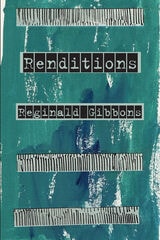
Renditions
Reginald Gibbons
Four Way Books, 2021
In Renditions Reginald Gibbons conducts an ensemble of poetic voices, using the works of a varied, international selection of writers as departure points for his translations and transformations. The collection poses the idea that all writing is, at least abstractly, an act of translation, whether said act “translates” observation into word or moves ideas from one language to another. Through these acts of transformation, Gibbons infuses the English language with stylistic aspects of other languages and poetic traditions. The resulting poems are imbued with a sense of homage that allows us to respectfully reimagine the borders of language and revel in the fellowship of idea sharing. In this tragicomedy of the human experience and investigation of humanity’s effects, Gibbons identifies the “shared underthoughts that we can (all) sense:” desire, love, pain, and fervor.
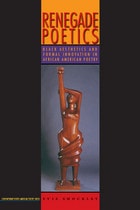
Renegade Poetics
Black Aesthetics and Formal Innovation in African American PoetryEvie Shockley
University of Iowa Press, 2011
Beginning with a deceptively simple question—What do we mean when we designate behaviors, values, or forms of expression as “black”?—Evie Shockley’s Renegade Poetics separates what we think we know about black aesthetics from the more complex and nuanced possibilities the concept has long encompassed. The study reminds us, first, that even among the radicalized young poets and theorists who associated themselves with the Black Arts Movement that began in the mid-1960s, the contours of black aesthetics were deeply contested and, second, that debates about the relationship between aesthetics and politics for African American artists continue into the twenty-first century.

Renunciation
POEMSCorey Marks
University of Illinois Press, 2000
The sculptor Gislebertus, Doubting Thomas, Theseus, and John Keats share space in the pages of Renunciation with a survivor of the bomb in Hiroshima, a blind girl in the South American jungle, and DeSoto's thirteen swine in the hold of a ship bound for America. Rich with almost palpable nuances of light and sound, Marks's lyric meditations unravel a constant play of loss and continuation, "mending sense from spare threads" and hovering over connections undone even as they are made.
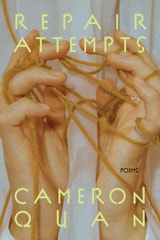
Repair Attempts
PoemsCameron Quan
Northwestern University Press, 2027
A poetic reckoning with personal, political, and historical wounds
The titular “repair attempts” describes the words and actions people use to heal broken connections and de-escalate conflict. In his debut collection, Cameron Quan transforms this concept into a powerful lens for examining moral responsibility in contemporary America. Quan’s Repair Attempts navigates Asian American identity, American exceptionalism, patriarchal violence, grief, and the nature of apologies. The speakers grapple with transgression and healing from unexpected angles, asking what kind of repair is possible in a world marred by atrocities. These poems dance across landscapes—from an imagined American holiday of atonement to the pope’s apology to Indigenous peoples, from a mother preparing to flee domestic violence to an unsettling childhood game boys play with butterflies. A chorus of repair attempts that toggle between the personal and political, this collection invites us into difficult territory where failure, wrongdoing, and shame require a collective reckoning and a collective effort to be better.
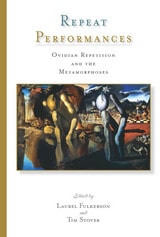
Repeat Performances
Ovidian Repetition and the <i>Metamorphoses<i/>Edited by Laurel Fulkerson and Tim Stover
University of Wisconsin Press, 2016
A shared vision of the possibilities of Latin epic poetry unites the essays, as does a series of attempts to realize those opportunities. Some of the pieces represent a traditional vein of allusion and intertextuality; others are more innovative in their approaches. Each, in a sense, stands as a placeholder for a methodology of theorizing the repetitive practices of poetry, of epic, and of Ovid in particular.
Contributors: Antony Augoustakis, Neil W. Bernstein, Barbara Weiden Boyd, Andrew Feldherr, Peter Heslin, Stephen Hinds, Sharon L. James, Alison Keith, Peter E. Knox, Darcy Krasne
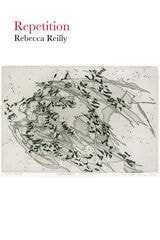
Repetition
Rebecca Reilly
Four Way Books, 2015
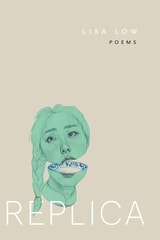
Replica
Lisa Low
University of Wisconsin Press, 2026
Stand-up comedy, a celebrity non-apology, observations of racism, and the slipperiness of nostalgia underpin Replica. In poignant, witty poems, Lisa Low navigates the tensions of solidarity and hostility in white spaces as she sets out to write differently about race.
“The problem of being with a white man is also a problem of writing,” Low says in a prose poem that turns writing about identity on its head. She peers in from outside the poem, as if through an open ceiling. The poem itself becomes a site of investigation—a counterpoint to constricting narratives about Asian American identity—reimagined as a dollhouse, a stage with props, an image the speaker wears like a bodysuit. Replica asks what it means to represent yourself and your experiences in a world where you are indistinguishable from others.

Republic of Mercy
PoemsSharon Wang
Tupelo Press, 2018
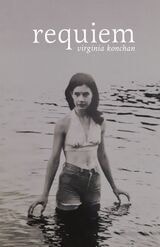
Requiem
Virginia Konchan
Carnegie Mellon University Press, 2025
Requiem is a collection anchored in personal and collective grief, remembrance, and commemoration, journeying through the loss of a mother in a series of elegies, fugues, and lamentations that draw from the Church’s canonical hours of prayer as collected in a breviary. Historical and religious mourning rites, and the grief work of John Donne, Gerard Manley Hopkins, Roland Barthes, Emily Dickinson, and Mozart, among others, establish a lyric dialogue around aesthetic representations of grief, invoking a doubleness between the griever and the grieved; a mutuality and interconnectedness that illuminate the role of witness in poetry, mortality, and transcendence. Requiem enacts our deepest longing: to honor and immortalize the beloved.
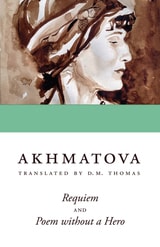
Requiem and Poem without a Hero
Anna Akhmatova
Ohio University Press, 2001
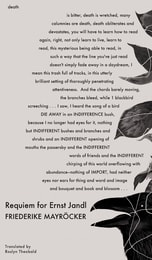
Requiem for Ernst Jandl
Friederieke Mayröcker
Seagull Books, 2018
Austrian poet and playwright Ernst Jandl died in 2000, leaving behind his partner, poet Friederike Mayröcker—and bringing to an end a half century of shared life, and shared literary work. Mayröcker immediately began attempting to come to terms with his death in the way that poets struggling with loss have done for millennia: by writing. Requiem for Ernst Jandl is the powerfully moving outcome. In this quiet but passionate lament that grows into a song of enthralling intensity, Mayröcker recalls memories and shared experiences, and—with the sudden, piercing perception of regrets that often accompany grief—reads Jandl’s works in a new light. Alarmed by a sudden, existential emptiness, she reflects on the future, and the possibility of going on with her life and work in the absence of the person who, as we see in this elegy, was a constant conversational and creative partner.
Requiem, Rwanda
Laura Apol
Michigan State University Press, 2015
Res Publica
Alan Williamson
University of Chicago Press, 1998
Resident Alien
On Border-crossing and the Undocumented DivineKazim Ali
University of Michigan Press, 2015

Restoration
PoemsChristina Pugh
Northwestern University Press, 2008
Complex and focused, this collection of poems moves along the line between waking and sleeping to reveal a narrator who is contemplating her origins as well as her future. Pugh frequently turns in her work to the image of a bed--as a source of comfort, an erotic landing, and a place for dreaming. For Pugh, dreams both obscure and reveal, their language a code to be analyzed, as in her longer meditation inspired by Freud's case history "Dora." After dipping dangerously far into dreams, Pugh's poems return to a world of activity, full of physicality before becoming calm. At the end of the book, the self is restored and can see the world through a newly formed lens taken from its dreams.

Resurrection of the Animals
Anita Skeen
Michigan State University Press, 2002
Retribution Forthcoming
PoemsKatie Berta
Ohio University Press, 2024

Return Flights
Jarita Davis
Tagus Press, 2016
These poems—varying from narrative to imagist to lyrical—reflect the “sodade” of Cape Verdean culture that is shaped by separation and longing—longing for the home that has been left behind and for loved ones who have departed. Cape Verdean communities extend beyond national boundaries and are paradoxically independent of place, even when inspired by it. Return Flights marks a turning point for Cape Verdean American culture, one in which a partially forgotten past becomes a starting point for possible futures, both of new transoceanic contacts and of new reinventions of culture.
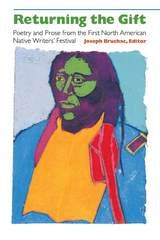
Returning the Gift
Poetry and Prose from the First North American Native Writers' FestivalEdited by Joseph Bruchac
University of Arizona Press, 1994
The anthology includes works from every corner of the continent, representing a wide range of tribal affiliations, languages, and cultures. By taking their peoples' literature back to them in the form of stories and songs, these writers see themselves as returning the gift of storytelling, culture, and continuance to the source from which it came. In addition to contributions by 92 writers are two introductory chapters: Joseph Bruchac comments on the current state of Native literature and the significance of the festival, and Geary Hobson traces the evolution of the event itself.
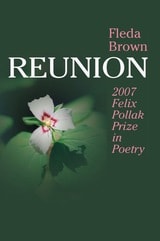
Reunion
Fleda Brown
University of Wisconsin Press, 2007
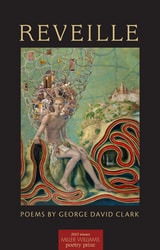
Reveille
PoemsGeorge David Clark
University of Arkansas Press, 2015
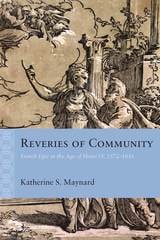
Reveries of Community
French Epic in the Age of Henri IV, 1572–1616Katherine S. Maynard
Northwestern University Press, 2018
Traditionally united by une foi, une loi, un roi (one faith, one law, one king), France under Henri IV was cleaved into warring factions of Catholics and Huguenots. The country suffered episodes of bloodshed such as the St. Bartholomew’s Day Massacre, even as attempts were made to attenuate the violence through frequent edicts, including those of St. Germain (1570) and Nantes (1598). Maynard examines the rich and often dismissed body work written during these bloody decades: Pierre de Ronsard’s Franciade, Guillaume Salluste Du Bartas’s La Judit and La Sepmaine, Sébastian Garnier’s La Henriade, Agrippa d’Aubigné’s Les Tragiques, and others. She traces how French poets, taking classics such as Virgil’s Aeneid and Homer’s Iliad as their models, reimagined possibilities for French reconciliation and unity.
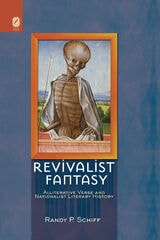
Revivalist Fantasy
Alliterative Verse and Nationalist Literary HistoryRandy P. Schiff
The Ohio State University Press, 2011
Schiff revises readings of alliterative poetry as Francophobic, exploring the transnational imperialist elitism in the translation William of Palerne. He contributes to the discussion of gender in Sir Gawain and the Green Knight by linking the poem’s powerful female players with anxieties about women’s control of wealth and property in militarized regions of England. The book also explores the emphatically pre-national, borderlands sensibilities informing the Awntyrs off Arthure and Golagros and Gawane, and it examines the exploitation of collaborative composition in the material legacy of the Piers Plowman tradition.
Revivalist Fantasy concludes that Revivalist nationalism obscures crucial continuities between late-medieval and post-national worlds and that critics’ interests should be channeled into the forging of connections between past and present rather than suspended in the scholarly pursuit of origins. The book will be of interest to scholars of editorial history and translation studies and to those interested in manuscript studies.
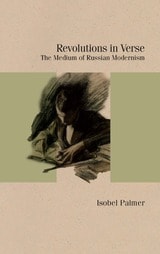
Revolutions in Verse
The Medium of Russian ModernismIsobel Palmer
Northwestern University Press, 2025
How modernist interartistic experimentation and the proliferation of new media technologies inspired fresh insights into poetry
Isobel Palmer spotlights Russian modernist poets’ and formalist theorists’ conscious engagement with formal convention, showing how their efforts were tied up with broader attempts in the early Soviet era to understand and articulate the nature of poetry and its most characteristic devices. Returning to critical debates around poetic encounters with three key aesthetic categories—rhythm, image, and voice—Palmer unpacks the period’s deeper interest in the material bases of poetic speech itself. Through fresh, incisive readings of canonical poets and theorists, from Andrei Bely and Vladimir Mayakovsky to Yury Tynianov and Viktor Shklovsky, Revolutions in Verse: The Medium of Russian Modernism explores the proliferation of interartistic experiments and the emergence of new media technologies that made poetry visible as a medium in its own right.

Revolver
Robyn Schiff
University of Iowa Press, 2008
A dirge on the Singer Sewing Machine, an exuberant and unnerving rumination on multipurpose campaign furniture, and a breathless account of Ralph Lauren’s silver Porsche 550 Spyder are among the collection’s exhilarating corporate histories, urgent fantasias, and agonizing love poems. The long, lavish, and utterly unpredictable sentences that Schiff has assembled contort as much to discover what can’t be contained as what can.
This is a book of extremes relentlessly contemporary in scope. And like the eighty-blade sportsman’s knife also described here, Revolver keeps opening and reopening to the daunting possibilities of transformation—“Splayed it is a bouquet of all the ways a point mutates.”
from “Silverware by J. A. Henckels”
Let me be
as streamlined as my knife when I say this.
As cold as my three-pronged fork that
cools the meat even as it steadies it.
A pettiness in me was honed
in this cutlers’ town, later bombed,
in which Adolf Eichmann, who was born there
alongside my wedding pattern, could hear
the constant sharpening of knives
like some children hear the corn in their hometowns
talking to them through the wind.
The horizon is just the score they breathe through
like a box of chickens
breathing through a slit.