Results by title
4155 books match the query 'State & Local' and 144 start with r
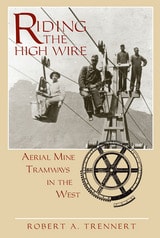
Riding the High Wire
Aerial Mine Tramways in the WestRobert A. Trennert
University Press of Colorado, 2001
Aerial mine tramways proved to have a special fascination; people often rode them for a thrill, sometimes with disastrous results. They were also very temperamental, needed constant attention, and were prone to accidents. The years between 1900 and 1920 saw the operation of some of the west's most spectacular tramways, but the decline in high-country mining beginning in the 1920s--coupled with the development of more efficient means of transportation--made this technology all but obsolete by the end of the Second World War.
Historians and the general reader will be equally enthralled by Trennert's fascinating story of the rise and fall of aerial mine tramways.
"Professor Trennert has explored a new area of mining history, and is to be commended for his pioneering work." --Liston Leyendecker, author of The Griffith Family and the Founding of Georgetown.
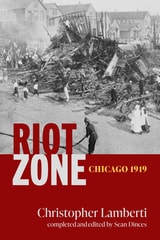
Riot Zone
Chicago 1919Christopher Lamberti, completed and edited by Sean Dinces
Temple University Press, 2027
Riot Zone presents a compelling forensic microhistory of the racial violence that exploded in Chicago starting on July 27, 1919, when a Black teenager named Eugene Williams drowned in Lake Michigan after white beachgoers attacked him as he swam with friends. In the days that followed, white gang members terrorized African Americans on the city’s South Side and Black Chicagoans armed and defended themselves in response. By the end of the first week of August, when the rioting finally ended, thirty-eight Chicagoans lay dead and hundreds nursed injuries as a result of what became known as America’s “Red Summer.”
The late Christopher Lamberti, with the help of editor Sean Dinces, recounts this sobering history using GIS software to map what occurred. The authors revisit and debunk ideas about the role race and ethnicity played in the riot and its aftermath, showing how the politics of housing and racial conflicts over residential space set the stage for the riots that ensued.
With insights that echo in today’s conflicts, Riot Zone proves that there is still plenty to learn about the history of America’s ongoing struggle with urban and racial violence.
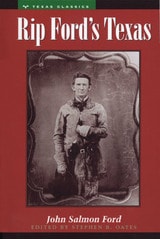
Rip Ford’s Texas
By John Salmon Ford
University of Texas Press, 1963
The Republic of Texas was still in its first exultation over independence when John Salmon "Rip" Ford arrived from South Carolina in June of 1836. Ford stayed to participate in virtually every major event in Texas history during the next sixty years. Doctor, lawyer, surveyor, newspaper reporter, elected representative, and above all, soldier and Indian fighter, Ford sat down in his old age to record the events of the turbulent years through which he had lived. Stephen Oates has edited Ford's memoirs to produce a clear and vigorous personal history of Texas.
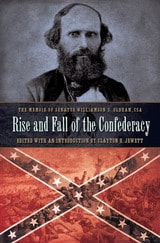
Rise and Fall of the Confederacy
The Memoir of Senator Williamson S. Oldham, CSAEdited & Intro by Clayton E. Jewett
University of Missouri Press, 2006
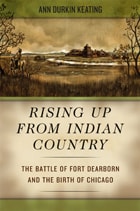
Rising Up from Indian Country
The Battle of Fort Dearborn and the Birth of ChicagoAnn Durkin Keating
University of Chicago Press, 2012
In August 1812, under threat from the Potawatomi, Captain Nathan Heald began the evacuation of ninety-four people from the isolated outpost of Fort Dearborn to Fort Wayne. The group included several dozen soldiers, as well as nine women and eighteen children. After traveling only a mile and a half, they were attacked by five hundred Potawatomi warriors. In under an hour, fifty-two members of Heald’s party were killed, and the rest were taken prisoner; the Potawatomi then burned Fort Dearborn before returning to their villages.
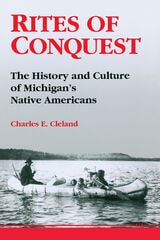
Rites of Conquest
The History and Culture of Michigan's Native AmericansCharles E. Cleland
University of Michigan Press, 1992
Beyond wars and warriors, Rites of Conquest is also about diplomacy and negotiation, mythology and magic, birth and death, and the joys and trials of daily life in the native villages of the Great Lakes region. Today, Michigan's Native American citizens struggle to solve problems that are a legacy of their past, while they attempt to maintain a distinctive place within modern society. In facing this challenge they often turn to the values and traditions that set them apart as the most enduring peoples of the Great Lakes region.
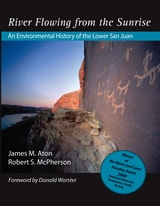
River Flowing From The Sunrise
An Environmental History of the Lower San JuanJames M. Aton and Robert S. McPherson
Utah State University Press, 2000
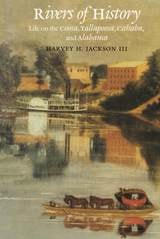
Rivers of History
Life on the Coosa, Tallapoosa, Cahaba, and AlabamaHarvey H. Jackson, III
University of Alabama Press, 1995
An illuminating study of how rivers shaped the history, culture, and environment of Alabama and the American South.
In Rivers of History, acclaimed historian Harvey H. Jackson III blends environmental history with compelling storytelling and traces the evolving relationship between people and rivers—from Indigenous communities who first depended on these waterways, to European settlers, to the development of modern towns and industries. Along the way, readers encounter stories of transportation and trade, conflict and cooperation, ecological change and conservation, all tied to the flow of these essential rivers.
Far more than a geographical study, Rivers of History demonstrates how waterways act as lifelines of human experience. Rivers shaped patterns of settlement, enabled agricultural and economic growth, and served as critical channels for communication across the American South. At the same time, they created challenges—flooding, environmental degradation, and competing demands for natural resources—that continue to influence life in the region today.
Jackson shows how the history of Alabama cannot be understood apart from its rivers. The Coosa, Tallapoosa, Cahaba, and Alabama rivers emerge not simply as physical features on a map, but as powerful forces that connect past and present, nature and society. His interdisciplinary approach—bringing together history, geography, and environmental studies—makes this work especially valuable for students, scholars, and general readers alike.
Accessible yet authoritative, Rivers of History is essential reading for anyone interested in Southern history, environmental change, or the enduring relationship between landscapes and human communities. It offers a compelling reminder that the story of a place is often written in the movement of its waters.
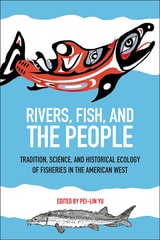
Rivers, Fish, and the People
Tradition, Science, and Historical Ecology of Fisheries in the American WestPei-Lin Yu
University of Utah Press, 2015
America’s western rivers are under assault from development, pollution, invasive species, and climate change. Returning these eco- systems to the time of European contact is often the stated goal for restoration efforts, yet neither the influence of indigenous societ- ies on rivers at the time of contact nor the deeper evolutionary relationships are yet understood by the scientific world. This volume presents a unique synthesis of scientific discoveries and traditional knowledge about the ecology of iconic river species in the American West.
Building from a foundation in fisheries biology and life history data about key species, the book reveals ancient human relationships with those species and describes time-tested Native resource management techniques, drawing from the archaeological record and original ethnographic sources. It evaluates current research trends, summarizes the conceptual foundations for the cultural and evolutionary significance of sustainable use of fish, and seeks pathways for future research. Geographic areas described include the Columbia Plateau, Idaho’s Snake River Plain, the Sacramento River Delta, and the mid-Fraser River of British Columbia. Previously unpublished information is included with the express permission and approval of tribal communities. This approach broadens and deepens the available body of data and establishes a basis for future collaboration between scientists and Native stakeholders toward mutual goals of river ecosystem health.
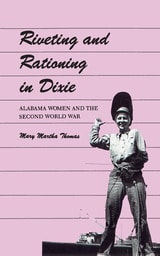
Riveting and Rationing in Dixie
Alabama Women and the Second World WarMary Martha Thomas
University of Alabama Press, 1987
Covers the experience of both black and white Alabama women as defense workers, volunteers, and homemakers. The most important change for women during the war years was their employment in jobs normally held by men, which posed an implicit challenge to traditional notions about femininity and female limitations.
Thomas describes the women employed in the defense industries—how they were recruited and trained, where they worked and under what conditions, and what changes employers made in the workplace to accommodate women, She also discusses the experience of the women who served as volunteers in the Ground Observer Corps, the Citizens’ Service Corps, the Red Cross, and other volunteer agencies. In addition, the author considers how homemakers coped during a time of rationing, housing shortages, lack of schools, and inadequate medical facilities.
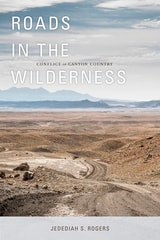
Roads in the Wilderness
Conflict in Canyon CountryJedediah S. Rogers
University of Utah Press, 2013
Winner of the Wallace Stegner Prize in American Environmental or Western History
The canyon country of southern Utah and northern Arizona—a celebrated desert of rock and sand punctuated by gorges and mesas—is a region hotly contested among vying and disparate interests, from industrial developers to wilderness preservation advocates. Roads are central to the conflicts raging in an area perceived as one of the last large roadless places in the continental United States. The canyon country in fact contains an extensive network of dirt trails and roads, many originally constructed under the authority of a one-sentence statute in an 1866 mining law, later known as R.S. 2477. While well-groomed and paved roads came to signify the industrialization of the modern age, twentiethcentury conservationists have regarded roads as intrusive human imprints on the nation’s wild lands. Roads connect rural communities, spur economic growth, and in some cases blend harmoniously into the landscape, but they also fracture and divide, disturb wildlife and habitat, facilitate industrial development, and spoil wilderness.
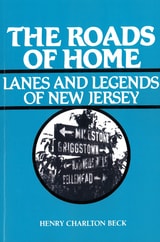
Roads of Home
Beck, Henry
Rutgers University Press, 1983
Long regarded as folklife classics, Henry Charlton Beck's books are vivid recreations of the back roads, small towns, and legends that give New Jersey its special character. Father Henry Charlton Beck, who lived in New Jersey nearly all his life, was the author of numerous books on New Jersey folklife, state editor of the Camden Courier-Post, and writer for the Newark Star-Ledger. He is considered New Jersey's first folklorist and his painstaking work has left us with a rich collection of tales.
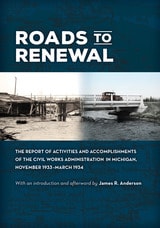
Roads to Renewal
The Report of Activities and Accomplishments of the Civil Works Administration in Michigan, November 1933–March 1934James R. Anderson
Michigan State University Press, 2020
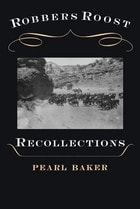
Robbers Roost Recollections
Pearl Baker
Utah State University Press, 1991
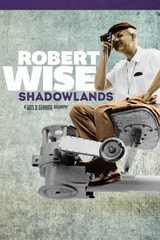
Robert Wise
ShadowlandsWes D. Gehring
Indiana Historical Society Press, 2012
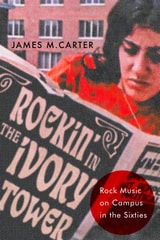
Rockin' in the Ivory Tower
Rock Music on Campus in the SixtiesJames M. Carter
Rutgers University Press, 2023
Histories of American rock music and the 1960s counterculture typically focus on the same few places: Woodstock, Monterey, Altamont. Yet there was also a very active college circuit that brought edgy acts like the Jefferson Airplane and the Velvet Underground to different metropolitan regions and smaller towns all over the country. These campus concerts were often programmed, promoted, and reviewed by students themselves, and their diverse tastes challenged narrow definitions of rock music.
Rockin’ in the Ivory Tower takes a close look at two smaller universities, Drew in New Jersey and Stony Brook on Long Island, to see how the culture of rock music played an integral role in student life in the late 1960s. Analyzing campus archives and college newspapers, historian James Carter traces connections between rock fandom and the civil rights protests, free speech activism, radical ideas, lifestyle transformations, and anti-war movements that revolutionized universities in the 1960s. Furthermore, he finds that these progressive students refused to segregate genres like folk, R&B, hard rock, and pop. Rockin’ in the Ivory Tower gives readers a front-row seat to a dynamic time for the music industry, countercultural politics, and youth culture.
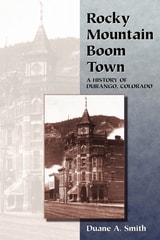
Rocky Mountain Boom Town
A History of Durango, ColoradoDuane A. Smith
University Press of Colorado, 1992
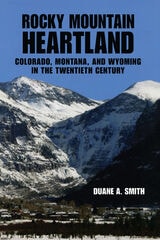
Rocky Mountain Heartland
Colorado, Montana, and Wyoming in the Twentieth CenturyDuane A. Smith
University of Arizona Press, 2008
This is the colorful saga of how the Old West became the New West. Beginning at the end of the nineteenth century and concluding after the turn of the twenty-first, Rocky Mountain Heartland explains how Colorado, Montana, and Wyoming evolved over the course of the century. Smith is mindful of all the factors that propelled the region: mining, agriculture, water, immigration, tourism, technology, and two world wars. And he points out how the three states responded in varying ways to each of these forces.
Although this is a regional story, Smith never loses sight of the national events that influenced events in the region. As Smith skillfully shows, the vast natural resources of the three states attracted optimistic, hopeful Americans intent on getting rich, enjoying the outdoors, or creating new lives for themselves and their families. How they resolved these often-conflicting goals is the modern story of the Rocky Mountain region.
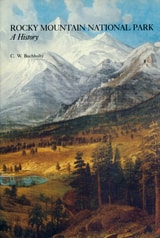
Rocky Mountain National Park
A HistoryC. W. Buchholtz
University Press of Colorado, 1983

Rodeo Cowboys In The North American Imagination
Michael Allen
University of Nevada Press, 1998
Rodeo is an enduring relic of America’s popular culture, drawing capacity audiences to all its venues, from small western cowtowns to Madison Square Garden. The rodeo cowboy, that figure of rugged independence and solitary courage, continues to evoke the spirit of a vanished frontier and the hardy pioneers who conquered it. In this study historian Michael Allen examines the image of the rodeo cowboy and the role this image has played in popular culture over the past century. He sees rodeo as a significant American folk festival and the rodeo cowboy as the avatar of a nearly extinct authentic figure, the “real cowboy,” who embodies the skills and values of traditional western rural culture. Allen’s analysis explores the evolution of the myth of the rodeo man and its subsequent institutionalization and acculturation into the media of popular culture. He also examines the impact on this myth of significant changes in the rodeo milieu—the commercialization of the event and the professionalization of rodeo performers; the arrival on the rodeo scene of performers from outside the white, male, western, rural origins of the traditional cowboy performers. He discovers that America’s—and indeed the world’s—fascination with the rodeo cowboy reflects feelings far deeper than a taste for exciting entertainment. Allen’s discussion of the archetypal figure of the rodeo cowboy will change forever our perception of rodeo, but it will also help us understand how the ancient tension between frontier and civilization continues to play a role in our national imagination.
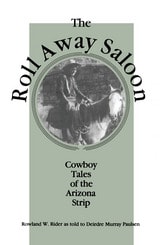
Roll Away Saloon
Rowland W. Rider as told to Deirdre M. Paulsen
Utah State University Press, 1985
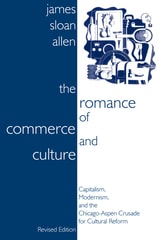
Romance of Commerce and Culture
Capitalism, Modernism, and the Chicago-Aspen Crusade for Cultural Reform, Revised EditionJames Sloan Allen
University Press of Colorado, 2002

Romance, Remedies, and Revolution
The Journal of Dr. Elihu Ashley of Deerfield, Massachusetts, 1773-1775Edited by Amelia F. Miller and A. R. Riggs
University of Massachusetts Press, 2007
With flashes of humor and close attention to detail, Ashley describes a broad range of activities and experiences in the small village of Deerfield and the surrounding towns of the Connecticut River valley. Articulate as well as observant, this former schoolteacher conveys a sense of immediacy that brings even the most mundane daily events to life. He discusses medical theory and practice, revolutionary politics, farming, his family, his circle of friends, and amusements ranging from singing and dancing to sleigh riding and bouts of drunkenness. He also writes about his love life, including a dalliance with the older sister of his fiancee, Polly Williams, while the latter is away visiting relatives in the Berkshires.
For Ashley, personal relationships and politics were the prominent issues of 1773 and 1774, as events in Massachusetts drew the province toward rebellion. He discusses the gathering of angry mobs in response to the so-called Intolerable Acts, the stoppage of the courts in Hampshire County, the anarchy that ensued, and the persecution of loyalists, with or without the sanction of law. When the revolution breaks out in April 1775, he describes the departure of companies of minutemen as they set out for Boston to challenge the British Army.
Six months later, in November 1775, the journal abruptly ends. By then, however, Elihu Ashley had already bequeathed to posterity an extraordinary firsthand account of life in rural New England in the years immediately preceding the War of Independence.

Romances of the White Man's Burden
Race, Empire, and the Plantation in American Literature, 1880-1936Jeremy Wells
Vanderbilt University Press, 2011
Romances of the White Man's Burden takes on works in American literature in which the proverbial "old plantation" is made to seem not a relic but a harbinger, a sign that the South had arrived at a multiracial modernity and harmony before the rest of the United States. Focusing on writers such as Joel Chandler Harris, Thomas Nelson Page, Henry W. Grady, Thomas Dixon, and William Faulkner, Jeremy Wells reveals their shared fixation on the figure of the white southern man as specially burdened by history. Each of these writers, in his own way, presented the plantation South as an emblem, not an aberration, of America.
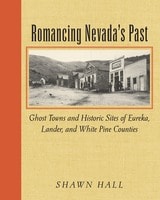
Romancing Nevada's Past
Ghost Towns And Historic Sites Of Eureka, Lander, And White Pine CountiesShawn Hall
University of Nevada Press, 1993
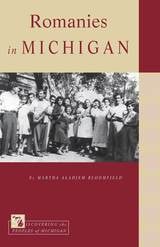
Romanies in Michigan
Martha Aladjem Bloomfield
Michigan State University Press, 2019
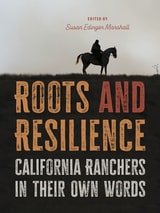
Roots and Resilience
California Ranchers in Their Own WordsSusan Edinger Marshall
University of Nevada Press, 2024
The editors have drawn together these stories, poems, and musings from ranchers across the state, calling upon real people to share their experiences, and beckoning readers to find a shared understanding concerning often divisive land-use topics. Many perspectives are considered, including those of transplanted suburbanites to seventh-generation heirs. Notably, many women’s writings are including in the book, offering unique and valuable perspectives on ranching culture.
Roots and Resilience gives voice to California’s Indigenous, Mexican American, Basque and other European American ranchers, asking the reader to find common ground in the name of land stewardship and conservation.
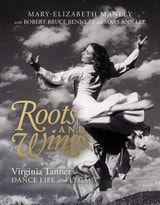
Roots and Wings
Virginia Tanner's Dance Life and LegacyMary-Elizabeth Manley with Mary Ann Lee and Robert Bruce Bennett
University of Utah Press, 2023
Roots and Wings recounts Virginia Tanner’s remarkable career as a dancer, artist, and educator. From her early experiences assisting at Evelyn Davis’s dance school in Washington, DC, to the creation of the Tanner Dance Program at the University of Utah, her influence on the field was pervasive. She channeled children’s energy, sharpened their senses, and encouraged youthful, authentic dance expression.
Manley’s extensive archival research and personal interviews depict Virginia Tanner as an innovative dance artist and ambitious leader in the field of modern dance. While exploring Tanner’s story, Roots and Wings emphasizes the value of unique instructional methodologies for teaching dance to young children and the vital role the arts play in children’s lives. Tanner’s work endures, continuing to echo with sensitivity and spirit in young dancers throughout the United States and abroad.
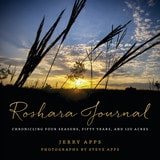
Roshara Journal
Chronicling Four Seasons, Fifty Years, and 120 AcresJerry Apps
Wisconsin Historical Society Press, 2016
A photographic diary of a small Midwestern farm and the family who’ve made it their home
In Roshara Journal, father-and-son team Jerry and Steve Apps share the monthly happenings at their family’s farm in central Wisconsin. Featuring Steve’s stunning photos and fifty years of Jerry’s journal entries, Roshara Journal captures the changes—both from month to month and over the decades—on the landscape and farmstead.
The Apps family has owned Roshara since 1966. There they nurture a prairie restoration and pine plantation, maintain a large garden that feeds three generations, observe wildlife species by the dozens, and support a population of endangered butterflies. In documenting life on this piece of land, Jerry and Steve remind us how, despite the pace and challenges of modern life, the seasons continue to influence our lives in ways large and small. Jerry explains that his journal entries become much more than mere observations: "It seems that when I write about something—a bur oak tree, for example—that old tree becomes a part of me. . . . Writing takes me to a place that goes beyond observation and understanding, a place filled with feeling and meaning."
In the tradition of Bernd Heinrich in Maine, Barry Lopez in the Canadian Arctic, and Aldo Leopold just an hour down the road in Baraboo, Jerry and Steve Apps combine observation, experience, and reflection to tell a profound story about one place in the world.
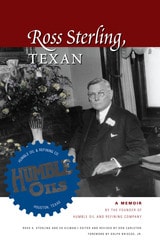
Ross Sterling, Texan
A Memoir by the Founder of Humble Oil and Refining CompanyBy Ross S. Sterling and Ed Kilman
University of Texas Press, 2007
Born on a farm near Anahuac, Texas, in 1875 and possessed of only a fourth-grade education, Ross Sterling was one of the most successful Texans of his generation. Driven by a relentless work ethic, he become a wealthy oilman, banker, newspaper publisher, and, from 1931 to 1933, one-term governor of Texas. Sterling was the principal founder of the Humble Oil and Refining Company, which eventually became the largest division of the ExxonMobil Corporation, as well as the owner of the Houston Post.
Eager to "preserve a narrative record of his life and deeds," Ross Sterling hired Ed Kilman, an old friend and editorial page editor of the Houston Post, to write his biography. Though the book was nearly finished before Sterling's death in 1949, it never found a publisher due to Kilman's florid writing style and overly hagiographic portrayal of Sterling.
In this volume, by contrast, editor Don Carleton uses the original oral history dictated by Ross Sterling to Ed Kilman to present the former governor's life story in his own words. Sterling vividly describes his formative years, early business ventures, and active role in developing the Texas oil industry. He also recalls his political career, from his appointment to the Texas Highway Commission to his term as governor, ending with his controversial defeat for reelection by "Ma" Ferguson. Sterling's reminiscences constitute an important primary source not only on the life of a Texan who deserves to be more widely remembered, but also on the history of Houston and the growth of the American oil industry.

Rotten Boroughs, Political Thickets, and Legislative Donnybrooks
Redistricting in TexasEdited by Gary A. Keith
University of Texas Press, 2013
Every ten years, the Texas legislature redistricts itself and the state’s congressional districts in an attempt to ensure equality in representation. With a richly textured cultural fabric, Texas often experiences redistricting battles that are heated enough to gain national attention. Collecting a variety of voices, including legislators themselves, in addition to lawyers, community organizers, political historians, and political scientists, Rotten Boroughs, Political Thickets, and Legislative Donnybrooks delivers a multidimensional picture of how redistricting works in Texas today, and how the process evolved.
In addition to editor Gary Keith’s historical narrative, which emphasizes the aftermath of the Warren Court’s redistricting decisions, longtime litigators David Richards and J. D. Pauerstein describe the contentious lines drawn from the 1970s into the 2000s. Former state legislator and congressman Craig Washington provides an insider’s view, while redistricting attorney and grassroots organizer Jose Garza describes the repercussions for Mexican Americans in Texas. Balancing these essays with a quantitative perspective, political scientists Seth McKee and Mark McKenzie analyze the voting data for the 2000 decade to describe the outcomes of redistricting. The result is a timely tour that provides up-to-date context, particularly on the role of the Voting Rights Act in the twenty-first century. From local community engagement to the halls of the Capitol, this is the definitive portrait of redistricting and its repercussions for all Texans.
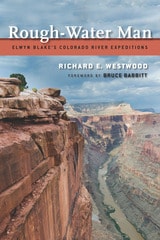
Rough-Water Man
Elwyn Blake'S Colorado River ExpeditionsRichard E. Westwood
University of Nevada Press, 2013
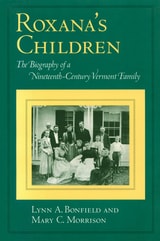
Roxana's Children
The Biography of a Nineteenth-Century Vermont FamilyLynn A. Bonfield
University of Massachusetts Press, 1995
Roy Reuther and the UAW
Fighting for Workers and Civil RightsAlan Reuther
Michigan State University Press, 2025
Many of the injustices that Reuther fought continue to plague America today. This book provides important context for the current efforts of workers to organize, for the Black Lives Matter movement, and for efforts to reform the filibuster rule and stop voter suppression. It shows how dedicated individuals can overcome enormous odds to win great victories for social justice and emphasizes the potential connections between the labor and civil rights movements, offering hope for a more just future.
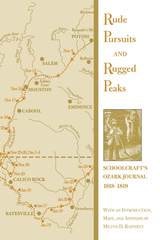
Rude Pursuits and Rugged Peaks
Schoolcraft's Ozark Journal, 1818-1819H. Schoolcraft
University of Arkansas Press, 1996
The journal kept by Schoolcraft as he traveled ninety days in the rugged terrain of southern Missouri and northern Arkansas was originally published in 1821 and has become an essential record of Ozark territorial society and natural history documenting some of the earliest American settlers in the region, the power and beauty of many lost portions of the White River, the majesty of the open prairies, and the wealth of wildlife once found in the Ozarks.
Rudo Ensayo
A Description of Sonora and Arizona in 1764Juan Nentvig; Translated, Clarified, and Annotated by Alberto Francisco Pradeau and Robert R. Rasmussen
University of Arizona Press, 1980
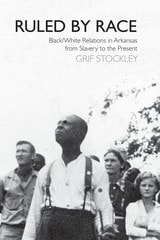
Ruled by Race
Black/White Relations in Arkansas From Slavery to the PresentGrif Stockley
University of Arkansas Press, 2008
Winner of the 2010 Booker Worthen Literary Prize, and the 2009 Ragsdale Award.
From the Civil War to Reconstruction, the Redeemer period, Jim Crow, and the modern civil rights era to the present, Ruled by Race describes the ways that race has been at the center of much of the state’s formation and image since its founding. Grif Stockley uses the work of published and unpublished historians and exhaustive primary source materials along with stories from authors as diverse as Maya Angelou and E. Lynn Harris to bring to life the voices of those who have both studied and lived the racial experience in Arkansas.
Topics range from the well-known Little Rock Central High Crisis of 1957 to lesser-known events such as the Elaine Race Massacres of 1919 and the shocking yet sadly commonplace attitudes found in newspaper reports and speeches. Through the words of the most powerful Arkansans such as racist Arkansas Govenor Jeff Davis (1901–1906) to the least powerful, including an unflinching look at the narratives of former slaves, readers will come away with increased awareness of the ways that race continues to affect where Arkansans live, send their children to school, work, travel, shop, spend leisure time, worship, and choose their friends and life partners.
Rules and Precepts of the Jesuit Missions of Northwestern New Spain
Charles W. Polzer
University of Arizona Press, 1976
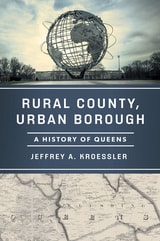
Rural County, Urban Borough
A History of QueensJeffrey A. Kroessler
Rutgers University Press, 2025
Rural County, Urban Borough is a history of place, charting the rapid transformation of the Queens landscape. It identifies what drove the borough’s development, from public infrastructure, architecture, and transportation to technological innovation and urban planning. New York historian Jeffrey A. Kroessler takes us inside the backrooms and boardrooms where local powerbrokers shaped the borough’s future, chronicling how its relationship with the city has evolved. He also shows the steps Queens residents from all backgrounds took to care for their neighborhoods and build their communities. Richly illustrated, this book underscores why Queens is integral to New York City and the wider world and reveals how, in its evolution, we see the whole arc of American urban history.

Russian Refuge
Religion, Migration, and Settlement on the North American Pacific RimSusan Wiley Hardwick
University of Chicago Press, 1993
Russian Refuge is a comprehensive account of the Russian immigrant experience in California, Oregon, Washington, Alaska, and British Columbia since the first settlements over two hundred years ago. Susan Hardwick focuses on six little-studied Christian groups—Baptists, Pentecostals, Molokans, Doukhobors, Old Believers, and Orthodox believers—to study the role of religion in their decisions to emigrate and in their adjustment to American culture.
Hardwick deftly combines ethnography and cultural geography, presenting narratives and other data collected in over 260 personal interviews with recent immigrants and their family members still in Russia. The result is an illuminating blend of geographic analysis with vivid portrayals of the individual experience of persecution, migration, and adjustment.
Russian Refuge will interest cultural geographers, historians, demographers, immigration specialists, and anyone concerned with this virtually untold chapter in the story of North American ethnic diversity.
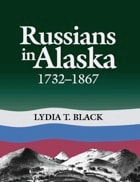
Russians in Alaska
1732-1867Lydia Black
University of Alaska Press, 2004
Black's work challenges the standard perspective on the Russian period in Alaska as a time of unbridled exploitation of Native inhabitants and natural resources. Without glossing over the harsher aspects of the period, Black acknowledges the complexity of relations between Russians and Native peoples.
She chronicles the lives of ordinary men and women, the merchants and naval officers, laborers and clergy, who established Russian outposts in Alaska. These early colonists carried with them the Orthodox faith and the Russian language; their legacy endures in architecture and place names from Baranof Island to the Pribilofs.
This deluxe volume features fold-out maps and color illustrations of rare paintings and sketches from Russian, American, Japanese, and European sources, many have never before been published. An invaluable source for historians and anthropologists, this accessible volume brings to life a dynamic period in Russian and Alaskan history. A tribute to Black's life as a scholar and educator, Russians in Alaska will become a classic in the field.

Rutgers Meets Japan
A Trans-Pacific Network of the Late Nineteenth CenturyHaruko Wakabayashi
Rutgers University Press, 2026
Griffis and Kusakabe were only a small piece of a vast transnational network of leading modernizers of Japan in the 1860s and 70s. The Japanese students in New Brunswick were young and innovative men of samurai and aristocratic lineage, who were sent by reform-minded leaders of Japan, which was undergoing a dramatic transformation. They came to New Brunswick seeking Western knowledge that was much needed for the modernization of a newly forming nation. New Brunswick became the hub of a network of Japanese nationals that extended to the major cities of New York, Philadelphia, and Boston, and from there to the smaller towns of New England. Once in New Brunswick, these Japanese students were embraced by Protestant ministers, educators, and missionaries—both men and women—whose network encompassed Rutgers College and the neighboring New Brunswick Theological Seminary, and which stretched to Dutch Reformed parishes throughout the Eastern seaboard, and westward as far as the Dutch enclave of Holland, Michigan. Meanwhile, the American teachers and missionaries who left for Japan became part of a network of reformist leaders and Japanese returnees that extended to schools, colleges, and missions in Japan, and formed the foundations of Japan’s modern educational system. Through contributions from scholars and archivists in the U.S., Canada, and Japan, Rutgers Meets Japan aims to reconstruct the early Rutgers-Japan connections and examine the role and impact of this transnational network on Japan and the U.S. in the late nineteenth century.
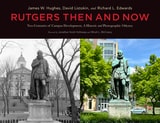
Rutgers Then and Now
Two Centuries of Campus Development: A Historic and Photographic OdysseyJames W. Hughes
Rutgers University Press, 2025
Rutgers, Then and Now tells this story, proceeding through ten sequential development phases of College Avenue and Piscataway campus expansions—each with its own buildings and physical layouts—that took place over the course of 250 years. It delivers stunning photographic and historic documentation of the growth of the university, showing “what it was and appeared originally” versus “what it is and looks like today.” Among other in-depth analyses, the book compares the diminutive geographic scale of today’s historical College Avenue Campus—once the entirety of Rutgers—to the much larger-sized (in acreage) Busch Campus. Replete with more than 500 images, the book also considers the Rutgers campuses that might have been, examining plans that were changed or abandoned. Shedding light on the sacrifices and gifts that transformed a small college into a vital hub for research and beloved home for students, it explores how Rutgers grew to become a world-class university.
Rutgers since 1945
A History of the State University of New JerseyPaul G. E. Clemens with an essay by Carla Yanni
Rutgers University Press, 2015