Results by title
702 books match the query 'America' and 48 start with s
SINGING IN A STRANGE LAND
C. L. Franklin, the Black Church, and the Transformation of AmericaNick Salvatore
University of Illinois Press, 2000
Sacred Pens and Public Voices
Latter-day Saint Women in Dialogue with AmericaLori Motzkus Wilkinson
University of Illinois Press, 2026
Though intellectually connected to figures outside the Church, the LDS women saw them less as
women's rights activists to emulate and more as speakers of truths that, regardless of the origin, should be embraced and harnessed. Wilkinson reveals how Emmeline B. Wells, Susa Young Gates, and other Latter-day Saint women supported and upheld institutional LDS authority and utilized the importance of women’s roles in the home and society as mechanisms for women’s advancement. Even as LDS women continued to engage with prominent national thinkers, their writings and lives demonstrated that they connected with the larger sphere of women’s rights activism before drawing on the LDS concept of women’s divine nature to reshape those ideals to uniquely religious ends.
Original and eye-opening, Sacred Pens and Public Voices revises established narratives about how LDS women interacted with and used ideas taken from national women’s movements.
Science in America
A Documentary History, 1900-1939Edited by Nathan Reingold and Ida H. Reingold
University of Chicago Press, 1981

Scotland and America in the Age of Paine
Ronald Lyndsey Crawford
Aberdeen University Press, 2022
Searching for Golden Empires
Epic Cultural Collisions in Sixteenth-Century AmericaWilliam K. Hartmann
University of Arizona Press, 2014
Recounting eyewitness experiences that the Spaniards recorded in letters and memoirs, Hartmann describes ancient lifeways from Mexico to the western United States; Aztec accounts of the conquest; discussions between Aztec priests and Spanish priests about the nature of the universe; Cortés’s lifelong relationship with his famous Native mistress, Malinche (not to mention the mysterious fate of his wife); lost explorers who wandered from Florida to Arizona; and Marcos de Niza’s controversial reports of the “Seven Cities of Cíbola.”
Searching for Golden Empires describes how, even after the conquest of Mexico, Cortés remained a “wildcat” competitor with Coronado in a race to see who could find the “next golden empire,” believed to lie in the north. It is an exciting history of the shared story of the United States and Mexico, unveiling episodes both tragic and uplifting.

Secret Science
Spanish Cosmography and the New WorldMaría M. Portuondo
University of Chicago Press, 2009
The discovery of the New World raised many questions for early modern scientists: What did these lands contain? Where did they lie in relation to Europe? Who lived there, and what were their inhabitants like? Imperial expansion necessitated changes in the way scientific knowledge was gathered, and Spanish cosmographers in particular were charged with turning their observations of the New World into a body of knowledge that could be used for governing the largest empire the world had ever known.
As María M. Portuondo here shows, this cosmographic knowledge had considerable strategic, defensive, and monetary value that royal scientists were charged with safeguarding from foreign and internal enemies. Cosmography was thus a secret science, but despite the limited dissemination of this body of knowledge, royal cosmographers applied alternative epistemologies and new methodologies that changed the discipline, and, in the process, how Europeans understood the natural world.

Secret Treachery Of Words
Feminism And Modernism In AmericaElizabeth Francis
University of Minnesota Press, 2002
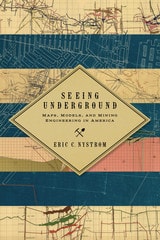
Seeing Underground
Maps, Models, and Mining Engineering in AmericaEric C. Nystrom
University of Nevada Press, 2014
Starting in the late nineteenth century, mining engineers developed a new set of practices, artifacts, and discourses to visualize complex, pitch-dark three-dimensional spaces. These maps and models became necessary tools in creating and controlling those spaces. They made mining more understandable, predictable, and profitable. Nystrom shows that this new visual culture was crucial to specific developments in American mining, such as implementing new safety regulations after the Avondale, Pennsylvania fire of 1869 killed 110 men and boys; understanding complex geology, as in the rich ores of Butte, Montana; and settling high-stakes litigation, such as the Tonopah, Nevada, Jim Butler v. West End lawsuit, which reached the US Supreme Court.
Nystrom demonstrates that these neglected artifacts of the nineteenth and early twentieth centuries have much to teach us today. The development of a visual culture helped create a new professional class of mining engineers and changed how mining was done. Seeing Undergound is the winner of the 2015 Mining History Association’s Clark Spence Award for the best book on mining history.
Seeing the Big Picture, Revised Edition
A Cinematic Approach to Understanding Cultures in AmericaEllen Summerfield and Sandra Lee
University of Michigan Press, 2006
In addition to increasing students' knowledge and understanding of cultural differences, Seeingthe Big Picture will help students develop strong critical-thinking and analytic abilities as they learn to recognize and question messages inherent in the films' portrayals of different populations. A unique feature of the text are the Points of View segments from directors, insiders, and students that appear throughout the text, provoking perspectives students might not otherwise encounter.
This text is the ideal coursebook for undergraduate diversity electives and other multicultural awareness courses.

Sephardim in the Americas
Studies in Culture and HistoryMartin A. Cohen
University of Alabama Press, 1993

Seven Contemporary Plays from the Korean Diaspora in the Americas
Esther Kim Lee, ed.
Duke University Press, 2012

Sex, Love, and Health in America
Private Choices and Public PoliciesEdited by Edward O. Laumann and Robert T. Michael
University of Chicago Press, 2000
Sixteen researchers have contributed essays to this collection that explore controversial topics, including teenage sexuality, sexual contact between children and adults, abortion, the role of cohabitation in the sexual satisfaction of couples, and how sexual behavior has changed in response to AIDS, as well as a widely heralded examination of circumcision, reported in the New York Times, which discusses the effects of the procedure on disease transmission and the preference for certain sexual practices. In its analysis, policy recommendations, and revelations about private practices, Sex, Love, and Health in America will, like the earlier volume, have a major role in shaping the discussion about American sexual behavior.
Sexual Power
Feminism and the Family in AmericaCarolyn Ross Johnston
University of Alabama Press, 1992
Since the early 1970s, scholars have argued, defined, and refined a wide range of interpretations of American women’s lives. Despite the richness of the recent literature, few interpretations sufficiently credit women’s family and sexual experiences for the emergence of feminism and the construction of pro-family agendas. Thus, Johnston’s approach offers an opportunity to view the history of feminism and the family from a fresh perspective.
Much of the literature on feminism has focused on women’s oppression and victimization, rather than on the power that women historically have exerted. Johnston’s interpretation of American feminism differs from previous works because she argues that the gradual growth of feminist consciousness lies not simply in oppression or feelings of victimization, but paradoxically in a growing sense of the empowerment of women as wives and mothers. She traces how reproduction, sexuality, domesticity, and motherhood have been socially constructed, and examines how feminists and anti-feminists have fought on the terrain of “family” issues.
Johnston explores critical questions concerning American women’s sexual lives. How have women’s empowering experiences in the family shaped feminist consciousness and action? How have feminists confronted family issues? How have women exerted sexual power? How was it contained within the limits of patriarchal society at times, while at other times it fueled the fires of feminist rebellion? How have gender and class issues affected domestic politics and feminism?
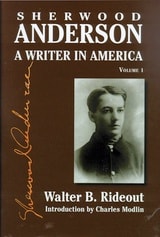
Sherwood Anderson
A Writer in America, Volume 1Walter B. Rideout
University of Wisconsin Press, 2006
Sherwood Anderson: A Writer in America is the definitive biography of this major American writer of novels and short stories, whose work includes the modern classic Winesburg, Ohio. In the first volume of this monumental two-volume work, Walter Rideout chronicles the life of Anderson from his birth and his early business career through his beginnings as a writer and finally to his move in the mid-1920s to “Ripshin,” his house near Marion, Virginia. The second volume will cover Anderson’s return to business pursuits, his extensive travels in the South touring factories, which resulted in his political involvement in labor struggles and several books on the topic, and finally his unexpected death in 1941.
No other existing Anderson biography, the most recent of which was published nearly twenty years ago, is as thoroughly researched, so extensively based on primary sources and interviews with a range of Anderson friends and family members, or as complete in its vision of the man and the writer. The result is an unparalleled biography—one that locates the private man, while astutely placing his life and writings in a broader social and political context.
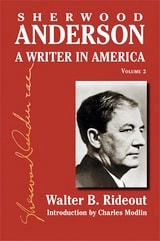
Sherwood Anderson
A Writer in America, Volume 2Walter B. Rideout
University of Wisconsin Press, 2006
Walter Rideout’s Sherwood Anderson: A Writer in America is a seminal work that reintroduces us to this important, yet recently neglected, American writer, giving him long overdue attention. This second volume of the monumental two-volume work covers Anderson’s life after his move in the mid-1920s to “Ripshin,” his house near Marion, Virginia (where Volume 1 ended.) The second volume covers his return to business pursuits; his extensive travels in the South touring factories, which resulted in his political involvement in labor struggles and several books on the topic; and finally his unexpected death in 1941.
No other existing Anderson biography, the most recent of which was published nearly twenty years ago, is as thoroughly researched, so extensively based on primary sources and interviews with a range of Anderson’s friends and family members, or as complete in its vision of the man and the writer. Rideout uncovers much new information about events and people in Anderson’s life and provides a new perspective on many of his works. This two-volume biography presents Anderson’s many remarkable attributes more clearly than ever before, while astutely placing his life and writings in the broader social, political, and artistic movements of his times.
Outstanding Book, selected by the American Association of School Librarians, and Best Books for General Audiences, selected by the Public Library Association
Outstanding Academic Title, Choice Magazine
Winner, Biography Award, Society of Midland Authors
Shot In America
Television, the State, and the Rise of Chicano CinemaChon A. Noriega
University of Minnesota Press, 2000
Redefines media history through Chicano film and television.
One of the most influential figures in ethnic media studies takes direct aim at how Chicano filmmaking has been represented in the history of media in the United States. Shot in America tackles seemingly intractable dilemmas involving the political and market functions of film and TV to provide a definitive response to the debates over cultural and racial identity that have embroiled media and cultural studies over the past two decades.
Noriega offers a compelling and detailed description of an enormous body of work by Chicano media makers against the backdrop of Chicano social movements, politics, and activism over a forty-year period—an extraordinary exposition of the civil rights movement, media reform activities, and public affairs programming that constitutes the prehistory of independent and minority cinemas.Noriega reveals the ways in which Chicano and other minority protests both emerged within and were regulated by the very institutions that excluded them. Shot in America is a study with broad implications for our understanding of cultural politics and the entertainment industries.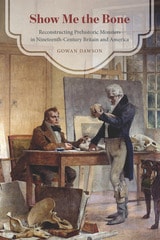
Show Me the Bone
Reconstructing Prehistoric Monsters in Nineteenth-Century Britain and AmericaGowan Dawson
University of Chicago Press, 2016
Show Me the Bone tells the story of the rise and fall of this famous claim, tracing its fortunes from Europe to America and showing how it persisted in popular science and literature and shaped the practices of paleontologists long after the method on which it was based had been refuted. In so doing, Gowan Dawson reveals how decisively the practices of the scientific elite were—and still are—shaped by their interactions with the general public.
Sickness and Health in America
Readings in the History of Medicine and Public HealthEdited by Judith W. Leavitt and Ronald L. Numbers
University of Wisconsin Press, 1997

Sing Them Over Again to Me
Hymns and Hymnbooks in AmericaEdited by Mark A. Noll and Edith L. Blumhofer
University of Alabama Press, 2006
Hymns and hymnbooks as American historical and cultural icons.
This work is a study of the importance of Protestant hymns in defining America and American religion. It explores the underappreciated influence of hymns in shaping many spheres of personal and corporate life as well as the value of hymns for studying religious life. Distinguishing features of this volume are studies of the most popular hymns (“Amazing Grace,” “O, For a Thousand Tongues to Sing,” “All Hail the Power of Jesus’ Name”), with attention to the ability of such hymns to reveal, as they are altered and adapted, shifts in American popular religion. The book also focuses attention on the role hymns play in changing attitudes about race, class, gender, economic life, politics, and society.
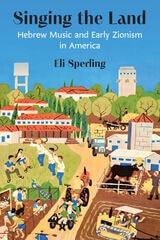
Singing the Land
Hebrew Music and Early Zionism in AmericaEli Sperling
University of Michigan Press, 2024
Exploring the history, events, contexts, and tensions that comprised what may be termed the ‘Zionization’ of American Jewry during the first half of the twentieth century, Eli Sperling analyzes primary sources within the historical contexts of Zionist national development and American Jewish life. Singing the Land offers insights into how and why musical frameworks were central to catalyzing American Jewry’s support of the Zionist cause by the 1940s, parallel to firm commitments to their American locale and national identities. The proliferation of this widespread American Jewish-Zionist embrace was achieved through a variety of educational, religious, economic, and political efforts, and Hebrew music was a thread consistent among them all.

Sixty Years' War for the Great Lakes, 1754-1814
David Curtis Skaggs
Michigan State University Press, 2001
The Sixty Years' War for the Great Lakes contains twenty essays concerning not only military and naval operations, but also the political, economic, social, and cultural interactions of individuals and groups during the struggle to control the great freshwater lakes and rivers between the Ohio Valley and the Canadian Shield. Contributing scholars represent a wide variety of disciplines and institutional affiliations from the United States, Canada, and Great Britain.
Collectively, these important essays delineate the common thread, weaving together the series of wars for the North American heartland that stretched from 1754 to 1814. The war for the Great Lakes was not merely a sideshow in a broader, worldwide struggle for empire, independence, self-determination, and territory. Rather, it was a single war, a regional conflict waged to establish hegemony within the area, forcing interactions that divided the Great Lakes nationally and ethnically for the two centuries that followed.
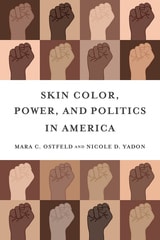
Skin Color, Power, and Politics in America
Mara Cecilia Ostfeld
Russell Sage Foundation, 2022
Ostfeld and Yadon surveyed over 1,300 people about their political views, including party affiliation, their opinions on welfare, and the importance of speaking English in the U.S. The authors created a matrix grounded in their “Roots of Race” framework, which predicts the relationship between skin color and political attitudes for each ethnoracial group based on the blurriness of the group’s boundaries and historical levels of privilege. They draw upon three distinct measures of skin color to conceptualize the relationship between skin color and political views: “Machine-Rated Skin Color,” measured with a light-reflectance meter; “Self-Assessed Skin Color,” using the Yadon-Ostfeld Skin Color Scale; and “Skin Color Discrepancy,” the difference between one’s Machine-Rated and Self-Assessed Skin Color.
Ostfeld and Yadon examine patterns that emerge among these measures, and their relationships with life experiences and political stances. Among Latinos, a group with relatively blurry group boundaries and low levels of historical privilege, the authors find a robust relationship between political views and Self-Assessed Skin Color. Latinos who overestimate the lightness of their skin color are more likely to hold conservative views on current racialized political issues, such as policing. Latinos who overestimate the darkness of their skin color, on the other hand, are more likely to hold liberal political views. As America’s major political parties remain divided on issues of race, this suggests that for Latinos, self-reported skin color is used as a means of aligning oneself with valued political coalitions.
African Americans, another group with low levels of historical privilege but with more clearly defined group boundaries, demonstrated no significant relationship between skin color and political attitudes. Thus, the lived experiences associated with being African American appeared to supersede the differences in life experiences due to skin color.
Whites, a group with more historical privilege and increasingly blurry group boundaries, showed a clear relationship between machine-assessed skin color and attitudes on political issues. Those with darker Machine-Rated Skin Color are more likely to hold conservative views, suggesting that they are responding to the threat of losing their privilege in a multicultural society.
At a time when the U.S. is both more diverse and politically divided, Skin Color, Power, and Politics in Americais a timely account of the ways in which skin color and politics are intertwined.
Smart Casual
The Transformation of Gourmet Restaurant Style in AmericaAlison Pearlman
University of Chicago Press, 2013

Smoking Privileges
Psychiatry, the Mentally Ill, and the Tobacco Industry in AmericaHirshbein, Laura D
Rutgers University Press, 2015

Social Contracts Under Stress
The Middle Classes of America, Europe, and Japan at the Turn of the CenturyOlivier Zunz
Russell Sage Foundation, 2002
Social Science in America
The First Two Hundred YearsEdited by Charles M. Bonjean, Louis Schneider, and Robert L. Lineberry
University of Texas Press, 1976
This outstanding symposium concerns the development of the social sciences in the United States over its first two hundred years and was brought together by the editors of Social Science Quarterly as the journal's contribution to the nation's Bicentennial celebration.
Six prominent scholars representing history, economics, sociology, political science, anthropology, and geography were invited to write essays about the general topic of the progress of the social sciences, and to pursue original lines of thought as well. Each was asked to address three key questions regarding their own discipline: (1) the distinctive contributions made to each discipline by American scholars; (2) the impact of these contributions upon American society; and (3) the relationship of these contributions to the character or nature of life in the United States. The result is a coherent collection of considerable breadth and exceptional quality.
The essays include "Time's American Adventures: American History and Historical Writing since 1776" by William Goetzmann; "Economics: Its Direct and Indirect Impact in America, 1776-1976" by Joseph J. Spengler; "Sociology in America: The Experience of Two Centuries" by Robin M. Williams; "Understanding Political Life in America: The Contribution of Political Science" by Heinz Eulau; "Anthropology in America" by Walter Goldschmidt; and "Geography As a Social Science: Recent American Experience" by Kevin Cox.
Sociology in America
A HistoryEdited by Craig Calhoun
University of Chicago Press, 2007
Though the word “sociology” was coined in Europe, the field of sociology grew most dramatically in America. Despite that disproportionate influence, American sociology has never been the subject of an extended historical examination. To remedy that situation—and to celebrate the centennial of the American Sociological Association—Craig Calhoun assembled a team of leading sociologists to produce Sociology in America.
Rather than a story of great sociologists or departments, Sociology in America is a true history of an often disparate field—and a deeply considered look at the ways sociology developed intellectually and institutionally. It explores the growth of American sociology as it addressed changes and challenges throughout the twentieth century, covering topics ranging from the discipline’s intellectual roots to understandings (and misunderstandings) of race and gender to the impact of the Depression and the 1960s.
Sociology in America will stand as the definitive treatment of the contribution of twentieth-century American sociology and will be required reading for all sociologists.
Contributors:
Andrew Abbott, Daniel Breslau, Craig Calhoun, Charles Camic, Miguel A. Centeno, Patricia Hill Collins, Marjorie L. DeVault, Myra Marx Ferree, Neil Gross, Lorine A. Hughes, Michael D. Kennedy, Shamus Khan, Barbara Laslett, Patricia Lengermann, Doug McAdam, Shauna A. Morimoto, Aldon Morris, Gillian Niebrugge, Alton Phillips, James F. Short Jr., Alan Sica, James T. Sparrow, George Steinmetz, Stephen Turner, Jonathan VanAntwerpen, Immanuel Wallerstein, Pamela Barnhouse Walters, Howard Winant
Soils, Climate and Society
Archaeological Investigations in Ancient AmericaJohn D. Wingard
University Press of Colorado, 2013
The volume traces the origins of agriculture, the transition to agrarian societies, the sociocultural implications of agriculture, agriculture's effects on population, and the theory of carrying capacity, considering the relation of agriculture to the profound social changes that it wrought in the New World. Soil science plays a significant, though varied, role in each case study, and is the common component of each analysis. Soil chemistry is also of particular importance to several of the studies, as it determines the amount of food that can be produced in a particular soil and the effects of occupation or cultivation on that soil, thus having consequences for future cultivators.
Soils, Climate and Society demonstrates that renewed investigation of agricultural production and demography can answer questions about the past, as well as stimulate further research. It will be of interest to scholars of archaeology, historical ecology and geography, and agricultural history.
Soloveitchik's Children
Irving Greenberg, David Hartman, Jonathan Sacks, and the Future of Jewish Theology in AmericaDaniel Ross Goodman
University of Alabama Press, 2023
A revealing account of the three main disciples of Rabbi Joseph B. Soloveitchik, an essential figure in Orthodox Judaism in America
Orthodox Judaism is one of the fastest-growing religious communities in contemporary American life. Anyone who wishes to understand more about Judaism in America will need to consider the tenets and practices of Orthodox Judaism: who its adherents are, what they believe in, what motivates them, and to whom they turn for moral, intellectual, and spiritual guidance.
Among those spiritual leaders none looms larger than Rabbi Joseph B. Soloveitchik, heir to the legendary Talmudic dynasty of Brisk and a teacher and ordainer of thousands of rabbis during his time as a Talmud teacher at Yeshiva University from the Second World War until the 1980s. Soloveitchik was not only a Talmudic authority but a scholar of Western philosophy. While many books and articles have been written about Soloveitchik’s legacy and his influence on American Orthodoxy, few have looked carefully at his disciples in Torah and Talmud study, and even fewer at his disciples in Jewish thought and philosophy.
Soloveitchik’s Children: Irving Greenberg, David Hartman, Jonathan Sacks, and the Future of Jewish Theology in America is the first book to study closely three of Soloveitchik’s major disciples in Jewish thought and philosophy: Rabbis Irving (“Yitz”) Greenberg, David Hartman, and Jonathan Sacks. Daniel Ross Goodman narrates how each of these three major modern Jewish thinkers learned from and adapted Soloveitchik’s teachings in their own ways, even while advancing his philosophical and theological legacy.
The story of religious life and Judaism in contemporary America is incomplete without an understanding of how three of the most consequential Jewish thinkers of this generation adapted the teachings of one of the most consequential Jewish thinkers of the previous generation. Soloveitchik’s Children tells this gripping intellectual and religious story in a learned and engaging manner, shining a light on where Jewish religious thought in the United States currently stands—and where it may be heading in future generations.

Sons of Chinatown
A Memoir Rooted in China and AmericaWilliam Gee Wong
Temple University Press, 2024
As Pop grappled with the systemic racism towards Asians during the exclusion era, Wong wistfully depicts Pop’s efforts to establish a family business and build a life for his family in segregated Oakland. As the exclusion law ended in 1943, young William was assimilating into American life and developing his path as a journalist. Writing for the Wall Street Journal, Oakland Tribune, and Asian American periodicals, Wong chronicled Asian American experiences while honoring Chinese American history and identity, but he too faced discrimination.
Sons of Chinatown poignantly weaves these father and son stories together with admiration and righteous anger. Through the mirrored lens of his father, Wong reflects on the hardships Asian Americans endured—and continue to face—with American exceptionalism. Wong’s inspiring memoir provides a personal history that also raises the question of whether America welcomes or repels immigrants.
Space-Time Perspectives on Early Colonial Moquegua
Prudence M. Rice
University Press of Colorado, 2024
Space-Time Perspectives on Early Colonial Moquegua looks at the encounters between existing populations and newcomers from successive waves of colonization, from indigenous expansion states (Wari, Tiwanaku, and Inka) to the foreign Spaniards, and the way each group “re-spatialized” the landscape according to its own political and economic ends. Viewing these spatializations from political, economic, and religious perspectives, Rice considers both the ideological and material occurrences.
Concluding with a special focus on the multiple space-time considerations involved in Spanish-inspired ceramics from the region, Space-Time Perspectives on Early Colonial Moquegua integrates the local and rural with the global and urban in analyzing the events and processes of colonialism. It is a vital contribution to the literature of Andean studies and will appeal to students and scholars of archaeology, historical archaeology, history, ethnohistory, and globalization.

Spain and Portugal in the New World, 1492-1700
Lyle N. McAlister
University of Minnesota Press, 1984
Spain and Portugal in the New World, 1492-1700 was first published in 1984. Minnesota Archive Editions uses digital technology to make long-unavailable books once again accessible, and are published unaltered from the original University of Minnesota Press editions.
Spanish and Portuguese expansion substantially altered the social, political, and economic contours of the modern world. In his book, Lyle McAlister provides a narrative and interpretive history of the exploration and settlement of the Americas by Spain and Portugal.
McAlister divides this period (and the book) into three parts. First, he describes the formation of Old World societies with particular attention to those features that influenced the directions and forms of overseas expansion. Second, he traces the dynamic processes of conquest and colonization that between 1492 and about 1570 firmly established Spanish and Portuguese dominion in the New World. The third part deals with colonial growth and consolidation down to about 1700. McAlister's main themes are: the post-conquest territorial expansion that established the limits of what later came to be called Latin America, the emergence of distinctively Spanish and Portuguese American societies and economies, the formation of systems of imperial control and exploitation, and the ways in which conflicts between imperial and American interests were reconciled.
This comprehensive history, with its extensive bibliographic essay and attention to historiographic issues, will be a standard reference for students and scholars of the period.
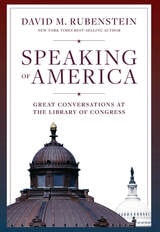
Speaking of America
Great Conversations at the Library of CongressDavid M. Rubenstein
Duke University Press, 2026
Featuring interviews with eminent historians, journalists, and writers, Speaking of America brings together nineteen wide-ranging conversations from philanthropist and financier David M. Rubenstein’s long-running Congressional Dialogues series of interviews at the Library of Congress. Highlights include Ken Burns on documenting American history, Stacy Schiff on Samuel Adams, Manisha Sinha on Reconstruction, and David McCullough on the American frontier.
Published in association with the Library of Congress
Featuring interviews with eminent historians, journalists, and writers, Speaking of America brings together nineteen wide-ranging conversations from philanthropist and financier David M. Rubenstein’s long-running Congressional Dialogues series of interviews at the Library of Congress. Rubenstein and his guests bring to life notable figures, events, and trends drawn from American history and culture and beyond.
Highlights include Ken Burns on bringing American history to life, Stacy Schiff on Samuel Adams, Manisha Sinha on Reconstruction, David McCullough on the American frontier, Beverly Gage on J. Edgar Hoover, Chris Wallace on the presidential election of 1960, Evan Thomas on Justice Sandra Day O’Connor, Eric Schmidt on artificial intelligence, Arthur Brooks on happiness, and David Grann on The Wager, his best-selling story of shipwreck and mutiny. Taken together, the conversations in Speaking of America all build toward the same shared message of dialogue, cooperation, and the importance of knowledge and reflection, highlighting how the study of history can enrich our understanding of current-day challenges in politics and policy.
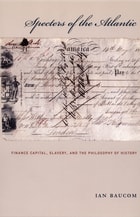
Specters of the Atlantic
Finance Capital, Slavery, and the Philosophy of HistoryIan Baucom
Duke University Press, 2005
Baucom contends that the massacre and the trials that followed it bring to light an Atlantic cycle of capital accumulation based on speculative finance, an economic cycle that has not yet run its course. The extraordinarily abstract nature of today’s finance capital is the late-eighteenth-century system intensified. Yet, as Baucom highlights, since the late 1700s, this rapacious speculative culture has had detractors. He traces the emergence and development of a counter-discourse he calls melancholy realism through abolitionist and human-rights texts, British romantic poetry, Scottish moral philosophy, and the work of late-twentieth-century literary theorists. In revealing how the Zong tragedy resonates within contemporary financial systems and human-rights discourses, Baucom puts forth a deeply compelling, utterly original theory of history: one that insists that an eighteenth-century atrocity is not past but present within the future we now inhabit.
Speech Rights in America
The First Amendment, Democracy, and the MediaLaura Stein
University of Illinois Press, 2005
The First Amendment is the principle guarantor of speech rights in the United States. But the Supreme Court's interpretations of it often privilege the interests of media owners over those of the broader citizenry.
Laura Stein argues that such rulings alienate citizens from their rights, corrupt the essential workings of democracy, and prevent the First Amendment from performing its critical role as a protector of free speech. Drawing on the best of the liberal democratic tradition, Stein demonstrates that there is a significant gap between First Amendment law and the speech rights necessary to democratic communication, and proposes an alternative set of principles to guide future judicial, legislative, and cultural policy on old and new media.
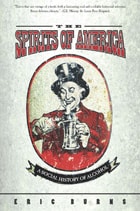
Spirits Of America
A Social History Of AlcoholEric Burns
Temple University Press, 2004
Spreading the Word
Poetry and the Survival of Community in AmericaRoss Talarico
Duke University Press, 1995
Drawing on his workshops in Rochester, Talarico describes a unique approach for eliciting poetry from people of many ages and backgrounds—particularly underpriviledged urban kids and the elderly. The process—from dialogue to self-expression to publication to public event—illuminates the urgency and meaning of releasing the spirit captured in each man and woman and child’s experience. "Some people say that Ross Talarico has done the impossible," the Today Show remarked of his success in Rochester; and with this book Talarico offers the same opportunity to others. Teachers, community leaders, parents, and children will be able to follow his practical, hands-on approach to encouraging self-expression in diverse, even unlikely, settings. They will see here how poetry is indeed relevant, ever more crucial to our identity as the culture evolves—how it is, finally, the place where the inarticulate can come to speak for themselves.
Squeeze This!
A Cultural History of the Accordion in AmericaMarion Jacobson
University of Illinois Press, 2012
Stacked Deck
A Story of Selfishness in AmericaLawrence E. Mitchell
Temple University Press, 1998
To understand this ideology and its effect on society, Lawrence E. Mitchell instructs us to look at the myth of individualism that pervades our laws, our social thought, our institutions, and our philosophies. It is the touchstone of our national debates on welfare reform, salary equity, FDA regulations, and a criminal defendant's right to a fair trial -- and it even infiltrates our private lives every time we argue about the division of household chores or television time. In Stacked Deck, Mitchell shows us how this artificial reality buries the way we truly live.
Mithcell uses examples drawn from history, politics, law, and culture to show how our singular concern with fairness has diminished our sense of vulnerability, so that our ideas of justice, equality, and efficiency are modeled on the capabilities of the strongest in society. Large scale examples -- such as blue collar layoffs and corporate downsizing, natural disasters and catastrophic illnesses -- illustrates the rickety bridge between comfort and disaster. We must be reminded that we are all vulnerable to the forces of economics, society, politics, and nature. Thus, Mitchell proposes, those who start out at the top tend to stay there, just as the weak tend to remain weak.
Stacked Deck does more than outline this problem of American selfishness; it proposes a solution tha tis nothing less than a massive reconception of the way we relate to one another. Mitchell retains what is productive about the myth of the self-reliant individual, while asserting what is necessary to restore a sense of community. He suggests a sweeping intellectual recovery of fairness available to all levels of American society, thereby reclaiming our true sense of responsibility to others in society.

Standards of Value
Money, Race, and Literature in AmericaGermana, Michael
University of Iowa Press, 2010
In Standards of Value, Michael Germana reveals how tectonic shifts in U.S. monetary policy—from the Coinage Act of 1834 to the abolition of the domestic gold standard in 1933–34—correspond to strategic changes by American writers who renegotiated the value of racial difference. Populating the pages of this bold and innovative study are authors as varied as Harriet Beecher Stowe, George Washington Cable, Charles Chesnutt, James Weldon Johnson, Nella Larsen, Jessie Redmon Fauset, and Ralph Ellison—all of whom drew analogies between the form Americans thought the nation's money should take and the form they thought race relations and the nation should take.
A cultural history of race organized around and enmeshed within the theories of literary and monetary value, Standards of Value also recovers a rhetorical tradition in American culture whose echoes can be found in the visual and lyrical grammars of hip hop, the paintings of John W. Jones and Michael Ray Charles, the cinematography of Spike Lee, and many other contemporary forms and texts.
This reconsideration of American literature and cultural history has implications for how we value literary texts and how we read shifting standards of value. In vivid prose, Germana explains why dollars and cents appear where black and white bodies meet in American novels, how U.S. monetary policy gave these symbols their cultural currency, and why it matters for scholars of literary and cultural studies.
State of the Union
America in the 1990s, Economic TrendsReynolds Farley
Russell Sage Foundation, 1995
State of the Union
America in the 1990s, Social TrendsReynolds Farley
Russell Sage Foundation, 1995
Still The Big News
Racial Oppression In AmericaBob Blauner
Temple University Press, 2001
Blauner launched his concept of internal colonialism in the turbulent 1960's, a period in which many Americans worried that racial conflicts would propel the country into another civil war. The notion that the systematic oppression of people of color in the United States resembles the situation of colonized populations in Third World countries still informs much of the academic research on race as well as public discourse. Indeed, today's critical race and whiteness studies are deeply indebted to Blauner's work on internal colonialism and the pervasiveness of white privilege. Offering a radical perspective on the United States' racial landscape, Bob Blauner forcefully argues that we ignore the persistence of oppression and our continuing failure to achieve equality at our own peril.
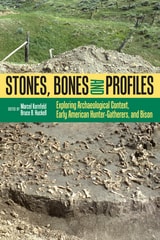
Stones, Bones, and Profiles
Exploring Archaeological Context, Early American Hunter-Gatherers, and BisonMarcel Kornfeld
University Press of Colorado, 2016
Stones, Bones, and Profiles addresses key and cutting-edge research of three pillars of hunter-gatherer archaeology. Stones and bones—flaked stone tools and the bones of the prey animals—are the objects most commonly recovered from hunter-gatherer archaeological sites, and profiles represent the geologic context of the archeological record. Together they constitute the foundations of much of early archaeology, from the appearance of the earliest humans to the advent of the Neolithic.
The volume is divided into three sections: Peopling of North America and Paleoindians, Geoarchaeology, and Bison Bone Bed Studies. The first section dissects established theories about the Paleoindians, including the possibility that human populations were in North America before Clovis and the timing of the opening of the Alberta Corridor. The second section provides new perspectives on the age and contexts of several well-known New World localities such as the Lindenmeier Folsom and the UP Mammoth sites, as well as a synthesis of the geoarchaeology of the Rocky Mountains' Bighorn region that addresses significant new data and summarizes decades of investigation. The final section, Bison Bone Bed Studies, consists of groundbreaking zooarchaeological studies offering new perspectives on bison taxonomy and procurement.
Stones, Bones, and Profiles presents new data on Paleoindian archaeology and reconsiders previous sites and perspectives, culminating in a thought-provoking and challenging contribution to the ongoing study of Paleoindians around the world.
Contributors: Leland Bement, Jack W. Brink, John Carpenter, Brian Carter, Thomas J. Connolly, Linda Scott Cummings, Loren G. Davis, Allen Denoyer, Stuart J. Fiedel, Judson Byrd Finley, Andrea Freeman, C. Vance Haynes Jr., Bryan Hockett, Vance T. Holliday, Dennis L. Jenkins, Thomas A. Jennings, Eileen Johnson, George T. Jones, Oleksandra Krotova, Patrick J. Lewis, Vitaliy Logvynenko, Ian Luthe, Katelyn McDonough, Lance McNees, Fred L. Nials, Patrick W. O’Grady, Mary M. Prasciunas, Karl J. Reinhard, Michael Rondeau, Guadalupe Sanchez, William E. Scoggin, Ashley M. Smallwood, Iryna Snizhko, Thomas W. Stafford Jr., Mark E. Swisher, Frances White, Eske Willerslev, Robert M. Yohe II, Chad Yost
Stories Employers Tell
Race, Skill, and Hiring in AmericaPhilip Moss
Russell Sage Foundation, 2001
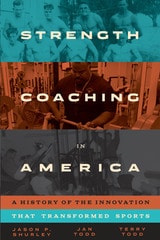
Strength Coaching in America
A History of the Innovation That Transformed SportsBy Jason P. Shurley, Jan Todd, and Terry Todd
University of Texas Press, 2019
Shortlisted for the North American Society for Sports History 2020 Monograph Prize
It’s hard to imagine, but as late as the 1950s, athletes could get kicked off a team if they were caught lifting weights. Coaches had long believed that strength training would slow down a player. Muscle was perceived as a bulky burden; training emphasized speed and strategy, not “brute” strength. Fast forward to today: the highest-paid strength and conditioning coaches can now earn $700,000 a year. Strength Coaching in America delivers the fascinating history behind this revolutionary shift.
College football represents a key turning point in this story, and the authors provide vivid details of strength training’s impact on the gridiron, most significantly when University of Nebraska football coach Bob Devaney hired Boyd Epley as a strength coach in 1969. National championships for the Huskers soon followed, leading Epley to launch the game-changing National Strength Coaches Association. Dozens of other influences are explored with equal verve, from the iconic Milo Barbell Company to the wildly popular fitness magazines that challenged physicians’ warnings against strenuous exercise. Charting the rise of a new athletic profession, Strength Coaching in America captures an important transformation in the culture of American sport.
Strolling in the Ruins
The Caribbean's Non-sovereign Modern in the Early Twentieth CenturyFaith Smith
Duke University Press, 2023

Sunlit Riffles and Shadowed Runs
Stories of Fly Fishing in AmericaKent Cowgill
University of Wisconsin Press, 2012