Results by title
1038 books match the query 'Antiquities' and 52 start with s
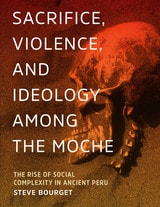
Sacrifice, Violence, and Ideology Among the Moche
The Rise of Social Complexity in Ancient PeruBy Steve Bourget
University of Texas Press, 2016
In a special precinct dedicated to ritual sacrifice at Huaca de la Luna on the north coast of Peru, about seventy-five men were killed and dismembered, their remains and body parts then carefully rearranged and left on the ground with numerous offerings. The discovery of this large sacrificial site—one of the most important sites of this type in the Americas—raises fundamental questions. Why was human sacrifice so central to Moche ideology and religion? And why is sacrifice so intimately related to the notions of warfare and capture?
In this pioneering book, Steve Bourget marshals all the currently available information from the archaeology and visual culture of Huaca de la Luna as he seeks to understand the centrality of human sacrifice in Moche ideology and, more broadly, the role(s) of violence in the development of social complexity. He begins by providing a fully documented account of the archaeological contexts, demonstrating how closely interrelated these contexts are to the rest of Moche material culture, including its iconography, the regalia of its elite, and its monumental architecture. Bourget then probes the possible meanings of ritual violence and human sacrifice and their intimate connections with concepts of divinity, ancestry, and foreignness. He builds a convincing case that the iconography of ritual violence and the practice of human sacrifice at all the principal Moche ceremonial centers were the main devices used in the establishment and development of the Moche state.
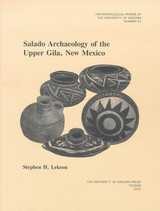
Salado Archaeology of the Upper Gila, New Mexico
Stephen H. Lekson
University of Arizona Press, 2002
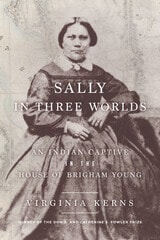
Sally in Three Worlds
An Indian Captive in the House of Brigham YoungVirginia Kerns
University of Utah Press, 2021
In this remarkable and deeply felt book, Virginia Kerns uncovers the singular and forgotten life of a young Indian woman who was captured in 1847 in what was then Mexican territory. Sold to a settler, a son-in-law of Brigham Young, the woman spent the next thirty years as a servant to Young’s family. Sally, as they called her, lived in the shadows, largely unseen. She was later remembered as a “wild” woman made “tame” who happily shed her past to enter a new and better life in civilization.
Drawing from a broad range of primary sources, Kerns retrieves Sally from obscurity and reconstructs her complex life before, during, and after captivity. This true story from the American past resonates deeply in the current moment, attentive as it is to killing epidemics and racial injustices. In telling Sally’s story, Kerns presents a new narrative of the American West.
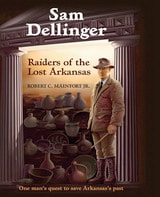
Sam Dellinger
Raiders of the Lost ArkansasRobert C. Mainfort
University of Arkansas Press, 2008
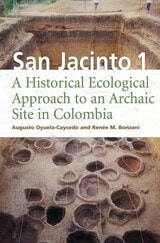
San Jacinto 1
A Historical Ecological Approach to an Archaic Site in ColombiaAugusto Oyuela-Caycedo and Renee M. Bonzani
University of Alabama Press, 2005
A significant work of neotropical archaeology presenting evidence of early hunter-gatherers who produced fiber-tempered ceramics.
Few topics in the development of humans have prompted as much interest and debate as those of the origins of pottery and agriculture. The first appearance of pottery in any area of the world is heralded as a new stage in the progress of humans toward a more complex arrangement of thought and society. Cultures are defined and separated by the occurrence of pottery types, and the association of pottery with mobility and agriculture continues to drive research in anthropology. For these reasons, the discovery of the earliest fiber-tempered pottery in the New World and carbonized remains identified as maize kernels is exciting.
San Jacinto 1 is the archaeological site located in the savanna region of the north coast of Colombia, South America, where excavations by led by the authors have revealed evidence of mobile hunter-gatherers who made pottery and who collected and processed plants from 6000 to 5000 B.P. The site is believed to show an early human adaptation to the tropics in the context of significant environmental changes that were taking place at the time.
This volume presents the data gathered and the interpretations made during excavation and analysis of the San Jacinto 1 site. By examining the social activities of a human population in a highly seasonal environment, it adds greatly to our contemporary understanding of the historical ecology of the tropics. Study of the artifacts excavated at the site allows a window into the early processes of food production in the New World. Finally, the data reveals that the origins of ceramic technology in the tropics were tied to a reduction in mobility and an increase in territoriality and are widely applicable to similar studies of sedentism and agriculture worldwide.
Saul, Benjamin, and the Emergence of Monarchy in Israel
Biblical and Archaeological PerspectivesJoachim J. Krause
SBL Press, 2020
Ponder questions of the united monarchy under Saul and David in light of current historical and archaeological evidence
Reconstructing the emergence of the Israelite monarchy involves interpreting historical research, approaching questions of ancient state formation, synthesizing archaeological research from sites in the southern Levant, and reexamining the biblical traditions of the early monarchy embedded in the books of Samuel and Kings. Integrating these approaches allows for a nuanced and differentiated picture of one of the most crucial periods in the history of ancient Israel. Rather than attempting to harmonize archaeological data and biblical texts or to supplement the respective approach by integrating only a portion of data stemming from the other, both perspectives come into their own in this volume presenting the results of an interdisciplinary Tübingen–Tel Aviv Research Colloquium.
Features:
- Essays on Israel's monarchy by experts in biblical archaeology and biblical studies
- Methods for integrating archaeology and biblical traditions in reconstructing ancient Israel's history
- New research on the sociopolitical process of state formation in Israel and Judah
Sedentism and Mobility in a Social Landscape
Mesa Verde and BeyondMark D. Varien
University of Arizona Press, 1999
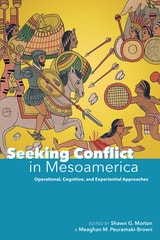
Seeking Conflict in Mesoamerica
Operational, Cognitive, and Experiential ApproachesShawn G. Morton
University Press of Colorado, 2019
Many studies have focused on the degree to which the prevalence, nature, and conduct of conflict has varied across time and space. This volume focuses not only on such operational considerations but on cognitive and experiential issues, analyzing how the Maya understood and explained conflict, what they recognized as conflict, how conflict was experienced by various groups, and the circumstances surrounding conflict. By offering an emic (internal and subjective) understanding alongside the more commonly researched etic (external and objective) perspective, contributors clarify insufficiencies and address lapses in data and analysis. They explore how the Maya defined themselves within the realm of warfare and examine the root causes and effects of intergroup conflict.
Using case studies from a wide range of time periods, Seeking Conflict in Mesoamerica provides a basis for understanding hostilities and broadens the archaeological record for the “seeking” of conflict in a way that has been largely untouched by previous scholars. With broad theoretical reach beyond Mesoamerican archaeology, the book will have wide interdisciplinary appeal and will be important to ethnohistorians, art historians, ethnographers, epigraphers, and those interested in human conflict more broadly.
Contributors:
Matthew Abtosway, Karen Bassie-Sweet, George J. Bey III, M. Kathryn Brown, Allen J. Christenson, Tomás Gallareta Negrón, Elizabeth Graham, Helen R. Haines, Christopher L. Hernandez, Harri Kettunen, Rex Koontz, Geoffrey McCafferty, Jesper Nielsen, Joel W. Palka, Kerry L. Sagebiel, Travis W. Stanton, Alexandre Tokovinine
Seeking The Center Place
Archaeology and Ancient Communities in the Mesa Verde RegionEdited by Mark D. Varien and Richard H. Wilshusen
University of Utah Press, 2016
The continuing work of the Crow Canyon Archaeological Center has focused on community life in the northern Southwest during the Great Pueblo period (AD 1150– 1300). Researchers have been able to demonstrate that during the last Puebloan occupation of the area the majority of the population lived in dispersed communities and large villages of the Great Sage Plain, rather than at nearby Mesa Verde. The work at Sand Canyon Pueblo and more than sixty other large contemporary pueblos has examined reasons for population aggregation and why this strategy was ultimately forsaken in favor of a migration south of the San Juan River, leaving the area depopulated by 1290.
Contributors to this volume, many of whom are distinguished southwestern researchers, draw from a common database derived from extensive investigations at the 530-room Sand Canyon Pueblo, intensive test excavations at thirteen small sites and four large villages, a twenty-five square kilometer full-coverage survey, and an inventory of all known villages in the region. Topics include the context within which people moved into villages, how they dealt with climatic changes and increasing social conflict, and how they became increasingly isolated from the rest of the Southwest.
Seeking the Center Place is the most detailed view we have ever had of the last Pueblo communities in the Mesa Verde region and will provide a better understanding of the factors that precipitated the migration of thousands of people.
Sending the Spirits Home
The Archaeology of Hohokam Mortuary PracticesGlen E. Rice
University of Utah Press, 2015
This data-rich monograph provides new and stimulating perspectives on the Hohokam people and their mortuary practices. It breaks new ground by using the knowledge of descendent peoples to generate archaeologically testable hypotheses; demonstrating the need for mortuary analyses conducted at a regional scale; and synthesizing of the interaction of beliefs, ideology, social organization, and ecology in determining Hohokam mortuary practices. Various chapters discuss body treatment, mortuary furniture and goods, mortuary architecture, and cemeteries, and numerous figures help document the variability of Hohokam practices.
The study synthesizes data from various excavations, applied archaeology, and cultural resource management projects. With its review of past research and ethnographic accounts along with line drawings of mortuary features and artifacts, Sending the Spirits Home provides tools for the adoption of standardized protocols needed to facilitate cross-project comparisons on which future regional syntheses can be based. Although written for archaeologists, the book does not require a specialist’s knowledge to appreciate its insights into these early people of the Southwest.
Sentinels of History
Reflections on Arkansas Properties on the National Register of Historic PlacesMark Christ
University of Arkansas Press, 2000
Seri Prehistory
The Archaeology of the Central Coast of Sonora, MexicoThomas Bowen
University of Arizona Press, 1976
Settlement, Subsistence, and Society in Late Zuni Prehistory
Keith W. Kintigh
University of Arizona Press, 1985
Keith W. Kintigh demonstrates how changing agricultural strategies and developing mechanisms of social integration contributed to these population shifts. In particular, he argues that occupants of the earliest large pueblos relied on runoff agriculture, but that gradually spring-and river-fed irrigation systems were adopted. Resultant strengthening of the mechanisms of social integration allowed the increased occupational stability of the protohistorical Zuni towns.
Seventeenth-Century Metallurgy on the Spanish Colonial Frontier
Pueblo and Spanish InteractionsNoah H. Thomas
University of Arizona Press, 2018
Using the ethnography of Pueblo peoples and seventh-century European manuals of metallurgy, Thomas addresses how the situated agency of indigenous practitioners incorporated within colonial industries shaped the metallurgy industry in the Spanish colonial period. The resulting analysis investigates how economic, technical, and social knowledge was communicated, contested, and transformed across the social and cultural boundaries present in early colonial communities. Viewing these transformations through an ethnohistorical lens, Thomas builds a social and historical context within which to understand the decisions made by colonial actors at the time.
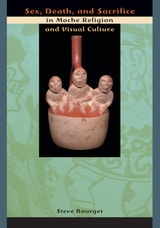
Sex, Death, and Sacrifice in Moche Religion and Visual Culture
By Steve Bourget
University of Texas Press, 2006
The Moche people who inhabited the north coast of Peru between approximately 100 and 800 AD were perhaps the first ancient Andean society to attain state-level social complexity. Although they had no written language, the Moche created the most elaborate system of iconographic representation of any ancient Peruvian culture. Amazingly realistic figures of humans, animals, and beings with supernatural attributes adorn Moche pottery, metal and wooden objects, textiles, and murals. These actors, which may have represented both living individuals and mythological beings, appear in scenes depicting ritual warfare, human sacrifice, the partaking of human blood, funerary rites, and explicit sexual activities.
In this pathfinding book, Steve Bourget raises the analysis of Moche iconography to a new level through an in-depth study of visual representations of rituals involving sex, death, and sacrifice. He begins by drawing connections between the scenes and individuals depicted on Moche pottery and other objects and the archaeological remains of human sacrifice and burial rituals. He then builds a convincing case for Moche iconography recording both actual ritual activities and Moche religious beliefs regarding the worlds of the living, the dead, and the afterlife. Offering a pioneering interpretation of the Moche worldview, Bourget argues that the use of symbolic dualities linking life and death, humans and beings with supernatural attributes, and fertility and social reproduction allowed the Moche to create a complex system of reciprocity between the world of the living and the afterworld. He concludes with an innovative model of how Moche cosmological beliefs played out in the realms of rulership and political authority.
Shaman, Priest, Practice, Belief
Materials of Ritual and Religion in Eastern North AmericaEdited by Stephen B. Carmody and Casey R. Barrier
University of Alabama Press, 2020
Archaeologists today are interpreting Native American religion and ritual in the distant past in more sophisticated ways, considering new understandings of the ways that Native Americans themselves experienced them. Shaman, Priest, Practice, Belief: Materials of Ritual and Religion in Eastern North America broadly considers Native American religion and ritual in eastern North America and focuses on practices that altered and used a vast array of material items as well as how physical spaces were shaped by religious practices.
Unbound to a single theoretical perspective of religion, contributors approach ritual and religion in diverse ways. Importantly, they focus on how people in the past practiced religion by altering and using a vast array of material items, from smoking pipes, ceremonial vessels, carved figurines, and iconographic images, to sacred bundles, hallucinogenic plants, revered animals, and ritual architecture. Contributors also show how physical spaces were shaped by religious practice, and how rock art, monuments, soils and special substances, and even land- and cityscapes were part of the active material worlds of religious agents.
Case studies, arranged chronologically, cover time periods ranging from the Paleoindian period (13,000–7900 BC) to the late Mississippian and into the protohistoric/contact periods. The geographical scope is much of the greater southeastern and southern Midwestern culture areas of the Eastern Woodlands, from the Central and Lower Mississippi River Valleys to the Ohio Hopewell region, and from the greater Ohio River Valley down through the Deep South and across to the Carolinas.
Contributors
Sarah E. Baires / Melissa R. Baltus / Casey R. Barrier / James F. Bates / Sierra M. Bow / James A. Brown / Stephen B. Carmody / Meagan E. Dennison / Aaron Deter-Wolf / David H. Dye / Bretton T. Giles / Cameron Gokee / Kandace D. Hollenbach / Thomas A. Jennings / Megan C. Kassabaum / John E. Kelly / Ashley A. Peles / Tanya M. Peres / Charlotte D. Pevny / Connie M. Randall / Jan F. Simek / Ashley M. Smallwood / Renee B. Walker / Alice P. Wright
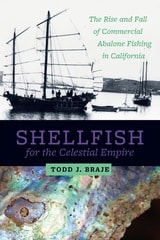
Shellfish for the Celestial Empire
The Rise and Fall of Commercial Abalone Fishing in CaliforniaTodd J. Braje
University of Utah Press, 2016
In the 1800s, when California was captivated by gold fever, a small group of Chinese immigrants recognized the fortune to be made from the untapped resources along the state’s coast, particularly from harvesting the black abalone of southern and Baja California. These immigrants, with skills from humble beginnings in a traditional Chinese fishing province, founded California’s commercial abalone industry, and led its growth and expansion for several decades. By the turn of the twentieth century, however, their successful livelihood was stolen from them through targeted legislation of the U.S. and California governments.
Today, the physical evidence of historical Chinese abalone fishing on the mainland has been erased by development. On California’s Channel Islands, however, remnants of temporary abalone collecting and processing camps lie scattered along the coastlines. These sites hold a treasure trove of information, stories, lifeways, and history. Braje has excavated many of these sites and uses them to explore the history of Chinese abalone fishing, presenting a microcosm of the broader history of Chinese immigrants in America—their struggles, their successes, the institutionalized racism they faced, and the unique ways in which they helped to shape the identity of the United States.
Ships and Shipwrecks of the Au Sable Shores Region of Western Lake Huron
John M. O'Shea
University of Michigan Press, 2004
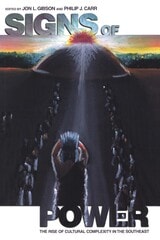
Signs of Power
The Rise of Cultural Complexity in the SoutheastEdited by Jon L. Gibson and Philip J. Carr
University of Alabama Press, 2004
Traces the sources of power and large-scale organization of prehistoric peoples among Archaic societies.
By focusing on the first instances of mound building, pottery making, fancy polished stone and bone, as well as specialized chipped stone, artifacts, and their widespread exchange, this book explores the sources of power and organization among Archaic societies. It investigates the origins of these technologies and their effects on long-term (evolutionary) and short-term (historical) change.
The characteristics of first origins in social complexity belong to 5,000- to 6,000-year-old Archaic groups who inhabited the southeastern United States. In Signs of Power, regional specialists identify the conditions, causes, and consequences that define organization and social complexity in societies. Often termed "big mound power," these considerations include the role of demography, kinship, and ecology in sociocultural change; the meaning of geometry and design in sacred groupings; the degree of advancement in stone tool technologies; and differentials in shell ring sizes that reflect social inequality.
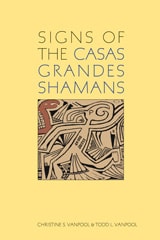
Signs of the Casas Grandes Shamans
VanPool Christine & Todd
University of Utah Press, 2007
Looking through this window, authors Christine and Todd VanPool find a world centered on shamans who took spiritual journeys to consort with supernatural creatures. The shamans called upon horned serpents to bring rain, the lifeblood for farmers living in the Chihuahuan desert; dealt with snakes that held powers more potent than their bites; and raised, sacrificed, and buried macaws as ritual offerings to ensure water and fertility.
These findings challenge long-held beliefs about Southwestern religion and force a reconsideration of the importance of shamanism in the development of social differentiation in societies around the world.
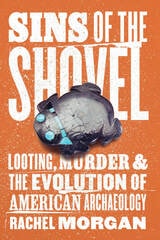
Sins of the Shovel
Looting, Murder, and the Evolution of American ArchaeologyRachel Morgan
University of Chicago Press, 2023
American archaeology was forever scarred by an 1893 business proposition between cowboy-turned-excavator Richard Wetherill and socialites-turned-antiquarians Fred and Talbot Hyde. Wetherill had stumbled upon Mesa Verde’s spectacular cliff dwellings and started selling artifacts, but with the Hydes’ money behind him, well—there’s no telling what they might discover. Thus begins the Hyde Exploring Expedition, a nine-year venture into Utah’s Grand Gulch and New Mexico’s Chaco Canyon that—coupled with other less-restrained looters—so devastates Indigenous cultural sites across the American Southwest that Congress passes first-of-their-kind regulations to stop the carnage. As the money dries up, tensions rise, and a once-profitable enterprise disintegrates, setting the stage for a tragic murder.
Sins of the Shovel is a story of adventure and business gone wrong and how archaeologists today grapple with this complex heritage. Through the story of the Hyde Exploring Expedition, practicing archaeologist Rachel Morgan uncovers the uncomfortable links between commodity culture, contemporary ethics, and the broader political forces that perpetuate destructive behavior today. The result is an unsparing and even-handed assessment of American archaeology’s sins, past and present, and how the field is working toward atonement.
Skeletal Biology and Bioarchaeology of the Northwestern Plains
Edited by George W. Gill and Rick L. Weathermon
University of Utah Press, 2008
Northwestern Plains prehistory and early history as told by human bones is vivid and dramatic. The skeletal and burial record spans thousands of years, a wide geographic expanse, and contains important evidence of human existence in this vast region of North America. This book helps clarify the emerging picture.
Most of the contributions assembled here were initially presented as part of a symposium at the Plains Conference in Oklahoma City in 2003. Twenty-one preeminent scholars, working across many fields within bioarchaeology and skeletal biology—including paleopathology, dental pathology, and human osteology—bring their expertise to bear not only on prehistoric Native American burials, but on numerous other case studies. They look at specific Wyoming samples of pioneer-era burials, Indian War–era casualties, historic Chinese burials, and remains from the Benick Ranch and the Korell-Bordeaux sites. Reports on Crow Indian mummies from Montana and military burials from Missouri and Nebraska continue the exploration into recent historic times.
Human burials provide a rich source of information about people’s lives—who they were, what activities they pursued, and how they may have participated in rituals of death and mourning. This volume is an authoritative statement on both the skeletal biology and bioarchaeology of the entire Northwestern Plains.
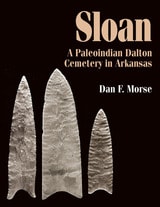
Sloan
A Paleoindian Dalton Cemetery in ArkansasDan Morse
University of Arkansas Press, 1997
New in Paper!
Excavated in 1974, the Sloan site in northeast Arkansas is the earliest recognized cemetery in the New World, containing the graves of a small group of Native Americans who died over ten thousand years ago. Although no skeletons were found in the acidic soil, the number, size, and quality of its artifacts attest to the presence of a far more complicated and sophisticated culture than had previously been thought to exist during the Dalton period.
Bringing together the work of thirteen eminent scholars, Dan F. Morse describes and assesses the assemblage of points, adzes, scrapers, abraders, and other stone artifacts as an indicator of the territorial stability of late Pleistocene peoples. The tools show that hunter-gatherer-fisher populations lived in small, semipermanent villages, hunted and butchered white-tailed deer, processed and ate vegetables, and made dugout canoes. And they buried their dead in cemeteries, a practice previously associated only with the rise of horticultural societies. Many of the tools are unused, suggesting ritual interments and a well-developed system of trade with groups in rockier areas.
Including an overview of the Dalton period in the southeastern United States and a discussion of the region’s geologic and vegetal prehistory—and newly supported by extensive high-quality image galleries now available at the website of the Arkansas Archeological Survey (see inside cover)—this comprehensive study of the Sloan artifacts provides a multifaceted assessment of a site rich in information about the technology of a single prehistoric society.
Social Violence in the Prehispanic American Southwest
Edited by Deborah L. Nichols and Patricia L. Crown
University of Arizona Press, 2008
CONTENTS
1. Introduction
Patricia Crown and Deborah Nichols
2. Dismembering the Trope: Imagining Cannibalism in the Ancient Pueblo World
Randall H. McGuire and Ruth Van Dyke
3. An Outbreak of Violence and Raiding in the Central Mesa Verde Region in the 12th Century AD
Brian R. Billman
4. Chaco Horrificus?
Wendy Bustard
5. Inscribed in the Body, Written in Bones: The Consequences of Social Violence at La Plata
Debra L. Martin, Nancy Akins, Bradley Crenshaw, and Pamela K. Stone
6. Veneration or Violence: A Study of Variations in Patterns of Human Bone Modification at La Quemada
Ventura R. Pérez, Ben A. Nelson, and Debra L. Martin
7. Witches, Practice, and the Context of Pueblo Cannibalism
William H. Walker
8. Explanation vs. Sensation: The Discourse of Cannibalism at Awat’ovi
Peter Whiteley
9. Devouring Ourselves
George J. Armelagos
References Cited
About the Contributors
Index
Sourcing Prehistoric Ceramics at Chodistaas Pueblo, Arizona
The Circulation of People and Pots in the Grasshopper RegionMaría Nieves Zedeño
University of Arizona Press, 1994
Southeastern Ceremonial Complex
Chronology, Content, ContestEdited by Adam King
University of Alabama Press, 2007
A timely, comprehensive reevaluation of the Southeastern Ceremonial Complex.
One of the most venerable concepts in Southeastern archaeology is that of the Southern Cult. The idea has its roots in the intensely productive decade (archaeologically) of the 1930s and is fundamentally tied to yet another venerable concept—Mississippian culture. The last comprehensive study of the melding of these two concepts into the term Southeastern Ceremonial Complex (SECC) is more than two decades old, yet our understanding of the objects, themes, and artistic styles associated with the SECC have changed a great deal. New primary data have come to light that bear directly on the complex, requiring a thorough reanalysis of both concepts and dating. Recent publications have ignited many debates about the dating and the nature of the SECC.
This work presents new data and new ideas on the temporal and social contexts, artistic styles, and symbolic themes included in the complex. It also demonstrates that engraved shell gorgets, along with other SECC materials, were
produced before A.D. 1400.
Southeastern Mesoamerica
Indigenous Interaction, Resilience, and ChangeWhitney A. Goodwin
University Press of Colorado, 2020
Drawing on archaeological evidence ranging back to the late Pleistocene as well as extensive documentation from the historic period, contributors show how Southeastern Mesoamericans created unique identities, strategically incorporating cosmopolitan influences from cultures to the north and south with their own long-lived traditions. These populations developed autochthonous forms of monumental architecture and routes and methods of exchange and had distinct social, cultural, political, and economic traits. They also established unique long-term human-environment relations that were the result of internal creativity and inspiration influenced by local social and natural trajectories.
Southeastern Mesoamerica calls upon archaeologists, anthropologists, historians, ethnohistorians, and others working in Mesoamerica, Central America, and other cultural boundaries around the world to reexamine the role Indigenous resilience and agency play in these areas and in the cultural developments and interactions that occur within them.
Contributors: Edy Barrios, Christopher Begley, Walter Burgos, Mauricio Díaz García, William R. Fowler, Rosemary A. Joyce, Gloria Lara-Pinto, Eva L. Martínez, William J. McFarlane, Cameron L. McNeil, Lorena D. Mihok, Pastor Rodolfo Gómez Zúñiga, Timothy Scheffler, Edward Schortman, Russell Sheptak, Miranda Suri, Patricia Urban, Antolín Velásquez, E. Christian Wells
Southern Footprints
Exploring Gulf Coast ArchaeologyGregory A. Waselkov and Philip J. Carr
University of Alabama Press, 2024
Unearthing the Gulf Coast’s past—one footprint at a time.
Southern Footprints celebrates more than fifty years of archaeological research along the Gulf Coast by the University of South Alabama and the Center for Archaeological Studies. Archaeologists Gregory A. Waselkov and Philip J. Carr, the former and current directors of the center, present the “greatest hits” that have transformed knowledge of human history on the Alabama and Mississippi Gulf Coast from the Ice Age until recently. Each archaeological site, from surface collections to premiere archaeological preserves, such as Old Mobile and Holy Ground, offers clues to the past.
The chapters in this collection are arranged chronologically and survey the history and archaeology of a wide range of significant sites, including the Gulf Shores canoe canal, Bottle Creek Mounds, Old Mobile, Fort Mims, Spanish Fort, Spring Hill College, and Mobile River Bridge.
Waselkov and Carr take care to acknowledge in these stories populations who have been historically underdocumented, now recognizing the contributions of Native Americans and African Americans that have been uncovered through archaeology. The authors reveal the dire impacts of climate change, environmental disasters, development, and neglect—and convey their urgency to protect these areas of shared history—as a result of the meticulous excavation, analysis, and preservation of artifacts from these sites. Color photographs showcase the archaeology as it unfolds, often with the help of dedicated volunteers. Southern Footprints will serve as an indispensable reference on the rich Gulf Coast heritage for all to appreciate.
Southwest Archaeology in the Twentieth Century
Linda S Cordell
University of Utah Press, 2011
With contributions from well-known archaeologists, Southwest Archaeology in the Twentieth Century reviews the histories of major archaeological topics of the region during the twentieth century, with particular attention to the vast changes in southwestern archaeology during the later decades of the century. Included are the huge influence of field schools, the rise of cultural resource management (CRM), the uses and abuses of ethnographic analogy, the intellectual contexts of archaeology in Mexico, and current debates on agriculture, sedentism, and political complexity.
By looking back at the previous century of study, this book provides an authoritative retrospective of intellectual trends as well as a synthesis of current themes in the arena of the American Southwest.
Southwestern Pithouse Communities, AD 200-900
Edited by Lisa C. Young and Sarah A. Herr
University of Arizona Press, 2012
Pithouses are the earliest identifiable domestic architecture in many areas of the world, and can provide insights into the origins of communities--a fundamental component of past and present societies. In this book, Lisa Young and Sarah Herr invite archaeologists to explore the development of communities using information from pithouse sites in the American Southwest.
Using regional and topical syntheses to investigate the formation of pithouse communities, contributors to this volume examine the complex relationship between the economic transition to agricultural dependence and the social changes associated with sedentism. They discover that during this transformation, peoples' relationship with the landscape changed in ways that affected their use of space, community organization, and cultural identity.
Employing various theoretical perspectives, these contributions analyze changes in pithouses, site layout, communal architecture, and settlement patterns to investigate the development of place-based communities. Chapters look at community formation strategies in populous regions like the northern San Juan Basin, the southern Colorado Plateau, Mimbres/southern Mogollon, and Hohokam Basin and Range and compare them with social structures in more sparsely populated regions like the northeast Hohokam peripheries, the Arizona Transition Zone, the Cibola region, southeast New Mexico, and the northern Rio Grande. The book also includes thematic discussions of panregional economic change, the complex relationship between house and household, and the demographic shifts accompanying the Neolithic Demographic Transition.
An essential book for students and archaeologists interested in the origins of communities, Southwestern Pithouse Communities is also an important comparative resource for scholars interested in social change during the transition to settled village life.
Space-Time Perspectives on Early Colonial Moquegua
Prudence M. Rice
University Press of Colorado, 2024
Space-Time Perspectives on Early Colonial Moquegua looks at the encounters between existing populations and newcomers from successive waves of colonization, from indigenous expansion states (Wari, Tiwanaku, and Inka) to the foreign Spaniards, and the way each group “re-spatialized” the landscape according to its own political and economic ends. Viewing these spatializations from political, economic, and religious perspectives, Rice considers both the ideological and material occurrences.
Concluding with a special focus on the multiple space-time considerations involved in Spanish-inspired ceramics from the region, Space-Time Perspectives on Early Colonial Moquegua integrates the local and rural with the global and urban in analyzing the events and processes of colonialism. It is a vital contribution to the literature of Andean studies and will appeal to students and scholars of archaeology, historical archaeology, history, ethnohistory, and globalization.
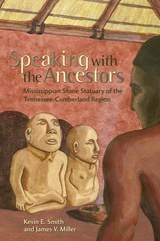
Speaking with the Ancestors
Mississippian Stone Statuary of the Tennessee-Cumberland RegionKevin E. Smith and James V. Miller
University of Alabama Press, 2008
When European explorers began their initial forays into southeastern North America in the 16th and 17th centuries they encountered what they called temples and shrines of native peoples, often decorated with idols in human form made of wood, pottery, or stone. The idols were fascinating to write about, but having no value to explorers searching for gold or land, there are no records of these idols being transported to the Old World, and mention of them seems to cease about the 1700s. However, with the settling of the fledgling United States in the 1800s, farming colonists began to unearth stone images in human form from land formerly inhabited by the native peoples. With little access to the records of the 16th and 17th centuries, debate and speculation abounded by the public and scholars alike concerning their origin and meaning.
During the last twenty years the authors have researched over 88 possible examples of southeastern Mississippian stone statuary, dating as far back as 1,000 years ago, and discovered along the river valleys of the interior Southeast. Independently and in conjunction, they have measured, analyzed, photographed, and traced the known history of the 42 that appear in this volume. Compiling the data from both early documents and public and private collections, the authors remind us that the statuary should not be viewed in isolation, but rather as regional expressions of a much broader body of art, ritual, and belief.
Spirit Lands of the Eagle and Bear
Numic Archaeology and Ethnohistory in the Rocky Mountains and BorderlandsRobert H. Brunswig
University Press of Colorado, 2020
New research into Numic archaeology, ethnohistory, and ethnography is significantly changing the understanding of migratory patterns, cultural interactions, chronology, and shared cultural-religious practices of regionally defined Numic branches and non-Numic populations of the American West. Contributors examine case studies of Ute and Shoshone material culture (ceramics, lithics, features and structures, trade and seasonal migration), chronology (dendrochronology, radiocarbon dating, thermoluminescence), and subsistence systems (hunting camps, game drives, faunal and botanical evidence of food sources). They also delineate different hunter-gatherer “ethnic groups” who co-occupied or interacted within one another’s territories through trade, raiding, or seasonal subsistence migrations, such as the Late Fremont/Ute and the Shoshone or the early Navajo/Ute and the Shoshone.
With a strong emphasis on diverse cases and new and original archaeological, ethnohistoric, and ethnographic lines of evidence, Spirit Lands of the Eagle and Bear interweaves anthropological theory and innovative applications of leading-edge scientific methodologies and technologies. The book presents a cross-section of field, laboratory, and ethnohistoric studies—including indigenous consultation—that explore past, recent, and ongoing developments in Numic cultural history and prehistory. It will be of interest to scholars of Southwestern archaeology, as well as private and government cultural resource specialists and museum staff.
Contributors:
Richard Adams, John Cater, Christine Chady, David Diggs, Rand Greubel, John Ives, Byron Loosle, Curtis Martin, Sally McBeth, Lindsay Montgomery, Bryon Schroeder, Matthew Stirn
Spirits of Earth
The Effigy Mound Landscape of Madison and the Four LakesRobert A. Birmingham
University of Wisconsin Press, 2010
Stability and Change in Guale Indian Pottery, A.D. 1300-1702
Rebecca Saunders
University of Alabama Press, 2000
Through a comprehensive study of changing pottery attributes, Saunders documents the clash of Spanish and Native American cultures in the 16th-century southeastern United States.
By studying the ceramic traditions of the Guale Indians, Rebecca Saunders provides evidence of change in Native American lifeways from prehistory through European contact and the end of the Mission period. The Guale were among the first southeastern groups to come into contact with Spanish and French colonists, and they adapted various strategies in order to ensure their own social survival. That adaptation is reflected, Saunders shows, in the changing attributes of pottery recovered on archaeological sites on the coasts of Georgia and Florida.
Saunders traces the evolution of Guale pottery from the late prehistoric Irene phase through the Mission period at the three archaeological sites. She uses both technological and stylistic attributes to monitor change, paying particular attention to changes in execution and frequency of the filfot cross—a stylized cross that is a symbol of Guale cosmology. The frequency of this symbol in different ceramic components, according to Saunders, is a measure of change in the worldview of the missionized Guale. Although the symbol abruptly changed after the first Spanish contact, it showed remarkable stability through the Mission period, suggesting that traditional craft training and production remained strong despite high mortality rates and frequent relocation.
Only after 1684, when the Guale were relocated to Amelia Island in present-day Florida, did the use of the cross motif decline, suggesting that the Guale who remained in Spanish territory may have conceived of their place in the cosmos differently from their forebears or their contemporaries who fled to the interior.
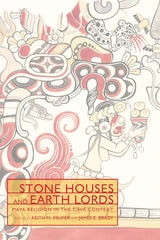
Stone Houses and Earth Lords
Maya Religion in the Cave ContextKeith M. Prufer
University Press of Colorado, 2021
Demonstrating the importance of these subterranean spaces to Maya archaeology, contributors provide interpretations of archaeological remains that yield insights into Maya ritual and cosmology. Compiling the best current scholarship in this fast-growing area of research, Stone Houses and Earth Lords is a vital reference for Mayanists, Mesoamerican specialists, and others interested in the human use of caves in the New World. Contributors include: Juan Luis Bonor, James E. Brady, Robert Burnett, Allan B. Cobb, Pierre Robert Colas, Cesar Espinosa, Sergio Garza, David M. Glassman, Christina T. Halperin, Amalia Kenward, Andrew Kindon, Patricia McAnany, Christopher Morehart, Holley Moyes, Vanessa A. Owen, Shankari Patel, Polly Peterson, Keith M. Prufer, Timothy. W. Pugh, Frank Saul, Julie Saul, Ann M. Scott, Andrea Stone, and Vera Tiesler.
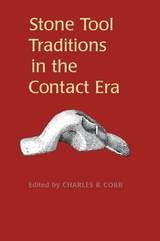
Stone Tool Traditions in the Contact Era
Edited by Charles Richard Cobb
University of Alabama Press, 2003
Explores the impact of European colonization on Native American and Pacific Islander technology and culture
This is the first comprehensive analysis of the partial replacement of flaked stone and ground stone traditions by metal tools in the Americas during the Contact Era. It examines the functional, symbolic, and economic consequences of that replacement on the lifeways of native populations, even as lithic technologies persisted well after the landing of Columbus. Ranging across North America and to Hawai'i, the studies show that, even with wide access to metal objects, Native Americans continued to produce certain stone tool types—perhaps because they were still the best implements for a task or because they represented a deep commitment to a traditional practice.Chapters are ordered in terms of relative degree of European contact, beginning with groups that experienced brief episodes of interaction, such as the Wichita-French meeting on the Arkansas River, and ending with societies that were heavily influenced by colonization, such as the Potawatomi of Illinois. Because the anthology draws comparisons between the persistence of stone tools and the continuity of other indigenous crafts, it presents holistic models that can be used to explain the larger consequences of the Contact Era.
Marvin T. Smith, of Valdosta State University has stated that, “after reading this volume, no archaeologist will ever see the replacement of lithic technology by metal tools as a simple matter of replacement of technologically inferior stone tools with their superior metal counterparts. This is cutting-edge scholarship in the area of contact period studies.”
Stones, Bones, and the Sacred
Essays on Material Culture and Ancient Religion in Honor of Dennis E.Alan H. Cadwallader
SBL Press, 2016
A crucial text for any university course on the interaction of archaeology and the Bible
The world of early Christians was not a world lived in texts; it was a world saturated with material reality and concerns: what, where and when to eat or drink; how to present oneself in the space of bodily life and that of death; how to move from one place to another; what impacted status or the adjudication of legal charges. All these and more controlled so much of life in the ancient world. The Christians were not immune from the impact of these realities. Sometimes they absorbed their surrounds; sometimes they quite explicitly rejected the material practices bearing in on them; frequently they modified the practice and the rationale to create a significant Christian alternative. The collection of essays in this volume come from a range of international scholars who, for all their different interests and critical commitments, are yet united in treasuring research into the Greek and Roman worlds in which Christians sought to make their way. They offer these essays in honor of one who has made a lifetime's work in mining ancient material culture to extract nuggets of insight into early Christian dining practices: Dennis E. Smith.
Features
- Rich examples of method in the utilization of ancient material culture for biblical interpretation.
- Thirteen essays with a response from Dennis E. Smith
- Maps, diagrams, and plates
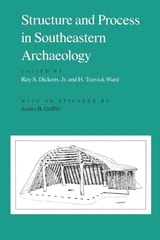
Structure and Process in Southeastern Archaeology
Edited by Roy Dickens Jr and H. Trawick Ward
University of Alabama Press, 1985
A Dan Josselyn Memorial Publication
Within the general structure-and-process theme of this compendium, the authors have focused on either intrasite problems (those dealing with the formation and structure of a site, type of site, or type of feature) or intersite problems (those dealing with behavioral organization and process as developed from comparative site data). These papers, from a broad range of specialists, present a comprehensive study of southeastern archaeology.
Structure and Process in Southeastern Archaeology is a foundational work that reshapes how scholars understand the cultural and social dynamics of prehistoric communities in the Southeastern United States. Roy S. Dickens, Jr. and H. Trawick Ward bring together decades of fieldwork, theoretical insight, and regional expertise to explore how ancient societies organized themselves, interacted, and evolved over time. Rather than focusing solely on artifacts or isolated site reports, this volume emphasizes the broader patterns—both structural and processual—that define the archaeological record of the Southeast.
Through a careful synthesis of settlement data, material culture, and environmental context, the authors reveal how social organization, political structures, and cultural practices were deeply embedded in the landscape. Their approach integrates processual archaeology with a nuanced understanding of regional variation, offering readers a dynamic view of how prehistoric communities adapted to changing conditions and interacted across space and time.
This book is particularly valuable for archaeologists, anthropologists, and historians seeking to move beyond descriptive accounts toward more interpretive frameworks. It provides a model for analyzing archaeological data in ways that illuminate the lived experiences of ancient peoples, making it a vital resource for both academic research and classroom instruction. The authors’ clear writing and thoughtful analysis make complex ideas accessible without sacrificing scholarly rigor.
Whether you're studying Mississippian chiefdoms, Woodland period settlements, or the broader cultural landscapes of the American South, Structure and Process in Southeastern Archaeology offers essential tools for understanding the past. It stands as a testament to the importance of theory-driven, context-rich archaeological interpretation.
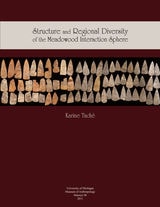
Structure and Regional Diversity in the Meadowood Interaction Sphere
Karine Taché
University of Michigan Press, 2011
Subfloor Pits and the Archaeology of Slavery in Colonial Virginia
Patricia Samford
University of Alabama Press, 2007
Enslaved Africans and their descendants comprised a significant portion of colonial Virginia populations, with most living on rural slave quarters adjacent to the agricultural fields in which they labored. Archaeological excavations into these home sites have provided unique windows into the daily lifeways and culture of these early inhabitants.
Sugar Cane Capitalism and Environmental Transformation
An Archaeology of Colonial Nevis, West IndiesMarco G. Meniketti
University of Alabama Press, 2015
In this deeply researched and multifaceted study, Marco G. Meniketti demonstrates how the landscape of the small Caribbean island of Nevis preserves and reveals artifacts and evidence of the highly complex and interrelated seventeenth- to nineteenth-century “Atlantic Economy,” comprising early capitalist sugar production, the African slave trade, and European settlement.
Sugar Cane Capitalism and Environmental Transformation is based on twelve seasons of meticulous archaeological field work and documentary research. Although Nevis was once a bustling hub of the British colonial project, the emigration of emancipated slaves and abandonment by European planters left large swathes of Nevis vacant. Reclaimed by forests and undisturbed by later waves of economic development, the island—dotted with fascinating ruins, debris from the sugar industry, windmills, chimneys, and multistoried great house—provided Meniketti with an ideal subject for archaeological inquiry.
Through intensive archaeological and landscape surveys of multiple key plantation sites, Meniketti traces the development of Nevis from its initial European settlement in 1627 to its central role as a British mercantile hub and a laboratory and prototype of capitalist sugar cultivation. His nuanced analysis explains the backdrop of European political and economic rivalries, of which the colonial agro-industrial enterprises were the physical manifestations, and makes telling comparisons with Dutch and French archaeological sites. The work also compares and contrasts the adoption of capitalist modes of sugar production and socialization at wealthy and middling plantation sites.
Supported with a wealth of photos, tables, and maps, Sugar Cane Capitalism and Environmental Transformation offers a vital case study of one island whose environment and archaeological record illuminates the complex webs of Atlantic history.
Sun Circles and Human Hands
The Southeastern Indians Art and IndustriesEdited by Emma Lila Fundaburk and Mary Douglass Fundaburk Foreman
University of Alabama Press, 2001
This classic compendium of ancient Indian artifacts from the entire southeastern United States remains an indispensable reference source for professionals and enthusiasts alike.
From utilitarian arrowheads to beautiful stone effigy pipes to ornately-carved shell disks, the photographs and drawings in Sun Circles and Human Hands present the archaeological record of the art and native crafts of the prehistoric southeastern Indians. Painstakingly compiled in the 1950s by two sisters who traveled the eastern United States interviewing archaeologists and collectors and visiting the major repositories, Sun Circles and Human Hands is remarkable for its breadth of illustration of Indian-made artifacts and its comprehensive documentation. Although research over the last 50 years has disproven many of the early theories reported in the text—which were not the editors' theories but those of the archaeologists of the day—the excellent illustrations of objects no longer available for examination have more than validated the lasting worth of this popular book.
Broadly acclaimed when it first appeared, this new printing has the added value of Knight's foreword, which places the work in its proper context. Useful to museums, state and national parks, school libraries, gift stores, archaeological agencies, and private collections, Sun Circles and Human Hands is a rich pictorial survey accessible to anyone interested in early American Indian culture.
SunWatch
Fort Ancient Development in the Mississippian WorldRobert Cook
University of Alabama Press, 2007
The last prehistoric cultures to inhabit the Middle Ohio Valley (ca. A.D. 1000–1650) are referred to as Fort Ancient societies, which exhibited a wide variety of Mississippian period characteristics. What is less well-known and little understood are the social processes by which Mississippian characteristics spread to Fort Ancient communities. Through a comprehensive study of SunWatch, one of the few thoroughly excavated Fort Ancient settlements, the author focuses on the development of village social structure within a broad geographic and temporal framework, recognizing border areas as particularly dynamic contexts of social change. As a fundamental study of social patterning of Fort Ancient villages, this work reveals the interrelationships of small social units in culture change and social structure development and provides a full reconsideration of the Mississippian dimensions of Fort Ancient societies and a model for future investigations of larger patterning in the lateprehistory of the region.
Supplement to the Handbook of Middle American Indians, Volume 1
ArchaeologyVictoria Reifler Bricker, general editor; Jeremy A. Sabloff, volume editor
University of Texas Press, 1982
The sixteen-volume Handbook of Middle American Indians, completed in 1976, has been acclaimed the world over as the most valuable resource ever produced for those involved in the study of Mesoamerica. When it was determined in 1978 that the Handbook should be updated periodically, Victoria Reifler Bricker, well-known cultural anthropologist, was selected to be series editor.
This first volume of the Supplement is devoted to the dramatic changes that have taken place in the field of archaeology. The volume editor, Jeremy A. Sabloff, has gathered together detailed reports from the directors of many of the most significant archaeological projects of the mid-twentieth century in Mesoamerica, along with discussions of three topics of general interest (the rise of sedentary life, the evolution of complex culture, and the rise of cities).
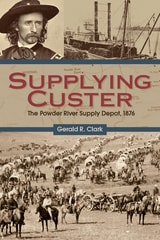
Supplying Custer
The Powder River Supply Depot, 1876Gerald R. Clark
University of Utah Press, 2014
The book details the items recovered archaeologically, including ale and soda bottles, cartridges, packing crates, and a horseshoe and ceramic doll. It also addresses the army’s knowledge of this area and how the supply depot fit into the broader military campaign. This book connects archaeology and history to explore how the American military planned, maneuvered, and operated on the northern plains from the end of the Civil War through 1876.
Surveying The Archaeology Of Northwest Mexico
Gilliam E Newell
University of Utah Press, 2003
Archaeology in the Southwest is increasingly directing its attention south of the international border as it becomes clear that a picture of the pre-hispanic Southwest is incomplete without taking the Mexican Northwest into account.
Surveying the Archaeology of Northwest Mexico presents an overview of recent work in Sonora and Chihuahua, comprising a sort of professional tour of the area. The chapters offer fresh insights into the formation of centers such as Paquimé, Cerro de Trincheras, and the Rio Sonora cabaceras. Contributors explore relations between these centers, individual internal organization of the various identifiable polities, and the relation of the whole northwest Mexican region to better-known adjacent ones. The volume underscores that northwest Mexico was not a dependent hinterland but was inhabited by many independent groups throughout prehistory.
Surviving Spanish Conquest
Indian Fight, Flight, and Cultural Transformation in Hispaniola and Puerto RicoKaren F. Anderson-Córdova
University of Alabama Press, 2017
In Surviving Spanish Conquest: Indian Fight, Flight, and Cultural Transformation in Hispaniola and Puerto Rico, Karen F. Anderson-Córdova draws on archaeological, historical, and ethnohistorical sources to elucidate the impacts of sixteenth-century Spanish conquest and colonization on indigenous peoples in the Greater Antilles. Moving beyond the conventional narratives of the quick demise of the native populations because of forced labor and the spread of Old World diseases, this book shows the complexity of the initial exchange between the Old and New Worlds and examines the myriad ways the indigenous peoples responded to Spanish colonization.
Focusing on Hispaniola and Puerto Rico, the first Caribbean islands to be conquered and colonized by the Spanish, Anderson-Córdova explains Indian sociocultural transformation within the context of two specific processes, out-migration and in-migration, highlighting how population shifts contributed to the diversification of peoples. For example, as the growing presence of “foreign” Indians from other areas of the Caribbean complicated the variety of responses by Indian groups, her investigation reveals that Indians who were subjected to slavery, or the “encomienda system,” accommodated and absorbed many Spanish customs, yet resumed their own rituals when allowed to return to their villages. Other Indians fled in response to the arrival of the Spanish.
The culmination of years of research, Surviving Spanish Conquest deftly incorporates archaeological investigations at contact sites copious use of archival materials, and anthropological assessments of the contact period in the Caribbean. Ultimately, understanding the processes of Indian-Spanish interaction in the Caribbean enhances comprehension of colonization in many other parts of the world. Anderson-Córdova concludes with a discussion regarding the resurgence of interest in the Taíno people and their culture, especially of individuals who self-identify as Taíno. This volume provides a wealth of insight to historians, anthropologists, archaeologists, and those interested in early cultures in contact.
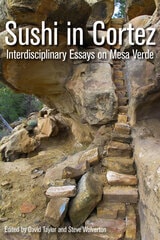
Sushi in Cortez
Interdisciplinary Essays on Mesa VerdeDavid Taylor and Steve Wolverton
University of Utah Press, 2015
The Mesa Verde region is one of the most popular tourist destinations in the world and is an area fraught with complexities, anomalies, and layers of histories. Sushi in Cortez is a collection of essays by an interdisciplinary group of academics, artists, and cultural observers that explores this diverse landscape and heritage by combining and sharing the differing perspectives provided by various disciplines. Poetry, film, environmental philosophy, nature photography, native Pueblo perspectives, and archaeology are used to touch on the common questions people ask about the value of their work and lives as well as the value of visiting ancient sites such as Mesa Verde. The authors share personal stories about the difficulties, joys, confusions, and epiphanies they experienced as they crossed the boundaries of their professional lives, coming to understand how incomplete any single rendition of place can be. Find additional images on our website www.uofupress.com.
Take a look inside the authors’ Mesa Verde experience in this short film,“Location Fracture” by Melinda Levin.
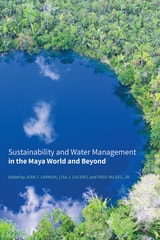
Sustainability and Water Management in the Maya World and Beyond
Jean T. Larmon
University Press of Colorado, 2021
The volume focuses primarily on the Precolumbian Maya but offers several analogous case studies outside the ancient Maya world that illustrate the pervasiveness of water’s role in sustainability, including an ethnographic study of the sustainability of small-scale, farmer-managed irrigation systems in contemporary New Mexico and the environmental consequences of Angkor’s growth into the world’s most extensive preindustrial settlement. The archaeological record offers rich data on past politics of climate change, while epigraphic and ethnographic data show how integrated the ideological, political, and environmental worlds of the Maya were.
While Sustainability and Water Management in the Maya World and Beyond stresses how lessons from the past offer invaluable insight into current approaches of adaptation, it also advances our understanding of those adaptations by making the inevitable discrepancies between past and present climate change less daunting and emphasizing the sustainable negotiations between humans and their surroundings that have been mediated by the changing climate for millennia. It will appeal to students and scholars interested in climate change, sustainability, and water management in the archaeological record.
Contributors: Mary Jane Acuña, Wendy Ashmore, Timothy Beach, Jeffrey Brewer, Christopher Carr, Adrian S. Z. Chase, Arlen F. Chase, Diane Z. Chase, Carlos R. Chiriboga, Jennifer Chmilar, Nicholas Dunning, Maurits W. Ertsen, Roland Fletcher, David Friedel, Robert Griffin, Joel D. Gunn, Armando Anaya Hernández, Christian Isendahl, David Lentz, Sheryl Luzzadder-Beach, Dan Penny, Kathryn Reese-Taylor, Michelle Rich, Cynthia Robin, Sylvia Rodríguez, William Saturno, Vernon Scarborough, Payson Sheets, Liwy Grazioso Sierra, Michael Smyth, Sander van der Leeuw, Andrew Wyatt