Results by title
547 books match the query 'California' and 44 start with s

SUBURBAN ALCHEMY
1960S NEW TOWNS AND THE TRANSFORMATION ONICHOLAS DAGEN BLOOM
The Ohio State University Press, 2001
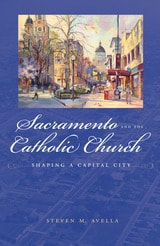
Sacramento and the Catholic Church
Shaping a Capital CitySteven Avella
University of Nevada Press, 2008
Besides the numerous institutions that the Church sponsored, it brought together a wide spectrum of the city’s diverse ethnic populations and offered them several routes to assimilation. Catholic Sacramentans have always played an active role in government and in the city’s economy, and Catholic institutions provided a matrix for the creation of new communities as the city spread into neighboring suburbs. At the same time, the Church was forced to adapt itself to the needs and demands of its various ethnic constituents, particularly the flood of Spanish-speaking newcomers in the late twentieth century.
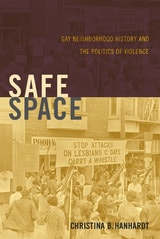
Safe Space
Gay Neighborhood History and the Politics of ViolenceChristina B. Hanhardt
Duke University Press, 2013
Since the 1970s, a key goal of lesbian and gay activists has been protection against street violence, especially in gay neighborhoods. During the same time, policymakers and private developers declared the containment of urban violence to be a top priority. In this important book, Christina B. Hanhardt examines how LGBT calls for "safe space" have been shaped by broader public safety initiatives that have sought solutions in policing and privatization and have had devastating effects along race and class lines.
Drawing on extensive archival and ethnographic research in New York City and San Francisco, Hanhardt traces the entwined histories of LGBT activism, urban development, and U.S. policy in relation to poverty and crime over the past fifty years. She highlights the formation of a mainstream LGBT movement, as well as the very different trajectories followed by radical LGBT and queer grassroots organizations. Placing LGBT activism in the context of shifting liberal and neoliberal policies, Safe Space is a groundbreaking exploration of the contradictory legacies of the LGBT struggle for safety in the city.
Salmon and Acorns Feed Our People
Colonialism, Nature, and Social ActionKari Marie Norgaard
Rutgers University Press, 2019
Since time before memory, large numbers of salmon have made their way up and down the Klamath River. Indigenous management enabled the ecological abundance that formed the basis of capitalist wealth across North America. These activities on the landscape continue today, although they are often the site of intense political struggle. Not only has the magnitude of Native American genocide been of remarkable little sociological focus, the fact that this genocide has been coupled with a reorganization of the natural world represents a substantial theoretical void. Whereas much attention has (rightfully) focused on the structuring of capitalism, racism and patriarchy, few sociologists have attended to the ongoing process of North American colonialism. Salmon and Acorns Feed Our People draws upon nearly two decades of examples and insight from Karuk experiences on the Klamath River to illustrate how the ecological dynamics of settler-colonialism are essential for theorizing gender, race and social power today.
Salsa Crossings
Dancing Latinidad in Los AngelesCindy García
Duke University Press, 2013
Salud!
The Rise Of Santa Barbara's Wine IndustryVictor W. Geraci
University of Nevada Press, 2018
Samurai among Panthers
Richard Aoki on Race, Resistance, and a Paradoxical LifeDiane C. Fujino
University of Minnesota Press, 2012
An iconic figure of the Asian American movement, Richard Aoki (1938–2009) was also, as the most prominent non-Black member of the Black Panther Party, a key architect of Afro-Asian solidarity in the 1960s and ’70s. His life story exposes the personal side of political activism as it illuminates the history of ethnic nationalism and radical internationalism in America.
A reflection of this interconnection, Samurai among Panthers weaves together two narratives: Aoki’s dramatic first-person chronicle and an interpretive history by a leading scholar of the Asian American movement, Diane C. Fujino. Aoki’s candid account of himself takes us from his early years in Japanese American internment camps to his political education on the streets of Oakland, to his emergence in the Black Panther Party. As his story unfolds, we see how his parents’ separation inside the camps and his father’s illegal activities shaped the development of Aoki’s politics. Fujino situates his life within the context of twentieth-century history—World War II, the Cold War, and the protests of the 1960s. She demonstrates how activism is both an accidental and an intentional endeavor and how a militant activist practice can also promote participatory democracy and social service.
The result of these parallel voices and analysis in Samurai among Panthers is a complex—and sometimes contradictory—portrait of a singularly extraordinary activist and an expansion and deepening of our understanding of the history he lived.
San Francisco Bay Area Sports
Golden Gate Athletics, Recreation, and CommunityRita Liberti
University of Arkansas Press, 2017
San Francisco Bay Area Sports brings together fifteen essays covering the issues, controversies, and personalities that have emerged as northern Californians recreated and competed over the last 150 years. The area’s diversity, anti-establishment leanings, and unique and beautiful natural surroundings are explored in the context of a dynamic sporting past that includes events broadcast to millions or activities engaged in by just a few.
Professional and college events are covered along with lesser-known entities such as Oakland’s public parks, tennis player and Bay Area native Rosie Casals, environmentalism and hiking in Marin County, and the origins of the Gay Games. Taken as a whole, this book clarifies how sport is connected to identities based on sexuality, gender, race, and ethnicity. Just as crucial, the stories here illuminate how sport and recreation can potentially create transgressive spaces, particularity in a place known for its nonconformity.
San Francisco Reds
Communists in the Bay Area, 1919-1958Robert W. Cherny
University of Illinois Press, 2024
Founded in 1919, the Communist Party (CP) in San Francisco survived an ineffectual early period to become a force in the trade union heyday of the 1930s. Robert Cherny uses the lives and careers of more than fifty members to tell the story of the city’s CP from its founding through 1958.
Cherny draws on FBI files, the records of the CP at the Russian State Archive for Social and Political History, interviews, and memoirs to follow male and female party and union leaders, rank-and-file members, and others. His history reveals why people joined the CP while charting the frequent changes in policy, constant member turnover, and disruptive factionalism that limited party aims and successes. Cherny also follows his subjects through their resignations, expulsions, or other reasons for departure and looks at the CP’s influence on their lives in subsequent years.
Vivid and exhaustively researched, San Francisco Reds is a long view account of the personal motivations and activism of an Old Left generation in a West Coast city.
San Francisco's International Hotel
Mobilizing the Filipino American Community in the Anti-Eviction MovementEstella Habal
Temple University Press, 2008
Sanctuary
Exclusion, Violence, and Indigenous Migrants in the East BayCruz Medina
The Ohio State University Press, 2024
Taking a Northern California community of migrants from Guatemala as a case study, Medina demonstrates the ways in which immigration policy and educational barriers exclude Indigenous migrant populations. He follows the community at the “Sanctuary”—a Spanish-speaking church in the East Bay Area that serves as a place of worship, English language instruction, and refuge for migrants. Medina assembles participant observations, interviews, surveys, and other data to provide points of entry into intersecting issues of immigration, violence, language, and property and to untangle aspects of citizenship, exclusion, and assumptions about literacy.
Saving San Francisco
Relief and Recovery after the 1906 DisasterAndrea Rees Davies
Temple University Press, 2011
Combining the experiences of ordinary people with urban politics and history, Saving San Francisco challenges the long-lived myth that the 1906 disaster erased social differences as it leveled the city. Highlighting new evidence from San Francisco’s relief camps, Andrea Rees Davies shows that as policy makers directed various forms of aid to groups and projects that enjoyed high social status before the disaster, the widespread need and dislocation created opportunities for some groups to challenge biased relief policy. Poor and working-class refugees organized successful protests, while Chinatown business leaders and middle-class white women mobilized resources for the less privileged. Ultimately, however, the political and financial elite shaped relief and reconstruction efforts and cemented social differences in San Francisco.
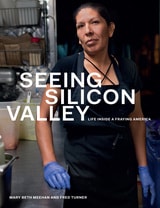
Seeing Silicon Valley
Life inside a Fraying AmericaMary Beth Meehan and Fred Turner
University of Chicago Press, 2021
It’s hard to imagine a place more central to American mythology today than Silicon Valley. To outsiders, the region glitters with the promise of extraordinary wealth and innovation. But behind this image lies another Silicon Valley, one segregated by race, class, and nationality in complex and contradictory ways. Its beautiful landscape lies atop underground streams of pollutants left behind by decades of technological innovation, and while its billionaires live in compounds, surrounded by redwood trees and security fences, its service workers live in their cars.
With arresting photography and intimate stories, Seeing Silicon Valley makes this hidden world visible. Instead of young entrepreneurs striving for efficiency in minimalist corporate campuses, we see portraits of struggle—families displaced by an impossible real estate market, workers striving for a living wage, and communities harmed by environmental degradation. If the fate of Silicon Valley is the fate of America—as so many of its boosters claim—then this book gives us an unvarnished look into the future.
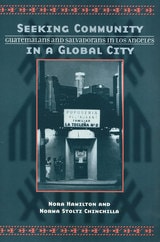
Seeking Community In Global City
Guatemalans & Salvadorans In Los AngelesNora Hamilton
Temple University Press, 2001
Based on twenty years of work with the Los Angeles Central American community and filled with facts, figures, and personal narratives, Seeking Community in a Global City presents this saga from many perspectives. The authors examine the forces in Central America that sent thousands of people streaming across international borders. They discuss economic, political, and demographic changes in the Los Angeles region and the difficulties the new immigrants faced in negotiating a new, urban environment. They look at family roles, networking, work strategies, and inter-ethnic relations. But they also consider policy issues and alliances, changing expectations, shifting priorities, and the reciprocal effect of the migrants and the city on each other.
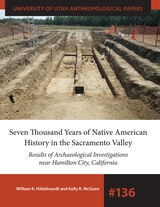
Seven Thousand Years of Native American History in the Sacramento Valley
Results of Archaeological Investigations near Hamilton City, CaliforniaWilliam R. Hildebrandt and Kelly R. McGuire
University of Utah Press, 2022
The other three sites date between 4000 and 300 years ago and reflect increasing human population density, technological innovation, and the rise of sedentism and territoriality. This historical sequence culminated in findings from a 400- to 300-year-old house complex probably occupied by the Mechoopda Indian Tribe, who collaborated with the authors throughout the project.
Shades of White
White Kids and Racial Identities in High SchoolPamela Perry
Duke University Press, 2002
Through ethnographic research and in-depth interviews of students in two demographically distinct U.S. high schools—one suburban and predominantly white; the other urban, multiracial, and minority white—Perry shares students’ candor about race and self-identification. By examining the meanings students attached (or didn’t attach) to their social lives and everyday cultural practices, including their taste in music and clothes, she shows that the ways white students defined white identity were not only markedly different between the two schools but were considerably diverse and ambiguous within them as well. Challenging reductionist notions of whiteness and white racism, this study suggests how we might go “beyond whiteness” to new directions in antiracist activism and school reform.
Shades of White is emblematic of an emerging second wave of whiteness studies that focuses on the racial identity of whites. It will appeal to scholars and students of anthropology, sociology, and cultural studies, as well as to those involved with high school education and antiracist activities.
Shameful Victory
The Los Angeles Dodgers, the Red Scare, and the Hidden History of Chavez RavineJohn H. M. Laslett
University of Arizona Press, 2015
John H. M. Laslett offers a new interpretation of the Chavez Ravine tragedy, paying special attention to the early history of the barrio, the reform of Los Angeles's destructive urban renewal policies, and the influence of the evictions on the collective memory of the Mexican American community.
In addition to examining the political decisions made by power brokers at city hall, Shameful Victory argues that the tragedy exerted a much greater influence on the history of the Los Angeles civil rights movement than has hitherto been appreciated. The author also sheds fresh light on how the community grew, on the experience of individual home owners who were evicted from the barrio, and on the influence that the event had on the development of recent Chicano/a popular music, drama, and literature.
Shattered
Fragments of a Black LifeMatthieu Chapman
West Virginia University Press, 2023
From a distance, Matthieu Chapman’s life and accomplishments serve as an example of racial progress in America: the first in his family to go to college, he earns two master’s degrees and a doctorate and then becomes a professor of theater. Despite his personal and academic success, however, the specter of antiblackness continues to haunt his every moment and interaction.
Told through fragments, facets, shards, slivers, splinters, and absences, Shattered places Chapman’s own story in dialogue with US history and structural analysis of race to relay the experience of being very alive in a demonstrably antiblack society—laying bare the impact of the American way on black bodies, black psyches, and black lives. From the Church of Jesus Christ of Latter-day Saints to the offices of higher education, from a Loyal White Knights flyer on his windshield to a play with black students written by a black playwright, Chapman’s life story embodies the resistance that occurs, the shattering, collapsing, and reconfiguring of being that happens in the collisions between conceptions of blackness. Shattered is a heartrending and thought-provoking challenge to narratives of racial progress and postracial America—an important reminder that systemic antiblack racism affects every black person regardless of what they achieve in spite of it.
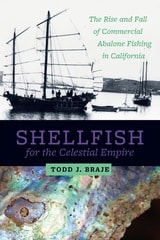
Shellfish for the Celestial Empire
The Rise and Fall of Commercial Abalone Fishing in CaliforniaTodd J. Braje
University of Utah Press, 2016
In the 1800s, when California was captivated by gold fever, a small group of Chinese immigrants recognized the fortune to be made from the untapped resources along the state’s coast, particularly from harvesting the black abalone of southern and Baja California. These immigrants, with skills from humble beginnings in a traditional Chinese fishing province, founded California’s commercial abalone industry, and led its growth and expansion for several decades. By the turn of the twentieth century, however, their successful livelihood was stolen from them through targeted legislation of the U.S. and California governments.
Today, the physical evidence of historical Chinese abalone fishing on the mainland has been erased by development. On California’s Channel Islands, however, remnants of temporary abalone collecting and processing camps lie scattered along the coastlines. These sites hold a treasure trove of information, stories, lifeways, and history. Braje has excavated many of these sites and uses them to explore the history of Chinese abalone fishing, presenting a microcosm of the broader history of Chinese immigrants in America—their struggles, their successes, the institutionalized racism they faced, and the unique ways in which they helped to shape the identity of the United States.
Shifting Borders and a Tattered Passport
Intellectual Journeys of a Mormon AcademicArmand L. Mauss
University of Utah Press, 2012
The life of a Mormon intellectual in the secular academic community is likely to include some contradictions between belief, scholarship, and the changing times. In his memoir, Armand L. Mauss recounts his personal and intellectual struggles—inside and outside the LDS world—from his childhood to his days as a graduate student at UC Berkeley in the 1960s through his many years as a professor.
As an important and influential observer and author in the Mormon intellectual world, Mauss has witnessed how, in attempting to suppress independent and unsponsored scholarship during the final decades of the twentieth century, LDS leaders deliberately marginalized important intellectual support and resources that could have helped, in the twenty-first century, to refurbish the public image of the church. As a sociologist, he notes how the LDS Church, as a large, complex organization, strives to adjust its policies and practices in order to maintain an optimal balance between unique, appealing claims on the one hand and public acceptance on the other. He also discusses national and academic controversies over the New Religious Movements of the 1960s and 1970s. Writing in clear language, Mauss shows how he has navigated the boundaries where his faith and academic life intersect, and reveals why a continuing commitment to the LDS Church must be a product of choice more than of natural or supernatural “proof.”
Shifting Borders
Rhetoric, Immigration And Prop 187Kent Ono
Temple University Press, 2002
"Like articles representing the positions of proponents of the measure, those representing opponents constructing the nation as potentially in danger as a result of undocumented immigration."
How do we learn to recognize the damning effects of good rhetorical intentions? And where will we find arguments which escape this trap that permeates the liberal social policy world? Shifting Borders uses an evaluation of the debate over California Proposition 187 to demonstrate how this quandary is best understood by close interrogation of mainstream reports and debates and by bringing to the fore voices that are often left out of mediated discussions.
It is these voices outside the mainstream, so-called "outlaw" discourses, that hold the best possibilities for real social change. To illustrate their claim, the authors present dominant and outlaw discourses around Proposition 187, from television reports, internet chat sites, and religious discourse to coverage of the Los Angeles Times. Their critique ably demonstrates how difficult it is to maintain a position outside the mainstream, but also how important it is for the press, citizens and scholars to actively search out such voices. The findings are organized through a model that provides an innovative method for understanding events and arguments through their rhetorical and communicative construction. In a world where the mediated word defines so much of what we know, Shifting Borders provides a lucid introduction to analyzing the spoken and written word that constitutes political debate in contemporary U.S. culture. In doing so, it makes an important contribution to any future development of progressive political strategy.
postamble();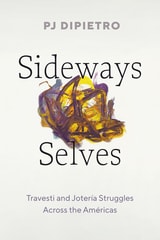
Sideways Selves
Travesti and Jotería Struggles Across the AméricasPJ DiPietro
University of Texas Press, 2025
2026 Sylvia Rivera Award in Transgender Studies, The Center for LGBTQ Studies (CLAGS), CUNY
How trans and non-binary networks engage in decoloniality across hemispheres.
A deeply informed, theoretically rich work of inquiry and critique, Sideways Selves learns from two communities of migrants as they contest their marginalization under the colonial regime of gender—colonial because, as PJ DiPietro affirms, Indigenous and Afro-diasporic conceptions of embodiment have been displaced by the European-Christian order of gender. Following gender-nonconforming Aymara, Kolla, and mixed-race exiles in Buenos Aires and K’iche’, Nahua, and Central American migrants in the San Francisco Bay Area, DiPietro takes stock of a collective, transnational effort to reimagine ideas of personhood and kinship that gender makes unthinkable.
The communities DiPietro studies create new kinds of identities, collective and genderless in nature. Their ways of thinking and doing, though radical, are motivated by old wisdom, storytelling, healing, and religion—brujería, curanderismo, Voudoun, and other practices that colonialism, capitalism, and the nation-state have unsuccessfully tried to erase. In equal measures philosophical and ethnographic, Sideways Selves witnesses and listens as these displaced people—displaced from their homes and from the moral geography of the West—show us what a just, decolonial world could actually be.
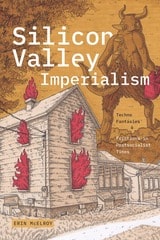
Silicon Valley Imperialism
Techno Fantasies and Frictions in Postsocialist TimesErin McElroy
Duke University Press, 2024
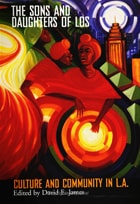
Sons And Daughters Of Los
Culture And Community In L.A.David James
Temple University Press, 2003
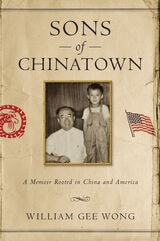
Sons of Chinatown
A Memoir Rooted in China and AmericaWilliam Gee Wong
Temple University Press, 2024
As Pop grappled with the systemic racism towards Asians during the exclusion era, Wong wistfully depicts Pop’s efforts to establish a family business and build a life for his family in segregated Oakland. As the exclusion law ended in 1943, young William was assimilating into American life and developing his path as a journalist. Writing for the Wall Street Journal, Oakland Tribune, and Asian American periodicals, Wong chronicled Asian American experiences while honoring Chinese American history and identity, but he too faced discrimination.
Sons of Chinatown poignantly weaves these father and son stories together with admiration and righteous anger. Through the mirrored lens of his father, Wong reflects on the hardships Asian Americans endured—and continue to face—with American exceptionalism. Wong’s inspiring memoir provides a personal history that also raises the question of whether America welcomes or repels immigrants.
Sons, Daughters, and Sidewalk Psychotics
Mental Illness and Homelessness in Los AngelesNeil Gong
University of Chicago Press, 2024
Drawing on the nuanced experiences of patients and care providers, Sons, Daughters, and Sidewalk Psychotics introduces readers to two drastically different forms of community psychiatric services: public safety net clinics focused on keeping people housed and out of jail and elite private care trying to push clients toward respectable futures.
In downtown Los Angeles, many people in psychiatric crisis only receive help after experiencing homelessness or arrest. Public providers engage in guerrilla social work to secure housing and safety, but these programs are rarely able to deliver true rehabilitation for psychological distress and addiction. Patients are free to refuse treatment or use illegal drugs—so long as they do so away from public view. Across town in West LA or Malibu, wealthy people diagnosed with serious mental illness attend luxurious treatment centers. Programs may offer yoga and organic meals alongside personalized therapeutic treatments, but patients can feel trapped, as their families pay exorbitantly to surveil and “fix” them. Meanwhile, middle-class families—stymied by private insurers, unable to afford elite providers, and yet not poor enough to qualify for social services—struggle to find care at all.
Examining this divergent treatment of people facing similar mental struggles, Gong raises provocative questions about urban policy, individual freedom, and what it would take to create a fundamentally different psychiatric system—one that will meet the needs of patients, their loved ones, and society at large.
South of Pico
African American Artists in Los Angeles in the 1960s and 1970sKellie Jones
Duke University Press, 2017
In South of Pico Kellie Jones explores how the artists in Los Angeles's black communities during the 1960s and 1970s created a vibrant, productive, and engaged activist arts scene in the face of structural racism. Emphasizing the importance of African American migration, as well as L.A.'s housing and employment politics, Jones shows how the work of black Angeleno artists such as Betye Saar, Charles White, Noah Purifoy, and Senga Nengudi spoke to the dislocation of migration, L.A.'s urban renewal, and restrictions on black mobility. Jones characterizes their works as modern migration narratives that look to the past to consider real and imagined futures. She also attends to these artists' relationships with gallery and museum culture and the establishment of black-owned arts spaces. With South of Pico, Jones expands the understanding of the histories of black arts and creativity in Los Angeles and beyond.
Space of Detention
The Making of a Transnational Gang Crisis between Los Angeles and San SalvadorElana Zilberg
Duke University Press, 2011
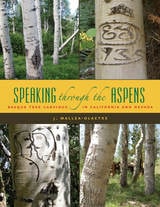
Speaking Through the Aspens
Basque Tree Carvings in California and NevadaJ. Mallea-Olaetxe
University of Nevada Press, 2008
Stagnant Dreamers
How the Inner City Shapes the Integration of the Second GenerationMaria G. Rendon
Russell Sage Foundation, 2019
Winner of the 2020 Robert E. Park Award for Best Book from the Community and Urban Sociology Section of the American Sociological Association
Winner of the 2020 Distinguished Contribution to Research Award from the Latino/a Section of the American Sociological Association
Honorable Mention for the 2020 Thomas and Znaniecki Award from the International Migration Section of the American Sociological Association
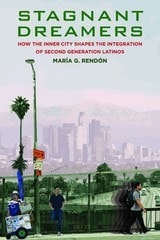
A quarter of young adults in the U.S. today are the children of immigrants, and Latinos are the largest minority group. In Stagnant Dreamers, sociologist and social policy expert María Rendón follows 42 young men from two high-poverty Los Angeles neighborhoods as they transition into adulthood. Based on in-depth interviews and ethnographic observations with them and their immigrant parents, Stagnant Dreamers describes the challenges they face coming of age in the inner city and accessing higher education and good jobs, and demonstrates how family-based social ties and community institutions can serve as buffers against neighborhood violence, chronic poverty, incarceration, and other negative outcomes.
Neighborhoods in East and South Central Los Angeles were sites of acute gang violence that peaked in the 1990s, shattering any romantic notions of American life held by the immigrant parents. Yet, Rendón finds that their children are generally optimistic about their life chances and determined to make good on their parents’ sacrifices. Most are strongly oriented towards work. But despite high rates of employment, most earn modest wages and rely on kinship networks for labor market connections. Those who made social connections outside of their family and neighborhood contexts, more often found higher quality jobs. However, a middle-class lifestyle remains elusive for most, even for college graduates.
Rendón debunks fears of downward assimilation among second-generation Latinos, noting that most of her subjects were employed and many had gone on to college. She questions the ability of institutions of higher education to fully integrate low-income students of color. She shares the story of one Ivy League college graduate who finds himself working in the same low-wage jobs as his parents and peers who did not attend college. Ironically, students who leave their neighborhoods to pursue higher education are often the most exposed to racism, discrimination, and classism.
Rendón demonstrates the importance of social supports in helping second-generation immigrant youth succeed. To further the integration of second-generation Latinos, she suggests investing in community organizations, combating criminalization of Latino youth, and fully integrating them into higher education institutions. Stagnant Dreamers presents a realistic yet hopeful account of how the Latino second generation is attempting to realize its vision of the American dream.
Stand Up Poetry
An Expanded AnthologyCharles Harper Webb
University of Iowa Press, 2002
Contributors:
Kim Addonizio
Dorothy Barresi
Charles Bukowski
Maxine Chernoff
Lucille Clifton
Billy Collins
Philip Dacey
Stephen Dunn
Deborah Harding
Edward Hirsch
Tony Hoagland
Allison Joseph
Jesse Lee Kercheval
Lisa Lewis
Bill Mohr
Ed Ochester
Lawrence Raab
Maureen Seaton
James Tate
Rafael Zepeda
plus many more
Witty, sexy, gritty, outrageous, emotional, hilarious, honest, courageous. What do these words describe? A growing movement in American literary circles: Stand Up Poetry.
Over twenty years ago, Charles Harper Webb discovered a vibrant and invigorating poetry scene in southern California. Featuring some of America's best contemporary poets, this scene, according to Webb, “showed insight, imagination, craft, philosophical depth, but most of all, it was funny, and it was fun.” Stand Up Poetry: The Poetry of Los Angeles and Beyond (1990) was the result of Webb's enthusiasm for this poetic genre.
A decade later, the popularity of performance poetry, poetry slams, and poetry readings is on the rise, and Webb has expanded his anthology to include a greater sampling of poets from across the country. From Charles Bukowski to Billy Collins and Allison Joseph, the poets included in this collection are popular and emerging, classical and experimental, young and old; yet all exhibit the characteristics so important to Stand Up Poetry—humor, performability, accessibility, individuality. Most important, these poems are enjoyable when read silently or aloud, on the page or on the stage.
Stand Up Poetry: An Expanded Anthology is at its core a celebration of poetry offering readers a wonderful lesson in the power of words to entertain and inspire.
Stardust Monuments
The Saving and Selling of HollywoodAlison Trope
Dartmouth College Press, 2012
Starting from Loomis and Other Stories
Hiroshi Kashiwagi
University Press of Colorado, 2013
Central to this collection are Kashiwagi’s confinement at Tule Lake during World War II, his choice to answer “no” and “no” to questions 27 and 28 on the official government loyalty questionnaire, and the resulting lifelong stigma of being labeled a “No-No Boy” after his years of incarceration. His nonlinear, multifaceted writing not only reflects the fragmentations of memory induced by traumas of racism, forced removal, and imprisonment but also can be read as a bold personal response to the impossible conditions he and other Nisei faced throughout their lifetimes.
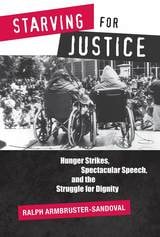
Starving for Justice
Hunger Strikes, Spectacular Speech, and the Struggle for DignityRalph Armbruster-Sandoval
University of Arizona Press, 2017
In the 1990s three college campuses in California exploded as Chicano/a and Latino/a students went on hunger strikes. Through courageous self-sacrifice, these students risked their lives to challenge racial neoliberalism, budget cuts, and fee increases. The strikers acted and spoke spectacularly and, despite great odds, produced substantive change.
Social movement scholars have raised the question of why some people risk their lives to create a better world. In Starving for Justice, Ralph Armbruster-Sandoval uses interviews and archival material to examine people’s willingness to make the extreme sacrifice and give their lives in order to create a more just society.
Popular memory and scholarly discourse around social movements have long acknowledged the actions of student groups during the 1960s. Now Armbruster-Sandoval extends our understanding of social justice and activism, providing one of the first examinations of Chicana/o and Latina/o student activism in the 1990s.
Students at University of California, Los Angeles; University of California, Santa Barbara; and Stanford University went on hunger strikes to demand the establishment and expansion of Chicana/o studies departments. They also had even broader aspirations—to obtain dignity and justice for all people. These students spoke eloquently, making their bodies and concerns visible. They challenged anti-immigrant politics. They scrutinized the rapid growth of the prison-industrial complex, racial and class polarization, and the university’s neoliberalization. Though they did not fully succeed in having all their demands met, they helped generate long-lasting social change on their respective campuses, making those learning institutions more just.
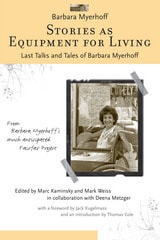
Stories as Equipment for Living
Last Talks and Tales of Barbara MyerhoffBarbara Myerhoff
University of Michigan Press, 2007
Barbara Myerhoff's groundbreaking work in reflexivity and narrative ethnography broke with tradition by focusing not on the raw ethnographic data, but on her interaction with those she studied. Myerhoff's unfinished projects, including her final talks on storytelling, ritual, and the "culture of aging and Yiddishkeit," offer a magisterial summary of her life's work.
"The beauty of Stories as Equipment for Living is the quality of being a compilation of rescued fragments, bits and pieces of a great master's writing and thinking that were coming towards synthesis but had never reached a finished form prior to her death. This collection is an examination of the place of narrative in human life, the synthetic nature of culture and the constant search for visibility particularly by those relegated for one reason or another to the margins. A thought-provoking book worthy of extended reflection."
---Jack Kugelmass, Professor of Anthropology and Director of Jewish Studies, University of Florida
"Stories as Equipment for Living achieves a nice balance between preserving Myerhoff's work in its original form and reconstructed contexts, but presenting it in a manner relevant to readers a generation after her death. The book documents Myerhoff's growing involvement with Jewish culture, the actual process of anthropological work through field notes, and the picture of how she always was bouncing the fine details of this combined professional and personal venture off the 'big questions' of anthropology in its broadest sense."
---Harvey E. Goldberg, Professor of Sociology and Anthropology, Hebrew University, Israel
"These essays capture the rhythm of Barbara Myerhoff's words and her vivid and distinctive train of thought, bringing the reader into the classroom of one of anthropology's finest lecturers. As an anthropologist with a poet's gift for language, she utilizes the tools of ethnography and extraordinary powers of observation---a remarkable 'ethnographic eye'---to explore the outward expressions and inner lives of the Fairfax neighborhood of L.A. These stories are not only glorious introductions to the study of culture, but provide in their revelations a reason for studying it. They are required reading for anyone passionate to know what an anthropologist can teach us about communities and ultimately about ourselves."
---Steve Zeitlin, Director, City Lore: The New York Center for Urban Folk Culture
"Master of the third voice, the voice of collaboration, Myerhoff is at once a consummate listener and inspired storyteller. This book offers a rare and luminous opening into the working process and wisdom of one of the great anthropologists of the twentieth century."
---Barbara Kirshenblatt-Gimblett, Professor of Performance Studies at New York University and coauthor of They Called Me Mayer July: Painted Memories of a Jewish Childhood in Poland Before the Holocaust
"Myerhoff and her collaborators have given her 'Hasidim,' her disciples old and new, a final and precious gift."
---Jonathan Boyarin, The Robert M. Beren Distinguished Professor of Modern Jewish Studies at the University of Kansas and author of Thinking in Jewish
Barbara Myerhoff was a renowned anthropologist who did pioneering work in gerontology, Jewish studies, folklore, and narrative anthropology. She is best known for her ethnography of and personal involvement with a community of elderly immigrant Jews in California. Her writings and lectures have had an enormous impact on all of these areas of study, and her books are widely celebrated, especially Number Our Days, whose companion documentary film won an Academy Award.
Marc Kaminsky is a psychotherapist, a poet, a writer, and the former codirector of the Institute on Humanities, Arts and Aging of the Brookdale Center on Aging.
Mark Weiss is a writer, an editor, a translator, and a poet; his books include the widely praised Across the Line/Al Otro Lado.
Deena Metzger is a novelist, a poet, and the founding codirector (with Marc Kaminsky) of the Myerhoff Center.
Thomas R. Cole is the Beth and Toby Grossman Professor and Director of the McGovern Center for Health, Humanities, and the Human Spirit at the University of Texas Health Science Center in Houston, and a Professor of Humanities in the Department of Religious Studies at Rice University; his expertise lies in the history of aging and humanistic gerontology.
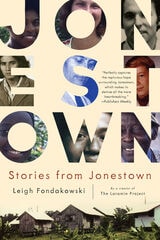
Stories from Jonestown
Leigh Fondakowski
University of Minnesota Press, 2010
The saga of Jonestown didn’t end on the day in November 1978 when more than nine hundred Americans died in a mass murder-suicide in the Guyanese jungle. While only a handful of people present at the agricultural project survived that day in Jonestown, more than eighty members of Peoples Temple, led by Jim Jones, were elsewhere in Guyana on that day, and thousands more members of the movement still lived in California. Emmy-nominated writer Leigh Fondakowski, who is best known for her work on the play and HBO film The Laramie Project, spent three years traveling the United States to interview these survivors, many of whom have never talked publicly about the tragedy. Using more than two hundred hours of interview material, Fondakowski creates intimate portraits of these survivors as they tell their unforgettable stories.
Collectively this is a record of ordinary people, stigmatized as cultists, who after the Jonestown massacre were left to deal with their grief, reassemble their lives, and try to make sense of how a movement born in a gospel of racial and social justice could have gone so horrifically wrong—taking with it the lives of their sons and daughters, husbands and wives, fathers and mothers, and brothers and sisters. As these survivors look back, we learn what led them to join the Peoples Temple movement, what life in the church was like, and how the trauma of Jonestown’s end still affects their lives decades later.
What emerges are portrayals both haunting and hopeful—of unimaginable sadness, guilt, and shame but also resilience and redemption. Weaving her own artistic journey of discovery throughout the book in a compelling historical context, Fondakowski delivers, with both empathy and clarity, one of the most gripping, moving, and humanizing accounts of Jonestown ever written.
Stories from the Country of Lost Borders by Mary Austin
Pryse, Marjorie
Rutgers University Press, 1987
In The Land of Little Rain, Austin's attention to natural detail allows her to write prose that is geologically, biologically, and botanically accurate at the same time that it offers metaphorical insight into human emotional and spiritual experience. In Lost Borders, Austin focuses on both white and Indian women's experiences in the desert, looks for the sources of their deprivation, and finds them in the ways life betrays them, usually in the guise of men. She offers several portraits of strong women characters but ultimately identifies herself with the desert, which she personifies as a woman.
Strange Future
Pessimism and the 1992 Los Angeles RiotsMin Hyoung Song
Duke University Press, 2005
Song considers works that address the riots and often the traumatic place of the Korean American community within them: the independent documentary Sa-I-Gu (Korean for April 29, the date the riots began), Chang-rae Lee’s novel Native Speaker, the commercial film Strange Days, and the experimental drama of Anna Deavere Smith, among many others. He describes how cultural producers have used the riots to examine the narrative of national decline, manipulating language and visual elements, borrowing and refashioning familiar tropes, and, perhaps most significantly, repeatedly turning to metaphors of bodily suffering to convey a sense of an unraveling social fabric. Song argues that these aesthetic experiments offer ways of revisiting the traumas of the past in order to imagine more survivable futures.
Street Fight
The Politics of Mobility in San FranciscoJason Henderson
University of Massachusetts Press, 2013
Faced with intolerable congestion and noxious pollution, cities around the world are rethinking their reliance on automobiles. In the United States a loosely organized livability movement seeks to reduce car use by reconfiguring urban space into denser, transit-oriented, walkable forms, a development pattern also associated with smart growth and new urbanism. Through a detailed case study of San Francisco, Jason Henderson examines how this is not just a struggle over what type of transportation is best for the city, but a series of ideologically charged political fights over issues of street space, public policy, and social justice.
Historically San Francisco has hosted many activist demonstrations over its streets, from the freeway revolts of the 1960s to the first Critical Mass bicycle rides decades later. Today the city's planning and advocacy establishment is changing zoning laws to limit the number of parking spaces, encouraging new car-free housing near transit stations, and applying “transit first” policies, such as restricted bus lanes. Yet Henderson warns that the city's accomplishments should not be romanticized. Despite significant gains by livability advocates, automobiles continue to dominate the streets, and the city's financially strained bus system is slow and often unreliable.
Both optimistic and cautionary, Henderson argues that ideology must be understood as part of the struggle for sustainable cities and that three competing points of view—progressive, neoliberal, and conservative—have come to dominate the contemporary discourse about urban mobility. Consistent with its iconic role as an incubator of environmental, labor, civil rights, and peace movements, San Francisco offers a compelling example of how the debate over sustainable urban transportation may unfold both in the United States and globally.

Stringfellow Acid Pits
The Toxic and Legal LegacyBrian Craig
University of Michigan Press, 2020
Sueños Americanos
Barrio Youth Negotiating Social and Cultural IdentitiesJulio Cammarota
University of Arizona Press, 2012
For nearly a decade Julio Cammarota interviewed and observed Latino youth between the ages of seventeen and twenty-four who lived in a barrio in a city on the California coast. He conducted forty life interviews, selecting six people to investigate in depth. Twenty of the study participants worked at a fast-food restaurant, while the other twenty worked at a community cultural center.
Focusing on the experiences of his subjects in the primary settings of family, work, and school, Cammarota structured his research to examine how Latino youth negotiate myriad social conditions and hostile economic and political pressures in their daily lives. His extensive interviews and incisive analyses illuminate the complex relationships among low-wage employment, cultural standards, education, class oppression, and gender expectations.
Among other topics, Cammarota investigates how working affects Latino education; how gender influences social relationships and life choices; how Latinos and Latinas try to maintain their distinct ethnic identity while attempting to transcend marginalization; whether the Latino culture helps young people work hard for their families and for a better future; and how the connections and disconnections among work, family, and school constitute formative processes that shape the cultural identities of Latino youth.
One of the most extensive studies of barrio youth available, Sueños Americanos concludes with a discussion of social justice education for Latino youth and how this educational approach meets their academic needs while providing opportunities for self-determination and community activism.
Suffering in the Land of Sunshine
A Los Angeles Illness NarrativeAbel, Emily K.
Rutgers University Press, 2006
The history of medicine is much more than the story of doctors, nurses, and hospitals. Seeking to understand the patient’s perspective, historians scour the archives, searching for rare personal accounts. Bringing together a trove of more than 400 family letters by Charles Dwight Willard, Suffering in the Land of Sunshine provides a unique window into the experience of sickness.
A Los Angeles civic leader at the turn of the twentieth century, Willard is well known to historians of the West, but exclusively for his public life as a booster and reformer. Willard’s evocative story offers fresh insights into several critical issues, including how concepts of gender, class, and race shape patients’ representations of their illness, how expectations of cure affect the illness experience, how different cultures constrain the coping strategies of the sick, and why robust health is such an exalted value in certain societies.
Summoned
Identification and Religious Life in a Jewish NeighborhoodIddo Tavory
University of Chicago Press, 2016
In Summoned, Tavory takes readers to the heart of the exhilarating—at times exhausting—life of the Beverly-La Brea Orthodox community. Just blocks from West Hollywood’s nightlife, the Orthodox community thrives next to the impure sights, sounds, and smells they encounter every day. But to sustain this life, as Tavory shows, is not simply a moral decision they make. To be Orthodox is to be constantly called into being. People are reminded of who they are as they are called upon by organizations, prayer quorums, the nods of strangers, whiffs of unkosher food floating through the street, or the rarer Anti-Semitic remarks. Again and again, they find themselves summoned both into social life and into their identity as Orthodox Jews. At the close of Tavory’s fascinating ethnography, we come away with a better understanding of the dynamics of social worlds, identity, interaction and self—not only in Beverly-La Brea, but in society at large.
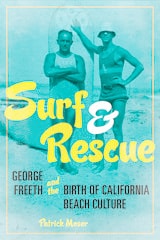
Surf and Rescue
George Freeth and the Birth of California Beach CulturePatrick Moser
University of Illinois Press, 2022
A compelling merger of biography and sports history, Surf and Rescue brings to light the forgotten figure whose novel way of seeing the beach sparked the imaginations of people around the world.