Results by title
975 books match the query 'Case studies' and 68 start with s

Sanctuary
Exclusion, Violence, and Indigenous Migrants in the East BayCruz Medina
The Ohio State University Press, 2024
Taking a Northern California community of migrants from Guatemala as a case study, Medina demonstrates the ways in which immigration policy and educational barriers exclude Indigenous migrant populations. He follows the community at the “Sanctuary”—a Spanish-speaking church in the East Bay Area that serves as a place of worship, English language instruction, and refuge for migrants. Medina assembles participant observations, interviews, surveys, and other data to provide points of entry into intersecting issues of immigration, violence, language, and property and to untangle aspects of citizenship, exclusion, and assumptions about literacy.

Savage Portrayals
Race, Media and the Central Park Jogger StoryNatalie Byfield
Temple University Press, 2014

Scarface Al and the Crime Crusaders
Chicago's Private War Against CaponeDennis E. Hoffman
Southern Illinois University Press, 1993
According to the Eliot Ness myth, which has been widely disseminated through books, television shows, and movies, Ness and the Untouchables defeated Al Capone by marshaling superior firepower. In Scarface Al and the Crime Crusaders, Dennis Hoffman presents a fresh new perspective on the downfall of Al Capone. To debunk the Eliot Ness myth, he shows how a handful of private citizens brought Capone to justice by outsmarting him rather than by outgunning him.
Drawing on previously untapped sources, Hoffman dissects what he terms a “private war” against Capone. He traces the behind-the-scenes work of a few prominent Chicago businessmen from their successful lobbying of presidents Coolidge and Hoover on behalf of federal intervention to the trial, sentencing, and punishment of Al Capone. Hoffman also reconstructs in detail a number of privately sponsored citizen initiatives directed at stopping Capone. These private ventures included prosecuting the gangsters responsible for election crimes; establishing a crime lab to assist in gangbusting; underwriting the costs of the investigation of the Jake Lingle murder; stigmatizing Capone; and protecting the star witnesses for the prosecution in Al Capone’s income tax evasion case.
Hoffman suggests that as American society continues to be threatened by illegal drugs, gangs, and widespread violence, it is important to remember that the organized crime and political corruption of Prohibition-era Chicago were checked through the efforts of private citizens.
Dennis E. Hoffman is an associate professor of criminal justice at the University of Nebraska at Omaha.

Scholarship In The Sandbox
Amy Jackson
Assoc of College & Research Libraries, 2019
Schools into Fields and Factories
Anarchists, the Guomindang, and the National Labor University in Shanghai, 1927–1932Ming K. Chan and Arif Dirlik
Duke University Press, 1991
During its five years of existence, Labor University was the most impressive institutional embodiment in twentieth-century China of the labor-learning ideal, which was introduced by anarchists in the first decade of the century and came to be shared by a diverse group of revolutionaries in the 1920s. This detailed study places Labor University within the broad context of anarchist social ideals and educational experiments that inspired it directly, as well as comparable socialist experiments within labor education in Europe that Labor University’s founders used as models. The authors bring to bear the perspectives of institutional and intellectual history on their examination of the structure and operation of the University, presenting new material on its faculty, curriculum, physical plant, and history.
Screwing the System and Making it Work
Juvenile Justice in the No-Fault SocietyMark D. Jacobs
University of Chicago Press, 1990
Searching for Solidarity
Revolutionary Dreams and Radical Social MovementsNoor Ghazal Aswad
The Ohio State University Press, 2025
Second Cities
Globalization and Local Politics in Manchester and PhiladelphiaAuthored by Jerome I. Hodos
Temple University Press, 2013
Manchester, England, and Philadelphia, Pennsylvania, are what sociologist Jerome Hodos calls second cities—viable alternatives to well-known global cities such as London and New York. In Second Cities, Hodos considers how Manchester and Philadelphia have confronted problems of globalization over the past two centuries.
This thought-provoking, comparative look at these cities examines their histories, economies, migration patterns, cultural innovations, transportation planning, and self-identities. Hodos demonstrates not just how the two cities are positioned in global flows of capital, goods, people, and ideas but also how each has used what he calls “municipal foreign policy” to preserve and rejuvenate its position over time. The second city offers an illustrative lens through which to view other urban centers, from Atlanta to Bangalore, Seattle, and Turin.
Hodos’s description and analysis of urban development over a broad time frame offer lessons for policy makers, scholars, and community leaders concerned with the impact of globalization on their own cities.
Second Tier Cities
Rapid Growth beyond the MetropolisAnn Markusen
University of Minnesota Press, 1999
Analyzes and compares the rapid growth of medium-sized cities.
Over the past thirty years, transnational investment, trade, and government policies have encouraged the decentralization of national economies, disrupting traditional patterns of urban and regional growth. Many smaller cities-such as Seattle, Washington; Campinas, Brazil; Oita, Japan; and Kumi, Korea-have grown markedly faster than the largest metropolitan regions. These “second tier cities” are home to specialized industrial complexes that have taken root, provided significant job growth, and attracted mobile capital and labor.
The culmination of an ambitious five-year, fourteen-city research project conducted by an international team of economists and geographers, Second Tier Cities examines the potential of these new regions to balance uneven regional development, create good, stable jobs, and moderate hyper-urbanization. Comparing across national borders, the contributors describe four types of second tier cities: Marshallian industrial districts, hub-and-spoke cities, satellite platforms, and government-anchored complexes. They find that both industrial and regional policies have been important contributors to the rise of second tier cities, though the former often trump the latter. Lessons for local, national, and international policymakers are drawn. The authors are critical of devolution and argue that it must be accompanied by strong labor and environmental standards and mechanisms to overcome differential regional resource endowments.Contributors: Clelio Campolina Diniz, U Federal de Minas Gerais, Brazil; Masatomi Funaba, Kobe U of Commerce, Japan; Elyse Golob, NYC Economic Development Goup; Mia Gray, Cambridge U; Jun Ho Jeong, Oxford U; Sam Ock Park, Seoul National U; Mohammad Razavi; Fabiana Borges T. Santos, U Federal de Minas Gerais, Brazil; and Masayuki Sasaki, Kanzawa U, Japan.
Secular Morality and International Security
American and British Decisions about WarMaria Fanis
University of Michigan Press, 2011
“[Fanis] demonstrates an impressive ability to travel nimbly between abstract theoretical concepts and a messy reality. In each one of the case study chapters, her analysis is rich, thoughtful, and imaginative.”
—Ido Oren, University of Florida

Secularism and Its Ambiguities
Four Case StudiesCarlo Ginzburg
Central European University Press, 2023
In the best micro-historical tradition, Carlo Ginzburg, himself one of the founders and icons of this genre of historiography, dissects four moments of European intellectual history. This book relives the experience that participants in the Natalie Zemon Davis Lecture Series at the Budapest campus of Central European University had in 2019 listening to Ginzburg's eloquent and engaging discourses. For the purposes of this volume he has re-edited and completed the leporello of cases charged with the inherent ambiguity between secularism and religions.
Secularism is often identified with rejection or at least distancing from the sacred. However, if one assumes that secularism also appropriates and reworks the sacred, its ambiguities come to the fore. The dilemma accompanies the reception of La Boétie's Servitude volontaire between 1574 and today. Before Walter Benjamin, the lesser-known 19th-century Léon de Laborde defended the profanity of reproducing the arts. The tension around the secular pervades the case of the College de Sociologie (Paris, 1937-1939), an attempt to analyze the ideological components of fascism. The fourth lecture approaches a much-discussed contemporary phenomenon – fake news – from a long-term perspective. To what extent are some disturbing features of the world we live in the result of a long, tortuous, unpredictable trajectory?
Selective Remembrances
Archaeology in the Construction, Commemoration, and Consecration of National PastsEdited by Philip L. Kohl, Mara Kozelsky, and Nachman Ben-Yehuda
University of Chicago Press, 2008
Examining such relatively new or reconfigured nation-states as Iran, Iraq, Turkey, Israel, Russia, Ukraine, India, and Thailand, Selective Remembrances shows how states invoke the remote past to extol the glories of specific peoples or prove claims to ancestral homelands. Religion has long played a key role in such efforts, and the contributors take care to demonstrate the tendency of many people, including archaeologists themselves, to view the world through a religious lens—which can be exploited by new regimes to suppress objective study of the past and justify contemporary political actions.
The wide geographic and intellectual range of the essays in Selective Remembrances will make it a seminal text for archaeologists and historians.
Seven Million
A Cop, a Priest, a Soldier for the IRA, and the Still-Unsolved Rochester Brink's HeistGary Craig
University Press of New England, 2017

Sexual Identity and Faith
Helping Clients Find CongruenceMark A. Yarhouse
Templeton Press, 2019
Christians who struggle with a conflict between their sexual and religious identities have few therapeutic options available to them. ‘Sexual orientation change efforts’ (SOCE) have rightly fallen out of favor and are no longer practiced by most clinicians. At the same time, the common approach of gay affirmative therapy (GAT) can at times present challenges and may not be a good fit when clients hold to conventional religious beliefs and values.
An alternative to these methods is Sexual Identity Therapy (SIT)—an approach that aims to provide individuals with a safe therapeutic space to explore the tension between their sexuality and their faith. Working within the SIT framework, clients are able to resolve their inner conflict to their personal satisfaction and to freely choose a coherent identity that enables them to move forward in life.
SIT has several stages, each designed to enable the client to make meaning out of his or her same-sex sexuality. At no point in the process is the client encouraged to choose one sexual identity over another. The ultimate goal of SIT is congruence. Congruence is achieved when a person freely adopts an identity and lives it out in ways that are in keeping with his or her beliefs and values. The SIT model is brought to life throughout the book with the help of case studies drawn from the author’s 20 years of experience.
Written for both Christian and non-religious clinicians, Sexual Identity and Faith is an informed, respectful, and nuanced guide to help people navigate the difficult conflict between who they are sexually and what they believe religiously.

Shades of White Flight
Evangelical Congregations and Urban DepartureMark T. Mulder
Rutgers University Press, 2015

Shakespeare Behind Bars
One Teacher's Story of the Power of Drama in a Women's PrisonJean Trounstine
University of Michigan Press, 2004
Originally published in cloth in 2001, the paperback includes a new foreword that will inspire all teachers who work with students others have deemed unteachable. A new afterword updates readers on the prison art's program -- and the author herself -- since 2001.

Shallow Graves
The Hunt for the New Bedford Highway Serial KillerMaureen Boyle
University Press of New England, 2017
Shamanism, History, and the State
Nicholas Thomas and Caroline Humphrey, Editors
University of Michigan Press, 1994
The literature on shamanism and related topics is extensive, but has in general been biased toward curing and trance; the political and historical significance of shamanic activities has been largely neglected. The contributors to Shamanism, History, and the State—distinguished anthropologists and historians from England, Australia, and France—show that shamanism is not static and stable, but always changing as a result of political dynamics and historical processes. Contributors are Tamsyn Barton, Sysan Bayly, Mary Beard, Maurice Bloch, Peter Gow, Roberte N. Hamayon, Stephen Hugh-Jones, Caroline Humphrey, and Nicholas Thomas.
"The importance of this collection lies in the painstaking, many-sided ways in which it shows 'shamanism' to be a multifarious and continuously changing 'dialogue' or interaction with specific, local contexts. . . . Thus, rather than tackling the issue in principle, this collection tries to demonstrate through 'case studies' just how different 'shamanism' becomes if seen through a lens sensitive to history and the influence of institutions, such as the state, which seem far removed from it. I think the demonstrations add up to an impressive force." --Michael Taussig
"This new, ably edited volume provides . . . chapters that are rich in historic detail and that provide insights into general cultural processes and social interactions.
Shanghai Rising
State Power and Local Transformations in a Global MegacityXiangming Chen
University of Minnesota Press, 2009
Analyzing a Chinese city’s dazzling rise to global megacity status
Until around 1990, Shanghai was China’s premier but sluggish industrial center. Now at the beginning of the twenty-first century, the joint impact of global forces and state power has turned Shanghai into a dynamic megacity. Shanghai’s remarkable growth in economy, infrastructure, and global presence has prompted questions about the Shanghai “miracle.” This collection places the city’s unprecedented rise in a rare comparative examination of U.S. cities, as well as with Asian megacities Singapore and Hong Kong, providing a nuanced account of how Shanghai’s politics, economy, society, and space have been transformed by macro- and micro-level forces.
Contributors: Stephen W. K. Chiu, Chinese U of Hong Kong; K. C. Ho, National U of Singapore; John D. Kasarda, U of North Carolina; Hanlong Lu, Shanghai Academy of Social Sciences; Tai-lok Lui, Chinese U of Hong Kong; Ann R. Markusen, U of Minnesota; Anthony M. Orum, U of Illinois, Chicago; Yuan Ren, Fudan U Shanghai; Saskia Sassen, Columbia U; Jiaming Sun, Texas A&M U, Commerce; Fulong Wu, Cardiff U; Pingkang Yu, George Washington U; Tingwei Zhang, U of Illinois, Chicago; Zhenhua Zhou, Development Research Center, Shanghai Municipal Government.
Shared Collections
Collaborative StewardshipDawn Hale
American Library Association, 2016

Shattered Sense of Innocence
The 1955 Murders of Three Chicago ChildrenRichard C. Lindberg and Gloria Jean Sykes
Southern Illinois University Press, 2006
In October 1955, three Chicago boys were found murdered, their bodies naked and dumped in a ditch in Robinson Woods on the city’s Northwest Side. A community and a nation were shocked. In a time when such crimes against children were rare, the public was transfixed as local television stations aired stark footage of the first hours of the investigation. Life and Newsweek magazines published exclusive stories the following week. When Kenneth Hansen was convicted and sentenced for the murders, the case was considered solved—until questions were raised about Hansen’s presumed guilt.
Shattered Sense of Innocence: The 1955 Murders of Three Chicago Children tells the gripping story of the three murdered boys—thirteen-year-old John Schuessler, his eleven-year-old brother, Anton, and thirteen-year-old Bobby Peterson—and the quest to find and bring to justice their killer. Authors Richard C. Lindberg and Gloria Jean Sykes recount the bungled 1955 police investigation, the failures of multiple law enforcement agencies, and the subsequent convictions of Kenneth Hansen, in 1995 and 2002, and present new information concerning two suspects overlooked by police for five decades.
The authors deftly examine all sides of this tragic story, drawing on exclusive interviews with law enforcement agents, with horse trainers affiliated with the so-called horse mafia, and with the man convicted of the murders, Kenneth Hansen. This intensely intimate account offers a rare glimpse into one community and examines how these atrocious crimes altered public perceptions nationwide. Shattered Sense of Innocence, which is also a story of political controversy, a determined federal agent’s quest for justice, and a community’s loss of innocence, includes fifty illustrations.

Sherman's Forgotten General
Henry W. SlocumBrian C. Melton
University of Missouri Press, 2007
Henry Warner Slocum, a Union major general who was a corps and army commander in the Civil War, served from the first call for troops until he stood with William Tecumseh Sherman to receive Joseph E. Johnston’s surrender after Appomattox. He saw action at Bull Run, Chancellorsville, and Gettysburg, and by the end of the war he had taken command of the Army of Georgia, yet historians have largely overlooked this key commander.
Brian Melton has written the first scholarly account of this important general—the first full-length biography in nearly a century—who as one of Sherman’s most trusted commanders exercised significant influence during the Civil War. Although Slocum is remembered primarily for his lackluster performance at Gettysburg, Melton discloses that there is more to him than current history credits, offering a holistic account of his life to show that his career was much more significant than has been supposed.
Slocum took on the characteristics of the leaders he served, and Melton reveals how Slocum’s attitudes and tactics changed dramatically between commanders to explain why he proved to be of little help to George McClellan and almost a liability while serving under “Fighting Joe” Hooker and yet was an effective commander under Sherman. Slocum became Sherman’s “left arm” and adapted so thoroughly to his style of generalship that he anticipated the general’s intentions on two important occasions, and Melton contends that Slocum was a much more important contributor to the success of Sherman’s later campaigns than has been acknowledged, becoming at times more aggressive and driving than Sherman himself.
Melton ultimately considers Slocum’s fate as one of the forgotten generals of the Civil War—brought on largely by his joining the Democratic Party in 1865—and demonstrates why previous simplistic depictions of Slocum miss the mark. By providing the first detailed look at this important second-tier commander, Sherman’s Forgotten General illuminates the influences, events, and individuals of Slocum’s career to show that, while he may not have changed the course of the war, he played a conspicuous and important role in its successful execution that has long deserved to be recognized.
Sherman's Mississippi Campaign
Buck T. Foster
University of Alabama Press, 2006
The campaign that shaped Sherman's path to victory and changed the future of Civil War warfare.
With the fall of Vicksburg to Union forces in mid-1863, the Federals began work to extend and consolidate their hold on the lower Mississippi Valley. As a part of this plan, Major General William Tecumseh Sherman set out from Vicksburg on February 3, 1864, with an army of some 25,000 infantry and a battalion of cavalry. They expected to be joined by another Union force moving south from Memphis and supported themselves off the land as they traveled due east across Mississippi.
Sherman entered Meridian on February 14 and thoroughly destroyed its railroad facilities, munitions plants, and cotton stores, before returning to Vicksburg. Though not a particularly effective campaign in terms of enemy soldiers captured or killed, it offers a rich opportunity to observe how this large-scale raid presaged Sherman’s Atlanta and Carolina campaigns, revealing the transformation of Sherman’s strategic thinking.

Signing in Puerto Rican
A Hearing Son and His Deaf FamilyAndrés Torres
Gallaudet University Press, 2009
The only child of deaf Puerto Rican immigrants, Andrés Torres grew up in New York City in a large, extended family that included several deaf aunts and uncles. In Signing in Puerto Rican: A Hearing Son and His Deaf Family, he opens a window into the little known culture of Deaf Latinos chasing the immigrant American dream. Like many children of deaf adults (codas), Torres loved his parents deeply but also longed to be free from being their interpreter to the hearing world. Torres’s story is unique in that his family communicated in three languages. The gatherings of his family reverberated with “deaf talk,” in sign, Spanish, and English. What might have struck outsiders as a strange chaos of gestures and mixed spoken languages was just normal for his family.
Torres describes his early life as one of conflicting influences in his search for identity. His parents’ deep involvement in the Puerto Rican Society for the Catholic Deaf led him to study for the priesthood. He later left the seminary as his own ambitions took hold. Torres became very active in the Puerto Rico independence party against the backdrop of the Civil Rights movement and protest against the Vietnam War. Throughout these defining events, Torres’s journey never took him too far from his Deaf Puerto Rican family roots and the passion of arms, hands, and fingers filling the air with simultaneous translation and understanding.

Silent Looms
Women and Production in a Guatemalan TownBy Tracy Bachrach Ehlers
University of Texas Press, 2000
Based on new fieldwork in 1997, Tracy Bachrach Ehlers has updated her classic study of the effects of economic development on the women weavers of San Pedro Sacatepéquez. Revisiting many of the women she interviewed in the 1970s and 1980s and revising her earlier hopeful assessment of women's entrepreneurial opportunities, Ehlers convincingly demonstrates that development and commercial growth in the region have benefited men at the expense of women.
Sin in the City
Chicago and Revivalism, 1880-1920Thekla Ellen Joiner
University of Missouri Press, 2013
Long before today’s culture wars, the “Third Great Awakening” rocked America. During the late nineteenth and early twentieth centuries, evangelists such as Dwight L. Moody and Billy Sunday roused citizens to renounce sin as it manifested in popular culture, moral ambiguity, and the changing role of women.
Sin in the City examines three urban revivals in turn-of-the-century Chicago to show how revivalists negotiated that era’s perceived racial, sexual, and class threats. While most studies of this movement have focused on its male leaders and their interactions with society, Thekla Ellen Joiner raises new questions about gender and race by exploring Third Awakening revivalism as the ritualized performance of an evangelical social system defined by middle-class Protestant moral aspirations for urban America. Rather than approaching these events merely as the achievements of persuasive men, she views them as choreographed collective rituals reinforcing a moral order defined by ideals of femininity, masculinity, and racial purity.
Joiner reveals how revivalist rhetoric and ritual shifted from sentimentalist identification of sin with males to a more hard-nosed focus on females, castigating “loose women” whose economic and sexual independence defied revivalist ideals and its civic culture. She focuses on Dwight L. Moody’s 1893 World’s Fair revival, the 1910 Chapman-Alexander campaign, and the 1918 Billy Sunday revival, comparing the locations, organization, messages, and leaders of these three events to depict the shift from masculinized to feminized sin. She identifies the central role women played in the Third Awakening as the revivalists promoted feminine virtue as the corrective to America’s urban decline. She also shows that even as its definition of sin became more feminized, Billy Sunday’s revivalism began to conform to Chicago’s emerging color line.
Enraged by rapid social change in cities like Chicago, these preachers spurred Protestant evangelicals to formulate a gendered and racialized moral regime for urban America. Yet, as Joiner shows, even as revivalists demonized new forms of entertainment, they used many of the modern cultural practices popularized in theaters and nickelodeons to boost the success of their mass conversions.
Sin in the City shows that the legacy of the Third Awakening lives on today in the religious right’s sociopolitical activism; crusade for family values; disparagement of feminism; and promotion of spirituality in middle-class, racial, and cultural terms. Providing cultural and gender analysis too often lacking in the study of American religious history, it offers a new model for understanding the development of a gendered theology and set of religious practices that influenced Protestantism in a period of enormous social change.

Sister City Diplomacy
Community Engagement in U.S.–Russian Relations from the Cold War to TodayDouglas C. Nord
University of Wisconsin Press, 2025
Sister City Diplomacy offers a historical account of citizen diplomacy set in a unique political and social environment. But in its theoretical grounding and informed arguments, this study speaks to much broader and contemporary concerns, both in terms of United States–Russian relations today and with regard to the challenges and opportunities of community-based diplomacy in general. Lessons learned along the shores of Lakes Superior and Onega in the last days of the Cold War hold great value given the heightened tensions of current geopolitics.
Six Generations Here
A Farm Family RemembersMarjorie McLellan
Wisconsin Historical Society Press, 1997
Six Generations Here: A Farm Family Remembers
by Marjorie L. McLellan, with an essay by Kathleen Neils Conzen and a foreword by Dan Freas
Discover the story of the Krueger family, as images of farm, family, and landscape reveal the struggles of rural immigrant life in Wisconsin. Drawing on snapshots, memorabilia, and interviews, Six Generations Here brings together the voices of the past and the present to create a distinctive portrait of Wisconsin farm life.
Leaving their German home in 1851, the Kruegers came to America for economic opportunity. But like other immigrant families, they struggled to make ends meet. Only with the whole family helping out did they manage to get their Watertown farm up and running. By the turn of the century, they had achieved a life of middle-class comfort in the midst of the rigors of dairy farming. Over the generations, the Kruegers incorporated their past traditions with the needs of the present, adapting to the challenges of rural American life and, when necessary, breaking from the past. Despite these changes, their commitment to hard work and family persisted, shaped their identity, and ensured their success.
Through photographs, documents, and family stories, the Kruegers left a deep history of who they were and how they sought to be remembered. Follow their family through six generations as they compile a rich and varied record of Wisconsin life.
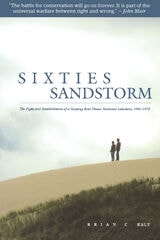
Sixties Sandstorm
The Fight over Establishment of a Sleeping Bear Dunes National Lakeshore, 1961-1970Brian C. Kalt
Michigan State University Press, 2001
Sixties Sandstorm is not a book about dunes as much as it is a book about people and their government. It chronicles the public meetings, bills, protests, and congressional interactions that led to the signing of the Sleeping Bear Sand Dunes Act in 1970. The Dunes park fight is a case study of the politics, the legislative process, citizen response to the expanded role of government in the 1960s, and the rise of the environmental movement in America during that decade. Since Hart's legislation was made law, millions of Americans have traveled to the Sleeping Bear Sand Dunes National Lakeshore. Few imagine what the area would look like today if not for the efforts of people like Senator Hart. On the other hand, few appreciate the sacrifice of the landowners who-not always willingly-gave up their property in this place where, as one resident put it, "stars are closer to the earth than anywhere else in the world."

Social Enterprise
A Global ComparisonEdited by Janelle A. Kerlin
University Press of New England, 2009
Social Organization in South China, 1911–1949
The Case of Kuan Lineage in K’ai-p’ing CountyYuen-fong Woon
University of Michigan Press, 1984
Social Origins of the Iranian Revolution
Parsa, Misagh
Rutgers University Press, 1989
Existing theories of revolution explain earlier revolutions better than the Iranian revolution. In Iran most of the protest was in urban areas, the peasants never played a major role, and power was transferred to the clergy, not to an intelligentsia. In the 1970s, oil revenues increased, the economy developed rapidly but unevenly, and the state's expanded intervention undermined market forces and politicized capital accumulation. Systematic repression of workers, aid to the upper class, and attacks on secular and religious opposition showed that the state was serving the interests of particular groups. When the state tried to check high inflation by imposing price controls on bazaaris (merchants, shopkeepers, artisans), their protests forced the state to introduce reforms, providing an opportunity for industrial workers, white-collar workers, intellectuals, and the clergy to mobilize against the state. Thus, structural features rendered the state vulnerable to challenge and attack.
Parsa's thorough explanation of the collective actions of each major group in Iran in the three decades prior to the revolution shows how a coalition of classes and groups, using mosques as safe gathering places and led by a segment of the clergy, brought down the monarch of 1979. In the years since the revolution, the conflicts that existed before the revolution seem to be reemerging, in slightly altered form. The clergy now has control, and the state has become centrally and powerfully involved in the economy of the country.
Social Programs that Work
Jonathan Crane
Russell Sage Foundation, 1998

Sojiji
Discipline, Compassion, and Enlightenment at a Japanese Zen TempleJoshua A. Irizarry
University of Michigan Press, 2022
Based on more than fifteen years of fieldwork, interviews, and archival research, Sōjiji: Discipline, Compassion, and Enlightenment at a Japanese Zen Temple immerses the reader in the lives and experiences of the different groups that comprise Sōjiji's contemporary religious community. Through clear and accessible prose, ethnographically-grounded analysis, and emotionally compelling stories, the reader will explore the rich pastiche of daily life and ritual activity at a major Japanese Zen temple in institutional, historical, and social context through the lived practices of its community of clergy, practitioners, parishioners, and visitors.
Solidarity Cities
Confronting Racial Capitalism, Mapping TransformationMaliha Safri
University of Minnesota Press, 2025
Mapping the transformative effects of America’s urban solidarity economies
Solidarity economies, characterized by diverse practices of cooperation and mutual support, have long played pivotal but largely invisible roles in fostering shared survival and envisioning alternatives to racial capitalism globally and in the United States. This book maps the thriving existence of these cooperative networks in three differently sized American cities, highlighting their commitment to cooperation, democracy, and inclusion and demonstrating the desire—and the pressing need—to establish alternative foundations for social and economic justice.
Collectively authored by four social scientists, Solidarity Cities analyzes the deeply entrenched racial and economic divides from which cooperative networks emerge as they work to provide unmet basic needs, including food security, affordable housing, access to fair credit, and employment opportunities. Examining entities such as community gardens, credit unions, cooperatives, and other forms of economic solidarity, the authors highlight how relatively small yet vital interventions into public life can expand into broader movements that help bolster the overall well-being of their surrounding communities.
Bringing together insights from geography, political economy, and political science with mapping and spatial analysis methodologies, surveys, and in-depth interviews, Solidarity Cities illuminates the extensive footprints of solidarity economies and the roles they play in communities. The authors show how these initiatives act as bulwarks against gentrification, exploitation, and economic exclusion, helping readers see them as part of the past, present, and future of more livable and just cities.
Retail e-book files for this title are screen-reader friendly with images accompanied by short alt text and/or extended descriptions.

Somalis Abroad
Clan and Everyday Life in FinlandStephanie R. Bjork
University of Illinois Press, 2017
Something Left To Lose
Personal Relations and Survival among New York's HomelessGwendolyn Dordick
Temple University Press, 1997
In Something Left to Lose, Gwendolyn A. Dordick gives us a dramatic portrait of the social and personal lives of the homeless. Through her extensive "hanging out" with homeless people, Dordick came to a profound understanding of the web of relationships that provides complex social structure in situations where, to the casual eye, there appears to be only chaos and paralysis.
The author shows us that improvising shelter means working hard to co-exist with others. Lacking conventional private dwellings, the homeless find or create shelter in unconventional places -- on street corners adjoining bus stations, on empty lots of land, or in shelters, public or private -- and negotiate the rules of these places with authorities, passersby, and fellow homeless.
The different environments lead to quite different social relations. The Armory, for example, is a frightening place, thanks to the authoritarian attitudes of the employees and cliques of homeless people in charge. In the Shanty, on the other hand, the difficult issues are those of a self-governing community concerned about safety -- controlling the drug use of some residents, deciding who is allowed to tap into the electricity, and worrying about intruders.
In all settings, daily life for people without homes, like daily life for people with homes, if full of the concerns of personal relationships. How will we share our goods and emotions, speak respectfully to each other, love and joke and work out our disputes, and act in a trustworthy fashion?
This book is also a miniature research odyssey, complete with moments of fear, frustration, blunders, distrust, and trust. In order to gather these interviews, Dordick had to not only win the the confidence of the homeless people she visited (the women at the Station thought she was interested in their boyfriends) but also negotiate with unsympathetic police and shelters employees or defy them.

Sounding for Cool
Donald Morrill
Michigan State University Press, 2002
Sounding for Cool is about self-transformation, about growing up on one’s own as a product of contemporary America, and about how to become not just a man, but a contributing adult in society. Donald Morrill presents the day-to-day lives of seven young men (white, black, Hispanic, immigrant, middle-class, thick-headed, poor, and smart), who for various reasons have become homeless. Placed in a Transitional Living Program facility (TLP) by the courts, these men must learn to navigate in the world of “normal” values and reasonable rules. Streetwise and callow, trained to seek shortcuts or to make excuses, they struggle with the structures and assumptions inherent in living a law-abiding, bill-paying life. While sorting out their souls, they learn how to connect with others.
In turn, Sounding for Cool scrutinizes the staff of the TLP, one woman and three men, who variously come to terms with their lives by settling accounts from the past. As a TLP volunteer, Donald Morrill often finds himself bridging the gap between staff and client. In the process of telling their stories, he chronicles his own journey to understand the past. Ultimately, Sounding for Cool asks the enduring questions, “Who am I in the world and what can I become?”
Spaces of Creative Resistance
Social Change Projects in Twenty-First-Century East AsiaAndrea Gevurtz Arai
Rutgers University Press, 2025
Speaking for Themselves
Ethnographic Interviews with Adults with Learning DisabilitiesPaul J. Gerber and Henry B. Reiff
University of Michigan Press, 1991

Speaking for the Dying
Life-and-Death Decisions in Intensive CareSusan P. Shapiro
University of Chicago Press, 2019
Speaking for the Dying tells their story, drawing on daily observations over more than two years in two intensive care units in a diverse urban hospital. From bedsides, hallways, and conference rooms, you will hear, in their own words, how physicians really talk to families and how they respond. You will see how decision makers are selected, the interventions they weigh in on, the information they seek and evaluate, the values and memories they draw on, the criteria they weigh, the outcomes they choose, the conflicts they become embroiled in, and the challenges they face. Observations also provide insight into why some decision makers authorize one aggressive intervention after the next while others do not—even on behalf of patients with similar problems and prospects. And they expose the limited role of advance directives in structuring the process decision makers follow or the outcomes that result.
Research has consistently found that choosing life or death for another is one of the most difficult decisions anyone can face, sometimes haunting families for decades. This book shines a bright light on a role few of us will escape and offers steps that patients and loved ones, health care providers, lawyers, and policymakers could undertake before it is too late.

Speaking of Race and Class
The Student Experience at an Elite CollegeElizabeth Aries
Temple University Press, 2012
In Speaking of Race and Class, the follow-up volume to her groundbreaking Race and Class Matters at an Elite College, Elizabeth Aries completes her four-year study of diversity at a prestigious liberal arts college. Here, the 58 students—affluent, lower-income, black, and white—that Aries has interviewed since they were Amherst freshmen provide a complete picture of what and how each group learned about issues of race and class.
Aries presents the students’ personal perceptions of their experiences. She reveals the extent to which learning from diversity takes place on campus, and examines the distinct challenges that arise for students living in this heterogeneous community. Aries also looks more broadly at how colleges and universities across the country are addressing the challenges surrounding diversity. Speaking of Race and Class testifies to the programming and practices that have proven successful.
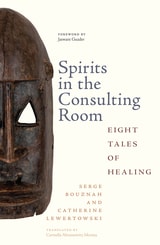
Spirits in the Consulting Room
Eight Tales of HealingSerge Bouznah
Rutgers University Press, 2023
Drawn from two decades of their experience with transcultural mediation, Spirits in the Consulting Room tells the stories of eight patients—mainly migrants—and their families. Each chapter focuses on a different patient, and Christelle, Djibril, Moncef, Alhassane, Jacinthe, Amy, Cyril, Alice, and Pierre leap off the page as distinct people with unique situations. Together, these chapters reveal how patients’ comprehension of their symptoms is shaped by their cultural background, while recounting the challenges of translating that into terms the doctors can grasp.
The book shows how trained transcultural mediators can help to redress the power imbalance between doctors and the migrants they treat, providing patients with advocates who respect the authority of their background and experiences and don’t just take the side of the medical professionals. The groundbreaking insights modeled in this book can be applied to any medical situation where doctors and patients find themselves speaking different languages.

Split Federated Learning for Secure IoT Applications
Concepts, frameworks, applications and case studiesGururaj Harinahalli Lokesh
The Institution of Engineering and Technology, 2024
Staff Development Strategies That Work!
Stories and Strategies from New LibrariansAmerican Library Association, 2009

Stamford '76
A True Story of Murder, Corruption, Race, and Feminism in the 1970sJoeAnn Hart
University of Iowa Press, 2019
Looking back at what might have happened in 1976, the author discovers a Bicentennial year steeped in recession, racism, and unrelenting violence. It was also a time of flourishing second-wave feminism, when young women were encouraged to do anything, if only they knew how. Stamford was in the midst of urban renewal, destroying historically black neighborhoods to create space for corporations escaping a bankrupt and dangerous New York City, just forty miles away. Organized crime followed the money, infiltrating Stamford at all levels. The author reveals how racism, misogyny, the economy, and corruption affected the young people’s daily lives, and helped lead Margo and Howie to their deaths.
Start a Revolution
Stop Acting Like a LibraryBen Bizzle
American Library Association, 2014
Starting, Strengthening and Managing Institutional Repositories
Jonathan A. Nabe
American Library Association, 2010
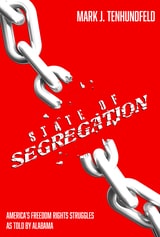
State of Segregation
America’s Freedom Rights Struggles as Told by AlabamaMark J. Tenhundfeld
University of Alabama Press, 2026
A revealing legal journey through Alabama’s civil rights battles, exposing systemic discrimination and the enduring fight for justice via landmark Supreme Court cases
State of Segregation: America’s Freedom Rights Struggles, as Told by Alabama by Mark J. Tenhundfeld offers a compelling exploration of Alabama’s civil rights and civil liberties history through the lens of thirty-two pivotal US Supreme Court cases. Each case, rooted in Alabama’s social and legal conflicts, reveals the persistent struggle to fulfill the Constitution’s promises of equal protection and due process. From early twentieth-century challenges to the Alabama Constitution of 1901 to contemporary battles over gerrymandering, Tenhundfeld traces how discrimination was embedded in the state’s institutions—and how it was contested.
State of Segregation uniquely blends legal analysis, historical narrative, and social commentary to expose the deep-rooted systems of racial, gender, and class-based discrimination in Alabama. Tenhundfeld argues that while discrimination is the most defining feature of Alabama’s past, it remains the most difficult to confront. By illuminating the legal strategies used to uphold and dismantle injustice, State of Segregation contributes to the broader understanding of how historical inequities continue to shape modern society.
Accessible to general readers and scholars alike, this work stands apart by combining Alabama history, civil rights struggles, and Supreme Court jurisprudence into a single, powerful narrative. It offers both cautionary tales about the fragility of freedom and enduring lessons for today’s social justice advocates.

Stations of the Cross
Adorno and Christian Right RadioPaul Apostolidis
Duke University Press, 2000
Public ideology and institutional tendencies clash, the author argues, in the restructuring of the welfare state, the financing of the electoral system, and the backlash against women and minorities. These frictions are nowhere more apparent than on Christian right radio. Reinvigorating the intellectual tradition of the Frankfurt School, Apostolidis shows how ideas derived from early critical theory—in particular that of Theodor W. Adorno—can illuminate the political and social dynamics of this aspect of contemporary American culture. He uses and reworks Adorno’s theories to interpret the nationally broadcast Focus on the Family, revealing how the cultural discourse of the Christian right resonates with recent structural transformations in the American political economy. Apostolidis shows that the antidote to the Christian right’s marriage of religious and market fundamentalism lies not in a reinvocation of liberal fundamentals, but rather depends on a patient cultivation of the affinities between religion’s utopian impulses and radical, democratic challenges to the present political-economic order.
Mixing critical theory with detailed analysis, Stations of the Cross provides a needed contribution to sociopolitical studies of mass movements and will attract readers in sociology, political science, philosophy, and history.