Results by title
459 books match the query 'Criminology' and 29 start with s
Scapegoats of September 11th
Hate Crimes & State Crimes in the War on TerrorWelch, Michael
Rutgers University Press, 2006
The altered American landscape, however, includes more than security measures and ID cards. The country's desperate quest for security is visible in many less obvious, yet more insidious ways. In Scapegoats of September 11th, criminologist Michael Welch argues that the "war on terror" is a political charade that delivers illusory comfort, stokes fear, and produces scapegoats used as emotional relief. Regrettably, much of the outrage that resulted from 9/11 has been targeted at those not involved in the attacks on the Pentagon or the Twin Towers. As this book explains, those people have become the scapegoats of September 11th. Welch takes on the uneasy task of sorting out the various manifestations of displaced aggression, most notably the hate crimes and state crimes that have become embarrassing hallmarks both at home and abroad.
Drawing on topics such as ethnic profiling, the Abu Ghraib scandal, Guantanamo Bay, and the controversial Patriot Act, Welch looks at the significance of knowledge, language, and emotion in a post-9/11 world. In the face of popular and political cheerleading in the war on terror, this book presents a careful and sober assessment, reminding us that sound counterterrorism policies must rise above, rather than participate in, the propagation of bigotry and victimization.
School Zone
A Problem Analysis of Student Offending and VictimizationPamela Wilcox, Graham C. Ousey, and Marie Skubak Tillyer
Temple University Press, 2022
Schools should be safe—but they are not always safe for everybody. Authors Pamela Wilcox, Graham Ousey, and Marie Skubak Tillyer studied crime among students located across diverse middle- and high-school settings to investigate why some students engage in delinquency—but others do not—and why some students are more prone to victimization. School Zone focuses on the three key interactional elements—context, victims, and offenders—to understand and explain the impact of common crimes such as theft, weapon carrying, drug possession and the verbal, physical, and sexual harassment of classmates.
The authors also consider how individual students and schools respond to crime and threats. They analyze the variables that schools can control in planning and practice that explain why some schools have higher crime rates. School Zone uses empirical studies to provide a comprehensive understanding of the patterns and causes of variation in individual- and aggregate-level school-based offending and victimization experiences while also addressing the adequacy of wide-ranging criminological explanations and crime prevention policies.
In their conclusion, the authors assess the extent to which currently popular strategies of school crime prevention align with what they have discovered through their problem-analysis framework and scientific understandings of student offending and victimization.
Schools Under Surveillance
Cultures of Control in Public EducationMonahan, Torin
Rutgers University Press, 2009
Screening Trafficking
Prudent and PerilousYana Hashamova
Central European University Press, 2018
Screwing the System and Making it Work
Juvenile Justice in the No-Fault SocietyMark D. Jacobs
University of Chicago Press, 1990
Second Wounds
Victims’ Rights and the Media in the U.S.Carrie A. Rentschler
Duke University Press, 2011

Secret Manoeuvres in the Dark
Corporate and Police Spying on ActivistsEveline Lubbers
Pluto Press, 2012
The exposure of undercover policeman Mark Kennedy in the eco-activist movement revealed how the state monitors and undermines political activism. This book shows the other grave threat to our political freedoms - undercover activities by corporations.
Secret Manoeuvres in the Dark documents how corporations are halting legitimate action and investigation by activists. Using exclusive access to previously confidential sources, Eveline Lubbers shows how companies such as Nestlé, Shell and McDonalds use covert methods to evade accountability. She argues that corporate intelligence gathering has shifted from being reactive to pro-active, with important implications for democracy itself.
Secret Manoeuvres in the Dark will be vital reading for activists, investigative and citizen journalists, and all who care about freedom and democracy in the 21st century.
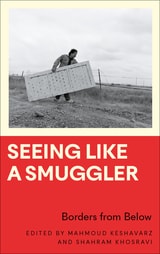
Seeing Like a Smuggler
Borders from BelowMahmoud Keshavarz and Shahram Khosravi
Pluto Press, 2022
Stories of smuggling as acts of resistance and decolonization.
'This conceptually vivid book refreshes our vision' - Ruth Wilson Gilmore
The word smuggler often unleashes a simplified, negative image painted by the media and the authorities. Such state-centric perspectives hide many social, political, and economic relations generated by smuggling. This book looks at the practice through the eyes of the smugglers, revealing how their work can be productive, subversive, and deeply sociopolitical.
By tracing the illegalized movement of people and goods across borders, Seeing Like a Smuggler shows smuggling as a contradiction within the nation-state system, and in a dialectical relation with the national order of things. It raises questions about how smuggling engages and unsettles the ethics, materialities, visualities, histories, and the colonial power relations that form borders and bordering.
Covering a wide spectrum of approaches from personal reflections and ethnographies to historical accounts, cultural analysis, and visual essays, the book spans the globe from Colombia to Ethiopia, Singapore to Guatemala, Afghanistan to Zimbabwe, and from Kurdistan to Bangladesh, to show how people deal with global inequalities and the restrictions of poverty and immobility.
Sentencing without Guidelines
Rhys Hester
Temple University Press, 2024
Sentencing without Guidelines is Rhys Hester’s deep dive into how South Carolina, which never passed sentencing guideline legislation, nonetheless created meaningful punishment reform. It achieved uniformity in sentencing with a traveling circuit of judges, informal norms among judges, and the unique phenomenon of the “Plea Judge” to manage cases.
Hester examines how prior convictions, race, and geographical differences impact sentences to explain why individuals get the criminal sentences they do. He also explores how legal reform mechanisms can influence punishment goals and policy. Sentencing without Guidelines shows the benefits and drawbacks South Carolina experienced as it met sentencing reform goals. These lessons can be translated into policy for other jurisdictions.
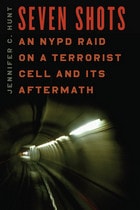
Seven Shots
An NYPD Raid on a Terrorist Cell and Its AftermathJennifer C. Hunt
University of Chicago Press, 2010
On July 31, 1997, a six-man Emergency Service team from the NYPD raided a terrorist cell in Brooklyn and narrowly prevented a suicide bombing of the New York subway that would have cost hundreds, possibly thousands of lives.
Seven Shots tells the dramatic story of that raid, the painstaking police work involved, and its paradoxical aftermath, which drew the officers into a conflict with other rank-and-file police and publicity-hungry top brass. Jennifer C. Hunt draws on her personal knowledge of the NYPD and a network of police contacts extending from cop to four-star chief, to trace the experience of three officers on the Emergency Service entry team and the two bomb squad detectives who dismantled the live device. She follows their lives for five years, from that near-fatal day in 1997, through their encounters inside the brutal world of departmental politics, and on to 9/11, when they once again put their lives at risk in the fight against terrorism, racing inside the burning towers and sorting through the ash, debris, and body parts. Throughout this fast paced narrative, Hunt maintains a strikingly fine-grained, street-level view, allowing us to understand the cops on their own terms—and often in their own words. The result is a compelling insider’s picture of the human beings who work in two elite units in the NYPD and the moral and physical danger and courage involved.
As gripping as an Ed McBain novel—and just as steeped in New York cop culture and personalities—Seven Shots takes readers on an unforgettable journey behind the shield and into the hearts of New York City police.
Sex Offenders, Stigma, and Social Control
Rickard, Diana
Rutgers University Press, 2016
Shattered Justice
Crime Victims' Experiences with Wrongful Convictions and ExonerationsKimberly J. Cook
Rutgers University Press, 2022

Social Control in Europe
Volume 1, 1500–1800Herman Roodenburg and Pieter Spierenburg
The Ohio State University Press, 2004

Social Control in Europe
Volume 2, 1800–2000Clive Emsley, Eric Johnson, and Pieter Spierenburg
The Ohio State University Press, 2004
The essays in this volume explore the various means by which communities in nineteenth- and twentieth-century Europe were subjected to forms of discipline, noting how the communities themselves generated their own forms of internal control. In addition, the essays discuss various policing institutions, exploring in particular the question of how liberal and totalitarian regimes differed in their styles of control, repression, and surveillance.
Social Control of the Drinking Driver
Edited by Michael D. Laurence, John R. Snortum, and Franklin E. Zimring
University of Chicago Press, 1988
Social Control of the Drinking Driver lays the groundwork for a much needed integration of methods, principles, and priorities. Law, criminology, biology, psychology, sociology, economics, public policy—the disciplines concerned with the problem of drinking and driving are many and varied, and research crosses national boundaries as well. It is not surprising, therefore, that an integrated general perspective has not yet emerged. Drawing on fourteen specialists and surveying the situations in nine countries, this book presents a comprehensive statement of current knowledge about drunken driving and its control.
Social Justice
Theories, Issues, and MovementsCapeheart, Loretta
Rutgers University Press, 2007
In Social Justice: Theories, Issues, and Movements, Loretta Capeheart and Dragan Milovanovic respond to the need for a comprehensive introduction to this topic. The authors argue that common conceptions of criminal justice--which accept, for the most part, a politically established definition of crime--are too limited. Instead, they show the relevancy of history, political economy, culture, critique, and cross-cultural engagement to the advancement of justice.
Drawing on contemporary issues ranging from globalization to the environment, this essential textbook--ideal for course use--encourages practitioners, reformists, activists, and scholars to question the limits of the law in its present state in order to develop a fairer system at the local, national, and global levels.
Social Justice
Theories, Issues, and Movements (Revised and Expanded Edition)Loretta Capeheart
Rutgers University Press, 2020
Theories of social justice are presented in an accessible fashion to encourage engagement of students, activists, and scholars with these important lines of inquiry. Issues are analyzed utilizing various theories for furthering engagement in possibilities. Struggles for justice -- from legal cases to on the ground movements -- are presented for historical context and to inform the way forward.
Society And Legal Change 2Nd Ed
Alan Watson, foreword by Paul Finkelman
Temple University Press, 2001
In this first U.S. edition of a classic work of comparative legal scholarship, Alan Watson argues that law fails to keep step with social change, even when that change is massive. To illustrate the ways in which law is dysfunctional, he draws on the two most innovative western systems, of Rome and England, to show that harmful rules continue for centuries. To make his case, he uses examples where, in the main, "the law benefits no recognizable group or class within the society (except possibly lawyers who benefit from confusion) and is generally inconvenient or positively harmful to society as a whole or to large or powerful groups within the society."
Widely respected for his "fearless challenge of the accepted or dominant view and his own encyclopedic knowledge of Roman law" (The Encyclopedia of Historians and Historical Writing), Watson considers the development of law in global terms and across the centuries. His arguments centering on how societies borrow from other legal systems and the continuity of legal systems are particularly instructive for those interested in legal development and the development of a common law for the European Union.
postamble();
Soft Corruption
How Unethical Conduct Undermines Good Government and What To Do About ItSchluter, William E
Rutgers University Press, 2017
In this searing personal narrative, the former state senator recounts his fight to expose and reform these acts of government misconduct. Not afraid to cite specific cases of soft corruption in New Jersey politics, he paints a vivid portrait of public servants who care more about political power and personal gain than the public good. By recounting events that he witnessed firsthand in the Garden State, he provides dramatic illustrations of ills that afflict American politics nationwide.
As he identifies five main forms of soft corruption, Schluter diagnoses the state government’s ethical malaise, and offers concrete policy suggestions for how it might be cured. Not simply a dive through the muck of New Jersey politics, Soft Corruption is an important first step to reforming our nation’s political system, a book that will inspire readers to demand that our elected officials can and must do better.
Visit: www.softcorruption.com (http://www.softcorruption.com)
Solitary Confinement
Social Death and Its AfterlivesLisa Guenther
University of Minnesota Press, 2013
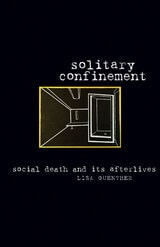
Prolonged solitary confinement has become a widespread and standard practice in U.S. prisons—even though it consistently drives healthy prisoners insane, makes the mentally ill sicker, and, according to the testimony of prisoners, threatens to reduce life to a living death. In this profoundly important and original book, Lisa Guenther examines the death-in-life experience of solitary confinement in America from the early nineteenth century to today’s supermax prisons. Documenting how solitary confinement undermines prisoners’ sense of identity and their ability to understand the world, Guenther demonstrates the real effects of forcibly isolating a person for weeks, months, or years.
Drawing on the testimony of prisoners and the work of philosophers and social activists from Edmund Husserl and Maurice Merleau-Ponty to Frantz Fanon and Angela Davis, the author defines solitary confinement as a kind of social death. It argues that isolation exposes the relational structure of being by showing what happens when that structure is abused—when prisoners are deprived of the concrete relations with others on which our existence as sense-making creatures depends. Solitary confinement is beyond a form of racial or political violence; it is an assault on being.
A searing and unforgettable indictment, Solitary Confinement reveals what the devastation wrought by the torture of solitary confinement tells us about what it means to be human—and why humanity is so often destroyed when we separate prisoners from all other people.
State Crime on the Margins of Empire
Rio Tinto, the War on Bougainville and Resistance to MiningKristian Lasslett
Pluto Press, 2014
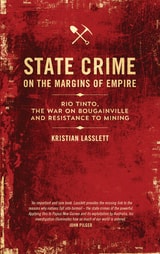
This book offers a pioneering window into the elusive workings of state-corporate crime within the mining industry. It follows a campaign of resistance organised by indigenous activists on the island of Bougainville, who struggled to close a Rio Tinto owned copper mine, and investigates the subsequent state-corporate response, which led to the shocking loss of some 10,000 lives.
Drawing on internal records and interviews with senior officials, Kristian Lasslett examines how an articulation of capitalist growth mediated through patrimonial politics, imperial state-power, large-scale mining, and clan-based, rural society, prompted an ostensibly ‘responsible’ corporate citizen, and liberal state actors, to organise a counterinsurgency campaign punctuated with gross human rights abuses.
State Crime on the Margins of Empire represents a unique intervention rooted in a classical Marxist tradition that challenges positivist streams of criminological scholarship, in order to illuminate with greater detail the historical forces faced by communities in the global south caught in the increasingly violent dynamics of the extractive industries.
State Crime
Current PerspectivesRothe, Dawn
Rutgers University Press, 2010
State-Corporate Crime
Wrongdoing at the Intersection of Business and GovernmentMichalowski, Raymond J
Rutgers University Press, 2006
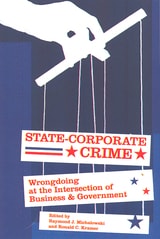
Despite growing attention to crimes by those in positions of trust, however, violations in business and similar wrongdoing in government are still often treated as fundamentally separate problems. In State-Corporate Crime, Raymond J. Michalowski and Ronald C. Kramer bring together fifteen essays to show that those in positions of political and economic power frequently operate in collaboration, and are often all too willing to sacrifice the well-being of the many for the private profit and political advantage of the few.
Drawing on case studies including the explosion of the space shuttle Challenger, Ford Explorer rollovers, the crash of Valujet flight 592, nuclear weapons production, and war profiteering, the essays bear frank witness to those who have suffered, those who have died, and those who have contributed to the greatest human and environmental devastations of our time. This book is a much needed reminder that the most serious threats to public health, security, and safety are not those petty crimes that appear nightly on local news broadcasts, but rather are those that result from corruption among the wealthiest and most powerful members of society.
Stateville
The Penitentiary in Mass SocietyJames B. Jacobs
University of Chicago Press, 1978
Jacobs applies Edward Shils's interpretation of the dynamics of mass society in order to explain the dramatic events of the past quarter century that have permanently altered Stateville's structure. With the extension of civil rights to previously marginal groups such as racial minorities, the poor, and, ultimately, the incarcerated, prisons have moved from society's periphery toward its center. Accordingly Stateville's control mechanisms became less authoritarian and more legalistic and bureaucratic. As prisoners' rights increased, the preogatives of the staff were sharply curtailed. By the early 1970s the administration proved incapable of dealing with politicized gangs, proliferating interest groups, unionized guards, and interventionist courts.
In addition to extensive archival research, Jacobs spent many months freely interacting with the prisoners, guards, and administrators at Stateville. His lucid presentation of Stateville's troubled history will provide fascinating reading for a wide audience of concerned readers.
". . . [an] impressive study of a complex social system."—Isidore Silver, Library Journal
Stealing from the Gods
Temple Robbery in the Roman ImaginationIsabel K. Köster
University of Michigan Press, 2026
Ancient authors including Cicero, Caesar, Livy, Appian, and Pausanias present isolated, grotesque individuals whose actions have no bearing on the conduct of Romans as a whole, rendering temple robbery not a matter of collective responsibility, but of individual moral failure. By revealing how narratives of temple robbery are constructed from a literary perspective and how they inform discourses about military conquest and imperial rule, Isabel K. Köster shines a new light on how the Romans coped with the more pernicious aspects of their empire.
Street Woman
Eleanor Miller
Temple University Press, 1987
Surveillance in the Time of Insecurity
Monahan, Torin
Rutgers University Press, 2010
Surveillance in the Time of Insecurity fuses advanced theoretical accounts of state power and neoliberalism with original research from the social settings in which insecurity dynamics play out in the new century. Torin Monahan explores the counterterrorism-themed show 24, Rapture fiction, traffic control centers, security conferences, public housing, and gated communities, and examines how each manifests complex relationships of inequality, insecurity, and surveillance. Alleviating insecurity requires that we confront its mythic dimensions, the politics inherent in new configurations of security provision, and the structural obstacles to achieving equality in societies.
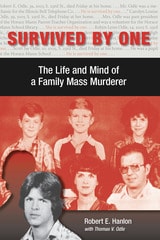
Survived by One
The Life and Mind of a Family Mass MurdererRobert E. Hanlon, PhD with Thomas V. Odle
Southern Illinois University Press, 2013
On November 8, 1985, 18-year-old Tom Odle brutally murdered his parents and three siblings in the small southern Illinois town of Mount Vernon, sending shockwaves throughout the nation. The murder of the Odle family remains one of the most horrific family mass murders in U.S. history. Odle was sentenced to death and, after seventeen years on death row, expected a lethal injection to end his life. However, Illinois governor George Ryan’s moratorium on the death penalty in 2000, and later commutation of all death sentences in 2003, changed Odle’s sentence to natural life.
The commutation of his death sentence was an epiphany for Odle. Prior to the commutation of his death sentence, Odle lived in denial, repressing any feelings about his family and his horrible crime. Following the commutation and the removal of the weight of eventual execution associated with his death sentence, he was confronted with an unfamiliar reality. A future. As a result, he realized that he needed to understand why he murdered his family. He reached out to Dr. Robert Hanlon, a neuropsychologist who had examined him in the past. Dr. Hanlon engaged Odle in a therapeutic process of introspection and self-reflection, which became the basis of their collaboration on this book.
Hanlon tells a gripping story of Odle’s life as an abused child, the life experiences that formed his personality, and his tragic homicidal escalation to mass murder, seamlessly weaving into the narrative Odle’s unadorned reflections of his childhood, finding a new family on death row, and his belief in the powers of redemption.
As our nation attempts to understand the continual mass murders occurring in the U.S., Survived by One sheds some light on the psychological aspects of why and how such acts of extreme carnage may occur. However, Survived by One offers a never-been-told perspective from the mass murderer himself, as he searches for the answers concurrently being asked by the nation and the world.
Suspect Communities
Anti-Muslim Racism and the Domestic War on TerrorNicole Nguyen
University of Minnesota Press, 2019
The first major qualitative study of “countering violent extremism” in key U.S. cities
Suspect Communities is a powerful reassessment of the U.S. government’s “countering violent extremism” (CVE) program that has arisen in major cities across the United States since 2011. Drawing on an interpretive qualitative study, it examines how the concept behind CVEaimed at combating homegrown terrorism by engaging Muslim community members, teachers, and religious leaders in monitoring and reporting on young peoplehas been operationalized through the everyday work of CVE actors, from high-level national security workers to local community members, with significant penalties for the communities themselves.
Nicole Nguyen argues that studying CVE provides insight into how the drive to bring liberal reforms to contemporary security regimes through “community-driven” and “ideologically ecumenical” programming has in fact further institutionalized anti-Muslim racism in the United States. She forcefully contends that the U.S. security state has designed CVE to legitimize and shore up support for the very institutions that historically have criminalized, demonized, and dehumanized communities of color, while appearing to learn from and attenuate past practices of coercive policing, racial profiling, and political exclusion.
By undertaking this analysis, Suspect Communities offers a vital window into the inner workings of the U.S. security state and the devastating impact of CVE on local communities.