Results by title
2728 books match the query 'Education' and 161 start with s
SHARED DIFFERENCES
MULTICULTURAL MEDIA AND PRACTICAL PEDAGOGYEdited by Diane Carson and Lester Friedman
University of Illinois Press, 1995
topics. Rather than offering a Band-Aid approach to curricular offerings,
the contributors demonstrate inclusive, innovative ways to integrate multicultural
issues and media into existing courses.
In "Struggling for America's Soul: A Search for Some Common Ground
in the Multicultural Debate," Lester Friedman leads off the volume
with an analysis of the value and necessity of multicultural approaches
for today's students and for society at large. The essays that follow
provide a wealth of material for organizing courses, including week-by-week
syllabi detailing specific writing assignments, bibliographical information
on readings, and sources for films and videos. The contributors, who teach
at institutions ranging from community colleges through major research
universities, describe their experiences teaching students of various
ages, backgrounds, and interests.
Shared Differences will be of value to all who use media as a
tool in their teaching, whether in history, literature, or the social
sciences, as well as to those who teach film and video production.
SLIFE
What Every Teacher Needs to KnowAndrea DeCapua
University of Michigan Press, 2019
SOFLA®
The Synchronous Online Flipped Learning ApproachHelaine W. Marshall and Ilka Kostka
University of Michigan Press, 2026
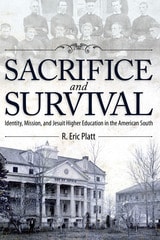
Sacrifice and Survival
Identity, Mission, and Jesuit Higher Education in the American SouthR. Eric Platt
University of Alabama Press, 2014
R. Eric Platt examines in Sacrifice and Survival the history and evolution of Jesuit higher education in the American South and hypothesizes that the identity and mission of southern Jesuit colleges and universities may have functioned as catalytic concepts that affected the “town and gown” relationships between the institutions and their host communities in ways that influenced whether they failed or adapted to survive.
The Catholic religious order known as the Society of Jesus (Jesuits) manages a global network of colleges and universities with a distinct Catholic identity and mission. Despite this immense educational system, several Jesuit institutions have closed throughout the course of the order’s existence. Societal pressures, external perceptions or misperceptions, unbalanced curricular structures rooted in liberal arts, and administrators’ slow acceptance of courses related to practical job seeking may all influence religious-affiliated educational institutions. The religious identity and mission of these colleges and universities are fundamentals that influence their interaction with external environs and contribute to their survival or failure.
Platt traces the roots of Jesuit education from the rise of Ignatius Loyola in the mid-sixteenth century through the European development of the Society of Jesus, Jesuit educational identity and mission, the migration of Jesuits to colonial New Orleans, the expulsion of Jesuits by Papal mandate, the reorganization of Jesuit education, their attempt to establish a network of educational institutions across the South, and the final closure of all but two southern Jesuit colleges and a set of high schools.
Sacrifice and Survival explores the implications of the Galveston Hurricane of 1900, yellow fever, Georgia floods, devastating fires, the Civil War, the expansion of New Orleans due to the 1884 Cotton Centennial Exposition, and ties between town and gown, as well as anti-Catholic/anti-Jesuit sentiment as the Society of Jesus pushed forward to create a system of southern institutions. Ultimately, institutional identity and mission critically impacted the survival of Jesuit education in the American South.

Samskrta-Subodhini
A Sanskrit PrimerMadhav M. Deshpande
University of Michigan Press, 1999

Saving Alma Mater
A Rescue Plan for America's Public UniversitiesJames C. Garland
University of Chicago Press, 2009
America’s public universities educate 80% of our nation’s college students. But in the wake of rising demands on state treasuries, changing demographics, growing income inequality, and legislative indifference, many of these institutions have fallen into decline. Tuition costs have skyrocketed, class sizes have gone up, the number of courses offered has gone down, and the overall quality of education has decreased significantly.
Here James C. Garland draws on more than thirty years of experience as a professor, administrator, and university president to argue that a new compact between state government and public universities is needed to make these schools more affordable and financially secure. Saving Alma Mater challenges a change-resistant culture in academia that places too low a premium on efficiency and productivity. Seeing a crisis of campus leadership, Garland takes state legislators to task for perpetuating the decay of their public university systems and calls for reforms in the way university presidents and governing boards are selected. He concludes that the era is long past when state appropriations can enable public universities to keep their fees low and affordable. Saving Alma Mater thus calls for the partial deregulation of public universities and a phase-out of their state appropriations. Garland’s plan would tie university revenues to their performance and exploit the competitive pressures of the academic marketplace to control costs, rein in tuition, and make schools more responsive to student needs.
A much-needed blueprint for reform based on Garland’s real-life successes as the head of Miami University of Ohio, Saving Alma Mater will be essential for anyone concerned with the costs and quality of higher education in America today.

Saving the World in Five Hundred Words
Perspectives on Nationally Competitive ScholarshipsSuzanne McCray
University of Arkansas Press, 2024
The ninth collection of essays produced by the National Association of Fellowships Advisors, Saving the World in Five Hundred Words offers a unique set of resources for advisors negotiating the complex world of nationally competitive awards. The essays here focus on three main aspects of fellowships advising—serving students, ensuring access, and developing the profession—and range from practical advice on how to assist students with applications, to recommendations for recruiting a broad range of students more effectively, to innovative teaching and advising practices. This volume will prove invaluable to anyone who advises students through this sometimes daunting application process.

Scarlet and Black, Volume Three
Making Black Lives Matter at Rutgers, 1945-2020Miya Carey
Rutgers University Press, 2021

Scarlet and Black, Volume Two
Constructing Race and Gender at Rutgers, 1865-1945Kendra Boyd
Rutgers University Press, 2020
To learn more about the work of the Committee on Enslaved and Disenfranchised Population in Rutgers History, visit the project's website at http://scarletandblack.rutgers.edu
Scarlet and Black
Slavery and Dispossession in Rutgers HistoryFuentes, Marisa J
Rutgers University Press, 2016
Scarlet and Black documents the history of Rutgers’s connection to slavery, which was neither casual nor accidental—nor unusual. Like most early American colleges, Rutgers depended on slaves to build its campuses and serve its students and faculty; it depended on the sale of black people to fund its very existence. Men like John Henry Livingston, (Rutgers president from 1810–1824), the Reverend Philip Milledoler, (president of Rutgers from 1824–1840), Henry Rutgers, (trustee after whom the college is named), and Theodore Frelinghuysen, (Rutgers’s seventh president), were among the most ardent anti-abolitionists in the mid-Atlantic.
Scarlet and black are the colors Rutgers University uses to represent itself to the nation and world. They are the colors the athletes compete in, the graduates and administrators wear on celebratory occasions, and the colors that distinguish Rutgers from every other university in the United States. This book, however, uses these colors to signify something else: the blood that was spilled on the banks of the Raritan River by those dispossessed of their land and the bodies that labored unpaid and in bondage so that Rutgers could be built and sustained. The contributors to this volume offer this history as a usable one—not to tear down or weaken this very renowned, robust, and growing institution—but to strengthen it and help direct its course for the future.
The work of the Committee on Enslaved and Disenfranchised Population in Rutgers History.
Visit the project's website at http://scarletandblack.rutgers.edu
School Choice Tradeoffs
Liberty, Equity, and DiversityBy R. Kenneth Godwin and Frank R. Kemerer
University of Texas Press, 2002
Educational policy in a democracy goes beyond teaching literacy and numeracy. It also supports teaching moral reasoning, political tolerance, respect for diversity, and citizenship. Education policy should encourage liberty and equality of opportunity, hold educational institutions accountable, and be efficient. School Choice Tradeoffs examines the tradeoffs among these goals when government affords parents the means to select the schools their children attend.
Godwin and Kemerer compare current policy that uses family residence to assign students to schools with alternative policies that range from expanding public choice options to school vouchers. They identify the benefits and costs of each policy approach through a review of past empirical literature, the presentation of new empirical work, and legal and philosophic analysis.
The authors offer a balanced perspective that goes beyond rhetoric and ideology to offer policymakers and the public insight into the complex tradeoffs that are inherent in the design and implementation of school choice policies. While all policies create winners and losers, the key questions concern who these individuals are and how much they gain or lose. By placing school choice within a broader context, this book will stimulate reflective thought in all readers.
School Choice and the Future of American Democracy
Scott Franklin Abernathy
University of Michigan Press, 2005
"Scott Abernathy takes up big questions and provides answers grounded in the complex reality of policy and politics. School Choice and the Future of American Democracy is a book written for those who understand that the world does not fit the simple explanations too often put forward."
--Clarence Stone, Professor Emeritus, University of Maryland, and Research Professor, George Washington University
"Will school choice revive or eviscerate democratic processes and institutions? Will it narrow or exacerbate the range of educational inequities? This book takes several differently angled slices into these questions and draws intriguing answers."
--Jeffrey R. Henig, Teachers College, Columbia University, and author of Rethinking School Choice: Limits of the Market Metaphor
"Through extensive research and refreshingly impartial analysis, Scott Abernathy probes how the use of market principles to reform public schools affects democratic citizenship. Treating citizens first and foremost as customers, he finds, threatens civic engagement and the well-being of schools, especially in the nation's neediest communities. This thoughtful and balanced appraisal is must-reading for those concerned about the future of American education and democracy."
--Suzanne Mettler, Alumni Associate Professor, Syracuse University, and author of Soldiers to Citizens: The G.I. Bill and the Making of the Greatest Generation
Scott Franklin Abernathy is Assistant Professor of Political Science, University of Minnesota

School Librarian’s Career Planner
Hilda K. Weisburg
American Library Association, 2013

School Principal
Managing in PublicDan C. Lortie
University of Chicago Press, 2009
When we think about school principals, most of us imagine a figure of vague, yet intimidating authority—for an elementary school student, being sent to the principal’s office is roughly on par with a trip to Orwell’s Room 101. But with School Principal, Dan C. Lortie aims to change that. Much as he did for teachers with his groundbreaking book Schoolteacher, Lortie offers here an intensive and detailed look at principals, painting a compelling portrait of what they do, how they do it, and why.
Lortie begins with a brief history of the job before turning to the daily work of a principal. These men and women, he finds, stand at the center of a constellation of competing interests around and within the school. School district officials, teachers, parents, and students all have needs and demands that frequently clash, and it is the principal’s job to manage these conflicting expectations to best serve the public. Unsurprisingly then, Lortie records his subjects’ professional dissatisfactions, but he also vividly depicts the pleasures of their work and the pride they take in their accomplishments. Finally, School Principal offers a glimpse of the future with an analysis of current issues and trends in education, including the increasing presence of women in the role and the effects of widespread testing mandated by the government.
Lortie’s scope is both broad and deep, offering an eminently useful range of perspectives on his subject. From the day-to-day toil to the long-term course of an entire career, from finding out just what goes on inside that office to mapping out the larger social and organizational context of the job, School Principal is a truly comprehensive account of a little-understood profession.

School Talk
Gender and Adolescent CultureEder, Donna
Rutgers University Press, 1995
KACTIS revealed many social and ethical issues, launching Eder into more research, this time learning from Navajo and Kenyan storytellers how children can understand ethics and diversity through practices used in oral cultures. She borrowed non-Western concepts of learning as she crafted a service-learning project, Storytelling as Reflecting Time (START), which became the basis of a service-learning course, Knowledge and Community, taught to sociology majors and honor students.
The approach is so effective that Eder cannot accommodate all of the requests she receives for START, which is conducted both in the classroom and through extracurricular activities throughout Bloomington. She works with the Hutton Philanthropic Initiative, where students use storytelling to interact with community children in a meaningful way. Students in her Community Building Across Generations course take their storytelling to a nursing home and a program for children whose families are escaping domestic violence.
Eder also mentors other instructors on campus who are interested in service-learning.
School Zone
A Problem Analysis of Student Offending and VictimizationPamela Wilcox, Graham C. Ousey, and Marie Skubak Tillyer
Temple University Press, 2022
Schools should be safe—but they are not always safe for everybody. Authors Pamela Wilcox, Graham Ousey, and Marie Skubak Tillyer studied crime among students located across diverse middle- and high-school settings to investigate why some students engage in delinquency—but others do not—and why some students are more prone to victimization. School Zone focuses on the three key interactional elements—context, victims, and offenders—to understand and explain the impact of common crimes such as theft, weapon carrying, drug possession and the verbal, physical, and sexual harassment of classmates.
The authors also consider how individual students and schools respond to crime and threats. They analyze the variables that schools can control in planning and practice that explain why some schools have higher crime rates. School Zone uses empirical studies to provide a comprehensive understanding of the patterns and causes of variation in individual- and aggregate-level school-based offending and victimization experiences while also addressing the adequacy of wide-ranging criminological explanations and crime prevention policies.
In their conclusion, the authors assess the extent to which currently popular strategies of school crime prevention align with what they have discovered through their problem-analysis framework and scientific understandings of student offending and victimization.

School for Cool
The Academic Jazz Program and the Paradox of Institutionalized CreativityEitan Y. Wilf
University of Chicago Press, 2014
Few art forms epitomize the anti-institutional image more than jazz, but it’s precisely at the academy where jazz is now flourishing. This shift has introduced numerous challenges and contradictions to the music’s practitioners. Solos are transcribed, technique is standardized, and the whole endeavor is plastered with the label “high art”—a far cry from its freewheeling days. Wilf shows how students, educators, and administrators have attempted to meet these challenges with an inventive spirit and a robust drive to preserve—and foster—what they consider to be jazz’s central attributes: its charisma and unexpectedness. He also highlights the unintended consequences of their efforts to do so. Ultimately, he argues, the gap between creative practice and institutionalized schooling, although real, is often the product of our efforts to close it.
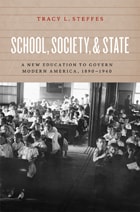
School, Society, and State
A New Education to Govern Modern America, 1890-1940Tracy L. Steffes
University of Chicago Press, 2012
“Democracy has to be born anew every generation, and education is its midwife,” wrote John Dewey in his classic work The School and Society. In School, Society, and State, Tracy Steffes places that idea at the center of her exploration of the connections between public school reform in the early twentieth century and American political development from 1890 to 1940.
American public schooling, Steffes shows, was not merely another reform project of the Progressive Era, but a central one. She addresses why Americans invested in public education and explains how an array of reformers subtly transformed schooling into a tool of social governance to address the consequences of industrialization and urbanization. By extending the reach of schools, broadening their mandate, and expanding their authority over the well-being of children, the state assumed a defining role in the education—and in the lives—of American families.
In School, Society, and State, Steffes returns the state to the study of the history of education and brings the schools back into our discussion of state power during a pivotal moment in American political development.
School, State, and Society
The Growth of Elementary Schooling in Nineteenth-Century France--A Quantitative AnalysisRaymond Grew and Patrick J. Harrigan
University of Michigan Press, 1992

Schoolbook Nation
Conflicts over American History Textbooks from the Civil War to the PresentJoseph Moreau
University of Michigan Press, 2004
-Gary B. Nash, Director of the National Center for History in the Schools
Taking Frances FitzGerald's textbook study America Revised as a point of departure, Joseph Moreau in Schoolbook Nation challenges FitzGerald's premise that the 1960s were the beginning of the end of the glory days of American history education.
Moreau recounts how in the late twentieth century, cultural commentators such as historian Arthur Schlesinger Jr. and politician Newt Gingrich preached that a new identity crisis had shaken American history in the sixties, and that the grand unified view of our past had given way to various interest groups, who dismantled the old national narrative while demanding a more "inclusive" curriculum for their children.
Moreau discovered, however, that American history, while grand, has never been unified. Delving into more than 100 history books from the last 150 years, the author reveals that the efforts of pressure groups to influence the history curriculum are nearly as old as the mustiest textbook. "For those who would influence textbooks and teaching-Protestant elites in the 1870s, Irish-Americans in the 1920s, and conservative politicians today-the sky has always been falling," according to Moreau.
Schoolbook Nation offers a history lesson of its own: when the story of the past is written or rewritten, truth is often a victim. With its comprehensive treatment of the subjects of honesty and politics in the teaching of history, this is an essential book on the side of truth in a complex debate.
Schooled and Sorted
How Educational Categories Create InequalityThurston Domina
Russell Sage Foundation, 2023
Some educational categories have broadly egalitarian consequences. Indeed, Domina, Penner, and Penner argue that when societies enroll young people in school, making them students, they mark them as individuals who are worthy of rights. But other educational categories reinforce powerful social categories—including race, gender, and class—and ultimately reproduce social and economic inequality in society. Elite colleges, tracked high schools, and elementary school gifted programs provide not only different educational experiences, but also create merit and inequality by sorting students into categories that are defined by the students who are excluded.
Schooled & Sorted highlights that many of the decisions that define educational categories occur in school-based committee meetings and other relatively local settings. The local nature of these decisions provides many opportunities to define educational categories differently, and for school communities to bring about change.
Schooled & Sorted is an illuminating investigation into the ways sorting within schools translates into inequality in the larger world. While some educational categorization may be unavoidable, the authors suggest ways to build a more equitable system—and thus a more equitable society.
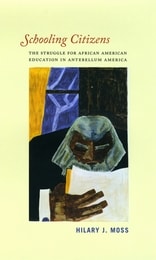
Schooling Citizens
The Struggle for African American Education in Antebellum AmericaHilary J. Moss
University of Chicago Press, 2009
While white residents of antebellum Boston and New Haven forcefully opposed the education of black residents, their counterparts in slaveholding Baltimore did little to resist the establishment of African American schools. Such discrepancies, Hilary Moss argues, suggest that white opposition to black education was not a foregone conclusion. Through the comparative lenses of these three cities, she shows why opposition erupted where it did across the United States during the same period that gave rise to public education.
As common schooling emerged in the 1830s, providing white children of all classes and ethnicities with the opportunity to become full-fledged citizens, it redefined citizenship as synonymous with whiteness. This link between school and American identity, Moss argues, increased white hostility to black education at the same time that it spurred African Americans to demand public schooling as a means of securing status as full and equal members of society. Shedding new light on the efforts of black Americans to learn independently in the face of white attempts to withhold opportunity, Schooling Citizens narrates a previously untold chapter in the thorny history of America’s educational inequality.
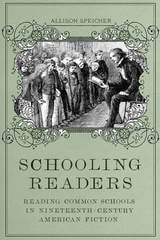
Schooling Readers
Reading Common Schools in Nineteenth-Century American FictionAllison Speicher
University of Alabama Press, 2016
Despite hailing from different regions with diverse histories and cultures, authors in all parts of the US produced remarkably similar school fictions. These stories, rather than offering idealized depictions of earnest schoolchildren in humble, rough-hewn schoolhouses, expose common schools as sites of both community bonding and social strife. These stories, Speicher shows, reflect surprisingly contemporary problems like school violence and apprehensions about assessments.
In four insightful sections, Speicher illuminates the plotlines that define the common school narrative: school exhibitions, in which common schools were opened to the public for a day of student performances; romances between teachers and students; violence against teachers; and teachers adopting their students. She offers rich examples from one hundred and thirty school stories by well-known authors such as Mark Twain, Bret Harte, Catharine Maria Sedgwick, and Edward Eggleston, as well as by educational reform pioneers such as C. W. Bardeen and long-forgotten contributors to nineteenth-century magazines.
By reading these fictions alongside the discourse of reformers like Horace Mann, Speicher illustrates the utility of fiction for uncovering the diverse reactions nineteenth-century Americans had to the expansion of public education as well as the role fiction played in shaping these responses. Throughout she maintains a dual focus, drawing on both literary and educational history, thereby offering much of value to those interested in either field.
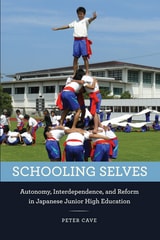
Schooling Selves
Autonomy, Interdependence, and Reform in Japanese Junior High EducationPeter Cave
University of Chicago Press, 2016
Cave examines the implementation of “relaxed education” reforms that attempted to promote individual autonomy and free thinking in Japanese classrooms. As he shows, however, these policies were eventually transformed by educators and school administrators into curricula and approaches that actually promoted social integration over individuality, an effect opposite to the reforms’ intended purpose. With vivid detail, he offers the voices of teachers, students, and parents to show what happens when national education policies run up against long-held beliefs and practices, and what their complex and conflicted interactions say about the production of self and community in education. The result is a fascinating analysis of a turbulent era in Japanese education that offers lessons for educational practitioners in any country.
Schooling Without Labels
Parents, Educators, and Inclusive EducationDouglas Biklen
Temple University Press, 1992
Douglas Biklen closely examines the experiences of six families in which children with disabilities are full participants in family life in order to understand how people who have been labeled disabled might become full participants in the other areas of society as well. He focuses on the contradictions between what some families have achieved, what they want for their children, and what society and its social policies allow. He demonstrates how the principles of inclusion that govern the lives of these families can be extended to education, community life, and other social institutions.
The parents who tell their stories here have actively sought inclusion of their children in regular schools and community settings; several have children with severe or multiple disabilities. In discussing issues such as normalization, acceptance, complete schooling, circles of friends, and community integration, these parents describe the challenge and necessity of their children's "leading regular lives."
In the series Health, Society, and Policy, edited by Sheryl Ruzek and Irving Kenneth Zola.

Schooling and Disability
Edited by Douglas P. Biklen, Dianne L. Ferguson, and Alison Ford
University of Chicago Press, 1989
Schooling and the struggle for public life
critical pedagogy in the modern ageHenry A. Giroux
University of Minnesota Press, 1988
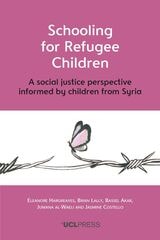
Schooling for Refugee Children
A Social Justice Perspective Informed by Children from SyriaEleanore Hargreaves, Brian Lally, Bassel Akar, Jumana Al-Waeli, and Jasmine Costello
University College London, 2024
Schooling for Refugee Children is a collaboration between five authors who explore their interactions with refugee children displaced from Syria to the Lebanese borders and London. Through a program of carefully tailored research activities, the authors analyze the children’s representations of their journeys and current circumstances, particularly focusing on questions of ongoing schooling in the face of displacement. The children’s experiences are expressed through their own words and drawings, disrupting the stereotype of children as receivers rather than empowered actors, and challenging traditional solutions for improving schooling. Throughout, the children are eloquent about their schooling in the context of displacement. Their views and illustrations depict a keen awareness of social justice issues, including the distribution of wealth, recognition of status, and representation of voice. In this way, the book brings to light important representations of some empowering experiences lived through by refugee children from Syria, as well as their thoughts on what has helped their learning and what can be done better. The children’s need for care and a sense of belonging in their schools and their new communities is given particular emphasis throughout the book, represented by one child, who simply requested, “Add some more love!”
Schooling for Refugee Children is invaluable for educators, policymakers, and anyone interested in refugee education and social justice. By centering the voices of refugee children, the book sheds light on their unique perspectives and needs, challenging conventional approaches to improving schooling for displaced populations.
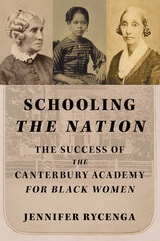
Schooling the Nation
The Success of the Canterbury Academy for Black WomenJennifer Rycenga
University of Illinois Press, 2025
Jennifer Rycenga recovers a pioneering example of antiracism and Black-white cooperation. At once an inspirational and cautionary tale, Canterbury Academy succeeded thanks to far-reaching networks, alliances, and activism that placed it within Black, women’s, and abolitionist history. Rycenga focuses on the people like Sarah Harris, the Academy’s first Black student; Maria Davis, Crandall’s Black housekeeper and her early connection to the embryonic abolitionist movement; and Crandall herself. Telling their stories, she highlights the agency of Black and white women within the currents, and as a force changing those currents, in nineteenth-century America.
Insightful and provocative, Schooling the Nation tells the forgotten story of remarkable women and a collaboration across racial and gender lines.
Schooling, Democracy, and the Quest for Wisdom
Partnerships and the Moral Dimensions of TeachingRobert V. Bullough Jr. and John R. Rosenberg
Rutgers University Press, 2018
In response to growing concern in the 1980s about the quality of public education across the United States, a tremendous amount of energy was expended by organizations such as the Holmes Group and the Carnegie Forum to organize professional development schools (PDS) or “partner schools” for teacher education. On the surface, the concept of partnering is simple; however, the practice is very costly, complex, and difficult. In Schooling, Democracy, and the Quest for Wisdom, Robert V. Bullough, Jr. and John R. Rosenberg examine the concept of partnering through various lenses and they address what they think are the major issues that need to be, but rarely are, discussed by thousands of educators in the U.S. who are involved and invested in university-public school partnerships. Ultimately, they assert that the conversation around partnering needs re-centering (most especially on the purposes of public education), refreshing, and re-theorizing.
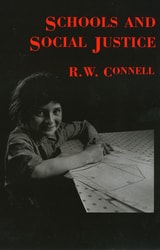
Schools & Social Justice
R. W. Connell
Temple University Press, 1993
Social justice, R.W. Connell contends, is an inextricable part of any educational system, and democratic societies should give priority to the educational needs of the disadvantaged. In this remarkable manifesto, one of education's most distinguished voices cautions that school systems dealing unjustly with their disadvantaged students degrade the quality of education for all.
The book's compelling, well-reasoned arguments call for new social policies. Drawing on research experience in the United States, Canada, Britain, and Australia, Connell demonstrates the weakness in programs that attempt merely to establish equal opportunity. He observes that scholarships, compensatory education, desegregation, and affirmative action focus on distributive justice, rather than on the nature of the education.
Curricular justice, Connell argues, is just as crucial as distributive justice. Considering race, class, and gender issues, he examines the relation between knowledge and its social content. He describes how curricular content, presentation, and means of student assessment can perpetuate social injustice. Tracing the elitist sources of various curricula, Schools and Social Justice urges reconceptualizing the curriculum from the point of view of the disadvantaged and offers examples of successful efforts to do this.
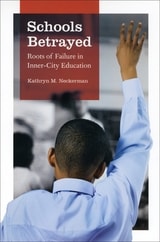
Schools Betrayed
Roots of Failure in Inner-City EducationKathryn M. Neckerman
University of Chicago Press, 2007
The problems commonly associated with inner-city schools were not nearly as pervasive a century ago, when black children in most northern cities attended school alongside white children. In Schools Betrayed, her innovative history of race and urban education, Kathryn M. Neckerman tells the story of how and why these schools came to serve black children so much worse than their white counterparts.
Focusing on Chicago public schools between 1900 and 1960, Neckerman compares the circumstances of blacks and white immigrants, groups that had similarly little wealth and status yet came to gain vastly different benefits from their education. Their divergent educational outcomes, she contends, stemmed from Chicago officials’ decision to deal with rising African American migration by segregating schools and denying black students equal resources. And it deepened, she shows, because of techniques for managing academic failure that only reinforced inequality. Ultimately, these tactics eroded the legitimacy of the schools in Chicago’s black community, leaving educators unable to help their most disadvantaged students.
Schools Betrayed will be required reading for anyone who cares about urban education.
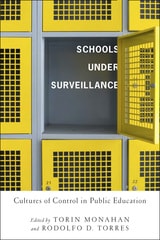
Schools Under Surveillance
Cultures of Control in Public EducationMonahan, Torin
Rutgers University Press, 2009
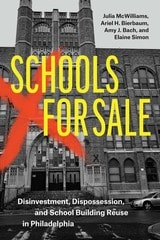
Schools for Sale
Disinvestment, Dispossession, and School Building Reuse in PhiladelphiaJulia McWilliams, Ariel H. Bierbaum, Amy J. Bach and Elaine Simon
University of Chicago Press, 2026
School districts across the United States have closed thousands of schools since 2000 to cope with chronic underfunding and budget crises, declining enrollment, and poorly maintained buildings. Our knowledge about school closures has focused on battles over closure decision-making and the impacts of closing schools on communities of color in the immediate aftermath of these decisions. But what of the large, sometimes magisterial, formerly public spaces once at the center of community life? How do these now vacant buildings change daily life in the surrounding neighborhood?
In Schools for Sale, Julia McWilliams, Ariel H. Bierbaum, Amy J. Bach, and Elaine Simon examine how school closures change the spatial and social arrangements of neighborhoods. Following a series of school closures in Philadelphia, the authors draw from research in urban studies, education, planning, and geography to explain how race, place, and capital merge to influence the trajectory of closed schools in Black and Brown communities and their surrounding neighborhoods. Some closed schools are repurposed as charter schools, upending the role those buildings have historically played in bringing communities together. Other buildings are sold for commercial development, caught up in cycles of gentrification even as developers foster programs to support community members. Others are left vacant or are demolished in the heart of their neighborhoods, decisions that reflect not only disinvestment in Black communities but the sobering reality of environmental racism.
Drawing needed attention to one of the significant consequences of school closures, Schools for Sale imparts a deeper understanding of the connections between place, race, and education amid broader urban transformations, prompting us to consider how school districts can work toward a new vision for public education and community development.
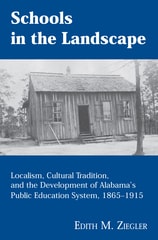
Schools in the Landscape
Localism, Cultural Tradition, and the Development of Alabama's Public Education System, 1865-1915Edith M. Ziegler
University of Alabama Press, 2010
Where culture met classroom—how Alabama’s past shaped its public schools.
Schools in the Landscape offers a richly detailed and deeply contextualized history of public education in Alabama during the transformative half-century following the Civil War. In this groundbreaking study, Edith M. Ziegler examines how localism, cultural tradition, and social conservatism shaped the development of Alabama’s public school system between 1865 and 1915—a period marked by Reconstruction, Redemption, and the entrenchment of racial segregation.
Ziegler explores how Alabama’s rural, economically challenged, and culturally conservative communities influenced the structure and function of public education. Drawing on a wide range of archival sources, she investigates the roles of teachers, schoolhouses, funding mechanisms, and community rituals in shaping educational experiences. The book also delves into the dual system of Black and white schools, highlighting the systemic inequalities and the resilience of African American communities in the face of institutionalized racism.
Through chapters on Progressive Era reforms, local festivals, and the symbolic role of schools in civic life, Ziegler reveals how education in Alabama was not merely a top-down initiative but a deeply local and contested process. Her analysis underscores the importance of understanding regional identity and cultural values in the broader narrative of American educational history.
Schools in the Landscape is essential reading for scholars of Southern history, education policy, and cultural studies, offering a nuanced portrait of how public schooling evolved in one of the nation’s most complex and tradition-bound regions.
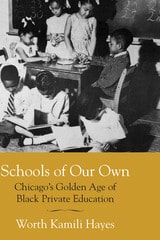
Schools of Our Own
Chicago's Golden Age of Black Private EducationWorth Kamili Hayes
Northwestern University Press, 2020
Winner, 2020 American Educational Studies Association Critics' Choice Award
As battles over school desegregation helped define a generation of civil rights activism in the United States, a less heralded yet equally important movement emerged in Chicago. Following World War II, an unprecedented number of African Americans looked beyond the issue of racial integration by creating their own schools. This golden age of private education gave African Americans unparalleled autonomy to avoid discriminatory public schools and to teach their children in the best ways they saw fit. In Schools of Our Own, Worth Kamili Hayes recounts how a diverse contingent of educators, nuns, and political activists embraced institution building as the most effective means to attain quality education. Schools of Our Own makes a fascinating addition to scholarly debates about education, segregation, African American history, and Chicago, still relevant in contemporary discussions about the fate of American public schooling.
Schools, volume 19 number 2 (Fall 2022)
The University of Chicago Press
University of Chicago Press Journals, 2022
Schools, volume 20 number 1 (Spring 2023)
The University of Chicago Press
University of Chicago Press Journals, 2023
Schools, volume 20 number 2 (Fall 2023)
The University of Chicago Press
University of Chicago Press Journals, 2023
Schools, volume 21 number 1 (Spring 2024)
The University of Chicago Press
University of Chicago Press Journals, 2024
Schools, volume 21 number 2 (Fall 2024)
The University of Chicago Press
University of Chicago Press Journals, 2024
Schools, volume 22 number 1 (Spring 2025)
The University of Chicago Press
University of Chicago Press Journals, 2025
Schools, volume 22 number 2 (Fall 2025)
The University of Chicago Press
University of Chicago Press Journals, 2025
Schools, volume 23 number 1 (Spring 2026)
The University of Chicago Press
University of Chicago Press Journals, 2026

Schools
Studies in Education, volume 18 number 1 (Spring 2021)The University of Chicago Press
University of Chicago Press Journals, 2021
Schools
Studies in Education, volume 18 number 2 (Fall 2021)The University of Chicago Press
University of Chicago Press Journals, 2021
Schools
Studies in Education, volume 19 number 1 (Spring 2022)The University of Chicago Press
University of Chicago Press Journals, 2022

Schoolteacher
A Sociological StudyDan C. Lortie
University of Chicago Press, 2002

Science and the University
Edited by Paula E. Stephan and Ronald G. Ehrenberg
University of Wisconsin Press, 2007

Science as a Carreer Choice
Theoretical and Empirical StudiesBernice T. Ediuson
Russell Sage Foundation, 1974