Results by title
1726 books match the query 'Film' and 145 start with s
SOFT IN THE MIDDLE
CONTEMPORARY SOFTCORE FEATURE IN ITS CONTEXTSDAVID ANDREWS
The Ohio State University Press, 2006
In meticulous detail, Soft in the Middle demonstrates that softcore’s under-the-radar success and pervasive cultural devaluation may be understood in terms of the “postfeminist” strategies employed by successive generations of producers and distributors, each intent on overcoming obstacles to the mainstream distribution of pornographic material. Softcore and its American precursors became more “feminized” and “female friendly” as their distribution widened, a process hastened in the 1980s by the industry’s transition to private, non-theatrical modes of distribution and exhibition (e.g., home-video outlets and premium-cable networks like Cinemax). One of the byproducts of this development is that contemporary softcore has frequently resorted to what are arguably anti-male or “misandristic” attitudes and depictions. Clearly, the genre challenges traditional assumptions about pornography, including those held by feminists on both sides of “the porn debates.”
Drawing on original industrial research, extensive sampling, and wide-ranging scholarship, Soft in the Middle offers a nuanced look at a discreetly indecent genre whose central commodity has always been female nudity. The book examines the genre’s history, describes its deflationary trajectory, and differentiates the reading patterns of its disparate audiences, including “cult” critics and feminist critics. Naturally, the book also considers the genre’s formal and ideological conventions, surveying its most exemplary subgenres, styles, and motifs—and lavishing particular attention on its most influential studios, directors, and texts.
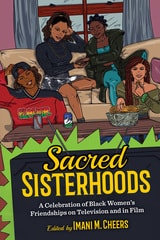
Sacred Sisterhoods
A Celebration of Black Women's Friendships on Television and in FilmEdited by Imani M. Cheers
The Ohio State University Press, 2025
Creative visionaries from Debbie Allen to Quinta Brunson, along with shows and films from Living Single to Hidden Figures—and many others—receive their due in these rigorous, lively, and accessible essays. Spotlighting the nuances and normalcy of Black women’s sacred sisterhoods, contributors reveal the indelible mark modern Black consciousness and creative control leave on our popular culture every day in an anthology that will be essential to scholars and students of contemporary media, race, and gender, as well as to general readers.
Contributors:
Imani M. Cheers, Monique A. Gamble, Marquita Gammage, Kandace Harris, Crystal L. Holmes, Makeba Lavan, Rondrea Danielle Mathis, Miriam J. Petty-Adams, De Anna Reese, Randi Richardson, Beretta E. Smith-Shomade, Andrene M. Taylor, Kristen Warner, and Shauntae Brown White
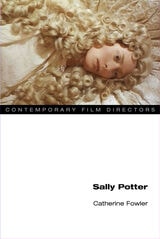
Sally Potter
Catherine Fowler
University of Illinois Press, 2008
This survey of Sally Potter’s work explores her cinematic development from the feminist reworking of La Bohème in Thriller to the provocative contemplation of romantic relationships after 9/11 in Yes. Catherine Fowler traces a clear trajectory of developing themes and preoccupations and shows how Potter uses song, dance, performance, and poetry to expand our experience of cinema beyond the audiovisual.
Potter has relentlessly struggled against predictability and safe options. Again and again, her works grapple with the complexities of being a woman in charge. Instead of the quest to find a romantic partner that drives mainstream cinema, Potter’s films feature characters seeking answers to questions about their sexual, gendered, social, cultural, and ethnic identities. They find answers by retelling stories, investigating mysteries, and traveling and interacting with people. At the heart of Potter’s work is a concern with the ways narrative circumscribes women's ability to act, speak, look, desire, and think for themselves. Her first two films, Thriller and The Gold Diggers, largely deconstruct found stories, clichés, and images. By contrast, later films like Orlando and The Tango Lesson create new and original narratives that place female acts, voices, looks, desires, and thoughts at their center.
Fowler’s analysis is supplemented by a detailed filmography, bibliography, and an extensive interview with the director.
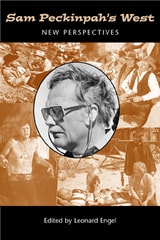
Sam Peckinpah's West
Leonard Engel
University of Utah Press, 2003
"I use violence as it is. It's ugly, brutalizing, and bloody...awful." Vilified for his violent vision of the American West as presented in films such as The Wild Bunch and Pat Garrett and Billy the Kid, the artistry of Sam Peckinpah’s work was largely overlooked in his lifetime. Dismissed by critics, he was essentially ignored in the decade following his untimely death in 1984 at the age of fifty-nine. However, with the publication of a biography in 1994 and Warner Bros.’ theatrical re-release of The Wild Bunch in 1995, Peckinpah reemerged as a distinctive voice in American film.
In Sam Peckinpah’s West eleven scholars approach the director’s oeuvre with an eye toward his minor films, touching on themes and characters previously overlooked and linking his vision to America’s literary and historical traditions. These insightful essays assure us that Peckinpah’s work will not be forgotten again, nor the vibrancy of his characters who go out "not with a whimper, nor even a bang, but a cinematic explosion that rocked Hollywood and riveted us in a way we’ll never forget."
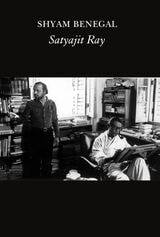
Satyajit Ray
A FilmShyam Benegal and Satyajit Ray
Seagull Books, 2025
Two of Indian cinema’s most acclaimed auteurs, Satyajit Ray and Shyam Benegal, come together in this intimate dialogue, offering a fascinating glimpse into the mind of a cinematic genius. Based on Benegal’s 1985 documentary on Ray, this volume brings together the film’s script, excerpts from extended interviews, and a remarkable collection of visual material showcasing Ray’s work as a filmmaker, illustrator, designer, and writer.
Through candid conversations, Ray reflects on his childhood and the philosophy behind his storytelling, providing an unparalleled look at his creative process. With one master filmmaker capturing another, the result is a deeply personal and layered portrait that moves beyond Ray’s films to reveal the man behind the camera. Satyajit Ray: A Film is both a historical document and a celebration of artistic legacy; a rare opportunity to witness a dialogue between two legends shaping the course of Indian and global cinema.

Saudade in Brazilian Cinema
The History of an Emotion on FilmJack A. Draper III
Intellect Books, 2017
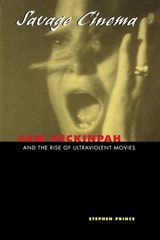
Savage Cinema
Sam Peckinpah and the Rise of Ultraviolent MoviesBy Stephen Prince
University of Texas Press, 1998
More than any other filmmaker, Sam Peckinpah opened the door for graphic violence in movies. In this book, Stephen Prince explains the rise of explicit violence in the American cinema, its social effects, and the relation of contemporary ultraviolence to the radical, humanistic filmmaking that Peckinpah practiced.
Prince demonstrates Peckinpah's complex approach to screen violence and shows him as a serious artist whose work was tied to the social and political upheavals of the 1960s. He explains how the director's commitment to showing the horror and pain of violence compelled him to use a complex style that aimed to control the viewer's response.
Prince offers an unprecedented portrait of Peckinpah the filmmaker. Drawing on primary research materials—Peckinpah's unpublished correspondence, scripts, production memos, and editing notes—he provides a wealth of new information about the making of the films and Peckinpah's critical shaping of their content and violent imagery. This material shows Peckinpah as a filmmaker of intelligence, a keen observer of American society, and a tragic artist disturbed by the images he created.
Prince's account establishes, for the first time, Peckinpah's place as a major filmmaker. This book is essential reading for those interested in Peckinpah, the problem of movie violence, and contemporary American cinema.

Savage Theory
Cinema as Modern MagicRachel O. Moore
Duke University Press, 2000
Moore mines the theories of language, spectatorship, and cinematic expression in the writings of Vachel Lindsay, Sergei Eisenstein, Siegfried Kracauer, and Walter Benjamin, among others. Illuminating the links between these theorists’ preoccupations with cinema as a form of primal communication and the numbing effects of modernity, she demonstrates how movies are uniquely able to negotiate the fragmentary and isolating nature of a modern world. In constructing an alternative to cognitive, psychoanalytic, and ideological approaches to film analysis, Moore provides eye-opening discussions of films such as Kenneth Anger’s Scorpio Rising, Hollis Frampton’s Nostalgia, and Robert Bresson’s l’Argent. Drawing from Marx’s theory of the commodity and Lukács’s work on second nature, she outlines the fetish character of the film image and reveals the emergence of the camera as a magical tool replete with animistic powers otherwise lost in the storm of progress.
Bound to influence the way future scholars think about the connection between modernism and primitivism, as well as the role of cinema therein during the early twentieth century, Savage Theory will be welcomed by scholars of film theory and anthropology and will also appeal to a wider cultural studies audience.
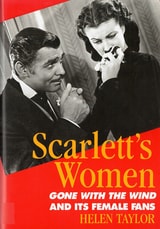
Scarlett's Women
Gone With the Wind and Its Female FansTaylor, Helen
Rutgers University Press, 1989
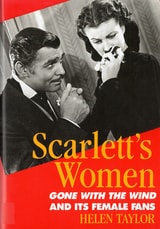
Scarlett's Women
Gone With the Wind and Its Female FansTaylor, Helen
Rutgers University Press, 1969
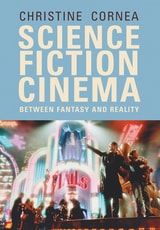
Science Fiction Cinema
Between Fantasy and RealityCornea, Christine
Rutgers University Press, 2007
Offering a broad historical and theoretical reassessment of science fiction, Christine Cornea explores the development of this popular genre in cinema from its very beginnings to the present day. Each chapter offers analyses of particular films, situating them within a wider historical/cultural context while also highlighting a specific key thematic issue. Cornea provides vital and unique perspectives on the genre, including discussions of the relevance of psychedelic imagery, race, the “new woman of science,” generic performance, and the prevalence of “techno-orientalism” in recent films. Enriching the book are new interviews with some of the main practitioners in the field, such as Roland Emmerich, Paul Verhoeven, Ken Russell, Stan Winston, William Gibson, Brian Aldiss, Joe Morton, Dean Norris, and Billy Gray. While American films are Cornea’s main focus, she also engages with a range of examples from other countries and explains why science fiction lends itself well to transnational reception.
Among the many films discussed are The Day the Earth Stood Still, The Body Snatchers, Forbidden Planet, The Quatermass Experiment, 2001: A Space Odyssey, Demon Seed, Star Trek: The Motion Picture, Star Wars, Altered States, Alien, Blade Runner, The Brother from Another Planet, Back to the Future, The Terminator, Predator, The One, Dark City, The Matrix, Fifth Element, and eXistenZ.
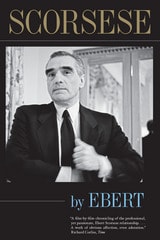
Scorsese by Ebert
Roger Ebert
University of Chicago Press, 2008
Roger Ebert wrote the first film review that director Martin Scorsese ever received—for 1967’s I Call First, later renamed Who’s That Knocking at My Door—creating a lasting bond that made him one of Scorsese’s most appreciative and perceptive commentators. Scorsese by Ebert offers the first record of America’s most respected film critic’s engagement with the works of America’s greatest living director, chronicling every single feature film in Scorsese’s considerable oeuvre, from his aforementioned debut to his 2008 release, the Rolling Stones documentary Shine a Light.
In the course of eleven interviews done over almost forty years, the book also includes Scorsese’s own insights on both his accomplishments and disappointments. Ebert has also written and included six new reconsiderations of the director’s less commented upon films, as well as a substantial introduction that provides a framework for understanding both Scorsese and his profound impact on American cinema.
"Given their career-long back-and-forth, this collection makes perfect sense. . . . In these reconsiderations, Ebert invites us into his thought processes, letting us see not just what he thinks, but how he forms his opinions. Ebert’s insights into Scorsese are terrific, but this book offers the bonus of further insights into Ebert himself."—Time Out Chicago
"Ebert, film critic for the Chicago Sun-Times, is an unabashed fan of Scorsese, whom he considers ‘the most gifted director of his generation.’ . . . Of special note are interviews with Scorsese over a 25-year period, in which the director candidly discusses his body of work."—Publishers Weekly
Screen Captures
Film in the Age of EmergencyStephen Lee Naish
Lever Press, 2026
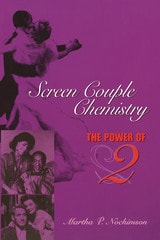
Screen Couple Chemistry
The Power of 2By Martha P. Nochimson
University of Texas Press, 2002
Astaire and Rogers, Tracy and Hepburn. Just the mention of their names evokes the powerful chemistry between these screen couples, which utterly transcended the often formulaic films in which they appeared together. Indeed, watching the synergistic flow of energy between charismatic screen partners is one of the great pleasures of cinema and television, as well as an important vehicle for thinking through issues of intimacy and gender relations.
In this book, Martha P. Nochimson engages in a groundbreaking study of screen couple chemistry. She begins by classifying various types of couples to define what sets the synergistic couple apart from other onscreen pairings. Then she moves into extended discussions of four enduring screen couples—Maureen O'Sullivan/Johnny Weissmuller, Myrna Loy/William Powell, Fred Astaire/Ginger Rogers, and Katharine Hepburn/Spencer Tracy. Using theories of neuroscience, she demonstrates that their onscreen chemistry is a very real phenomenon, powerful enough to subvert conventional formulations of male/female relations. Material she has uncovered in the infamous Production Code Administration files illuminates the historical context of her contentions. Finally, Nochimson traces the screen couple to its present-day incarnation in such pairs as Woody Allen/Diane Keaton, Scully/Mulder of The X-Files, and Cliff/Claire Huxtable of The Cosby Show.
Screen Education
From Film Appreciation to Media StudiesTerry Bolas
Intellect Books, 2009
In Screen education, Terry Bolas provides the first definitive history of the development of film and television studies in Britain, from its origins as a grassroots movement to its current status as serious scholarship. The focus is on the United Kingdom, where the development mirrors that of film education in North America and Australia. Bolas’s account describes the voluntary efforts of activists in the Society for Education in Film and Television and their relationship with British Film Institute’s Education Department. Though much documentary evidence has been lost, Bolas’s work incorporates personal archives and interviews with key figures, making this a critical record of the rise of cinema and television studies.
Screen Nazis
Cinema, History, and DemocracySabine Hake
University of Wisconsin Press, 2012
From the late 1930s to the early twenty-first century, European and American filmmakers have displayed an enduring fascination with Nazi leaders, rituals, and symbols, making scores of films from Confessions of a Nazi Spy (1939) and Watch on the Rhine (1943) through Des Teufels General (The Devil’s General, 1955) and Pasqualino settebellezze (Seven Beauties, 1975), up to Der Untergang (Downfall, 2004), Inglourious Basterds (2009), and beyond.
Probing the emotional sources and effects of this fascination, Sabine Hake looks at the historical relationship between film and fascism and its far-reaching implications for mass culture, media society, and political life. In confronting the specter and spectacle of fascist power, these films not only depict historical figures and events but also demand emotional responses from their audiences, infusing the abstract ideals of democracy, liberalism, and pluralism with new meaning and relevance.
Hake underscores her argument with a comprehensive discussion of films, including perspectives on production history, film authorship, reception history, and questions of performance, spectatorship, and intertextuality. Chapters focus on the Hollywood anti-Nazi films of the 1940s, the West German anti-Nazi films of the 1950s, the East German anti-fascist films of the 1960s, the Italian “Naziploitation” films of the 1970s, and issues related to fascist aesthetics, the ethics of resistance, and questions of historicization in films of the 1980s–2000s from the United States and numerous European countries.
Screening Asian Americans
Feng, Peter X
Rutgers University Press, 2002
This innovative essay collection explores Asian American cinematic representations historically and socially, on and off screen, as they contribute to the definition of American character. The history of Asian Americans on movie screens, as outlined in Peter X Feng’s introduction, provides a context for the individual readings that follow. Asian American cinema is charted in its diversity, ranging across activist, documentary, experimental, and fictional modes, and encompassing a wide range of ethnicities (Filipino, Vietnamese, Indian, Japanese, Korean, Chinese, and Taiwanese). Covered in the discussion are filmmakers—Theresa Hak Kyung Cha, Ang Lee, Trinh T. Minh-ha, and Wayne Wang—and films such as The Wedding Banquet, Surname Viet Given Name Nam, and Chan is Missing.
Throughout the volume, as Feng explains, the term screening has a twofold meaning—referring to the projection of Asian Americans as cinematic bodies and the screening out of elements connected with these images. In this doubling, film representation can function to define what is American and what is foreign. Asian American filmmaking is one of the fastest growing areas of independent and studio production. This volume is key to understanding the vitality of this new cinema.
Screening Auschwitz
Wanda Jakubowska's The Last Stage and the Politics of CommemorationMarek Haltof
Northwestern University Press, 2018
Screening Auschwitz examines the classic Polish Holocaust film The Last Stage (Ostatni etap), directed by the Auschwitz survivor Wanda Jakubowska (1907–1998). Released in 1948, The Last Stage was a pioneering work and the first narrative film to portray the Nazi concentration and extermination camp complex of Auschwitz-Birkenau. Marek Haltof’s fascinating book offers English-speaking readers a wealth of new materials, mostly from original Polish sources obtained through extensive archival research.
With its powerful dramatization of the camp experience, The Last Stage established several quasi-documentary themes easily discernible in later film narratives of the Shoah: dark, realistic images of the camp, a passionate moral appeal, and clear divisions between victims and perpetrators. Jakubowska’s film introduced images that are now archetypal—for example, morning and evening roll calls on the Appelplatz, the arrival of transport trains at Birkenau, the separation of families upon arrival, and tracking shots over the belongings left behind by those who were gassed. These and other images are taken up by a number of subsequent American films, including George Stevens’s The Diary of Anne Frank (1959), Alan Pakula’s Sophie’s Choice (1982), and Steven Spielberg’s Schindler’s List (1993).
Haltof discusses the unusual circumstances that surrounded the film's production on location at Auschwitz-Birkenau and summarizes critical debates surrounding the film’s release. The book offers much of interest to film historians and readers interested in the Holocaust.
Screening Cuba
Film Criticism as Political Performance during the Cold WarHector Amaya
University of Illinois Press, 2010
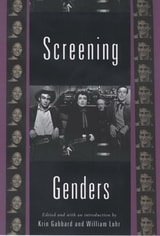
Screening Genders
The American Science Fiction FilmGabbard, Krin
Rutgers University Press, 2008
The book begins with a general introduction that traces the movement of gender theory from the margins of film studies to its center. The ten essays that follow address a range of topics, including screen stars; depictions of gay, straight, queer, and transgender subjects; and the relationship between gender and genre. Widely respected scholars, including Robert T. Eberwein, Lucy Fischer, Chris Holmlund, E. Ann Kaplan, Kathleen Rowe Karlyn, David Lugowski, Patricia Mellencamp, Jerry Mosher, Jacqueline Reich, and Chris Straayer, focus on the radical ideological advances of contemporary cinema, as well as on those groundbreaking films that have shaped our ideas about masculinity and femininity, not only in movies but in American culture at large.
The first comprehensive overview of the history of gender theory in film, this book is an ideal text for courses and will serve as a foundation for further discussion among students and scholars alike.
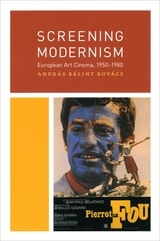
Screening Modernism
European Art Cinema, 1950-1980András Bálint Kovács
University of Chicago Press, 2007
Spanning from the 1950s to the 1970s, András Bálint Kovács’s encyclopedic work argues that cinematic modernism was not a unified movement with a handful of styles and themes but rather a stunning range of variations on the core principles of modern art. Illustrating how the concepts of modernism and the avant-garde variously manifest themselves in film, Kovács begins by tracing the emergence of art cinema as a historical category. He then explains the main formal characteristics of modern styles and forms as well as their intellectual foundation. Finally, drawing on modernist theory and philosophy along the way, he provides an innovative history of the evolution of modern European art cinema.
Exploring not only modernism’s origins but also its stylistic, thematic, and cultural avatars, Screening Modernism ultimately lays out creative new ways to think about the historical periods that comprise this golden age of film.
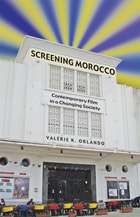
Screening Morocco
Contemporary Film in a Changing SocietyValérie K. Orlando
Ohio University Press, 2011
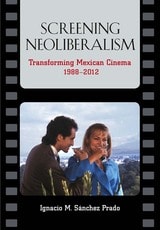
Screening Neoliberalism
Transforming Mexican Cinema, 1988-2012Ignacio M. Sánchez Prado
Vanderbilt University Press, 2014
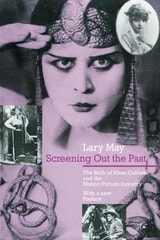
Screening Out the Past
The Birth of Mass Culture and the Motion Picture IndustryLary May
University of Chicago Press, 1983
"It is impossible to follow a narrow trail through the movies. The vistas keep opening, and May, linking movies to mass society, finds and makes new perceptions on emerging women, the rise of the studios, the special growth and appeal of Los Angeles, the nature of studio leadership and the early and persistent imputed corrupting power of film."—Charles Champlin, Los Angeles Times
"Lary May . . . has provided a set of new and rich insights into the changing patterns of American culture, 1890-1929. . . . His concentration on social and cultural history indirectly provides answers to questions which have baffled political historians for several decades."—David W. Noble, Minneapolis Tribune
"[Screening Out the Past is] a scrupulously argued, clearly written account of Hollywood's role in bringing America skipping and giggling from the Victorian world into the twentieth century. May is splendid on the psychology of the immigrant movie moguls, on Douglas Fairbanks and Mary Pickford as post Great War role models, and many other things."—Philip French, London Sunday Observor
"Altogether, the book represents the most successful blending of movie and cultural history to date."—Benjamin McArthur, Journal of Social History
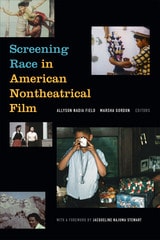
Screening Race in American Nontheatrical Film
Nadia Allyson Field and Marsha Gordon, editors
Duke University Press, 2019
Contributors. Crystal Mun-hye Baik, Jasmyn R. Castro, Nadine Chan, Mark Garrett Cooper, Dino Everett, Allyson Nadia Field, Walter Forsberg, Joshua Glick, Tanya Goldman, Marsha Gordon, Noelle Griffis, Colin Gunckel, Michelle Kelley, Todd Kushigemachi, Martin L. Johnson, Caitlin McGrath, Elena Rossi-Snook, Laura Isabel Serna, Jacqueline Najuma Stewart, Dan Streible, Lauren Tilton, Noah Tsika, Travis L. Wagner, Colin Williamson
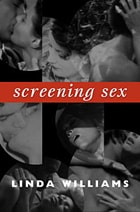
Screening Sex
Linda Williams
Duke University Press, 2008
Combining stories of her own coming of age as a moviegoer with film history, cultural history, and readings of significant films, Williams presents a fascinating history of the on-screen kiss, a look at the shift from adolescent kisses to more grown-up displays of sex, and a comparison of the “tasteful” Hollywood sexual interlude with sexuality as represented in sexploitation, Blaxploitation, and avant-garde films. She considers Last Tango in Paris and Deep Throat, two 1972 films unapologetically all about sex; In the Realm of the Senses, the only work of 1970s international cinema that combined hard-core sex with erotic art; and the sexual provocations of the mainstream movies Blue Velvet and Brokeback Mountain. She describes art films since the 1990s, in which the sex is aggressive, loveless, or alienated. Finally, Williams reflects on the experience of screening sex on small screens at home rather than on large screens in public. By understanding screening sex as both revelation and concealment, Williams has written the definitive study of sex at the movies.
Linda Williams is Professor of Film Studies and Rhetoric at the University of California, Berkeley. Her books include Porn Studies, also published by Duke University Press; Playing the Race Card: Melodramas of Black and White from Uncle Tom to O. J. Simpson; Viewing Positions: Ways of Seeing Film; and Hard Core: Power, Pleasure, and the “Frenzy of the Visible.”
A John Hope Franklin Center Book
November
424 pages
129 illustrations
6x9 trim size
ISBN 0-8223-0-8223-4285-5
paper, $24.95
ISBN 0-8223-0-8223-4263-4
library cloth edition, $89.95
ISBN 978-0-8223-4285-4
paper, $24.95
ISBN 978-0-8223-4263-2
library cloth edition, $89.95
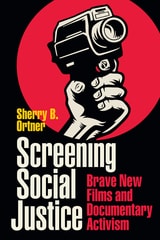
Screening Social Justice
Brave New Films and Documentary ActivismSherry B. Ortner
Duke University Press, 2023
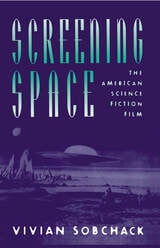
Screening Space
The American Science Fiction FilmSobchack, Vivian
Rutgers University Press, 1997
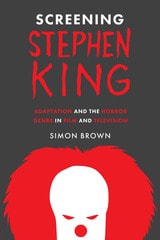
Screening Stephen King
Adaptation and the Horror Genre in Film and TelevisionBy Simon Brown
University of Texas Press, 2018
Since the 1970s, the name Stephen King has been synonymous with horror. His vast number of books has spawned a similar number of feature films and TV shows, and together they offer a rich opportunity to consider how one writer’s work has been adapted over a long period within a single genre and across a variety of media—and what that can tell us about King, about adaptation, and about film and TV horror. Starting from the premise that King has transcended ideas of authorship to become his own literary, cinematic, and televisual brand, Screening Stephen King explores the impact and legacy of over forty years of King film and television adaptations.
Simon Brown first examines the reasons for King’s literary success and then, starting with Brian De Palma’s Carrie, explores how King’s themes and style have been adapted for the big and small screens. He looks at mainstream multiplex horror adaptations from Cujo to Cell, low-budget DVD horror films such as The Mangler and Children of the Corn franchises, non-horror films, including Stand by Me and The Shawshank Redemption, and TV works from Salem’s Lot to Under the Dome. Through this discussion, Brown identifies what a Stephen King film or series is or has been, how these works have influenced film and TV horror, and what these influences reveal about the shifting preoccupations and industrial contexts of the post-1960s horror genre in film and TV.
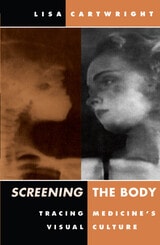
Screening The Body
Tracing Medicine’s Visual CultureLisa Cartwright
University of Minnesota Press, 1995
Moving images are used as diagnostic tools and locational devices every day in hospitals, clinics, and laboratories. But how and when did they come to be established and accepted sources of knowledge about the body in medical culture? How are the specialized techniques and codes of these imaging techniques determined, and whose bodies are studied, diagnosed, and treated with the help of optical recording devices?
Screening the Body traces the fascinating history of scientific film during the late nineteenth and early twentieth centuries to show that early experiments with cinema are important precedents of contemporary medical techniques such as ultrasound and PET scanning. Lisa Cartwright brings to light eccentric projects in the history of science and medicine, such as Thomas Edison's sensational attempt to image the brain with X rays before a public audience, and the efforts of doctors to use the motion picture camera to capture movements of the body, from the virtually imperceptible flow of blood to epileptic seizures.Drawing on feminist film theory, cultural studies, the history of film, and the writings of Foucault, Cartwright illustrates how this scientific cinema was part of a broader tendency in society toward the technological surveillance, management, and physical transformation of the individual body and the social body. She unveils an area of film culture that has rarely been discussed but that will leave readers with a new way of seeing the everyday practice of diagnostic imaging that we all inevitably encounter in clinics and hospitals.
Screening Trafficking
Prudent and PerilousYana Hashamova
Central European University Press, 2018
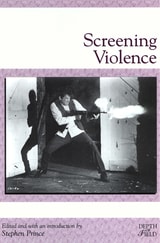
Screening Violence
Prince, Stephen
Rutgers University Press, 2000
Graphic cinematic violence is a magnet for controversy. From passionate defenses to outraged protests, theories abound concerning this defining feature of modern film: Is it art or exploitation, dangerous or liberating?
Screening Violence provides an even-handed examination of the history, merits, and effects of cinematic “ultraviolence.” Movie reviewers, cinematographers, film scholars, psychologists, and sociologists all contribute essays exploring topics such as:
· the origins and innovations of film violence and attempts to regulate it
(from Hollywood’s Production Code to the evolution of the ratings system)
· the explosion of screen violence following the 1967 releases of Bonnie and Clyde and The Dirty Dozen, and the lasting effects of those landmark films
· the aesthetics of increasingly graphic screen violence
· the implications of our growing desensitization to murder and mayhem, from The Wild Bunch to The Terminator
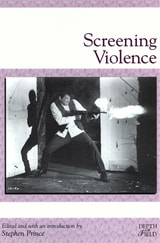
Screening Violence
Prince, Stephen
Rutgers University Press, 2000
Graphic cinematic violence is a magnet for controversy. From passionate defenses to outraged protests, theories abound concerning this defining feature of modern film: Is it art or exploitation, dangerous or liberating?
Screening Violence provides an even-handed examination of the history, merits, and effects of cinematic “ultraviolence.” Movie reviewers, cinematographers, film scholars, psychologists, and sociologists all contribute essays exploring topics such as:
· the origins and innovations of film violence and attempts to regulate it
(from Hollywood’s Production Code to the evolution of the ratings system)
· the explosion of screen violence following the 1967 releases of Bonnie and Clyde and The Dirty Dozen, and the lasting effects of those landmark films
· the aesthetics of increasingly graphic screen violence
· the implications of our growing desensitization to murder and mayhem, from The Wild Bunch to The Terminator
Screening the Beats
Media Culture and the Beat SensibilityDavid Sterritt
Southern Illinois University Press, 2004
Film critic David Sterritt’s Screening the Beats: Media Culture and the Beat Sensibility showcases the social and aesthetic viewpoints of lynchpin Beat writers Jack Kerouac, William S. Burroughs, and Allen Ginsberg, juxtaposing their artistry with 1950s culture and achieving what Kerouac might have called a “bookmovie” riff. In clear prose, Sterritt captures the raw energy of the Beats and joins in their celebration of aesthetic freakishness. Tapping into the diversified spirit of the Beat Generation and its nuanced relationship with postwar American culture, Sterritt considers how the Beats variously foreground, challenge, and illuminate major issues in Hollywood and avant-garde film, critical and cultural theory, and music in the mass-media age.
Sterritt engages the creative and spiritual facets of the Beats, emulating their desire to evoke ephemeral aspects of human existence. Dealing with both high and low cultures as well as various subcultures, he highlights the complementary contributions to cultural creativity made by these authors. Screening the Beats grapples with paradoxes in Beat writing, in particular the conflict between spiritual purity and secular connectedness, which often materialized in the beatific bebop spontaneity, Zen-like transcendentalism, and plain hipster smarts that characterized the writings of Kerouac, Burroughs, and Ginsberg.
This interdisciplinary study tackles such topics as Ginsberg’s and Kerouac’s uses of racial and ethnic stereotypes prevalent in the popular movies of the 1950s era; the uses and limitations of improvisation as a creative tool in literature, jazz, and film; Kerouac’s use of cinematic metaphor to evoke Buddhist concepts; and intersections of the grotesque and carnivalesque in works as seemingly diverse as autobiographical novels by Kerouac, a radio play by Antonin Artaud, cultural theories of Gilles Deleuze and Félix Guattari, and the boisterous lunacy of Three Stooges farce. Deftly threading literary, musical, and cinematic works with a colorful array of critical theories, Screening the Beats illuminates the relationship between American culture and the imaginative forces of the Beat Generation.
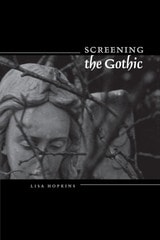
Screening the Gothic
By Lisa Hopkins
University of Texas Press, 2005
Filmmakers have long been drawn to the Gothic with its eerie settings and promise of horror lurking beneath the surface. Moreover, the Gothic allows filmmakers to hold a mirror up to their own age and reveal society's deepest fears. Franco Zeffirelli's Jane Eyre, Francis Ford Coppola's Bram Stoker's Dracula, and Kenneth Branagh's Hamlet are just a few examples of film adaptations of literary Gothic texts. In this ground-breaking study, Lisa Hopkins explores how the Gothic has been deployed in these and other contemporary films and comes to some surprising conclusions. For instance, in a brilliant chapter on films geared to children, Hopkins finds that horror resides not in the trolls, wizards, and goblins that abound in Harry Potter, but in the heart of the family.
Screening the Gothic offers a radical new way of understanding the relationship between film and the Gothic as it surveys a wide range of films, many of which have received scant critical attention. Its central claim is that, paradoxically, those texts whose affiliations with the Gothic were the clearest became the least Gothic when filmed. Thus, Hopkins surprises readers by revealing Gothic elements in films such as Sense and Sensibility and Mansfield Park, as well as exploring more obviously Gothic films like The Mummy and The Fellowship of the Ring. Written in an accessible and engaging manner, Screening the Gothic will be of interest to film lovers as well as students and scholars.
Screening the Operatic Stage
Television and BeyondChristopher Morris
University of Chicago Press, 2024
From the early days of television broadcasts to today’s live streams, opera houses have embraced technology as a way to reach new audiences. But how do these new forms of remediated opera extend, amplify, or undermine production values, and what does the audience gain or lose in the process? In Screening the Operatic Stage, Christopher Morris critically examines the cultural implications of opera’s engagement with screen media.
Foregrounding the potential for a playful exchange and self-awareness between stage and screen, Morris uses the conceptual tools of media theory to understand the historical and contemporary screen cultures that have transmitted the opera house into living rooms, onto desktops and portable devices, and across networks of movie theaters. If these screen cultures reveal how inherently “technological” opera is as a medium, they also highlight a deep suspicion among opera producers and audiences toward the intervention of media technology. Ultimately, Screening the Operatic Stage shows how the conventions of televisual representation employed in opera have masked the mediating effects of technology in the name of fidelity to live performance.
Screening the Transition
Spanish Cinema and the Challenges of DemocracyFederico Bonaddio
Intellect Books, 2026
A timely study of Spanish cinema during the country’s transition to democracy, including how popular and auteur films grappled with the authoritarian past.
Screening the Transition examines how Spanish cinema produced in the years immediately following Francisco Franco’s death articulated—through its narratives and characterizations—the social and cultural challenges encountered during the country’s transition to democracy. These films reflect emergent post-dictatorship realities, including increased openness toward sexuality and nudity; the erosion of traditional family structures; persistent attachments to, and reckonings with, the Francoist past; the development of political plurality and expanded freedom of expression; and various forms of marginalization, whether economic or based on gender and sexuality. In doing so, the analysis conceptualizes Spain’s transition not solely in political terms, as is commonly the case, but as a profoundly personal and affective process.
Federico Bonaddio demonstrates the limitations of cinema in this period, which at times revealed an inability to transcend deep-seated prejudices and forms of reticence cultivated over nearly four decades of authoritarian rule. These limitations surface in the prurient treatment of female nudity and sexual violence; in the deployment of comedy to belittle or trivialize democratic change; in a preference for metaphor and allegory over direct political engagement; and in the restricted investigative ambitions of historical dramas.
Considering both popular and auteur cinema, the book is primarily concerned with how filmmaking registered the difficulties of consigning the dictatorship fully to the past, despite the so-called pact of forgetting promoted by political elites to facilitate national reconciliation.
Screenwriting
Horton, Andrew
Rutgers University Press, 2014
Reaching back to the early days of Hollywood, when moonlighting novelists, playwrights, and journalists were first hired to write scenarios and photoplays, Screenwriting illuminates the profound ways that screenwriters have contributed to the films we love. This book explores the social, political, and economic implications of the changing craft of American screenwriting from the silent screen through the classical Hollywood years, the rise of independent cinema, and on to the contemporary global multi-media marketplace. From The Birth of a Nation (1915), Gone With the Wind (1939), and Gentleman’s Agreement (1947) to Chinatown (1974), American Beauty (1999), and Lost in Translation (2003), each project began as writers with pen and ink, typewriters, or computers captured the hopes and dreams, the nightmares and concerns of the periods in which they were writing.
As the contributors take us behind the silver screen to chronicle the history of screenwriting, they spotlight a range of key screenplays that changed the game in Hollywood and beyond. With original essays from both distinguished film scholars and accomplished screenwriters, Screenwriting is sure to fascinate anyone with an interest in Hollywood, from movie buffs to industry professionals.
Screenwriting for Neurotics
A Beginner's Guide to Writing a Feature-Length Screenplay from Start to FinishScott Winfield Sublett
University of Iowa Press, 2014
Rather than throwing you into the writing process headfirst, Sublett guides you through the various decisions you need to make—about plot, character, structure, conflict—in the order you need to make them. He explains in straightforward terms the terminology and jargon, the theory and industry standards, and dispels common myths about screenwriting that can discourage or hold back a beginning writer.
Balancing theory and practice and offering valuable and insightful examples from recognizable and well-known classic and contemporary films, ranging from Casablanca to A Christmas Story to Clerks, Sublett provides the new writer with the necessary tools to successfully write a feature-length screenplay and offers a roadmap of where to go next. With an emphasis on helping a writer not just to begin, but also to finish a script, Screenwriting for Neurotics is the screenwriting book to help you actually write one.
Scripting Hitchcock
Psycho, The Birds, and MarnieWalter Raubicheck and Walter Srebnick
University of Illinois Press, 2011
Hitchcock allowed his writers a great deal of creative freedom, which resulted in dynamic screenplays that expanded traditional narrative and defied earlier conventions. Critically examining the question of authorship in film, Raubicheck and Srebnick argue that Hitchcock did establish visual and narrative priorities for his writers, but his role in the writing process was that of an editor. While the writers and their contributions have generally been underappreciated, this study reveals that all the dialogue and much of the narrative structure of the films were the work of screenwriters Jay Presson Allen, Joseph Stefano, and Evan Hunter. The writers also shaped American cultural themes into material specifically for actors such as Janet Leigh, Tippi Hedren, and Tony Perkins. This volume gives due credit to those writers who gave narrative form to Hitchcock's filmic vision.
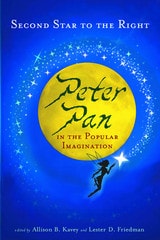
Second Star to the Right
Peter Pan in the Popular ImaginationFriedman, Lester D
Rutgers University Press, 2008
Since 2003 the characters from this story have had a highly visible presence in nearly every genre of popular culture: two major films, a literary sequel to the original adventures, a graphic novel featuring a grown-up Wendy Darling, and an Argentinean novel about a children's book writer inspired by J. M. Barrie. Simultaneously, Barrie surfaced as the subject of two major biographies and a feature film. The engaging essays in Second Star to the Right approach Pan from literary, dramatic, film, television, and sociological perspectives and, in the process, analyze his emergence and preservation in the cultural imagination.
Secondhand China
Spain, the East, and the Politics of TranslationCarles Prado-Fonts
Northwestern University Press, 2022
Uncovering an eclectic and surprising archive, Prado-Fonts draws on diverse cultural artifacts from popular literature, journalism, and early cinema to offer a rich account of how China was seen across the West between 1880 and 1930. Enrique Gaspar, Luis de Oteyza, Vicente Blasco Ibáñez, and lesser-known authors writing in Spanish and Catalan put themselves in dialogue with Leo Tolstoy, John Dewey, W. Somerset Maugham, Bertrand Russell, Pearl Buck, and André Malraux, as well as stereotypical figures from popular culture like Fu Manchu and Charlie Chan. Throughout, Prado-Fonts exposes translation as a technology of cultural hegemony and China as an appealing object for representation. A timely contribution to our understanding of how we create and consume knowledge about the world, Secondhand China is essential reading for scholars and students of Orientalism, postcolonial studies, translation studies, comparative literature, and cultural studies.
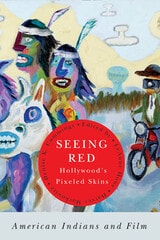
Seeing Red—Hollywood's Pixeled Skins
American Indians and FilmLeAnne Howe
Michigan State University Press, 2013
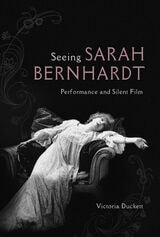
Seeing Sarah Bernhardt
Performance and Silent FilmVictoria Duckett
University of Illinois Press, 2015
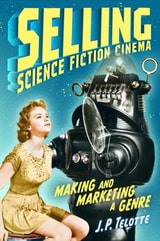
Selling Science Fiction Cinema
Making and Marketing a GenreJ. P. Telotte
University of Texas Press, 2023
How science fiction films in the 1950s were marketed and helped create the broader genre itself.
For Hollywood, the golden age of science fiction was also an age of anxiety. Amid rising competition, fluid audience habits, and increasing government regulation, studios of the 1950s struggled to make and sell the kinds of films that once were surefire winners. These conditions, the leading media scholar J. P. Telotte argues, catalyzed the incredible rise of science fiction.
Though science fiction films had existed since the earliest days of cinema, the SF genre as a whole continued to resist easy definition through the 1950s. In grappling with this developing genre, the industry began to consider new marketing approaches that viewed films as fluid texts and audiences as ever-changing. Drawing on trade reports, film reviews, pressbooks, trailers, and other archival materials, Selling Science Fiction Cinema reconstructs studio efforts to market a promising new genre and, in the process, shows how salesmanship influenced what that genre would become. Telotte uses such films as The Thing from Another World, Forbidden Planet, and The Blob, as well as the influx of Japanese monster movies, to explore the shifting ways in which the industry reframed the SF genre to market to no-longer static audience expectations. Science fiction transformed the way Hollywood does business, just as Hollywood transformed the meaning of science fiction.
Selznick's Vision
Gone with the Wind and Hollywood FilmmakingBy Alan David Vertrees
University of Texas Press, 1997
Gone with the Wind has generated interest in every aspect of its production. Yet one crucial aspect has never been fully understood or appreciated—the vital shaping role played by executive producer David O. Selznick.
In this book, Alan David Vertrees challenges the popular image of Selznick as a megalomaniacal meddler whose hiring and firing of directors and screenwriters created a patchwork film that succeeded despite his interference. Drawing on ten years of research in the Selznick archives, and examining the screenplay's successive drafts, dramatic continuity designs and "storyboard" sketches (many of which are reproduced here), and production correspondence and memoranda, Vertrees interprets the producer's actions as manipulation, not indecision, establishing Selznick's "vision" as the guiding intelligence behind the film's success.
In his drive to create a cinematic monument, Selznick also reformed many key facets of studio filmmaking, inventing jobs such as "production designer" (inaugurated by William Cameron Menzies), which persist today. This book thus adds an important chapter to the story of classical Hollywood cinema and the making of the film that has been lauded variously as the "Sistine Chapel of movies" and the "single most beloved entertainment ever produced."

Serial Fu Manchu
The Chinese Supervillain and the Spread of Yellow Peril IdeologyRuth Mayer
Temple University Press, 2013
In the series Asian American History and Culture, edited by Sucheng Chan, David Palumbo-Liu, Michael Omi, K. Scott Wong, and Linda Trinh Võ
Sessue Hayakawa
Silent Cinema and Transnational StardomDaisuke Miyao
Duke University Press, 2007
Drawing on early-twentieth-century sources in both English and Japanese, including Japanese-language newspapers in the United States, Miyao illuminates the construction and reception of Hayakawa’s stardom as an ongoing process of cross-cultural negotiation. Hayakawa’s early work included short films about Japan that were popular with American audiences as well as spy films that played upon anxieties about Japanese nationalism. The Jesse L. Lasky production company sought to shape Hayakawa’s image by emphasizing the actor’s Japanese traits while portraying him as safely assimilated into U.S. culture. Hayakawa himself struggled to maintain his sympathetic persona while creating more complex Japanese characters that would appeal to both American and Japanese audiences. The star’s initial success with U.S. audiences created ambivalence in Japan, where some described him as traitorously Americanized and others as a positive icon of modernized Japan. This unique history of transnational silent-film stardom focuses attention on the ways that race, ethnicity, and nationality influenced the early development of the global film industry.

Settler Attachments and Asian Diasporic Film
Beenash Jafri
University of Minnesota Press, 2025
A cinematic study of Asian–Indigenous relationality
Settler Attachments and Asian Diasporic Film is an interdisciplinary examination of the stubborn attachment of Asian diasporas to settler-colonial ideals and of the decolonial possibilities Asian diasporic films imagine. Beenash Jafri uniquely addresses the complexities of Asian–Indigenous relationality through film and visual media, urging film scholars to approach their subjects with an eye to the entanglements of race, diaspora, and Indigeneity.
Highlighting how Asian diasporic attachments to settler colonialism are structural, she explores how they are manifested through melancholic yearning within the figure of the Asian cowboy in films such as Cowgirl and Wild West and through the aesthetic and representational politics of body and land in experimental films by Shani Mootoo and Vivek Shraya. While recognizing the pervasive violence of settler colonialism, Jafri maintains a hopeful outlook, showcasing how Asian diasporic filmmakers persistently work toward decolonial worldmaking. This emerging vision can be seen in the radical friendship between Ali Kazimi and Onondaga artist Jeffrey Thomas in Kazimi’s film Shooting Indians, in the queer relational survivance depicted in films such as This Place and Scarborough, and in the sensory disruptions of Jin-me Yoon’s interactive art project Untunnelling Vision.
From film and media studies to diaspora studies and critical ethnic studies, Indigenous studies to queer theory, Settler Attachments and Asian Diasporic Film provides a critical framework for engaging cinematic media to understand and imagine beyond the entrenched settler-colonial dynamics within Asian diasporic communities.
Retail e-book files for this title are screen-reader friendly with images accompanied by short alt text and/or extended descriptions.
Settling the Score
Music and the Classical Hollywood FilmKathryn Kalinak
University of Wisconsin Press, 1992
Beginning with the earliest experiments in musical accompaniment carried out in the Edison Laboratories, Kathryn Kalinak uses archival material to outline the history of American music and film. Focusing on the scores of several key composers of the sound era, including Erich Wolfgang Korngold’s Captain Blood, Max Steiner’s The Informer, Bernard Herrmann’s The Magnificent Ambersons, and David Raksin’s Laura, Kalinak concludes that classical scoring conventions were designed to ensure the dominance of narrative exposition. Her analyses of contemporary work such as John Williams’ The Empire Strikes Back and Basil Poledouris’ RoboCop demonstrate how the traditions of the classical era continue to influence scoring practices today.