Results by title
932 books match the query 'Genres & Styles' and 80 start with s
Sacred Music from the Cathedral at Trent
Trent, Museo Provinciale d'Arte, Codex 1375 (olim 88)Edited by Rebecca L. Gerber
University of Chicago Press, 2007
Often called the musical equivalent of the Dead Sea Scrolls, the Trent codices have dramatically broadened our understanding of Renaissance music. Much has been written about this collection of fifteenth-century music manuscripts, most of which were discovered in the Cathedral at Trent, but none of the seven codices--generally called Trent 87 through Trent 93--has ever been published in its entirety. Thus Rebecca Gerber’s edition of Trent 88, which took more than a decade to prepare, will be the first to appear. As such, this volume is a landmark in the publication of early music.
Trent 88 comprises an extensive anthology of 145 compositions tailored to the ceremonial and daily religious services of the period. The international scope of the collection is both impressive and significant: early English, French, German, and Spanish mass cycles appear alongside simple hymns and Magnificats. Music by renowned composers—including Guillaume Du Fay, Johannes Ockeghem, Johannes Cornago, and John Bedingham—is joined here by an even larger repertory of anonymous compositions with great aesthetic and historical value. Edited to accommodate both scholars and performers, and augmented with Gerber’s expert introduction, this volume will significantly deepen existing knowledge of a crucial period in the history of music.
Sacred Steel
Inside an African American Steel Guitar TraditionRobert Stone
University of Illinois Press, 2010

Safe Space
Gay Neighborhood History and the Politics of ViolenceChristina B. Hanhardt
Duke University Press, 2013
Since the 1970s, a key goal of lesbian and gay activists has been protection against street violence, especially in gay neighborhoods. During the same time, policymakers and private developers declared the containment of urban violence to be a top priority. In this important book, Christina B. Hanhardt examines how LGBT calls for "safe space" have been shaped by broader public safety initiatives that have sought solutions in policing and privatization and have had devastating effects along race and class lines.
Drawing on extensive archival and ethnographic research in New York City and San Francisco, Hanhardt traces the entwined histories of LGBT activism, urban development, and U.S. policy in relation to poverty and crime over the past fifty years. She highlights the formation of a mainstream LGBT movement, as well as the very different trajectories followed by radical LGBT and queer grassroots organizations. Placing LGBT activism in the context of shifting liberal and neoliberal policies, Safe Space is a groundbreaking exploration of the contradictory legacies of the LGBT struggle for safety in the city.
Salsa Consciente
Politics, Poetics, and Latinidad in the Meta-BarrioAndrés Espinoza Agurto
Michigan State University Press, 2021
Salsa World
A Global Dance in Local ContextsSydney Hutchinson
Temple University Press, 2013
Salsa Worldexamines the ways in which bodies relate to culture in specific places. The contributors, a notable group of scholars and practitioners, analyze dance practices in the U.S., Japan, Spain, France, Colombia, Cuba, Puerto Rico, and the Dominican Republic. Writing from the disciplines of ethnomusicology, anthropology, sociology, and performance studies, the contributors explore salsa’s kinetopias - places defined by movement, or vice versa- as they have arisen through the dance’s interaction with local histories, identities, and musical forms.
Contributors include Bárbara Balbuena Gutiérrez,Katherine Borland, Joanna Bosse, Rossy Díaz, Saúl Escalona, Kengo Iwanaga, Isabel Llano, Jonathan S. Marion, Priscilla Renta, Alejandro Ulloa Sanmiguel, and the editor.
In the series Studies in Latin American and Caribbean Music, edited by Peter Manuel
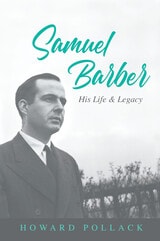
Samuel Barber
His Life and LegacyHoward Pollack
University of Illinois Press, 2023
Acclaimed biographer Howard Pollack (Aaron Copland, George Gershwin) offers a multifaceted account of Barber’s life and music while placing the artist in his social and cultural milieu. Born into a musical family, Barber pursued his artistic ambitions from childhood. Pollack follows Barber’s path from his precocious youth through a career where, from the start, the composer consistently received prizes, fellowships, and other recognition. Stylistic analyses of works like the Adagio for Strings, the Violin Concerto, Knoxville: Summer of 1915 for voice and orchestra, the Piano Concerto, and the operas Vanessa and Antony and Cleopatra, stand alongside revealing accounts of the music’s commissioning, performance, reception, and legacy. Throughout, Pollack weaves in accounts of Barber’s encounters with colleagues like Aaron Copland and Francis Poulenc, performers from Eleanor Steber and Leontyne Price to Vladimir Horowitz and Van Cliburn, patrons, admirers, and a wide circle of eminent friends and acquaintances. He also provides an eloquent portrait of the composer’s decades-long relationship with the renowned opera composer Gian Carlo Menotti.
Informed by new interviews and immense archival research, Samuel Barber is a long-awaited critical and personal biography of a monumental figure in twentieth-century American music.
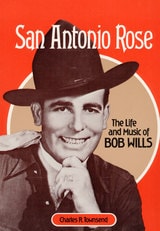
San Antonio Rose
The Life and Music of Bob WillsCharles R. Townsend; Discography and filmusicography by Bob Pinson
University of Illinois Press, 1976
"Until Hank Williams came along, it was just Bob Willis," says Willie Nelson. "He was it." And indeed he was, especially for the thousands in the Southwest who knew and loved the King of Western Swing. The colorful band leader-composer-fiddler from Turkey, Texas, lassoed the emotions of country-and-western fans nationwide. In the early 1940s, his records outsold those of any other recording artist. He was voted not only into the Country Music Hall of Fame but also into the National Cowboy Hall of Fame, the only performer other than Gene Autry to be so honored.
Affectionately written by a Texan who responded to the legendary fiddler's style, San Antonio Rose captures Wills's magnetism and the musical excitement he created. Charles R. Townsend traces Wills's dynamic life from his birth into a family of frontier fiddlers through his career and stardom and on to the poignant last recording session in 1973 and his death two years later. Townsend shows how Wills brought black and white music together and examines the tremendous impact he had on both popular and country music through the more than 550 selections he recorded and the forty years he and his Texas Playboys performed in dance halls and on radio.
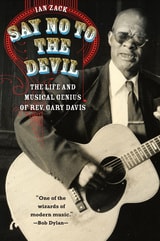
Say No to the Devil
The Life and Musical Genius of Rev. Gary DavisIan Zack
University of Chicago Press, 2015
The first biography of Davis, Say No to the Devil restores “the Rev’s” remarkable story. Drawing on extensive research and interviews with many of Davis’s former students, Ian Zack takes readers through Davis’s difficult beginning as the blind son of sharecroppers in the Jim Crow South to his decision to become an ordained Baptist minister and his move to New York in the early 1940s, where he scraped out a living singing and preaching on street corners and in storefront churches in Harlem. There, he gained entry into a circle of musicians that included, among many others, Lead Belly, Woody Guthrie, and Dave Van Ronk. But in spite of his tremendous musical achievements, Davis never gained broad recognition from an American public that wasn’t sure what to make of his trademark blend of gospel, ragtime, street preaching, and the blues. His personal life was also fraught, troubled by struggles with alcohol, women, and deteriorating health.
Zack chronicles this remarkable figure in American music, helping us to understand how he taught and influenced a generation of musicians.
Say Word!
Voices from Hip Hop TheaterAn Anthology Edited and with an Introduction by Daniel Banks
University of Michigan Press, 2011
The phenomenon known as Hip Hop encompasses a global, multiethnic, grassroots culture committed to social justice and self-expression through performance. Hip Hop Theater emerged from that culture, mixing spoken-word performance with music and dance and marked by Hip Hop's strong sense of activism and resistance. Hip Hop Theater is engaged with questions of identity – culture, heritage, ethnicity, class, gender, sexuality, and difference—narrating the experiences of historically marginalized peoples and putting them in dialogue with other oppressed communities.
Say Word! Voices from Hip Hop Theater collects eight works by contemporary artists who confront today's compelling issues, ranging from racial profiling and police brutality to women's empowerment and from the commercial exploitation of Hip Hop to identity politics. Editor Daniel Banks has assembled work by Abiola Abrams, Zakiyyah Alexander, Chadwick Boseman, Kristoffer Diaz, Rha Goddess, Antoy Grant, Joe Hernandez-Kolski, Rickerby Hinds, and Ben Snyder, augmented with an extensive introduction and other informative commentary. The book also includes a roundtable moderated by Holly Bass and featuring Hip Hop pioneers Eisa Davis, Danny Hoch, Sarah Jones, and Will Power, a conversation that traces the roots of Hip Hop Theater and imagines its future directions.
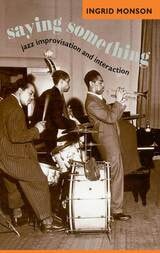
Saying Something
Jazz Improvisation and InteractionIngrid Monson
University of Chicago Press, 1997
This fresh look at the neglected rhythm section in jazz ensembles shows that the improvisational interplay among drums, bass, and piano is just as innovative, complex, and spontaneous as the solo. Ingrid Monson juxtaposes musicians' talk and musical examples to ask how musicians go about "saying something" through music in a way that articulates identity, politics, and race. Through interviews with Jaki Byard, Richard Davis, Sir Roland Hanna, Billy Higgins, Cecil McBee, and others, she develops a perspective on jazz improvisation that has "interactiveness" at its core, in the creation of music through improvisational interaction, in the shaping of social communities and networks through music, and in the development of cultural meanings and ideologies that inform the interpretation of jazz in twentieth-century American cultural life.
Replete with original musical transcriptions, this broad view of jazz improvisation and its emotional and cultural power will have a wide audience among jazz fans, ethnomusicologists, and anthropologists.
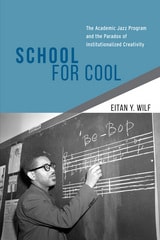
School for Cool
The Academic Jazz Program and the Paradox of Institutionalized CreativityEitan Y. Wilf
University of Chicago Press, 2014
Few art forms epitomize the anti-institutional image more than jazz, but it’s precisely at the academy where jazz is now flourishing. This shift has introduced numerous challenges and contradictions to the music’s practitioners. Solos are transcribed, technique is standardized, and the whole endeavor is plastered with the label “high art”—a far cry from its freewheeling days. Wilf shows how students, educators, and administrators have attempted to meet these challenges with an inventive spirit and a robust drive to preserve—and foster—what they consider to be jazz’s central attributes: its charisma and unexpectedness. He also highlights the unintended consequences of their efforts to do so. Ultimately, he argues, the gap between creative practice and institutionalized schooling, although real, is often the product of our efforts to close it.

Scream for Me, Africa!
Heavy Metal Identities in Post-Colonial AfricaEdward Banchs
Intellect Books, 2023
Scream for Me Africa! examines the hard rock and metal scenes in five African countries: Botswana, Togo, South Africa, Kenya, and Ghana. Edward Banchs interviewed musicians, producers, and fans in each country to create vivid pictures of each of these rarely discussed scenes. The book considers how the subculture of heavy metal is viewed in postcolonial Africa and examines how musicians on the continent have stepped forward to make this genre their own. It looks at Africa's blossoming scenes through various themes, including hybridity, othering, and political tensions.
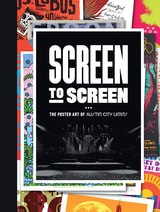
Screen to Screen
The Poster Art of Austin City LimitsAustin City Limits
University of Texas Press, 2025
From Billie Eilish to Cassandra Wilson, Elvis Costello to Pearl Jam, many of the world’s most beloved musicians have entertained us on Austin City Limits. And for the past couple of decades, each performance recorded on the ACL stage has inspired a special bonus: an original, eye-catching screen-printed poster, commissioned by the show’s producer, Austin PBS, and designed by some of their favorite graphic artists from all over the world.
Screen to Screen celebrates the 50th anniversary of Austin’s premier gig, presenting every poster in brilliant full color alongside dazzling ACL concert photography and reminiscences from Neko Case, Leon Bridges, and other luminaries. Exciting, evocative, and always unique, the posters are accompanied by insightful creative discussion from several designers, including Mark Pedini and Diana Sudyka, and the book itself is designed by the award-winning, Austin-based firm Preacher Co. Introduced by long-time ACL producer Terry Lickona and with a foreword from Willie Nelson—whom you might remember from the pilot episode, taped half a century ago—this collection brings a piece of Austin and music history to life in vivid color.
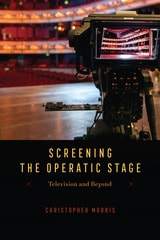
Screening the Operatic Stage
Television and BeyondChristopher Morris
University of Chicago Press, 2024
From the early days of television broadcasts to today’s live streams, opera houses have embraced technology as a way to reach new audiences. But how do these new forms of remediated opera extend, amplify, or undermine production values, and what does the audience gain or lose in the process? In Screening the Operatic Stage, Christopher Morris critically examines the cultural implications of opera’s engagement with screen media.
Foregrounding the potential for a playful exchange and self-awareness between stage and screen, Morris uses the conceptual tools of media theory to understand the historical and contemporary screen cultures that have transmitted the opera house into living rooms, onto desktops and portable devices, and across networks of movie theaters. If these screen cultures reveal how inherently “technological” opera is as a medium, they also highlight a deep suspicion among opera producers and audiences toward the intervention of media technology. Ultimately, Screening the Operatic Stage shows how the conventions of televisual representation employed in opera have masked the mediating effects of technology in the name of fidelity to live performance.
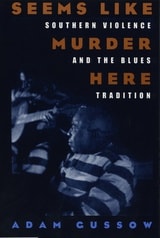
Seems Like Murder Here
Southern Violence and the Blues TraditionAdam Gussow
University of Chicago Press, 2002
Seems Like Murder Here offers a revealing new account of the blues tradition. Far from mere laments about lost loves and hard times, the blues emerge in this provocative study as vital responses to spectacle lynchings and the violent realities of African American life in the Jim Crow South. With brilliant interpretations of both classic songs and literary works, from the autobiographies of W. C. Handy, David Honeyboy Edwards, and B. B. King to the poetry of Langston Hughes and the novels of Zora Neale Hurston, Seems Like Murder Here will transform our understanding of the blues and its enduring power.
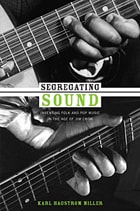
Segregating Sound
Inventing Folk and Pop Music in the Age of Jim CrowKarl Hagstrom Miller
Duke University Press, 2010
In a cultural history filled with musicians, listeners, scholars, and business people, Miller describes how folklore studies and the music industry helped to create a “musical color line,” a cultural parallel to the physical color line that came to define the Jim Crow South. Segregated sound emerged slowly through the interactions of southern and northern musicians, record companies that sought to penetrate new markets across the South and the globe, and academic folklorists who attempted to tap southern music for evidence about the history of human civilization. Contending that people’s musical worlds were defined less by who they were than by the music that they heard, Miller challenges assumptions about the relation of race, music, and the market.
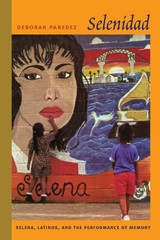
Selenidad
Selena, Latinos, and the Performance of MemoryDeborah Paredez
Duke University Press, 2009
Paredez argues that Selena’s death galvanized Latina/o efforts to publicly mourn collective tragedies (such as the murders of young women along the U.S.-Mexico border) and to envision a brighter future. At the same time, reactions to the star’s death catalyzed political jockeying for the Latino vote and corporate attempts to corner the Latino market. Foregrounding the role of performance in the politics of remembering, Paredez unravels the cultural, political, and economic dynamics at work in specific commemorations of Selena. She analyzes Selena’s final concert, the controversy surrounding the memorial erected in the star’s hometown of Corpus Christi, and the political climate that served as the backdrop to the touring musicals Selena Forever and Selena: A Musical Celebration of Life. Paredez considers what “becoming” Selena meant to the young Latinas who auditioned for the biopic Selena, released in 1997, and she surveys a range of Latina/o queer engagements with Selena, including Latina lesbian readings of the star’s death scene and queer Selena drag. Selenidad is a provocative exploration of how commemorations of Selena reflected and changed Latinidad.

Semiramide
Melodramma tragico in Two Acts, Libretto by Gaetano RossiGioachino Rossini
University of Chicago Press, 2002

Sensing Sound
Singing and Listening as Vibrational PracticeNina Sun Eidsheim
Duke University Press, 2016
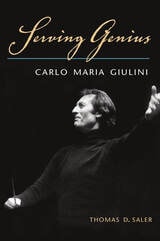
Serving Genius
Carlo Maria GiuliniThomas D. Saler
University of Illinois Press, 2020
Serving Genius tells the life story of Carlo Maria Giulini, one of the most renowned and beloved conductors of the twentieth century. Detailing Giulini's extraordinary professional career, Thomas D. Saler also chronicles Giulini's personal life, including his musical awakening while growing up amid the spectacular beauty of the Dolomite mountains, his years as a student in Rome's Academy of St. Cecilia, his conscription into the Italian army during World War II, his nine months in hiding for his anti-fascist and pacifist beliefs, and his selfless devotion to his wife, Marcella.
A humble master who shunned the limelight, Giulini took a deeply emotional and subjective approach to making music. Saler provides uniquely detailed analysis of Giulini's nuanced musicianship and the way he conveyed that musicianship to the orchestra through physical gestures. Meditating on the very art of conducting at which Giulini excelled, Saler discusses each of the conductor's major musical appointments, including stints with the Chicago Symphony Orchestra, Philharmonia Orchestra, Vienna Symphony, and Los Angeles Philharmonic. The book also addresses his repertoire of choice, leadership style, and moral framework.
Drawing on extensive interviews with Giulini's family, music critics, arts administrators, orchestra members, and collaborating soloists, Serving Genius draws out the personal amid the professional life of this giant among twentieth-century conductors.
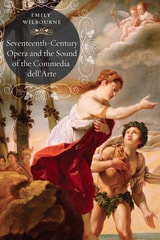
Seventeenth-Century Opera and the Sound of the Commedia dell’Arte
Emily Wilbourne
University of Chicago Press, 2016
Wilbourne considers a series of case studies structured around the most important and widely explored operas of the period: Monteverdi’s lost L’Arianna, as well as his Il Ritorno d’Ulisse and L’incoronazione di Poppea; Mazzochi and Marazzoli’s L’Egisto, ovvero Chi soffre speri; and Cavalli’s L’Ormindo and L’Artemisia. As she demonstrates, the sound-in-performance aspect of commedia dell’arte theater—specifically, the use of dialect and verbal play—produced an audience that was accustomed to listening to sonic content rather than simply the literal meaning of spoken words. This, Wilbourne suggests, shaped the musical vocabularies of early opera and facilitated a musicalization of Italian theater.
Highlighting productive ties between the two worlds, from the audiences and venues to the actors and singers, this work brilliantly shows how the sound of commedia performance ultimately underwrote the success of opera as a genre.

Sex, Death, and Minuets
Anna Magdalena Bach and Her Musical NotebooksDavid Yearsley
University of Chicago Press, 2019
Sex, Death, and Minuets offers the first in-depth study of these notebooks and their owner, reanimating Anna Magdalena as a multifaceted historical subject—at once pious and bawdy, spirited and tragic. In these pages, we follow Magdalena from young and flamboyant performer to bereft and impoverished widow—and visit along the way the coffee house, the raucous wedding feast, and the family home. David Yearsley explores the notebooks’ more idiosyncratic entries—like its charming ditties on illicit love and searching ruminations on mortality—against the backdrop of the social practices and concerns that women shared in eighteenth-century Lutheran Germany, from status in marriage and widowhood, to fulfilling professional and domestic roles, money, fashion, intimacy and sex, and the ever-present sickness and death of children and spouses. What emerges is a humane portrait of a musician who embraced the sensuality of song and the uplift of the keyboard, a sometimes ribald wife and oft-bereaved mother who used her cherished musical notebooks for piety and play, humor and devotion—for living and for dying.
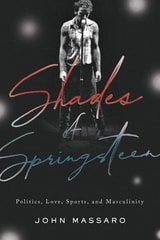
Shades of Springsteen
Politics, Love, Sports, and MasculinityJohn Massaro
Rutgers University Press, 2021
In this unique blend of memoir and musical analysis, John Massaro reflects on his experiences as a lifelong fan of The Boss and one of the first professors to design a college course on Springsteen’s work. Focusing on five of the Jersey rocker’s main themes—love, masculinity, sports, politics, and the power of music—he shows how they are represented in Springsteen’s lyrics and shares stories from his own life that powerfully resonate with those lyrics. Meanwhile, paying tribute to Springsteen’s inclusive vision, he draws connections among figures as seemingly disparate as James Joyce, Ta-Nehisi Coates, Thomas Aquinas, Bobby Darin, and Lin-Manuel Miranda. Shades of Springsteen offers a deeply personal take on the musical and cultural legacies of an American icon.

Shakin' All Over
Popular Music and DisabilityGeorge McKay
University of Michigan Press, 2013
Given the explosion in recent years of scholarship exploring the ways in which disability is manifested and performed in numerous cultural spaces, it’s surprising that until now there has never been a single monograph study covering the important intersection of popular music and disability. George McKay’s Shakin’ All Over is a cross-disciplinary examination of the ways in which popular music performers have addressed disability: in their songs, in their live performances, and in various media presentations.
By looking closely into the work of artists such as Johnny Rotten, Neil Young, Johnnie Ray, Ian Dury, Teddy Pendergrass, Curtis Mayfield, and Joni Mitchell, McKay investigates such questions as how popular music works to obscure and accommodate the presence of people with disabilities in its cultural practice. He also examines how popular musicians have articulated the experiences of disability (or sought to pass), or have used their cultural arena for disability advocacy purposes.
Shaping Words to Fit the Soul
The Southern Ritual Grounds of Afro-ModernismJürgen E. Grandt
The Ohio State University Press, 2009
Sinful Tunes and Spirituals
Black Folk Music to the Civil WarDena J. Epstein
University of Illinois Press, 1981
Singing Out
GALA Choruses and Social ChangeHeather MacLachlan
University of Michigan Press, 2020
Pundits often wax eloquent about the power of music, asserting that it can, in some positive way, change the world. Such statements often rest on an unexamined claim that music can and does foster social justice. Singing Out: GALA Choruses and Social Change tackles the premise underlying such claims, analyzing groups of amateur singers who are explicitly committed to an agenda of social justice.
Singing Sappho
Improvisation and Authority in Nineteenth-Century Italian OperaMelina Esse
University of Chicago Press, 2021
Singing for Our Lives
Stories from the Street ChoirsCampaign Choirs Writing Collective
Intellect Books, 2018
The book intends to inspire the reader to engage with this world: to find out more, to join a choir in their community, to enlist their local street choir to support campaigns for social change and, more generally, to mobilize artistic creativity in progressive social movements.
It is an introduction to street choirs and their history, exploring origins in and connections with other social movements, for example the Workers Education Association, the Clarion movement, Big Flame and the Social Forum movement. The book identifies the political nodes where choir histories intersect, notably Greenham Common, the Miners’ Strike, anti-apartheid and Palestinian struggles. The title of the book is taken from a song by the respected American musician and activist Holly Near, and is popular in the repertoire of many street choirs. Exploring the role of street choirs in political culture, Singing For Our Lives introduces this neglected world to a wider public, including activists and academics.
Signing for Our Lives also elaborates the personal stories and experiences of people who participate in street choirs, and the unique social practices created within them. The book tells the important, if often overlooked, story of how making music can contribute to non-violent, just and sustainable social transitions.
www.singing4ourlives.net/about.html
Singing in the Age of Anxiety
Lieder Performances in New York and London between the World WarsLaura Tunbridge
University of Chicago Press, 2018
Laura Tunbridge explores the renewed vitality of this refugee musical form between the world wars, offering a fresh perspective on a period that was pervaded by anxieties of displacement. Through richly varied case studies, Singing in the Age of Anxiety traces how lieder were circulated, presented, and consumed in metropolitan contexts, shedding new light on how music facilitated unlikely crossings of nationalist and internationalist ideologies during the interwar period.
Sitting In
Selected Writings on Jazz, Blues, and Related TopicsHayden Carruth
University of Iowa Press, 1993
This collection of essays and poems about the influence of jazz on writing and culture in this country, an expanded edition of the 1986 publication, is a rewarding volume for all those entranced by jazz. Carruth brings his considerable poetic and literary sensibilities to bear on a topic very near to his heart: "Those who are devoted primarily to jazz, to poetry, to all the arts, are also those who contribute more intelligently than others to our practical and moral, political and social, advancement."
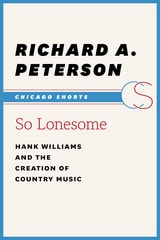
So Lonesome
Hank Williams and the Creation of Country MusicRichard A. Peterson
University of Chicago Press, 1997
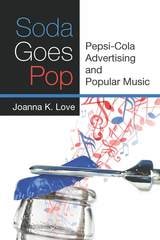
Soda Goes Pop
Pepsi-Cola Advertising and Popular MusicJoanna K. Love
University of Michigan Press, 2019
Soda Goes Pop investigates these and other vital questions around the evolving relationships between popular music and corporate advertising. Joanna K. Love joins musical analysis, historical research, and cultural theory to trace parallel shifts in these industries over eight decades. In addition to scholarly and industry resources, she draws on first-hand accounts, pop culture magazines, trade press journals, and other archival materials. Pepsi’s longevity as an influential American brand, its legendary commercials, and its pioneering, relentless pursuit of alliances with American musical stars makes the brand a particularly instructive point of focus. Several of the company’s most famous ad campaigns are prime examples of the practice of redaction, whereby marketers select, censor, and restructure musical texts to fit commercial contexts in ways that revise their aesthetic meanings and serve corporate aims. Ultimately, Love demonstrates how Pepsi’s marketing has historically appropriated and altered images of pop icons and the meanings of hit songs, and how these commercials shaped relationships between the American music business, the advertising industry, and corporate brands.
Soda Goes Pop is a rich resource for scholars and students of American studies, popular culture, advertising, broadcast media, and musicology. It is also an accessible and informative book for the general reader, as Love’s musical and theoretical analyses are clearly presented for non-specialist audiences and readers with varying degrees of musical knowledge.
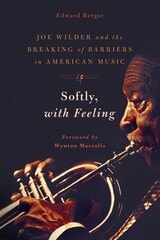
Softly, With Feeling
Joe Wilder and the Breaking of Barriers in American MusicEdward Berger
Temple University Press, 2014
"Joe Wilder set the table. His struggles made it easier for me and many others."--From the Foreword by Wynton Marsalis
Trumpeter Joe Wilder is distinguished for his achievements in both the jazz and classical worlds. He was a founding member of the Symphony of the New World, where he played first trumpet, and he performed as lead trumpet and soloist with Lionel Hampton, Jimmy Lunceford, Dizzy Gillespie, and Count Basie. Yet Wilder is also known as a pioneer who broke down racial barriers, the first African American to hold a principal chair in a Broadway show orchestra, and one of the first African Americans to join a network studio orchestra.
In Softly, with Feeling, Edward Berger tells Wilder's remarkable story-from his growing up in working-class Philadelphia to becoming one of the first 1,000 black Marines during World War II-with tremendous feeling and extensive reminiscences by Wilder and his colleagues, including renowned Philadelphia-area musicians Jimmy Heath and Buddy DeFranco. Berger also places Wilder's experiences within a broader context of American musical and social history.
Wilder's modesty and ability to perform in many musical genres may have prevented him from achieving popular recognition, but in Softly, with Feeling, his legacy and contributions to music and culture are assured.

Someday All the Adults Will Die!
The Birth of Texas PunkPat Blashill
University of Texas Press, 2025
A deep dive into the early days of punk in Austin, Texas, this oral history immerses readers in a diverse and influential music scene.
Texas has always teemed with music and counterculture. When punk came to the state in 1978, it flourished in San Antonio, Dallas, Houston, and, especially, Austin. Punk and post-punk musicians, including nationally acclaimed bands like the Butthole Surfers, the Big Boys, the Dicks, and Daniel Johnston influenced local culture before slashing into the American musical psyche. (See Kurt Cobain sporting Johnston’s “Hi, How are you?” T-shirt.) Someday All the Adults Will Die! is an oral history of punk in Texas, from its rise in the late 1970s, through its strong anti-racist, feminist, and queer peak, to its dissolution in the late 1980s.
Now a seasoned music journalist, Blashill experienced the zenith of Texas punk as a teenager, and he captures its intensity in words and pictures. Someday All the Adults Will Die! is rife with electrifying images and firsthand tales of what made this scene such a storm of pleasures and terrors, uncompromising artists, and wild performances. This dynamic portrait of an untamed, all-out musical era is a must-read for fans of punk music, counterculture, and live music.
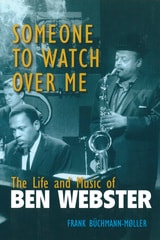
Someone to Watch Over Me
The Life and Music of Ben WebsterFrank Büchmann-Møller
University of Michigan Press, 2010
Early in his career, Webster worked with many of the greatest orchestras of the time, including those led by Willie Bryant, Cab Calloway, Benny Carter, Fletcher Henderson, Andy Kirk, Bennie Moten, and Teddy Wilson. In 1940 Webster became Duke Ellington's first major tenor soloist, and during the next three years he played on many famous recordings, including "Cotton Tail."
Someone to Watch Over Me tells, for the first time, the complete story of Ben Webster's brilliant and troubled career. For this comprehensive study of Webster, author Frank Büchmann-Møller interviewed more than fifty people in the United States and Europe, and he includes numerous translated excerpts from European periodicals and newspapers, none previously available in English. In addition, the author studies every known Webster recording and film, including many private recordings from Webster's home collection not available to the public.
Exhaustively researched, this is a much needed and long overdue study of the life and music of one of jazz's most important artists.

Song Noir
Tom Waits and the Spirit of Los AngelesAlex Harvey
Reaktion Books, 2022
Song Noir examines the formative first decade of Tom Waits’s career, when he lived, wrote, and recorded nine albums in Los Angeles: from his soft, folk-inflected debut, Closing Time in 1973, to the abrasive, surreal Swordfishtrombones in 1983. Starting his songwriting career in the seventies, Waits absorbed Los Angeles’s wealth of cultural influences. Combining the spoken idioms of writers like Kerouac and Bukowski with jazz-blues rhythms, he explored the city’s literary and film noir traditions to create hallucinatory dreamscapes. Waits mined a rich seam of the city’s low-life locations and characters, letting the place feed his dark imagination. Mixing the domestic with the mythic, Waits turned quotidian, autobiographical details into something more disturbing and emblematic, a vision of Los Angeles as the warped, narcotic heart of his nocturnal explorations.
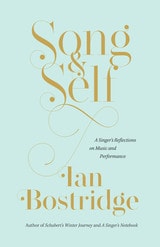
Song and Self
A Singer's Reflections on Music and PerformanceIan Bostridge
University of Chicago Press, 2023
Like so many performers, renowned tenor Ian Bostridge spent much of 2020 and 2021 unable to take part in live music. The enforced silence of the pandemic led him to question an identity that was previously defined by communicating directly with audiences in opera houses and concert halls. It also allowed him to delve deeper into many of the classical works he has encountered over the course of his career, such as Claudio Monteverdi’s seventeenth-century masterpiece Il Combattimento di Tancredi e Clorinda and Robert Schumann’s popular song cycle Frauenliebe und Leben. In lucid and compelling prose, Bostridge explores the ways Monteverdi, Schumann, and Britten employed and disrupted gender roles in their music; questions colonial power and hierarchy in Ravel’s Songs of Madagascar; and surveys Britten’s reckoning with death in works from the War Requiem to his final opera, Death in Venice.
As a performer reconciling his own identity and that of the musical text he delivers on stage, Bostridge unravels the complex history of each piece of music, showing how today’s performers can embody that complexity for their audiences. As readers become privy to Bostridge’s unique lines of inquiry, they are also primed for the searching intensity of his interpretations, in which the uncanny melding of song and self brings about moments of epiphany for both the singer and his audience.
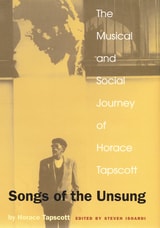
Songs of the Unsung
The Musical and Social Journey of Horace TapscottHorace Tapscott
Duke University Press, 2001
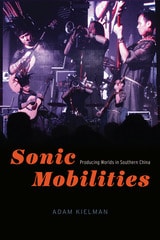
Sonic Mobilities
Producing Worlds in Southern ChinaAdam Kielman
University of Chicago Press, 2022
Guangzhou is a large Chinese city like many others. With a booming economy and abundant job opportunities, it has become a magnet for rural citizens seeking better job prospects as well as global corporations hoping to gain a foothold in one of the world’s largest economies. This openness and energy have led to a thriving popular music scene that is every bit the equal of Beijing’s. But the musical culture of Guangzhou expresses the city’s unique cosmopolitanism. A port city that once played a key role in China’s maritime Silk Road, Guangzhou has long been an international hub. Now, new migrants to the city are incorporating diverse Chinese folk traditions into the musical tapestry.
In Sonic Mobilities, ethnomusicologist Adam Kielman takes a deep dive into Guangzhou's music scene through two bands, Wanju Chuanzhang (Toy Captain) and Mabang (Caravan), that express ties to their rural homelands and small-town roots while forging new cosmopolitan musical connections. These bands make music that captures the intersection of the global and local that has come to define Guangzhou, for example by writing songs with a popular Jamaican reggae beat and lyrics in their distinct regional dialects mostly incomprehensible to their audiences. These bands create a sound both instantly recognizable and totally foreign, international and hyper-local. This juxtaposition, Kielman argues, is an apt expression of the demographic, geographic, and political shifts underway in Guangzhou and across the country. Bridging ethnomusicology, popular music studies, cultural geography, and media studies, Kielman examines the cultural dimensions of shifts in conceptualizations of self, space, publics, and state in a rapidly transforming the People’s Republic of China.
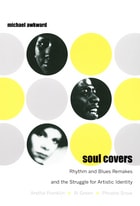
Soul Covers
Rhythm and Blues Remakes and the Struggle for Artistic Identity (Aretha Franklin, Al Green, Phoebe Snow)Michael Awkward
Duke University Press, 2007
Awkward sees Franklin’s early album Unforgettable: A Tribute to Dinah Washington, released shortly after Washington’s death in 1964, as an attempt by a struggling young singer to replace her idol as the acknowledged queen of the black female vocal tradition. He contends that Green’s album Call Me (1973) reveals the performer’s attempt to achieve formal coherence by uniting seemingly irreconcilable aspects of his personal history, including his career in popular music and his religious yearnings, as well as his sense of himself as both a cosmopolitan black artist and a forlorn country boy. Turning to Snow’s album Second Childhood (1976), Awkward suggests that through covers of blues and soul songs, Snow, a white Jewish woman from New York, explored what it means for non-black enthusiasts to perform works considered by many to be black cultural productions. The only book-length examination of the role of remakes in American popular music, Soul Covers is itself a refreshing new take on the lives and work of three established soul artists.
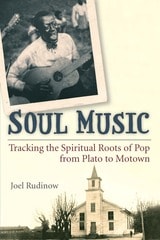
Soul Music
Tracking the Spiritual Roots of Pop from Plato to MotownJoel Rudinow
University of Michigan Press, 2010
"Exceptionally illuminating and philosophically sophisticated."
---Ted Cohen, Professor of Philosophy, University of Chicago
"In this audacious and long-awaited book, Joel Rudinow takes seriously a range of interrelated issues that most music theorizing is embarrassed to tackle. People often ask me about music and spirituality. With Soul Music, I can finally recommend a book that offers genuine philosophical insight into the topic."
---Theodore Gracyk, Professor of Philosophy, Minnesota State University Moorhead
The idea is as strange as it is commonplace---that the "soul" in soul music is more than just a name, that somehow the music truly taps into something essential rooted in the spiritual notion of the soul itself. Or is it strange? From the civil rights movement and beyond, soul music has played a key, indisputable role in moments of national healing. Of course, American popular music has long been embroiled in controversies over its spiritual purity (or lack thereof). But why? However easy it might seem to dismiss these ideas and debates as quaint and merely symbolic, they persist.
In Soul Music: Tracking the Spiritual Roots of Pop from Plato to Motown, Joel Rudinow, a philosopher of music, takes these peculiar notions and exposes them to serious scrutiny. How, Rudinow asks, does music truly work upon the soul, individually and collectively? And what does it mean to say that music can be spiritually therapeutic or toxic? This illuminating, meditative exploration leads from the metaphysical idea of the soul to the legend of Robert Johnson to the philosophies of Plato and Leo Strauss to the history of race and racism in American popular culture to current clinical practices of music therapy.
Joel Rudinow teaches in the Philosophy and Humanities Departments at Santa Rosa Junior College and is the coauthor of Invitation to Critical Thinking and the coeditor of Ethics and Values in the Information Age.
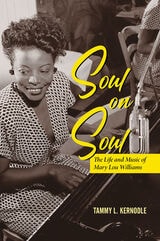
Soul on Soul
The Life and Music of Mary Lou WilliamsTammy L. Kernodle
University of Illinois Press, 2020
The jazz musician-composer-arranger Mary Lou Williams spent her sixty-year career working in—and stretching beyond—a dizzying range of musical styles. Her integration of classical music into her works helped expand jazz's compositional language. Her generosity made her a valued friend and mentor to the likes of Thelonious Monk, Charlie Parker, and Dizzy Gillespie. Her late-in-life flowering of faith saw her embrace a spiritual jazz oriented toward advancing the civil rights struggle and helping wounded souls.
Tammy L. Kernodle details Williams's life in music against the backdrop of controversies over women's place in jazz and bitter arguments over the music's evolution. Williams repeatedly asserted her artistic and personal independence to carve out a place despite widespread bafflement that a woman exhibited such genius. Embracing Williams's contradictions and complexities, Kernodle also explores a personal life troubled by lukewarm professional acceptance, loneliness, relentless poverty, bad business deals, and difficult marriages.
In-depth and epic in scope, Soul on Soul restores a pioneering African American woman to her rightful place in jazz history.
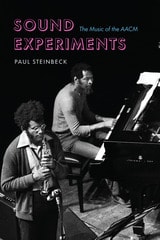
Sound Experiments
The Music of the AACMPaul Steinbeck
University of Chicago Press, 2022
Founded on Chicago’s South Side in 1965 and still thriving today, the Association for the Advancement of Creative Musicians (AACM) is the most influential collective organization in jazz and experimental music. In Sound Experiments, Paul Steinbeck offers an in-depth historical and musical investigation of the collective, analyzing individual performances and formal innovations in captivating detail. He pays particular attention to compositions by Muhal Richard Abrams and Roscoe Mitchell, the Association’s leading figures, as well as Anthony Braxton, George Lewis (and his famous computer-music experiment, Voyager), Wadada Leo Smith, and Henry Threadgill, along with younger AACM members such as Mike Reed, Tomeka Reid, and Nicole Mitchell.
Sound Experiments represents a sonic history, spanning six decades, that affords insight not only into the individuals who created this music but also into an astonishing collective aesthetic. This aesthetic was uniquely grounded in nurturing communal ties across generations, as well as a commitment to experimentalism. The AACM’s compositions broke down the barriers between jazz and experimental music and made essential contributions to African American expression more broadly. Steinbeck shows how the creators of these extraordinary pieces pioneered novel approaches to instrumentation, notation, conducting, musical form, and technology, creating new soundscapes in contemporary music.
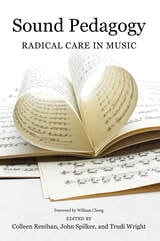
Sound Pedagogy
Radical Care in MusicEdited by Colleen Renihan, John Spilker, and Trudi Wright. Foreword by William Cheng
University of Illinois Press, 2024
Contributors: Molly M. Breckling, William A. Everett, Kate Galloway, Sara Haefeli, Eric Hung, Stephanie Jensen-Moulton, Mark Katz, Nathan A. Langfitt, Matteo Magarotto, Mary Natvig, Frederick A. Peterbark, Laura Moore Pruett, Colleen Renihan, Amanda Christina Soto, John Spilker, Reba A. Wissner, and Trudi Wright
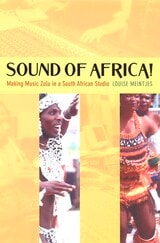
Sound of Africa!
Making Music Zulu in a South African StudioLouise Meintjes
Duke University Press, 2003
Focusing on the ways artists, producers, and sound engineers collaborate in the studio control room, Meintjes reveals not only how particular mbaqanga sounds are shaped technically, but also how egos and artistic sensibilities and race and ethnicity influence the mix. She analyzes how the turbulent identity politics surrounding Zulu ethnic nationalism impacted mbaqanga artists' decisions in and out of the studio. Conversely, she explores how the global consumption of Afropop and African images fed back into mbaqanga during the recording process. Meintjes is especially attentive to the ways the emotive qualities of timbre (sound quality or tone color) forge complex connections between aesthetic practices and political ideology. Vivid photos by the internationally renowned photographer TJ Lemon further dramatize Meintjes’ ethnography.
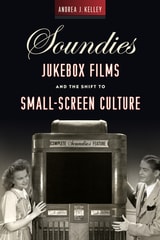
Soundies Jukebox Films and the Shift to Small-Screen Culture
Kelley, Andrea J
Rutgers University Press, 2018
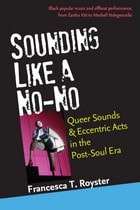
Sounding Like a No-No
Queer Sounds and Eccentric Acts in the Post-Soul EraFrancesca T. Royster
University of Michigan Press, 2012
Sounding Like a No-No traces a rebellious spirit in post–civil rights black music by focusing on a range of offbeat, eccentric, queer, or slippery performances by leading musicians influenced by the cultural changes brought about by the civil rights, black nationalist, feminist, and LGBTQ movements, who through reinvention created a repertoire of performances that have left a lasting mark on popular music. The book's innovative readings of performers including Michael Jackson, Grace Jones, Stevie Wonder, Eartha Kitt, and Meshell Ndegeocello demonstrate how embodied sound and performance became a means for creativity, transgression, and social critique, a way to reclaim imaginative and corporeal freedom from the social death of slavery and its legacy of racism, to engender new sexualities and desires, to escape the sometimes constrictive codes of respectability and uplift from within the black community, and to make space for new futures for their listeners. The book's perspective on music as a form of black corporeality and identity, creativity, and political engagement will appeal to those in African American studies, popular music studies, queer theory, and black performance studies; general readers will welcome its engaging, accessible, and sometimes playful writing style, including elements of memoir.

Sounding Like a No-No
Queer Sounds and Eccentric Acts in the Post-Soul EraFrancesca T. Royster
University of Michigan Press, 2013
Sounding Like a No-No traces a rebellious spirit in post–civil rights black music by focusing on a range of offbeat, eccentric, queer, or slippery performances by leading musicians influenced by the cultural changes brought about by the civil rights, black nationalist, feminist, and LGBTQ movements, who through reinvention created a repertoire of performances that have left a lasting mark on popular music. The book's innovative readings of performers including Michael Jackson, Grace Jones, Stevie Wonder, Eartha Kitt, and Meshell Ndegeocello demonstrate how embodied sound and performance became a means for creativity, transgression, and social critique, a way to reclaim imaginative and corporeal freedom from the social death of slavery and its legacy of racism, to engender new sexualities and desires, to escape the sometimes constrictive codes of respectability and uplift from within the black community, and to make space for new futures for their listeners. The book's perspective on music as a form of black corporeality and identity, creativity, and political engagement will appeal to those in African American studies, popular music studies, queer theory, and black performance studies; general readers will welcome its engaging, accessible, and sometimes playful writing style, including elements of memoir.
Sounding Out Pop
Analytical Essays in Popular MusicMark Spicer and John Covach, editors
University of Michigan Press, 2010
"A variety of approaches are brought to bear on fascinating repertoire, but with the underlying aim of better understanding some brilliant music. There’s nothing more exciting in music writing than something which entices you to listen to what’s familiar to you in a new way, and this collection brings such excitement in abundance."
---Allan Moore, author of Jethro Tull: Aqualung and Rock: The Primary Text
"These essays bring together a remarkable range of tools and perspectives to such diverse topics and contexts as the behind-the-scenes collaborations of composers, performers, arrangers, producers and engineers; pop culture; narratology; and race, politics and gender. The reader continuously benefits from a complementary lineup of sensitive ears that discover novelty in the familiar, exposing the heart of many rock and pop classics through imaginative and authoritative prose."
---Walter Everett, author of The Foundations of Rock and The Beatles as Musicians
The nine essays in Sounding Out Pop work together to map the myriad styles and genres of the pop-rock universe through detailed case studies that confront the music from a variety of engaging, thought-provoking perspectives---from historical to music-analytic, aesthetic to ethnographic, with several authors drawing liberally from ideas in other disciplines. The range of bands and artists covered is as vast and varied as the more than fifty-year history of pop and rock music, from the Coasters and Roy Orbison to Marvin Gaye, Bob Dylan, Radiohead, Beck, Genesis, Tori Amos, and the Police. Together these diverse essays cover a broad spectrum of studies ideally suited for classroom use and for other readers interested in gaining a deeper knowledge of the way popular music works.
Mark Spicer is Associate Professor and Director of Undergraduate Studies in Music at Hunter College and the Graduate Center, City University of New York. His writings have appeared in Contemporary Music Review, Gamut, Music Theory Online, twentieth-century music, and other scholarly journals and essay collections.
John Covach is Professor of Music at the University of Rochester and Professor of Theory at the Eastman School of Music. He is the author of the college textbook What's That Sound? An Introduction to Rock and Its History and the coeditor of Understanding Rock, American Rock and the Classical Music Tradition, and Traditions, Institutions, and American Popular Music.
Cover art credit: © iStockphoto.com/Aleksandar Dickov