Results by title
511 books match the query 'Government policy' and 36 start with s
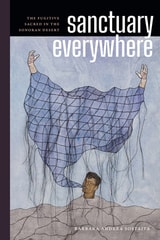
Sanctuary Everywhere
The Fugitive Sacred in the Sonoran DesertBarbara Andrea Sostaita
Duke University Press, 2024
Saving Our Children From Poverty
What the United States Can Learn From FranceBarbara R. Bergmann
Russell Sage Foundation, 1996

Saving the Pryor Mountain Mustang
A Legacy of Local and Federal CooperationChrstine Reed
University of Nevada Press, 2015
Saving the Pryor Mountain Mustang explores the unique and ongoing relationship between locals and the federal government, highlighting the Lovell citizens’ philosophy of cooperation instead of the typical mistrust that exists between wild horse advocates and federal agencies. The book provides a rich analysis of how a determined group of people saved an endangered wild horse herd. The book will have wide appeal to wild horse activists, scholars of local and federal governance, and western history enthusiasts.
School Siting and Healthy Communities
Why Where We Invest in School Facilities MattersRebecca Miles
Michigan State University Press, 2012
In recent decades, many metropolitan areas in the United States have experienced a decline in the population of urban centers and rapid growth in the suburbs, with new schools being built outside of cities and existing urban schools facing closure. These new schools are increasingly larger and farther from residences; in contrast, urban school facilities are often in closer proximity to homes but are also in dire need of upgrading or modernization. This eye-opening book explores the compelling health and economic rationales for new approaches to school siting, including economic savings to school districts, transportation infrastructure needs, and improved child health. An essential examination of public policy issues associated with school siting, this compiled volume will assist policy makers and help the public understand why it is important for government and school districts to work together on school siting and capital expenditures and how these new outlooks will improve local and regional outcomes.
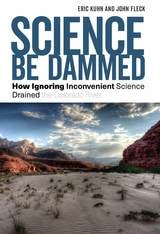
Science Be Dammed
How Ignoring Inconvenient Science Drained the Colorado RiverEric Kuhn and John Fleck
University of Arizona Press, 2019
Arguing that the science of the early twentieth century can shed new light on the mistakes at the heart of the over-allocation of the Colorado River, authors Eric Kuhn and John Fleck delve into rarely reported early studies, showing that scientists warned as early as the 1920s that there was not enough water for the farms and cities boosters wanted to build. Contrary to a common myth that the authors of the Colorado River Compact did the best they could with limited information, Kuhn and Fleck show that development boosters selectively chose the information needed to support their dreams, ignoring inconvenient science that suggested a more cautious approach.
Today water managers are struggling to come to terms with the mistakes of the past. Focused on both science and policy, Kuhn and Fleck unravel the tangled web that has constructed the current crisis. With key decisions being made now, including negotiations for rules governing how the Colorado River water will be used after 2026, Science Be Dammed offers a clear-eyed path forward by looking back.
Understanding how mistakes were made is crucial to understanding our contemporary problems. Science Be Dammed offers important lessons in the age of climate change about the necessity of seeking out the best science to support the decisions we make.
Science and Ecosystem Management in the National Parks
Edited by William L. Halvorson and Gary E. Davis
University of Arizona Press, 1996
Science and Ecosystem Management in the National Parks presents twelve case studies of long-term research conducted in and around national parks that address major natural resource issues. These cases demonstrate how the use of longer time scales strongly influence our understanding of ecosystems and how interpretations of short-term patterns in nature often change when viewed in the context of long-term data sets. Most importantly, they show conclusively that scientific research significantly reduces uncertainty and improves resource management decisions. Chosen by scientists and senior park managers, the cases offer a broad range of topics, including: air quality at Grand Canyon; interaction between moose and wolf populations on Isle Royale; control of exotic species in Hawaiian parks; simulation of natural fire in the parks of the Sierra Nevada; and the impact of urban expansion on Saguaro National Monument.
Because national parks are increasingly beset with conflicting views of their management, the need for knowledge of park ecosystems becomes even more critical--not only for the parks themselves, but for what they can tell us about survival in the rest of our world. This book demonstrates to policymakers and managers that decisions based on knowledge of ecosystems are more enduring and cost effective than decisions derived from uninformed consensus. It also provides scientists with models for designing research to meet threats to our most precious natural resources. "If we can learn to save the parks," observe Halvorson and Davis, "perhaps we can learn to save the world."
Securing the Future
Investing in Children From Birth to CollegeSheldon Danziger
Russell Sage Foundation, 2000
Sensory Futures
Deafness and Cochlear Implant Infrastructures in IndiaMichele Ilana Friedner
University of Minnesota Press, 2022
What happens when cochlear implants, heralded as the first successful bionic technologies, make their way around the globe and are provided by both states and growing private markets? As Sensory Futures follows these implants from development to domestication and their unequal distribution in India, Michele Ilana Friedner explores biotechnical intervention in the realm of disability and its implications for state politics in the Global South.
A signing and speaking deaf bilateral cochlear implant user, Friedner weaves personal reflections into this fine-grained ethnography of everyday negotiations, activist aspirations, and the space of the family. She places sensory anthropology in conversation with disability studies to analyze how normative sensoria are cultivated and the pursuit of listening and speaking capability is enacted. She argues that the conditions of potentiality that have emerged through cochlear implantation have, in fact, resulted in ever narrower understandings of future life possibilities. Rejecting sensory hierarchies that privilege audition, Friedner calls for multisensory, multimodal, and multipersonal ways of relating to the world.
Sensory Futures explores deaf people’s desires to create habitable worlds and grapple with what their futures might look like, in India and beyond, amid a surge in both biotechnical interventions and disability rights activism. With implications for a broad range of disability experiences, this sensitive, in-depth research focuses on the specific experiences of deaf people, both children and adults, and the structural, political, and social possibilities offered by both biotechnological and social “cures.”
Sentient Lands
Indigeneity, Property, and Political Imagination in Neoliberal ChilePiergiorgio Di Giminiani
University of Arizona Press, 2018
Sentient Lands is a historically grounded ethnography of the Mapuche people’s engagement with state-run reconciliation and land-restitution efforts. Piergiorgio Di Giminiani analyzes environmental relations, property, state power, market forces, and indigeneity to illustrate how land connections are articulated, in both landscape experiences and land claims. Rather than viewing land claims as simply bureaucratic procedures imposed on local understandings and experiences of land connections, Di Giminiani reveals these processes to be disputed practices of world making.
Ancestral land formation is set in motion by the entangled principles of Indigenous and legal land ontologies, two very different and sometimes conflicting processes. Indigenous land ontologies are based on a relation between two subjects—land and people—both endowed with sentient abilities. By contrast, legal land ontologies are founded on the principles of property theory, wherein land is an object of possession that can be standardized within a regime of value. Governments also use land claims to domesticate Indigenous geographies into spatial constructs consistent with political and market configurations.
Exploring the unexpected effects on political activism and state reparation policies caused by this entanglement of Indigenous and legal land ontologies, Di Giminiani offers a new analytical angle on Indigenous land politics.
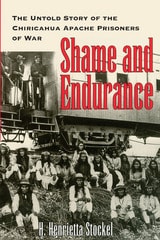
Shame and Endurance
The Untold Story of the Chiricahua Apache Prisoners of WarH. Henrietta Stockel
University of Arizona Press, 2004
First removed from Arizona to Florida, the prisoners were eventually relocated to Mount Vernon Barracks in Alabama, where, in the words of one Apache, "We didn’t know what misery was until they dumped us in those swamps." Pulmonary disease took its toll—by 1894, disease had killed nearly half of the Apaches—and after years of pressure from Indian rights activists and bureaucratic haggling, Fort Sill in Oklahoma was chosen as a more healthful location. Here they were given the opportunity to farm, and here Geronimo, who eventually converted to Christianity, died of pneumonia in 1909 at the age of 89, still a prisoner of war. In the meantime, many Apache children had been removed to Carlisle, Pennsylvania, for education—despite earlier promises that families would not be split up—and most eventually lost their cultural identity.
Henrietta Stockel has combed public records to reconstruct this story of American shame and Native endurance. Unabashedly speaking on behalf of the Apaches, she has framed these documents within a readable narrative to show how exasperated public officials, eager to openly demonstrate their superiority over "savages" who had successfully challenged the American military for years, had little sympathy for the consequences of their confinement. Although the Chiricahua Apaches were not alone in losing their ancestral homelands, they were the only American Indians imprisoned for so long a time in an environment that continually exposed them to illnesses against which they had no immunity, devastating families even more than warfare. Shame and Endurance records events that ought never to be repeated—and tells a story that should never be forgotten.

Sharp and Dangerous Virtues
A NovelMartha Moody
Ohio University Press, 2012
It’s 2047 in Dayton, Ohio. In response to food and water shortages, the U.S. government has developed an enormous, and powerfully successful, agricultural area—the “Heartland Grid”—just north of the city. In the meantime, in the wake of declining American power a multinational force has established itself in Cleveland. Behind these quickly shifting alliances lies a troubling yet tantalizing question: what will the American future look like?
Sharp and Dangerous Virtues is the story of ordinary people caught in situations they had never planned for or even imagined. There are Chad and Sharis, a married couple with two sons, holding out for normal life in their decaying suburb; Tuuro, a black church custodian whose false confession of murder is used for political purposes; Lila, Dayton’s aging, lonely Commissioner of Water, who dreams of being part of the “pure” existence of the Grid residents; and Charles and Diana, idealistic lovers trying desperately to preserve the nature center that has become their refuge.
What will these people do? What choices are left for them, and what choices have been taken away? Whom and what can they trust? Novelist Moody—known for her vivid portrayals of complicated characters and relationships in novels such as Best Friends and Sometimes Mine—weaves together cataclysmic events and the most intimate of human emotions to create a future that seems achingly real. Sharp and Dangerous Virtues will change the way you think and feel.
Shifting Borders
Rhetoric, Immigration And Prop 187Kent Ono
Temple University Press, 2002
"Like articles representing the positions of proponents of the measure, those representing opponents constructing the nation as potentially in danger as a result of undocumented immigration."
How do we learn to recognize the damning effects of good rhetorical intentions? And where will we find arguments which escape this trap that permeates the liberal social policy world? Shifting Borders uses an evaluation of the debate over California Proposition 187 to demonstrate how this quandary is best understood by close interrogation of mainstream reports and debates and by bringing to the fore voices that are often left out of mediated discussions.
It is these voices outside the mainstream, so-called "outlaw" discourses, that hold the best possibilities for real social change. To illustrate their claim, the authors present dominant and outlaw discourses around Proposition 187, from television reports, internet chat sites, and religious discourse to coverage of the Los Angeles Times. Their critique ably demonstrates how difficult it is to maintain a position outside the mainstream, but also how important it is for the press, citizens and scholars to actively search out such voices. The findings are organized through a model that provides an innovative method for understanding events and arguments through their rhetorical and communicative construction. In a world where the mediated word defines so much of what we know, Shifting Borders provides a lucid introduction to analyzing the spoken and written word that constitutes political debate in contemporary U.S. culture. In doing so, it makes an important contribution to any future development of progressive political strategy.
postamble();
Shifting Obsessions
Three Essays on the Politics of AnticorruptionAryeh Neier
Central European University Press, 2004
Shock Values
Prices and Inflation in American DemocracyCarola Binder
University of Chicago Press, 2024
ONE OF THE WALL STREET JOURNAL'S 10 BEST BOOKS OF 2024
How inflation and deflation fears shape American democracy.
Many foundational moments in American economic history—the establishment of paper money, wartime price controls, the rise of the modern Federal Reserve—occurred during financial panics as prices either inflated or deflated sharply. The government’s decisions in these moments, intended to control price fluctuations, have produced both lasting effects and some of the most contentious debates in the nation’s history.
A sweeping history of the United States’ economy and politics, Shock Values reveals how the American state has been shaped by a massive, ever-evolving effort to insulate its economy from the real and perceived dangers of price fluctuations. Carola Binder narrates how the pains of rising and falling prices have brought lasting changes for every generation of Americans. And with each brush with price instability, the United States has been reinvented—not as a more perfect union, but as a reflection of its most recent failures.
Shock Values tells the untold story of prices and price stabilization in the United States. Expansive and enlightening, Binder recounts the interest-group politics, legal battles, and economic ideas that have shaped a nation from the dawn of the republic to the present.
Sincerely Held
American Secularism and Its BelieversCharles McCrary
University of Chicago Press, 2022
“Sincerely held religious belief” is now a common phrase in discussions of American religious freedom, from opinions handed down by the US Supreme Court to local controversies. The “sincerity test” of religious belief has become a cornerstone of US jurisprudence, framing what counts as legitimate grounds for First Amendment claims in the eyes of the law. In Sincerely Held, Charles McCrary provides an original account of how sincerely held religious belief became the primary standard for determining what legally counts as authentic religion.
McCrary skillfully traces the interlocking histories of American sincerity, religion, and secularism starting in the mid-nineteenth century. He analyzes a diverse archive, including Herman Melville’s novel The Confidence-Man, vice-suppressing police, Spiritualist women accused of being fortune-tellers, eclectic conscientious objectors, secularization theorists, Black revolutionaries, and anti-LGBTQ litigants. Across this history, McCrary reveals how sincerity and sincerely held religious belief developed as technologies of secular governance, determining what does and doesn’t entitle a person to receive protections from the state.
This fresh analysis of secularism in the United States invites further reflection on the role of sincerity in public life and religious studies scholarship, asking why sincerity has come to matter so much in a supposedly “post-truth” era.
Smoke in Their Eyes
Lessons in Movement Leadership from the Tobacco WarsMichael Pertschuk
Vanderbilt University Press, 2001
A lifelong public health leader and tobacco control advocate, Pertschuk provides uncommon insight into the movement and its opposition. Questions that reveal themselves here can be applied to public advocacy as a whole: how can movement leaders gauge and best employ popular support? Who has legitimacy to speak on behalf of a particular public cause? And perhaps most crucially, how is it possible for those whose cause is a moral one to strike political compromise? With a narrative as compelling as the issues it raises, Smoke in Their Eyes will be of great interest to everyone from students of public advocacy and political science to general readers.
Smoke-Filled Rooms
A Postmortem on the Tobacco DealW. Kip Viscusi
University of Chicago Press, 2002
With Smoke-Filled Rooms,W. Kip Viscusi provides unexpected answers to these questions, drawing on an impressive range of data on several topics central to the smoking policy debate. Based on surveys of smokers in the United States and Spain, for instance, he demonstrates that smokers actually overestimate the dangers of smoking, indicating that they are well aware of the risks involved in their choice to smoke. And while smoking does increase medical costs to the states, Viscusi finds that these costs are more than financially balanced by the premature mortality of smokers, which reduces their demands on state pension and health programs, so that, on average, smoking either pays for itself or generates revenues for the states.
Viscusi's eye-opening assessment of the tobacco lawsuits also includes policy recommendations that could frame these debates in a more productive way, such as his suggestion that the FDA should develop a rating system for cigarettes and other tobacco products based on their relative safety, thus providing an incentive for tobacco manufacturers to compete among themselves to produce safer cigarettes. Viscusi's hard look at the facts of smoking and its costs runs against conventional thinking. But it is also necessary for an informed and realistic debate about the legal, financial, and social consequences of the tobacco lawsuits.
People making $50,000 or more pay .08 percent of their income in cigarette taxes, but people with incomes of less than $10,000 pay 1.62 percenttwenty times as much. The maintenance crew at the Capitol will bear more of the "sin tax" levied on cigarettes than will members of Congress who voted to boost it.
Cigarettes are not a financial drain to the U.S. In fact, they are self-financing, as a consequence of smokers' premature mortality.
The general public estimates that 47 out of 100 smokers will die from lung cancer because they smoke. Smokers believe that 40 out of 100 will die of the disease. Scientists estimate the actual number of 100 smokers who will die from lung cancer to be between 7 and 13.
Social Security Policy in a Changing Environment
Edited by Jeffrey R. Brown, Jeffrey B. Liebman, and David A. Wise
University of Chicago Press, 2009
Social Security Programs and Retirement around the World
The Relationship to Youth EmploymentEdited by Jonathan Gruber and David A. Wise
University of Chicago Press, 2010

Space of Detention
The Making of a Transnational Gang Crisis between Los Angeles and San SalvadorElana Zilberg
Duke University Press, 2011
Spin Cycle
How Research Gets Used in Policy Debates--The Case of Charter SchoolsJeffrey R. Henig
Russell Sage Foundation, 2008
Spontaneous Shelter
Carl Patton
Temple University Press, 1988
St. Louis
Evolution Of American Urban LandscapeERIC SANDWEISS
Temple University Press, 2001
In this book, Eric Sandweiss scrutinizes the everyday landscape -- streets, houses, neighborhoods, and public buildings -- as it evolved in a classic American city. Bringing to life the spaces that most of us pass without noticing, he reveals how the processes of dividing, trading, improving, and dwelling upon land are acts that reflect and shape social relations. From its origins as a French colonial settlement in the eighteenth century to the present day, St. Louis offers a story not just about how our past is diagrammed in brick and asphalt, but also about the American city's continuing viability as a place where the balance of individual rights and collective responsibilities can be debated, demonstrated and adjusted for generations to come.
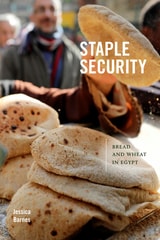
Staple Security
Bread and Wheat in EgyptJessica Barnes
Duke University Press, 2022
States And Labor Markets
edited by John Myles and Jill Quadagno
Temple University Press, 1991
During the last decade worries about population aging, increases in national expenditures for the elderly, and the trend toward early retirement have aroused new concerns about the future of old-age security. Myles and Quadagno have assembled a collection of original essays that examine how different countries have responded to these issues.
The essays in Part I explore the recent politics of old age in Great Britain, Canada, Poland, Scandinavia, West Germany, France, the Netherlands, Japan, and Australia. They demonstrate that while, during the Reagan and Thatcher era, the United States and Great Britain forged debates about old-age policies around a neo-conservative agenda, other countries facing similar matters followed different paths. In Part II, the authors examine how transformations in labor- market practices are gradually altering the status of older workers and with it our conventional understanding of old age.
The reconstruction of the international division of labor, the shift of employment from goods to services, and the adoption of new, knowledge-intensive technologies are changing the economic and political basis of the organization of old age. As we move toward the next century, these essays provide a starting point for a new generation of studies in the political economy of aging.
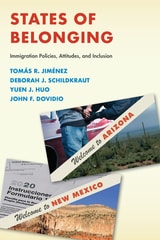
States of Belonging
Immigration Policies, Attitudes, and InclusionTomas R. Jimenez
Russell Sage Foundation, 2021
Arizona and New Mexico are historically and demographically similar, but they differ in their immigration policies. Arizona has enacted unwelcoming policies towards immigrants, restricting the access of immigrants to state resources, social services, and public institutions. New Mexico is more welcoming, actively seeking to protect the rights of immigrants and extending access to state resources and institutions. The authors draw on an original survey and in-depth interviews of a cross-section of each state’s population to illustrate how these differing approaches affect the sense of belonging not only among immigrants, but among the U.S.-born as well.
Respondents in Arizona, regardless of whether they were foreign- or native-born or their ethno-racial background, agreed that the state is unwelcoming to immigrants, and they pointed to Arizona’s restrictive policies as the primary factor. The sense of rejection perceived by Latinos in Arizona, including the foreign-born and the U.S.-born, was profound. They felt the effects of administrative and symbolic exclusions of the state’s unwelcoming policies as they went about their daily lives.
New Mexico’s more welcoming approach had positive effects on the Latino immigrant population, and these policies contributed to an increased sense of belonging among U.S.-born Latinos and U.S.-born whites as well. The authors show that exposure to information about welcoming policies is associated with an improved sense of belonging across most population groups. They also find that the primary dividing line when it came to reactions to welcoming policies was political, not ethno-racial. Only self-identified Republicans, Latino as well as white, showed reduced feelings of belonging.
States of Belonging demonstrates that welcoming policies cultivate a greater sense of belonging for immigrants and other state citizens, suggesting that policies aimed at helping immigrants gain a social, economic, and political foothold in this country can pay a broad societal dividend.
Straddling the Border
Immigration Policy and the INSBy Lisa Magaña
University of Texas Press, 2003
With the dual and often conflicting responsibilities of deterring illegal immigration and providing services to legal immigrants, the U. S. Immigration and Naturalization Service (INS) is a bureaucracy beset with contradictions. Critics fault the agency for failing to stop the entry of undocumented workers from Mexico. Agency staff complain that harsh enforcement policies discourage legal immigrants from seeking INS aid, while ever-changing policy mandates from Congress and a lack of funding hinder both enforcement and service activities.
In this book, Lisa Magaña convincingly argues that a profound disconnection between national-level policymaking and local-level policy implementation prevents the INS from effectively fulfilling either its enforcement or its service mission. She begins with a history and analysis of the making of immigration policy which reveals that federal and state lawmakers respond more to the concerns, fears, and prejudices of the public than to the realities of immigration or the needs of the INS. She then illustrates the effects of shifting and conflicting mandates through case studies of INS implementation of the Immigration Reform and Control Act of 1986, Proposition 187, and the 1996 Welfare Reform and Responsibility Act and their impact on Mexican immigrants. Magaña concludes with fact-based recommendations to improve the agency's performance.
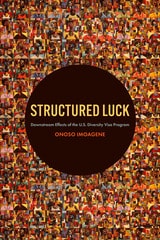
Structured Luck
Downstream Effects of the U.S. Diversity Visa ProgramOnoso Imoagene
Russell Sage Foundation, 2024
Combining ethnographic observation in Africa and interviews with immigrants, their family members, and friends from Ghana and Nigeria, Imoagene demonstrates that the visa program is a process of “structured luck,” from how people hear about the lottery, who registers for it, and who participates in it to the application requirements for the visa. In Ghana and Nigeria, people often learn about the lottery through friends, colleagues, or relatives who persuade them to enter for the perceived benefits of receiving a visa: opportunities for upward mobility, permanent legal status, and the ability to bring along family members. Though anyone can enter the lottery, not everyone who wins obtains a visa. The visa application process requires proof of a high school diploma or artisan skills, a medical exam, a criminal background check, an interview with U.S. consular officers, and payment of fees. Such requirements have led to the growth of visa entrepreneurs, who often charge exorbitant fees to steer immigrants through the process. Visa recipients who were on track to obtain university degrees at home often leave in the middle of their studies for the United States but struggle to continue their education due to high U.S. tuition costs. And though their legal status allows them to escape the demoralizing situations that face the undocumented, these immigrants lack the social support that the government sometimes provides for refugees and other migrants. Ultimately, Imoagene notes, the real winner of the visa lottery is not the immigrants themselves but the United States, which benefits from their relatively higher levels of education. Consequently, she argues, the U.S. must do more to minimize the visa program’s negative consequences.
Structured Luck illuminates the trauma, resilience, and determination of immigrants who come to the United States through the Diversity Visa Program and calls for the United States to develop policies that will better integrate them into society.
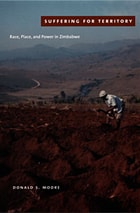
Suffering for Territory
Race, Place, and Power in ZimbabweDonald S. Moore
Duke University Press, 2005
Moore makes a significant contribution to postcolonial theory with his conceptualization of “entangled landscapes” by articulating racialized rule, situated sovereignties, and environmental resources. Fusing Gramscian cultural politics and Foucault’s analytic of governmentality, he enlists ethnography to foreground the spatiality of power. Suffering for Territory demonstrates how emplaced micro-practices matter, how the outcomes of cultural struggles are contingent on the diverse ways land comes to be inhabited, labored upon, and suffered for.
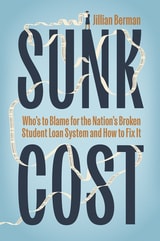
Sunk Cost
Who’s to Blame for the Nation’s Broken Student Loan System and How to Fix ItJillian Berman
University of Chicago Press, 2025
Student-loan horror stories are a dime a dozen. But students today are faced with a seemingly insurmountable paradox: Research consistently shows that the clearest viable option to financial stability is a college degree. But if and when Americans decide to pursue diplomas, student loan payments quickly follow, and even after securing full-time employment, many borrowers struggle to make ends meet for years. In Sunk Cost, journalist Jillian Berman explores how the nation’s student loan program went from a well-intentioned initiative aimed at helping low- and middle-income students afford college to one that traps borrowers in long-term debt.
Berman interviewed dozens of borrowers and policymakers and dug into the archives to unearth the true causes of the student loan problem. A couple of generations ago, policy makers generously subsidized Americans’ college educations because they knew it would be advantageous for the entire country: a more educated population meant better quality of life for all. But today, higher education is viewed as an individual goal, so students and their families are expected to be on the hook for it themselves. Berman explains how this enormous shift happened, which industries benefit from it, and what it means for college-going Americans today. She shares real-life stories of college graduates who are being crushed under some of the harshest consequences of the student loan system. These borrowers pursued higher education in hopes of a better life and yet some have been trapped in debt for decades, making it difficult to put food on the table, much less imagine a life beyond debt.
By connecting personal accounts to the policy history of student loans, Berman makes clear that if American society continues to push students toward higher education, but fails to truly subsidize it, the financial strain will become unbearable for all but the most privileged. The current system is broken, but Berman proposes that significant changes are possible, and will require political will from state lawmakers and Congress, along with a philosophical shift, to tackle one of the largest consumer finance challenges of our time.

Surviving Climate Change
The Struggle to Avert Global CatastropheEdited by David Cromwell and Mark Levene
Pluto Press, 2007
Governments and business keep reassuring the public they are going to fix the problem. This book brings together some leading activists who disagree. They expose the inertia, denial, deception -- even threats to our civil liberties -- which comprise mainstream responses from civil and military policy makers, and from opinion formers in the media, corporations and academia.
An epochal change is called for in the way we all engage with the climate crisis. Key to that change is Aubrey Meyer's proposed Contraction and Convergence framework for limiting global carbon emissions. This book, which also includes contributions by Mayer Hillman and George Marshall, is a powerful and vital guide to how mass mobilisation can avert the looming catastrophe.
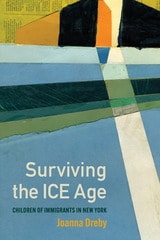
Surviving the ICE Age
Children of Immigrants in New YorkJoanna Dreby
Russell Sage Foundation, 2025
Dreby shows that a restrictive approach to immigration creates problems over time and across generations. These issues occur regardless of one’s citizenship status and go beyond deportations. Despite having pride in their heritage, her interviewees did not talk much about immigration. She refers to this unwillingness—and at times, inability—to speak about immigration as silencing. Silencing in a community or family is often intended to protect children, but this can leave them with little information about their backgrounds and status, leading to fear and anxiety instead. Self-silencing often resulted from traumatic experiences tied to enforcement episodes, which sometimes took the form of memory loss or emotional withholding. Dreby finds that experiences with the immigration system that disrupted relationships in a child’s household arising from family separations, moves, or changing roles in the family had especially long-term effects, causing, at times, ongoing mental health issues. Even the risk of immigration involvement left some young adults feeling vulnerable and undermined their sense of safety and security as U.S. citizens.
Dreby also highlights stories that offer hope. Young adults developed strategies to persevere, and children who grew up in communities and families that openly talked about migration felt empowered and fared much better, especially when they had access to resources, such as adequate food and shelter, mental health services, and community support. Dreby calls for policies and practices to mitigate the harms of restrictive migratory control on children’s wellbeing, such avoiding the arrest of parents in front of children and ensuring that U.S. citizen children’s interests are considered in immigration court without their direct involvement.
Surviving the ICE Age details the generational harms caused by U.S. immigration policy and offers suggestions for a better way forward.
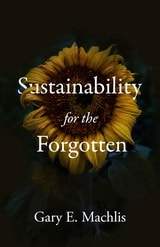
Sustainability for the Forgotten
Gary E. Machlis
University of Utah Press, 2024
Sustainability for the Forgotten is an incendiary book that confronts the history, policies, and practices of sustainability. It interrogates the usefulness of current sustainability approaches for the poorest of the poor, the chronic underclass, victims of natural disasters, refugees, the oppressed, and asks, how can we do better? With examples that range from the coffeelands of El Salvador to the coal country of American Appalachia, from the streets of Detroit to refugee camps in Greece and the upscale metro centers of the affluent, sustainability is examined with a critical eye and with an emphasis on insuring that the forgotten are heard.
At once well-researched and passionate, wide-ranging and sharply focused, Sustainability for the Forgotten is unlike any other book on the sustainability movement. Written with a distinctive voice that is reasoned, unflinching, and often poetic, the book challenges the sustainability movement to follow "a just and necessary path." The result is a provocative statement on the future of sustainability and a call to action that is ultimately hopeful.
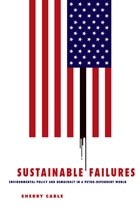
Sustainable Failures
Environmental Policy and Democracy in a Petro-dependent WorldSherry Cable
Temple University Press, 2012
Environmental policies fail in conspicuous and egregious ways to sustain the natural resource base and protect citizens from production-generated risky exposures. In her engaging study, Sustainable Failures, Sherry Cable asks, why does environmental policy seem to be a contributing cause rather than a partial solution to environmental problems?
Melding a biophysical science perspective of environmental processes with sociological insights into human behavior, Cable examines the people, policies, and issues of petrochemical dependence and broader environment questions. She insists that our present policies around the manufacture and use of petroleum products violate rudimentary ecological principles—and do so in complicated ways.
Sustainable Failures is a blistering wake-up call to what is at stake not only regarding the failure of policy outcomes and grievous natural resource depletion and pollution, but also concerning democracy and ecological survival, and eventually, potentially, the existence of our species.
Sweet Tyranny
Migrant Labor, Industrial Agriculture, and Imperial PoliticsKathleen Mapes
University of Illinois Press, 2008
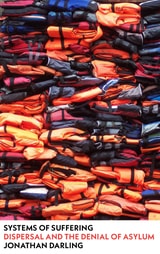
Systems of Suffering
Dispersal and the Denial of AsylumJonathan Darling
Pluto Press, 2021
Of the many state-enacted cruelties to which refugees and asylum seekers are subjected, detention and deportation loom largest in popular consciousness. But there is a third practice, perpetrating a slower violence, that remains hidden: dispersal.
Jonathan Darling provides the first detailed account of how dispersal - the system of accommodation and support for asylum seekers and refugees in Britain - both sustains and produces patterns of violence, suffering and social abjection. He explores the evolution of dispersal as a privatized process, from the first outsourced asylum accommodation contracts in 2012 to the renewed wave of outsourcing pursued by the Home Office today.
Drawing on six years of research into Britain's dispersal system, and foregrounding the voices and experiences of refugees and asylum seekers, Darling argues that dispersal has played a central role in the erasure of asylum from public concern. Systems of Suffering is a vital tool in the arsenal of those fighting to hold the government to account for the violence of its asylum policy and practice.