Results by title
1441 books match the query 'Great Britain' and 92 start with s

SCHOLAR ADVENTURERS
Richard D. Altick
The Ohio State University Press, 1987

SENATES
BICAMERALISM IN THE CONTEMPORARY WORLDEdited by Samuel C. Patterson & Anthony Mughan
The Ohio State University Press, 1999
SILENT REVOLUTION MAKING OF VICTORIAN
HERBERT SCHLOSSBERG
The Ohio State University Press, 2000
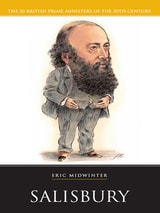
Salisbury
Eric Midwinter
Haus Publishing, 2006

Sand, Wind, and War
Memoirs of a Desert ExplorerRalph A. Bagnold
University of Arizona Press, 1990
Ralph Alger Bagnold was born in 1896 into a military family and educated as an engineer. Posted to Egypt in 1926, he was one of a group of officers who adapted Model T Fords to desert travel and in 1932 made the first east-west crossing—6,000 miles—of the Libyan desert. Bagnold established such a name for himself that in World War II he was again posted to Egypt where he founded and trained the Long Range Desert Group that was to confound the German and Italian armies.
Bagnold’s fascination with the desert included curiosity over the formation of dunes, and beginning in 1935 he conducted wind tunnel experiments with sand that led to the book The Physics of Blown Sand and Desert Dunes. Eventually, he was to see his findings called on by NASA to interpret data on the sands of Mars. He devoted subsequent research to particle flow in fluids, and also served as a consultant to Middle Eastern governments concerned with the interference of sand flow in oil drilling.
Sand, Wind, and War is the life story of a man who not only helped shape events in one part of the world but also contributed to our understanding of it. It is a significant benchmark not only in the history of science, but also in the annals of adventure.

Sans Papiers
The Social and Economic Lives of Young Undocumented MigrantsAlice Bloch, Nando Sigona, and Roger Zetter
Pluto Press, 2014
Undocumented migration is a huge global phenomenon, yet little is known about the reality of life for those involved. Sans Papiers combines a contemporary account of the theoretical and policy debates with an in-depth exploration of the lived experiences of undocumented migrants in the UK from Zimbabwe, China, Brazil, Ukraine and Turkish Kurdistan.
Built around their voices, the book provides a unique understanding of migratory processes, gendered experiences and migrant aspirations. Moving between the uniqueness of individual experience and the search for commonalities, the book explores the ambiguities and contradictions of being an undocumented migrant.
With its insights into personal experiences alongside analysis of wider policy issues, Sans Papiers will have wide appeal for students, academics, policy-makers and practitioners.
Sapphic Primitivism
Productions of Race, Class, and Sexuality in Key Works of Modern FictionHackett, Robin
Rutgers University Press, 2003
In this book, Robin Hackett examines portrayals of race, class, and sexuality in modernist texts by white women to argue for the existence of a literary device that she calls “Sapphic primitivism.” The works vary widely in their form and content and include Olive Schreiner’s proto-modernist exploration of New Womanhood, The Story of an African Farm; Virginia Woolf’s high modernist “play-poem,” The Waves; Sylvia Townsend Warner’s historical novel, Summer Will Show; and Willa Cather’s Southern pastoral, Sapphira and the Slave Girl. In each, blackness and working-class culture are figured to represent sexual autonomy, including lesbianism, for white women. Sapphic primitivism exposes the ways several classes of identification were intertwined with the development of homosexual identities at the turn of the century. Sapphic primitivism is not, however, a means of disguising lesbian content. Rather, it is an aesthetic displacement device that simultaneously exposes lesbianism and exploits modern, primitivist modes of self-representation. Hackett’s revelations of the mutual interests of those who study early twentieth-century constructions of race and sexuality and twenty-first-century feminists doing anti-racist and queer work are a major contribution to literary studies and identity theory.
Scholars, Poets and Radicals
Discovering Forgotten Lives in the Blackwell CollectionRita Ricketts
Bodleian Library Publishing, 2015
Science Periodicals in Nineteenth-Century Britain
Constructing Scientific CommunitiesEdited by Gowan Dawson, Bernard Lightman, Sally Shuttleworth, and Jonathan R. Topham
University of Chicago Press, 2020
The essays in this volume set the historical exploration of the scientific and medical periodicals of the era on a new footing, examining their precise function and role in the making of nineteenth-century science and enhancing our vision of the shifting communities and practices of science in the period. This radical rethinking of the scientific journal offers a new approach to the reconfiguration of the sciences in nineteenth-century Britain and sheds instructive light on contemporary debates about the purpose, practices, and price of scientific journals.

Science Policy under Thatcher
Jon Agar
University College London, 2019
Thatcher was a working scientist before she became a professional politician, and she maintained a close watch on science matters as prime minister. Scientific knowledge and advice were important to many urgent issues of the 1980s, from late Cold War questions of defense to emerging environmental problems, such as acid rain and climate change. Drawing on newly released primary sources, Jon Agar explores how Thatcher worked with and occasionally against the structures of scientific advice, as the scientific aspects of such issues were balanced or conflicted with other demands and values. To what extent, for example, was the freedom of the individual scientist to choose research projects balanced against the desire to secure more commercial applications? What was Thatcher’s stance towards European scientific collaboration and commitments? How did cuts in public expenditure affect the publicly funded research and teaching of universities?
In weaving together numerous topics, including AIDS and bioethics, the nuclear industry and strategic defense, Agar adds to the picture we have of Thatcher and her radically Conservative agenda, and argues that the science policy devised under her leadership, not least in relation to industrial strategy, had a prolonged influence on the culture of British science.

Science and Emotions after 1945
A Transatlantic PerspectiveEdited by Frank Biess and Daniel M. Gross
University of Chicago Press, 2014
In Science and Emotions after 1945, Frank Biess and Daniel M. Gross chronicle the curious resurgence of emotion studies and show that it was fueled by two very different sources: social movements of the 1960s and brain science. A central claim of the book is that the relatively recent neuroscientific study of emotion did not initiate – but instead consolidated – the emotional turn by clearing the ground for multidisciplinary work on the emotions. Science and Emotions after 1945 tells the story of this shift by looking closely at scientific disciplines in which the study of emotions has featured prominently, including medicine, psychiatry, neuroscience, and the social sciences, viewed in each case from a humanities perspective.
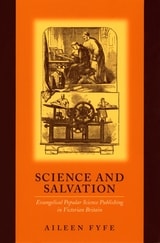
Science and Salvation
Evangelical Popular Science Publishing in Victorian BritainAileen Fyfe
University of Chicago Press, 2004
A fascinating study of the tenuous relationship between science and religion in evangelical publishing, Science and Salvation examines questions of practice and faith from a fresh perspective. Rather than highlighting works by expert men of science, Aileen Fyfe instead considers a group of relatively undistinguished authors who used thinly veiled Christian rhetoric to educate first, but to convert as well. This important volume is destined to become essential reading for historians of science, religion, and publishing alike.

Science for All
The Popularization of Science in Early Twentieth-Century BritainPeter J. Bowler
University of Chicago Press, 2009
Recent scholarship has revealed that pioneering Victorian scientists endeavored through voluminous writing to raise public interest in science and its implications. But it has generally been assumed that once science became a profession around the turn of the century, this new generation of scientists turned its collective back on public outreach. Science for All debunks this apocryphal notion.
Peter J. Bowler surveys the books, serial works, magazines, and newspapers published between 1900 and the outbreak of World War II to show that practicing scientists were very active in writing about their work for a general readership. Science for All argues that the social environment of early twentieth-century Britain created a substantial market for science books and magazines aimed at those who had benefited from better secondary education but could not access higher learning. Scientists found it easy and profitable to write for this audience, Bowler reveals, and because their work was seen as educational, they faced no hostility from their peers. But when admission to colleges and universities became more accessible in the 1960s, this market diminished and professional scientists began to lose interest in writing at the nonspecialist level.
Eagerly anticipated by scholars of scientific engagement throughout the ages, Science for All sheds light on our own era and the continuing tension between science and public understanding.
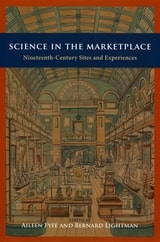
Science in the Marketplace
Nineteenth-Century Sites and ExperiencesEdited by Aileen Fyfe and Bernard Lightman
University of Chicago Press, 2007
Science in the Marketplace reveals this other side of Victorian scientific life by placing the sciences in the wider cultural marketplace, ultimately showing that the creation of new sites and audiences was just as crucial to the growing public interest in science as were the scientists themselves. By focusing attention on the scientific audience, as opposed to the scientific community or self-styled popularizers, Science in the Marketplace ably links larger societal changes—in literacy, in industrial technologies, and in leisure—to the evolution of “popular science.”

Scotland and America in the Age of Paine
Ronald Lyndsey Crawford
Aberdeen University Press, 2022
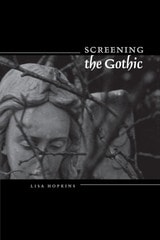
Screening the Gothic
By Lisa Hopkins
University of Texas Press, 2005
Filmmakers have long been drawn to the Gothic with its eerie settings and promise of horror lurking beneath the surface. Moreover, the Gothic allows filmmakers to hold a mirror up to their own age and reveal society's deepest fears. Franco Zeffirelli's Jane Eyre, Francis Ford Coppola's Bram Stoker's Dracula, and Kenneth Branagh's Hamlet are just a few examples of film adaptations of literary Gothic texts. In this ground-breaking study, Lisa Hopkins explores how the Gothic has been deployed in these and other contemporary films and comes to some surprising conclusions. For instance, in a brilliant chapter on films geared to children, Hopkins finds that horror resides not in the trolls, wizards, and goblins that abound in Harry Potter, but in the heart of the family.
Screening the Gothic offers a radical new way of understanding the relationship between film and the Gothic as it surveys a wide range of films, many of which have received scant critical attention. Its central claim is that, paradoxically, those texts whose affiliations with the Gothic were the clearest became the least Gothic when filmed. Thus, Hopkins surprises readers by revealing Gothic elements in films such as Sense and Sensibility and Mansfield Park, as well as exploring more obviously Gothic films like The Mummy and The Fellowship of the Ring. Written in an accessible and engaging manner, Screening the Gothic will be of interest to film lovers as well as students and scholars.
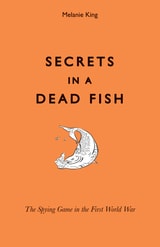
Secrets in a Dead Fish
The Spying Game in the First World WarMelanie King
Bodleian Library Publishing, 2014
Throughout World War I, spymasters and their networks of secret agents developed many clever—and sometimes comical—methods of covert communication. Stacks of bread in a bakery window, puffs of smoke from a chimney, and even woolen pullovers were all used to pass on secret messages that were decipherable only to the well-trained eye. Drawing on the memoirs of eight spies, Melanie King divulges these and other tricks of the trade while sharing details from their astonishing stories. Among her informants are British intelligence officers working undercover in Germany and France, including a former Metropolitan police officer who once hunted Jack the Ripper; a German secret service officer codenamed “Agricola;” an American newspaperman; and an Austrian agent who disguised himself during his career as everything from a Jewish peddler to a Russian officer.
A fascinating compendium of clever and long-forgotten ruses—interspersed with the stories of the spies themselves—Secrets in a Dead Fish sheds new light on the shadowy world of Great War espionage.

Secrets of the English War Bow
Hugh D. H. Soar
Westholme Publishing, 2010
A Complete Recreation of the Deadliest Medieval Arm
Dominating medieval battlefields for more than two centuries but requiring long and arduous practice to command, the English war bow and its battle shaft are the symbols of the rise of British power in Europe. Despite being crafted for hundreds of years and wielded by generations of archers, no example of the war bow—the military version of the longbow—exists, outside of a single broken limb. Now for the first time, expert craftsmen use all available evidence including applied archaeology to unlock the secrets of the English war bow. Historian Hugh D. H. Soar is joined by Mark Stretton, master blacksmith, and Joseph Gibbs, bowyer, in order to demonstrate how a war bow and its associated arrow heads and shafts may have been constructed and used. In addition to showing the complete manufacture of a bow from tree selection to stringing and how specialized arrowheads were forged and attached to shafts, Secrets of the English War Bowprovides information on the actual performance of the war bow, including the bow's effectiveness against various materials and, for the first time, its use against moving targets, since bows were often drawn against mounted soldiers. Armed with this new information, Soar provides an analysis of both successes and failures of the war bow in several important battles. Illustrated in color and black and white, Secrets of the English War Bowprovides an invaluable service for those interested in medieval military history, archery, and technology.

Secular Morality and International Security
American and British Decisions about WarMaria Fanis
University of Michigan Press, 2011
“[Fanis] demonstrates an impressive ability to travel nimbly between abstract theoretical concepts and a messy reality. In each one of the case study chapters, her analysis is rich, thoughtful, and imaginative.”
—Ido Oren, University of Florida

Seeking a Premier Economy
The Economic Effects of British Economic Reforms, 1980-2000Edited by David Card, Richard Blundell, and Richard B. Freeman
University of Chicago Press, 2004
Seeking a Premier Economy focuses on the labor and product market reforms that directly impacted productivity, employment, and inequality. The questions asked are provocative: How did the United Kingdom manage to stave off falling earnings for lower paid workers? What role did the reforms play in rising income inequality and trends in poverty? At the same time, what reforms also contributed to reduced unemployment and the accelerated growth of real wages? The comparative microeconomic approach of this book yields the most credible evaluation possible, focusing on closely associated outcomes of particular reforms for individuals, firms, and sectors.
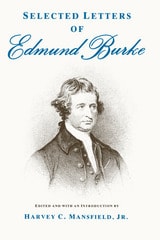
Selected Letters of Edmund Burke
Edmund Burke
University of Chicago Press, 1984
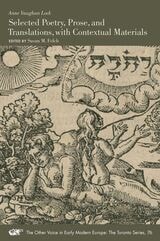
Selected Poetry, Prose, and Translations, with Contextual Materials
Anne Vaughan Lock
Iter Press, 2021
This volume provides a collection of Lock’s works presented in modern spelling, and it includes additional contemporary materials that place her voice in the larger context of the Tudor period, offering insight into the intertwined complexities of political, social, and religious life in sixteenth-century England.

Self-Build Homes
Social Discourse, Experiences and DirectionsEdited by Michaela Benson and Iqbal Hamiduddin
University College London, 2017
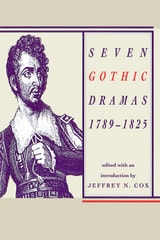
Seven Gothic Dramas, 1789–1825
1789-1825Jeffrey N. Cox
Ohio University Press, 1994
The Gothic drama came at a critical moment in the history of the theater, of British culture, and of European politics in the shadow of France’s revolution and the fall of Napoleon. It offered playwrights a medium to express the prevailing ideological tensions of romanticism and revolution, and also responded to a growing and changing theater audience.
In a wide-ranging introduction, Cox explores Gothic drama’s links with romanticism and its relation to other social and ideological shifts of the day. The texts are presented so as to reflect the dual life of dramatic works—on the stage and on the page. The plays are annotated and accompanied by biographic and bibliographic sketches.
Includes The Kentish Barons, by Francis North; Julia of Louvain; or, Monkish Cruelty, by J.C. Cross; The Castle Spectre, by Matthew G. Lewis; The Captive, by Matthew G. Lewis; De Monfort, by Joanna Baillie; Bertram; or, The Castle of St. Aldobrand, by C.R. Maturin; and Presumption; or, The Fate of Frankenstein, by R.B. Peake.
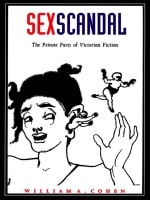
Sex Scandal
The Private Parts of Victorian FictionWilliam A. Cohen
Duke University Press, 1996
Scandal, then as now, makes public the secret indiscretions of prominent people, engrossing its audience in salacious details that violate the very code of propriety it aims to enforce. In narratives ranging from Great Expectations to the Boulton and Park sodomy scandal of 1870–71, from Eliot’s and Trollope’s novels about scandalous women to Oscar Wilde’s writing and his trials for homosexuality, Cohen shows how, in each instance, sexuality appears couched in coded terms. He identifies an assortment of cunning narrative techniques used to insinuate sex into Victorian writing, demonstrating that even as such narratives air the scandalous subject, they emphasize its unspeakable nature.
Written with an eye toward the sex scandals that still whet the appetites of consumers of news and novels, this work is suggestive about our own modes of imagining sexuality today and how we arrived at them. Sex Scandal will appeal to scholars and general readers interested in Victorian literature, the history of sexuality, gender studies, nineteenth-century Britain, and gay, lesbian, and queer studies.
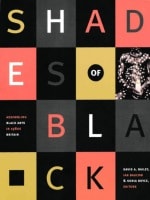
Shades of Black
Assembling Black Arts in 1980s BritainDavid A. Bailey, Ian Baucom, and Sonia Boyce, eds.
Duke University Press, 2005
In thirteen original essays, the contributors examine the movement in relation to artistic practice, public funding, and the transnational art market and consider its legacy for today’s artists and activists. The volume includes a unique catalog of images, an extensive list of suggested readings, and a descriptive timeline situating the movement vis-à-vis relevant artworks and films, exhibitions, cultural criticism, and political events from 1960 to 2000. A dynamic living archive of conversations, texts, and images, Shades of Black will be an essential resource.
Contributors. Stanley Abe, Jawad Al-Nawab, Rasheed Araeen, David A. Bailey, Adelaide Bannerman, Ian Baucom, Dawoud Bey, Sonia Boyce, Allan deSouza, Jean Fisher, Stuart Hall, Lubaina Himid, Naseem Khan, susan pui san lok, Kobena Mercer, Yong Soon Min, Keith Piper, Zineb Sedira, Gilane Tawadros, Leon Wainwright, Judith Wilson
Shadow Lives
The Forgotten Women of the War on TerrorVictoria Brittain
Pluto Press, 2013
Shadow Lives reveals the unseen side of the '9/11 wars': their impact on the wives and families of men incarcerated in Guantanamo, or in prison or under house arrest in Britain and the US. Victoria Brittain shows how these families have been made socially invisible and a convenient scapegoat for the state in order to exercise arbitrary powers under the cover of the 'War on Terror'.
A disturbing exposé of the perilous state of freedom and democracy in our society, the book reveals how a culture of intolerance and cruelty has left individuals at the mercy of the security services’ unverifiable accusations and punitive punishments.
Both a j'accuse and a testament to the strength and humanity of the families, Shadow Lives shows the methods of incarceration and social control being used by the British state and gives a voice to the families whose lives have been turned upside down. In doing so it raises urgent questions about civil liberties which no one can afford to ignore.
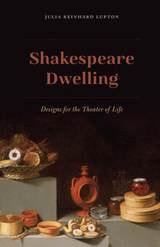
Shakespeare Dwelling
Designs for the Theater of LifeJulia Reinhard Lupton
University of Chicago Press, 2018
Focusing on five works (Romeo and Juliet, Macbeth, Pericles, Cymbeline, and The Winter’s Tale), Lupton remakes the concept of dwelling by drawing on a variety of sources, including modern design theory, Renaissance treatises on husbandry and housekeeping, and the philosophies of Hannah Arendt and Martin Heidegger. The resulting synthesis not only offers a new entry point into the contemporary study of environments; it also shows how Shakespeare’s works help us continue to make sense of our primal creaturely need for shelter.

Shakespeare Valued
Education Policy and Pedagogy 1989-2009Sarah Olive
Intellect Books, 2015
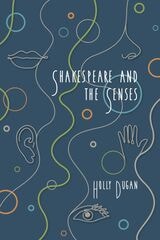
Shakespeare and the Senses
Holly E. Dugan
Arizona Center for Medieval and Renaissance Studies, 2024
Could something as seemingly natural as a smell, taste, sight, or sound be socially constructed and change over time? Shakespeare and the Senses argues that understanding the original conditions in which Shakespeare’s plays were performed allows us to explore the senses as both visceral, bodily experiences and constructed, social phenomena. As Ben Jonson famously wrote in the First Folio of 1623, Shakespeare can seem to be “not of an age, but for all time.” While this is clever marketing, Shakespeare did write his plays in a particular time and place far removed from our own. Many of his most powerful metaphors rely on sensory details—Aaron’s black hue; Cleopatra’s strange, invisible perfumes; Fluellen’s Welsh accent; Lady Macbeth’s overly scrubbed hands; Malvolio’s yellow stockings—which Elizabethan-era audiences may have understood very differently from us.
Shakespeare and the Senses draws on interdisciplinary research methods in the new field of sensory studies to expand our understanding of what Shakespeare meant to his first audiences.

Shakespeare the Actor and the Purposes of Playing
Meredith Anne Skura
University of Chicago Press, 1993
Despite the obvious differences between our theater and Shakespeare's, sixteenth-century testimony suggests that the experience of acting has not changed much over the centuries. Beginning with a psychoanalytically informed account of acting today, Skura shows how this intense and ambivalent experience appears not only in literal references to acting in Shakespearean drama but also in recurring narrative concerns, details of language, and dramatic strategies used to engage the audience. Looking at the plays in the context of both public and private worlds outside the theater, Skura rereads the canon to identify new configurations in the plays and new ways of understanding theatrical self-consciousness in Renaissance England. Rich in theatrical, psychoanalytic, biographical, and historical insight, this book will be invaluable to students of Shakespeare and instructive to all readers interested in the dynamics of performance.
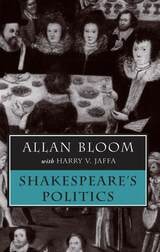
Shakespeare's Politics
Allan Bloom
University of Chicago Press, 1981
In essays looking at Julius Caesar, Othello, and The Merchant of Venice, Bloom shows how Shakespeare presents a picture of man that does not assume privileged access for only literary criticism. With this claim, he argues that political philosophy offers a comprehensive framework within which the problems of the Shakespearean heroes can be viewed. In short, he argues that Shakespeare was an eminently political author. Also included is an essay by Harry V. Jaffa on the limits of politics in King Lear.
"A very good book indeed . . . one which can be recommended to all who are interested in Shakespeare." —G. P. V. Akrigg
"This series of essays reminded me of the scope and depth of Shakespeare's original vision. One is left with the impression that Shakespeare really had figured out the answers to some important questions many of us no longer even know to ask."-Peter A. Thiel, CEO, PayPal, Wall Street Journal
Allan Bloom was the John U. Nef Distinguished Service Professor on the Committee on Social Thought and the co-director of the John M. Olin Center for Inquiry into the Theory and Practice of Democracy at the University of Chicago. Harry V. Jaffa is professor emeritus at Claremont McKenna College and Claremont Graduate School.
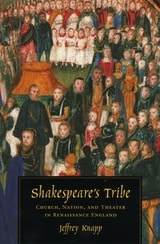
Shakespeare's Tribe
Church, Nation, and Theater in Renaissance EnglandJeffrey Knapp
University of Chicago Press, 2004
To be sure, Renaissance playwrights rarely sermonized in their plays, which seemed preoccupied with sex, violence, and crime. During a time when acting was regarded as a kind of vice, many theater professionals used their apparent godlessness to advantage, claiming that it enabled them to save wayward souls the church could not otherwise reach. The stage, they argued, made possible an ecumenical ministry, which would help transform Reformation England into a more inclusive Christian society.
Drawing on a variety of little-known as well as celebrated plays, along with a host of other documents from the English Renaissance, Shakespeare's Tribe changes the way we think about Shakespeare and the culture that produced him.
Winner of the Best Book in Literature and Language from the Association of American Publishers' Professional/Scholarly division, the Conference on Christianity and Literature Book Award, and the Roland H. Bainton Prize for Literature from the Sixteenth Century Society and Conference.
Shakespearean Territories
Stuart Elden
University of Chicago Press, 2018

Shakespeare’s Legal Ecologies
Law and Distributed SelfhoodKevin Curran
Northwestern University Press, 2017
At the center of the book is Shakespeare’s fascination with questions that are fundamental to both law and philosophy: What are the sources of agency? What counts as a person? For whom am I responsible, and how far does that responsibility extend? What is truly mine? Curran guides readers through Shakespeare’s responses to these questions, paying careful attention to both historical and intellectual contexts.
The result is a book that advances a new theory of Shakespeare’s imaginative relationship to law and an original account of law’s role in the ethical work of his plays and sonnets. Readers interested in Shakespeare, theater and philosophy, law, and the history of ideas will find Shakespeare’s Legal Ecologies to be an essential resource.

Shareholder Democracies?
Corporate Governance in Britain and Ireland before 1850Mark Freeman, Robin Pearson, and James Taylor
University of Chicago Press, 2011
Understanding the challenges of corporate governance is central to our comprehension of the economic dynamics driving corporations today. Among the most important institutions in capitalism today, corporations and joint-stock companies had their origins in Europe during the seventeenth and eighteenth centuries. And as they became more prevalent, the issue of internal governance became more pressing. At stake—and very much contested—was the allocation of rights and obligations among shareholders, directors, and managers.
This comprehensive account of the development of corporate governance in Britain and Ireland during its earliest stages highlights the role of political factors in shaping the evolution of corporate governance as well as the important debates that arose about the division of authority and responsibility. Political and economic institutions confronted similar issues, including the need for transparency and accountability in decision making and the roles of electors and the elected, and this book emphasizes how political institutions—from election procedures to assemblies to annual reporting—therefore provided apt models upon which companies drew readily. Filling a gap in the literature on early corporate economy, this book provides insight into the origins of many ongoing modern debates.

Sheer Misery
Soldiers in Battle in WWIIMary Louise Roberts
University of Chicago Press, 2021
Sheer Misery trains a humane and unsparing eye on the corporeal experiences of the soldiers who fought in Belgium, France, and Italy during the last two years of the war. In the horrendously unhygienic and often lethal conditions of the front line, their bodies broke down, stubbornly declaring their needs for warmth, rest, and good nutrition. Feet became too swollen to march, fingers too frozen to pull triggers; stomachs cramped, and diarrhea stained underwear and pants. Turning away from the accounts of high-level military strategy that dominate many WWII chronicles, acclaimed historian Mary Louise Roberts instead relies on diaries and letters to bring to life visceral sense memories like the moans of the “screaming meemies,” the acrid smell of cordite, and the shockingly mundane sight of rotting corpses. As Roberts writes, “For soldiers who fought, the war was above all about their bodies.”
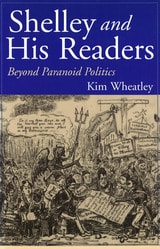
Shelley and His Readers
Beyond Paranoid PoliticsKim Wheatley
University of Missouri Press, 1999
In Shelley and His Readers, the first full-length critical analysis of the dialogue between Shelley's poetry and its contemporary reviewers, Kim Wheatley argues that Shelley's idealism can be recovered through the study of his poetry's reception. Incorporating extensive research in major early-nineteenth-century British periodicals, Wheatley integrates a reception-based methodology with careful textual analysis to demonstrate that the early reception of Shelley's work registers the immediate impact of the poet's increasingly idealistic passion for reforming the world.
Wheatley examines Shelley's poetry within the context of Romantic-era "paranoid politics," a simultaneously empowering and disabling dynamic in which the reviewers employ a heightened language of defensiveness and persecution that paints their adversaries as Satanic rebels against orthodoxy. This "paranoid style" displays a preoccupation with the efficacy of the printed word and singles out radical writers such as Shelley as sources of social contamination.
Using Shelley's Queen Mab to illustrate his early radicalism, Wheatley demonstrates that the poet, like his contemporary reviewers, is caught up in paranoid rhetoric. Failing to challenge the assumptions underlying the paranoid style-conspiracy and contagion-in this poem Shelley takes merely a defiant, oppositional stance. However, Shelley's later poems, exemplified by Prometheus Unbound and Adonais, circumvent the reviewers' rhetoric through their boldly experimental language, a process registered by the reviewers' own responses. These less explicitly political poems transcend the dynamics of cultural paranoia by shifting to an apolitical conception of the aesthetic. In collaboration with its early readers, Shelley's poetry thus moves momentarily beyond paranoid politics.
The final chapter of this study argues that the posthumous reception of Adonais uniquely replicates the elegiac moves and complex idealism of the poem, concluding with a discussion of how the Shelley circle aestheticized the poet after his death.
Shelley and His Readers offers a new approach to the question of how to recuperate Romantic idealism in the face of challenges from both deconstructive and historicist criticism. Its innovative use of reception-based analysis will make this book invaluable not only to specialists of the Romantic period but also to anyone interested in new developments in literary criticism.
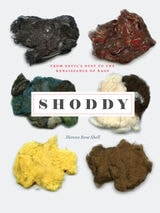
Shoddy
From Devil’s Dust to the Renaissance of RagsHanna Rose Shell
University of Chicago Press, 2020
In Shoddy: From Devil’s Dust to the Renaissance of Rags, Hanna Rose Shell takes readers on a journey to discover shoddy, from Haiti to the “shoddy towns” of West Yorkshire in England, to the United States, back in time to the British cholera epidemics and the American Civil War, and into agricultural fields, textile labs, and rag-shredding factories. Shell’s narrative is both literary and historical, drawing on an extraordinary range of sources, from court cases to military uniforms, mattress labels to medical textbooks, political cartoons to high art. Shoddy moves between genres, bringing richly drawn characters and unexpected objects to life. Along the way, shoddy becomes equally an evocative object and a portal into another world.
Almost since the time it first appeared, shoddy was both ubiquitous and controversial. In part because it was often so hard to detect, it was inherently suspicious. Public health experts worried about sanitation and disease—how could old clothes be disinfected? As well, the idea of wearing someone else’s old clothes so close to your own skin was discomforting in and of itself. Could you sleep peacefully knowing that your mattress was very likely to be stuffed with dead soldiers’ overcoats? The use of the term “virgin” wool, the idea of virginity in relation to clothes, in fact emerged as an effort by the wool industry to counter shoddy’s appeal: to make shoddy seem shoddy. Over time, shoddy would capture a host of personal, ethical, commercial, and societal failings. And yet, there was always, within shoddy, the alluring concept of regeneration, of what we today think of as conscious clothing, eco-fashion, sustainable textiles.
Shell exposes an interwoven tale of industrial espionage, political infighting, scientific inquiry, ethnic prejudices, and war profiteering. Discarded clothes may make many journeys over the course of several lifetimes. Not only in your garments, but under your rug, in your mattress pads, piano blankets, in the peculiar confetti-like stuffing in your mailing envelopes, even in the insulation in your walls. Though it began with wool, over the past century the shredding “devil” has turned to synthetics from nylon stockings to Kevlar. Shoddy is likely connected to something you are wearing right now. After reading, you will never use the word shoddy or think about your clothes, the environment, sustainability, or the intermingled world around you the same way again.
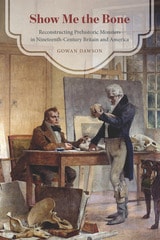
Show Me the Bone
Reconstructing Prehistoric Monsters in Nineteenth-Century Britain and AmericaGowan Dawson
University of Chicago Press, 2016
Show Me the Bone tells the story of the rise and fall of this famous claim, tracing its fortunes from Europe to America and showing how it persisted in popular science and literature and shaped the practices of paleontologists long after the method on which it was based had been refuted. In so doing, Gowan Dawson reveals how decisively the practices of the scientific elite were—and still are—shaped by their interactions with the general public.
Single Lives
Modern Women in Literature, Culture, and FilmKatherine Fama
Rutgers University Press, 2022
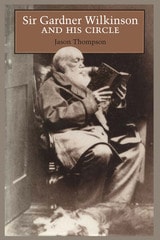
Sir Gardner Wilkinson and His Circle
By Jason Thompson
University of Texas Press, 1992
Following in the footsteps of Napoleon's army, Europeans invaded Egypt in the early nineteenth century to gaze in wonder at the massive, inscrutable remains of its ancient civilizations. One of these travelers was a twenty-four-year-old Englishman, John Gardner Wilkinson. His copious observations of ancient and modern Egyptian places, artifacts, and lifeways, recorded in such widely read publications as Manners and Customs of the Ancient Egyptians and Handbook for Travellers in Egypt, made him the leading early Victorian authority on ancient Egypt and paved the way for thc scientific study of Egyptology.
In this first full-scale biography of Wilkinson (1797-1875), Jason Thompson skillfully portrays both the man and his era. He follows Wilkinson during his initial sojourn in Egypt (1821-1833) as Wilkinson immersed himself in a contemporary Egyptian lifestyle and in study of its ancient past. He shows Wilkinson in his circle of friends—among them Edward William Lane, Robert Hay and Frederick Catherwood. And he traces how Wilkinson continued to use his Egyptian material in the decades following his return to England.
With the rise of professional Egyptology in the middle and later nineteenth century, Sir Gardner Wilkinson came to be viewed as an amateur and his popularity diminished. Drawing upon recently opened sources, Thompson returns Wilkinson to his rightful place within centuries of Egyptian scholarship and assesses both the vision and the limitations of his work. The result is a compelling portrait of a Victorian "gentleman-scholar" and his cultural milieu.
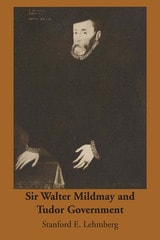
Sir Walter Mildmay and Tudor Government
By Stanford E. Lehmberg
University of Texas Press, 1964
This is the first biography of Sir Walter Mildmay, who dutifully served Queen Elizabeth I for thirty years as Chancellor of the Exchequer. Sir Walter Mildmay and Tudor Government, by Stanford E. Lehmberg, brings Mildmay into proper historical perspective alongside other prominent Tudor leaders.
Virtually none of Mildmay’s writings had been printed, and his activities had not been studied, partly because of the inaccessibility of necessary materials. In the mid-twentieth century, however, the Northamptonshire Record Office was able to acquire family papers, of which Lehmberg happily took advantage. These, together with materials in the British Museum and the Public Record Office, yield a detailed account of Mildmay’s contributions to English financial administration.
But Mildmay was not merely an Exchequer official. As a Member of Parliament he gained towering stature; his model orations and indefatigable work in committees provided invaluable leadership from 1576 to 1589. As a Privy Councillor he was twice sent on important embassies to Mary, Queen of Scots; he gave carefully considered advice about Scottish and Dutch affairs; and he was called on to examine numerous minor matters. As a trusted administrator he helped oversee the great recoinage of 1560. As a private citizen deeply concerned for good learning and true religion he founded Emmanuel College, Cambridge, and engaged in other philanthropic enterprises. By the time of his death in 1589 he had led a full and dedicated life serving his country and his Queen.
Into Lehmberg’s scholarly, readable volume have been blended aspects of Mildmay’s public life and his associations with historically famous contemporaries, discriminately selected segments of his speeches, elements of his personal philosophy, and the achievements and failures of his political life. Enhancing the value of this study are carefully annotated footnotes and a complementary bibliography. Tudor specialists as well as lay readers will undoubtedly profit from this significant biography.
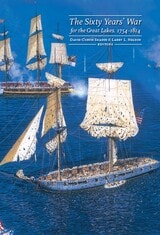
Sixty Years' War for the Great Lakes, 1754-1814
David Curtis Skaggs
Michigan State University Press, 2001
The Sixty Years' War for the Great Lakes contains twenty essays concerning not only military and naval operations, but also the political, economic, social, and cultural interactions of individuals and groups during the struggle to control the great freshwater lakes and rivers between the Ohio Valley and the Canadian Shield. Contributing scholars represent a wide variety of disciplines and institutional affiliations from the United States, Canada, and Great Britain.
Collectively, these important essays delineate the common thread, weaving together the series of wars for the North American heartland that stretched from 1754 to 1814. The war for the Great Lakes was not merely a sideshow in a broader, worldwide struggle for empire, independence, self-determination, and territory. Rather, it was a single war, a regional conflict waged to establish hegemony within the area, forcing interactions that divided the Great Lakes nationally and ethnically for the two centuries that followed.

Skepticism And Ideology
Shelley'S Political ProseTerence Allan Hoagwood
University of Iowa Press, 1988
Skin Shows
Gothic Horror and the Technology of MonstersJack Halberstam
Duke University Press, 1995
Deploying feminist and queer approaches to the monstrous body, Halberstam views the Gothic as a broad-based cultural phenomenon that supports and sustains the economic, social, and sexual hierarchies of the time. She resists familiar psychoanalytic critiques and cautions against any interpretive attempt to reduce the affective power of the monstrous to a single factor. The nineteenth-century monster is shown, for example, as configuring otherness as an amalgam of race, class, gender, and sexuality. Invoking Foucault, Halberstam describes the history of monsters in terms of its shifting relation to the body and its representations. As a result, her readings of familiar texts are radically new. She locates psychoanalysis itself within the gothic tradition and sees sexuality as a beast created in nineteenth century literature. Excessive interpretability, Halberstam argues, whether in film, literature, or in the culture at large, is the actual hallmark of monstrosity.
Slandering the Sacred
Blasphemy Law and Religious Affect in Colonial IndiaJ. Barton Scott
University of Chicago Press, 2023
Why is religion today so often associated with giving and taking offense? To answer this question, Slandering the Sacred invites us to consider how colonial infrastructures shaped our globalized world. Through the origin and afterlives of a 1927 British imperial law (Section 295A of the Indian Penal Code), J. Barton Scott weaves a globe-trotting narrative about secularism, empire, insult, and outrage. Decentering white martyrs to free thought, his story calls for new histories of blasphemy that return these thinkers to their imperial context, dismantle the cultural boundaries of the West, and transgress the borders between the secular and the sacred as well as the public and the private.
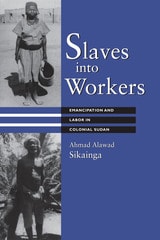
Slaves into Workers
Emancipation and Labor in Colonial SudanBy Ahmad Alawad Sikainga
University of Texas Press, 1996
Unlike African slavery in Europe and the Americas, slavery in the Sudan and other parts of Africa persisted well into the twentieth century. Sudanese slaves served Sudanese masters until the region was conquered by the Turks, who practiced slavery on a larger, institutional scale. When the British took over the Sudan in 1898, they officially emancipated the slaves, yet found it impossible to replace their labor in the country’s economy.
This pathfinding study explores the process of emancipation and the development of wage labor in the Sudan under British colonial rule. Ahmad Sikainga focuses on the fate of ex-slaves in Khartoum and on the efforts of the colonial government to transform them into wage laborers. He probes into what colonial rule and city life meant for slaves and ex-slaves and what the city and its people meant for colonial officials.
This investigation sheds new light on the legacy of slavery and the status of former slaves and their descendants. It also reveals how the legacy of slavery underlies the current ethnic and regional conflicts in the Sudan. It will be vital reading for students of race relations and slavery, colonialism and postcolonialism, urbanization, and labor history in Africa and the Middle East.
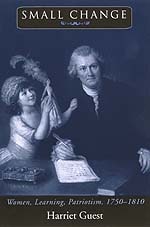
Small Change
Women, Learning, Patriotism, 1750-1810Harriet Guest
University of Chicago Press, 2000
During the second half of the eighteenth century, the social role of educated women and the nature of domesticity were the focus of widespread debate in Britain. The emergence of an identifiably feminist voice in that debate is the subject of Harriet Guest's new study, which explores how small changes in the meaning of patriotism and the relations between public and private categories permitted educated British women to imagine themselves as political subjects.
Small Change considers the celebration of learned women as tokens of national progress in the context of a commercial culture that complicates notions of gender difference. Guest offers a fascinating account of the women of the bluestocking circle, focusing in particular on Elizabeth Carter, hailed as the paradigmatic learned and domestic woman. She discusses the importance of the American war to the changing relation between patriotism and gender in the 1770s and 1780s, and she casts new light on Mary Wollstonecraft's writing of the 1790s, considering it in relation to the anti-feminine discourse of Hannah More, and the utopian feminism of Mary Hays.
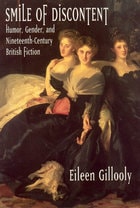
Smile of Discontent
Humor, Gender, and Nineteenth-Century British FictionEileen Gillooly
University of Chicago Press, 1999
Gillooly shows how such humor became, for mostly female writers at the time, an unobtrusive and prudent means of expressing discontent with a culture that was ideologically committed to restricting female agency and identity. If the aggression and emotional distance of irony and satire mark them as "masculine," then for Gillooly, the passivity, indirection, and sympathy of the humor she discusses render it "feminine." She goes on to disclose how the humorous tactics employed by writers from Burney to Wharton persist in the work of Barbara Pym, Anita Brookner, and Penelope Fitzgerald.
The book won the Barbara Perkins and George Perkins Award given by the Society for the Study of Narrative Literature.