Results by title
405 books match the query 'Human Geography' and 30 start with s
Salmon and Acorns Feed Our People
Colonialism, Nature, and Social ActionKari Marie Norgaard
Rutgers University Press, 2019
Since time before memory, large numbers of salmon have made their way up and down the Klamath River. Indigenous management enabled the ecological abundance that formed the basis of capitalist wealth across North America. These activities on the landscape continue today, although they are often the site of intense political struggle. Not only has the magnitude of Native American genocide been of remarkable little sociological focus, the fact that this genocide has been coupled with a reorganization of the natural world represents a substantial theoretical void. Whereas much attention has (rightfully) focused on the structuring of capitalism, racism and patriarchy, few sociologists have attended to the ongoing process of North American colonialism. Salmon and Acorns Feed Our People draws upon nearly two decades of examples and insight from Karuk experiences on the Klamath River to illustrate how the ecological dynamics of settler-colonialism are essential for theorizing gender, race and social power today.
Science by the People
Participation, Power, and the Politics of Environmental KnowledgeAya H. Kimura
Rutgers University Press, 2019
Citizen science—research involving nonprofessionals in the research process—has attracted both strong enthusiasts and detractors. Many environmental professionals, activists, and scholars consider citizen science part of their toolkit for addressing environmental challenges. Critics, however, contend that it represents a corporate takeover of scientific priorities. In this timely book, two sociologists move beyond this binary debate by analyzing the tensions and dilemmas that citizen science projects commonly face. Key lessons are drawn from case studies where citizen scientists have investigated the impact of shale oil and gas, nuclear power, and genetically engineered crops. These studies show that diverse citizen science projects face shared dilemmas relating to austerity pressures, presumed boundaries between science and activism, and difficulties moving between scales of environmental problems. By unpacking the politics of citizen science, this book aims to help people negotiate a complex political landscape and choose paths moving toward social change and environmental sustainability.
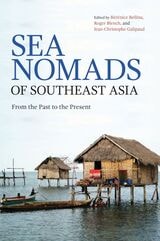
Sea Nomads of Southeast Asia
From the Past to the PresentEdited by Bérénice Bellina, Roger Blench, and Jean-Christophe Galipaud
National University of Singapore Press, 2020
For many years, the sea nomads were assumed to be without history, and even without archaeology. This has proven far from the case, and recent archaeological findings allow us to more closely describe sea nomadism from the Pleistocene through the early Holocene up to the present. Integrating these findings with the latest in historical research, linguistics, ethnography and historical genetics allows us to better understand sea-nomad ways of life over a scale of millennia and to appreciate the diversity and flexibility of this sea-nomad world. This in turn enriches our understanding of nomadism and mobility as ways of life more generally, and of the sea not only as a landscape of resources, but as a home and spiritual landscape.
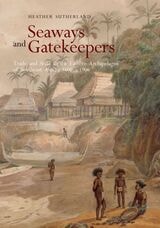
Seaways and Gatekeepers
Trade and State in the Eastern Archipelagos of Southeast Asia, c.1600–c.1906Heather Sutherland
National University of Singapore Press, 2020
In this book, trade provides the integrating framework for local and regional histories that cover more than three hundred years, from the late sixteenth century to the beginning of the twentieth, when new technologies and changing markets helped lead to Western dominance. This book presents theories from the social sciences and economics that can help liberate scholars from dependence on states as narrative frameworks. It will also appeal to those working on wider themes such as global history, state formation, the evolution of markets, and anthropology.
Secret Maps
Maps You Were Never Meant to See, from the Middle Ages to TodayTom Harper, Nick Dykes, and Magdalena Peszko
University of Chicago Press, 2025
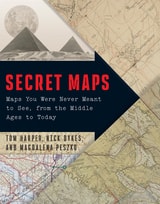
An illustrated story of the relationship between mapping and secrecy, charting the role maps played in concealing and revealing knowledge across centuries.
Is there anything more intriguing than a secret map? One that reveals clandestine information or meanings, or a map that is itself a secret? Secret Maps features over one hundred examples of these kinds of maps, connected by their varied relationships to secrecy, and ranging from the twelfth to the twenty-first centuries and across the globe. They include views into state secrecy and power—such as maps used for domestic and military purposes, imperial expansion, espionage, and surveillance as well as those with private or commercial uses, such as charts of private land, trade routes, or the flights of private jets. The maps span widely in their scope and cover issues of broad interest, from old-fashioned spying to contemporary concerns about technology and privacy.
As illuminating as it is thrilling, Secret Maps unearths the once-hidden routes, landscapes, and locations that have covertly shaped our world.
Seeds of Occupation, Seeds of Possibility
The Agrochemical-GMO Industry in Hawai‘iAndrea Noelani Brower
West Virginia University Press, 2022
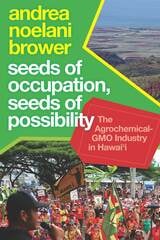
Hawaiʻi is a primary site for development of herbicide-resistant corn seed and, until recently, was host to more experimental field trials of genetically engineered crops than anywhere else in the world. It is also a node of powerful resistance. While documentaries and popular news stories have profiled the biotech seed industry in Hawaiʻi, Seeds of Occupation, Seeds of Possibility is the first book to detail the social and historical conditions by which the chemical-seed oligopoly came to occupy the most geographically isolated islands in the world and made the soils of Hawaiʻi the epicenter of agrochemical and agricultural biotechnology testing.
Andrea Brower, an activist-scholar from Hawaiʻi, examines the consequences related to genetically engineered seed development for Hawaiʻi’s people and the social movement that has risen in response. With insights beyond the islands, Seeds of Occupation, Seeds of Possibility illuminates why visions for a radically better world must be expanded by intersectional and systemically oriented movements.

Seeing Like a Smuggler
Borders from BelowMahmoud Keshavarz and Shahram Khosravi
Pluto Press, 2022
Stories of smuggling as acts of resistance and decolonization.
'This conceptually vivid book refreshes our vision' - Ruth Wilson Gilmore
The word smuggler often unleashes a simplified, negative image painted by the media and the authorities. Such state-centric perspectives hide many social, political, and economic relations generated by smuggling. This book looks at the practice through the eyes of the smugglers, revealing how their work can be productive, subversive, and deeply sociopolitical.
By tracing the illegalized movement of people and goods across borders, Seeing Like a Smuggler shows smuggling as a contradiction within the nation-state system, and in a dialectical relation with the national order of things. It raises questions about how smuggling engages and unsettles the ethics, materialities, visualities, histories, and the colonial power relations that form borders and bordering.
Covering a wide spectrum of approaches from personal reflections and ethnographies to historical accounts, cultural analysis, and visual essays, the book spans the globe from Colombia to Ethiopia, Singapore to Guatemala, Afghanistan to Zimbabwe, and from Kurdistan to Bangladesh, to show how people deal with global inequalities and the restrictions of poverty and immobility.

Seeking Spatial Justice
Edward W. Soja
University of Minnesota Press, 2010
Settling the Boom
The Sites and Subjects of Bakken OilMary E. Thomas
University of Minnesota Press, 2023
Examines how settler colonial and sexist infrastructures and narratives order a resource boom
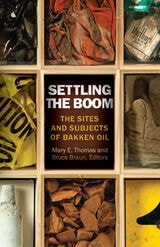
Over the past decade, new oil plays have unsettled U.S. energy landscapes and imaginaries. Settling the Boom studies how the disruptive forces of an oil boom in the northern Great Plains are contained through the extension of settler temporalities, reassertions of heteropatriarchy, and the tethering of life to the volatility of oil and its cruel optimisms.
This collection reveals the results of sustained research in Williston, North Dakota, the epicenter of the “Bakken Boom.” While the boom brought a rapid influx of capital and workers, the book questions simple timelines of before and after. Instead, Settling the Boom demonstrates how the unsettling forces of an oil play resolve through normative narratives and material and affective infrastructures that support settler colonialism’s violent extension and its gendered orders of time and space. Considering a wide range of evidence, from urban and regional policy, interviews with city officials, media, photography, and film, these essays analyze the ongoing material, aesthetic, and narrative ways of life and land in the Bakken.
Contributors: Morgan Adamson, Macalester College; Kai Bosworth, Virginia Commonwealth U; Thomas S. Davis, Ohio State U; Jessica Lehman, Durham U.
Shadowed Ground
America’s Landscapes of Violence and TragedyBy Kenneth E. Foote
University of Texas Press, 2003
Winner, John Brinckerhoff Jackson Prize, Association of American Geographers, 1997
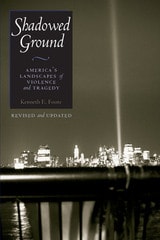
Shadowed Ground explores how and why Americans have memorialized—or not—the sites of tragic and violent events spanning three centuries of history and every region of the country. For this revised edition, Kenneth Foote has written a new concluding chapter that looks at the evolving responses to recent acts of violence and terror, including the destruction of the Branch Davidian compound at Waco, Texas, the Oklahoma City bombing, the Columbine High School massacre, and the terrorist attacks of 9/11.
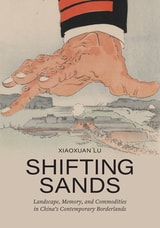
Shifting Sands
Landscape, Memory, and Commodities in China's Contemporary BorderlandsXiaoxuan Lu
University of Texas Press, 2023
How China’s borderlands transformed politically and culturally throughout the twentieth and twenty-first centuries.
China’s land borders, shared with fourteen other nations, are the world’s longest. Like all borders, they are not just lines on a map but also spaces whose histories and futures are defined by their frontier status. An ambitious appraisal of China’s borderlands, Shifting Sands addresses the full scope and importance of these regions, illustrating their transformation from imperial backwaters to hotbeds of resource exploitation and human development in the age of neoliberal globalization.
Xiaoxuan Lu brings to bear an original combination of archival research, fieldwork, cartography, and landscape analysis, broadening our understanding of the political economy and cultural changes in China’s borderlands in the twentieth and twenty-first centuries. While conventional wisdom looks to the era of Deng Xiaoping for China’s “opening,” Lu shows the integration of China’s borderlands into national and international networks from Sun Yat-sen onward. Yet, while the state has left a firm imprint on the borderlands, they were hardly created by China alone. As the Chinese case demonstrates, all borderlands are transnational, their physical and socioeconomic landscapes shaped by multidirectional flows of materials, ideas, and people.
Showing Off
The Geltung HypothesisBy Philip L. Wagner
University of Texas Press, 1996
Hardly a place exists on earth that has not been shaped in some way by human beings. Every day we modify and even sweep away natural landscapes as we build places to live and work. But why we react and interact as social beings intent on exercising ecological dominance poses an endlessly compelling puzzle for everyone from novelists to geographers.
In Showing Off, distinguished geographer Philip L. Wagner offers a persuasive hypothesis. Drawing on a lifetime of inquiry, travel, and teaching, he asserts that the strive for Geltung—personal standing, recognition, acceptance, esteem, and influence—shapes all of our interactions and defines the unique social character of human beings.
Wagner applies the Geltung hypothesis to a wide range of human activities from falling in love and spreading gossip to buying goods and making war. His examples demonstrate how communication and display—"showing off"—impel geographic change, as they reveal how and why people with the most Geltung tend to occupy the most desirable places.
This broad vision draws insights from many fields. A major contribution to cultural geography, the book also sheds new light on individual psychology and psychopathology and suggests new themes for cognitive science and even philosophy. Sure to stir lively debate in many circles, it will be provocative reading for everyone fascinated by the continuum between people and places.
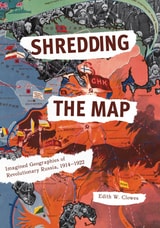
Shredding the Map
Imagined Geographies of Revolutionary Russia, 1914-1922Edith W. Clowes
Amherst College Press, 2024
An innovative, digitally-aided study of Russia’s “imagined geography” during the early decades of the twentieth century, Shredding the Map uncovers vying emotional patterns and responses to Russian ideas of place, some familiar and some quite new. The book includes new visualizations that connect otherwise invisible networks of shared place, feeling, and perception among dozens of writers in order to trace patterns of geospatial identity. A scholarly companion to the “Mapping Imagined Geographies of Revolutionary Russia” website and database, this book offers an innovative analysis of place and identity beyond the centers of power, enhancing our perceptions of Russia and encouraging debate about the possibilities for digital humanities and literary analysis.
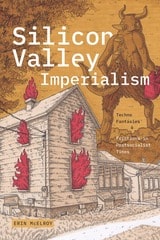
Silicon Valley Imperialism
Techno Fantasies and Frictions in Postsocialist TimesErin McElroy
Duke University Press, 2024
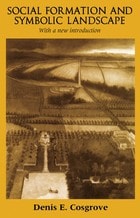
Social Formation and Symbolic Landscape
Denis E. Cosgrove
University of Wisconsin Press, 1998
Hailed as a landmark in its field since its first publication in 1984, Denis E. Cosgrove’s Social Formation and Symbolic Landscape has been influential well beyond geography. It has continued to spark lively debate among historians, geographers, art historians, social theorists, landscape architects, and others interested in the social and cultural politics of landscape.
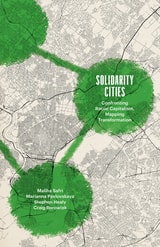
Solidarity Cities
Confronting Racial Capitalism, Mapping TransformationMaliha Safri
University of Minnesota Press, 2025
Mapping the transformative effects of America’s urban solidarity economies
Solidarity economies, characterized by diverse practices of cooperation and mutual support, have long played pivotal but largely invisible roles in fostering shared survival and envisioning alternatives to racial capitalism globally and in the United States. This book maps the thriving existence of these cooperative networks in three differently sized American cities, highlighting their commitment to cooperation, democracy, and inclusion and demonstrating the desire—and the pressing need—to establish alternative foundations for social and economic justice.
Collectively authored by four social scientists, Solidarity Cities analyzes the deeply entrenched racial and economic divides from which cooperative networks emerge as they work to provide unmet basic needs, including food security, affordable housing, access to fair credit, and employment opportunities. Examining entities such as community gardens, credit unions, cooperatives, and other forms of economic solidarity, the authors highlight how relatively small yet vital interventions into public life can expand into broader movements that help bolster the overall well-being of their surrounding communities.
Bringing together insights from geography, political economy, and political science with mapping and spatial analysis methodologies, surveys, and in-depth interviews, Solidarity Cities illuminates the extensive footprints of solidarity economies and the roles they play in communities. The authors show how these initiatives act as bulwarks against gentrification, exploitation, and economic exclusion, helping readers see them as part of the past, present, and future of more livable and just cities.
Retail e-book files for this title are screen-reader friendly with images accompanied by short alt text and/or extended descriptions.
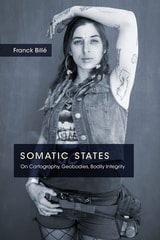
Somatic States
On Cartography, Geobodies, Bodily IntegrityFranck Billé
Duke University Press, 2025
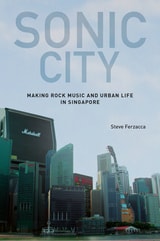
Sonic City
Making Rock Music and Urban Life in SingaporeSteve Ferzacca
National University of Singapore Press, 2020
Grounded in debates from sound studies, Ferzacca draws on Bruno Latour’s ideas of the social—continually emergent, constantly in-the-making, “associations of heterogeneous elements” of human and non-human “mediators and intermediaries”—to portray a community entangled in the confounding relations between vernacular and national heritage projects. Music shops, music gear, music genres, sound, urban space, neighborhoods, State presence, performance venues, practice spaces, regional travel, local, national, regional, and sonic histories afford expected and unexpected opportunities for work, play, and meaning, in the contemporary music scene in this Southeast Asian city-state. The emergent quality of this deep sound is fiercely cosmopolitan, yet entirely Singaporean. What emerges is a vernacular heritage drawing upon Singapore’s unique place in Southeast Asian and world history.
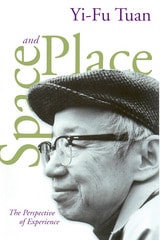
Space And Place
The Perspective of ExperienceYi-Fu Tuan
University of Minnesota Press, 2001

Space, Place, and Gender
Doreen Massey
University of Minnesota Press, 1994
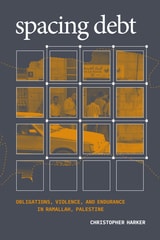
Spacing Debt
Obligations, Violence, and Endurance in Ramallah, PalestineChristopher Harker
Duke University Press, 2020
Special?
The Chequered History of the UK-US RelationshipSimon McDonald
Haus Publishing, 2027
Special? investigates the unique, but increasingly weak, relationship between the US and UK and contemplates how it might develop in the future.
Many relationships in international affairs are singular, but the United Kingdom’s relationship with the United States has always been different. For a time, what Churchill dubbed the "special" relationship had consequences far beyond the borders of the two countries—a closeness that has provoked envy, curiosity, and bewilderment.
In this new volume, Simon McDonald takes stock of this special relationship and speculates about its future. Starting with its sixteenth-century origins, he takes a longer look at the twentieth century and the two nations' relationship today, before looking forward at how, and if, it may develop in the coming centuries. Just how important are ties in defense, intelligence, language, and culture? What can we make of the United States’s ambivalent relationship with the Royal Family? Has the US ever acted benevolently towards the UK, or has it always taken decisions in its own interest?
Today, the relationship is weaker than Churchill, Thatcher, or even Blair understood it; much that made it special belongs to a rapidly receding past. Though it can no longer be claimed that the relationship is central to international relations, McDonald asks if recent events represent a temporary cooling of what remains a vital relationship to the UK and an important one to the US; or a rift that will only grow wider.
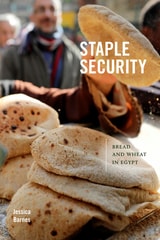
Staple Security
Bread and Wheat in EgyptJessica Barnes
Duke University Press, 2022
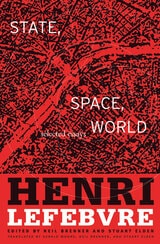
State, Space, World
Selected EssaysHenri Lefebvre
University of Minnesota Press, 2009
State, Space, World collects a series of Lefebvre’s key writings on the state from this period. Making available in English for the first time the as-yet-unexplored political aspect of Lefebvre’s work, it contains essays on philosophy, political theory, state formation, spatial planning, and globalization, as well as provocative reflections on the possibilities and limits of grassroots democracy under advanced capitalism.
State, Space, World is an essential complement to The Production of Space, The Urban Revolution, and The Critique of Everyday Life. Lefebvre’s original and prescient analyses that emerge in this volume are urgently relevant to contemporary debates on globalization and neoliberal capitalism.
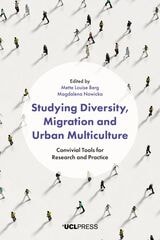
Studying Diversity, Migration and Urban Multiculture
Convivial Tools for Research and PracticeEdited by Mette Louise Berg and Magdalena Nowicka
University College London, 2019
Drawing on a range of innovative and participatory methods, each chapter examines conviviality in different cities across the United Kingdom. The contributors ask how the research process itself can be made more convivial and show how power relations between researchers, those researched, and research users can be reconfigured—in the process producing much needed new knowledge and understanding about urban diversity, multiculturalism and conviviality. Examples include embroidery workshops with diverse faith communities, arts work with child language brokers in schools, and life story and walking methods with refugees. Studying Diversity, Migration and Urban Multiculture is interdisciplinary in scope and includes contributions from sociologists, anthropologists, and social psychologists, as well as chapters by practitioners and activists. It provides fresh perspectives on methodological debates in qualitative social research, and will be of interest to scholars, students, practitioners, activists, and policymakers who work on migration, urban diversity, conviviality and conflict, and integration and cohesion.
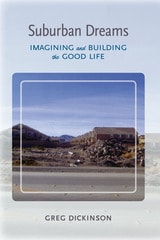
Suburban Dreams
Imagining and Building the Good LifeGreg Dickinson
University of Alabama Press, 2014
2016 CHOICE OUTSTANDING ACADEMIC TITLE AND JANE JACOBS URBAN COMMUNICATION BOOK AWARD FINALIST
Explores how the suburban imaginary, composed of the built environment and imaginative texts, functions as a resource for living out the “good life”
Starting with the premise that suburban films, residential neighborhoods, chain restaurants, malls, and megachurches are compelling forms (topos) that shape and materialize the everyday lives of residents and visitors, Greg Dickinson’s Suburban Dreams offers a rhetorically attuned critical analysis of contemporary American suburbs and the “good life” their residents pursue.
Dickinson’s analysis suggests that the good life is rooted in memory and locality, both of which are foundations for creating a sense of safety central to the success of suburbs. His argument is situated first in a discussion of the intersections among buildings, cities, and the good life and the challenges to these relationships wrought by the twentieth and twenty-first centuries. The argument then turns to rich, fully-embodied analyses of suburban films and a series of archetypal suburban landscapes to explore how memory, locality, and safety interact in constructing the suburban imaginary. Moving from the pastoralism of residential neighborhoods and chain restaurants like Olive Garden and Macaroni Grill, through the megachurch’s veneration of suburban malls to the mixed-use lifestyle center’s nostalgic invocation of urban downtowns, Dickinson complicates traditional understandings of the ways suburbs situate residents and visitors in time and place.
The analysis suggests that the suburban good life is devoted to family. Framed by the discourses of consumer culture, the suburbs often privilege walls and roots to an expansive vision of worldliness. At the same time, developments such as farmers markets suggest a continued striving by suburbanites to form relationships in a richer, more organic fashion.
Dickinson’s work eschews casually dismissive attitudes toward the suburbs and the pursuit of the good life. Rather, he succeeds in showing how by identifying the positive rhetorical resources the suburbs supply, it is in fact possible to engage with the suburbs intentionally, thoughtfully, and rigorously. Beyond an analysis of the suburban imaginary, Suburban Dreams demonstrates how a critical engagement with everyday places can enrich daily life. The book provides much of interest to students and scholars of rhetoric, communication studies, public memory, American studies, architecture, and urban planning.
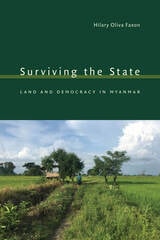
Surviving the State
Land and Democracy in MyanmarHilary Oliva Faxon
Duke University Press, 2026
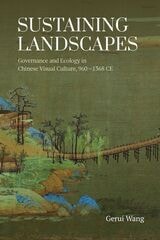
Sustaining Landscapes
Governance and Ecology in Chinese Visual Culture, 960–1368 CEGerui Wang
Hong Kong University Press, 2025
Sustaining Landscapes: Governance and Ecology in Chinese Visual Culture, 960–1368 CE examines ecological thought contested amid the rise of the Chinese landscape genre, tracing its intersections with infrastructure governance, natural resource management, and geospatial knowledge. It traces the pre-industrial notion of “sustainability” in policy debates, legal regulations, and arts. Landscape imagery on paintings, maps, as well as mass-produced artifacts such as fans and ceramic pillows documented both appropriate and exploitative use of natural resources, and critiqued on social inequity and political turmoil. This book breaks new ground by bringing together research on visual and material culture with analysis of politics and ecology. Wang argues that the Chinese landscape genre embodied a holistic approach to negotiating debates on human-nature interdependence and people-state relationships. It joins the increasing literature on ecocriticism and offers alternative perspectives to address contemporary challenges, ranging from environmental crisis to global governance.
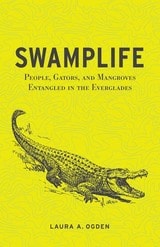
Swamplife
People, Gators, and Mangroves Entangled in the EvergladesLaura A. Ogden
University of Minnesota Press, 2010
Today, the many visions of the Everglades—protectionist, ecological, commercial, historical—have become a tangled web of contradictory practices and politics for conservation and for development. Yet within this entanglement, the place of people remains highly ambivalent. It is the role of people in the Everglades that interests Ogden, as she seeks to reclaim the landscape’s long history as a place of human activity and, in doing so, discover what it means to be human through changing relations with other animals and plant life.
Ogden tells this story through the lives of poor rural whites, gladesmen, epitomized in tales of the Everglades’ most famous outlaws, the Ashley Gang. With such legends and lore on one side, and outsized efforts at drainage and development on the other, Swamplife strikes a rare balance, offering a unique insight into the hidden life of the Everglades—and into how an appreciation of oppositional culture and social class operates in our understanding of wilderness in the United States.
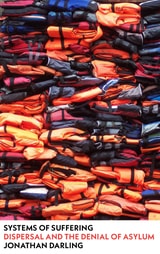
Systems of Suffering
Dispersal and the Denial of AsylumJonathan Darling
Pluto Press, 2021
Of the many state-enacted cruelties to which refugees and asylum seekers are subjected, detention and deportation loom largest in popular consciousness. But there is a third practice, perpetrating a slower violence, that remains hidden: dispersal.
Jonathan Darling provides the first detailed account of how dispersal - the system of accommodation and support for asylum seekers and refugees in Britain - both sustains and produces patterns of violence, suffering and social abjection. He explores the evolution of dispersal as a privatized process, from the first outsourced asylum accommodation contracts in 2012 to the renewed wave of outsourcing pursued by the Home Office today.
Drawing on six years of research into Britain's dispersal system, and foregrounding the voices and experiences of refugees and asylum seekers, Darling argues that dispersal has played a central role in the erasure of asylum from public concern. Systems of Suffering is a vital tool in the arsenal of those fighting to hold the government to account for the violence of its asylum policy and practice.