Results by title
751 books match the query 'International Relations' and 53 start with s
Sacred Mandates
Asian International Relations since Chinggis KhanEdited by Timothy Brook, Michael van Walt van Praag, Miek Boltjes
University of Chicago Press, 2018
This book argues that understanding the diversity of past legal orders helps explain the forms of contemporary conflict, as well as the conflicting historical narratives that animate tensions. Rather than proceed sequentially by way of dynasties, the editors identify three “worlds”—Chingssid Mongol, Tibetan Buddhist, and Confucian Sinic—that represent different forms of civilization authority and legal order. This novel framework enables us to escape the modern tendency to view the international system solely as the interaction of independent states, and instead detect the effects of the complicated history at play between and within regions. Contributors from a wide range of disciplines cover a host of topics: the development of international law, sovereignty, state formation, ruler legitimacy, and imperial expansion, as well as the role of spiritual authority on state behavior, the impact of modernization, and the challenges for peace processes. The culmination of five years of collaborative research, Sacred Mandates will be the definitive historical guide to international and intrastate relations in Asia, of interest to policymakers and scholars alike, for years to come.
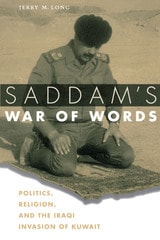
Saddam's War of Words
Politics, Religion, and the Iraqi Invasion of KuwaitBy Jerry M. Long
University of Texas Press, 2004
From a Western perspective, the Persian Gulf War of 1990-1991 largely fulfilled the first President Bush's objective: "In, out, do it, do it right, get gone. That's the message." But in the Arab world, the causes and consequences of Saddam Hussein's invasion of Kuwait and his subsequent defeat by a U.S.-led coalition were never so clear-cut. The potent blend of Islam and Arab nationalism that Saddam forged to justify the unjustifiable—his invasion of a Muslim state—gained remarkable support among both Muslims and Arabs and continued to resonate in the Middle East long after the fighting ended. Indeed, as this study argues in passing, it became a significant strand in the tangled web of ideologies and actions that led to the attacks of 9/11.
This landmark book offers the first in-depth investigation of how Saddam Hussein used Islam and Arab nationalism to legitimate his invasion of Kuwait in the eyes of fellow Muslims and Arabs, while delegitimating the actions of the U.S.-led coalition and its Arab members. Jerry M. Long addresses three fundamental issues: how extensively and in what specific ways Iraq appealed to Islam during the Kuwait crisis; how elites, Islamists, and the elusive Arab "street," both in and out of the coalition, responded to that appeal and why they responded as they did; and the longer-term effects that resulted from Saddam's strategy.
Safe Third Countries
Extending the EU Asylum and Immigration Policies to Central and Eastern EuropeSandra Lavenex
Central European University Press, 1999
The refugee issue has always been controversial and Lavenex's analyses add fuel to an already heated debate. She analyses the various bi- and multilateral processes by which the countries of Central and Eastern Europe (CEECs) are being gradually incorporated into a restrictive refugee regime established among the EU member states, in which the CEECs serve as "gate-keepers" for refugees and immigrants heading towards Western Europe.
At a time when many transition countries are trying to enter the EU, Lavenex highlights the CEECs consent to adapt to Western European policies aimed at fighting illegal immigration and reducing the numbers of asylum seekers as a political bargaining tool in exchange for future membership in the EU. She also argues that the regime undermines the values of international refugee protection and diffuses states' responsibilities by establishing a system of negative redistribution for the handling of asylum claims.
Safe Third Countries is the first comprehensive study on the extension of the emergent European refugee regime and highlights, in an innovative manner, the complex entanglement of domestic policies, European integration and international relations.
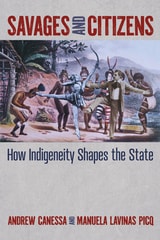
Savages and Citizens
How Indigeneity Shapes the StateAndrew Canessa and Manuela Lavinas Picq; Foreword by Jeff Ganohalidoh Corntassel
University of Arizona Press, 2024
Delving into European political philosophy, comparative politics, and contemporary international law, the book shows how the concept of indigeneity has shaped the development of the modern state. The exclusion of Indigenous people was not a collateral byproduct; it was a political project in its own right. The book argues that indigeneity is a political identity relational to modern nation-states and that Indigenous politics, although marking the boundary of the state, are co-constitutive of colonial processes of state-making. In showing how indigeneity is central to how the international system of states operates, the book forefronts Indigenous peoples as political actors to reject essentializing views that reduce them to cultural “survivors” rooted in the past.
With insights drawn from diverse global contexts and empirical research from Bolivia and Ecuador, this work advocates for the relevance of Indigenous studies within political science and argues for an ethnography of sovereignty in anthropology. Savages and Citizens makes a compelling case for the centrality of Indigenous perspectives to understand the modern state from political theory to international studies.
Saved for a Purpose
A Journey from Private Virtues to Public ValuesJames A. Joseph
Duke University Press, 2015
In an engaging and personal style, Joseph shows how his commitment to applying moral and ethical principles to large groups and institutions played out in his work in the civil rights movement in Alabama and as a college chaplain in California in the turbulent 1960s. His time later as vice president of the Cummins Engine Company provided an opportunity to promote corporate ethics, and his tenure as Under Secretary of the Interior in the Carter Administration underscored the difficulty and weight of making the right decisions while balancing good policy analysis with transcendent moral principles.
In 1996 President Clinton selected Joseph to become the United States Ambassador to South Africa. His recollections of working with Nelson Mandela, whom he describes as a noble and practical politician, and his observations about what he learned from Desmond Tutu and others about reconciliation contain some of the book’s most poignant passages.
Saved for a Purpose is unique, as Joseph combines his insights from working to integrate values into America’s public and private sectors with his long engagement with ethics as an academic discipline and as a practical guide for social behavior. Ultimately, it reflects Joseph’s passionate search for values that go beyond the personal to include the ethical imperatives that should be applied to the communal.
Scotland Rising
The Case for IndependenceGerry
Pluto Press, 2022
A systematic exploration of the arguments for Scottish independence from a sympathetic angle.
The Scottish independence question is one of the pivotal questions facing British politics and the future of the United Kingdom. It is also one of the most contentious and misunderstood.
In Scotland Rising, Gerry Hassan addresses the fundamental questions covering the Scottish independence debate so that people can better understand the case for independence and the nuances, contours, and implications for the whole country. Looking beyond the merits and shortcomings of the SNP and the Conservative government in Westminster, Hassan tackles the larger driving dynamics of 'the Scottish Question' - a growing desire amongst many Scots for an explicit discussion about society, public policy choices, and wider values.
Addressing the constitutional framework, and questions about the role of government and democracy, the nature of the British state, society, and capitalism, Scotland Rising makes an urgent and intelligent contribution to one of the defining political questions of our time.
Scriptures, Shrines, Scapegoats, and World Politics
Religious Sources of Conflict and Cooperation in the Modern EraZeev Maoz and Errol A. Henderson
University of Michigan Press, 2021
The effect of religious factors on politics has been a key issue since the end of the Cold War and the subsequent rise of religious terrorism. However, the systematic investigations of these topics have focused primarily on the effects of religion on domestic and international conflict. Scriptures, Shrines, Scapegoats, and World Politics offers a comprehensive evaluation of the role of religion in international relations, broadening the scope of investigation to such topics as the relationship between religion and cooperation, religion and conflict, and the relationship between religion and the quality of life. Religion is often manipulated by political elites to advance their principal goal of political survival. Zeev Maoz and Errol A. Henderson find that no specific religion is either consistently more bellicose or consistently more cooperative than other religions. However, religious similarity between states tends to reduce the propensity of conflict and increase the opportunity for security cooperation. The authors find a significant relationship between secularism and human security.

Seamus Heaney
Searches For AnswersEugene O'Brien
Pluto Press, 2003
Secessionist Rule
Protracted Conflict and Configurations of Non-State AuthorityFranziska Smolnik
Campus Verlag, 2016
Second Front Now--1943
An Opportunity DelayedWalter Scott Dunn
University of Alabama Press, 2009
Addresses head-on the central issue of invasion timing in the Allied European strategy of World War II
In Second Front Now – 1943: An Opportunity Delayed, military historian Walter S. Dunn offers a sharply argued and meticulously researched reassessment of one of the most consequential strategic debates of World War II: the decision not to launch a full-scale Allied invasion of Western Europe in 1943. At a time when Nazi Germany was stretched across multiple fronts and the Soviet Union bore the brunt of the fighting in the East, the question of when—and where—to open a Second Front in Europe became a defining issue among Allied leaders.
Dunn explores the complex interplay of military planning, political caution, logistical constraints, and inter-Allied tensions that led Britain and the United States to postpone a cross-Channel invasion. Drawing from official records, wartime correspondence, and operational analyses, he reconstructs the strategic environment of 1943 and challenges the conventional wisdom that the delay was inevitable—or even prudent. Instead, Dunn presents a compelling case that an earlier invasion may have been both feasible and decisive, potentially shortening the war and altering the balance of postwar power.
With clarity and analytical rigor, the book examines the competing priorities of Churchill, Roosevelt, and Stalin, the influence of Mediterranean operations, and the evolving capabilities of Allied forces. It also considers the broader implications of the delay, including its impact on Soviet–Western relations and the shaping of the Cold War order that followed.
Blending narrative accessibility with scholarly depth, Second Front Now – 1943 is essential reading for students, historians, and anyone interested in the strategic decisions that defined the Allied path to victory. Dunn invites readers to reconsider a pivotal “missed moment” in history—and to reflect on how differently the war, and the world, might have unfolded.

Sectors of Mutual Benefit in U.S.-Soviet Relations
Nish Jamgotch Jr., editor
Duke University Press, 1985
Without minimizing the enormous dangers of ongoing strategic military competition, the contributors attempt to determine which sectors of U.S.-Soviet relations have yielded the most significant mutual benefits. They raise questions about where U.S. policy has gone wrong, where it has been effective, and how safe we are in forecasting the continuation of those cooperative relationships.
Secular Missionaries
Americans and African Development in the 1960sLarry Grubbs
University of Massachusetts Press, 2010
Secular Morality and International Security
American and British Decisions about WarMaria Fanis
University of Michigan Press, 2011
“[Fanis] demonstrates an impressive ability to travel nimbly between abstract theoretical concepts and a messy reality. In each one of the case study chapters, her analysis is rich, thoughtful, and imaginative.”
—Ido Oren, University of Florida

Secular Power Europe and Islam
Identity and Foreign PolicySarah Wolff
University of Michigan Press, 2021
Secular Power Europe and Islam argues that secularism is not the central principle of international relations but should be considered as one belief system that influences international politics. Through an exploration of Europe’s secular identity, an identity that is seen erroneously as normative, author Sarah Wolff shows how Islam confronts the EU’s existential anxieties about its security and its secular identity. Islam disrupts Eurocentric assumptions about democracy and revolution and human rights. Through three case studies, Wolff encourages the reader to unpack secularism as a bedrock principle of IR and diplomacy. This book argues that the EU’s interest and diplomacy activities in relation to religion, and to Islam specifically, is shaped by the insistence on a European secular identity, which should be reconsidered in areas of religion and foreign policy.
Secularizing Islamists?
Jama'at-e-Islami and Jama'at-ud-Da'wa in Urban PakistanHumeira Iqtidar
University of Chicago Press, 2011
Secularizing Islamists? provides an in-depth analysis of two Islamist parties in Pakistan, the highly influential Jama‘at-e-Islami and the more militant Jama‘at-ud-Da‘wa, widely blamed for the November 2008 terrorist attack in Mumbai, India. Basing her findings on thirteen months of ethnographic work with the two parties in Lahore, Humeira Iqtidar proposes that these Islamists are involuntarily facilitating secularization within Muslim societies, even as they vehemently oppose secularism.
This book offers a fine-grained account of the workings of both parties that challenges received ideas about the relationship between the ideology of secularism and the processes of secularization. Iqtidar particularly illuminates the impact of women on Pakistani Islamism, while arguing that these Islamist groups are inadvertently supporting secularization by forcing a critical engagement with the place of religion in public and private life. She highlights the role that competition among Islamists and the focus on the state as the center of their activity plays in assisting secularization. The result is a significant contribution to our understanding of emerging trends in Muslim politics.

Securing Approval
Domestic Politics and Multilateral Authorization for WarTerrence L. Chapman
University of Chicago Press, 2011
Among the most momentous decisions that leaders of a state are called upon to make is whether or not to initiate warfare. How their military will fare against the opponent may be the first consideration, but not far behind are concerns about domestic political response and the reaction of the international community.
Securing Approval makes clear the relationship between these two seemingly distinct concerns, demonstrating how multilateral security organizations like the UN influence foreign policy through public opinion without ever exercising direct enforcement power. While UN approval of a proposed action often bolsters public support, its refusal of endorsement may conversely send a strong signal to domestic audiences that the action will be exceedingly costly or overly aggressive. With a cogent theoretical and empirical argument, Terrence L. Chapman provides new evidence for how multilateral organizations matter in security affairs as well as a new way of thinking about the design and function of these institutions.
Security. Cooperation. Governance.
The Canada-United States Open Border ParadoxChristian Leuprecht and Todd Hataley, Editors
University of Michigan Press, 2023
The book’s findings show that border governance straddles multiple regional, sectoral, and security scales in ways rarely documented in such detail. These developments have precipitated an Open Border Paradox: extensive, regionally varied flows of trade and people have resulted in a series of nested but interdependent security regimes that function on different scales and vary across economic and policy sectors. These realities have given rise to regional and sectoral specialization in related security regimes. For instance, just-in-time automotive production in the Great Lakes region varies considerably from the governance of maritime and intermodal trade (and port systems) on the Atlantic and Pacific coasts, which in turn is quite different from commodity-based systems that manage diverse agricultural and food trade in the Canadian Prairies and US Great Plains.
The paradox of open borders and their legitimacy is a function of robust bilateral and multilevel governance based on effective partnerships with substate governments and the private sector. Effective policy accounts for regional variation in integrated binational security and trade imperatives. At the same time, binational and continental policies are embedded in each country’s trade and security relationships beyond North America.
Seeds of Hate
How America's Flawed Middle East Policy Ignited the JihadLawrence Pintak
Pluto Press, 2003

Seeing Through The Media
Jeffords, Susan
Rutgers University Press, 1994
Looking to old and new technologies for mass communication-from CNN to comic books, from international news agencies to tabloids, from bomb sights to the Super Bowl-the essays in this collection show the ways in which public information is shaped, packaged, and disseminated.

Seeing Through The Media
The Persian Gulf WarJeffords, Susan
Rutgers University Press, 1994
Looking to old and new technologies for mass communication-from CNN to comic books, from international news agencies to tabloids, from bomb sights to the Super Bowl-the essays in this collection show the ways in which public information is shaped, packaged, and disseminated.
Self-Determination without Nationalism
A Theory of Postnational SovereigntyOmar Dahbour
Temple University Press, 2014
How do groups—be they religious or ethnic—achieve sovereignty in a postnationalist world? In Self-Determination without Nationalism, noted philosopher Omar Dahbour insists that the existing ethics of international relations, dominated by the rival notions of liberal nationalism and political cosmopolitanism, no longer suffice.
Dahbour notes that political communities are an ethically desirable and historically inevitable feature of collective life. The ethical principles that govern them, however—especially self-determination and sovereignty—require reformulation in light of globalization and the economic and environmental challenges of the twenty-first century.
Arguing that nation-states violate the principle of self-determination, Dahbour then develops a detailed new theory of self-determination that he calls "ecosovereignty.” Ecosovereignty defines political community in a way that can protect and further the rights of indigenous peoples as well as the needs of ecological regions for a sustainable form of development and security from environmental destruction.
In the series Global Ethics and Politics, edited by Carol Gould.
Settler Colonialism
An IntroductionSai Englert
Pluto Press, 2022
Sai Englert offers readers an accessible and global account of settler colonialism, taking in its history, some of its main characteristics, and its continued relevance today.
From the Palestinian struggle against Israel occupation to the First Nations' mass opposition to pipeline construction in North America, indigenous peoples are at the forefront of some of the most important struggles of our age. Rich with their own unique histories, characteristics, and social relations, these different struggles are connected by the enemy they face: settler colonialism.
While settler-colonial regimes differ, Englert explains how they are all defined by a fundamental conflict between themselves and the indigenous people they aim to dispossess, exploit and/or eliminate.
To understand settler colonialism as a distinct, structural, and contemporary process, is also to start engaging with a number of international social movements, political struggles, and solidarity campaigns differently. It is to start asking how decolonization – as a material struggle for freedom – might be possible.
Shaping the Future of Power
Knowledge Production and Network-Building in China-Africa RelationsLina Benabdallah
University of Michigan Press, 2020
Shortcut or Piecemeal
Economic Development Strategies and Structural ChangeJan Winiecki
Central European University Press, 2016

Showdown in the Show-Me State
The Fight Over Conceal-and-Carry Gun Laws in MissouriWilliam T. Horner
University of Missouri Press, 2005
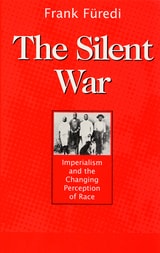
Silent War
Furedi, Frank
Rutgers University Press, 1999
"The Silent War transcends the disciplinary line that divides race relations from international relations. It is an enterprise in sociological investigation which seeks to mobilize the insights of history to clarify how the consciousness of race has evolved." - Kofi Buenor Hadjor
Racial identity has been one of the defining characteristics of the twentieth century. Yet, argues Frank Furedi in this provocative study, advocates of racial identity have long felt uncomfortable with the racialized global order which they created.
Furedi traces the history of Western colonial racist ideology and its role in subjugating non-Western peoples. He analyzes the changing perception of racism in the West and how the use of "race" has altered during the course of the twentieth century.
Focusing on the Second World War as the critical turning point in racist ideology, Furedi argues that the defeat of Nazism left the West uneasy with its own racist past. He assesses how this was redefined in the postwar period-especially during the Cold War- and demonstrates that, although white supremacist views gradually became obsolete in international affairs, Western nations were initially unwilling to accept criticism of their past and sought to portray racism as a natural part of human condition. As a result the West continued to adopt the moral high ground well into the postwar period, to the ultimate detriment of non-Western nations.
Singapore's Grand Strategy
Cheng Guan Ang
National University of Singapore Press, 2023
Even small states can have grand strategies. Singapore, despite its poor natural resource endowment, small population, and size, has often been described as punching above its weight in international affairs. Part of this stems from the way Singapore strategically integrates the different diplomatic, political, and defense-oriented tools at its disposal. To explore this, Singapore’s Grand Strategy offers a fresh and useful diplomatic, defense, and security history of Singapore, from its independence in 1965 through today’s period of strategic realignment.
Most previous studies of grand strategy have focused on super- or at least middle powers, but this book presents an important contribution to international relations and strategic studies by showing how the concept can help explain the strategic posture and achievements of small states as well. Moreover, he brings a historian's perspective to a subject usually tackled by political scientists. The result will be useful and important for scholars in these fields.
Sino–Malay Trade and Diplomacy from the Tenth through the Fourteenth Century
Derek Heng
Ohio University Press, 2009
China has been an important player in the international economy for two thousand years and has historically exerted enormous influence over the development and nature of political and economic affairs in the regions beyond its borders, especially its neighbors.
Sino–Malay Trade and Diplomacy from the Tenth through the Fourteenth Century examines how changes in foreign policy and economic perspectives of the Chinese court affected diplomatic intercourse as well as the fundamental nature of economic interaction between China and the Malay region, a subregion of Southeast Asia centered on the Strait of Malacca.
This study’s uniqueness and value lie in its integration of archaeological, epigraphic, and textual data from both China and Southeast Asia to provide a rich, multilayered picture of Sino–Southeast Asian relations in the premodern era. Derek Heng approaches the topic from both the Southeast Asian and Chinese perspectives, affording a dual narrative otherwise unavailable in the current body of Southeast Asian and China studies literature.
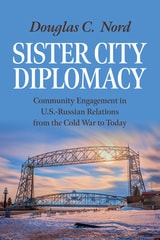
Sister City Diplomacy
Community Engagement in U.S.–Russian Relations from the Cold War to TodayDouglas C. Nord
University of Wisconsin Press, 2025
Sister City Diplomacy offers a historical account of citizen diplomacy set in a unique political and social environment. But in its theoretical grounding and informed arguments, this study speaks to much broader and contemporary concerns, both in terms of United States–Russian relations today and with regard to the challenges and opportunities of community-based diplomacy in general. Lessons learned along the shores of Lakes Superior and Onega in the last days of the Cold War hold great value given the heightened tensions of current geopolitics.
Social Mobility in Kerala
Modernity and Identity in ConflictFilippo Osella and Caroline Osella
Pluto Press, 2000
Somalia - the Untold Story
The War Through the Eyes of Somali WomenEdited by Judith Gardner and Judy El Bushra
Pluto Press, 2004
In this book, Somali women write and talk about the war, their experiences and the unacceptable choices they often faced. They explain clearly, in their own words, the changes, challenges – and sometimes the opportunities – that war brought, and how they coped with them.
Key themes include the slaughter and loss of men, who were the prime target for killings; rape and sexual violence as a weapon of war; changing roles in the family and within the pastoralist economy; women mobilising for peace; and leading social recovery in a war-torn society.
This book is not only an important record of women's experience of war, but also provides researchers and students of gender and conflict with rare first hand accounts highlighting the impact of war on gender relations, and women's struggle for equal political rights in a situation of state collapse.
Southeast Asia After the Cold War
A Contemporary HistoryAng Cheng Guan
National University of Singapore Press, 2019
With Southeast Asia After the Cold War, Ang Cheng Guan offers a complete, analytically informed contemporary history that covers the whole region, tracing developments since 1990 and highlighting change, continuity, and the larger context in which decisions have been made. Crucial as a tool for making sense of the dynamics of the region, this account of Southeast Asia’s international relations will also be of immediate relevance to those in the United States and elsewhere who engage with the region, with its young, dynamic population, and its strategic position at between the Indian Ocean and the Pacific.

Sovereigns, Quasi Sovereigns, and Africans
Race and Self-Determination in International LawSiba N’Zatioula Grovogui
University of Minnesota Press, 1996
Sovereigns, Quasi Sovereigns, and Africans was first published in 1996. Minnesota Archive Editions uses digital technology to make long-unavailable books once again accessible, and are published unaltered from the original University of Minnesota Press editions.
In this trenchant critique, Siba N'Zatioula Grovogui demonstrates the failure of international law to address adequately the issues surrounding African self-determination during decolonization. Challenging the view that the only requirement for decolonization is the elimination of the legal instruments that provided for direct foreign rule, Sovereigns, Quasi Sovereigns, and Africans probes the universal claims of international law.
Grovogui begins by documenting the creation of the "image of Africa" in European popular culture, examining its construction by conquerors and explorers, scientists and social scientists, and the Catholic Church. Using the case of Namibia to illuminate the general context of Africa, he demonstrates that the principles and rules recognized in international law today are not universal, but instead reflect relations of power and the historical dominance of specific European states.
Grovogui argues that two important factors have undermined the universal applicability of international law: its dependence on Western culture and the way that international law has been structured to preserve Western hegemony in the international order. This dependence on Europeandominated models and legal apparatus has resulted in the paradox that only rights sanctioned by the former colonial powers have been accorded to the colonized, regardless of the latter's needs. In the case of Namibia, Grovogui focuses on the discursive strategies used by the West and their southern African allies to control the legal debate, as well as the tactics used by the colonized to recast the terms of the discussion.
Grovogui blends critical legal theory, historical research, political economy, and cultural studies with profound knowledge of contemporary Africa in general and Namibia in particular. Sovereigns, Quasi Sovereigns, and Africans represents the very best of the new scholarship, moving beyond narrow disciplinary boundaries to illuminate issues of decolonization in Africa.
Siba N'Zatioula Grovogui is assistant professor of political science at Johns Hopkins University. He previously practiced law in his native Guinea.

Sovereignty and Survival
Power, Conflict and Climate Change in BurmaAshley South
National University of Singapore Press, 2027
Evaluates Burma at a pivotal tipping point after the 2021 military coup.
The 2021 military coup in Burma/Myanmar triggered popular resistance and a spreading civil war, reigniting long-standing struggles for ethnic self-determination. The chaos has enabled a huge rise in transnational criminal activities, including drug trafficking and the emergence of scam centers. The country's geopolitical importance, not least as a source of rare earths, is also heightening the struggle for power. At the same time, accelerating climate change is destabilizing local ecologies and livelihoods, driving food production, socio-economic systems, and civil society towards collapse or massive change. Together, these forces have undermined the coherence of Burma as a centralized state. However, new forms of resistance and political organization have emerged in liberated areas across the country. At this critical juncture, rather than “state failure,” Burma demonstrates novel forms of complex, asymmetrical, and sometimes messy state-building, a “bottom-up” federalism based on the agency and resilience of Indigenous communities and anti-junta forces.
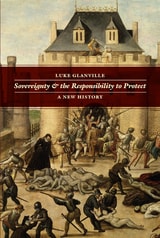
Sovereignty and the Responsibility to Protect
A New HistoryLuke Glanville
University of Chicago Press, 2013
In Sovereignty and the Responsibility to Protect, Luke Glanville argues that this responsibility extends back to the sixteenth and seventeenth centuries, and that states have since been accountable for this responsibility to God, the people, and the international community. Over time, the right to national self-governance came to take priority over the protection of individual liberties, but the noninterventionist understanding of sovereignty was only firmly established in the twentieth century, and it remained for only a few decades before it was challenged by renewed claims that sovereigns are responsible for protection.
Glanville traces the relationship between sovereignty and responsibility from the early modern period to the present day, and offers a new history with profound implications for the present.
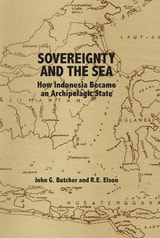
Sovereignty and the Sea
How Indonesia Became an Archipelagic StateJohn G. Butcher and R. E. Elson
National University of Singapore Press, 2017
Soviet-American Relations After the Cold War
Robert Jervis and Seweryn Bialer, eds.
Duke University Press, 1991
Moving beyond the boundaries of traditional studies of international relations, the contributors here focus on such topics as public opinion and the relationship of domestic policy to foreign policy. Other areas of consideration include the Soviet-U.S. relationship and the Third World and East Asia, the role of the United Nations in Soviet and American policy in the 1990s, international environmental protection, and the Soviet opening to nonprovocative defense. A final section concludes with policy choices for the future regarding security strategies and prospects for peace.
Contributors. Seweryn Bialer, Robert Dallek, Charles Gati, Toby Trister Gati, Colin S. Gray, Ole R. Holsti, Robert Jervis, Alexander J. Motyl, John Mueller, Eric A. Nordlinger, George H. Quester, Harold H. Sanders, Glenn E. Schweitzer, Jack Snyder, Donald S. Zagoria, William Zimmerman

Spaniards and Nazi Germany
Collaboration in the New OrderWayne H. Bowen
University of Missouri Press, 2000
Using recently declassified documents from Spain and the United States, personal interviews, and unpublished and published Spanish, German, British, and U.S. records, Spaniards and Nazi Germany makes a significant contribution to the understanding of Hispano-German relations during the 1930s and 1940s. This study shows that Naziphiles within the Spanish Falange, Spain's fascist party, made a concerted effort to bring their nation into World War II, and that only the indecisiveness of dictator Francisco Franco and diplomatic mistakes by the Nazis prevented them from succeeding.
Bowen demonstrates that while Spain was neutral in World War II, its policies clearly favored the Axis, at least in the early stages of the war. Franco, who had emerged victorious from the Spanish Civil War in 1939 largely because of support from Adolf Hitler and Benito Mussolini, even carefully considered entering World War II on the side of Nazi Germany.
By the late 1930s, members of the Falange saw World War II as a revolutionary opportunity, a chance to lead Spain into a new age as a partner with Nazi Germany and Fascist Italy at the head of a New Europe of social justice and authoritarian regimes. By the end of 1939, a significant minority of pro- Nazi Spaniards were unhappy that Spain had not entered the war and remade itself to fit better into Hitler's New Order. Bowen argues that support for Nazi Germany in Spain and among Spanish communities throughout Europe was both wide and deep, and that this enthusiasm for the Third Reich and the New Order it promised to bring lasted until the end of the war. Despite statements of neutrality by the Spanish government, the Franco regime was well aware of this collaboration by Spanish citizens as late as 1944-1945 and did little to stop it. Had Hitler been more interested in bringing Spain into his empire, or exploiting the pro-Nazi sentiments of these thousands of Spaniards, he might have replaced Franco with someone more willing to support his interests even as late as 1943.
Spaniards and Nazi Germany presents many possibilities for what might have been a far different outcome of World War II in Europe. It shows that even without the full support of the Spanish or German governments, pro-Nazi Spaniards, even if they did not quite bring Spain into the war, added to the strength of the Third Reich by serving in its armies, working in its factories, and promoting its ideas to other nations.
Sparrow and the Hawk
Costa Rica and the United States during the Rise of Jose FigueresKyle Longley
University of Alabama Press, 1997
Using Costa Rica as a example, Longley carefully examines the development of the successful relationship between a nonindustrialized country and the United States, revealing the complex forces at work in resistance and accommodation.
During World War II and the immediate postwar era, both the United States and Costa Rica experienced dramatic changes. The United States assumed world leadership and the accompanying responsibilities; Costa Rica encountered far-reaching difficulties that culminated in the Civil War of 1948 and the rise to power of José Figueres. Longley examines why the United States supported Figueres and emphasizes the history and role of Costa Ricans, primarily the figueristas, in maintaining good relations in such a difficult era. Figueres implemented economic and political nationalism, which produced domestic and international tensions, and in spite of its rejection of similar policies in Guatemala and Iran, the United States supported Figueres against domestic and foreign threats.

Special?
The Chequered History of the UK-US RelationshipSimon McDonald
Haus Publishing, 2027
Special? investigates the unique, but increasingly weak, relationship between the US and UK and contemplates how it might develop in the future.
Many relationships in international affairs are singular, but the United Kingdom’s relationship with the United States has always been different. For a time, what Churchill dubbed the "special" relationship had consequences far beyond the borders of the two countries—a closeness that has provoked envy, curiosity, and bewilderment.
In this new volume, Simon McDonald takes stock of this special relationship and speculates about its future. Starting with its sixteenth-century origins, he takes a longer look at the twentieth century and the two nations' relationship today, before looking forward at how, and if, it may develop in the coming centuries. Just how important are ties in defense, intelligence, language, and culture? What can we make of the United States’s ambivalent relationship with the Royal Family? Has the US ever acted benevolently towards the UK, or has it always taken decisions in its own interest?
Today, the relationship is weaker than Churchill, Thatcher, or even Blair understood it; much that made it special belongs to a rapidly receding past. Though it can no longer be claimed that the relationship is central to international relations, McDonald asks if recent events represent a temporary cooling of what remains a vital relationship to the UK and an important one to the US; or a rift that will only grow wider.
Speculative Security
The Politics of Pursuing Terrorist MoniesMarieke de Goede
University of Minnesota Press, 2012
Since the terrorist acts of September 11, 2001, finance and security have become joined in new ways to produce particular targets of state surveillance. In Speculative Security, Marieke de Goede describes how previously unscrutinized practices such as donations and remittances, especially across national borders, have been affected by security measures that include datamining, asset freezing, and transnational regulation. These “precrime” measures focus on transactions that are perfectly legal but are thought to hold a specific potential to support terrorism. The pursuit of suspect monies is not simply an issue of financial regulation, she shows, but a broad political, social, and even cultural phenomenon with profound effects on everyday life.
Speculative Security offers a range of examples that illustrate the types of security interventions employed today, including the extralegal targeting and breaking up of the al-Barakaat financial network that was accompanied by raids in the United States, asset freezes in Sweden, and the incarceration of a money remitter at Guantánamo Bay. De Goede develops the paradigm of “speculative security” as a way to understand the new fusing of finance and security, denoting the speculative nature of both the means and the ends of the war on terrorist financing.
Ultimately, de Goede reveals how the idea of creating “security” appeals to multiple imaginable—and unimaginable—futures in order to enable action in the present.

Stable Peace
By Kenneth E. Boulding; illustrations by Ed Lindlof
University of Texas Press, 1978
The human race has often put a high value on struggle, strife, turmoil, and excitement. Peace has been regarded as a utopian, unattainable, perhaps dull ideal or as some random element over which we have no control. However, the desperate necessities of the nuclear age have forced us to take peace seriously as an object of both personal and national policy. Stable Peace attempts to answer the question, If we had a policy for peace, what would it look like?
A policy for peace aims to speed up the historically slow, painful, but persistent transition from a state of continual war and turmoil to one of continual peace. In a stable peace, the war-peace system is tipped firmly toward peace and away from the cycle of folly, illusion, and ill will that leads to war.
Boulding proposes a number of modest, easily attainable, eminently reasonable policies directed toward this goal. His recommendations include the removal of national boundaries from political agendas, the encouragement of reciprocal acts of good will between potential enemies, the exploration of the theory and practice of nonviolence, the development of governmental and nongovernmental organizations to promote peace, and the development of research in the whole area of peace and conflict management.
Written in straightforward, lucid prose, Stable Peace will be of importance to politicians, policy makers, economists, diplomats, all concerned citizens, and all those interested in international relations and the resolution of conflict.
Standing Your Ground
Territorial Disputes and International ConflictPaul K. Huth
University of Michigan Press, 1998
State Learning and International Change
Andrew Farkas
University of Michigan Press, 1998

State of Translation
Turkey in Interlingual RelationsEinar Wigen
University of Michigan Press, 2018
International politics often requires two or more languages. The resulting interlingual relations mean translation, either by interpreters who are quite literally in the middle of conversations, or by bilingual statesmen who negotiate internationally in one language and then legitimize domestically in another. Since no two languages are the same, what can be argued in one language may be impossible in another. Political concepts can thus be significantly reformulated in the translation process. State of Translation examines this phenomenon using the case of how 19th-century Ottoman and later Turkish statesmen struggled to reconcile their arguments in external languages (French, then English) with those in their internal language (Ottoman, later Turkish), and in the process further entangled them. Einar Wigen shows how this process structured social relations between the Ottoman state and its interlocutors, both domestically and internationally, and shaped the dynamics of Turkish relations with Europe.

Stations of the Cross
Adorno and Christian Right RadioPaul Apostolidis
Duke University Press, 2000
Public ideology and institutional tendencies clash, the author argues, in the restructuring of the welfare state, the financing of the electoral system, and the backlash against women and minorities. These frictions are nowhere more apparent than on Christian right radio. Reinvigorating the intellectual tradition of the Frankfurt School, Apostolidis shows how ideas derived from early critical theory—in particular that of Theodor W. Adorno—can illuminate the political and social dynamics of this aspect of contemporary American culture. He uses and reworks Adorno’s theories to interpret the nationally broadcast Focus on the Family, revealing how the cultural discourse of the Christian right resonates with recent structural transformations in the American political economy. Apostolidis shows that the antidote to the Christian right’s marriage of religious and market fundamentalism lies not in a reinvocation of liberal fundamentals, but rather depends on a patient cultivation of the affinities between religion’s utopian impulses and radical, democratic challenges to the present political-economic order.
Mixing critical theory with detailed analysis, Stations of the Cross provides a needed contribution to sociopolitical studies of mass movements and will attract readers in sociology, political science, philosophy, and history.
Straight Power Concepts in the Middle East
US Foreign Policy, Israel and World HistoryGregory Harms
Pluto Press, 2010
How did the US become a world power? How did it become involved in the Middle East? What is the history and nature of its 'special relationship' with Israel?
Given the increase in tensions in the Middle East, and the United States' involvement in them, news coverage is in abundance. Yet, the reportage and discussion of American foreign policy is often narrow in scope, offering little background or context. The subject is routinely treated with the vocabulary provided by government officials, presenting best intentions while conceding occasional mistakes and unfortunate incidents. As Gregory Harms demonstrates in Straight Power Concepts, the historical record bears out a different vocabulary and tells a story that sharply contrasts with the common assumptions.
In this brief and accessible account, the reader is guided through the panoramic sweep of world and American history, reviewing how the US became a world power, how the Middle East became 'modern' and how Israel became an American 'strategic asset.' In so doing, the book provides a broad frame of reference, illustrating that recent developments are closer to business-as-usual and nothing resembling the rhetoric commonly used by heads of state, press secretaries, news media, and commentators.
As in his highly successful book The Palestine-Israel Conflict, Harms makes complex subjects accessible to everyone, without sacrificing analytical rigour. This book should be the first port of call for students and anyone seeking clarity and a historical elucidation of current events involving the United States, Israel, and the Middle East.
Strategic Politicians, Institutions, and Foreign Policy
Randolph M. Siverson, Editor
University of Michigan Press, 1998
Strengthening International Courts
The Hidden Costs of LegalizationLeslie Johns
University of Michigan Press, 2015
Examining detailed case studies of the International Court of Justice and the transition from the General Agreement on Tariffs and Trade to the World Trade Organization, Leslie Johns finds that a court’s design has nuanced and mixed effects on international cooperation. A strong court is ideal when laws are precise and the court is nested within a political structure like the European Union. Strong courts encourage litigation but make states more likely to comply with agreements when compliance is easy and withdraw from agreements when it is difficult. A weak court is optimal when law is imprecise and states can easily exit agreements with minimal political or economic repercussions. Johns concludes the book with recommendations for promoting cooperation by creating more precise international laws and increasing both delegation and obligation to international courts.
Strengthening Peace in Post-Civil War States
Transforming Spoilers into StakeholdersEdited by Matthew Hoddie and Caroline A. Hartzell
University of Chicago Press, 2010
Among the more frequent and most devastating of conflicts, civil wars—from Yugoslavia to Congo—frequently reignite and even spill over into the international sphere. Given the inherent fragility of civil war peace agreements, innovative approaches must be taken to ensure the successful resolution of these conflicts. Strengthening Peace in Post–Civil War States provides both analytical frameworks and a series of critical case studies demonstrating the effectiveness of a range of strategies for keeping the peace.
Coeditors Matthew Hoddie and Caroline A. Hartzell here contend that lasting peace relies on aligning the self-interest of individuals and communities with the society-wide goal of ending war; if citizens and groups have a stake in peace, they will seek to maintain and defend it. The rest of the contributors explore two complementary approaches toward achieving this goal: restructuring domestic institutions and soft intervention. Some essays examine the first tactic, which involves reforming governments that failed to prevent war, while others discuss the second, an umbrella term for a number of non-military strategies for outside actors to assist in keeping the peace.