Results by title
4030 books match the query 'Language Arts & Disciplines' and 263 start with s

STEP into Storytime
Saroj Nadkarni Ghoting
American Library Association, 2014
Sacred Stacks
The Higher Purpose of Libraries and LibrarianshipNancy Kalikow Maxwell
American Library Association, 2006

Sahidic Coptic
An Introductory TextbookBill Manley
University College London, 2026
An introduction to reading and analyzing texts in Sahidic Coptic, the primary literary language in Late Antique Egypt.
This concise textbook provides beginner students with the knowledge and skills required for reading primary sources and teaches the grammar of documents written in Sahidic Coptic. Learners are invited to study aspects of the language across twenty structured lessons and, from the beginning, apply their learning directly to reading authentic ancient texts written by men and women between 380 and 750 AD. The book introduces the language through engagement with ancient texts rather than artificial exercises, enabling students to explore the history and culture of Egyptian communities under Byzantine and early Islamic rule, as well as key topics such as the development of Christian orthodoxy, the lives of women, and the emergence of monasticism as a major cultural force.

Samskrta-Subodhini
A Sanskrit PrimerMadhav M. Deshpande
University of Michigan Press, 1999
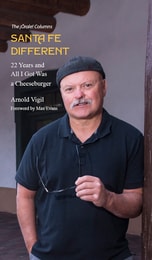
Santa Fe Different
22 Years and All I Got Was a CheeseburgerArnold Vigil
Museum of New Mexico Press, 2019
Saving the World
A Brief History of Communication for Devleopment and Social ChangeEmile G. McAnany
University of Illinois Press, 2012
Say It with Data
A Concise Guide to Making Your Case and Getting ResultsPriscille Dando
American Library Association, 2014
Saying And Silence
Frank Farmer
Utah State University Press, 2001
Frank Farmer has contributed important essays to the study of Bakhtin in composition, and in Saying and Silence he gathers some of those, along with several new essays, into a single volume. Scholars who specialize in Bakhtin will find this work engaging, but equally Farmer wants to explicate and apply Bakhtin for readers whose focus is teaching or some other nonspecialist dimension of writing scholarship.
Farmer explores the relationship between the meaningful word and the meaningful pause, between saying and silence, especially as the relationship emerges in our classrooms, our disciplinary conversations, and encounters with publics beyond the academy. Each of his chapters here addresses some aspect of how we and our students, colleagues, and critics have our say and speak our piece, often under conditions where silence is the institutionally sanctioned and preferred alternative. He has enlisted a number of Bakhtinian ideas (the superaddressee, outsideness, voice in dialogue) to help in the project of interpreting the silences we hear, naming the silences we do not hear, and of encouraging all silences to speak in ways that are freely chosen, not enforced.

Scalia v. Scalia
Opportunistic Textualism in Constitutional InterpretationCatherine L. Langford
University of Alabama Press, 2018
Antonin Scalia is considered one of the most controversial justices to have been on the United States Supreme Court. A vocal advocate of textualist interpretation, Justice Scalia argued that the Constitution means only what it says and that interpretations of the document should be confined strictly to the directives supplied therein. This narrow form of constitutional interpretation, which limits constitutional meaning to the written text of the Constitution, is known as textualism.
Scalia v. Scalia:Opportunistic Textualism in Constitutional Interpretation examines Scalia’s discussions of textualism in his speeches, extrajudicial writings, and judicial opinions. Throughout his writings, Scalia argues textualism is the only acceptable form of constitutional interpretation. Yet Scalia does not clearly define his textualism, nor does he always rely upon textualism to the exclusion of other interpretive means.
Scalia is seen as the standard bearer for textualism. But when textualism fails to support his ideological aims (as in cases that pertain to states’ rights or separation of powers), Scalia reverts to other forms of argumentation. Langford analyzes Scalia’s opinions in a clear area of law, the cruel and unusual punishment clause; a contested area of law, the free exercise and establishment cases; and a silent area of law, abortion. Through her analysis, Langford shows that Scalia uses rhetorical strategies beyond those of a textualist approach, concluding that Scalia is an opportunistic textualist and that textualism is as rhetorical as any other form of judicial interpretation.

Scholarly Practice, Participatory Design and the Extensible Catalog
Nancy Fried Foster
Assoc of College & Research Libraries, 2011
Scholarly Practice, Participatory Design and the Extensible Catalog
Nancy Fried Foster
Assoc of College & Research Libraries, 2011
Scholars and Their Kin
Historical Explorations, Literary ExperimentsEdited by Stéphane Gerson
University of Chicago Press, 2025
Historians have often been discouraged from writing about their relatives, subjects who are deemed too close for objective analysis. But new work by scholars interested in their own families raises fascinating questions about subjectivity—and how historians might put it to use. It also invites historians to abandon traditional aspects of academic writing and draw, instead, on literary forms more equipped to highlight the relationships between scholar and material, feeling and reason.
Scholars and Their Kin embraces diverse approaches to such writing, bringing into the open the personal, professional, and historiographic complexities that ensue when scholars write intimate yet self-aware histories about their families. The first book devoted to this genre, which editor Stéphane Gerson terms “personal family history,” this anthology features ten essays and an afterword by scholars working in this vein. The contributors—varied in their disciplines, themes, and nationalities—reflect on their motivations and methodological choices, the politics of family history, and the institutional constraints they have sometimes faced. Making full use of the creative possibilities of voice and form, they expand the literary ambitions of personal family history, provide readers with narrative models, and address questions of shame, responsibility, love, gendered and racial violence, family archives, as well as the tall tales, myths, misrepresentations, memories, and omissions that suffuse family lives. Scholars and Their Kin will interest historians, scholars in other disciplines, and readers interested in family histories that open broader worlds.
Scholarship In The Sandbox
Amy Jackson
Assoc of College & Research Libraries, 2019
School Librarian’s Career Planner
Hilda K. Weisburg
American Library Association, 2013
Science Communication Online
Engaging Experts and Publics on the InternetAshley Rose Mehlenbacher
The Ohio State University Press, 2019
Bringing together genre studies and the rhetoric of science, Mehlenbacher examines a range of new forms of science communication that challenge traditional presumptions about experts and nonexperts—including Twitter and Reddit AMAs, crowdfunding proposals such as Kickstarter and Experiment.com, civic-minded databases such as Safecast, and the PLOS blogging network. Science Communication Online illustrates the unique features of these genres and connects them to their rhetorical functions and the larger context leading to their emergence and evolution—from the democratization of science, challenges to expertise and expert status, and new political economies. Science Communication Online captures the important moment we find ourselves in now—one not defined by science and society but science in society.
Science Periodicals in Nineteenth-Century Britain
Constructing Scientific CommunitiesEdited by Gowan Dawson, Bernard Lightman, Sally Shuttleworth, and Jonathan R. Topham
University of Chicago Press, 2020
The essays in this volume set the historical exploration of the scientific and medical periodicals of the era on a new footing, examining their precise function and role in the making of nineteenth-century science and enhancing our vision of the shifting communities and practices of science in the period. This radical rethinking of the scientific journal offers a new approach to the reconfiguration of the sciences in nineteenth-century Britain and sheds instructive light on contemporary debates about the purpose, practices, and price of scientific journals.
Science from Sight to Insight
How Scientists Illustrate MeaningAlan G. Gross and Joseph E. Harmon
University of Chicago Press, 2013
Science in Print
Essays on the History of Science and the Culture of PrintEdited by Rima D. Apple, Gregory J. Downey, and Stephen L. Vaughn; Foreword by James A. Secord
University of Wisconsin Press, 2012
Ever since the threads of seventeenth-century natural philosophy began to coalesce into an understanding of the natural world, printed artifacts such as laboratory notebooks, research journals, college textbooks, and popular paperbacks have been instrumental to the development of what we think of today as “science.” But just as the history of science involves more than recording discoveries, so too does the study of print culture extend beyond the mere cataloguing of books. In both disciplines, researchers attempt to comprehend how social structures of power, reputation, and meaning permeate both the written record and the intellectual scaffolding through which scientific debate takes place.
Science in Print brings together scholars from the fields of print culture, environmental history, science and technology studies, medical history, and library and information studies. This ambitious volume paints a rich picture of those tools and techniques of printing, publishing, and reading that shaped the ideas and practices that grew into modern science, from the days of the Royal Society of London in the late 1600s to the beginning of the modern U.S. environmental movement in the early 1960s.
Scientific Babel
How Science Was Done Before and After Global EnglishMichael D. Gordin
University of Chicago Press, 2015
So how did we get from there to here? How did French, German, Latin, Russian, and even Esperanto give way to English? And what can we reconstruct of the experience of doing science in the polyglot past? With Scientific Babel, Michael D. Gordin resurrects that lost world, in part through an ingenious mechanism: the pages of his highly readable narrative account teem with footnotes—not offering background information, but presenting quoted material in its original language. The result is stunning: as we read about the rise and fall of languages, driven by politics, war, economics, and institutions, we actually see it happen in the ever-changing web of multilingual examples. The history of science, and of English as its dominant language, comes to life, and brings with it a new understanding not only of the frictions generated by a scientific community that spoke in many often mutually unintelligible voices, but also of the possibilities of the polyglot, and the losses that the dominance of English entails.
Few historians of science write as well as Gordin, and Scientific Babel reveals his incredible command of the literature, language, and intellectual essence of science past and present. No reader who takes this linguistic journey with him will be disappointed.
Scientific Style and Format
The CSE Manual for Authors, Editors, and Publishers, Eighth EditionCouncil of Science Editors
University of Chicago Press, 2014
Screencasting for Libraries
Greg Notess
American Library Association, 2012
Scribes, Script, and Books
The Book Arts from Antiquity to the RenaissanceLeila Avrin
American Library Association, 2009
Searching for Solidarity
Revolutionary Dreams and Radical Social MovementsNoor Ghazal Aswad
The Ohio State University Press, 2025
Second Language Writing in Transitional Spaces
Teaching and Learning across Educational ContextsLubie Grujicic-Alatriste and Cathryn Crosby Grundleger
University of Michigan Press, 2020
The chapters examine the writing that English learners are producing because of the Common Core and the writing they are required to do once they reach the college or university, and then consider where the intersections exist—that is, what do educators think English learners ought to be writing across educational levels?
Each chapter describes the educational setting where the researchers were engaged, examines specific issues related to transitions, and offers—where relevant—recommendations for classroom practices, teaching strategies, and instructional materials that may be useful for practicing teachers and all others professionally engaged in educating writers across K–16.
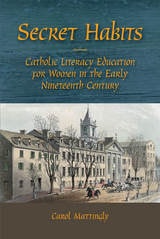
Secret Habits
Catholic Literacy Education for Women in the Early Nineteenth CenturyCarol Mattingly
Southern Illinois University Press, 2016
Mattingly shows that despite widespread fears and opposition, including attacks by vaunted northeastern Protestant pioneers of literacy, Catholic women nonetheless became important educators of women in many areas of America. They founded convents, convent academies, and schools; developed their own curricula and pedagogies; and persisted in their efforts in the face of significant prejudices. The convents faced sharp opposition from Protestant educators, who often played on anti-Catholic fears to gain support for their own schools. Using a performative rhetoric of good works that emphasized civic involvement, Catholic women were able to educate large numbers of women and expand opportunities for literacy instruction.
A needed corrective to studies that have focused solely on efforts by Protestant educators, Mattingly’s work offers new insights into early nineteenth-century women’s literacy, demonstrating that literacy education was more religiously and geographically diverse than previously recognized.
Secret Power
WikiLeaks and Its EnemiesStefania Maurizi
Pluto Press, 2022
*Winner of the European Award for Investigative And Judicial Journalism 2021*
*Winner of the Premio Alessandro Leogrande Award for Investigative Journalism 2022*
*Winner of the Premio Angelo Vassallo Award 2022*
'I want to live in a society where secret power is accountable to the law and to public opinion for its atrocities, where it is the war criminals who go to jail, not those who have the conscience and courage to expose them.'
It is 2008, and Stefania Maurizi, an investigative journalist with a growing interest in cryptography, starts looking into the little-known organisation WikiLeaks. Through hushed meetings, encrypted files and explosive documents, what she discovers sets her on a life-long journey that takes her deep into the realm of secret power.
Working closely with WikiLeaks' founder Julian Assange and his organisation for her newspaper, Maurizi has spent over a decade investigating state criminality protected by thick layers of secrecy, while also embarking on a solitary trench warfare to unearth the facts underpinning the cruel persecution of Assange and WikiLeaks.
With complex and disturbing insights, Maurizi’s tireless journalism exposes atrocities, the shameful treatment of Chelsea Manning and Edward Snowden, on up to the present persecution of WikiLeaks: a terrifying web of impunity and cover-ups.
At the heart of the book is the brutality of secret power and the unbearable price paid by Julian Assange, WikiLeaks and truthtellers.
Securing Library Technology
American Library Association, 2009
Securing a Place for Reading in Composition
The Importance of Teaching for TransferEllen C. Carillo
Utah State University Press, 2014
Securing a Place for Reading in Composition addresses the dissonance between the need to prepare students to read, not just write, complex texts and the lack of recent scholarship on reading-writing connections. Author Ellen C. Carillo argues that including attention-to-reading practices is crucial for developing more comprehensive literacy pedagogies. Students who can read actively and reflectively will be able to work successfully with the range of complex texts they will encounter throughout their post-secondary academic careers and beyond.
Considering the role of reading within composition from both historical and contemporary perspectives, Carillo makes recommendations for the productive integration of reading instruction into first-year writing courses. She details a “mindful reading” framework wherein instructors help students cultivate a repertoire of approaches upon which they consistently reflect as they apply them to various texts. This metacognitive frame allows students to become knowledgeable and deliberate about how they read and gives them the opportunity to develop the skills useful for moving among reading approaches in mindful ways, thus preparing them to actively and productively read in courses and contexts outside first-year composition.
Securing a Place for Reading in Composition also explores how the field of composition might begin to effectively address reading, including conducting research on reading, revising outcome statements, and revisiting the core courses in graduate programs. It will be of great interest to writing program administrators and other compositionists and their graduate students.
Seduction, Sophistry, and the Woman with the Rhetorical Figure
Michelle Ballif
Southern Illinois University Press, 2000
The rhetorical tradition, Michelle Ballif asserts, is based on the systematic exclusion of sophistry. In keeping with Aristotle’s prescription, rhetoric continues to be a counterpart to dialectic, a handmaiden to the pursuit of truth—even if that truth is merely probable.
According to Ballif, this search for truth manifests itself among current rhetoric and composition scholars in the form of an assumption that language is primarily communicative (i.e., that language can represent truth more or less faithfully). Ballif shows how invested we are in the notion of truth, in the idea that language represents truth, and in the assumption that the speaking/writing subject has, or should have, some essential relation to truth.
Provocatively, Ballif questions why the profession wants to retain these beliefs in the face of vociferous arguments from "new rhetorics" that the discipline no longer posits a foundational self or truth, and in the face of the poststructuralist critique, which has demonstrated that founding truth is always accomplished by first positing and then negating an “other.” As an alternative to this negative and violent rhetorical process, Ballif suggests a turn to sophistry as embodied in the figure of Woman, one with the power to seduce us (literally, to lead astray) from our truth and our demand for it.
This figuration of Woman, however, is not the dialectical other used to sustain the identity and privilege of Man. On the contrary, this Woman is an Other Woman: A Third Woman as a Third Sophistic practice that escapes Plato’s binary (philosophic rhetoric vs. sophistry) and renders the distinction between truth and deception incalculable. Ballif examines three figurations of the Third Woman as Third Sophistic as offered by Gorgias, Friedrich Nietzsche, and Jean Baudrillard.
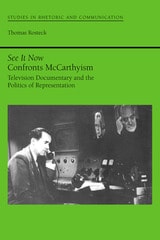
See It Now Confronts McCarthyism
Television Documentary and the Politics of RepresentationThomas Rosteck
University of Alabama Press, 1994
See It Now, Edward R. Murrow and Fred W. Friendly’s early documentary television program, has come to be recognized as the exemplar of nonfiction television. One important element in its reputation is a series of four telecasts directly dealing with abuses of McCarthyism and the Red Scare. This book is about those programs, but it is also about the early 1950s in America, the troubled era in which these programs were broadcast. This book is, then, both cultural history and media analysis.
As media analysis, this book seeks to understand the symbolic form, the aesthetic construction, and the subsequent experience that these four programs offered viewers. This sort of critical analysis is a development of recent vintage in American media studies. Whereas a decade ago television and the media were studied largely through an empiricist social scientific paradigm, now humanistic approaches to media discourses engage the interest of scholars in history, rhetoric and communication, political science, anthropology, and American studies. As case study, then, this book bridges classical humanist and contemporary mass media approaches, and as we go, I shall essay the utility of humanistic methods for the understanding and explication of mass media that is primarily visual in nature.
As cultural history, this book seeks to illuminate a unique era in the recent American past. My aim is to understand the programs as articulations of public “common sense” and as artifacts that help convey this common sense. Thus, a second theme of this book will be to locate-through the analysis of public discourse cast in the television documentary form—an American ideology: a set of “templates” that both ground the programs and reveal the cultural assumptions of the historical period.
In addition, from a slightly different historical perspective, our increased understanding of these See It Now broadcasts gives us an appreciation of the development of the television industry and the genre of television documentary. Coming at a time when few Americans had television sets, these See It Now programs coincided with an exponential increase in television ownership and popularity. As an elaborate defense of free speech for the medium, these documentaries may have helped to establish autonomy and a direction for a nascent broadcasting industry. More specifically, as the paradigm for the television documentary and as the first regularly scheduled documentary series, these See It Now programs shaped expectations and set the benchmark to which all nonfiction television, from Twentieth Century to White Paper to Sixty Minutes, has been compared. Thus, a third theme will be the implications of these seminal programs for media institutions and for the genre of television news documentary.
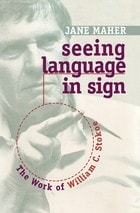
Seeing Language in Sign
The Work of William C. StokoeJane Maher
Gallaudet University Press, 2010
In 1955 William C. Stokoe arrived at Gallaudet College (later Gallaudet University) to teach English where he was first exposed to deaf people signing. While most of his colleagues dismissed signing as mere mimicry of speech, Stokoe saw in it elements of a distinctive language all its own. Seeing Language in Sign traces the process that Stokoe followed to prove scientifically and unequivocally that American Sign Language (ASL) met the full criteria of linguistics—phonology, morphology, syntax, semantics and use of language—to be classified a fully developed language.
This perceptive account dramatically captures the struggle Stokoe faced in persuading the establishment of the truth of his discovery. Other faculty members ridiculed or reviled him, and many deaf members of the Gallaudet community laughed at his efforts. Seeing Language in Sign rewards the reader with a rich portrayal of an undaunted advocate who, like a latter-day Galileo, pursued his vision doggedly regardless of relentless antagonism. He established the Linguistics Research Laboratory, then founded the journal Sign Language Studies to sustain an unpopular dialogue until the tide changed. His ultimate vindication corresponded with the recognition of the glorious culture and community that revolves around Deaf people and their language, ASL.
Seeming and Being in Plato’s Rhetorical Theory
Robin Reames
University of Chicago Press, 2018
Robin Reames’s Seeming & Being in Plato’s Rhetorical Theory marks a shift in Plato scholarship. Reames argues that an appropriate understanding of rhetorical theory in Plato’s dialogues illuminates how he developed the technical vocabulary needed to construct the very distinctions between seeming and being that separate true from false speech. By engaging with three key movements of twentieth- and twenty-first-century Plato scholarship—the rise and subsequent marginalization of “orality and literacy theory,” Heidegger’s controversial critique of Platonist metaphysics, and the influence of literary or dramatic readings of the dialogues—Reames demonstrates how the development of Plato’s rhetorical theory across several of his dialogues (Gorgias, Phaedrus, Protagoras, Theaetetus, Cratylus, Republic, and Sophist) has been both neglected and misunderstood.
Selected Essays on Rhetoric
Thomas De Quincey, Edited with a Critical Introduction by Frederick Burwick. Foreword by David Potter
Southern Illinois University Press, 1967
The five essays presented here—Rhetoric, Style, Language, Conversation, and Greek Literature—were published together for the first time in The Collected Writings of Thomas De Quincey in 1889–1890. Frederick Burwick brings the essays together again in this volume, introducing them by tracing the sources and development of a belletristic theory of rhetoric, which he says “is one of the most original, and for a few critics, the most puzzling of the nineteenth century.” Burwick makes the edition complete with a comprehensive index and a selected bibliography.
Selected Papers on Fun and Games
Donald E. Knuth
CSLI, 2011
Donald E. Knuth’s influence in computer science ranges from the invention of methods for translating and defining programming languages to the creation of the TeX and METAFONT systems for desktop publishing. His award-winning textbooks have become classics that are often given credit for shaping the field, and his scientific papers are widely referenced and stand as milestones of development over a wide variety of topics. The present volume is the eighth in a series of his collected papers.
Selected Writings of Sir Hilary Jenkinson
Roger H. Ellis
Society of American Archivists, 0
Self+Culture+Writing
Autoethnography for/as Writing StudiesRebecca Jackson
Utah State University Press, 2021
Interest in autoethnography is growing among writing studies scholars, who see clear connections to well-known disciplinary conversations about personal narrative, as well as to the narrative turn in general and social justice efforts in particular. Contributions by authors from diverse backgrounds and institutional settings are organized into three parts: a section of writing studies autoethnographies, a section on how to teach autoethnography, and a section on how ideas about autoethnography in writing studies are evolving.
Self+Culture+Writing discusses the use of autoethnography in the writing classroom as both a research method and a legitimate way of knowing, providing examples of the genre and theoretical discussions that highlight the usefulness and limitations of these methods.
Contributors: Leslie Akst, Melissa Atienza, Ross Atkinson, Alison Cardinal, Sue Doe, Will Duffy, John Gagnon, Elena Garcia, Guadalupe Garcia, Caleb Gonzalez, Lilly Halboth, Rebecca Hallman Martini, Kirsten Higgins, Shereen Inayatulla, Aliyah Jones, Autumn Laws, Soyeon Lee, Louis M. Maraj, Kira Marshall-McKelvey, Jennifer Owen, Tiffany Rainey, Marcie Sims, Amanda Sladek, Trixie Smith, Anthony Warnke
Self-Development and College Writing
Nick Tingle
Southern Illinois University Press, 2004
Nick Tingle investigates the psychoanalytic dimensions of composition instruction in Self-Development and College Writing to boldly illustrate that mastering academic prose requires students to develop psychologically as well as cognitively. Asserting that writing instruction should be an engaging, developmental process for both teachers and students, he urges reaching for new levels of consciousness in the classroom to aid students in realigning their subjective relationships with knowledge and truth.
Drawing on psychoanalytic theory and twenty years of experience as a teacher, Tingle outlines the importance of moving beyond usual ways of thinking, abandoning the common sense of everyday reality, and coming to understand beliefs as beliefs and not absolutes. These developmental moves must be accompanied, Tingle says, by a new attitude towards language—not as something that points to things, but as a series of concepts that arrange the very things one points to. And this development is necessary not just in order to perform well in the writing class, but also to fully participate in and reap the academic rewards of structured, university life.
Self-Development and College Writing calls attention to the psychological destabilization this method may produce for students. Tingle explains that, if writing instructors are to respond to this destabilization, they must conceive of the classroom as a transitional space, or a kind of holding environment. They must also become aware of their psychological allegiances to particular theories of writing if they are to construct such environments.
But the goal of the transitional environment is worth pursuing, Tingle argues, contending that university education fails to address students’ developmental needs. With purposeful writing and deft analyses, Tingle shows that this goal also affords a means by which to place writing courses at the center of the educational curriculum. Conceived as a transitional space, the writing class may support and stabilize students in their developmental passage, thereby fostering an improved understanding of their academic work and, more importantly, an increased intellectual understanding of themselves and the complex world in which they live.
Semantic Ambiguity and Underspecification
Edited by Kees van Deemter and Stanley Peters
CSLI, 1996
Semantic Properties of Diagrams and Their Cognitive Potentials
Atsushi Shimojima
CSLI, 2015
Semantic Tectonics
Writing Studies, Intersubjectivity, and the End of SolipsismDylan B. Dryer
Utah State University Press, 2026
Semantic Tectonics offers an engaging contribution to the ongoing conversation about the alliances of convenience and fissiparous relations among second--language writing, rhetoric, technical and professional communication, composition, and basic writing. From a theoretical perspective, the book brings together insights from a range of important scholars who have advanced relational alternatives to Cartesian dualisms of mind and body, self and other, thought and language. Naming these dualisms “solipsism,” the book extends these alternatives into empirical inquiries into the lexicogrammar of contemporary writing studies scholarship, using corpus analytics to bolster, and sometimes challenge, critical-discourse and content--analytic approaches.
With frequent pauses to explain and model corpus tools and applications, to pose questions for further inquiry, and to contemplate pedagogical or civic applications, Semantic Tectonics shows how the field’s social mission is constrained by tacit beliefs about critical concepts like language, self, context, genre, reflection, agency, and development. By foregrounding the empirical study of patterns in language itself, this book inspires readers to shift their perspective to the operational significance of word- and phrase-level discourse as sites for ideological and pedagogical intervention.
Semantic Web Technologies and Social Searching for Librarians
Robin M. American Library Association
American Library Association, 2012
Semantics for Descriptions
François Rastier, Marc Cavazza, and Anne Abeillé
CSLI, 2001
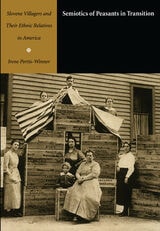
Semiotics of Peasants in Transition
Slovene Villagers and Their Ethnic Relatives in AmericaIrene Portis-Winner
Duke University Press, 2002
Describing a process of continuous and enduring interaction between these geographically separate communities, Portis-Winner explains how, for instance, financial assistance from the emigrants enabled their Slovenian hometown to survive the economic depressions of the 1890s and 1930s. She also analyzes the extent to which memories, rituals, myths, and traditional activities from Slovenia have sustained their Cleveland relatives. The result is a unique anthropological investigation into the signifying practices of a strongly cohesive—yet geographically split—ethnic group, as well as an illuminating application of semiotic analyses to communities and the complex problems they face.
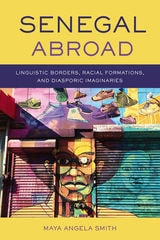
Senegal Abroad
Linguistic Borders, Racial Formations, and Diasporic ImaginariesMaya Angela Smith
University of Wisconsin Press, 2020
The Senegalese are notable, Smith suggests, both in their capacity for movement and in their multifaceted approach to language. She finds that, although the emigrants she interviews express complicated relationships to the multiple languages they speak and the places they inhabit, they also convey pleasure in both travel and language. Offering a mix of poignant, funny, reflexive, introspective, and witty stories, they blur the lines between the utility and pleasure of language, allowing a more nuanced understanding of why and how Senegalese move.
Sensemaking for Writing Programs and Writing Centers
Rita Malenczyk
Utah State University Press, 2023
The book is divided into two sections: Sensemaking with Tutors and Teachers, and Sensemaking and Institutional Structures. Chapter authors employ several theoretical approaches to sensemaking, ranging from individual experience to institutional history to document design, providing readers with ideas for how to administer and teach within their programs more effectively; how to advocate for their programs within larger university contexts; and how to positively influence the lives and careers of those they work with.
Sensemaking for Writing Programs and Writing Centers theorizes daily experiences from working lives and suggests problem-solving strategies. Writing program administrators, writing department chairs, and writing center directors, tutors, and staff will find value in its pages.
Sequels
An Annotated Guide to Novels in Series, Fourth EditionAmerican Library Association, 2009
Serendipity in Rhetoric, Writing, and Literacy Research
Maureen Daly Goggin
Utah State University Press, 2018
In the course of research, most scholars have known moments of surprise, catastrophe, or good fortune, though they seldom refer to these occurrences in reports or discuss them with students. Serendipity in Rhetoric, Writing, and Literacy Research reveals the different kinds of work scholars, particularly those in rhetoric, writing, and literacy, need to do in order to recognize a serendipitous discovery or a missed opportunity.
In published scholarship and research, the path toward discovery seems clean and direct. The dead ends, backtrackings, start-overs, and stumbles that occur throughout the research process are elided, and seems that the researchers started at point A and arrived safely and neatly at point B without incident, as if by magic. The path, however, is never truly clear and straight. Research and writing is messy. Serendipity in Rhetoric, Writing, and Literacy Research features chapters from twenty-three writing scholars who have experienced moments of serendipity in their own work—not by magic or pure chance but through openness and active waiting, which offer an opportunity to prepare the mind.
Serendipity in Rhetoric, Writing, and Literacy Research illustrates the reality of doing research: there is no reliable prescription or one-size-fits-all manual, but success can be found with focused dedication and an open mind.
Contributors: Ellen Barton, Zachary C. Beare, Lynn Z. Bloom, Jennifer Clary-Lemon, Caren Wakerman Converse, Gale Coskan-Johnson, Kim Donehower, Bill Endres, Shirley E. Faulkner-Springfield, Lynée Lewis Gaillet, Brad Gyori, Judy Holiday, Gesa E. Kirsch, Lori Ostergaard, Doreen Piano, Liz Rohan, Ryan Skinnell, Patricia Wilde, Daniel Wuebben
Service Learning in Interpreter Education
Strategies for Extending Student Involvement in the Deaf CommunitySherry Shaw
Gallaudet University Press, 2013
Institutions of higher learning around the nation have embraced the concept of student civic engagement as part of their curricula, a movement that has spurred administrators in various fields to initiate programs as part of their disciplines. In response, sign language interpreting educators are attempting to devise service-learning programs aimed at Deaf communities. Except for a smattering of journal articles, however, they have had no primary guide for fashioning these programs. Sherry Shaw remedies this in her new book Service Learning in Interpreter Education: Strategies for Extending Student Involvement in the Deaf Community.
Shaw begins by outlining how to extend student involvement beyond the field experience of an internship or practicum and suggests how to overcome student resistance to a course that seems atypical. She introduces the educational strategy behind service-learning, explaining it as a tool for re-centering the Deaf community in interpreter education. She then provides the framework for a service-learning course syllabus, including establishing Deaf community partnerships and how to conduct student assessments.
Service Learning in Interpreter Education concludes with first-person accounts from students and community members who recount their personal and professional experiences with service learning. With this thorough guide, interpreter education programs can develop stand-alone courses or modules within existing coursework.
Serving At-Risk Teens
Proven Strategies and Programs for Bridging the GapAngela Craig
American Library Association, 2013
Serving Patrons with Disabilities
Perspectives and Insights from People with DisabilitiesEdited by Kodi Laskin
American Library Association, 2023
- bridging the gap between people with disabilities and those without, through empathy, patience, and understanding;
- techniques for training staff and overcoming discomfort;
- making your library accessible for people with mobility issues;
- how to interact with and assist a person with limited sight or hearing;
- guidance for interacting with a service animal handler;
- advice on library programming for people with learning differences; and
- best practices for effective service to patrons who use a speech assistance device.