Results by title
1917 books match the query 'Law' and 104 start with s
SAA Sampler
Law & EthicsLisa A. Mix
Society of American Archivists, 2013
SEE
Andrea Pavoni, Danilo Mandic, Caterina Nirta and Andreas Philippopoulos-Mihalopoulos
University of Westminster Press, 2018
Vision traditionally occupies the height of the sensorial hierarchy. The sense of clarity and purity conveyed by vision, allows it to be explicitly associated with truth and knowledge. The law has always relied on vision and representation, from eye-witnesses to photography, to imagery and emblems. The law and its normative gaze can be understood as that which decrees what is permitted to be and become visible and what is not. Indeed, even if law’s perspectival view is bound to be betrayed by the realities of perception, it is nonetheless productive of real effects on the world.
This first title in the interdisciplinary series ‘Law and the Senses’ asks how we can develop new theoretical approaches to law and seeing that go beyond a simple critique of the legal pretension to truth. This volume aims to understand how law might see and unsee, and how in its turn is seen and unseen. It explores devices and practices of visibility, the evolution of iconology and iconography, and the relation between the gaze of the law and the blindness of justice. The contributions, all radically interdisciplinary, are drawn from photography, legal theory, philosophy, and poetry.

SLAPPs
Getting Sued for Speaking OutGeorge Pring
Temple University Press, 1996
In a democracy that for over 200 years has prided itself on public participation and citizen involvement in government, thousands have been and will be the targets of multi-million-dollar lawsuits. They will be sued for such "all-American" activities as circulating a petition, writing a letter to the editor, testifying at a public hearing, reporting violations of the law, filing an official complaint, lobbying for legislation, or otherwise communicating their views. Such cases, named "Strategic Lawsuits Against Public Participation," with their apropos acronym, SLAPPs, are a shocking abuse of one of our most basic political rights—the Right to Petition. So extensive and grievous is the phenomenon that Justice Nicholas Colabella remarked, "Short of a gun to the head, a greater threat to First Amendment expression can scarcely be imagined."
George W. Pring and Penelope Canan explore the full range of SLAPP stories in this first study of SLAPPs— retaliatory lawsuits by real estate developers; teachers; police; politicians; opponents of civil rights; consumers' rights; women's rights; and many others. This comprehensive book examines what happens to the targets of SLAPPs and what is happening to public participation in American politics. Addressing the ultimate dilemma—what can be done to turn the tables and fight back—Pring and Canan offer concrete, well-supported, balanced solutions for preventing, managing, and curing SLAPPs at all levels of government.
SMELL
Andrea Pavoni, Danilo Mandic, Caterina Nirta and Andreas Philippopoulos-Mihalopoulos
University of Westminster Press, 2023
Although somewhat marginal in relation to the other senses, smell is the most potent way of anchoring ourselves to the world. We subconsciously find our place in it by sniffing our body, the body of the one next to us, the room in which we are, the culture with which we are familiar. There is an incessant olfactory flow consisting of bodies, human and nonhuman, that are agents of generation, consumption, diffusion, reproduction and dissolution of odours. As they move or pause, as they cluster with others or try to move away, these bodies constantly partake in this olfactory flow, this dense planetary swirl that leaves nothing outside.
The law aims at presenting itself as rational and objective. Smell, on the other hand, is one of the least integrated senses in the legal edifice, in comparison to, say, seeing and hearing. This can be attributed mainly to the fact that sense-making of smell and law are different, even antithetical. Smell operates undercurrent, tickling the olfactory antennas of individual and collective bodies while habitually hiding behind other sensory volumes. Law, on the other hand, has an interest in appearing present, universal, constant. Olfactory sense-making relies on its elusiveness; legal sense-making invests in its obviousness. Yet, the two can interact in most unexpected ways, as this volume amply shows. If anything, smell airs the way in which law conceptualises and contextualises its own actuality. Smell brings law forth by allowing it to show its underbelly, its elusive sense-making that is invariably sacrificed in preference to the necessity of legal impressions of constancy. However, smell’s fragmentary, discontinuous and unstable nature, despite all the ordering that goes to it, poses a peculiar challenge to the law. This volume sets out to investigate this juncture.
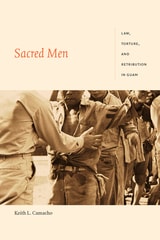
Sacred Men
Law, Torture, and Retribution in GuamKeith L. Camacho
Duke University Press, 2019
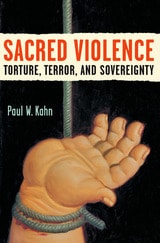
Sacred Violence
Torture, Terror, and SovereigntyPaul W. Kahn
University of Michigan Press, 2008
In Sacred Violence, the distinguished political and legal theorist Paul W. Kahn investigates the reasons for the resort to violence characteristic of premodern states. In a startling argument, he contends that law will never offer an adequate account of political violence. Instead, we must turn to political theology, which reveals that torture and terror are, essentially, forms of sacrifice. Kahn forces us to acknowledge what we don't want to see: that we remain deeply committed to a violent politics beyond law.
Paul W. Kahn is Robert W. Winner Professor of Law and the Humanities at Yale Law School and Director of the Orville H. Schell, Jr. Center for International Human Rights.
Cover Illustration: "Abu Ghraib 67, 2005" by Fernando Botero. Courtesy of the artist and the American University Museum.
Saving International Adoption
An Argument from Economics and Personal ExperienceMark Montgomery
Vanderbilt University Press, 2018
International adoption is in a state of virtual collapse, rates having fallen by more than half since 2004 and continuing to fall. Yet around the world millions of orphaned and vulnerable children need permanent homes, and thousands of American and European families are eager to take them in. Many government officials, international bureaucrats, and social commentators claim these adoptions are not "in the best interests" of the child. They claim that adoption deprives children of their "birth culture," threatens their racial identities, and even encourages widespread child trafficking. Celebrity adopters are publicly excoriated for stealing children from their birth families.
This book argues that opposition to adoption ostensibly based on the well-being of the child is often a smokescreen for protecting national pride. Concerns about the harm done by transracial adoption are largely inconsistent with empirical evidence. As for trafficking, opponents of international adoption want to shut it down because it is too much like a market for children. But this book offers a radical challenge to this view—that is, what if instead of trying to suppress market forces in international adoption, we embraced them so they could be properly regulated? What if the international system functioned more like open adoption in the United States, where birth and adoptive parents can meet and privately negotiate the exchange of parental rights? This arrangement, the authors argue, could eliminate the abuses that currently haunt international adoption.
The authors challenge the prevailing wisdom with their economic analyses and provocative analogies from other policy realms. Based on their own family's experience with the adoption process, they also write frankly about how that process feels for parents and children.
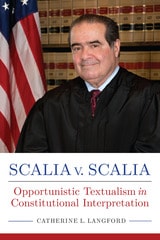
Scalia v. Scalia
Opportunistic Textualism in Constitutional InterpretationCatherine L. Langford
University of Alabama Press, 2018
Antonin Scalia is considered one of the most controversial justices to have been on the United States Supreme Court. A vocal advocate of textualist interpretation, Justice Scalia argued that the Constitution means only what it says and that interpretations of the document should be confined strictly to the directives supplied therein. This narrow form of constitutional interpretation, which limits constitutional meaning to the written text of the Constitution, is known as textualism.
Scalia v. Scalia:Opportunistic Textualism in Constitutional Interpretation examines Scalia’s discussions of textualism in his speeches, extrajudicial writings, and judicial opinions. Throughout his writings, Scalia argues textualism is the only acceptable form of constitutional interpretation. Yet Scalia does not clearly define his textualism, nor does he always rely upon textualism to the exclusion of other interpretive means.
Scalia is seen as the standard bearer for textualism. But when textualism fails to support his ideological aims (as in cases that pertain to states’ rights or separation of powers), Scalia reverts to other forms of argumentation. Langford analyzes Scalia’s opinions in a clear area of law, the cruel and unusual punishment clause; a contested area of law, the free exercise and establishment cases; and a silent area of law, abortion. Through her analysis, Langford shows that Scalia uses rhetorical strategies beyond those of a textualist approach, concluding that Scalia is an opportunistic textualist and that textualism is as rhetorical as any other form of judicial interpretation.
Scientific Evidence and Equal Protection of the Law
Ancheta, Angelo N
Rutgers University Press, 2006
Scientific and social scientific evidence has informed judicial decisions and the making of constitutional law for decades, but for much of U.S. history it has also served as a rhetorical device to justify inequality. It is only in recent years that scientific and statistical research has helped redress discrimination—but not without controversy.
Scientific Evidence and Equal Protection of the Law provides unique insights into the judicial process and scientific inquiry by examining major decisions of the U.S. Supreme Court, civil rights advocacy, and the nature of science itself. Angelo Ancheta discusses leading equal protection cases such as Brown v. Board of Education and recent litigation involving race-related affirmative action, gender inequality, and discrimination based on sexual orientation. He also examines less prominent, but equally compelling cases, including McCleskey v. Kemp, which involved statistical evidence that a state’s death penalty was disproportionately used when victims were white and defendants were black, and Castaneda v. Partida, which established key standards of evidence in addressing the exclusion of Latinos from grand jury service. For each case, Ancheta explores the tensions between scientific findings and constitutional values.
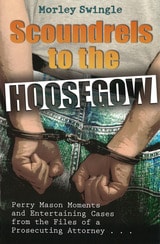
Scoundrels to the Hoosegow
Perry Mason Moments and Entertaining Cases from the Files of a Prosecuting AttorneyMorley Swingle
University of Missouri Press, 2007
I closed my direct examination of narcotics officer Bill Bohnert by asking, "Detective Bohnert, do you see in the courtroom today the man we just saw on the tape, selling the crack cocaine to Darren Bullard?"
Bohnert pointed to Robert Funt.
"He's right there. . . ."
I heard laughter in the courtroom. I glanced at the defendant, who had dutifully raised his hand.
The prisoners seated behind him were laughing. They recognized a Perry Mason moment when they saw one.
Bohnert continued, "He's the one with his hand raised in the air."
It has been said that the public prosecutor has more power over life, liberty, and reputation than any other person—a daunting proposition, but perhaps less intimidating when that official’s perspective is tempered by humor and compassion.
In Scoundrels to the Hoosegow, a veteran prosecutor who is also a consummate storyteller shares more than thirty entertaining legal stories drawn from real life, re-creating, with verve and wit, villains, heroes, and ordinary citizens. In cases both tragic and hilarious, Morley Swingle offers a behind-the-scenes look at the justice system, taking readers from the scene of the crime to the courtroom as he explores the worlds of judges, attorneys, police officers, and criminals.
Informed by a deep appreciation of Mark Twain, Swingle aims to do for his profession what Clemens did for riverboat piloting. He leads readers on an enjoyable romp through crime and punishment, while offering a clear exposition of legal points—from the subtleties of cross-examination to the role of plea bargaining.
In cases ranging from indecent exposure to conspiracy to commit murder, Swingle considers the fine line between pornography and obscenity and discusses sensitive issues surrounding first-degree murder and the death penalty. Whether describing a drunken but well-meaning probationer who frees the dogs on “death row” or the woman who tries to hire a reluctant hit man to dispose of her husband, he combines true crime and legal analysis with a healthy dose of humor—and shares the occasional “Perry Mason moment” in which a trial dramatically shifts direction.
Not since the author of Anatomy of a Murder, Robert Traver, wrote Small Town D.A. fifty years ago has an American prosecutor penned such a candid, revealing, and funny account of the job—an altogether satisfying book that sentences the reader to many hours of enjoyment.
Screwing the System and Making it Work
Juvenile Justice in the No-Fault SocietyMark D. Jacobs
University of Chicago Press, 1990
Second-Best Justice
The Virtues of Japanese Private LawJ. Mark Ramseyer
University of Chicago Press, 2015
With Second-Best Justice, J. Mark Ramseyer offers a more compelling, better-grounded explanation: the low rate of lawsuits in Japan results not from distrust of a dysfunctional system but from trust in a system that works—that sorts and resolves disputes in such an overwhelmingly predictable pattern that opposing parties rarely find it worthwhile to push their dispute to trial. Using evidence from tort claims across many domains, Ramseyer reveals a court system designed not to find perfect justice, but to “make do”—to adopt strategies that are mostly right and that thereby resolve disputes quickly and economically.
An eye-opening study of comparative law, Second-Best Justice will force a wholesale rethinking of the differences among alternative legal systems and their broader consequences for social welfare.
Secret Power
WikiLeaks and Its EnemiesStefania Maurizi
Pluto Press, 2022
*Winner of the European Award for Investigative And Judicial Journalism 2021*
*Winner of the Premio Alessandro Leogrande Award for Investigative Journalism 2022*
*Winner of the Premio Angelo Vassallo Award 2022*
'I want to live in a society where secret power is accountable to the law and to public opinion for its atrocities, where it is the war criminals who go to jail, not those who have the conscience and courage to expose them.'
It is 2008, and Stefania Maurizi, an investigative journalist with a growing interest in cryptography, starts looking into the little-known organisation WikiLeaks. Through hushed meetings, encrypted files and explosive documents, what she discovers sets her on a life-long journey that takes her deep into the realm of secret power.
Working closely with WikiLeaks' founder Julian Assange and his organisation for her newspaper, Maurizi has spent over a decade investigating state criminality protected by thick layers of secrecy, while also embarking on a solitary trench warfare to unearth the facts underpinning the cruel persecution of Assange and WikiLeaks.
With complex and disturbing insights, Maurizi’s tireless journalism exposes atrocities, the shameful treatment of Chelsea Manning and Edward Snowden, on up to the present persecution of WikiLeaks: a terrifying web of impunity and cover-ups.
At the heart of the book is the brutality of secret power and the unbearable price paid by Julian Assange, WikiLeaks and truthtellers.
Secrets, Sex, and Spectacle
The Rules of Scandal in Japan and the United StatesMark D. West
University of Chicago Press, 2006
A leader of a global superpower is betrayed by his mistress, who makes public the sordid details of their secret affair. His wife stands by as he denies the charges. Debates over definitions of moral leadership ensue. Sound familiar? If you guessed Clinton and Lewinsky, try again. This incident involved former Japanese prime minister Sosuke Uno and a geisha.
In Secrets, Sex, and Spectacle, Mark D. West organizes the seemingly random worlds of Japanese and American scandal—from corporate fraud to baseball cheaters, political corruption to celebrity sexcapades—to explore well-ingrained similarities and contrasts in law and society. In Japan and the United States, legal and organizational rules tell us what kind of behavior is considered scandalous. When Japanese and American scandal stories differ, those rules—rules that define what’s public and what’s private, rules that protect injuries to dignity and honor, and rules about sex, to name a few—often help explain the differences. In the cases of Clinton and Uno, the rules help explain why the media didn’t cover Uno’s affair, why Uno’s wife apologized on her husband’s behalf, and why Uno—and not Clinton—resigned.
Secrets, Sex, and Spectacle offers a novel approach to viewing the phenomenon of scandal—one that will be applauded by anyone who has obsessed over (or ridiculed) these public episodes.
Securing Constitutional Democracy
The Case of AutonomyJames E. Fleming
University of Chicago Press, 2006
In this book, James Fleming responds to these controversies by arguing that the right to privacy or autonomy should be grounded in a theory of securing constitutional democracy. His framework seeks to secure the basic liberties that are preconditions for deliberative democracy—to allow citizens to deliberate about the institutions and policies of their government—as well as deliberative autonomy—to enable citizens to deliberate about the conduct of their own lives. Together, Fleming shows, these two preconditions can afford everyone the status of free and equal citizenship in our morally pluralistic constitutional democracy.

Securing Religious Liberty
Principles for Judicial Interpretation of the Religion ClausesJesse H. Choper
University of Chicago Press, 1995
Choper's guidelines are designed to provide maximum protection for religious freedom without granting anyone an advantage, inflicting a disadvantage, or causing an unfair burden. Though not calling for the wholesale overturning of judicial precedents or established social practices, the standards he proposes would result in significant—and controversial—modifications to existing doctrines and customs. Choper argues, for instance, that while vocal prayer and Bible reading in public schools should continue to be prohibited, we can and should allow for silent prayer and objective courses in creation science. His standards would also, among other things, eliminate the tax exemption on property used exclusively for religious purposes while allowing parochial schools to receive public funds for the non-religious component of their education.
Seeds of Tomorrow
Nurturing Roots of Oneida GovernanceEdited by Rebecca M. Webster and Lois Stevens
University of Wisconsin Press, 2026
This indispensable and unique volume is at once a history of and a pathfinder for the future of the Great Law, the governing principles behind the long-standing Haudenosaunee Confederacy. Focused on the Duck Creek Oneida people of Wisconsin, Seeds of Tomorrow draws together a wide range of tribal voices, from elders and community members to young people and academic experts. This collection chronicles the history of the Haudenosaunee Confederacy’s revolutionary governing principles, outlines the current state of tribal government, and proposes a vision for a political future that draws on traditional Indigenous practices and knowledge. This guide toward stronger sovereignty, revitalized community ties, and a healthier and more self-determined future based on traditional structures of governance is indigenization in practice: a model not just for Duck Creek Oneida but for Indigenous nations everywhere.
Contributors: Kenzie Allen, Marley Atkinson, Marena Bridges, Robert “Bob” Brown, Breann Clark, Julie Clark, Carol Cornelius, Margaret Cornelius, Randy Cornelius, Michele Doxtater, Richard “Lotni” Elm-Hill, Jennifer “Jen” Falck, William Gollnick, Joie Guiterrez, Gerald L. Hill, Jo Anne House, Toni M. House, Nicholas Metoxen, Paul Ninham, Saniya Ninham, John III Powless, Mark Powless, Nina Powless, Artley Skenandore, Lois Stevens, Vernon Stevens, Amelia “Mia” Webster, Grace Webster, Hunter D. Webster, Rebecca M. Webster, Arthur Wilbur, Jameson Wilson
Self-Determination and Women’s Rights in Muslim Societies
Edited by Chitra Raghavan and James P. Levine
Brandeis University Press, 2012

Senator Thomas J. Walsh of Montana
Law and Public Affairs, from TR to FDRJ. Leonard Bates
University of Illinois Press, 1999
Walsh fought throughout his long career against corruption and monopoly power. During his early years as a lawyer-politician in Helena, he was often in conflict with the "Copper Kings" and other powerful figures. As a senator, he became an internationalist, working throughout the 1920s for naval disarmament, the World Court, the St. Lawrence Seaway, and the Kellogg-Briand Pact for the "outlawry" of war.
In his most celebrated coup, breaking open the Teapot Dome scandal of 1923-24, Walsh revealed that the secretary of the interior had accepted "loans" from oil men in return for leases of U.S. naval oil reserves. Working through the Public Lands Committee of the Senate, Walsh enjoyed support for his investigation from members of both parties, and the Supreme Court endorsed his interpretation of the scandal in 1927. Shortly before his death, he presided over the Democratic National Convention that nominated Franklin Roosevelt and served for a brief time as a key figure in the new leader's circle.
Drawing on archival sources of unprecedented depth, including personal letters between Walsh and his first wife, Elinor McClements Walsh, Bates's expansive study paints a richly detailed portrait of an influential and principled figure whose political career spanned world war, depression, and the administrations of six presidents.
Sentencing in Time
Linda Ross Meyer
Amherst College Press, 2017
Sentencing without Guidelines
Rhys Hester
Temple University Press, 2024
Sentencing without Guidelines is Rhys Hester’s deep dive into how South Carolina, which never passed sentencing guideline legislation, nonetheless created meaningful punishment reform. It achieved uniformity in sentencing with a traveling circuit of judges, informal norms among judges, and the unique phenomenon of the “Plea Judge” to manage cases.
Hester examines how prior convictions, race, and geographical differences impact sentences to explain why individuals get the criminal sentences they do. He also explores how legal reform mechanisms can influence punishment goals and policy. Sentencing without Guidelines shows the benefits and drawbacks South Carolina experienced as it met sentencing reform goals. These lessons can be translated into policy for other jurisdictions.

Separation of Church and State
Dina de-Malkhuta Dina in Jewish LawGil Graff
University of Alabama Press, 1985
Exploring the enduring dialogue between Jewish law and the law of the state.
For the Jewish community, the end of the Middle Ages and the emergence of the modern nation-state brought the promise of equal citizenship as well as the possible loss of Jewish corporate identity. The legal maxim dina de-malkhuta dina (the law of the State is law) invoked in Talmidic times to justify the acceptance of the king’s law and qualified in the Middle Ages by Maimonides and Rashbam to include the requirement of consent by the governed underwent further redefinition by Jews in the Napoleonic age. Graff focuses on the struggle between 18th and 19th-century Jewish religious reformers and traditionalists in defining the limits of dina de-malkhuta dina. He traces the motivations of the reformers who, in their zeal to gain equality for the formerly disenfranchised Jewish communities in Western Europe, were prepared to render unto the State compromising authority over Jewish religious life under the rubric of dina de-malkhuta dina was intended to strike a balance between synagogue and state and not to be used as a pretext for the liquidation of the community’s corporate existence.

Service and Procedures in Bureaucracy
A Case StudyRoy G. Francis and Robert C. Stone
University of Minnesota Press, 1956
Service and Procedures in Bureaucracy was first published in 1956. Minnesota Archive Editions uses digital technology to make long-unavailable books once again accessible, and are published unaltered from the original University of Minnesota Press editions.
Large, complex systems of organization, such as government bureaus, giant corporations, and massive trade unions, play a decisive role in the daily lives of millions of people and exert an important influence upon national and even international affairs. This gives major sociological significance to the bureaucratic organizations of such groups.
The research reported here was undertaken to test two widespread beliefs about modern, largescale organizations, and the findings point to modifications in what has been regarded as the classic sociological concept of bureaucracy.
Does the personnel in bureaucracies commonly substitute rule-following, preoccupation with procedure, for the intended service purpose of the organization? And are bureaucracies characterized by impersonality, that is, detachment of office from individual, so that relations are between offices rather than between individuals? These are the questions the authors sought to answer in their study of the Louisiana Division of Employment Security. They observed employees working at their jobs, conducted interviews, administered questionnaires, and studied the official documents and records of the organization.
Here is a picture of bureaucracy in real life that will provide valuable insight to those actively concerned with administration and personnel problems, as well as to students in the social sciences.

Sex in Middlesex
Popular Mores in a Massachusetts County, 1649-1699Roger Thompson
University of Massachusetts Press, 1986
Drawing on an extraordinary wealth of court records from Middlesex County of the Colony and Province of Massachusetts Bay, Sex in Middlesex offers a richly revisionist account of social and moral life in seventeenth-century New England. Social historian Roger Thompson brings to life the forgotten men and women of colonial Massachusetts to challenge some of the most entrenched assumptions about Puritan society. Examining cases of fornication, adultery, breach of promise, premarital pregnancy, and sexual deviance recorded between 1649 and 1699, Thompson argues that the Puritan social system was far less rigid, and the relations between the sexes far less coercively regulated, than the dominant historiographical tradition, shaped by scholars such as Perry Miller and Lawrence Stone, has suggested.
Rather than a community defined by patriarchal tyranny and punitive moral control, Thompson discovers in the Middlesex records a society characterized by a striking degree of tolerance, mutual regard, and practical common sense, animated by a genuinely popular Puritan piety. The goal of the courts was not punishment and exclusion, but confession, reform, and the reintegration of offenders into the community. Structured with methodological rigor and written with narrative verve, Sex in Middlesex is at once a work of quantitative social history and a gallery of vivid individual portraits.
Sexual Exploitation of Teenagers
Adolescent Development, Discrimination, and Consent LawJennifer Ann Drobac
University of Chicago Press, 2016
When it comes to sexual relationships, adolescents pose a particular problem. Few teenagers possess all of the emotional and intellectual tools needed to navigate these threats, including the all too real advances made by supervisors, teachers, and mentors. In Sexual Exploitation of Teenagers, Jennifer Drobac explores the shockingly common problem of maturing adolescents who are harassed and exploited by adults in their lives. Reviewing the neuroscience and psychosocial evidence of adolescent development, she explains why teens are so vulnerable to adult harassers. Even today, in an age of increasing public awareness, criminal and civil law regarding the sexual abuse of minors remains tragically inept and irregular from state to state. Drobac uses six recent cases of teens suffering sexual harassment to illuminate the flaws and contradictions of this system, skillfully showing how our current laws fail to protect youths, and offering an array of imaginative legal reforms that could achieve increased justice for adolescent victims of sexual coercion.
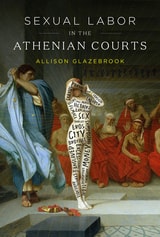
Sexual Labor in the Athenian Courts
Allison Glazebrook
University of Texas Press, 2021
Oratory is a valuable source for reconstructing the practices, legalities, and attitudes surrounding sexual labor in classical Athens. It provides evidence of male and female sex laborers, sex slaves, brothels, sex traffickers, the cost of sex, contracts for sexual labor, and manumission practices for sex slaves. Yet the witty, wealthy, and independent hetaira, well-known from other genres, does not feature. Its detailed narratives and character portrayals provide a unique discourse on sexual labor and reveal the complex relationship between such labor and Athenian society.
Through a holistic examination of five key speeches, Sexual Labor in the Athenian Courts considers how portrayals of sex laborers intersected with gender, the body, sexuality, the family, urban spaces, and the polis in the context of the Athenian courts. Drawing on gender theory and exploring questions of space, place, and mobility, Allison Glazebrook shows how sex laborers represented a diverse set of anxieties concerning social legitimacy and how the public discourse about them is in fact a discourse on Athenian society, values, and institutions.

Shadow Lives
The Forgotten Women of the War on TerrorVictoria Brittain
Pluto Press, 2013
Shadow Lives reveals the unseen side of the '9/11 wars': their impact on the wives and families of men incarcerated in Guantanamo, or in prison or under house arrest in Britain and the US. Victoria Brittain shows how these families have been made socially invisible and a convenient scapegoat for the state in order to exercise arbitrary powers under the cover of the 'War on Terror'.
A disturbing exposé of the perilous state of freedom and democracy in our society, the book reveals how a culture of intolerance and cruelty has left individuals at the mercy of the security services’ unverifiable accusations and punitive punishments.
Both a j'accuse and a testament to the strength and humanity of the families, Shadow Lives shows the methods of incarceration and social control being used by the British state and gives a voice to the families whose lives have been turned upside down. In doing so it raises urgent questions about civil liberties which no one can afford to ignore.
Shakespeare and the Law
A Conversation among Disciplines and ProfessionsEdited by Bradin Cormack, Martha C. Nussbaum, and Richard Strier
University of Chicago Press, 2013
The book’s opening essays offer perspectives on law and literature that emphasize both the continuities and contrasts between the two fields. The second section considers Shakespeare’s awareness of common law thinking and common law practice, while the third inquires into Shakespeare’s general attitudes toward legal systems. The fourth part of the book looks at how law enters into conversation with issues of politics and community, whether in the plays, in Shakespeare’s world, or in our own world. Finally, a colloquy among Supreme Court Justice Stephen Breyer, Judge Richard Posner, Martha C. Nussbaum, and Richard Strier covers everything from the ghost in Hamlet to the nature of judicial discretion.

Shakespeare’s Legal Ecologies
Law and Distributed SelfhoodKevin Curran
Northwestern University Press, 2017
At the center of the book is Shakespeare’s fascination with questions that are fundamental to both law and philosophy: What are the sources of agency? What counts as a person? For whom am I responsible, and how far does that responsibility extend? What is truly mine? Curran guides readers through Shakespeare’s responses to these questions, paying careful attention to both historical and intellectual contexts.
The result is a book that advances a new theory of Shakespeare’s imaginative relationship to law and an original account of law’s role in the ethical work of his plays and sonnets. Readers interested in Shakespeare, theater and philosophy, law, and the history of ideas will find Shakespeare’s Legal Ecologies to be an essential resource.
Shaming the Constitution
The Detrimental Results of Sexual Violent Predator LegislationMichael L. Perlin
Temple University Press, 2017
Convicted sexually violent predators are more vilified, more subject to media misrepresentation, and more likely to be denied basic human rights than any other population. Shaming the Constitution authors Michael Perlin and Heather Cucolo question the intentions of sex offender laws, offering new approaches to this most complex (and controversial) area of law and social policy.
The authors assert that sex offender laws and policies are unconstitutional and counter-productive. The legislation largely fails to add to public safety—even ruining lives for what are, in some cases, trivial infractions. Shaming the Constitution draws on law, behavioral sciences, and other disciplines to show that many of the “solutions” to penalizing sexually violent predators are “wrong,” as they create the most repressive and useless laws.
In addition to tracing the history of sex offender laws, the authors address the case of Jesse Timmendequas, whose crime begat “Megan’s Law;” the media’s role in creating a “moral panic;” recidivism statistics and treatments, as well as international human rights laws. Ultimately, they call attention to the flaws in the system so we can find solutions that contribute to public safety in ways that do not mock Constitutional principles.
Sharpening the Legal Mind
How to Think Like a LawyerWilliam Powers Jr, edited by John Deigh
University of Texas Press, 2023
The way lawyers think about the law can seem deeply mysterious. They see nuance and meaning in statutes and implications in judicial opinions that are opaque to the rest of us. Accessible and thought provoking, Sharpening the Legal Mind explains how lawyers analyze the cases and controversies that come before the courts.
Written by William Powers Jr., the former president of the University of Texas at Austin, this book is an authoritative introduction to the academic study of law and legal reasoning, including insights into the philosophy of law and the intellectual history of legal thought. Powers discusses the methods lawyers use to interpret the law, the relation between law and morals, and the role of courts in shaping the law. In eight chapters, he follows the historical debate on these issues and others through different generations and movements in American legal thought—formalism, realism, positivism—to critical legal studies and postmodern theory. The perfect read for anyone looking for a primer on legal reasoning, Sharpening the Legal Mind demystifies the debates and approaches to thinking like a lawyer that profoundly influence the rule of law in our lives.
Shattered Justice
Crime Victims' Experiences with Wrongful Convictions and ExonerationsKimberly J. Cook
Rutgers University Press, 2022
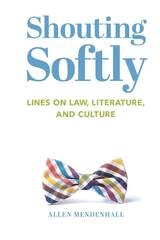
Shouting Softly
Lines on Law, Literature, and CultureAllen Mendenhall
St. Augustine's Press, 2020
The work is given in three parts. The first section on law explores legal minds, rules and commentary on seminal jurisprudence. The second part explores literature and the influence of the writer and the disconcerting truths stories often seek to convey. Thirdly, Mendenhall delves into culture and the more obvious situations wherein we gain insight into our manner of living, and here Mendenhall exudes a Southern accent that in no way compromises his universal bearings. One of the highlights is his echo of Larry Seidentop’s question: “If we in the West do not understand the moral depth of our own tradition, how can we hope to shape the conversation of mankind?” This is all the more meaningful given that Mendenhall is a member of the Millennial generation, and part of the intellectual minority who sees the urgency of “a studied appreciation for nuanced story and linguistic narrative.”

Shylock on Trial
The Appellate BriefsRichard A. Posner and Charles Fried
University of Chicago Press, 2013
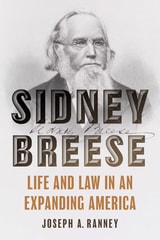
Sidney Breese
Life and Law in an Expanding AmericaJoseph A. Ranney
University of Illinois Press, 2026
Born in New York, Breese moved to Illinois in 1818. An ambitious personality combined with acumen in law, politics, and business boosted Breese into the state’s frontier elite and involved him in the political controversies that roiled the Jacksonian Era. First a circuit court judge, Breese rose to the state Supreme Court before his election to the US Senate in 1842. Breese focused his senatorial energies on westward expansion and transforming the nation into a world power—ambitions symbolized by his pivotal role in the creation of the Illinois Central Railroad. After returning to the state Supreme Court, Breese ruled on essential cases that enshrined expansionist jurisprudence in American law and regulated the growing power of corporations in post–Civil War America.
A first full-length biography, Sidney Breese places the life of an overlooked figure within legal and Illinois history.
Silent Revolution
The Transformation of Divorce Law in the United StatesHerbert Jacob
University of Chicago Press, 1988
Since 1966, divorce laws in the United States have undergone a radical transformation. No-fault divorce is now universally available. Alimony functions simply as a brief transitional payment to help a dependent spouse become independent. Most states divide assets at divorce according to a community property scheme, and, whenever possible, many courts prefer to award custody of children to the mother and the father jointly.
These changes in policy represent a profound departure from traditional American values, and yet the legislation by which they were enacted was treated as a technical correction of minor problems. No-fault divorce, for example, was a response to the increasing number of fraudulent divorce petitions. Since couples were often forced to manufacture the evidence of guilt that many states required, and since judges frequently looked the other way, legal reformers sought no more than to bring divorce statutes into line with current practice.
On the basis of such observations, Jacob formulates a new theory of routine—as opposed to conflictual—policy-making processes. Many potentially controversial policies—divorce law reforms among them—pass unnoticed in America because legislators treat them as matters of routine. Jacob's is indeed the most plausible account of the enormous number and steady flow of policy decisions made by state legislatures. It also explains why no attention was paid to the effect divorce reform would have on divorced women and their children, a subject that has become increasingly controversial and that, consequently, is not likely to be handled by the routine policy-making process in the future.
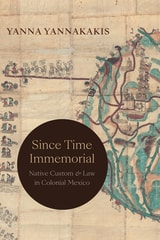
Since Time Immemorial
Native Custom and Law in Colonial MexicoYanna Yannakakis
Duke University Press, 2023
Sincerely Held
American Secularism and Its BelieversCharles McCrary
University of Chicago Press, 2022
“Sincerely held religious belief” is now a common phrase in discussions of American religious freedom, from opinions handed down by the US Supreme Court to local controversies. The “sincerity test” of religious belief has become a cornerstone of US jurisprudence, framing what counts as legitimate grounds for First Amendment claims in the eyes of the law. In Sincerely Held, Charles McCrary provides an original account of how sincerely held religious belief became the primary standard for determining what legally counts as authentic religion.
McCrary skillfully traces the interlocking histories of American sincerity, religion, and secularism starting in the mid-nineteenth century. He analyzes a diverse archive, including Herman Melville’s novel The Confidence-Man, vice-suppressing police, Spiritualist women accused of being fortune-tellers, eclectic conscientious objectors, secularization theorists, Black revolutionaries, and anti-LGBTQ litigants. Across this history, McCrary reveals how sincerity and sincerely held religious belief developed as technologies of secular governance, determining what does and doesn’t entitle a person to receive protections from the state.
This fresh analysis of secularism in the United States invites further reflection on the role of sincerity in public life and religious studies scholarship, asking why sincerity has come to matter so much in a supposedly “post-truth” era.
Skepticism and Freedom
A Modern Case for Classical LiberalismRichard A. Epstein
University of Chicago Press, 2003
He begins by laying out his own vision of the key principles of classical liberalism: respect for the autonomy of the individual, a strong system of private property rights, the voluntary exchange of labor and possessions, and prohibitions against force or fraud. Nonetheless, he not only recognizes but insists that state coercion is crucial to safeguarding these principles of private ordering and supplying the social infrastructure on which they depend. Within this framework, Epstein then shows why limited government is much to be preferred over the modern interventionist welfare state.
Many of the modern attacks on the classical liberal system seek to undermine the moral, conceptual, cognitive, and psychological foundations on which it rests. Epstein rises to this challenge by carefully rebutting each of these objections in turn. For instance, Epstein demonstrates how our inability to judge the preferences of others means we should respect their liberty of choice regarding their own lives. And he points out the flaws in behavioral economic arguments which, overlooking strong evolutionary pressures, claim that individual preferences are unstable and that people are unable to adopt rational means to achieve their own ends. Freedom, Epstein ultimately shows, depends upon a skepticism that rightly shuns making judgments about what is best for individuals, but that also avoids the relativistic trap that all judgments about our political institutions have equal worth.
A brilliant defense of classical liberalism, Skepticism and Freedom will rightly be seen as an intellectual landmark.
Slandering the Sacred
Blasphemy Law and Religious Affect in Colonial IndiaJ. Barton Scott
University of Chicago Press, 2023
Why is religion today so often associated with giving and taking offense? To answer this question, Slandering the Sacred invites us to consider how colonial infrastructures shaped our globalized world. Through the origin and afterlives of a 1927 British imperial law (Section 295A of the Indian Penal Code), J. Barton Scott weaves a globe-trotting narrative about secularism, empire, insult, and outrage. Decentering white martyrs to free thought, his story calls for new histories of blasphemy that return these thinkers to their imperial context, dismantle the cultural boundaries of the West, and transgress the borders between the secular and the sacred as well as the public and the private.

Slices and Lumps
Division and Aggregation in Law and LifeLee Anne Fennell
University of Chicago Press, 2019
Lee Anne Fennell explores how both types of challenges—carving out useful slices and assembling useful lumps—surface in myriad contexts, from hot button issues like conservation and eminent domain to developments in the sharing economy to personal struggles over work, money, time, diet, and exercise. Yet the significance of configuration is often overlooked, leading to missed opportunities for improving our lives. With a technology-fueled entrepreneurial explosion underway that is dividing goods, services, and jobs in novel ways, and as urbanization and environmental threats raise the stakes for assembling resources and cooperation, this is an especially exciting and crucial time to confront questions of slicing and lumping. The future of the city, the workplace, the marketplace, and the environment all turn on matters of configuration, as do the prospects for more effective legal doctrines, for better management of finances and health, and more. This book reveals configuration’s power and potential—as a unifying concept and as a focus of public and private innovation.
Small Change
Money, Political Parties, and Campaign Finance ReformRaymond J. La Raja
University of Michigan Press, 2010
Reformers lament that, with every effort to regulate the sources of campaign funding, candidates creatively circumvent the new legislation. But in fact, political fundraisers don't need to look for loopholes because, as Raymond J. La Raja proves, legislators intentionally design regulations to gain advantage over their partisan rivals.
La Raja traces the history of the U.S. campaign finance system from the late nineteenth century through the passage of the Bipartisan Campaign Reform Act (BCRA) of 2002. Then, using the 2004 presidential election as a case study, he compares the ways in which Democrats and Republicans adapted their national fund-raising and campaigning strategies to satisfy BCRA regulations. Drawing upon this wealth of historical and recent evidence, he concludes with recommendations for reforming campaign finance in ways that promote fair competition among candidates and guarantee their accountability to voters.
Small Change offers an engaging account of campaign finance reforms' contradictory history; it is a must-read for anyone concerned about influence of money on democratic elections.
Smoke-Filled Rooms
A Postmortem on the Tobacco DealW. Kip Viscusi
University of Chicago Press, 2002
With Smoke-Filled Rooms,W. Kip Viscusi provides unexpected answers to these questions, drawing on an impressive range of data on several topics central to the smoking policy debate. Based on surveys of smokers in the United States and Spain, for instance, he demonstrates that smokers actually overestimate the dangers of smoking, indicating that they are well aware of the risks involved in their choice to smoke. And while smoking does increase medical costs to the states, Viscusi finds that these costs are more than financially balanced by the premature mortality of smokers, which reduces their demands on state pension and health programs, so that, on average, smoking either pays for itself or generates revenues for the states.
Viscusi's eye-opening assessment of the tobacco lawsuits also includes policy recommendations that could frame these debates in a more productive way, such as his suggestion that the FDA should develop a rating system for cigarettes and other tobacco products based on their relative safety, thus providing an incentive for tobacco manufacturers to compete among themselves to produce safer cigarettes. Viscusi's hard look at the facts of smoking and its costs runs against conventional thinking. But it is also necessary for an informed and realistic debate about the legal, financial, and social consequences of the tobacco lawsuits.
People making $50,000 or more pay .08 percent of their income in cigarette taxes, but people with incomes of less than $10,000 pay 1.62 percenttwenty times as much. The maintenance crew at the Capitol will bear more of the "sin tax" levied on cigarettes than will members of Congress who voted to boost it.
Cigarettes are not a financial drain to the U.S. In fact, they are self-financing, as a consequence of smokers' premature mortality.
The general public estimates that 47 out of 100 smokers will die from lung cancer because they smoke. Smokers believe that 40 out of 100 will die of the disease. Scientists estimate the actual number of 100 smokers who will die from lung cancer to be between 7 and 13.
Snarl
In Defense of Stalled Traffic and Faulty NetworksRuth A. Miller
University of Michigan Press, 2014
Ruth A. Miller excavates a centuries-old history of nonhuman and nonbiological constitutional engagement and outlines a robust mechanical democracy that challenges existing theories of liberal and human political participation. Drawing on an eclectic set of legal, political, and automotive texts from France, Turkey, and the United States, she proposes a radical mechanical re-articulation of three of the most basic principles of democracy: vitality, mobility, and liberty.
Rather than defending a grand theory of materialist or posthumanist politics, or addressing abstract concepts or “things” writ large, Miller invites readers into a self-contained history of constitutionalism situated in a focused discussion of automobile traffic congestion in Paris, Istanbul, and Boston. Within the mechanical public sphere created by automotive space, Snarl finds a model of democratic politics that transforms our most fundamental assumptions about the nature, and constitutional potential, of life, movement, and freedom.
Social Justice for Women
The International Labor Organization and WomenCarol Riegelman Lubin and Anne Winslow
Duke University Press, 1990
Carol Riegelman Lubin, a staff member of ILO for seventeen years, and Anne Winslow, for twenty-two years editor for the Carnegie Endowment, explore the important role played by women of the American and British trade union movement in the founding of the ILO. In surveying the organization’s history and structure, they ask how the ILO’s concern with women has manifested over the years, if it was faithful to its constitution, how it dealt with conflicting needs of women from industrialized nations and Third World countries, and what its relationship was to the international feminist movement. Drawing on case studies and analyses of literature on women and work, the authors identify the role of other international organizations in response to the ILO in fostering, or sometimes hindering, women’s development in the labor area.
Social Science, Social Policy, and the Law
Patricia Ewick
Russell Sage Foundation, 1999
Society And Legal Change 2Nd Ed
Alan Watson, foreword by Paul Finkelman
Temple University Press, 2001
In this first U.S. edition of a classic work of comparative legal scholarship, Alan Watson argues that law fails to keep step with social change, even when that change is massive. To illustrate the ways in which law is dysfunctional, he draws on the two most innovative western systems, of Rome and England, to show that harmful rules continue for centuries. To make his case, he uses examples where, in the main, "the law benefits no recognizable group or class within the society (except possibly lawyers who benefit from confusion) and is generally inconvenient or positively harmful to society as a whole or to large or powerful groups within the society."
Widely respected for his "fearless challenge of the accepted or dominant view and his own encyclopedic knowledge of Roman law" (The Encyclopedia of Historians and Historical Writing), Watson considers the development of law in global terms and across the centuries. His arguments centering on how societies borrow from other legal systems and the continuity of legal systems are particularly instructive for those interested in legal development and the development of a common law for the European Union.
postamble();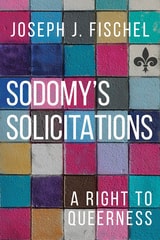
Sodomy's Solicitations
A Right to QueernessJoseph J. Fischel
Temple University Press, 2025
The political stories narrated in Sodomy’s Solicitations are undoubtedly stories of racism, sexism, homophobia, and transphobia, but they are also stories of other political problems—and political possibilities. Fischel indicts U.S. sex offender regulatory regimes as state-sponsored sexual violence; offers a qualified defense for sexual expression in public; and argues that animal sexual abuse laws, with their exemptions for industrial agricultural practices, authorize the suffering they were enacted to deter. He also makes the case that laws criminalizing the exchange of sex for money are unconstitutional, and proposes that the best way to protect trans and queer children might just be to enfranchise them.
Sodomy’s Solicitations champions a right to queerness across rather than within identity formations—a right to relatively unpoliced gender, sexual, and intimate pluralism.
In the series Sexuality Studies

Soldier's Paradise
Militarism in Africa after EmpireSamuel Fury Childs Daly
Duke University Press, 2024
Solitary Confinement
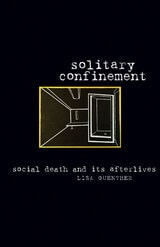
Social Death and Its AfterlivesLisa Guenther
University of Minnesota Press, 2013
Prolonged solitary confinement has become a widespread and standard practice in U.S. prisons—even though it consistently drives healthy prisoners insane, makes the mentally ill sicker, and, according to the testimony of prisoners, threatens to reduce life to a living death. In this profoundly important and original book, Lisa Guenther examines the death-in-life experience of solitary confinement in America from the early nineteenth century to today’s supermax prisons. Documenting how solitary confinement undermines prisoners’ sense of identity and their ability to understand the world, Guenther demonstrates the real effects of forcibly isolating a person for weeks, months, or years.
Drawing on the testimony of prisoners and the work of philosophers and social activists from Edmund Husserl and Maurice Merleau-Ponty to Frantz Fanon and Angela Davis, the author defines solitary confinement as a kind of social death. It argues that isolation exposes the relational structure of being by showing what happens when that structure is abused—when prisoners are deprived of the concrete relations with others on which our existence as sense-making creatures depends. Solitary confinement is beyond a form of racial or political violence; it is an assault on being.
A searing and unforgettable indictment, Solitary Confinement reveals what the devastation wrought by the torture of solitary confinement tells us about what it means to be human—and why humanity is so often destroyed when we separate prisoners from all other people.