Results by title
716 books match the query 'Literary Figures' and 42 start with s
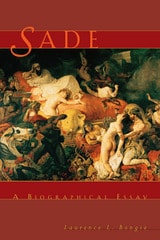
Sade
A Biographical EssayLaurence L. Bongie
University of Chicago Press, 1998
"A valuable correction to the perception of Sade as a profound thinker, a great writer, and a martyr to liberty. Drawing on original archival work, Bongie tries to illuminate Sade's childhood and his relationship with his parents. . . . Fluent and well-informed."—Library Journal
"Mr. Bongie . . . has written an investigation focusing on one aspect of Sade's character and development, his heretofore neglected relationship with his aristocratic mother. . . . A profitable selection."—Richard Bernstein, New York Times
"A welcome corrective. Bongie's book . . . aims to deflate the exalted claims made about the marquis by demonstrating that he was a monstrous character."—Scott Stossel, Boston Phoenix Literary Supplement
Sailing by Starlight
In Search of Treasure IslandAlex Capus
Haus Publishing, 2011
Saint Genet
Actor and MartyrJean-Paul Sartre
University of Minnesota Press, 2012
Saint Genet is Jean-Paul Sartre’s classic biography of Jean Genet—thief, convict, and great artist—a character of almost legendary proportions whose influence grows stronger with time. Bringing together two of the century’s greatest minds and artists, Saint Genet is at once a compelling psychological portrait, masterpiece of literary criticism, and one of Sartre’s most personal and inspired philosophical creations.
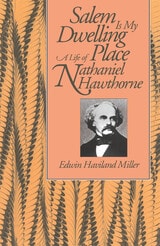
Salem Is My Dwelling Place
Life Of Nathaniel HawthorneEdwin Haviland Miller
University of Iowa Press, 1992
In one of his public disavowals of autobiography, Nathaniel Hawthorne informed his readers that external traits "hide the man, instead of displaying him," directing them instead to "look through the whole range of his fictitious characters, good and evil, in order to detect any of his essential traits." In this multidimensional biography of America's first great storyteller, Edwin Haviland Miller answers Hawthorne's challenge and reveals the inner landscapes of this modest, magnetic man who hid himself in his fiction. Thomas Woodson hails Miller's account as "the best biography of this most elusive of American authors."

Sarah Orne Jewett - American Writers 61
University of Minnesota Pamphlets on American WritersMargaret Farrand Thorp
University of Minnesota Press, 1966
Sarah Orne Jewett - American Writers 61 was first published in 1966. Minnesota Archive Editions uses digital technology to make long-unavailable books once again accessible, and are published unaltered from the original University of Minnesota Press editions.
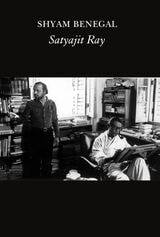
Satyajit Ray
A FilmShyam Benegal and Satyajit Ray
Seagull Books, 2025
Two of Indian cinema’s most acclaimed auteurs, Satyajit Ray and Shyam Benegal, come together in this intimate dialogue, offering a fascinating glimpse into the mind of a cinematic genius. Based on Benegal’s 1985 documentary on Ray, this volume brings together the film’s script, excerpts from extended interviews, and a remarkable collection of visual material showcasing Ray’s work as a filmmaker, illustrator, designer, and writer.
Through candid conversations, Ray reflects on his childhood and the philosophy behind his storytelling, providing an unparalleled look at his creative process. With one master filmmaker capturing another, the result is a deeply personal and layered portrait that moves beyond Ray’s films to reveal the man behind the camera. Satyajit Ray: A Film is both a historical document and a celebration of artistic legacy; a rare opportunity to witness a dialogue between two legends shaping the course of Indian and global cinema.
Saul Bellow - American Writers 65
University of Minnesota Pamphlets on American WritersEarl Rovit
University of Minnesota Press, 1967
Saul Bellow - American Writers 65 was first published in 1967. Minnesota Archive Editions uses digital technology to make long-unavailable books once again accessible, and are published unaltered from the original University of Minnesota Press editions.
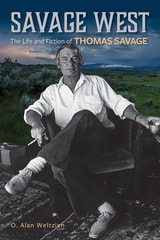
Savage West
The Life and Fiction of Thomas SavageO. Alan Weltzien
University of Nevada Press, 2022
O. Alan Weltzien's insightful and detailed literary biography chronicles the life and work of this neglected but deeply talented novelist. Savage, a closeted gay family man, was both an outsider and an insider, navigating an intense conflict between his sexual identity and the claustrophobic social restraints of the rural West. Unlike many other Western writers, Savage avoided the formula westerns— so popular in his time— and offered instead a realistic, often subversive version of the region. His novels tell a hard, harsh story about dysfunctional families, loneliness, and stifling provincialism in the small towns and ranches of the northern Rockies, and his minority interpretation of the West provides a unique vision and caustic counternarrative contrary to the triumphant settler-colonialism themes that have shaped most Western literature. Savage West seeks to claim Thomas Savage's well-deserved position in American literature and to reintroduce twenty-first-century readers to a major Montana writer.
Secretaries of the Moon
The Letters of Wallace Stevens and José Rodriguez FeoBeverly Coyle and Alan Filreis, eds.
Duke University Press, 1986
Coyle and Filreis present the entire extant correspondence between the two men. The fifty-one Rodriguez Feo letters and ten of the numerous Stevens letters are printed here for the first time, and the exchange between the two is unusually complete. The work includes a critical introduction and complete annotation of the letters.
Seedtime III
Notebooks, 1995–1998Phlippe Jaccottet
Seagull Books, 2021
Seedtime III, which brings this series to a close, records numerous fleeting thoughts, ephemeral experiences, and philosophical observations from a renowned poet well into his seventies, charting the single steps—sometimes forwards, sometimes back—taken in a lifelong attempt to transcend the limits of art. The inconclusive nature of the notebook entries, their tentativeness and lack of resolution, renders them as intriguing and evocative as some of Jaccottet’s best works. In them readers will find a life full of the kind of contemplation that attracts yet eludes most of us in our daily existence.
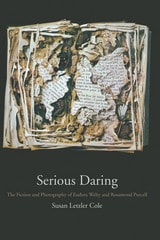
Serious Daring
The Fiction and Photography of Eudora Welty and Rosamond PurcellSusan Letzler Cole
University of Arkansas Press, 2016
Serious Daring is the story of the complementary journeys of two American women artists, celebrated fiction writer Eudora Welty and internationally acclaimed photographer Rosamond Purcell, each of whom initially practiced, but then turned from, the art form ultimately pursued by the other.
For both Welty and Purcell, the art realized is full of the art seemingly abandoned. Welty’s short stories and novels use images of photographs, photographers, and photography. Purcell photographed books, texts, and writing.
Both women make compelling art out of the seeming tension between literary and visual cultures. Purcell wrote a memoir in which photographs became endnotes. Welty re-emerged as a photographer through the publication of four volumes of what she called her “snapshots,” magnificent black-and-white photographs of small-town Mississippi and New York City life.
Serious Daring is a fascinating look at how the road not taken can stubbornly accompany the chosen path, how what is seemingly left behind can become a haunting and vital presence in life and art.
Seven American Poets from MacLeish to Nemerov
An IntroductionDenis Donoghue
University of Minnesota Press, 1975
Seven American Women Writers of the Twentieth Century
An IntroductionMaureen Howard, Editor
University of Minnesota Press, 1977
Seven American Women Writers of the Twentieth Century was first published in 1977. Minnesota Archive Editions uses digital technology to make long-unavailable books once again accessible, and are published unaltered from the original University of Minnesota Press editions.
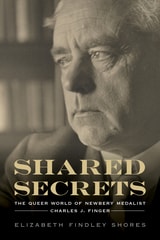
Shared Secrets
The Queer World of Newbery Medalist Charles J. FingerElizabeth Findley Shores
University of Arkansas Press, 2021
Winner, 2023 Booker Worthern Literary Prize
For nearly a century, British expatriate Charles Joseph Finger (1867–1941) was best known as an award-winning author of children’s literature. In Shared Secrets, Elizabeth Findley Shores relates Finger’s untold story, exploring the secrets that connected the author to an international community of twentieth-century queer literati.
As a young man, Finger reveled in the easy homosociality of his London polytechnical school, where he launched a student literary society in the mold of the city’s private men’s clubs. Throughout his life, as he wandered from England to Patagonia to the United States, he tried to recreate similarly open spaces—such as Gayeta, his would-be art colony in Arkansas. But it was through his idiosyncratic magazine All’s Well that he constructed his most successful social network, writing articles filled with coded signals and winking asides for an inner circle of understanding readers.
Capitalizing on the publishing opportunities of the day, Finger used every means available to express his twin loves—literature and men. He produced an enormous body of work, and his short, semiautobiographical fiction won some critical acclaim. Ultimately, the children’s book that won Finger a Newbery Medal ushered him into the public eye, ending his development as an author of serious queer literature.
Shared Secrets is both the story of Finger’s remarkable, adventurous life and a rare look at a community of gay writers and artists who helped shaped twentieth-century American culture, even as they artfully concealed their own identities.
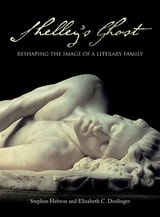
Shelley's Ghost
Reshaping the Image of a Literary FamilyStephen Hebron and Elizabeth C. Denlinger
Bodleian Library Publishing, 2010
It is difficult to think of a family more endowed with literary genius than the Shelley family—from the Romantic poet Percy Bysshe Shelley and his wife, novelist Mary Shelley, to Mary’s parents, William Godwin and Mary Wollstonecraft—all were authors in their own right. Using extensive archival material, Shelley’s Ghost explores the making of this remarkable literary family’s reputation.
Drawing on the Bodleian Library’s outstanding collection of letters, poetry manuscripts, rare printed books, portraits, and other personalia—including Shelley’s working notebooks, Keats’s letters to Shelley, William Godwin’s diary, and the original manuscript of Mary Shelley’s Frankenstein—Stephen Hebron charts the history of this talented yet troubled family. After Percy Bysshe Shelley’s drowning in 1822, Mary published various manuscripts relating to both her husband’s and her father’s lives, and passed this historical legacy to her son, Sir Percy Florence Shelley and his wife, Lady Jane Shelley. As guardians of the archive until they bequeathed it to the Bodleian in 1892, Sir Percy Florence and Lady Jane helped shape the posthumous reputations of these writers. An afterword by Elizabeth Denlinger of the New York Public Library offers an additional perspective, exploring material relating to the Shelley family that slipped beyond the family’s control.
An unparalleled look at one of the most significant families of British Romantic literature, Shelley’s Ghost will be welcomed by scholars and the many fans of this enduring literacy legacy.
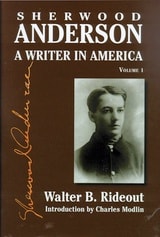
Sherwood Anderson
A Writer in America, Volume 1Walter B. Rideout
University of Wisconsin Press, 2006
Sherwood Anderson: A Writer in America is the definitive biography of this major American writer of novels and short stories, whose work includes the modern classic Winesburg, Ohio. In the first volume of this monumental two-volume work, Walter Rideout chronicles the life of Anderson from his birth and his early business career through his beginnings as a writer and finally to his move in the mid-1920s to “Ripshin,” his house near Marion, Virginia. The second volume will cover Anderson’s return to business pursuits, his extensive travels in the South touring factories, which resulted in his political involvement in labor struggles and several books on the topic, and finally his unexpected death in 1941.
No other existing Anderson biography, the most recent of which was published nearly twenty years ago, is as thoroughly researched, so extensively based on primary sources and interviews with a range of Anderson friends and family members, or as complete in its vision of the man and the writer. The result is an unparalleled biography—one that locates the private man, while astutely placing his life and writings in a broader social and political context.
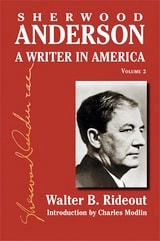
Sherwood Anderson
A Writer in America, Volume 2Walter B. Rideout
University of Wisconsin Press, 2006
Walter Rideout’s Sherwood Anderson: A Writer in America is a seminal work that reintroduces us to this important, yet recently neglected, American writer, giving him long overdue attention. This second volume of the monumental two-volume work covers Anderson’s life after his move in the mid-1920s to “Ripshin,” his house near Marion, Virginia (where Volume 1 ended.) The second volume covers his return to business pursuits; his extensive travels in the South touring factories, which resulted in his political involvement in labor struggles and several books on the topic; and finally his unexpected death in 1941.
No other existing Anderson biography, the most recent of which was published nearly twenty years ago, is as thoroughly researched, so extensively based on primary sources and interviews with a range of Anderson’s friends and family members, or as complete in its vision of the man and the writer. Rideout uncovers much new information about events and people in Anderson’s life and provides a new perspective on many of his works. This two-volume biography presents Anderson’s many remarkable attributes more clearly than ever before, while astutely placing his life and writings in the broader social, political, and artistic movements of his times.
Outstanding Book, selected by the American Association of School Librarians, and Best Books for General Audiences, selected by the Public Library Association
Outstanding Academic Title, Choice Magazine
Winner, Biography Award, Society of Midland Authors
Shouting Down the Silence
A Biography of Stanley ElkinDavid C. Dougherty
University of Illinois Press, 2010
Simone de Beauvoir
Lisa Appignanesi
Haus Publishing, 2019
Sinclair Lewis - American Writers 27
University of Minnesota Pamphlets on American WritersMark Schorer
University of Minnesota Press, 1963
Sinclair Lewis - American Writers 27 was first published in 1963. Minnesota Archive Editions uses digital technology to make long-unavailable books once again accessible, and are published unaltered from the original University of Minnesota Press editions.
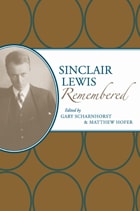
Sinclair Lewis Remembered
Gary Scharnhorst
University of Alabama Press, 2012
Sinclair Lewis Remembered is a collection of reminiscences and memoirs by contemporaries, friends, and associates of Lewis that offers a revealing and intimate portrait of this complex and significant Nobel Prize–winning American writer.
Six American Novelists of the Nineteenth Century
An IntroductionRichard Foster
University of Minnesota Press, 1968
Sketchbook, 1946–1949
Max Frisch
Seagull Books, 2022
Throughout his life, the great Swiss playwright and novelist Max Frisch (1911–1991) kept a series of diaries, or sketchbooks, as they came to be known in English. First published in English translation in the 1970s, these sketchbooks played a major role in establishing Frisch as, according to the New York Times, “the most innovative, varied and hard-to-categorize of all major contemporary authors.” His diaries, said the Times, “read like novels and his best novels are written like diaries.”
Now Seagull Books presents the first unabridged English translation of Sketchbooks, 1946–1949 in a new translation by Simon Pare. This edition reinstates material omitted from the 1977 edition, including a screenplay for an unmade film. In this first volume, which covers the years 1946 to 1949, Frisch chronicles the intellectual and material situation in postwar Europe from the vantage point of a citizen of a neutral, German-speaking country. His notes on travels to the scarred cities of Germany, to Austria, France, Italy, Prague, Wroclaw, and Warsaw paint a complex and stimulating picture of a continent emerging from the rubble as new fault lines are drawn between East and West. As Frisch completes his final architectural projects and garners early success as a writer, he reflects on theater, language, and writing, and he sketches the outlines of plays, including The Fire Raisers and Count Öderland.
Whatever experience he chronicles in the sketchbook—whether it’s a Bastille Day party, an Italian fish market, or a tightrope display amid the ruins of Frankfurt or an afternoon by Lake Zurich with Bertolt Brecht, to take just a few examples—his keen dramatist’s eye immerses the reader in the setting while also probing the deeper significance and motivations underlying the scene. This new translation will serve to draw out the immediacy and contemporary quality of Frisch’s observations from the shadow of his status as a classic author, bringing his work to life for a new audience.
Sketchbook, 1966–1971
Max Frisch
Seagull Books, 2023
By the time Swiss author Max Frisch published the second volume of his diaries or sketchbooks, he had achieved international recognition as a writer and dramatist. In this volume, he develops his version of the literary diary as a mosaic of musings on architecture and writing, travelogue, autobiography, and political insight. He considers Cold War tensions as well as the civil rights and anti–Vietnam War movements in the United States. Now middle-aged himself, he looks squarely at men’s evolving attitude to life, love, sex, women, and status. And for all the idyllic descriptions of his new home in Berzona, Frisch becomes increasingly critical of his native Switzerland, in particular the crackdowns on left-wingers and protestors, and receives abuse for his stance. Based on the second German edition that reinstated material that had been removed from the original 1972 version, this fresh and definitive translation brings an important mid-twentieth-century European classic back to life.
Slow Fuse of the Possible
A Memoir of Poetry and PsychoanalysisKate Daniels
West Virginia University Press, 2022
Slow Fuse of the Possible is a poet’s narrative of a troubled psychoanalysis. It is also a commanding meditation on the powers of language, for good and for ill.
From the beginning of their time together, it is clear that the enigmatic analyst and Daniels are not a good match, yet both are determined to continue their work—the former in nearly complete silence, and the latter as best she can with the tools at her disposal: careful attention to language, deep reading, and literary imagination. Throughout, the story is filtered through the mind of Emily Dickinson, whose poetry Daniels uses as a fulcrum for the interpretation of her own experience. The book is saturated with Dickinson’s verse, and Dickinson is an increasingly haunting presence as crises emerge and the author unravels.
This compelling lyric memoir, so richly steeped in all facets of language and the literary, allows readers a glimpse into the mind of a renowned poet, revealing the dazzling and anguished connections between poetry and psychoanalysis.
Small Worlds
Adopted Sons, Pet Piranhas, and Other Mortal ConcernsRobert Klose
University of Missouri Press, 2006
Smollett's Britain
Jeremy Black
St. Augustine's Press, 2022

Some Catholic Writers
Ralph McInerny
St. Augustine's Press, 2007

Somebody Else
Arthur Rimbaud in Africa 1880-91Charles Nicholl
University of Chicago Press, 1999
In this compelling biography, Charles Nicholl pieces together the shadowy story of Rimbaud's life as a trader, explorer, and gunrunner in Africa. Following his fascinating journey, Nicholl shows how Rimbaud lived out that mysterious pronouncement of his teenage years: "Je est un autre"—I is somebody else.
"Rimbaud's fear of stasis never left him. 'I should like to wander over the face of the whole world,' he told his sister, Isobelle, 'then perhaps I'd find a place that would please me a little.' The tragedy of Rimbaud's later life, superbly chronicled by Nicholl, is that he never really did."—London Guardian
"Nicholl has excavated a mosaic of semi-legendary anecdotes to show that they were an essential part of the poet's journey to become 'somebody else.' Not quite biography, not quite travel book, in the end Somebody Else transcends both genres."—Sara Wheeler, Daily Telegraph
"At the end of Somebody Else Rimbaud is more interesting and more various than before: he is not less mysterious, but he is more real."—Susannah Clapp, Observer Review
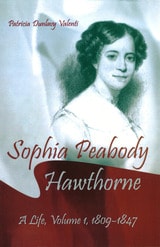
Sophia Peabody Hawthorne
A Life, Volume I, 1809-1847Patricia Dunlavy Valenti
University of Missouri Press, 2004
Sophia was born into an expansive, somewhat chaotic home in which women provided financial as well as emotional sustenance. She was a precocious, eager student whose rigorous education, in her mother’s and her sisters’ schools, began her association with the children of New England’s elite. Sophia aspired to become a professional, self-supporting painter, exhibiting her art and seeking criticism from established mentors. She relished an eighteen-month sojourn in Cuba. Nathaniel’s reclusive family, his reluctant early education, his anonymous pursuit of a career, and his relatively circumscribed life contrast markedly with the experience of the woman who became his wife and the mother of his children. Those differences resulted in a creative abrasion that ignited his fiction during the first years of their marriage.
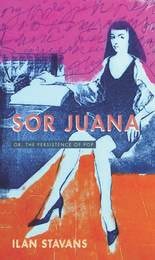
Sor Juana
Or, the Persistence of PopIlan Stavans
University of Arizona Press, 2018
Sor Juana: Or, the Persistence of Pop encapsulates the life, times, and legacy of Sor Juana. In this immersive work, essayist Ilan Stavans provides a biographical and meditative picture of the ways in which popular perceptions of her life and body of work both shape and reflect modern Latinx culture.
Sown in Earth
Essays of Memory and BelongingFred Arroyo
University of Arizona Press, 2020
In Sown in Earth, Arroyo often roots his thoughts and feelings in place, expressing a deep connection to the small homes he inhabited in his childhood, his warm and hazy memories of his grandmother’s kitchen in Puerto Rico, the rivers and creeks he fished, and the small cafés in Madrid that inspired writing and reflection in his adult years. Swirling in romantic moments and a refined love for literature, Arroyo creates a sense of belonging and appreciation for his life despite setbacks and complex anxieties along the way.
By crafting a written journey through childhood traumas, poverty, and the impact of alcoholism on families, Fred Arroyo clearly outlines how his lived experiences led him to become a writer. Sown in Earth is a shocking yet warm collage of memories that serves as more than a memoir or an autobiography. Rather, Arroyo recounts his youth through lyrical prose to humanize and immortalize the hushed lives of men like his father, honoring their struggle and claiming their impact on the writers and artists they raised.
Spring, Heat, Rains
A South Indian DiaryDavid Shulman
University of Chicago Press, 2008
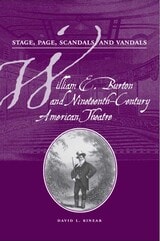
Stage, Page, Scandals, & Vandals
William E. Burton and Nineteenth-Century American TheatreDavid L. Rinear
Southern Illinois University Press, 2004
In this first modern book-length biography of native Englander William E. Burton, theatre historian David L. Rinear explores Burton’s diary, letters, published reviews, and various reminiscences to reveal the tumultuous personal and professional lives of the mid-nineteenth-century actor/manager and his role in American literary history. Stage, Page, Scandals, and Vandals: William E. Burton and Nineteenth-Century American Theatre also provides insight into the cultural and artistic climate of an early period in American history when the country was still forming a national identity.
Burton fled England in 1834 and came to America in the wake of a public scandal caused by his marriage to a sixteen-year-old orphan. Burton was then already married with a ten-year-old son. Settling in Philadelphia, the thirty-two-year-old actor rapidly established himself in the city’s theatrical productions and quickly became an audience favorite.
In 1837, while continuing to act, Burton founded and edited The Gentleman’s Magazine, a monthly literary publication later called Burton’s Gentleman’s Magazine. Burton hired struggling author Edgar Allan Poe as coeditor, and the journal achieved literary acclaim as it first published many of Poe’s short stories and poems.
Burton sold the journal in 1841 and used the money to build a new theatre, which he managed, although the depression of the early 1840s soon drove his venture out of business. After declaring bankruptcy the following year, Burton worked as a touring actor before returning to theatre management in 1845. For the next thirteen years, Burton managed a succession of theatres in Philadelphia, Baltimore, and New York.
Burton’s work as a producer of Shakespearean comedies and romances marks him as the first of the intellectual theatre managers to raise the theatrical experience from mere popular culture to high art. Burton made a fortune in his ventures, amassed the finest private Shakespearean library in the country, and built a grand seaside estate in Glen Cove, Long Island. Shrewd in his personal affairs and in business, Burton also had a violent temper, which led him to viciously attack his competitors. His peculiar domestic relationships marred his brilliant career as an actor, manager, and man of letters; he may have been married to three women at once and lived with two of these women simultaneously.
Fully revealing Burton’s contributions to American culture, Rinear traces Burton’s personal and professional pursuits from his emigration to his death in 1860. Bolstered by twenty-two illustrations, Stage, Page, Scandals, and Vandals sheds light on the history of American entertainment during the antebellum era, exposes the ruthless business practices required to succeed in theatre and literary magazine publishing, and reveals a sense of what constituted celebrity status in mid-nineteenth-century America.
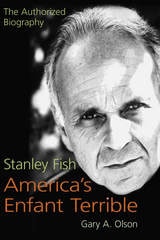
Stanley Fish, America's Enfant Terrible
The Authorized BiographyGary A. Olson
Southern Illinois University Press, 2016
Born into a tumultuous family, Fish survived life with an emotionally absent father and a headstrong mother through street sports and troublemaking as much as through his success at a rigorous prep school. As Olson shows, Fish’s escape from the working-class neighborhoods of 1940s and 1950s Providence, Rhode Island, came with his departure for the university life at the University of Pennsylvania and then Yale. His meteoric rise through the academic ranks at a troubled Vietnam-era UC-Berkeley was complemented by a 1966 romp through Europe that included drag racing through the streets of Seville in his Alfa Romeo. He went on to become an internationally prominent scholar at Johns Hopkins before moving to Duke, where he built a star-studded academic department that became a key site in the culture and theory wars of the 1980s and 1990s. Olson discusses Fish’s tenure as a highly visible dean at the University of Illinois at Chicago who clashed publicly with the state legislature. He also covers Fish’s most remarkable and controversial books, including Fish’s masterpiece, Surprised by Sin: The Reader in "Paradise Lost," which was a critical sensation and forever changed the craft of literary criticism, as well as Professional Correctness and Save the World on Your Own Time, two books that alienated Fish from most liberal-minded professors in English studies.
Olson concludes his biography of Fish with an in-depth analysis of the contradictions between Fish’s public persona and his private personality, examining how impulses and events from Fish’s childhood shaped his lifelong practices and personality traits. Also included are a chronology of the major events of Fish’s life and never-before-published photos.
Based on hundreds of hours of recorded interviews with friends, enemies, colleagues, former students, family members, and Fish himself, along with material from the Stanley Fish archive, Stanley Fish, America’s Enfant Terrible is a clearly written narrative of the life of an important and controversial scholar.
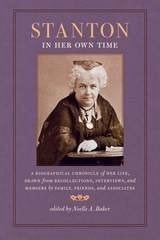
Stanton in Her Own Time
A Biographical Chronicle of Her Life, Drawn from Recollections, Interviews, and Memoirs by Family, Friends, and AssociatesNoelle A. Baker
University of Iowa Press, 2016
Among nineteenth-century women’s rights reformers, Elizabeth Cady Stanton (1815–1902) stands out for the maternal and secular advocacy that shaped her activism and public reception. A wife and mother of seven, she was also a prolific writer, transatlantic women’s rights leader, popular lecturer, congressional candidate, canny historian, and freethought champion. Her lifelong interest in women’s sexual and reproductive rights and late efforts to reform institutional religion are as relevant to our time as they were to her own.
Stanton’s professional life lasted a half-century, ranging from antebellum women’s rights organization and oratory, to a post–Civil War career as a lyceum lecturer, to a late-century role as an incisive religious and cultural critic. Acutely aware of the medical, religious, legal, and educational barriers to women’s independence, she advocated for married women’s right to vote, obtain a divorce, gain custody of their children, and own property. As she grew more radical over the years, she also demanded judicial reform, the separation of church and state, free love, progressive coeducational opportunities, and women’s right to limit their fertility.
In this richly contextualized collection of primary sources, Noelle A. Baker brings together accounts of Stanton’s life and ideas from both well-known and recently recovered figures. From the teacher chiding an assertive young woman to erstwhile allies worrying about her growing radicalism, their voices paint a vivid portrait of a woman of vaunting ambition, powerhouse intellect, and her share of human failings.
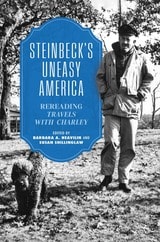
Steinbeck’s Uneasy America
Rereading “Travels with Charley”Edited by Barbara A. Heavilin and Susan Shillinglaw
University of Alabama Press, 2025
A road trip through Steinbeck’s America—revisited, reimagined, and reinterpreted.
Steinbeck’s Uneasy America is the first collection of critical scholarship devoted to Travels with Charley in Search of America, John Steinbeck’s best-selling, late-career travel memoir. In 1960, Steinbeck was a renowned man of American letters. Many considered him America’s troubadour of ordinary people, the conscience of the country. But weakened by two small strokes and anxious that he had lost touch with America, he embarked on a cross-country road trip accompanied by his wife’s standard poodle, Charley. Two years later, he published Travels with Charley to popular acclaim and robust sales.
Throughout this narrative, Steinbeck insists that all of our perceptions are “warped” by personality, history, and society. And while this hybrid and experimental book has long been accepted as an accurate account of his journey, journalists and scholars agree that the narrative is part factual, part fiction—America as seen through Steinbeck’s particular “warp.” The work is long overdue for scholarly assessment.
Steinbeck’s Uneasy America explores three main topics. Part 1 explores genre and form to consider the degree to which the work is fiction or nonfiction. Part 2 assesses Steinbeck’s increasingly bleak assessment of America—almost a jeremiad that warns citizens of ecological excess and political apathy. Part 3 focuses on Travels with Charley as a road text, travel adventure, and literary influence.
This volume’s authors offer rich scholarly insights and a wealth of stories, facts, and anecdotes about Steinbeck and the adventures and misadventures he and Charley met on the road. Lively and groundbreaking, the collection both enlightens and enlivens discussions of Steinbeck and of the twentieth-century American book world.
Stephen Crane - American Writers 76
University of Minnesota Pamphlets on American WritersJean Cazemajou
University of Minnesota Press, 1969
Stephen Crane - American Writers 76 was first published in 1969. Minnesota Archive Editions uses digital technology to make long-unavailable books once again accessible, and are published unaltered from the original University of Minnesota Press editions.
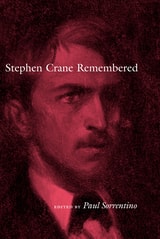
Stephen Crane Remembered
Edited by Paul Sorrentino
University of Alabama Press, 2006
Revealing episodes in the life of the elusive writer, as told by acquaintances
This book collects reminiscences by contemporaries, friends, and associates of Stephen Crane that illuminate the life of this often misunderstood and misrepresented writer. Although Crane is widely regarded as a major American author, conclusions about his life, work, and thought remain obscure due to the difficulties in separating fact from fiction. His first biographer recorded mostly vague impressions and, to mythologize his subject, invented a multitude of the episodes and letters used in his account of Crane’s life. Subsequent biographies were either cursory summations or compendiums of verifiable facts. Crane himself was both reclusive and mercurial, protective of his inner life while projecting a variety of personae to suit others.
A flamboyant personality and close friend of writers such as William Dean Howells, Henry James, and Joseph Conrad, Crane made telling impressions on his contemporaries. They often constitute the best assessments of Crane’s own personality and work. The 90 reminiscences gathered here offer a much-needed account of Crane’s life from a variety of viewpoints, as well as important information about the contributors themselves.

Stephen King on the Big Screen
Mark Browning
Intellect Books, 2009
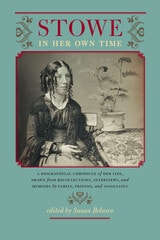
Stowe in Her Own Time
A Biographical Chronicle of Her Life, Drawn from Recollections, Interviews, and Memoirs by Family, FSusan Belasco
University of Iowa Press, 2009
One of the first celebrity authors, Harriet Beecher Stowe (1811–1896) became famous almost overnight when Uncle Tom’s Cabin—which sold more than 300,000 copies in its first year of publication—appeared in 1852. Known by virtually all famous writers in the United States and many in England and regarded by many women writers as a role model because of her influence in the literary marketplace, Stowe herself was the subject of many books, articles, essays, and poems during her lifetime.
This volume brings together for the first time a range of primary materials about Stowe’s private and public life written by family members, friends, and fellow writers who knew or were influenced by her before and after Uncle Tom’s Cabin catapulted her to fame. Included are periodical articles by Fanny Fern and Charles Dudley Warner; biographical essays by Sarah Josepha Hale and Rose Terry Cooke; letters by Oliver Wendell Holmes, Elizabeth Barrett Browning, and Harriet Jacobs; recollections by Frederick Douglass, Annie Adams Fields, Isabella Beecher Hooker, and Charles Beecher; and poems by Paul Laurence Dunbar and John Greenleaf Whittier. An introduction at the beginning of each essay connects it to its historical and cultural context, explanatory notes provide information about people and places, and the book includes a detailed introduction and a chronology of Stowe’s life.
The thirty-eight recollections gathered in Stowe in Her Own Time form a biographical narrative designed to provide several perspectives on the famous author, sometimes in conflict and sometimes in agreement but always perceptive. The figure who emerges from this insightful, analytical collection is far more complex than the image she helped construct in her lifetime.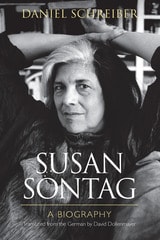
Susan Sontag
A BiographyDaniel Schreiber; Translated from the German by David Dollenmayer
Northwestern University Press, 2014
While known primarily as a cultural critic and novelist, Sontag was also a filmmaker, stage director, and dramatist. It was her status as a pop icon that was unusual for an American intellectual: she was filmed by Andy Warhol and Woody Allen, photographed by Annie Leibovitz and Diane Arbus, and her likeness adorned advertisements for Absolut vodka. Drawing on newly available sources, including interviews with Nadine Gordimer, Robert Wilson, and Sontag’s son, David Rieff, as well as on myriad interviews given by Sontag and her extensive correspondence with her friend and publisher Roger Straus, Schreiber explores the roles that Sontag played in influencing American public cultural and political conversations.