Results by title
479 books match the query 'Methodology' and 31 start with s

Scanner Data and Price Indexes
Edited by Robert C. Feenstra and Matthew D. Shapiro
University of Chicago Press, 2003
Scanner Data and Price Indexes assesses both the promise and the challenges of using scanner data to produce economic statistics. Three papers present the results of work in progress at statistical agencies in the U.S., United Kingdom, and Canada, including a project at the U.S. Bureau of Labor Statistics to investigate the feasibility of incorporating scanner data into the monthly Consumer Price Index. Other papers demonstrate the enormous potential of using scanner data to test economic theories and estimate the parameters of economic models, and provide solutions for some of the problems that arise when using scanner data, such as dealing with missing data.
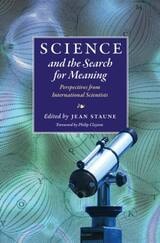
Science and the Search for Meaning
Perspectives from International ScientistsJean Staune
Templeton Press, 2006
As the organizer of some of the most important meetings in science and religion in Europe, Jean Staune is in a core position to report on the dialogue between science and religion, primarily from the views of scientists. In this book, the translation of a recent French edition, he presents "audacious and rigorous" articles by fifteen renowned leaders in the field, of whom four are Nobel Prize winners. They represent nine countries and seven religions.
Each of the authors in this volume responds in a different way, addressing naturalism, materialism, the nature of consciousness, reductionism, and the quest for meaning.Two paradigms emerge, with those who say that God (or direction) can exist in the universe because we can understand certain things, while others say that God exists because we cannot understand the universe altogether. Their reflections on the accessibility and the mystery of the world show the extraordinary abstract revolution that took place in science during the twentieth century and the way this establishes a bridge between science and religion.
Contributors are Nobel Prize winners Christian de Duve, Charles Townes, Ahmed Zewail, and William D. Phillips; as well as Paul Davies, Bernard d'Espagnat, Thomas Odhiambo, Ramanath Cowsik, Jean Kovalevsky, Thierry Magnin, Bruno Guiderdoni, Trinh Xuan Thuan, Khalil Chamcham, Michael Heller, and Philip Clayton.
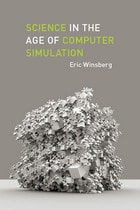
Science in the Age of Computer Simulation
Eric Winsberg
University of Chicago Press, 2010
Computer simulation was first pioneered as a scientific tool in meteorology and nuclear physics in the period following World War II, but it has grown rapidly to become indispensible in a wide variety of scientific disciplines, including astrophysics, high-energy physics, climate science, engineering, ecology, and economics. Digital computer simulation helps study phenomena of great complexity, but how much do we know about the limits and possibilities of this new scientific practice? How do simulations compare to traditional experiments? And are they reliable? Eric Winsberg seeks to answer these questions in Science in the Age of Computer Simulation.
Scrutinizing these issue with a philosophical lens, Winsberg explores the impact of simulation on such issues as the nature of scientific evidence; the role of values in science; the nature and role of fictions in science; and the relationship between simulation and experiment, theories and data, and theories at different levels of description. Science in the Age of Computer Simulation will transform many of the core issues in philosophy of science, as well as our basic understanding of the role of the digital computer in the sciences.

Scientific History
Experiments in History and Politics from the Bolshevik Revolution to the End of the Cold WarElena Aronova
University of Chicago Press, 2021
The book explores the intertwined trajectories of six intellectuals and the larger programs they set in motion: Henri Berr (1863–1954), Nikolai Bukharin (1888–1938), Lucien Febvre (1878–1956), Nikolai Vavilov (1887–1943), Julian Huxley (1887–1975), and John Desmond Bernal (1901–1971). Though they held different political views, spoke different languages, and pursued different goals, these thinkers are representative of a larger motley crew who joined the techniques, approaches, and values of science with the writing of history, and who created powerful institutions and networks to support their projects.
In tracing these submerged stories, Aronova reveals encounters that profoundly shaped our knowledge of the past, reminding us that it is often the forgotten parts of history that are the most revealing.

Scientific Practice
Theories and Stories of Doing PhysicsEdited by Jed Z. Buchwald
University of Chicago Press, 1995
This book examines small-scale experiment in physics, in particular the relation between theory and practice. The contributors focus on interactions among the people, materials, and ideas involved in experiments—factors that have been relatively neglected in science studies.
The first half of the book is primarily philosophical, with contributions from Andrew Pickering, Peter Galison, Hans Radder, Brian Baigrie, and Yves Gingras. Among the issues they address are the resources deployed by theoreticians and experimenters, the boundaries that constrain theory and practice, the limits of objectivity, the reproducibility of results, and the intentions of researchers. The second half is devoted to historical case studies in the practice of physics from the early nineteenth to the early twentieth century. These chapters address failed as well as successful experimental work ranging from Victorian astronomy through Hertz's investigation of cathode rays to Trouton's attempt to harness the ether. Contributors to this section are Jed Z. Buchwald, Giora Hon, Margaret Morrison, Simon Schaffer, and Andrew Warwick.
With a lucid introduction by Ian Hacking, and original articles by noted scholars in the history and philosophy of science, this book is poised to become a significant source on the nature of small-scale experiment in physics.

Scientific Theories
C. Wade Savage
University of Minnesota Press, 1990
Self-Organization and Dissipative Structures
Applications in the Physical and Social SciencesEdited by William C. Schieve and Peter M. Allen
University of Texas Press, 1982
The contributions to this volume attempt to apply different aspects of Ilya Prigogine's Nobel-prize-winning work on dissipative structures to nonchemical systems as a way of linking the natural and social sciences. They address both the mathematical methods for description of pattern and form as they evolve in biological systems and the mechanisms of the evolution of social systems, containing many variables responding to subjective, qualitative stimuli.
The mathematical modeling of human systems, especially those far from thermodynamic equilibrium, must involve both chance and determinism, aspects both quantitative and qualitative. Such systems (and the physical states of matter which they resemble) are referred to as self-organized or dissipative structures in order to emphasize their dependence on the flows of matter and energy to and from their surroundings. Some such systems evolve along lines of inevitable change, but there occur instances of choice, or bifurcation, when chance is an important factor in the qualitative modification of structure. Such systems suggest that evolution is not a system moving toward equilibrium but instead is one which most aptly evokes the patterns of the living world.
The volume is truly interdisciplinary and should appeal to researchers in both the physical and social sciences. Based on a workshop on dissipative structures held in 1978 at the University of Texas, contributors include Prigogine, A. G. Wilson, Andre de Palma, D. Kahn, J. L. Deneubourgh, J. W. Stucki, Richard N. Adams, and Erick Jantsch.
The papers presented include Allen, "Self-Organization in the Urban System"; Robert Herman, "Remarks on Traffic Flow Theories and the Characterization of Traffic in Cities"; W. H. Zurek and Schieve, "Nucleation Paradigm: Survival Threshold in Population Dynamics"; De Palma et al., "Boolean Equations with Temporal Delays"; Nicholas Georgescu-Roegin, "Energy Analysis and Technology Assessment"; Magoroh Maruyama, "Four Different Causal Meta-types in Biological and Social Sciences"; and Jantsch, "From Self-Reference to Self-Transcendence: The Evolution of Self-Organization Dynamics."
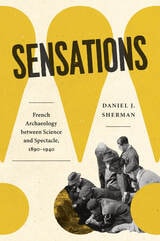
Sensations
French Archaeology between Science and Spectacle, 1890–1940Daniel J. Sherman
University of Chicago Press, 2025
For well over a century, from Heinrich Schliemann’s sensational discoveries at Troy in the 1880s, through the Tutankhamun excavations of the 1920s, to the recent LIDAR-aided uncovering of lost Maya cities, archaeology has made headlines. In this new history of archaeology and its archival traces, Daniel J. Sherman treats the friction between science and spectacle as constitutive of the field. By exploring two long-running controversies that roiled the French archaeological world and its wider public in the first third of the twentieth century, he gives the science/media relationship a unique place in the history of archaeology—and its present.
The first controversy involves a dispute over the conduct of excavations at Carthage in Tunisia, then under French colonial rule. In the second, accusations of forgery clouded what seemed to be a stunning Neolithic find at a hamlet called Glozel, in the Auvergne region in central France. The affair divided the scholarly community and attracted enormous media attention across Europe and North America. Both controversies occurred at a transitional moment between what has been called the heroic age of archaeology, dominated by explorers and adventurers with little specialized training, and the beginnings of its professionalization. As Sherman shows, the two affairs put the methods, procedures, and networks of archaeology in the spotlight and profoundly shaped its history.
Serpents in the Sand
Essays in the Nonlinear Nature of Politics and Human DestinyCourtney Brown
University of Michigan Press, 1995

Shakespeare in Kabul
Stephen Landrigan and Qais Akbar Omar
Haus Publishing, 2012
Shaping Phonology
Edited by Diane Brentari and Jackson L. Lee
University of Chicago Press, 2018
Divided into two parts, Shaping Phonology first explores the elaboration of abstract domains (or units of analysis) that fall under the purview of phonology. These chapters reveal the increasing multidimensionality of phonological representation through such analytical approaches as autosegmental phonology and feature geometry. The second part looks at how the advent of machine learning and computational technologies has allowed for the analysis of larger and larger phonological data sets, prompting a shift from using key examples to demonstrate that a particular generalization is universal to striving for statistical generalizations across large corpora of relevant data. Now fundamental components of the phonologist’s tool kit, these two shifts have inspired a rethinking of just what it means to do linguistics.

Sharpening the Legal Mind
How to Think Like a LawyerWilliam Powers Jr, edited by John Deigh
University of Texas Press, 2023
The way lawyers think about the law can seem deeply mysterious. They see nuance and meaning in statutes and implications in judicial opinions that are opaque to the rest of us. Accessible and thought provoking, Sharpening the Legal Mind explains how lawyers analyze the cases and controversies that come before the courts.
Written by William Powers Jr., the former president of the University of Texas at Austin, this book is an authoritative introduction to the academic study of law and legal reasoning, including insights into the philosophy of law and the intellectual history of legal thought. Powers discusses the methods lawyers use to interpret the law, the relation between law and morals, and the role of courts in shaping the law. In eight chapters, he follows the historical debate on these issues and others through different generations and movements in American legal thought—formalism, realism, positivism—to critical legal studies and postmodern theory. The perfect read for anyone looking for a primer on legal reasoning, Sharpening the Legal Mind demystifies the debates and approaches to thinking like a lawyer that profoundly influence the rule of law in our lives.
Simplicity and Complexity
Pondering Literature, Science, and PaintingFloyd Merrell
University of Michigan Press, 1998
Social Forecasting Methodology
Suggestions for ResearchDaniel P. Harrison
Russell Sage Foundation, 1976
Social Indicator Models
Kenneth C. Land
Russell Sage Foundation, 1975

Social Knowledge Creation in the Humanities
Volume 1Edited by Alyssa Arbuckle, Aaron Mauro, and Daniel Powell
Iter Press, 2017
The ubiquity of social media has transformed the scope and scale of scholarly communication in the arts and humanities. The consequences of this new participatory and collaborative environment for humanities research has allowed for fresh approaches to communicating research. Social Knowledge Creation takes up the norms and customs of online life to reorient, redistribute, and oftentimes flatten traditional academic hierarchies. This book discusses the implications of how humanists communicate with the world and looks to how social media shapes research methods. This volume addresses peer-review, open access publishing, tenure and promotion, mentorship, teaching, collaboration, and interdisciplinarity as a comprehensive introduction to these rapidly changing trends in scholarly communication, digital pedagogy, and educational technology. Collaborative structures are rapidly augmenting disciplinary focus of humanities curriculum and the public impact of humanities research teams with new organizational and disciplinary thinking. Social Knowledge Creation represents a particularly dynamic and growing field in which the humanities seeks to find new ways to communicate the legacy and traditions of humanities based inquiry in a 21st century context.
New Technologies in Medieval and Renaissance Studies Volume 7.
Edited by Alyssa Arbuckle, Aaron Mauro, and Daniel Powell
Social Science as Civic Discourse
Essays on the Invention, Legitimation, and Uses of Social TheoryRichard Harvey Brown
University of Chicago Press, 1989

Social Statistics in Use
Philip Morris Hauser
Russell Sage Foundation, 1975

Sociology of the Future
Theory, Cases and Annotated BibliographyWendell Bell
Russell Sage Foundation, 1971

Spirituality and Health Research
Methods, Measurements, Statistics, and ResourcesHarold G Koenig
Templeton Press, 2011
In Spirituality and Health Research: Methods, Measurement, Statistics, and Resources, Dr. Harold G. Koenig leads a comprehensive overview of this complex subject. Dr. Koenig is one of the world’s leading authorities on the relationship between spirituality and health, and a leading researcher on the topic. As such, he is distinctively qualified to author such a book.

Stories of Raising Boys
Masculinity, Disability, Gender Expansiveness, and AnxietyJulie-Ann Scott-Pollock
Temple University Press, 2026
In her poignant, affecting autoethnography, Stories of Raising Boys, Julie-Ann Scott-Pollock investigates the meaning of disability, gender, race, and privilege in contemporary culture. Scott-Pollock is a white mother living with a physical disability raising four boys—Theo, a three-year-old risktaker; Tony, ten, who lives with seizures; Vinny, eight, who is gender expansive; and five-year-old Nico, who is also gender expansive and experiences anxiety. They live on the southeastern U.S. coast with their father, Evan, and their baby sister, Rosalie.
Through narrative analysis, Scott-Pollock compares and contrasts her circumstances to the ways in which adult interviewees manage the same lived experiences as her sons. She also includes their opinions about masculinity and identity, as well as parenting boys. In doing so, Stories of Raising Boys deepens the cultural complexity of parent–child relationships and expands our collective understanding of how they form and emerge. In addition, Scott-Pollock uses a metaphor of swimming through the ocean near her family’s home to illustrate resisting marginalization while also promoting strong cultural identities, especially in turbulent waters.
Stories of Raising Boys offers an absorbing cultural reflection on the intersectionality of identity, power, and privilege.
Studies on the Abuse and Decline of Reason
Text and DocumentsF. A. Hayek
University of Chicago Press, 2010
Hayek argues that the vast number of elements whose interactions create social structures and institutions make it unlikely that social science can predict precise outcomes. Instead, he contends, we should strive to simply understand the principles by which phenomena are produced. For Hayek this modesty of aspirations went hand in hand with his concern over widespread enthusiasm for economic planning. As a result, these essays are relevant to ongoing debates within the social sciences and to discussion about the role government can and should play in the economy.

Studying Technological Change
A Behavioral ApproachMichael Brian Schiffer
University of Utah Press, 2011
Studying Technological Change synthesizes nearly four decades of research by Michael Brian Schiffer, a cofounder of the field of behavioral archaeology. This new book asks historical and scientific questions about the interaction of people with artifacts during all times and in all places. The book is not about the history or prehistory of technology, nor is it a catalog of methods and techniques for inferring how specific technologies were made or used. Rather, it supplies conceptual tools that can be used to help craft an explanation of any technological change in any society.

Styles of Scientific Thought
The German Genetics Community, 1900-1933Jonathan Harwood
University of Chicago Press, 1992
The first book-length treatment of genetics in Germany, Styles of Scientific Thought demonstrates the influence of culture on science by comparing the American with the German scientific traditions. Harwood examines the structure of academic and research institutions, the educational backgrounds of geneticists, and cultural traditions, among many factors, to explain why the American approach was much more narrowly focussed than the German.
This tremendously rich book fills a gap between histories of the physical sciences in the Weimar Republic and other works on the humanities and the arts during the intellectually innovative 1920s, and it will interest European historians, as well as sociologists and philosophers of science.
Subjects and Narratives in Archaeology
Ruth M. Van Dyke
University Press of Colorado, 2015
Seeking to move beyond the customary limits of archaeological prose and representation, Subjects and Narratives in Archaeology presents archaeology in a variety of nontraditional formats. The volume demonstrates that visual art, creative nonfiction, archaeological fiction, video, drama, and other artistic pursuits have much to offer archaeological interpretation and analysis.
Chapters in the volume are augmented by narrative, poetry, paintings, dialogues, online databases, videos, audio files, and slideshows. The work will be available in print and as an enhanced ebook that incorporates and showcases the multimedia elements in archaeological narrative. While exploring these new and not-so-new forms, the contributors discuss the boundaries and connections between empirical data and archaeological imagination.
Both a critique and an experiment, Subjects and Narratives in Archaeology addresses the goals, advantages, and difficulties of alternative forms of archaeological representation. Exploring the idea that academically sound archaeology can be fun to create and read, the book takes a step beyond the boundaries of both traditional archaeology and traditional publishing.

Supporting International Writing Studies Research
Cultivating Capacity through International ExchangesTiane Donahue
University Press of Colorado, 2025
Shedding light on international and transnational writing studies, this edited collection addresses the complexities of research and writing across global contexts. Based on the observation that knowledge-making transcends national borders and is contingent upon the interplay of local cultures and practices, the contributors to the volume contradict the notion that knowledge circulates freely in a “flat world.” Presenting diverse perspectives on writing research, they showcase the need for mutual understanding across borders and reflect the rich tapestry of writing research traditions worldwide, emphasizing interconnectedness and collective insight rather than hierarchical models of knowledge dissemination. Supporting International Writing Studies Research encourages readers and researchers to engage with and respect scholarship beyond English-language contexts, advocates for collaborative global dialogues in writing education, and underscores the importance of continued efforts to incorporate diverse scholarly voices and methodologies in the evolving landscape of writing studies.

Survey Measurements
Techniques, Data Quality and Sources of ErrorEdited by Uwe Engel
Campus Verlag, 2015
Survey Research in the Social Sciences
Charles Y. Glock
Russell Sage Foundation, 1967
Surveying Subjective Phenomena
Charles Turner
Russell Sage Foundation, 1984
Surveying Subjective Phenomena
Charles Turner
Russell Sage Foundation, 1984
Surveying Subjective Phenomena
Charles Turner
Russell Sage Foundation, 1984