Results by title
2335 books match the query 'Modern' and 142 start with s

S-class destroyer Piet Hein (ex HMS Serapis)
Jantinus Mulder
Amsterdam University Press, 2024
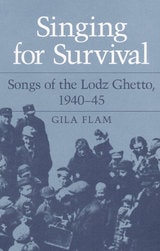
SINGING FOR SURVIVAL
"SONGS OF THE LODZ GHETTO, 1940-45"Gila Flam
University of Illinois Press, 1992
"An extremely accurate and valuable work. There is nothing like it in either the extensive holocaust literature or the ethnomusicology literature."
-- Mark Slobin, author of Chosen Voices: The Story of the American Cantorate
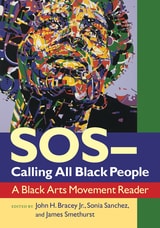
SOS—Calling All Black People
A Black Arts Movement ReaderJohn H. Bracey
University of Massachusetts Press, 2014
Many of the movement's leading artists, including Ed Bullins, Nikki Giovanni, Woodie King, Haki Madhubuti, Sonia Sanchez, Askia Touré, and Val Gray Ward remain artistically productive today. Its influence can also be seen in the work of later artists, from the writers Toni Morrison, John Edgar Wideman, and August Wilson to actors Avery Brooks, Danny Glover, and Samuel L. Jackson, to hip hop artists Mos Def, Talib Kweli, and Chuck D.
SOS—Calling All Black People includes works of fiction, poetry, and drama in addition to critical writings on issues of politics, aesthetics, and gender. It covers topics ranging from the legacy of Malcolm X and the impact of John Coltrane's jazz to the tenets of the Black Panther Party and the music of Motown. The editors have provided a substantial introduction outlining the nature, history, and legacy of the Black Arts Movement as well as the principles by which the anthology was assembled.

SS Australis
Bert Lamers
Amsterdam University Press, 2024
ss 'America' for the United States Lines. The ship was sold to the Greek Chandris Lines in 1964 and served until 1977 very succesfully on the route Western-Europe-Australia-New Zealand. Later the route became a full round-the-world-service. After her Australian period the liner sailed under the names of 'America' (for the third time), 'Italis', 'Noga', 'Alferdoss' and finally 'American Star'. In this volume of Liners the history of the great liner from when she was purchased by the Greek interest in 1964 until her sad wracking in January 1994.

Sacramental Shopping
Louisa May Alcott, Edith Wharton, and the Spirit of Modern ConsumerismSarah Way Sherman
University of New Hampshire Press, 2013
Written a generation apart and rarely treated together by scholars, Little Women (1868) and The House of Mirth (1905) share a deep concern with materialism, moral development, and self-construction. The heroines in both grapple with conspicuous consumption, an aspect of modernity that challenges older beliefs about ethical behavior and core identity.
Placing both novels at the historical intersection of modern consumer culture and older religious discourse on materialism and identity, Sarah Way Sherman analyzes how Alcott and Wharton rework traditional Protestant discourse to interpret their heroines' struggle with modern consumerism. Her conclusion reveals how Little Women's optimism, still buoyed by otherworldly justice, providential interventions, and the notion of essential identity, ultimately gives way to the much darker vision of modern materialistic culture in The House of Mirth.
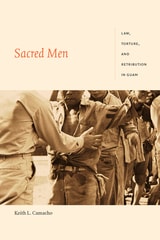
Sacred Men
Law, Torture, and Retribution in GuamKeith L. Camacho
Duke University Press, 2019
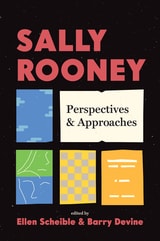
Sally Rooney
Perspectives and ApproachesEllen Scheible
Bucknell University Press, 2026
Bestselling Irish novelist Sally Rooney has emerged as the defining voice of a generation, a cultural phenomenon whose spare, intelligent prose and sharp social insight have reshaped contemporary fiction and sparked a global conversation about intimacy, politics, and the millennial condition. This new collection brings together contributors from a wide range of disciplines to offer fresh critical readings of Rooney’s influential novels, alongside adaptable strategies for teaching her work in today’s undergraduate and graduate classrooms. The essays situate Rooney within literary traditions from Romantic poetry to the bildungsroman and the contemporary campus novel, while engaging with contemporary topics such as gender politics, late capitalism, and media adaptation. Providing accessible yet rigorous frameworks for exploring Rooney’s fiction, this volume confirms her significance not only within contemporary literary studies but also as a cultural force whose work reaffirms the relevance of the humanities in the twenty-first-century classroom.
Published by Bucknell University Press. Distributed worldwide by Rutgers University Press.
Salonnières, Furies, and Fairies, revised edition
The Politics of Gender and Cultural Change in Absolutist FranceAnne E. Duggan
University of Delaware Press, 2021
Samuel Johnson and Moral Discipline
Paul Kent Alkon
Northwestern University Press, 1967
San Francisco Reds
Communists in the Bay Area, 1919-1958Robert W. Cherny
University of Illinois Press, 2024
Founded in 1919, the Communist Party (CP) in San Francisco survived an ineffectual early period to become a force in the trade union heyday of the 1930s. Robert Cherny uses the lives and careers of more than fifty members to tell the story of the city’s CP from its founding through 1958.
Cherny draws on FBI files, the records of the CP at the Russian State Archive for Social and Political History, interviews, and memoirs to follow male and female party and union leaders, rank-and-file members, and others. His history reveals why people joined the CP while charting the frequent changes in policy, constant member turnover, and disruptive factionalism that limited party aims and successes. Cherny also follows his subjects through their resignations, expulsions, or other reasons for departure and looks at the CP’s influence on their lives in subsequent years.
Vivid and exhaustively researched, San Francisco Reds is a long view account of the personal motivations and activism of an Old Left generation in a West Coast city.
Sartre and Marxist Existentialism
The Test Case of Collective ResponsibilityThomas R. Flynn
University of Chicago Press, 1986
The study begins with an examination of the uses of "responsibility" in Being and Nothingness and in several postwar essays. Flynn then concentrates on the Critique of Dialectical Reason, offering a thorough analysis of the remarkable social theory Sartre constructs there. A masterful contribution to Sartre scholarship, Sartre and Marxist Existentialism will be of great interest to social and political philosophers involved in the debate over collective responsibility.
Sasun
The History of an 1890s Armenian RevoltJustin McCarthy
University of Utah Press, 2014
Scanderbeide
The Heroic Deeds of George Scanderbeg, King of EpirusMargherita Sarrocchi
University of Chicago Press, 2006
First published posthumously in 1623, Scanderbeide reemerges here in an adroit English prose translation that maintains the suspense of the original text and gives ample context to its rich cultural implications.
School, State, and Society
The Growth of Elementary Schooling in Nineteenth-Century France--A Quantitative AnalysisRaymond Grew and Patrick J. Harrigan
University of Michigan Press, 1992
Science Fusion in Contemporary Mexican Literature
Brian T. Chandler
Bucknell University Press, 2024

Science, Community, and the Transformation of American Philosophy, 1860-1930
Daniel J. Wilson
University of Chicago Press, 1990
The author situates the emergence of professional philosophy in the context of the professionalization of American higher education and articulates, in the case of philosophy, the structures and values of a professional discipline. One of the most important consequences of this transformation was a new emphasis on communal theories of truth. Peirce, Dewey, and Royce all developed sophisticated and important theories of community as they were engaged in reshaping and redefining the limits of philosophy. This book will be of great importance for those interested in the history of philosophy, the rise of professions, and American intellectual and educational history, and to all those seeking to understand the contemporary revival of pragmatic thought and theories of community.
Sciences from Below
Feminisms, Postcolonialities, and ModernitiesSandra Harding
Duke University Press, 2008
Describing the work of the post-Kuhnian science studies scholars Bruno Latour, Ulrich Beck, and the team of Michael Gibbons, Helga Nowtony, and Peter Scott, Harding reveals how, from different perspectives, they provide useful resources for rethinking the modernity versus tradition binary and its effects on the production of scientific knowledge. Yet, for the most part, they do not take feminist or postcolonial critiques into account. As Harding demonstrates, feminist science studies and postcolonial science studies have vital contributions to make; they bring to light not only the male supremacist investments in the Western conception of modernity and the historical and epistemological bases of Western science but also the empirical knowledge traditions of the global South. Sciences from Below is a clear and compelling argument that modernity studies and post-Kuhnian, feminist, and postcolonial sciences studies each have something important, and necessary, to offer to those formulating socially progressive scientific research and policy.
Scientific History
Experiments in History and Politics from the Bolshevik Revolution to the End of the Cold WarElena Aronova
University of Chicago Press, 2021
The book explores the intertwined trajectories of six intellectuals and the larger programs they set in motion: Henri Berr (1863–1954), Nikolai Bukharin (1888–1938), Lucien Febvre (1878–1956), Nikolai Vavilov (1887–1943), Julian Huxley (1887–1975), and John Desmond Bernal (1901–1971). Though they held different political views, spoke different languages, and pursued different goals, these thinkers are representative of a larger motley crew who joined the techniques, approaches, and values of science with the writing of history, and who created powerful institutions and networks to support their projects.
In tracing these submerged stories, Aronova reveals encounters that profoundly shaped our knowledge of the past, reminding us that it is often the forgotten parts of history that are the most revealing.
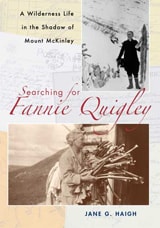
Searching for Fannie Quigley
A Wilderness Life in the Shadow of Mount McKinleyJane G. Haigh
Ohio University Press, 2007
At the age of 27, Fannie Sedlacek left her Bohemian homestead in Nebraska to join the gold rush to the Klondike. From the Klondike to the Tanana, Fannie continued north, finally settling in Katishna near Mount McKinley. This woman, later known as Fannie Quigley, became a prospector who staked her own claims and a cook who ran a roadhouse. She hunted and trapped and thrived for nearly forty years in an environment that others found unbearable.
Her wilderness lifestyle inspired many of those who met her to record their impressions of this self-sufficient woman, who died in 1944. To many of the 700,000 annual visitors to Denali National Park she is a symbol of the enduring spirit of the original pioneers.
Searching for Fannie Quigley: A Wilderness Life in the Shadow of Mount McKinley goes beyond the mere biographical facts of this unique woman’s journey. It also tells historian Jane G. Haigh’s own story of tracking and tracing the many paths that Fannie Quigley’s intriguing life took. Uncovering remote clues, digging through archives, and listening to oral accounts from a wide array of sources, Haigh has fashioned this rich lode into a compelling narrative.
In Searching for Fannie Quigley, Haigh separates fact from fiction to reveal the true story of this highly mythologized pioneer woman.
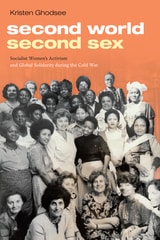
Second World, Second Sex
Socialist Women's Activism and Global Solidarity during the Cold WarKristen Ghodsee
Duke University Press, 2019
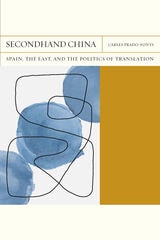
Secondhand China
Spain, the East, and the Politics of TranslationCarles Prado-Fonts
Northwestern University Press, 2022
Uncovering an eclectic and surprising archive, Prado-Fonts draws on diverse cultural artifacts from popular literature, journalism, and early cinema to offer a rich account of how China was seen across the West between 1880 and 1930. Enrique Gaspar, Luis de Oteyza, Vicente Blasco Ibáñez, and lesser-known authors writing in Spanish and Catalan put themselves in dialogue with Leo Tolstoy, John Dewey, W. Somerset Maugham, Bertrand Russell, Pearl Buck, and André Malraux, as well as stereotypical figures from popular culture like Fu Manchu and Charlie Chan. Throughout, Prado-Fonts exposes translation as a technology of cultural hegemony and China as an appealing object for representation. A timely contribution to our understanding of how we create and consume knowledge about the world, Secondhand China is essential reading for scholars and students of Orientalism, postcolonial studies, translation studies, comparative literature, and cultural studies.
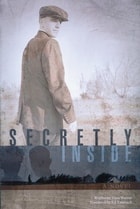
Secretly Inside
A NovelHans Warren; Translated by S. J. Leinbach
University of Wisconsin Press, 2006
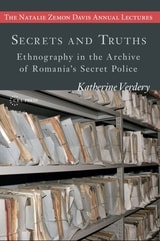
Secrets and Truths
Ethnography in the Archive of Romania's Secret PoliceKatherine Verdery
Central European University Press, 2014
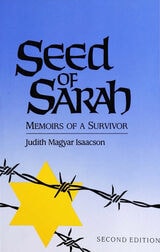
Seed of Sarah
Memoirs of a SurvivorJudith Magyar Isaacson
University of Illinois Press, 1990
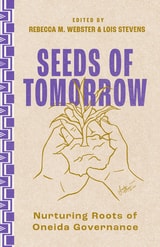
Seeds of Tomorrow
Nurturing Roots of Oneida GovernanceEdited by Rebecca M. Webster and Lois Stevens
University of Wisconsin Press, 2026
This indispensable and unique volume is at once a history of and a pathfinder for the future of the Great Law, the governing principles behind the long-standing Haudenosaunee Confederacy. Focused on the Duck Creek Oneida people of Wisconsin, Seeds of Tomorrow draws together a wide range of tribal voices, from elders and community members to young people and academic experts. This collection chronicles the history of the Haudenosaunee Confederacy’s revolutionary governing principles, outlines the current state of tribal government, and proposes a vision for a political future that draws on traditional Indigenous practices and knowledge. This guide toward stronger sovereignty, revitalized community ties, and a healthier and more self-determined future based on traditional structures of governance is indigenization in practice: a model not just for Duck Creek Oneida but for Indigenous nations everywhere.
Contributors: Kenzie Allen, Marley Atkinson, Marena Bridges, Robert “Bob” Brown, Breann Clark, Julie Clark, Carol Cornelius, Margaret Cornelius, Randy Cornelius, Michele Doxtater, Richard “Lotni” Elm-Hill, Jennifer “Jen” Falck, William Gollnick, Joie Guiterrez, Gerald L. Hill, Jo Anne House, Toni M. House, Nicholas Metoxen, Paul Ninham, Saniya Ninham, John III Powless, Mark Powless, Nina Powless, Artley Skenandore, Lois Stevens, Vernon Stevens, Amelia “Mia” Webster, Grace Webster, Hunter D. Webster, Rebecca M. Webster, Arthur Wilbur, Jameson Wilson
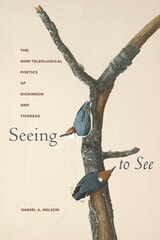
Seeing to See
The Non-Teleological Poetics of Dickinson and ThoreauDaniel A. Nelson
University of Massachusetts Press, 2025
Seeing to See focuses on two American authors who are notoriously hard to classify: Emily Dickinson and Henry David Thoreau. Dickinson proves challenging due to her short and obscure poems and Thoreau due to his insistence on capturing even the most seemingly mundane information. Daniel A. Nelson uncovers evidence that the works of these authors are often intentionally and painstakingly without aim or purpose. He argues that in their texts there is in fact an avoidance of teleological structures of writing and thinking, whereby a thing’s—or a word’s, or a text’s—value hinges on its relation to the world or other contexts.
In Nelson’s reading, Thoreau and Dickinson seem to be able to set aside all thought of distinct personal and professional goals, through which readers typically try to make an overarching sense out of, and to derive some form of profit from, disparate experiences, events, actions, and feelings. Further, both authors seem to be able to get outside of the worldview according to which the value and meaning of something, be it a natural object, a word, or an experience, is a function of its participation in a larger system. Examples of such systems include an ecosystem, taxonomic system, or syntactic system; a writer’s career, or life, or philosophy; even a single poem or journal entry. In the absence of such connections to broader categorical spheres, both writers force readers to contemplate the ineffable, constantly changing relation between words and the natural world. This contemporary reading of two iconic writers reframes their work and how readers think of nature, accepting, as these authors did, the potential freedom of the unknown.
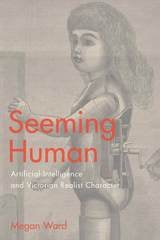
Seeming Human
Artificial Intelligence and Victorian Realist CharacterMegan Ward
The Ohio State University Press, 2018
In Seeming Human, Megan Ward contends that mid-twentieth-century versions of artificial intelligence (AI) offer a theory of verisimilitude omitted by traditional histories of character, which often focus on the development of interiority and the shift from “flat” to “round” characters in the Victorian era. Instead, by reading character through AI, Megan Ward’s Seeming Human argues that routinization, predictability, automation, and even flatness are all features of realist characters.
Early artificial intelligence movements such as cybernetics, information theory, and the Turing test define ways of seeming—rather than being—human. Using these theories of verisimilitude to read Victorian novelists such as Elizabeth Gaskell, Margaret Oliphant, Anthony Trollope, Thomas Hardy, and Henry James, Seeming Human argues that mechanicity has been perceived as anti-realist because it is the element that we least want to identify as human. Because AI produces human-like intelligence, it makes clear that we must actually turn to machines in order to understand what makes realist characters seem so human.
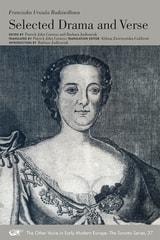
Selected Drama and Verse
Franciszka Urszula Radziwillowa
Iter Press, 2015
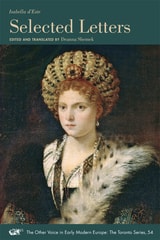
Selected Letters
Isabella d’Este
Iter Press, 2017
Isabella d’Este (1474–1539), daughter of the Este dukes of Ferrara and wife of Marchese Francesco II Gonzaga of Mantua, co-regent of the Gonzaga state, art collector, musician, diplomat, dynastic mother, traveler, reader, gardener, fashion innovator, and consummate politician, was also, as this volume attests, a prolific letter writer with a highly developed epistolary network. Presented here for the first time in any language is a representative selection from over 16,000 letters sent by Isabella to addressees across a wide social spectrum. Together, they paint a nuanced and colorful portrait of a brilliant and influential female protagonist of early modern European society.
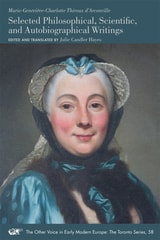
Selected Philosophical, Scientific, and Autobiographical Writings
Marie-Geneviève-Charlotte Thiroux d’Arconville
Iter Press, 2018
Edited and translated by Julie Candler Hayes
The Other Voice in Early Modern Europe: The Toronto Series, volume 58
Selected Writings of Richard McKeon
Volume One: Philosophy, Science, and CultureRichard McKeon
University of Chicago Press, 1998
Philosophy, Science, and Culture covers topics that range from philosophic semantics to the processes of the sciences to the forms of human rights. This collection makes McKeon's mission as a philosopher unmistakable. He characterized himself as a philosophic pluralist; he was an American philosopher in the tradition of the pragmatists, one whose philosophy subtly resonates with C. S. Peirce and John Dewey. McKeon also explored the themes of deconstructionism and other late-twentieth-century philosophies decades before their popular emergence—but, in generating a matrix of possibilities for productive debate, he avoided both relativism and the entrapments of dogmatism.
An important collection of his writings, this series will establish Richard McKeon as one of the foremost philosophers of the twentieth century.
Richard McKeon (1900-1985) taught philosophy at the University of Chicago from 1935 to 1973, and at the time of his death had published eleven books and 158 articles on an extraordinary array of topics and cultures. Among his many national and international distinctions, he was awarded the highest honor of the American Philosophical Association when he was invited to give the Paul Carus Lectures in New York in 1965.
Selective Affinities
Literature and New Critical TheoryRita Felski
University of Chicago Press, 2026
Rita Felski’s new work brings literary studies into conversation with more affirmative and democratic forms of critical theory.
Literary critics associate the phrase “Frankfurt School” with early twentieth-century thinkers like Adorno or Benjamin, but contemporary German critical theory remains largely unknown. In this new book, Rita Felski draws on the work of a group of important philosophers and social theorists to offer fresh readings of literary texts by Robert Walser, Didier Eribon, Zadie Smith, Magda Szabo, John Williams, and Dionne Brand.
Through five key concepts derived from her reading of German theory—disclosure, recognition, self-realization, lifeworld, and resonance—Felski asks how these literary texts articulate the relationship between intellectuals and others. Contrary to critical theories that discount everyday experience, new German thought reveals the ethical, existential, and political richness of such experience. Through this framework, Felski shows that literature, theory, and experience are not opposed but mutually constitutive.
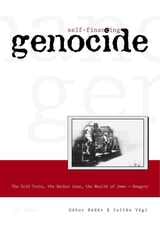
Self-Financing Genocide
The Gold Train, the Becher Case and the Wealth of Hungarian JewsGábor Kádár
Central European University Press, 2004
Discusses the process of the economic annihilation of the Jews in Hungary, who– from the economic point of view – were more influential than any other Jewish community in Europe. Following the German occupation in March 1944 the collaborating Hungarian government attempted to assert its claim concerning the complete confiscation of Jewish assets at all stages of the road leading to the extermination camps. The cooperation with the Germans proved to be the most problematic in this area.
The story of the Jewish Gold Train is a relatively small but all the more emblematic chapter of the economic annihilation. The circumstances of the freight’s assembling, the German-Hungarian conflicts concerning the train, the looting attempts, the fate of the assets seized by the Allies (double victimization of the survivors) provide the reader with an insight into the history of the repeated looting of the Hungarian Jewry
The book analyzes the role played by SS-Obersturmbannführer Kurt Becher, one of the most controversial and mysterious figures in the Hungarian and universal history of the Holocaust. Becher, delegated to Hungary by Himmler, administered and benefited from the confiscation of an enormous amount of Jewish assets.

Sensus Communis
Vico, Rhetoric, and the Limits of RelativismJohn D. Schaeffer
Duke University Press, 1990
In extended commentaries on Gadamer, the Gadamer/Habermas debate, and Derrida, Schaeffer shows that Vico offers the possibility of analyzing social phenomena and constellations of power from within the humanist rhetorical tradition. Vico’s achievements have powerful implications for relating ethics and hermeneutics to the world of concrete social practice, particularly in an age in which the electronic media have replaced print as the primary means of communication and in which a “secondary orality” (a cast of mind similar to that of nonliterate peoples) is appearing within our literate civilization.

Separated by Worlds
Letters from Nazi Germany to a Distant SonFiona Burdette
Rutgers University Press, 2027
In 1937, Josef and Marie Baum, of Bamberg, Germany, sent their seventeen-year-old son Kurt to begin a new life in America. Their letters, provided here in both the original German and English translation, recount the story of this middle-class Jewish family during the Nazi era. Kurt’s struggles to adapt to his new circumstances were met with little understanding from his parents, who were enduring a steadily worsening existence at the hands of the Nazis. The father’s desperate pleas prior to his forced deportation and murder constitute a final rupture in this poignant story.
Bridging the Holocaust experience from both sides of the Atlantic, Separated by Worlds sheds light both on life in Nazi Germany and on the refugee experience in the United States. Unlike traditional exile literature focused on intellectual and cultural elites, the book documents the experiences of average citizens navigating escape and assimilation. The fifty letters at the center of the book, which communicate the parents’ needs, fears, and hopes to their son, offer an unusually intimate window into daily life under Nazi rule. The book is richly illustrated, and the letters are annotated and contextualized by several essays.
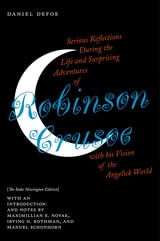
Serious Reflections During the Life and Surprising Adventures of Robinson Crusoe with his Vision of the Angelick World
The Stoke Newington EditionDaniel Defoe
Bucknell University Press, 2022

Service as Mandate
How American Land-Grant Universities Shaped the Modern World, 1920–2015Edited by Alan I Marcus
University of Alabama Press, 2015
From their founding, land-grant schools have provided educational opportunities to millions, producing many of the nation’s scientific, technical, and agricultural leaders and spawning countless technological and agricultural innovations. Nevertheless, their history has not always been smooth or without controversy or setbacks. These vital centers of learning and research have in fact been redefined and reconceptualized many times and today bear only a cursory resemblance to their original incarnations.
The thirteen essays in this collection explore such themes as the emphasis on food science and home economics, the country life movement, the evolution of a public research system, the rise of aerospace engineering, the effects of the GI Bill, the teaching of military science, the sustainable agriculture movement, and the development of golf-turf science. Woven together, these expertly curated scenes, vignettes, and episodes powerfully illustrate these institutions’ ability to flex and adapt to serve the educational needs of an ever-changing American citizenry.
By dint of their mission to remedy social, economic, and technical problems; to improve standards of living; and to enhance the quality of life, land-grant universities are destined and intended to be agents of change—a role that finds them at times both celebrated and hotly contested, even vilified. A readable and fascinating exploration of land-grant universities, Service as Mandate offers a vital exploration of these dynamic institutions to educators, policy makers, students, and the wider communities that land-grant universities serve.
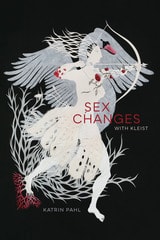
Sex Changes with Kleist
Katrin Pahl
Northwestern University Press, 2019
Focusing on the theatricality of Kleist’s interventions in the performance of gender, sexuality, and emotion and examining how his dramatic texts unhinge major tenets of classical European theater, Sex Changes with Kleist is vital reading for anyone interested in queer studies, feminist studies, performance studies, literary studies, or emotion studies. This book changes our understanding of Kleist and breathes new life into queer thought.

Sex between Body and Mind
Psychoanalysis and Sexology in the German-speaking World, 1890s-1930sKatie Sutton
University of Michigan Press, 2019
This is the first book to closely examine vital encounters among this era’s German-speaking researchers across their emerging professional and disciplinary boundaries. Although psychoanalysis was often considered part of a broader “sexual science,” sexologists increasingly distanced themselves from its mysterious concepts and clinical methods. Instead, they turned to more pragmatic, interventionist therapies—in particular, to the burgeoning field of hormone research, which they saw as crucial to establishing their own professional relevance. As sexology and psychoanalysis diverged, heated debates arose around concerns such as the sexual life of the child, the origins and treatment of homosexuality and transgender phenomena, and female frigidity. This new story of the emergence of two separate approaches to the study of sex demonstrates that the distinctions between them were always part of a dialogic and competitive process. It fundamentally revises our understanding of the production of modern sexual subjects.
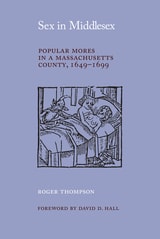
Sex in Middlesex
Popular Mores in a Massachusetts County, 1649-1699Roger Thompson
University of Massachusetts Press, 1986
Drawing on an extraordinary wealth of court records from Middlesex County of the Colony and Province of Massachusetts Bay, Sex in Middlesex offers a richly revisionist account of social and moral life in seventeenth-century New England. Social historian Roger Thompson brings to life the forgotten men and women of colonial Massachusetts to challenge some of the most entrenched assumptions about Puritan society. Examining cases of fornication, adultery, breach of promise, premarital pregnancy, and sexual deviance recorded between 1649 and 1699, Thompson argues that the Puritan social system was far less rigid, and the relations between the sexes far less coercively regulated, than the dominant historiographical tradition, shaped by scholars such as Perry Miller and Lawrence Stone, has suggested.
Rather than a community defined by patriarchal tyranny and punitive moral control, Thompson discovers in the Middlesex records a society characterized by a striking degree of tolerance, mutual regard, and practical common sense, animated by a genuinely popular Puritan piety. The goal of the courts was not punishment and exclusion, but confession, reform, and the reintegration of offenders into the community. Structured with methodological rigor and written with narrative verve, Sex in Middlesex is at once a work of quantitative social history and a gallery of vivid individual portraits.
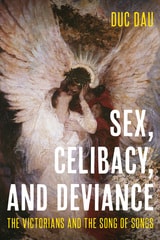
Sex, Celibacy, and Deviance
The Victorians and the Song of SongsDuc Dau
The Ohio State University Press, 2024
Sex, Celibacy, and Deviance is the first major study to explore the Song of Songs (or Song of Solomon) in Victorian literature and art. As the Bible’s only erotic poem, the Song of Songs is the canonical Judeo-Christian book about love, furnishing the Victorians with an authoritative and literary language for love, marriage, sex, mourning, and religious celibacy.
Duc Dau adopts a queer and feminist lens to consider how Victorians employed and interpreted the Song of Songs in their work. How did writers and artists fashion and, most importantly, challenge the norms of gender, romantic love, and marriage? Spanning the early Victorian era through the first two decades of the twentieth century, Sex, Celibacy, and Deviance considers the works of Charlotte Brontë, Thomas Hardy, Christina Rossetti, John Gray, Michael Field, Edward Burne-Jones, and Simeon Solomon alongside two lesser-known figures: Irish-born Scottish artist Phoebe Anna Traquair and the Catholic religious leader Augusta Theodosia Drane. By addressing the relevance of the Song of Songs in light of shifting and conflicting religious and social contexts, Dau provides a fresh perspective on Victorian literature, religion, and culture.
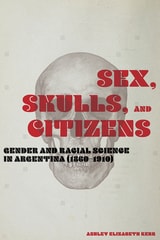
Sex, Skulls, and Citizens
Gender and Racial Science in Argentina (1860-1910)Ashley Elizabeth Kerr
Vanderbilt University Press, 2020
PROSE Awards Subject Category Finalist—Biological Anthropology, Ancient History, and Archaeology, 2021
Best Nineteenth-Century Book Award, Latin American Studies Association Nineteenth-Century Section, 2021
Analyzing a wide variety of late-nineteenth-century sources, Sex, Skulls, and Citizens argues that Argentine scientific projects of the era were not just racial encounters, but were also conditioned by sexual relationships in all their messy, physical reality.
The writers studied here (an eclectic group of scientists, anthropologists, and novelists, including Estanislao Zeballos, Lucio and Eduarda Mansilla, Ramón Lista, and Florence Dixie) reflect on Indigenous sexual practices, analyze the advisability and effects of interracial sex, and use the language of desire to narrate encounters with Indigenous peoples as they try to scientifically pinpoint Argentina's racial identity and future potential.
Kerr's reach extends into history of science, literary studies, and history of anthropology, illuminating a scholarly time and place in which the lines betwixt were much blurrier, if they existed at all.
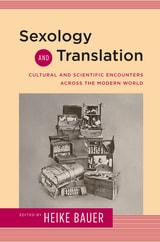
Sexology and Translation
Cultural and Scientific Encounters across the Modern WorldHeike Bauer
Temple University Press, 2015
Sexology and Translation is the first study of the contemporaneous emergence of sexology in Europe, Asia, and the Middle East. Heike Bauer and her contributors—historians, literary and cultural critics, and translation scholars—address the intersections between sexuality and modernity in a range of contexts during the period from the 1880s to the 1930s.
From feminist sexualities in modern Japan to Magnus Hirschfeld’s affective sexology, this book offers compelling new insights into how sexual ideas were formed in different contexts via a complex process of cultural negotiation. By focusing on issues of translation—the dynamic process by which ideas are produced and transmitted—the essays in Sexology and Translation provide an important corrective to the pervasive idea that sexuality is a “Western” construct that was transmitted around the world.
This volume deepens understanding of how the intersections between national and transnational contexts, between science and culture, and between discourse and experience, shaped modern sexuality.
Sexual Violence against Jewish Women during the Holocaust
Edited by Sonja M. Hedgepeth and Rochelle G. Saidel
Brandeis University Press, 2010

Sexual Violence in Asia and Eastern Europe
The Silent Aftermaths of World War IIJoohee Kim
Central European University Press, 2027

Shadows of Treblinka
Miriam Kuperhand and Saul Kuperhand
University of Illinois Press, 1998
will move and inform generations. As we lose eyewitnesses to this ultimate
horror, the Kuperhands present us with an elegantly restrained, yet hard-hitting,
Kaddish to Polish Jewry.
Miriam was the daughter of a prosperous furrier; Saul was the son of
a poor shoemaker. Miriam was sixteen when she and her brother roamed the
wild countryside of Poland, searching for food and shelter--and for their
parents. Saul was only a few years older when he watched the smoke rising
from the crematoria and knew that his parents, sister, and eight brothers
were gone forever. Miriam lived by hiding; Saul lived by escaping from
the camp.
The authors emphasize the essential role that Polish Christians played
in their survival and stress that wit, courage, faith, luck, and even
a strong will to live were worthless without their help.
The travail of their survival is wrenching yet comforting, tragic yet
upbeat, cinematic yet intimate. Shadows of Treblinka will haunt
and inspire its readers.
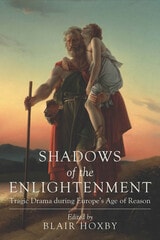
Shadows of the Enlightenment
Tragic Drama during Europe’s Age of ReasonEdited by Blair Hoxby
The Ohio State University Press, 2022
Shakespeare and Contemporary Fiction
Theorizing Foundling and Lyric PlotsBarbara L. Estrin
University of Delaware Press, 2012
In the first book to use fiction as theory, Barbara L. Estrin reverses chronological direction, beginning with contemporary novels to arrive at a re-visioned Shakespeare, uncovering a telling difference in the stories that script us and that influence our political unconscious in ways that have never been explored in literary-critical interpretations. Describing the animus against foreign blood, central to the dynamic of the foundling and lyric plots that form the nexus of her study, Estrin describes how late modern writers change those plots. Reading backward through the theoretical lens of their revisions allows us to rethink the Shakespeare we thought we knew. That innovative methodology, in turn, encourages us to read forward again with different tellings, ones that challenge the mythological homogeneity of the traditional classifications and that suggest new formulaic paradigms.
With close readings of four contemporary novels and three Shakespeare plays, Estrin identifies the cultural walls that contribute to political gate-keeping as she chronicles the connection between plot variations and gender revisionism in the work of Caryl Phillips, Liz Jensen, Anne Michaels, and W.G. Sebald, as well as two film-makers (Mona Hatoum and Mieke Bal) who demonstrate an understanding that mythical repercussions prove dangerous in the twentieth and twenty-first centuries even as they suggest how the heritage shaping their work, and to which they are themselves drawn, in turn proposes an alternative Shakespeare, one who frees us to ask other questions: At the time that the nation state was beginning to coalesce, what does Shakespeare’s frequent use of the foundling plot and his significant variations portend? How does his infusion of a revised lyric dynamic in The Merchant of Venice, Othello and The Winter’s Tale change our reading of plays where the two plots coalesce as they do in the contemporary novels that shape Estrin’s late modern interpretations? All the works in this study share the underlying premise that the connection between cultural origins and political destinies is reciprocal and that it is necessary and possible to transform the constructs—in memory and imagination—that continue to shape our lives.
Published by University of Delaware Press. Distributed worldwide by Rutgers University Press.

Shakespeare's Folktale Sources
Charlotte Artese
University of Delaware Press, 2015
Published by University of Delaware Press. Distributed worldwide by Rutgers University Press.
Shattering the Self in Early Modern English Verse
Gender, Sex, and Queerness Beyond the HumanGina Filo
Northwestern University Press, 2026
Rejecting the ideals of stability and sexual mastery demanded of masculine subjects, early modern English poets threw the limits of bodies and selves into question to embrace erotic experiences of genderqueer and transspecies embodiment and affiliation. Through close readings of still-canonical and lesser-read writers including William Shakespeare, John Donne, and Thomas Traherne, Gina Filo shows how these experimental encounters at the limits of the human were inextricable parts of the early modern literary and sexual imaginaries.
In its exploration of nonnormative forms of erotic attachment and embodiment, Shattering the Self in Early Modern English Verse: Gender, Sex, and Queerness Beyond the Human contributes to the burgeoning fields of early modern trans and ecocritical studies while also drawing on contemporary queer theory. Filo neither seeks to naively recuperate a fantasized past nor cedes relationality, sociality, or generativity to the normative. Instead, she shows how the embrace of erotic possibility, flexible, unstable subjectivities, and querying of the limits of “the human” were core features of early modern poetics, reconfiguring our understanding of English literary history and queer relationality today.