Results by title
754 books match the query 'Native American Studies' and 56 start with s
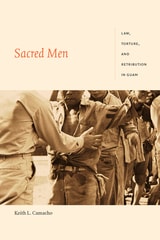
Sacred Men
Law, Torture, and Retribution in GuamKeith L. Camacho
Duke University Press, 2019
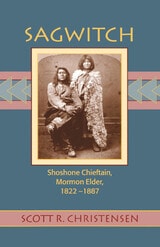
Sagwitch
Shoshone Chieftan, Mormon Elder 1822-1887Scott Christensen
Utah State University Press, 1999
The Northwestern Shoshone knew as home the northern Great Salt Lake, Bear River, Cache, and Bear Lake valleys of northern Utah. Sagwitch was born at a time when his people traded with the mountain men. In the late 1850s, wagons brought Mormon farmers to settle in Cache Valley, the Northwestern Shoshone heartland. Emigrants and settlers reduced Shoshone access to traditional village sites and food resources. Relationships with the Mormons were mostly good but often strained, and the Shoshone treatment of migrants, who now traveled north and south as well as west and east through the area, was increasingly opportunistic. It only took a few violent incidents for a zealous army colonel to seek severe punishment of the Northwestern Shoshone on a winter morning in 1863. The Bear River Massacre was among the bloodiest engagements of America's Indian wars. Hundreds of Shoshone, including Sagwitch's wife and two sons, died; Sagwitch was wounded but escaped. The band was shattered, other chiefs dead.
The following years were very hard for the survivors. The federal government negotiated a treaty with them but failed to get Sagwitch's signature when, en route to the sessions, he was arrested and then wounded by a white assassin. With the world around him changed, Sagwitch sought accommodation with the most immediate threat to his people's traditional way of survival—the Mormons occupying the Shoshone's valleys.
This, then, is also the story of the conversion of Sagwitch and his band to the Mormon Church. Though not without problems, that conversion was long lasting and thorough. Sagwitch and other Shoshone would demonstrate in important ways their new religious devotion. With the assistance of Mormon leaders, they established the Washakie community in northern Utah. Though efforts to secure a land base had an uneven history, they partly succeeded, and the story of these Shoshone's attempts at rural farming diverged significantly from what happened on government reservations. When Sagwitch died, his death went almost unnoticed outside of Washakie, but his children and grandchildren continued to be important voices among a people who, after experiencing near annihilation, survived in the new world into which Sagwitch led them.
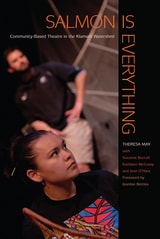
Salmon Is Everything
Community-Based Theatre in the Klamath WatershedTheresa May with Susanne Burcell, Kathleen McCovey, and Jean O'Hara
Oregon State University Press, 2014
Salmon Is Everything simultaneously illuminates the logistics of a crisis in the third largest watershed in the Pacific Northwest—the premature death of more than 30,000 salmon on the Lower Klamath River in 2002—and documents what happened when one community decided to use art to amplify the experiences of its members. The fish kill had unprecedented impact throughout the watershed, and for many tribal communities it signified an ongoing loss of traditional cultural practices. But in the political and ecological upheaval that followed, the role of salmon in tribal life went largely unacknowledged, which inspired the collaboration between May and members of the Yurok, Hoopa Valley, and Karuk tribes, as well as farmers, ranchers, and others invested in the Klamath watershed.
Salmon is Everything will appeal to readers interested in the environmental and cultural history of the Pacific Northwest and the ecological and civil challenges its communities face. For artists and activists, it’s a useful case study. Salmon is Everything offers a unique interdisciplinary resource for high school and college level courses in environmental studies, Native American studies, and theatre arts education.
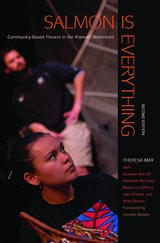
Salmon is Everything
Community-Based Theatre in the Klamath WatershedTheresa May with Susanne Burcell, Kathleen McCovey, and Jean O'Hara
Oregon State University Press, 2018
Salmon Is Everything simultaneously illuminates the logistics of a crisis in the third largest watershed in the Pacific Northwest—the premature death of more than 30,000 salmon on the Lower Klamath River in 2002—and documents what happened when one community decided to use art to amplify the experiences of its members. The fish kill had unprecedented impact throughout the watershed, and for many tribal communities it signified an ongoing loss of traditional cultural practices. But in the political and ecological upheaval that followed, the role of salmon in tribal life went largely unacknowledged, which inspired the collaboration between May and members of the Yurok, Hoopa Valley, and Karuk tribes, as well as farmers, ranchers, and others invested in the Klamath watershed.
Salmon is Everything will appeal to readers interested in the environmental and cultural history of the Pacific Northwest and the ecological and civil challenges its communities face. For artists and activists, it’s a useful case study. Salmon is Everything offers a unique interdisciplinary resource for high school and college level courses in environmental studies, Native American studies, and theatre arts education.
New materials in this second edition include additional essays by Native faculty and actors, an updated introduction by the author, minor textual corrections throughout, and a new online resource guide.
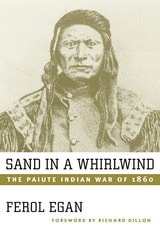
Sand In a Whirlwind, 30th Anniversary Edition
The Paiute Indian War of 1860Ferol Egan
University of Nevada Press, 1985
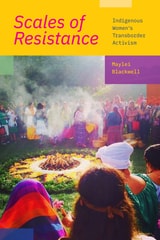
Scales of Resistance
Indigenous Women’s Transborder ActivismMaylei Blackwell
Duke University Press, 2022
Scarlet and Black, Volume Two
Constructing Race and Gender at Rutgers, 1865-1945Kendra Boyd
Rutgers University Press, 2020
To learn more about the work of the Committee on Enslaved and Disenfranchised Population in Rutgers History, visit the project's website at http://scarletandblack.rutgers.edu
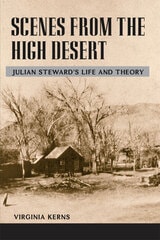
Scenes from the High Desert
JULIAN STEWARD'S LIFE AND THEORYVirginia Kerns
University of Illinois Press, 2002
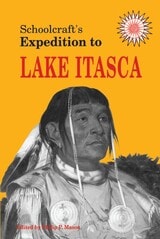
Schoolcraft's Expedition to Lake Itasca
Philip P. Mason
Michigan State University Press, 1993
Scientist, explorer, historian, and Indian agent Henry Rowe Schoolcraft's name must be included in the pantheon of early nineteenth-century adventurers who were in the vanguard of American expansion into the heart of the continent. While some, individuals like William Clark, Meriwether Lewis, John C. Fremont, and Kit Carson did not stop until they reached the Pacific Ocean, others took it as their task to explore the cast, unknown interior; chief among this group was Henry Rowe Schoolcraft. Originally issued by Michigan State University Press in 1958, Schoolcraft's Expedition to Lake Itasca contains a semi-official report of his 1832 trip to the upper Mississippi region. His purposes for exploring the area, now part of Minnesota, were to quell a feud between warring Chippewa and Sioux factions and to locate the Mississippi headwaters. Although he did not stop the fighting, Schoolcraft did discover the river's true source and left us an unsurpassed account of life in the region in the 1830s. Anyone interested in the early white exploration of the upper Midwest should own a copy of this valuable resource.
Schoolcraft's Indian Legends
Mentor L. Williams
Michigan State University Press, 1991
Material presented here is drawn primarily from Henry Rowe Schoolcraft's 1839 edition of Algic Researches—a rare, yet often cited publication. However, stories from two later Schoolcraft collections, Oneota and The Myth of Hiawatha, are also included in an appendix. Thus, a representative view of the entire body of Schoolcraft's published Indian legends is available in a single volume.
With a new forward by Phillip P. Mason, this book is designed to reacquaint America with one of its often-neglected geniuses. It is apparent when studying Schoolcraft's writing that he was clearly one of the first European Americans to recognize the merit and value of the Native American heritage as expressed in oral tradition.
Critics have been divided in their assessment of Schoolcraft's contribution to the collection and preservation of Native American lore. The tide of interpretation has seen Schoolcraft's work achieve an initial popularity, only to be rejected by members of the 1920s intelligentsia, the same individuals who critically embraced (and seldom properly attributed) Henry Wadsworth Longfellow's adaptations of Schoolcraft's work. However, Schoolcraft received renewed attention, first in the 1950s, when Williams undertook to collect and edit the original volumes, and again today when the value and validity of the Native American oral tradition has, once again, been "discovered."
Schoolcraft's Narrative Journal of Travels
Mentor L. Williams
Michigan State University Press, 1992
This important Henry Rowe Schoolcraft work, first issued by Michigan State University Press in 1953, is now available as the second title in MSU Press's Schoolcraft Series. The book was originally published in 1821 under the long and pretentious title Narrative Journey of travels through the Northwestern Regions of the United States, extending from Detroit through the Great Chain of American Lakes to the Sources of the Mississippi River, Performed as a Member of the expedition under Governor Cass, in the Year 1820; it recounts Schoolcraft's participation in the John C. Calhoun-sponsored 1820 expedition to explore the cast, uncharted territory stretching from the upper Great Lakes into what is now northern Minnesota.
This volume, a marvelous blend of reportage, scientific findings, and the author's personal observations, contains a wealth of information about geography and topography woven together with vivid descriptions of scenic beauty, Native American culture, and day-to-day life as a member of an exploring expedition.
Schoolcraft's Ojibwa Lodge Stories
Life on the Lake Superior FrontierPhilip P. Mason
Michigan State University Press, 1997
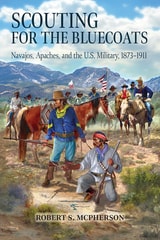
Scouting for the Bluecoats
Navajos, Apaches, and the U.S. Military, 1873–1911Robert S. McPherson
University Press of Colorado, 2022
—Kent Powell, Senior historian at Utah Division of State History and editor of Utah State Historical Quarterly (retired)
"Scouting for the Bluecoats examines the important role that Navajos played in military operations during the last quarter of the nineteenth and beginning of the twentieth centuries. Unlike the famous Navajo code talkers of World War II, little has been written about these men who served in some of the most challenging and noteworthy struggles against the Apaches. Until now, their story has been forgotten. Navajo skills in understanding and tracking a wily foe across an inhospitable landscape proved to be essential elements in ending the Apache wars. For those interested in the recruitment and deployment of the scouts, measures taken to counter enemy tactics, and the challenge of obtaining recognition for their service, this book is an invaluable source and a must-read for any serious scholar of Navajo history."
—Ronald P. Maldonado, Tribal historic preservation officer (retired), Navajo Nation

Seeing Red—Hollywood's Pixeled Skins
American Indians and FilmLeAnne Howe
Michigan State University Press, 2013
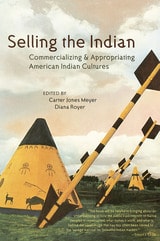
Selling the Indian
Commercializing and Appropriating American Indian CulturesCarter Jones Meyer
University of Arizona Press, 2001
For more than a hundred years, outsiders enamored of the perceived strengths of American Indian cultures have appropriated and distorted elements of them for their own purposes—more often than not ignoring the impact of the process on the Indians themselves. This book contains eight original contributions that consider the selling of American Indian culture and how it affects the Native community. It goes beyond studies of “white shamanism” to focus on commercial ventures, challenging readers to reconsider how Indian cultures have been commercialized in the twentieth century.
Some selections examine how Indians have been displayed to the public, beginning with a “living exhibit” of Cocopa Indians at the 1904 Louisiana Purchase Exposition and extending to contemporary stagings of Indian culture for tourists at Tillicum Village near Seattle. Other chapters range from the Cherokees to Puebloan peoples to Indians of Chiapas, Mexico, in an examination of the roles of both Indians and non-Indian reformers in marketing Native arts and crafts.
These articles show that the commercialization and appropriation of American Indian cultures have been persistent practices of American society over the last century and constitute a form of cultural imperialism that could contribute to the destruction of American Indian culture and identity. They offer a means toward understanding this complex process and provide a new window on Indian-white interactions.
CONTENTS
Part I: Staging the Indian
1. The “Shy” Cocopa Go to the Fair, Nancy J. Parezo and John W. Troutman
2. Command Performances: Staging Native Americans at Tillicum Village, Katie N. Johnson and Tamara Underiner
3. Savage Desires: The Gendered Construction of the American Indian in Popular Media, S. Elizabeth Bird
4. “Beyond Feathers and Beads”: Interlocking Narratives in the Music and Dance of Tokeya Inajin (Kevin Locke), Pauline Tuttle
Part II: Marketing the Indian
5. “The Idea of Help”: White Women Reformers and the Commercialization of Native American Women’s Arts, Erik Trump
6. Saving the Pueblos: Commercialism and Indian Reform in the 1920s, Carter Jones Meyer
7. Marketing Traditions: Cherokee Basketry and Tourist Economies, Sarah H. Hill
8. Crafts, Tourism, and Traditional Life in Chiapas, Mexico: A Tale Related by a Pillowcase, Chris Goertzen
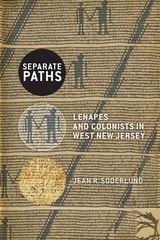
Separate Paths
Lenapes and Colonists in West New JerseyJean R. Soderlund
Rutgers University Press, 2022
Separate Paths: Lenapes and Colonists in West New Jersey is the first cross-cultural study of European colonization in the region south of the Falls of the Delaware River (now Trenton). Lenape men and women welcomed their allies, the Swedes and Finns, to escape more rigid English regimes on the west bank of the Delaware, offering land to establish farms, share resources, and trade. In the 1670s, Quaker men and women challenged this model with strategies to acquire all Lenape territory for their own use and to sell as real estate to new immigrants. Though the Lenapes remained sovereign and “old settlers” retained their Swedish Lutheran religion and ethnic autonomy, the West Jersey proprietors had considerable success in excluding Lenapes from their land. The Friends believed God favored their endeavor with epidemics of smallpox and other European diseases that destroyed Lenape families and communities. Affluent Quakers also introduced enslavement of imported Africans and Natives—and the violence that sustained it—to a colony they had promoted with the liberal West New Jersey Concessions of 1676-77. Thus, they defied their prior experience of religious persecution and their principles of peaceful resolution of conflict, equality of everyone before God, and the golden rule to treat others as you wish to be treated. Despite mutual commitment to peace by Lenapes, old settlers, and Friends, Quaker colonization had similar results to military conquests of Natives by English in Virginia and New England, and Dutch in the Hudson Valley and northern New Jersey. Still, in alliance with old settlers, Lenape communities survived in areas outside the focus of English colonization, in the Pine Barrens, upper reaches of streams, and Atlantic shore.
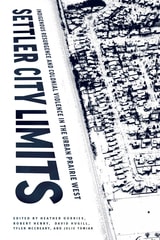
Settler City Limits
Indigenous Resurgence and Colonial Violence in the Urban Prairie WestHeather Dorries
Michigan State University Press, 2019
Settler Militarism
World War II in Hawai'i and the Making of US EmpireJuliet Nebolon
Duke University Press, 2024
Shem Pete's Alaska
The Territory of the Upper Cook Inlet Dena'inaJames Kari and James A. Fall
University of Alaska Press, 2003
This expanded edition of Shem Pete's Alaska presents 973 named places in 16 drainage-based chapters. The names form a reconstructed network from the vantage points of the life experiences of Shem Pete and other Dena'ina and Ahtna speakers. It is annotated with comments and stories by Shem Pete and more than 50 other contributors, plus historic references, vignettes, copious photographs, historic maps, and shaded-relief placename maps. The authors provide perspective on Dena'ina language and culture, as well as a summary of Dena'ina geographic knowledge and placename research methodology.
This beautifully produced edition is a treasure for all Alaskans and for anyone interested in the "personal connectedness to a beautiful land" voiced by Dena'ina elders.
From the foreword by William Bright: "Shem Pete's experience and wisdom as an elder of the Dena'ina Athabascan Indians shine through this work like the sun—as do the skill and devotion of James Kari, James Fall, and the other Dena'ina, Ahtna, Alaska Native, and Anglo-American people who contributed to making the book a reality. . . . We have a volume that offers a vivid picture of Native Alaskan culture, history, geography, and language, with added glimpses of oral literature and music. . . . All Native American Peoples, indeed, all traditional communities in the world would be fortunate and proud to have this kind of record of their life and culture."
Shoshone Tales
Anne Smith
University of Utah Press, 1993
The tales in this volume are set primarily in the "Time when Animals Were People," the legendary past when animals had the power of speech and established human customs though their adventures (and misadventures). Trickster tales figure prominently, with obscenity and blunt delivery common humorous devices. These tale were prized for their educational as well as entertainment value, and storytelling ability was highly respected. Thus, Smith was careful to credit individual storytellers of their versions of favorite Basin tales, avoiding the dryness of generic anthologies.
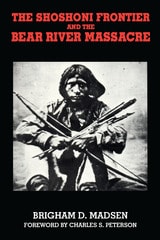
Shoshoni Frontier and Bear River Massacre
Brigham Madsen
University of Utah Press, 1985
Bear River was the culmination of events from nearly two decades of Indian-white interaction. The Shoshoni homelands encompassed a huge expanse of territory and were traversed by the main paths of western travel, forcing Indian-white encounters. Initially friendly and accommodating to white travelers in the 1840s, by the late 1850s resentment soared among the Indians as they were killed and their food stocks were consumed by emigrants and their livestock. The process of white appropriation of Indian lands reached crisis proportions in the Far West and Great Basin before it did on the Great Plains.
In the historiography of western Indians, few have appreciated the role of tribes inhabiting the regions of along the Oregon and California Trails. Madsen makes a compelling argument that precedents were established that were followed again and again on subsequent western Indian frontiers, offering a new view of early encounters in the Trans-Mississippi West. This detailed narrative of the events and conflicts that culminated in the massacre remains the definitive account of this bloody chapter in United States-Native American relations.

Silent Victims
Hate Crimes Against Native AmericansBarbara Perry
University of Arizona Press, 2008
Silent Victims is a unique contribution to the literature on hate crime. Because most extant literature treats hate crimes—even racial violence—rather generically, this work breaks new ground with its findings. For this book, Perry interviewed nearly 300 Native Americans and gathered additional data in three geographic areas: the Four Corners region of the U.S. Southwest, the Great Lakes, and the Northern Plains. In all of these locales, she found that bias-related crime oppresses and segregates Native Americans.
Perry is well aware of the history of colonization in North America and its attendant racial violence. She argues that the legacy of violence today can be traced directly to the genocidal practices of early settlers, and she adds valuable insights into the ways in which “Indians” have been constructed as the Other by the prevailing culture. Perry’s interviews with Native Americans recount instances of appalling treatment, often at the hands of law enforcement officials. In her conclusion, Perry draws from her research and interviews to suggest ways in which Native Americans can be empowered to defend themselves against all forms of racist victimization.

Sins of the Shovel
Looting, Murder, and the Evolution of American ArchaeologyRachel Morgan
University of Chicago Press, 2023
American archaeology was forever scarred by an 1893 business proposition between cowboy-turned-excavator Richard Wetherill and socialites-turned-antiquarians Fred and Talbot Hyde. Wetherill had stumbled upon Mesa Verde’s spectacular cliff dwellings and started selling artifacts, but with the Hydes’ money behind him, well—there’s no telling what they might discover. Thus begins the Hyde Exploring Expedition, a nine-year venture into Utah’s Grand Gulch and New Mexico’s Chaco Canyon that—coupled with other less-restrained looters—so devastates Indigenous cultural sites across the American Southwest that Congress passes first-of-their-kind regulations to stop the carnage. As the money dries up, tensions rise, and a once-profitable enterprise disintegrates, setting the stage for a tragic murder.
Sins of the Shovel is a story of adventure and business gone wrong and how archaeologists today grapple with this complex heritage. Through the story of the Hyde Exploring Expedition, practicing archaeologist Rachel Morgan uncovers the uncomfortable links between commodity culture, contemporary ethics, and the broader political forces that perpetuate destructive behavior today. The result is an unsparing and even-handed assessment of American archaeology’s sins, past and present, and how the field is working toward atonement.
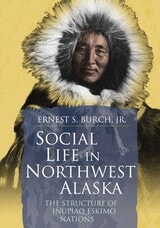
Social Life in Northwest Alaska
The Structure of Inupiaq Eskimo NationsErnest Burch Jr.
University of Alaska Press, 2006
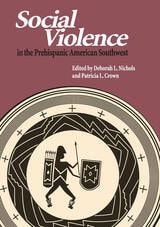
Social Violence in the Prehispanic American Southwest
Edited by Deborah L. Nichols and Patricia L. Crown
University of Arizona Press, 2008
CONTENTS
1. Introduction
Patricia Crown and Deborah Nichols
2. Dismembering the Trope: Imagining Cannibalism in the Ancient Pueblo World
Randall H. McGuire and Ruth Van Dyke
3. An Outbreak of Violence and Raiding in the Central Mesa Verde Region in the 12th Century AD
Brian R. Billman
4. Chaco Horrificus?
Wendy Bustard
5. Inscribed in the Body, Written in Bones: The Consequences of Social Violence at La Plata
Debra L. Martin, Nancy Akins, Bradley Crenshaw, and Pamela K. Stone
6. Veneration or Violence: A Study of Variations in Patterns of Human Bone Modification at La Quemada
Ventura R. Pérez, Ben A. Nelson, and Debra L. Martin
7. Witches, Practice, and the Context of Pueblo Cannibalism
William H. Walker
8. Explanation vs. Sensation: The Discourse of Cannibalism at Awat’ovi
Peter Whiteley
9. Devouring Ourselves
George J. Armelagos
References Cited
About the Contributors
Index
Societies in Eclipse
Archaeology of the Eastern Woodlands Indians, A.D. 1400-1700Edited by David S. Brose, C. Wesley Cowan, and Robert C. Mainfort
University of Alabama Press, 2001
After establishing the distribution of prehistoric and historic populations from the northeastern Appalachian forests to the southern trans-Mississippian prairies, the contributors consider the archaeological and cultural record of several specific groups, including Mohawk and Onondaga, Monacan, Coosa, and Calusa. For each, they present new evidence of cultural changes prior to European contact, including populations movements triggered by the Little Ice Age (AD 1550–1770), shifting exchange and warfare networks, geological restriction of effective maize subsistence, and use of empty hunting territories as buffers between politically unstable neighbors. The contributors also trace European influences, including the devastation caused by European-introduced epidemics and the paths of European trade goods that transformed existing Native American-exchange networks.
While the profound effects of European explorers, missionaries, and traders on Eastern Woodlands tribes cannot be denied, the archaeological evidence suggests that several indigenous societies were already in the process of redefinition prior to European contact. The essays gathered here show that, whether formed in response to natural or human forces, cultural change may be traced through archaeological artifacts, which play a critical role in answering current questions regarding cultural persistence.
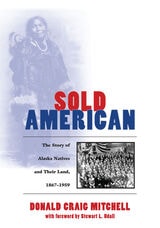
Sold American
The Story of Alaska Natives and Their Land 1867-1959Donald Craig Mitchell
University of Alaska Press, 2003
Don Mitchell's companion volume, Take My Land, Take My Life, concludes that story by describing the events that in 1971 resulted in Congress's enactment of the Alaska Native Claims Settlement Act, the most generous aboriginal land claims settlement in the nation's history. Insightful and drawn from years of painstaking research of primary source materials, Sold American and Take My Land, Take My Life are an indispensable resource for readers who are interested in the history of the nation's largest state and of the federal government's involvement with Alaska's indigenous peoples.

Songprints
The Musical Experience of Five Shoshone WomenJudith Vander
University of Illinois Press, 1988
Perspectives on the twentieth-century lives of Shoshone women musicians
The musical lives of Native American women have experienced a century of cultural change and constancy. Judith Vander takes readers to the Shoshone of Wyoming's Wind River Reservation to meet five generations of Shoshone women. Vander’s conversations with Emily, Angelina, Alberta, Helene, and Lenore capture their distinct personalities as they share their thoughts, feelings, and attitudes toward their music.
Vander transcribes and analyzes seventy-five songs that the women sing. Each woman possesses a unique songprint—a repertoire distinctive to her culture, age, and personality. As Vander shows, the context of Shoshone social and religious ceremonies offers insights into the rise of the Native American Church, the emergence and popularity of the contemporary powwow, and the changing, enlarging role of women. In addition, two eyewitnesses accounts of Ghost Dance songs and performances elaborate on the function and meaning of the Ghost Dance among the Wind River Shoshones.
2nd Place from the Pauline Alderman Prize for New Scholarship on Women in Music from the International Congress on Women in Music. Winner of an ASCAP Deems Taylor Award, 1989.
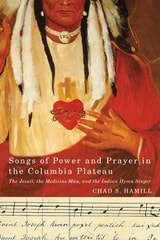
Songs of Power and Prayer in the Columbia Plateau
The Jesuit, the Medicine Man, and the Indian Hymn SingerChad S. Hamill
Oregon State University Press, 2012
In Chad Hamill’s narrative, a Jesuit and his two Indian “grandfathers”—one a medicine man, the other a hymn singer—engage in a collective search for the sacred. The priest becomes a student of the medicine man. The medicine man becomes a Catholic. The Indian hymn singer brings indigenous songs to the Catholic mass. Using song as a thread, these men weave together two worlds previously at odds, realizing a promise born two centuries earlier within the prophecies of Circling Raven and Shining Shirt.
Songs of Power and Prayer reveals how song can bridge worlds: between the individual and Spirit, the Jesuits and the Indians. Whether sung in an indigenous ceremony or adapted for Catholic Indian services, song abides as a force that strengthens Native identity and acts as a conduit for power and prayer.
A First Peoples: New Directions in Indigenous Studies book
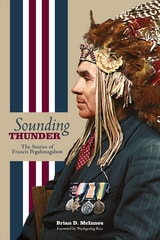
Sounding Thunder
The Stories of Francis PegahmagabowBrian D. McInnes
Michigan State University Press, 2016
Francis Pegahmagabow’s stories describe many parts of his life and are characterized by classic Ojibwe narrative. They reveal aspects of Francis’s Anishinaabe life and worldview. Interceding chapters by Brian McInnes provide valuable cultural, spiritual, linguistic, and historical insights that give a greater context and application for Francis’s words and world. Presented in their original Ojibwe as well as in English translation, the stories also reveal a rich and evocative relationship to the lands and waters of Georgian Bay.
In Sounding Thunder, Brian McInnes provides a new perspective on Pegahmagabow and his experience through a unique synthesis of Ojibwe oral history, historical record, and Pegahmagabow family stories.
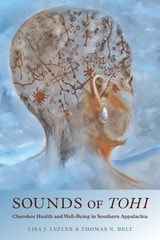
Sounds of Tohi
Cherokee Health and Well-Being in Southern AppalachiaLisa J. Lefler and Thomas N. Belt
University of Alabama Press, 2022
Dialogue between a medical anthropologist and a Cherokee linguist about health, well-being, and environmental issues
Sounds of Tohi: Cherokee Health and Well-Being in Southern Appalachia is the result of almost two decades of work by medical anthropologist Lisa J. Lefler and Cherokee elder and traditionalist Thomas N. Belt. The narrative consists of a dialogue between them that displays traditional Indigenous knowledge as well as the importance of place for two people from cultures and histories that intersect in the mountains of Southern Appalachia. Together, Lefler and Belt decolonize thinking about health, well-being, and environmental issues through the language and experiences of people whose identity is inextricably linked to the mountains and landscape of western North Carolina.
Lefler and Belt discuss several critical cultural concepts that explain the science of relationships with this world, with the spirit world, and with people. They explore tohi, the Cherokee concept of health, which offers a more pervasive understanding of relationships in life as balanced and moving forward in a good way. They converse about the importance of matrilineality, particularly in light of community healing, the epistemologies of Cherokee cosmography, and decolonizing counseling approaches.
The discussions here offer a different way of approaching the issues that face Americans in this difficult time of division. Lefler and Belt share their urgency to take action against the wholesale exploitation of public lands and the shared environment, to work to perpetuate tribal languages, to preserve the science that can make a difference in how people treat one another, and to create more forums that are inclusive of Native and marginalized voices and that promote respect and appreciation of one another and the protection of sacred places. Throughout, they rely on the preservation of traditional knowledge, or Native science, via Native language to provide insight as to why people should recognize a connection to the land.
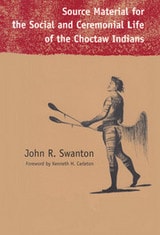
Source Material for the Social and Ceremonial Life of the Choctaw Indians
John Swanton, with a foreword by Kenneth H. Carleton
University of Alabama Press, 2001
Long considered the undisputed authority on the Indians of the southern United States, anthropologist John Swanton published this history as the Smithsonian Institution's Bureau of American Ethnology (BAE) Bulletin 103 in 1931. Swanton's descriptions are drawn from earlier records—including those of DuPratz and Romans—and from Choctaw informants. His long association with the Choctaws is evident in the thorough detailing of their customs and way of life and in his sensitivity to the presentation of their native culture.
Included are descriptions of such subjects as clans, division of labor between sexes, games, religion, war customs, and burial rites. The Choctaws were, in general, peaceful farmers living in Mississippi and southwestern Alabama until they were moved to Oklahoma in successive waves beginning in 1830, after the treaty of Dancing Rabbit Creek.
This edition includes a new foreword by Kenneth Carleton placing Swanton's work in the context of his times. The continued value of Swanton's original research makes Source Material the most comprehensive book ever published on the Choctaw people.
Southern Footprints
Exploring Gulf Coast ArchaeologyGregory A. Waselkov and Philip J. Carr
University of Alabama Press, 2024
Unearthing the Gulf Coast’s past—one footprint at a time.
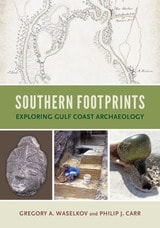
Southern Footprints celebrates more than fifty years of archaeological research along the Gulf Coast by the University of South Alabama and the Center for Archaeological Studies. Archaeologists Gregory A. Waselkov and Philip J. Carr, the former and current directors of the center, present the “greatest hits” that have transformed knowledge of human history on the Alabama and Mississippi Gulf Coast from the Ice Age until recently. Each archaeological site, from surface collections to premiere archaeological preserves, such as Old Mobile and Holy Ground, offers clues to the past.
The chapters in this collection are arranged chronologically and survey the history and archaeology of a wide range of significant sites, including the Gulf Shores canoe canal, Bottle Creek Mounds, Old Mobile, Fort Mims, Spanish Fort, Spring Hill College, and Mobile River Bridge.
Waselkov and Carr take care to acknowledge in these stories populations who have been historically underdocumented, now recognizing the contributions of Native Americans and African Americans that have been uncovered through archaeology. The authors reveal the dire impacts of climate change, environmental disasters, development, and neglect—and convey their urgency to protect these areas of shared history—as a result of the meticulous excavation, analysis, and preservation of artifacts from these sites. Color photographs showcase the archaeology as it unfolds, often with the help of dedicated volunteers. Southern Footprints will serve as an indispensable reference on the rich Gulf Coast heritage for all to appreciate.
Southern Paiute
A PortraitLogan Hebner
Utah State University Press, 2010
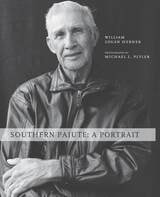
Now little recognized by their neighbors, Southern Paiutes once had homelands that included much of the vast Colorado Plateau, Great Basin, and Mojave Desert. From the Four Corners’ San Juan River to California’s lower Colorado, from Death Valley to Canyonlands, from Capitol Reef to the Grand Canyon, Paiutes lived in many small, widespread communities. They still do, but the communities are fewer, smaller, and mostly deprived of the lands and resources that sustained traditional lives.
To portray a people and the individuals who comprise it, William Logan Hebner and Michael L. Plyler relay Paiute voices and reveal Paiute faces, creating a space for them to tell their stories and stake claim to who they once were and now are.
Sovereign Acts
Contesting Colonialism Across Indigenous Nations and Latinx AmericaEdited by Frances Negrón-Muntaner
University of Arizona Press, 2017
Editor Frances Negrón-Muntaner and the contributors to Sovereign Acts engage in a debate around these questions with surprising results. Moving the idea of sovereignty beyond the narrow confines of the nation-state, beyond the concept of a power that one either has or lacks, this paradigm-shifting work examines the multiple ways that Indigenous nations and U.S. territorial peoples act as sovereign and the possible limits of such sovereign acts within the current globalized context. A valuable contribution to the debate around indigenous and other conceptions of sovereignty, Sovereign Acts goes further than legal frameworks to investigate the relationships among sovereignty, gender, sexuality, representation, and the body.
From activist style and choreography to the politics of recognition, the scholars and artists featured in this unique volume map out how people disrupt modern notions of sovereignty, attempt to redefine what being sovereign means, or seek alternative political vocabularies. Sovereignty is not only, after all, a kingdom and a crown.
CONTRIBUTORS
Michael Lujan Bevacqua
Glen Coulthard
Jennifer Nez Denetdale
Adriana María Garriga-López
Jessica A. F. Harkins
Brian Klopotek
Davianna Pomaika‘i McGregor
Frances Negrón-Muntaner
Yasmin Ramírez
Mark Rifkin
Madeline Román
Stephanie Nohelani Teves
Fa‘anofo Lisaclaire Uperesa

Spaces between Us
Queer Settler Colonialism and Indigenous DecolonizationScott Lauria Morgensen
University of Minnesota Press, 2011
We are all caught up in one another, Scott Lauria Morgensen asserts, we who live in settler societies, and our interrelationships inform all that these societies touch. Native people live in relation to all non-Natives amid the ongoing power relations of settler colonialism, despite never losing inherent claims to sovereignty as indigenous peoples. Explaining how relational distinctions of “Native” and “settler” define the status of being “queer,” Spaces between Us argues that modern queer subjects emerged among Natives and non-Natives by engaging the meaningful difference indigeneity makes within a settler society.
Morgensen’s analysis exposes white settler colonialism as a primary condition for the development of modern queer politics in the United States. Bringing together historical and ethnographic cases, he shows how U.S. queer projects became non-Native and normatively white by comparatively examining the historical activism and critical theory of Native queer and Two-Spirit people.
Presenting a “biopolitics of settler colonialism”—in which the imagined disappearance of indigeneity and sustained subjugation of all racialized peoples ensures a progressive future for white settlers—Spaces between Us newly demonstrates the interdependence of nation, race, gender, and sexuality and offers opportunities for resistance in the United States.
Speaking for the Generations
Native Writers on WritingEdited by Simon J. Ortiz
University of Arizona Press, 1997
Of varied backgrounds, the writers represent Indian heritages and cultures from the Pacific Northwest to the northern plains, from Canada to Guatemala. They are poets, novelists, and playwrights. And although their backgrounds are different and their statements intensely personal, they share common themes of their relationship to the land, to their ancestors, and to future generations of their people. From Gloria Bird's powerful recounting of personal and family history to Esther Belin's vibrant tale of her urban Native homeland in Los Angeles, these writers reveal the importance of place and politics in their lives. Leslie Marmon Silko calls upon the ancient tradition of Native American storytelling and its role in connecting the people to the land. Roberta J. Hill and Elizabeth Woody ponder some of the absurdities of contemporary Native life, while Guatemalan Victor Montejo takes readers to the Mayan world, where a native culture had writing and books long before Europeans came.
Together these pieces offer an inspiring portrait of what it means to be a Native writer in the twentieth century. With passion and urgency, these writers are speaking for themselves, for their land, and for the generations.

Speaking for the People
Native Writing and the Question of Political FormMark Rifkin
Duke University Press, 2021
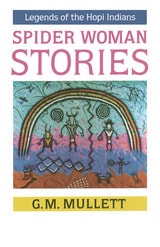
Spider Woman Stories
G. M. Mullett
University of Arizona Press, 1979
"This is a fine introduction to Hopi mythology and values. It recreates an authentic poetic spirit and makes the reader eager to read more Hopi tales." —New Mexico Humanities Review
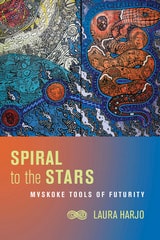
Spiral to the Stars
Mvskoke Tools of FuturityLaura Harjo
University of Arizona Press, 2019
Geographer Laura Harjo demonstrates that Mvskoke communities have what they need to dream, imagine, speculate, and activate the wishes of ancestors, contemporary kin, and future relatives—all in a present temporality—which is Indigenous futurity.
Organized around four methodologies—radical sovereignty, community knowledge, collective power, and emergence geographies—Spiral to the Stars provides a path that departs from traditional community-making strategies, which are often extensions of the settler state. Readers are provided a set of methodologies to build genuine community relationships, knowledge, power, and spaces for themselves. Communities don’t have to wait on experts because this book helps them activate their own possibilities and expertise. A detailed final chapter provides participatory tools that can be used in workshop settings or one on one.
This book offers a critical and concrete map for community making that leverages Indigenous way-finding tools. Mvskoke narratives thread throughout the text, vividly demonstrating that theories come from lived and felt experiences. This is a must-have book for community organizers, radical pedagogists, and anyone wishing to empower and advocate for their community.
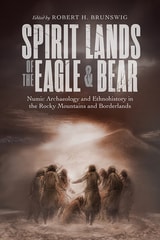
Spirit Lands of the Eagle and Bear
Numic Archaeology and Ethnohistory in the Rocky Mountains and BorderlandsRobert H. Brunswig
University Press of Colorado, 2020
New research into Numic archaeology, ethnohistory, and ethnography is significantly changing the understanding of migratory patterns, cultural interactions, chronology, and shared cultural-religious practices of regionally defined Numic branches and non-Numic populations of the American West. Contributors examine case studies of Ute and Shoshone material culture (ceramics, lithics, features and structures, trade and seasonal migration), chronology (dendrochronology, radiocarbon dating, thermoluminescence), and subsistence systems (hunting camps, game drives, faunal and botanical evidence of food sources). They also delineate different hunter-gatherer “ethnic groups” who co-occupied or interacted within one another’s territories through trade, raiding, or seasonal subsistence migrations, such as the Late Fremont/Ute and the Shoshone or the early Navajo/Ute and the Shoshone.
With a strong emphasis on diverse cases and new and original archaeological, ethnohistoric, and ethnographic lines of evidence, Spirit Lands of the Eagle and Bear interweaves anthropological theory and innovative applications of leading-edge scientific methodologies and technologies. The book presents a cross-section of field, laboratory, and ethnohistoric studies—including indigenous consultation—that explore past, recent, and ongoing developments in Numic cultural history and prehistory. It will be of interest to scholars of Southwestern archaeology, as well as private and government cultural resource specialists and museum staff.
Contributors:
Richard Adams, John Cater, Christine Chady, David Diggs, Rand Greubel, John Ives, Byron Loosle, Curtis Martin, Sally McBeth, Lindsay Montgomery, Bryon Schroeder, Matthew Stirn
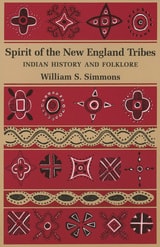
Spirit of the New England Tribes
Indian History and Folklore, 1620–1984William S. Simmons
University Press of New England, 1986

Spirits of Earth
The Effigy Mound Landscape of Madison and the Four LakesRobert A. Birmingham
University of Wisconsin Press, 2010
Stealing Indian Women
Native Slavery in the Illinois CountryCarl J. Ekberg
University of Illinois Press, 2009
Stealing the Gila
The Pima Agricultural Economy and Water Deprivation, 1848-1921David H. DeJong
University of Arizona Press, 2009
This economic vitality did not last, however. As immigrants settled upstream from the Pima villages, they deprived the Indians of the water they needed to sustain their economy. DeJong traces federal, territorial, and state policies that ignored Pima water rights even though some policies appeared to encourage Indian agriculture. This is a particularly egregious example of a common story in the West: the flagrant local rejection of Supreme Court rulings that protected Indian water rights. With plentiful maps, tables, and illustrations, DeJong demonstrates that maintaining the spreading farms and growing towns of the increasingly white population led Congress and other government agencies to willfully deny Pimas their water rights.
Had their rights been protected, DeJong argues, Pimas would have had an economy rivaling the local and national economies of the time. Instead of succeeding, the Pima were reduced to cycles of poverty, their lives destroyed by greed and disrespect for the law, as well as legal decisions made for personal gain.
Stories from the Land
A Navajo Reader about Monument ValleyRobert S. McPherson
University Press of Colorado, 2022
Stories of Our Living Ephemera
Storytelling Methodologies in the Archives of the Cherokee National Seminaries, 1846-1907Emily Legg
Utah State University Press, 2023
Emily Legg turns to the Cherokee medicine wheel and cardinal directions as a Cherokee rhetorical discipline of knowledge making in the archives, an embodied and material practice that steers knowledge through the four cardinal directions around all relations. Going beyond historiography, Legg delineates educational practices that are intertwined with multiple strands of traditional Cherokee stories that privilege Indigenous and matriarchal theoretical lenses. Stories of Our Living Ephemera synthesizes the connections between contemporary and nineteenth-century academic experiences to articulate the ways that colonial institutions and research can be Indigenized by centering Native American sovereignty.
By undoing the erasure of Cherokee literacy and educational practices, Stories of Our Living Ephemera celebrates the importance of storytelling, especially for those who are learning about Indigenous histories and rhetorics. This book is of cultural importance and value to academics interested in composition and pedagogy, the Cherokee Nation, and a general audience seeking to learn about Indigenous rhetorical devices and Cherokee history.

Strange Enemies
Indigenous Agency and Scenes of Encounters in AmazoniaAparecida Vilaça
Duke University Press, 2010
During the 1940s and 1950s, white rubber tappers invading the Wari’ lands raided the native villages, shooting and killing their victims as they slept. These massacres prompted the Wari’ to initiate a period of intense retaliatory warfare. The national government and religious organizations subsequently intervened, seeking to “pacify” the Indians. Aparecida Vilaça was able to interview both Wari’ and non-Wari’ participants in these encounters, and here she shares their firsthand narratives of the dramatic events. Taking the Wari’ perspective as its starting point, Strange Enemies combines a detailed examination of these cross-cultural encounters with analyses of classic ethnological themes such as kinship, shamanism, cannibalism, warfare, and mythology.
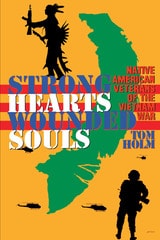
Strong Hearts, Wounded Souls
Native American Veterans of the Vietnam WarBy Tom Holm
University of Texas Press, 1996
At least 43,000 Native Americans fought in the Vietnam War, yet both the American public and the United States government have been slow to acknowledge their presence and sacrifices in that conflict. In this first-of-its-kind study, Tom Holm draws on extensive interviews with Native American veterans to tell the story of their experiences in Vietnam and their readjustment to civilian life.
Holm describes how Native American motives for going to war, experiences of combat, and readjustment to civilian ways differ from those of other ethnic groups. He explores Native American traditions of warfare and the role of the warrior to explain why many young Indian men chose to fight in Vietnam. He shows how Native Americans drew on tribal customs and religion to sustain them during combat. And he describes the rituals and ceremonies practiced by families and tribes to help heal veterans of the trauma of war and return them to the "white path of peace."
This information, largely unknown outside the Native American community, adds important new perspectives to our national memory of the Vietnam war and its aftermath.

Sugar Bush Babies
Stories of My Ojibwe GrandmotherJanis A. Fairbanks
University of Minnesota Press, 2025
A memoir of lessons learned from an Ojibwe grandmother during the time of Relocation
Why, her mother asked, did Janis keep running away from kindergarten? She wanted to go home. But not to the house they had just moved to in Duluth, with its gravel yard and traffic noise. She was a country girl, and home was the log cabin among the wildflowers on the Leech Lake Indian Reservation in Bena, Minnesota. Knowing they were now going to stay in the city, Janis’s parents offered her a compromise: during the summer, Janis could leave the bustle of Duluth and live with her grandmother on the Fond du Lac Reservation, listening to stories, learning Ojibwe, and finding her place in the world. In Sugar Bush Babies, Janis A. Fairbanks returns to that time of Relocation, dislocation, and discovery, taking us home with her through stories of childhood and lessons learned at her grandmother’s knee, enveloped in love and tradition.
Through the eyes of a child and the teachings of an elder, Fairbanks revisits her life during Indian Relocation from reservations to urban areas, from Ojibwe villages to white communities whose ideas about Indians came from Hollywood Westerns. Recalling her early childhood at Leech Lake, her school days in Duluth, and her summers in Fond du Lac, Janis brings the gifts of living history full circle, continuing the traditions of carrying family lore, women’s wisdom, and Indigenous culture from generation to generation.
There are tales told at nighttime or during thunderstorms; lessons in Native medicine; stories of Grandma’s recollections of boarding school, Daddy’s days as a lumberjack, and Mother’s special powers; memories of wash days and dancing, of powwows and Girl Scout camp, of snaring rabbits, selling lilacs, and attending the circus. A lyrical memoir, Sugar Bush Babies conveys the eloquence of women speaking and sharing through generations and the lasting power of tradition.