Results by title
272 books match the query 'Presidents' and 10 start with s

Salvador Allende
Revolutionary Democrat: Revolutionarvy DemocratVictor Figueroa Clark
Pluto Press, 2013
This is a political biography of one of the 20th century’s most emblematic left-wing figures - Salvador Allende, who was president of Chile until he was ousted by General Pinochet in a US-supported coup in 1973.
Victor Figueroa Clark guides us through Allende's life and political project, answering some of the most frequently asked questions. Was he a revolutionary or a reformist? A bureaucrat or inspirational democrat? Clark argues that Allende and the Popular Unity Party created a unique fusion which was both revolutionary and democratic.
The process led by Allende was a symbol of hope for the left during his short time in power. Forty years on, and with left governments back in power across Latin America, this book looks back at the man and the process in order to draw vital lessons for the left in Latin America and around the world today.
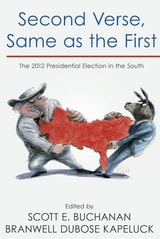
Second Verse, Same as the First
The 2012 Presidential Election in the SouthScott E. Buchanan
University of Arkansas Press, 2014
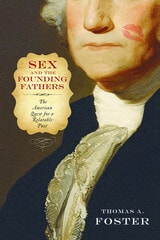
Sex and the Founding Fathers
The American Quest for a Relatable PastThomas A. Foster
Temple University Press, 2016
Biographers, journalists, and satirists have long used the subject of sex to define the masculine character and political authority of America's Founding Fathers. Tracing these commentaries on the Revolutionary Era's major political figures in Sex and the Founding Fathers, Thomas Foster shows how continual attempts to reveal the true character of these men instead exposes much more about Americans and American culture than about the Founders themselves.
Sex and the Founding Fathers examines the remarkable and varied assessments of the intimate lives of George Washington, Thomas Jefferson, John Adams, Benjamin Franklin, Alexander Hamilton, and Gouverneur Morris from their own time to ours. Interpretations can change radically; consider how Jefferson has been variously idealized as a chaste widower, condemned as a child molester, and recently celebrated as a multicultural hero.
Foster considers the public and private images of these generally romanticized leaders to show how each generation uses them to reshape and reinforce American civic and national identity.
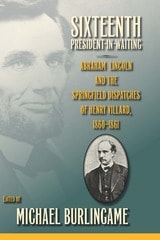
Sixteenth President-in-Waiting
Abraham Lincoln and the Springfield Dispatches of Henry Villard, 1860–1861Edited by Michael Burlingame
Southern Illinois University Press, 2018
Between Abraham Lincoln’s election in November 1860 and his departure for Washington three months later, journalist Henry Villard sent scores of dispatches from Springfield, Illinois, to various newspapers describing the president-elect’s doings, quoting or paraphrasing his statements, chronicling events in the Illinois capital, and analyzing the city’s mood. With Sixteenth President-in-Waiting Michael Burlingame has collected all of these dispatches in one insightful and informative volume.
Best known as a successful nineteenth-century railroad promoter and financier, German-born Henry Villard (1835–1900) was also among the most conscientious and able journalists of the 1860s. The dispatches gathered in this volume constitute the most intensive journalistic coverage that Lincoln ever received, for Villard filed stories from the Illinois capital almost daily to the New York Herald, slightly less often to the Cincinnati Commercial, and occasionally to the San Francisco Bulletin.
Lincoln welcomed Villard and encouraged him to ask questions, as he was the only full-time correspondent for out-of-town papers. He spoke with inside sources, such as Lincoln’s private secretaries John G. Nicolay and John Hay, devoted friends like Jesse K. Dubois and Stephen T. Logan, political leaders like Governor Richard Yates, and journalists like William M. Springer and Robert R. Hitt.
Villard boasted that he did Lincoln a service by scaring off would-be office seekers who, fearing to see their names published in newspapers, gave up plans to visit the Illinois capital to badger the president-elect. Villard may have done an even greater service by publicizing Lincoln’s views on the secession crisis.
His little-known coverage of the 1858 Lincoln-Douglas Senate race, translated from the German for the first time, is included as an appendix. At the time Villard was an ardent Douglas supporter, and his reports criticized Lincoln.
Not only informative but also highly readable, Villard’s vivid descriptions of Lincoln’s appearance, daily routine, and visitors, combined with fresh information about Springfielders, state political leaders, and the capital, constitute an invaluable resource.

Spaceflight and the Myth of Presidential Leadership
Edited by Roger D. Launius and Howard E. McCurdy
University of Illinois Press, 1997
Setting the tone for the collection, NASA chief historian Roger D. Launius and Howard McCurdy maintain that the nation's presidency had become imperial by the mid-1970s and that supporters of the space program had grown to find relief in such a presidency, which they believed could help them obtain greater political support and funding. Subsequent chapters explore the roles and political leadership, vis-à-vis government policy, of presidents Eisenhower, Kennedy, Johnson, Nixon, Ford, Carter, and Reagan.
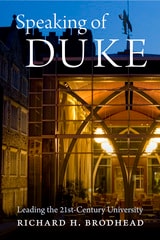
Speaking of Duke
Leading the Twenty-First-Century UniversityRichard H. Brodhead
Duke University Press, 2017
In these essays, Brodhead shows a university thinking its way forward through challenges all institutes of higher education have faced in the twenty-first century, including an expanding global horizon, an economic downturn that has left a diminished sense of opportunity and a shaken faith in the value of liberal arts education, and pressure to think more deeply about issues of equity and inclusion. His audiences range from newly arrived freshmen and new graduates—both facing uncertainty about how to build their future lives—to seasoned faculty members. On other occasions, he makes the case to the general public for the enduring importance of the humanities.
What results is a portrait of Duke University in its modern chapter and the social and political climate that it shapes and is shaped by. While these speeches were given on official occasions, they are not impersonal official pronouncements; they are often quite personal and written with grace, humor, and an unwavering belief in the power of education to shape a changing world for the better.
Brodhead notes that it is an underappreciated fact that a great deal of the exercise of power by a university leader is done through speaking: by articulating the aspirations of the school and the reasons for its choices, and by voicing the shared sense of mission that gives a learning community its reality. Speaking of Duke accomplishes each of those and demonstrates Brodhead's conviction that higher education is more valuable now than ever.
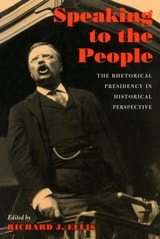
Speaking to the People
The Rhetorical Presidency in Historical PerspectiveRichard Ellis
University of Massachusetts Press, 1998
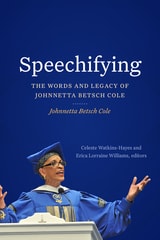
Speechifying
The Words and Legacy of Johnnetta Betsch ColeJohnnetta Betsch Cole. Celeste Watkins-Hayes and Erica Lorraine Williams, editors
Duke University Press, 2023
Starting Today
100 Poems for Obama’s First 100 DaysRachel Zucker
University of Iowa Press, 2010
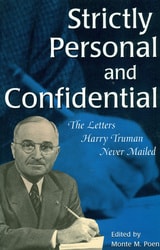
Strictly Personal and Confidential
The Letters Harry Truman Never MailedEdited by Monte M. Poen
University of Missouri Press, 1999
Harry S. Truman made plain speaking his trademark, and it was a common belief that "Give 'em hell" Harry spared few with his words. However, this fascinating collection of 140 amusing, angry, sarcastic, and controversial letters President Truman wrote but never mailed proves that conception wrong. Addressed to admirers and enemies alike, including Adlai Stevenson, Justice William Douglas, Dwight Eisenhower, Joe McCarthy, and Truman's wife, Bess, these intriguing letters cover such diverse subjects as the atomic bomb, running the country, and human greed.