Results by title
4038 books match the query 'Social aspects' and 325 start with s

SARS Stories
Affect and Archive of the 2003 PandemicBelinda Kong
Duke University Press, 2024
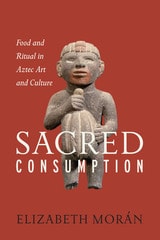
Sacred Consumption
Food and Ritual in Aztec Art and CultureBy Elizabeth Morán
University of Texas Press, 2016
Making a foundational contribution to Mesoamerican studies, this book explores Aztec painted manuscripts and sculptures, as well as indigenous and colonial Spanish texts, to offer the first integrated study of food and ritual in Aztec art.
Aztec painted manuscripts and sculptural works, as well as indigenous and Spanish sixteenth-century texts, were filled with images of foodstuffs and food processing and consumption. Both gods and humans were depicted feasting, and food and eating clearly played a pervasive, integral role in Aztec rituals. Basic foods were transformed into sacred elements within particular rituals, while food in turn gave meaning to the ritual performance.
This pioneering book offers the first integrated study of food and ritual in Aztec art. Elizabeth Morán asserts that while feasting and consumption are often seen as a secondary aspect of ritual performance, a close examination of images of food rites in Aztec ceremonies demonstrates that the presence—or, in some cases, the absence—of food in the rituals gave them significance. She traces the ritual use of food from the beginning of Aztec mythic history through contact with Europeans, demonstrating how food and ritual activity, the everyday and the sacred, blended in ceremonies that ranged from observances of births, marriages, and deaths to sacrificial offerings of human hearts and blood to feed the gods and maintain the cosmic order. Morán also briefly considers continuities in the use of pre-Hispanic foods in the daily life and ritual practices of contemporary Mexico. Bringing together two domains that have previously been studied in isolation, Sacred Consumption promises to be a foundational work in Mesoamerican studies.
Sacrifice in the Modern World
On the Particularity and Generality of Nazi MythDavid Pan
Northwestern University Press, 2012
A landmark book, David Pan’s Sacrifice in the Modern World seeks to explain the continuing emphasis, in modern times, on sacrifice. Pan specifically turns to the culture of sacrifice—ritualized and sanctified death—in Nazi Germany, showing how that regime co-opted an existing discussion of sacrifice and infused it with its own mythology. Pan suggests that sacrifice is a key value in every society but that there is a preponderance of association of sacrifice with Nazi culture and therefore a largely pejorative treatment of sacrifice.
Surveying the arguments of philosopher Alfred Baeumler and other symptomatic Nazi texts, Pan shows how the Nazis’ reactionary intellectual culture unraveled much of the Enlightenment project. In so doing, he is able to offer a compelling new perspective on basic theoretical concepts in the work of Kant, Nietzsche, Adorno, Bataille, Girard, and others. He posits that it is only by clearing our way through the Nazis’ misuse of sacrifice that we can understand the durability of sacrificial structures that—following several of the theorists he discusses— establish the fundamental values by which we live our lives.
Rather than condemning the Nazi appeal to sacrifice itself, this book looks at the particular ways in which sacrifice was distributed and structured within that society. All cultures must grapple with the existential violence of the human condition, and they frequently do so through aesthetic treatments of sacrifice, rooted in myths and traditions. Pan argues that our task is not to eradicate these traditions but to engage them by carefully evaluating the commitments and values that they imply.

Safari Nation
A Social History of the Kruger National ParkJacob S. T. Dlamini
Ohio University Press, 2020

Saharan Winds
Energy Systems and Aeolian Imaginaries in Western SaharaAllan, Joanna
West Virginia University Press, 2024
Winner, ASLE-UKI Critical Book Prize, 2025
Finalist, Ecocritical Book Award, 2025, Association for the Study of Literature and Environment (ASLE)
Longlisted, Bread and Roses Award for Radical Publishing, 2025
Saharan Winds contributes to a fairer energy horizon by illuminating the role of imaginaries--how we understand energy sources such as wind and the meanings we attach to wind--in determining the wider politics, whether oppressive or just, associated with energy systems. This book turns to various cultures and communities across different time periods in one space, Western Sahara, to explore how wind imaginaries affect the development, management, and promotion of windfarms; the distribution of energy that windfarms produce; and, vitally, the type of politics mediated by all these elements combined. Highlighting the wind-fueled oppression of colonial energy systems, the book shows the potential offered by nomadic, Indigenous wind imaginaries for contributing to a fairer energy future.

Salsa Consciente
Politics, Poetics, and Latinidad in the Meta-BarrioAndrés Espinoza Agurto
Michigan State University Press, 2021

Salsa Crossings
Dancing Latinidad in Los AngelesCindy García
Duke University Press, 2013

Salvadorans in Costa Rica
Displaced LivesBridget Hayden
University of Arizona Press, 2003
Salvadorans in Costa Rica: Displaced Lives introduces readers to people from a wide range of class and educational backgrounds who had come to Costa Rica from all over El Salvador. All shared the experience of having become refugees and having settled in a new country under the same circumstances, and when the war in their own country ended, they shared a concern about the issues involved in deciding whether to return there. Their diversity allows Hayden to examine the ways in which the language of national identity played out in different contexts and sometimes contradictory ways.
Drawing on contemporary theories of migration and space, Hayden identifies the discourses, narratives, and concepts that Salvadorans in Costa Rica had in common and then analyzes the ways in which their experiences and their uses of those discourses varied. She focuses on key spatial concepts that Salvadorans used in talking about displacement and re-emplacement in order to show how they constructed the experience of settlement and how such variables as gender and age influenced their experiences. Because "nationality" was an idiom they used to relate their experiences, she pays particular attention to the role of national belonging and national difference—in terms of both the ways in which the Salvadorans were received by Costa Ricans and their reactions to their new lives in Costa Rica. A concluding chapter compares them with Salvadorans who emigrated to other countries.
The story of these displaced Salvadorans, focusing on the lives of real people, can give us a new understanding of how individuals feel a sense of belonging to a sociocultural space. By exploring many meanings of the nation and national belonging for different people under varying conditions, Hayden's study provides fresh insights into the dynamics of migration, gender, and nationalism.

Sampling and Remixing Blackness in Hip-Hop Theater and Performance
Nicole Hodges Persley
University of Michigan Press, 2021
Sampling and Remixing Blackness is a timely and accessible book that examines the social ramifications of cultural borrowing and personal adaptation of Hip-hop culture by non-Black and non-African American Black artists in theater and performance. In a cultural moment where Hip-hop theater hits such as Hamilton offer glimpses of Black popular culture to non-Black people through musical soundtracks, GIFs, popular Hip-hop music, language, clothing, singing styles and embodied performance, people around the world are adopting a Blackness that is at once connected to African American culture--and assumed and shed by artists and consumers as they please. As Black people around the world live a racial identity that is not shed, in a cultural moment of social unrest against anti-blackness, this book asks how such engagements with Hip-hop in performance can be both dangerous and a space for finding cultural allies. Featuring the work of some of the visionaries of Hip-hop theater including Lin-Manuel Miranda, Sarah Jones and Danny Hoch, this book explores the work of groundbreaking Hip-hop theater and performance artists who have engaged Hip-hop's Blackness through popular performance. The book challenges how we understand the performance of race, Hip-hop and Blackness in the age of Instagram, TikTok and Facebook. In a cultural moment where racial identity is performed through Hip-hop culture's resistance to the status quo and complicity in maintaining it, Hodges Persley asks us to consider who has the right to claim Hip-hop's blackness when blackness itself is a complicated mixtape that offers both consent and resistance to transgressive and inspiring acts of performance.

Sanctuary Everywhere
The Fugitive Sacred in the Sonoran DesertBarbara Andrea Sostaita
Duke University Press, 2024

Sartorial Fandom
Fashion, Beauty Culture, and IdentityElizabeth Affuso and Suzanne Scott, Editors
University of Michigan Press, 2023
Sartorial Fandom shines a spotlight on the fashion and beauty cultures that undergird fandoms, considering the retailers, branded products, and fan-made objects that serve as forms of identity expression. This collection is invested in the subcultural and mainstream expression of style and in the spaces where the two intersect. Fan culture is, in many respects, an optimal space to situate a study of style because fandom itself is often situated between the subcultural and the mainstream. Collectively, the chapters in this anthology explore how various axes of lived identity interact with a growing movement to consider fandom as a lifestyle category, ultimately contending that sartorial practices are central to fan expression but also indicative of the primacy of fandom in contemporary taste cultures.

Satan's Playground
Mobsters and Movie Stars at America's Greatest Gaming ResortPaul J. Vanderwood
Duke University Press, 2010
Less than a year after Agua Caliente opened, gangsters held up its money-car in transit to a bank in San Diego, killing the courier and a guard and stealing the company money pouch. Paul J. Vanderwood weaves the story of this heist gone wrong, the search for the killers, and their sensational trial into the overall history of the often-chaotic development of Agua Caliente, Tijuana, and Southern California. Drawing on newspaper accounts, police files, court records, personal memoirs, oral histories, and “true detective” magazines, he presents a fascinating portrait of vice and society in the Jazz Age, and he makes a significant contribution to the history of the U.S.-Mexico border.

Saving Babies?
The Consequences of Newborn Genetic ScreeningStefan Timmermans and Mara Buchbinder
University of Chicago Press, 2012

Saving the Security State
Exceptional Citizens in Twenty-First-Century AmericaInderpal Grewal
Duke University Press, 2017
Saving the World
A Brief History of Communication for Devleopment and Social ChangeEmile G. McAnany
University of Illinois Press, 2012

Scarlett Doesn't Live Here Anymore
SOUTHERN WOMEN IN THE CIVIL WAR ERALaura F. Edwards
University of Illinois Press, 2000
Positing the household as the central institution of southern society, Edwards delineates the inseparable links between domestic relations and civil and political rights in ways that highlight women's active political role throughout the nineteenth century. She draws on diaries, letters, newspaper accounts, government records, legal documents, court proceedings, and other primary sources to explore the experiences and actions of individual women in the changing South, demonstrating how family, kin, personal reputation, and social context all merged with gender, race, and class to shape what particular women could do in particular circumstances.
Meet Harriet Jacobs, the escaped slave who hid in a tiny, unheated attic on her master's property for seven years until she could free her children and herself. Marion Singleton Deveaux Converse, the southern belle who leaped out a second-story window to escape her second husband's "discipline" and received temporary shelter from her slaves. Sarah Guttery, a white, poor, unwed mother of two, whose hard work and clean living earned her community's respect despite her youthful transgressions. Aunt Lucy, who led her fellow slaves in taking over her master's abandoned plantation and declared herself the new mistress.
Through vivid portraits of these and other slaves, free blacks, common whites, and the white elite, Edwards shows how women's domestic situations determined their lives before the war and their responses to secession and armed conflict. She also documents how women of various classes entered into the process of rebuilding, asserting new rights and exploring new roles after the war.
An ideal basic text on society in the Civil War era, Scarlett Doesn't Live Here Anymore demonstrates how women on every step of the social ladder worked actively throughout the period to shape southern society in ways that fulfilled their hopes for the future. They used the resources at their disposal to fashion their own positive identities, to create the social bonds that sustained them in difficult times, and to express powerful social critiques that helped them make sense of their lives.

Scenes From Postmodern Life
Beatriz Sarlo
University of Minnesota Press, 2001
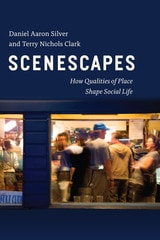
Scenescapes
How Qualities of Place Shape Social LifeDaniel Aaron Silver and Terry Nichols Clark
University of Chicago Press, 2016
In Scenescapes, Daniel Aaron Silver and Terry Nichols Clark examine the patterns and consequences of the amenities that define our streets and strips. They articulate the core dimensions of the theatricality, authenticity, and legitimacy of local scenes—cafes, churches, restaurants, parks, galleries, bowling alleys, and more. Scenescapes not only reimagines cities in cultural terms, it details how scenes shape economic development, residential patterns, and political attitudes and actions. In vivid detail and with wide-angle analyses—encompassing an analysis of 40,000 ZIP codes—Silver and Clark give readers tools for thinking about place; tools that can teach us where to live, work, or relax, and how to organize our communities.

School Yearbook
The Untold Story of a Cringey Tradition and Its Digital AfterlifeKate Eichhorn
University of Chicago Press, 2025
We’re all familiar with the embarrassment that washes over us when recalling our high school yearbooks. Questionable fashion choices, gravity-defying hair, a melodramatic quote—what were we thinking? Even as school yearbooks decline in popularity among contemporary teens, they continue to impact our lives in shocking ways. Collected, digitized, aggregated, and recombined in ways that would have been impossible to imagine just a few decades ago, yearbooks are no longer bound personal archives of adolescent memories. In the twenty-first century, they are shaping our lives in surprising and sometimes disturbing ways. And what could be a more fitting afterlife for these cringey books?
In School Yearbook, cultural critic Kate Eichhorn investigates this ubiquitous object. On the surface, school yearbooks are easily dismissed as innocuous collections of embarrassing photographs and cheesy affirmations, but as Eichhorn reveals, there has never been anything innocent about the school yearbook tradition. Since the early twentieth century, yearbooks have circulated as forms of public relations, propaganda, and hate speech. They have been routinely used by police detectives, private investigators, and even the FBI to identify and profile suspects. With over half a million yearbooks now available online, these books have also acquired the power to continue shaping our lives long after graduation. Would-be landlords, employers, and even creditors can now turn to data culled from their embarrassing pages to make judgments about who we are and what we merit.
In a digital era, school yearbooks have acquired the ability to keep judging us in perpetuity. Both timely and insightful, School Yearbook explores how these books have always been used to rank and judge us.
School, State, and Society
The Growth of Elementary Schooling in Nineteenth-Century France--A Quantitative AnalysisRaymond Grew and Patrick J. Harrigan
University of Michigan Press, 1992

Schooling Selves
Autonomy, Interdependence, and Reform in Japanese Junior High EducationPeter Cave
University of Chicago Press, 2016
Cave examines the implementation of “relaxed education” reforms that attempted to promote individual autonomy and free thinking in Japanese classrooms. As he shows, however, these policies were eventually transformed by educators and school administrators into curricula and approaches that actually promoted social integration over individuality, an effect opposite to the reforms’ intended purpose. With vivid detail, he offers the voices of teachers, students, and parents to show what happens when national education policies run up against long-held beliefs and practices, and what their complex and conflicted interactions say about the production of self and community in education. The result is a fascinating analysis of a turbulent era in Japanese education that offers lessons for educational practitioners in any country.

Schools & Social Justice
R. W. Connell
Temple University Press, 1993
Social justice, R.W. Connell contends, is an inextricable part of any educational system, and democratic societies should give priority to the educational needs of the disadvantaged. In this remarkable manifesto, one of education's most distinguished voices cautions that school systems dealing unjustly with their disadvantaged students degrade the quality of education for all.
The book's compelling, well-reasoned arguments call for new social policies. Drawing on research experience in the United States, Canada, Britain, and Australia, Connell demonstrates the weakness in programs that attempt merely to establish equal opportunity. He observes that scholarships, compensatory education, desegregation, and affirmative action focus on distributive justice, rather than on the nature of the education.
Curricular justice, Connell argues, is just as crucial as distributive justice. Considering race, class, and gender issues, he examines the relation between knowledge and its social content. He describes how curricular content, presentation, and means of student assessment can perpetuate social injustice. Tracing the elitist sources of various curricula, Schools and Social Justice urges reconceptualizing the curriculum from the point of view of the disadvantaged and offers examples of successful efforts to do this.

Schools in the Landscape
Localism, Cultural Tradition, and the Development of Alabama's Public Education System, 1865-1915Edith M. Ziegler
University of Alabama Press, 2010
Where culture met classroom—how Alabama’s past shaped its public schools.
Schools in the Landscape offers a richly detailed and deeply contextualized history of public education in Alabama during the transformative half-century following the Civil War. In this groundbreaking study, Edith M. Ziegler examines how localism, cultural tradition, and social conservatism shaped the development of Alabama’s public school system between 1865 and 1915—a period marked by Reconstruction, Redemption, and the entrenchment of racial segregation.
Ziegler explores how Alabama’s rural, economically challenged, and culturally conservative communities influenced the structure and function of public education. Drawing on a wide range of archival sources, she investigates the roles of teachers, schoolhouses, funding mechanisms, and community rituals in shaping educational experiences. The book also delves into the dual system of Black and white schools, highlighting the systemic inequalities and the resilience of African American communities in the face of institutionalized racism.
Through chapters on Progressive Era reforms, local festivals, and the symbolic role of schools in civic life, Ziegler reveals how education in Alabama was not merely a top-down initiative but a deeply local and contested process. Her analysis underscores the importance of understanding regional identity and cultural values in the broader narrative of American educational history.
Schools in the Landscape is essential reading for scholars of Southern history, education policy, and cultural studies, offering a nuanced portrait of how public schooling evolved in one of the nation’s most complex and tradition-bound regions.

Science
Steve Fuller
University of Minnesota Press, 1998

Science Incarnate
Historical Embodiments of Natural KnowledgeEdited by Christopher Lawrence and Steven Shapin
University of Chicago Press, 1998
Bringing body and knowledge into such intimate contact is occasionally seen as funny, sometimes as enraging, and more often just as pointless. Vividly written and well illustrated, Science Incarnate offers concrete historical answers to such skeptical questions about the relationships between body, mind, and knowledge.
Focusing on the seventeenth century to the present, Science Incarnate explores how intellectuals sought to establish the value and authority of their ideas through public displays of their private ways of life. Patterns of eating, sleeping, exercising, being ill, and having (or avoiding) sex, as well as the marks of gender and bodily form, were proof of the presence or absence of intellectual virtue, integrity, skill, and authority. Intellectuals examined in detail include René Descartes, Isaac Newton, Charles Darwin, and Ada Lovelace.
Science Incarnate is at once very funny and deeply serious, addressing issues of crucial importance to present-day discussions about the nature of knowledge and how it is produced. It incorporates much that will interest cultural and social historians, historians of science and medicine, philosophers, sociologists, and anthropologists.

Science Unfettered
A Philosophical Study in Sociohistorical OntologyJames E. McGuire
Ohio University Press, 2000
Working on a large canvas, Science Unfettered contributes to the ongoing debates in the philosophy of science. The ambitious aim of its authors is to reconceptualize the orientation of the subject, and to provide a new framework for understanding science as a human activity. Mobilizing the literature of the philosophy of science, the history of science, the sociology of science, and philosophy in general, Professors McGuire and Tuchanska build on these fields with the view of transforming their insights into a new epistemological and ontological basis for studying the enterprise of science.
In this approach, McGuire and Tuchanska have combined work from both Anglo-American and Continental traditions of philosophy. As a result, the works of Popper, Kuhn, Quine, and Lakatos, as well as Heidegger, Gadamer, Nietzsche, Foucault, and Feyerabend, are called into play. In addition, Science Unfettered deals extensively with history and historicity, offering a theory of historicity of science as it emerges in sociocultural contexts.
Unorthodox in its approach, Science Unfettered articulates an alternative that views science ontologically as a “practice,” a perspective from which traditional issues concerning the relationship of experiment to theory, the cognitive to the social, the relation between historical change and epistemic validity, the meaning of “objectivity” and the like can be addressed in a more fruitful way than is possible by starting with the traditional, ontological framework of subject and object.

Science Wars
Andrew Ross, ed.
Duke University Press, 1996
At a time when scientific knowledge is systematically whisked out of the domain of education and converted into private capital, the essays in this volume are sharply critical of the conservative defense of a value-free science. They suggest that in a world steeped in nuclear, biogenic, and chemical overdevelopment, those who are skeptical of technology are more than entitled to ask for evidence of rationality in those versions of scientific progress that respond only to the managerial needs of state, corporate, and military elites. Whether uncovering the gender-laden assumptions built into the Western scientific method, redefining the scientific claim to objectivity, showing the relationship between science’s empirical worldview and that of mercantile capitalism, or showing how the powerful language of science exercises its daily cultural authority in our society, the essays in Science Wars announce their own powerful message. Analyzing the antidemocratic tendencies within science and its institutions, they insist on a more accountable relationship between scientists and the communities and environments affected by their research.
Revised and expanded from a recent issue of Social Text, Science Wars will provoke thought and controversy among scholars and general readers interested in science studies and current cultural politics.
Contributors. Stanley Aronowitz, Sarah Franklin, Steve Fuller, Sandra Harding, Roger Hart, N. Katherine Hayles, Ruth Hubbard, Joel Kovel, Les Levidow, George Levine, Richard Levins, Richard C. Lewontin, Michael Lynch, Emily Martin, Dorothy Nelkin, Hilary Rose, Andrew Ross, Sharon Traweek, Langdon Winner
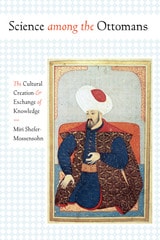
Science among the Ottomans
The Cultural Creation and Exchange of KnowledgeBy Miri Shefer-Mossensohn
University of Texas Press, 2015
Scholars have long thought that, following the Muslim Golden Age of the medieval era, the Ottoman Empire grew culturally and technologically isolated, losing interest in innovation and placing the empire on a path toward stagnation and decline. Science among the Ottomans challenges this widely accepted Western image of the nineteenth- and early twentieth-century Ottomans as backward and impoverished.
In the first book on this topic in English in over sixty years, Miri Shefer-Mossensohn contends that Ottoman society and culture created a fertile environment that fostered diverse scientific activity. She demonstrates that the Ottomans excelled in adapting the inventions of others to their own needs and improving them. For example, in 1877, the Ottoman Empire boasted the seventh-longest electric telegraph system in the world; indeed, the Ottomans were among the era’s most advanced nations with regard to modern communication infrastructure. To substantiate her claims about science in the empire, Shefer-Mossensohn studies patterns of learning; state involvement in technological activities; and Turkish- and Arabic-speaking Ottomans who produced, consumed, and altered scientific practices. The results reveal Ottoman participation in science to have been a dynamic force that helped sustain the six-hundred-year empire.

Science and Culture
Popular and Philosophical EssaysHermann von Helmholtz
University of Chicago Press, 1995
From the 1850s to the 1890s, Helmholtz delivered more than two dozen popular lectures, seeking to educate the public and to enlighten the leaders of European society and governments about the potential benefits of science and technology to a developing modern society. David Cahan has selected fifteen of these lectures, which reflect the wide range of topics of crucial importance to Helmholtz and his audiences. Among the subjects discussed are the origins of the planetary system, the relation of natural science to science in general, the aims and progress of the physical sciences, the problems of perception, and academic freedom in German universities. This collection also includes Helmholtz's fascinating lectures on the relation of optics to painting and the physiological causes of harmony in music, which provide insight into the relations between science and aesthetics.
Science and Culture makes available again Helmholtz's eloquent arguments on the usefulness, benefits, and, intellectual pleasures of understanding the natural world. With Cahan's Introduction to set these essays in their broader context, this collection makes an important contribution to the philosophical and intellectual history of Europe at a time when science played an increasingly significant role in social, economic, and cultural life.

Science and Social Inequality
Feminist and Postcolonial IssuesSandra Harding
University of Illinois Press, 2006
In Science and Social Inequality, Sandra Harding makes the provocative argument that the philosophy and practices of today's Western science, contrary to its Enlightenment mission, work to insure that more science will only worsen existing gaps between the best and worst off around the world. She defends this claim by exposing the ways that hierarchical social formations in modern Western sciences encode antidemocratic principles and practices, particularly in terms of their services to militarism, the impoverishment and alienation of labor, Western expansion, and environmental destruction. The essays in this collection--drawing on feminist, multicultural, and postcolonial studies--propose ways to reconceptualize the sciences in the global social order.
At issue here are not only social justice and environmental issues but also the accuracy and comprehensiveness of our understandings of natural and social worlds. The inadvertent complicity of the sciences with antidemocratic projects obscures natural and social realities and thus blocks the growth of scientific knowledge. Scientists, policy makers, social justice movements and the consumers of scientific products (that is, the rest of us) can work together and separately to improve this situation.

Science as Power
Discourse and Ideology in Modern SocietyStanley Aronowitz
University of Minnesota Press, 1988
Science as Power was first published in 1988. Minnesota Archive Editions uses digital technology to make long-unavailable books once again accessible, and are published unaltered from the original University of Minnesota Press editions.
Science has established itself as not merely the dominant but the only legitimate form of human knowledge. By tying its truth claims to methodology, science has claimed independence from the influence of social and historical conditions. Here, Aronowitz asserts that the norms of science are by no means self-evident and that science is best seen as a socially constructed discourse that legitimates its power by presenting itself as truth.
Stanley Aronowitz is professor of sociology in the graduate school of City University of New York. His books include Working Class Hero: A New Strategy for Labor and, with Henry Giroux, Education Under Siege.

Science as Practice and Culture
Edited by Andrew Pickering
University of Chicago Press, 1992
Andrew Pickering has invited leading historians, philosophers, sociologists, and anthropologists of science to prepare original essays for this volume. The essays range over the physical and biological sciences and mathematics, and are divided into two parts. In part I, the contributors map out a coherent set of perspectives on scientific practice and culture, and relate their analyses to central topics in the philosophy of science such as realism, relativism, and incommensurability. The essays in part II seek to delineate the study of science as practice in arguments across its borders with the sociology of scientific knowledge, social epistemology, and reflexive ethnography.

Science as a Carreer Choice
Theoretical and Empirical StudiesBernice T. Ediuson
Russell Sage Foundation, 1974
Science by the People
Participation, Power, and the Politics of Environmental KnowledgeAya H. Kimura
Rutgers University Press, 2019
Citizen science—research involving nonprofessionals in the research process—has attracted both strong enthusiasts and detractors. Many environmental professionals, activists, and scholars consider citizen science part of their toolkit for addressing environmental challenges. Critics, however, contend that it represents a corporate takeover of scientific priorities. In this timely book, two sociologists move beyond this binary debate by analyzing the tensions and dilemmas that citizen science projects commonly face. Key lessons are drawn from case studies where citizen scientists have investigated the impact of shale oil and gas, nuclear power, and genetically engineered crops. These studies show that diverse citizen science projects face shared dilemmas relating to austerity pressures, presumed boundaries between science and activism, and difficulties moving between scales of environmental problems. By unpacking the politics of citizen science, this book aims to help people negotiate a complex political landscape and choose paths moving toward social change and environmental sustainability.

Science in Latin America
A HistoryEdited by Juan José Saldaña
University of Texas Press, 2006
Science in Latin America has roots that reach back to the information gathering and recording practices of the Maya, Aztec, and Inca civilizations. Spanish and Portuguese conquerors and colonists introduced European scientific practices to the continent, where they hybridized with local traditions to form the beginnings of a truly Latin American science. As countries achieved their independence in the nineteenth century, they turned to science as a vehicle for modernizing education and forwarding "progress." In the twentieth century, science and technology became as omnipresent in Latin America as in the United States and Europe. Yet despite a history that stretches across five centuries, science in Latin America has traditionally been viewed as derivative of and peripheral to Euro-American science.
To correct that mistaken view, this book provides the first comprehensive overview of the history of science in Latin America from the sixteenth century to the present. Eleven leading Latin American historians assess the part that science played in Latin American society during the colonial, independence, national, and modern eras, investigating science's role in such areas as natural history, medicine and public health, the eighteenth-century Enlightenment, politics and nation-building, educational reform, and contemporary academic research. The comparative approach of the essays creates a continent-spanning picture of Latin American science that clearly establishes its autonomous history and its right to be studied within a Latin American context.

Science in the Marketplace
Nineteenth-Century Sites and ExperiencesEdited by Aileen Fyfe and Bernard Lightman
University of Chicago Press, 2007
Science in the Marketplace reveals this other side of Victorian scientific life by placing the sciences in the wider cultural marketplace, ultimately showing that the creation of new sites and audiences was just as crucial to the growing public interest in science as were the scientists themselves. By focusing attention on the scientific audience, as opposed to the scientific community or self-styled popularizers, Science in the Marketplace ably links larger societal changes—in literacy, in industrial technologies, and in leisure—to the evolution of “popular science.”

Science of Science and Reflexivity
Pierre Bourdieu
University of Chicago Press, 2004
Science of Science and Reflexivity will be welcomed as a companion volume to Bourdieu's now seminal An Invitation to Reflexive Sociology. In this posthumous work, Bourdieu declares that science is in danger of becoming a handmaiden to biotechnology, medicine, genetic engineering, and military research—that it risks falling under the control of industrial corporations that seek to exploit it for monopolies and profit.
Science thus endangered can become detrimental to mankind. The line between pure and applied science, therefore, must be subjected to intense theoretical scrutiny. Bourdieu's goals in Science of Science and Reflexivity are to identify the social conditions in which science develops in order to reclaim its objectivity and to rescue it from relativism and the forces that might exploit it. In the grand tradition of scientific reflections on science, Bourdieu provides a sociological analysis of the discipline as something capable of producing transhistorical truths; he presents an incisive critique of the main currents in the study of science throughout the past half century; and he offers a spirited defense of science against encroaching political and economic forces.
A masterful summation of the principles underlying Bourdieu's oeuvre and a memoir of his own scientific journey, Science of Science and Reflexivity is a capstone to one of the most important and prodigious careers in the field of sociology.

Science, Conservation, and National Parks
Edited by Steven R. Beissinger, David D. Ackerly, Holly Doremus, and Gary E. Machlis
University of Chicago Press, 2016
Examining the major challenges of parks and protected areas throughout the world, contributors provide answers to a number of key conservation questions, such as: How should stewardship address climate change, urban encroachment and pollution, and invasive species? How can society, especially youth, become more engaged with nature and parks, and are there models to guide interactions between parks and their neighbors? What are appropriate conservation objectives for parks in the Anthropocene? Charting a course for the parks of the next century, Science, Conservation, and National Parks is certain not only to catalyze the continued evolution of US park conservation policy, but also to be an inspiration for parks, conservation, and management worldwide.
Science, Race, and Ethnicity
Readings from Isis and OsirisEdited by John P. Jackson
University of Chicago Press, 2002

Science, Society, and the Search for Life in the Universe
Bruce Jakosky
University of Arizona Press, 2006
Astrobiology is the relatively new, but fast growing scientific discipline that involves trying to understand the origin, evolution, and distribution of life within the universe. It is also one of the few scientific disciplines that attracts the public’s intense curiosity and attention. This interest stems largely from the deep personal meaning that the possible existence of extraterrestrial life has for so many. Whether this meaning relates to addressing the “Big Questions” of our existence, the possibility of encountering life on other planets, or the potential impact on our understanding of religion, there is no doubt that the public is firmly vested in finding answers.
In this broadly accessible introduction to the field, Bruce Jakosky looks at the search for life in the universe not only from a scientific perspective, but also from a distinctly social one. In lucid and engaging prose, he addresses topics including the contradiction between the public’s fascination and the meager dialogue that exists between those within the scientific community and those outside of it, and what has become some of the most impassioned political wrangling ever seen in government science funding.

Sciences from Below
Feminisms, Postcolonialities, and ModernitiesSandra Harding
Duke University Press, 2008
Describing the work of the post-Kuhnian science studies scholars Bruno Latour, Ulrich Beck, and the team of Michael Gibbons, Helga Nowtony, and Peter Scott, Harding reveals how, from different perspectives, they provide useful resources for rethinking the modernity versus tradition binary and its effects on the production of scientific knowledge. Yet, for the most part, they do not take feminist or postcolonial critiques into account. As Harding demonstrates, feminist science studies and postcolonial science studies have vital contributions to make; they bring to light not only the male supremacist investments in the Western conception of modernity and the historical and epistemological bases of Western science but also the empirical knowledge traditions of the global South. Sciences from Below is a clear and compelling argument that modernity studies and post-Kuhnian, feminist, and postcolonial sciences studies each have something important, and necessary, to offer to those formulating socially progressive scientific research and policy.

Scrap Theory
Reproductive Injustice in the Black Feminist ImaginationMali D. Collins
The Ohio State University Press, 2025

Screening Culture, Viewing Politics
An Ethnography of Television, Womanhood, and Nation in Postcolonial IndiaPurnima Mankekar
Duke University Press, 1999
Mankekar examines both “entertainment” narratives and advertisements designed to convey particular ideas about the nation. Organizing her study around the recurring themes in these shows—Indian womanhood, family, community, constructions of historical memory, development, integration, and sometimes violence—Mankekar dissects both the messages televised and her New Delhi subjects’ perceptions of and reactions to these messages. In the process, her ethnographic analysis reveals the texture of these women’s daily lives, social relationships, and everyday practices. Throughout her study, Mankekar remains attentive to the tumultuous historical and political context in the midst of which these programs’ integrationalist messages are transmitted, to the cultural diversity of the viewership, and to her own role as ethnographer. In an enlightening epilogue she describes the effect of satellite television and transnational programming to India in the 1990s.
Through its ethnographic and theoretical richness, Screening Culture, Viewing Politics forces a reexamination of the relationship between mass media, social life, and identity and nation formation in non-Western contexts. As such, it represents a major contribution to a number of fields, including media and communication studies, feminist studies, anthropology, South Asian studies, and cultural studies.
Screening Morocco
Contemporary Film in a Changing SocietyValérie K. Orlando
Ohio University Press, 2011
Screening Neoliberalism
Transforming Mexican Cinema, 1988-2012Ignacio M. Sánchez Prado
Vanderbilt University Press, 2014

Screening Out the Past
The Birth of Mass Culture and the Motion Picture IndustryLary May
University of Chicago Press, 1983
"It is impossible to follow a narrow trail through the movies. The vistas keep opening, and May, linking movies to mass society, finds and makes new perceptions on emerging women, the rise of the studios, the special growth and appeal of Los Angeles, the nature of studio leadership and the early and persistent imputed corrupting power of film."—Charles Champlin, Los Angeles Times
"Lary May . . . has provided a set of new and rich insights into the changing patterns of American culture, 1890-1929. . . . His concentration on social and cultural history indirectly provides answers to questions which have baffled political historians for several decades."—David W. Noble, Minneapolis Tribune
"[Screening Out the Past is] a scrupulously argued, clearly written account of Hollywood's role in bringing America skipping and giggling from the Victorian world into the twentieth century. May is splendid on the psychology of the immigrant movie moguls, on Douglas Fairbanks and Mary Pickford as post Great War role models, and many other things."—Philip French, London Sunday Observor
"Altogether, the book represents the most successful blending of movie and cultural history to date."—Benjamin McArthur, Journal of Social History
Scripted Affects, Branded Selves
Television, Subjectivity, and Capitalism in 1990s JapanGabriella Lukács
Duke University Press, 2010
Scripted Culture
Digitalization and the Cultural Public SphereEdited by Ruedi Widmer and Ines Kleesattel
Diaphanes, 2018

Sea Level Rise
A Slow Tsunami on America's ShoresOrrin H. Pilkey and Keith C. Pilkey
Duke University Press, 2019

Searching for Solidarity
Revolutionary Dreams and Radical Social MovementsNoor Ghazal Aswad
The Ohio State University Press, 2025