Results by title
389 books match the query 'State' and 45 start with s
Salafism and the State
Islamic Activism and National Identity in Contemporary IndonesiaChris Chaplin
National University of Singapore Press, 2021
Salt and State
An Annotated Translation of the <em>Songshi</em> Salt Monopoly TreatiseCecilia Lee-fang Chien
University of Michigan Press, 2004
Savages and Citizens
How Indigeneity Shapes the StateAndrew Canessa and Manuela Lavinas Picq; Foreword by Jeff Ganohalidoh Corntassel
University of Arizona Press, 2024
Delving into European political philosophy, comparative politics, and contemporary international law, the book shows how the concept of indigeneity has shaped the development of the modern state. The exclusion of Indigenous people was not a collateral byproduct; it was a political project in its own right. The book argues that indigeneity is a political identity relational to modern nation-states and that Indigenous politics, although marking the boundary of the state, are co-constitutive of colonial processes of state-making. In showing how indigeneity is central to how the international system of states operates, the book forefronts Indigenous peoples as political actors to reject essentializing views that reduce them to cultural “survivors” rooted in the past.
With insights drawn from diverse global contexts and empirical research from Bolivia and Ecuador, this work advocates for the relevance of Indigenous studies within political science and argues for an ethnography of sovereignty in anthropology. Savages and Citizens makes a compelling case for the centrality of Indigenous perspectives to understand the modern state from political theory to international studies.

Scapegoats of September 11th
Hate Crimes & State Crimes in the War on TerrorWelch, Michael
Rutgers University Press, 2006
The altered American landscape, however, includes more than security measures and ID cards. The country's desperate quest for security is visible in many less obvious, yet more insidious ways. In Scapegoats of September 11th, criminologist Michael Welch argues that the "war on terror" is a political charade that delivers illusory comfort, stokes fear, and produces scapegoats used as emotional relief. Regrettably, much of the outrage that resulted from 9/11 has been targeted at those not involved in the attacks on the Pentagon or the Twin Towers. As this book explains, those people have become the scapegoats of September 11th. Welch takes on the uneasy task of sorting out the various manifestations of displaced aggression, most notably the hate crimes and state crimes that have become embarrassing hallmarks both at home and abroad.
Drawing on topics such as ethnic profiling, the Abu Ghraib scandal, Guantanamo Bay, and the controversial Patriot Act, Welch looks at the significance of knowledge, language, and emotion in a post-9/11 world. In the face of popular and political cheerleading in the war on terror, this book presents a careful and sober assessment, reminding us that sound counterterrorism policies must rise above, rather than participate in, the propagation of bigotry and victimization.
School, Society, and State
A New Education to Govern Modern America, 1890-1940Tracy L. Steffes
University of Chicago Press, 2012
“Democracy has to be born anew every generation, and education is its midwife,” wrote John Dewey in his classic work The School and Society. In School, Society, and State, Tracy Steffes places that idea at the center of her exploration of the connections between public school reform in the early twentieth century and American political development from 1890 to 1940.
American public schooling, Steffes shows, was not merely another reform project of the Progressive Era, but a central one. She addresses why Americans invested in public education and explains how an array of reformers subtly transformed schooling into a tool of social governance to address the consequences of industrialization and urbanization. By extending the reach of schools, broadening their mandate, and expanding their authority over the well-being of children, the state assumed a defining role in the education—and in the lives—of American families.
In School, Society, and State, Steffes returns the state to the study of the history of education and brings the schools back into our discussion of state power during a pivotal moment in American political development.
School, State, and Society
The Growth of Elementary Schooling in Nineteenth-Century France--A Quantitative AnalysisRaymond Grew and Patrick J. Harrigan
University of Michigan Press, 1992

Separating Church and State
ROGER WILLIAMS AND RELIGIOUS LIBERTYTimothy L. Hall
University of Illinois Press, 1998
apostle of religious tolerance and a foe of religious establishments.
In Separating Church and State, Timothy Hall combines impressive
historical and legal scholarship to explore Williams's theory of religious
liberty and relate it to current debate. Williams's fierce religious dogmaticism,
Hall argues, is precisely what led to his religious tolerance, making
him one of the most articulate champions of the argument for the necessary
separation of church and state.
"Both timely and provocative. . . . Offers Williams's largely overlooked
but deeply important perspective on the peaceful coexistence of committed
believers of diverse faiths. The book also brings into question crucial
tenets of the United States Supreme Court's First Amendment religion clause
jurisprudence at a time when many are raising questions about it."
-- Marci A. Hamilton, Benjamin N. Cardozo School of Law, New York City
"Hall has the entire Williams corpus under his command, and he plays
the relevant texts like a master organist. He also has the legal corpus
equally at his fingertips. One of the great strengths of his book is that
it bridges the too often separate fields of history and jurisprudence."
-- Edwin Gaustad, author of Liberty of Conscience: Roger Williams in
America

Separation of Church and State in the United States
Alvin W. Johnson and Frank H. Yost
University of Minnesota Press, 1948
Separation of Church and State in the United States was first published in 1948. Minnesota Archive Editions uses digital technology to make long-unavailable books once again accessible, and are published unaltered from the original University of Minnesota Press editions.
This book is more than a revised and enlarged edition of Dr. Johnson's Legal Status of Church-State Relationships in the United States. Besides rewriting and bringing up to date much of the original material, the authors have added a number of chapters dealing with subjects that have gained prominence in recent years: citizenship and the bearing of arms, saluting the flag, distribution of religious literature, and freedom of speech for Communists. Such recent cases as the Supreme Court decision in McCollum v. Board of Education—better known as the Champaign, Illinois, case—are discussed in some detail.
School administrators will find the book of great practical value, for it deals predominantly with church-state relationships in the public schools, one of the chief areas of conflict. These conflicts include such questions as Bible readings and religious instruction in the public schools, dismissed and released time for religious education, the allowing of credit for religious instruction, public aid to sectarian schools, the wearing of religious garb, furnishing free textbooks and transportation for students in parochial schools.
Separation of Church and State
Dina de-Malkhuta Dina in Jewish LawGil Graff
University of Alabama Press, 1985
Exploring the enduring dialogue between Jewish law and the law of the state.
For the Jewish community, the end of the Middle Ages and the emergence of the modern nation-state brought the promise of equal citizenship as well as the possible loss of Jewish corporate identity. The legal maxim dina de-malkhuta dina (the law of the State is law) invoked in Talmidic times to justify the acceptance of the king’s law and qualified in the Middle Ages by Maimonides and Rashbam to include the requirement of consent by the governed underwent further redefinition by Jews in the Napoleonic age. Graff focuses on the struggle between 18th and 19th-century Jewish religious reformers and traditionalists in defining the limits of dina de-malkhuta dina. He traces the motivations of the reformers who, in their zeal to gain equality for the formerly disenfranchised Jewish communities in Western Europe, were prepared to render unto the State compromising authority over Jewish religious life under the rubric of dina de-malkhuta dina was intended to strike a balance between synagogue and state and not to be used as a pretext for the liquidation of the community’s corporate existence.
Shamanism, History, and the State
Nicholas Thomas and Caroline Humphrey, Editors
University of Michigan Press, 1994
The literature on shamanism and related topics is extensive, but has in general been biased toward curing and trance; the political and historical significance of shamanic activities has been largely neglected. The contributors to Shamanism, History, and the State—distinguished anthropologists and historians from England, Australia, and France—show that shamanism is not static and stable, but always changing as a result of political dynamics and historical processes. Contributors are Tamsyn Barton, Sysan Bayly, Mary Beard, Maurice Bloch, Peter Gow, Roberte N. Hamayon, Stephen Hugh-Jones, Caroline Humphrey, and Nicholas Thomas.
"The importance of this collection lies in the painstaking, many-sided ways in which it shows 'shamanism' to be a multifarious and continuously changing 'dialogue' or interaction with specific, local contexts. . . . Thus, rather than tackling the issue in principle, this collection tries to demonstrate through 'case studies' just how different 'shamanism' becomes if seen through a lens sensitive to history and the influence of institutions, such as the state, which seem far removed from it. I think the demonstrations add up to an impressive force." --Michael Taussig
"This new, ably edited volume provides . . . chapters that are rich in historic detail and that provide insights into general cultural processes and social interactions.
Shaped by the State
Toward a New Political History of the Twentieth CenturyEdited by Brent Cebul, Lily Geismer, and Mason B. Williams
University of Chicago Press, 2019
Brent Cebul, Lily Geismer, and Mason B. Williams have brought together first-rate scholars from a wide range of subfields who are making structures of state power—not moments of crisis or partisan realignment—integral to their analyses. All of the contributors see political history as defined less by elite subjects than by tensions between state and economy, state and society, and state and subject—tensions that reveal continuities as much as disjunctures. This broader definition incorporates investigations of the crosscurrents of power, race, and identity; the recent turns toward the history of capitalism and transnational history; and an evolving understanding of American political development that cuts across eras of seeming liberal, conservative, or neoliberal ascendance. The result is a rich revelation of what political history is today.
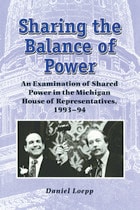
Sharing the Balance of Power
An Examination of Shared Power in the Michigan House of Representatives, 1993-1994Daniel Loepp
University of Michigan Press, 1999
Like national politicians, state legislators all too often focus on partisanship instead of policy making, engaging themselves in rancorous debate that achieves little beyond gridlock. However, during one short period in Michigan's history, legislators stopped bickering and focused on forging compromise. Daniel Loepp's Sharing the Balance of Power chronicles the 87th Michigan Legislature (1993-1994), in which Republicans and Democrats successfully shared power.
In 1992, Michigan voters elected exactly fifty-five Republicans and fifty-five Democrats to the state house. As a result, the two parties each elected a co-speaker, and a shared power agreement was forged. Given the history of intense partisanship in the state house, political pundits predicted that any plan for shared power would disintegrate within months. What resulted instead was one of the most productive legislatures in Michigan history.
Author Daniel Loepp, chief of staff to Democratic Co-Speaker Curtis Hertel at the time, skillfully takes the reader "inside" the State Capitol, examining the key policy debates (including school finance reform), important personalities, and difficult negotiations. Loepp's balanced presentation is testimony to the two years of bi-partisan cooperation in which he took part.
In an age of public cynicism about the legislative process, Daniel Loepp offers the reader a refreshing story about two co-speakers and their 108 colleagues who came together in the spirit of bi-partisan representation to successfully serve their constituents, the people of Michigan.
Daniel Loepp is a partner in the firm of Karoub Associates, Michigan's oldest multi-client lobbying firm.

Shot In America
Television, the State, and the Rise of Chicano CinemaChon A. Noriega
University of Minnesota Press, 2000
Redefines media history through Chicano film and television.
One of the most influential figures in ethnic media studies takes direct aim at how Chicano filmmaking has been represented in the history of media in the United States. Shot in America tackles seemingly intractable dilemmas involving the political and market functions of film and TV to provide a definitive response to the debates over cultural and racial identity that have embroiled media and cultural studies over the past two decades.
Noriega offers a compelling and detailed description of an enormous body of work by Chicano media makers against the backdrop of Chicano social movements, politics, and activism over a forty-year period—an extraordinary exposition of the civil rights movement, media reform activities, and public affairs programming that constitutes the prehistory of independent and minority cinemas.Noriega reveals the ways in which Chicano and other minority protests both emerged within and were regulated by the very institutions that excluded them. Shot in America is a study with broad implications for our understanding of cultural politics and the entertainment industries.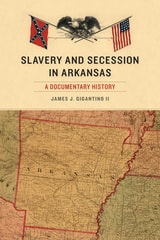
Slavery and Secession in Arkansas
A Documentary HistoryJames J. Gigantino
University of Arkansas Press, 2015
The absorbing documents collected in Slavery and Secession in Arkansas trace Arkansas’s tortuous road to secession and war. Drawn from contemporary pamphlets, broadsides, legislative debates, public addresses, newspapers, and private correspondence, these accounts show the intricate twists and turns of the political drama in Arkansas between early 1859 and the summer of 1861. From an early warning of what Republican political dominance would mean for the South, through the initial rejection of secession, to Arkansas’s final abandonment of the Union, readers, even while knowing the eventual outcome, will find the journey both suspenseful and informative.
Revealing both the unique features of the secession story in Arkansas and the issues that Arkansas shared with much of the rest of the South, this collection illustrates how Arkansans debated their place in the nation and, specifically, how the defense of slavery—as both an assurance of continued economic progress and a means of social control—remained central to the decision to leave the Union and fight alongside much of the South for four bloody years of civil war.

Slaves of the State
Black Incarceration from the Chain Gang to the PenitentiaryDennis Childs
University of Minnesota Press, 2015
The Thirteenth Amendment to the United States Constitution, passed in 1865, has long been viewed as a definitive break with the nation’s past by abolishing slavery and ushering in an inexorable march toward black freedom. Slaves of the State presents a stunning counterhistory to this linear narrative of racial, social, and legal progress in America.
Dennis Childs argues that the incarceration of black people and other historically repressed groups in chain gangs, peon camps, prison plantations, and penitentiaries represents a ghostly perpetuation of chattel slavery. He exposes how the Thirteenth Amendment’s exception clause—allowing for enslavement as “punishment for a crime”—has inaugurated forms of racial capitalist misogynist incarceration that serve as haunting returns of conditions Africans endured in the barracoons and slave ship holds of the Middle Passage, on plantations, and in chattel slavery.
Childs seeks out the historically muted voices of those entombed within terrorizing spaces such as the chain gang rolling cage and the modern solitary confinement cell, engaging the writings of Toni Morrison and Chester Himes as well as a broad range of archival materials, including landmark court cases, prison songs, and testimonies, reaching back to the birth of modern slave plantations such as Louisiana’s “Angola” penitentiary.
Slaves of the State paves the way for a new understanding of chattel slavery as a continuing social reality of U.S. empire—one resting at the very foundation of today’s prison industrial complex that now holds more than 2.3 million people within the country’s jails, prisons, and immigrant detention centers.

Social Media Tribes
Jordan's Bedouin and the Margins of the StateGeoffrey F. Hughes
University of Texas Press, 2026
An examination of the uses of social media in Jordan through the experiences of Bedouin tribespeople.
It has become something of a cliché to say that social media is making us tribal. But what do self-styled tribespeople themselves think about social media, and how might they help us better understand the role of the internet in our current political moment? Drawing on in-depth ethnographic fieldwork among Bedouin in Jordan, Social Media Tribes underscores the varied but broadly intelligible ways in which distinctive groups domesticate social media to suit their needs.
Organized around key concepts in Bedouin life (including tribalism, envy, and mercy), Social Media Tribes moves between Facebook-mediated tribal truces, upstart online media platforms, palatial urban villas where self-appointed sheikhs dispense justice, and street clashes organized over WhatsApp in rural communities ignored by state development projects. A meticulous researcher and insightful participant-observer, Geoffrey Hughes reframes social media as part of a global renegotiation of the state-society divide that both preceded the emergence of social media platforms and, in turn, feeds off of them. In this telling, the internet represents a new frontier that, like older frontiers, heralds both novel freedoms and novel forms of social control.

Society, Culture, and the State in Germany, 1870-1930
Geoff Eley, Editor
University of Michigan Press, 1997
Socrates of Constantinople
Historian of Church and StateTheresa Urbainczyk
University of Michigan Press, 1997
Soft Corruption
How Unethical Conduct Undermines Good Government and What To Do About ItSchluter, William E
Rutgers University Press, 2017
In this searing personal narrative, the former state senator recounts his fight to expose and reform these acts of government misconduct. Not afraid to cite specific cases of soft corruption in New Jersey politics, he paints a vivid portrait of public servants who care more about political power and personal gain than the public good. By recounting events that he witnessed firsthand in the Garden State, he provides dramatic illustrations of ills that afflict American politics nationwide.
As he identifies five main forms of soft corruption, Schluter diagnoses the state government’s ethical malaise, and offers concrete policy suggestions for how it might be cured. Not simply a dive through the muck of New Jersey politics, Soft Corruption is an important first step to reforming our nation’s political system, a book that will inspire readers to demand that our elected officials can and must do better.
Visit: www.softcorruption.com (http://www.softcorruption.com)

Southern Fried
Going Whole Hog in a State of WonderRex Nelson
Butler Center for Arkansas Studies, 2016
For decades, Rex Nelson has been traveling Arkansas. He learned to love the back roads, small towns, and people of the state while going on trips with his father, who sold athletic supplies to high schools. They sat in old Depression-era gyms built by the Works Progress Administration, ate in small-town cafes, and waded in streams on warm spring days.
Throughout his career as a sportswriter, political writer, senior staff member in the governor’s office, presidential appointee to the Delta Regional Authority, and now corporate communications director for Simmons Bank, Nelson has written millions of words about Arkansas and its people.
In this collection of columns from the Arkansas Democrat-Gazette, Nelson brings to life the personalities, communities, festivals, and tourist attractions that make Arkansas unique. As he says, “Arkansas is a hard place to explain to outsiders. We’re mostly Southern but also a bit Midwestern and a tad Southwestern. The Ozarks are different from the pine woods of the Gulf Coastal Plain, and the Delta is different from the Ouachitas. Invariably, though, those who take the time to get off the main roads and get to know the real Arkansas are entranced by the place.”

Sponsored Migration
The State and Puerto Rican Postwar Migration to the United StatesEdgardo Meléndez
The Ohio State University Press, 2017
Sponsored Migration places Puerto Rico’s migration policy in its historical context, examining the central role the Puerto Rican government played in encouraging and organizing migration during the postwar period. Meléndez sheds an important new light on the many ways in which the government intervened in the movement of its people: attempting to provide labor to U.S. agriculture, incorporating migrants into places like New York City, seeking to expand the island’s air transportation infrastructure, and even promoting migration in the public school system. One of the first scholars to explore this topic in depth, Meléndez illuminates how migration influenced U.S. and Puerto Rican relations from 1898 onward.

Staffing the State
Bureaucratic Politics in Pakistan's Hybrid RegimeSameen A. Mohsin Ali
University of Michigan Press, 2027
Bureaucrats play a critical role in managing governance and delivering public services, whether in democratic and authoritarian contexts. Leaders are responsible for managing bureaucrats—from assigning posts to evaluating performance—to ensure that state resources and services are directed to key constituencies. Focusing on Pakistan, a hybrid regime where military interventions often disrupt electoral politics and civilian governance, Staffing the State shows how controlling bureaucratic appointments allows politicians and civil servants to manage political uncertainty. At the same time, such control entrenches arbitrary patterns of governance such that democratic transitions stall and hybrid regimes persist.
Drawing on interviews, semi-participant observation, and newspaper archives, this book’s analysis reveals the significance of bureaucratic politics to political power, public sector performance and reform, and in determining democratic or autocratic trajectories. The findings extend discussions around indicators of democratic decay into more nuanced, complex explorations of the consequences of these politics for the permanent institutions of the state. Staffing the State will interest political scientists, scholars of South Asian politics and especially Pakistan, and those working at the intersection of politics and public administration.

Stand Up for Alabama
Governor George WallaceJeffrey Frederick
University of Alabama Press, 2007
Reassessing the Political Legacy of Alabama's Most Influential Governor.
Whereas other studies have focused on George Wallace’s career as a national figure, Stand Up for Alabama provides a detailed, comprehensive, and analytical study of Wallace’s political life that emphasizes his activities and their impact within the state of Alabama. Jeff Frederick answers two fundamental questions: What was George Wallace’s impact on the state of Alabama? Why did Alabamians continue to embrace him over a twenty-five year period? Using a variety of sources to document the state’s performance in areas including mental health, education, conservation, prisons, and industrial development, Frederick answers question number one. He cites comparisons between Alabama and both peer states in the South and national averages. Wallace’s policies improved the state, but only in relation to Alabama’s past, not in relation to peer states in the region or national averages. As a result, energy was expended but little progress was made.
To answer the second question, Frederick uses the words of Alabamians themselves through oral history, correspondence, letters to the editor, and other sources. Alabamians, white and eventually black, supported Wallace because race was but one of his appeals. Stand Up for Alabama shows that Wallace connected to Alabamians at a gut level, reminding them of their history and memory, championing their causes on the stump, and soothing their concerns about their place in the region and the nation.
Jeff Frederick examines the development of policy during the Wallace administrations and documents relationships with his constituents in ways that go beyond racial politics. He also analyzes the connections between Wallace’s career and Alabamians’ understanding of their history, sense of morality, and class system. “Stand up for Alabama” was the governor’s campaign slogan.
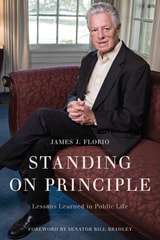
Standing on Principle
Lessons Learned in Public LifeFlorio, James J
Rutgers University Press, 2018
This political memoir tells the remarkable story of how Florio, a high school dropout who left to join the Navy as a teenager, went on to become an attorney, a state assemblyman, a congressman, and a governor. A passionate defender of the environment, Florio played a crucial role in the enactment of 1980s-era Superfund laws, which helped to clean up toxic waste sites in New Jersey and around the country. As governor, he fought for the groundbreaking Clean Water Enforcement Act. But his reforms quite literally came at a cost, as he raised New Jersey sales taxes and income taxes to balance the state budget. Florio reflects upon the challenges of meeting the state’s budgetary needs while keeping his tax-averse constituents happy.
Standing on Principle reveals a politician who has never been afraid to take a progressive stand—including a firm stance against semiautomatic weapons that led gun lobbyists to bankroll his opponent. His story is sure to inspire readers from New Jersey and across the nation.
Published in cooperation with the Center on the American Governor, Eagleton Institute of Politics, Rutgers University
State Constitutional Politics
Governing by Amendment in the American StatesJohn Dinan
University of Chicago Press, 2018
With State Constitutional Politics, John Dinan looks at the various occasions in American history when state constitutional amendments have served as instruments of governance. Among other things, amendments have constrained state officials in the way they levy taxes and spend money; enacted policies unattainable through legislation on issues ranging from minimum wage to the regulation of marijuana; and updated understandings of rights, including religious liberty, equal protection, and the right to bear arms. In addition to comprehensively chronicling the ways amendments shape politics in the states, Dinan also assesses the consequences of undertaking changes in governance through amendments rather than legislation or litigation. For various reasons, including the greater stability and legitimacy of changes achieved through the amendment process, he argues that it might be a more desirable way of achieving change.
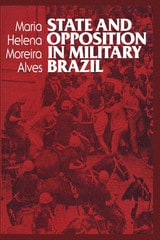
State and Opposition in Military Brazil
By Maria Helena Moreira Alves
University of Texas Press, 1985
Based on extensive research into opposition and government documents, including the previously unavailable Manual Básico da Escola de Guerra, Maria Helena Moreira Alves provides a rich description of the long and tortuous attempt by the Brazilian military government to create a workable “national security state” in the face of determined and resilient opposition.
She interviewed more than one hundred key figures in government, the military, business, professional associations, the Catholic church, grassroots organizations, and trade unions in order to analyze politically and historically the relationship between civil society and government structures in Brazil during the years 1964–1983. Her study charts the rise and subsequent decline of the military government’s power, concluding with a discussion of the abertura policy instituted under General João Batista Figueiredo.
State and Reservation
New Perspectives on Federal Indian PolicyEdited by George Pierre Castile and Robert L. Bee
University of Arizona Press, 1992
CONTENTS
Introduction, George Pierre Castile & Robert L. Bee
Part I—Historical Foundations of the Reservation System
An Elusive Institution: The Meanings of Indian Reservations in Gold Rush California, John M. Findlay
Crow Leadership Amidst Reservation Oppression, Frederick E. Hoxie
Part II—The Nonreservation Experience
Utah Indians and the Homestead Laws, Martha C. Knack
The Enduring Reservations of Oklahoma, John H. Moore
Without Reservation: Federal Indian Policy and the Landless Tribes of Washington, Frank W. Porter, III
Part III—Power and Symbols
Riding the Paper Tiger, Robert L. Bee
Indian Sign: Hegemony and Symbolism in Federal Indian Policy, George P. Castile
Part IV—The Resource Base
Primitive Accumulation, Reservations, and the Alaska Native Claims Settlement Act, Lawrence Weiss & David C.Maas
Shortcomings of the Indian Self-Determination Policy, George S. Esber, Jr.
Getting to Yes in the New West: The Negotiation of Policy, Thomas R. McGuire
State of Ambiguity
Civic Life and Culture in Cuba's First RepublicSteven Palmer, José Antonio Piqueras, Amparo Sánchez Cobos, eds.
Duke University Press, 2014
Contributors. Imilcy Balboa Navarro, Alejandra Bronfman, Maikel Fariñas Borrego, Reinaldo Funes Monzote, Marial Iglesias Utset, Steven Palmer, José Antonio Piqueras Arenas, Ricardo Quiza Moreno, Amparo Sánchez Cobos, Rebecca J. Scott, Robert Whitney
State of Change
Colorado Politics in the Twenty-first CenturyCourtenay W. Daum
University Press of Colorado, 2011
The increased use of direct democracy has resulted in the adoption of term limits, major reconstruction of fiscal policy, and many other changes in both statutory and constitutional law. Individual chapters address these changes within a range of contexts--electoral, political, partisan, and institutional--as well as their ramifications. Contributors also address the possible impacts of these changes on the state in the future, concluding that the current state of affairs is fated to be short-lived.
State of Change is the most up-to-date book on Colorado politics available and will be of value to undergraduate- and graduate-level students, academics, historians, and anyone involved with or interested in Colorado politics.

State of Empowerment
Low-Income Families and the New Welfare StateCarolyn Barnes
University of Michigan Press, 2020
On weekday afternoons, dismissal bells signal not just the end of the school day but also the beginning of another important activity: the federally funded after-school programs that offer tutoring, homework help, and basic supervision to millions of American children. Nearly one in four low-income families enroll a child in an after-school program. Beyond sharpening students’ math and reading skills, these programs also have a profound impact on parents. In a surprising turn—especially given the long history of social policies that leave recipients feeling policed, distrusted, and alienated—government-funded after-school programs have quietly become powerful forces for political and civic engagement by shifting power away from bureaucrats and putting it back into the hands of parents. In State of Empowerment Carolyn Barnes uses ethnographic accounts of three organizations to reveal how interacting with government-funded after-school programs can enhance the civic and political lives of low-income citizens.

State of Exception
Giorgio Agamben
University of Chicago Press, 2004
The sequel to Agamben's Homo Sacer: Sovereign Power and Bare Life, State of Exception is the first book to theorize the state of exception in historical and philosophical context. In Agamben's view, the majority of legal scholars and policymakers in Europe as well as the United States have wrongly rejected the necessity of such a theory, claiming instead that the state of exception is a pragmatic question. Agamben argues here that the state of exception, which was meant to be a provisional measure, became in the course of the twentieth century a normal paradigm of government. Writing nothing less than the history of the state of exception in its various national contexts throughout Western Europe and the United States, Agamben uses the work of Carl Schmitt as a foil for his reflections as well as that of Derrida, Benjamin, and Arendt.
In this highly topical book, Agamben ultimately arrives at original ideas about the future of democracy and casts a new light on the hidden relationship that ties law to violence.
State of Fear
Policing a Postcolonial CityJoshua Barker
Duke University Press, 2024
State of Giving
Stories of Oregon Nonprofits, Donors, and VolunteersGreg Chaillé
Oregon State University Press, 2015
much-needed manifesto for greater civic engagement. Chaillé and Anderson highlight the crucial
role that nonprofits play as pillars of Oregon’s civic structure through their engaging profiles of
the charismatic civic leaders, grassroots organizations, donors, and volunteers who are working
to combat some of Oregon’s most enduring problems, including:
• Education Inequity
• Environmental Conservation
• Social Inequity and Discrimination
• Hunger and Homelessness
• The Urban/Rural Divide
• Arts, Culture, and Heritage Funding
Traversing the state from a remote Great Basin field station to an intercultural center in north
Portland, State of Giving shows the many faces of public engagement in people like education
activist Ron Herndon, volunteer historians Gwen Carr and Willie Richardson, and Wallowa
County philanthropist and rancher Doug McDaniel. Their stories reveal that there are ways
in which we all—regardless of wealth, location, age, or background—can give back to our
communities.
In addition to introducing Oregon’s key areas of need and demonstrating diverse pathways
into civic engagement, the book provides extensive resources for prospective volunteers and
donors. Rousing, accessible, and enlivened by photographs of its people and places, State of Giving
is an essential reference for anyone interested in building a better Oregon, starting today.
State of Israel, Diaspora, and Jewish Continuity
Essays on the “Ever-Dying People”Simon Rawidowicz
Brandeis University Press, 1998
State of Minds
Texas Culture and Its DiscontentsBy Don Graham
University of Texas Press, 2011
John Steinbeck once famously wrote that "Texas is a state of mind." For those who know it well, however, the Lone Star State is more than one mind-set, more than a collection of clichés, more than a static stereotype. There are minds in Texas, Don Graham asserts, and some of the most important are the writers and filmmakers whose words and images have helped define the state to the nation, the world, and the people of Texas themselves. For many years, Graham has been critiquing Texas writers and films in the pages of Texas Monthly and other publications. In State of Minds, he brings together and updates essays he published between 1999 and 2009 to paint a unique, critical picture of Texas culture.
In a strong personal voice—wry, humorous, and ironic—Graham offers his take on Texas literary giants ranging from J. Frank Dobie to Larry McMurtry and Cormac McCarthy and on films such as The Alamo, The Last Picture Show, and Brokeback Mountain. He locates the works he discusses in relation to time and place, showing how they sprang (or not) from the soil of Texas and thereby helped to define Texas culture for generations of readers and viewers—including his own younger self growing up on a farm in Collin County. Never shying from controversy and never dull, Graham's essays in State of Minds demolish the notion that "Texas culture" is an oxymoron.
State of Segregation
America’s Freedom Rights Struggles as Told by AlabamaMark J. Tenhundfeld
University of Alabama Press, 2026
A revealing legal journey through Alabama’s civil rights battles, exposing systemic discrimination and the enduring fight for justice via landmark Supreme Court cases
State of Segregation: America’s Freedom Rights Struggles, as Told by Alabama by Mark J. Tenhundfeld offers a compelling exploration of Alabama’s civil rights and civil liberties history through the lens of thirty-two pivotal US Supreme Court cases. Each case, rooted in Alabama’s social and legal conflicts, reveals the persistent struggle to fulfill the Constitution’s promises of equal protection and due process. From early twentieth-century challenges to the Alabama Constitution of 1901 to contemporary battles over gerrymandering, Tenhundfeld traces how discrimination was embedded in the state’s institutions—and how it was contested.
State of Segregation uniquely blends legal analysis, historical narrative, and social commentary to expose the deep-rooted systems of racial, gender, and class-based discrimination in Alabama. Tenhundfeld argues that while discrimination is the most defining feature of Alabama’s past, it remains the most difficult to confront. By illuminating the legal strategies used to uphold and dismantle injustice, State of Segregation contributes to the broader understanding of how historical inequities continue to shape modern society.
Accessible to general readers and scholars alike, this work stands apart by combining Alabama history, civil rights struggles, and Supreme Court jurisprudence into a single, powerful narrative. It offers both cautionary tales about the fragility of freedom and enduring lessons for today’s social justice advocates.

State of Translation
Turkey in Interlingual RelationsEinar Wigen
University of Michigan Press, 2018
International politics often requires two or more languages. The resulting interlingual relations mean translation, either by interpreters who are quite literally in the middle of conversations, or by bilingual statesmen who negotiate internationally in one language and then legitimize domestically in another. Since no two languages are the same, what can be argued in one language may be impossible in another. Political concepts can thus be significantly reformulated in the translation process. State of Translation examines this phenomenon using the case of how 19th-century Ottoman and later Turkish statesmen struggled to reconcile their arguments in external languages (French, then English) with those in their internal language (Ottoman, later Turkish), and in the process further entangled them. Einar Wigen shows how this process structured social relations between the Ottoman state and its interlocutors, both domestically and internationally, and shaped the dynamics of Turkish relations with Europe.
State of Virginity
Gender, Religion, and Politics in an Early Modern Catholic StateUlrike Strasser
University of Michigan Press, 2006
Winner: 2005 Book Award from the Society for the Study of Early Modern Women; Selected by the German Studies Association as one of the top five books of 2004 in early modern history
"A fresh, original study of gender roles and religious ideology in the early modern Catholic state. . . . Using a rich array of archival sources, Strasser explores ways in which an increasingly centralized Bavarian government in Munich inaugurated marriage and convent reforms and a civil religion based on the veneration of the Virgin Mary. Her carefully selected case studies show how church and state collaborated to produce a shared discourse and consistent policies proscribing extramarital sex, and excluding those without property from marriage. "
Ulrike Strasser is Associate Professor of History, Affiliate Faculty in Women's Studies, and Core Faculty in Religious Studies at the University of California, Irvine.

State of War
The Violent Order of Fourteenth-Century JapanThomas Donald Conlan
University of Michigan Press, 2003

State of the Union
America in the 1990s, Economic TrendsReynolds Farley
Russell Sage Foundation, 1995

State of the Union
America in the 1990s, Social TrendsReynolds Farley
Russell Sage Foundation, 1995

State, Space, World
Selected EssaysHenri Lefebvre
University of Minnesota Press, 2009
State, Space, World collects a series of Lefebvre’s key writings on the state from this period. Making available in English for the first time the as-yet-unexplored political aspect of Lefebvre’s work, it contains essays on philosophy, political theory, state formation, spatial planning, and globalization, as well as provocative reflections on the possibilities and limits of grassroots democracy under advanced capitalism.
State, Space, World is an essential complement to The Production of Space, The Urban Revolution, and The Critique of Everyday Life. Lefebvre’s original and prescient analyses that emerge in this volume are urgently relevant to contemporary debates on globalization and neoliberal capitalism.

Strong Soldiers, Failed Revolution
The State and Military in Burma, 1962-88Yoshihiro Nakanishi
National University of Singapore Press, 2013
The tatmadaw’s anti-communist propaganda during the 1950s was a key element in state ideology under the Ne Win regime, and the direct participation of tatmadaw officers in the Burma Socialist Programme Party and government ministries at the national and local level transformed the political party system and civilian bureaucracy. Personal relationships — between Ne Win and the tatmadaw officer corps, and within the military — were central to the growing influence of the military, and to the outcome of the political crisis and subsequent military coup d’état in 1988.
Nakanishi’s discussion of these processes reveals many heretofore-unknown facts about this “dark age” in the country’s political history, and highlights its institutional legacy for the post-1988 military regime and the reformist government that succeeded it. His thought-provoking conclusions are significant for Southeast Asia specialists and for students of politics generally, and his insights will be useful for anyone seeking to engage with Myanmar as it comes to terms with an outside world it once kept at arm’s length.
Studies in State and Local Public Finance
Edited by Harvey S. Rosen
University of Chicago Press, 1986
Developed from a National Bureau of Economic Research conference on state and local financing, the volume includes papers summarizing and extending recent research as well as commentaries. Covering a wide range of topics, the papers share an empirical orientation and a concern with policy issues. The first two papers look at the role of tax-exempt bonds in local public finance. Their findings suggest that tax policies significantly affect municipal borrowing practices and that financial advantage can be achieved under certain of these practices. Other papers address specific issues related to state and local tax policy: the impact of local taxes on location decisions; efficient road-use charges for trucks; and the relation of income and general sales tax systems over time. Examining issues related to United States federalism, the last paper focuses on the impact of federal grant aid to states.
The research and findings these papers report make an important contribution to the study of local public finance and should be of particular interest to policymakers and those involved in private and public financing at the local, state, or federal level.
Surviving the State
Land and Democracy in MyanmarHilary Oliva Faxon
Duke University Press, 2026