Results by title
644 books match the query 'Wars & Conflicts' and 41 start with s
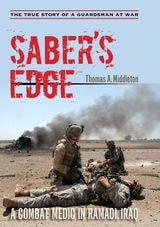
Saber’s Edge
A Combat Medic in Ramadi, IraqThomas A. Middleton
University Press of New England, 2010
Safehaven
The Allied Pursuit of Nazi Assets AbroadMartin Lorenz-Meyer
University of Missouri Press, 2007
As Germany faced inevitable defeat in World War II, the Allies became concerned that the Nazis would attempt to hide their assets in neutral countries—Switzerland, Sweden, Portugal, Spain, and Turkey—in order to revive their cause in later years. To address this danger, the United States, along with Britain and France as reluctant partners, started the “Safehaven” program to probe questions of secret foreign bank accounts, the German wartime gold trade, and the actions of German companies abroad toward the end of the Nazi regime. Initiated by the Federal Economic Administration, Safehaven was soon integrated with U.S. plans, advocated by Treasury Secretary Henry Morgenthau, to avert future German aggression. These proposals quickly fell out of favor, but the Morgenthau Plan’s suggestion to use all German assets as reparations remained attractive.
In this first detailed historical study of Safehaven in English, Martin Lorenz-Meyer focuses on policies of the Allies, revealing their disagreements about the program and addressing the historical roots of a problem that over decades the Cold War had successfully buried. Lorenz-Meyer shows how American administrative agencies were constantly at odds regarding Safehaven’s administration and how coordination of the program was further complicated by different assumptions held by the United States and Britain regarding its aims. Using Sweden as an example, he offers an investigation of the effects of Safehaven in the neutral countries, drawing comparisons with experiences of the program in Switzerland. His research discloses the sums involved and the neutral countries’ positions and also explores the complications posed by international law for any plan to expropriate German assets.
Over time, the neutral countries objected to uncompensated confiscations for a war in which they had not participated, and the United States gradually lost interest in infringing on German wealth because Germany was needed as a new ally. Lorenz-Meyer tells how Safehaven suffered from the discontinuation of wartime controls in a renewed climate of free trade. He also contends that the very problem that necessitated the program raised questions regarding the true neutrality of the countries involved.
Safehaven is a significant addition to the history of Third Reich and international relations, notably concerning American foreign policy. As America continues to face foreign-policy dilemmas regarding trade with enemies and issues of neutrality, Safehaven offers an illuminating case history that sheds new light on current affairs.
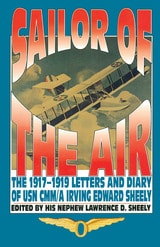
Sailor Of The Air
The 1917-1919 Letters and Diary of USN CMM/A Irving Edward SheelyLawrence D. Sheely
University of Alabama Press, 1993
In the winter of 1917, with most of the world at war, twenty-three-year-old Irving Edward Sheely of Albany, New York, enlisted in Naval Aviation and began his training at Pensacola Naval Air Station. When Congress declared ware on Germany on April 6, 1917, the combined strength of aviation within the Navy and Marine Corps was 48 officers, 239 enlisted men, 54 airplanes, one airship, and one air station.
Samuel Pepys’ Naval Papers
A Bodleian Library SourcebookEdited by Justin Reay
Bodleian Library Publishing, 0
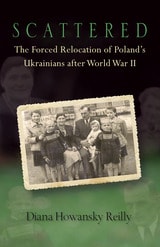
Scattered
The Forced Relocation of Poland’s Ukrainians after World War IIDiana Howansky Reilly
University of Wisconsin Press, 2013
Born in the Lemko region of southeastern Poland, Petro, Melania, and Hania Pyrtej survived World War II only to be separated by political decisions over which they had no control. Petro relocated with his wife to Soviet Ukraine during the population exchange of 1944–46, while his sisters Melania and Hania were resettled to western Poland through Operation Vistula in 1947. As the Ukrainian Insurgent Army fought resettlement, the Polish government meanwhile imprisoned suspected sympathizers within the Jaworzno concentration camp. Melania, Reilly's maternal grandmother, eventually found her way to the United States during Poland's period of liberalization in the 1960s.
Drawing on oral interviews and archival research, Reilly tells a fascinating, true story that provides a bottom-up perspective and illustrates the impact of extraordinary historical events on the lives of ordinary people. Tracing the story to the present, she describes survivors' efforts to receive compensation for the destruction of their homes and communities.
Silver Medal for World History, Independent Publisher Book Awards
Finalist, Housatonic Book Awards
Finalist in History, Foreword Books of the Year
Screen Nazis
Cinema, History, and DemocracySabine Hake
University of Wisconsin Press, 2012
From the late 1930s to the early twenty-first century, European and American filmmakers have displayed an enduring fascination with Nazi leaders, rituals, and symbols, making scores of films from Confessions of a Nazi Spy (1939) and Watch on the Rhine (1943) through Des Teufels General (The Devil’s General, 1955) and Pasqualino settebellezze (Seven Beauties, 1975), up to Der Untergang (Downfall, 2004), Inglourious Basterds (2009), and beyond.
Probing the emotional sources and effects of this fascination, Sabine Hake looks at the historical relationship between film and fascism and its far-reaching implications for mass culture, media society, and political life. In confronting the specter and spectacle of fascist power, these films not only depict historical figures and events but also demand emotional responses from their audiences, infusing the abstract ideals of democracy, liberalism, and pluralism with new meaning and relevance.
Hake underscores her argument with a comprehensive discussion of films, including perspectives on production history, film authorship, reception history, and questions of performance, spectatorship, and intertextuality. Chapters focus on the Hollywood anti-Nazi films of the 1940s, the West German anti-Nazi films of the 1950s, the East German anti-fascist films of the 1960s, the Italian “Naziploitation” films of the 1970s, and issues related to fascist aesthetics, the ethics of resistance, and questions of historicization in films of the 1980s–2000s from the United States and numerous European countries.
Second Front Now--1943
An Opportunity DelayedWalter Scott Dunn
University of Alabama Press, 2009
Addresses head-on the central issue of invasion timing in the Allied European strategy of World War II
In Second Front Now – 1943: An Opportunity Delayed, military historian Walter S. Dunn offers a sharply argued and meticulously researched reassessment of one of the most consequential strategic debates of World War II: the decision not to launch a full-scale Allied invasion of Western Europe in 1943. At a time when Nazi Germany was stretched across multiple fronts and the Soviet Union bore the brunt of the fighting in the East, the question of when—and where—to open a Second Front in Europe became a defining issue among Allied leaders.
Dunn explores the complex interplay of military planning, political caution, logistical constraints, and inter-Allied tensions that led Britain and the United States to postpone a cross-Channel invasion. Drawing from official records, wartime correspondence, and operational analyses, he reconstructs the strategic environment of 1943 and challenges the conventional wisdom that the delay was inevitable—or even prudent. Instead, Dunn presents a compelling case that an earlier invasion may have been both feasible and decisive, potentially shortening the war and altering the balance of postwar power.
With clarity and analytical rigor, the book examines the competing priorities of Churchill, Roosevelt, and Stalin, the influence of Mediterranean operations, and the evolving capabilities of Allied forces. It also considers the broader implications of the delay, including its impact on Soviet–Western relations and the shaping of the Cold War order that followed.
Blending narrative accessibility with scholarly depth, Second Front Now – 1943 is essential reading for students, historians, and anyone interested in the strategic decisions that defined the Allied path to victory. Dunn invites readers to reconsider a pivotal “missed moment” in history—and to reflect on how differently the war, and the world, might have unfolded.

Secrets in a Dead Fish
The Spying Game in the First World WarMelanie King
Bodleian Library Publishing, 2014
Throughout World War I, spymasters and their networks of secret agents developed many clever—and sometimes comical—methods of covert communication. Stacks of bread in a bakery window, puffs of smoke from a chimney, and even woolen pullovers were all used to pass on secret messages that were decipherable only to the well-trained eye. Drawing on the memoirs of eight spies, Melanie King divulges these and other tricks of the trade while sharing details from their astonishing stories. Among her informants are British intelligence officers working undercover in Germany and France, including a former Metropolitan police officer who once hunted Jack the Ripper; a German secret service officer codenamed “Agricola;” an American newspaperman; and an Austrian agent who disguised himself during his career as everything from a Jewish peddler to a Russian officer.
A fascinating compendium of clever and long-forgotten ruses—interspersed with the stories of the spies themselves—Secrets in a Dead Fish sheds new light on the shadowy world of Great War espionage.
Self-Financing Genocide
The Gold Train, the Becher Case and the Wealth of Hungarian JewsGábor Kádár
Central European University Press, 2004
Discusses the process of the economic annihilation of the Jews in Hungary, who– from the economic point of view – were more influential than any other Jewish community in Europe. Following the German occupation in March 1944 the collaborating Hungarian government attempted to assert its claim concerning the complete confiscation of Jewish assets at all stages of the road leading to the extermination camps. The cooperation with the Germans proved to be the most problematic in this area.
The story of the Jewish Gold Train is a relatively small but all the more emblematic chapter of the economic annihilation. The circumstances of the freight’s assembling, the German-Hungarian conflicts concerning the train, the looting attempts, the fate of the assets seized by the Allies (double victimization of the survivors) provide the reader with an insight into the history of the repeated looting of the Hungarian Jewry
The book analyzes the role played by SS-Obersturmbannführer Kurt Becher, one of the most controversial and mysterious figures in the Hungarian and universal history of the Holocaust. Becher, delegated to Hungary by Himmler, administered and benefited from the confiscation of an enormous amount of Jewish assets.
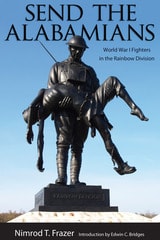
Send the Alabamians
World War I Fighters in the Rainbow DivisionNimrod T. Frazer
University of Alabama Press, 2014
The Remarkable Story of Alabama's Soldiers in America's Great War.
Send the Alabamians recounts the story of the 167th Infantry Regiment of the WWI Rainbow Division from their recruitment to their valiant service on the bloody fields of eastern France in the climactic final months of World War I.
To mark the centenary of World War I, Send the Alabamians tells the remarkable story of a division of Alabama recruits whose service Douglas MacArthur observed had not “been surpassed in military history.” The book borrows its title from a quip by American General Edward H. Plummer who commanded the young men during the inauspicious early days of their service. Impressed with their ferocity and esprit de corps but exasperated by their rambunctiousness, Plummer reportedly exclaimed: In time of war, send me all the Alabamians you can get, but in
time of peace, for Lord’s sake, send them to somebody else!
The ferocity of the Alabamians, so apt to get them in trouble at home, proved invaluable in the field. At the climactic Battle of Croix Rouge, the hot-blooded 167th exhibited unflinching valor and, in the face of machine guns, artillery shells, and poison gas, sustained casualty rates over 50 percent to dislodge and repel the deeply entrenched and heavily armed enemy.
Relying on extensive primary sources such as journals, letters, and military reports, Frazer draws a vivid picture of the individual soldiers who served in this division, so often overlooked but critical to the war’s success. After Gettysburg, the Battle of Croix Rouge is the most significant military engagement to involve Alabama soldiers in the state’s history. Families and genealogists will value the full roster of the 167th that accompanies the text.
Richly researched yet grippingly readable, Nimrod T. Frazer’s Send the Alabamians will delight those interested in WWI, the World Wars, Alabama history, or southern military history in general. Historians of the war, regimental historians, military history aficionados, and those interested in previously unexplored facets of Alabama history will prize this unique volume as well.
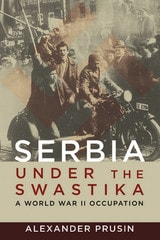
Serbia under the Swastika
A World War II OccupationAlexander Prusin
University of Illinois Press, 2017
Deftly merging political and social history, Serbia under the Swastika looks at the interactions between Germany’s occupation policies, the various forces of resistance and collaboration, and the civilian population. Alexander Prusin reveals a German occupying force at war with itself. Pragmatists intent on maintaining a sedate Serbia increasingly gave way to Nazified agencies obsessed with implementing the expansionist racial vision of the Third Reich. As Prusin shows, the increasing reliance on terror catalyzed conflict between the nationalist Chetniks, communist Partisans, and the collaborationist government. Prusin unwraps the winding system of expediency that at times led the factions to support one-another against the Germans--even as they fought a ferocious internecine civil war to determine the future of Yugoslavia.
Comprehensive and judicious, Serbia under the Swastika is a rare English-language foray into the still-fraught history of Serbia in World War II.
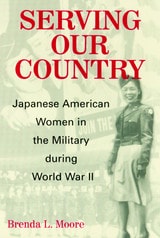
Serving Our Country
Japanese American Women in the Military during World War IIMoore, Brenda L
Rutgers University Press, 2003
Following the 1941 attack on Pearl Harbor and America's declaration of war on Japan, the U.S. War Department allowed up to five hundred second-generation, or "Nisei," Japanese American women to enlist in the Women's Army Corps and, in smaller numbers, in the Army Medical Corps.
Through in-depth interviews with surviving Nisei women who served, Brenda L. Moore provides fascinating firsthand accounts of their experiences. Interested primarily in shedding light on the experiences of Nisei women during the war, the author argues for the relevance of these experiences to larger questions of American race relations and views on gender and their intersections, particularly in the country's highly charged wartime atmosphere. Uncovering a page in American history that has been obscured, Moore adds nuance to our understanding of the situation of Japanese Americans during the war.
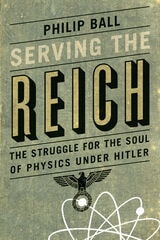
Serving the Reich
The Struggle for the Soul of Physics under HitlerPhilip Ball
University of Chicago Press, 2014
After World War II, most scientists in Germany maintained that they had been apolitical or actively resisted the Nazi regime, but the true story is much more complicated. In Serving the Reich, Philip Ball takes a fresh look at that controversial history, contrasting the career of Peter Debye, director of the Kaiser Wilhelm Institute for Physics in Berlin, with those of two other leading physicists in Germany during the Third Reich: Max Planck, the elder statesman of physics after whom Germany’s premier scientific society is now named, and Werner Heisenberg, who succeeded Debye as director of the institute when it became focused on the development of nuclear power and weapons.
Mixing history, science, and biography, Ball’s gripping exploration of the lives of scientists under Nazism offers a powerful portrait of moral choice and personal responsibility, as scientists navigated “the grey zone between complicity and resistance.” Ball’s account of the different choices these three men and their colleagues made shows how there can be no clear-cut answers or judgment of their conduct. Yet, despite these ambiguities, Ball makes it undeniable that the German scientific establishment as a whole mounted no serious resistance to the Nazis, and in many ways acted as a willing instrument of the state.
Serving the Reich considers what this problematic history can tell us about the relationship between science and politics today. Ultimately, Ball argues, a determination to present science as an abstract inquiry into nature that is “above politics” can leave science and scientists dangerously compromised and vulnerable to political manipulation.
Shaky Foundations
The Politics-Patronage-Social Science Nexus in Cold War AmericaSolovey, Mark
Rutgers University Press, 2015
Numerous popular and scholarly accounts have exposed the deep impact of patrons on the production of scientific knowledge and its applications. Shaky Foundations provides the first extensive examination of a new patronage system for the social sciences that emerged in the early Cold War years and took more definite shape during the 1950s and early 1960s, a period of enormous expansion in American social science.
By focusing on the military, the Ford Foundation, and the National Science Foundation, Mark Solovey shows how this patronage system presented social scientists and other interested parties, including natural scientists and politicians, with new opportunities to work out the scientific identity, social implications, and public policy uses of academic social research. Solovey also examines significant criticisms of the new patronage system, which contributed to widespread efforts to rethink and reshape the politics-patronage-social science nexus starting in the mid-1960s.
Based on extensive archival research, Shaky Foundations addresses fundamental questions about the intellectual foundations of the social sciences, their relationships with the natural sciences and the humanities, and the political and ideological import of academic social inquiry.
Shamrock Battalion in the Great War
Martin J. Hogan, Edited & Intro by James J. Cooke
University of Missouri Press, 2007
When Martin Hogan began training on a vacant lot to be a soldier, he had no idea that he was about to become part of one of the most famed fighting units of World War I. But soon he and other citizen soldiers from the Irish neighborhoods of New York City were locked in deadly combat with the German army.
Hogan’s book records his recollections of the 165th Infantry in World War I, a regiment in the famed Rainbow Division. Company K of the Third or Shamrock Battalion had a part in every fight, and those who survived had more wound stripes than did the soldiers of any other company in the American Expeditionary Forces. Few soldiers saw as much of the war in eighteen months as did young Martin Hogan, and in this stirring account he tells of his experiences with graphic power, humility, and humor.
Hogan depicts World War I at its most human level, with memories of combat in the trenches and on blood-soaked battlefields at St. Mihiel and in the Argonne Forest. His account tells us much about how unprepared for service the United States really was, with the National Guard woefully undersupplied and seriously undertrained. His experiences as a gassed, then wounded, soldier also show the reader a side of war that was far from glorious—in a time before penicillin, when the dangers of gangrene ran high—and his memoir conveys rare insight about conditions in American military hospitals where he found care.
This insider view of the frontline experience during the Great War, complete with well-known figures such as Chaplain Father Francis Duffy and Colonel “Wild Bill” Donovan, attests that the Rainbow Division “epitomized the best of the best spirit in the world—the American spirit.”
James Cooke’s new introduction to this edition places that renowned division in historical context. Now that other part-time American soldiers are facing new challenges abroad, Hogan’s account also attests that the National Guard, citizen soldiers who bore the brunt of much decisive fighting, measured up to the highest standards of professional fighting men.
Shaping the New Man
Youth Training Regimes in Fascist Italy and Nazi GermanyAlessio Ponzio
University of Wisconsin Press, 2017
Ponzio shows how the Italian Fascists' pedagogical practices influenced the origin and evolution of the Hitler Youth. He dissects similarities and differences in the training processes of the youth leaders of the Opera Nazionale Balilla, Gioventù Italiana del Littorio, and Hitlerjugend. And, he explores the transnational institutional interactions and mutual cooperation that flourished between Mussolini's and Hitler's youth organizations in the 1930s and 1940s.

She Came from Mariupol
Natascha Wodin
Michigan State University Press, 2022
Sheer Misery
Soldiers in Battle in WWIIMary Louise Roberts
University of Chicago Press, 2021
Sheer Misery trains a humane and unsparing eye on the corporeal experiences of the soldiers who fought in Belgium, France, and Italy during the last two years of the war. In the horrendously unhygienic and often lethal conditions of the front line, their bodies broke down, stubbornly declaring their needs for warmth, rest, and good nutrition. Feet became too swollen to march, fingers too frozen to pull triggers; stomachs cramped, and diarrhea stained underwear and pants. Turning away from the accounts of high-level military strategy that dominate many WWII chronicles, acclaimed historian Mary Louise Roberts instead relies on diaries and letters to bring to life visceral sense memories like the moans of the “screaming meemies,” the acrid smell of cordite, and the shockingly mundane sight of rotting corpses. As Roberts writes, “For soldiers who fought, the war was above all about their bodies.”

Sir Robert Borden
CanadaMartin Thornton
Haus Publishing, 2010
Sky Pilots
The Yankee Division Chaplains in World War IMichael E. Shay
University of Missouri Press, 2014

Snake's Daughter
The Roads in and out of WarGail Hosking Gilberg
University of Iowa Press, 1997
Gail Hosking Gilberg's father was a hero, a valiant soldier decorated posthumously with the Medal of Honor, a man who served his country throughout his entire adult life. But Charles Hosking was a mystery to his daughter. He was killed in Vietnam a week after her seventeenth birthday. She buried the war, the protests, the medal, and her military upbringing along with her father, so much so that she felt cut off from herself. It took more than twenty years for her to recognize the stirrings of a father and a daughter not yet at peace.
Gilberg began a journey—two journeys really—to find out who her father was and in the process to find herself. She explored her buried rage, shame, and silence, and examined how war had shaped her life. In studying the photo albums that her father had left behind, Gilberg found that the photographs demanded that she give voice to her feelings, then release her silent words, words that had no meaning in war for her father yet had all the meaning in the world for her. The result was an epiphany. The photographs became the roads she took in and out of war, and her words brought her father home. Snake's Daughter reveals the crossroads where a soldier father's life and a daughter's life connect.
Snake's Daughter is an arresting and anguished narrative that gives voice to an experience Gail Hosking Gilberg shares with thousands of Americans, including military “brats” whose parents served their country and often gave their lives in the process.
Soldier of the Press
Covering the Front in Europe and North Africa, 1936-1943Henry T. Gorrell, Edited & Intro by Kenneth Gorrell, & Foreword by John C. McManus
University of Missouri Press, 2009
Soldiers Of Misfortune
lvoirien Tirailleurs of World War IINancy Ellen Lawler
Ohio University Press, 1992
This is a study of the African veterans of a European war. It is a story of men from the Cote d‘Ivoire, many of whom had seldom traveled more than a few miles from their villages, who served France as tirailleurs (riflemen) during World War II.
Thousands of them took part in the doomed attempt to hold back the armies of the Third Relch in 1940; many were to spend the rest of the war as prisoners in Germany or Occupied France.
Others more fortunate came under the authority of Vichy France, and were deployed in the Defense of the “Motherland” and its overseas possessions against the threat posed by the Allies. By 1943, the tirailleur regiments had passed into the service of de Gaulle’s free French and under Allied command, played a significant role in the liberation of Europe.
In describing these complex events, Dr. Lawler draws upon archives in both France and the Cote d’Ivoire. She also carried out an extensive series of interviews with Ivoirien veterans principally, but not exclusively, from the Korhogo region. The vividness of their testimony gives this study a special character. They talk freely not only of their wartime exploits, but also of their experiences after repatriation.
Lawler allows them to speak for themselves. They express their hatred of forced labor and military conscription, which were features of the colonial system, yet at the same time reveal a pride in having come to the defense of France. They describe their role in the nationalist struggle, as foot soldiers of Felix Houphouet-Boigny, but also convey their sense of having become a lost generation. They recognize that their experiences as French soldiers had become sadly irrelevant in a new nation in quest of its history.
Soldiers, Airmen, Spies, and Whisperers
The Gold Coast in World War IINancy Ellen Lawler
Ohio University Press, 2002
South America and the Treaty of Versailles
Michael Streeter
Haus Publishing, 2011
Soviet Military Intervention in Hungary, 1956
Alexandr Kirov
Central European University Press, 2000
This first detailed account of Soviet military operations is based on access to unpublished material in Soviet archives, which have recently been reclassified.
The major contribution made by the book is its source material, which reveals new information on the organization, command, strategy, and tactics of the Soviet armed forces which invaded Hungary in 1956. Particularly interesting is the precise documentation of the irrationally large size of the forces. The volume is based on research in Soviet archives, and this alone makes it of unique scholarly importance.
The book opens with a substantial introductory essay by the editors, and includes a major study by the Russian military historian Alexandr Kirov, based on research in Soviet military archives. One of the real strengths of the book is that it also includes the memoirs of General Yevgeny Malashenko, in 1956 a colonel in the Soviet Army and acting Chief of Staff of the Special Corps in Budapest. He provides unparalleled insights into Soviet military procedures, politico-military co-operation, and the actual fighting strengths and weaknesses of the Red Army. Very few other high-ranking Soviet officers have ever published their memoirs in the West.
Soviet Occupation of Romania, Hungary, and Austria 1944/45–1948/49
László Borhi
Central European University Press, 2015
Spain during World War II
Wayne H Bowen
University of Missouri Press, 2006
The story of Spain during World War II has largely been viewed as the story of dictator Francisco Franco’s foreign diplomacy in the aftermath of civil war. Wayne H. Bowen now goes behind the scenes of fascism to reveal less-studied dimensions of Spanish history. By examining the conflicts within the Franco regime and the daily lives of Spaniards, he has written the first book-length assessment of the regime’s formative years and the struggle of its citizens to survive.
Bowen argues that the emphasis of previous scholars on Spain’s foreign affairs is misplaced—that even the most pro-Axis elements of Franco’s regime were more concerned with domestic politics, the potential for civil unrest, and poverty than with events in Europe. Synthesizing a wide range of Spanish-language scholarship and recently declassified government documents, Bowen reveals how Franco’s government stumbled in the face of world war, inexperienced leaders, contradictory political ideology, and a divided populace. His book tells the dramatic story of a six-year argument among the general, the politicians, and the clerics on nothing less than what should be the nature of the new Spain, touching on issues as diverse as whether the monarchy should be restored and how women should dress.
Examining the effects of World War II years on key facets of Spanish life—Catholicism, the economy, women, leisure, culture, opposition to Franco, and domestic politics—Bowen explores a wide range of topics: the grinding poverty following the civil war, exacerbated by poor economic decisions; restrictions on employment for women versus the relative autonomy enjoyed by female members of the Falange; the efforts of the Church to recover from near decimation; and methods of repression practiced by the regime against leftists, separatists, and Freemasons. He also shows that the lives of most Spaniards remained apolitical and centered on work, family, and leisure marked by the popularity of American movies and the resurgence of loyalty to regional sports teams.
Unlike other studies that have focused exclusively on Spain’s foreign affairs during the Second World War, Bowen’s work stresses the importance of the home front not only in keeping Spain out of the war but also in keeping Franco in power. He shows that in spite of internal problems and external distractions, Franco’s government managed to achieve its goals of state survival and internal peace. As the only single-volume survey of this era available in English, Spain during World War II is a masterful synthesis that offers a much-needed alternative view of the Franco regime during crucial times as it provides a testament to the Spanish people’s will to survive.
Spiritual Criminals
How the Camden 28 Put the Vietnam War on TrialMichelle M. Nickerson
University of Chicago Press, 2024
When the FBI arrested twenty-eight people in connection to a break-in at a Camden, New Jersey, draft board in 1971, the Bureau celebrated. The case should have been an easy victory for the department—the perpetrators had been caught red-handed attempting to destroy conscription documents for draftees into the Vietnam War. But the results of the trial surprised everyone, and in the process shook the foundations of American law, politics, and religion.
In Spiritual Criminals, Michelle M. Nickerson shares a complex portrait of the Camden 28, a passionate group of grassroots religious progressives who resisted both their church and their government as they crusaded against the Vietnam War. Founded by priests, nuns, and devout lay Catholics, members of this coalition accepted the risks of felony convictions as the cost of challenging the nation’s military-industrial complex and exposing the illegal counterintelligence operations of the FBI. By peeling away the layers of political history, theological traditions, and the Camden 28’s personal stories, Nickerson reveals an often-unseen spiritual side of the anti-war movement. At the same time, she probes the fractures within the group, detailing important conflicts over ideology, race, sex, and gender that resonate in the church and on the political Left today.
Spiritual Criminals
How the Camden 28 Put the Vietnam War on TrialMichelle M. Nickerson
University of Chicago Press, 2024
A surprising look at the 28 Catholic radicals who raided a draft board in 1971—and got away with it.
When the FBI arrested twenty-eight people in connection to a break-in at a Camden, New Jersey, draft board in 1971, the Bureau celebrated. The case should have been an easy victory for the department—the perpetrators had been caught red-handed attempting to destroy conscription documents for draftees into the Vietnam War. But the results of the trial surprised everyone, and in the process shook the foundations of American law, politics, and religion.
In Spiritual Criminals, Michelle M. Nickerson shares a complex portrait of the Camden 28, a passionate group of grassroots religious progressives who resisted both their church and their government as they crusaded against the Vietnam War. Founded by priests, nuns, and devout lay Catholics, members of this coalition accepted the risks of felony convictions as the cost of challenging the nation’s military-industrial complex and exposing the illegal counterintelligence operations of the FBI. By peeling away the layers of political history, theological traditions, and the Camden 28’s personal stories, Nickerson reveals an often-unseen spiritual side of the anti-war movement. At the same time, she probes the fractures within the group, detailing important conflicts over ideology, race, sex, and gender that resonate in the church and on the political Left today.
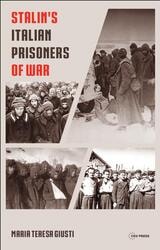
Stalin's Italian Prisoners of War
Maria Teresa Giusti
Central European University Press, 2021
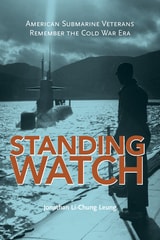
Standing Watch
American Submarine Veterans Remember the Cold War EraJonathan Li-Chung Leung
University of Alabama Press, 2019
Featuring interviews from seventeen veteran submariners, Standing Watch: American Submarine Veterans Remember the Cold War Era offers the perspective of the submariners themselves—lending them a voice and paying homage to their service. Jonathan Li-Chung Leung provides an original glimpse into a world of unique challenges and characters, a life isolated and submerged, and a duty defined by the juxtaposition of monotonous routine and unparalleled excitement.
These personal accounts of life below the surface offer readers a front-row seat to close encounters with Soviet submarines and the naval blockade during the Cuban Missile Crisis, as well as an intimate understanding of daily life onboard the vessels, the culture of military discipline, and the religious-like fervor exercised in honoring traditions big and small. By applying first-hand perspectives to a larger thematic overview, this book uses authentic narratives to deliver a lively and colorful picture of the Silent Service.
Set against the backdrop of sobering geo-political disputes and their own role as the nation’s defenders against a seemingly ambiguous super-enemy, these veterans focus on their responsibilities and reflect on careers built on the simple axioms of pride and service. This invigorating and unalloyed account is an unprecedented addition to the existing literature on naval and military history.
Stark Decency
German Prisoners of War in a New England VillageAllen V. Koop
Dartmouth College Press, 1988
Steel Helmet and Mortarboard
An Academic in Uncle Sam's ArmyFrancis H. Heller
University of Missouri Press, 2009

Strange Haven
A Jewish Childhood in Wartime ShanghaiSigmund Tobias
University of Illinois Press, 1998
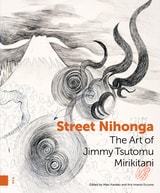
Street Nihonga
The Art of Jimmy Tsutomu MirikitaniMaki Kaneko
Amsterdam University Press, 2026
This volume features 163 color illustrations alongside scholarly essays and reflections that frame Mirikitani’s practice as both artistic achievement and political intervention. Maki Kaneko’s introduction situates the exhibition within the artist’s distinctive “street Nihonga” aesthetic—a collaged form of artmaking, storytelling, and community collaboration. Contributors Noriko Murai, Scott Tsuchitani, Yukinori Okamura, and Kris Ercums offer wide-ranging perspectives, including the transnational legacy of Nihonga, the memory politics of Japanese American incarceration, the evolving lineage of “A-bomb art,” and the curatorial process behind the exhibition. Linda Hattendorf and Masa Yoshikawa, Mirikitani’s close friends and documentarians, provide intimate insights into his life and art.
At once scholarly and inviting, Street Nihonga encourages readers to encounter Mirikitani not as an artist of the margins but as a radical reinterpreter of convention and a witness to histories often left untold. This catalogue remains open-ended—a living collage and a call to engage with Mirikitani’s extraordinary life and work.
Success and Failure in Limited War
Information and Strategy in the Korean, Vietnam, Persian Gulf, and Iraq WarsSpencer D. Bakich
University of Chicago Press, 2014
Traditional assessments of wartime strategy focus on the relationship between the military and civilians, but Bakich argues that we must take into account the information flow patterns among top policy makers and all national security organizations. By examining the fate of American military and diplomatic strategy in four limited wars, Bakich demonstrates how not only the availability and quality of information, but also the ways in which information is gathered, managed, analyzed, and used, shape a state’s ability to wield power effectively in dynamic and complex international systems.
Utilizing a range of primary and secondary source materials, Success and Failure in Limited War makes a timely case for the power of information in war, with crucial implications for international relations theory and statecraft.
Suddenly Soldiers
The 166th Infantry Regiment in World War IRobert Thompson
Westholme Publishing, 2020
Finalist for the 2021 Army Historical Foundation Distinguished Writing Awards in Unit Histories
Americans Face the Horror of a Modern European War for the First Time
When America entered World War I in April 1917, state National Guard units had never planned to mobilize for this kind of war, and the men who made up the hometown companies of each regiment never imagined that they would be asked to fight in what was then the most savage war in human history—they were “innocents” being thrown into a horrendous European conflagration. Made up of companies from ten Ohio towns, the 166th Infantry Regiment became part of the famous 42nd Division, known as the “Rainbow Division.” They were the third American division to arrive in France, where they fought courageously in the trenches at Lunéville and Baccarat before being a key part of the American effort in the Second Battle of the Marne and the Saint Mihiel and Meuse-Argonne offensives. Despite their initial lack of training in modern warfare and weapons, the 166th Infantry compiled an impressive combat record. However, that record came at a terrible cost, with the regiment suffering over two thousand casualties in just nine months of fighting. While they battled the Germans, these hometown Guardsmen lived in trenches and foxholes for weeks at a time, while subsisting on canned beef and coffee amid near constant rain, deep mud, rats, and body lice that made their lives miserable. Because of poor planning and leadership from higher headquarters, they were often asked to achieve impossible objectives amid withering enemy machine-gun fire without proper logistics or artillery support. Yet, despite these challenges, they would persevere, overcome, and emerge victorious.
Using regimental histories and the letters and diaries of the soldiers who fought in France, Suddenly Soldiers: The 166th Infantry Regiment in World War I by author and historian Robert Thompson tells the compelling story of the young men—“citizen soldiers”—who have always borne the cost of America’s freedom with quiet courage.
Superfortress
The Boeing B-29 and American Airpower in World War IICurtis LeMay
Westholme Publishing, 2007
"A fascinating history of a remarkable aircraft."—Edward Jablonski
"An eloquent tribute." —Publishers Weekly
"Superb. . . . an excellent history." —General John T. Chain, Jr. USAF
Among the most sophisticated aircraft flown during World War II, the Boeing B-29 Superfortress was designed to replace the B-17 as the primary long-range bomber of the U.S. Army Air Forces. With its distinctive glazed nose and long, thin wings that provided both speed at high altitude and stability at takeoff and landing, the Superfortress was the first operational bomber with a pressurized crew cabin and featured advanced radar and avionics. Armed with remote-controlled machine gun turrets and a 20,000 pound bomb load, it was the first USAAF bomber capable of mastering the vast distances of the Pacific Theater of World War II. The prototype flew in September 1942 but a series of post-production modifications delayed the bomber's first mission until April 1944. Superfortresses began attacking Japan in daylight with conventional ordnance from high altitude, but their mission was redirected in March 1945, with massive low-level formations dropping incendiary bombs! at night on Japanese cities. The ensuing firestorms, followed by the complete destruction of Hiroshima and Nagasaki by atomic bombs dropped from two specially modified "silverplate" B-29s, forced Japan to cease fighting.
Written by the man who led the B-29 into combat, Superfortress: The Boeing B-29 and American Airpower in World War II is an important document of one of the most turbulent times in world history. General Curtis LeMay recalls the early debate about whether or not the United States needed a long-range bomber, how the B-29 was created and produced despite the enormous logistical difficulties of the design, and the decision to conduct fire-bombings against Japan and ultimately drop the atomic bomb. Highly praised when it was first published, this new edition is complete with photographs, a new introduction, and statistical tables.
Survival at Treblinka
Geography, Gender, and Social Networks in Jewish ResistanceChad S.A. Gibbs
University of Wisconsin Press, 2026
On August 2, 1943, prisoners at the Nazi extermination camp Treblinka, located in occupied Poland, launched an uprising against their captors, during which hundreds successfully escaped while guards killed as many in the process. In this groundbreaking work, Chad S.A. Gibbs draws upon recently discovered sources and novel research methods to fundamentally reassess Jewish resistance at Treblinka—both before and during the revolt.
Using the testimonies of revolt survivors, prior escapees, those who passed through the camp, and a handful of bystander witnesses and former SS guards, Gibbs sheds new light on the events of August 2 as well as many prior acts of resistance. Critical to these new interpretations of the revolt are the actions of women prisoners, who here assume a central place in this story for the first time.

Surviving the Upheaval of Arctic War
Evacuation and Return of the Sámi People in Sápmi and Finland During and After the Second World WarVeli-Pekka Lehtola
University of Alaska Press, 2021