Results by title
28167 books match the query 'History' and 1838 start with s

Sentimental Education
The Story of a Young ManGustave Flaubert
University of Minnesota Press, 2024
A fresh and vivid translation of Flaubert’s influential bildungsroman
Gustave Flaubert conceived Sentimental Education, his final complete novel, as the history of his own generation, one that failed to fulfill the promise of the Revolution of 1848. Published a few months before the start of the 1870 Franco–Prussian War, it offers both a sweeping panorama of French society over three decades and an intimate bildungsroman of a young man from a small town who arrives in Paris when protests against the monarchy are increasing.
The novel’s protagonist, Frédéric Moreau, alternates between aimlessness and ambition as he searches for a meaningful life through love affairs and republican politics. Flaubert’s narrative includes scenes of high drama, as scattered protests across Paris swell into revolution, and quiet moments of self-aware romanticism, crafting a story that possesses the sweep and scope of a historical novel combined with deep emotion and scandalous intimacy. Suffused with tragedy and the poignancy of lost chances and wasted lives, Sentimental Education is sharpened by satirical observations of what Flaubert condemned as the Second Empire’s endemic hypocrisy and willful blindness.
This vibrant, new translation by Raymond N. MacKenzie includes an extensive critical introduction and annotations to help the modern reader appreciate Flaubert’s achievement. Sentimental Education intertwines the personal, the intimate, and the subjective with the political, social, and cultural, embedding Frédéric’s story in the larger arc of what Flaubert saw as France’s decline into mediocrity and imbecility in its politics and manners.
Sentimental Materialism
Gender, Commodity Culture, and Nineteenth-Century American LiteratureLori Merish
Duke University Press, 2000
The phenomenon of female consumption was capitalism’s complement to male production: It created what Merish calls the “Other Protestant Ethic,”a feminine and sentimental counterpart to Max Weber’s ethic of hard work, economic rationality, and self-control. In addition, driven by the culture’s effort to civilize the “cannibalistic” practices of ethnic, class, and national otherness, appropriate female consumerism, marked by taste and refinement, identified certain women and their families as proper citizens of the United States. The public nature of consumption, however, had curiously conflicting effects: While the achievement of cultured material circumstances facilitated women’s civic agency, it also reinforced stereotypes of domestic womanhood.
Sentimental Materialism’s inquiry into middle-class consumption and accompanying ideals of womanhood will appeal to readers in a variety of disciplines, including American studies, cultural studies, feminist theory, and cultural history.

Sentimental Savants
Philosophical Families in Enlightenment FranceMeghan K. Roberts
University of Chicago Press, 2016
Sentimental Savants is the first book to explore the place of the family among the savants of the French Enlightenment, a group that openly embraced their families and domestic lives, even going so far as to test out their ideas—from education to inoculation—on their own children. Meghan K. Roberts delves into the lives and work of such major figures as Denis Diderot, Émilie Du Châtelet, the Marquis de Condorcet, Antoine Lavoisier, and Jérôme Lalande to paint a striking portrait of how sentiment and reason interacted in the eighteenth century to produce not only new kinds of knowledge but new kinds of families as well.
Sentinels of History
Reflections on Arkansas Properties on the National Register of Historic PlacesMark Christ
University of Arkansas Press, 2000

Separate Games
African American Sport behind the Walls of SegregationDavid K. Wiggins
University of Arkansas Press, 2017
Winner of the 2017 NASSH Book Award for best edited collection.
The hardening of racial lines during the first half of the twentieth century eliminated almost all African Americans from white organized sports, forcing black athletes to form their own teams, organizations, and events. This separate sporting culture, explored in the twelve essays included here, comprised much more than athletic competition; these “separate games” provided examples of black enterprise and black self-help and showed the importance of agency and the quest for racial uplift in a country fraught with racialist thinking and discrimination.
The significance of this sporting culture is vividly showcased in the stories of the Cuban Giants baseball team, basketball’s New York Renaissance Five, the Tennessee State Tigerbelles track-and-field team, black college football’s Turkey Bowl Classic, car racing’s Gold and Glory Sweepstakes, Negro League Baseball’s East-West All-Star game, and many more. These teams, organizations, and events made up a vibrant national sporting complex that remained in existence until the integration of sports beginning in the late 1940s. Separate Games explores the fascinating ways sports helped bind the black community and illuminate race pride, business acumen, and organizational abilities.
Separate Paths
Lenapes and Colonists in West New JerseyJean R. Soderlund
Rutgers University Press, 2022
Separate Paths: Lenapes and Colonists in West New Jersey is the first cross-cultural study of European colonization in the region south of the Falls of the Delaware River (now Trenton). Lenape men and women welcomed their allies, the Swedes and Finns, to escape more rigid English regimes on the west bank of the Delaware, offering land to establish farms, share resources, and trade. In the 1670s, Quaker men and women challenged this model with strategies to acquire all Lenape territory for their own use and to sell as real estate to new immigrants. Though the Lenapes remained sovereign and “old settlers” retained their Swedish Lutheran religion and ethnic autonomy, the West Jersey proprietors had considerable success in excluding Lenapes from their land. The Friends believed God favored their endeavor with epidemics of smallpox and other European diseases that destroyed Lenape families and communities. Affluent Quakers also introduced enslavement of imported Africans and Natives—and the violence that sustained it—to a colony they had promoted with the liberal West New Jersey Concessions of 1676-77. Thus, they defied their prior experience of religious persecution and their principles of peaceful resolution of conflict, equality of everyone before God, and the golden rule to treat others as you wish to be treated. Despite mutual commitment to peace by Lenapes, old settlers, and Friends, Quaker colonization had similar results to military conquests of Natives by English in Virginia and New England, and Dutch in the Hudson Valley and northern New Jersey. Still, in alliance with old settlers, Lenape communities survived in areas outside the focus of English colonization, in the Pine Barrens, upper reaches of streams, and Atlantic shore.

Separate Spheres No More
Gender Convergence in American Literature, 1830-1930Monika Elbert
University of Alabama Press, 2000
Examines the intersection of male and female spheres in American literature
Although they wrote in the same historical milieu as their male counterparts, women writers of the 19th- and early 20th-centuries have generally been "ghettoized" by critics into a separate canonical sphere. These original essays argue in favor of reconciling male and female writers, both historically and in the context of classroom teaching.
While some of the essays pair up female and male authors who write in a similar style or with similar concerns, others address social issues shared by both men and women, including class tensions, economic problems, and the Civil War experience. Rather than privileging particular genres or certain well-known writers, the contributors examine writings ranging from novels and poetry to autobiography, utopian fiction, and essays. And they consider familiar figures like Harriet Beecher Stowe, Emily Dickinson, and Ralph Waldo Emerson alongside such lesser-known writers as Melusina Fay Peirce, Susie King Taylor, and Mary Gove Nichols.
Each essay revises the binary notions that have been ascribed to males and females, such as public and private, rational and intuitive, political and domestic, violent and passive. Although they do not deny the existence of separate spheres, the contributors show the boundary between them to be much more blurred than has been assumed until now.

Separated by Worlds
Letters from Nazi Germany to a Distant SonFiona Burdette
Rutgers University Press, 2027
In 1937, Josef and Marie Baum, of Bamberg, Germany, sent their seventeen-year-old son Kurt to begin a new life in America. Their letters, provided here in both the original German and English translation, recount the story of this middle-class Jewish family during the Nazi era. Kurt’s struggles to adapt to his new circumstances were met with little understanding from his parents, who were enduring a steadily worsening existence at the hands of the Nazis. The father’s desperate pleas prior to his forced deportation and murder constitute a final rupture in this poignant story.
Bridging the Holocaust experience from both sides of the Atlantic, Separated by Worlds sheds light both on life in Nazi Germany and on the refugee experience in the United States. Unlike traditional exile literature focused on intellectual and cultural elites, the book documents the experiences of average citizens navigating escape and assimilation. The fifty letters at the center of the book, which communicate the parents’ needs, fears, and hopes to their son, offer an unusually intimate window into daily life under Nazi rule. The book is richly illustrated, and the letters are annotated and contextualized by several essays.

Separating Church and State
ROGER WILLIAMS AND RELIGIOUS LIBERTYTimothy L. Hall
University of Illinois Press, 1998
apostle of religious tolerance and a foe of religious establishments.
In Separating Church and State, Timothy Hall combines impressive
historical and legal scholarship to explore Williams's theory of religious
liberty and relate it to current debate. Williams's fierce religious dogmaticism,
Hall argues, is precisely what led to his religious tolerance, making
him one of the most articulate champions of the argument for the necessary
separation of church and state.
"Both timely and provocative. . . . Offers Williams's largely overlooked
but deeply important perspective on the peaceful coexistence of committed
believers of diverse faiths. The book also brings into question crucial
tenets of the United States Supreme Court's First Amendment religion clause
jurisprudence at a time when many are raising questions about it."
-- Marci A. Hamilton, Benjamin N. Cardozo School of Law, New York City
"Hall has the entire Williams corpus under his command, and he plays
the relevant texts like a master organist. He also has the legal corpus
equally at his fingertips. One of the great strengths of his book is that
it bridges the too often separate fields of history and jurisprudence."
-- Edwin Gaustad, author of Liberty of Conscience: Roger Williams in
America
Sephardi Family Life in the Early Modern Diaspora
Edited by Julia R. Lieberman
Brandeis University Press, 2010
Sephardim in the Americas
Studies in Culture and HistoryMartin A. Cohen
University of Alabama Press, 1993
Sephardim
The Jews from SpainPaloma Díaz-Mas
University of Chicago Press, 1992
September 11 in History
A Watershed Moment?Mary L. Dudziak, ed.
Duke University Press, 2003
From a variety of perspectives, the contributors to this collection scrutinize claims about September 11, in terms of both their historical validity and their consequences. Essays range from an analysis of terms like “ground zero,” “homeland,” and “the axis of evil” to an argument that the U.S. naval base at Guantánamo Bay has become a site for acting out a repressed imperial history. Examining the effect of the attacks on Islamic self-identity, one contributor argues that Osama bin Laden enacted an interpretation of Islam on September 11 and asserts that progressive Muslims must respond to it. Other essays focus on the deployment of Orientalist tropes in categorizations of those who “look Middle Eastern,” the blurring of domestic and international law evident in a number of legal developments including the use of military tribunals to prosecute suspected terrorists, and the justifications for and consequences of American unilateralism. This collectionultimately reveals that everything did not change on September 11, 2001, but that some foundations of democratic legitimacy have been significantly eroded by claims that it did.
Contributors. Khaled Abou el Fadl, Mary L. Dudziak, Christopher L. Eisgruber, Laurence R. Helfer, Sherman A. Jackson, Amy B. Kaplan, Elaine Tyler May, Lawrence G. Sager, Ruti G. Teitel, Leti Volpp, Marilyn B. Young

Serbia under the Swastika
A World War II OccupationAlexander Prusin
University of Illinois Press, 2017
Deftly merging political and social history, Serbia under the Swastika looks at the interactions between Germany’s occupation policies, the various forces of resistance and collaboration, and the civilian population. Alexander Prusin reveals a German occupying force at war with itself. Pragmatists intent on maintaining a sedate Serbia increasingly gave way to Nazified agencies obsessed with implementing the expansionist racial vision of the Third Reich. As Prusin shows, the increasing reliance on terror catalyzed conflict between the nationalist Chetniks, communist Partisans, and the collaborationist government. Prusin unwraps the winding system of expediency that at times led the factions to support one-another against the Germans--even as they fought a ferocious internecine civil war to determine the future of Yugoslavia.
Comprehensive and judicious, Serbia under the Swastika is a rare English-language foray into the still-fraught history of Serbia in World War II.

Serbian Orthodox Fundamentals
The Quest for an Eternal IdentityChristos Mylonas
Central European University Press, 2003
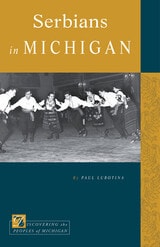
Serbians in Michigan
Paul Lubotina
Michigan State University Press, 2014
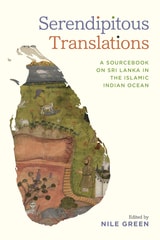
Serendipitous Translations
A Sourcebook on Sri Lanka in the Islamic Indian OceanEdited by Nile Green
University of Texas Press, 2025
The most comprehensive anthology of primary sources on Sri Lanka’s links with the Islamic world ever assembled in English.
Sri Lanka is an underappreciated focal point of global history. Known to Persian and Arab traders as Serendib, the island has long been a site of intensive cultural and material exchange, as well as a holy place—Islamic tradition holds that the biblical Adam arrived there after his expulsion from Eden. Assembling centuries of texts, this volume presents an array of sources from the Indian Ocean.
Serendipitous Translations gathers travelogues, literary works, commercial records, inscriptions, religious tracts, pilgrim manuals, and more—an unprecedented range of Muslim voices from Sri Lanka between the 1200s and 1990s. These works vividly document medieval pilgrimages, maritime mysticism, diplomatic encounters, colonial-era commerce, and the bustling everyday affairs of a cosmopolitan Asian nexus. Expert translations bring Arabic, Malay, Turkish, Urdu, Dhivehi, Sinhala, Arabic-Tamil, and Tamil texts to readers of English for the first time. Editor Nile Green situates these texts in their Indian Ocean contexts by introducing the broad sweep of Sri Lanka’s story. An invaluable collection, Serendipitous Translations is the most comprehensive anthology of primary sources ever assembled on Sri Lanka’s thousand-year links to the Muslim world.

Serf, Seigneur, and Sovereign
Agrarian Reform in Eighteenth-Century BohemiaWilliam E. Wright
University of Minnesota Press, 1966
Serf, Seigneur, and Sovereign was first published in 1966. Minnesota Archive Editions uses digital technology to make long-unavailable books once again accessible, and are published unaltered from the original University of Minnesota Press editions.
This is a detailed history of the agrarian reforms which took place in Bohemia during the reigns of the Habsburg rulers Maria Theresa, 1740–1780, and Joseph II, 1780–1790. The enactment of the land reforms had far-reaching social, economic, and political effects, and the subject constitutes an important chapter in the history of the nation we now know as Czechoslovakia. The topic has been hardly touched in English, however, and has only recently been properly treated by the Marxist historians of post-World War II Czechoslovakia. Much of Professor Wright's account is based on documents not previously used by historians, particularly materials in the Hofkammerarchiv in Vienna.
The author provides a background by describing the development of serfdom in Bohemia over approximately two hundred years prior to the accession of Maria Theresa to the throne of Austria in 1740. In major sections of the book Professor Wright traces the causes, events, and effects of the program of agrarian reform which Maria Theresa and Joseph II carried out. He shows how the changes in the land system profoundly affected the relationships of the serf, seigneur, and sovereign, and how they paved the way for the much greater social revolution which was to come with the emancipation of 1848.
In addition to providing a wealth of factual information, the account gives a dramatic picture of the plight of the peasant, along with valid glimpses of the personalities of the rulers and their ministers. Specialists in European history, social history, or agrarian history will find the book particularly rewarding.
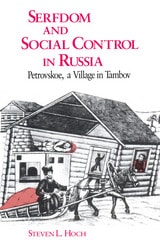
Serfdom and Social Control in Russia
Petrovskoe, a Village in TambovSteven L. Hoch
University of Chicago Press, 1986
Seri Prehistory
The Archaeology of the Central Coast of Sonora, MexicoThomas Bowen
University of Arizona Press, 1976
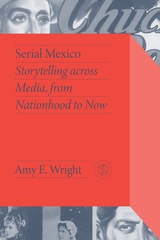
Serial Mexico
Storytelling across Media, from Nationhood to NowAmy E. Wright
Vanderbilt University Press, 2023
Honorable Mention, Premio al Mejor Libro en Humanidades, Latin American Studies Association–Mexico Section, 2025
No book until now has tied in two centuries of Mexican serial narratives—tales of glory, of fame, and of epic characters, grounded in oral folklore—with their subsequent retelling in comics, radio, and television soap operas. Wright’s multidisciplinary Serial Mexico delves into this storytelling tradition: examining the nostalgic tales reimagined in novelas, radionovelas, telenovelas and onwards, and examining the foundational figures who have been woven into society.
This panorama shows the Mexican experience of storytelling from the country’s early days until now, showcasing protagonists that mock authority, make light of hierarchy, and embrace the hybridity and mestizaje of Mexico. These tales reflect on and respond to crucial cultural concerns such as family, patriarchy, gender roles, racial mixing, urbanization, modernization, and political idealism. Serial Mexico thus examines how serialized storytelling’s melodrama and sensationalism reveals key political and cultural messaging.
In a detailed yet accessible style, Wright describes how these stories have continued to morph with current times’ concerns and social media. Will tropes and traditions carry on in new and reimagined serial storytelling forms? Only time will tell. Stay tuned for the next episode.
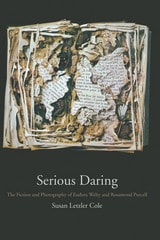
Serious Daring
The Fiction and Photography of Eudora Welty and Rosamond PurcellSusan Letzler Cole
University of Arkansas Press, 2016
Serious Daring is the story of the complementary journeys of two American women artists, celebrated fiction writer Eudora Welty and internationally acclaimed photographer Rosamond Purcell, each of whom initially practiced, but then turned from, the art form ultimately pursued by the other.
For both Welty and Purcell, the art realized is full of the art seemingly abandoned. Welty’s short stories and novels use images of photographs, photographers, and photography. Purcell photographed books, texts, and writing.
Both women make compelling art out of the seeming tension between literary and visual cultures. Purcell wrote a memoir in which photographs became endnotes. Welty re-emerged as a photographer through the publication of four volumes of what she called her “snapshots,” magnificent black-and-white photographs of small-town Mississippi and New York City life.
Serious Daring is a fascinating look at how the road not taken can stubbornly accompany the chosen path, how what is seemingly left behind can become a haunting and vital presence in life and art.

Seriously Funny
Mexican Political Jokes as Social ResistanceSamuel Schmidt, Translated by Adam Schmidt
University of Arizona Press, 2014
Now available in English for the first time, Seriously Funny is a groundbreaking work. Its goal is to examine the ways in which political humor—including nicknames, anagrams, poems, and parodies of religious prayers, in addition to jokes—has developed and operated in one country over more than four centuries. Although political humor thrives in Mexico, it is often cleverly encoded so that it doesn’t appear to be critical of government policies or officials. But, writes Samuel Schmidt, that is precisely its purpose: to question the actions and assumptions of the party in power. Schmidt argues persuasively that political jokes are acts of minor rebellion: their objective is not to overthrow a government but to correct its mistakes.

Seriously Mad
Mental Distress and the Broadway MusicalAleksei Grinenko
University of Michigan Press, 2023
Theatermakers in the United States have long been drawn to madness as a source of dramatic spectacle. During the Broadway musical’s golden age in the mid-twentieth century, creative teams used the currently in-vogue psychoanalytic ideas about mental life to construct troubled characters at odds with themselves and their worlds. As the clinical and cultural profile of madness transformed over the twentieth century, musicals continued to delve into the experience of those living with mental pain, trauma, and unhappiness.
Seriously Mad offers a dynamic account of stage musicals’ engagement with historically significant theories about mental distress, illness, disability, and human variance in the United States. By exploring who is considered mad and what constitutes madness at different moments in U.S. history, Aleksei Grinenko shows how, in attempts to bring the musicals closer to highbrow sophistication, theater dramatized serious medical conditions and social problems. Among the many Broadway productions discussed are Next to Normal, A Strange Loop, Sweeney Todd, Man of La Mancha, Gypsy, Oklahoma!, and Lady in the Dark.
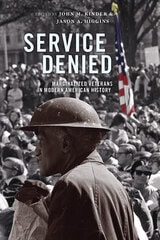
Service Denied
Marginalized Veterans in Modern American HistoryEdited by John M. Kinder and Jason A. Higgins
University of Massachusetts Press, 2022
Wartime military service is held up as a marker of civic duty and patriotism, yet the rewards of veteran status have never been equally distributed. Certain groups of military veterans—women, people of color, LGBTQ people, and former service members with stigmatizing conditions, “bad paper” discharges, or criminal records—have been left out of official histories, excised from national consciousness, and denied state recognition and military benefits.
Chronicling the untold stories of marginalized veterans in the twentieth and twenty-first centuries, Service Denied uncovers the generational divides, cultural stigmas, and discriminatory policies that affected veterans during and after their military service. Together, the chapters in this collection recast veterans beyond the archetype, inspiring an innovative model for veterans studies that encourages an intersectional and interdisciplinary analysis of veterans history. In addition to contributions from the volume editors, this collection features scholarship by Barbara Gannon, Robert Jefferson, Evan P. Sullivan, Steven Rosales, Heather Marie Stur, Juan Coronado, Kara Dixon Vuic, John Worsencroft, and David Kieran.
Service Economies
Militarism, Sex Work, and Migrant Labor in South KoreaJin-kyung Lee
University of Minnesota Press, 2010
Making surprising and revelatory connections, Jin-kyung Lee analyzes South Korean military labor in the Vietnam War, domestic female sex workers, South Korean prostitution for U.S. troops, and immigrant/migrant labor from Asia in contemporary South Korea. Foregrounding gender, sexuality, and race, Lee reimagines the South Korean economic "miracle" as a global and regional articulation of industrial, military, and sexual proletarianization.
Lee not only addresses these under-studied labors individually but also integrates and unites them to reveal an alternative narrative of a changing South Korean working class whose heterogeneity is manifested in its objectification. Delving into literary and popular cultural sources as well as sociological work, Lee locates South Korean development in its military and economic interactions with the United States and other Asian nation-states, offering a unique perspective on how these practices have shaped and impacted U.S.-South Korea relations.

Service as Mandate
How American Land-Grant Universities Shaped the Modern World, 1920–2015Edited by Alan I Marcus
University of Alabama Press, 2015
From their founding, land-grant schools have provided educational opportunities to millions, producing many of the nation’s scientific, technical, and agricultural leaders and spawning countless technological and agricultural innovations. Nevertheless, their history has not always been smooth or without controversy or setbacks. These vital centers of learning and research have in fact been redefined and reconceptualized many times and today bear only a cursory resemblance to their original incarnations.
The thirteen essays in this collection explore such themes as the emphasis on food science and home economics, the country life movement, the evolution of a public research system, the rise of aerospace engineering, the effects of the GI Bill, the teaching of military science, the sustainable agriculture movement, and the development of golf-turf science. Woven together, these expertly curated scenes, vignettes, and episodes powerfully illustrate these institutions’ ability to flex and adapt to serve the educational needs of an ever-changing American citizenry.
By dint of their mission to remedy social, economic, and technical problems; to improve standards of living; and to enhance the quality of life, land-grant universities are destined and intended to be agents of change—a role that finds them at times both celebrated and hotly contested, even vilified. A readable and fascinating exploration of land-grant universities, Service as Mandate offers a vital exploration of these dynamic institutions to educators, policy makers, students, and the wider communities that land-grant universities serve.
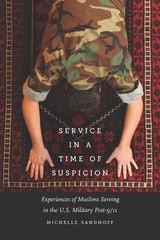
Service in a Time of Suspicion
Experiences of Muslims Serving in the U.S. Military Post-9/11Michelle Sandhoff
University of Iowa Press, 2017
In Service in a Time of Suspicion, fifteen such service members talk about what it means to be Muslim, American, and a uniformed member of the armed services in the twenty-first century. These honest accounts remind us of our shared humanity.
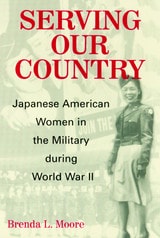
Serving Our Country
Japanese American Women in the Military during World War IIMoore, Brenda L
Rutgers University Press, 2003
Following the 1941 attack on Pearl Harbor and America's declaration of war on Japan, the U.S. War Department allowed up to five hundred second-generation, or "Nisei," Japanese American women to enlist in the Women's Army Corps and, in smaller numbers, in the Army Medical Corps.
Through in-depth interviews with surviving Nisei women who served, Brenda L. Moore provides fascinating firsthand accounts of their experiences. Interested primarily in shedding light on the experiences of Nisei women during the war, the author argues for the relevance of these experiences to larger questions of American race relations and views on gender and their intersections, particularly in the country's highly charged wartime atmosphere. Uncovering a page in American history that has been obscured, Moore adds nuance to our understanding of the situation of Japanese Americans during the war.
Serving the Reich
The Struggle for the Soul of Physics under HitlerPhilip Ball
University of Chicago Press, 2014
After World War II, most scientists in Germany maintained that they had been apolitical or actively resisted the Nazi regime, but the true story is much more complicated. In Serving the Reich, Philip Ball takes a fresh look at that controversial history, contrasting the career of Peter Debye, director of the Kaiser Wilhelm Institute for Physics in Berlin, with those of two other leading physicists in Germany during the Third Reich: Max Planck, the elder statesman of physics after whom Germany’s premier scientific society is now named, and Werner Heisenberg, who succeeded Debye as director of the institute when it became focused on the development of nuclear power and weapons.
Mixing history, science, and biography, Ball’s gripping exploration of the lives of scientists under Nazism offers a powerful portrait of moral choice and personal responsibility, as scientists navigated “the grey zone between complicity and resistance.” Ball’s account of the different choices these three men and their colleagues made shows how there can be no clear-cut answers or judgment of their conduct. Yet, despite these ambiguities, Ball makes it undeniable that the German scientific establishment as a whole mounted no serious resistance to the Nazis, and in many ways acted as a willing instrument of the state.
Serving the Reich considers what this problematic history can tell us about the relationship between science and politics today. Ultimately, Ball argues, a determination to present science as an abstract inquiry into nature that is “above politics” can leave science and scientists dangerously compromised and vulnerable to political manipulation.

Sesqui!
Greed, Graft, and the Forgotten World's Fair of 1926Thomas H. Keels
Temple University Press, 2017
In 1916, Philadelphia department-store magnate John Wanamaker launched plans for a Sesqui-Centennial International Exposition in 1926. It would be a magnificent world's fair to celebrate the 150th anniversary of the Declaration of Independence. The “Sesqui” would also transform sooty, industrial Philadelphia into a beautiful Beaux Arts city.
However, when the Sesqui opened on May 31, 1926, in the remote, muddy swamps of South Philadelphia, the fair was unfinished, with a few shabbily built and mostly empty structures. Crowds stayed away in droves: fewer than five million paying customers attended, costing the city millions of dollars. Philadelphia became a national scandal—a city so corrupt that one political boss could kidnap an entire world’s fair.
In his fascinating history Sesqui!, noted historian Thomas Keels situates this ill-fated celebration—a personal boondoggle by the all-powerful Congressman William S. Vare—against the transformations taking place in America during the 1920s. Keels provides a comprehensive account of the Sesqui as a meeting ground for cultural changes sweeping the country: women’s and African-American rights, anti-Semitism, eugenics, Prohibition, and technological advances.
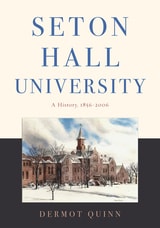
Seton Hall University
A History, 1856–2006Dermot Quinn
Rutgers University Press, 2023
In this vivid and elegantly written history, Dermot Quinn examines how Seton Hall was able to develop as an institution while keeping faith with its founder’s vision. Looking at the men and women who made Seton Hall what it is today, he paints a compelling picture of a university that has enjoyed its share of triumphs but has also suffered tragedy and loss. He shows how it was established in an age of prejudice and transformed in the aftermath of war, while exploring how it negotiated between a distinctly Roman Catholic identity and a mission to include Americans of all faiths.
Seton Hall University not only recounts the history of a great educational institution, it also shares the personal stories of the people who shaped it and were shaped by it: the presidents, the priests, the faculty, the staff, and of course, the students.

Setsuko's Secret
Heart Mountain and the Legacy of the Japanese American IncarcerationShirley Ann Higuchi
University of Wisconsin Press, 2020
Only after a serious cancer diagnosis did Shirley's mother, Setsuko, share her vision for a museum at the site of the former camp, where she had been donating funds and volunteering in secret for many years. After Setsuko's death, Shirley skeptically accepted an invitation to visit the site, a journey that would forever change her life and introduce her to a part of her mother she never knew.
Navigating the complicated terrain of the Japanese American experience, Shirley patched together Setsuko's story and came to understand the forces and generational trauma that shaped her own life. Moving seamlessly between family and communal history, Setsuko's Secret offers a clear window into the "camp life" that was rarely revealed to the children of the incarcerated. This volume powerfully insists that we reckon with the pain in our collective American past.
Setting Plato Straight
Translating Ancient Sexuality in the RenaissanceTodd W. Reeser
University of Chicago Press, 2015
In Setting Plato Straight, Todd W. Reeser undertakes the first sustained and comprehensive study of Renaissance textual responses to Platonic same-sex sexuality. Reeser mines an expansive collection of translations, commentaries, and literary sources to study how Renaissance translators transformed ancient eros into non-erotic, non-homosexual relations. He analyzes the interpretive lenses translators employed and the ways in which they read and reread Plato’s texts. In spite of this cleansing, Reeser finds surviving traces of Platonic same-sex sexuality that imply a complicated, recurring process of course-correction—of setting Plato straight.
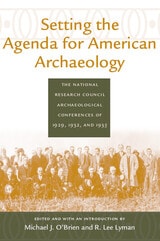
Setting the Agenda for American Archaeology
The National Research Council Archaeological Conferences of 1929, 1932, and 1935Edited and with an introduction by Michael J. O'Brien and R. Lee Lyman
University of Alabama Press, 2001
A Dan Josselyn Memorial Publication
This collection elucidates the key role played by the National Research Council seminars, reports, and pamphlets in setting an agenda that has guided American archaeology in the 20th century.
In the 1920s and 1930s, the fascination that Americans had for the continent's prehistoric past was leading to a widespread and general destruction of archaeological evidence. In a drive toward the commercialization of antiquities, amateur collectors and "pot hunters" pillaged premier and lesser-known sites before the archaeological record could be properly investigated and documented. Adding to the problem was a dearth of professionals and scholars in the field to conduct professional investigations and to educate the public about the need for preservation and scientific research methods.
In stepped the National Research Council, a division of the National Academy of Sciences, the Committee on State Archaeological Surveys. The CSAS initiated an enormously successful outreach program to enlist the aid of everyday citizens in preserving the fragile but valuable prehistoric past. Meetings held in St. Louis, Birmingham, and Indianapolis provided nuts-and-bolts demonstrations by trained archaeologists and laid out research agendas that both professionals and amateurs could follow.
Setting the Agenda contains the complete reports of the three NRC conferences, a short publication on the methods and techniques for conducting archaeological surveys, and a guide for amateur archaeologists. An extensive introduction by the editors sets these documents in context and provides insight into the intentions of the NRC committee members as they guided the development of American archaeology.
Settlement Folk
Social Thought and the American Settlement Movement, 1885-1930Mina Carson
University of Chicago Press, 1990
These extraordinary individuals left an enduring legacy of beliefs about professional and voluntary responsibility for welfare services. As Carson shows, however, their genius for image creation and their myriad connections with other intellectual and social leaders extended the influence of the settlement ideology in many directions: fostering new attitudes toward the American city and the equality of the sexes, initiating a new social-scientific approach to social problems, and shaping the self-definition of the American educated middle class.
Settlement, Subsistence, and Change Among the Labrador Inuit
David Natcher
University of Manitoba Press, 2012
Settlement, Subsistence, and Society in Late Zuni Prehistory
Keith W. Kintigh
University of Arizona Press, 1985
Keith W. Kintigh demonstrates how changing agricultural strategies and developing mechanisms of social integration contributed to these population shifts. In particular, he argues that occupants of the earliest large pueblos relied on runoff agriculture, but that gradually spring-and river-fed irrigation systems were adopted. Resultant strengthening of the mechanisms of social integration allowed the increased occupational stability of the protohistorical Zuni towns.
Settler City Limits
Indigenous Resurgence and Colonial Violence in the Urban Prairie WestHeather Dorries
Michigan State University Press, 2019
Settler Colonial City
Racism and Inequity in Postwar MinneapolisDavid Hugill
University of Minnesota Press, 2021
Revealing the enduring link between settler colonization and the making of modern Minneapolis
Colonial relations are often excluded from discussions of urban politics and are viewed instead as part of a regrettable past. In Settler Colonial City, David Hugill confronts this culture of organized forgetting by arguing that Minnesota’s largest city is enduringly bound up with the power dynamics of settler-colonial politics. Examining several distinct Minneapolis sites, Settler Colonial City tracks how settler-colonial relations were articulated alongside substantial growth in the Twin Cities Indigenous community during the second half of the twentieth century—creating new geographies of racialized advantage.
Studying the Phillips neighborhood of Minneapolis in the decades that followed the Second World War, Settler Colonial City demonstrates how colonial practices and mentalities shaped processes of urban reorganization, animated non-Indigenous “advocacy research,” informed a culture of racialized policing, and intertwined with a broader culture of American imperialism. It reveals how the actions, assumptions, and practices of non-Indigenous people in Minneapolis produced and enforced a racialized economy of power that directly contradicts the city’s “progressive” reputation.
Ultimately, Settler Colonial City argues that the hierarchical and racist political dynamics that characterized the city’s prosperous beginnings are not exclusive to a bygone era but rather are central to a recalibrated settler-colonial politics that continues to shape contemporary cities across the United States.
Settler Colonialism, Volume 107
Alex Lubin
Duke University Press, 0
Essays consider how race, sexuality and gender, and ethnicity shape experiences of settler colonialism, how public and private space are administered, how citizenship laws establish boundaries of national inclusion and exclusion, how religious motives drive settler colonialism, and how settler colonial regimes appropriate and “cleanse” indigenous cultures and histories. One essay investigates the interwoven ideological rationales for cultural pluralism, Zionism, and opposition to empire in the United States prior to World War I, highlighting the seemingly paradoxical call for the support of a Zionist settlement of Israel on grounds that establishing a Jewish state through colonial appropriation paralleled American development. Another contributor argues that white settler colonialism in the United States is articulated within the present-day constellation of neoliberalism and post–civil rights “color-blind” discourse, focusing on the intersections of the U.S. vote against the UN Declaration on the Rights of Indigenous Peoples in 2007, the U.S. Supreme Court ruling on City of Sherrill v. Oneida Indian Nation of New York in 2005, and antisovereignty groups organizing against American Indian self-determination. Another offers the current situation in Darfur as a provocative rendering of postcolonial settler violence.
Settler Colonialism
An IntroductionSai Englert
Pluto Press, 2022
Sai Englert offers readers an accessible and global account of settler colonialism, taking in its history, some of its main characteristics, and its continued relevance today.
From the Palestinian struggle against Israel occupation to the First Nations' mass opposition to pipeline construction in North America, indigenous peoples are at the forefront of some of the most important struggles of our age. Rich with their own unique histories, characteristics, and social relations, these different struggles are connected by the enemy they face: settler colonialism.
While settler-colonial regimes differ, Englert explains how they are all defined by a fundamental conflict between themselves and the indigenous people they aim to dispossess, exploit and/or eliminate.
To understand settler colonialism as a distinct, structural, and contemporary process, is also to start engaging with a number of international social movements, political struggles, and solidarity campaigns differently. It is to start asking how decolonization – as a material struggle for freedom – might be possible.
Settler Garrison
Debt Imperialism, Militarism, and Transpacific ImaginariesJodi Kim
Duke University Press, 2022
Settler Imperialism
Alaska Natives and the Myth of the Last FrontierJess Arnett
University of Minnesota Press, 2026
How Alaska redefined US colonialism through Indigenous resistance and legal innovation
Long treated as the symbolic “last frontier,” Alaska was, in fact, the United States’s first experiment in overseas empire. Settler Imperialism reveals these concepts as fictitious stories promoted by government officials and offers a sweeping history of Alaska Native legal and political struggle in the face of a colonial structure that defied the norms of US expansion. Examining Alaska as both a settler and imperial space, Jess Arnett challenges familiar narratives of American growth, sovereignty, and law.
Following the 1867 Treaty of Cession when the United States purchased Alaska from Russia, the federal government refused to sign treaties with Alaska Natives, excluded them from the Bureau of Indian Affairs, and denied the region designation as Indian Country. These departures from standard Indian policy created legal ambiguity that enabled new opportunities for land dispossession and resource extraction by state and corporate interests. Focusing on history from the late nineteenth century through the 1971 Alaska Native Claims Settlement Act, Arnett uncovers how the Tlingit, Haida, Tsimshian, and other Indigenous nations navigated and contested Alaska’s peculiar legal terrain. Members of these communities forcefully petitioned for US citizenship, mobilized Indigenous legal orders, and engaged selective federal Indian law to assert land rights and political authority.
By placing Alaska at the center of US colonial history, Settler Imperialism turns a critical lens on the evolution of America. To understand US expansion, race, and legal formation, Alaska must be seen not as the last frontier but as a proving ground for empire.
Retail e-book files for this title are screen-reader friendly with images accompanied by short alt text and/or extended descriptions.
Settler Militarism
World War II in Hawai'i and the Making of US EmpireJuliet Nebolon
Duke University Press, 2024
Settling Ohio
First Peoples and BeyondTimothy G. Anderson and Brian Schoen
Ohio University Press, 2023
Settling a Dispute
Toward a Legal Anthropology of Late Antique EgyptTraianos Gagos and Peter van Minnen
University of Michigan Press, 1994
Traianos Gagos and Peter van Minnen offer an English translation and a clear Greek text of the two papyrus fragments, as well as an important discussion of the nature of such mediation, its role in contemporary society, a consideration of the town of Aphrodito and its social and political elite, as well as many other topics that spring from this kind of document.
The use of methodologies from modern jurisprudence and anthropology together with an accessible style of writing mean that Settling a Dispute will be of interest to persons in many fields, including history, Classics, and Near Eastern studies. All Greek is translated, and an extensive commentary offers much helpful information on the text.
Traianos Gagos is Associate Archivist of the University of Michigan's papyri collection. Peter van Minnen is Senior Research Associate in the papyri collection at Duke University.
Settling the Frontier
Urban Development in America's Borderlands, 1600–1830Joseph P. Alessi
Westholme Publishing, 2025
In 1811, while escorting members of John Jacob Astor’s Pacific Fur Company up the Columbia River, their Chinookan guide refused to advance beyond a particular point that marked a boundary between his people and another indigenous group. Long before European contact, Native Americans created and maintained recognized borders, ranging from family hunting and fishing properties to larger tribal territories to vast river valley regions. Within the confines of these respective borders, the native population often established permanent settlements that acted as the venues for the major political, economic, and social activities that took place in virtually every part of precolonial North America. It was the location of these native settlements that played a major role in the establishment of the first European, and later, American frontier towns.
In Settling the Frontier: Urban Development in America’s Borderlands, 1600–1830, historian Joseph P. Alessi examines how the Pecos, Mohawk, Ohioan, and Chinook tribal communities aided Europeans and Americans in the founding of five of America’s earliest border towns—Santa Fe (New Mexico), Fort Amsterdam (New York City), Fort Orange (Albany, New York), Fort Pitt (Pittsburgh, Pennsylvania), and Fort Astoria (Portland, Oregon). Filling a void in scholarship about the role of Native American communities in the settlement of North America, Alessi reveals that, although often resistant to European and American progress or abused by it, Indians played an integral role in motivating and assisting Europeans with the establishment of frontier towns. In addition to the location of these towns, the native population was often crucial to the survival of the settlers in unfamiliar and unforgiving environments. As a result, these new towns became the logistical and economic vanguards for even greater development and exploitation of North America.
Settling
Women Who Sued the NewsAshley Walter
University of Massachusetts Press, 2026
A history of courage and collective action inside the most powerful newsrooms in America
In 1971, Susan Smith, a young researcher at Reader’s Digest, dared to imagine herself as an editor. Her ambition was swiftly dismissed by a hiring manager who told her, “Single girls just don’t do well in this job.” Crushed—and then furious—Smith sought out Harriet Rabb, the attorney who had successfully sued Newsweek for sex discrimination just a year earlier. Their meeting helped spark a class-action lawsuit that ultimately united two thousand women at the magazine and became part of a broader revolt inside American newsrooms. Smith’s experience was far from unique. For much of American history, journalism has been rigidly segregated by gender, with women confined to research, clerical work, or the “women’s pages,” while men dominated reporting, editing, and leadership. That system began to crack in the 1970s, as the 1964 Civil Rights Act and the women’s liberation movement emboldened newswomen to challenge daily discrimination. Yet this development has remained largely hidden, buried by editors reluctant to document inequities within their own institutions. Settling recovers this lost story.
Tracing class-action sex discrimination lawsuits at some of the most powerful news organizations in the United States—including The Washington Post, the Associated Press, The New York Times, and Time—Ashley Walter draws on oral histories and long-forgotten documents to reconstruct legal battles at eight major outlets. She argues that meaningful change came not from institutional goodwill but from the courage of women who organized, testified, and risked their careers to demand equality. Their victories reshaped journalism itself. As women assumed reporting and editorial roles, they broadened the scope of who counted as newsworthy, covering women as workers, political leaders, and authoritative sources. With this new illumination of women’s full participation in public life, newswomen shifted social norms and helped build women’s power across American society. By recovering these accounts, Settling reveals how newsroom struggles for gender equality transformed both journalism and the nation, offering urgent lessons for our present moment.
Settlin’
Stories of Madison’s Early African American FamiliesMuriel Simms
Wisconsin Historical Society Press, 2018