Results by title
18284 books match the query 'United States' and 1181 start with s
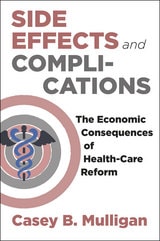
Side Effects and Complications
The Economic Consequences of Health-Care ReformCasey B. Mulligan
University of Chicago Press, 2015
Looking specifically at the labor market, Mulligan reveals how the costs of health care under the ACA actually create implicit taxes on individuals, and how increased costs to employers will be passed on to their employees. Mulligan shows how, as a result, millions of workers will find themselves in a situation in which full-time work, adjusted for the expense of health care, will actually pay less than part-time work or even not working at all. Analyzing the incentives—or lack thereof—for people to earn more by working more, Mulligan offers projections on how many hours people will work and how productively they will work, as well as how much they will spend in general. Using the powerful tools of economics, he then illustrates the detrimental consequences on overall employment in the near future.
Drawing on extensive knowledge of the labor market and the economic theories at its foundation, Side Effects and Complications offers a crucial wake-up call about the risks the ACA poses for the economy. Plainly laying out the true costs of the ACA, Mulligan’s grounded and thorough predictions are something that workers and policy makers cannot afford to ignore.
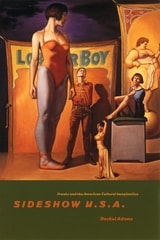
Sideshow U.S.A.
Freaks and the American Cultural ImaginationRachel Adams
University of Chicago Press, 2001
Sideshow U.S.A. begins by revisiting the terror and fascination the original freak shows provided for their audiences, as well as exploring the motivations of those who sought fame and profit in the business of human exhibition. With this history in mind, Adams turns from live entertainment to more mediated forms of cultural expression: the films of Tod Browning, the photography of Diane Arbus, the criticism of Leslie Fiedler, and the fiction Carson McCullers, Toni Morrison, and Katherine Dunn. Taken up in these works of art and literature, the freak serves as a metaphor for fundamental questions about self and other, identity and difference, and provides a window onto a once vital form of popular culture.
Adams's study concludes with a revealing look at the revival of the freak show as live performance in the late 1980s and the 1990s. Celebrated by some, the freak show's recent return is less welcome to those who have traditionally been its victims. At the beginning of a new century, Adams sees it as a form of living history, a testament to the vibrancy and inventiveness of American popular culture, as well as its capacity for cruelty and injustice.
"Because of its subject matter, this interesting and complex study is provocative, as well as thought-provoking."—Virginia Quarterly Review
Sidewalks
Portraits of ChicagoRick Kogan & Charles Osgood
Northwestern University Press, 2008
Few people know Chicago as do Rick Kogan and Charles Osgood, and their "Sidewalks" column for the Chicago Tribune Sunday Magazine is a tour of the city like no other, taking readers to the off-beat and quintessential spots that give Chicago its character—that make its inhabitants feel at home and tell its visitors that they have arrived.
Accompanied by evocative color photographs by Charles Osgood, Kogan's pieces revisit the lost places and people of Chicago, and take readers down the quiet byways and thriving thoroughfares, pointing out the characters and cornerstones, the oddities and institutions that make the city what it is. In this collection you will find an elegy for Maxwell Street, the marketplace that pulsed with city life for more than 100 years; a remembrance of a disturbing advertisement ("Are you a slave to housework?") on the side of a building on Irving Park Road; a cross marking a deadly intersection; a magical miniature golf course; as well as ballad singer Fred Holstein, the denizens of the World Gym and memories of Bensinger's pool hall, the day-camp kids of summer, bike couriers, the creatures of the beach, and much, much more. Here is Chicago, past, present, and—let's hope—future, captured in the unique archive of Sidewalks.
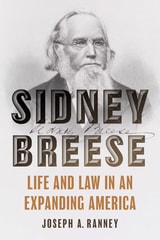
Sidney Breese
Life and Law in an Expanding AmericaJoseph A. Ranney
University of Illinois Press, 2026
Born in New York, Breese moved to Illinois in 1818. An ambitious personality combined with acumen in law, politics, and business boosted Breese into the state’s frontier elite and involved him in the political controversies that roiled the Jacksonian Era. First a circuit court judge, Breese rose to the state Supreme Court before his election to the US Senate in 1842. Breese focused his senatorial energies on westward expansion and transforming the nation into a world power—ambitions symbolized by his pivotal role in the creation of the Illinois Central Railroad. After returning to the state Supreme Court, Breese ruled on essential cases that enshrined expansionist jurisprudence in American law and regulated the growing power of corporations in post–Civil War America.
A first full-length biography, Sidney Breese places the life of an overlooked figure within legal and Illinois history.

Sights On The Sixties
Tischler, Barbara L.
Rutgers University Press, 1992
Barbara Tischler's goal is to understand the historical and cultural legacy of the 1960s. During the Gulf War, as politicians advocated positions and strategies, they made simplistic comparisons with the '60s. Such comparisons reinforced our need to understand that decade more clearly. With these papers Tischler brings together a group of scholars from a variety of disciplines, including American Studies, anthropology, film studies, history, literature, sociology, and theater. She notes how their contributions, taken separately and together, transcend the "good sixties/bad sixties" typology that has pervaded past analyses of the period. Several authors deal with movement leaders and great events, but the majority write about lesser-known events and people, to add depth and balance to our understanding of the decade.
1. Multi-disciplinary collection
2. Emphasis on less well-known events of the period
3. Presents balanced picture of the decade
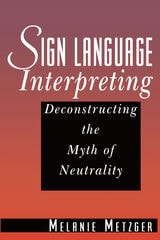
Sign Language Interpreting
Deconstructing the Myth of NeutralityMelanie Metzger
Gallaudet University Press, 1998
Sign Language Interpreting relies upon an interactional sociolinguistic approach to ask fundamental questions regarding interpreter neutrality. First, do interpreters influence discourse, and if so, how? Also, what kind of expectations do the participants bring to the event, and what do the interpreters bring to discussions? Finally, how do their remarks affect their alignment with participants in the interaction? Using careful assessments of how these interviews were framed, and also re-interviewing the participants for their perspectives, this penetrating book discloses the ways in which interpreters influence these situations. It also addresses the potential implications of these findings regarding sign language interpretation in medical, educational, and all other general interactions. Interpreter trainers and their students will join certified interpreters and Deaf studies scholars in applauding and benefiting from the fresh ground broken by this provocative study.
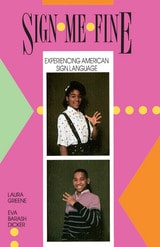
Sign-Me-Fine
Laura Greene
Gallaudet University Press, 1989
Signed Language Interpreting Pedagogy
Insights and Innovations from the Conference of Interpreter TrainersLaurie Swabey
Gallaudet University Press, 2022
The contributors explore other important topics in interpreter education including ethics, Deaf translation, performance evaluation, consecutive and simultaneous interpreting, discourse analysis, critical thinking, curriculum sequencing, the social construction of learning, and mentoring. Through this collaborative approach featuring more than thirty scholars, Signed Language Interpreting Pedagogy presents a wealth of theoretical and practical information for interpreter educators and their students.
Signed Language Interpreting in the 21st Century
An Overview of the ProfessionLen Roberson
Gallaudet University Press, 2018
Each chapter provides students with objectives, keywords, and discussion questions. The chapters convey clear information about topics that include credentialing, disposition and aptitude for becoming an interpreter, interpreting for people who are DeafBlind, and working within specialty settings, such as legal and healthcare. A key resource for interpreter certification test preparation, this text follows the interpreter’s ethical, practical, and professional development through a career of lifelong learning and service.
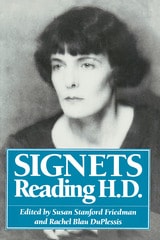
Signets
Reading H.D.Susan S. Friedman
University of Wisconsin Press, 1991
Signets brings together the best essays of H.D. (Hilda Doolittle). Susan Stanford Friedman and Rachel Blau DuPlessis have gathered the most influential and generative studies of H. D.’s work and complemented them with photobiographical, chronological, and bibliographical portraits unique to this volume.
The essays in Signets span H. D.’s career from the origins of Imagism to late modernism, from the early poems of Sea Garden to the novel HER and the epic poems Trilogy and Helen in Egypt. In addition to the editors, the contributors are Diana Collecott, Robert Duncan, Albert Gelpi, Eileen Gregory, Susan Gubar, Barbara Guest, Elizabeth A. Hirsch, Deborah Kelly Kloepfer, Cassandar Laity, Adalaide Morris, Alicia Ostriker, Cyrena N. Pondrom, Perdita Schaffner, and Louis H. Silverstein.
Signets is an essential resource for those interested in H. D., modernism, and feminist criticism and writing.
Signifying Bodies
Disability in Contemporary Life WritingG. Thomas Couser
University of Michigan Press, 2010
"Thomas Couser's Signifying Bodies comes at a crucial moment when debates about physician assisted suicide, genetic engineering, and neo-natal screening are raising the question of what constitutes a 'life worth living' for persons with disabilities. Couser's work engages these debates by exploring the extensive number of personal narratives by or about persons with disabilities. As Couser brilliantly demonstrates through synoptic readings, these works challenge the 'preferred rhetorics' by which such narratives are usually written (triumphalist, gothic, nostalgic) while making visible the variegated nature of embodied life."
---Michael Davidson, University of California, San Diego
"Signifying Bodies shows us that life writing about disability is . . . everywhere. . . . From obituary to documentary film to ethnography to literary memoir to the law, the book casts a wide net, detailing how various written and filmed responses to disability both enact and resist conventional narrative patterns. [This] not only broadens our idea about where to look for life writing, but also demonstrates how thoroughly stereotypes about disability mediate our social and artistic languages---even when an author has (so-called) the best intentions."
---Susannah B. Mintz, Skidmore College
Memoirs have enjoyed great popularity in recent years, experiencing significant sales, prominent reviews, and diverse readerships. Signifying Bodies shows that at the heart of the memoir phenomenon is our fascination with writing that focuses on what it means to live in, or be, an anomalous body---in other words, what it means to be disabled. Previous literary accounts of the disabled body have often portrayed it as a stable entity possibly signifying moral deviance or divine disfavor, but contemporary writers with disabilities are defining themselves and depicting their bodies in new ways. Using the insights of disability studies and source material ranging from the Old and New Testaments to the works of authors like Lucy Grealy and Simi Linton and including contemporary films such as Million Dollar Baby, G. Thomas Couser sheds light on a broader cultural phenomenon, exploring topics such as the ethical issues involved in disability memoirs, the rhetorical patterns they frequently employ, and the complex relationship between disability narrative and disability law.
G. Thomas Couser is Professor of English at Hofstra University.
Signifying Without Specifying
Racial Discourse in the Age of ObamaLi, Stephanie
Rutgers University Press, 2011
On the campaign trail, Barack Obama faced a difficult task—rallying African American voters while resisting his opponents’ attempts to frame him as “too black” to govern the nation as a whole. Obama’s solution was to employ what Toni Morrison calls “race-specific, race-free language,” avoiding open discussions of racial issues while using terms and references that carried a specific cultural resonance for African American voters.
Stephanie Li argues that American politicians and writers are using a new kind of language to speak about race. Challenging the notion that we have moved into a “post-racial” era, she suggests that we are in an uneasy moment where American public discourse demands that race be seen, but not heard. Analyzing contemporary political speech with nuanced readings of works by such authors as Toni Morrison, Jhumpa Lahiri, and Colson Whitehead, Li investigates how Americans of color have negotiated these tensions, inventing new ways to signal racial affiliations without violating taboos against open discussions of race.
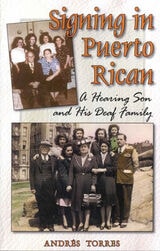
Signing in Puerto Rican
A Hearing Son and His Deaf FamilyAndrés Torres
Gallaudet University Press, 2009
The only child of deaf Puerto Rican immigrants, Andrés Torres grew up in New York City in a large, extended family that included several deaf aunts and uncles. In Signing in Puerto Rican: A Hearing Son and His Deaf Family, he opens a window into the little known culture of Deaf Latinos chasing the immigrant American dream. Like many children of deaf adults (codas), Torres loved his parents deeply but also longed to be free from being their interpreter to the hearing world. Torres’s story is unique in that his family communicated in three languages. The gatherings of his family reverberated with “deaf talk,” in sign, Spanish, and English. What might have struck outsiders as a strange chaos of gestures and mixed spoken languages was just normal for his family.
Torres describes his early life as one of conflicting influences in his search for identity. His parents’ deep involvement in the Puerto Rican Society for the Catholic Deaf led him to study for the priesthood. He later left the seminary as his own ambitions took hold. Torres became very active in the Puerto Rico independence party against the backdrop of the Civil Rights movement and protest against the Vietnam War. Throughout these defining events, Torres’s journey never took him too far from his Deaf Puerto Rican family roots and the passion of arms, hands, and fingers filling the air with simultaneous translation and understanding.
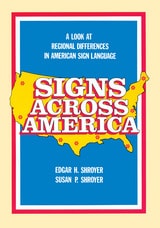
Signs Across America
Edgar H. Shroyer
Gallaudet University Press, 1984
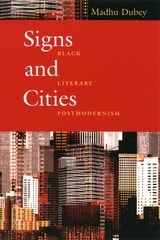
Signs and Cities
Black Literary PostmodernismMadhu Dubey
University of Chicago Press, 2003
Dubey shows how black novelists from the last three decades have reconsidered the modern urban legacy and thus articulated a distinctly African-American strain of postmodernism. She argues that novelists such as Octavia Butler, Samuel Delany, Toni Morrison, Gloria Naylor, Ishmael Reed, Sapphire, and John Edgar Wideman probe the disillusionment of urban modernity through repeated recourse to tropes of the book and scenes of reading and writing. Ultimately, she demonstrates that these writers view the book with profound ambivalence, construing it as an urban medium that cannot recapture the face-to-face communities assumed by oral and folk forms of expression.
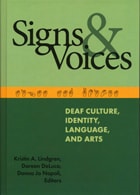
Signs and Voices
Deaf Culture, Identity, Language, and ArtsKristin A. Lindgren
Gallaudet University Press, 2008
Cochlear implants, mainstreaming, genetic engineering, and other ethical dilemmas confronting deaf people mandated a new, wide-ranging examination of these issues, fulfilled by Signs and Voices: Deaf Culture, Identity, Language, and Arts. This collection, carefully chosen from the 2004 Signs and Voices Conference, the Presidential Forum on American Sign Language at the Modern Language Association Convention, and other sources, addresses all of the factors now changing the cultural landscape for deaf people. To ensure quality and breadth of knowledge, editors Kristin A. Lingren, Doreen DeLuca, and Donna Jo Napoli selected the work of renowned scholars and performers Shannon Allen, H-Dirksen L. Bauman, Adrian Blue, Brenda Jo Brueggemann, Teresa Blankmeyer Burke, Peter Cook, David P. Corina, Michael Davidson, Kristen Harmon, Tom Humphries, Sotaro Kita, Heather Knapp, Robert G. Lee, Irene W. Leigh, Kenny Lerner, Carole Neidle, Peter Novak, AslI Özyürek, David M. Perlmutter, Anne Senghas, and Ronnie Wilbur.
Signs and Voices is divided into three sections—Culture and Identity, Language and Literacy, and American Sign Language in the Arts—each of which focuses on a particular set of theoretical and practical concerns. Also, the included DVD presents many of the performances from the Arts section. Taken together, these essays and DVD point to new directions in a broad range of fields, including cognitive science, deaf studies, disability studies, education, linguistics, literary criticism, philosophy, and psychology. This extraordinary showcase of innovative and rigorous cross-disciplinary study will prove invaluable to everyone interested in the current state of the Deaf community.
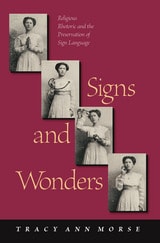
Signs and Wonders
Religious Rhetoric and the Preservation of Sign LanguageTracy Ann Morse
Gallaudet University Press, 2014
In Chapter One, Morse analyzes Thomas Hopkins Gallaudet’s use of religious references in his 1817 maiden address at the first American school for deaf students. She examines his and other speeches as examples of the intersection of education for deaf Americans and Protestant missionary efforts to convert them. In the second chapter, she presents the different religious perspectives of the two deaf education camps: Manualists argued that sign language was a gift from God, while Oralists viewed hand gestures as animal-like, indicative of lower evolutionary development.
Chapter Three explores the religious rhetoric in churches, sanctuaries where sign language flourished and deaf members formed relationships. In the fourth chapter, Morse shows how Deaf activist George Veditz signed using religious themes in his political films. She also comments on the impact of the bilingual staging of Big River: The Adventures of Huckleberry Finn, which began to change the hearing world’s opinion about the Deaf community. Morse concludes with speculation on the shifting terrain for deaf people due to technological innovations that might supplant religious rhetoric as a tool to support the Deaf community.
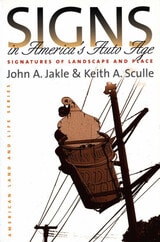
Signs in America's Auto Age
Signatures of Landscape and PlaceJohn A. & Keith A. Jakle & Sculle
University of Iowa Press, 2004
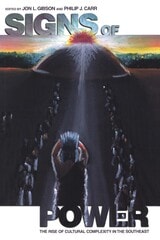
Signs of Power
The Rise of Cultural Complexity in the SoutheastEdited by Jon L. Gibson and Philip J. Carr
University of Alabama Press, 2004
Traces the sources of power and large-scale organization of prehistoric peoples among Archaic societies.
By focusing on the first instances of mound building, pottery making, fancy polished stone and bone, as well as specialized chipped stone, artifacts, and their widespread exchange, this book explores the sources of power and organization among Archaic societies. It investigates the origins of these technologies and their effects on long-term (evolutionary) and short-term (historical) change.
The characteristics of first origins in social complexity belong to 5,000- to 6,000-year-old Archaic groups who inhabited the southeastern United States. In Signs of Power, regional specialists identify the conditions, causes, and consequences that define organization and social complexity in societies. Often termed "big mound power," these considerations include the role of demography, kinship, and ecology in sociocultural change; the meaning of geometry and design in sacred groupings; the degree of advancement in stone tool technologies; and differentials in shell ring sizes that reflect social inequality.
Silence and Listening as Rhetorical Arts
Edited by Cheryl Glenn and Krista Ratcliffe
Southern Illinois University Press, 2011
In Silence and Listening as Rhetorical Arts,editors Cheryl Glenn and Krista Ratcliffe bring together seventeen essays by new and established scholars that demonstrate the value and importance of silence and listening to the study and practice of rhetoric. Building on the editors’ groundbreaking research, which respects the power of the spoken word while challenging the marginalized status of silence and listening, this volumemakes a strong case for placing these overlooked concepts, and their intersections, at the forefront of rhetorical arts within rhetoric and composition studies.
Divided into three parts—History, Theory and Criticism, and Praxes—this book reimagines traditional histories and theories of rhetoric and incorporates contemporary interests, such as race, gender, and cross-cultural concerns, into scholarly conversations about rhetorical history, theory, criticism, and praxes. For the editors and the other contributors to this volume, silence is not simply the absence of sound and listening is not a passive act. When used strategically and with purpose—together and separately—silence and listening are powerful rhetorical devices integral to effective communication. The essays cover a wide range of subjects, including women rhetors from ancient Greece and medieval and Renaissance Europe; African philosophy and African American rhetoric; contemporary antiwar protests in the United States; activist conflict resolution in Israel and Palestine; and feminist and second-language pedagogies.
Taken together, the essays in this volume advance the argument that silence and listening are as important to rhetoric and composition studies as the more traditionally emphasized arts of reading, writing, and speaking and are particularly effective for theorizing, historicizing, analyzing, and teaching. An extremely valuable resource for instructors and students in rhetoric, composition, and communication studies, Silence and Listening as Rhetorical Arts will also have applications beyond academia, helping individuals, cultural groups, and nations more productively discern and implement appropriate actions when all parties agree to engage in rhetorical situations that include not only respectful speaking, reading, and writing but also productive silence and rhetorical listening.
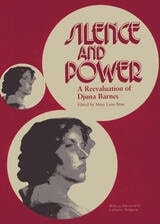
Silence and Power
A Reevaluation of Djuna BarnesEdited by Mary Lynn Broe. Afterword by Catharine Stimpson
Southern Illinois University Press, 1991
Roughly chronological, these essays explore Barnes’ early work in the New York newspaper world of the ‘teens, proceed through the 1954 publication of The Antiphon, and include several approaches to such works as Ryder, Ladies Almanack, and Nightwood. This judicious mix of essays—many of them illustrated by photographs and drawings—presents a comprehensive picture of the creative imagination of Djuna Barnes.
Essayists include Mary Lynn Broe, Nancy J. Levine, Ann Larabee, Joan Retallack, Carolyn Allen, Carolyn Burke, Sheryl Stevenson, Marie Ponsot, Frances M. Doughty, Susan Sniader Lanser, Frann Michel, Karla Jay, Jane Marcus, Judith Lee, Julie L. Abraham, Meryl Altman, Lynda Curry, Louise A. DeSalvo, and Catharine Stimpson. Individuals sharing personal recollections of Barnes are Ruth Ford, James B. Scott, Alex Gildzen, Hank O’Neal, Chester Page, Andrew Field, and Frances McCullough. Janice Thom and Kevin Engel provide an updated bibliography.
From The Book of Repulsive Women to The Antiphon, Barnes challenged old gender dichotomies as she shaped radical sociopolitical views. Her textual methods celebrated a multiplicity of voices, heterodox forms, and genres, transgressing those tenets of modernism that privilege the “high art” of a single, unified textual identity or a discrete discourse. These essays offer various critical approaches and sinuous readings of the full range of Barnes’ achievement. Interwoven through the essays and reminiscences is a lively commentary from Barnes’ friends and contemporaries as well as Barnes herself.

Silencing the Opposition
Antinuclear Movements and the Media in the Cold WarAndrew Rojecki
University of Illinois Press, 1999
We can trace many important strategic decisions to compelling official fictions such as Kennedy's "missile gap" and Reagan's "window of vulnerability." Over the years, antinuclear movements have had mixed success debunking these fictions, raising public consciousness, and reorienting government policy.
Andrew Rojecki explores links between nuclear arms policy and the visibility of opposition groups in the media. He pays particular interest to two cycles of protest: the test ban movement of the Eisenhower and the Kennedy administrations and the Reagan-era nuclear freeze movement. As Rojecki shows, space devoted to the opposition as well as the quality of the coverage varied widely from the first to the second period. The change reflected different climates of public opinion and foreign policy but also a subtle shift in political culture that undermined the legitimacy of citizen protest. As the rationalized policymaking of government agencies, think tanks, and university departments increasingly restricted public debate, the potential for citizens to influence nuclear politics became more circumscribed while nuclear weapons continued to proliferate.

Silent Cells
The Secret Drugging of Captive AmericaAnthony Ryan Hatch
University of Minnesota Press, 2019
A critical investigation into the use of psychotropic drugs to pacify and control inmates and other captives in the vast U.S. prison, military, and welfare systems
For at least four decades, U.S. prisons and jails have aggressively turned to psychotropic drugs—antidepressants, antipsychotics, sedatives, and tranquilizers—to silence inmates, whether or not they have been diagnosed with mental illnesses. In Silent Cells, Anthony Ryan Hatch demonstrates that the pervasive use of psychotropic drugs has not only defined and enabled mass incarceration but has also become central to other forms of captivity, including foster homes, military and immigrant detention centers, and nursing homes.
Silent Cells shows how, in shockingly large numbers, federal, state, and local governments and government-authorized private agencies pacify people with drugs, uncovering patterns of institutional violence that threaten basic human and civil rights. Drawing on publicly available records, Hatch unearths the coercive ways that psychotropics serve to manufacture compliance and docility, practices hidden behind layers of state secrecy, medical complicity, and corporate profiteering.
Psychotropics, Hatch shows, are integral to “technocorrectional” policies devised to minimize public costs and increase the private profitability of mass captivity while guaranteeing public safety and national security. This broad indictment of psychotropics is therefore animated by a radical counterfactual question: would incarceration on the scale practiced in the United States even be possible without psychotropics?
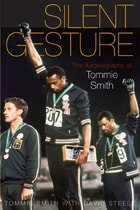
Silent Gesture
The Autobiography of Tommie SmithTommie Smith with David Steele
Temple University Press, 2008
n 1968, Tommie Smith and his teammate John Carlos won the gold and silver medals, respectively, for the 200 meter dash. Receiving their medals on the dais, they raised their fists and froze a moment in time that will forever be remembered as a powerful day of protest. In this, his autobiography, Smith tells the story of that moment, and of his life before and after it, to explain what that moment meant to him.
In Silent Gesture, Smith recounts his life before and after the 1968 Olympics: his life-long commitment to athletics, education, and human rights. He dispels some of the myths surrounding his and Carlos' act on the dais -- contrary to legend, Smith wasn't a member of the Black Panthers, but a member of the US Olympic Project for Human Rights -- and describes in detail the planning and risks involved in his protest. Smith also details his many years after Mexico City of devotion to human rights, athletics, and education. A unique resource for anyone concerned with international sports, history, and the African American experience, Silent Gesture contributes a complete picture of one of the most famous moments in sports history, and of a man whose actions always matched his words.
Silent Life and Silent Language
The Inner Life of a Mute in an Institution for the DeafKate M. Farlow
Gallaudet University Press, 2018
Kate M. Farlow wrote this book with the goal of giving hearing parents hope that their deaf children would be able to lead happy and productive lives. She sought to raise awareness of the benefits of deaf schools and was an early advocate for the use of American Sign Language and of bilingual education. The Christian influence on the school and on the author is strongly present in her writing and reflects an important component of deaf education at the time. Descriptions of specific signs, games, ASL story nights, and other aspects of the signing community during the 1870s will be of interest to modern students and researchers in linguistics, deaf education, Deaf studies, and Deaf history. Farlow’s work reveals a sophisticated, early understanding of the importance of access to language, education, and community for deaf individuals.

Silent Revolution
The Transformation of Divorce Law in the United StatesHerbert Jacob
University of Chicago Press, 1988
Since 1966, divorce laws in the United States have undergone a radical transformation. No-fault divorce is now universally available. Alimony functions simply as a brief transitional payment to help a dependent spouse become independent. Most states divide assets at divorce according to a community property scheme, and, whenever possible, many courts prefer to award custody of children to the mother and the father jointly.
These changes in policy represent a profound departure from traditional American values, and yet the legislation by which they were enacted was treated as a technical correction of minor problems. No-fault divorce, for example, was a response to the increasing number of fraudulent divorce petitions. Since couples were often forced to manufacture the evidence of guilt that many states required, and since judges frequently looked the other way, legal reformers sought no more than to bring divorce statutes into line with current practice.
On the basis of such observations, Jacob formulates a new theory of routine—as opposed to conflictual—policy-making processes. Many potentially controversial policies—divorce law reforms among them—pass unnoticed in America because legislators treat them as matters of routine. Jacob's is indeed the most plausible account of the enormous number and steady flow of policy decisions made by state legislatures. It also explains why no attention was paid to the effect divorce reform would have on divorced women and their children, a subject that has become increasingly controversial and that, consequently, is not likely to be handled by the routine policy-making process in the future.
Silent Victims
Hate Crimes Against Native AmericansBarbara Perry
University of Arizona Press, 2008
Silent Victims is a unique contribution to the literature on hate crime. Because most extant literature treats hate crimes—even racial violence—rather generically, this work breaks new ground with its findings. For this book, Perry interviewed nearly 300 Native Americans and gathered additional data in three geographic areas: the Four Corners region of the U.S. Southwest, the Great Lakes, and the Northern Plains. In all of these locales, she found that bias-related crime oppresses and segregates Native Americans.
Perry is well aware of the history of colonization in North America and its attendant racial violence. She argues that the legacy of violence today can be traced directly to the genocidal practices of early settlers, and she adds valuable insights into the ways in which “Indians” have been constructed as the Other by the prevailing culture. Perry’s interviews with Native Americans recount instances of appalling treatment, often at the hands of law enforcement officials. In her conclusion, Perry draws from her research and interviews to suggest ways in which Native Americans can be empowered to defend themselves against all forms of racist victimization.
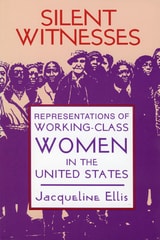
Silent Witnesses
Representations of Working-Class Women in the United StatesJacqueline Ellis
University of Wisconsin Press, 1998
Through detailed analyses of documentary photography and radical literature, Silent Witnesses explores how working-class identity has been repressed and manipulated to fit the expectations of liberal politicians, radical authors, Marxist historians, feminist academics, and contemporary cultural theorists.

Silver Saga
The Story of Caribou, Colorado, Revised EditionDuane A. Smith
University Press of Colorado, 2002
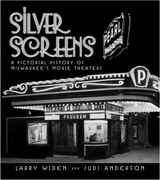
Silver Screens
A Pictorial History of Milwaukee's Movie TheatersLarry Widen
Wisconsin Historical Society Press, 2007
Silver Screens traces the rich history of Milwaukee's movie theaters, from 1890s nickelodeons to the grand palaces of the Roaring Twenties to the shopping mall outlets of today. And the story doesn't end there: in the past two decades, the revival of interest in preservation and restoration of theaters has confirmed that there's still life in these beloved old structures. With the publication of Silver Screens, authors Larry Widen and Judi Anderson help ensure that our old theaters, those being restored and those long since vanished, will remain forever embedded in our collective memory.
In this revised edition of their book Milwaukee Movie Palaces, the authors present new findings on film innovations, drive-in theaters, projection booths, movie promotions, noted theater personalities, recent restoration efforts, and much more. Illuminated with more than a hundred photographs, including many never before published, Silver Screens is a stunning tribute to the legacy of the movie theater.
Silver and Politics in Nevada
Al Glass
University of Nevada Press, 1969
Monetary policy and politics have been inextricably intertwined in the United States since the earliest days of the Republic. Indeed, some of the most outstanding events in United States political history have involved maneuvering, dealing, and ultimately legislating on financial questions. By the 1890s, with the government over a hundred years old, the issues far from being settled became perhaps as important as they had ever been in the century-old debates. As the nineteenth century entered its last decade, however, the problems turned not solely on broad economic subjects, but on the metal coinage of the nation and its effect on the financial order. The so-called Populist Revolt of the 1880s and 1890s added fervor and color to the disputes that erupted, and turned the eyes of the country to the western region, where metals and mining had be-come, in some areas, the basis of the economy.
Nevada contained an outstanding example of the fermentthat erupted over the coinage question. There, the decline of the great Comstock lode, in combination with the most difficult features of recurring national and local economic depressions, caused a political outbreak of unusual pro-portions. After failing to bring about a desired inflation of the national currency through remonetization of silver, Nevadans turned to an extravagant-and ultimately unsuc-cessful-action: the politicians put together a new organization and called it the Silver Party of Nevada. This book represents an attempt to reconstruct the political history of the Silver party's decade in power.
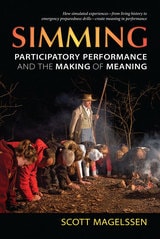
Simming
Participatory Performance and the Making of MeaningScott Magelssen
University of Michigan Press, 2014
At an ecopark in Mexico, tourists pretend to be illegal migrants, braving inhospitable terrain and the U.S. Border Patrol as they attempt to cross the border. At a living history museum in Indiana, daytime visitors return after dark to play fugitive slaves on the Underground Railroad. In the Mojave Desert, the U.S. Army simulates entire provinces of Iraq and Afghanistan, complete with bustling villages, insurgents, and Arabic-speaking townspeople, to train soldiers for deployment to the Middle East. At a nursing home, trainees put on fogged glasses and earplugs, thick bands around their finger joints, and sandbag harnesses to simulate the effects of aging and to gain empathy for their patients.
These immersive environments in which spectator-participants engage in simulations of various kinds—or “simming”—are the subject of Scott Magelssen’s book. His book lays out the ways in which simming can provide efficacy and promote social change through affective, embodied testimony. Using methodology from theater history and performance studies (particularly as these fields intersect with cultural studies, communication, history, popular culture, and American studies), Magelssen explores the ways these representational practices produce, reify, or contest cultural and societal perceptions of identity.

Simon Baruch
Rebel in the Ranks of Medicine, 1840-1921Patricia Spain Ward
University of Alabama Press, 1994
Recounts the remarkable life of a Prussian/Polish Jew who immigrated to the United States as a teenager in the 1850s and became one of the nation’s best-known physicians by the turn of the century
After medical study in South Carolina and Virginia on the eve of the Civil War, Simon Baruch served the Confederacy as a surgeon for three years, twice undergoing capture and internment. Despite economic hardships while practicing in South Carolina during Reconstruction, he helped to reactivate the State Medical Association and served as president of the State Board of Health.
In 1881 he joined the exodus of southern physicians and scientists of that period, taking up residence in New York City, where he rose to prominence through his advocacy of surgery in one of the early operations for appendicitis and through is role as the protective physician in a widely publicized “child cruelty” case involving the musical prodigy, Josef Hofmann. Baruch became a leader in the nationwide movement to establish free public baths for tenement dwellers and in the development of expert medical journalism. Although his advocacy of such natural remedies as water, fresh air, and diet often made him appear unaccountably iconoclastic to his contemporaries, he has gained posthumous recognition as a pioneer in physical medicine.
Bernard N. Baruch, one of his four sons, has memorialized this work through endowments for research and instruction in physical medicine and rehabilitation. Ward reconstructs the life of a medical student in the South at the opening of the Civil War, the adventures of a Confederate surgeon, and the difficulties of a practitioner in Reconstruction South Carolina. Simon Baruch’s physician’s registers and his correspondence with colleagues afford the reader an immediate sense of the therapeutic dilemmas facing physicians and patients of his era. Baruch’s experiences while establishing himself in New York City after 1881 reflect the challenges facing those trying to break into what was then the nation’s medical capital—as well as that city’s rich opportunities and heady intellectual atmosphere. His energetic campaign for free public baths illustrates one of the most colorful chapters of American social history, as immigrants flooded the cities at the turn of the century. As medical editor of the New York Sun from 1912 to 1918, Baruch touched on most of the health concerns of that period and a few—such as handgun control—that persist to this day.
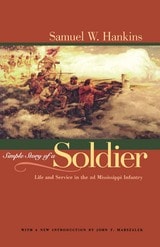
Simple Story Of A Soldier
Life And Service in the 2d Mississippi InfantrySamuel W. Hankins
University of Alabama Press, 2004
This fast-paced memoir was written in 1905 by 61-year-old Samuel W. Hankins while he was living in the Soldiers Home in Gulfport, Mississippi. It vividly details his years as a Confederate rifleman from the spring of 1861, when at a mere sixteen years of age he volunteered for the 2d Mississippi Infantry, through the end of the war in 1865, when he was just twenty years old and maimed for life.
The 2d Mississippi was part of the Army of Northern Virginia and as such saw action at Bull Run/Manassas, Seven Pines and the Peninsular Campaign, and Gettysburg. Besides being hospitalized with measles, suffering severely frostbitten feet, and being wounded by a minié ball at Railroad Cut, Hankins was captured by Federal forces and sent to a prisoner of war camp on David’s Island, New York. Later, he was transferred to a South Carolina hospital, returned home on furlough, joined a cavalry unit that fought at Atlanta. He was stationed in Selma, Alabama, when the war ended.
The strength of Hankins’s text lies in his straightforward narrative style virtually free of Lost Cause sentiment. Both Union and Confederate veterans could relate to his stories because so many of them had faced similar challenges during the war. Full of valuable information on a common soldier’s experience, the memoir still conjures the sights, sounds, and smells of warfare.
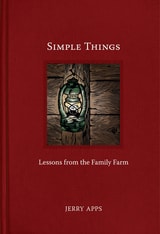
Simple Things
Lessons from the Family FarmJerry Apps
Wisconsin Historical Society Press, 2018
Simulcast
Four Experiments in CriticismBenjamin Friedlander
University of Alabama Press, 2004
A provocative overview of avant-garde American poetry of the past 25 years that raises important questions about the practice of criticism.
Simulcast offers long overdue, highly opinionated, and penetrating examinations of a flourishing movement in American letters by one of its most perceptive practitioners. The four “experiments” in literary criticism gathered in this volume vary in style and point of view. Taken together, they reassess the fundamental relationship between poetry and criticism.
“The Anti-Hegemony Project” is a satire, employing the rhetoric of journalism and the colloquial exchanges of online fan groups to analyze one of the earliest appearances of a poetry community on the World Wide Web: the “Poetics List” maintained at the State University of New York, Buffalo. “Poe’s Poetics and Selected Essays” is a collection of polemical essays on subjects ranging from modernism to language poetry. The third experiment, “The Literati of San Francisco,” is a detailed portrait of the figures and ideas at the heart of an important literary scene a decade after language poetry’s inception. The final essay, “A Short History of Language Poetry,” provides a less polemical, more sober and even-handed analysis of that movement from its origins to the present and its prospects for the future.
These critical interventions and essays are important studies of an evolving poetic field, but they also represent an evolution in criticism itself. Friedlander’s unorthodox methodology is to create a critical text by rewriting prior examples of criticism, among them Jean Wahl’s A Short History of Existentialism and Edgar Allan Poe’s "Literati of New York City." The resulting critiques are themselves a kind of poetry. They explore the issues of style versus substance, artifice versus authenticity, and plausibility versus truth, while the shifts in perspective call into question the authority of any one critical account.
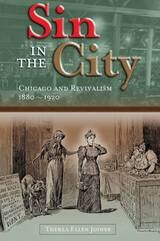
Sin in the City
Chicago and Revivalism, 1880-1920Thekla Ellen Joiner
University of Missouri Press, 2013
Long before today’s culture wars, the “Third Great Awakening” rocked America. During the late nineteenth and early twentieth centuries, evangelists such as Dwight L. Moody and Billy Sunday roused citizens to renounce sin as it manifested in popular culture, moral ambiguity, and the changing role of women.
Sin in the City examines three urban revivals in turn-of-the-century Chicago to show how revivalists negotiated that era’s perceived racial, sexual, and class threats. While most studies of this movement have focused on its male leaders and their interactions with society, Thekla Ellen Joiner raises new questions about gender and race by exploring Third Awakening revivalism as the ritualized performance of an evangelical social system defined by middle-class Protestant moral aspirations for urban America. Rather than approaching these events merely as the achievements of persuasive men, she views them as choreographed collective rituals reinforcing a moral order defined by ideals of femininity, masculinity, and racial purity.
Joiner reveals how revivalist rhetoric and ritual shifted from sentimentalist identification of sin with males to a more hard-nosed focus on females, castigating “loose women” whose economic and sexual independence defied revivalist ideals and its civic culture. She focuses on Dwight L. Moody’s 1893 World’s Fair revival, the 1910 Chapman-Alexander campaign, and the 1918 Billy Sunday revival, comparing the locations, organization, messages, and leaders of these three events to depict the shift from masculinized to feminized sin. She identifies the central role women played in the Third Awakening as the revivalists promoted feminine virtue as the corrective to America’s urban decline. She also shows that even as its definition of sin became more feminized, Billy Sunday’s revivalism began to conform to Chicago’s emerging color line.
Enraged by rapid social change in cities like Chicago, these preachers spurred Protestant evangelicals to formulate a gendered and racialized moral regime for urban America. Yet, as Joiner shows, even as revivalists demonized new forms of entertainment, they used many of the modern cultural practices popularized in theaters and nickelodeons to boost the success of their mass conversions.
Sin in the City shows that the legacy of the Third Awakening lives on today in the religious right’s sociopolitical activism; crusade for family values; disparagement of feminism; and promotion of spirituality in middle-class, racial, and cultural terms. Providing cultural and gender analysis too often lacking in the study of American religious history, it offers a new model for understanding the development of a gendered theology and set of religious practices that influenced Protestantism in a period of enormous social change.
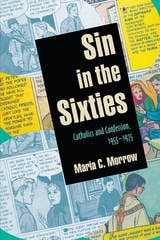
Sin in the Sixties
Maria C. Morrow
Catholic University of America Press, 2016

Since When Is Fran Drescher Jewish?
Dubbing Stereotypes in The Nanny, The Simpsons, and The SopranosBy Chiara Francesca Ferrari
University of Texas Press, 2010
"Since when is Fran Drescher Jewish?" This was Chiara Francesca Ferrari's reaction when she learned that Drescher's character on the television sitcom The Nanny was meant to be a portrayal of a stereotypical Jewish-American princess. Ferrari had only seen the Italian version of the show, in which the protagonist was dubbed into an exotic, eccentric Italian-American nanny. Since When Is Fran Drescher Jewish? explores this "ventriloquism" as not only a textual and cultural transfer between languages but also as an industrial practice that helps the media industry foster identification among varying audiences around the globe.
At the heart of this study is an in-depth exploration of three shows that moved from global to local, mapping stereotypes from both sides of the Atlantic in the process. Presented in Italy, for example, Groundskeeper Willie from The Simpsons is no longer a belligerent, alcoholic Scotsman but instead easily becomes a primitive figure from Sardinia. Ironically, The Sopranos—a show built around Italian-Americans—was carefully re-positioned by Italian TV executives, who erased the word "mafia" and all regional references to Sicily. The result of Ferrari's three case studies is evidence that "otherness" transcends translation, as the stereotypes produced by the American entertainment industry are simply replaced by other stereotypes in foreign markets. As American television studios continue to attempt to increase earnings by licensing their shows abroad, Since When Is Fran Drescher Jewish? illuminates the significant issues of identity raised by this ever-growing marketplace, along with the intriguing messages that lie in the larger realm of audiovisual cultural exchange.
Sincerely Held
American Secularism and Its BelieversCharles McCrary
University of Chicago Press, 2022
“Sincerely held religious belief” is now a common phrase in discussions of American religious freedom, from opinions handed down by the US Supreme Court to local controversies. The “sincerity test” of religious belief has become a cornerstone of US jurisprudence, framing what counts as legitimate grounds for First Amendment claims in the eyes of the law. In Sincerely Held, Charles McCrary provides an original account of how sincerely held religious belief became the primary standard for determining what legally counts as authentic religion.
McCrary skillfully traces the interlocking histories of American sincerity, religion, and secularism starting in the mid-nineteenth century. He analyzes a diverse archive, including Herman Melville’s novel The Confidence-Man, vice-suppressing police, Spiritualist women accused of being fortune-tellers, eclectic conscientious objectors, secularization theorists, Black revolutionaries, and anti-LGBTQ litigants. Across this history, McCrary reveals how sincerity and sincerely held religious belief developed as technologies of secular governance, determining what does and doesn’t entitle a person to receive protections from the state.
This fresh analysis of secularism in the United States invites further reflection on the role of sincerity in public life and religious studies scholarship, asking why sincerity has come to matter so much in a supposedly “post-truth” era.
Sing Them Over Again to Me
Hymns and Hymnbooks in AmericaEdited by Mark A. Noll and Edith L. Blumhofer
University of Alabama Press, 2006
Hymns and hymnbooks as American historical and cultural icons.
This work is a study of the importance of Protestant hymns in defining America and American religion. It explores the underappreciated influence of hymns in shaping many spheres of personal and corporate life as well as the value of hymns for studying religious life. Distinguishing features of this volume are studies of the most popular hymns (“Amazing Grace,” “O, For a Thousand Tongues to Sing,” “All Hail the Power of Jesus’ Name”), with attention to the ability of such hymns to reveal, as they are altered and adapted, shifts in American popular religion. The book also focuses attention on the role hymns play in changing attitudes about race, class, gender, economic life, politics, and society.
Sing a Sad Song
The Life of Hank WilliamsRoger M. Williams
University of Illinois Press, 1981
Sing a Sad Songs tells the story of Hank Williams's rise from impoverished Alabama roots, his coming of age during and after World War II, his meteoric climb to national acclaim and star status on the Grand Ole Opry, his star-crossed marriages and recurring health problems, the chronic bouts with alcoholism and the alienation it caused in those he loved and sang for, and finally his tragic death at twenty-nine and subsequent emergence as a folk hero.
In addition, the book includes an essential discography compiled by Bob Pinson of the Country Music Foundation.
Sing and Sing On
Sentinel Musicians and the Making of the Ethiopian American DiasporaKay Kaufman Shelemay
University of Chicago Press, 2022
Sing and Sing On is the first study of the forced migration of musicians out of the Horn of Africa dating from the 1974 Ethiopian revolution, a political event that overthrew one of the world’s oldest monarchies and installed a brutal military regime. Musicians were among the first to depart the region, their lives shattered by revolutionary violence, curfews, and civil war. Reconstructing the memories of forced migration, Sing and Sing On traces the challenges musicians faced amidst revolutionary violence and the critical role they played in building communities abroad.
Drawing on the recollections of dozens of musicians, Sing and Sing On details personal, cultural, and economic hardships experienced by musicians who have resettled in new locales abroad. Kay Kaufman Shelemay highlights their many artistic and social initiatives and the ways they have offered inspiration and leadership within and beyond a rapidly growing Ethiopian American diaspora. While musicians held this role as sentinels in Ethiopian culture long before the revolution began, it has taken on new meanings and contours in the Ethiopian diaspora. The book details the ongoing creativity of these musicians while exploring the attraction of return to their Ethiopian homeland over the course of decades abroad. Ultimately, Shelemay shows that musicians are uniquely positioned to serve this sentinel role as both guardians and challengers of cultural heritage.
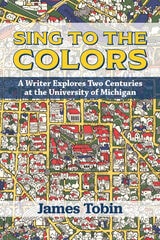
Sing to the Colors
A Writer Explores Two Centuries at the University of MichiganJames Tobin
University of Michigan Press, 2021
Singing Out
GALA Choruses and Social ChangeHeather MacLachlan
University of Michigan Press, 2020
Pundits often wax eloquent about the power of music, asserting that it can, in some positive way, change the world. Such statements often rest on an unexamined claim that music can and does foster social justice. Singing Out: GALA Choruses and Social Change tackles the premise underlying such claims, analyzing groups of amateur singers who are explicitly committed to an agenda of social justice.

Singing Stone
Thomas L Fleischner
University of Utah Press, 1999
Integrating personal narrative and natural history, Fleischner presents what he calls a "guide to understanding" the relatively unknown landscape of the Grand Staircase-Escalante National Monument.
Like a bright blue seam incised deep in solid rock, the Escalante River binds the fir forests of Utah’s High Plateau with the barren deserts of the canyonlands region in the newly designed Grand Staircase-Escalante National Monument. To this wild landscape, naturalist Thomas Fleischner brings both emotional engagement and a wealth of knowledge. With unabashed passion and patient and learned observations Fleischner presents this relatively unknown landscape.
Singing Stone is ideal for curious visitors to the national monument as well as students of environmental studies. Fleischner’s background as a conservation biologist and former park ranger, a professor of environmental studies, and a naturalist in the Escalante Region for almost twenty years has provided him with a deep reservoir of experience and knowledge.
The book’s first three chapters survey the unique geology, flora and fauna, and human history of the region. Chapters four and five trace the more recent impacts of human activities—grazing and wilderness recreation—and explore the shifts in cultural values and public policy that have occurred as a result. Examining these topics in the context of a specific landscape offers a lens through which these changes, now the topic of examination and controversy throughout the New West, can be clearly seen and, hopefully, re-evaluated.
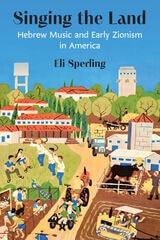
Singing the Land
Hebrew Music and Early Zionism in AmericaEli Sperling
University of Michigan Press, 2024
Exploring the history, events, contexts, and tensions that comprised what may be termed the ‘Zionization’ of American Jewry during the first half of the twentieth century, Eli Sperling analyzes primary sources within the historical contexts of Zionist national development and American Jewish life. Singing the Land offers insights into how and why musical frameworks were central to catalyzing American Jewry’s support of the Zionist cause by the 1940s, parallel to firm commitments to their American locale and national identities. The proliferation of this widespread American Jewish-Zionist embrace was achieved through a variety of educational, religious, economic, and political efforts, and Hebrew music was a thread consistent among them all.
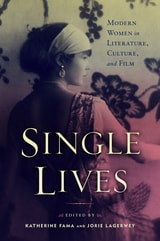
Single Lives
Modern Women in Literature, Culture, and FilmKatherine Fama
Rutgers University Press, 2022

Singular Examples
Artistic Politics and the Neo-Avant-GardeTyrus Miller
Northwestern University Press, 2008
This book focuses on the integral, interdisciplinary, and intermedial "compositions"—verbal, visual, musical, theatrical, and cinematic—of the avant-gardes in the period following World War II. It also considers the artistic politics of these postwar avant-gardes and their works. The book’s geographical span is primarily the United States, although in its more extended reach, it comprehends an international context of American postwar cultural hegemony throughout what was once referred to as "the free world."
The works and the artists Miller takes up are those of the so-called "neo–avant-garde" with its inherent contradiction: an avant-garde whose newness is defined by its seeming reiteration of an earlier historical formation. Concentrating on the rhetorical, contextual, and performative characteristic of neo–avant-garde practice, including its relation to politics, Miller emphasizes the centrality of the example in this practice. John Cage, Jackson Mac Low, Gilbert Sorrentino, David Tudor, Stan Brakhage, and Samuel Beckett are among the artists whose exemplary works feature in Singular Examples. Miller’s key readings of these major artists of the period open up some of the most difficult texts of the neo–avant-garde even as they contribute to an eloquent argument for "artistic politics." Underlining the relation between material particulars and their thematic implications, between particular works and larger theoretical claims, between avant-garde aesthetics and formalist analysis, Singular Examples is exemplary in its own right, revealing the ultimate shape and direction of a postwar avant-garde contending with the historical predicaments of radical modernism.
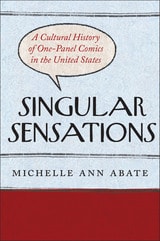
Singular Sensations
A Cultural History of One-Panel Comics in the United StatesMichelle Ann Abate
Rutgers University Press, 2024
Shortlisted for the 2024 Eisner Award for Best Academic/Scholarly Book
What do The Family Circus, Ziggy, and The Far Side have in common? They are all single-panel comics, a seemingly simple form that cartoonists have used in vastly different ways.
Singular Sensations is the first book-length critical study to examine this important but long-neglected mode of cartoon art. Michelle Ann Abate provides an overview of how the American single-panel comic evolved, starting with Thomas Nast’s political cartoons and R.F. Outcault’s groundbreaking Yellow Kid series in the nineteenth century. In subsequent chapters, she explores everything from wry New Yorker cartoons to zany twenty-first-century comics like Bizarro. Offering an important corrective to the canonical definition of comics as “sequential art,” Abate reveals the complexity, artistry, and influence of the single-panel art form.
Engaging with a wide range of historical time periods, sociopolitical subjects, and aesthetic styles, Singular Sensations demonstrates how comics as we know and love them would not be the same without single-panel titles. Abate’s book brings the single-panel comic out of the margins and into the foreground.