Results by title
28167 books match the query 'History' and 1838 start with s
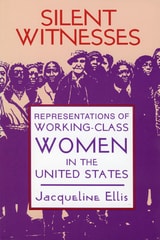
Silent Witnesses
Representations of Working-Class Women in the United StatesJacqueline Ellis
University of Wisconsin Press, 1998
Through detailed analyses of documentary photography and radical literature, Silent Witnesses explores how working-class identity has been repressed and manipulated to fit the expectations of liberal politicians, radical authors, Marxist historians, feminist academics, and contemporary cultural theorists.

Silver Saga
The Story of Caribou, Colorado, Revised EditionDuane A. Smith
University Press of Colorado, 2002

Silver Screens
A Pictorial History of Milwaukee's Movie TheatersLarry Widen
Wisconsin Historical Society Press, 2007
Silver Screens traces the rich history of Milwaukee's movie theaters, from 1890s nickelodeons to the grand palaces of the Roaring Twenties to the shopping mall outlets of today. And the story doesn't end there: in the past two decades, the revival of interest in preservation and restoration of theaters has confirmed that there's still life in these beloved old structures. With the publication of Silver Screens, authors Larry Widen and Judi Anderson help ensure that our old theaters, those being restored and those long since vanished, will remain forever embedded in our collective memory.
In this revised edition of their book Milwaukee Movie Palaces, the authors present new findings on film innovations, drive-in theaters, projection booths, movie promotions, noted theater personalities, recent restoration efforts, and much more. Illuminated with more than a hundred photographs, including many never before published, Silver Screens is a stunning tribute to the legacy of the movie theater.
Silver and Politics in Nevada
Al Glass
University of Nevada Press, 1969
Monetary policy and politics have been inextricably intertwined in the United States since the earliest days of the Republic. Indeed, some of the most outstanding events in United States political history have involved maneuvering, dealing, and ultimately legislating on financial questions. By the 1890s, with the government over a hundred years old, the issues far from being settled became perhaps as important as they had ever been in the century-old debates. As the nineteenth century entered its last decade, however, the problems turned not solely on broad economic subjects, but on the metal coinage of the nation and its effect on the financial order. The so-called Populist Revolt of the 1880s and 1890s added fervor and color to the disputes that erupted, and turned the eyes of the country to the western region, where metals and mining had be-come, in some areas, the basis of the economy.
Nevada contained an outstanding example of the fermentthat erupted over the coinage question. There, the decline of the great Comstock lode, in combination with the most difficult features of recurring national and local economic depressions, caused a political outbreak of unusual pro-portions. After failing to bring about a desired inflation of the national currency through remonetization of silver, Nevadans turned to an extravagant-and ultimately unsuc-cessful-action: the politicians put together a new organization and called it the Silver Party of Nevada. This book represents an attempt to reconstruct the political history of the Silver party's decade in power.
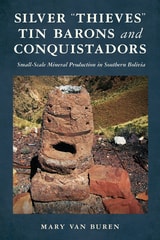
Silver “Thieves," Tin Barons, and Conquistadors
Small-Scale Mineral Production in Southern BoliviaMary Van Buren
University of Arizona Press, 2024
The methods of historian Bertell Ollman, particularly a dialectical approach and “doing history backwards,” are used to examine small-scale mineral production in Porco, Bolivia. The research is based on nine seasons of archaeological fieldwork and historical research, with a particular focus on labor and technology. Van Buren argues that artisanal mineral production must be understood in relation to large-scale mining rather than as a traditional practice and that the Bolivian case is a culturally specific instantiation of a broader economic phenomenon that began under colonial regimes.
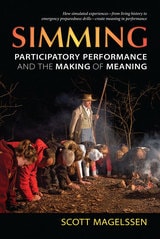
Simming
Participatory Performance and the Making of MeaningScott Magelssen
University of Michigan Press, 2014
At an ecopark in Mexico, tourists pretend to be illegal migrants, braving inhospitable terrain and the U.S. Border Patrol as they attempt to cross the border. At a living history museum in Indiana, daytime visitors return after dark to play fugitive slaves on the Underground Railroad. In the Mojave Desert, the U.S. Army simulates entire provinces of Iraq and Afghanistan, complete with bustling villages, insurgents, and Arabic-speaking townspeople, to train soldiers for deployment to the Middle East. At a nursing home, trainees put on fogged glasses and earplugs, thick bands around their finger joints, and sandbag harnesses to simulate the effects of aging and to gain empathy for their patients.
These immersive environments in which spectator-participants engage in simulations of various kinds—or “simming”—are the subject of Scott Magelssen’s book. His book lays out the ways in which simming can provide efficacy and promote social change through affective, embodied testimony. Using methodology from theater history and performance studies (particularly as these fields intersect with cultural studies, communication, history, popular culture, and American studies), Magelssen explores the ways these representational practices produce, reify, or contest cultural and societal perceptions of identity.

Simon Baruch
Rebel in the Ranks of Medicine, 1840-1921Patricia Spain Ward
University of Alabama Press, 1994
Recounts the remarkable life of a Prussian/Polish Jew who immigrated to the United States as a teenager in the 1850s and became one of the nation’s best-known physicians by the turn of the century
After medical study in South Carolina and Virginia on the eve of the Civil War, Simon Baruch served the Confederacy as a surgeon for three years, twice undergoing capture and internment. Despite economic hardships while practicing in South Carolina during Reconstruction, he helped to reactivate the State Medical Association and served as president of the State Board of Health.
In 1881 he joined the exodus of southern physicians and scientists of that period, taking up residence in New York City, where he rose to prominence through his advocacy of surgery in one of the early operations for appendicitis and through is role as the protective physician in a widely publicized “child cruelty” case involving the musical prodigy, Josef Hofmann. Baruch became a leader in the nationwide movement to establish free public baths for tenement dwellers and in the development of expert medical journalism. Although his advocacy of such natural remedies as water, fresh air, and diet often made him appear unaccountably iconoclastic to his contemporaries, he has gained posthumous recognition as a pioneer in physical medicine.
Bernard N. Baruch, one of his four sons, has memorialized this work through endowments for research and instruction in physical medicine and rehabilitation. Ward reconstructs the life of a medical student in the South at the opening of the Civil War, the adventures of a Confederate surgeon, and the difficulties of a practitioner in Reconstruction South Carolina. Simon Baruch’s physician’s registers and his correspondence with colleagues afford the reader an immediate sense of the therapeutic dilemmas facing physicians and patients of his era. Baruch’s experiences while establishing himself in New York City after 1881 reflect the challenges facing those trying to break into what was then the nation’s medical capital—as well as that city’s rich opportunities and heady intellectual atmosphere. His energetic campaign for free public baths illustrates one of the most colorful chapters of American social history, as immigrants flooded the cities at the turn of the century. As medical editor of the New York Sun from 1912 to 1918, Baruch touched on most of the health concerns of that period and a few—such as handgun control—that persist to this day.
Simone de Beauvoir’s Political Thinking
Edited by Lori Jo Marso and Patricia Moynagh
University of Illinois Press, 2006
By exploring the life and work of the influential feminist thinker Simone de Beauvoir, this book shows how each of us lives within political and social structures that we can--and must--play a part in transforming. It argues that Beauvoir’s careful examination of her own existence can also be understood as a dynamic method for political thinking.
As the contributors illustrate, Beauvoir's political thinking proceeds from the bottom up, using examples from individual lives as the basis for understanding and transforming our collective existence. For example, she embraced her responsibility as a French citizen as making her complicit in the French war against Algeria. Here, she sees her role as an oppressor. In other contexts, she looks to the lives of individual women, including herself, to understand the dimensions of gender inequality.
This volume’s six tightly connected essays home in on the individual’s relationship to community, and how one’s freedom interacts with the freedom of other people. Here, Beauvoir is read as neither a liberal nor a communitarian. The authors focus on her call for individuals to realize their freedom while remaining consistent with ethical obligations to the community. Beauvoir's account of her own life and the lives of others is interpreted as a method to understand individuals in relations to others, and as within structures of personal, material, and political oppression. Beauvoir's political thinking makes it clear that we cannot avoid political action. To do nothing in the face of oppression denies freedom to everyone, including oneself.
Simple Not Easy
Reflections on community social responsibility and toleranceTerrence Roberts
Parkhurst Brothers, Inc., 2010
HE MADE HISTORY. HE TELLS THE TRUTHS HE KNOWS.
LEAD TITLE/Our National Conversation Series
----Margot Stern Strom, Executive Director, Facing History and Ourselves, Inc.
"Terrence Roberts challenges all of us to make the world more inclusive by adjusting our 'mental maps.' He reminds us that we will not achieve that long-sought beloved community until we recognize the value of each individual-until we affirm each other. Simple, NotEasy is one trailblazer's mingling of history and contemporary mattersto engage a new conversations on community, social responsibility and tolerance. A powerful book by a civil rights legend."
--- Lawrence J. Pijeaux, Jr., Ed.D.,

Simple Story Of A Soldier
Life And Service in the 2d Mississippi InfantrySamuel W. Hankins
University of Alabama Press, 2004
This fast-paced memoir was written in 1905 by 61-year-old Samuel W. Hankins while he was living in the Soldiers Home in Gulfport, Mississippi. It vividly details his years as a Confederate rifleman from the spring of 1861, when at a mere sixteen years of age he volunteered for the 2d Mississippi Infantry, through the end of the war in 1865, when he was just twenty years old and maimed for life.
The 2d Mississippi was part of the Army of Northern Virginia and as such saw action at Bull Run/Manassas, Seven Pines and the Peninsular Campaign, and Gettysburg. Besides being hospitalized with measles, suffering severely frostbitten feet, and being wounded by a minié ball at Railroad Cut, Hankins was captured by Federal forces and sent to a prisoner of war camp on David’s Island, New York. Later, he was transferred to a South Carolina hospital, returned home on furlough, joined a cavalry unit that fought at Atlanta. He was stationed in Selma, Alabama, when the war ended.
The strength of Hankins’s text lies in his straightforward narrative style virtually free of Lost Cause sentiment. Both Union and Confederate veterans could relate to his stories because so many of them had faced similar challenges during the war. Full of valuable information on a common soldier’s experience, the memoir still conjures the sights, sounds, and smells of warfare.

Simple Things
Lessons from the Family FarmJerry Apps
Wisconsin Historical Society Press, 2018
Sin and Confession in Colonial Peru
Spanish-Quechua Penitential Texts, 1560-1650By Regina Harrison
University of Texas Press, 2014
A central tenet of Catholic religious practice, confession relies upon the use of language between the penitent and his or her confessor. In the sixteenth and seventeenth centuries, as Spain colonized the Quechua-speaking Andean world, the communication of religious beliefs and practices—especially the practice of confession—to the native population became a primary concern, and as a result, expansive bodies of Spanish ecclesiastic literature were translated into Quechua. In this fascinating study of the semantic changes evident in translations of Catholic catechisms, sermons, and manuals, Regina Harrison demonstrates how the translated texts often retained traces of ancient Andean modes of thought, despite the didactic lessons they contained.
In Sin and Confession in Colonial Peru, Harrison draws directly from confession manuals to demonstrate how sin was newly defined in Quechua lexemes, how the role of women was circumscribed to fit Old World patterns, and how new monetized perspectives on labor and trade were taught to the subjugated indigenous peoples of the Andes by means of the Ten Commandments. Although outwardly confession appears to be an instrument of oppression, the reformer Bartolomé de Las Casas influenced priests working in the Andes; through their agency, confessional practice ultimately became a political weapon to compel Spanish restitution of Incan lands and wealth. Bringing together an unprecedented study (and translation) of Quechua religious texts with an expansive history of Andean and Spanish transculturation, Harrison uses the lens of confession to understand the vast and telling ways in which language changed at the intersection of culture and religion.

Sin and Salvation in Early Modern France
Three Women’s StoriesMarguerite d'Auge, Renée Burlamacchi, and Jeanne du Laurens
Iter Press, 2017
The texts available here in English for the first time open a window into the lives of three early modern Frenchwomen as they explore the common themes of family, memory, sin, and salvation. The Regrets of Marguerite d’Auge (1600), the Memoirs of Renée Burlamacchi (1623), and the Genealogy of Jeanne du Laurens (1631), taken from different genres of historical writings, raise important questions: Why and how did female authorship find its way into the historical record? How did these voices escape the censorship and prejudice against female publication? In a time of extreme religious conflict, how did these women convey their views on controversial issues such as primacy of grace, indulgences, and salvation without disrupting the gender expectations of the era?
Sin in the City
Chicago and Revivalism, 1880-1920Thekla Ellen Joiner
University of Missouri Press, 2013
Long before today’s culture wars, the “Third Great Awakening” rocked America. During the late nineteenth and early twentieth centuries, evangelists such as Dwight L. Moody and Billy Sunday roused citizens to renounce sin as it manifested in popular culture, moral ambiguity, and the changing role of women.
Sin in the City examines three urban revivals in turn-of-the-century Chicago to show how revivalists negotiated that era’s perceived racial, sexual, and class threats. While most studies of this movement have focused on its male leaders and their interactions with society, Thekla Ellen Joiner raises new questions about gender and race by exploring Third Awakening revivalism as the ritualized performance of an evangelical social system defined by middle-class Protestant moral aspirations for urban America. Rather than approaching these events merely as the achievements of persuasive men, she views them as choreographed collective rituals reinforcing a moral order defined by ideals of femininity, masculinity, and racial purity.
Joiner reveals how revivalist rhetoric and ritual shifted from sentimentalist identification of sin with males to a more hard-nosed focus on females, castigating “loose women” whose economic and sexual independence defied revivalist ideals and its civic culture. She focuses on Dwight L. Moody’s 1893 World’s Fair revival, the 1910 Chapman-Alexander campaign, and the 1918 Billy Sunday revival, comparing the locations, organization, messages, and leaders of these three events to depict the shift from masculinized to feminized sin. She identifies the central role women played in the Third Awakening as the revivalists promoted feminine virtue as the corrective to America’s urban decline. She also shows that even as its definition of sin became more feminized, Billy Sunday’s revivalism began to conform to Chicago’s emerging color line.
Enraged by rapid social change in cities like Chicago, these preachers spurred Protestant evangelicals to formulate a gendered and racialized moral regime for urban America. Yet, as Joiner shows, even as revivalists demonized new forms of entertainment, they used many of the modern cultural practices popularized in theaters and nickelodeons to boost the success of their mass conversions.
Sin in the City shows that the legacy of the Third Awakening lives on today in the religious right’s sociopolitical activism; crusade for family values; disparagement of feminism; and promotion of spirituality in middle-class, racial, and cultural terms. Providing cultural and gender analysis too often lacking in the study of American religious history, it offers a new model for understanding the development of a gendered theology and set of religious practices that influenced Protestantism in a period of enormous social change.
Sin in the Sixties
Maria C. Morrow
Catholic University of America Press, 2016
Since Time Immemorial
Native Custom and Law in Colonial MexicoYanna Yannakakis
Duke University Press, 2023
Sing Them Over Again to Me
Hymns and Hymnbooks in AmericaEdited by Mark A. Noll and Edith L. Blumhofer
University of Alabama Press, 2006
Hymns and hymnbooks as American historical and cultural icons.
This work is a study of the importance of Protestant hymns in defining America and American religion. It explores the underappreciated influence of hymns in shaping many spheres of personal and corporate life as well as the value of hymns for studying religious life. Distinguishing features of this volume are studies of the most popular hymns (“Amazing Grace,” “O, For a Thousand Tongues to Sing,” “All Hail the Power of Jesus’ Name”), with attention to the ability of such hymns to reveal, as they are altered and adapted, shifts in American popular religion. The book also focuses attention on the role hymns play in changing attitudes about race, class, gender, economic life, politics, and society.
Sing and Sing On
Sentinel Musicians and the Making of the Ethiopian American DiasporaKay Kaufman Shelemay
University of Chicago Press, 2022
Sing and Sing On is the first study of the forced migration of musicians out of the Horn of Africa dating from the 1974 Ethiopian revolution, a political event that overthrew one of the world’s oldest monarchies and installed a brutal military regime. Musicians were among the first to depart the region, their lives shattered by revolutionary violence, curfews, and civil war. Reconstructing the memories of forced migration, Sing and Sing On traces the challenges musicians faced amidst revolutionary violence and the critical role they played in building communities abroad.
Drawing on the recollections of dozens of musicians, Sing and Sing On details personal, cultural, and economic hardships experienced by musicians who have resettled in new locales abroad. Kay Kaufman Shelemay highlights their many artistic and social initiatives and the ways they have offered inspiration and leadership within and beyond a rapidly growing Ethiopian American diaspora. While musicians held this role as sentinels in Ethiopian culture long before the revolution began, it has taken on new meanings and contours in the Ethiopian diaspora. The book details the ongoing creativity of these musicians while exploring the attraction of return to their Ethiopian homeland over the course of decades abroad. Ultimately, Shelemay shows that musicians are uniquely positioned to serve this sentinel role as both guardians and challengers of cultural heritage.
Sing to the Colors
A Writer Explores Two Centuries at the University of MichiganJames Tobin
University of Michigan Press, 2021

Singapore's Grand Strategy
Cheng Guan Ang
National University of Singapore Press, 2023
Even small states can have grand strategies. Singapore, despite its poor natural resource endowment, small population, and size, has often been described as punching above its weight in international affairs. Part of this stems from the way Singapore strategically integrates the different diplomatic, political, and defense-oriented tools at its disposal. To explore this, Singapore’s Grand Strategy offers a fresh and useful diplomatic, defense, and security history of Singapore, from its independence in 1965 through today’s period of strategic realignment.
Most previous studies of grand strategy have focused on super- or at least middle powers, but this book presents an important contribution to international relations and strategic studies by showing how the concept can help explain the strategic posture and achievements of small states as well. Moreover, he brings a historian's perspective to a subject usually tackled by political scientists. The result will be useful and important for scholars in these fields.
Singaporean Creatures
Histories of Humans and Other Animals in the Garden CityEdited by Timothy Barnard
National University of Singapore Press, 2024
Modern Singapore is the Garden City, a biophilic urban space that includes a variety of animals, from mosquitoes to humans, even polar bears. Singaporean Creatures brings together historians to contemplate this human-animal relationship and how it has shaped society—socially, economically, politically, and environmentally. It is a work of historical and ecological analysis, in which various institutions, perspectives, and events involving animals provide insight into how the larger society has been formed and developed over the last half-century. The interaction of all Singaporean creatures thus provides a lens through which we can understand the creation of a modern and urban nation-state, shaped by the forces of the Anthropocene.
Singing Sappho
Improvisation and Authority in Nineteenth-Century Italian OperaMelina Esse
University of Chicago Press, 2021

Singing Stone
Thomas L Fleischner
University of Utah Press, 1999
Integrating personal narrative and natural history, Fleischner presents what he calls a "guide to understanding" the relatively unknown landscape of the Grand Staircase-Escalante National Monument.
Like a bright blue seam incised deep in solid rock, the Escalante River binds the fir forests of Utah’s High Plateau with the barren deserts of the canyonlands region in the newly designed Grand Staircase-Escalante National Monument. To this wild landscape, naturalist Thomas Fleischner brings both emotional engagement and a wealth of knowledge. With unabashed passion and patient and learned observations Fleischner presents this relatively unknown landscape.
Singing Stone is ideal for curious visitors to the national monument as well as students of environmental studies. Fleischner’s background as a conservation biologist and former park ranger, a professor of environmental studies, and a naturalist in the Escalante Region for almost twenty years has provided him with a deep reservoir of experience and knowledge.
The book’s first three chapters survey the unique geology, flora and fauna, and human history of the region. Chapters four and five trace the more recent impacts of human activities—grazing and wilderness recreation—and explore the shifts in cultural values and public policy that have occurred as a result. Examining these topics in the context of a specific landscape offers a lens through which these changes, now the topic of examination and controversy throughout the New West, can be clearly seen and, hopefully, re-evaluated.
Singing for the Dead
The Politics of Indigenous Revival in MexicoPaja Faudree
Duke University Press, 2013
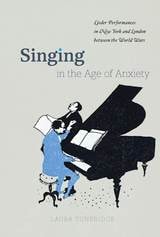
Singing in the Age of Anxiety
Lieder Performances in New York and London between the World WarsLaura Tunbridge
University of Chicago Press, 2018
Laura Tunbridge explores the renewed vitality of this refugee musical form between the world wars, offering a fresh perspective on a period that was pervaded by anxieties of displacement. Through richly varied case studies, Singing in the Age of Anxiety traces how lieder were circulated, presented, and consumed in metropolitan contexts, shedding new light on how music facilitated unlikely crossings of nationalist and internationalist ideologies during the interwar period.
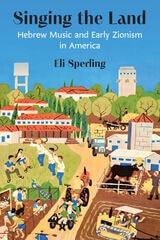
Singing the Land
Hebrew Music and Early Zionism in AmericaEli Sperling
University of Michigan Press, 2024
Exploring the history, events, contexts, and tensions that comprised what may be termed the ‘Zionization’ of American Jewry during the first half of the twentieth century, Eli Sperling analyzes primary sources within the historical contexts of Zionist national development and American Jewish life. Singing the Land offers insights into how and why musical frameworks were central to catalyzing American Jewry’s support of the Zionist cause by the 1940s, parallel to firm commitments to their American locale and national identities. The proliferation of this widespread American Jewish-Zionist embrace was achieved through a variety of educational, religious, economic, and political efforts, and Hebrew music was a thread consistent among them all.
Singing the Lord's Song in a Strange Land
Hymnody in the History of North American ProtestantismEdith L. Blumhofer
University of Alabama Press, 2008
Music and song are important parts of worship, and hymns have long played a central role in Protestant cultural history. This book explores the ways in which Protestants have used and continue to use hymns to clarify their identity and define their relationship with America and to Christianity. Representing seven groups—Baptists, Presbyterians, Lutherans, Mennonites, Holiness, Hispanics, and Evangelicals—the nine essays reveal how hymns have helped immigrants to establish new identities, contributed to the body of worship resources, and sustained ethnic identity.
Individual essays address the music of the Old-Fashioned Revival Hour, America’s longest running and most successful independent radio program; singing among Swedish evangelicals in America; the German hymn tradition as transformed by Mennonite immigrants; the ways hymnody reinforces themes of the Wesleyan holiness movement; the history of Mercer’s Cluster (1810), a southern hymnal that gave voice to slaves, women, and native Americans; and the Presbyterian hymnal tradition in Canada formed by Scottish immigrants.

Single Star of the West
The Republic of Texas, 1836-1845Kenneth W. Howell
University of North Texas Press, 2017

Singular Examples
Artistic Politics and the Neo-Avant-GardeTyrus Miller
Northwestern University Press, 2008
This book focuses on the integral, interdisciplinary, and intermedial "compositions"—verbal, visual, musical, theatrical, and cinematic—of the avant-gardes in the period following World War II. It also considers the artistic politics of these postwar avant-gardes and their works. The book’s geographical span is primarily the United States, although in its more extended reach, it comprehends an international context of American postwar cultural hegemony throughout what was once referred to as "the free world."
The works and the artists Miller takes up are those of the so-called "neo–avant-garde" with its inherent contradiction: an avant-garde whose newness is defined by its seeming reiteration of an earlier historical formation. Concentrating on the rhetorical, contextual, and performative characteristic of neo–avant-garde practice, including its relation to politics, Miller emphasizes the centrality of the example in this practice. John Cage, Jackson Mac Low, Gilbert Sorrentino, David Tudor, Stan Brakhage, and Samuel Beckett are among the artists whose exemplary works feature in Singular Examples. Miller’s key readings of these major artists of the period open up some of the most difficult texts of the neo–avant-garde even as they contribute to an eloquent argument for "artistic politics." Underlining the relation between material particulars and their thematic implications, between particular works and larger theoretical claims, between avant-garde aesthetics and formalist analysis, Singular Examples is exemplary in its own right, revealing the ultimate shape and direction of a postwar avant-garde contending with the historical predicaments of radical modernism.
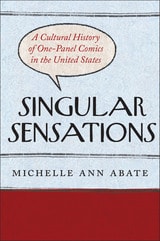
Singular Sensations
A Cultural History of One-Panel Comics in the United StatesMichelle Ann Abate
Rutgers University Press, 2024
Shortlisted for the 2024 Eisner Award for Best Academic/Scholarly Book
What do The Family Circus, Ziggy, and The Far Side have in common? They are all single-panel comics, a seemingly simple form that cartoonists have used in vastly different ways.
Singular Sensations is the first book-length critical study to examine this important but long-neglected mode of cartoon art. Michelle Ann Abate provides an overview of how the American single-panel comic evolved, starting with Thomas Nast’s political cartoons and R.F. Outcault’s groundbreaking Yellow Kid series in the nineteenth century. In subsequent chapters, she explores everything from wry New Yorker cartoons to zany twenty-first-century comics like Bizarro. Offering an important corrective to the canonical definition of comics as “sequential art,” Abate reveals the complexity, artistry, and influence of the single-panel art form.
Engaging with a wide range of historical time periods, sociopolitical subjects, and aesthetic styles, Singular Sensations demonstrates how comics as we know and love them would not be the same without single-panel titles. Abate’s book brings the single-panel comic out of the margins and into the foreground.
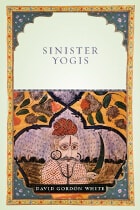
Sinister Yogis
David Gordon White
University of Chicago Press, 2009
Since the 1960s, yoga has become a billion-dollar industry in the West, attracting housewives and hipsters, New Agers and the old-aged. But our modern conception of yoga derives much from nineteenth-century European spirituality, and the true story of yoga’s origins in South Asia is far richer, stranger, and more entertaining than most of us realize.
To uncover this history, David Gordon White focuses on yoga’s practitioners. Combing through millennia of South Asia’s vast and diverse literature, he discovers that yogis are usually portrayed as wonder-workers or sorcerers who use their dangerous supernatural abilities—which can include raising the dead, possession, and levitation—to acquire power, wealth, and sexual gratification. As White shows, even those yogis who aren’t downright villainous bear little resemblance to Western assumptions about them. At turns rollicking and sophisticated, Sinister Yogis tears down the image of yogis as detached, contemplative teachers, finally placing them in their proper context.

Sinking Chicago
Climate Change and the Remaking of a Flood-Prone EnvironmentHarold L. Platt
Temple University Press, 2018
In Sinking Chicago, Harold Platt shows how people responded to climate change in one American city over a hundred-and-fifty-year period. During a long dry spell before 1945, city residents lost sight of the connections between land use, flood control, and water quality. Then, a combination of suburban sprawl and a wet period of extreme weather events created damaging runoff surges that sank Chicago and contaminated drinking supplies with raw sewage.
Chicagoans had to learn how to remake a city built on a prairie wetland. They organized a grassroots movement to protect the six river watersheds in the semi-sacred forest preserves from being turned into open sewers, like the Chicago River. The politics of outdoor recreation clashed with the politics of water management. Platt charts a growing constituency of citizens who fought a corrupt political machine to reclaim the region’s waterways and Lake Michigan as a single eco-system. Environmentalists contested policymakers’ heroic, big-technology approaches with small-scale solutions for a flood-prone environment. Sinking Chicago lays out a roadmap to future planning outcomes.

Sinn Fein and the Politics of Left Republicanism
Eoin O'Broin
Pluto Press, 2009
Sinn Féin is a growing force in Irish politics. Now the country's third largest party, Sinn Féin have been one of the central architects of the peace process and are increasingly setting the terms of political debate in Ireland north and south. Despite this, the party remains much misunderstood and often misrepresented.
In Sinn Féin & The Politics of Left Republicanism, Sinn Féin activist Eoin Ó Broin explores the ideological and organisational origins of the party, charts their history and recent political development and assesses their possible futures.
He argues that Sinn Féin is part of a distinct left-republican tradition in Irish society whose future lies in the globally resurgent radical democratic left.
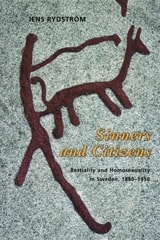
Sinners and Citizens
Bestiality and Homosexuality in Sweden, 1880-1950Jens Rydström
University of Chicago Press, 2003
Based on medical journals, psychiatric reports, and court records from the period, as well as testimonies from men in diaries, letters, and interviews, Sinners and Citizens reveals that bestiality was once a dreaded crime in Sweden. But in time, mention of the practice disappeared completely from legal and medical debates. This, Rydström contends, is because models of penetrative sodomy shifted from bestiality to homosexuality as Sweden transformed from a rural society into a more urban one. As the nation's economy and culture became less identified with the countryside, so too did its idea of deviant sexual behavior.
Sino–Malay Trade and Diplomacy from the Tenth through the Fourteenth Century
Derek Heng
Ohio University Press, 2009
China has been an important player in the international economy for two thousand years and has historically exerted enormous influence over the development and nature of political and economic affairs in the regions beyond its borders, especially its neighbors.
Sino–Malay Trade and Diplomacy from the Tenth through the Fourteenth Century examines how changes in foreign policy and economic perspectives of the Chinese court affected diplomatic intercourse as well as the fundamental nature of economic interaction between China and the Malay region, a subregion of Southeast Asia centered on the Strait of Malacca.
This study’s uniqueness and value lie in its integration of archaeological, epigraphic, and textual data from both China and Southeast Asia to provide a rich, multilayered picture of Sino–Southeast Asian relations in the premodern era. Derek Heng approaches the topic from both the Southeast Asian and Chinese perspectives, affording a dual narrative otherwise unavailable in the current body of Southeast Asian and China studies literature.
Sins Of The Parents
Politics Of National Apologies In The U.S.Brian A. Weiner
Temple University Press, 2005

Sins against Nature
Sex and Archives in Colonial New SpainZeb Tortorici
Duke University Press, 2018
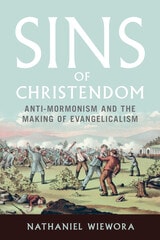
Sins of Christendom
Anti-Mormonism and the Making of EvangelicalismNathaniel Wiewora
University of Illinois Press, 2024

Sins of the Shovel
Looting, Murder, and the Evolution of American ArchaeologyRachel Morgan
University of Chicago Press, 2023
American archaeology was forever scarred by an 1893 business proposition between cowboy-turned-excavator Richard Wetherill and socialites-turned-antiquarians Fred and Talbot Hyde. Wetherill had stumbled upon Mesa Verde’s spectacular cliff dwellings and started selling artifacts, but with the Hydes’ money behind him, well—there’s no telling what they might discover. Thus begins the Hyde Exploring Expedition, a nine-year venture into Utah’s Grand Gulch and New Mexico’s Chaco Canyon that—coupled with other less-restrained looters—so devastates Indigenous cultural sites across the American Southwest that Congress passes first-of-their-kind regulations to stop the carnage. As the money dries up, tensions rise, and a once-profitable enterprise disintegrates, setting the stage for a tragic murder.
Sins of the Shovel is a story of adventure and business gone wrong and how archaeologists today grapple with this complex heritage. Through the story of the Hyde Exploring Expedition, practicing archaeologist Rachel Morgan uncovers the uncomfortable links between commodity culture, contemporary ethics, and the broader political forces that perpetuate destructive behavior today. The result is an unsparing and even-handed assessment of American archaeology’s sins, past and present, and how the field is working toward atonement.

Sioux War Dispatches
Reports from the Field, 1876-1877Marc H. Abrams
Westholme Publishing, 2012
Rare, First-Hand Accounts from Newspaper Correspondents Describing the Course of America’s Largest Indian War, Compiled and Edited for the First Time in One Volume
“No one commands better the story of the Great Sioux War of 1876–1877 as presented in the nation’s newspapers than does Marc Abrams. Here is Abrams’s story of America’s greatest Indian war woven from those timely reports, augmented with insightful introductions and annotations. Abrams has produced a significant addition to the historiography of this endlessly fascinating struggle and its colorful personalities.” —Paul L. Hedren, author of After Custer: Loss and Transformation in Sioux Country
“Marc Abrams has provided an invaluable service to both scholars and lay readers in compiling this treasure trove of primary information. Like the correspondents he has come to know through his research, Marc has done the hard work; we need only read in comfort and benefit from his efforts.” —Douglas W. Ellison, author of Sole Survivor: An Examination of the Frank Finkel Narrative
“Marc Abrams’s book is an exciting and innovative approach that brings immediacy to the campaigns of Custer, Crook, and Miles, and teems with fascinating new detail. Sioux War Dispatches not only offers a gripping contemporary window into those times, it fills an important reference need as well.” —Jerome A. Greene, author of Stricken Field: The Little Bighorn Since 1876
Sioux War Dispatches: Reports from the Field, 1876-1877, tells the story of the Great Sioux War, including the battle of the Little Big Horn, primarily through the eyes of contemporary newspaper correspondents, both civilian and military. The volume begins with the Black Hills dilemma and the issue of the unceded territory (the disputed lands that were adjacent to the Great Sioux Reservation) and continues through to the spring of 1877 with the surrender of the legendary Sioux leader Crazy Horse. Along the way readers will learn about the Reynolds battle, the skirmish at Tongue River Heights, the battle of the Rosebud, the battle of the Little Big Horn, the skirmish at Warbonnet Creek, the fight at Slim Buttes, and more. In addition to numerous annotated excerpts from those who were there, are rare original dispatches, reprinted in full, that will take readers on a wild ride through several battles.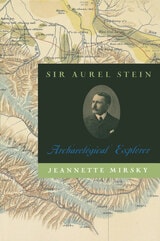
Sir Aurel Stein
Archaeological ExplorerJeannette Mirsky
University of Chicago Press, 1977
"[Mirsky] has digested the correspondence, and she quotes so skillfully that her book will save many people the trouble of reading Stein's own exhaustive and exhausting volumes. Definitive."—Larry McMurtry, Washington Post
"A first-rate and unique biography of one of the more significant explorers of Central Asia and the Indo-Iranian borderlands. . . . Mirsky has recreated not only the life of an intrepid explorer but the spirit of the times."—Choice
"Mirsky has performed a signal service in distilling the life, travels, and letters of Aurel Stein into a manageable, graceful, and meaningful synthesis."—Theodore A. Wertime, Technology and Culture

Sir Charles Wheatstone FRS, 1802-1875
Brian Bowers
The Institution of Engineering and Technology, 2001
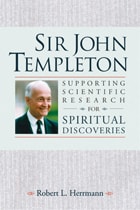
Sir John Templeton
Supporting Scientific Research For Spiritual DiscoveriesRobert Herrmann
Templeton Press, 2004
Sir Philip Sidney
Selected Prose and PoetryEdited by Robert Kimbrough
University of Wisconsin Press, 1983

Sir Robert Borden
CanadaMartin Thornton
Haus Publishing, 2010
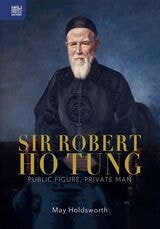
Sir Robert Ho Tung
Public Figure, Private ManMay Holdsworth
Hong Kong University Press, 2022
Sir Robert Ho Tung (1862–1954) is a compelling figure in Hong Kong history. He is regularly portrayed as the colony’s greatest philanthropist and wealthiest man of his day, the first Chinese to live on the Peak, and, at the end of his life, the “Grand Old Man of Hong Kong.” The illegitimate son of a Chinese mother and European father, he was highly sensitive about his mixed heritage, although his success was driven as much by his entrepreneurial talents as by his being Eurasian. This book shows him in all his immense variety—financial wizard, husband and lover, patriarch of a large family, loyal British subject but also, paradoxically, Chinese patriot. China’s president Yuan Shikai awarded him the Order of the Excellent Crop, and King George V knighted him. May Holdsworth’s thoughtful and deftly written account of his life is the first full-length biography in English. Given unique and unprecedented access to family and personal papers, including letters, diaries, notes, and photographs, she offers a nuanced perspective on a public but also a private man. Her book will be a rich resource for historians and readers interested in the men and women who played a key part in the shaping of nineteenth- and early twentieth-century Hong Kong.
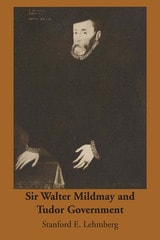
Sir Walter Mildmay and Tudor Government
By Stanford E. Lehmberg
University of Texas Press, 1964
This is the first biography of Sir Walter Mildmay, who dutifully served Queen Elizabeth I for thirty years as Chancellor of the Exchequer. Sir Walter Mildmay and Tudor Government, by Stanford E. Lehmberg, brings Mildmay into proper historical perspective alongside other prominent Tudor leaders.
Virtually none of Mildmay’s writings had been printed, and his activities had not been studied, partly because of the inaccessibility of necessary materials. In the mid-twentieth century, however, the Northamptonshire Record Office was able to acquire family papers, of which Lehmberg happily took advantage. These, together with materials in the British Museum and the Public Record Office, yield a detailed account of Mildmay’s contributions to English financial administration.
But Mildmay was not merely an Exchequer official. As a Member of Parliament he gained towering stature; his model orations and indefatigable work in committees provided invaluable leadership from 1576 to 1589. As a Privy Councillor he was twice sent on important embassies to Mary, Queen of Scots; he gave carefully considered advice about Scottish and Dutch affairs; and he was called on to examine numerous minor matters. As a trusted administrator he helped oversee the great recoinage of 1560. As a private citizen deeply concerned for good learning and true religion he founded Emmanuel College, Cambridge, and engaged in other philanthropic enterprises. By the time of his death in 1589 he had led a full and dedicated life serving his country and his Queen.
Into Lehmberg’s scholarly, readable volume have been blended aspects of Mildmay’s public life and his associations with historically famous contemporaries, discriminately selected segments of his speeches, elements of his personal philosophy, and the achievements and failures of his political life. Enhancing the value of this study are carefully annotated footnotes and a complementary bibliography. Tudor specialists as well as lay readers will undoubtedly profit from this significant biography.
Siren Songs
Gender, Audiences, and Narrators in the OdysseyLillian Eileen Doherty
University of Michigan Press, 1995
Siren Songs synthesizes audience-oriented and narratological approaches, and examines the relationships among three kinds of audiences: internal, implied, and actual. The author prefaces her own reading of the Odyssey with an analysis of the issues posed by the earlier feminist readings on which she builds. Should the Odyssey be read as a "closed" text, that is, as one whose meaning is highly determined, or as an "open" text whose contradictions and ambiguities undercut its overt meanings?
Siren Songs presents a feminist critique of the Odyssey in an accessible manner aimed at a more general audience. All Greek is translated, and critical terminology is clearly defined.
Lillian Eileen Doherty is Associate Professor of Classics, University of Maryland, College Park.
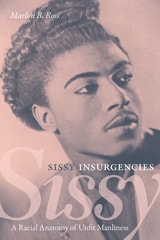
Sissy Insurgencies
A Racial Anatomy of Unfit ManlinessMarlon B. Ross
Duke University Press, 2022
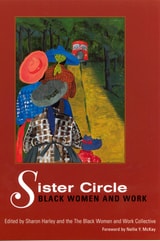
Sister Circle
Black Women and WorkHarley, Sharon
Rutgers University Press, 2002
Although black women’s labor was essential to the development of the United States, studies of these workers have lagged far behind those of working black men and white women. Adding insult to injury, a stream of images in film, television, magazines, and music continues to portray the work of black women in a negative light.
Sister Circle offers an innovative approach to representing work in the lives of black women. Contributors from many fields explore an array of lives and activities, allowing us to see for the first time the importance of black women’s labor in the aftermath of slavery. A brand new light is shed on black women’s roles in the tourism industry, as nineteenth-century social activists, as labor leaders, as working single mothers, as visual artists, as authors and media figures, as church workers, and in many other fields. A unique feature of the book is that each contributor provides an autobiographical statement, connecting her own life history to the subject she surveys.
The first group of essays, “Work It Sista!” identifies the sites of black women’s paid and unpaid work. In “Foremothers: The Shoulders on Which We Stand,” contributors look to the past for the different kinds of work that black women have performed over the last two centuries. Essays in “Women’s Work through the Artist’s Eyes” highlight black women’s work in literature, drama, and the visual arts. The collection concludes with “Detours on the Road to Work: Blessings in Disguise,” writings surveying connections between black women’s personal and professional lives.