Results by title
28167 books match the query 'History' and 1838 start with s

Sister City Diplomacy
Community Engagement in U.S.–Russian Relations from the Cold War to TodayDouglas C. Nord
University of Wisconsin Press, 2025
Sister City Diplomacy offers a historical account of citizen diplomacy set in a unique political and social environment. But in its theoretical grounding and informed arguments, this study speaks to much broader and contemporary concerns, both in terms of United States–Russian relations today and with regard to the challenges and opportunities of community-based diplomacy in general. Lessons learned along the shores of Lakes Superior and Onega in the last days of the Cold War hold great value given the heightened tensions of current geopolitics.
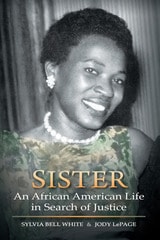
Sister
An African American Life in Search of JusticeSylvia Bell White and Jody LePage
University of Wisconsin Press, 2013
Winner, Wisconsin Historical Society Book Award of Merit
Sisters and Workers in the Middle Ages
Edited by Judith M. Bennett, Elizabeth A. Clark, Jean F. O'Barr, B. Anne Vilen,
University of Chicago Press, 1989
These essays provide a greater understanding of the ways in which gender has played a part in determining relations of power in Western cultures. This volume makes a vital contribution to the current scholarship about women in the Middle Ages.
Sisters for Justice
Small Acts in the Transformation of Apartheid South AfricaCatherine Higgs
University of Wisconsin Press, 2025
Based on extensive oral history interviews with white and Black sisters as well as deep archival research, this groundbreaking book reveals a largely untold story, nested within the broader literature of women’s activism in South Africa. The result is a new perspective that expands and intensifies our understanding of a dramatic period during which individual actions, in the aggregate, contributed to social change.

Sisters in Spirit
Christianity, Affect, and Community Building in East Africa, 1860–1970Andreana C. Prichard
Michigan State University Press, 2017

Sisters in the Faith
Shaker Women and Equality of the SexesGlendyne R. Wergland
University of Massachusetts Press, 2011
In 1788, following the death of charismatic founder Mother Ann Lee, the celibate religious group known as the Shakers set out to institutionalize equality of the sexes in their theology, government, and daily practice. In this book, Glendyne Wergland evaluates how well they succeeded in that mission by examining the experiences of women within Shaker communities over more than a century.
Drawing on an extensive archive of primary documents, Wergland discusses topics ranging from girlhood, health, and dress to why women joined the Shakers and how they were viewed by those outside their community. She analyzes the division of labor between men and women, showing that there was considerable cooperation and reciprocity in carrying out most tasks—from food production to laundering to gathering firewood—even as gendered conflicts remained.
In her conclusion, Wergland draws together all of these threads to show that Shaker communities achieved a remarkable degree of gender equality at a time when women elsewhere still suffered under the legal and social strictures of the traditional patriarchal order. In so doing, she argues, the experience of Shaker women served as a model for promoting women's rights in American political culture.
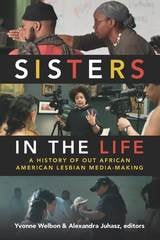
Sisters in the Life
A History of Out African American Lesbian Media-MakingYvonne Welbon and Alexandra Juhasz, editors
Duke University Press, 2018
Contributors. Jennifer DeVere Brody, Jennifer DeClue, Raul Ferrera-Balanquet, Alexis Pauline Gumbs, Thomas Allen Harris, Devorah Heitner, Pamela L. Jennings, Alexandra Juhasz, Kara Keeling, Candace Moore, Marlon Moore, Michelle Parkerson, Roya Rastegar, L. H. Stallings, Yvonne Welbon, Patricia White, Karin D. Wimbley

Sisters of Influence
A Biography of Zina, Amy, and Rose FayAndrea Friederici Ross
Southern Illinois University Press, 2025
WINNER, Certificate of Excellence in “Scholarly Publications” from the Illinois State Historical Society’s 2026 Best of Illinois History Awards!
Three sisters who forged intertwined paths to empowerment
A real-life Little Women, Sisters of Influence is the untold story of three extraordinary sisters who defied Victorian-era expectations to leave their marks on history. Andrea Friederici Ross breathes new life into the fascinating stories of Zina, Amy, and Rose Fay, intertwining their narratives into a captivating family biography.
Born into modest circumstances as daughters of an Episcopal rector and a poet, the seven Fay siblings’ upbringing in small-town Vermont was shaped by financial struggles, rare educational opportunities, and the early loss of their mother. While their sisters pursued traditional paths and their brother Norman helped them all, Zina, Amy, and Rose boldly charted their own courses, becoming trailblazers in music, writing, and women’s advocacy.
Zina Fay Peirce envisioned a life of intellectual partnership with her husband, philosopher Charles Sanders Peirce, only to find her dreams frustrated by domestic expectations. Undeterred, she became a writer and a conservative feminist, championing improved education for women and pioneering cooperative housekeeping initiatives. Despite challenges, Zina’s vision for women’s empowerment laid a foundation for future reform.
Amy Fay, a gifted pianist, pursued music studies abroad, including under the tutelage of Franz Liszt. Her letters home, filled with vivid accounts of her experiences in Europe, were edited into a memoir by Zina and published to critical acclaim. As a concert pianist, music teacher, and advocate for women in music, Amy inspired generations of women to follow their artistic passions.
Rose Fay Thomas, initially a quiet supporter of her sisters, emerged as a formidable force in her own right, becoming a founder of the Anti-Cruelty Society. Her leadership in Chicago’s Amateur Musical Club and the National Federation of Music Clubs helped shape the American classical music scene. As the wife of conductor Theodore Thomas, Rose played a pivotal role in establishing the Chicago Symphony Orchestra. Her later writings on gardening and her husband’s life further solidified her legacy.
Through her exploration of the Fay sisters’ lives, Ross illuminates the shifting roles of women during a transformative era. From advocating for women’s education to advancing the arts and social reform, Zina, Amy, and Rose exemplify the resilience and determination that bridged the restrictive norms of the Victorian age and the activism of the Progressive Era. Their remarkable journeys will inspire readers to reimagine the possibilities of women’s contributions to history and culture.
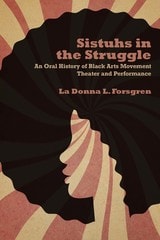
Sistuhs in the Struggle
An Oral History of Black Arts Movement Theater and PerformanceLa Donna L. Forsgren
Northwestern University Press, 2021
Outstanding Academic Title, CHOICE
The first oral history to fully explore the contributions of black women intellectuals to the Black Arts Movement, Sistuhs in the Struggle reclaims a vital yet under-researched chapter in African American, women’s, and theater history. This groundbreaking study documents how black women theater artists and activists—many of whom worked behind the scenes as directors, designers, producers, stage managers, and artistic directors—disseminated the black aesthetic and emboldened their communities.
Drawing on nearly thirty original interviews with well-known artists such as Ntozake Shange and Sonia Sanchez as well as less-studied figures including distinguished lighting designer Shirley Prendergast, dancer and choreographer Halifu Osumare, and three-time Tony-nominated writer and composer Micki Grant, La Donna L. Forsgren centers black women’s cultural work as a crucial component of civil rights and black power activism. Sistuhs in the Struggle is an essential collection for theater scholars, historians, and students interested in learning how black women’s art and activism both advanced and critiqued the ethos of the Black Arts and Black Power movements.

Sit-Down
The General Motors Strike of 1936-1937Sidney Fine
University of Michigan Press, 1969
In the first documented book-length study of this violent confrontation, Sidney Fine portrays the dramatic events of the 1936-37 strike that catapulted the UAW into prominence and touched off a wave of sit-down strikes across the land. Basing his account on an impressive variety of manuscript sources, the author analyzes the strategy and tactics of GM and the UAW, describes the life of the workers in the occupied plants, and examines the troubled governmental and public reaction to the alleged breakdown of law and order in the strikes. In addition, Dr. Fine provides vivid portraits of Governor Frank Murphy and the major figures on both sides of the conflict: Alfred Sloan, Jr., William Knudson, Robert Travis, Roy Victor, and Walter Reuther, Homer Martin, and Wyndham Mortimer. Of particular interest today are the author's concluding remarks regarding the similarities between the sit-down strike movement of the 1930's and the civil rights movement and the college sit-ins of our own era.
The GM sit-down strike marks the close of one era of labor-management relations in the United States and the beginning of another. Professor Fine has provided us with the definitive account of that momentous conflict.

Sit-Down
The General Motors Strike of 1936-1937Sidney Fine
University of Michigan Press, 2020

Sites of Desire/Economies of Pleasure
Sexualities in Asia and the PacificEdited by Lenore Manderson and Margaret Jolly
University of Chicago Press, 1997
A unique and important contribution to the study of sexuality, this book also suggests that the history of sexuality in the West was shaped by myths of the legendary Orient and the exotic "Other."

Sites of European Antisemitism in the Age of Mass Politics, 1880–1918
Edited by Robert Nemes and Daniel Unowsky
Brandeis University Press, 2014

Sites of Slavery
Citizenship and Racial Democracy in the Post–Civil Rights ImaginationSalamishah Tillet
Duke University Press, 2012
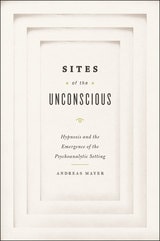
Sites of the Unconscious
Hypnosis and the Emergence of the Psychoanalytic SettingAndreas Mayer
University of Chicago Press, 2013
Sites of the Unconscious analyzes the major controversies between competing French schools of hypnotism that emerged at this time, stressing their different views on the production of viable evidence and their different ways of deploying hypnosis. Mayer then reconstructs in detail the reception of French hypnotism in German-speaking countries, arguing that the distinctive features of Freud’s psychoanalytic setting of the couch emerged out of the clinical laboratories and private consulting rooms of the practitioners of hypnosis.

Sites, Bodies and Stories
Imagining Indonesian HistoryEdited by Susan Legêne, Bambang Purwanto, and Henk Schulte Nordholt
National University of Singapore Press, 2015
Contemporary heritage formation in Indonesia is intrinsically linked to a canon of Indonesian art and culture developed during Dutch colonial rule, institutionalized within Indonesia’s heritage infrastructure and in the Netherlands, and echoed in museums and exhibitions throughout the world. The authors in this volume acknowledge colonial legacies but argue against a colonial determinism, considering instead how contemporary heritage initiatives can lead to new interpretations of the past.
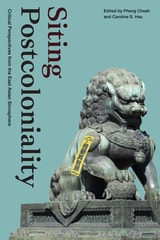
Siting Postcoloniality
Critical Perspectives from the East Asian SinospherePheng Cheah and Caroline Hau, editors
Duke University Press, 2023
Contributors. Pheng Cheah, Dai Jinhua, Caroline S. Hau, Elaine Yee Lin Ho, Wendy Larson, Liao Ping-hui, Lin Pei-yin, Lo Kwai-Cheung, Lui Tai-lok, Pang Laikwan, Lisa Rofel, David Der-wei Wang, Erebus Wong, Robert J. C. Young

Sitting Bull
Bill Yenne
Westholme Publishing, 2008
An Acclaimed Biography of the Greatest American Indian Leader
Sitting Bull's name is still the best known of any American Indian leader, but his life and legacy remain shrouded with misinformation and half-truths. Sitting Bull's life spanned the entire clash of cultures and ultimate destruction of the Plains Indian way of life. He was a powerful leader and a respected shaman, but neither fully captures the enigma of Sitting Bull. He was a good friend of Buffalo Bill and skillful negotiator with the American government, yet erroneously credited with both murdering Custer at the Little Big Horn and with being the chief instigator of the Ghost Dance movement. The reality of his life, as Bill Yenne reveals in his absorbing new portrait, Sitting Bull, is far more intricate and compelling. Tracing Sitting Bull's history from a headstrong youth and his first contact with encroaching settlers, through his ascension as the spiritual and military leader of the Lakota, friendship with a Swiss-American widow from New York, and death at the hands of the Indian police on the eve of the massacre at Wounded Knee, Yenne scoured rare contemporary records and consulted Sitting Bull's own "Hieroglyphic Autobiography" in the course of his research. While Sitting Bull was the leading figure of Plains Indian resistance his message, as Yenne explains, was of self-reliance, not violence. At the Battle of the Little Bighorn, Sitting Bull was not confronting Custer as popular myth would have it, but riding through the Lakota camp making sure the most defenseless of his tribe--the children--were safe. In Sitting Bull we find a man who, in the face of an uncertain future, helped ensure the survival of his people.
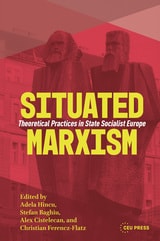
Situated Marxism
Theoretical Practices in State Socialist EuropeAdela Hincu
Central European University Press, 2026
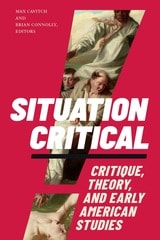
Situation Critical
Critique, Theory, and Early American StudiesMax Cavitch and Brian Connolly, editors
Duke University Press, 2024
Contributors. Max Cavitch, Brian Connolly, Matthew Crow, John J. Garcia, Christopher Looby, Michael Meranze, Mark J. Miller, Justine S. Murison, Britt Rusert, Ana Schwartz, Joan W. Scott, Jordan Alexander Stein
Six Generations Here
A Farm Family RemembersMarjorie McLellan
Wisconsin Historical Society Press, 1997
Six Generations Here: A Farm Family Remembers
by Marjorie L. McLellan, with an essay by Kathleen Neils Conzen and a foreword by Dan Freas
Discover the story of the Krueger family, as images of farm, family, and landscape reveal the struggles of rural immigrant life in Wisconsin. Drawing on snapshots, memorabilia, and interviews, Six Generations Here brings together the voices of the past and the present to create a distinctive portrait of Wisconsin farm life.
Leaving their German home in 1851, the Kruegers came to America for economic opportunity. But like other immigrant families, they struggled to make ends meet. Only with the whole family helping out did they manage to get their Watertown farm up and running. By the turn of the century, they had achieved a life of middle-class comfort in the midst of the rigors of dairy farming. Over the generations, the Kruegers incorporated their past traditions with the needs of the present, adapting to the challenges of rural American life and, when necessary, breaking from the past. Despite these changes, their commitment to hard work and family persisted, shaped their identity, and ensured their success.
Through photographs, documents, and family stories, the Kruegers left a deep history of who they were and how they sought to be remembered. Follow their family through six generations as they compile a rich and varied record of Wisconsin life.

Six Minutes in Berlin
Broadcast Spectacle and Rowing Gold at the Nazi OlympicsMichael J Socolow
University of Illinois Press, 2016
The Berlin Games matched cutting-edge communication technology with compelling sports narrative to draw the blueprint for all future sports broadcasting. A global audience--the largest cohort of humanity ever assembled--enjoyed the spectacle via radio. This still-novel medium offered a "liveness," a thrilling immediacy no other technology had ever matched. Michael J. Socolow's account moves from the era's technological innovations to the human drama of how the race changed the lives of nine young men. As he shows, the origins of global sports broadcasting can be found in this single, forgotten contest. In those origins we see the ways the presentation, consumption, and uses of sport changed forever.
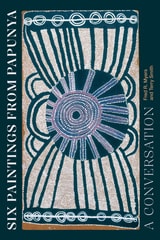
Six Paintings from Papunya
A ConversationFred R. Myers and Terry Smith
Duke University Press, 2024
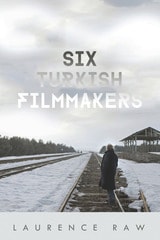
Six Turkish Filmmakers
Laurence Raw
University of Wisconsin Press, 2017
In analysis of and personal interviews with Dervis Zaim, Zeki Demirkubuz, Semih Kaplanoglu, Çagan Irmak, Tolga Örnek, and Palme d'Or winner Nuri Bilge Ceylan, Raw draws connections with Turkish theater, art, sculpture, literature, poetry, philosophy, and international cinema. A native of England and a twenty-five-year resident of Turkey, Raw interleaves his film discussion with thoughtful commentary on nationalism, gender, personal identity, and cultural pluralism.

Six Women Who Shaped What Americans Eat
Food Choice in an Age of AbundanceMichelle Mart, Foreword by Mark D. Hersey
University of Alabama Press, 2025
How six groundbreaking women redefined American food—what we eat, how we eat it, and why it matters.
From wartime nutrition science to modern food activism, Six Women Who Shaped What Americans Eat examines the pivotal roles six women played in rewriting the rules of American cuisine. Michelle Mart offers a rich and accessible narrative that connects dietary trends, food marketing, and public health movements to the voices of the women who helped drive them.
Part one highlights Hazel Stiebeling’s development of dietary guidelines and RDAs, Poppy Cannon’s promotion of processed foods for convenience and gourmet meals, and Julia Child’s introduction of French cuisine with an emphasis on fresh ingredients and culinary techniques. Part two shifts the focus to women who challenged the food system itself: Frances Moore Lappé’s advocacy for vegetarianism and sustainable practices, Marion Nestle’s exposure of food corporations’ manipulative practices, and Alice Waters’s emphasis on locally sourced, organic ingredients and sustainable food systems. Thoughtful and timely, this book explores how culture, politics, and personal vision collided in the kitchens and campaigns of six food pioneers—leaving a lasting imprint on what America eats today.
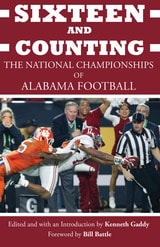
Sixteen and Counting
The National Championships of Alabama FootballEdited and with an Introduction by Kenneth Gaddy; Foreword by Bill Battle
University of Alabama Press, 2017
Dramatic accounts of every University of Alabama National Championship football season recounted by noted sports writers, players, and Alabamians.
Dating back to 1925, when Wallace Wade coached the Crimson Tide to an undefeated season and earned a spot in the Rose Bowl, the driving goal of every University of Alabama football season has been a national championship. A winning team surfaced that very next year, when Hoyt “Wu” Winslett’s squad sealed the national championship at the Rose Bowl for a second time. Winning seasons and bowl games culminating in the coveted crown followed again in 1930, 1934, 1941, 1961, 1964, 1965, 1973, 1978, 1979, 1992, 2009, 2011, 2012, and 2015—more championships than any other college team in the nation.
Sixteen and Counting features a chapter highlighting each of these championship seasons and collects the legendary stories of many of the outstanding coaches and players on the University of Alabama’s championship teams. College football legends such as Wallace Wade, Wu Winslett, Johnny Mack Brown, Pooley Herbert, Frank Thomas, Dixie Howell, Don Hutson, Jimmy Nelson, Holt Rast, Pat Trammel, Sam Bailey, Lee Roy Jordan, Harry Gilmer, Bill Lee, Ken Stabler, Joe Namath, Gary Rutledge, Randy Billingsley, Barry Krauss, Clem Gryska, Gene Stallings, Paul “Bear” Bryant, and, of course, Nick Saban all make prominent appearances.
A seventeenth chapter is included that looks at the uncrowned teams commonly referred to as “the other five,” who were considered national champions by at least one national ranking service at the end of the season. Every glorious milestone and high point in Alabama football history is included here: “Mama called,” the wishbone formation, “The Goal Line Stand,” the Million Dollar Band, the coaching tower, the Davis kicking dynasty, the Notre Dame box, Coach of the Year, Team of the Decade, and two Heisman trophy winners.

Sixteenth Century Maiolica Pottery in the Valley of Mexico
Florence C. Lister and Robert H. Lister
University of Arizona Press, 1982

Sixteenth President-in-Waiting
Abraham Lincoln and the Springfield Dispatches of Henry Villard, 1860–1861Edited by Michael Burlingame
Southern Illinois University Press, 2018
Between Abraham Lincoln’s election in November 1860 and his departure for Washington three months later, journalist Henry Villard sent scores of dispatches from Springfield, Illinois, to various newspapers describing the president-elect’s doings, quoting or paraphrasing his statements, chronicling events in the Illinois capital, and analyzing the city’s mood. With Sixteenth President-in-Waiting Michael Burlingame has collected all of these dispatches in one insightful and informative volume.
Best known as a successful nineteenth-century railroad promoter and financier, German-born Henry Villard (1835–1900) was also among the most conscientious and able journalists of the 1860s. The dispatches gathered in this volume constitute the most intensive journalistic coverage that Lincoln ever received, for Villard filed stories from the Illinois capital almost daily to the New York Herald, slightly less often to the Cincinnati Commercial, and occasionally to the San Francisco Bulletin.
Lincoln welcomed Villard and encouraged him to ask questions, as he was the only full-time correspondent for out-of-town papers. He spoke with inside sources, such as Lincoln’s private secretaries John G. Nicolay and John Hay, devoted friends like Jesse K. Dubois and Stephen T. Logan, political leaders like Governor Richard Yates, and journalists like William M. Springer and Robert R. Hitt.
Villard boasted that he did Lincoln a service by scaring off would-be office seekers who, fearing to see their names published in newspapers, gave up plans to visit the Illinois capital to badger the president-elect. Villard may have done an even greater service by publicizing Lincoln’s views on the secession crisis.
His little-known coverage of the 1858 Lincoln-Douglas Senate race, translated from the German for the first time, is included as an appendix. At the time Villard was an ardent Douglas supporter, and his reports criticized Lincoln.
Not only informative but also highly readable, Villard’s vivid descriptions of Lincoln’s appearance, daily routine, and visitors, combined with fresh information about Springfielders, state political leaders, and the capital, constitute an invaluable resource.

Sixties Going on Seventies
Sayre, Nora
Rutgers University Press, 1996
Nora Sayre guides us through our nation’s transformation during an explosive decade. She explores the landscapes of the era--student strikes at Harvard and Yale, anti-war veterans, John Birchers, Timothy Leary, Yippies and Aquarians, utopias gone wrong, George McGovern, Spiro Agnew, Richard Nixon, George Wallace, black anger in Watts, the media at work, policemen in college, off-off Broadway, the 1972 Democratic and Republican Conventions, and the rebirth of feminism. Sixties Going on Seventies, nominated for a 1974 National Book Award, is also a chronicle of the shattering of cities, the problems of the left, the momentum of the right--and above all, the authentic voices of the people concerned. Sayre recorded all of these events and personalities in exhilarating prose; her witty observations are remarkably fresh today.
Now back in print, this revised edition contains the best of the original volume and brings the commentary up to date, allowing us to view the period with hindsight from the nineties.

Sixties Sandstorm
The Fight over Establishment of a Sleeping Bear Dunes National Lakeshore, 1961-1970Brian C. Kalt
Michigan State University Press, 2001
Sixties Sandstorm is not a book about dunes as much as it is a book about people and their government. It chronicles the public meetings, bills, protests, and congressional interactions that led to the signing of the Sleeping Bear Sand Dunes Act in 1970. The Dunes park fight is a case study of the politics, the legislative process, citizen response to the expanded role of government in the 1960s, and the rise of the environmental movement in America during that decade. Since Hart's legislation was made law, millions of Americans have traveled to the Sleeping Bear Sand Dunes National Lakeshore. Few imagine what the area would look like today if not for the efforts of people like Senator Hart. On the other hand, few appreciate the sacrifice of the landowners who-not always willingly-gave up their property in this place where, as one resident put it, "stars are closer to the earth than anywhere else in the world."

Sixty Years' War for the Great Lakes, 1754-1814
David Curtis Skaggs
Michigan State University Press, 2001
The Sixty Years' War for the Great Lakes contains twenty essays concerning not only military and naval operations, but also the political, economic, social, and cultural interactions of individuals and groups during the struggle to control the great freshwater lakes and rivers between the Ohio Valley and the Canadian Shield. Contributing scholars represent a wide variety of disciplines and institutional affiliations from the United States, Canada, and Great Britain.
Collectively, these important essays delineate the common thread, weaving together the series of wars for the North American heartland that stretched from 1754 to 1814. The war for the Great Lakes was not merely a sideshow in a broader, worldwide struggle for empire, independence, self-determination, and territory. Rather, it was a single war, a regional conflict waged to establish hegemony within the area, forcing interactions that divided the Great Lakes nationally and ethnically for the two centuries that followed.

Skeletal Biology and Bioarchaeology of the Northwestern Plains
Edited by George W. Gill and Rick L. Weathermon
University of Utah Press, 2008
Northwestern Plains prehistory and early history as told by human bones is vivid and dramatic. The skeletal and burial record spans thousands of years, a wide geographic expanse, and contains important evidence of human existence in this vast region of North America. This book helps clarify the emerging picture.
Most of the contributions assembled here were initially presented as part of a symposium at the Plains Conference in Oklahoma City in 2003. Twenty-one preeminent scholars, working across many fields within bioarchaeology and skeletal biology—including paleopathology, dental pathology, and human osteology—bring their expertise to bear not only on prehistoric Native American burials, but on numerous other case studies. They look at specific Wyoming samples of pioneer-era burials, Indian War–era casualties, historic Chinese burials, and remains from the Benick Ranch and the Korell-Bordeaux sites. Reports on Crow Indian mummies from Montana and military burials from Missouri and Nebraska continue the exploration into recent historic times.
Human burials provide a rich source of information about people’s lives—who they were, what activities they pursued, and how they may have participated in rituals of death and mourning. This volume is an authoritative statement on both the skeletal biology and bioarchaeology of the entire Northwestern Plains.

Skepticism And Ideology
Shelley'S Political ProseTerence Allan Hoagwood
University of Iowa Press, 1988

Sketches of Alabama
Mary Duffee, edited by Jane Porter Nabers and Virginia Pounds Brown
University of Alabama Press, 1970
Rediscover the spirit, stories, and landscapes of Alabama through a timeless collection of observations and historical reflections.
In Sketches of Alabama, Mary Duffee offers a richly detailed portrait of a state shaped by diverse communities, enduring traditions, and a deeply rooted cultural identity. Through a series of engaging sketches, Duffee captures the essence of Alabama’s towns, people, and everyday life, preserving moments that might otherwise be lost to time.
Blending historical insight with narrative charm, this collection explores the character of Alabama from multiple perspectives—rural and urban, past and present. Readers encounter vivid depictions of local customs, notable figures, and the evolving social fabric of the region. Duffee’s work not only chronicles the state’s development but also reflects the broader story of the American South, illuminating its complexities, resilience, and sense of place.
This collection contains typescripts of some of Mary Gordon Duffee's Iron Age columns "Sketches of Alabama," manuscripts of seven of Duffee's poems, a typed biographical sketch of Duffee, undated, and Duffee's obituary from the Birmingham Age-Herald. Ideal for students, historians, and general readers alike, Sketches of Alabama serves as both a literary work and a cultural record. Its accessible style makes it an excellent introduction to Alabama’s heritage, while its thoughtful observations reward those seeking deeper understanding of Southern history and identity.
Whether you are drawn to regional storytelling, historical narrative, or the rich traditions of the Deep South, this work offers a compelling journey into Alabama’s past—one sketch at a time.

Sketches of Early Texas and Louisiana
By Frédéric Gaillardet
University of Texas Press, 1966
A lively report of travels in early nineteenth-century Texas and Louisiana and a fascinating account of the discovery, exploration, and settlement of those areas is presented in the work of this ebullient young French dramatist and journalist who traveled to Louisiana in 1837 and to Texas in 1839.
Frédéric Gaillardet, an alert and talented writer of the romantic school, was lured away for a decade from a successful career in Paris to satisfy his wanderlust and to seek inspiration on the American frontier. During that time he visited the American Southwest, and he talked with many personages there—men like Sam Houston, Mirabeau B. Lamar, and Achille Murat. His character sketches of these men add zest to the book, as do the facets of Gaillardet's own personality and life displayed in these pages.
Gaillardet's reports of his travels were published in various French-language newspapers of the time; a few were incorporated into the author's posthumous memoirs. His opinions, as recorded in his writings, exerted undeniable influence in the French decision to recognize Texas; one of his theses was that the Republic of Texas might become a curb, rather than a stepping stone, to an expanding United States. Despite Gaillardet's historical importance, however, none of these chapters has ever appeared before in English translation.
This collection was gathered from several sources: the Journal des Débats, the Constitutionnel, the Courrier des États-Unis, and Gaillardet's memoirs, entitled L'Aristocratie en Amérique.
The latter chapters concentrate on the career of a prominent Louisiana lawyer, politician, and diplomat, Pierre Soulé, whose much maligned name Gaillardet repeatedly and stoutly defended. A less favorable treatment of Soulé, contained in Fanny Calderón de la Barca's Attaché in Madrid, is reprinted in the appendix to aid the reader in judging the accuracy of Gaillardet's analysis of this arresting figure.
Copious footnotes to clarify the text have been added by the translator. His introduction presents a biographical sketch of Gaillardet, together with a careful analysis of the book, which has been translated lucidly and vividly.
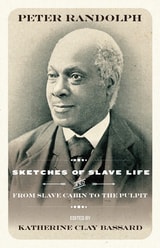
Sketches of Slave Life and From Slave Cabin to Pulpit
Katherine Clay Bassard
University of Delaware Press, 0
This book is the first anthology of the autobiographical writings of Peter Randolph, a prominent nineteenth-century former slave who became a Black abolitionist, pastor, and community leader. Randolph’s story is unique because he was freed and relocated from Virginia to Boston, along with his entire plantation cohort. A lawsuit launched by Randolph against his former master’s estate left legal documents that corroborate his autobiographies.
Randolph's writings give us a window into a different experience of slavery and freedom than other narratives currently available and will be of interest to students and scholars of African American literature, history, and religious studies, as well as those with an interest in Virginia history and mid-Atlantic slavery.
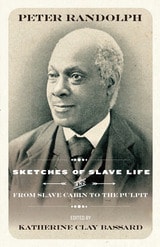
Sketches of Slave Life and From and From Slave Cabin to the Pulpit
Peter Randolph
West Virginia University Press, 2016
This book is the first anthology of the autobiographical writings of Peter Randolph, a prominent nineteenth-century former slave who became a black abolitionist, pastor, and community leader.
Randolph’s story is unique because he was freed and relocated from Virginia to Boston, along with his entire plantation cohort. A lawsuit launched by Randolph against his former master’s estate left legal documents that corroborate his autobiographies.
Randolph's writings give us a window into a different experience of slavery and freedom than other narratives currently available and will be of interest to students and scholars of African American literature, history, and religious studies, as well as those with an interest in Virginia history and mid-Atlantic slavery.

Skin Deep, Spirit Strong
The Black Female Body in American CultureKimberly Wallace-Sanders, Editor
University of Michigan Press, 2002
The collection blends original and classic essays to reveal the interconnections among art, literature, public policy, the history of medicine, and theories about sexuality with regard to bodies that are both black and female. Contributors include Rachel Adams, Elizabeth Alexander, Lisa Collins, Bridgette Davis, Lisa E.Farrington, Anne Fausto-Sterling, Beverly Guy-Sheftall, Evelynn Hammonds, Terri Kapsalis, Jennifer L. Morgan, Siobhan B. Somerville, Kimberly Wallace-Sanders, Carla Williams, and Doris Witt.
Skin Deep, Spirit Strong: The Black Female Body in American Culture will appeal to both the academic reader attempting to integrate race into discussion about the female body and to the general reader curious about the history of black female representation.
Kimberly Wallace-Sanders is Assistant Professor, Graduate Institute of Liberal Arts and Institute of Women's Studies, Emory University.

Skin for Skin
Death and Life for Inuit and InnuGerald M. Sider
Duke University Press, 2014

Skookum
An Oregon Pioneer Family’s History and LoreShannon Applegate
Oregon State University Press, 1988
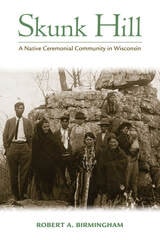
Skunk Hill
A Native Ceremonial Community in WisconsinRobert A. Birmingham
Wisconsin Historical Society Press, 2015
In Skunk Hill, archeologist Robert A. Birmingham traces the largely unknown story of this community, detailing the role it played in preserving Native culture through a harsh period of US Indian policy from the 1880s to 1930s. The story’s central focus is the Drum Dance, also known as the Dream Dance or Big Drum, a pan-tribal cultural revitalization movement that swept the Upper Midwest during the Great Suppression, emphasizing Native values and rejecting the vices of the white world. Though the community disbanded by the 1930s, the site, now on the National Register of Historic
Places with two dance circles still visible on the grounds, stands as testimony to the efforts of its members to resist cultural assimilation.

Sky Pilots
The Yankee Division Chaplains in World War IMichael E. Shay
University of Missouri Press, 2014

Skyscraper Cinema
Architecture and Gender in American FilmMerrill Schleier
University of Minnesota Press, 2008
Schleier analyzes cinematic works in which skyscrapers are an integral component, interpreting the iconography and spatial practices in these often fictional modern buildings, especially on concepts of gender. Organized chronologically and thematically, she offers close readings of films including Safety Last, Skyscraper Souls, Wife vs. Secretary, Baby Face, The Fountainhead, and Desk Set. Opening with the humorous antics of Harold Lloyd, the premier skyscraper actor of the silent era, the book moves through the disillusionment of the Depression era, in which skyscrapers are employed as players in moralistic, class-conscious stories, to post–World War II and its reimagining of American political and economic values and ends with the complicated prosperity of the 1950s and the lives of white-collar workers and their spouses.
Taking inspiration from Walter Benjamin’s Arcades Project, among works of other critical theorists, Schleier creates in this book a model for understanding architecture as a purveyor of desire and class values and, ultimately, contributes broadly to thinking on the rich intersection of the built environment, cinema, and gender.
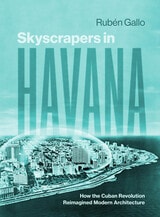
Skyscrapers in Havana
How the Cuban Revolution Reimagined Modern ArchitectureRubén Gallo
University of Chicago Press, 2027
Why Havana attracted the most important architects in the 1950s, and how the Cuban Revolution transformed the uses of these impressive skyscrapers.
During the 1950s, Havana’s Vedado district became an epicenter of modern architecture. Architects from around the world—including Mies van der Rohe, Richard Neutra, and Josep Lluis Sert—worked in Cuba and helped make Havana one of the most modern capitals in Latin America. After the Cuban Revolution, the buildings designed during Cuba’s American-influenced hyper-capitalist past had to be reimagined, about what use what use could luxury hotels, private condominiums, and golf clubs could have in a socialist society. Writers and artists from around the world including Simone de Beauvoir, Agnès Varda, Allen Ginsberg, Graham Greene, and Gabriel García Márquez flocked to Havana to witness the first socialist experiment in the Americas and marveled at the modern towers. French philosopher Jean-Paul Sartre wrote about “Skyscrapers in Havana” for his first journalistic piece about his trip. In contrast, modern architects abandoned Cuba after the Revolution: not even those designers who had built projects there set foot in the island again.
Considering Havana’s architecture as part of a larger Cuban modernity, Gallo places built projects in dialogue with film, literature, and other cultural texts, revealing how poets, novelists, filmmakers, and designers theorized the city’s urban fabric. Skyscrapers in Havana features six chapters, each devoted to an iconic modernist structure, as well as five shorter meditations on the architects, including Le Corbusier, who had the opportunity to go to Cuba after the Revolution but decided to stay away.

Slandering the Sacred
Blasphemy Law and Religious Affect in Colonial IndiaJ. Barton Scott
University of Chicago Press, 2023
Why is religion today so often associated with giving and taking offense? To answer this question, Slandering the Sacred invites us to consider how colonial infrastructures shaped our globalized world. Through the origin and afterlives of a 1927 British imperial law (Section 295A of the Indian Penal Code), J. Barton Scott weaves a globe-trotting narrative about secularism, empire, insult, and outrage. Decentering white martyrs to free thought, his story calls for new histories of blasphemy that return these thinkers to their imperial context, dismantle the cultural boundaries of the West, and transgress the borders between the secular and the sacred as well as the public and the private.
Slapstick Modernism
Chaplin to Kerouac to Iggy PopWilliam Solomon
University of Illinois Press, 2018
William Solomon charts the origins and evolution of what he calls slapstick modernism--a merging of artistic experimentation with the socially disruptive lunacy made by the likes of Charlie Chaplin. Romping through texts, films, and theory, Solomon embarks on an intellectual odyssey from the high modernism of Dos Passos and Williams to the late modernism of the Beats and Burroughs before a head-on crash into the raw power of punk rock. Throughout, he shows the links between the experimental writers and silent screen performers of the early century, and explores the potent cultural undertaking that drew inspiration from anarchical comedy after World War II.

Slaughterhouse
Chicago's Union Stock Yard and the World It MadeDominic A. Pacyga
University of Chicago Press, 2015
Slaughterhouse tells the story of the Union Stock Yard, chronicling the rise and fall of an industrial district that, for better or worse, served as the public face of Chicago for decades. Dominic A. Pacyga is a guide like no other—he grew up in the shadow of the stockyards, spent summers in their hog house and cattle yards, and maintains a long-standing connection with the working-class neighborhoods around them. Pacyga takes readers through the packinghouses as only an insider can, covering the rough and toxic life inside the plants and their lasting effects on the world outside. He shows how the yards shaped the surrounding neighborhoods and controlled the livelihoods of thousands of families. He looks at the Union Stock Yard’s political and economic power and its sometimes volatile role in the city’s race and labor relations. And he traces its decades of mechanized innovations, which introduced millions of consumers across the country to an industrialized food system.
Once the pride and signature stench of a city, the neighborhood is now home to Chicago’s most successful green agriculture companies. Slaughterhouse is the engrossing story of the creation and transformation of one of the most important—and deadliest—square miles in American history.

Slave Society in Cuba during the Nineteenth Century
Franklin W. Knight
University of Wisconsin Press, 1970
Knight examines the conditions that maintained slavery in Cuba in the nineteenth century and perceptively analyzes the sociological effect of the institution on the island's politics, culture, and economy. He attacks the long-held theory that an Iberian cultural heritage and the Roman Catholic Church significantly modified the institution of slavery and shows that Cuban slave society shared many characteristics with other Caribbean societies, whether Anglo-Saxon, French, or Spanish. Knight's systematic study includes important new material from the archives of the Ministerio del Ultramar in Madrid.

Slave Trade and Abolition
Gender, Commerce, and Economic Transition in LuandaVanessa S. Oliveira
University of Wisconsin Press, 2022
Vanessa S. Oliveira traces how existing commercial networks adapted to changes in the Atlantic slave trade during the first half of the nineteenth century. Slave Trade and Abolition reveals how women known as donas (a term adapted from the title granted to noble and royal women in the Iberian Peninsula) were often important cultural brokers. Acting as intermediaries between foreign and local people, they held high socioeconomic status and even competed with the male merchants who controlled the trade. Oliveira provides rich evidence to explore the many ways this Luso-African community influenced its society. In doing so, she reveals an unexpectedly nuanced economy with regard to the dynamics of gender and authority.
Slavery In Africa
Historical & Anthropological PerspectivesSuzanne Miers
University of Wisconsin Press, 1979