Results by title
1563 books match the query 'African American & Black Studies' and 117 start with s
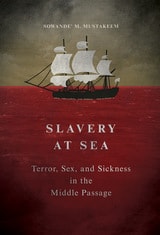
Slavery at Sea
Terror, Sex, and Sickness in the Middle PassageSowande M Mustakeem
University of Illinois Press, 2016
Sowande' Mustakeem's groundbreaking study goes inside the Atlantic slave trade to explore the social conditions and human costs embedded in the world of maritime slavery. Mining ship logs, records and personal documents, Mustakeem teases out the social histories produced between those on traveling ships: slaves, captains, sailors, and surgeons. As she shows, crewmen manufactured captives through enforced dependency, relentless cycles of physical, psychological terror, and pain that led to the the making--and unmaking--of enslaved Africans held and transported onboard slave ships. Mustakeem relates how this process, and related power struggles, played out not just for adult men, but also for women, children, teens, infants, nursing mothers, the elderly, diseased, ailing, and dying. Mustakeem offers provocative new insights into how gender, health, age, illness, and medical treatment intersected with trauma and violence transformed human beings into the world's most commercially sought commodity for over four centuries.

Slavery's Slaughterhouse
Legacies of Animal Agriculture and Chattel SlaverySamantha Janaki Pergadia
Duke University Press, 2027

Slaves and Slaveholders in Bermuda, 1616-1782
Virginia Bernhard
University of Missouri Press, 1999
Slaves and Slaveholders in Bermuda, 1616-1782, offers a fresh perspective on the complex relationship between racism and slavery in the often overlooked second-oldest English colony in the New World. As the first blacks were brought onto the islands not specifically for slave labor, but for their expertise as pearl divers and cultivators of West Indies plants, Bermuda's racial history began to unfold much differently from that of the Caribbean islands or of the North American mainland.
Bermuda's history records the arrival of the first blacks, the first English law passed to control the behavior of the "Negroes," and the creation of ninety-nine-year indentures for black and Indian servants. When the inevitable reality of slavery took hold in Bermuda, slaveholders realized that they, like their slaves, were not free. Slavery dictated and strained the relationships between whites and blacks, but in this smallest of English colonies it differed from slavery elsewhere because of the uniquely close master-slave relations created by Bermuda's size and maritime economy.
At only twenty-one square miles in area, Bermuda saw slaves and slaveholders working and living closer together than in other societies. The emphasis on maritime pursuits offered slaves a degree of autonomy and a sense of identity unequaled in other English colonies. This groundbreaking history of Bermuda's slavery reveals fewer runaways, less-violent rebellions, and relatively milder punishments for offending slaves.
Bernhard delves into the origins of Bermuda's slavery, its peculiar nature, and its effects on blacks and whites. The study is based on archival research drawn from wills and inventories, laws and court cases, governors' reports and council minutes. Intended as an introduction to both the history of the islands and the rich sources for further research, this book will prove invaluable to scholars of slavery, as well as those interested in historical archaeology, anthropology, maritime history, and colonial history.

Slaves of the State
Black Incarceration from the Chain Gang to the PenitentiaryDennis Childs
University of Minnesota Press, 2015
The Thirteenth Amendment to the United States Constitution, passed in 1865, has long been viewed as a definitive break with the nation’s past by abolishing slavery and ushering in an inexorable march toward black freedom. Slaves of the State presents a stunning counterhistory to this linear narrative of racial, social, and legal progress in America.
Dennis Childs argues that the incarceration of black people and other historically repressed groups in chain gangs, peon camps, prison plantations, and penitentiaries represents a ghostly perpetuation of chattel slavery. He exposes how the Thirteenth Amendment’s exception clause—allowing for enslavement as “punishment for a crime”—has inaugurated forms of racial capitalist misogynist incarceration that serve as haunting returns of conditions Africans endured in the barracoons and slave ship holds of the Middle Passage, on plantations, and in chattel slavery.
Childs seeks out the historically muted voices of those entombed within terrorizing spaces such as the chain gang rolling cage and the modern solitary confinement cell, engaging the writings of Toni Morrison and Chester Himes as well as a broad range of archival materials, including landmark court cases, prison songs, and testimonies, reaching back to the birth of modern slave plantations such as Louisiana’s “Angola” penitentiary.
Slaves of the State paves the way for a new understanding of chattel slavery as a continuing social reality of U.S. empire—one resting at the very foundation of today’s prison industrial complex that now holds more than 2.3 million people within the country’s jails, prisons, and immigrant detention centers.
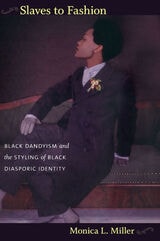
Slaves to Fashion
Black Dandyism and the Styling of Black Diasporic IdentityMonica L. Miller
Duke University Press, 2009
Dandyism was initially imposed on black men in eighteenth-century England, as the Atlantic slave trade and an emerging culture of conspicuous consumption generated a vogue in dandified black servants. “Luxury slaves” tweaked and reworked their uniforms, and were soon known for their sartorial novelty and sometimes flamboyant personalities. Tracing the history of the black dandy forward to contemporary celebrity incarnations such as Andre 3000, Miller explains how black people became arbiters of style and how they have historically used the dandy’s signature tools—clothing, gesture, and wit—to break down limiting identity markers and propose new ways of fashioning political and social possibility in the black Atlantic world. With an aplomb worthy of her iconographic subject, she considers the black dandy in relation to nineteenth-century American literature and drama, W. E. B. Du Bois’s reflections on black masculinity and cultural nationalism, the modernist aesthetics of the Harlem Renaissance, and representations of black cosmopolitanism in contemporary visual art.

Slaves, Peasants, and Rebels
Reconsidering Brazilian SlaveryStuart B. Schwartz
University of Illinois Press, 1992
Once preoccupied with Brazilian slavery as an economic system, historians shifted their attention to examine the nature of life and community among enslaved people. Stuart B. Schwartz looks at this change while explaining why historians must continue to place their ethnographic approach in the context of enslavement as an oppressive social and economic system. Schwartz demonstrates the complexity of the system by reconsidering work, resistance, kinship, and relations between enslaved persons and peasants. As he shows, enslaved people played a role in shaping not only their lives but Brazil’s institutionalized system of slavery by using their own actions and attitudes to place limits on slaveholders.
A bold analysis of changing ideas in the field, Slaves, Peasants, and Rebels provides insights on how the shifting power relationship between enslaved people and slaveholders reshaped the contours of Brazilian society.
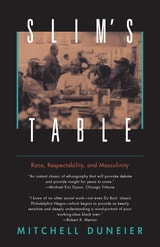
Slim's Table
Race, Respectability, and MasculinityMitchell Duneier
University of Chicago Press, 1992
"Slim's Table is an astonishment. Duneier manages to fling open windows of perception into what it means to be working-class black, how a caring community can proceed from the most ordinary transactions, all the while smashing media-induced stereotypes of the races and race relations."—Citation for Chicago Sun Times Chicago Book of the Year Award
"An instant classic of ethnography that will provoke debate and provide insight for years to come."—Michael Eric Dyson, Chicago Tribune
"Mr. Duneier sees the subjects of his study as people and he sees the scale of their lives as fully human, rather than as diminished versions of grander lives lived elsewhere by people of another color. . . . A welcome antidote to trends in both journalism and sociology."—Roger Wilkins, New York Times Book Review
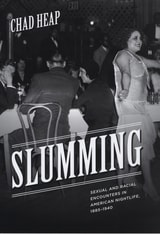
Slumming
Sexual and Racial Encounters in American Nightlife, 1885-1940Chad Heap
University of Chicago Press, 2009

So Unimaginable a Price
Baldwin and the Black AtlanticJohn E. Drabinski
Northwestern University Press, 2026
James Baldwin’s nonfiction offers some of the most important and challenging thinking on the experience of race, history, and memory in the Black Atlantic world. Yet much of the scholarly literature on Baldwin’s writing reads his work from inside the sociocultural context of the United States, alongside key interlocutors like Richard Wright, Ralph Ellison, and Lorraine Hansberry. So Unimaginable a Price: Baldwin and the Black Atlantic shifts the critical frame, examining Baldwin’s work as part of a midcentury moment across the wider Atlantic world and tying his reflections to those of thinkers in the Caribbean and Africa to underscore the widening sense, as well as the particularity, of his critical claims. Who is Baldwin to the Atlantic world? And who, then, is Baldwin to the United States? John E. Drabinski recasts Baldwin as a Black Atlantic writer whose unique qualities as a thinker are enhanced by their similarities and differences with fellow writers of liberation in the global Black world.
Socialist Joy in the Writing of Langston Hughes
Jonathan Scott
University of Missouri Press, 2007
Jonathan Scott has written the first book-length study to analyze the extraordinary range of Hughes’s creative output, showing that his unassailable reputation as one of America’s finest “folk poets” barely scratches the surface of his oeuvre. Scott offers a robust account of the relations between Hughes and political activism to show that Hughes’s direct involvement with the U.S. socialist movement of the 1920s and 1930s was largely responsible for the variety of his writing. Scott also contends that the goal of overthrowing white oppression produced a “socialist joy” that would express itself repeatedly in Hughes’s work during the anticommunist crusades of the 1950s and 1960s.
In his provocative study, Scott explores four areas of Hughes’s intellectual work: his relationship with Afro-Caribbean arts, Soviet Russia, and the Harlem Renaissance; his postwar newspaper writing for the African American press; his extensive cultural work as an anthologist; and his writings for young people. Through these analyses, Scott proposes the concept of “red, white, and black” as an alternative paradigm for appreciating Hughes in particular and the American scene in general.
Scott views Hughes not simply as a great author but as an American working-class intellectual trickster whose eccentric projects require a redefinition of the very concept of authorship. By focusing on Hughes’s intellectual method, Scott also contests the notion of reducing all African Americans to one undifferentiated social status beneath that of any class within the white oppressing group—a hallmark of racial oppression that has diminished, in the U.S. academy, Hughes’s international status.
As Scott persuasively argues, it is only through an understanding of Hughes’s literary method that we can undertake a thorough account of his prolific production during the cold war era. His book situates Hughes’s life and work in their proper contexts, both reconfirming Hughes’s reputation as an intellectual of the American Left and establishing his long-denied place in American studies as the most well-rounded writer of his time.

Sociology Hesitant
Thinking with W. E. B. DuBois, Volume 27Ronald A. T. Judy, ed.
Duke University Press, 0
Spanning a wide array of disciplines, from German studies and sociology to literary criticism, philosophy, and anthropology, with contributions from some of the most outstanding scholars in these fields, Sociology Hesitant contributes to the recognition of DuBois as an important historical figure by focusing on the complexity of his theoretical work. These essays offer an extended interaction with the ideas and projects DuBois formulated in a series of essays written between 1887 and 1910 that take up intricate questions concerning the nature of methodology and the theory of knowledge. Using DuBois’s work as a point of departure, contributors explore current thinking about diverse subjects such as geopolitics and postcolonialism. Demonstrating that engaging the question of race requires rethinking the historical nature of theoretical understanding, this collection brings to light the notion that the struggle for equality is a struggle for freedom of thought in pursuit of truth.
Contributors. Kenneth Barkin, Nahum Chandler, Ronald Judy, David Krell, Charles Lemert, Sieglinde D. Lemke, Tommy Lott, Kevin Miles, Abdulkarim Mustapha, Ken Warren
Softly, With Feeling
Joe Wilder and the Breaking of Barriers in American MusicEdward Berger
Temple University Press, 2014
"Joe Wilder set the table. His struggles made it easier for me and many others."--From the Foreword by Wynton Marsalis
Trumpeter Joe Wilder is distinguished for his achievements in both the jazz and classical worlds. He was a founding member of the Symphony of the New World, where he played first trumpet, and he performed as lead trumpet and soloist with Lionel Hampton, Jimmy Lunceford, Dizzy Gillespie, and Count Basie. Yet Wilder is also known as a pioneer who broke down racial barriers, the first African American to hold a principal chair in a Broadway show orchestra, and one of the first African Americans to join a network studio orchestra.
In Softly, with Feeling, Edward Berger tells Wilder's remarkable story-from his growing up in working-class Philadelphia to becoming one of the first 1,000 black Marines during World War II-with tremendous feeling and extensive reminiscences by Wilder and his colleagues, including renowned Philadelphia-area musicians Jimmy Heath and Buddy DeFranco. Berger also places Wilder's experiences within a broader context of American musical and social history.
Wilder's modesty and ability to perform in many musical genres may have prevented him from achieving popular recognition, but in Softly, with Feeling, his legacy and contributions to music and culture are assured.
Sojourning for Freedom
Black Women, American Communism, and the Making of Black Left FeminismErik S. McDuffie
Duke University Press, 2011
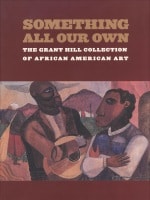
Something All Our Own
The Grant Hill Collection of African American ArtGrant Hill
Duke University Press, 2003
The forty-six pieces documented here include thirteen works that span the career of the great Romare Bearden, from his 1941 gouache painting Serenade to the important collages of the 1980s. Hill’s fascination with artists’ depiction of women is represented in Elizabeth Catlett’s lithographs, many of them from the 1992 series “For My People,” and her sculptures in stone, bronze, and onyx. In addition to these two giants of twentieth-century art, the Hill Collection features pieces by Phoebe Beasley, Arthello Beck Jr., John Biggers, Malcolm Brown, John Coleman, Edward Jackson, and Hughie Lee Smith.
Hill began collecting art in the early 1990s after learning from his parents to appreciate artworks not only as objects of beauty but as expressions of heritage and culture. According to the internationally known curator Alvia J. Wardlaw, he is part of an emerging group of young African American collectors who have “raised the bar for others.” Hill writes, “Getting to know yourself means understanding your background and appreciating those who have come before you. My father has a saying he uses in speeches: ‘To be ignorant of your past is to remain a boy. ‘The interest in my heritage as an African American is reflected in this collection.”
Something All Our Own features Wardlaw’s essay on the history of African American collecting. It also features articles about Bearden and Catlett by the scholars Elizabeth Alexander and Beverly Guy-Sheftall and reflections about Hill by the historian John Hope Franklin, Duke’s basketball coach Mike Krzyzewski, and the sportswriter William C. Rhoden. Hill and his father, the NFL great Calvin Hill, contribute a dialogue that explores their motivations for collecting art.
At the heart of the book are the exquisite color photographs of the forty-six artworks included in the exhibition, with commentary by Wardlaw and by Hill himself.
As a star athlete, Grant Hill is well aware that African Americans who excel in sports and entertainment are more broadly recognized than their counterparts in artistic fields. He strives to inspire young people to explore their heritage and broaden their concept of excellence by learning more about African American art. By sharing his artworks with collectors and fans, Hill reminds us that while the jump shot is ephemeral, art is enduring.
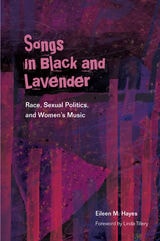
Songs in Black and Lavender
Race, Sexual Politics, and Women's MusicEileen M. Hayes, Foreword by Linda Tillery
University of Illinois Press, 2010
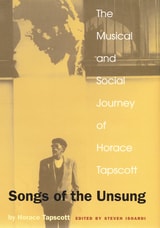
Songs of the Unsung
The Musical and Social Journey of Horace TapscottHorace Tapscott
Duke University Press, 2001
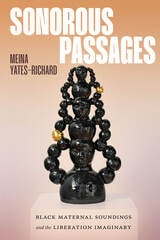
Sonorous Passages
Black Maternal Soundings and the Liberation ImaginaryMeina Yates-Richard
Duke University Press, 2026
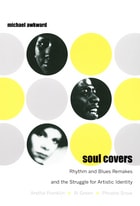
Soul Covers
Rhythm and Blues Remakes and the Struggle for Artistic Identity (Aretha Franklin, Al Green, Phoebe Snow)Michael Awkward
Duke University Press, 2007
Awkward sees Franklin’s early album Unforgettable: A Tribute to Dinah Washington, released shortly after Washington’s death in 1964, as an attempt by a struggling young singer to replace her idol as the acknowledged queen of the black female vocal tradition. He contends that Green’s album Call Me (1973) reveals the performer’s attempt to achieve formal coherence by uniting seemingly irreconcilable aspects of his personal history, including his career in popular music and his religious yearnings, as well as his sense of himself as both a cosmopolitan black artist and a forlorn country boy. Turning to Snow’s album Second Childhood (1976), Awkward suggests that through covers of blues and soul songs, Snow, a white Jewish woman from New York, explored what it means for non-black enthusiasts to perform works considered by many to be black cultural productions. The only book-length examination of the role of remakes in American popular music, Soul Covers is itself a refreshing new take on the lives and work of three established soul artists.
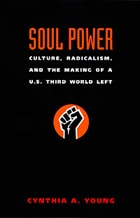
Soul Power
Culture, Radicalism, and the Making of a U.S. Third World LeftCynthia A. Young
Duke University Press, 2006
Young analyzes a range of U.S. figures and organizations, examining how each deployed Third World discourse toward various cultural and political ends. She considers a trip that LeRoi Jones, Harold Cruse, and Robert F. Williams made to Cuba in 1960; traces key intellectual influences on Angela Y. Davis’s writing; and reveals the early history of the hospital workers’ 1199 union as a model of U.S. Third World activism. She investigates Newsreel, a late 1960s activist documentary film movement, and its successor, Third World Newsreel, which produced a seminal 1972 film on the Attica prison rebellion. She also considers the L.A. Rebellion, a group of African and African American artists who made films about conditions in the Watts neighborhood of Los Angeles. By demonstrating the breadth, vitality, and legacy of the work of U.S. Third World Leftists, Soul Power firmly establishes their crucial place in the history of twentieth-century American struggles for social change.
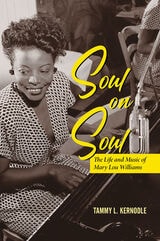
Soul on Soul
The Life and Music of Mary Lou WilliamsTammy L. Kernodle
University of Illinois Press, 2020
The jazz musician-composer-arranger Mary Lou Williams spent her sixty-year career working in—and stretching beyond—a dizzying range of musical styles. Her integration of classical music into her works helped expand jazz's compositional language. Her generosity made her a valued friend and mentor to the likes of Thelonious Monk, Charlie Parker, and Dizzy Gillespie. Her late-in-life flowering of faith saw her embrace a spiritual jazz oriented toward advancing the civil rights struggle and helping wounded souls.
Tammy L. Kernodle details Williams's life in music against the backdrop of controversies over women's place in jazz and bitter arguments over the music's evolution. Williams repeatedly asserted her artistic and personal independence to carve out a place despite widespread bafflement that a woman exhibited such genius. Embracing Williams's contradictions and complexities, Kernodle also explores a personal life troubled by lukewarm professional acceptance, loneliness, relentless poverty, bad business deals, and difficult marriages.
In-depth and epic in scope, Soul on Soul restores a pioneering African American woman to her rightful place in jazz history.
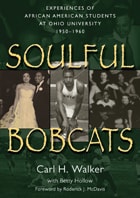
Soulful Bobcats
Experiences of African American Students at Ohio University, 1950–1960Carl H. Walker
Ohio University Press, 2013
During the 1950s, when less than 20 percent of American high school graduates attended college, a group of ambitious young African Americans enrolled at Ohio University, a predominantly white school in Athens, Ohio. Because they were a tiny, barely tolerated minority, they banded together, supported each other, and formed lasting bonds. Years later, at a series of “Soulful Reunions,” they recalled the joys and challenges of living on a white campus before the civil rights era, and eighteen of them decided to share their stories.
The authors of the eighteen autobiographical sketches in Soulful Bobcats were a diverse group. They were athletes, rhetoricians, musicians, and actresses; they aspired to professions in the military, business, education, government, architecture, and the arts. Some grew up in poor families, while others enjoyed the comforts of the middle class. But they had several things in common. They all came from families that believed education was important. They had been taught to avoid trouble, to persist despite setbacks, and to expect to encounter prejudice and even discrimination.
The authors vividly describe instances in which they were humiliated—by other students, by professors, or by townspeople—as well as the few occasions when violence seemed inevitable. In addition, they describe their “first,” including becoming the first African American students at Ohio University to be awarded scholarships for their prowess in football, basketball, track, and tennis; the first to compete for titles such as “Mr. Fraternity” or “Queen of the Military Ball”; the first to appear in theatrical performances alongside their white schoolmates. They also tell of their success in providing a social life for themselves by organizing two Greek letter fraternities and one sorority, holding their own off-campus dances, and joining the few campus organizations that were open to them. Above all, their stories speak to a resilience that allowed these “Soulful Bobcats” to learn from their experiences at Ohio University, to engage in meaningful careers, and to lead rich, fulfilling lives.
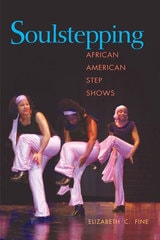
Soulstepping
African American Step ShowsElizabeth C. Fine
University of Illinois Press, 2002
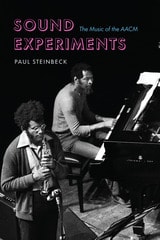
Sound Experiments
The Music of the AACMPaul Steinbeck
University of Chicago Press, 2022
Founded on Chicago’s South Side in 1965 and still thriving today, the Association for the Advancement of Creative Musicians (AACM) is the most influential collective organization in jazz and experimental music. In Sound Experiments, Paul Steinbeck offers an in-depth historical and musical investigation of the collective, analyzing individual performances and formal innovations in captivating detail. He pays particular attention to compositions by Muhal Richard Abrams and Roscoe Mitchell, the Association’s leading figures, as well as Anthony Braxton, George Lewis (and his famous computer-music experiment, Voyager), Wadada Leo Smith, and Henry Threadgill, along with younger AACM members such as Mike Reed, Tomeka Reid, and Nicole Mitchell.
Sound Experiments represents a sonic history, spanning six decades, that affords insight not only into the individuals who created this music but also into an astonishing collective aesthetic. This aesthetic was uniquely grounded in nurturing communal ties across generations, as well as a commitment to experimentalism. The AACM’s compositions broke down the barriers between jazz and experimental music and made essential contributions to African American expression more broadly. Steinbeck shows how the creators of these extraordinary pieces pioneered novel approaches to instrumentation, notation, conducting, musical form, and technology, creating new soundscapes in contemporary music.
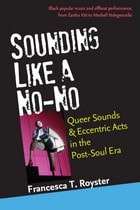
Sounding Like a No-No
Queer Sounds and Eccentric Acts in the Post-Soul EraFrancesca T. Royster
University of Michigan Press, 2012
Sounding Like a No-No traces a rebellious spirit in post–civil rights black music by focusing on a range of offbeat, eccentric, queer, or slippery performances by leading musicians influenced by the cultural changes brought about by the civil rights, black nationalist, feminist, and LGBTQ movements, who through reinvention created a repertoire of performances that have left a lasting mark on popular music. The book's innovative readings of performers including Michael Jackson, Grace Jones, Stevie Wonder, Eartha Kitt, and Meshell Ndegeocello demonstrate how embodied sound and performance became a means for creativity, transgression, and social critique, a way to reclaim imaginative and corporeal freedom from the social death of slavery and its legacy of racism, to engender new sexualities and desires, to escape the sometimes constrictive codes of respectability and uplift from within the black community, and to make space for new futures for their listeners. The book's perspective on music as a form of black corporeality and identity, creativity, and political engagement will appeal to those in African American studies, popular music studies, queer theory, and black performance studies; general readers will welcome its engaging, accessible, and sometimes playful writing style, including elements of memoir.

Sounding Like a No-No
Queer Sounds and Eccentric Acts in the Post-Soul EraFrancesca T. Royster
University of Michigan Press, 2013
Sounding Like a No-No traces a rebellious spirit in post–civil rights black music by focusing on a range of offbeat, eccentric, queer, or slippery performances by leading musicians influenced by the cultural changes brought about by the civil rights, black nationalist, feminist, and LGBTQ movements, who through reinvention created a repertoire of performances that have left a lasting mark on popular music. The book's innovative readings of performers including Michael Jackson, Grace Jones, Stevie Wonder, Eartha Kitt, and Meshell Ndegeocello demonstrate how embodied sound and performance became a means for creativity, transgression, and social critique, a way to reclaim imaginative and corporeal freedom from the social death of slavery and its legacy of racism, to engender new sexualities and desires, to escape the sometimes constrictive codes of respectability and uplift from within the black community, and to make space for new futures for their listeners. The book's perspective on music as a form of black corporeality and identity, creativity, and political engagement will appeal to those in African American studies, popular music studies, queer theory, and black performance studies; general readers will welcome its engaging, accessible, and sometimes playful writing style, including elements of memoir.

Sounds of Black Switzerland
Blackness, Music, and Unthought VoicesJessie Cox
Duke University Press, 2025
Soundworks
Race, Sound, and Poetry in ProductionAnthony Reed
Duke University Press, 2021
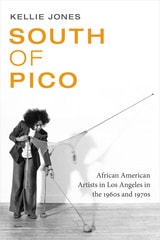
South of Pico
African American Artists in Los Angeles in the 1960s and 1970sKellie Jones
Duke University Press, 2017
In South of Pico Kellie Jones explores how the artists in Los Angeles's black communities during the 1960s and 1970s created a vibrant, productive, and engaged activist arts scene in the face of structural racism. Emphasizing the importance of African American migration, as well as L.A.'s housing and employment politics, Jones shows how the work of black Angeleno artists such as Betye Saar, Charles White, Noah Purifoy, and Senga Nengudi spoke to the dislocation of migration, L.A.'s urban renewal, and restrictions on black mobility. Jones characterizes their works as modern migration narratives that look to the past to consider real and imagined futures. She also attends to these artists' relationships with gallery and museum culture and the establishment of black-owned arts spaces. With South of Pico, Jones expands the understanding of the histories of black arts and creativity in Los Angeles and beyond.
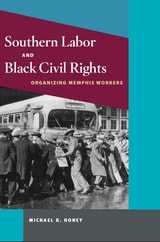
Southern Labor and Black Civil Rights
Organizing Memphis WorkersMichael K. Honey
University of Illinois Press, 1993
Winner of the Charles S. Sydnor Award, given by the Southern Historical Association, 1994. Winner of the James A. Rawley Prize given by the Organization of American Historians, 1994. Winner of the Herbert G. Gutman Award for an outstanding book in American social history.

Space Is the Place
The Lives and Times of Sun RaJohn Szwed
Duke University Press, 2020
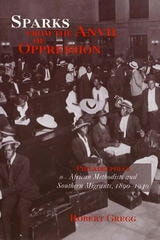
Sparks from the Anvil of Oppression
Philadelphia's African Methodists and Southern Migrants, 1890-1940Robert Gregg
Temple University Press, 1998

Spatializing Blackness
Architectures of Confinement and Black Masculinity in ChicagoRashad Shabazz
University of Illinois Press, 2015
A geographic study of race and gender, Spatializing Blackness casts light upon the ubiquitous--and ordinary--ways carceral power functions in places where African Americans live. Moving from the kitchenette to the prison cell, and mining forgotten facts from sources as diverse as maps and memoirs, Rashad Shabazz explores the myriad architectures of confinement, policing, surveillance, urban planning, and incarceration. In particular, he investigates how the ongoing carceral effort oriented and imbued black male bodies and gender performance from the Progressive Era to the present. The result is an essential interdisciplinary study that highlights the racialization of space, the role of containment in subordinating African Americans, the politics of mobility under conditions of alleged freedom, and the ways black men cope with--and resist--spacial containment.
A timely response to the massive upswing in carceral forms within society, Spatializing Blackness examines how these mechanisms came to exist, why society aimed them against African Americans, and the consequences for black communities and black masculinity both historically and today.
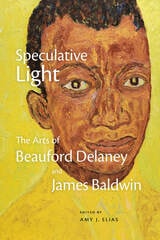
Speculative Light
The Arts of Beauford Delaney and James BaldwinAmy J. Elias, editor
Duke University Press, 2025
Contributors. Hilton Als, Nicholas Boggs, Indie A. Choudhury, Shawn Anthony Christian, Rachel Cohen, Amy J. Elias, Monika Gehlawat, David Leeming, D. Quentin Miller, Fred Moten, Walton M. Muyumba, Robert O’Meally, Ed Pavlić, Levi Prombaum, Robert Reid-Pharr, Tyler T. Schmidt, Abbe Schriber, Jered Sprecher, Stephen C. Wicks, Magdalena Zaborowska
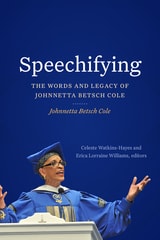
Speechifying
The Words and Legacy of Johnnetta Betsch ColeJohnnetta Betsch Cole. Celeste Watkins-Hayes and Erica Lorraine Williams, editors
Duke University Press, 2023
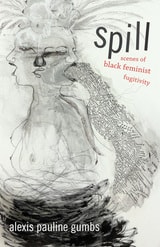
Spill
Scenes of Black Feminist FugitivityAlexis Pauline Gumbs
Duke University Press, 2016
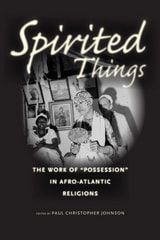
Spirited Things
The Work of "Possession" in Afro-Atlantic ReligionsEdited by Paul Christopher Johnson
University of Chicago Press, 2014
Spirits Before the Law
Faith, Race, and Freedom Beyond PropertyHannah Manshel
Duke University Press, 2027
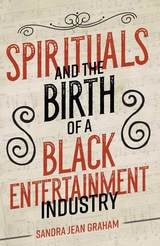
Spirituals and the Birth of a Black Entertainment Industry
Sandra Jean Graham
University of Illinois Press, 2018
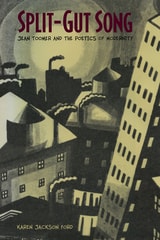
Split-Gut Song
Jean Toomer and the Poetics of ModernityKaren Jackson Ford
University of Alabama Press, 2005
Reclaiming Jean Toomer as a radical innovator of African American modernist poetics.
In Split-Gut Song, Karen Jackson Ford looks at what it means to be African American, free, and creative by analyzing Jean Toomer's main body of work, specifically, his groundbreaking creation Cane. When first published in 1923, this pivotal work of modernism was widely hailed as inaugurating a truly artistic African American literary tradition. Yet Toomer's experiments in literary form are consistently read in terms of political radicalism—protest and uplift—rather than literary radicalism.
Ford contextualizes Toomer's poetry, letters, and essays in the literary culture of his period and, through close readings of the poems, shows how they negotiate formal experimentation (imagism, fragmentation, dialect) and traditional African American forms (slave songs, field hollers, call-and-response sermons, lyric poetry). At the heart of Toomer's work is the paradox that poetry is both the saving grace of African American culture and that poetry cannot survive modernity. This contradiction, Ford argues, structures Cane, wherein traditional lyric poetry first flourishes, then falters, then falls silent.
The Toomer that Ford discovers in Split-Gut Song is a complicated, contradictory poet who brings his vexed experience and ideas of racial identity to both conventional lyric and experimental forms. Although Toomer has been labelled a political radical, Ford argues that politics is peripheral in his experimental, stream-of-consciousness work. Rather Toomer exhibits a literary radicalism as he struggles to articulate his perplexed understanding of race and art in 20th-century America.
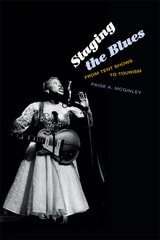
Staging the Blues
From Tent Shows to TourismPaige A. McGinley
Duke University Press, 2014
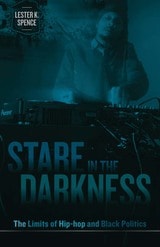
Stare in the Darkness
The Limits of Hip-hop and Black PoliticsLester K. Spence
University of Minnesota Press, 2010
A growing number of black activists and artists claim that rap and hip-hop are the basis of an influential new urban social movement. Simultaneously, black citizens evince concern with the effect that rap and hip-hop culture exerts on African American communities. According to a recent Pew survey conducted on the opinions of Black Americans, 71 percent of blacks think that rap is a bad influence. To what extent are African American hopes and fears about hip-hop’s potential political power justified? In Stare in the Darkness, Lester K. Spence answers this question using a blend of neoliberal analysis, survey data, experiments, and case studies.
Spence finds that rap does in fact influence black political attitudes. However, rap also reproduces rather than critiques neoliberal ideology. Furthermore, black activists seeking to create an innovative model of hip-hop politics are hamstrung by their reliance on outmoded forms of organizing. By considering the possibilities inherent in the most prolific and prominent activities of hip-hop politics, Stare in the Darkness reveals, in a clear and practical manner, the political consequences of rap culture for black publics.
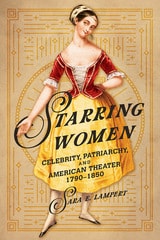
Starring Women
Celebrity, Patriarchy, and American Theater, 1790-1850Sara E. Lampert
University of Illinois Press, 2020
A revealing foray into a lost time, Starring Women returns a generation of performers to their central place in the early history of American theater.
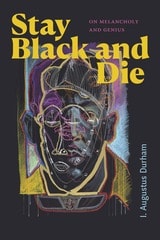
Stay Black and Die
On Melancholy and GeniusI. Augustus Durham
Duke University Press, 2023
Steppin' on the Blues
The Visible Rhythms of African American DanceJacqui Malone
University of Illinois Press, 1996
pantheon of world art.
Steppin' on the Blues explores not only the meaning of dance in African American life but also the ways in which music, song, and dance are interrelated in African American culture. Dance as it has emanated from the black community is a pervasive, vital, and distinctive form of expression--its movements speak eloquently of African American values and aesthetics. Beyond that it has been, finally, one of the most important means of cultural survival.
Former dancer Jacqui Malone throws a fresh spotlight on the cultural history of black dance, the Africanisms that have influenced it, and the significant role that vocal harmony groups, black college and university marching bands, and black sorority and fraternity stepping teams have played in the evolution of dance in African American life. From the cakewalk to the development of jazz dance and jazz music, all Americans can take pride in the vitality, dynamism, drama, joy, and uncommon singularity with which African American dance has gifted the world.
Stepping Into Zion
Hatzaad Harishon, Black Jews, and the Remaking of Jewish IdentityJanice W. Fernheimer
University of Alabama Press, 2014
Considers the question “Who is a Jew?”— a critical rhetorical issue with far-reaching consequences for Jews and non-Jews alike
Hatzaad Harishon ("The First Step") was a New York-based, multiracial Jewish organization that worked to increase recognition and legitimacy for Black Jews in the sixties and seventies. In Stepping into Zion, Janice W. Fernheimer examines the history and archives of Hatzaad Harishon to illuminate the shifting definitions and borders of Jewish identity, which have critical relevance to Jews of all traditions as well as to non-Jews.
Fernheimer focuses on a period when Jewish identity was in flux and deeply influenced by the Civil Rights and Black Power movements. In 1964, white and Black Jews formed Hatzaad Harishon to foster interaction and unity between Black and white Jewish communities. They raised the question of who or what constitutes Jewishness or Jewish identity, and in searching for an answer succeeded—both historically and rhetorically—in gaining increased recognition for Black Jews. Fernheimer traces how, despite deep disagreement over definitions, members of Hatzaad Harishon were able to create common ground in a process she terms "interruptive invention": an incremental model for rhetorical success that allows different groups to begin and continue important but difficult discussions when they share little common ground or make unequal claims to institutional and discursive power, or when the nature of common ground is precisely what is at stake. Consequently, they provide a practical way out of the seemingly incommensurable stalemate incompatible worldviews present.
Through insightful interpretations of Hatzaad Harishon's archival materials, Fernheimer chronicles the group's successes and failures within the larger rhetorical history of conflicts that emerge when cultural identities shift or expand.
Stigma and Culture
Last-Place Anxiety in Black AmericaJ. Lorand Matory
University of Chicago Press, 2015
Matory describes the competitive process that hierarchically structures their self-definition as ethnic groups and the similar process by which middle-class African Americans seek distinction from their impoverished compatriots. Drawing on research at universities such as Howard, Harvard, and Duke and among their alumni networks, he details how university life—while facilitating individual upward mobility, touting human equality, and regaling cultural diversity—also perpetuates the cultural standards that historically justified the dominance of some groups over others. Combining his ethnographic findings with classic theoretical insights from Frantz Fanon, Fredrik Barth, Erving Goffman, Pierre Bourdieu and others—alongside stories from his own life in academia—Matory sketches the university as an institution that, particularly through the anthropological vocabulary of culture, encourages the stigmatized to stratify their own.
Stirrings In The Jug
Black Politics In The Post-Segregation EraAdolph Reed, Jr.
University of Minnesota Press, 1999
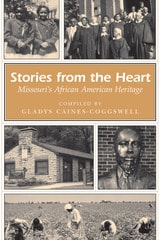
Stories from the Heart
Missouri's African American HeritageCompiled by Gladys Caines-Coggswell
University of Missouri Press, 2009
All along the river, from the front porches of Hannibal to the neighborhoods of St. Louis to the cotton fields of the Bootheel and west to Kansas City, stories are being told.
This collection of family stories and traditional tales brings to print down-home stories about all walks of African American life. Passed down from grandparents and great-grandparents, they have been lovingly gathered by Gladys Caines Coggswell as she visited Missouri communities and participated in storytelling events over the last two decades. These stories bring to life characters with uncommon courage, strength, will, and wit as they offer insight into African American experiences throughout the state’s history.
Often profound, always entertaining, some of these stories hark back to times barely remembered. Many tell of ordinary folks who achieved victories in the face of overwhelming odds. They range from recollections of KKK activities—recalling a Klan leader who owned property on which a black family lived as “the man who was always so nice to us”—to remembered differences between country and city schools and black schoolchildren introduced to Dick and Jane and Little Black Sambo. Stories from the Bootheel shed light on family life, sharecropping, and the mechanization of cotton culture, which in one instance led to a massive migration of rats as the first mechanical cotton pickers came in.
As memorable as the stories are the people who tell them, such as the author’s own “Uncle Pete” reporting on a duck epidemic or Evelyn Pulliam of Kennett telling of her resourceful neighbors in North Lilburn. Loretta Washington remembers sitting on her little wooden stool beside her great-grandmother’s rocking chair on the front porch in Wardell, mesmerized by stories—and the time when rocking chair and little wooden stool were moved inside and the stories stopped. Marlene Rhodes writes of her mother’s hero, Odie, St. Louis “Entrepreneur and English gentleman.”
Whether sharing previously unknown stories from St. Louis or betraying the secret of “Why Dogs Chase Cats,” this book is a rich repository of African American life. And if some of these tales seem unusual, the people remembering them will be the first to tell you: that’s the way it was. Coggswell preserves them for posterity and along with them an important slice of Missouri history.
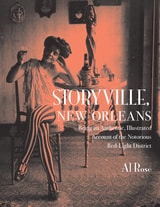
Storyville, New Orleans
Being an Authentic, Illustrated Account of the Notorious Red-Light DistrictAl Rose
University of Alabama Press, 1978
A true-to-life impression of Storyville, the only legally established red light district in the US
At the turn of the twentieth-century, there were hundreds of red-light districts in the United States, ranging in size from a discreet “house” or two in or near small towns and cities to block after bawdy block of brothels in larger cities such as Chicago and San Francisco. Storyville, New Orleans: Being an Authentic, Illustrated Account of the Notorious Red Light District seeks to offer the reader a reasonably true-to-life impression of Storyville, the most famous of the large districts and the only such district in the United States that was legally established.
Storyville was an area, carefully defined by law, outside of which prostitutes or women “notoriously abandoned to lewdness” were not permitted to live or work. Prostitutes working within the District were considered to be engaged in legal enterprises so long as they confined themselves to prostitution and other related activities such as dispensing food and drink to their customers.
From the early days of the French colony of Louisiana, a great number of prostitutes, women from correctional centers, and those with so-called “loose morals” were transported to the New World, resulting in a large proportion of the earliest female residents in New Orleans engaging in prostitution. During the course of Storyville’s legal existence from January 1, 1898 to November 12, 1917—it is evident that in establishing this district the New Orleans city council acted out of a sense of frustration after decades of attempting to deal rationally with a serious social problem. As the author says in the preface, “You may see this as a disorderly book about disorderly houses—and so it may be. But I doubt you will find it dull.”
Strange Affinities
The Gender and Sexual Politics of Comparative RacializationGrace Kyungwon Hong and Roderick A. Ferguson, eds.
Duke University Press, 2011
Contributors
Victor Bascara
Lisa Marie Cacho
M. Bianet Castellanos
Martha Chew Sánchez
Roderick A. Ferguson
Grace Kyungwon Hong
Helen H. Jun
Kara Keeling
Sanda Mayzaw Lwin
Jodi Melamed
Chandan Reddy
Ruby C. Tapia
Cynthia Tolentino