Results by title
3576 books match the query 'American' and 241 start with s

Selected Poems
John Frederick Nims
University of Chicago Press, 1982

Selected Poems
Jean Garrigue. Introduction by J. D. McClatchy
University of Illinois Press, 1992
Selected Poems is compiled from the best works in Jean Garrigue's eight published collections. Garrigue (1914-72) is recognized as a leading American poet of the fifties and sixties. Among her awards and honors were a Guggenheim fellowship and a National Institute of Arts and Letters grant.
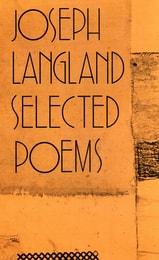
Selected Poems
Joseph Langland
University of Massachusetts Press, 1991
This book offers a selection of sixty-five poems from forty years of distinguished and prize-winning publication by Joseph Langland. These poems speak in a strong, natural voice that has mastered the craft and moves confidently within it. In them, one hears speech and music together in a wide-ranging world of ideas.

Selected Poems Of Janet Lewis
Janet Lewis
Ohio University Press, 2000
Since the appearance in print of her early poems over seventy-five years ago, the poetry of Janet Lewis has grown in quiet acclaim and popularity. Although she is better known as a novelist of historical fiction, her first and last writings were poems. With the publication of her selected poems, Swallow Press celebrates the distinguished career of one of its most cherished authors.
Critics as disparate as Kenneth Rexroth, Timothy Steele, Theodore Roethke, Larry McMurtry, N. Scott Momaday, and Dana Gioia have sung the praises of her work over the decades. Her career as a poet was remarkable not only for its longevity but also for the fact that even well into her tenth decade she wrote poems that stand with her very best work.
Characterized by the vigor and sharpness of her images and the understated lyricism that permeates her rhythmic lines, The Selected Poems of Janet Lewis is a survey of modern poetry unto itself.
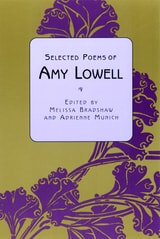
Selected Poems of Amy Lowell
Bradshaw, Melissa
Rutgers University Press, 2002
Amy Lowell (1874–1925), American poet and critic, was one of the most influential and best-known writers of her era. Within a thirteen-year period, she produced six volumes of poetry, two volumes of criticism, a two-volume biography of John Keats, and countless articles and reviews that appeared in many popular periodicals. As a herald of the New Poetry, Lowell saw herself and her kind of work as a part of a newly forged, diverse, American people that registered its consciousness in different tonalities but all in a native idiom. She helped build the road leading to the later works of Allen Ginsberg, May Sarton, Sylvia Plath, and beyond. Except for the few poems that invariably appear in American literature anthologies, most of her writings are out of print. This will be the first volume of her work to appear in decades, and the depth, range, and surprising sensuality of her poems will be a revelation.
The poetry is organized according to Lowell’s characteristic forms, from traditional to experimental. In each section the works appear in chronological order. Section one contains sonnets and other traditional verse forms. The next section covers her translations and adaptations of Chinese and Japanese poetry, whereby she beautifully renders the spirit of these works. Also included here are several of Lowell’s own Asian-influenced poems. Lowell’s free, or cadenced verse appears in the third part. The last section provides samples of Lowell’s polyphonic prose, an ambitious and vigorous art form that employs all of the resources of poetry.
The release of The Selected Poems of Amy Lowell will be a major event for readers who have not been able to find a representative sampling of work from this vigorous, courageous poet who gave voice to an erotic, thoroughly American sensibility.

Selected Poems of John Gould Fletcher
John Fletcher
University of Arkansas Press, 1988
A Pulitzer Prize winner best known as an imagist, John Gould Fletcher experimented with every facet of Modernist poetry and influenced poets in both England and the United States. this is the first collection to span his entire career, and brings again to the public eye work that has been unavailable for thirty-five years.
Fletcher is responsible for introducing Ezra Pound to French symbolism, and Amy Lowell to “polyphonic prose,” and his connection with the Southern Fugitive Agrarian movement adds to his significance as the first modern Southern poet. The editors have chosen representative works for his many stages of development and discuss in the introduction Fletcher’s influence on the better-known modernists.
Selected Poems of John Gould Fletcher is the first n a series of books by or about Fletcher to fill an important space in home and public libraries with American literature collections.
Self-Evidence
A Selection of Verse, 1977-1997Pamela White Hadas
Northwestern University Press, 1997
Pamela White Hadas won enthusiastic recognition for her early books of poetry, Designing Women and Beside Herself. In Self-Evidence, she selects the best of her published work and combines it with poems never before collected. This collection contains legendary, mythic, historical, and imaginary characters--Lilith, Pocahontas, Simone Weil, the wives of Watergate, a circus performer, and others. With playful originality and virtuoso voicing, Hadas weaves breathtaking tapestries of women's loves and labors.
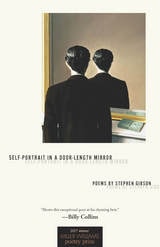
Self-Portrait in a Door-Length Mirror
PoemsStephen Gibson
University of Arkansas Press, 2017
Winner of the 2017 Miller Williams Poetry Prize, edited by Billy Collins
“Shows this exceptional poet at his rhyming best.”
—Billy Collins
Self-Portrait in a Door-Length Mirror presents the mirror that reflects not always what is, but what is desired, or not desired. In the opening poem, the speaker, Diane Arbus, looks at her very early pregnant self and asks, “Why would I bring you into this world?” This book answers that question, or tries to: the world is what it is as we try to live as our best selves in that world. But that knowledge of the world is hard and has consequences, and not in the abstract, as Gibson’s poetry dynamically shows.
Employing new formalism, Self-Portrait in a Door-Length Mirror examines historical, familial, and personal pasts as those pasts continue into the present, reminding us, as Faulkner wrote, “The past is never dead. It’s not even past.”
Self/Pity
Susan Hahn
Northwestern University Press, 2005
As with her previous collections, the poems in Self/Pity can be read as a cohesive whole.
From the simple prayer "To Jacob Four Months In The Womb" to the complex territory of the poem sequence "The Pornography of Pity," in which Mother Goose, the Marquis de Sade, Godot, Lewis Carroll's Alice, The Cat and the Fiddle, Zeus, and many others are called upon, Hahn creates a tour-de-force exploration of the book's central themes.
Selfwolf
Mark Halliday
University of Chicago Press, 1998
"If Selfwolf were a pop music CD, it would be hailed as Mark Halliday's breakthrough album. . . . This third collection of poems teems with unsparing confessions of misdirected lust, lost faith, regret and a winningly goofy cheerfulness in the face of all that bad stuff. . . . The informal, conversational quality of Halliday's work almost hides its artfulness, which seems to be precisely his intention."—Ken Tucker, New York Times Book Review
"With unflinching, often comic honesty about how 'ego-fetid, hostile, grasping' we are, Halliday exposes the self's wolfish hungers and weaknesses."—Andrew Epstein, Boston Review
"Mark Halliday's new book offers more of his trademark riffs on self-consciousness. His subversive, surprising, hugely enjoyable poems will make you laugh out loud, squirm in uncomfortable recognition, and appreciate anew the comedy of our daily battles for self-preservation. . . reading Halliday is pure delight. . . . I love the daring and intelligence with which Halliday skates along the shifting boundary between self within and world outside. Selfwolf slows down our habitual negotiations between 'in here' and 'out there,' exposing the edgy comedy of how we survive."—Damaris Moore, Express Books

Sender
A PlayIke Holter
Northwestern University Press, 2019
Ike Holter’s Sender thrives on the contrast between order and chaos and the tensions that emerge as we leave childhood and adolescence behind to contend with the demands of “adulting.” In this comedy, Holter presents us with four millennial friends wrestling with these issues. While each is at a different stage of “growing up,” one of the friends has disappeared and has been presumed dead. Yet, at the beginning of the play, he returns and completely upends the balance established in his absence. This witty, foul mouthed, and razor-sharp play asks: “What does growing up mean . . . and is it even desired in this day and age?”
Sender is one of seven plays in Holter’s Rightlynd Saga, all to be published by Northwestern University Press. Holter’s plays are set in Chicago’s fictional fifty-first ward. The other plays in the cycle are Exit Strategy, Lottery Day, Prowess, Red Rex, Rightlynd, and The Wolf at the End of the Block.
Senses of Style
Poetry before InterpretationJeff Dolven
University of Chicago Press, 2017
Sensory Experiments
Psychophysics, Race, and the Aesthetics of FeelingErica Fretwell
Duke University Press, 2020
Sentences
Howard Nemerov
University of Chicago Press, 1980
"In [Sentences], not only has Nemerov continued to accommodate himself to the literary tradition without falling back on parody; he has also . . . extended the resources of blank verse beyond what any modern practitioner, himself included, has managed to. This extension comprises more than a mere prosodic advance; it is a rhetorical and imaginative advance. 'By Al Lebowitz's Pool,' 'The Makers,' 'Monet,' and 'A Christmas Storm,' for example, are dazzling in their very naturalness. . . . No one since Frost has done as much to move blank verse from where Wordsworth and Coleridge had left it."—Mary Kinzie, Poetry
Sentimental Collaborations
Mourning and Middle-Class Identity in Nineteenth-Century AmericaMary Louise Kete
Duke University Press, 2000
Many scholars have written about the sentimental novel as a primarily female genre and have stressed its negative ideological aspects. Kete finds that in fact many men—from writers to politicians—participated in nineteenth-century sentimental culture. Importantly, she also recovers the utopian dimension of the phenomenon, arguing that literary sentimentality, specifically in the form of poetry, is the written trace of a broad cultural discourse that Kete calls “sentimental collaboration”—an exchange of sympathy in the form of gifts that establishes common cultural or intellectual ground. Kete reads the work of Ralph Waldo Emerson, Henry Wadsworth Longfellow, Mark Twain, Harriet Beecher Stowe, and Lydia Huntley Sigourney with an eye toward the deployment of sentimentality for the creation of Americanism, as well as for political and abolitionist ends. Finally, she locates the origins of sentimental collaboration in the activities of ordinary people who participated in mourning rituals—writing poetry, condolence letters, or epitaphs—to ease their personal grief.
Sentimental Collaborations significantly advances prevailing scholarship on Romanticism, antebellum culture, and the formation of the American middle class. It will be of interest to scholars of American studies, American literature, cultural studies, and women’s studies.
Sentimental Materialism
Gender, Commodity Culture, and Nineteenth-Century American LiteratureLori Merish
Duke University Press, 2000
The phenomenon of female consumption was capitalism’s complement to male production: It created what Merish calls the “Other Protestant Ethic,”a feminine and sentimental counterpart to Max Weber’s ethic of hard work, economic rationality, and self-control. In addition, driven by the culture’s effort to civilize the “cannibalistic” practices of ethnic, class, and national otherness, appropriate female consumerism, marked by taste and refinement, identified certain women and their families as proper citizens of the United States. The public nature of consumption, however, had curiously conflicting effects: While the achievement of cultured material circumstances facilitated women’s civic agency, it also reinforced stereotypes of domestic womanhood.
Sentimental Materialism’s inquiry into middle-class consumption and accompanying ideals of womanhood will appeal to readers in a variety of disciplines, including American studies, cultural studies, feminist theory, and cultural history.
Sentimental Readers
The Rise, Fall, and Revival of a Disparaged RhetoricFaye Halpern
University of Iowa Press, 2013
Halpern examines these novels with a fresh eye by positioning sentimentality as a rhetorical strategy on the part of these novels’ (mostly) female authors, who used it to answer a question that plagued the male-dominated world of nineteenth-century American rhetoric and oratory: how could listeners be sure an eloquent speaker wasn’t unscrupulously persuading them of an untruth? The authors of sentimental novels managed to solve this problem even as the professional male rhetoricians and orators could not, because sentimental rhetoric, filled with tears and other physical cues of earnestness, ensured that an audience could trust the heroes and heroines of these novels. However, as a wider range of authors began wielding sentimental rhetoric later in the nineteenth century, readers found themselves less and less convinced by this strategy.
In her final discussion, Halpern steps beyond a purely historical analysis to interrogate contemporary rhetoric and reading practices among literature professors and their students, particularly first-year students new to the “close reading” method advocated and taught in most college English classrooms. Doing so allows her to investigate how sentimental novels are understood today by both groups and how these contemporary reading strategies compare to those of Americans more than a century ago. Clearly, sentimental novels still have something to teach us about how and why we read.

Separate Spheres No More
Gender Convergence in American Literature, 1830-1930Monika Elbert
University of Alabama Press, 2000
Examines the intersection of male and female spheres in American literature
Although they wrote in the same historical milieu as their male counterparts, women writers of the 19th- and early 20th-centuries have generally been "ghettoized" by critics into a separate canonical sphere. These original essays argue in favor of reconciling male and female writers, both historically and in the context of classroom teaching.
While some of the essays pair up female and male authors who write in a similar style or with similar concerns, others address social issues shared by both men and women, including class tensions, economic problems, and the Civil War experience. Rather than privileging particular genres or certain well-known writers, the contributors examine writings ranging from novels and poetry to autobiography, utopian fiction, and essays. And they consider familiar figures like Harriet Beecher Stowe, Emily Dickinson, and Ralph Waldo Emerson alongside such lesser-known writers as Melusina Fay Peirce, Susie King Taylor, and Mary Gove Nichols.
Each essay revises the binary notions that have been ascribed to males and females, such as public and private, rational and intuitive, political and domestic, violent and passive. Although they do not deny the existence of separate spheres, the contributors show the boundary between them to be much more blurred than has been assumed until now.
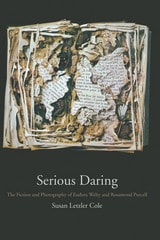
Serious Daring
The Fiction and Photography of Eudora Welty and Rosamond PurcellSusan Letzler Cole
University of Arkansas Press, 2016
Serious Daring is the story of the complementary journeys of two American women artists, celebrated fiction writer Eudora Welty and internationally acclaimed photographer Rosamond Purcell, each of whom initially practiced, but then turned from, the art form ultimately pursued by the other.
For both Welty and Purcell, the art realized is full of the art seemingly abandoned. Welty’s short stories and novels use images of photographs, photographers, and photography. Purcell photographed books, texts, and writing.
Both women make compelling art out of the seeming tension between literary and visual cultures. Purcell wrote a memoir in which photographs became endnotes. Welty re-emerged as a photographer through the publication of four volumes of what she called her “snapshots,” magnificent black-and-white photographs of small-town Mississippi and New York City life.
Serious Daring is a fascinating look at how the road not taken can stubbornly accompany the chosen path, how what is seemingly left behind can become a haunting and vital presence in life and art.
Set in Motion
Essays, Interviews, and DialoguesA. R. Ammons
University of Michigan Press, 1996
Settlers of Unassigned Lands
Charles McLeod
University of Michigan Press, 2015

Seven Modern American Novelists
An IntroductionWilliam Van O’Connor, Editor
University of Minnesota Press, 1964
Seven Modern American Novelists was first published in 1964. Minnesota Archive Editions uses digital technology to make long-unavailable books once again accessible, and are published unaltered from the original University of Minnesota Press editions.
This volume provides critical introductions to seven of the most significant American novelists of this century, bringing together in convenient book form the material from some of the University of Minnesota Pamphlets on American Writers. The writers discussed and the contributing authors are Edith Wharton by Louis Auchincloss, Sinclair Lewis by Mark Schorer, F. Scott Fitzgerald by Charles E. Shain, William Faulkner by William Van O'Connor, Ernest Hemingway by Philip Young, Thomas Wolfe by C. Hugh Holman, and Nathanael West by Stanley Edgar Hyman.
In an introduction Mr. O'Connor, who is one of the editors of the pamphlet series, discusses some critical principles as they apply to fiction writers in general and to twentieth-century American novelists in particular. He is the author of many volumes of literary criticism as well as a collection of short stories and was a professor of English at the University of California, Davis.
Teachers, librarians, and others who use the material of the University of Minnesota Pamphlets on American Writers for frequent reference or as classroom texts will find this book particularly useful. Biographical information about the writers as well as critical evaluations of their writing is given. A bibliography for each writer lists his works and critical and biographical works about him.
Seventeen Syllables and Other Stories
Yamamoto, Hisaye
Rutgers University Press, 2001
In addition to the contents of the original volume, this edition brings back into print the following works:
- Death Rides the Rails to Poston
- Eucalyptus
- A Fire in Fontana
- Florentine Gardens
Sexual Generations
Star Trek: The Next Generation and GenderRobin Roberts
University of Illinois Press, 1999
The incisive and innovative readings in Sexual Generations provide food for thought about how the final frontier can clarify pressing questions of our own space and time.
Shadow of a Cloud but No Cloud
Killarney Clary
University of Chicago Press, 2014
Shadowed Cocktails
The Plays of Philip Barry from Paris Bound to The Philadelphia StoryDonald R. Anderson
Southern Illinois University Press, 2010
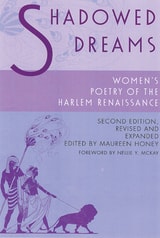
Shadowed Dreams
Women's Poetry of the Harlem RenaissanceMcKay, Nellie
Rutgers University Press, 2006
The first edition of Shadowed Dreams was a groundbreaking anthology that brought to light the contributions of women poets to the Harlem Renaissance. This revised and expanded version contains twice the number of poems found in the original, many of them never before reprinted, and adds eighteen new voices to the collection to once again strike new ground in African American literary history. Also new to this edition are nine period illustrations and updated biographical introductions for each poet.
Shadowed Dreams features new poems by Gwendolyn Bennett, Anita Scott Coleman, Mae Cowdery, Blanche Taylor Dickinson, Alice Dunbar-Nelson, Jessie Fauset, Angelina Weld Grimké, Gladys Casely Hayford (a k a Aquah Laluah), Virginia Houston, Georgia Douglas Johnson, Helene Johnson, Effie Lee Newsome, Esther Popel, and Anne Spencer, as well as writings from newly discovered poets Carrie Williams Clifford, Edythe Mae Gordon, Alvira Hazzard, Gertrude Parthenia McBrown, Beatrice Murphy, Lucia Mae Pitts, Grace Vera Postles, Ida Rowland, and Lucy Mae Turner, among others.
Covering the years 1918 through 1939 and ranging across the period’s major and minor journals, as well as its anthologies and collections, Shadowed Dreams provides a treasure trove of poetry from which to mine deeply buried jewels of black female visions in the early twentieth century.
Shadows Burning
W.S. Di Piero
Northwestern University Press, 1995
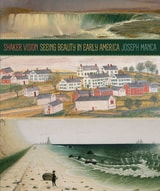
Shaker Vision
Seeing Beauty in Early AmericaJoseph Manca
University of Massachusetts Press, 2019
In Shaker Vision, Joseph Manca explores original texts, especially diaries and travel journals, and material culture to demonstrate that Shakers enjoyed a remarkably deep experience of the visual world. Shakers shared tastes with mainstream Americans and often employed a similar aesthetic vocabulary, but all within a belief system that made them distinct. In addition to their well-known ascetic architecture, furniture, and handicraft styles, they expressed themselves through ornate and detailed spiritual art and in vivid, visionary experiences. Based on firsthand accounts of the believers themselves, this richly illustrated volume will dramatically change how we assess the visual world of this uniquely American religious sect.

Shakespeare and the Denial of Death
James Calderwood
University of Massachusetts Press, 1987
Shakespearean Educations
Power, Citizenship, and PerformanceCoppélia Kahn
University of Delaware Press, 2011
Published by University of Delaware Press. Distributed worldwide by Rutgers University Press.
Shapeshift
Sherwin Bitsui
University of Arizona Press, 2003
In words drawn from urban and Navajo perspectives, Sherwin Bitsui articulates the challenge a Native American person faces in reconciling his or her inherited history of lore and spirit with the coldness of postmodern civilization.
Shapeshift is a collection of startling new poetry that explores the tensions between the worlds of nature and man. Through brief, imagistic poems interspersed with evocative longer narratives, it offers powerful perceptions of American culture and politics and their lack of spiritual grounding. Linking story, history, and voice, Shapeshift is laced with interweaving images—the gravitational pull of a fishbowl, the scent of burning hair, the trickle of motor oil from a harpooned log—that speak to the rich diversity of contemporary Diné writing.
"Tonight, I draw a raven's wing inside a circle
measured a half second
before it expands into a hand.
I wrap its worn grip over our feet
As we thrash against pine needles inside the earthen pot."
With complexities of tone that shift between disconnectedness and wholeness, irony and sincerity, Bitsui demonstrates a balance of excitement and intellect rarely found in a debut volume. As deft as it is daring, Shapeshift teases the mind and stirs the imagination.

Shays' Rebellion
The Making of an Agrarian InsurrectionDavid P. Szatmary
University of Massachusetts Press, 1980
Shays' Rebellion: The Making of an Agrarian Insurrection is a landmark work of early American social and economic history that offers a comprehensive examination of one of the most consequential, and often misunderstood, uprisings in the history of the early American republic. Between 1786 and 1787, debt-ridden farmers across western Massachusetts, many of them veterans of the Revolutionary War, rose in armed protest against the state government's crushing tax and debt collection policies. Under the informal leadership of Daniel Shays, the rebels sought to prevent court foreclosures on their farms, demand tax relief, and reform a judicial system they saw as serving the interests of wealthy creditors at the expense of ordinary citizens. The uprising—ultimately suppressed by a privately funded state militia—sent shockwaves through the young nation, alarming leading figures including George Washington and James Madison, and powerfully accelerating the movement toward a stronger central government and the drafting of the U.S. Constitution.
Szatmary frames the rebellion not as an isolated outbreak of lawlessness, but as a deeply rooted agrarian insurrection produced by the collision of two fundamentally different economic worlds in post-Revolutionary New England. His analysis begins by establishing the divergent economic realities of the region: on one side, the commercial and mercantile economy of New England's coastal towns, driven by creditors, merchants, and professional elites integrated into transatlantic trade networks; on the other, the subsistence farming communities of the interior, whose inhabitants operated largely outside the cash economy and bore a disproportionate burden of wartime debt and postwar taxation. Drawing on this structural conflict, Szatmary traces the chain of debt that left rural farmers increasingly unable to meet their obligations, the escalating cycle of court actions and property seizures that pushed them toward organized resistance, and the government's responses, ultimately military, to the protests.
The book is also attentive to the rebellion's broader political consequences, examining how Shays' Rebellion transformed the national debate about governance, federal authority, and the relationship between popular democracy and social order in the new republic. Described by one reviewer as a "well-balanced" study that "classifies Shays' Rebellion as the historical watershed it truly is," the book remains a standard reference in the historiography of the Early American Republic, the Articles of Confederation period, and the origins of the Constitutional Convention.

She Has a Name
Kamilah Aisha Moon
Four Way Books, 2013
She Took Off Her Wings And Shoes
Suzette Bishop
Utah State University Press, 2004
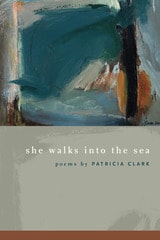
She Walks Into the Sea
Patricia Clark
Michigan State University Press, 2009
Patricia Clark's poems explore not only refuge but also wonder and appreciation, as well as astonishment.
A number of the 56 poems collected here show her grappling with loss, especially the loss of her mother, though she isn't one to indulge in misery. Instead, she goes walking. It is the harp tree in "The Poplar Adrift" that Clark imagines giving voice to sorrow, thus sparing those who stroll by—"all the grief that passes" becoming, in the tree’s very fibers, sound on the air, a wind through branches and leaves.
Clark also finds opportunities for learning, for meditation, and for contemplation. Octavio Paz has written, "Nature speaks as though it were a lover." In many of the poems collected here, Clark listens to nature speaking and revels in this lover, aiming to capture some of the qualities of Michigan's trees, birds, and landscapes in lyric poems.
It is Clark's particular gift to give us "tasted" as she draws her readers into the world, inhabiting the worlds of nature, head, and heart.
Shelf Life
Essays, Memoirs, and an InterviewThom Gunn
University of Michigan Press, 1993
Gunn’s criticism communicates his own enthusiasm for poetry. He tries to show his readers how to get a first foothold into the work of some of his favorite poets, whether Wyatt or Whitman, Mina Loy or Robert Creeley.
Shelf Life
Literary Essays and ReviewsWilliam H. Pritchard
University of Massachusetts Press, 2009
Pritchard is convinced that his job as a critic is to talk back to the imagination he has been engaged by. The four sections of this volume look at writers as diverse as the critic Samuel Johnson, the novelist Raymond Chandler, and the poet James Merrill, and at the abrasive epistolary behavior of Evelyn Waugh and Kingsley Amis. Perhaps the book's most original section is its final one, in which Pritchard writes about music-about playing the piano, singing hymns, listening to jazz-and about the teaching life as it appears in literature and in his own classroom. He concludes with appreciative essays on two of his own fondly remembered teachers.
Shelf Life is mannerly and elegant, but venturesome, even bold in its explorations of the artistic performance-of that passionate preference Robert Frost found to be the root of all human expression.
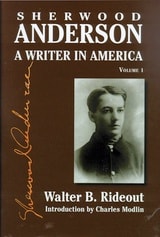
Sherwood Anderson
A Writer in America, Volume 1Walter B. Rideout
University of Wisconsin Press, 2006
Sherwood Anderson: A Writer in America is the definitive biography of this major American writer of novels and short stories, whose work includes the modern classic Winesburg, Ohio. In the first volume of this monumental two-volume work, Walter Rideout chronicles the life of Anderson from his birth and his early business career through his beginnings as a writer and finally to his move in the mid-1920s to “Ripshin,” his house near Marion, Virginia. The second volume will cover Anderson’s return to business pursuits, his extensive travels in the South touring factories, which resulted in his political involvement in labor struggles and several books on the topic, and finally his unexpected death in 1941.
No other existing Anderson biography, the most recent of which was published nearly twenty years ago, is as thoroughly researched, so extensively based on primary sources and interviews with a range of Anderson friends and family members, or as complete in its vision of the man and the writer. The result is an unparalleled biography—one that locates the private man, while astutely placing his life and writings in a broader social and political context.
Sherwood Anderson
A Writer in America, Volume 2Walter B. Rideout
University of Wisconsin Press, 2006
Walter Rideout’s Sherwood Anderson: A Writer in America is a seminal work that reintroduces us to this important, yet recently neglected, American writer, giving him long overdue attention. This second volume of the monumental two-volume work covers Anderson’s life after his move in the mid-1920s to “Ripshin,” his house near Marion, Virginia (where Volume 1 ended.) The second volume covers his return to business pursuits; his extensive travels in the South touring factories, which resulted in his political involvement in labor struggles and several books on the topic; and finally his unexpected death in 1941.
No other existing Anderson biography, the most recent of which was published nearly twenty years ago, is as thoroughly researched, so extensively based on primary sources and interviews with a range of Anderson’s friends and family members, or as complete in its vision of the man and the writer. Rideout uncovers much new information about events and people in Anderson’s life and provides a new perspective on many of his works. This two-volume biography presents Anderson’s many remarkable attributes more clearly than ever before, while astutely placing his life and writings in the broader social, political, and artistic movements of his times.
Outstanding Book, selected by the American Association of School Librarians, and Best Books for General Audiences, selected by the Public Library Association
Outstanding Academic Title, Choice Magazine
Winner, Biography Award, Society of Midland Authors
Sherwood Anderson’s Winesburg, Ohio
With Variant Readings and AnnotationsSherwood Anderson
Ohio University Press, 2000
In 1919 a middle-aged Chicago advertising writer from Ohio, a failure as a businessman, husband, and father, published a small yellow book of short stories intended to “reform” American literature. Against all expectations, Winesburg, Ohio: A Group of Tales of Ohio Small Town Life achieved what its author intended: after 1919 and after Winesburg, Ohio, American literature would be written and read freshly and differently.
Winesburg, Ohio has never been out of print, but never has Anderson’s book been published in the form and with the editorial care that the work has needed and deserved. The present text, authorized by the Sherwood Anderson Literary Estate Trust, is an expert text. The editor has relied on years of experience in editing Sherwood Anderson and has consulted all Anderson manuscripts, typescripts, letters, and diaries and all editions of the book to present the masterpiece in its intended state.
New to this expert edition of Winesburg, Ohio are historical and cultural annotations, documentation of changes in the various editions, identification of the Ohio originals for Anderson’s characters, and maps bearing the streets and buildings of the real town of Clyde, Ohio, which is the basis of Anderson’s fictional account.
Included as well are unique photographs of Anderson and Clyde, Ohio, illustrations that deepen knowledge and feeling for the author’s actual hometown and time, revealing Winesburg, Ohio to be an intensely local narrative—very much an “Ohio” book—and yet a book that has found and held worldwide attention.
Shift
Jeredith Merrin
University of Chicago Press, 1996
Shine
Joseph Millar
Carnegie Mellon University Press, 2024
Joseph Millar’s lyrical poems explore work, love, filial connection, life, and death. This is Millar’s sixth collection, and it reaches a deeper, more sonic level than his usual narrative voice. A collection of half songs rendered in a hardscrabble lyricism, they are propelled by their shifting, irregular rhymes, half rhymes, and off rhymes. The poems’ subjects grow from moments of daily life and their deeper obsessions—love, work, death, desire—and the making of art itself. Touched with more humor than earlier work, and with an unpredictable timing that seems to listen to itself as it travels down the page, the poems are part wonder and part reflection, carried along by their music.
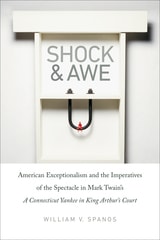
Shock and Awe
American Exceptionalism and the Imperatives of the Spectacle in Mark Twain’s A Connecticut Yankee in King Arthur’s CourtWilliam V. Spanos
Dartmouth College Press, 2013

Shopping, or The End of Time
Emily Bludworth de Barrios
University of Wisconsin Press, 2022
A detective’s red thread spiderweb mapping the constellations among parenting, capitalism, aging, and ghosts, this stunning collection is wistful, unmoored, glamorous, and immense. These tour-de-force poems simultaneously capture an impression of emptiness and pleasure, of existing in a liminal space filled with both hollowness and potential.
It was difficult to tell when the world broke.
—Excerpt from “Ravine”
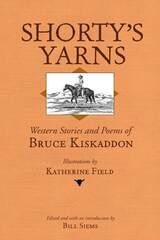
Shorty's Yarns
Western Stories and Poems of Bruce Kiskaddonedited by Bill Siems, illustrations by Katherine Field
Utah State University Press, 2004
In the world of cowboy poetry, no poet is better known or more widely appreciated than Bruce Kiskaddon. Though he died in 1950 his poems have been at the forefront of the cowboy poetry revival that began in the 1980s and have been reprinted frequently in published collections and anthologies. What is less known is that Kiskaddon during his lifetime also published stories. These humorous, realistic prose sketches of cowboy life were almost lost, but they are in their own right gems of literary Americana on a par with the poems. Originally published in the Western Livestock Journal between 1932 and 1939, the short stories drew on Kiskaddon's own experience of ranching in the Southwest and Australia to portray real life on the range. Bill Siems has recovered these stories and compiled and introduced them in this new collection, to which he has added a selection of Kiskaddon's poems and the original drawings that accompanied them, by Katherine Field, a fine, underappreciated western artist.
Set in Colorado, New Mexico, and Arizona, the stories are a loosely tied string of old timer's yarns with a continuing cast of engaging characters, whom Kiskaddon avoids reducing to cowboy stereotypes. They include, as Siems describes them, "Kiskaddon himself as the character Shorty. As a common waddy with a small man's feistiness and a young man's mischief, Shorty encounters the wicked world with a succession of companions: Bill, high-headed and a bit of an outlaw; Rildy Briggs, untamable and unstoppable young cowgirl; and Ike, an old-fashioned dandy and 'a very fortunate person.' More or less in the background is the Boss-actually a series of Bosses-generally affectionately respected as long as he remains democratic in his dealings with the waddies. Buffoonery is provided by a succession of pompous characters, from townspeople who look down their noses on wild, unwashed waddies to professors from the East who have read books on how ranches should be run."
Show and Tell
New and Selected PoemsJim Daniels
University of Wisconsin Press, 2003
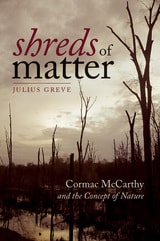
Shreds of Matter
Cormac McCarthy and the Concept of NatureJulius Greve
Dartmouth College Press, 2018
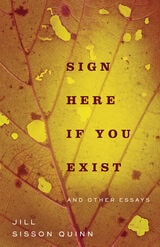
Sign Here If You Exist and Other Essays
Jill Sisson Quinn
The Ohio State University Press, 2020
Sign Here If You Exist explores states of being and states of mind, from the existence of God to sense of place to adoptive motherhood. In it, Jill Sisson Quinn examines how these states both disorient and anchor us as she treks through forests, along shorelines and into lakes and rivers as well as through memories and into scientific literature.Each essay hinges on an unlikely pairing—parasitic wasps and the afterlife, or salamanders and parenthood—in which each element casts the other in unexpectedly rich light. Quinn joins the tradition of writers such as Annie Dillard, Scott Russell Sanders, and Eula Biss to deliver essays that radiate from the junction of science and imagination, observation and introspection, and research and reflection.
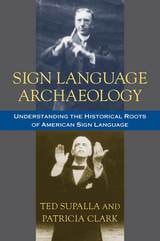
Sign Language Archaeology
Understanding the Historical Roots of American Sign LanguageTed Supalla
Gallaudet University Press, 2014
By tracing the writings of selected individuals, this study reconstructs the historical context for early ASL grammar. It describes the language used in each century and how it changed, and focuses on the rediscovery of the literary legacy of the Deaf American voice. Sign Language Archaeology reveals the contrast between folk etymology and scientific etymology and allows readers to see ASL in terms of historical linguistics.