Results by title
3369 books match the query 'Cultural & Social' and 236 start with s

Serfdom and Social Control in Russia
Petrovskoe, a Village in TambovSteven L. Hoch
University of Chicago Press, 1986

Settlement Ecology
The Social and Spatial Organization of Kofyar AgricultureGlenn Davis Stone
University of Arizona Press, 1996

Settlement, Subsistence, and Society in Late Zuni Prehistory
Keith W. Kintigh
University of Arizona Press, 1985
Keith W. Kintigh demonstrates how changing agricultural strategies and developing mechanisms of social integration contributed to these population shifts. In particular, he argues that occupants of the earliest large pueblos relied on runoff agriculture, but that gradually spring-and river-fed irrigation systems were adopted. Resultant strengthening of the mechanisms of social integration allowed the increased occupational stability of the protohistorical Zuni towns.

Sex Tourism in Bahia
Ambiguous EntanglementsErica Lorraine Williams
University of Illinois Press, 2013
Sex Work and the City
The Social Geography of Health and Safety in Tijuana, MexicoBy Yasmina Katsulis
University of Texas Press, 2009
A gateway at the U.S.-Mexico border, Tijuana is a complex urban center with a sizeable population of sex workers. An in-depth case study of the trade, Sex Work and the City is the first major ethnographic publication on contemporary prostitution in this locale, providing a detailed analysis of how sex workers' experiences and practices are shaped by policing and regulation.
Contextualizing her research within the realm of occupational risk, Yasmina Katsulis examines the experiences of a diverse range of sex workers in the region and explores the implications of prostitution, particularly regarding the spheres of class hierarchies, public health, and other broad social effects. Based on eighteen months of intensive fieldwork and nearly 400 interviews with sex workers, customers, city officials, police, local health providers, and advocates, Sex Work and the City describes the arenas of power and the potential for disenfranchisement created by municipal laws designed to regulate the trade. Providing a detailed analysis of this subculture's significance within Tijuana and its implications for debates over legalization of "vice" elsewhere in the world, Katsulis draws on powerful narratives as workers describe the risks of their world, ranging from HIV/AIDS and rape (by police or customers) to depression, work-related stress, drug and alcohol addiction, and social stigma. Insightful and compelling, Sex Work and the City captures the lives (and deaths) of a population whose industry has broad implications for contemporary society at large.
Sex and Salvation
Imagining the Future in MadagascarJennifer Cole
University of Chicago Press, 2010
Sex and Salvation chronicles the coming of age of a generation of women in Tamatave in the years that followed Madagascar’s economic liberalization. Eager to forge a viable future amid poverty and rising consumerism, many young women have entered the sexual economy in hope of finding a European husband. Just as many Westerners believe that young people break with the past as they enter adulthood, Malagasy citizens fear that these women have severed the connection to their history and culture.
Jennifer Cole’s elegant analysis shows how this notion of generational change is both wrong and consequential. It obscures the ways young people draw on long-standing ideas of gender and sexuality, it ignores how urbanites relate to their rural counterparts, and it neglects the relationship between these husband-seeking women and their elders who join Pentecostal churches. And yet, as talk about the women circulates through the city’s neighborhoods, bars, Internet cafes, and churches, it teaches others new ways of being.
Cole’s sophisticated depiction of how a generation’s coming of age contributes to social change eschews a narrow focus on crisis. Instead, she reveals how fantasies of rupture and conceptions of the changing life course shape the everyday ways that people create the future.
Sex in Development
Science, Sexuality, and Morality in Global PerspectiveVincanne Adams and Stacy Leigh Pigg, eds.
Duke University Press, 2005
Sex in Development combines the cultural analysis of sexuality, critiques of global development, and science and technology studies. Whether considering the resistance encountered by representatives of an American pharmaceutical company attempting to teach Russian doctors a “value free” way to offer patients birth control or the tension between Tibetan Buddhist ideas of fertility and the modernization schemes of the Chinese government, these essays show that attempts to make sex a universal moral object to be managed and controlled leave a host of moral ambiguities in their wake as they are engaged, resisted, and reinvented in different ways throughout the world.
Contributors. Vincanne Adams, Leslie Butt, Lawrence Cohen, Heather Dell, Vinh-Kim Nguyen, Shanti Parikh, Heather Paxson, Stacy Leigh Pigg, Michele Rivkin-Fish

Sex in the Middle East and North Africa
L. L. Wynn
Vanderbilt University Press, 2022
The book is organized into three sections: Single and Dating, Engaged and Married, and It's Complicated. The allusion to categories of relationship status on social media is at once a nod to the compulsion to categorize, recognition of the many ways that categorization is rarely straightforward, and acknowledgment that much of the intimate lives described by the contributors is mediated by online technologies.
Sexology in Culture
Labelling Bodies and DesiresEdited by Lucy Bland and Laura Doan
University of Chicago Press, 1998
Lucy Bland and Laura Doan have brought together leading historians of sex, cultural and literary critics, and scholars in gay, lesbian, and queer studies, to reassess current debates on sexology in light of its history. They address issues such as the relation of "sexual science" to the law, government policy, journalism, eugenics programs, marriage and sex manuals, and literary representation. They also map out new readings of transsexuality and bisexuality, and the centrality of race within sexology.
Sexology in Culture and its companion Sexology Uncensored will interest all those concerned with understanding modern sexual discourse in its historical context.
Sexual Discretion
Black Masculinity and the Politics of PassingJeffrey Q. McCune, Jr.
University of Chicago Press, 2014
In Sexual Discretion, Jeffrey Q. McCune Jr. provides the first in-depth examination of how the social expectations of black masculinity intersect and complicate expressions of same-sex affection and desire. Within these underground DL communities, men aren’t as highly policed—and thus are able to maintain their public roles as “properly masculine.” McCune draws from sources that range from R&B singer R. Kelly’s epic hip-hopera series Trapped in the Closet to Oprah's high-profile exposé on DL subculture; and from E. Lynn Harris’s contemporary sexual passing novels to McCune’s own interviews and ethnography in nightclubs and online chat rooms. Sexual Discretion details the causes, pressures, and negotiations driving men who rarely disclose their intimate secrets.
Sexuality in School
The Limits of EducationJen Gilbert
University of Minnesota Press, 2014
From concerns over the bullying of LGBTQ youth and battles over sex education to the regulation of sexual activity and the affirmation of queer youth identity, sexuality saturates the school day. Rather than understand these conflicts as an interruption to the work of education, Jen Gilbert explores how sexuality comes to bear on and to enliven teaching and learning.
Gilbert investigates the breakdowns, clashes, and controversies that flare up when sexuality enters spaces of schooling. Education must contain the volatility of sexuality, Gilbert argues, and yet, when education seeks to limit the reach of sexuality, it risks shutting learning down. Gilbert penetrates this paradox by turning to fiction, film, legal case studies, and personal experiences. What, she asks, can we learn about school from a study of sexuality?
By examining the strange workings of sexuality in schools, Gilbert draws attention to the explosive but also compelling force of erotic life in teaching and learning. Ultimately, this book illustrates how the most intimate of our experiences can come to shape how we see and act in the world.

Shamans and Robots
On Ritual, the Placebo Effect, and Artificial ConsciousnessRoger Bartra
University of Minnesota Press, 2024
A profound exploration of the external influences that shape human consciousness, from healing rituals to digital devices
In this voyage through thousands of years of psychosomatic healing, distinguished anthropologist and sociologist Roger Bartra examines the placebo effect as a key to our understanding of human consciousness. Shamans and Robots demonstrates how biology and technology become intertwined within human culture by using the various histories of ritual and symbolic healing to speculate about future developments in artificial intelligence.
Charting the extensive history of the placebo effect through medieval healing, shamanism, and early psychoanalytic practices, Bartra posits that consciousness is not simply the province of the mind but something equally shaped by external systems and objects. He finds evidence of this “exocerebrum”—the extension of our brains outside the body—in the shamanistic concept of the placebo, in which external objects heal our bodies, and in modern technical devices like prostheses or robots, whose development of a mechanical consciousness would have to mimic, and in turn elucidate, the processes involved in the creation of consciousness in humans. Through this radical concept, he analyzes digital media’s relationship to the functions of the human brain and probes the possibility of artificial consciousness.
Both a look at the human body’s potential to restore itself and a profound reflection on the curative power of symbolic structures, Shamans and Robots explores how our technologies increasingly serve as extensions of our cognitive selves.
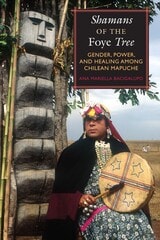
Shamans of the Foye Tree
Gender, Power, and Healing among Chilean MapucheBy Ana Mariella Bacigalupo
University of Texas Press, 2007
Drawing on anthropologist Ana Mariella Bacigalupo's fifteen years of field research, Shamans of the Foye Tree: Gender, Power, and Healing among Chilean Mapuche is the first study to follow shamans' gender identities and performance in a variety of ritual, social, sexual, and political contexts.
To Mapuche shamans, or machi, the foye tree is of special importance, not only for its medicinal qualities but also because of its hermaphroditic flowers, which reflect the gender-shifting components of machi healing practices. Framed by the cultural constructions of gender and identity, Bacigalupo's fascinating findings span the ways in which the Chilean state stigmatizes the machi as witches and sexual deviants; how shamans use paradoxical discourses about gender to legitimatize themselves as healers and, at the same time, as modern men and women; the tree's political use as a symbol of resistance to national ideologies; and other components of these rich traditions.
The first comprehensive study on Mapuche shamans' gendered practices, Shamans of the Foye Tree offers new perspectives on this crucial intersection of spiritual, social, and political power.

Shame
A Brief HistoryPeter Stearns
University of Illinois Press, 2017
Peter N. Stearns draws on his long career as a historian of emotions to provide the foundational text on shame’s history and how this history contributes to contemporary issues around the emotion. Summarizing current research, Stearns unpacks the major debates that surround this complex emotion. He also surveys the changing role of shame in the United States from the nineteenth century to today, including shame’s revival as a force in the 1960s and its place in today’s social media. Looking ahead, he maps the abundant opportunities for future historical research and historically informed interdisciplinary scholarship.
Written for interested readers and scholars alike, Shame combines significant new research with a wider synthesis.

Shanghai Nightscapes
A Nocturnal Biography of a Global CityJames Farrer and Andrew David Field
University of Chicago Press, 2015
The book begins by examining the history of the jazz-age dance scenes that arose in the ballrooms and nightclubs of Shanghai’s foreign settlements. During its heyday in the 1930s, Shanghai was known worldwide for its jazz cabarets that fused Chinese and Western cultures. The 1990s have seen the proliferation of a drinking, music, and sexual culture collectively constructed to create new contact zones between the local and tourist populations. Today’s Shanghai night scenes are simultaneously spaces of inequality and friction, where men and women from many different walks of life compete for status and attention, and spaces of sociability, in which intercultural communities are formed. Shanghai Nightscapes highlights the continuities in the city’s nightlife across a turbulent century, as well as the importance of the multicultural agents of nightlife in shaping cosmopolitan urban culture in China’s greatest global city.
To listen to an audio diary of a night out in Shanghai with Farrer and Field, click here: http://n.pr/1VsIKAw.
Shapeshifters
Black Girls and the Choreography of CitizenshipAimee Meredith Cox
Duke University Press, 2015
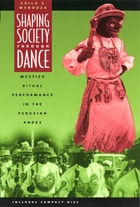
Shaping Society through Dance
Mestizo Ritual Performance in the Peruvian AndesZoila S. Mendoza
University of Chicago Press, 2000
In this fluid world, she argues, racial and ethnic identities are shaped more by notions of what is decent, elegant, and modern rather than by skin color or status. As the different troupes vie for the townspeople's recognition as the most "authentic" group, these notions are challenged and reworked. A fascinating look at a rich tradition, this innovative work is also a compelling example of the critical anthropology of performance.
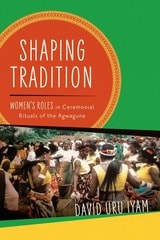
Shaping Tradition
Women's Roles in Ceremonial Rituals of the AgwaguneDavid Uru Iyam
University of Wisconsin Press, 2021
Using this community as a case study, David Uru Iyam asserts that these women are not stereotypically submissive, oppressed, or passive. Agwagune women participate in male ceremonies by pretending to be unaware of them, concealing their authority under a veneer of secrecy. Instead of focusing on obvious male political power, Iyam highlights the overlooked domestic and public contributions of women that uphold—and change—entire social systems.
Shaping Urban Futures in Mongolia
Ulaanbaatar, Dynamic Ownership and Economic FluxRebekah Plueckhahn
University College London, 2019
Rebekah Plueckhahn explores the inherent contradiction between solution and problem-making as experienced by residents of Ulaanbaatar during a tumultuous period in Mongolia’s economic history. She examines the ways residents attempt to own forms of real estate and, in turn, physically shape the city and its politics and urban economic forms from within. This book interlinks the intimate space of the home with ideologies of the national economy, urban development and disrepair and the types of politics and ethics that arise as a result.

Shattering
Food, Politics, and the Loss of Genetic DiversityCary Fowler and Pat Mooney
University of Arizona Press, 1990
Large-scale agriculture has come to favor uniformity in food crops. More than 7,000 U.S. apple varieties once grew in American orchards; 6,000 of them are no longer available. Every broccoli variety offered through seed catalogs in 1900 has now disappeared. As the international genetics supply industry absorbs seed companies—with nearly one thousand takeovers since 1970—this trend toward uniformity seems likely to continue; and as third world agriculture is brought in line with international business interests, the gene pools of humanity's most basic foods are threatened.
The consequences are more than culinary. Without the genetic diversity from which farmers traditionally breed for resistance to diseases, crops are more susceptible to the spread of pestilence. Tragedies like the Irish Potato Famine may be thought of today as ancient history; yet the U.S. corn blight of 1970 shows that technologically based agribusiness is a breeding ground for disaster.
Shattering reviews the development of genetic diversity over 10,000 years of human agriculture, then exposes its loss in our lifetime at the hands of political and economic forces. The possibility of crisis is real; this book shows that it may not be too late to avert it.

Shellfish for the Celestial Empire
The Rise and Fall of Commercial Abalone Fishing in CaliforniaTodd J. Braje
University of Utah Press, 2016
In the 1800s, when California was captivated by gold fever, a small group of Chinese immigrants recognized the fortune to be made from the untapped resources along the state’s coast, particularly from harvesting the black abalone of southern and Baja California. These immigrants, with skills from humble beginnings in a traditional Chinese fishing province, founded California’s commercial abalone industry, and led its growth and expansion for several decades. By the turn of the twentieth century, however, their successful livelihood was stolen from them through targeted legislation of the U.S. and California governments.
Today, the physical evidence of historical Chinese abalone fishing on the mainland has been erased by development. On California’s Channel Islands, however, remnants of temporary abalone collecting and processing camps lie scattered along the coastlines. These sites hold a treasure trove of information, stories, lifeways, and history. Braje has excavated many of these sites and uses them to explore the history of Chinese abalone fishing, presenting a microcosm of the broader history of Chinese immigrants in America—their struggles, their successes, the institutionalized racism they faced, and the unique ways in which they helped to shape the identity of the United States.
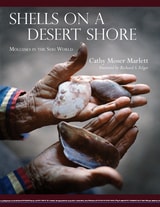
Shells on a Desert Shore
Mollusks in the Seri WorldCathy Moser Marlett; Foreword by Richard S. Felger
University of Arizona Press, 2014
Shells on a Desert Shore describes the Seri knowledge of mollusks and includes names, folklore, history, uses, and much more. Cathy Moser Marlett’s research of several decades, conducted in the Seri language, builds on work begun in 1951 by her parents, Edward and Becky Moser. The language, spoken by fewer than a thousand people today, is considered endangered. Marlett presents what she has learned from Seri consultants over recent decades and also draws from her own childhood experiences while living in a Seri village. The information from the people who had lived as hunter-gatherers provides a window into a lifestyle no longer recalled from personal experience by most Seris today—and perhaps a window into the lives of other peoples who made the Gulf’s shores their home.
The book offers a wealth of information about Seri history, as well as species accounts of more than 150 mollusks from the Seri area on the central Gulf coast. Chapters describe how the people ate mollusks or used them medicinally, how the mollusks were named, and how their shells were used. The author provides several hundred detailed drawings and photographs, many of them archival.
Shells on a Desert Shore is a fresh, original presentation of a significant part of the Seri way of life. Unique because it is written from the perspective of a participant in the Seri culture, the book will stand as a definitive, irreplaceable work in ethnography, a time capsule of the Seri people and their connection to the sea.

Shelter for the Night
On Afghanistan, Language, and DetoursFatima Mojaddedi
Duke University Press, 2026
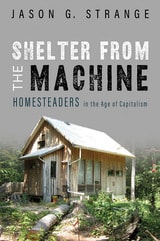
Shelter from the Machine
Homesteaders in the Age of CapitalismJason G. Strange
University of Illinois Press, 2020
Jason Strange shows where homesteaders fit, and don't fit, within contemporary America. Blending history with personal stories, Strange visits pig roasts and bohemian work parties to find people engaged in a lifestyle that offers challenge and fulfillment for those in search of virtues like self-employment, frugality, contact with nature, and escape from the mainstream. He also lays bare the vast differences in education and opportunity that leave some homesteaders dispossessed while charting the tensions that arise when people seek refuge from the ills of modern society—only to find themselves indelibly marked by the system they dreamed of escaping.
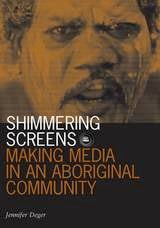
Shimmering Screens
Making Media in an Aboriginal CommunityJennifer Deger
University of Minnesota Press, 2006

Shock Therapy
Psychology, Precarity, and Well-Being in Postsocialist RussiaTomas Matza
Duke University Press, 2018
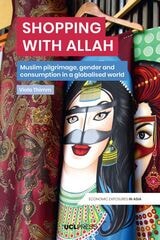
Shopping with Allah
Muslim Pilgrimage, Gender and Consumption in a Globalized WorldViola Thimm
University College London, 2023
Shopping with Allah illustrates the ways in which religion is mobilized in package tourism and how spiritual, economic, and gendered practices are combined in a form of tourism where the goal is not purely leisure but also ethical and spiritual cultivation. Drawing on extensive ethnographic fieldwork in Malaysia, the United Arab Emirates, and Oman, Thimm sheds light on how Islam and gender frame Malaysian religious tourism and pilgrimage to the Arabian Peninsula and raises many issues that are of great importance beyond these regional contexts.
This book also offers an innovative methodological-analytical toolkit to research mobility and intersectionality across sociogeographic scales. By bringing methodological holism into a fruitful engagement with the antiracist-feminist framework intersectionality, Thimm argues that hierarchical relationships, such as marginalization, power, and empowerment, can shift for an individual or a social group depending upon the social sphere.

Shrapnel Minima
Writings from Humanities UndergroundEdited by Prasanta Chakravarty
Seagull Books, 2014

Siberian Village
Land and Life in the Sakha RepublicBella Bychkova Jordan
University of Minnesota Press, 2001
A fascinating portrait of the history and landscape of this remote settlement.
The village of Djarkhan is in the heart of Russia’s Sakha Republic, on the Central Yakut Plain. The world around Djarkhan, with its extreme subarctic climate and intractable permafrost, seems an unlikely place to look for a rich, historic, and exotic efflorescence of human life, and yet this is precisely what the authors found. Their book is a remarkable account of how the people of Djarkhan have created their own distinctive place through their unique relationship with a severe and demanding land.
This book traces the way of life of the village’s Turkic inhabitants, the Yakuts, from their arrival in the 1600s through czarist times and the Soviet era to the present day. As a native of the village, geographer Bella Bychkova Jordan enjoyed unparalleled access to its people and their stories, myths, humor, problems, and folklore. Viewed through the prism of cultural geography, this material forms the basis of a remarkable portrait of a people wresting a living from the land in one of the coldest and most isolated spots on Earth. Published in collaboration with the Center for American Places.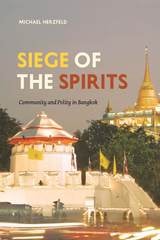
Siege of the Spirits
Community and Polity in BangkokMichael Herzfeld
University of Chicago Press, 2016
Herzfeld argues that even though the residents of Pom Mahakan have lost every legal battle the city government has dragged them into, they have won every public relations contest, highlighting their struggle as one against bureaucrats who do not respect the age-old values of Thai/Siamese social and cultural order. Such values include compassion for the poor and an understanding of urban space as deeply embedded in social and ritual relations. In a gripping account of their standoff, Herzfeld—who simultaneously argues for the importance of activism in scholarship—traces the agile political tactics and styles of the community’s leadership, using their struggle to illuminate the larger difficulties, tensions, and unresolved debates that continue to roil Thai society to this day.
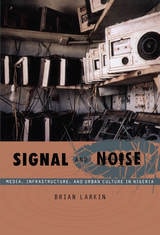
Signal and Noise
Media, Infrastructure, and Urban Culture in NigeriaBrian Larkin
Duke University Press, 2008
Media technologies were introduced to Nigeria by colonial regimes as part of an attempt to shape political subjects and create modern, urban Africans. Larkin considers the introduction of media along with electric plants and railroads as part of the wider infrastructural project of colonial and postcolonial urbanism. Focusing on radio networks, mobile cinema units, and the building of cinema theaters, he argues that what media come to be in Kano is the outcome of technology’s encounter with the social formations of northern Nigeria and with norms shaped by colonialism, postcolonial nationalism, and Islam. Larkin examines how media technologies produce the modes of leisure and cultural forms of urban Africa by analyzing the circulation of Hindi films to Muslim Nigeria, the leisure practices of Hausa cinemagoers in Kano, and the dynamic emergence of Nigerian video films. His analysis highlights the diverse, unexpected media forms and practices that thrive in urban Africa. Signal and Noise brings anthropology and media together in an original analysis of media’s place in urban life.
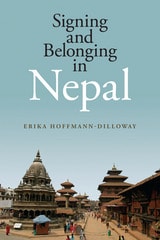
Signing and Belonging in Nepal
Erika Hoffmann-Dilloway
Gallaudet University Press, 2016
In this book, Erika Hoffmann-Dilloway presents an accessible examination of deafness in Nepal. As a linguistic anthropologist, she describes the emergence of Nepali Sign Language and deaf sociality in the social and historical context of Nepal during the last decades before the Hindu Kingdom became a secular republic. She then shows how the adoption of an ethno-linguistic model interacted with the ritual pollution model, or the prior notion that deafness results from bad karma. Her focus is on the impact of these competing and co-existing understandings of deafness on three groups: signers who adopted deafness as an ethnic identity, homesigners whose ability to adopt that identity is hindered by their difficulties in acquiring Nepali Sign Language, and hearing Nepalis who interact with Deaf signers. Comparing these contexts demonstrates that both the ethno-linguistic model and the ritual pollution model, its seeming foil, draw on the same basic premise: that both persons and larger social formations are mutually constituted through interaction. Signing and Belonging in Nepal is an ethnography that studies a rich and unique Deaf culture while also contributing to larger discussions about social reproduction and social change.
Signs of Deference, Signs of Demeanour
Interlocutor Reference and Self-Other Relations across Southeast Asian Speech CommunitiesEdited by Dwi Noverini Djenar and Jack Sidnell
National University of Singapore Press, 2022
A study of interlocutor reference that significantly deepens our understanding of the ways in which self-other relations are linguistically mediated in social interaction, based on the analysis of Southeast Asian languages.
Terms used by speakers to refer to themselves and their interlocutors form one of the ways that language expresses, defines, and creates a field for working out social relations. Because this field of study in sociolinguistics historically has focused on Indo-European languages, it has tended to dwell on references to the addressee—for example, the choice between tu and vous when addressing someone in French. This book uses the study of Southeast Asian languages to theorize interlocutor reference more broadly, significantly deepening our understanding of the ways in which self-other relations are linguistically mediated in social interaction. As the authors explain, Southeast Asian systems exceed in complexity and nuance the well-described cases of Europe in two basic ways. First, in many languages of Southeast Asia, a speaker must select an appropriate reference form not only for other/addressee but also for self/speaker. Second, in these languages, in addition to pronouns, speakers draw upon a range of common and proper nouns including names, kin terms, and titles, in referring to themselves and the addressee. Acts of interlocutor reference, therefore, inevitably do more than simply identify the speaker and addressee; they also convey information about the proposed relation between interlocutors. Bringing together studies from both small-scale and large, urbanized communities across Mainland and Insular Southeast Asia, this is an important contribution to the regional linguistic and anthropological literature.

Signs of the Americas
A Poetics of Pictography, Hieroglyphs, and KhipuEdgar Garcia
University of Chicago Press, 2020
Garcia tells the story of the present life of these sign-systems, examining the contemporary impact they have had on poetry, prose, visual art, legal philosophy, political activism, and environmental thinking. In doing so, he brings together a wide range of indigenous and non-indigenous authors and artists of the Americas, from Aztec priests and Amazonian shamans to Simon Ortiz, Gerald Vizenor, Jaime de Angulo, Charles Olson, Cy Twombly, Gloria Anzaldúa, William Burroughs, Louise Erdrich, Cecilia Vicuña, and many others. From these sources, Garcia depicts the culture of a modern, interconnected hemisphere, revealing that while these “signs of the Americas” have suffered expropriation, misuse, and mistranslation, they have also created their own systems of knowing and being. These indigenous systems help us to rethink categories of race, gender, nationalism, and history. Producing a new way of thinking about our interconnected hemisphere, this ambitious, energizing book redefines what constitutes a “world” in world literature.
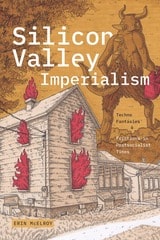
Silicon Valley Imperialism
Techno Fantasies and Frictions in Postsocialist TimesErin McElroy
Duke University Press, 2024

Silver “Thieves," Tin Barons, and Conquistadors
Small-Scale Mineral Production in Southern BoliviaMary Van Buren
University of Arizona Press, 2024
The methods of historian Bertell Ollman, particularly a dialectical approach and “doing history backwards,” are used to examine small-scale mineral production in Porco, Bolivia. The research is based on nine seasons of archaeological fieldwork and historical research, with a particular focus on labor and technology. Van Buren argues that artisanal mineral production must be understood in relation to large-scale mining rather than as a traditional practice and that the Bolivian case is a culturally specific instantiation of a broader economic phenomenon that began under colonial regimes.
Since Time Immemorial
Native Custom and Law in Colonial MexicoYanna Yannakakis
Duke University Press, 2023

Sing and Sing On
Sentinel Musicians and the Making of the Ethiopian American DiasporaKay Kaufman Shelemay
University of Chicago Press, 2022
Sing and Sing On is the first study of the forced migration of musicians out of the Horn of Africa dating from the 1974 Ethiopian revolution, a political event that overthrew one of the world’s oldest monarchies and installed a brutal military regime. Musicians were among the first to depart the region, their lives shattered by revolutionary violence, curfews, and civil war. Reconstructing the memories of forced migration, Sing and Sing On traces the challenges musicians faced amidst revolutionary violence and the critical role they played in building communities abroad.
Drawing on the recollections of dozens of musicians, Sing and Sing On details personal, cultural, and economic hardships experienced by musicians who have resettled in new locales abroad. Kay Kaufman Shelemay highlights their many artistic and social initiatives and the ways they have offered inspiration and leadership within and beyond a rapidly growing Ethiopian American diaspora. While musicians held this role as sentinels in Ethiopian culture long before the revolution began, it has taken on new meanings and contours in the Ethiopian diaspora. The book details the ongoing creativity of these musicians while exploring the attraction of return to their Ethiopian homeland over the course of decades abroad. Ultimately, Shelemay shows that musicians are uniquely positioned to serve this sentinel role as both guardians and challengers of cultural heritage.

Sing the Rage
Listening to Anger after Mass ViolenceSonali Chakravarti
University of Chicago Press, 2014
Chakravarti takes up the issue from Adam Smith and Hannah Arendt, who famously understood both the dangers of anger in politics and the costs of its exclusion. Building on their perspectives, she argues that the expression and reception of anger reveal truths otherwise unavailable to us about the emerging political order, the obstacles to full civic participation, and indeed the limits—the frontiers—of political life altogether. Most important, anger and the development of skills needed to truly listen to it foster trust among citizens and recognition of shared dignity and worth. An urgent work of political philosophy in an era of continued revolution, Sing the Rage offers a clear understanding of one of our most volatile—and important—political responses.
Singing for the Dead
The Politics of Indigenous Revival in MexicoPaja Faudree
Duke University Press, 2013

Singing with Invisible Worlds
Fermenting Sake on Microbial TimeMaya Hey
University of Minnesota Press, 2026
Rethinking life with microbes through the art of natural fermentation
Within us and around us, microbes are everywhere, constantly reshaping what it means to be human as we interact with them—sometimes knowingly, sometimes not. Singing with Invisible Worlds theorizes human–microbe relationships through a rare ethnographic account of the fermentation process at the 350-year-old Terada Honke, one of only two natural sake breweries in Japan.
Painting a vivid picture of how sake brewers collaborate with bacteria, molds, and yeasts, Maya Hey reveals that ambient microbes are not controlled but courted, cultivated, and deliberately choreographed. As the brewers adapt to shifting microbial dynamics, they engage in what Hey calls an “improvisational ethic”—a way of responding to the unknown with care and attentiveness through each phase of blooming and waning across weeks, months, and even centuries. In documenting these remarkable practices, Singing with Invisible Worlds offers an intimate, situated understanding of how we can come to know and live with microbial life, with implications for feminist theory, science and technology studies, and multispecies ethnography.
Unsettling simplistic notions of “good” or “bad” microbes, this book presents a compelling vision for planetary coexistence—one that starts not with grand solutions but with small, rhythmic acts of microscopic attunement.
Retail e-book files for this title are screen-reader friendly with images accompanied by short alt text and/or extended descriptions.
Sinoglossia
Edited by Andrea Bachner, Howard Chiang, and Yu-Lin Lee
Hong Kong University Press, 2023
Sinoglossia places embodiment, mediality, and translation at the center of this analytical inquiry into Chinese and Sinophone cultures. This book introduces a theory defined by cultural formations not overdetermined by Sinitic linguistic ties. The concept of sinoglossia combines a heteroglossic and heterotopian approach to the critical study of mediated discourses of China and “Chineseness.” From the history of physical examinations and queer subalternity to the cinematic inscription of “Chineseness-as-landscape,” and from Sinopop to the translational writings of Eileen Chang and Syaman Rapongan, this book argues for a flexible conceptualization of cultural objects, conditions, and contexts that draws attention to an array of polyphonic, multi-discursive, and multilingual articulations. In this new horizon of understanding, place or theme create a source of friction and innovation.

Sites of Desire/Economies of Pleasure
Sexualities in Asia and the PacificEdited by Lenore Manderson and Margaret Jolly
University of Chicago Press, 1997
A unique and important contribution to the study of sexuality, this book also suggests that the history of sexuality in the West was shaped by myths of the legendary Orient and the exotic "Other."

Sketches of Alabama
Mary Duffee, edited by Jane Porter Nabers and Virginia Pounds Brown
University of Alabama Press, 1970
Rediscover the spirit, stories, and landscapes of Alabama through a timeless collection of observations and historical reflections.
In Sketches of Alabama, Mary Duffee offers a richly detailed portrait of a state shaped by diverse communities, enduring traditions, and a deeply rooted cultural identity. Through a series of engaging sketches, Duffee captures the essence of Alabama’s towns, people, and everyday life, preserving moments that might otherwise be lost to time.
Blending historical insight with narrative charm, this collection explores the character of Alabama from multiple perspectives—rural and urban, past and present. Readers encounter vivid depictions of local customs, notable figures, and the evolving social fabric of the region. Duffee’s work not only chronicles the state’s development but also reflects the broader story of the American South, illuminating its complexities, resilience, and sense of place.
This collection contains typescripts of some of Mary Gordon Duffee's Iron Age columns "Sketches of Alabama," manuscripts of seven of Duffee's poems, a typed biographical sketch of Duffee, undated, and Duffee's obituary from the Birmingham Age-Herald. Ideal for students, historians, and general readers alike, Sketches of Alabama serves as both a literary work and a cultural record. Its accessible style makes it an excellent introduction to Alabama’s heritage, while its thoughtful observations reward those seeking deeper understanding of Southern history and identity.
Whether you are drawn to regional storytelling, historical narrative, or the rich traditions of the Deep South, this work offers a compelling journey into Alabama’s past—one sketch at a time.

Skin for Skin
Death and Life for Inuit and InnuGerald M. Sider
Duke University Press, 2014

Slavery and Utopia
The Wars and Dreams of an Amazonian World TransformerBy Fernando Santos-Granero,
University of Texas Press, 2018
In the first half of the twentieth century, a charismatic Peruvian Amazonian indigenous chief, José Carlos Amaringo Chico, played a key role in leading his people, the Ashaninka, through the chaos generated by the collapse of the rubber economy in 1910 and the subsequent pressures of colonists, missionaries, and government officials to assimilate them into the national society. Slavery and Utopia reconstructs the life and political trajectory of this leader whom the people called Tasorentsi, the name the Ashaninka give to the world-transforming gods and divine emissaries that come to this earth to aid the Ashaninka in times of crisis.
Fernando Santos-Granero follows Tasorentsi’s transformations as he evolved from being a debt-peon and quasi-slave to being a slave raider; inspirer of an Ashaninka movement against white-mestizo rubber extractors and slave traffickers; paramount chief of a multiethnic, anti-colonial, and anti-slavery uprising; and enthusiastic preacher of an indigenized version of Seventh-Day Adventist doctrine, whose world-transforming message and personal influence extended well beyond Peru’s frontiers. Drawing on an immense body of original materials ranging from archival documents and oral histories to musical recordings and visual works, Santos-Granero presents an in-depth analysis of chief Tasorentsi’s political discourse and actions. He demonstrates that, despite Tasorentsi’s constant self-reinventions, the chief never forsook his millenarian beliefs, anti-slavery discourse, or efforts to liberate his people from white-mestizo oppression. Slavery and Utopia thus convincingly refutes those who claim that the Ashaninka proclivity to messianism is an anthropological invention.

Slayers and Their Vampires
A Cultural History of Killing the DeadBruce A. McClelland
University of Michigan Press, 2010
“A fascinating comparison of the original vampire myths to their later literary transformations.”
—Adam Morton, author of On Evil
“From the Balkan Mountains to Beverly Hills, Bruce has mapped the vampire’s migration. There’s no better guide for the trek.”
—Jan L. Perkowski, Professor, Slavic Department, University of Virginia, and author of Vampires of the Slavs and The Darkling: A Treatise on Slavic Vampirism
“The vampire slayer is our protector, our hero, our Buffy. But how much do we really know about him—or her? Very little, it turns out, and Bruce McClelland shows us why: because the vampire slayer is an unsettling figure, almost as disturbing as the evil she is set to destroy. Prepare to be frightened . . . and enlightened.”
—Corey Robin, author of Fear: The History of a Political Idea
“What is unique about this book is that it is the first of its kind to focus on the vampire hunter, rather than the vampire. As such, it makes a significant contribution to the field. This book will appeal to scholars and researchers of folklore, as well as anyone interested in the literature and popular culture of the vampire.”
—Elizabeth Miller, author of Dracula and A Dracula Handbook
“Shades of Van Helsing! Vampirologist extraordinaire Bruce McClelland has managed that rarest of feats: developing a radically new and thoroughly enlightening perspective on a topic of eternal fascination. Ranging from the icons of popular culture to previously overlooked details of Balkan and Slavic history and folk practice, he has rethought the borders of life and death, good and evil, saint and sinner, vampires and their slayers. Excellent scholarship, and a story that never flags.”
—Bruce Lincoln, Caroline E. Haskell Professor of History of Religions, University of Chicago, and author of Theorizing Myth: Narrative, Ideology, and Scholarship,Authority: Construction and Corrosion, and Death, War, and Sacrifice: Studies in Ideology and Practice

Smell and History
A ReaderMark M. Smith
West Virginia University Press, 2019
Smell and History collects many of the most important recent essays on the history of scent, aromas, perfumes, and ways of smelling. With an introduction by Mark M. Smith—one of the leading social and cultural historians at work today and the preeminent champion in the United States of the emerging field of sensory history—the volume introduces to undergraduate and graduate students as well as to historians of all fields the richness, relevance, and insightfulness of the olfactory to historical study.
Ranging from antiquity to the present, these ten essays, most of them published since 2003, consider how olfaction and scent have shaped the history of medicine, gender, race-making, class formation, religion, urbanization, colonialism, capitalism, and industrialization; how habits and practices of smelling informed ideas about the Enlightenment, modernity, and memory; how smell shaped perceptions of progress and civilization; and how people throughout history have used smell as a way to organize categories and inform worldviews.

Smothered and Covered
Waffle House and the Southern ImaginaryTy Matejowsky
University of Alabama Press, 2023
A critical meditation of the iconic 24-7 roadside chain and its place in the southern imaginary
Waffle House has long been touted as an icon of the American South. The restaurant’s consistent foregrounding as a resonant symbol of regional character proves relevant for understanding much about the people, events, and foodways shaping the sociopolitical contours of today’s Bible Belt. Whether approached as a comedic punchline on the Internet, television, and other popular media or elevated as a genuine touchstone of messy American modernity, Waffle House, its employees, and everyday clientele do much to transcend such one-dimensional characterizations, earning distinction in ways that regularly go unsung.
Smothered and Covered: Waffle House and the Southern Imaginary is the first book to socioculturally assess the chain within the field of contemporary food studies. In this groundbreaking work, Ty Matejowsky argues that Waffle House’s often beleaguered public persona is informed by various complexities and contradictions. Critically unpacking the iconic eatery from a less reductive perspective offers readers a more realistic and nuanced portrait of Waffle House, shedding light on how it both reflects and influences a prevailing southern imaginary—an amorphous and sometimes conflicting collection of images, ideas, attitudes, practices, linguistic accents, histories, and fantasies that frames understandings about a vibrant if also paradoxical geographic region.
Matejowsky discusses Waffle House’s roots in established southern foodways and traces the chain’s development from a lunch-counter restaurant that emerged across the South. He also considers Waffle House’s place in American and southern popular culture, highlighting its myriad depictions in music, television, film, fiction, stand-up comedy, and sports. Altogether, Matejowsky deftly and persuasively demonstrates how Waffle House serves as a microcosm of today’s South with all the accolades and criticisms this distinction entails.

Snapshot Versions of Life
Richard Chalfen
University of Wisconsin Press, 1987
Chalfen’s “Polaroid People” are recognizable—if ironically viewed—relatives, uncles, aunts, and All-American kids. As members of “Kodak Culture” they watch home movies, take pictures of newborn babies, and even, in their darker moments, scratch out the faces of disliked relatives in group photographs. He examines who shoots these photos and why, as well as how they think (or don’t) of planning, editing, and exhibiting their shots. Chalfen’s analysis reveals the culturally structured behavior underlying seemingly spontaneous photographic activities.