Results by title
4917 books match the query 'Philosophy' and 320 start with s

Science, Community, and the Transformation of American Philosophy, 1860-1930
Daniel J. Wilson
University of Chicago Press, 1990
The author situates the emergence of professional philosophy in the context of the professionalization of American higher education and articulates, in the case of philosophy, the structures and values of a professional discipline. One of the most important consequences of this transformation was a new emphasis on communal theories of truth. Peirce, Dewey, and Royce all developed sophisticated and important theories of community as they were engaged in reshaping and redefining the limits of philosophy. This book will be of great importance for those interested in the history of philosophy, the rise of professions, and American intellectual and educational history, and to all those seeking to understand the contemporary revival of pragmatic thought and theories of community.
Science, Faith and Society
Michael Polanyi
University of Chicago Press, 1964
Polanyi aims to show that science must be understood as a community of inquirers held together by a common faith; science, he argues, is not the use of "scientific method" but rather consists in a discipline imposed by scientists on themselves in the interests of discovering an objective, impersonal truth. That such truth exists and can be found is part of the scientists' faith. Polanyi maintains that both authoritarianism and scepticism, attacking this faith, are attacking science itself.
Science, Society, and the Search for Life in the Universe
Bruce Jakosky
University of Arizona Press, 2006
Astrobiology is the relatively new, but fast growing scientific discipline that involves trying to understand the origin, evolution, and distribution of life within the universe. It is also one of the few scientific disciplines that attracts the public’s intense curiosity and attention. This interest stems largely from the deep personal meaning that the possible existence of extraterrestrial life has for so many. Whether this meaning relates to addressing the “Big Questions” of our existence, the possibility of encountering life on other planets, or the potential impact on our understanding of religion, there is no doubt that the public is firmly vested in finding answers.
In this broadly accessible introduction to the field, Bruce Jakosky looks at the search for life in the universe not only from a scientific perspective, but also from a distinctly social one. In lucid and engaging prose, he addresses topics including the contradiction between the public’s fascination and the meager dialogue that exists between those within the scientific community and those outside of it, and what has become some of the most impassioned political wrangling ever seen in government science funding.
Sciences from Below
Feminisms, Postcolonialities, and ModernitiesSandra Harding
Duke University Press, 2008
Describing the work of the post-Kuhnian science studies scholars Bruno Latour, Ulrich Beck, and the team of Michael Gibbons, Helga Nowtony, and Peter Scott, Harding reveals how, from different perspectives, they provide useful resources for rethinking the modernity versus tradition binary and its effects on the production of scientific knowledge. Yet, for the most part, they do not take feminist or postcolonial critiques into account. As Harding demonstrates, feminist science studies and postcolonial science studies have vital contributions to make; they bring to light not only the male supremacist investments in the Western conception of modernity and the historical and epistemological bases of Western science but also the empirical knowledge traditions of the global South. Sciences from Below is a clear and compelling argument that modernity studies and post-Kuhnian, feminist, and postcolonial sciences studies each have something important, and necessary, to offer to those formulating socially progressive scientific research and policy.
Scientific Knowledge
A Sociological AnalysisBarry Barnes, David Bloor, and John Henry
University of Chicago Press, 1996
The authors, all noted for their contributions to science studies, have organized this book so that each chapter examines a key step in the process of doing science. Using case studies from cognitive science, physics, and biology to illustrate their descriptions and applications of the social study of science, they show how this approach provides a crucial perspective on how science is actually done.
Scientific Knowledge will be of interest not only to those engaged in science studies, but also to anyone interested in the practice of science.
Scientific Perspectivism
Ronald N. Giere
University of Chicago Press, 2006
Many people assume that the claims of scientists are objective truths. But historians, sociologists, and philosophers of science have long argued that scientific claims reflect the particular historical, cultural, and social context in which those claims were made. The nature of scientific knowledge is not absolute because it is influenced by the practice and perspective of human agents. Scientific Perspectivism argues that the acts of observing and theorizing are both perspectival, and this nature makes scientific knowledge contingent, as Thomas Kuhn theorized forty years ago.
Using the example of color vision in humans to illustrate how his theory of “perspectivism” works, Ronald N. Giere argues that colors do not actually exist in objects; rather, color is the result of an interaction between aspects of the world and the human visual system. Giere extends this argument into a general interpretation of human perception and, more controversially, to scientific observation, conjecturing that the output of scientific instruments is perspectival. Furthermore, complex scientific principles—such as Maxwell’s equations describing the behavior of both the electric and magnetic fields—make no claims about the world, but models based on those principles can be used to make claims about specific aspects of the world.
Offering a solution to the most contentious debate in the philosophy of science over the past thirty years, Scientific Perspectivism will be of interest to anyone involved in the study of science.
Scientific Pluralism
Stephen H. Kellert
University of Minnesota Press, 2006
Scientific Practice
Theories and Stories of Doing PhysicsEdited by Jed Z. Buchwald
University of Chicago Press, 1995
This book examines small-scale experiment in physics, in particular the relation between theory and practice. The contributors focus on interactions among the people, materials, and ideas involved in experiments—factors that have been relatively neglected in science studies.
The first half of the book is primarily philosophical, with contributions from Andrew Pickering, Peter Galison, Hans Radder, Brian Baigrie, and Yves Gingras. Among the issues they address are the resources deployed by theoreticians and experimenters, the boundaries that constrain theory and practice, the limits of objectivity, the reproducibility of results, and the intentions of researchers. The second half is devoted to historical case studies in the practice of physics from the early nineteenth to the early twentieth century. These chapters address failed as well as successful experimental work ranging from Victorian astronomy through Hertz's investigation of cathode rays to Trouton's attempt to harness the ether. Contributors to this section are Jed Z. Buchwald, Giora Hon, Margaret Morrison, Simon Schaffer, and Andrew Warwick.
With a lucid introduction by Ian Hacking, and original articles by noted scholars in the history and philosophy of science, this book is poised to become a significant source on the nature of small-scale experiment in physics.

Scientific Theories
C. Wade Savage
University of Minnesota Press, 1990

Scotland and America in the Age of Paine
Ronald Lyndsey Crawford
Aberdeen University Press, 2022
Scrutinizing Feminist Epistemology
An Examination of Gender in SciencePinnick, Cassandra
Rutgers University Press, 2003
This volume presents the first systematic evaluation of a feminist epistemology of sciences’ power to transform both the practice of science and our society. Unlike existing critiques, this book questions the fundamental feminist suggestion that purging science of alleged male biases will advance the cause of both science and by extension, social justice.
The book is divided into four sections: the strange status of feminist epistemology, testing feminist claims about scientific practice, philosophical and political critiques of feminist epistemology, and future prospects of feminist epistemology. Each of the essays¾most of which are original to this text¾ directly confronts the very idea that there could be a feminist epistemology or philosophy of science. Rather than attempting to deal in detail with all of the philosophical views that fall under the general rubric of feminist epistemology, the contributors focus on positions that provide the most influential perspectives on science. Not all of the authors agree amongst themselves, of course, but each submits feminist theories to careful scrutiny. Scrutinizing Feminist Epistemology provides a timely, well-rounded, and much needed examination of the role of gender in scientific research.
Sculpting the Self
Islam, Selfhood, and Human FlourishingMuhammad U. Faruque
University of Michigan Press, 2021
Sculpting the Self addresses “what it means to be human” in a secular, post-Enlightenment world by exploring notions of self and subjectivity in Islamic and non-Islamic philosophical and mystical thought. Alongside detailed analyses of three major Islamic thinkers (Mullā Ṣadrā, Shāh Walī Allāh, and Muhammad Iqbal), this study also situates their writings on selfhood within the wider constellation of related discussions in late modern and contemporary thought, engaging the seminal theoretical insights on the self by William James, Jean-Paul Sartre, and Michel Foucault. This allows the book to develop its inquiry within a spectrum theory of selfhood, incorporating bio-physiological, socio-cultural, and ethico-spiritual modes of discourse and meaning-construction. Weaving together insights from several disciplines such as religious studies, philosophy, anthropology, critical theory, and neuroscience, and arguing against views that narrowly restrict the self to a set of cognitive functions and abilities, this study proposes a multidimensional account of the self that offers new options for addressing central issues in the contemporary world, including spirituality, human flourishing, and meaning in life.
This is the first book-length treatment of selfhood in Islamic thought that draws on a wealth of primary source texts in Arabic, Persian, Urdu, Greek, and others. Muhammad U. Faruque’s interdisciplinary approach makes a significant contribution in the growing field of cross-cultural dialogue, as it opens up the way for engaging premodern and modern Islamic sources from a contemporary perspective by going beyond the exegesis of historical materials. He initiates a critical conversation between new insights into human nature as developed in neuroscience and modern philosophical literature and millennia-old Islamic perspectives on the self, consciousness, and human flourishing as developed in Islamic philosophical, mystical, and literary traditions.
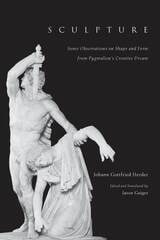
Sculpture
Some Observations on Shape and Form from Pygmalion's Creative DreamJohann Gottfried Herder
University of Chicago Press, 2002
Long recognized as one of the most important eighteenth-century works on aesthetics and the visual arts, Johann Gottfried Herder's Plastik (Sculpture, 1778) has never before appeared in a complete English translation. In this landmark essay, Herder combines rationalist and empiricist thought with a wide range of sources—from the classics to Norse legend, Shakespeare to the Bible—to illuminate the ways we experience sculpture.
Standing on the fault line between classicism and romanticism, Herder draws most of his examples from classical sculpture, while nevertheless insisting on the historicity of art and of the senses themselves. Through a detailed analysis of the differences between painting and sculpture, he develops a powerful critique of the dominance of vision both in the appreciation of art and in our everyday apprehension of the world around us. One of the key articulations of the aesthetics of Sturm und Drang, Sculpture is also important as an anticipation of subsequent developments in art theory.
Jason Gaiger's translation of Sculpture includes an extensive introduction to Herder's thought, explanatory notes, and illustrations of all the sculptures discussed in the text.
Se constituer soi-même comme sujet anarchique
Reiner Schürmann
Diaphanes, 2020
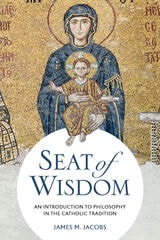
Seat of Wisdom
An Introduction to Philosophy in the Catholic TraditionJames M. Jacobs
Catholic University of America Press, 2021
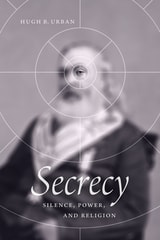
Secrecy
Silence, Power, and ReligionHugh B. Urban
University of Chicago Press, 2021
With Secrecy, Urban investigates several revealing instances of the power of secrecy in religion, including nineteenth-century Scottish Rite Freemasonry, the sexual magic of a Russian-born Parisian mystic; the white supremacist BrüderSchweigen or “Silent Brotherhood” movement of the 1980s, the Five Percenters, and the Church of Scientology. An electrifying read, Secrecy is the culmination of decades of Urban’s reflections on a vexed, ever-present subject.
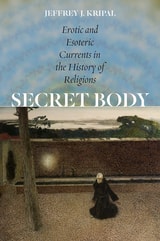
Secret Body
Erotic and Esoteric Currents in the History of ReligionsJeffrey J. Kripal
University of Chicago Press, 2017
Kripal tells his story, biographically, historically and politically contextualizing each of the six books of his Chicago corpus, from Kali’s Child to Mutants and Mystics, all the while answering his censors and critics and exploring new implications of his thought. In the process, he begins to sketch out a speculative “new comparativism” in twenty theses. The result is a new vision for the study of religion, one that takes in the best of the past, engages with outside critiques from the sciences and the humanities, and begins to blaze a new positive path forward. A major work decades in the making, Secret Body will become a landmark in the study of religion.
Secrets of Responsibility
Jacques Derrida
University of Chicago Press, 2027
Jacques Derrida on the problem of secrecy, the first in a ten-seminar series on questions of responsibility.
Delivered at the École des hautes études en sciences sociales in Paris during the 1991–92 academic year, Secrets of Responsibility is the first of ten seminars given by Jacques Derrida under the umbrella “Questions of Responsibility,” a cycle that includes Hospitality, Perjury and Pardon, Death Penalty, and The Beast and the Sovereign—each also published by the University of Chicago Press.
In this seminar, Derrida asks a basic question—what is a secret?—which he then explores across scientific, technical, social, political, and religious domains. Over twelve sessions, we are treated to analyses of industrial, state, military, professional, and religious secrets as well as secret societies and secret police. Derrida also tackles secrecy in literary fiction (especially in Melville, James, Poe, and Baudelaire) and philosophical texts (including Freud, Kant, Heidegger, Kierkegaard, Patočka, Nietzsche, Levinas, and others). The result is a set of profound and surprising insights delivered as only Derrida can.
Secular Days, Sacred Moments
The America Columns of Robert ColesRobert Coles
Michigan State University Press, 2013
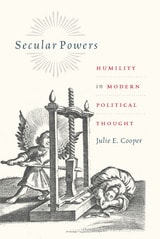
Secular Powers
Humility in Modern Political ThoughtJulie E. Cooper
University of Chicago Press, 2013
Contemporary understandings of secularism, Cooper contends, have been shaped by a limited understanding of it as a shift from vulnerability to power. But the works of the foundational thinkers of secularism tell a different story. Analyzing the writings of Hobbes, Spinoza, and Rousseau at the moment of secularity’s inception, she shows that all three understood that acknowledging one’s limitations was a condition of successful self-rule. And while all three invited humans to collectively build and sustain a political world, their invitations did not amount to self-deification. Cooper establishes that secular politics as originally conceived does not require a choice between power and vulnerability. Rather, it challenges us—today as then—to reconcile them both as essential components of our humanity.
Secularization and Cultural Criticism
Religion, Nation, and ModernityVincent P. Pecora
University of Chicago Press, 2006
Religion is an undiscovered country for much of the secular academy, which remains deeply ambivalent about it as an object of study. On the one hand, secular scholars agree that it is time to take religion seriously. On the other, these same scholars persist in assuming that religion rests not on belief but on power and ideology. According to Vincent Pecora, the idea of the secular itself is the source of much of the contradiction and confusion in contemporary thought about religion. Pecora aims here to work through the paradoxes of secularization, which emerges in this book as an intractable problem for cultural criticism in the nation-states of the post-Enlightenment West.
Secularization and Cultural Criticism examines the responses of a wide range of thinkers—Edward Said, Talal Asad, Jürgen Habermas, Walter Benjamin, Emile Durkheim, Carl Schmitt, Matthew Arnold, and Virginia Woolf, among others—to illustrate exactly why the problem of secularization in the study of society and culture should matter once again. Exploring the endemic difficulty posed by religion for the modern academy, Pecora makes sense of the value and potential impasses of secular cultural criticism in a global age.
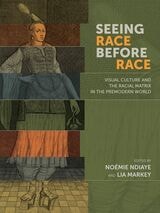
Seeing Race Before Race
Visual Culture and the Racial Matrix in the Premodern WorldEdited by Noémie Ndiaye and Lia Markey
Arizona Center for Medieval and Renaissance Studies, 2023
The capacious visual archive studied in this volume includes a trove of materials such as annotated or illuminated manuscripts, Renaissance costume books and travel books, maps and cartographic volumes produced by Europeans as well as Indigenous peoples, mass-printed pamphlets, jewelry, decorative arts, religious iconography, paintings from around the world, ceremonial objects, festival books, and play texts intended for live performance.
Contributors explore the deployment of what coeditor Noémie Ndiaye calls “the racial matrix” and its interconnected paradigms across the medieval and early modern chronological divide and across vast transnational and multilingual geographies. This volume uses items from the Fall 2023 exhibition “Seeing Race Before Race”—a collaboration between RaceB4Race and the Newberry Library—as a starting point for an ambitious theoretical conversation between premodern race studies, art history, performance studies, book history, and critical race theory.
Seeing Silence
Mark C. Taylor
University of Chicago Press, 2020
“To hear silence is to find stillness in the midst of the restlessness that makes creative life possible and the inescapability of death acceptable.” So writes Mark C. Taylor in his latest book, a philosophy of silence for our nervous, chattering age. How do we find silence—and more importantly, how do we understand it—amid the incessant buzz of the networks that enmesh us? Have we forgotten how to listen to each other, to recognize the virtues of modesty and reticence, and to appreciate the resonance of silence? Are we less prepared than ever for the ultimate silence that awaits us all?
Taylor wants us to pause long enough to hear what is not said and to attend to what remains unsayable. In his account, our way to hearing silence is, paradoxically, to see it. He explores the many variations of silence by considering the work of leading modern and postmodern visual artists, including Barnett Newman, Ad Reinhardt, James Turrell, and Anish Kapoor. Developing the insights of philosophers, theologians, writers, and composers, Taylor weaves a rich narrative modeled on the Stations of the Cross. His chapter titles suggest our positions toward silence: Without. Before. From. Beyond. Against. Within. Between. Toward. Around. With. In. Recasting Hegel’s phenomenology of spirit and Kierkegaard’s stages on life’s way, Taylor translates the traditional Via Dolorosa into a Nietzschean Via Jubilosa that affirms light in the midst of darkness.
Seeing Silence is a thoughtful meditation that invites readers to linger long enough to see silence, and, in this way, perhaps to hear once again the wordless Word that once was named “God.”
Seeming and Being in Plato’s Rhetorical Theory
Robin Reames
University of Chicago Press, 2018
Robin Reames’s Seeming & Being in Plato’s Rhetorical Theory marks a shift in Plato scholarship. Reames argues that an appropriate understanding of rhetorical theory in Plato’s dialogues illuminates how he developed the technical vocabulary needed to construct the very distinctions between seeming and being that separate true from false speech. By engaging with three key movements of twentieth- and twenty-first-century Plato scholarship—the rise and subsequent marginalization of “orality and literacy theory,” Heidegger’s controversial critique of Platonist metaphysics, and the influence of literary or dramatic readings of the dialogues—Reames demonstrates how the development of Plato’s rhetorical theory across several of his dialogues (Gorgias, Phaedrus, Protagoras, Theaetetus, Cratylus, Republic, and Sophist) has been both neglected and misunderstood.
Selected Philosophical Essays
Max Scheler
Northwestern University Press, 1973
Selected Philosophical Poems of Tommaso Campanella
A Bilingual EditionTommaso Campanella
University of Chicago Press, 2011
A contemporary of Giordano Bruno and Galileo, Tommaso Campanella (1568–1639) was a controversial philosopher, theologian, astrologer, and poet who was persecuted during the Inquisition and spent much of his adult life imprisoned because of his heterodox views. He is best known today for two works: The City of the Sun, a dialogue inspired by Plato’s Republic, in which he prophesies a vision of a unified, peaceful world governed by a theocratic monarchy; and his well-meaning Defense of Galileo, which may have done Galileo more harm than good because of Campanella’s previous conviction for heresy.
But Campanella’s philosophical poems are where his most forceful and undiluted ideas reside. His poetry is where his faith in observable and experimental sciences, his astrological and occult wisdom, his ideas about deism, his anti-Aristotelianism, and his calls for religious and secular reform most put him at odds with both civil and church authorities. For this volume, Sherry Roush has selected Campanella’s best and most idiosyncratic poems, which are masterpieces of sixteenth-century Italian lyrics, displaying a questing mind of great, if unorthodox, brilliance, and showing Campanella’s passionate belief in the intrinsic harmony between the sacred and secular.

Selected Works of Herbert Blumer
A PUBLIC PHILOSOPHY FOR MASS SOCIETYEdited, with Critical Commentary and an Afterword, by Stanford M. Lyman and Arthur J. Vidich
University of Illinois Press, 1988
Balancing essays on Herbert Blumer with Blumer's own writings on race relations, labor and management conflict, urbanization, and popular culture, this volume--originally published as Social Order and the Public Philosophy--establishes Blumer's thought as a basis for a public policy that remains faithful to the essential character of human life in a permanently pluralized and segmented society.
Stanford M. Lyman and Arthur J. Vidich situate Blumer's ideas in the context of earlier public philosophers, such as William Graham Sumner, Herbert Croly, and Walter Lippmann. They consider the implications of Blumer's works for America's most pressing social issues and propose a sophisticated civic sociology of their own based on his studies and methods. Their new afterword affirms the rich harvest Blumer's philosophy continues to yield for postmodern society.
Selected Writings
George Herbert Mead
University of Chicago Press, 1964
"The editor's well-organized introduction supplies an excellent outline of this system in its development. In view of the scattered sources from which these writings are gathered, it is a great service that this volume renders not only to students of Mead, but to historians."—H. W. Schneider, Journal of the History of Philosophy
Selected Writings of Richard McKeon, Volume Two
Culture, Education, and the ArtsRichard P. McKeon
University of Chicago Press, 2005
Together, the writings in this book show how McKeon reinvented the ancient arts of rhetoric, grammar, logic, and dialectic for the new circumstances of a global culture. In essays on creation and criticism, for instance, rhetoric is distinguished from grammar and shown to be the master art of invention, judgment, and pluralistic interpretation. Writings on themes of culture, meanwhile, explore the self-invention of mankind as justification for the arts, the development of the humanities, and the organization of the sciences. In the closing essays on education and philosophy, McKeon considers the implications of his ideas for the future of the liberal arts and higher learning.
Selected Writings of Richard McKeon
Volume One: Philosophy, Science, and CultureRichard McKeon
University of Chicago Press, 1998
Philosophy, Science, and Culture covers topics that range from philosophic semantics to the processes of the sciences to the forms of human rights. This collection makes McKeon's mission as a philosopher unmistakable. He characterized himself as a philosophic pluralist; he was an American philosopher in the tradition of the pragmatists, one whose philosophy subtly resonates with C. S. Peirce and John Dewey. McKeon also explored the themes of deconstructionism and other late-twentieth-century philosophies decades before their popular emergence—but, in generating a matrix of possibilities for productive debate, he avoided both relativism and the entrapments of dogmatism.
An important collection of his writings, this series will establish Richard McKeon as one of the foremost philosophers of the twentieth century.
Richard McKeon (1900-1985) taught philosophy at the University of Chicago from 1935 to 1973, and at the time of his death had published eleven books and 158 articles on an extraordinary array of topics and cultures. Among his many national and international distinctions, he was awarded the highest honor of the American Philosophical Association when he was invited to give the Paul Carus Lectures in New York in 1965.
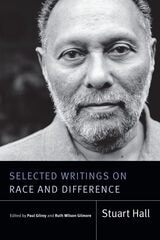
Selected Writings on Race and Difference
Stuart Hall
Duke University Press, 2021
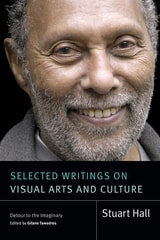
Selected Writings on Visual Arts and Culture
Detour to the ImaginaryStuart Hall. Edited by Gilane Tawadros
Duke University Press, 2024
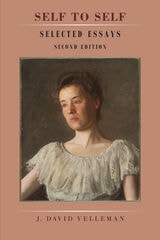
Self to Self
Selected Essays: Second EditionJ. David Velleman
Michigan Publishing Services, 2020
Self to Self brings together essays on personal identity, autonomy, and moral emotions by the philosopher J. David Velleman. Although the essays were written independently, they are unified by an overarching thesis – that there is no single entity denoted by “the self ” – as well as by themes from Kantian ethics, psychoanalytic theory, social psychology, and Velleman’s work in the philosophy of action. Two of the essays were selected by the editors of Philosophers’ Annual as being among the ten best papers in their year of publication.
Self to Self will be of interest to philosophers, psychologists, and others who theorize about the self.
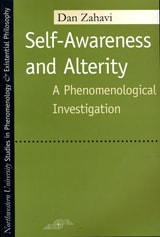
Self-Awareness and Alterity
A Phenomenological InvestigationDan Zahavi
Northwestern University Press, 1999
In the rigorous and highly original Self-Awareness and Alterity, Dan Zahavi provides a sustained argument that phenomenology, especially in its Husserlian version, can contribute something decisive to the analysis of self-awareness. Taking on recent discussions within both analytical philosophy (Shoemaker, Castaneda, Nagel) and contemporary German philosophy (Henrich, Frank, Tugendhat), Zahavi argues that the phenomenological tradition has much more to offer when it comes to the problem of self-awareness than is normally assumed. As a contribution to the current philosophical debate concerning self-awareness, the book presents a comprehensive reconstruction of Husserl's theory of pre-reflective self-awareness, thereby criticizing a number of prevalent interpretations and a systematic discussion of a number of phenomenological insights related to this issue, including analyses of the temporal, intentional, reflexive, bodily, and social nature of the self.
Self-Awareness and Alterity
A Phenomenological InvestigationDan Zahavi
Northwestern University Press, 2020
As a contribution to the current philosophical debate concerning self-awareness, the book presents a comprehensive reconstruction of Husserl’s theory of pre-reflective self-awareness, thereby criticizing a number of prevalent interpretations. In addition, Zahavi also offers a systematic discussion of a number of phenomenological insights related to the issue of self-awareness, including analyses of the temporal, intentional, reflexive, bodily, and social nature of the self.
The new edition of this prize-winning book has been updated and revised, and all quotations have been translated into English. It also contains a new preface in which Zahavi traces the developments of the debates around self-awareness over the last twenty years and situates this book in the context of his subsequent work.
Self-Deception and Paradoxes of Rationality
Edited by Jean-Pierre Dupuy
CSLI, 1998
Self-Determination without Nationalism
A Theory of Postnational SovereigntyOmar Dahbour
Temple University Press, 2014
How do groups—be they religious or ethnic—achieve sovereignty in a postnationalist world? In Self-Determination without Nationalism, noted philosopher Omar Dahbour insists that the existing ethics of international relations, dominated by the rival notions of liberal nationalism and political cosmopolitanism, no longer suffice.
Dahbour notes that political communities are an ethically desirable and historically inevitable feature of collective life. The ethical principles that govern them, however—especially self-determination and sovereignty—require reformulation in light of globalization and the economic and environmental challenges of the twenty-first century.
Arguing that nation-states violate the principle of self-determination, Dahbour then develops a detailed new theory of self-determination that he calls "ecosovereignty.” Ecosovereignty defines political community in a way that can protect and further the rights of indigenous peoples as well as the needs of ecological regions for a sustainable form of development and security from environmental destruction.
In the series Global Ethics and Politics, edited by Carol Gould.
Self-Portrait in the Studio
Giorgio Agamben
Seagull Books, 2024
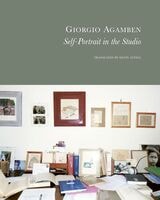
This book’s title, Self-Portrait in the Studio—a familiar iconographic subject in the history of painting—is intended to be taken literally: the book is a self-portrait, but one that comes into view for the reader only by way of patient scrutiny of the images, photographs, objects, and paintings present in the studios where the writer has worked and still works. That is to say, Giorgio Agamben’s wager is to speak of himself solely and uniquely by speaking of others: the poets, philosophers, painters, musicians, friends, passions—in short, the meetings and encounters that have shaped his life, thought, and writing, from Martin Heidegger to Elsa Morante, from Herman Melville to Walter Benjamin, from Giorgio Caproni to Giovanni Urbani. For this reason, images are an integral part of the book, images that—like those in a rebus that together form another, larger image—ultimately combine with the written text in one of the most unusual self-portraits that any writer has left of himself: not an autobiography, but a faithful and timeless auto-heterography.
Self-Reference
Thomas Bolander, Vincent F. Hendricks, and Stig Andur Pedersen
CSLI, 2006
Self-Relation
A Phenomenology of AmbiguityEllie Anderson
Northwestern University Press, 2027
A perceptive new look at the perennial subject of selfhood
In the wake of the so-called death of the subject, some philosophers within or adjacent to phenomenology have come to embrace the idea that the self does indeed exist but is multiplicitous in nature. Many today appeal to the idea that the self is therefore relational: that the self exists only in and through its relations to others. Though this is true, there is also more to the relationality of the self than the fact that we are always relating to what is beyond ourselves. In this book, Ellie Anderson argues that the defining feature of the self is that it is self-relating. That is, the self has identity by virtue of its own self-relationality.
Anderson develops a relational account of the self, drawing on the French philosophical tradition of existential phenomenology—in particular, Jean-Paul Sartre, Maurice Merleau-Ponty, and Simone de Beauvoir. Anderson contends that a throughline in their work is an emergent account of self-relation, which both provides a phenomenologically grounded alternative to some of the more popular views of the self today and highlights the ethical character of the self. Through novel approaches to the topics of self-objectification, bad faith, self-affection, and responsibility, Self-Relation develops an account of the self as having a peculiar kind of identity—ipseity—that is grounded in the structure of consciousness, and a selfhood that not only accommodates but also requires difference.
Self
Ancient and Modern Insights about Individuality, Life, and DeathRichard Sorabji
University of Chicago Press, 2006
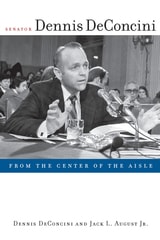
Senator Dennis DeConcini
From the Center of the AisleDennis DeConcini and Jack L. August, Jr.
University of Arizona Press, 2006
A vigilant centrist, who got results by building coalitions on both sides of the aisle, Senator DeConcini’s approach was not bound to strict party alliances but was deeply rooted in the independent political environment of Arizona. During his career, he sponsored legislation limiting the sale of assault weapons, which provoked the National Rifle Association. He confounded Democratic Party regulars by supporting Clarence Thomas during the controversial confirmation hearings and again split with his party in his support for William Rehnquist’s nomination to Chief Justice. In 1980 he voted for Ronald Reagan, but in 1993 he cast the swing vote for President Bill Clinton’s tax bill, which was strongly opposed by Republicans in Arizona.
This political memoir will be of interest to anyone concerned with the inner workings of the U.S. Senate or Arizona politics and offers relevant insights into today’s political climate.
Seneca
Fifty Letters of a Roman StoicLucius Annaeus Seneca
University of Chicago Press, 2021
“There is only one course of action that can make you happy. . . . rejoice in what is yours. What is it that is yours? Yourself; the best part of you.”
In the year 62, citing health issues, the Roman philosopher Seneca withdrew from public service and devoted his time to writing. His letters from this period offer a window onto his experience as a landowner, a traveler, and a man coping with the onset of old age. They share his ideas on everything from the treatment of enslaved people to the perils of seafaring, and they provide lucid explanations for many key points of Stoic philosophy.
This selection of fifty letters brings out the essentials of Seneca’s thought, with much that speaks directly to the modern reader. Above all, they explore the inner life of the individual who proceeds through philosophical inquiry from a state of emotional turmoil to true friendship, self-determination, and personal excellence.
Sense and Non-Sense
Maurice Merleau-Ponty
Northwestern University Press, 1992
The first part of Sense and Non-Sense, "Arts," is concerned with Merleau-Ponty's concepts of perception, which were advanced in his major philosophical treatise, Phenomenology of Perception. Here the analysis is focused and enriched in descriptions of the perceptual world of Cezanne, the encounter with the Other as expressed in the novels of Simone de Beauvoir and Sartre, and the gestalt quality of experience brought out in the film art form. In the second part, "Ideas," Merleau-Ponty shows how the categories of the phenomenology of perception can be understood as an outgrowth of the behavioral sciences and how a model of existence based on perception sensitizes us to the insights and limitations of previous philosophies and suggests constructive criticisms of contemporary philosophy. The third part, "Politics," clarifies the political dilemmas facing intellectuals in postwar France.
Sense and Uncertainty
A Phenomenology of Rational Actions in an Uncertain WorldEsteban Marín-Ávila
Ohio University Press, 2025
- We are often forced through violence to do things that do not make sense for us except to avoid retaliations, punishments, or the various evils that others might inflict on us.
- We inhabit a world that escapes our control. This involves living in uncertainty concerning the things that we might suffer and do, that is, the things that might happen to us and the results of our actions.
- We are dependent on others and collaborate with them in ways that make it impossible to fully understand the sense of our own actions and practical intentions.

Sense of History
The Place of the Past in American LifeDavid Glassberg
University of Massachusetts Press, 2001
As Americans enter the new century, their interest in the past has never been greater. In record numbers they visit museums and historic sites, attend commemorative ceremonies and festivals, watch historically based films, and reconstruct family genealogies. The question is, Why? What are Americans looking for when they engage with the past? And how is it different from what scholars call “history?”
In this book, David Glassberg surveys the shifting boundaries between the personal, public, and professional uses of the past and explores their place in the broader cultural landscape. Each chapter investigates a specific encounter between Americans and their history: the building of a pacifist war memorial in a rural Massachusetts town; the politics behind the creation of a new historical festival in San Francisco; the letters Ken Burns received in response to his film series on the Civil War; the differing perceptions among black and white residents as to what makes an urban neighborhood historic; and the efforts to identify certain places in California as worthy of commemoration. Along the way, Glassberg reflects not only on how Americans understand and use the past, but on the role of professional historians in that enterprise. Combining the latest research on American memory with insights gained from Glassberg's more than twenty years of personal experience in a variety of public history projects, Sense of History offers stimulating reading for all who care about the future of history in America.
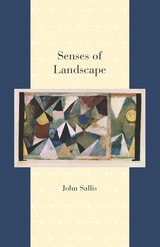
Senses of Landscape
John Sallis
Northwestern University Press, 2015
Beginning with the assertion that earth is the elemental place that grants an abode to humans and to other living things, in Senses of Landscape the philosopher John Sallis turns to landscapes, and in particular to their representation in painting, to present a powerful synthetic work.
Senses of Landscape proffers three kinds of analyses, which, though distinct, continually intersect in the course of the book. The first consists of extended analyses of distinctive landscapes from four exemplary painters, Paul Cezanne, Caspar David Friedrich, Paul Klee, and Guo Xi. Sallis then turns to these artists’ own writings—treatises, essays, and letters—about art in general and landscape painting in particular, and he sets them into a philosophical context. The third kind of analysis draws both on Sallis’s theoretical writings and on the canonical texts in the philosophy of art (Kant, Schelling, Hegel, and Heidegger). These analyses present for a wide audience a profound sense of landscape and of the earthly abode of the human.
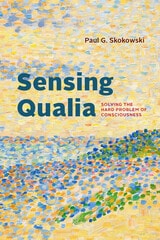
Sensing Qualia
Solving the Hard Problem of ConsciousnessPaul G. Skokowski
University of Chicago Press, 2026
Philosophers of mind and neuroscientists often debate what they call the hard problem of consciousness, that is, how we might account for qualia—our subjective experiences of phenomena like color, taste, pain, smell, and more. In Sensing Qualia, Paul G. Skokowski surveys the most influential theories of mind since Descartes in order to establish a new theory he calls sensory naturalism, which recognizes the senses as natural detectors of physical properties in the world.
Drawing on neuroscience, physics, and philosophy, Skokowski provides a naturalistic framework for studying qualia in the physical world and explores the limits of qualia in androids and AI. The result is a compelling explanation of qualia for anyone curious about the nature of conscious experience in humans and AI.

Sensus Communis
Vico, Rhetoric, and the Limits of RelativismJohn D. Schaeffer
Duke University Press, 1990
In extended commentaries on Gadamer, the Gadamer/Habermas debate, and Derrida, Schaeffer shows that Vico offers the possibility of analyzing social phenomena and constellations of power from within the humanist rhetorical tradition. Vico’s achievements have powerful implications for relating ethics and hermeneutics to the world of concrete social practice, particularly in an age in which the electronic media have replaced print as the primary means of communication and in which a “secondary orality” (a cast of mind similar to that of nonliterate peoples) is appearing within our literate civilization.
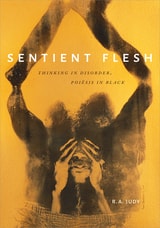
Sentient Flesh
Thinking in Disorder, Poiesis in BlackR. A. Judy
Duke University Press, 2020