Results by title
1325 books match the query 'Psychology' and 90 start with s
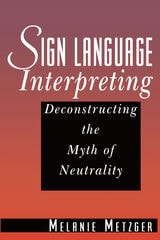
Sign Language Interpreting
Deconstructing the Myth of NeutralityMelanie Metzger
Gallaudet University Press, 1998
Sign Language Interpreting relies upon an interactional sociolinguistic approach to ask fundamental questions regarding interpreter neutrality. First, do interpreters influence discourse, and if so, how? Also, what kind of expectations do the participants bring to the event, and what do the interpreters bring to discussions? Finally, how do their remarks affect their alignment with participants in the interaction? Using careful assessments of how these interviews were framed, and also re-interviewing the participants for their perspectives, this penetrating book discloses the ways in which interpreters influence these situations. It also addresses the potential implications of these findings regarding sign language interpretation in medical, educational, and all other general interactions. Interpreter trainers and their students will join certified interpreters and Deaf studies scholars in applauding and benefiting from the fresh ground broken by this provocative study.
Signs and Voices
Deaf Culture, Identity, Language, and ArtsKristin A. Lindgren
Gallaudet University Press, 2008
Cochlear implants, mainstreaming, genetic engineering, and other ethical dilemmas confronting deaf people mandated a new, wide-ranging examination of these issues, fulfilled by Signs and Voices: Deaf Culture, Identity, Language, and Arts. This collection, carefully chosen from the 2004 Signs and Voices Conference, the Presidential Forum on American Sign Language at the Modern Language Association Convention, and other sources, addresses all of the factors now changing the cultural landscape for deaf people. To ensure quality and breadth of knowledge, editors Kristin A. Lingren, Doreen DeLuca, and Donna Jo Napoli selected the work of renowned scholars and performers Shannon Allen, H-Dirksen L. Bauman, Adrian Blue, Brenda Jo Brueggemann, Teresa Blankmeyer Burke, Peter Cook, David P. Corina, Michael Davidson, Kristen Harmon, Tom Humphries, Sotaro Kita, Heather Knapp, Robert G. Lee, Irene W. Leigh, Kenny Lerner, Carole Neidle, Peter Novak, AslI Özyürek, David M. Perlmutter, Anne Senghas, and Ronnie Wilbur.
Signs and Voices is divided into three sections—Culture and Identity, Language and Literacy, and American Sign Language in the Arts—each of which focuses on a particular set of theoretical and practical concerns. Also, the included DVD presents many of the performances from the Arts section. Taken together, these essays and DVD point to new directions in a broad range of fields, including cognitive science, deaf studies, disability studies, education, linguistics, literary criticism, philosophy, and psychology. This extraordinary showcase of innovative and rigorous cross-disciplinary study will prove invaluable to everyone interested in the current state of the Deaf community.
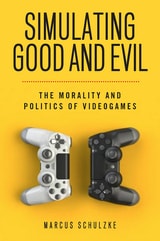
Simulating Good and Evil
The Morality and Politics of VideogamesMarcus Schulzke
Rutgers University Press, 2020

Sinners and Citizens
Bestiality and Homosexuality in Sweden, 1880-1950Jens Rydström
University of Chicago Press, 2003
Based on medical journals, psychiatric reports, and court records from the period, as well as testimonies from men in diaries, letters, and interviews, Sinners and Citizens reveals that bestiality was once a dreaded crime in Sweden. But in time, mention of the practice disappeared completely from legal and medical debates. This, Rydström contends, is because models of penetrative sodomy shifted from bestiality to homosexuality as Sweden transformed from a rural society into a more urban one. As the nation's economy and culture became less identified with the countryside, so too did its idea of deviant sexual behavior.

Sites of Desire/Economies of Pleasure
Sexualities in Asia and the PacificEdited by Lenore Manderson and Margaret Jolly
University of Chicago Press, 1997
A unique and important contribution to the study of sexuality, this book also suggests that the history of sexuality in the West was shaped by myths of the legendary Orient and the exotic "Other."
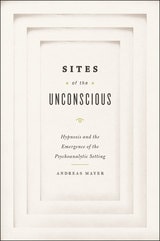
Sites of the Unconscious
Hypnosis and the Emergence of the Psychoanalytic SettingAndreas Mayer
University of Chicago Press, 2013
Sites of the Unconscious analyzes the major controversies between competing French schools of hypnotism that emerged at this time, stressing their different views on the production of viable evidence and their different ways of deploying hypnosis. Mayer then reconstructs in detail the reception of French hypnotism in German-speaking countries, arguing that the distinctive features of Freud’s psychoanalytic setting of the couch emerged out of the clinical laboratories and private consulting rooms of the practitioners of hypnosis.

Slave of Allah
Zacarias Moussaoui Vs the USAKatherine C. Donahue
Pluto Press, 2007
The book begins with his arrest and moves to the courtroom, telling the tale of Moussaoui's struggle with his defense lawyers and raising questions about his ability to be "represented" given his national and personal identity. Donahue explores his background in France as the son of Moroccan immigrants and follows him to London, Afghanistan, and Malaysia as he joins the growing fraternity of an Islam without borders. He acquires an extra-national identity in which his loyalty is no longer constituted by his national identity, but by his allegiance to fundamental Islam.

Sleep Paralysis
Night-mares, Nocebos, and the Mind-Body ConnectionAdler, Shelley R
Rutgers University Press, 2011
Shelley R. Adler's fifteen years of field and archival research focus on the ways in which night-mare attacks have been experienced and interpreted throughout history and across cultures and how, in a unique example of the effect of nocebo (placebo's evil twin), the combination of meaning and biology may result in sudden nocturnal death.
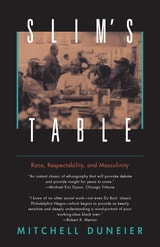
Slim's Table
Race, Respectability, and MasculinityMitchell Duneier
University of Chicago Press, 1992
"Slim's Table is an astonishment. Duneier manages to fling open windows of perception into what it means to be working-class black, how a caring community can proceed from the most ordinary transactions, all the while smashing media-induced stereotypes of the races and race relations."—Citation for Chicago Sun Times Chicago Book of the Year Award
"An instant classic of ethnography that will provoke debate and provide insight for years to come."—Michael Eric Dyson, Chicago Tribune
"Mr. Duneier sees the subjects of his study as people and he sees the scale of their lives as fully human, rather than as diminished versions of grander lives lived elsewhere by people of another color. . . . A welcome antidote to trends in both journalism and sociology."—Roger Wilkins, New York Times Book Review

Slow Fuse of the Possible
A Memoir of Poetry and PsychoanalysisKate Daniels
West Virginia University Press, 2022
Slow Fuse of the Possible is a poet’s narrative of a troubled psychoanalysis. It is also a commanding meditation on the powers of language, for good and for ill.
From the beginning of their time together, it is clear that the enigmatic analyst and Daniels are not a good match, yet both are determined to continue their work—the former in nearly complete silence, and the latter as best she can with the tools at her disposal: careful attention to language, deep reading, and literary imagination. Throughout, the story is filtered through the mind of Emily Dickinson, whose poetry Daniels uses as a fulcrum for the interpretation of her own experience. The book is saturated with Dickinson’s verse, and Dickinson is an increasingly haunting presence as crises emerge and the author unravels.
This compelling lyric memoir, so richly steeped in all facets of language and the literary, allows readers a glimpse into the mind of a renowned poet, revealing the dazzling and anguished connections between poetry and psychoanalysis.

Smut
Erotic Reality/Obscene IdeologyMurray S. Davis
University of Chicago Press, 1983
Smut investigates sex in a way that differes from nearly all previous books on the subject. Drawing on a wide variety of literary forms, including the work of novelists, poets, and even comedians–resources ranging from the most sublime theologians to the most profane pornographers–Murray S. Davis goes beyond those who regard sex merely as a biological instinct or animal behavior. He recaptures sex for the social sciences by reemphasizing the aspects of it that are unique to human beings in all their rich perplexity.
In part one, Davis employs a phenomenlogical approach to examine the differrence between sexual arousal and ordinary experience: sexual arousal, he argues, alters a person's experience of the world, resulting in an "erotic reality" that contratsts strikingly to our everyday reality; different perceptions of time, space, human bodies, and other social types occur in each realm. Davis describes in detail the movement from everyday into erotic reality from the first subtle castings-off to the shocking post-orgasmic return.
In part two the author employs a structuralist approach to determine why some people find this alternation between realities "dirty." He begins with a meditation on the similarity between sex and dirt and then asks, "How must somone view the world for him to find sex dirty?" Normal sex can be disliked, Davis concludes, only if it violates a certain conception of the individual; perverted sex can be despised only if it further violates certain conceptions of social relations and social organization. Davis ends part two with a "periodic table of perversions" that systematically summarizes the fundamental social elements out of which those who find sex dirty construct their world.
Finally, in part three Davis considers other conceptual grids affected by the alternation between everyday and erotic realities: the "pornographic," which concieves of the individual, social relations, and social organizations as deserving to disrupted by sex; and the "naturalistic," which concieves of them in a way that cannot be disrupted by sex. Throughout history these ideologies have contested for control over Western society, and, in his conlusion, Davis ofers a prognosis for the future of sex based on these historical ideological cycles.

Soap Fans
Pursuing Pleasure and Making Meaning in Everyday LifeC. Lee Harrington and Denise D. Bielby
Temple University Press, 1995
Do soap opera fans deserve their reputation as lonely people, hopeless losers, or bored housewives? No, according to C. Lee Harrington and Denise D. Bielby. These authors—soap fans themselves—argue that soap fans are normal individuals who translate their soap watching into a broad range of public and private experience. People who cut across all categories of age, gender, race, ethnicity, income, education, and ideology incorporate a love of the soaps into their day-to-day leisure activities.
Interviews with soap opera viewers, actors, writers, producers, directors, the daytime press, and fan club staff members reveal fascinating details about the inside world of fandom and the multitude of outlets for fan expression—clubs, newsletters, electronic bulletin boards, and public events. Numerous examples illustrate the pleasure fans derive from critiquing characters, speculating on plot twists, and swapping memorabilia.
Examining the experiences that shape fan culture, Harrington and Bielby analyze the narrative structure and various aspects of the production of the soaps. Their examination reveals that the "meaning" of soaps is complex, individualized, and not simply a reflection of the narrative content of the stories. The authors show fans who actively contemplate what it means to be a fan, and who adjust their level of involvement accordingly.
Social Awakening
Adolescent Behavior as Adulthood ApproachesRobert T. Michael
Russell Sage Foundation, 2001
Social Commitments in a Depersonalized World
Edward J. Lawler
Russell Sage Foundation, 2009

Sodomy's Solicitations
A Right to QueernessJoseph J. Fischel
Temple University Press, 2025
The political stories narrated in Sodomy’s Solicitations are undoubtedly stories of racism, sexism, homophobia, and transphobia, but they are also stories of other political problems—and political possibilities. Fischel indicts U.S. sex offender regulatory regimes as state-sponsored sexual violence; offers a qualified defense for sexual expression in public; and argues that animal sexual abuse laws, with their exemptions for industrial agricultural practices, authorize the suffering they were enacted to deter. He also makes the case that laws criminalizing the exchange of sex for money are unconstitutional, and proposes that the best way to protect trans and queer children might just be to enfranchise them.
Sodomy’s Solicitations champions a right to queerness across rather than within identity formations—a right to relatively unpoliced gender, sexual, and intimate pluralism.
In the series Sexuality Studies
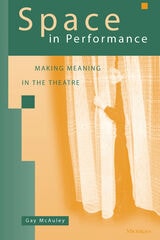
Space in Performance
Making Meaning in the TheatreGay McAuley
University of Michigan Press, 2000
The book's theoretical and methodological framework is both semiotic and phenomenological, based in part from the seminal work of Anne Ubersfeld, from direct observation of the rehearsal process, and from documentation and analysis of professional performances. The situation of the academic observer in the rehearsal room has much in common with that of the ethnographer in the field, and contemporary ethnographic practice provides a third theoretical and methodological perspective to this study.
Performance studies is an emerging discipline, and it is still evolving appropriate methodologies. The multi-faceted approach adopted here will engage theater and performance studies specialists, those concerned with modes of representation in contemporary culture, and students of theater, semiotics, architecture, set design, acting and performance theory. It also offers a great deal to theater practitioners as well as to spectators interested in deepening their appreciation of theater art. It is written in a simple, accessible way, and the theory always emerges from descriptions of practice.
"An excellent study that imaginatively summarizes, synthesizes, and intelligently critiques a wide range of previous theory and practice while making an important new contribution to the field of theater studies." --Marvin Carlson, City University of New York
Gay McAuley is Director of the Centre for Performance Studies, University of Sydney.
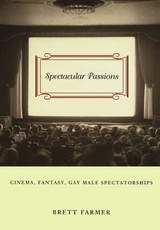
Spectacular Passions
Cinema, Fantasy, Gay Male SpectatorshipsBrett Farmer
Duke University Press, 2000
Building on the psychoanalytic concept of the fantasmatic, Farmer works to depathologize gay male subjectivity. While discussing such films as Kiss of the Spider Woman, The Pirate, Suddenly Last Summer, and Sunset Boulevard, and stars ranging from Mae West to Montgomery Clift, Farmer argues that the particularities of gay men’s social and psychic positionings motivate unique receptions of and investments in film. The Hollywood musical, gay camp readings of the extravagant female star, and the explicit homoeroticism of the cinematic male body in gay fanzines are further proof, says Farmer, of how the shifting libidinal profiles of homosexual desire interact with the fantasy scenarios of Hollywood film to produce a range of variable queer meanings.
This fascinating and provocative study makes a significant new contribution to discussions of cinema, spectatorship, and sexuality. As such, it will be welcomed by those in the fields of film theory, queer theory, and cultural studies.
Speculation
Politics, Ideology, EventGlyn Daly
Northwestern University Press, 2019
Speculation: Politics, Ideology, Event develops Hegel’s radical perspective of speculative thought as a way of reclaiming and revitalizing the sense of the future and its possibilities. Engaging with such figures as Alain Badiou, Quentin Meillassoux, Ernesto Laclau, Slavoj Žižek, and Fredric Jameson, Glyn Daly articulates the distinctness of speculative philosophy and draws its implications for new debates in areas of science, politics, capitalism, ideology, ethics, and the event.
In a confrontation with today’s fatalistic milieu, principal emphasis is given to Hegel’s idea of infinity as the intrinsic dimension of negativity within all finitude. Against the modern era’s paradigmatic tendency to externalize social problems in the form of antagonism and Otherness, Daly argues for a renewal of utopian thought based on Hegelian reconciliation and the affirmation of excess as the essence of all being. On these grounds, he advances a new kind of political imagination that in speculative terms centers on uncompromising notions of truth and reason.
Spirit in Session
Working with Your Client’s Spirituality (and Your Own) in PsychotherapyRussell Siler Jones
Templeton Press, 2019
Spirituality is an important part of many clients’ lives. It can be a resource for stabilization, healing, and growth. It can also be the cause of struggle and even harm. More and more therapists—those who consider themselves spiritual and those who do not—recognize the value of addressing spirituality in therapy and increasing their skill for engaging it ethically and effectively.
In this immensely practical book, Russell Siler Jones helps therapists feel more competent and confident about having spiritual conversations with clients. With a refreshing, down-to-earth style, he describes how to recognize the diverse explicit and implicit ways spirituality can appear in psychotherapy, how to assess the impact spirituality is having on clients, how to make interventions to maximize its healthy impact and lessen its unhealthy impact, and how therapists can draw upon their own spirituality in ethical and skillful ways. He includes extended case studies and clinical dialogue so readers can hear how spirituality becomes part of case conceptualization and what spiritual conversation actually sounds like in psychotherapy.
Jones has been a therapist for nearly 30 years and has trained therapists in the use of spirituality for over a decade. He writes about a complex topic with an elegant simplicity and provides how-to advice in a way that encourages therapists to find their own way to apply it.
Spirit in Session is a pragmatic guide that therapists will turn to again and again as they engage their clients in one of the most meaningful and consequential dimensions of human experience.
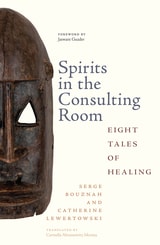
Spirits in the Consulting Room
Eight Tales of HealingSerge Bouznah
Rutgers University Press, 2023
Drawn from two decades of their experience with transcultural mediation, Spirits in the Consulting Room tells the stories of eight patients—mainly migrants—and their families. Each chapter focuses on a different patient, and Christelle, Djibril, Moncef, Alhassane, Jacinthe, Amy, Cyril, Alice, and Pierre leap off the page as distinct people with unique situations. Together, these chapters reveal how patients’ comprehension of their symptoms is shaped by their cultural background, while recounting the challenges of translating that into terms the doctors can grasp.
The book shows how trained transcultural mediators can help to redress the power imbalance between doctors and the migrants they treat, providing patients with advocates who respect the authority of their background and experiences and don’t just take the side of the medical professionals. The groundbreaking insights modeled in this book can be applied to any medical situation where doctors and patients find themselves speaking different languages.
Spiritual Connection in Daily Life
Sixteen Little Questions That Can Make a Big DifferenceLynn Underwood
Templeton Press, 2013

Stanzas
Word and Phantasm in Western CultureGeorgio Agamben
University of Minnesota Press, 1992

States Of Exception
Everyday Life and Postcolonial IdentityKeya Ganguly
University of Minnesota Press, 2001
Explores the conflict between capitalism and tradition in an immigrant community.
A philosophical anthropology of everyday experience, this book is also a deeply informed and thought-provoking reflection on the work of cultural critique. States of Exception looks into a community of immigrants from India living in southern New Jersey—a group to whom the author, as a daughter of two of its members, enjoyed unprecedented access.
Her position allows Keya Ganguly to approach the culture of a middle-class group (albeit one that is marginalized by racial prejudice), while the group’s relatively comfortable and protected style of life offers unusual insight into the concept of the everyday and the sense in which a seemingly commonplace existence can be understood as in crisis: a state of exception. Thus, Ganguly draws on the work of the Frankfurt School, particularly Walter Benjamin and Theodor Adorno, to explore the possibilities of a dialectical critique of the everyday—a state of exception informing ordinary yet crisis-ridden narratives of the self under late capitalism.
States of Belonging
Immigration Policies, Attitudes, and InclusionTomas R. Jimenez
Russell Sage Foundation, 2021
Arizona and New Mexico are historically and demographically similar, but they differ in their immigration policies. Arizona has enacted unwelcoming policies towards immigrants, restricting the access of immigrants to state resources, social services, and public institutions. New Mexico is more welcoming, actively seeking to protect the rights of immigrants and extending access to state resources and institutions. The authors draw on an original survey and in-depth interviews of a cross-section of each state’s population to illustrate how these differing approaches affect the sense of belonging not only among immigrants, but among the U.S.-born as well.
Respondents in Arizona, regardless of whether they were foreign- or native-born or their ethno-racial background, agreed that the state is unwelcoming to immigrants, and they pointed to Arizona’s restrictive policies as the primary factor. The sense of rejection perceived by Latinos in Arizona, including the foreign-born and the U.S.-born, was profound. They felt the effects of administrative and symbolic exclusions of the state’s unwelcoming policies as they went about their daily lives.
New Mexico’s more welcoming approach had positive effects on the Latino immigrant population, and these policies contributed to an increased sense of belonging among U.S.-born Latinos and U.S.-born whites as well. The authors show that exposure to information about welcoming policies is associated with an improved sense of belonging across most population groups. They also find that the primary dividing line when it came to reactions to welcoming policies was political, not ethno-racial. Only self-identified Republicans, Latino as well as white, showed reduced feelings of belonging.
States of Belonging demonstrates that welcoming policies cultivate a greater sense of belonging for immigrants and other state citizens, suggesting that policies aimed at helping immigrants gain a social, economic, and political foothold in this country can pay a broad societal dividend.

Status
Why Is It Everywhere? Why Does It Matter?Cecilia L. Ridgeway
Russell Sage Foundation, 2019
Ridgeway’s research on status has important implications for our understanding of social inequality. Distinct from power or wealth, status is prized because it provides affirmation from others and affords access to valuable resources. Ridgeway demonstrates how the conferral of status inevitably contributes to differing life outcomes for individuals, with impacts on pay, wealth creation, and health and wellbeing. Status beliefs are widely held views about who is better in society than others in terms of esteem, wealth, or competence. These beliefs confer advantages which can exacerbate social inequality. Ridgeway notes that status advantages based on race, gender, and class—such as the belief that white men are more competent than others—are the most likely to increase inequality by facilitating greater social and economic opportunities.
Ridgeway argues that status beliefs greatly enhance higher status groups’ ability to maintain their advantages in resources and access to positions of power and make lower status groups less likely to challenge the status quo. Many lower status people will accept their lower status when given a baseline level of dignity and respect—being seen, for example, as poor but hardworking. She also shows that people remain willfully blind to status beliefs and their effects because recognizing them can lead to emotional discomfort. Acknowledging the insidious role of status in our lives would require many higher-status individuals to accept that they may not have succeeded based on their own merit; many lower-status individuals would have to acknowledge that they may have been discriminated against.
Ridgeway suggests that inequality need not be an inevitable consequence of our status beliefs. She shows how status beliefs can be subverted—as when we reject the idea that all racial and gender traits are fixed at birth, thus refuting the idea that women and people of color are less competent than their male and white counterparts. This important new book demonstrates the pervasive influence of status on social inequality and suggests ways to ensure that it has a less detrimental impact on our lives.
Stepchildren of Nature
Krafft-Ebing, Psychiatry, and the Making of Sexual IdentityHarry Oosterhuis
University of Chicago Press, 2000
But in this powerful new cultural history Harry Oosterhuis invites us to reconsider the quality and extent of Krafft-Ebing's influence. Revisiting the case studies on which Krafft-Ebing based his findings, and thus drawing on the voices of his patients and informants, Oosterhuis finds that Krafft-Ebing was not the harsh judge of perversions that we think he was. He argues that Krafft-Ebing had a deep appreciation of the psyche, and that his work reveals an attempt to separate sexual deviancies from ideas of immorality. In the tradition of Freud, then, Krafft-Ebing should stand not as a villain, but as a contributor to more modern notions of sexual identity.

Steps to an Ecology of Mind
Collected Essays in Anthropology, Psychiatry, Evolution, and EpistemologyGregory Bateson
University of Chicago Press, 2000

Stoicism and Emotion
Margaret Graver
University of Chicago Press, 2007
In this elegant and clearly written work, Margaret Graver gives a compelling new interpretation of the Stoic position. Drawing on a vast range of ancient sources, she argues that the chief demand of Stoic ethics is not that we should suppress or deny our feelings, but that we should perfect the rational mind at the core of every human being. Like all our judgments, the Stoics believed, our affective responses can be either true or false and right or wrong, and we must assume responsibility for them. Without glossing over the difficulties, Graver also shows how the Stoics dealt with those questions that seem to present problems for their theory: the physiological basis of affective responses, the phenomenon of being carried away by one’s emotions, the occurrence of involuntary feelings and the disordered behaviors of mental illness. Ultimately revealing the deeper motivations of Stoic philosophy, Stoicism and Emotion uncovers the sources of its broad appeal in the ancient world and illuminates its surprising relevance to our own.
Stories We Tell Ourselves
"Dream Life" and "Seeing Things"Michelle Herman
University of Iowa Press, 2013
“Seeing Things” recounts a journey of mother and daughter—a Holmes-and-Watson pair intrepidly working their way through the mysteries of a disorder known as Alice in Wonderland Syndrome—even as it restlessly detours into the world beyond the looking glass of the unconscious itself. In essays that constantly offer layers of surprises and ever-deeper insights, the author turns a powerful lens on the relationships that make up a family, on expertise and unsatisfying diagnoses, on science and art and the pleasures of contemplation and inquiry—and on our fears, regrets, hopes, and (of course) dreams.

Strategic Advertising Mechanisms
From Copy Strategy to Iconic BrandsJorge David Fernández Gómez
Intellect Books, 2021
This book takes an in-depth look at the most important and transcendent strategic advertising mechanisms to emerge in the twentieth century. Charting trends in classic advertising methodologies, the author explores key concepts from Rosser Reeves’s unique selling proposition and Procter & Gamble’s copy strategy to influential modern approaches including Kevin Roberts’s Lovemarks and Douglas Holt’s iconic brand framework. It also considers European mechanisms, including Jacques Séguéla’s star strategy and Henri Joannis’ psychological axis theory. Practitioners, researchers, scholars, and students will find much to gain from this rich exploration of the strategies that shaped modern advertising and the figures behind them.

Streetwise
How Taxi Drivers Establish Customer's TrustworthinessDiego Gambetta
Russell Sage Foundation, 2005

Studies in Phenomenology and Psychology
Aron Gurwitsch
Northwestern University Press, 1966

Subject Lessons
Hegel, Lacan, and the Future of MaterialismEdited by Russell Sbriglia and Slavoj Zizek
Northwestern University Press, 2020
Responding to the ongoing “objectal turn” in contemporary humanities and social sciences, the essays in Subject Lessons present a sustained case for the continued importance— indeed, the indispensability—of the category of the subject for the future of materialist thought.
Approaching matters through the frame of Hegel and Lacan, the contributors to this volume, including the editors, as well as Andrew Cole, Mladen Dolar, Nathan Gorelick, Adrian Johnston, Todd McGowan, Borna Radnik, Molly Anne Rothenberg, Kathryn Van Wert, and Alenka Zupančič—many of whom stand at the forefront of contemporary Hegel and Lacan scholarship—agree with neovitalist thinkers that material reality is ontologically incomplete, in a state of perpetual becoming, yet they maintain that this is the case not in spite of but, rather, because of the subject.
Incorporating elements of philosophy, psychoanalysis, and literary and cultural studies, Subject Lessons contests the movement to dismiss the subject, arguing that there can be no truly robust materialism without accounting for the little piece of the Real that is the subject.

Subjects on Display
Psychoanalysis, Social Expectation, and Victorian FemininityBeth Newman
Ohio University Press, 2004
Subjects on Display explores a recurrent figure at the heart of many nineteenth-century English novels: the retiring, self-effacing woman who is conspicuous for her inconspicuousness. Beth Newman draws upon both psychoanalytic theory and recent work in social history as she argues that this paradoxical figure, who often triumphs over more dazzling, eye-catching rivals, is a response to the forces that made personal display a vexed issue for Victorian women. Chief among these is the changing socioeconomic landscape that made the ideal of the modest woman outlive its usefulness as a class signifier even as it continued to exert moral authority.
This problem cannot be grasped in its full complexity, Newman shows, without considering how the unstable social meanings of display interacted with psychical forces-specifically, the desire to be seen by others that is central to both masculine and feminine subjectivity. This desire raises an issue that feminist theorists have been reluctant to address: the importance of pleasure in being the object of the look. Their reluctance is characteristic of cultural theory, which has tended to equate subjectivity with the position of the observer rather than the observed.
Through a consideration of fiction by Charlotte Brontë, Charles Dickens, George Eliot, and Henry James, Newman shifts the inquiry toward the observed in the experience of being seen. In the process she reopens the question of the gaze and its relation to subjectivity.
Subjects on Display will appeal to scholars and students in several disciplines as it returns psychoanalysis to a central position within literary and cultural studies.
Suicidal
Why We Kill OurselvesJesse Bering
University of Chicago Press, 2018
Bering survived. And in addition to relief, the fading of his suicidal thoughts brought curiosity. Where had they come from? Would they return? Is the suicidal impulse found in other animals? Or is our vulnerability to suicide a uniquely human evolutionary development? In Suicidal, Bering answers all these questions and more, taking us through the science and psychology of suicide, revealing its cognitive secrets and the subtle tricks our minds play on us when we’re easy emotional prey. Scientific studies, personal stories, and remarkable cross-species comparisons come together to help readers critically analyze their own doomsday thoughts while gaining broad insight into a problem that, tragically, will most likely touch all of us at some point in our lives. But while the subject is certainly a heavy one, Bering’s touch is light. Having been through this himself, he knows that sometimes the most effective response to our darkest moments is a gentle humor, one that, while not denying the seriousness of suffering, at the same time acknowledges our complicated, flawed, and yet precious existence.
Authoritative, accessible, personal, profound—there’s never been a book on suicide like this. It will help you understand yourself and your loved ones, and it will change the way you think about this most vexing of human problems.

Supersex
Sexuality, Fantasy, and the SuperheroEdited by Anna F. Peppard
University of Texas Press, 2020
2021 Comic Studies Society Prize for Edited Collection
From Superman and Batman to the X-Men and Young Avengers, Supersex interrogates the relationship between heroism and sexuality, shedding new light on our fantasies of both.
From Superman, created in 1938, to the transmedia DC and Marvel universes of today, superheroes have always been sexy. And their sexiness has always been controversial, inspiring censorship and moral panic. Yet though it has inspired jokes and innuendos, accusations of moral depravity, and sporadic academic discourse, the topic of superhero sexuality is like superhero sexuality itself—seemingly obvious yet conspicuously absent. Supersex: Sexuality, Fantasy, and the Superhero is the first scholarly book specifically devoted to unpacking the superhero genre’s complicated relationship with sexuality.
Exploring sexual themes and imagery within mainstream comic books, television shows, and films as well as independent and explicitly pornographic productions catering to various orientations and kinks, Supersex offers a fresh—and lascivious—perspective on the superhero genre’s historical and contemporary popularity. Across fourteen essays touching on Superman, Batman, the X-Men, and many others, Anna F. Peppard and her contributors present superhero sexuality as both dangerously exciting and excitingly dangerous, encapsulating the superhero genre’s worst impulses and its most productively rebellious ones. Supersex argues that sex is at the heart of our fascination with superheroes, even—and sometimes especially—when the capes and tights stay on.

Surgical Consent
Bioethics and Cochlear ImplantationLinda Komesaroff
Gallaudet University Press, 2007
Drawing on current research, this volume presents the varying reactions around the globe to the high rate of implantation. These views contrast sharply with the medical perspective of deafness overwhelmingly promoted through the media and by the cochlear implantation industry. At the same time, the contributors aim to disrupt the binaries that have long dominated the field of deafness — speech versus sign, instruction through speech and sign systems versus bilingual education, and medical intervention versus cultural membership in the Deaf community.
Surgical Consent begins and ends with the voices of Deaf people. Their articulate and, at times, raw insights clearly delineate the issues of power, positioning, and minority-majority group relations that are inherent in the dominant hearing culture’s understanding of diversity and globalization.

Surrealist Women
An International AnthologyEdited by Penelope Rosemont
University of Texas Press, 1998
Beginning in Paris in the 1920s, women poets, essayists, painters, and artists in other media have actively collaborated in defining and refining surrealism's basic project—achieving a higher, open, and dynamic consciousness, from which no aspect of the real or the imaginary is rejected. Indeed, few artistic or social movements can boast as many women forebears, founders, and participants—perhaps only feminism itself. Yet outside the movement, women's contributions to surrealism have been largely ignored or simply unknown.
This anthology, the first of its kind in any language, displays the range and significance of women's contributions to surrealism. Letting surrealist women speak for themselves, Penelope Rosemont has assembled nearly three hundred texts by ninety-six women from twenty-eight countries. She opens the book with a succinct summary of surrealism's basic aims and principles, followed by a discussion of the place of gender in the movement's origins. She then organizes the book into historical periods ranging from the 1920s to the present, with introductions that describe trends in the movement during each period. Rosemont also prefaces each surrealist's work with a brief biographical statement.

Surviving Alex
A Mother’s Story of Love, Loss, and AddictionPatricia A. Roos
Rutgers University Press, 2024
Weaving together a personal narrative and a sociological perspective, Surviving Alex movingly describes how even children from “good families” fall prey to addiction, and recounts the hellish toll it takes on families. Drawing from interviews with Alex’s friends, family members, therapists, teachers, and police officers—as well as files from his stays in hospitals, rehab facilities, and jails—Roos paints a compelling portrait of a young man whose life veered between happiness, anxiety, success, and despair. And as she explores how a punitive system failed her son, she calls for a community of action that would improve care for substance users and reduce addiction, realigning public health policy to address the overdose crisis.

Swinging Single
Representing Sexuality in the 1960sHilary Radner
University of Minnesota Press, 1999