Results by title
4743 books match the query 'Religion' and 324 start with s
Savage Energies
Lessons of Myth and Ritual in Ancient GreeceWalter Burkert
University of Chicago Press, 2001
For example, in a much-cited essay on the Athenian religious festival of the Arrephoria, Burkert uncovers deep connections between this strange nocturnal ritual, in which two virgin girls carried sacred offerings into a cave and later returned with something given to them there, and tribal puberty initiations by linking the festival with the myth of the daughters of Kekrops. Other chapters explore the origins of tragedy in blood sacrifice; the role of myth in the ritual of the new fire on Lemnos; the ties between violence, the Athenian courts, and the annual purification of the divine image; and how failed political propaganda entered the realm of myth at the time of the Persian Wars.
Savonarola's Women
Visions and Reform in Renaissance ItalyTamar Herzig
University of Chicago Press, 2007
In their quest to stay true to their leader’s teachings, Savonarola’s female followers faced hostile superiors within their orders, local political pressures, and the deep-rooted misogynistic assumptions of the Church establishment. This unprecedented volume demonstrates how reform circles throughout the Italian peninsula each tailored Savonarola’s life and works to their particular communities’ regionally specific needs. Savonarola’s Women is an important reconstruction of women’s influence on one of the most important and controversial religious movements in premodern Europe.
Scholar, Sage, Saint
The Legacy of John Henry NewmanChristopher Cimorelli
Catholic University of America Press, 2026
Scholasticism
Personalities & Problems Medieval PhilosophyJosef Pieper
St. Augustine's Press, 2001
The account is broken by the gradual replacement of the synthesis of faith and reason that had been achieved in the early Middle Ages by a new one that made use of Aristotle. Pieper gives a thorough and lively account of the struggle between Aristotelians and anti-Aristotelians, and the famous condemnations that put the effort of Saint Thomas Aquinas at risk. But the Summa theologiae is regarded by Pieper as the unique achievement of the period.
If the early centuries, the medieval period, can be seen as moving toward the thirteenth and Thomas's unique achievement, subsequent centuries saw the decline of scholasticism and theappearance of harbingers of modern philosophy.
The book closes with Pieper's thoughts on the permanent philosophical and theological significance of scholasticism and the Middle Ages. Once again, wearing his learning lightly, writing with a clarity that delights, Josef Pieper has taken the field from stuffier and more extended accounts.
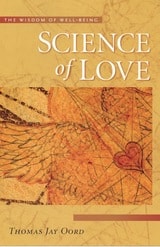
Science Of Love
Wisdom Of Well BeingThomas Oord
Templeton Press, 2004
We all know the saying, "Love can change the world." When science looks at love, it considers cosmology, sociobiology, evolutionary psychology, neurology, sex and romance, and the role of emotions as each relates to love. It also explores religious, ethical, and philosophical issues, such as virtue, creation ex nihilo, progress, divine action, agape, values, religious practices, pacifism, sexuality, friendship, freedom, and marriage. All affect the ways in which people understand each other and interact with one another. In this book, Oord explores these varied dimensions of love, illuminating the love-science symbiosis for both scholars and general readers.
His definition of love is "to act intentionally, in sympathetic response to others (including God), to promote overall well-being. Love acts are influenced by previous actions and executed in the hope of attaining a high degree of good for all." He begins his study with an exploration of the role love plays in all major world religions: Hinduism, Buddhism, Confucianism, Judaism, Islam, and Christianity. He explains how divine love in action can be viewed as consonant with the big bang theory and the continual creation of the universe.
He looks at pacifism and concludes that nonviolence is not always the most loving thing (sometimes violence must be used to rescue victims or prevent holocausts). He explores the animal kingdom to see how creatures work together with the Creator to make the world a better place. And he analyzes the fundamentals of love, the basic characteristics of existence that must be present for love to be expressed. He concludes with the important argument that progress can best be made when religion and science work together to both understand and promote love.
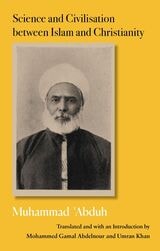
Science and Civilisation between Islam and Christianity
Muhammad Abduh
Gingko, 2025
This book is a translation of Muhammad Abduh’s Al-Islam wa-l-Nasraniyya maa al-Ilm wa-l-Madaniyya (Science and Civilization between Islam and Christianity). Abduh was an Egyptian jurist, religious scholar, theologian, and reformer of Al-Azhar—Egypt’s oldest university and a renowned seat of Islamic learning—who died in 1905. His impact on modern Islam cannot be overstated. In fact, much of modern Muslim thought has, in one way or another, been a reaction to his ideas. Although he is the subject of numerous English studies, only one treatise of his has been translated into English: Risalat al-tawhid (Theology of Unity) by Ishaq Masaad and Kenneth Cragg, in 1966.
Far too little attention has been paid to the treatise translated here and its impact on the Islamic theology of Christianity. This first English translation fills a serious gap in the genre of Islam and Christian-Muslim relations.
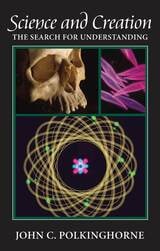
Science and Creation
The Search for UnderstandingJohn C. Polkinghorne
Templeton Press, 2006
John C. Polkinghorne, internationally renowned priest-scientist, addresses fundamental questions about how scientific and theological worldviews relate to each other in this, the second volume (originally published in 1988) of his trilogy, which also included Science and Providence and One World.
Dr. Polkinghorne illustrates how a scientifically minded person approaches the task of theological inquiry, postulating that there exists a close analogy between theory and experiment in science and belief and understanding in theology. He offers a fresh perspective on such questions as: Are we witnessing today a revival a natural theology—the search for God through the exercise of reason and the study of nature? How do the insights of modern physics into the interlacing of order and disorder relate to the Christian doctrine of Creation? What is the relationship between mind and matter?
Polkinghorne states that the "remarkable insights that science affords us into the intelligible workings of the world cry out for an explanation more profound than that which it itself can provide. Religion, if it is to take seriously its claim that the world is the creation of God, must be humble enough to learn from science what that world is actually like.The dialogue between them can only be mutually enriching."
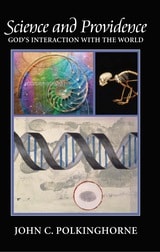
Science and Providence
God's Interaction with the WorldJohn C. Polkinghorne
Templeton Press, 2005
Internationally renowned priest-scientist Dr. John C. Polkinghorne examines whether a personal, interacting God is a credible concept in today's scientific age. Encouraging the belief that there is a compatibility between the insights of science and the insights of religion, this book, previously published in the United Kingdom, focuses on the viewpoint that the world is one in which both human beings and God have the freedom to act.
A modern understanding of the physical world is applied to questions of prayer and providence, such as: Do miracles happen? Can prayer change anything? Why does evil exist? Why does God allow suffering? Why does God need us to ask him?
God's involvement in time is considered, from both a temporal and an eternal perspective. The roles of incarnation and sacrament are discussed in terms of whether or not they have a credible place in today's worldview. And the Final Anthropic Principle (FAP) is presented, with its attempt at a physical eschatology, showing it to be an inadequate basis for hope. Real hope can reside only with God, Polkinghorne concludes.
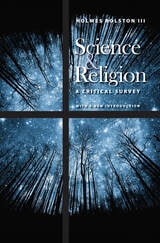
Science and Religion
A Critical SurveyHolmes Rolston
Templeton Press, 2006
opportunities been greater for fertile interaction between these fields, with mutual benefits to both,” states Rolston. The re-publication of this book provides current researchers and students in the field an invaluable, timeless methodological resource.The new introduction offers updated insights based on new scientific research.
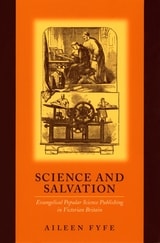
Science and Salvation
Evangelical Popular Science Publishing in Victorian BritainAileen Fyfe
University of Chicago Press, 2004
A fascinating study of the tenuous relationship between science and religion in evangelical publishing, Science and Salvation examines questions of practice and faith from a fresh perspective. Rather than highlighting works by expert men of science, Aileen Fyfe instead considers a group of relatively undistinguished authors who used thinly veiled Christian rhetoric to educate first, but to convert as well. This important volume is destined to become essential reading for historians of science, religion, and publishing alike.
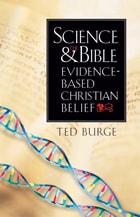
Science and the Bible
Evidence-Based Christian BeliefTed Burge
Templeton Press, 2005
Does scientific evidence give credence to religious belief? Ted Burge, a highly respected physicist in the United Kingdom, draws on his background in the fields of science and theology to address the issue.
The book begins with an analysis of evidence found in the text of the Bible in different translations, proceeds to an examination of interpretations of the Old and New Testaments, and then looks at evidence from the sciences, including archeological findings, geological mappings, and carbon-dating, alongside data from the arts, hymns, literature, and historians' testimonies.
Evidence is presented on:
•Physical, geological, and biological evolution, and their relation to the Genesis story of creation•Original sin, the origin of death, and the immortality of the soul, as described in Babylonian and other stories, including the Flood and the Tower of Babel
•The Resurrection and Ascension of Jesus, Incarnation and Atonement
•Free will and the nature of love
•Miracles as described in the Bible
•The evolution of belief
•Meditation and prayer as a "conscious interchange of thoughts with God"
Knowledge of science is knowledge of God's creation and often helps to identify some of the things we can say about God, the author points out.
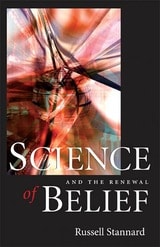
Science and the Renewal Of Belief
Russell Stannard
Templeton Press, 2004
Originally published in Great Britain and now updated and available for the first time in a U.S. edition, this book is a critically acclaimed work by a renowned theologian-scientist.
Russell Stannard is known for cutting through highly technical data and presenting it clearly and simply. In Science and the Renewal of Belief he sheds light on ways in which science and religion influence each other and can help each other. Science and logic cannot establish belief, he says, but belief can be confirmed and renewed with the changed perspective of modern science.
The many reviews of the U.K. edition of his book cite his lucid presentation of relativity and quantum theory, and the way he uses relativity to explore time and eternity, and indeterminacy to comment on free will. He is also praised for offering fresh insight into original sin, the trials experienced by Galileo, the problem of pain, the possibility of miracles, the evidence for the resurrection, the credibility of incarnation, and the power of steadfast prayer. By introducing simple analogies, Stannard clears up misunderstandings that have muddied the connections between science and religion, and suggests contributions that the pursuit of physical science can make to theology.
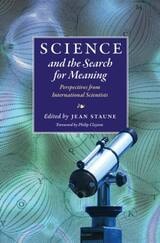
Science and the Search for Meaning
Perspectives from International ScientistsJean Staune
Templeton Press, 2006
As the organizer of some of the most important meetings in science and religion in Europe, Jean Staune is in a core position to report on the dialogue between science and religion, primarily from the views of scientists. In this book, the translation of a recent French edition, he presents "audacious and rigorous" articles by fifteen renowned leaders in the field, of whom four are Nobel Prize winners. They represent nine countries and seven religions.
Each of the authors in this volume responds in a different way, addressing naturalism, materialism, the nature of consciousness, reductionism, and the quest for meaning.Two paradigms emerge, with those who say that God (or direction) can exist in the universe because we can understand certain things, while others say that God exists because we cannot understand the universe altogether. Their reflections on the accessibility and the mystery of the world show the extraordinary abstract revolution that took place in science during the twentieth century and the way this establishes a bridge between science and religion.
Contributors are Nobel Prize winners Christian de Duve, Charles Townes, Ahmed Zewail, and William D. Phillips; as well as Paul Davies, Bernard d'Espagnat, Thomas Odhiambo, Ramanath Cowsik, Jean Kovalevsky, Thierry Magnin, Bruno Guiderdoni, Trinh Xuan Thuan, Khalil Chamcham, Michael Heller, and Philip Clayton.
Science, Religion, and Mormon Cosmology
Erich Robert Paul
University of Illinois Press, 1992
Scribal Habits in Greek New Testament Manuscripts
Andrew W. Wilson
SBL Press, 2026
Scribal Memory and Word Selection
Text Criticism of the Hebrew BibleRaymond F. Person Jr.
SBL Press, 2023
What were ancient scribes doing when they copied a manuscript of a literary work? This question is especially problematic when we realize that ancient scribes preserved different versions of the same literary texts. In Scribal Memory and Word Selection: Text Criticism of the Hebrew Bible, Raymond F. Person Jr. draws from studies of how words are selected in everyday conversation to illustrate that the same word-selection mechanisms were at work in scribal memory. Using examples from manuscripts of the Hebrew Bible, Person provides new ways of understanding the cognitive-linguistic mechanisms at work during the composition/transmission of texts. Person reveals that, while our modern perspective may consider textual variants to be different literary texts, from the perspective of the ancient scribes and their audiences, these variants could still be understood as the same literary text.
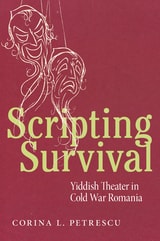
Scripting Survival
Yiddish Theater in Cold War RomaniaCorina L. Petrescu
Rutgers University Press, 2027
In Cold War Romania, the Jewish State Theater in Bucharest (TES) was a site for high-stakes cultural negotiations. While the state used the theater to consolidate Yiddish stagecraft into a tool for state propaganda, a more nuanced story unfolded behind the scenes: TES was also a vehicle for preserving and advancing Yiddish culture within the confines of a socialist state. This book focuses on five commemorative volumes published between 1956 and 1976 by editors who were Shoah survivors—individuals uniquely torn between their passion for Yiddish culture and the communist ideal. By analyzing these volumes, the study reveals the hidden ideological tensions and cultural ambitions embedded within the theater’s operations and provides a rare window into the struggle to maintain a distinctive Jewish identity while navigating the rigid political realities of the time. It is a compelling look at the editorial strategies used to safeguard a vanishing heritage.
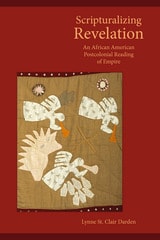
Scripturalizing Revelation
An African American Postcolonial Reading of EmpireLynne St. Clair Darden
SBL Press, 2015
A fresh contribution to the growing body of New Testament scholarship on empire, both ancient and modern
Darden’s reading of Revelation examines John the Seer’s rhetorical strategy, in general, and imperial cult imagery in chapters 4 and 5, in particular, through the lens of an African American scripturalization supplemented by postcolonial theory. The scripturalization proposes that John the Seer’s signifyin(g) on empire demonstrated that he was well aware of the oppressive nature of Roman imperialism on the lives of provincial Asian Christians. Yet, ironically, John reinscribed imperial processes and practices. Darden argues that African American biblical scholarship must now attend adequately to these complex cultural negotiations lest it find itself inadvertently feeding the imperial beast.
Features:
- Relates the potential for African American cooption by the U.S. Empire to the cooption by the Roman Empire both thematized and performed in Revelation
- Book-length study on postcolonial African American biblical hermeneutics
- A reading supplemented by postcolonial theory that better addresses the hybridity of African American identity
Sea Voyages and Beyond
Emerging Strategies in Socio-Rhetorical InterpretationVernon K. Robbins
SBL Press, 2018
Explore insights, methodologies, and advances in socio-rhetorical interpretation
Essays in this volume from Vernon K. Robbins merge social and rhetorical strategies of interpretation and set the stage for how socio-rhetorical interpretation has developed in the context of research into the rhetoric of religious antiquity. This book contains “By Land and By Sea: The We Passages and Ancient Sea Voyages” (1978), which initially received widespread praise and then became an object of significant criticism. The volume includes Robbins’s varied, detailed responses to both encouragement and critique of his approach.
Features:
- Introduction to the collection by David B. Gowler
- Twelve essays that programmatically study early Christian texts using resources from the social sciences
- Reflections on the future of socio-rhetorical criticism
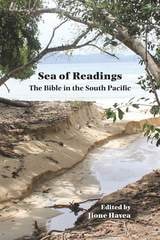
Sea of Readings
The Bible in the South PacificJione Havea
SBL Press, 2018
Readings by South Pacific islanders
This book offers readings of the Bible by native biblical critics from the South Pacific (Pasifika). An essay from editor Jione Havea introduces the volume by locating these essays within islander criticism and by explaining the flow of the book. Essays are presented in three sections. “Island Twists” offers readings that twist, like a whirlpool, biblical texts around insights of Pasifika novelists, composers, poets, and sages. “Island Turns” contains contextual readings that turn biblical texts toward Pasifika. “Across the Sea” contains responses by biblical critics from across the sea.
Features
- Contributions to islander criticism
- A showcase of texts by native writers, poets, and composers
- Crosscultural and postcolonial readings
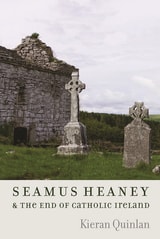
Seamus Heaney and the End of Catholic Ireland
Kieran Quinlan
Catholic University of America Press, 2020
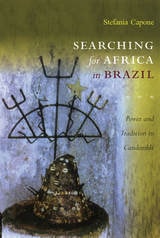
Searching for Africa in Brazil
Power and Tradition in CandombléStefania Capone
Duke University Press, 2010
Challenging the usual interpretations of Afro-Brazilian religions as fixed entities, completely independent of one another, Capone reveals these practices as parts of a unique religious continuum. She does so through an analysis of ritual variations as well as discursive practices. To illuminate the continuum of Afro-Brazilian religious practice and the tensions between exegetic discourses and ritual practices, Capone focuses on the figure of Exu, the sacred African trickster who allows communication between gods and men. Following Exu and his avatars, she discloses the centrality of notions of prestige and power—mystical and religious—in Afro-Brazilian religions. To explain how religious identity is constantly negotiated among social actors, Capone emphasizes the agency of practitioners and their political agendas in the “return to roots,” or re-Africanization, movement, an attempt to recover the original purity of a mythical and legitimizing Africa.
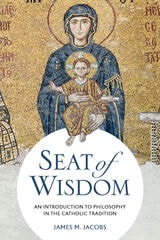
Seat of Wisdom
An Introduction to Philosophy in the Catholic TraditionJames M. Jacobs
Catholic University of America Press, 2021
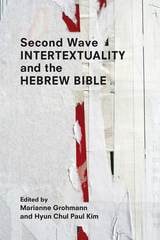
Second Wave Intertextuality and the Hebrew Bible
Marianne Grohmann
SBL Press, 2019
An innovative collection of inner-biblical, intertextual, and intercontextual dialogues
Essays from a diverse group of scholars offer new approaches to biblical intertextuality that examine the relationship between the Hebrew Bible, art, literature, sociology, and postcolonialism. Eight essays in part 1 cover inner-biblical intertextuality, including studies of Genesis, Judges, and Qoheleth, among others. The eight postbiblical intertextuality essays in part 2 explore Bakhtinian and dialogical approaches, intertextuality in the Dead Sea Scrolls, canonical critisicm, reception history, and #BlackLivesMatter. These essays on various genres and portions of the Hebrew Bible showcase how, why, and what intertextuality has been and presents possible potential directions for future research and application.
Features:
- Diverse methods and cases of intertextuality
- Rich examples of hermeneutical theory and interpretive applications
- Readings of biblical texts as mutual dialogues, among the authors, traditions, themes, contexts, and lived worlds
Secrecy
Silence, Power, and ReligionHugh B. Urban
University of Chicago Press, 2021
With Secrecy, Urban investigates several revealing instances of the power of secrecy in religion, including nineteenth-century Scottish Rite Freemasonry, the sexual magic of a Russian-born Parisian mystic; the white supremacist BrüderSchweigen or “Silent Brotherhood” movement of the 1980s, the Five Percenters, and the Church of Scientology. An electrifying read, Secrecy is the culmination of decades of Urban’s reflections on a vexed, ever-present subject.
Secret Body
Erotic and Esoteric Currents in the History of ReligionsJeffrey J. Kripal
University of Chicago Press, 2017
Kripal tells his story, biographically, historically and politically contextualizing each of the six books of his Chicago corpus, from Kali’s Child to Mutants and Mystics, all the while answering his censors and critics and exploring new implications of his thought. In the process, he begins to sketch out a speculative “new comparativism” in twenty theses. The result is a new vision for the study of religion, one that takes in the best of the past, engages with outside critiques from the sciences and the humanities, and begins to blaze a new positive path forward. A major work decades in the making, Secret Body will become a landmark in the study of religion.

Secret Covenants
New Insights on Early Mormon PolygamyBruno, Cheryl L.
Signature Books, 2024
Navigating the intricate labyrinth of early Mormon plural marriage can be fascinating, frustrating, and often confusing. The essays in this volume venture into the depths of historical inquiry, presenting a diverse array of perspectives on the subject. Authored by a consortium of esteemed scholars and researchers in the field of Mormon studies, it addresses the nuanced intricacies of Joseph Smith’s involvement in plural marriage.
Delving into the core of this discourse, these experts meticulously analyze foundational documents, highlighting the complexities Joseph Smith faced in practicing plural marriage and shedding light on the legal aspects of polygamy in 1840s Illinois. It navigates lesser-known details of Smith’s proposals and relationships, including the enigmatic story of Fanny Alger.
Secret Covenants presents a balanced exploration. It critiques traditional portrayals, providing multiple viewpoints, such as the examination of Emma Smith’s vehement rejection of polygamy after her husband’s death, and an analysis of the societal impact on women within polygamous unions. Furthermore, the authors address evolving doctrinal debates triggered by the “Marriage Revelation” and its impact on Mormon philosophy and thought.
This anthology serves as a foundational resource for academic scholars, individuals interested in religious history, and anyone seeking to understand the many layers of Mormon plural marriage.
Secret Habits
Catholic Literacy Education for Women in the Early Nineteenth CenturyCarol Mattingly
Southern Illinois University Press, 2016
Mattingly shows that despite widespread fears and opposition, including attacks by vaunted northeastern Protestant pioneers of literacy, Catholic women nonetheless became important educators of women in many areas of America. They founded convents, convent academies, and schools; developed their own curricula and pedagogies; and persisted in their efforts in the face of significant prejudices. The convents faced sharp opposition from Protestant educators, who often played on anti-Catholic fears to gain support for their own schools. Using a performative rhetoric of good works that emphasized civic involvement, Catholic women were able to educate large numbers of women and expand opportunities for literacy instruction.
A needed corrective to studies that have focused solely on efforts by Protestant educators, Mattingly’s work offers new insights into early nineteenth-century women’s literacy, demonstrating that literacy education was more religiously and geographically diverse than previously recognized.
Secular Days, Sacred Moments
The America Columns of Robert ColesRobert Coles
Michigan State University Press, 2013
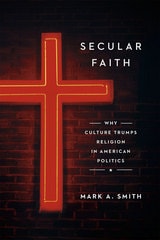
Secular Faith
How Culture Has Trumped Religion in American PoliticsMark A. Smith
University of Chicago Press, 2015
Mark A. Smith provocatively argues that religion is not nearly the unchanging conservative influence in American politics that we have come to think it is. In fact, in the long run, religion is best understood as responding to changing political and cultural values rather than shaping them. Smith makes his case by charting five contentious issues in America’s history: slavery, divorce, homosexuality, abortion, and women’s rights. For each, he shows how the political views of even the most conservative Christians evolved in the same direction as the rest of society—perhaps not as swiftly, but always on the same arc. During periods of cultural transition, Christian leaders do resist prevailing values and behaviors, but those same leaders inevitably acquiesce—often by reinterpreting the Bible—if their positions become no longer tenable. Secular ideas and influences thereby shape the ways Christians read and interpret their scriptures.
So powerful are the cultural and societal norms surrounding us that Christians in America today hold more in common morally and politically with their atheist neighbors than with the Christians of earlier centuries. In fact, the strongest predictors of people’s moral beliefs are not their religious commitments or lack thereof but rather when and where they were born. A thoroughly researched and ultimately hopeful book on the prospects for political harmony, Secular Faith demonstrates how, over the long run, boundaries of secular and religious cultures converge.
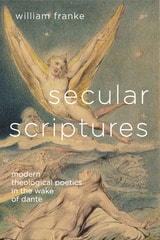
Secular Scriptures
Modern Theological Poetics in the Wake of DanteWilliam Franke
The Ohio State University Press, 2015
Secular Scriptures examines, through its own original speculative outlook, some of the most compelling exemplars of religious-poetic revelation in modern Western literature. The essays taken as an ensemble revolve around and are bookended by Dante, but they also explore the work of Chaucer, Shakespeare, Milton, Blake, Leopardi, Baudelaire, Dickinson, and Yeats. Looking both backward and forward from the vantage of Dante, Franke explores the roots of secularized religious vision in antiquity and the Middle Ages, even as he also looks forward toward its fruits in modern poetry and poetics. Ultimately, Franke’s analyses demonstrate the possibilities opened by understanding literature as secularized religious revelation.
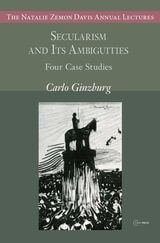
Secularism and Its Ambiguities
Four Case StudiesCarlo Ginzburg
Central European University Press, 2023
In the best micro-historical tradition, Carlo Ginzburg, himself one of the founders and icons of this genre of historiography, dissects four moments of European intellectual history. This book relives the experience that participants in the Natalie Zemon Davis Lecture Series at the Budapest campus of Central European University had in 2019 listening to Ginzburg's eloquent and engaging discourses. For the purposes of this volume he has re-edited and completed the leporello of cases charged with the inherent ambiguity between secularism and religions.
Secularism is often identified with rejection or at least distancing from the sacred. However, if one assumes that secularism also appropriates and reworks the sacred, its ambiguities come to the fore. The dilemma accompanies the reception of La Boétie's Servitude volontaire between 1574 and today. Before Walter Benjamin, the lesser-known 19th-century Léon de Laborde defended the profanity of reproducing the arts. The tension around the secular pervades the case of the College de Sociologie (Paris, 1937-1939), an attempt to analyze the ideological components of fascism. The fourth lecture approaches a much-discussed contemporary phenomenon – fake news – from a long-term perspective. To what extent are some disturbing features of the world we live in the result of a long, tortuous, unpredictable trajectory?
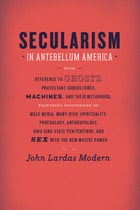
Secularism in Antebellum America
John Lardas Modern
University of Chicago Press, 2011
Ghosts. Railroads. Sing Sing. Sex machines. These are just a few of the phenomena that appear in John Lardas Modern’s pioneering account of religion and society in nineteenth-century America. This book uncovers surprising connections between secular ideology and the rise of technologies that opened up new ways of being religious. Exploring the eruptions of religion in New York’s penny presses, the budding fields of anthropology and phrenology, and Moby-Dick, Modern challenges the strict separation between the religious and the secular that remains integral to discussions about religion today.
Modern frames his study around the dread, wonder, paranoia, and manic confidence of being haunted, arguing that experiences and explanations of enchantment fueled secularism’s emergence. The awareness of spectral energies coincided with attempts to tame the unruly fruits of secularism—in the cultivation of a spiritual self among Unitarians, for instance, or in John Murray Spear’s erotic longings for a perpetual motion machine. Combining rigorous theoretical inquiry with beguiling historical arcana, Modern unsettles long-held views of religion and the methods of narrating its past.
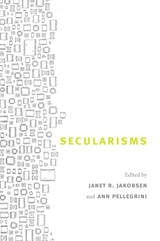
Secularisms
Janet R. Jakobsen and Ann Pellegrini, eds.
Duke University Press, 2008
With essays addressing secularism in India, Iran, Turkey, Great Britain, China, and the United States, this collection crucially complicates the dominant narrative by showing that secularism is multifaceted. How secularism is lived and experienced varies with its national, regional, and religious context. The essays explore local secularisms in relation to religious traditions ranging from Islam to Judaism, Hinduism to Christianity. Several contributors explicitly take up the way feminism has been implicated in the dominant secularization story. Ultimately, by dislodging secularism’s connection to the single (and singular) progress narrative, this volume seeks to open spaces for other possible narratives about both secularism and religion—as well as for other possible ways of inhabiting the contemporary world.
Contributors: Robert J. Baird, Andrew Davison, Tracy Fessenden, Janet R. Jakobsen, Laura Levitt,
Molly McGarry, Afsaneh Najmabadi, Taha Parla, Geeta Patel, Ann Pellegrini, Tyler Roberts,
Ranu Samantrai, Banu Subramaniam, Rajeswari Sunder Rajan, Angela Zito
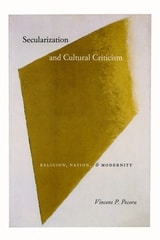
Secularization and Cultural Criticism
Religion, Nation, and ModernityVincent P. Pecora
University of Chicago Press, 2006
Religion is an undiscovered country for much of the secular academy, which remains deeply ambivalent about it as an object of study. On the one hand, secular scholars agree that it is time to take religion seriously. On the other, these same scholars persist in assuming that religion rests not on belief but on power and ideology. According to Vincent Pecora, the idea of the secular itself is the source of much of the contradiction and confusion in contemporary thought about religion. Pecora aims here to work through the paradoxes of secularization, which emerges in this book as an intractable problem for cultural criticism in the nation-states of the post-Enlightenment West.
Secularization and Cultural Criticism examines the responses of a wide range of thinkers—Edward Said, Talal Asad, Jürgen Habermas, Walter Benjamin, Emile Durkheim, Carl Schmitt, Matthew Arnold, and Virginia Woolf, among others—to illustrate exactly why the problem of secularization in the study of society and culture should matter once again. Exploring the endemic difficulty posed by religion for the modern academy, Pecora makes sense of the value and potential impasses of secular cultural criticism in a global age.
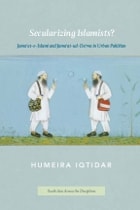
Secularizing Islamists?
Jama'at-e-Islami and Jama'at-ud-Da'wa in Urban PakistanHumeira Iqtidar
University of Chicago Press, 2011
Secularizing Islamists? provides an in-depth analysis of two Islamist parties in Pakistan, the highly influential Jama‘at-e-Islami and the more militant Jama‘at-ud-Da‘wa, widely blamed for the November 2008 terrorist attack in Mumbai, India. Basing her findings on thirteen months of ethnographic work with the two parties in Lahore, Humeira Iqtidar proposes that these Islamists are involuntarily facilitating secularization within Muslim societies, even as they vehemently oppose secularism.
This book offers a fine-grained account of the workings of both parties that challenges received ideas about the relationship between the ideology of secularism and the processes of secularization. Iqtidar particularly illuminates the impact of women on Pakistani Islamism, while arguing that these Islamist groups are inadvertently supporting secularization by forcing a critical engagement with the place of religion in public and private life. She highlights the role that competition among Islamists and the focus on the state as the center of their activity plays in assisting secularization. The result is a significant contribution to our understanding of emerging trends in Muslim politics.
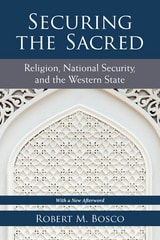
Securing the Sacred
Religion, National Security, and the Western StateRobert M. Bosco
University of Michigan Press, 2014
Despite significant theoretical distinctions between securitization on the domestic and the international levels, he finds that the outcome of addressing religion within the context of security hinges upon partnerships. Whereas states may harness the power of international allies, they cannot often find analogous domestic allies; therefore, states that attempt to securitize religion at home are more vulnerable to counterattack and more likely to abandon their efforts. Securing the Sacred makes a significant contribution to the fields of political theory, international relations, Islamic studies, and security/military studies.
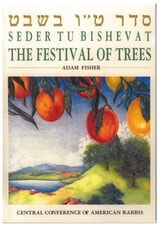
Seder Tu Bishevat
The Festival of TreesRabbi Adam Fisher
Central Conference of American Rabbis, 1989
The Festival of Trees, Tu Bishevat, celebrates nature's rebirth after winter. Seder Tu Bishevat not only marks the observance but celebrates Judaism's appreciation of the larger cycle of nature as the work of God. This volume contains two Seders: Seder I addresses both adults and children of various ages; Seder II is specifically designed for the understanding and participation of younger children. The book includes prayers and selections from traditional sources, original poetry by Rabbi Fisher, and 20 songs with complete chording for guitar. Ideal for congregational or home use.
Sedulius, The Paschal Song and Hymns
Carl P. Springer
SBL Press, 2013
Seeing Silence
Mark C. Taylor
University of Chicago Press, 2020
“To hear silence is to find stillness in the midst of the restlessness that makes creative life possible and the inescapability of death acceptable.” So writes Mark C. Taylor in his latest book, a philosophy of silence for our nervous, chattering age. How do we find silence—and more importantly, how do we understand it—amid the incessant buzz of the networks that enmesh us? Have we forgotten how to listen to each other, to recognize the virtues of modesty and reticence, and to appreciate the resonance of silence? Are we less prepared than ever for the ultimate silence that awaits us all?
Taylor wants us to pause long enough to hear what is not said and to attend to what remains unsayable. In his account, our way to hearing silence is, paradoxically, to see it. He explores the many variations of silence by considering the work of leading modern and postmodern visual artists, including Barnett Newman, Ad Reinhardt, James Turrell, and Anish Kapoor. Developing the insights of philosophers, theologians, writers, and composers, Taylor weaves a rich narrative modeled on the Stations of the Cross. His chapter titles suggest our positions toward silence: Without. Before. From. Beyond. Against. Within. Between. Toward. Around. With. In. Recasting Hegel’s phenomenology of spirit and Kierkegaard’s stages on life’s way, Taylor translates the traditional Via Dolorosa into a Nietzschean Via Jubilosa that affirms light in the midst of darkness.
Seeing Silence is a thoughtful meditation that invites readers to linger long enough to see silence, and, in this way, perhaps to hear once again the wordless Word that once was named “God.”
Seeing with the Eyes of the Heart
Cultivating a Sacramental Imagination in an Age of PornographyElizabeth T. Groppe
Catholic University of America Press, 2020
Seeker Churches
Promoting Traditional Religion in a Nontraditional WayKimon Howland Sargeant
Rutgers University Press, 2000
America’s religious landscape is in flux. New churches are springing up and many older churches are redefining themselves to survive. At the forefront of this denominational free-for-all are evangelical “seeker” churches.
These churches target “seekers”—individuals of any faith or denominational background who seek spiritual fulfillment but are not currently affiliated with any specific church. By focusing on this largely untapped group, seeker churches have become one of the fastest-growing religious movements in the country. In his study, Kimon Sargeant provides a sociological context for the rise of these churches by exploring the rituals, messages, strategies, and denominational functions of this emerging form of American evangelical Protestantism.
Featuring live bands, professional lighting and sound systems, and multi-media presentations, seeker churches are attracting many people who have “dropped out” of organized religion. To broaden their appeal, they offer attenders advice on everyday issues ranging from relationships to finance.
Seeking Sakyamuni
South Asia in the Formation of Modern Japanese BuddhismRichard M. Jaffe
University of Chicago Press, 2019
Seeking the Straight and Narrow
Weight Loss and Sexual Reorientation in Evangelical AmericaLynne Gerber
University of Chicago Press, 2011
Select Orations
Martha Gregory of Nazianzus
Catholic University of America Press, 2003
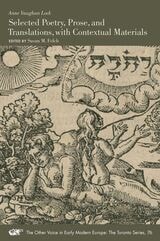
Selected Poetry, Prose, and Translations, with Contextual Materials
Anne Vaughan Lock
Iter Press, 2021
This volume provides a collection of Lock’s works presented in modern spelling, and it includes additional contemporary materials that place her voice in the larger context of the Tudor period, offering insight into the intertwined complexities of political, social, and religious life in sixteenth-century England.
Selected Prose Works
Commentary on Genesis, Commentary on Exodus, Homily on Our Lord, Letter to PubliusSaint Ephrem the Syrian
Catholic University of America Press, 1994
Selected Sermons, Volume 2
William B. Peter Chrysologus
Catholic University of America Press, 2004
Selected Sermons, Volume 3
William B. Peter Chrysologus
Catholic University of America Press, 2005
Selected Sermons; Homilies
Catholic University of America Press, 1953