Results by title
4155 books match the query 'State & Local' and 256 start with s
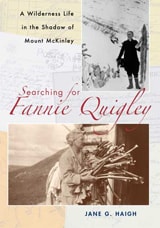
Searching for Fannie Quigley
A Wilderness Life in the Shadow of Mount McKinleyJane G. Haigh
Ohio University Press, 2007
At the age of 27, Fannie Sedlacek left her Bohemian homestead in Nebraska to join the gold rush to the Klondike. From the Klondike to the Tanana, Fannie continued north, finally settling in Katishna near Mount McKinley. This woman, later known as Fannie Quigley, became a prospector who staked her own claims and a cook who ran a roadhouse. She hunted and trapped and thrived for nearly forty years in an environment that others found unbearable.
Her wilderness lifestyle inspired many of those who met her to record their impressions of this self-sufficient woman, who died in 1944. To many of the 700,000 annual visitors to Denali National Park she is a symbol of the enduring spirit of the original pioneers.
Searching for Fannie Quigley: A Wilderness Life in the Shadow of Mount McKinley goes beyond the mere biographical facts of this unique woman’s journey. It also tells historian Jane G. Haigh’s own story of tracking and tracing the many paths that Fannie Quigley’s intriguing life took. Uncovering remote clues, digging through archives, and listening to oral accounts from a wide array of sources, Haigh has fashioned this rich lode into a compelling narrative.
In Searching for Fannie Quigley, Haigh separates fact from fiction to reveal the true story of this highly mythologized pioneer woman.
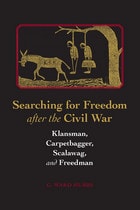
Searching for Freedom after the Civil War
Klansman, Carpetbagger, Scalawag, and FreedmanG. Ward Hubbs
University of Alabama Press, 2015
Examines the life stories and perspectives about freedom in relation to the figures depicted in an infamous Reconstruction-era political cartoon
The cartoon first appeared in the Tuskaloosa Independent Monitor, published by local Ku Klux Klan boss Ryland Randolph, as a swaggering threat aimed at three individuals. Hanged from an oak branch clutching a carpetbag marked “OHIO” is the Reverend Arad S. Lakin, the Northern-born incoming president of the University of Alabama. Swinging from another noose is Dr. Noah B. Cloud—agricultural reformer, superintendent of education, and deemed by Randolph a “scalawag” for joining Alabama’s reformed state government. The accompanying caption, penned in purple prose, similarly threatens Shandy Jones, a politically active local man of color.
Using a dynamic and unprecedented approach that interprets the same events through four points of view, Hubbs artfully unpacks numerous layers of meaning behind this brutal two-dimensional image.
The four men associated with the cartoon—Randolph, Lakin, Cloud, and Jones—were archetypes of those who were seeking to rebuild a South shattered by war. Hubbs explores these broad archetypes but also delves deeply into the four men’s life stories, writings, speeches, and decisions in order to recreate each one’s complex worldview and quest to live freely. Their lives, but especially their four very different understandings of freedom, help to explain many of the conflicts of the 1860s. The result is an intellectual tour de force.
General readers of this highly accessible volume will discover fascinating new insights about life during and after America’s greatest crisis, as will scholars of the Civil War, Reconstruction, and southern history.
Searchlight
The Camp That Didn't FailHarry Reid
University of Nevada Press, 2007
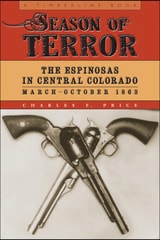
Season of Terror
The Espinosas in Central Colorado, March–October 1863Charles F. Price
University Press of Colorado, 2013
For eight months during the spring and fall of 1863, brothers Felipe Nerio and José Vivián Espinosa and their young nephew, José Vincente, New Mexico–born Hispanos, killed and mutilated an estimated thirty-two victims before their rampage came to a bloody end. Their motives were obscure, although they were members of the Penitentes, a lay Catholic brotherhood devoted to self-torture in emulation of the sufferings of Christ, and some suppose they believed themselves inspired by the Virgin Mary to commit their slaughters.
Until now, the story of their rampage has been recounted as lurid melodrama or ignored by academic historians. Featuring a fascinating array of frontier characters, Season of Terror exposes this neglected truth about Colorado’s past and examines the ethnic, religious, political, military, and moral complexity of the controversy that began as a regional incident but eventually demanded the attention of President Lincoln.
Secession and the Union in Texas
By Walter L. Buenger
University of Texas Press, 1984
In 1845 Texans voted overwhelmingly to join the Union. They voted just as overwhelmingly to secede in 1861. The story of why and how that happened is filled with colorful characters, such as the aged Sam Houston, and with the southwestern flavor of raiding Comanches, German opponents of slavery, and a border with Mexico.
Texas was unique among the seceding states because of its ambivalence toward secession. Yet for all its uniqueness the story of the secession of Texas has broad implications for the secession movement in general. Despite the local color and the southwestern nature of the state, Texas was more southern than western in 1860. Texans supported the Union or insisted upon secession for reasons common to the South and to the whole nation. Most Texans in 1860 were recent immigrants from southern and border states. They still thought and acted like citizens of their former states. The newness of Texas then makes it a particularly appropriate place from which to draw conclusions about the entire secession movement.
Secession and the Union in Texas is both a narrative of secession in Texas and a case study of the causes of secession in a southern state. Politics play a key role in this history, but politics broadly defined to include the influence of culture, partisanship, ideology, and self-interest. As any study of a mass movement carried out in tense circumstances must be, this is social history as well as political history. It is a study of public hysteria, the pressure for consensus, and the vanishing of a political process in which rational debate about secession and the Union could take place.
Although relying primarily on traditional sources such as manuscript collections and newspapers, a particularly rich source for this study, the author also uses election returns, population shifts over the course of the 1850s, and the breakdown of population within Texas counties to provide a balanced approach.
These sources indicate that Texans were not simply secessionists or unionists. At the end of 1860 Texans ranged from ardent secessionists to equally passionate supporters of the Union. But the majority fell in between these two extremes, creating an atmosphere of ambivalence toward secession which was not erased even by the war.

Second Nature
An Environmental History of New EnglandRichard W. Judd
University of Massachusetts Press, 2014
Winner of the 2014 New England Historical Association's James P. Hanlan Book Award
Bounded by the St. Lawrence Valley to the north, Lake Champlain to the west, and the Gulf of Maine to the east, New England may be the most cohesive region in the United States, with a long and richly recorded history. In this book, Richard W. Judd explores the mix of ecological process and human activity that shaped that history over the past 12,000 years. He traces a succession of cultures through New England's changing postglacial environment down to the 1600s, when the arrival of Europeans interrupted this coevolution of nature and culture.
A long period of tension and warfare, inflected by a variety of environmental problems, opened the way for frontier expansion. This in turn culminated in a unique landscape of forest, farm, and village that has become the embodiment of what Judd calls “second nature”—culturally modified landscapes that have superseded a more pristine “first nature.”
In the early 1800s changes in farm production and industrial process transformed central New England, while burgeoning markets at the geographical margins brought rapid expansion in fishing and logging activities. Although industrialization and urbanization severed connections to the natural world, the dominant cultural expression of the age, Romanticism, provided new ways of appreciating nature in the White Mountains and Maine woods. Spurred by these Romantic images and by a long tradition of local resource management, New England gained an early start in rural and urban conservation.
In the 1970s environmentalists, inspired by a widespread appreciation for regional second-nature landscapes, moved quickly from battling pollution and preserving wild lands to sheltering farms, villages, and woodlands from intrusive development. These campaigns, uniquely suited to the region's land-use history, ecology, and culture, were a fitting capstone to the environmental history of New England.

Secrets of the Greatest Snow on Earth, Second Edition
Weather, Climate Change, and Finding Deep Powder in Utah's Wasatch Mountains and Around the WorldJim Steenburgh
Utah State University Press, 2023
Utah has long claimed to have the greatest snow on Earth—the state itself has even trademarked the phrase. In Secrets of the Greatest Snow on Earth, Jim Steenburgh investigates Wasatch weather, exposing the myths, explaining the reality, and revealing how and why Utah’s powder lives up to its reputation. Steenburgh also examines ski and snowboard regions beyond Utah, providing a meteorological guide to mountain weather and snow climates around the world.
Chapters explore mountain weather, avalanches and snow safety, historical accounts of weather events and snow conditions, and the basics of climate and weather forecasting. In this second edition, Steenburgh explains what creates the best snow for skiing and snowboarding using accurate and accessible language and 150 color photographs and illustrations, making Secrets of the Greatest Snow on Earth a helpful tool for planning vacations and staying safe during mountain adventures.
This edition is updated with two new chapters covering microclimates and climate change in greater depth. Steenburgh addresses the declining snowpack and the future of snow across the western United States, as well as the declining snow and ice in several regions of the world—the European Alps in particular. Snowriders, weather enthusiasts, meteorologists, students of snow science, and anyone who dreams of deep powder and bluebird skies will want to get their gloves on this new edition of Secrets of the Greatest Snow on Earth.
Praise for the first edition:
“Everything you always wanted to know about how snow forms and how to follow forecasts so you see
how much an”d where is in the book. It’s a must-have for any fan of snow, sure to get you excited about
winter, and give you a bevy of conversation topics for the chairlift ride.”
—Utah Adventure Journal
“For backcountry enthusiasts that find themselves infatuated with weather patterns, snow-water
equivalents, microclimates, and Utah, this book is a dream come true.”
—The Backcountry Skiing Blog
“Steenburgh shares a career’s worth of knowledge in this book. His love of both snow science and skiing
is obvious, and he adds humor and personality to the scientific discussion.”
—First Tracks!! Online Skiing Magazine
“When it comes to snow, the details—both small- and large-scale—do matter. If we all observed our
surroundings with as much curiosity and enthusiasm as Steenburgh, the world could be a much better-
tended place.”
—American Scientist
Sectionalism in Virginia from 1776 - 1861
Charles H. Ambler with a new introduction by Barbara Rasmussen
West Virginia University Press, 2008
This 1910 study of sectionalism in Virginia illustrates how the east and west of Virginia were destined to separate into two states. Barbara Rasmussen, professor of Public History and Director of Cultural Resource Management at West Virginia University writes a new introduction to Sectionalism in Virginia, setting Ambler’s classic grand achievement into the context of its production by creating an historical process for studying West Virginia history.

Securing Paradise
Tourism and Militarism in Hawai'i and the PhilippinesVernadette Vicuña Gonzalez
Duke University Press, 2013
Seedtime on the Cumberland
Harriette Simpson Arnow
Michigan State University Press, 2013

Seeing Silicon Valley
Life inside a Fraying AmericaMary Beth Meehan and Fred Turner
University of Chicago Press, 2021
It’s hard to imagine a place more central to American mythology today than Silicon Valley. To outsiders, the region glitters with the promise of extraordinary wealth and innovation. But behind this image lies another Silicon Valley, one segregated by race, class, and nationality in complex and contradictory ways. Its beautiful landscape lies atop underground streams of pollutants left behind by decades of technological innovation, and while its billionaires live in compounds, surrounded by redwood trees and security fences, its service workers live in their cars.
With arresting photography and intimate stories, Seeing Silicon Valley makes this hidden world visible. Instead of young entrepreneurs striving for efficiency in minimalist corporate campuses, we see portraits of struggle—families displaced by an impossible real estate market, workers striving for a living wage, and communities harmed by environmental degradation. If the fate of Silicon Valley is the fate of America—as so many of its boosters claim—then this book gives us an unvarnished look into the future.

Segregation Games
Boston, Busing, and the Making of Red Sox NationDavid Faflik
University of Massachusetts Press, 2026
A cultural history of race, resistance, and representation in a city divided by politics and play
When outfielder Bernie Carbo joined the Red Sox in 1974, he brought with him a toy gorilla named Mighty Joe Young that became the team’s unofficial mascot for several players and many in the local press. This seemingly innocent stuffed animal was introduced within a baseball team notorious for its stubborn discrimination, and during a particularly fraught era of racial discord in Boston. That June, after years of activism from the city’s Black community, Judge W. Arthur Garrity Jr. ruled that Boston must address the segregation of its schools through redistricting and busing. The ensuing racial animus to these policies led some of the city’s white residents to throw bananas and chant monkey sounds at African American students as they integrated the predominantly white South Boston High School. In this agitated atmosphere, cultural symbols like the Red Sox’s Mighty Joe Young mirrored and amplified the heightened racial tensions of Boston’s busing crisis.
Situated at the intersection of US cultural and social history, Segregation Games examines the surprising ties in 1970s Boston between the racial segregation of the city’s schools and the racial controversies expressed on and off the field of “Red Sox Nation.” “I found out in the black community why they don’t come out [to Fenway Park],” explained Black player Reggie Smith of his experiences with the Red Sox and the city during this period. “The team was the last to get Black players, and some of the things I hear out in the stands make me sick.” To understand these connections, Faflik erases the lines between politics and sport, which routinely blurred in a city suffused with an anti-Black racism that was both deceptively subtle and fiercely overt.
Drawing upon deep archival research from sources that have largely been ignored, such as the Black press of the time, Faflik offers a carefully nuanced portrait of Boston’s cultural life at a pivotal moment in the city’s history.
Selling The Dream
The Gulf American Corporation and the Building of Cape Coral, FloridaDavid Dodrill
University of Alabama Press, 1993
Examining real estate ambition and urban growth in Cape Coral’s creation.
The Gulf American Corporation played a significant role in the development and urbanization of the state of Florida, especially southwest Florida, during the late 1950s and 1960s. The Miami-based company promoted living in Florida to people residing throughout North America and in several foreign countries. It also enabled people of average incomes to purchase home sites in Florida on an installment basis. As a result, Gulf American had a heavy influence on the migration of people to Florida as early as 1957.
Leonard and Julius J. Rosen of Baltimore, Maryland, founded and controlled the corporation during its 12-year existence from 1957 to 1969. The sale and promotion of Florida real estate was an extension of their marketing style developed in previous years when they sold mail-order cosmetics and other products. Their innovative sales strategies ultimately resulted in conflicts with state and federal regulatory agencies in the mid 1960s over the firm’s aggressive sales methods. The struggle with the state of Florida over regulation, which degenerated into a personal conflict between Governor Claude Kirk and the Rosens, resulted in the Rosens’ selling the business to GAC Corporation of Allentown, Pennsylvania, in 1969. After a series of business setbacks and continuing accusations of misrepresentations by salespeople, GAC declared bankruptcy in 1975 and was eventually resurrected as Avatar Holding, Inc., in 1980.
Gulf American left a mixed legacy to the state of Florida by building several growing cities like Cape Coral and Golden Gate, while at the same time selling worthless underwater swampland near the Everglades. The building of their first development was planned by the company. In that sense, Cape Coral was designed to be the Rosens’ most elaborate sales tool.
Based on 31 personal interviews with former Gulf American Corporation, GAC/Avatar Holding company officials and supplemented by articles from 25 different newspapers, this book provides a comprehensive and fascinating look at the Gulf American Corporation—the largest land sales firm in the United States in the 1960s. In many ways the story of Gulf American is a rags-to-riches tale of Leonard and Julius (Jack) Rosen, complete with intrigue and the fluctuations of fortune that matched the rising tides that covered much of the land they sold.
Selma, Lord, Selma
Girlhood Memories of the Civil Rights DaysSheyann Webb
University of Alabama Press, 1997
Witness the Civil Rights Movement through the eyes of two children.
Sheyann Webb was eight years old and Rachel West was nine when Dr. Martin Luther King Jr. arrived in Selma, Alabama, on January 2, 1965. He came to organize non-violent demonstrations against discriminatory voting laws. Selma, Lord, Selma is their firsthand account of the events from that turbulent winter of 1965--events that changed not only the lives of these two little girls but the lives of all Alabamians and all Americans. From 1975 to 1979, award-winning journalist Frank Sikora conducted interviews with Webb and West, weaving their recollections into this luminous story of fear and courage, struggle and redemption that readers will discover is Selma, Lord, Selma.
Selma
A Bicentennial HistoryAlston Fitts III
University of Alabama Press, 2017
Exploring the people, politics, and events that shaped Selma from 1815 through the twentieth century.
In 1989, Alston Fitts published a brief history of the city of Selma, Alabama, from its founding through the aftermath of the civil rights movement. Selma: A Bicentennial History is a greatly revised and expanded version of Fitts’s history of the city, replete with a wealth of new, never-before-published illustrations, which further develops a number of significant events, corrects critical errors, and, most importantly, incorporates many new stories and materials that document Selma’s establishment, growth, and development.
Comprehensive, thoroughly researched, and nonpartisan, Fitts’s pleasantly accessible history addresses every major issue, movement, and trend from the city’s settlement in 1815 to the end of the twentieth century. Its commerce, institutions, governance, as well as its evolving racial, religious, and class composition are all treated with candor and depth. Selma’s transformative role within the state and the nation is fully explored, and most notable is a nuanced and complex discussion of race relations from the rise of the civil rights era to modern times.
Historians, scholars, and Alabamians will find great use for this updated and fully developed exploration of Selma’s rich, complex, and significant history.
Senator Dennis DeConcini
From the Center of the AisleDennis DeConcini and Jack L. August, Jr.
University of Arizona Press, 2006
A vigilant centrist, who got results by building coalitions on both sides of the aisle, Senator DeConcini’s approach was not bound to strict party alliances but was deeply rooted in the independent political environment of Arizona. During his career, he sponsored legislation limiting the sale of assault weapons, which provoked the National Rifle Association. He confounded Democratic Party regulars by supporting Clarence Thomas during the controversial confirmation hearings and again split with his party in his support for William Rehnquist’s nomination to Chief Justice. In 1980 he voted for Ronald Reagan, but in 1993 he cast the swing vote for President Bill Clinton’s tax bill, which was strongly opposed by Republicans in Arizona.
This political memoir will be of interest to anyone concerned with the inner workings of the U.S. Senate or Arizona politics and offers relevant insights into today’s political climate.

Senator Howard Cannon of Nevada
A BiographyMichael Vernetti
University of Nevada Press, 2015
Born to a devout Mormon family in a small farming community in southwest Utah, Cannon served in the Army Air Force during World War II and emerged from the war as a hero. Soon he was part of the postwar migration of ambitious, adventurous Americans to the booming desert city of Las Vegas, where he practiced law and entered local politics. In 1958 he was elected to the U.S. Senate and joined a group of influential young Democratic senators who were to play a major role in shaping the country’s future. His service on the Aeronautical and Space Sciences Committee and the Armed Services Committee led to major changes in the air travel industry, including deregulation, and to increased support for national military preparedness.
Send the Alabamians
World War I Fighters in the Rainbow DivisionNimrod T. Frazer
University of Alabama Press, 2014
The Remarkable Story of Alabama's Soldiers in America's Great War.
Send the Alabamians recounts the story of the 167th Infantry Regiment of the WWI Rainbow Division from their recruitment to their valiant service on the bloody fields of eastern France in the climactic final months of World War I.
To mark the centenary of World War I, Send the Alabamians tells the remarkable story of a division of Alabama recruits whose service Douglas MacArthur observed had not “been surpassed in military history.” The book borrows its title from a quip by American General Edward H. Plummer who commanded the young men during the inauspicious early days of their service. Impressed with their ferocity and esprit de corps but exasperated by their rambunctiousness, Plummer reportedly exclaimed: In time of war, send me all the Alabamians you can get, but in
time of peace, for Lord’s sake, send them to somebody else!
The ferocity of the Alabamians, so apt to get them in trouble at home, proved invaluable in the field. At the climactic Battle of Croix Rouge, the hot-blooded 167th exhibited unflinching valor and, in the face of machine guns, artillery shells, and poison gas, sustained casualty rates over 50 percent to dislodge and repel the deeply entrenched and heavily armed enemy.
Relying on extensive primary sources such as journals, letters, and military reports, Frazer draws a vivid picture of the individual soldiers who served in this division, so often overlooked but critical to the war’s success. After Gettysburg, the Battle of Croix Rouge is the most significant military engagement to involve Alabama soldiers in the state’s history. Families and genealogists will value the full roster of the 167th that accompanies the text.
Richly researched yet grippingly readable, Nimrod T. Frazer’s Send the Alabamians will delight those interested in WWI, the World Wars, Alabama history, or southern military history in general. Historians of the war, regimental historians, military history aficionados, and those interested in previously unexplored facets of Alabama history will prize this unique volume as well.
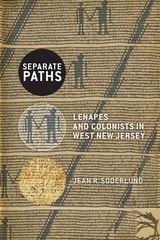
Separate Paths
Lenapes and Colonists in West New JerseyJean R. Soderlund
Rutgers University Press, 2022
Separate Paths: Lenapes and Colonists in West New Jersey is the first cross-cultural study of European colonization in the region south of the Falls of the Delaware River (now Trenton). Lenape men and women welcomed their allies, the Swedes and Finns, to escape more rigid English regimes on the west bank of the Delaware, offering land to establish farms, share resources, and trade. In the 1670s, Quaker men and women challenged this model with strategies to acquire all Lenape territory for their own use and to sell as real estate to new immigrants. Though the Lenapes remained sovereign and “old settlers” retained their Swedish Lutheran religion and ethnic autonomy, the West Jersey proprietors had considerable success in excluding Lenapes from their land. The Friends believed God favored their endeavor with epidemics of smallpox and other European diseases that destroyed Lenape families and communities. Affluent Quakers also introduced enslavement of imported Africans and Natives—and the violence that sustained it—to a colony they had promoted with the liberal West New Jersey Concessions of 1676-77. Thus, they defied their prior experience of religious persecution and their principles of peaceful resolution of conflict, equality of everyone before God, and the golden rule to treat others as you wish to be treated. Despite mutual commitment to peace by Lenapes, old settlers, and Friends, Quaker colonization had similar results to military conquests of Natives by English in Virginia and New England, and Dutch in the Hudson Valley and northern New Jersey. Still, in alliance with old settlers, Lenape communities survived in areas outside the focus of English colonization, in the Pine Barrens, upper reaches of streams, and Atlantic shore.
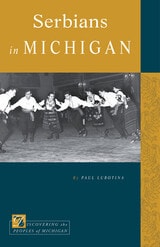
Serbians in Michigan
Paul Lubotina
Michigan State University Press, 2014
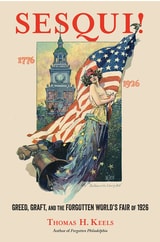
Sesqui!
Greed, Graft, and the Forgotten World's Fair of 1926Thomas H. Keels
Temple University Press, 2017
In 1916, Philadelphia department-store magnate John Wanamaker launched plans for a Sesqui-Centennial International Exposition in 1926. It would be a magnificent world's fair to celebrate the 150th anniversary of the Declaration of Independence. The “Sesqui” would also transform sooty, industrial Philadelphia into a beautiful Beaux Arts city.
However, when the Sesqui opened on May 31, 1926, in the remote, muddy swamps of South Philadelphia, the fair was unfinished, with a few shabbily built and mostly empty structures. Crowds stayed away in droves: fewer than five million paying customers attended, costing the city millions of dollars. Philadelphia became a national scandal—a city so corrupt that one political boss could kidnap an entire world’s fair.
In his fascinating history Sesqui!, noted historian Thomas Keels situates this ill-fated celebration—a personal boondoggle by the all-powerful Congressman William S. Vare—against the transformations taking place in America during the 1920s. Keels provides a comprehensive account of the Sesqui as a meeting ground for cultural changes sweeping the country: women’s and African-American rights, anti-Semitism, eugenics, Prohibition, and technological advances.
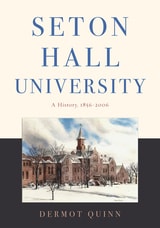
Seton Hall University
A History, 1856–2006Dermot Quinn
Rutgers University Press, 2023
In this vivid and elegantly written history, Dermot Quinn examines how Seton Hall was able to develop as an institution while keeping faith with its founder’s vision. Looking at the men and women who made Seton Hall what it is today, he paints a compelling picture of a university that has enjoyed its share of triumphs but has also suffered tragedy and loss. He shows how it was established in an age of prejudice and transformed in the aftermath of war, while exploring how it negotiated between a distinctly Roman Catholic identity and a mission to include Americans of all faiths.
Seton Hall University not only recounts the history of a great educational institution, it also shares the personal stories of the people who shaped it and were shaped by it: the presidents, the priests, the faculty, the staff, and of course, the students.

Setsuko's Secret
Heart Mountain and the Legacy of the Japanese American IncarcerationShirley Ann Higuchi
University of Wisconsin Press, 2020
Only after a serious cancer diagnosis did Shirley's mother, Setsuko, share her vision for a museum at the site of the former camp, where she had been donating funds and volunteering in secret for many years. After Setsuko's death, Shirley skeptically accepted an invitation to visit the site, a journey that would forever change her life and introduce her to a part of her mother she never knew.
Navigating the complicated terrain of the Japanese American experience, Shirley patched together Setsuko's story and came to understand the forces and generational trauma that shaped her own life. Moving seamlessly between family and communal history, Setsuko's Secret offers a clear window into the "camp life" that was rarely revealed to the children of the incarcerated. This volume powerfully insists that we reckon with the pain in our collective American past.
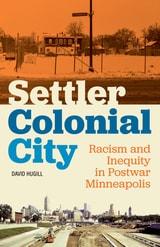
Settler Colonial City
Racism and Inequity in Postwar MinneapolisDavid Hugill
University of Minnesota Press, 2021
Revealing the enduring link between settler colonization and the making of modern Minneapolis
Colonial relations are often excluded from discussions of urban politics and are viewed instead as part of a regrettable past. In Settler Colonial City, David Hugill confronts this culture of organized forgetting by arguing that Minnesota’s largest city is enduringly bound up with the power dynamics of settler-colonial politics. Examining several distinct Minneapolis sites, Settler Colonial City tracks how settler-colonial relations were articulated alongside substantial growth in the Twin Cities Indigenous community during the second half of the twentieth century—creating new geographies of racialized advantage.
Studying the Phillips neighborhood of Minneapolis in the decades that followed the Second World War, Settler Colonial City demonstrates how colonial practices and mentalities shaped processes of urban reorganization, animated non-Indigenous “advocacy research,” informed a culture of racialized policing, and intertwined with a broader culture of American imperialism. It reveals how the actions, assumptions, and practices of non-Indigenous people in Minneapolis produced and enforced a racialized economy of power that directly contradicts the city’s “progressive” reputation.
Ultimately, Settler Colonial City argues that the hierarchical and racist political dynamics that characterized the city’s prosperous beginnings are not exclusive to a bygone era but rather are central to a recalibrated settler-colonial politics that continues to shape contemporary cities across the United States.
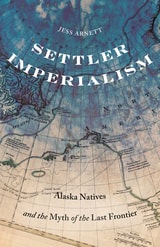
Settler Imperialism
Alaska Natives and the Myth of the Last FrontierJess Arnett
University of Minnesota Press, 2026
How Alaska redefined US colonialism through Indigenous resistance and legal innovation
Long treated as the symbolic “last frontier,” Alaska was, in fact, the United States’s first experiment in overseas empire. Settler Imperialism reveals these concepts as fictitious stories promoted by government officials and offers a sweeping history of Alaska Native legal and political struggle in the face of a colonial structure that defied the norms of US expansion. Examining Alaska as both a settler and imperial space, Jess Arnett challenges familiar narratives of American growth, sovereignty, and law.
Following the 1867 Treaty of Cession when the United States purchased Alaska from Russia, the federal government refused to sign treaties with Alaska Natives, excluded them from the Bureau of Indian Affairs, and denied the region designation as Indian Country. These departures from standard Indian policy created legal ambiguity that enabled new opportunities for land dispossession and resource extraction by state and corporate interests. Focusing on history from the late nineteenth century through the 1971 Alaska Native Claims Settlement Act, Arnett uncovers how the Tlingit, Haida, Tsimshian, and other Indigenous nations navigated and contested Alaska’s peculiar legal terrain. Members of these communities forcefully petitioned for US citizenship, mobilized Indigenous legal orders, and engaged selective federal Indian law to assert land rights and political authority.
By placing Alaska at the center of US colonial history, Settler Imperialism turns a critical lens on the evolution of America. To understand US expansion, race, and legal formation, Alaska must be seen not as the last frontier but as a proving ground for empire.
Retail e-book files for this title are screen-reader friendly with images accompanied by short alt text and/or extended descriptions.
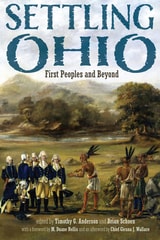
Settling Ohio
First Peoples and BeyondTimothy G. Anderson and Brian Schoen
Ohio University Press, 2023
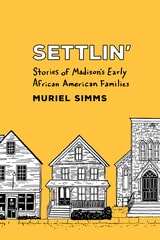
Settlin’
Stories of Madison’s Early African American FamiliesMuriel Simms
Wisconsin Historical Society Press, 2018
Seven Iron Men
The Merritts and the Discovery of the Mesabi RangePaul de Kruif
University of Minnesota Press, 2007
In the tradition of great American rags to riches stories, Seven Iron Men weaves together the history of how the seven Merritt brothers discovered iron ore on the Mesabi Range. In 1890 they were poised to become one of the wealthiest families in America but lost it all to industrialist John D. Rockefeller.
“The tale of their long and furious quest makes for one of the most melodramatic stories in American history. . . . The Merritts leap from the chronicle in all the colors of life—especially Lon, the king of them all, with his maudlin poetizing, his childlike faith in mankind, and his incredible tropical hat. It is a tale full of thrills, shot with sardonic humors.” —H. L. Mencken, The Nation
“Certainly it is no small contribution to the history of the American people to unfold the tale of the discovery and development of those huge iron deposits of the Mesabi Range flanking much of Lake Superior. To these perhaps quite as much as to any other one factor the country owes its industrial supremacy in the ago of steel.” —New York Herald Tribune
Paul de Kruif (1890–1971) was a microbiologist, served as a contributing editor to Reader’s Digest, and was the best-selling author of Microbe Hunters.
Seventh Generation Earth Ethics
Native Voices of WisconsinPatty Loew
Wisconsin Historical Society Press, 2025
Indigenous perspectives on sustainability, culture, and community
In this collection of twelve biographies, one from each of the Native nations in Wisconsin, author Patty Loew (Bad River Ojibwe) introduces readers to prominent figures in Native sustainability—people whose life’s work reflects the traditional ecological knowledge and cultural values of their people.
Born out of Loew’s thirty years as a journalist and historian, Seventh Generation Earth Ethics highlights individuals who helped to sustain and nurture their nations.
Walter Bresette, Red Cliff Ojibwe, community activist
Hilary Waukau, Menominee, environmental warrior
Frances Van Zile, Mole Lake (Sokaogon) Ojibwe, keeper of the water
James Schlender, Lac Courte Oreilles Ojibwe, treaty rights guardian
Jose Rose, Bad River Ojibwe, elder, environmentalist, and scholar
Dorothy Davids, Stockbridge-Munsee Community Band of Mohican Indians, educator
William Gollnick, Oneida, culture keeper
Thomas St. Germaine, Lac du Flambeau Ojibwe, attorney
Truman Lowe, Ho-Chunk, organic sculpture artist
Jenny and Mary Thunder, Forest County Potawatomi, medicine women
Wanda McFaggen, St. Croix Ojibwe, Tribal Historic Preservationist
Caroline Andler, Brothertown Indian Nation, genealogist
The indigenous people whose lives are depicted in Seventh Generation Earth Ethics understood the cultural gravity that kept their people rooted to their ancestral lands and acted in ways that ensured the growth and success of future generations.
Sex and Death on the Western Emigrant Trail
The Biology of Three American TragediesDonald K. Grayson
University of Utah Press, 2018
The plights of these emigrant groups have been addressed by different historians in different ways; this book is the first to examine the tragedies in terms of biology. Grayson shows that who lived or died can largely be explained by age, sex, and family ties. His investigation reveals what happens when our cultural mechanisms for dealing with famine and extreme cold are reduced to only what our bodies can provide within structured social contexts. His results are surprising and not always intuitive as he investigates who survived in these life threatening situations.

Sex in Middlesex
Popular Mores in a Massachusetts County, 1649-1699Roger Thompson
University of Massachusetts Press, 1986
Drawing on an extraordinary wealth of court records from Middlesex County of the Colony and Province of Massachusetts Bay, Sex in Middlesex offers a richly revisionist account of social and moral life in seventeenth-century New England. Social historian Roger Thompson brings to life the forgotten men and women of colonial Massachusetts to challenge some of the most entrenched assumptions about Puritan society. Examining cases of fornication, adultery, breach of promise, premarital pregnancy, and sexual deviance recorded between 1649 and 1699, Thompson argues that the Puritan social system was far less rigid, and the relations between the sexes far less coercively regulated, than the dominant historiographical tradition, shaped by scholars such as Perry Miller and Lawrence Stone, has suggested.
Rather than a community defined by patriarchal tyranny and punitive moral control, Thompson discovers in the Middlesex records a society characterized by a striking degree of tolerance, mutual regard, and practical common sense, animated by a genuinely popular Puritan piety. The goal of the courts was not punishment and exclusion, but confession, reform, and the reintegration of offenders into the community. Structured with methodological rigor and written with narrative verve, Sex in Middlesex is at once a work of quantitative social history and a gallery of vivid individual portraits.
Shadows Over Sunnyside
An Arkansas Plantation in Transition, 1830-1945Jeannie M. Whayne
University of Arkansas Press, 1993
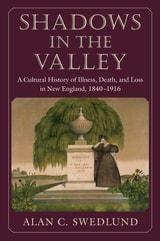
Shadows in the Valley
A Cultural History of Illness, Death, and Loss in New England, 1840-1916Alan Swedlund
University of Massachusetts Press, 2010
How does the experience of sickness, death, and loss change over time? We know that the incidence and virulence of particular diseases have varied from one period to another, as has their medical treatment. But what was it like for the individuals who suffered and died from those illnesses, for the health practitioners and institutions that attended to them, and for the families who buried and mourned them?
In Shadows in the Valley, Alan Swedlund addresses these questions by closely examining the history of mortality in several small communities in western Massachusetts from the mid-nineteenth to the early twentieth century—from just before the acceptance of the germ theory of disease through the early days of public health reform in the United States. This was a time when most Americans lived in rural areas or small towns rather than large cities. It was also a time when a wide range of healing practices was available to the American public, and when the modern form of Western medicine was striving for dominance and authority. As Swedlund shows, this juncture of competing practices and ideologies provides a rich opportunity for exploring the rise of modern medicine and its impact on the everyday lives of ordinary Americans.
To indicate how individuals in different stages of their lives were exposed to varying assaults on their health, the book is structured in a way that superimposes what the author calls “life-course time” onto chronological time. Thus the early chapters look at issues of infancy and childhood in the 1840s and 1850s and the last chapters at the problems of old age after 1900. The reader becomes familiar with specific individuals and families as they cope with the recurrent loss of children, struggle to understand the causes of new contagions, and seek to find meaning in untimely death. By using a broad time frame and a narrow geographical lens, Swedlund is able to engage with both the particularities and generalities of evolving medical knowledge and changing practice, and to highlight the differences in personal as well as collective responses to illness and loss.

Shakespeare on the American Yiddish Stage
Joel Berkowitz
University of Iowa Press, 2002
The professional Yiddish theatre started in 1876 in Eastern Europe; with the assassination of Tsar Alexander II in 1881, masses of Eastern European Jews began moving westward, and New York—Manhattan’s Bowery and Second Avenue—soon became the world’s center of Yiddish theatre. At first the Yiddish repertoire revolved around comedies, operettas, and melodramas, but by the early 1890s America's Yiddish actors were wild about Shakespeare. In Shakespeare on the American Yiddish Stage, Joel Berkowitz knowledgeably and intelligently constructs the history of this unique theatrical culture.
The Jewish King Lear of 1892 was a sensation. The year 1893 saw the beginning of a bevy of Yiddish versions of Hamlet; that year also saw the first Yiddish production of Othello. Romeo and Juliet inspired a wide variety of treatments. The Merchant of Venice was the first Shakespeare play published in Yiddish, and Jacob Adler received rave reviews as Shylock on Broadway in both 1903 and 1905. Berkowitz focuses on these five plays in his five chapters. His introduction provides an orientation to the Yiddish theatre district in New York as well as the larger picture of Shakespearean production and the American theatre scene, and his conclusion summarizes the significance of Shakespeare’s plays in Yiddish culture.
Shameful Victory
The Los Angeles Dodgers, the Red Scare, and the Hidden History of Chavez RavineJohn H. M. Laslett
University of Arizona Press, 2015
John H. M. Laslett offers a new interpretation of the Chavez Ravine tragedy, paying special attention to the early history of the barrio, the reform of Los Angeles's destructive urban renewal policies, and the influence of the evictions on the collective memory of the Mexican American community.
In addition to examining the political decisions made by power brokers at city hall, Shameful Victory argues that the tragedy exerted a much greater influence on the history of the Los Angeles civil rights movement than has hitherto been appreciated. The author also sheds fresh light on how the community grew, on the experience of individual home owners who were evicted from the barrio, and on the influence that the event had on the development of recent Chicano/a popular music, drama, and literature.

Sharing the Balance of Power
An Examination of Shared Power in the Michigan House of Representatives, 1993-1994Daniel Loepp
University of Michigan Press, 1999
Like national politicians, state legislators all too often focus on partisanship instead of policy making, engaging themselves in rancorous debate that achieves little beyond gridlock. However, during one short period in Michigan's history, legislators stopped bickering and focused on forging compromise. Daniel Loepp's Sharing the Balance of Power chronicles the 87th Michigan Legislature (1993-1994), in which Republicans and Democrats successfully shared power.
In 1992, Michigan voters elected exactly fifty-five Republicans and fifty-five Democrats to the state house. As a result, the two parties each elected a co-speaker, and a shared power agreement was forged. Given the history of intense partisanship in the state house, political pundits predicted that any plan for shared power would disintegrate within months. What resulted instead was one of the most productive legislatures in Michigan history.
Author Daniel Loepp, chief of staff to Democratic Co-Speaker Curtis Hertel at the time, skillfully takes the reader "inside" the State Capitol, examining the key policy debates (including school finance reform), important personalities, and difficult negotiations. Loepp's balanced presentation is testimony to the two years of bi-partisan cooperation in which he took part.
In an age of public cynicism about the legislative process, Daniel Loepp offers the reader a refreshing story about two co-speakers and their 108 colleagues who came together in the spirit of bi-partisan representation to successfully serve their constituents, the people of Michigan.
Daniel Loepp is a partner in the firm of Karoub Associates, Michigan's oldest multi-client lobbying firm.

Sharing the Love of Gardening
The History of The Westport Garden ClubKristie C. Wolferman
University of Missouri Press, 2025
With the post-World War II housing boom, the nascent WGC became involved in landscaping projects aimed at beautifying Kansas City. These efforts continued when the WGC led re-landscaping efforts after the Great Flood of 1951. Early in their club’s history, the women of the WGC learned that collaboration with other organizations allowed them to have a greater impact on the causes about which they cared. They soon began working with city governments and park departments on both sides of the Missouri-Kansas state line, including with the Linda Hall Library and Arboretum, the Nelson-Atkins Museum of Art, and the Loose Park Garden Center.
In addition to being a thorough history of The Westport Garden Club—and the considerable influence that a small number of dedicated, educated women have had on it—Sharing the Love of Gardening is a book of stunning photography, showcasing previously unpublished images from the clubs’ archives and the original work of club member and professional photographer Marianne Kilroy.

Shattered Sense of Innocence
The 1955 Murders of Three Chicago ChildrenRichard C. Lindberg and Gloria Jean Sykes
Southern Illinois University Press, 2006
In October 1955, three Chicago boys were found murdered, their bodies naked and dumped in a ditch in Robinson Woods on the city’s Northwest Side. A community and a nation were shocked. In a time when such crimes against children were rare, the public was transfixed as local television stations aired stark footage of the first hours of the investigation. Life and Newsweek magazines published exclusive stories the following week. When Kenneth Hansen was convicted and sentenced for the murders, the case was considered solved—until questions were raised about Hansen’s presumed guilt.
Shattered Sense of Innocence: The 1955 Murders of Three Chicago Children tells the gripping story of the three murdered boys—thirteen-year-old John Schuessler, his eleven-year-old brother, Anton, and thirteen-year-old Bobby Peterson—and the quest to find and bring to justice their killer. Authors Richard C. Lindberg and Gloria Jean Sykes recount the bungled 1955 police investigation, the failures of multiple law enforcement agencies, and the subsequent convictions of Kenneth Hansen, in 1995 and 2002, and present new information concerning two suspects overlooked by police for five decades.
The authors deftly examine all sides of this tragic story, drawing on exclusive interviews with law enforcement agents, with horse trainers affiliated with the so-called horse mafia, and with the man convicted of the murders, Kenneth Hansen. This intensely intimate account offers a rare glimpse into one community and examines how these atrocious crimes altered public perceptions nationwide. Shattered Sense of Innocence, which is also a story of political controversy, a determined federal agent’s quest for justice, and a community’s loss of innocence, includes fifty illustrations.

She Devils at the Door
Eliza Smith Brown
Carnegie Mellon University Press, 2023
Sometimes troublemakers emerge from the most unlikely of places. This true story follows the lives of two daughters of the Gilded Age—Lucy and Eliza Kennedy—who were educated at Vassar College and became leaders of the suffrage movement. Then, after the Nineteenth Amendment was passed in 1920, they spent the next forty years fighting corruption in politics and government.
Tenacious, smart, and witty, they captivated crowds, disarmed their opponents, and instilled particular dread among the corrupt politicians who were the unfortunate targets of their nonpartisan crusade. Their entry across the threshold of Pittsburgh’s City-County Building would reportedly invoke a flurry of hushed warnings through the halls: “The She Devils are at the door!” Together, Lucy and Eliza fought for the vote, empowered women to use it wisely, forced a mayor out of office in disgrace, took control of the city budget, exposed a series of scandals, spearheaded police reform, and launched a campaign that would eventually clear Pittsburgh of its smoky veil.
Featuring the true story of two powerful women, this book comes at a propitious time, reminding us how far women have come and how vigilant we must remain.
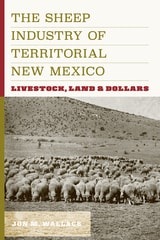
Sheep Industry of Territorial New Mexico
Livestock, Land, and DollarsJon M. Wallace
University Press of Colorado, 2023
Author Jon Wallace tells the story of evolving living conditions as the sheep industry came to encompass innumerable families of modest means. The transformation improved many New Mexicans’ lives and helped establish the territory as a productive part of the United States. There was a cost, however, with widespread ecological changes to the lands—brought about in large part by heavy grazing. Following the US annexation of New Mexico, new markets for mutton and wool opened. Well-connected, well-financed Anglo merchants and growers who had recently arrived in the territory took advantage of the new opportunity and joined their Hispanic counterparts in entering the sheep industry.
The Sheep Industry of Territorial New Mexico situates this socially imbued economic story within the larger context of the environmental consequences of open-range grazing while examining the relationships among Hispanic, Anglo, and Indigenous people in the region. Historians, students, general readers, and specialists interested in the history of agriculture, labor, capitalism, and the US Southwest will find Wallace’s analysis useful and engaging.
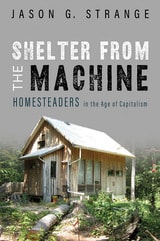
Shelter from the Machine
Homesteaders in the Age of CapitalismJason G. Strange
University of Illinois Press, 2020
Jason Strange shows where homesteaders fit, and don't fit, within contemporary America. Blending history with personal stories, Strange visits pig roasts and bohemian work parties to find people engaged in a lifestyle that offers challenge and fulfillment for those in search of virtues like self-employment, frugality, contact with nature, and escape from the mainstream. He also lays bare the vast differences in education and opportunity that leave some homesteaders dispossessed while charting the tensions that arise when people seek refuge from the ills of modern society—only to find themselves indelibly marked by the system they dreamed of escaping.
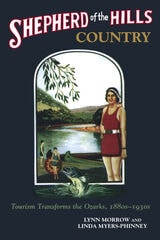
Shepherd of the Hills Country
Tourism Transforms the Ozarks, 1880s-1930sLynn Morrow
University of Arkansas Press, 1999
Modern tourism in the Ozark Mountains of Missouri and Arkansas is concentrated around the area’s glistening man-made lakes, its fish-filled streams and rivers, and the entertainment mecca of Branson. But recreational excursions into this part of the country began over one hundred years ago as urban Midwesterners, many of them captivated by Harold Bell Wright’s novel The Shepherd of the Hills, sought the outdoors for spiritual and physical regeneration.
Morrow and Myers-Phinney excavate the beginnings of commercial tourism in the region and follow it through six decades as the influx of visitors who became familiar with the Ozarks and its investment opportunities brought capital, new commerce, and additional residents to the hills. Chapters focus on float fishing, game parks, cave exploration, the influence of the railroad, and the men who were instrumental in the region’s transformation. The authors discuss traditional lifestyles rooted in “living off the land,” with stock raising and lumbering providing basic subsistence, and changes wrought by tourism, which affected all classes of people across the White River landscape. They describe the flowering of “Ozarks folklore”—how stories told around gravel-bar fishing camps and retold by newspaper journalists translated the hills’ oral tradition for mass audiences.
While the main theme of this study is the development of tourism, it is also a social history of the interior highlands of the Ozarks. We see how the residents and their way of life were discovered, exploited, and changed by new opportunities and the demands of tourism and increasing trade. As such, this book is a valuable new addition to the University of Arkansas Press’s Ozarks Collection.
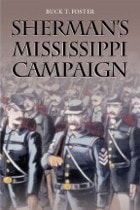
Sherman's Mississippi Campaign
Buck T. Foster
University of Alabama Press, 2006
The campaign that shaped Sherman's path to victory and changed the future of Civil War warfare.
With the fall of Vicksburg to Union forces in mid-1863, the Federals began work to extend and consolidate their hold on the lower Mississippi Valley. As a part of this plan, Major General William Tecumseh Sherman set out from Vicksburg on February 3, 1864, with an army of some 25,000 infantry and a battalion of cavalry. They expected to be joined by another Union force moving south from Memphis and supported themselves off the land as they traveled due east across Mississippi.
Sherman entered Meridian on February 14 and thoroughly destroyed its railroad facilities, munitions plants, and cotton stores, before returning to Vicksburg. Though not a particularly effective campaign in terms of enemy soldiers captured or killed, it offers a rich opportunity to observe how this large-scale raid presaged Sherman’s Atlanta and Carolina campaigns, revealing the transformation of Sherman’s strategic thinking.

Sherwood Anderson and Other Famous Creoles
A Gallery of Contemporary New OrleansDrawings by William Spratling<br>Text by William Faulkner
University of Texas Press, 1966
"When Bill Faulkner came to New Orleans he was a skinny little guy, three years older than I, and was not taken very seriously except by a few of us." Thus the late William Spratling, popularly known as the Taxco "Silver King," recalled the mid-1920's, when Faulkner, a young man fresh from Oxford, Mississippi, roomed with Spratling in Pirates Alley.
"By the time I would be up, say at seven, Bill would already be out on the little balcony over the garden tapping away on his portable, an invariable glass of alcohol-and-water at hand."
A result of their friendship was a book depicting "various people who were then engaged … with the arts in New Orleans." It was based on firsthand observation.
"There were casual parties with wonderful conversation and with plenty of grand, or later to be grand, people." Some of the names, in addition to Sherwood Anderson, were Horace Liveright, Carl Van Doren, Carl Sandberg, John Dos Passos, Anita Loos, and Oliver La Farge.
Spratling supplied sharp caricatures of the people and Faulkner contributed succinct captions and a Foreword. It was all "sort of a private joke," but the four hundred copies were sold within a week and the original edition is now a collector's item. This book is a charming reminder of exciting days and talented people.

Ship Captain's Daughter
Growing Up on the Great LakesAnn Michler Lewis
Wisconsin Historical Society Press, 2015
Ann Lewis's childhood was marked by an unusual rhythm. Each year the thawing and freezing of the Great Lakes signaled the beginning and end of the shipping season, months of waiting that were punctuated by brief trips to various ports to meet her father, the captain.
With lively storytelling and vivid details, Lewis captures the unusual life of shipping families whose days and weeks revolved around the shipping industry on the Great Lakes. She paints an intriguing and affectionate portrait of her father, a talented pianist whose summer job aboard an ore freighter led him to a life on the water. Working his way up from deckhand to ship captain, Willis Michler became the master of thirteen ships over a span of twenty-eight years. From the age of twelve, Ann accompanied the captain to the ports of Milwaukee, Chicago, Toledo, and Cleveland on the lower Great Lakes. She describes sailing through stormy weather and starry nights, visiting the engine room, dining at the captain's table, and wheeling the block-long ship with her father in the pilot house. Through her mother's stories and remarks, Lewis also reveals insights into the trials and rewards of being a ship captain's wife. The book is enhanced by the author's vintage snapshots, depicting this bygone lifestyle.
Ships and Shipwrecks of the Au Sable Shores Region of Western Lake Huron
John M. O'Shea
University of Michigan Press, 2004
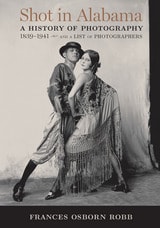
Shot in Alabama
A History of Photography, 1839–1941, and a List of PhotographersFrances Osborn Robb
University of Alabama Press, 2016
A landmark study of vernacular and professional photography, from 1839 to 1941, that frames Alabama’s history through its images.
Shot in Alabama by Frances Osborn Robb is a visual and textual narrative of Alabama’s photographic history from 1839 to 1941. It describes the phenomenon of photography as practiced in Alabama as a major cultural force, paying close attention to the particular contexts from which each image emerges and the fragments of microhistory that each image documents.
Presented chronologically—from the very first photograph ever taken in the state to the appearance of cameras as commonplace possessions in mid-twentieth-century households—Robb draws into sharp relief the eras of daguerreotypes, Civil War photography, photographic portraiture at the end of the nineteenth century, urban and rural photography in the early twentieth century, WPA photography during the Great Depression, postcards and tourist photography, and pre–World War II illustrated books and art photographs. Robb also examines a wide spectrum of vernacular photography: Alabama-made photographs of everyday people and places, the photographs that fill dresser drawers and shoeboxes, a vast array of unusual images against which Alabama’s more typical iconography can be measured.
She also chronicles the work of hundreds of photographers—black and white, amateur and professional, women and men—some little-known outside their communities, some of them the medium’s most important practitioners. “Who Shot Alabama?” is an accompanying appendix that includes 1,400 photographers by name, working dates, and location—a resource that will help countless individuals, families, and archives identify the specific Alabama photographers whose names appear on family photographs or those in institutional collections.
Shot in Alabama is an insightful document of photography as both a communicator and creator of social, cultural, economic, and visual history. It highlights the very personal worlds rendered by individual photographs as well as the larger panorama of Alabama history as seen through the photographs collectively. A landmark work of research, curation, and scholarship, it fills the void of published history on Alabama photography and is an invaluable resource for historians, archivists, librarians, collectors, hobbyists, and readers with an interest in Alabama history or historic photography. Shot in Alabama is a book that all Alabamians will want on their coffee tables.

Showdown in Desire
The Black Panthers Take a Stand in New OrleansOrissa Arend
University of Arkansas Press, 2009

Showdown in the Show-Me State
The Fight Over Conceal-and-Carry Gun Laws in MissouriWilliam T. Horner
University of Missouri Press, 2005

Showers of Blessings
Myrtle Lawrence, Notable Sharecropper and Union OrganizerElizabeth Anne Payne
University of Arkansas Press, 2023