Results by title
1441 books match the query 'World' and 107 start with s

Social Security Programs and Retirement Around the World
Pension Reforms and the Health Distribution of RetireesEdited by Axel Börsch-Supan and Courtney C. Coile
University of Chicago Press, 2027
A wide-ranging comparative analysis of the effects of pension reforms on health outcomes among retirees.
Pension reforms enacted in many developed economies since the late 1990s have raised statutory retirement ages and reduced benefit generosity, prompting concerns that working longer, especially in physically demanding jobs, could widen health disparities among retirees. Social Security Programs and Retirement Around the World: Pension Reforms and the Health Distribution of Retirees examines whether these reforms have altered the distribution of health outcomes in nine countries—Belgium, Canada, Denmark, Germany, Italy, Japan, the Netherlands, Spain, and the United States. Drawing on harmonized longitudinal data spanning roughly two decades and measuring health along five dimensions—functional, diagnosed, comprehensive, mental, and cognitive—the country studies find a remarkably consistent picture: in every country but the United States, health inequality among retirees has not increased significantly over the period in which benefits fell and retirement ages rose. The United States, in contrast to the other nations, shows rising inequality in functional and comprehensive health, particularly among women. The findings suggest that in most countries, pension reforms have not so far come at the cost of a widening health gap between richer and poorer retirees, although noisy data and the still-short observation window admit the possibility of effects that have yet to fully emerge.
Social Security Programs and Retirement Around the World
The Effects of Pension Reforms on the Income Distribution of RetireesEdited by Axel Börsch-Supan and Courtney C. Coile
University of Chicago Press, 0
A wide-ranging comparative analysis of the effects of pension reforms on the income distribution among retirees.
Pension reforms enacted in many developed economies since the late 1990s increased labor force participation among older workers. Did they also generate greater inequality in retirement income? Social Security Programs and Retirement Around the World: The Effects of Pension Reforms on the Income Distribution of Retirees examines whether these reforms redistributed social security wealth in ways that disproportionately benefited or harmed retirees at different points in the income distribution. The chapters present country-specific analyses for Belgium, Canada, Denmark, France, Germany, Italy, Japan, the Netherlands, Spain, and the United Kingdom. Using microdata and counterfactual simulations, they find a quite varied picture: in six of the ten countries studied, pension reform reduced income inequality among retirees, while in three countries the reforms expanded it. Across countries, benefit-level changes, rather than behavioral responses to altered retirement incentives, account for most of the redistributive impact. In countries that cut benefits uniformly, lower-income retirees suffered more than higher-income retirees due to shorter life expectancies. When new programs supplemented across-the-board cuts with support for lower earners, however, inequality declined.

Social Security Programs and Retirement around the World
Disability Insurance Programs and RetirementEdited by David A. Wise
University of Chicago Press, 2015
The sixth stage of an ongoing research project studying the relationship between social security programs and labor force participation, this volume draws on the work of an eminent group of international economists to consider the extent to which differences in labor force participation across countries are determined by the provisions of disability insurance programs. Presented in an easily comparable way, their research covers twelve countries, including Canada, Japan, and the United States, and considers the requirements of disability insurance programs, as well as other pathways to retirement.
Social Security Programs and Retirement around the World
Fiscal Implications of ReformEdited by Jonathan Gruber and David A. Wise
University of Chicago Press, 2007
Drawing on the work of an international group of noted economists, the editors argue that social security programs provide strong incentives for workers to leave the labor force by retiring and taking the benefits to which they are entitled. By penalizing work, social security systems magnify the increased financial burden caused by aging populations, thus contributing to the insolvency of the system. This book is a model of comparative analysis that evaluates the effects of illustrative policies for countries facing the impending rapid growth of social security benefits. Its insights will help inform one of the most pressing debates.
Social Security Programs and Retirement around the World
Historical Trends in Mortality and Health, Employment, and Disability Insurance Participation and ReformsEdited by David A. Wise
University of Chicago Press, 2012
In nearly every industrialized country, large aging populations and increased life expectancy have placed enormous pressure on social security programs—and, until recently, the pressure has been compounded by a trend toward retirement at an earlier age. With a larger fraction of the population receiving benefits, in coming decades social security in many countries may have to be reformed in order to remain financially viable.
This volume offers a cross-country analysis of the effects of disability insurance programs on labor force participation by older workers. Drawing on measures of health that are comparable across countries, the authors explore the extent to which differences in the labor force are determined by disability insurance programs and to what extent disability insurance reforms are prompted by the circumstances of a country’s elderly population.
Social Security Programs and Retirement around the World
Micro-EstimationEdited by Jonathan Gruber and David A. Wise
University of Chicago Press, 2003
In this volume, the authors turn to a country-by-country analysis of retirement behavior based on micro-data. The result of research compiled by teams in twelve countries, the volume shows an almost uniform correlation between levels of social security incentives and retirement behavior in each country. The estimates also show that the effect is strikingly uniform in countries with very different cultural histories, labor market institutions, and other social characteristics.
Social Security Programs and Retirement around the World
Reforms and Retirement IncentivesEdited by Axel Börsch-Supan and Courtney C. Coile
University of Chicago Press, 2021
The studies in this volume explore how financial incentives to work at older ages have evolved as a result of public pension reforms since 1980 and how these changes have affected retirement behavior. Utilizing a common template to analyze the developments across countries, the findings suggest that social security reforms have strengthened the financial returns to working at older ages and that these enhanced financial incentives have contributed to the rise in late-life employment.

Social Security Programs and Retirement around the World
The Capacity to Work at Older AgesEdited by David A. Wise
University of Chicago Press, 2017
Social Security Programs and Retirement around the World
The Effects of Reforms on Retirement BehaviorEdited by Axel Börsch-Supan and Courtney C. Coile
University of Chicago Press, 2025
A global analysis of the effects of social security reforms on the retirement incentives and labor force trends of older workers.
Employment among older men and women has increased dramatically in recent years, reversing a downward trend in the closing decades of the twentieth century. Social Security Programs and Retirement around the World examines how changing retirement incentives have reshaped labor force participation trends among older workers. The chapters feature country-specific analyses for Belgium, Canada, Denmark, France, Germany, Italy, Japan, Netherlands, Spain, Sweden, the United Kingdom, and the United States. They find that while there is significant heterogeneity across countries, the reforms of recent decades have generally reduced the implicit tax on work at older ages. These changes correlate positively with labor force participation. The studies exploit the variation in the timing and extent of reforms of retirement incentives and employ microeconometric methods to investigate whether this correlation reflects a causal relationship. Policy changes appear to have contributed to rising labor force activity, but other factors like the role of women in the labor force, improved health, and changes in private pensions likely also play important roles.
Social Security Programs and Retirement around the World
The Relationship to Youth EmploymentEdited by Jonathan Gruber and David A. Wise
University of Chicago Press, 2010
Social Security Programs and Retirement around the World
Working LongerEdited by Courtney C. Coile, Kevin Milligan, and David A. Wise
University of Chicago Press, 2019
This eighth phase of the International Social Security project, which compares the social security and retirement experiences of twelve developed countries, documents trends in participation and employment and explores reasons for the rising participation rates of older workers. The chapters use a common template for analysis, which facilitates comparison of results across countries. Using within-country natural experiments and cross-country comparisons, the researchers study the impact of improving health and education, changes in the occupation mix, the retirement incentives of social security programs, and the emergence of women in the workplace, on labor markets. The findings suggest that social security reforms and other factors such as the movement of women into the labor force have played an important role in labor force participation trends.
Social Security and Retirement around the World
Edited by Jonathan Gruber and David A. Wise
University of Chicago Press, 1998
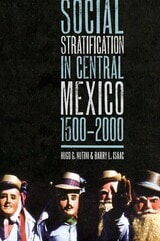
Social Stratification in Central Mexico, 1500-2000
By Hugo G. Nutini and Barry L. Isaac
University of Texas Press, 2009
In Aztec and colonial Central Mexico, every individual was destined for lifelong placement in a legally defined social stratum or estate. Social mobility became possible after independence from Spain in 1821 and increased after the 1910–1920 Revolution. By 2000, the landed aristocracy that was for long Mexico's ruling class had been replaced by a plutocracy whose wealth derives from manufacturing, commerce, and finance—but rapid growth of the urban lower classes reveals the failure of the Mexican Revolution and subsequent agrarian reform to produce a middle-class majority. These evolutionary changes in Mexico's class system form the subject of Social Stratification in Central Mexico, 1500–2000, the first long-term, comprehensive overview of social stratification from the eve of the Spanish Conquest to the end of the twentieth century.
The book is divided into two parts. Part One concerns the period from the Spanish Conquest of 1521 to the Revolution of 1910. The authors depict the main features of the estate system that existed both before and after the Spanish Conquest, the nature of stratification on the haciendas that dominated the countryside for roughly four centuries, and the importance of race and ethnicity in both the estate system and the class structures that accompanied and followed it. Part Two portrays the class structure of the post-revolutionary period (1920 onward), emphasizing the demise of the landed aristocracy, the formation of new upper and middle classes, the explosive growth of the urban lower classes, and the final phase of the Indian-mestizo transition in the countryside.
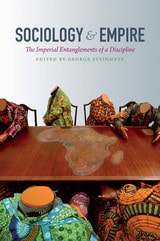
Sociology and Empire
The Imperial Entanglements of a DisciplineGeorge Steinmetz, ed.
Duke University Press, 2013
The collection has a threefold agenda: to trace an intellectual history of sociology as it pertains to empire; to offer empirical studies based around colonies and empires, both past and present; and to provide a theoretical basis for future sociological analyses that may take empire more fully into account. In the 1940s, the British Colonial Office began employing sociologists in its African colonies. In Nazi Germany, sociologists played a leading role in organizing the occupation of Eastern Europe. In the United States, sociology contributed to modernization theory, which served as an informal blueprint for the postwar American empire. This comprehensive anthology critiques sociology's disciplinary engagement with colonialism in varied settings while also highlighting the lasting contributions that sociologists have made to the theory and history of imperialism.
Contributors. Albert Bergesen, Ou-Byung Chae, Andy Clarno, Raewyn Connell, Ilya Gerasimov, Julian Go, Daniel Goh, Chandan Gowda, Krishan Kumar, Fuyuki Kurasawa, Michael Mann, Marina Mogilner, Besnik Pula, Anne Raffin, Emmanuelle Saada, Marco Santoro, Kim Scheppele, George Steinmetz, Alexander Semyonov, Andrew Zimmerman
Soil and Soul
How Russia’s Minority Communities Create Meaning and IdentityEdited by Yana Hashamova and Gulnaz Sharafutdinova
University of Wisconsin Press, 2027
By landmass, Russia is the world’s largest country, due largely to centuries of military expansion, imperial rule, and colonization. As a result, it contains people of many ethnicities, nationalities, religions, and languages. Yet Russia’s non-Russian, Indigenous, and minority communities have often been marginalized by state policy and underrepresented in scholarship. Soil and Soul explores how these communities sustain distinct forms of identity and belonging not only through discourse or state institutions but also through embodied relations with land, nature, and animals. These local practices complicate and unsettle state-centered narratives of Russian cultural superiority by showing how meaning and identity are created through relationships with the nonhuman world. Drawing on decolonial, anthropological, environmental, sociological, linguistic, and geographic approaches, this volume reframes minority agency as ecosocial practice embedded in local ecologies, everyday life, and postimperial power asymmetries.
Contributors: Megan Dixon, Yana Hashamova, Kristina Kovalskaya, Jesko Schmoller, Gulnaz Sharafutdinova, Laura Siragusa, Zoia Tarasova, Baasanjav Terbish

Soldier of the Press
Covering the Front in Europe and North Africa, 1936-1943Henry T. Gorrell, Edited & Intro by Kenneth Gorrell, & Foreword by John C. McManus
University of Missouri Press, 2009

Songs for Dead Parents
Corpse, Text, and World in Southwest ChinaErik Mueggler
University of Chicago Press, 2017
Drawing on more than twenty years of fieldwork in a mountain community in Yunnan Province, Songs for Dead Parents shows how people view the dead as both material and immaterial, as effigies replace corpses, tombstones replace effigies, and texts eventually replace tombstones in a long process of disentangling the dead from the shared world of matter and memory. It is through these processes that people envision the cosmological underpinnings of the world and assess the social relations that make up their community. Thus, state interventions aimed at reforming death practices have been deeply consequential, and Mueggler traces the transformations they have wrought and their lasting effects.
South Africa’s Suspended Revolution
Hopes and ProspectsAdam Habib
Ohio University Press, 2013
South Africa’s Suspended Revolution tells the story of South Africa’s democratic transition and the prospects for the country to develop a truly inclusive political system. Beginning with an account of the transition in the leadership of the African National Congress from Thabo Mbeki to Jacob Zuma, the book then broadens its lens to examine the relationship of South Africa’s political elite to its citizens. It also examines the evolution of economic and social policies through the democratic transition, as well as the development of a postapartheid business community and a foreign policy designed to re-engage South Africa with the world community.
Written by one of South Africa’s leading scholars and political commentators, the book combines historical and contemporary analysis with strategies for an alternative political agenda. Adam Habib connects the lessons of the South African experience with theories of democratic transition, social change, and conflict resolution. Political leaders, scholars, students, and activists will all find material here to deepen their understanding of the challenges and opportunities of contemporary South Africa.

Sovereignty and Survival
Power, Conflict and Climate Change in BurmaAshley South
National University of Singapore Press, 2027
Evaluates Burma at a pivotal tipping point after the 2021 military coup.
The 2021 military coup in Burma/Myanmar triggered popular resistance and a spreading civil war, reigniting long-standing struggles for ethnic self-determination. The chaos has enabled a huge rise in transnational criminal activities, including drug trafficking and the emergence of scam centers. The country's geopolitical importance, not least as a source of rare earths, is also heightening the struggle for power. At the same time, accelerating climate change is destabilizing local ecologies and livelihoods, driving food production, socio-economic systems, and civil society towards collapse or massive change. Together, these forces have undermined the coherence of Burma as a centralized state. However, new forms of resistance and political organization have emerged in liberated areas across the country. At this critical juncture, rather than “state failure,” Burma demonstrates novel forms of complex, asymmetrical, and sometimes messy state-building, a “bottom-up” federalism based on the agency and resilience of Indigenous communities and anti-junta forces.

Soviet International Law and the World Economic Order
Kazimierz Grzybowski
Duke University Press, 1987
Spaces of Creative Resistance
Social Change Projects in Twenty-First-Century East AsiaAndrea Gevurtz Arai
Rutgers University Press, 2025

Spain during World War II
Wayne H Bowen
University of Missouri Press, 2006
The story of Spain during World War II has largely been viewed as the story of dictator Francisco Franco’s foreign diplomacy in the aftermath of civil war. Wayne H. Bowen now goes behind the scenes of fascism to reveal less-studied dimensions of Spanish history. By examining the conflicts within the Franco regime and the daily lives of Spaniards, he has written the first book-length assessment of the regime’s formative years and the struggle of its citizens to survive.
Bowen argues that the emphasis of previous scholars on Spain’s foreign affairs is misplaced—that even the most pro-Axis elements of Franco’s regime were more concerned with domestic politics, the potential for civil unrest, and poverty than with events in Europe. Synthesizing a wide range of Spanish-language scholarship and recently declassified government documents, Bowen reveals how Franco’s government stumbled in the face of world war, inexperienced leaders, contradictory political ideology, and a divided populace. His book tells the dramatic story of a six-year argument among the general, the politicians, and the clerics on nothing less than what should be the nature of the new Spain, touching on issues as diverse as whether the monarchy should be restored and how women should dress.
Examining the effects of World War II years on key facets of Spanish life—Catholicism, the economy, women, leisure, culture, opposition to Franco, and domestic politics—Bowen explores a wide range of topics: the grinding poverty following the civil war, exacerbated by poor economic decisions; restrictions on employment for women versus the relative autonomy enjoyed by female members of the Falange; the efforts of the Church to recover from near decimation; and methods of repression practiced by the regime against leftists, separatists, and Freemasons. He also shows that the lives of most Spaniards remained apolitical and centered on work, family, and leisure marked by the popularity of American movies and the resurgence of loyalty to regional sports teams.
Unlike other studies that have focused exclusively on Spain’s foreign affairs during the Second World War, Bowen’s work stresses the importance of the home front not only in keeping Spain out of the war but also in keeping Franco in power. He shows that in spite of internal problems and external distractions, Franco’s government managed to achieve its goals of state survival and internal peace. As the only single-volume survey of this era available in English, Spain during World War II is a masterful synthesis that offers a much-needed alternative view of the Franco regime during crucial times as it provides a testament to the Spanish people’s will to survive.
Spain's First Democracy
The Second Republic, 1931–1936Stanley G. Payne
University of Wisconsin Press, 1993
Payne’s detailed study places the Republic within the historical framework of Spanish liberalism and the rapid modernization of interwar Europe, which was unlike any other period in Spain’s history. Payne discusses the Republicans’ efforts to establish Spain’s first democratic political systems and to institute major reforms within the Republic. In highlighting reforms in politics and government, church-state relations, education and culture, public works, military affairs, and society as a whole, he assesses the successes and failures of these reforms as well as the reasons for their limitations. He also examines the economic and foreign policy issues of the period.
Focusing particularly on political conflict and social cleavage, Payne brilliantly explores the sources and character of the political polarization that developed as a result of the assaults on the Republic from the Left and the Right. He identifies the main political actors in this schism and their role in the eventual breakdown of the Republic. Tracing the progressive collapse of the Republican polity in the first half of 1936, Payne stresses the importance of political violence in the democracy’s downfall.
In restoring perspectives that have been ignored or bypassed, Payne presents a consistent and detailed interpretation of Spain’s Second Republic, demonstrating its striking parallels to the Weimar Republic in Germany.

Span the World with Friendship
Edited by Douglas Bourn and Richard Palser
University College London, 2025
For nearly a century, the Woodcraft Folk has championed radical social change through education, but its contributions remain largely overlooked in histories of progressive youth movements. Span the World with Friendship is the first major academic study of this pioneering organization, tracing its role in fostering internationalism, cooperative learning, and environmental activism long before these became mainstream concerns. The Woodcraft Folk’s impact is inspected through diverse disciplinary perspectives, including political theory, anthropology, and youth work studies. Through a review of multiple archival sources—letters, meeting records, and oral testimonies—contributors bring a critical lens to a movement often narrated uncritically.
Beginning with a biography of founder Leslie Paul, the book looks into the Folk’s relationship with the labor movement, its engagement with eugenics debates, and its use of folk traditions as tools for social cohesion. Concluding with an exploration of its transition into a youth-led movement, this volume positions the Woodcraft Folk within broader discussions on education for global justice and activism, ensuring its legacy is finally given the academic attention it deserves.
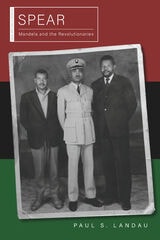
Spear
Mandela and the RevolutionariesPaul S. Landau
Ohio University Press, 2022
Specters of Mother India
The Global Restructuring of an EmpireMrinalini Sinha
Duke University Press, 2006
Sinha provides a rich historical narrative of the controversy surrounding Mother India, from the book’s publication through the passage in India of the Child Marriage Restraint Act in the closing months of 1929. She traces the unexpected trajectory of the controversy as critics acknowledged many of the book’s facts only to overturn its central premise. Where Mayo located blame for India’s social backwardness within the beliefs and practices of Hinduism, the critics laid it at the feet of the colonial state, which they charged with impeding necessary social reforms. As Sinha shows, the controversy became a catalyst for some far-reaching changes, including a reconfiguration of the relationship between the political and social spheres in colonial India and the coalescence of a collective identity for women.
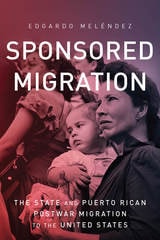
Sponsored Migration
The State and Puerto Rican Postwar Migration to the United StatesEdgardo Meléndez
The Ohio State University Press, 2017
Sponsored Migration places Puerto Rico’s migration policy in its historical context, examining the central role the Puerto Rican government played in encouraging and organizing migration during the postwar period. Meléndez sheds an important new light on the many ways in which the government intervened in the movement of its people: attempting to provide labor to U.S. agriculture, incorporating migrants into places like New York City, seeking to expand the island’s air transportation infrastructure, and even promoting migration in the public school system. One of the first scholars to explore this topic in depth, Meléndez illuminates how migration influenced U.S. and Puerto Rican relations from 1898 onward.

Sports
The First Five MillenniaAllen Guttmann
University of Massachusetts Press, 2004
From ancient Egyptian archery and medieval Japanese football to contemporary American baseball, every sport has been shaped by—and in turn has helped shape—the culture of which it is part. Yet as Allen Guttmann shows in this far-ranging study, for all their differences sports have followed a similar historical trajectory from traditional to modern forms.
In Sports: The First Five Millennia, Guttmann traces this evolution across continents, cultures, and historical epochs to construct a single comprehensive narrative of the world's sports.

Staffing the State
Bureaucratic Politics in Pakistan's Hybrid RegimeSameen A. Mohsin Ali
University of Michigan Press, 2027
Bureaucrats play a critical role in managing governance and delivering public services, whether in democratic and authoritarian contexts. Leaders are responsible for managing bureaucrats—from assigning posts to evaluating performance—to ensure that state resources and services are directed to key constituencies. Focusing on Pakistan, a hybrid regime where military interventions often disrupt electoral politics and civilian governance, Staffing the State shows how controlling bureaucratic appointments allows politicians and civil servants to manage political uncertainty. At the same time, such control entrenches arbitrary patterns of governance such that democratic transitions stall and hybrid regimes persist.
Drawing on interviews, semi-participant observation, and newspaper archives, this book’s analysis reveals the significance of bureaucratic politics to political power, public sector performance and reform, and in determining democratic or autocratic trajectories. The findings extend discussions around indicators of democratic decay into more nuanced, complex explorations of the consequences of these politics for the permanent institutions of the state. Staffing the State will interest political scientists, scholars of South Asian politics and especially Pakistan, and those working at the intersection of politics and public administration.

Staging the World
Chinese Nationalism at the Turn of the Twentieth CenturyRebecca E. Karl
Duke University Press, 2002
The emergence of Chinese nationalism during this period is often portrayed as following from China’s position vis-à-vis Japan and the West. Karl has mined the archives of the late Qing period to discern the foci of Chinese intellectuals from 1895 to 1911 to assert that even though the China/Japan/West triangle was crucial, it alone is an incomplete—and therefore flawed—model of the development of nationalism in China. Although the perceptions and concerns of these thinkers form the basis of Staging the World, Karl begins by examining a 1904 Shanghai production of an opera about a fictional partition of Poland and its modern reincarnation as an ethno-nation. By focusing on the type of dialogue this opera generated in China, Karl elucidates concepts such as race, colonization, globalization, and history. From there, she discusses how Chinese conceptions of nationalism were affected by the “discovery” of Hawai’i as a center of the Pacific, the Philippine revolution against the United States, and the relationship between nationality and ethnicity made apparent by the Boer War in South Africa.

Stardust
Cinematic Archives at the End of the WorldHannah Goodwin
University of Minnesota Press, 2024
An exploration of the fundamental bond between cinema and the cosmos
The advent of cinema occurred alongside pivotal developments in astronomy and astrophysics, including Albert Einstein’s theories of relativity, all of which dramatically altered our conception of time and provided new means of envisioning the limits of our world. Tracing the many aesthetic, philosophical, and technological parallels between these fields, Stardust explores how cinema has routinely looked toward the cosmos to reflect our collective anxiety about a universe without us.
Employing a “cosmocinematic gaze,” Hannah Goodwin uses the metaphorical frameworks from astronomy to posit new understandings of cinematic time and underscore the role of light in generating archives for an uncertain future. Surveying a broad range of works, including silent-era educational films, avant-garde experimental works, and contemporary blockbusters, she carves out a distinctive area of film analysis that extends its reach far beyond mainstream science fiction to explore films that reckon with a future in which humans are absent.
This expansive study details the shared affinities between cinema and the stars in order to demonstrate how filmmakers have used cosmic imagery and themes to respond to the twentieth century’s moments of existential dread, from World War I to the atomic age to our current moment of environmental collapse. As our outlook on the future continues to change, Stardust illuminates the promise of cinema to bear witness to humanity’s fragile existence within the vast expanse of the universe.

State Anti-Intellectualism and the Politics of Gender and Race
Illiberal France and BeyondÉric Fassin
Central European University Press, 2024
Eric Fassin examines the trend of State anti-intellectualism in France using the nation as a case study to demonstrate that this tendency is not limited to ostensibly illiberal regimes. He argues that today’s world requires an examination of this phenomenon beyond Cold War geopolitical divisions and highlights a global shift towards authoritarian neoliberalism. His book is a plea for the political urgency of intellectual work in a global moment of political anti-intellectualism.
The book covers the period from President Sarkozy to Prime Minister Valls and includes both firsthand and public cases of attacks against academics, not only in France, but also in Brazil, Hungary, Russia, Turkey, and the United States, with examples of State racism and the argument of the State against antiracism. The book also considers issues of censorship and cancel culture, concluding with Fassin’s firsthand account of attacks on him from the far-right.
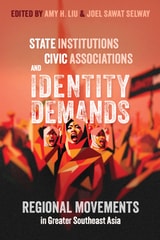
State Institutions, Civic Associations, and Identity Demands
Regional Movements in Greater Southeast AsiaAmy H. Liu and Joel Sawat Selway, Editors
University of Michigan Press, 2024
State Institutions, Civic Associations, and Identity Demands examines over a dozen regions, comparing and contrasting successful cases to abandoned, unsuccessful, or dormant cases. The cases range from successful secession (East Timor, Singapore) and ongoing secessionist movements (Southern Philippines), to internally divided regional movements (Kachin State), low-level regionalist stirrings (Lanna, Taiwan), and local but not regional mobilization of identity (Bali, Minahasan), all the way to failed movements (Bataks, South Maluku) and regions that remain politically inert (East and North Malaysia, Northeast Thailand). While each chapter is written by a country expert, the contributions rely on a range of methods, from comparative historical analysis, to ethnography, field interviews, and data from public opinion surveys. Together, they contribute important new knowledge on little-known cases that nevertheless illuminate the history of regions and ethnic groups in Southeast Asia. Although focused on Southeast Asia, the book identifies the factors that can explain why movements emerge and successfully develop and concludes with a chapter by Henry Hale that illustrates how this can be applied globally.
State Learning and International Change
Andrew Farkas
University of Michigan Press, 1998

State of Translation
Turkey in Interlingual RelationsEinar Wigen
University of Michigan Press, 2018
International politics often requires two or more languages. The resulting interlingual relations mean translation, either by interpreters who are quite literally in the middle of conversations, or by bilingual statesmen who negotiate internationally in one language and then legitimize domestically in another. Since no two languages are the same, what can be argued in one language may be impossible in another. Political concepts can thus be significantly reformulated in the translation process. State of Translation examines this phenomenon using the case of how 19th-century Ottoman and later Turkish statesmen struggled to reconcile their arguments in external languages (French, then English) with those in their internal language (Ottoman, later Turkish), and in the process further entangled them. Einar Wigen shows how this process structured social relations between the Ottoman state and its interlocutors, both domestically and internationally, and shaped the dynamics of Turkish relations with Europe.
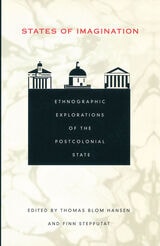
States of Imagination
Ethnographic Explorations of the Postcolonial StateThomas Blom Hansen and Finn Stepputat, eds.
Duke University Press, 2001
Focusing on the micropolitics of everyday state-making, the contributors examine the mythologies, paradoxes, and inconsistencies of the state through ethnographies of diverse postcolonial practices. They show how the authority of the state is constantly challenged from the local as well as the global and how growing demands to confer rights and recognition to ever more citizens, organizations, and institutions reveal a persistent myth of the state as a source of social order and an embodiment of popular sovereignty. Demonstrating the indispensable value of ethnographic work on the practices and the symbols of the state, States of Imagination showcases a range of studies and methods to provide insight into the diverse forms of the postcolonial state as an arena of both political and cultural struggle.
This collection will interest students and scholars of anthropology, cultural studies, sociology, political science, and history.
Contributors. Lars Buur, Mitchell Dean, Akhil Gupta, Thomas Blom Hansen, Steffen Jensen, Aletta J. Norval, David Nugent, Sarah Radcliffe, Rachel Sieder, Finn Stepputat, Martijn van Beek, Oskar Verkaaik, Fiona Wilson
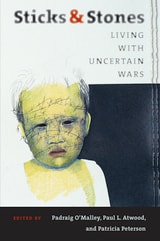
Sticks and Stones
Living with Uncertain WarsPadraig O'Malley
University of Massachusetts Press, 2006
Following an introduction by Padraig O'Malley, the book is divided into four sections: "Understanding the World as We Have Known It"; "Global Uncertainties"; "Whose Values? Whose Justice?"; and "Shaping a New World." The first section reviews what we have learned about war and establishes benchmarks for judging whether that knowledge is being translated into changes in the behavior of our political cultures. It suggests that the world's premier superpower, in its effort to promote Western-style democracy, has taken steps that have inhibited rather than facilitated democratization.
The second section examines the war on terror and the concept of global war. From the essays in this section emerges a consensus that democracy as practiced in the West cannot be exported to countries with radically different cultures, traditions, and values. The third section visits the question of means and ends in the context of varying value systems and of theocracy, democracy, and culture. In the final section, the focus shifts to our need for global institutions to maintain order and assist change in the twenty-first century.
Although each contributor comes from a different starting point, speaks with a different voice, and has a different ideological perspective, the essays reach startlingly similar conclusions. In sum, they find that the West has not absorbed the lessons from the wars of the last century and is inadequately prepared to meet the new challenges that now confront us.
Contributors to the volume include J. Brian Atwood, Susan J. Atwood, John Cooley, Romeo Dallaire, Ramu Damodaran, Valerie Epps, Michael J. Glennon, Stanley Heginbotham, Robert Jackson, Winston Langley, Alfred W. McCoy, Greg Mills, Jonathan Moore, Chris Patten, Gwyn Prins, Jonathan Schell, John Shattuck, Cornelio Sommargua, Brian Urquhart, Stephen Van Evera, and Robert Weiner.
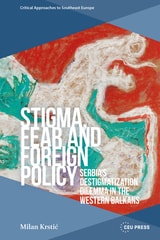
Stigma, Fear and Foreign Policy
Serbia’s Destigmatization Dilemma in the Western BalkansMilan Krstic
Central European University Press, 2026
The central argument is that Serbia’s decision-makers grappled with a “destigmatization dilemma,” perceiving that actions aimed at facilitating Serbia’s destigmatization within international society could simultaneously undermine its security in regional relations with former adversaries. This produced a dillema between prioritizing destigmatization or security concerns. Through an examination of Serbia’s relations with Croatia and Bosnia and Herzegovina, the book explores how decision-makers navigated this dilemma, focusing on two key perceptions: the level of threat posed by the former adversary, and the perceived importance of the bilateral relationship for its destigmatization goals.
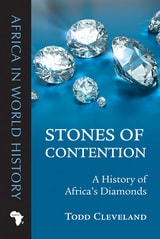
Stones of Contention
A History of Africa’s DiamondsTodd Cleveland
Ohio University Press, 2014
Africa supplies the majority of the world’s diamonds, yet consumers generally know little about the origins and history of these precious stones beyond sensationalized media accounts of so-called blood diamonds.
Stones of Contention explores the major developments in the remarkable history of Africa’s diamonds, from the earliest stirrings of international interest in the continent’s mineral wealth in the first millennium A.D. to the present day. In the European colonial period, the discovery of diamonds in South Africa ushered in an era of unprecedented greed during which monopolistic enterprises exploited both the mineral resources and the indigenous workforce. In the aftermath of World War II, the governments of newly independent African states, both democratic and despotic, joined industry giant De Beers and other corporations to oversee and profit from mining activity on the continent.
The book also considers the experiences of a wide array of Africans—from informal artisanal miners, company mineworkers, and indigenous authorities to armed rebels, mining executives, and premiers of mineral-rich states—and their relationships to the stones that have the power to bring both wealth and misery. With photos and maps, Stones of Contention illustrates the scope and complexity of the African diamond trade as well as its impact on individuals and societies.
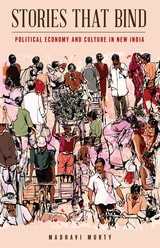
Stories That Bind
Political Economy and Culture in New IndiaMadhavi Murty
Rutgers University Press, 2022
Moving between mediascapes to create an archive of popular culture, Murty advances our understanding of political economy through material that is often seen as inconsequential, namely the popular cultural story. These stories stoke our desires (e.g. for wealth), scaffold our instincts (e.g. for a strong leadership) and shape our values.

Streaming at the End of the World
Cinema in the Age of ChaosAlex Sayf Cummings
Rutgers University Press, 2027
Streaming at the End of the World explores the pessimistic and often apocalyptic themes that have pervaded popular culture in the United States and global cinema in the new millennium. The book argues that recent films, from the art-house fare of Melancholia (2011) to the popular science fiction of Annihilation (2018), embody an ambient feeling that continually haunts people in today's capitalist world—an ineluctable impression there is no alternative to the status quo. It seems like nothing is ever really going to change; hence, we are drawn to visions of the end of everything. Written in an accessible, conversational style, this book offers a popular culture spin on the late British philosopher Mark Fisher's maxim that it’s "easier to imagine an end to the world than an end to capitalism."
Streetwise
How Taxi Drivers Establish Customer's TrustworthinessDiego Gambetta
Russell Sage Foundation, 2005
Strong Religion
The Rise of Fundamentalisms around the WorldGabriel A. Almond, R. Scott Appleby, and Emmanuel Sivan
University of Chicago Press, 2003
To answer questions like these, Strong Religion draws on the results of the Fundamentalism Project, a decade-long interdisciplinary study of antimodernist, antisecular militant religious movements on five continents and within seven world religious traditions. The authors of this study analyze the various social structures, cultural contexts, and political environments in which fundamentalist movements have emerged around the world, from the Islamic Hamas and Hizbullah to the Catholic and Protestant paramilitaries of Northern Ireland, and from the Moral Majority and Christian Coalition of the United States to the Sikh radicals and Hindu nationalists of India. Offering a vividly detailed portrait of the cultures that nourish such movements, Strong Religion opens a much-needed window onto different modes of fundamentalism and identifies the kind of historical events that can trigger them.
Struggle in the Andes
Peasant Political Mobilization in PeruBy Howard Handelman
University of Texas Press, 1975
A massive land-seizure movement first erupted in Peru in 1958 and spread across the Andean highlands in 1963–1964. Several hundred peasant communities in the Peruvian Andes occupied neighboring haciendas in an attempt to retake lands they felt had been stolen from them over the years. Hacienda peasants also participated in this movement, forming peasant sindicatos (unions) to improve their labor conditions.
The land-seizure movement brought with it an upsurge in community political mobilization. Throughout the highlands, village leaders banded together in regional federations, often allying themselves with progressive or radical urban groups. Radical activists from labor unions and university student groups joined with indigenous peasant leaders, breaking down the highland peasantry’s traditional isolation from the political system.
Struggle in the Andes is an analysis of the causes and consequences of extensive social and political mobilization among Peru’s peasant population in the 1960s. In addition to describing the growth of the peasant land movement, Howard Handelman investigates the social and economic conditions that contributed to rural unrest. Using data that he collected in forty-one diverse highland communities, Handelman examines the correlates of peasant political activity, concluding that land seizures in the traditional southern sierra had different origins and political implications than did unrest in the more socioeconomically modernized central highlands.
The data suggest a model of peasant mobilization that calls into question prevailing scholarly hypotheses on the relationships between modernization, peasant political mobilization, and radicalization. Handelman discusses the land-reform program and the accompanying rural mobilization that was being implemented by Peru’s reformist military regime. Using his model of peasant mobilization, he speculates on the possible effects of the government’s contemporary programs on future peasant political behavior.
Struggle over Identity
The Official and the Alternative "Belarusianness"Nelly Bekus
Central European University Press, 2010
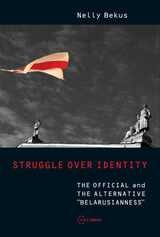
Rejecting the cliché about “weak identity and underdeveloped nationalism,” Bekus argues for the co-existence of two parallel concepts of Belarusianness—the official and the alternative one—which mirrors the current state of the Belarusian people more accurately and allows for a different interpretation of the interconnection between the democratization and nationalization of Belarusian society.
The book describes how the ethno-symbolic nation of the Belarusian nationalists, based on the cultural capital of the Golden Age of the Belarusian past (17th century) competes with the “nation” institutionalized and reified by the numerous civic rituals and social practices under the auspices of the actual Belarusian state.
Comparing the two concepts not only provides understanding of the logic that dominates Belarusian society’s self-description models, but also enables us to evaluate the chances of alternative Belarusianness to win this unequal struggle over identity.
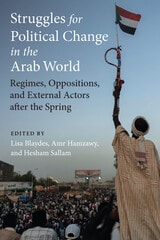
Struggles for Political Change in the Arab World
Regimes, Oppositions, and External Actors after the SpringEdited by Lisa Blaydes, Amr Hamzawy, and Hesham Sallam
University of Michigan Press, 2022
The advent of the Arab Spring in late 2010 was a hopeful moment for partisans of progressive change throughout the Arab world. Authoritarian leaders who had long stood in the way of meaningful political reform in the countries of the region were either ousted or faced the possibility of political if not physical demise. The downfall of long-standing dictators as they faced off with strong-willed protesters was a clear sign that democratic change was within reach. Throughout the last ten years, however, the Arab world has witnessed authoritarian regimes regaining resilience, pro-democracy movements losing momentum, and struggles between the first and the latter involving regional and international powers.
This volume explains how relevant political players in Arab countries among regimes, opposition movements, and external actors have adapted ten years after the onset of the Arab Spring. It includes contributions on Egypt, Morocco, Kuwait, Saudi Arabia, Syria, Algeria, Sudan, Lebanon, Iraq, Jordan, Yemen, and Tunisia. It also features studies on the respective roles of the United States, China, Iran, and Turkey vis-à-vis questions of political change and stability in the Arab region, and includes a study analyzing the role of Saudi Arabia and its allies in subverting revolutionary movements in other countries.
Stubborn Structures
Reconceptualizing Post-Communist RegimesHenry E. Hale
Central European University Press, 2019
Students of the World
Pedro Monaville
Duke University Press, 2022
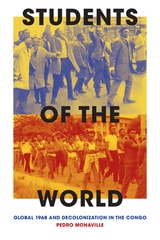
Students of the World
Global 1968 and Decolonization in the CongoPedro Monaville
Duke University Press, 2022
Subaltern Studies Reader, 1986-1995
Ranajit Guha
University of Minnesota Press, 1997