18284 books match the query 'United States' and 1181 start with s

cover of Sullivanesque: Urban Architecture and Ornamentation

Sullivanesque

Urban Architecture and Ornamentation

Ronald E. Schmitt

University of Illinois Press, 2001

Sullivanesque offers a visual and historical tour of a unique but often overlooked facet of modern American architecture derived from Louis Sullivan.Highly regarded in architecture for inspiring the Chicago School and the Prairie School, Sullivan was an unwilling instigator of the method of facade composition--later influenced by Frank Lloyd Wright, William Gray Purcell, and George G. Elmslie--that came to be known as Sullivanesque. Decorative enhancements with botanical and animal themes, Sullivan's distinctive ornamentation mitigated the hard geometries of the large buildings he designed, coinciding with his "form follows function" aesthetic.Sullivan's designs offered solutions to problems presented by new types and scales of buildings. Widely popular, they were also widely copied, and the style proliferated due to a number of Chicago-based interests, including the Radford Architectural Company and several decorative plaster and terra-cotta companies. Stock replicas of Sullivan's designs manufactured by the Midland Terra Cotta Company and others gave distinction and focus to utilitarian buildings in Chicago's commercial strips and other confined areas, such as the downtown districts of smaller towns. Mass-produced Sullivanesque terra cotta endured as a result of its combined economic and aesthetic appeal, blending the sophistication of high architectural art with the pragmatic functionality of building design.Masterfully framed by the author's photographs of Sullivanesque buildings in Chicago and throughout the Midwest, Ronald E. Schmitt's in-depth exploration of the Sullivanesque tells the story of its evolution from Sullivan's intellectual and aesthetic foundations to its place as a form of commercial vernacular. The book also includes an inventory of Sullivanesque buildings.Honorable Mention recipient of the 2002 PSP Awards for Excellence in Professional/Scholarly Publishing
[more]
cover of Sum of the Parts: The Mathematics and Politics of Region, Place, and Writing

Sum of the Parts

The Mathematics and Politics of Region, Place, and Writing

Kent C Ryden

University of Iowa Press, 2011

Proponents of the new regional history understand that regional identities are constructed and contested, multifarious and not monolithic, that they involve questions of dominance and power, and that their nature is inherently political. In this lively new book, writing in the spirit of these understandings, Kent Ryden engagingly examines works of American regional writing to show us how literary partisans of place create and recreate, attack and defend, argue over and dramatize the meaning and identity of their regions in the pages of their books.
 
Cleverly drawing upon mathematical models that complement his ideas and focusing on both classic and contemporary literary regionalists, Ryden demonstrates that regionalism, in the cultural sense, retains a great deal of power as a framework for literary interpretation. For New England he examines such writers as Robert Frost and Hayden Carruth, Mary E. Wilkins Freeman and Edith Wharton, and Carolyn Chute and Russell Banks to demonstrate that today’s regionalists inspire closer, more democratic readings of life and landscape. For the West and South, he describes Wallace Stegner’s and William Faulkner’s use of region to, respectively, exclude and evade or confront and indict. For the Midwest, he focuses on C. J. Hribal, William Least Heat-Moon, Paul Gruchow, and others to demonstrate that midwesterners continually construct the past anew from the materials at hand, filling the seemingly empty midlands with history and significance.
 
Ryden reveals that there are many Wests, many New Englands, many Souths, and many Midwests, all raising similar issues about the cultural politics of region and place. Writing with appealing freshness and a sense of adventure, he shows us that place, and the stories that emerge from and define place, can be a source of subversive energy that blunts the homogenizing force of region, inscribing marginal places and people back onto the imaginative surface of the landscape when we read it on a place-by-place, landscape-by-landscape, book-by-book basis.
[more]
cover of Summers Off?: A History of U.S. Teachers' Other Three Months

Summers Off?

A History of U.S. Teachers' Other Three Months

Christine A. Ogren

Rutgers University Press, 2026
Since the nine-month school year became common in the United States during the 1880s, schoolteachers have never really had summers off. Administrators instructed them to rest, as well as to study and travel, in the interest of creating a compliant workforce. Teachers, however, adapted administrators’ directives to pursue their own version of professionalization and to ensure their financial well-being. Summers Off explores teachers’ summer experiences between the 1880s and 1930s in institutes and association meetings; sessions at teachers colleges, Black colleges, and prestigious universities; work for wages or their family; tourism in the U.S. and Europe; and activities intended to be restful. This heretofore untold history reveals how teachers utilized the geographical and psychological distance from the classroom that summer provided, to enhance not only their teaching skills but also their professional and intellectual independence, their membership in the middle class, and, in the cases of women and Black teachers, their defiance of gender and race hierarchies.
[more]
cover of Sun Ra's Chicago: Afrofuturism and the City

Sun Ra's Chicago

Afrofuturism and the City

William Sites

University of Chicago Press, 2020

Sun Ra (1914–93) was one of the most wildly prolific and unfailingly eccentric figures in the history of music. Renowned for extravagant performances in which his Arkestra appeared in neo-Egyptian garb, the keyboardist and bandleader also espoused an interstellar cosmology that claimed the planet Saturn as his true home. In Sun Ra’s Chicago, William Sites brings this visionary musician back to earth—specifically to the city’s South Side, where from 1946 to 1961 he lived and relaunched his career. The postwar South Side was a hotbed of unorthodox religious and cultural activism: Afrocentric philosophies flourished, storefront prophets sold “dream-book bibles,” and Elijah Muhammad was building the Nation of Islam. It was also an unruly musical crossroads where the man then known as Sonny Blount drew from an array of intellectual and musical sources—from radical nationalism, revisionist Christianity, and science fiction to jazz, blues, Latin dance music, and pop exotica—to construct a philosophy and performance style that imagined a new identity and future for African Americans. Sun Ra’s Chicago shows that late twentieth-century Afrofuturism emerged from a deep, utopian engagement with the city—and that by excavating the postwar black experience of Sun Ra’s South Side milieu, we can come to see the possibilities of urban life in new ways.
[more]
cover of Sun, Sin & Suburbia: The History of Modern Las Vegas, Revised and Expanded

Sun, Sin & Suburbia

The History of Modern Las Vegas, Revised and Expanded

Geoff Schumacher

University of Nevada Press, 2015

More than forty million visitors per year travel to Sin City to visit the gambling mecca of the world. But gambling is only one part of the city’s story. In this carefully documented history, Geoff Schumacher tracks the rise of Las Vegas, including its vital role during World War II; the rise of the Strip in the 1950s; the explosive growth of the 1990s; and the colossal collapse triggered by the real estate bust and economic crisis of the mid-2000s. Schumacher surveys the history of the iconic casinos, debunking myths and highlighting key players such as Howard Hughes, Kirk Kerkorian, and Steve Wynn.
 
Schumacher’s history also profiles the Las Vegas where more than two million people live. He explores the neighborhoods sprawling beyond the Strip’s neon gleam and uncovers a diverse community offering much more than table games, lounge acts, and organized crime. Schumacher discusses contemporary Las Vegas, charting its course from the nation’s fastest-growing metropolis to one of the Great Recession’s most battered victims.
 
Sun, Sin & Suburbia will appeal to tourists looking to understand more than the glitz and glitter of Las Vegas and to newcomers who want to learn about their new hometown. It will also be an essential addition to any longtime Nevadan’s library of local history.
 
First published in 2012 by Stephens Press, this paperback edition is now available from the University of Nevada Press.

[more]
cover of Sundae Best: History of Soda Fountains

Sundae Best

History of Soda Fountains

Anne Cooper Funderburg

University of Wisconsin Press, 2001

This is the first comprehensive, documented history of the soda fountain. For one hundred fifty years, this popular institution was a community social center, both in big cities and small towns.
    The evolution of the soda fountain reflected momentous developments in American history— urbanization, the temperance movement and Prohibition, the Great Depression, technical progress, the decline of Main Street, and the rise of car culture and growth of suburbia. The fountain’s evolution was also closely tied to trends in retailing, food service, lifestyles, and the decorative arts.

[more]
cover of Sunday Afternoon on the Porch: Reflections of a Small Town in Iowa, 1939-1942

Sunday Afternoon on the Porch

Reflections of a Small Town in Iowa, 1939-1942

Everett W. Kuntz

University of Iowa Press, 2008

In 1939, just before graduating from high school in the small town of Ridgeway in northeast Iowa, Everett Kuntz spent his entire savings of $12.50 on a 35mm Argus AF camera. He made a camera case from a worn-out boot, scraps from a tin can, and a clasp from his mother’s purse. For the next several years, especially during the summers when he worked on his parents’ dairy farm, he clicked the shutter of his trusty Argus all around the quiet town.

Everett bought movie reel film in bulk from a mail-order house, rolled his own film, and developed it in a closet at home, but he never had the money to print his photographs. More than two thousand negatives stayed in a box while he married, raised a family, and worked as an electrical engineer in the Twin Cities. When he became ill with cancer in the fall of 2002—sixty years after he had developed the last of his bulk film—Everett opened his time capsule and printed the images from his youth. He died in 2003, having brought his childhood town back to life just as he was leaving it.

A sense of peace radiates from these images. Whether skinny-dipping in the Turkey River, wheelbarrow-racing, threshing oats, milking cows, visiting with relatives after church, or hanging out at the drugstore or the movies, Ridgeway’s hardworking citizens are modest and trusting and luminous in their graceful harmony and their unguarded affection for each other. Visiting the town in 2006 as he was writing the text to accompany these photographs, Jim Heynen crafted vignettes that perfectly complement these rediscovered images by blending fact and fiction to give context and voice to Ridgeway’s citizens.

[more]
cover of Sunday Rides on Two Wheels: Motorcycling in Southern Wisconsin

Sunday Rides on Two Wheels

Motorcycling in Southern Wisconsin

Barbara Barber

University of Wisconsin Press, 2009
Eighteen unforgettable routes along riverways and ridges, down rustic roads and coulees, and over 1,800 miles of southern Wisconsin’s best rides
[more]
cover of Sundays at Sinai: A Jewish Congregation in Chicago

Sundays at Sinai

A Jewish Congregation in Chicago

Tobias Brinkmann

University of Chicago Press, 2012
First established 150 years ago, Chicago Sinai is one of America’s oldest Reform Jewish congregations. Its founders were upwardly mobile and civically committed men and women, founders and partners of banks and landmark businesses like Hart Schaffner & Marx, Sears & Roebuck, and the giant meatpacking firm Morris & Co. As explicitly modern Jews, Sinai’s members supported and led civic institutions and participated actively in Chicago politics. Perhaps most radically, their Sunday services, introduced in 1874 and still celebrated today, became a hallmark of the congregation.
In Sundays at Sinai, Tobias Brinkmann brings modern Jewish history, immigration, urban history, and religious history together to trace the roots of radical Reform Judaism from across the Atlantic to this rapidly growing American metropolis.  Brinkmann shines a light on the development of an urban reform congregation, illuminating Chicago Sinai’s practices and history, and its contribution to Christian-Jewish dialogue in the United States. Chronicling Chicago Sinai’s radical beginnings in antebellum Chicago to the present, Sundays at Sinai is the extraordinary story of a leading Jewish Reform congregation in one of America’s great cities.
[more]
cover of Sunk Cost: Who’s to Blame for the Nation’s Broken Student Loan System and How to Fix It

Sunk Cost

Who’s to Blame for the Nation’s Broken Student Loan System and How to Fix It

Jillian Berman

University of Chicago Press, 2025

Exposes the forgotten origins of the student loan system, how politicians have attempted to fix it, and the life-altering damage borrowers face.
 
Student-loan horror stories are a dime a dozen. But students today are faced with a seemingly insurmountable paradox: Research consistently shows that the clearest viable option to financial stability is a college degree. But if and when Americans decide to pursue diplomas, student loan payments quickly follow, and even after securing full-time employment, many borrowers struggle to make ends meet for years. In Sunk Cost, journalist Jillian Berman explores how the nation’s student loan program went from a well-intentioned initiative aimed at helping low- and middle-income students afford college to one that traps borrowers in long-term debt.
 
Berman interviewed dozens of borrowers and policymakers and dug into the archives to unearth the true causes of the student loan problem. A couple of generations ago, policy makers generously subsidized Americans’ college educations because they knew it would be advantageous for the entire country: a more educated population meant better quality of life for all. But today, higher education is viewed as an individual goal, so students and their families are expected to be on the hook for it themselves. Berman explains how this enormous shift happened, which industries benefit from it, and what it means for college-going Americans today. She shares real-life stories of college graduates who are being crushed under some of the harshest consequences of the student loan system. These borrowers pursued higher education in hopes of a better life and yet some have been trapped in debt for decades, making it difficult to put food on the table, much less imagine a life beyond debt.
 
By connecting personal accounts to the policy history of student loans, Berman makes clear that if American society continues to push students toward higher education, but fails to truly subsidize it, the financial strain will become unbearable for all but the most privileged. The current system is broken, but Berman proposes that significant changes are possible, and will require political will from state lawmakers and Congress, along with a philosophical shift, to tackle one of the largest consumer finance challenges of our time.

 
[more]
cover of Sunlit Riffles and Shadowed Runs: Stories of Fly Fishing in America

Sunlit Riffles and Shadowed Runs

Stories of Fly Fishing in America

Kent Cowgill

University of Wisconsin Press, 2012
Ranging from the riotously comic to the nostalgic, edgy, and suspenseful, these sixteen stories offer richly developed and engaging portraits of characters across the spectrum of life, all absorbed by the thrill of fly fishing. A marriage betrayal on a trout stream in the north woods, a young boy’s coming of age as a fly fisherman in the Black Hills of South Dakota, angler rage on the redfish flats of the Gulf of Mexico, an epic quest for bullish rainbows in Montana’s celebrated Bighorn, the quiet mystique of Wisconsin’s Brule River, the intensity of combat fishing on a salmon pool in the Pacific Northwest, these are just a few of the fascinating tales of fly fishing offered in Sunlit Riffles and Shadowed Runs. Rendered in sparkling prose that will resonate with every angler, this collection will also delight any reader who enjoys outdoor pastimes.
[more]
cover of Super Black: American Pop Culture and Black Superheroes

Super Black

American Pop Culture and Black Superheroes

By Adilifu Nama

University of Texas Press, 2011

Winner, American Book Award, Before Columbus Foundation, 2012

Super Black places the appearance of black superheroes alongside broad and sweeping cultural trends in American politics and pop culture, which reveals how black superheroes are not disposable pop products, but rather a fascinating racial phenomenon through which futuristic expressions and fantastic visions of black racial identity and symbolic political meaning are presented. Adilifu Nama sees the value—and finds new avenues for exploring racial identity—in black superheroes who are often dismissed as sidekicks, imitators of established white heroes, or are accused of having no role outside of blaxploitation film contexts.

Nama examines seminal black comic book superheroes such as Black Panther, Black Lightning, Storm, Luke Cage, Blade, the Falcon, Nubia, and others, some of whom also appear on the small and large screens, as well as how the imaginary black superhero has come to life in the image of President Barack Obama. Super Black explores how black superheroes are a powerful source of racial meaning, narrative, and imagination in American society that express a myriad of racial assumptions, political perspectives, and fantastic (re)imaginings of black identity. The book also demonstrates how these figures overtly represent or implicitly signify social discourse and accepted wisdom concerning notions of racial reciprocity, equality, forgiveness, and ultimately, racial justice.

[more]
cover of Super Imperialism: The Origin and Fundamentals of U.S. World Dominance

Super Imperialism

The Origin and Fundamentals of U.S. World Dominance

Michael Hudson

Pluto Press, 2003

[more]
cover of Supercharged Storytimes: An Early Literacy Planning and Assessment Guide

Supercharged Storytimes

An Early Literacy Planning and Assessment Guide

Kathleen Campana

American Library Association, 2016

[more]
cover of Superchurch: The Rhetoric and Politics of American Fundamentalism

Superchurch

The Rhetoric and Politics of American Fundamentalism

Jonathan J. Edwards

Michigan State University Press, 2015
Christian Fundamentalism is a doctrine and a discourse in tension. Fundamentalists describe themselves as both marginal and a majority. They announce the imminent end of the world while building massive megachurches and political lobbying organizations. They speak of the need for purity and separation from the outside world while continually innovating in their search for more effective and persuasive ways to communicate with and convert outsiders. To many outsiders, Fundamentalist speech seems contradictory, irrational, intolerant, and dangerously antidemocratic. To understand the complexity of Fundamentalism, we have to look inside the tensions and the paradoxes. We have to take seriously the ways in which Fundamentalists describe themselves to themselves, and to do that, we must begin by exploring the central role of “the church” in Fundamentalist rhetoric and politics. Drawing on five fascinating case studies, Superchurch blends a complex yet readable treatment of rhetorical and political theory with a sophisticated approach to Fundamentalism that neither dismisses its appeal nor glosses over its irresolvable tensions. Edwards challenges theories of rhetoric, counterpublics, deliberation, and civility while offering critical new insights into the evolution and continuing influence of one of the most significant cultural and political movements of the past century.
[more]
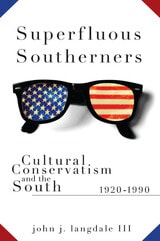
cover of Superfluous Southerners: Cultural Conservatism and the South, 1920-1990

Superfluous Southerners

Cultural Conservatism and the South, 1920-1990

John J. Langdale III

University of Missouri Press, 2012
In Superfluous Southerners, John J. Langdale III tells the story of traditionalist conservatism and its boundaries in twentieth-century America. Because this time period encompasses both the rise of the modern conservative movement and the demise of southern regional distinctiveness, it affords an ideal setting both for observing the potentiality of American conservatism and for understanding the fate of the traditionalist “man of letters.” Langdale uses the intellectual and literary histories of John Crowe Ransom, Donald Davidson, and Allen Tate—the three principal contributors to the Agrarian manifesto I’ll Take My Stand—and of their three most remarkable intellectual descendants—Cleanth Brooks, Richard Weaver, and Melvin Bradford—to explore these issues.
Langdale begins his study with some observations on the nature of American exceptionalism and the intrinsic barriers which it presents to the traditionalist conservative imagination. While works like Louis Menand’s The Metaphysical Club have traced the origins of modern pragmatic liberalism during the late nineteenth century, the nature of conservative thought in postbellum America remains less completely understood. Accordingly, Langdale considers the origins of the New Humanism movement at the turn of the twentieth century, then turning to the manner in which midwesterners Irving Babbitt and Paul Elmer Moore stirred the imagination of the southern Agrarians during the 1920s.
After the publication of I’ll Take My Stand in 1930, Agrarianism splintered into three distinct modes of traditionalist conservatism: John Crowe Ransom sought refuge in literary criticism, Donald Davidson in sectionalism, and Allen Tate in an image of the religious-wayfarer as a custodian of language. Langdale traces the expansion of these modes of traditionalism by succeeding generations of southerners. Following World War II, Cleanth Brooks further refined the tradition of literary criticism, while Richard Weaver elaborated the tradition of sectionalism. However, both Brooks and Weaver distinctively furthered Tate’s notion that the integrity of language remained the fundamental concern of traditionalist conservatism.
Langdale concludes his study with a consideration of neoconservative opposition to M.E. Bradford’s proposed 1980 nomination as head of the National Endowment for the Humanities and its significance for the southern man of letters in what was becoming postmodern and postsouthern America. Though the post–World War II ascendance of neoconservatism drastically altered American intellectual history, the descendants of traditionalism remained largely superfluous to this purportedly conservative revival which had far more in common with pragmatic liberalism than with normative conservatism.
[more]
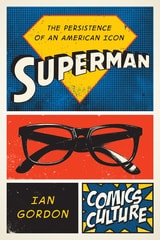
cover of Superman: The Persistence of an American Icon

Superman

The Persistence of an American Icon

Gordon, Ian

Rutgers University Press, 2017

After debuting in 1938, Superman soon became an American icon. But why has he maintained his iconic status for nearly 80 years? And how can he still be an American icon when the country itself has undergone so much change?

Superman: Persistence of an American Icon examines the many iterations of the character in comic books, comic strips, radio series, movie serials, feature films, television shows, animation, toys, and collectibles over the past eight decades. Demonstrating how Superman’s iconic popularity cannot be attributed to any single creator or text, comics expert Ian Gordon embarks on a deeper consideration of cultural mythmaking as a collective and dynamic process. He also outlines the often contentious relationships between the various parties who have contributed to the Superman mythos, including corporate executives, comics writers, artists, nostalgic commentators, and collectors.     

Armed with an encyclopedic knowledge of Superman’s appearances in comics and other media, Gordon also digs into comics archives to reveal the prominent role that fans have played in remembering, interpreting, and reimagining Superman’s iconography. Gordon considers how comics, film, and TV producers have taken advantage of fan engagement and nostalgia when selling Superman products. Investigating a character who is equally an icon of American culture, fan culture, and consumer culture, Superman thus offers a provocative analysis of mythmaking in the modern era.

 
[more]
cover of Supernatural America: The Paranormal in American Art

Supernatural America

The Paranormal in American Art

Edited by Robert Cozzolino

University of Chicago Press, 2021

America is haunted. Ghosts from its violent history—the genocide of Indigenous peoples, slavery, the threat of nuclear annihilation, and traumatic wars—are an inescapable and unsettled part of the nation’s heritage. Not merely in the realm of metaphor but present and tangible, urgently calling for contact, these otherworldly visitors have been central to our national identity. Through times of mourning and trauma, artists have been integral to visualizing ghosts, whether national or personal, and in doing so have embraced the uncanny and the inexplicable. This stunning catalog, accompanying the first major exhibition to assess the spectral in American art, explores the numerous ways American artists have made sense of their own experiences of the paranormal and the supernatural, developing a rich visual culture of the intangible.

​Featuring artists from James McNeill Whistler and Kerry James Marshall to artist/mediums who made images with spirits during séances, this catalog covers more than two hundred years of the supernatural in American art. Here we find works that explore haunting, UFO sightings, and a broad range of experiential responses to other worldly contact.
[more]
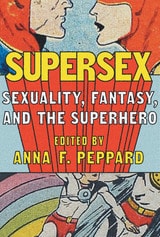
cover of Supersex: Sexuality, Fantasy, and the Superhero

Supersex

Sexuality, Fantasy, and the Superhero

Edited by Anna F. Peppard

University of Texas Press, 2020

2021 Comic Studies Society Prize for Edited Collection

From Superman and Batman to the X-Men and Young Avengers, Supersex interrogates the relationship between heroism and sexuality, shedding new light on our fantasies of both.

From Superman, created in 1938, to the transmedia DC and Marvel universes of today, superheroes have always been sexy. And their sexiness has always been controversial, inspiring censorship and moral panic. Yet though it has inspired jokes and innuendos, accusations of moral depravity, and sporadic academic discourse, the topic of superhero sexuality is like superhero sexuality itself—seemingly obvious yet conspicuously absent. Supersex: Sexuality, Fantasy, and the Superhero is the first scholarly book specifically devoted to unpacking the superhero genre’s complicated relationship with sexuality.

Exploring sexual themes and imagery within mainstream comic books, television shows, and films as well as independent and explicitly pornographic productions catering to various orientations and kinks, Supersex offers a fresh—and lascivious—perspective on the superhero genre’s historical and contemporary popularity. Across fourteen essays touching on Superman, Batman, the X-Men, and many others, Anna F. Peppard and her contributors present superhero sexuality as both dangerously exciting and excitingly dangerous, encapsulating the superhero genre’s worst impulses and its most productively rebellious ones. Supersex argues that sex is at the heart of our fascination with superheroes, even—and sometimes especially—when the capes and tights stay on.

[more]
cover of Supersizing Urban America: How Inner Cities Got Fast Food with Government Help

Supersizing Urban America

How Inner Cities Got Fast Food with Government Help

Chin Jou

University of Chicago Press, 2017

More than one-third of adults in the United States are obese. The Centers for Disease Control and Prevention estimates that there are over 112,000 obesity-related deaths annually, and for many years, the government has waged a very public war on the problem. Former Surgeon General Richard Carmona warned in 2006 that “obesity is the terror within,” going so far as to call it a threat that will “dwarf 9/11.”
 
What doesn’t get mentioned in all this? The fact that the federal government helped create the obesity crisis in the first place—especially where it is strikingly acute, among urban African-American communities. Supersizing Urban America reveals the little-known story of how the U.S. government got into the business of encouraging fast food in inner cities, with unforeseen consequences we are only beginning to understand. Chin Jou begins her story in the late­ 1960s, when predominantly African-American neighborhoods went from having no fast food chain restaurants to being littered with them. She uncovers the federal policies that have helped to subsidize that expansion, including loan guarantees to fast food franchisees, programs intended to promote minority entrepreneurship, and urban revitalization initiatives. During this time, fast food companies also began to relentlessly market to urban African-American consumers. An unintended consequence of these developments was that low-income minority communities were disproportionately affected by the obesity epidemic.

​In the first book about the U.S. government’s problematic role in promoting fast food in inner-city America, Jou tells a riveting story of the food industry, obesity, and race relations in America that is essential to understanding health and obesity in contemporary urban America.
[more]
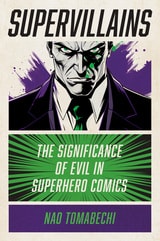
cover of Supervillains: The Significance of Evil in Superhero Comics

Supervillains

The Significance of Evil in Superhero Comics

Nao Tomabechi

Rutgers University Press, 2025

Alongside superheroes, supervillains, too, have become one of today’s most popular and globally recognizable figures. However, it is not merely their popularity that marks their significance. Supervillains are also central to superhero storytelling to the extent that the superhero genre cannot survive without supervillains.

Bringing together different approaches and critical perspectives across disciplines, author Nao Tomabechi troubles overly hero-centered works in comics studies to reconsider the modern American myths of the superheroes. Considering the likes of Lex Luthor, the Joker, Catwoman, Harley Quinn, Loki, Venom, and more, Supervillians explores themes such as gender and sexuality, disability, and many forms of Otherness in relation to the notion of evil as it appears in the superhero genre. The book investigates how supervillains uphold and, at times, trouble dominant ideals expressed by the heroism of our superheroes.

[more]
cover of Supplying Custer: The Powder River Supply Depot, 1876

Supplying Custer

The Powder River Supply Depot, 1876

Gerald R. Clark

University of Utah Press, 2014

The Battle of the Little Bighorn is one of the best-known events in the history of the American West. Questions surrounding Custer’s fate have been discussed and researched at length, but details about the transportation and logistics of military supplies have not been thoroughly investigated. Archaeologist Gerald Clark stumbled upon the remnants of a supply depot while surveying the area near the confluence of the Yellowstone and Powder Rivers. It turned out to have been established by General Terry during the Sioux War and utilized by Custer and part of the 7th Calvary.
     The book details the items recovered archaeologically, including ale and soda bottles, cartridges, packing crates, and a horseshoe and ceramic doll. It also addresses the army’s knowledge of this area and how the supply depot fit into the broader military campaign. This book connects archaeology and history to explore how the American military planned, maneuvered, and operated on the northern plains from the end of the Civil War through 1876.
[more]
cover of Supreme Court Appointments: Judge Bork and the Politicization of Senate Confirmations

Supreme Court Appointments

Judge Bork and the Politicization of Senate Confirmations

Norman Vieira and Leonard Gross

Southern Illinois University Press, 1998

Norman Vieira and Leonard Gross provide an in-depth analysis of the political and legal framework surrounding the confirmation process for Supreme Court nominees.

President Ronald Reagan’s nomination of Judge Robert Bork to the Supreme Court met with a fierce opposition that was apparent in his confirmation hearings, which were different in many ways from those of any previous nominee. Lasting longer than any other Supreme Court confirmation battle, the Senate hearings dragged on for eighty-seven hours over a twelve-day period. Bork personally testified for more than thirty hours, outlining his legal philosophy in greater detail than had ever before been required of a Supreme Court nominee. Nor had any previous Supreme Court nominee faced the number of witnesses who testified at the Bork hearings.

Deriving their material from hundreds of in-depth interviews with those who participated in the confirmation hearings, Vieira and Gross present a firsthand account of the behind-the-scenes pressure on senators to oppose Bork. Special-interest groups, they note, attempted to control the confirmation process, with both the media and public-opinion polls playing major roles in the defeat of the nomination. Both liberal and conservative groups used the Bork debate to raise money for political war chests.

This behind-the-scenes view of the politics and personalities involved in the Bork confirmation controversy provides a framework for future debates regarding the confirmation process. To help establish that framework, Vieira and Gross examine the similarities as well as the differences between the Bork confirmation battle and other confirmation proceedings for Supreme Court nominees. They also analyze the Supreme Court nominations made after the Bork hearings, including an extensive examination of the controversial Clarence Thomas nomination.
 

[more]
cover of Supreme Court Confirmation Hearings in the U.S. Senate: Reconsidering the Charade

Supreme Court Confirmation Hearings in the U.S. Senate

Reconsidering the Charade

Dion Farganis and Justin Wedeking

University of Michigan Press, 2014
Critics claim that Supreme Court nominees have become more evasive in recent decades and that Senate confirmation hearings lack real substance. Conducting a line-by-line analysis of the confirmation hearing of every nominee since 1955—an original dataset of nearly 11,000 questions and answers from testimony before the Senate Judiciary Committee—Dion Farganis and Justin Wedeking discover that nominees are far more forthcoming than generally assumed. Applying an original scoring system to assess each nominee’s testimony based on the same criteria, they show that some of the earliest nominees were actually less willing to answer questions than their contemporary counterparts. Factors such as changes in the political culture of Congress and the 1981 introduction of televised coverage of the hearings have created the impression that nominee candor is in decline. Further, senators’ votes are driven more by party and ideology than by a nominee’s responsiveness to their questions. Moreover, changes in the confirmation process intersect with increasing levels of party polarization as well as constituents’ more informed awareness and opinions of recent Supreme Court nominees.
[more]
cover of Supreme Court Decision-Making: New Institutionalist Approaches

Supreme Court Decision-Making

New Institutionalist Approaches

Edited by Cornell W. Clayton and Howard Gillman

University of Chicago Press, 1998

What influences decisions of the U.S. Supreme Court? For decades social scientists focused on the ideology of individual justices. Supreme Court Decision Making moves beyond this focus by exploring how justices are influenced by the distinctive features of courts as institutions and their place in the political system.

Drawing on interpretive-historical institutionalism as well as rational choice theory, a group of leading scholars consider such factors as the influence of jurisprudence, the unique characteristics of supreme courts, the dynamics of coalition building, and the effects of social movements. The volume's distinguished contributors and broad range make it essential reading for those interested either in the Supreme Court or the nature of institutional politics.

Original essays contributed by Lawrence Baum, Paul Brace, Elizabeth Bussiere, Cornell Clayton, Sue Davis, Charles Epp, Lee Epstein, Howard Gillman, Melinda Gann Hall, Ronald Kahn, Jack Knight, Forrest Maltzman, David O'Brien, Jeffrey Segal, Charles Sheldon, James Spriggs II, and Paul Wahlbeck.

[more]
cover of Supreme Court Justice Tom C. Clark: A Life of Service

Supreme Court Justice Tom C. Clark

A Life of Service

By Mimi Clark Gronlund

University of Texas Press, 2010

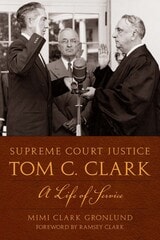
An associate justice on the renowned Warren Court whose landmark ruling in Brown v. Board of Education overturned racial segregation in schools and other public facilities, Tom C. Clark was a crusader for justice throughout his long legal career. Among many tributes Clark received, Supreme Court Chief Justice Warren Burger opined that "no man in the past thirty years has contributed more to the improvement of justice than Tom Clark."

Supreme Court Justice Tom C. Clark is the first biography of this important American jurist. Written by his daughter, Mimi Clark Gronlund, and based on interviews with many of Clark's judicial associates, friends, and family, as well as archival research, it offers a well-rounded portrait of a lawyer and judge who dealt with issues that remain in contention today—civil rights, the rights of the accused, school prayer, and censorship/pornography, among them. Gronlund explores the factors in her father's upbringing and education that helped form his judicial philosophy, then describes how that philosophy shaped his decisions on key issues and cases, including the internment of Japanese Americans during World War II, the investigation of war fraud, the Truman administration's loyalty program (an anti-communist effort), the Brown decision, Mapp v. Ohio (protections against unreasonable search and seizure), and Abington v. Schempp (which overturned a state law that required reading from the Bible each day in public schools).
[more]
cover of Supreme Court and Judicial Choice: The Role of Provisional Review in a Democracy

Supreme Court and Judicial Choice

The Role of Provisional Review in a Democracy

Paul R. Dimond

University of Michigan Press, 1989
The conventional wisdom holds that the Supreme Court provides the final word as the Court tells the people what the Constitution commands. In interpreting uncertain constitutional text, however, the Court is not provided with a single answer but must, itself, make hard choices. Such choices by an unelected Court appear to conflict with the basic principle of majority rule by the people through their elected representatives in our democracy. Over time, through public debate, new arguments before the Court, legislation, new appointments to the Court, and constitutional amendments, however, the Court's prior judgements evolve, are distinguished or modified, and are even directly overturned. Viewed from this longer term perspective, the Court's supposedly final rulings can therefore be seen as an integral part of an ongoing national dialogue over the meaning of the Constitution. This understanding makes judicial review more consistent with our tradition of government by the people rather than by the Court. To explore this understanding, The Supreme Court and Judicial Choice develops a provisional approach to judicial review under which a surprisingly large number of judicial rulings would be subject to modification by ordinary legistlation enacted by Congress. Far from rendering the Court a powerless subject of Congress, this proposal would enhance the vital role of the Court in stimulating and shaping the ongoing dialogue with the people over the meaning of the Constitution.
[more]
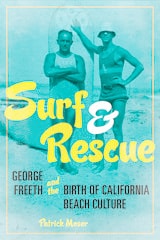
cover of Surf and Rescue: George Freeth and the Birth of California Beach Culture

Surf and Rescue

George Freeth and the Birth of California Beach Culture

Patrick Moser

University of Illinois Press, 2022

The mixed-race Hawaiian athlete George Freeth brought surfing to Venice, California, in 1907. Over the next twelve years, Freeth taught Southern Californians to surf and swim while creating a modern lifeguard service that transformed the beach into a destination for fun, leisure, and excitement. Patrick Moser places Freeth’s inspiring life story against the rise of the Southern California beach culture he helped shape and define. Freeth made headlines with his rescue of seven fishermen, an act of heroism that highlighted his innovative lifeguarding techniques. But he also founded California's first surf club and coached both male and female athletes, including Olympic swimming champion and “father of modern surfing” Duke Kahanamoku. Often in financial straits, Freeth persevered as a teacher and lifeguarding pioneer--building a legacy that endured long after his death during the 1919 influenza pandemic.

A compelling merger of biography and sports history, Surf and Rescue brings to light the forgotten figure whose novel way of seeing the beach sparked the imaginations of people around the world.

[more]
cover of Surfer Girls in the New World Order

Surfer Girls in the New World Order

Krista Comer

Duke University Press, 2010
In Surfer Girls in the New World Order, Krista Comer explores surfing as a local and global subculture, looking at how the culture of surfing has affected and been affected by girls, from baby boomers to members of Generation Y. Her analysis encompasses the dynamics of international surf tourism in Sayulita, Mexico, where foreign women, mostly middle-class Americans, learn to ride the waves at a premier surf camp and local women work as manicurists, maids, waitresses, and store clerks in the burgeoning tourist economy. In recent years, surfistas, Mexican women and girl surfers, have been drawn to the Pacific coastal town’s clean reef-breaking waves. Comer discusses a write-in candidate for mayor of San Diego, whose political activism grew out of surfing and a desire to protect the threatened ecosystems of surf spots; the owners of the girl-focused Paradise Surf Shop in Santa Cruz and Surf Diva in San Diego; and the observant Muslim woman who started a business in her Huntington Beach home, selling swimsuits that fully cover the body and head. Comer also examines the Roxy Girl series of novels sponsored by the surfwear company Quiksilver, the biography of the champion surfer Lisa Andersen, the Gidget novels and films, the movie Blue Crush, and the book Surf Diva: A Girl’s Guide to Getting Good Waves. She develops the concept of “girl localism” to argue that the experience of fighting for waves and respect in male-majority surf breaks, along with advocating for the health and sustainable development of coastal towns and waterways, has politicized surfer girls around the world.
[more]
cover of Surrender: How the Clinton Administration Completed the Reagan Revolution

Surrender

How the Clinton Administration Completed the Reagan Revolution

Michael Meeropol

University of Michigan Press, 2000

Michael Meeropol argues that the ballooning of the federal budget deficit was not a serious problem in the 1980s, nor were the successful recent efforts to get it under control the basis for the prosperous economy of the mid-1990s. In this controversial book, the author provides a close look at what actually happened to the American economy during the years of the "Reagan Revolution" and reveals that the huge deficits had no negative effect on the economy. It was the other policies of the Reagan years--high interest rates to fight inflation, supply-side tax cuts, reductions in regulation, increased advantages for investors and the wealthy, the unraveling of the safety net for the poor--that were unsuccessful in generating more rapid growth and other economic improvements.
Meeropol provides compelling evidence of the failure of the U.S. economy between 1990 and 1994 to generate rising incomes for most of the population or improvements in productivity. This caused, first, the electoral repudiation of President Bush in 1992, followed by a repudiation of President Clinton in the 1994 Congressional elections. The Clinton administration made a half-hearted attempt to reverse the Reagan Revolution in economic policy, but ultimately surrendered to the Republican Congressional majority in 1996 when Clinton promised to balance the budget by 2000 and signed the welfare reform bill. The rapid growth of the economy in 1997 caused surprisingly high government revenues, a dramatic fall in the federal budget deficit, and a brief euphoria evident in an almost uncontrollable stock market boom. Finally, Meeropol argues powerfully that the next recession, certain to come before the end of 1999, will turn the predicted path to budget balance and millennial prosperity into a painful joke on the hubris of public policymakers.
Accessibly written as a work of recent history and public policy as much as economics, this book is intended for all Americans interested in issues of economic policy, especially the budget deficit and the Clinton versus Congress debates. No specialized training in economics is needed.
"A wonderfully accessible discussion of contemporary American economic policy. Meeropol demonstrates that the Reagan-era policies of tax cuts and shredded safety nets, coupled with strident talk of balanced budgets, have been continued and even brought to fruition by the neo-liberal Clinton regime." --Frances Fox Piven, Graduate School, City University of New York
Michael Meeropol is Chair and Professor of Economics, Western New England College.

[more]
cover of Surroundings: A History of Environments and Environmentalisms

Surroundings

A History of Environments and Environmentalisms

Etienne S. Benson

University of Chicago Press, 2020

Given the ubiquity of environmental rhetoric in the modern world, it’s easy to think that the meaning of the terms environment and environmentalism are and always have been self-evident. But in Surroundings, we learn that the environmental past is much more complex than it seems at first glance. In this wide-ranging history of the concept, Etienne S. Benson uncovers the diversity of forms that environmentalism has taken over the last two centuries and opens our eyes to the promising new varieties of environmentalism that are emerging today.
 
Through a series of richly contextualized case studies, Benson shows us how and why particular groups of people—from naturalists in Napoleonic France in the 1790s to global climate change activists today—adopted the concept of environment and adapted it to their specific needs and challenges. Bold and deeply researched, Surroundings challenges much of what we think we know about what an environment is, why we should care about it, and how we can protect it.

[more]
cover of Surveillance and Spies in the Civil War: Exposing Confederate Conspiracies in America’s Heartland

Surveillance and Spies in the Civil War

Exposing Confederate Conspiracies in America’s Heartland

Stephen E. Towne

Ohio University Press, 2015

Surveillance and Spies in the Civil War represents pathbreaking research on the rise of U.S. Army intelligence operations in the Midwest during the American Civil War and counters long-standing assumptions about Northern politics and society. At the beginning of the rebellion, state governors in Ohio, Indiana, and Illinois cooperated with federal law enforcement officials in various attempts—all failed—to investigate reports of secret groups and individuals who opposed the Union war effort. Starting in 1862, army commanders took it upon themselves to initiate investigations of antiwar sentiment in those states. By 1863, several of them had established intelligence operations staffed by hired civilian detectives and by soldiers detailed from their units to chase down deserters and draft dodgers, to maintain surveillance on suspected persons and groups, and to investigate organized resistance to the draft. By 1864, these spies had infiltrated secret organizations that, sometimes in collaboration with Confederate rebels, aimed to subvert the war effort. Stephen E. Towne is the first to thoroughly explore the role and impact of Union spies against Confederate plots in the North. This new analysis invites historians to delve more deeply into the fabric of the Northern wartime experience and reinterpret the period based on broader archival evidence.
[more]
cover of Surveillance in the Time of Insecurity

Surveillance in the Time of Insecurity

Monahan, Torin

Rutgers University Press, 2010

Threats of terrorism, natural disaster, identity theft, job loss, illegal immigration, and even biblical apocalypse—all are perils that trigger alarm in people today. Although there may be a factual basis for many of these fears, they do not simply represent objective conditions. Feelings of insecurity are instilled by politicians and the media, and sustained by urban fortification, technological surveillance, and economic vulnerability.

Surveillance in the Time of Insecurity fuses advanced theoretical accounts of state power and neoliberalism with original research from the social settings in which insecurity dynamics play out in the new century. Torin Monahan explores the counterterrorism-themed show 24, Rapture fiction, traffic control centers, security conferences, public housing, and gated communities, and examines how each manifests complex relationships of inequality, insecurity, and surveillance. Alleviating insecurity requires that we confront its mythic dimensions, the politics inherent in new configurations of security provision, and the structural obstacles to achieving equality in societies.
[more]
cover of Surveillance, Privacy, and the Law: Employee Drug Testing and the Politics of Social Control

Surveillance, Privacy, and the Law

Employee Drug Testing and the Politics of Social Control

John Gilliom

University of Michigan Press, 1996
Employee drug testing is an invasive and controversial new social control policy that burst into the American work place during the war on drugs of the 1980s. Workers, judges, and politicians divided over whether it was an unnecessary and unconstitutional program of surveillance or an effective and appropriate new weapon in the anti-drug arsenal. When the dust had settled, the new technique was widely used and had been strongly approved by the United States Supreme Court. This raises the fundamental question: Why was the momentum behind testing so strong and the opposition to testing so ineffective? Drawing on theories of ideological hegemony and legal mobilization, John Gilliom begins the search for answers with an examination of how the imagery of a national drug crisis served as the legitimating context for the introduction of testing. Surveillance, Privacy, and the Law then moves beyond the specific history of testing and frames the new policy within a broader transformation of social control policy seen by students of political economy, society, and culture. The book cites survey research among skilled workers and analyzes court opinions to highlight the sharply polarized opinions in the workplaces and courthouses of America. Although federal court decisions show massive and impassioned disagreement among judges, the new conservative Supreme Court comes down squarely behind testing. Its ruling embraces surveillance technology, rejects arguments against testing, and undermines future opposition to policies of general surveillance. Surveillance, Privacy, and the Law portrays the apparent triumph of testing policies as a victory for the conservative law-and-order movement and a stark loss for the values of privacy and autonomy. As one episode in a broader move toward a surveillance society, the battle over employee drug testing raises disturbing questions about future struggles over revolutionary new means of surveillance and control. John Gilliom is Professor of Political Science, Ohio University.
[more]
cover of Surveying Subjective Phenomena

Surveying Subjective Phenomena

Charles Turner

Russell Sage Foundation, 1984
In January 1980 a panel of distinguished social scientists and statisticians assembled at the National Academy of Sciences to begin a thorough review of the uses, reliability, and validity of surveys purporting to measure such subjective phenomena as attitudes, opinions, beliefs, and preferences. This review was prompted not only by the widespread use of survey results in both academic and non-academic settings, but also by a proliferation of apparent discrepancies in allegedly equivalent measurements and by growing public concern over the value of such measurements. This two-volume report of the panel's findings is certain to become one of the standard works in the field of survey measurement. Volume I summarizes the state of the art of surveying subjective phenomena, evaluates contemporary measurement programs, examines the uses and abuses of such surveys, and candidly assesses the problems affecting them. The panel also offers strategies for improving the quality and usefulness of subjective survey data. In volume II, individual panel members and other experts explore in greater depth particular theoretical and empirical topics relevant to the panel's conclusions. For social scientists and policymakers who conduct, analyze, and rely on surveys of the national state of mind, this comprehensive and current review will be an invaluable resource.
[more]
cover of Surveying Subjective Phenomena

Surveying Subjective Phenomena

Charles Turner

Russell Sage Foundation, 1984

In January 1980 a panel of distinguished social scientists and statisticians assembled at the National Academy of Sciences to begin a thorough review of the uses, reliability, and validity of surveys purporting to measure such subjective phenomena as attitudes, opinions, beliefs, and preferences. This review was prompted not only by the widespread use of survey results in both academic and non-academic settings, but also by a proliferation of apparent discrepancies in allegedly equivalent measurements and by growing public concern over the value of such measurements. This two-volume report of the panel's findings is certain to become one of the standard works in the field of survey measurement. Volume I summarizes the state of the art of surveying subjective phenomena, evaluates contemporary measurement programs, examines the uses and abuses of such surveys, and candidly assesses the problems affecting them. The panel also offers strategies for improving the quality and usefulness of subjective survey data. In volume II, individual panel members and other experts explore in greater depth particular theoretical and empirical topics relevant to the panel's conclusions. For social scientists and policymakers who conduct, analyze, and rely on surveys of the national state of mind, this comprehensive and current review will be an invaluable resource.
[more]
cover of Surveying Subjective Phenomena

Surveying Subjective Phenomena

Charles Turner

Russell Sage Foundation, 1984
In January 1980 a panel of distinguished social scientists and statisticians assembled at the National Academy of Sciences to begin a thorough review of the uses, reliability, and validity of surveys purporting to measure such subjective phenomena as attitudes, opinions, beliefs, and preferences. This review was prompted not only by the widespread use of survey results in both academic and non-academic settings, but also by a proliferation of apparent discrepancies in allegedly equivalent measurements and by growing public concern over the value of such measurements. This two-volume report of the panel's findings is certain to become one of the standard works in the field of survey measurement. Volume I summarizes the state of the art of surveying subjective phenomena, evaluates contemporary measurement programs, examines the uses and abuses of such surveys, and candidly assesses the problems affecting them. The panel also offers strategies for improving the quality and usefulness of subjective survey data. In volume II, individual panel members and other experts explore in greater depth particular theoretical and empirical topics relevant to the panel's conclusions. For social scientists and policymakers who conduct, analyze, and rely on surveys of the national state of mind, this comprehensive and current review will be an invaluable resource.
[more]
cover of Surveying in Early America: The Point of Beginning, An Illustrated History

Surveying in Early America

The Point of Beginning, An Illustrated History

Dan Patterson; Clinton Terry

Ohio University Press, 2020

Published by the University of Cincinnati Press

In Surveying in Early America: The Point of Beginning, An Illustrated History, award-winning photographer Dan Patterson and American historian Clinton Terry vividly examine the profession of surveying in the eighteenth century. Retracing the steps Washington and other surveyors took to map the Ohio River Valley, readers are immersed in historically accurate details of early surveying techniques and practices. Terry's narrative describes the practice of land and survey measurement—methods that did not substantially change until the invention of GPS technology 200 years later. Over 100 full color photographs exclusively shot for the book depict authentic and historically accurate reproductions of tools along with early American reenactors to provide an interpretive look at surveying as a primary means to building the American nation. Working with the Department of the Geographer, Patterson restages actual expeditions, brilliantly displaying the techniques and instruments Washington would have employed 260 years ago. Through the lens of Patterson's camera and Terry's accompanying narrative, readers see what Washington saw as he learned his trade, explored the vast American wilderness, and occasionally laid personal claim to great expanses of land along the way.

[more]
cover of Survival Arts of the Primitive Paiutes

Survival Arts of the Primitive Paiutes

Margaret M. Wheat

University of Nevada Press, 1977
With over 24,000 copies in print, this bestselling book tells how the Paiutes survived in the harsh Nevada climate. Chronicling food-gathering methods, basket weaving, hunting, skinning, and working with rabbit skins, this book serves as an invaluable reference on early Paiute culture. Any inquiring person who has worked with the Native Americans of the West will testify to the difficulties of obtaining the information he seeks. They are an old and proud and reserved race, and acceptance of outsiders is not freely given. In her twenty years of painstaking work with the Northern Paiutes, Margaret Wheat earned that full measure of acceptance. She tells the story of the generation of Native Americans whose lives were changed forever by the arrival of pioneers and prospectors in 1849.
[more]
cover of Survival City: Adventures among the Ruins of Atomic America

Survival City

Adventures among the Ruins of Atomic America

Tom Vanderbilt

University of Chicago Press, 2002

On the road to Survival City, Tom Vanderbilt maps the visible and invisible legacies of the cold war, exhuming the blueprints for the apocalypse we once envisioned and chronicling a time when we all lived at ground zero. In this road trip among ruined missile silos, atomic storage bunkers, and secret test sites, a lost battleground emerges amid the architecture of the 1950s, accompanied by Walter Cotten’s stunning photographs. Survival City looks deep into the national soul, unearthing the dreams and fears that drove us during the latter half of the twentieth century.

“A crucial and dazzling book, masterful, and for me at least, intoxicating.”—Dave Eggers


“A genuinely engaging book, perhaps because [Vanderbilt] is skillful at conveying his own sense of engagement to the reader.”—Los Angeles Times


“A retracing of Dr. Strangelove as ordinary life.”—Greil Marcus, Bookforum

[more]
cover of Survival Pending Revolution: The History of the Black Panther Party

Survival Pending Revolution

The History of the Black Panther Party

Paul Alkebulan

University of Alabama Press, 2007
The Black Panther Party (BPP) seized the attention of America in the frenetic days of the late 1960s when a series of assassinations, discontent with the Vietnam War, and impatience with lingering racial discrimination roiled the United States, particularly its cities. The BPP inspired dread among the American body politic while receiving support from many urban black youths. The images of angry and armed young black radicals in the streets of U.S. cities seemed a stunning reversal and repudiation of the accommodationist and assimilationist black goals associated with Martin Luther King’s movement, as well as an unprecedented defiance of the civil power.
 
Although many have written about the BPP in memoirs and polemics, Survival Pending Revolution contributes to a new generation of objective, analytical BPP studies that are sorely needed. Alkebulan displays the entire movement’s history: its lofty and even idealistic goals and its in-your-face rhetoric, its strategies, tactics, and the internal divisions and ego clashes, drawing upon public records as well as the memories of both leaders and foot soldiers, to attempt a description that both understands the inner workings of the BPP and its role in the greater society.
[more]
cover of Survival Schools: The American Indian Movement and Community Education in the Twin Cities

Survival Schools

The American Indian Movement and Community Education in the Twin Cities

Julie L. Davis

University of Minnesota Press, 2013


In the late 1960s, Indian families in Minneapolis and St. Paul were under siege. Clyde Bellecourt remembers, “We were losing our children during this time; juvenile courts were sweeping our children up, and they were fostering them out, and sometimes whole families were being broken up.” In 1972, motivated by prejudice in the child welfare system and hostility in the public schools, American Indian Movement (AIM) organizers and local Native parents came together to start their own community school. For Pat Bellanger, it was about cultural survival. Though established in a moment of crisis, the school fulfilled a goal that she had worked toward for years: to create an educational system that would enable Native children “never to forget who they were.”


While AIM is best known for its national protests and political demands, the survival schools foreground the movement’s local and regional engagement with issues of language, culture, spirituality, and identity. In telling of the evolution and impact of the Heart of the Earth school in Minneapolis and the Red School House in St. Paul, Julie L. Davis explains how the survival schools emerged out of AIM’s local activism in education, child welfare, and juvenile justice and its efforts to achieve self-determination over urban Indian institutions. The schools provided informal, supportive, culturally relevant learning environments for students who had struggled in the public schools. Survival school classes, for example, were often conducted with students and instructors seated together in a circle, which signified the concept of mutual human respect. Davis reveals how the survival schools contributed to the global movement for Indigenous decolonization as they helped Indian youth and their families to reclaim their cultural identities and build a distinctive Native community.


The story of these schools, unfolding here through the voices of activists, teachers, parents, and students, is also an in-depth history of AIM’s founding and early community organizing in the Twin Cities—and evidence of its long-term effect on Indian people’s lives.

[more]
cover of Survivance, Sovereignty, and Story: Teaching American Indian Rhetorics

Survivance, Sovereignty, and Story

Teaching American Indian Rhetorics

Lisa King

Utah State University Press, 2015

Focusing on the importance of discussions about sovereignty and of the diversity of Native American communities, Survivance, Sovereignty, and Story offers a variety of ways to teach and write about indigenous North American rhetorics.

These essays introduce indigenous rhetorics, framing both how and why they should be taught in US university writing classrooms. Contributors promote understanding of American Indian rhetorical and literary texts and the cultures and contexts within which those texts are produced. Chapters also supply resources for instructors, promote cultural awareness, offer suggestions for further research, and provide examples of methods to incorporate American Indian texts into the classroom curriculum.

Survivance, Sovereignty, and Story provides a decolonized vision of what teaching rhetoric and writing can be and offers a foundation to talk about what rhetoric and pedagogical practice can mean when examined through American Indian and indigenous epistemologies and contemporary rhetorics.

Contributors include Joyce Rain Anderson, Resa Crane Bizzaro, Qwo-Li Driskill, Janice Gould, Rose Gubele, Angela Haas, Jessica Safran Hoover, Lisa King, Kimberli Lee, Malea D. Powell, Andrea Riley-Mukavetz, Gabriela Raquel Ríos, and Sundy Watanabe.

[more]
cover of Surviving Alex: A Mother’s Story of Love, Loss, and Addiction

Surviving Alex

A Mother’s Story of Love, Loss, and Addiction

Patricia A. Roos

Rutgers University Press, 2024

In 2015, Patricia Roos’s twenty-five-year-old son Alex died of a heroin overdose. Turning her grief into action, Roos, a professor of sociology at Rutgers University, began to research the social factors and institutional failures that contributed to his death. Surviving Alex tells her moving story—and outlines the possibilities of a more compassionate and effective approach to addiction treatment.  

Weaving together a personal narrative and a sociological perspective, Surviving Alex movingly describes how even children from “good families” fall prey to addiction, and recounts the hellish toll it takes on families. Drawing from interviews with Alex’s friends, family members, therapists, teachers, and police officers—as well as files from his stays in hospitals, rehab facilities, and jails—Roos paints a compelling portrait of a young man whose life veered between happiness, anxiety, success, and despair. And as she explores how a punitive system failed her son, she calls for a community of action that would improve care for substance users and reduce addiction, realigning public health policy to address the overdose crisis.


 
[more]
cover of Surviving Madness: A Therapist's Own Story

Surviving Madness

A Therapist's Own Story

Betty Berzon

University of Wisconsin Press, 2002

    Betty Berzon, renowned psychotherapist and author of the bestselling book Permanent Partners, tells her own incredible story here. Berzon’s journey from psychiatric patient on suicide watch—her wrists tethered to the bed rails in a locked hospital ward—to her present role as a groundbreaking therapist and gay pioneer makes for purely compelling reading.
    Berzon is recognized today as a trailblazing co-founder of a number of important lesbian and gay organizations and one of the first therapists to focus on means of developing healthy gay relationships and overcoming homophobia. Her sometimes bumpy road to success never fails to fascinate. Along the way she encounters such luminaries as Anaïs Nin, Eleanor Roosevelt, the Sitwells, Evelyn Hooker, and Paul Monette. Her recollections here provide a collective portrait of her fellow pioneers and a stirring lesson in twentieth-century history.
    It is, however, the intimate story of Berzon’s own private passage toward self-discovery—from mental breakdown and suicide attempts, through hospitalization, eventual triumphant recovery, and her own coming out as an open lesbian at the age of forty—that makes this memoir an urgent, insightful, and deeply emotional testament to human survival.
[more]
cover of Surviving Southampton: African American Women and Resistance in Nat Turner's Community

Surviving Southampton

African American Women and Resistance in Nat Turner's Community

Vanessa M. Holden

University of Illinois Press, 2021

The local community around the Nat Turner rebellion

The 1831 Southampton Rebellion led by Nat Turner involved an entire community. Vanessa M. Holden rediscovers the women and children, free and enslaved, who lived in Southampton County before, during, and after the revolt. Mapping the region's multilayered human geography, Holden draws a fuller picture of the inhabitants, revealing not only their interactions with physical locations but also their social relationships in space and time. Her analysis recasts the Southampton Rebellion as one event that reveals the continuum of practices that sustained resistance and survival among local Black people. Holden follows how African Americans continued those practices through the rebellion’s immediate aftermath and into the future, showing how Black women and communities raised children who remembered and heeded the lessons absorbed during the calamitous events of 1831.

A bold challenge to traditional accounts, Surviving Southampton sheds new light on the places and people surrounding Americas most famous rebellion against slavery.

[more]
cover of Surviving the Essex: The Afterlife of America's Most Storied Shipwreck

Surviving the Essex

The Afterlife of America's Most Storied Shipwreck

David O. Dowling

University Press of New England, 2016
Surviving the “Essex” tells the captivating story of a ship’s crew battered by whale attack, broken by four months at sea, and forced—out of necessity—to make meals of their fellow survivors. Exploring the Rashomon-like Essex accounts that complicate and even contradict first mate Owen Chase’s narrative, David O. Dowling examines the vital role of viewpoint in shaping how an event is remembered and delves into the ordeal’s submerged history—the survivors’ lives, ambitions, and motives, their pivotal actions during the desperate moments of the wreck itself, and their will to reconcile those actions in the short- and long-term aftermath of this storied event. Mother of all whale tales, Surviving the “Essex” acts as a sequel to Nathaniel Philbrick’s In the Heart of the Sea, while probing deeper into the nature of trauma and survival accounts, an extreme form of notoriety, and the impact that the story had on Herman Melville and the writing of Moby-Dick.
[more]
cover of Surviving the ICE Age: Children of Immigrants in New York

Surviving the ICE Age

Children of Immigrants in New York

Joanna Dreby

Russell Sage Foundation, 2025

For the past three decades, U.S. immigration policy has become increasingly restrictive, focused on enforcement both at the southern border and across the country. A shift in emphasis from status regularization to criminalization has had rippling effects for families and communities. While we know much about how immigration enforcement impacts the undocumented, we know less about longstanding effects on U.S. citizens. In Surviving the ICE Age, sociologist Joanna Dreby draws on interviews with young adults with foreign-born parents to better understand what it was like to grow up during a time of heightened U.S. migratory control. 
 
Dreby shows that a restrictive approach to immigration creates problems over time and across generations. These issues occur regardless of one’s citizenship status and go beyond deportations. Despite having pride in their heritage, her interviewees did not talk much about immigration. She refers to this unwillingness—and at times, inability—to speak about immigration as silencing. Silencing in a community or family is often intended to protect children, but this can leave them with little information about their backgrounds and status, leading to fear and anxiety instead. Self-silencing often resulted from traumatic experiences tied to enforcement episodes, which sometimes took the form of memory loss or emotional withholding. Dreby finds that experiences with the immigration system that disrupted relationships in a child’s household arising from family separations, moves, or changing roles in the family had especially long-term effects, causing, at times, ongoing mental health issues. Even the risk of immigration involvement left some young adults feeling vulnerable and undermined their sense of safety and security as U.S. citizens.
 
Dreby also highlights stories that offer hope. Young adults developed strategies to persevere, and children who grew up in communities and families that openly talked about migration felt empowered and fared much better, especially when they had access to resources, such as adequate food and shelter, mental health services, and community support. Dreby calls for policies and practices to mitigate the harms of restrictive migratory control on children’s wellbeing, such avoiding the arrest of parents in front of children and ensuring that U.S. citizen children’s interests are considered in immigration court without their direct involvement.
 
Surviving the ICE Age details the generational harms caused by U.S. immigration policy and offers suggestions for a better way forward.
 
[more]
cover of Survivors: CAMBODIAN REFUGEES IN THE UNITED STATES

Survivors

CAMBODIAN REFUGEES IN THE UNITED STATES

Sucheng Chan

University of Illinois Press, 2004

In this clear, comprehensive, and unflinching study, Sucheng Chan invites us to follow the saga of Cambodian refugees striving to distance themselves from a series of cataclysmic events in their homeland. Survivors tracks not only the Cambodians' fight for life lives but also their battle for self-definition in new American surroundings.
 
Unparalleled in scope, Survivors begins with the Cambodians' experiences under the brutal Khmer Rouge regime, following them through escape to refugee camps in Thailand and finally to the United States, where they try to build new lives in the wake of massive trauma. Their struggle becomes primarily economic as they continue to negotiate new cultures and deal with rapidly changing gender and intergenerational relations within their own families. Poverty, crime, and racial discrimination all have an impact on their experiences in America, and each is examined in depth.  
 
Although written as a history, this is a thoroughly multidisciplinary study, and Chan makes use of research from anthropology, sociology, psychology, medicine, social work, linguistics and education. She also captures the perspective of individual Cambodians. Drawing on interviews with more than fifty community leaders, a hundred government officials, and staff members in volunteer agencies, Survivors synthesizes the literature on Cambodian refugees, many of whom come from varying socioeconomic backgrounds.
 
A major scholarly achievement, Survivors is unique in the Asian American canon for its memorable presentation of cutting-edge research and its interpretation of both sides of the immigration process.
 
[more]
cover of Susan Glaspell in Context: American Theater, Culture, and Politics, 1915-48

Susan Glaspell in Context

American Theater, Culture, and Politics, 1915-48

J. Ellen Gainor

University of Michigan Press, 2003


Susan Glaspell in Context not only discusses the dramatic work of this key American author -- perhaps best known for her short story "A Jury of Her Peers" and its dramatic counterpart, Trifles -- but also places it within the theatrical, cultural, political, social, historical, and biographical climates in which Glaspell's dramas were created: the worlds of Greenwich Village and Provincetown bohemia, of the American frontier, and of American modernism.
J. Ellen Gainor is Professor of Theatre, Women's Studies, and American Studies, Cornell University. Her other books include Performing America: Cultural Nationalism in American Theater (co-edited with Jeffrey D. Mason) from the University of Michigan Press.
[more]