Results by title
28167 books match the query 'History' and 1838 start with s
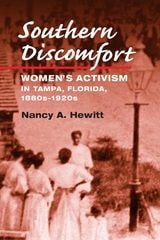
Southern Discomfort
Women's Activism in Tampa, Florida, 1880s-1920sNancy A. Hewitt
University of Illinois Press, 2001
Hewitt emphasizes the process by which women forged and reformulated their activist identities from Reconstruction through the U.S. declaration of war against Spain in April 1898, the industrywide cigar strike of 1901, and the emergence of progressive reform and labor militancy. She also recasts our understanding of southern history by demonstrating how Tampa's triracial networks alternately challenged and re-inscribed the South's biracial social and political order.

Southern Europe?
Italy, Spain, Portugal, and Greece from the 1950s Until the Present DayEdited by Martin Baumeister and Roberto Sala
Campus Verlag, 2015
Now, old inequalities long believed to be things of the past have resurfaced, and a new debt crisis appears to be splitting the continent apart along historic lines. This book raises the important question of whether studying the geopolitics and social history of southern Europe might be a valuable analytical tool for understanding these contemporary financial catastrophes.

Southern Exposure
Making the South Safe for DemocracyStetson Kennedy
University of Alabama Press, 2011
Using thorough and stark statistics, Kennedy describes a South emerging from World War II, coming to grips with the racism and feudalism that had held it back for generations. He includes an all-out Who’s Who, based on his own undercover investigations, of the "hate-mongers, race-racketeers, and terrorists who swore that apartheid must go on forever." The first paperback edition brings to a new generation of readers Kennedy’s searing profile of Dixie before the civil rights movement.
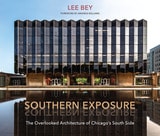
Southern Exposure
The Overlooked Architecture of Chicago's South SideLee Bey; Foreword by Amanda Willliams
Northwestern University Press, 2019
Inspired by Bey’s 2017 Chicago Architecture Biennial exhibition, Southern Exposure visits sixty sites, including lesser-known but important work by luminaries such as Jeanne Gang, Frank Lloyd Wright, and Eero Saarinen, as well as buildings by pioneering black architects such as Walter T. Bailey, John Moutoussamy, and Roger Margerum.
Pushing against the popular narrative that depicts Chicago’s South Side as an architectural wasteland, Bey shows beautiful and intact buildings and neighborhoods that reflect the value—and potential—of the area. Southern Exposure offers much to delight architecture aficionados and writers, native Chicagoans and guests to the city alike.
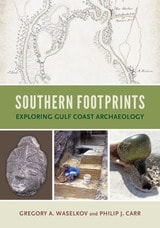
Southern Footprints
Exploring Gulf Coast ArchaeologyGregory A. Waselkov and Philip J. Carr
University of Alabama Press, 2024
Unearthing the Gulf Coast’s past—one footprint at a time.
Southern Footprints celebrates more than fifty years of archaeological research along the Gulf Coast by the University of South Alabama and the Center for Archaeological Studies. Archaeologists Gregory A. Waselkov and Philip J. Carr, the former and current directors of the center, present the “greatest hits” that have transformed knowledge of human history on the Alabama and Mississippi Gulf Coast from the Ice Age until recently. Each archaeological site, from surface collections to premiere archaeological preserves, such as Old Mobile and Holy Ground, offers clues to the past.
The chapters in this collection are arranged chronologically and survey the history and archaeology of a wide range of significant sites, including the Gulf Shores canoe canal, Bottle Creek Mounds, Old Mobile, Fort Mims, Spanish Fort, Spring Hill College, and Mobile River Bridge.
Waselkov and Carr take care to acknowledge in these stories populations who have been historically underdocumented, now recognizing the contributions of Native Americans and African Americans that have been uncovered through archaeology. The authors reveal the dire impacts of climate change, environmental disasters, development, and neglect—and convey their urgency to protect these areas of shared history—as a result of the meticulous excavation, analysis, and preservation of artifacts from these sites. Color photographs showcase the archaeology as it unfolds, often with the help of dedicated volunteers. Southern Footprints will serve as an indispensable reference on the rich Gulf Coast heritage for all to appreciate.

Southern Fried
Going Whole Hog in a State of WonderRex Nelson
Butler Center for Arkansas Studies, 2016
For decades, Rex Nelson has been traveling Arkansas. He learned to love the back roads, small towns, and people of the state while going on trips with his father, who sold athletic supplies to high schools. They sat in old Depression-era gyms built by the Works Progress Administration, ate in small-town cafes, and waded in streams on warm spring days.
Throughout his career as a sportswriter, political writer, senior staff member in the governor’s office, presidential appointee to the Delta Regional Authority, and now corporate communications director for Simmons Bank, Nelson has written millions of words about Arkansas and its people.
In this collection of columns from the Arkansas Democrat-Gazette, Nelson brings to life the personalities, communities, festivals, and tourist attractions that make Arkansas unique. As he says, “Arkansas is a hard place to explain to outsiders. We’re mostly Southern but also a bit Midwestern and a tad Southwestern. The Ozarks are different from the pine woods of the Gulf Coastal Plain, and the Delta is different from the Ouachitas. Invariably, though, those who take the time to get off the main roads and get to know the real Arkansas are entranced by the place.”
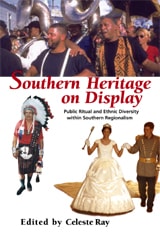
Southern Heritage on Display
Public Ritual and Ethnic Diversity within Southern RegionalismEdited by Celeste Ray
University of Alabama Press, 2002
W. J. Cash's 1941 observation that “there are many Souths and many cultural traditions among them” is certainly validated by this book. Although the Civil War and its “lost cause” tradition continues to serve as a cultural root paradigm in celebrations, both uniting and dividing loyalties, southerners also embrace a panoply of public rituals—parades, cook-offs, kinship homecomings, church assemblies, music spectacles, and material culture exhibitions—that affirm other identities. From the Appalachian uplands to the Mississippi Delta, from Kentucky bluegrass to Carolina piedmont, southerners celebrate in festivals that showcase their diverse cultural backgrounds and their mythic beliefs about themselves.
The ten essays of this cohesive, interdisciplinary collection present event-centered research from various fields of study—anthropology, geography, history, and literature—to establish a rich, complex picture of the stereotypically “Solid South.” Topics include the Mardi Gras Indian song cycle as a means of expressing African-American identity in New Orleans; powwow performances and Native American traditions in southeast North Carolina; religious healings in southern Appalachian communities; Mexican Independence Day festivals in central Florida; and, in eastern Tennessee, bonding ceremonies of melungeons who share Indian, Scots Irish, Mediterranean, and African ancestry. Seen together, these public heritage displays reveal a rich “creole” of cultures that have always been a part of southern life and that continue to affirm a flourishing regionalism.
This book will be valuable to students and scholars of cultural anthropology, American studies, and southern history; academic and public libraries; and general readers interested in the American South. It contributes a vibrant, colorful layer of understanding to the continuously emerging picture of complexity in this region historically depicted by simple stereotypes.
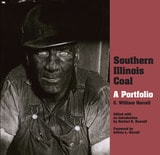
Southern Illinois Coal
A PortfolioC. William Horrell. Edited with an Introduction by Herbert K. Russell. Foreword by Jeffrey L. Horrell
Southern Illinois University Press, 1995
The coal mining photographs of C. William Horrell, taken across the southern Illinois Coal Belt over a twenty-year period from 1966 to 1986, are extraordinary examples of documentary photography—so stark and striking that captions often seem superfluous.
Horrell’s photographs capture the varied phenomena of twentieth-century coal mining technology: the awesome scale of surface mining machines and their impact on the land; massive machines forced into narrow passageways with inches to spare as they carry coal from the face to conveyer belts; and, more significant, the advent of continuous miners, machines that can handle four previously separate processes and which have been a fixture in underground or “deep” mines since the mid-1960s.
Horrell was also intrigued by the related activities of mining, including coal’s processing, cleaning, and transportation, as well as the daily, behind-the-scenes operations that keep mines and miners working. His photographs reflect the beauty of the commonplace—the clothes of the miners, their dinner pails, and their tools—and reveal the picturesque remnants of closed mines: the weathered boards of company houses, the imposing iron beauty of an ancient tipple, and an abandoned building against the lowering sky of an approaching storm. Finally, his portraits of coal minersshow the strength, dignity, and enduring spirit of the men and women who work the southern Illinois coal mines.
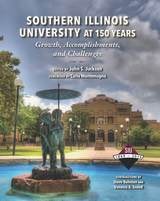
Southern Illinois University at 150 Years
Growth, Accomplishments, and ChallengesEdited by John S. Jackson with a Foreword by Carlo Montemagno and Contributions by Steve Buhman and Vanessa A. Sneed
Southern Illinois University Press, 2019
Chapters reflect on SIU’s successful athletics program, the various colleges and departments within the university, the diverse holdings and collections of the library, the unique innovative research enterprises, and special programs such as the Paul Simon Public Policy Institute and Touch of Nature Environmental Center.
Although SIU may be a typical large public university in many ways, its unique location, history, and culture have made it a distinct institution of higher education. Located close to the Shawnee National Forest and Giant City State Park, the landscape is an indelible part of SIU, contributing to both the beauty of the university grounds and the campus culture.
The university’s sesquicentennial provides a wonderful opportunity to revisit all that makes SIU amazing. Illustrated with 306 photographs of theater and music performances, art, sports, past and present students, faculty, staff, administration, politicians, community members, successful alums, distinguished visitors, and patrons of the university buildings, and landscapes, Southern Illinois University at 150 Years captures the university’s story in all its vivid color.
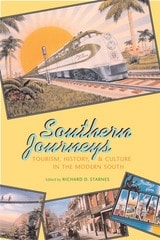
Southern Journeys
Tourism, History, and Culture in the Modern SouthEdited by Richard D. Starnes
University of Alabama Press, 2003
The first collection of its kind to examine tourism as a complicated and vital force in southern history, culture, and economics
Anyone who has seen Rock City, wandered the grounds of Graceland, hiked in Great Smoky Mountains National Park, or watched the mermaids swim at Weeki Wachee knows the southern United States offers visitors a rich variety of scenic, cultural, and leisure activities. Tourism has been, and is still, one of the most powerful economic forces in the modern South. It is a multibillion-dollar industry that creates jobs and generates revenue while drawing visitors from around the world to enjoy the region’s natural and man-made attractions.This collection of 11 essays explores tourism as a defining force in southern history by focusing on particular influences and localities. Alecia Long examines sex as a fundamental component of tourism in New Orleans in the early 20th century, while Brooks Blevins describes how tourism served as a modernizing influence on the Arkansas Ozarks, even as the region promoted itself as a land of quaint, primitive hillbillies. Anne Whisnant chronicles the battle between North Carolina officials building the Blue Ridge Parkway and the owner of Little Switzerland, who fought for access and advertising along the scenic highway. One essay probes the racial politics behind the development of Hilton Head Island, while another looks at the growth of Florida's
panhandle into a “redneck Riviera,” catering principally to southerners, rather than northern tourists.
Southern Journeys is a pioneering work in southern history. It introduces a new window through which to view the region's distinctiveness. Scholars and students of environmental history, business history, labor history, and social history will all benefit from a consideration of the place of tourism in southern life.
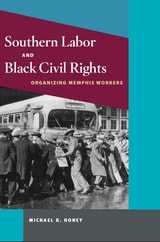
Southern Labor and Black Civil Rights
Organizing Memphis WorkersMichael K. Honey
University of Illinois Press, 1993
Winner of the Charles S. Sydnor Award, given by the Southern Historical Association, 1994. Winner of the James A. Rawley Prize given by the Organization of American Historians, 1994. Winner of the Herbert G. Gutman Award for an outstanding book in American social history.
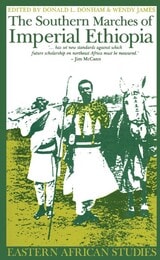
Southern Marches of Imperial Ethiopia
Essays in History and Social AnthropologyDonald L. Donham
Ohio University Press, 2002
This pioneering book, first published to wide acclaim in 1986, traces the way the Ethiopian center and the peripheral regions of the country affected each other. It looks specifically at the expansion of the highland Ethiopian state into the western and southern lowlands from the 1890s up to 1974.

Southern Migrants, Northern Exiles
Chad Berry
University of Illinois Press, 2000
Southern out-migration drew millions of southern workers to the steel mills, automobile factories, and even agricultural fields and orchards of Ohio, Indiana, Michigan, and Illinois. Through vivid oral histories, Chad Berry explores the conflict between migrants' economic success and their "spiritual exile" in the North. He documents the tension between factory owners who welcomed cheap, naive southern laborers and local "native" workers who greeted migrants with suspicion and hostility. He examines the phenomenon of "shuttle migration," in which migrants came north to work during the winter and returned home to plant spring crops on their southern farms. He also explores the impact of southern traditions--especially the southern evangelical church and "hillbilly" music--brought north by migrants.
Berry argues that in spite of being scorned by midwesterners for violence, fecundity, intoxication, laziness, and squalor, the vast majority of southern whites who moved to the Midwest found the economic prosperity they were seeking. By allowing southern migrants to assess their own experiences and tell their own stories, Southern Migrants, Northern Exiles refutes persistent stereotypes about migrants' clannishness, life-style, work ethic, and success in the North.
Southern Nilotic History
Linguistic Approaches to the Study of the PastChristopher Ehret
Northwestern University Press, 1971
“As a history, the book is a remarkable tour de force. Using mainly linguistic evidence, the author locates populations, moves them around, determines their relative influence vis-à-vis their neighbors, and reconstructs aspects of their culture, from basic economy to the practice of extracting incisors.” —American Anthropologist

Southern Paiute
A PortraitLogan Hebner
Utah State University Press, 2010
Now little recognized by their neighbors, Southern Paiutes once had homelands that included much of the vast Colorado Plateau, Great Basin, and Mojave Desert. From the Four Corners’ San Juan River to California’s lower Colorado, from Death Valley to Canyonlands, from Capitol Reef to the Grand Canyon, Paiutes lived in many small, widespread communities. They still do, but the communities are fewer, smaller, and mostly deprived of the lands and resources that sustained traditional lives.
To portray a people and the individuals who comprise it, William Logan Hebner and Michael L. Plyler relay Paiute voices and reveal Paiute faces, creating a space for them to tell their stories and stake claim to who they once were and now are.
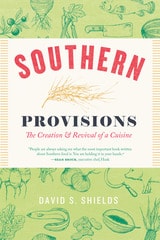
Southern Provisions
The Creation and Revival of a CuisineDavid S. Shields
University of Chicago Press, 2015
Shields’s turf is the southern Lowcountry, from the peanut patches of Wilmington, North Carolina to the sugarcane fields of the Georgia Sea Islands and the citrus groves of Amelia Island, Florida. He takes us on a historical excursion to this region, drawing connections among plants, farms, growers, seed brokers, vendors, cooks, and consumers over time. Shields begins by looking at how professional chefs during the nineteenth century set standards of taste that elevated southern cooking to the level of cuisine. He then turns to the role of food markets in creating demand for ingredients and enabling conversation between producers and preparers. Next, his focus shifts to the field, showing how the key ingredients—rice, sugarcane, sorghum, benne, cottonseed, peanuts, and citrus—emerged and went on to play a significant role in commerce and consumption. Shields concludes with a look at the challenges of reclaiming both farming and cooking traditions.
From Carolina Gold rice to white flint corn, the ingredients of authentic southern cooking are returning to fields and dinner plates, and with Shields as our guide, we can satisfy our hunger both for the most flavorful regional dishes and their history.
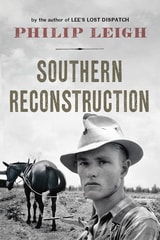
Southern Reconstruction
Philip Leigh
Westholme Publishing, 0
The Reconstruction Era—the years immediately following the Civil War when Congress directed the reintegration of the former Confederate states into the Union—remains, as historian Eric Foner suggests, “America’s unfinished revolution.” But Reconstruction is more than a story of great racial injustice; it has left a complex legacy involving both blacks and whites, Southerners and Northerners, that is reflected today by the fact that many of the states with the highest rates of poverty were part of the former Confederacy. In Southern Reconstruction, Philip Leigh examines Federal wartime legislation in order to broaden our understanding of Reconstruction, revealing how it led to African Americans being used as political pawns, first to ensure continued Republican rule, and finally to be blamed for the South’s hardships in order to draw poor whites away from Populism and back to the aristocratic white Democratic banner.
Civil War laws, such as the Confiscation Acts, Pacific Railroad Acts, Homestead Act, Legal Tender Act, National Banking Act, and Veterans Pensions Acts, transformed America’s banking system, built a railroad web, and launched the Gilded Age in the North and West, but it also created a dubious alliance between banks and government, sparked corruption, purposely depressed Southern industry, trapped Southern farmers—both black and white—in endless annual peonage cycles, and failed to provide lands for freedmen. While Reconstruction was intended to return the South to the Union, it could not be effective with laws that abetted Southern poverty, disfranchised many whites, fostered racial animosity to a point where lynchings and Jim Crow laws erupted, and lined the pockets of wealthy or politically well-connected business leaders outside of the region.

Southern Religion and Christian Diversity in the Twentieth Century
Wayne Flynt, Foreword by Charles A. Israel and John Giggie
University of Alabama Press, 2016
Essays by the distinguished historian of southern religion Wayne Flynt, that illuminate the often overlooked complexity among southern Protestants.
Throughout its dramatic history, the American South has wrestled with issues such as poverty, social change, labor reform, civil rights, and party politics, and Flynt’s writing reaffirms religion as the lens through which southerners understand and attempt to answer these contentious questions. In Southern Religion and Christian Diversity in the Twentieth Century, however, Flynt gently but persuasively dispels the myth—comforting to some and dismaying to others—of religion in the South as an inert cairn of reactionary conservatism.
Flynt introduces a wealth of stories about individuals and communities of faith whose beliefs and actions map the South’s web of theological fault lines. In the early twentieth century, North Carolinian pastor Alexander McKelway became a relentless crusader against the common practice of child labor. In 1972, Rev. Dr. Ruby Kile, in a time of segregated churches led by men, took the helm of the eight-member Powderly Faith Deliverance Center in Jefferson County, Alabama and built the fledgling group into a robust congregation with more than 700 black and white worshippers. Flynt also examines the role of religion in numerous pivotal court cases, such as the US Supreme Court school prayer case Engel v. Vitale, whose majority opinion was penned by Justice Hugo Black, an Alabamian. These fascinating case studies and many more illuminate a religious landscape of far more varied texture and complexity than is commonly believed.
Southern Religion and Christian Diversity in the Twentieth Century offers much to readers and scholars interested in the South, religion, and theology. Writing with his hallmark wit, warmth, and erudition, Flynt’s Southern Religion and Christian Diversity in the Twentieth Century is a vital record of gospel-inspired southerners whose stories revivify sclerotic assumptions about the narrow conformity of southern Christians.

Southern Rivers
Restoring America's Freshwater BiodiversityR. Scot Duncan
University of Alabama Press, 2024
Explores the Southeast’s imperiled river systems and solutions for preserving them in the face of habitat loss, climate change, and extinction
Southern Rivers, by award-winning nature writer and biologist R. Scot Duncan, is a thoroughly crafted exploration of the perilous state of the Southeast’s rivers and the urgent need to safeguard their vitality. The region’s rivers are the epicenter of North American freshwater biodiversity and are the top global hotspot for important aquatic animals including mussels, turtles, snails, crayfish, and fish, many of which have made important contributions to southern life and culture.
Centuries of commercial development have impaired the region’s river systems, sacrificing biodiversity and compromising the rivers’ ability to provide resources essential to human life: drinking water, waste disposal, irrigation, navigation, recreation, power production, and more. Now, increased heat and drought caused by climate change are lowering water levels. As such threats increase, it may seem necessary to choose between nature conservation and human needs, but Duncan persuasively demonstrates that this is a false choice. Conservation enhances human life.
In the same engaging voice of an expert friend that won over thousands of readers of his earlier book, Southern Wonder: Alabama’s Surprising Biodiversity, Duncan explains the task of managing southeastern rivers and how river water quality affects the daily lives of the millions who hold these historic waterways dear. He shows how managing rivers wisely can meet the needs of biodiversity and humanity both. With Americans increasingly anxious about the onset of climate change and the accelerating extinction crisis, Southern Rivers illuminates actionable solutions.
Southern Society and Its Transformations, 1790-1860
Edited by Susanna Delfino, Michele Gillespie & Louis M. Kyriakoudes
University of Missouri Press, 2011
The nine essays that comprise Southern Society and Its Transformations explore new territory in the study of the slave-era South, conveying how modernization took shape across the region and exploring the social processes involved in its economic developments. The book is divided into four parts, each analyzing a different facet of white southern life. The first outlines the legal dimensions of race relations, exploring the effects of lynching and the significance of Georgia’s vagrancy laws. Part II presents the advent of the market economy and its effect on agriculture in the South, including the beginning of frontier capitalism. The third section details the rise of a professional middle class in the slave era and the conflicts provoked. The book’s last section deals with the financial aspects of the transformation in the South, including the credit and debt relationships at play and the presence of corporate entrepreneurship.
Between the dawn of the nation and the Civil War, constant change was afoot in the American South. Scholarship has only begun to explore these progressions in the past few decades and has given too little consideration to the economic developments with respect to the working-class experience. These essays show that a new generation of scholars is asking fresh questions about the social aspects of the South’s economic transformation. Southern Society and Its Transformations is a complex look at how whole groups of traditionally ignored white southerners in the slave era embraced modernizing economic ideas and actions while accepting a place in their race-based world. This volume will be of interest to students of Southern and U.S. economic and social history.

Southern Stages
Space and Memory in US PerformanceHopkins, Chandra
University of Iowa Press, 2025
Through the eyes of actors and everyday people, Southern Stages offers an engaging new model for interrogating the performance of southernness, as well as how memory and imagination intersect in spaces that have shaped hundreds of years of American history. Chandra Owenby Hopkins employs cultural memory and lived realities of Black and white communities to examine the earliest and most enduring southern stages: the playhouse and the public square.
Southern Stalemate
Five Years without Public Education in Prince Edward County, VirginiaChristopher Bonastia
University of Chicago Press, 2011
Southern Unionist Pamphlets and the Civil War
Edited by Jon L. Wakelyn
University of Missouri Press, 1999
During the Civil War, many southerners expressed serious opposition to secession and openly entreated their fellow southerners to maintain support for the Union. A number of these unionists actively opposed the Confederacy while remaining within its borders; others fled their homes and the South, becoming exiles in northern cities and the border slave states. The southern unionist leaders used their oral and written communication skills to proclaim their opposition to the Confederacy, often producing pamphlets that circulated in the North, in the border states, and in the heart of the Confederacy itself. Jon L. Wakelyn unites the voices of these southern unionists in the first comprehensive collection of their written arguments—Southern Unionist Pamphlets and the Civil War.
Including eighteen pamphlets and a discussion of twenty-two others, this book provides a magnificent representation of the southern unionists and their concerns. Written between 1861 and 1865, the pamphlets were compiled by local and national political leaders, including three federal congressmen and future vice president and president Andrew Johnson, as well as concerned private citizens and members of the military and clergy. Except for Florida, South Carolina, and Georgia, all Confederate and border slave states are represented in this collection.
The topics discussed and the events described in the pamphlets cover a wide range of subjects. The authors discuss their motivation to remain loyal to the union, the actions of their friends and enemies, the perilous life of unionists behind military lines, their continued support for the federal government, and their hopes for a restored Union. Aware that their northern allies would read these pamphlets, the unionists also wrote to solicit northern aid, to renew efforts to defeat the Confederacy, and to gain sympathy for the plight of their people behind enemy lines.
A remarkable collection of primary source material, Southern Unionist Pamphlets and the Civil War provides the most detailed study of the internal resistance to the Confederacy available to date. Students, scholars, and general readers alike will find this volume an invaluable resource for Civil War studies.
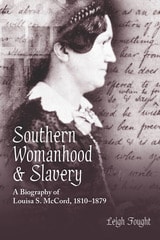
Southern Womanhood and Slavery
A Biography of Louisa S. McCord, 1810-1879Leigh Fought
University of Missouri Press, 2018
Southern Womanhood and Slavery is the first full-length biography of Louisa S. McCord, one of the most intriguing intellectuals in antebellum America. The daughter of South Carolina planter and politician Langdon Cheves, and an essayist in her own right, McCord supported unregulated free trade and the perpetuation of slavery and opposed the advancement of women’s rights. This study examines the origins of her ideas.
Leigh Fought constructs an exciting narrative that follows McCord from her childhood as the daughter of a state representative and president of the Bank of the United States through her efforts to accept her position as wife and mother, her career as an author and plantation mistress, and the Union invasion of South Carolina during the Civil War, to the end of her life in the emerging New South. Fought analyzes McCord’s poetry, letters, and essays in an effort to comprehend her acceptance of slavery and the submission of women. Fought concludes that McCord came to a defense of slavery through her experience with free labor in the North, which also reinforced her faith in the paternalist model for preserving social order.
McCord’s life as a writer on “unfeminine” subjects, her reputation as strong-minded and masculine, her late marriage, her continued ownership of her plantation after marriage, and her position as the matron of a Civil War hospital contradicted her own philosophy that women should remain the quiet force behind their husbands. She lived during a time of social flux in which free labor, slavery, and the role of women underwent dramatic changes, as well as a time that enabled her to discover and pursue her intellectual ambitions. Fought examines the conflict that resulted when those ambitions clashed with McCord’s role as a woman in the society of the South.
McCord’s voice was an interesting, articulate, and necessary feminine addition to antebellum white ideology. Moreover, her story demonstrates the ways in which southern women negotiated through patriarchy without surrendering their sense of self or disrupting the social order. Engaging and very readable, Southern Womanhood and Slavery will be of special interest to students of southern history and women’s studies, as well as to the general reader.
Southern Women Playwrights
New Essays in History and CriticismEdited by Robert McDonald and Linda Rohrer Paige
University of Alabama Press, 2001
This timely collection addresses the neglected state of scholarship on southern women dramatists by bringing together the latest criticism on some of the most important playwrights of the 20th century.
Coeditors Robert McDonald and Linda Rohrer Paige attribute the neglect of southern women playwrights in scholarly criticism to "deep historical prejudices" against drama itself and against women artists in general, especially in the South. Their call for critical awareness is answered by the 15 essays they include in Southern Women Playwrights, considerations of the creative work of universally acclaimed playwrights such as Beth Henley, Marsha Norman, and Lillian Hellman (the so-called "Trinity") in addition to that of less-studied playwrights, including Zora Neale Hurston, Carson McCullers, Alice Childress, Naomi Wallace, Amparo Garcia, Paula Vogel, and Regina Porter.
This collection springs from a series of associated questions regarding the literary and theatrical heritage of the southern woman playwright, the unique ways in which southern women have approached the conventional modes of comedy and tragedy, and the ways in which the South, its types and stereotypes, its peculiarities, its traditions-both literary and cultural-figure in these women's plays. Especially relevant to these questions are essays on Lillian Hellman, who resisted the label "southern writer," and Carson McCullers, who never attempted to ignore her southernness.
This book begins by recovering little-known or unknown episodes in the history of southern drama and by examining the ways plays assumed importance in the lives of southern women in the early 20th century. It concludes with a look at one of the most vibrant, diverse theatre scenes outside New York today-Atlanta.
Southern Women at the Millennium
A Historical PerspectiveEdited by Melissa Walker, Jeanette R. Dunn, & Joe P. Dunn, & Intro by Joe P. Dunn
University of Missouri Press, 2003

Southern Workers and the Search for Community
Spartanburg County, South CarolinaG. C. Waldrep III
University of Illinois Press, 2000
Spartanburg County, South Carolina, offered an example of the enduring legacy of the southern textile industry, company-owned mill villages, and union struggles of the 1930s. G. C. Waldrep illuminates the complex meshing of community ties and traditions with the goals and ideals of unionism. Unions aligned with a social vision of mutuality, equality, and interdependency already established in mill villages. But because companies owned the villages, labor conflicts involved not only work issues like wages and hours but virtually every other aspect of life. In documenting the high stakes of labor protest, Waldrep shows how the erosion or outright destruction of community undermined the ability of workers to respond to the assaults of employers overwhelmingly supported by government agencies and agents.
Beautifully written and persuasively argued, Southern Workers and the Search for Community opens the gates of southern company towns to illuminate the human issues behind the mechanics of labor.

Southwell's Sphere
The Influence of England's Secret PoetGary M. Bouchard
St. Augustine's Press, 2016
Southwest Archaeology in the Twentieth Century
Linda S Cordell
University of Utah Press, 2011
With contributions from well-known archaeologists, Southwest Archaeology in the Twentieth Century reviews the histories of major archaeological topics of the region during the twentieth century, with particular attention to the vast changes in southwestern archaeology during the later decades of the century. Included are the huge influence of field schools, the rise of cultural resource management (CRM), the uses and abuses of ethnographic analogy, the intellectual contexts of archaeology in Mexico, and current debates on agriculture, sedentism, and political complexity.
By looking back at the previous century of study, this book provides an authoritative retrospective of intellectual trends as well as a synthesis of current themes in the arena of the American Southwest.

Southwest Virginia's Railroad
Modernization and the Sectional Crisis in the Civil War EraKenneth W. Noe
University of Alabama Press, 2003
A close study of one region of Appalachia that experienced economic vitality and strong sectionalism before the Civil War
This book examines the construction of the Virginia and Tennessee Railroad through southwest Virginia in the 1850s, before the Civil War began. The building and operation of the railroad reoriented the economy of the region toward staple crops and slave labor. Thus, during the secession crisis, southwest Virginia broke with northwestern Virginia and embraced the Confederacy. Ironically, however, it was the railroad that brought waves of Union raiders to the area during the war

Southwestern National Monuments
Frank Pinkley and the Rise of the National Park SystemWill Moore
University of Utah Press, 2025
This volume uncovers the little-known legacy of Frank Pinkley, the first superintendent of the Southwestern National Monuments (SWNM)—a unique National Park Service unit established in 1923. Pinkley’s leadership and innovative approach helped protect and develop thirty diverse monuments, ranging from Montezuma Castle to White Sands, linked by miles of rough roads and united by their historical, archaeological, and natural significance.
Drawing on archived SWNM Monthly Reports, Will Moore reconstructs the stories behind these monuments and their contributions to the nascent national park system. From the pioneering all-Navajo Mobile Unit of the Civilian Conservation Corps to visionary work in visitor education, Pinkley and his team helped to set a course for the protection of American landscapes. Southwestern National Monuments is essential reading for anyone passionate about America's natural heritage and national parks.
Southwestern Pithouse Communities, AD 200-900
Edited by Lisa C. Young and Sarah A. Herr
University of Arizona Press, 2012
Pithouses are the earliest identifiable domestic architecture in many areas of the world, and can provide insights into the origins of communities--a fundamental component of past and present societies. In this book, Lisa Young and Sarah Herr invite archaeologists to explore the development of communities using information from pithouse sites in the American Southwest.
Using regional and topical syntheses to investigate the formation of pithouse communities, contributors to this volume examine the complex relationship between the economic transition to agricultural dependence and the social changes associated with sedentism. They discover that during this transformation, peoples' relationship with the landscape changed in ways that affected their use of space, community organization, and cultural identity.
Employing various theoretical perspectives, these contributions analyze changes in pithouses, site layout, communal architecture, and settlement patterns to investigate the development of place-based communities. Chapters look at community formation strategies in populous regions like the northern San Juan Basin, the southern Colorado Plateau, Mimbres/southern Mogollon, and Hohokam Basin and Range and compare them with social structures in more sparsely populated regions like the northeast Hohokam peripheries, the Arizona Transition Zone, the Cibola region, southeast New Mexico, and the northern Rio Grande. The book also includes thematic discussions of panregional economic change, the complex relationship between house and household, and the demographic shifts accompanying the Neolithic Demographic Transition.
An essential book for students and archaeologists interested in the origins of communities, Southwestern Pithouse Communities is also an important comparative resource for scholars interested in social change during the transition to settled village life.

Sovereign Acts
Performing Race, Space, and Belonging in Panama and the Canal ZoneZien, Katherine A.
Rutgers University Press, 2017
Winner of the 2017 Annual Book Prize from the Canadian Association of Latin American and Caribbean Studies (CALACS)
Sovereign Acts explores how artists, activists, and audiences performed and interpreted sovereignty struggles in the Panama Canal Zone, from the Canal Zone’s inception in 1903 to its dissolution in 1999. In popular entertainments and patriotic pageants, opera concerts and national theatre, white U.S. citizens, West Indian laborers, and Panamanian artists and activists used performance as a way to assert their right to the Canal Zone and challenge the Zone’s sovereignty, laying claim to the Zone’s physical space and imagined terrain.
By demonstrating the place of performance in the U.S. Empire’s legal landscape, Katherine A. Zien transforms our understanding of U.S. imperialism and its aftermath in the Panama Canal Zone and the larger U.S.-Caribbean world.
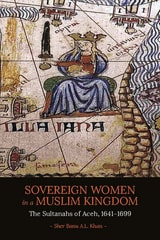
Sovereign Women in a Muslim Kingdom
The Sultanahs of Aceh, 1641-1699Sher Banu Khan
National University of Singapore Press, 2018
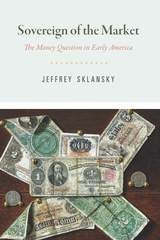
Sovereign of the Market
The Money Question in Early AmericaJeffrey Sklansky
University of Chicago Press, 2017
Jeffrey Sklansky’s wide-ranging study comprises three chronological parts devoted to major episodes in the career of the money question. First, the fight over the innovation of paper money in colonial New England. Second, the battle over the development of commercial banking in the new United States. And third, the struggle over the national banking system and the international gold standard in the late nineteenth century. Each section explores a broader problem of power that framed each conflict in successive phases of capitalist development: circulation, representation, and association. The three parts also encompass intellectual biographies of opposing reformers for each period, shedding new light on the connections between economic thought and other aspects of early American culture. The result is a fascinating, insightful, and deeply considered contribution to the history of capitalism.
Sovereign, Settler, Leaker, Lie
Forms of the Secret in US Political RhetoricAtilla Hallsby
The Ohio State University Press, 2026
In Sovereign, Settler, Leaker, Lie, Atilla Hallsby argues that secrets play a pivotal role in organizing political discourse in the United States. Hallsby takes up contemporary case studies—ranging from the Valerie Plame scandal during the George W. Bush presidency, to the use of Saul Alinsky’s name as a partisan codeword for politicizing Obama’s Blackness, to Chelsea Manning’s public naming and outing—to show how dramatic revelations increasingly fail to produce meaningful change and instead reproduce entrenched racial, gendered, and colonial hierarchies.
The core feature of these interlinked moments of crisis is the secret: a rhetorical patterning of political life organized by specific forms, each one lending a familiar shape to the shadows of American empire. These forms, theorized here as tropes, connect decades of secrets, linking the George W. Bush administration’s War on Terror to the Trump-era reemergence of “deep state” conspiracy theories. As an extension of secrecy and surveillance studies, and with the aim of attaining a more accountable and just form of US governmentality, Sovereign, Settler, Leaker, Lie explains how still-unfolding political realities in the United States emerged, transformed, and regenerate.
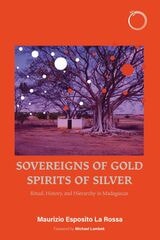
Sovereigns of Gold, Spirits of Silver
Ritual, History, and Hierarchy in MadagascarMaurizio Esposito La Rossa
HAU, 2026
How the inhabitants of Western Madagascar reshape their collective identity and negotiate their place within contemporary society through royal rituals and the reinterpretation of the past.
In a postcolonial republic marked by recurrent crises, royal hierarchy continues to frame social inequalities. Within this context, both the descendants of slaves and the newly rich seek to claim or legitimize new hierarchical positions by reformulating historical narratives and establishing them through royal rituals. Focusing on a cult dedicated to the spirits of the ancestors of the Silver Dynasty, Maurizio Esposito La Rossa investigates the categories of “silver” and “gold” that structure the hierarchy of the Sakalava monarchy and are also mobilized by politicians to legitimize their power.
Through multi-sited ethnography, the book offers a broader reflection on the link between narratives and places and on contrasting ways of conceiving history. Whereas Western historiography—and the rise of the nation-state—tends to produce unified historical narratives, the Sakalava monarchies conceive of history as rooted in specific places and social groups, where multiple versions coexist and contend. Combining the divergent demands of a historical anthropology and an anthropology of history, this book endeavors to recount another history of the Sakalava monarchy, without neglecting the polyphony that characterizes it. By tracing how the past is mobilized, transformed, and contested in the present, the book speaks to anthropologists, historians, and readers interested in the intricate entanglements of history, ritual, and political power in postcolonial settings.
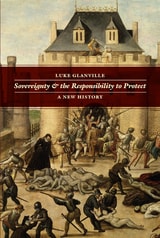
Sovereignty and the Responsibility to Protect
A New HistoryLuke Glanville
University of Chicago Press, 2013
In Sovereignty and the Responsibility to Protect, Luke Glanville argues that this responsibility extends back to the sixteenth and seventeenth centuries, and that states have since been accountable for this responsibility to God, the people, and the international community. Over time, the right to national self-governance came to take priority over the protection of individual liberties, but the noninterventionist understanding of sovereignty was only firmly established in the twentieth century, and it remained for only a few decades before it was challenged by renewed claims that sovereigns are responsible for protection.
Glanville traces the relationship between sovereignty and responsibility from the early modern period to the present day, and offers a new history with profound implications for the present.
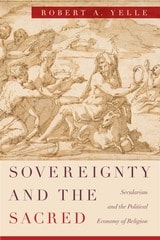
Sovereignty and the Sacred
Secularism and the Political Economy of ReligionRobert A. Yelle
University of Chicago Press, 2018
Developing this close analogy between two elemental domains of society, Sovereignty and the Sacred offers a new theory of religion while suggesting alternative ways of organizing our political and economic life. By rethinking the transcendent foundations and liberating potential of both religion and politics, Yelle points to more hopeful and ethical modes of collective life based on egalitarianism and popular sovereignty. Deliberately countering the narrowness of currently dominant economic, political, and legal theories, he demonstrates the potential of a revived history of religions to contribute to a rethinking of the foundations of our political and social order.
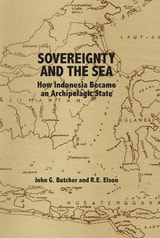
Sovereignty and the Sea
How Indonesia Became an Archipelagic StateJohn G. Butcher and R. E. Elson
National University of Singapore Press, 2017

Soviet Auteur Cinema After the Thaw
Edited by Marina Rojavin and Tim Harte
University of Wisconsin Press, 2027
Following Stalin’s death, Soviet film—like Soviet culture—changed in meaningful ways. Emerging from a system that had stymied individual, creative voices, prominent directors now found their own respective styles, as they embraced their personal visions to produce works that diverged significantly from the mainstream. Grounded in auteur theory, this volume explores how these filmmakers expressed themselves through creative cinematic means rather than through a narrow emphasis on narrative or in accordance with popular—and governmental—whims.
Each chapter focuses on a specific filmmaker, from well-known auteurs Aleksei German Sr., Kira Muratova, Andrei Tarkovsky, Sergei Parajanov, and Larisa Shepit’ko, to others less familiar in the West: Sergei Solovyov, Roman Balayan, Otar Iosseliani, Tengiz Aduladze, and Ali Khamraev. Hailing from a range of Soviet republics, they all impacted the Soviet cinematic sphere despite harsh censorship and the repression of artists throughout the nation. By integrating cinematic and theoretical perspectives into a discussion of auteur Soviet films, this volume illuminates the significance of a cinematic trend that took place in both Soviet culture and international film history.
Contributors: Robert Efird, Tim Harte, Lilya Kaganovsky, David Gomiero Molina, Lida Oukaderova, Elizabeth A. Papazian, Marina Rojavin, Rita Safariants, Sydney Stotter, Sergey Toymentsev

Soviet Cinema in the Silent Era, 1918–1935
By Denise J. Youngblood
University of Texas Press, 1991
The golden age of Soviet cinema, in the years following the Russian Revolution, was a time of both achievement and contradiction, as reflected in the films of Eisenstein, Pudovkin, and Kuleshov. Tensions ran high between creative freedom and institutional constraint, radical and reactionary impulses, popular and intellectual cinema, and film as social propaganda and as personal artistic expression. In less than a decade, the creative ferment ended, subjugated by the ideological forces that accompanied the rise of Joseph Stalin and the imposition of the doctrine of Socialist Realism on all the arts.
Soviet Cinema in the Silent Era, 1918–1935 records this lost golden age. Denise Youngblood considers the social, economic, and industrial factors that influenced the work of both lesser-known and celebrated directors. She reviews all major and many minor films of the period, as well as contemporary film criticism from Soviet film journals and trade magazines. Above all, she captures Soviet film in a role it never regained—that of dynamic artform of the proletarian masses.
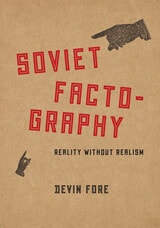
Soviet Factography
Reality without RealismDevin Fore
University of Chicago Press, 2024
This is the first major English-language study of factography, an avant-garde movement of 1920s modernism. Devin Fore charts this style through the work of its key figures, illuminating factography’s position in the material culture of the early Soviet period and situating it as a precursor to the genre of documentary that arose in the 1930s. Factographers employed photography and film practices in their campaign to inscribe facts and to chronicle modernization as it transformed human experience and society. Fore considers factography in light of the period’s explosion of new media technologies—including radio broadcasting, sound in film, and photo-media innovations—that allowed the press to transform culture on a massive scale.
This theoretically driven study uses material from Moscow archives and little-known sources to highlight factography as distinct from documentary and Socialist Realism and to establish it as one of the major twentieth-century avant-garde forms. Fore covers works of photography, film, literature, and journalism together in his considerations of Soviet culture, the interwar avant-gardes, aesthetics, and the theory of documentary.

Soviet Intelligence Plans for the British Isles
John M. Davies and Alexander J. Kent
Bodleian Library Publishing, 0

Soviet International Law and the World Economic Order
Kazimierz Grzybowski
Duke University Press, 1987

Soviet Jewry in the 1980s
The Politics of Anti-Semitism and Emigration and the Dynamics of ResettlementRobert O. Freedman, ed.
Duke University Press, 1989
Soviet Military Intervention in Hungary, 1956
Alexandr Kirov
Central European University Press, 2000
This first detailed account of Soviet military operations is based on access to unpublished material in Soviet archives, which have recently been reclassified.
The major contribution made by the book is its source material, which reveals new information on the organization, command, strategy, and tactics of the Soviet armed forces which invaded Hungary in 1956. Particularly interesting is the precise documentation of the irrationally large size of the forces. The volume is based on research in Soviet archives, and this alone makes it of unique scholarly importance.
The book opens with a substantial introductory essay by the editors, and includes a major study by the Russian military historian Alexandr Kirov, based on research in Soviet military archives. One of the real strengths of the book is that it also includes the memoirs of General Yevgeny Malashenko, in 1956 a colonel in the Soviet Army and acting Chief of Staff of the Special Corps in Budapest. He provides unparalleled insights into Soviet military procedures, politico-military co-operation, and the actual fighting strengths and weaknesses of the Red Army. Very few other high-ranking Soviet officers have ever published their memoirs in the West.

Soviet Occupation of Romania, Hungary, and Austria 1944/45–1948/49
László Borhi
Central European University Press, 2015

Soviet Rock on Screen
The Life, Death, and Resurrection of a Film GenreRita Safariants
University of Wisconsin Press, 2026
In Soviet Rock on Screen, Rita Safariants chronicles the birth, life, death, and resurrection of a genre that rapidly became one of the most readily recognized cultural signifiers of the perestroika era and which continues to reflect and codify Russian culture. During their initial heyday in the 1980s, rock films were influenced by and encouraged the cultural shifts of perestroika and the incipient political storm. Today, Safariants argues, the reemergence and reconfiguration of the genre indicates the extent to which Soviet-era cultural emblems inform Russian national identity and obliquely support the current political repression under Putin.

Soviet Signoras
Personal and Collective Transformations in Eastern European MigrationMartina Cvajner
University of Chicago Press, 2019
Cvajner details the personal and collective changes brought about by the experience of migration for these women: from the first hours arriving in a new country with no friends, relatives, or existing support networks, to later remaking themselves for their new environment. In response to their traumatic displacement, the women of Soviet Signoras—nearly all of whom found work in their new Western homes as elder care givers—refashioned themselves in highly sexualized, materialistic, and intentionally conspicuous ways. Cvajner’s focus on overt sexuality and materialism is far from sensationalist, though. By zeroing in on these elements of personal identity, she reveals previously unexplored sides of the social psychology of migration, coloring our contemporary discussion with complex shades of humanity.