Results by title
22279 books match the query 'Social Science' and 1635 start with s
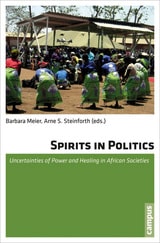
Spirits in Politics
Uncertainties of Power and Healing in African SocietiesEdited by Barbara Meier and Arne S. Steinforth
Campus Verlag, 2013
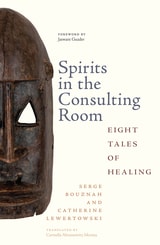
Spirits in the Consulting Room
Eight Tales of HealingSerge Bouznah
Rutgers University Press, 2023
Drawn from two decades of their experience with transcultural mediation, Spirits in the Consulting Room tells the stories of eight patients—mainly migrants—and their families. Each chapter focuses on a different patient, and Christelle, Djibril, Moncef, Alhassane, Jacinthe, Amy, Cyril, Alice, and Pierre leap off the page as distinct people with unique situations. Together, these chapters reveal how patients’ comprehension of their symptoms is shaped by their cultural background, while recounting the challenges of translating that into terms the doctors can grasp.
The book shows how trained transcultural mediators can help to redress the power imbalance between doctors and the migrants they treat, providing patients with advocates who respect the authority of their background and experiences and don’t just take the side of the medical professionals. The groundbreaking insights modeled in this book can be applied to any medical situation where doctors and patients find themselves speaking different languages.
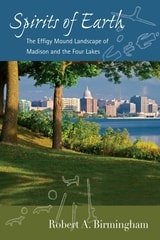
Spirits of Earth
The Effigy Mound Landscape of Madison and the Four LakesRobert A. Birmingham
University of Wisconsin Press, 2010
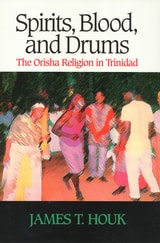
Spirits, Blood and Drums
The Orisha Religion in TrinidadJames T. Houk
Temple University Press, 1995
James Houk's field work in Trinidad and subsequent involvement in the Orisha religion allows him a uniquely intimate perspective on a complex and eclectic religion. Originating in Nigeria, Orisha combines elements of African religions (notably Yoruba), Catholicism, Hinduism, Protestantism Spiritual Baptist, and Kabbalah. A religion of spirits and spirit possession, ceremonies and feasts, churches and shrines, sacrifices and sacred objects, Orisha is constantly shifting and unstable, its practice widely varied. As a belief system, it is a powerful presence in the social structure, culture, and, more recently, the political realm of Trinidad.
Houk carefully examines the historical forces that have transformed Orisha from a relatively simple religion in colonial Trinidad to an abstruse mix of belief, ritual, and symbolism. The voices of worshippers and Orisha leaders spring to life the intensity and power of the religion. Houk's own recounting of participation in many of the mystical ceremonies, including taking on the important role of drummer in several feasts, his initiation into Orisha, and his exceptional field research provide fascinating details essential in understanding the development of this Caribbean religion.
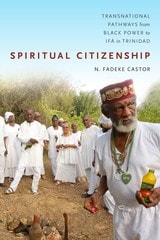
Spiritual Citizenship
Transnational Pathways from Black Power to Ifá in TrinidadN. Fadeke Castor
Duke University Press, 2017
Spiritual Mestizaje
Religion, Gender, Race, and Nation in Contemporary Chicana NarrativeTheresa Delgadillo
Duke University Press, 2011
Spirituals and the Birth of a Black Entertainment Industry
Sandra Jean Graham
University of Illinois Press, 2018

Spitting Image
Kara van de Graaf
Southern Illinois University Press, 2018
Taking as its primary theme the exploration of the female body in current culture, Spitting Image considers the myriad intersections of the body and gender, desire, relationships, and otherness. Van de Graaf interrogates underrepresented elements of the female experience, especially the physical, rhetorical, and aesthetic limitations of fatness in poetry and other arts. She then complicates those limitations through her use of innovative forms and imaginative verse, implicitly calling for poetry to engage with the female form in fresh ways. Throughout, Van de Graaf’s poems ask: In a time where we have more agency to define ourselves than ever before, what barriers still remain? What do our bodies mean to who we are?
At turns oblique and direct, Van de Graaf’s poems strive to create space for themselves not only in the field of contemporary poetry but also in a larger world that has been prone to ignoring or shaming women for their bodies. That these poems succeed on both counts is a testament to this remarkable new poet, who claims “That millimeter of space that means / all of us are apart, that means / we can never really touch / anything. . . . Yes, I want that, too.”

Splattered Ink
Postfeminist Gothic Fiction and Gendered ViolenceSarah E Whitney
University of Illinois Press, 2016
Sarah E. Whitney explores the genre's challenge to postfeminist assumptions of women's equality and empowerment. The authors she examines--Patricia Cornwell, Jodi Picoult, Susanna Moore, Sapphire, and Alice Sebold--construct narratives around socially invisible and physically broken protagonists who directly experience consequences of women's ongoing disempowerment. Their works ask readers to inhabit women's suffering and to face the uncomfortable, all-too-denied fact that today's women must navigate lives fraught with risk. Whitney's analysis places the authors within a female gothic tradition that has long given voice to women's fears of their own powerlessness. But she also reveals the paradox that allows the genre to powerfully critique postfeminism's often sunshiney outlook while uneasily coexisting within the same universe.
Splintered Sisterhood
Gender and Class in the Campaign against Woman SuffrageSusan E. Marshall
University of Wisconsin Press, 1997
When Tennessee became the thirty-sixth and final state needed to ratify the Nineteenth Amendment in August 1920, giving women the right to vote, one group of women expressed bitter disappointment and vowed to fight against “this feminist disease.” Why this fierce and extended opposition? In Splintered Sisterhood, Susan Marshall argues that the women of the antisuffrage movement mobilized not as threatened homemakers but as influential political strategists.
Drawing on surviving records of major antisuffrage organizations, Marshall makes clear that antisuffrage women organized to protect gendered class interests. She shows that many of the most vocal antisuffragists were wealthy, educated women who exercised considerable political influence through their personal ties to men in politics as well as by their own positions as leaders of social service committees. Under the guise of defending an ideal of “true womanhood,” these powerful women sought to keep the vote from lower-class women, fearing it would result in an increase in the “ignorant vote” and in their own displacement from positions of influence. This book reveals the increasingly militant style of antisuffrage protest as the conflict over female voting rights escalated. Splintered Sisterhood adds a missing piece to the history of women’s rights activism in the United States and illuminates current issues of antifeminism.

Split Britches
Fifty Years OnPeggy Shaw and Lois Weaver, Edited by Benjamin Gillespie
University of Michigan Press, 2027
What does it mean to sustain a creative life over fifty years? Split Britches: Fifty Years On offers an intimate look at the enduring collaboration of Peggy Shaw and Lois Weaver, the artists behind the groundbreaking performance troupe Split Britches. The collection highlights Split Britches’ enduring queer and feminist legacies, tracing how their distinctive butch/femme lesbian aesthetic and collaborative performance practice have evolved over five decades and nearly thirty original productions. It foregrounds their shift toward increasingly autobiographical and introspective work, while also situating their later performances within key theatrical, historical, and critical frameworks–paying particular attention to issues of embodiment, aging, the archive, and queer temporality. Bringing together performance scripts, candid interviews, production photos, accessible essays, and video documentation, Split Britches: Fifty Years On demonstrates how Shaw and Weaver pull from the past in order to critique the present. For scholars, artists, and students, the volume's unique combination of primary texts, critical essays, and multimedia resources makes it an essential volume that considers theatre scholarship and practice, queer and feminist discourses, and the evolution of creativity with age and time.

Split-Gut Song
Jean Toomer and the Poetics of ModernityKaren Jackson Ford
University of Alabama Press, 2005
Reclaiming Jean Toomer as a radical innovator of African American modernist poetics.
In Split-Gut Song, Karen Jackson Ford looks at what it means to be African American, free, and creative by analyzing Jean Toomer's main body of work, specifically, his groundbreaking creation Cane. When first published in 1923, this pivotal work of modernism was widely hailed as inaugurating a truly artistic African American literary tradition. Yet Toomer's experiments in literary form are consistently read in terms of political radicalism—protest and uplift—rather than literary radicalism.
Ford contextualizes Toomer's poetry, letters, and essays in the literary culture of his period and, through close readings of the poems, shows how they negotiate formal experimentation (imagism, fragmentation, dialect) and traditional African American forms (slave songs, field hollers, call-and-response sermons, lyric poetry). At the heart of Toomer's work is the paradox that poetry is both the saving grace of African American culture and that poetry cannot survive modernity. This contradiction, Ford argues, structures Cane, wherein traditional lyric poetry first flourishes, then falters, then falls silent.
The Toomer that Ford discovers in Split-Gut Song is a complicated, contradictory poet who brings his vexed experience and ideas of racial identity to both conventional lyric and experimental forms. Although Toomer has been labelled a political radical, Ford argues that politics is peripheral in his experimental, stream-of-consciousness work. Rather Toomer exhibits a literary radicalism as he struggles to articulate his perplexed understanding of race and art in 20th-century America.
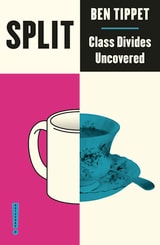
Split
Class Divides UncoveredBen Tippet
Pluto Press, 2020
Foregrounding the economic nature of class, Split challenges the idea that class can be reduced to the cultural. From precarious labor to rising debt; from the housing crisis to environmental catastrophe; from an inflated prison population to the welfare state; Ben Tippet traces the class divide at the heart of all exploitation. Myth-busting meritocracy, he exposes the role that tax havens, colonialism and inheritance play in the wealth of the elite.
Split highlights the potential for a diverse and eclectic working-class bloc to fight back in an age of austerity and uncertainty.
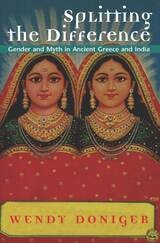
Splitting the Difference
Gender and Myth in Ancient Greece and IndiaWendy Doniger
University of Chicago Press, 1999
Myth, Doniger argues, responds to the complexities of the human condition by multiplying or splitting its characters into unequal parts, and these sloughed and cloven selves animate mythology's prodigious plots of sexuality and mortality. Doniger's comparisons show that ultimately differences in gender are more significant than differences in culture; Greek and Indian stories of doubled women resemble each other more than they do tales of doubled men in the same culture. In casting Hindu and Greek mythologies as shadows of each other, Doniger shows that culture is sometimes but the shadow of gender.
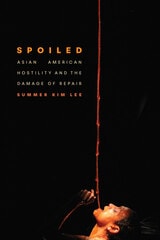
Spoiled
Asian American Hostility and the Damage of RepairSummer Kim Lee
Duke University Press, 2025

Spoiler Alert
A Critical GuideAaron Jaffe
University of Minnesota Press, 2019
All of this information at our fingertips—and we might not need any of it
Concurrent with the compulsory connectivity of the digital age is the rise of the spoiler. The inevitability of information has changed the critical quality of modernity, leaving us with acute vertigo—a feeling that nothing new is left out there. Encompassing memes and trigger warnings, Vilem Flusser and Thomas Pynchon, Spoiler Alert wrangles with the state of surprise in post-historical times. Aaron Jaffe delivers a timely corrective to post-critical modes of reading that demonstrates the dangers of forfeiting critical suspicion.
Forerunners: Ideas First
Short books of thought-in-process scholarship, where intense analysis, questioning, and speculation take the lead

Spoils of the Kingdom
Clergy Misconduct and Religious CommunityAnson Shupe
University of Illinois Press, 2006
Drawing on case evidence, Shupe employs classical and modern social exchange theories to explain the institutional dynamics of clergy misconduct. He argues that there is an implicit contract of reciprocity and compliance between congregants and religious leaders that, when amplified by the charismatic awe often associated with religious authorities, can lead to misconduct.

Sponsored Identities
Cultural Politics in Puerto RicoArlene Davila
Temple University Press, 1997
Author Arlene Davila focuses on the Institute for Puerto Rican Culture, the government institution charged with defining authenticated views of national identity since the 1950s, and on popular festival organizers to illuminate contestations over appropriate representations of culture in the increasingly mass-mediated context of contemporary Puerto Rico. She examines the creation of an essentialist view of nationhood based on a peasant culture and a "unifying" Hispanic heritage, and the ways in which grassroots organizations challenge and reconfigure definitions of national identity through their own activities and representations.
Davila pays particular attention to the increasing prominence of corporate sponsorship in determining what is distinguished as authentic "Puerto Rican culture" and discusses the politicization of culture as a discourse to debate and legitimize conflicting claims from selling commercial product to advocating divergent status options for the island. In so doing, Davila illuminates the prospects for cultural identities in an increasingly transnational context by showing the growth of cultural nationalism to be intrinsically connected to forms of political action directed to the realm of culture and cultural politics. This in-depth examination also makes clear that despite contemporary concerns with "authenticity," commercialism is an inescapable aspect of all cultural expression on the island.
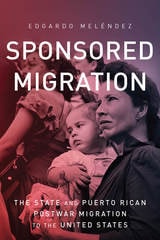
Sponsored Migration
The State and Puerto Rican Postwar Migration to the United StatesEdgardo Meléndez
The Ohio State University Press, 2017
Sponsored Migration places Puerto Rico’s migration policy in its historical context, examining the central role the Puerto Rican government played in encouraging and organizing migration during the postwar period. Meléndez sheds an important new light on the many ways in which the government intervened in the movement of its people: attempting to provide labor to U.S. agriculture, incorporating migrants into places like New York City, seeking to expand the island’s air transportation infrastructure, and even promoting migration in the public school system. One of the first scholars to explore this topic in depth, Meléndez illuminates how migration influenced U.S. and Puerto Rican relations from 1898 onward.
Spontaneous Shelter
Carl Patton
Temple University Press, 1988

Spoon River America
Edgar Lee Masters and the Myth of the American Small TownJason Stacy
University of Illinois Press, 2021
A literary and cultural milestone, Spoon River Anthology captured an idea of the rural Midwest that became a bedrock myth of life in small-town America. Jason Stacy places the book within the atmosphere of its time and follows its progress as the poetry took root and thrived. Published by Edgar Lee Masters in 1915, Spoon River Anthology won praise from modernists while becoming an ongoing touchstone for American popular culture. Stacy charts the ways readers embraced, debated, and reshaped Masters's work in literary controversies and culture war skirmishes; in films and other media that over time saw the small town as idyllic then conflicted then surreal; and as the source of three archetypes—populist, elite, and exile—that endure across the landscape of American culture in the twenty-first century.
A wide-ranging reconsideration of a literary landmark, Spoon River America tells the story of how a Midwesterner's poetry helped change a nation's conception of itself.
Sport History in the Digital Era
Edited by Gary Osmond and Murray G. Phillips
University of Illinois Press, 2015
Chapters consider how the philosophical and theoretical understanding of the meaning of history influence a willingness to engage with digital history, and conceptualize the relationship between history making and the digital era. As the writers show, digital media's mostly untapped potential for studying the recent past via blogs, chat rooms, gambling sites, and the like forge a symbiosis between sports and the internet, and offer historians new vistas to explore and utilize.
Sport History in the Digital Era also shows how the best digital history goes beyond a static cache of curated documents. Instead, it becomes a truly public history that serves as a dynamic site of enquiry and discussion. In such places, scholars enter into a give-and-take with individuals while inviting the audience to grapple with, rather than passively absorb, the evidence being offered.
Timely and provocative, Sport History in the Digital Era affirms how the information revolution has transformed sport and sport history--and shows the road ahead.
Contributors include Douglas Booth, Mike Cronin, Martin Johnes, Matthew Klugman, Geoffery Z. Kohe, Tara Magdalinski, Fiona McLachlan, Bob Nicholson, Rebecca Olive, Gary Osmond, Murray G. Phillips, Stephen Robertson, Synthia Sydnor, Holly Thorpe, and Wayne Wilson.
Sport and Neoliberalism
Politics, Consumption, and CultureDavid L. Andrews
Temple University Press, 2012
Offering new approaches to thinking about sports and political ideologies, Sport and Neoliberalism explores the structures, formations, and mechanics of neoliberalism. The editors and contributors to this original and timely volume examine the intersection of sport as a national pastime and also an engine for urban policy—e.g., stadium building—as well as a powerful force for influencing our understanding of the relationship between culture, politics, and identity.
Sport and Neoliberalism examines the ways the neoliberal project creates priorities for civic society and how, in effect, it turns many aspects of sport into a vehicle of public governance. From the relationship between sport and the neo-liberal state, through the environmental dimensions of neo-liberal sport, to the political biopolitics of obesity, the essays in this volume explore the ways in which the “logics” of neoliberalism are manifest as powerful public pedagogies through the realm of popular culture.
Contributors include: Michael Atkinson, Ted Butryn, C. L. Cole, Norman Denzin, Grant Farred, Jessica Francombe, Caroline Fusco, Michael D. Giardina, Mick Green, Leslie Heywood, Samantha King, Lisa McDermott, Mary G. McDonald, Toby Miller, Mark Montgomery, Joshua I. Newman, Jay Scherer, Kimberly S. Schimmel, and Brian Wilson
In the series Sporting, edited by Amy Bass
Sport, Physical Culture, and the Moving Body
Materialisms, Technologies, EcologiesJoshua I. Newman
Rutgers University Press, 2020
The moving body—pervasively occupied by fitness activities, intense training and dieting regimes, recreational practices, and high-profile sporting mega-events—holds a vital function in contemporary society. As the body moves—as it performs, sweats, runs, and jumps—it sets in motion an intricate web of scientific rationalities, spatial arrangements, corporate imperatives, and identity politics (i.e. politics of gender, race, social class, etc.). It represents vitality in its productive and physiological capacities, it drives a complex economy of experiences and products, and it is a meaningful site of cultural identities and politics.
Contributors to Sport, Physical Culture, and the Moving Body work from a simple premise: as it moves, the material body matters. Adding to the burgeoning fields of sport studies and body studies, the works featured here draw upon the traditions of feminist theory, posthumanism, actor network theory, and new materialism to reposition the physical, moving body as crucial to the cultural, political, environmental, and economic systems that it constitutes and within which is constituted. Once assembled, the book presents a study of bodies in motion—made to move in contexts where technique, performance, speed, strength, and vitality not only define the conduct therein, but provide the very reason for the body’s being within those economies and environments. In so doing, the contributors look to how the body moving for and about rational systems of science, medicine, markets, and geopolity shapes the social and material world in important and unexpected ways.
In Sport, Physical Culture, and the Moving Body, contributors explore the extent to which the body, when moving about both ostensibly active body spaces (i.e., the gymnasium, the ball field, exercise laboratory, the track or running trail, the beach, or the sport stadium) and those places less often connected to physical activity (i.e. the home, the street, the classroom, the automobile), is bounded to technologies of life and living; and to the political arrangements that seek to capitalize upon such frames of biological vitality. To do so, the authors problematize the rise of active body science (i.e. kinesiology, sport and exercise sciences, performance biotechnology) and the effects these scientific interventions have on embodied, lived experience.
Contributors to Sport, Physical Culture, and the Moving Body will be engaging a range of new and emerging theoretical perspectives, including new materialist, political ecology, developmental systems theory, and new material feminist approaches, to examine the actors and assemblages of movement-based material, political, and economic production. In so doing, contributors will vividly and powerfully illustrate the extent to which a focus on the fleshed body and its material conditions can bring forth new insights or ontological and epistemological innovation to the sociology of sport and physical activity. They will also explore the agency of the body as and amongst things. Such a performative materialist approach explicates how complex assemblages of sport and physical activity—bringing into association everything from muscle fibers and dietary proteins to stadium concrete or regional aquifers—are not only meaningful, but ecological.
By focusing on the confluence of agentive materialities, disciplinary technologies, vibrant assemblages, speculative realities, and vital performativities, Sport, Physical Culture, and the Moving Body promises to offer a groundbreaking departure from representationalist tendencies and orthodoxies brought about by the cultural turn in sport and physical cultural studies. It brings the moving body and its physics back into focus: recentering moving flesh and bones as locus of social order, environmental change, and the global political economy.

Sportista
Female Fandom in the United StatesAndrei S. Markovits
Temple University Press, 2012
The typical female sports fan remains very different from her male counterparts. In their insightful and engaging book, Sportista, Andrei S. Markovits and Emily Albertson examine the significant ways many women have become fully conversant with sports—acquiring a knowledge of and passion for them as a way of forging identities that until recently were quite alien to women.
Sportista chronicles the relationship that women have developed with sports in the wake of the second wave of feminism of the late 1960s and early 1970s. The changes women athletes have achieved have been nothing short of revolutionary. But, as Markovits and Albertson argue, women’s identities as sports fans, though also changed in recent decades, remain notably different from that of men. Sportista highlights the impediments to these changes that women have faced and the reality that, even as bona fide fans, they “speak” sports differently from and remain largely unaccepted by men.
In the series Politics, History and Social Change, edited by John C. Torpey

Sports Immortals
Deifying the American AthletePeter Williams
University of Wisconsin Press, 1994

Sports Movies
Lester D. Friedman
Rutgers University Press, 2020
In Sports Movies, Lester D. Friedman describes the traditional formulas that have made these movies such crowd-pleasers, including stock figures like the disgraced athlete on a quest for redemption, or the wise old coaches who help mentor the heroes to victory. He also explores how the genre’s attitudes have changed over time, especially in key issues like class, race, masculinity, and women in sports.
Along the way, he takes stock of sports films from the dawn of cinema’s silent era to the present day, including classic baseball movies like Pride of the Yankees and Bull Durham, basketball movies like Hoosiers and He’s Got Game, football movies like Friday Night Lights and Rudy, and boxing movies like Raging Bull and Million Dollar Baby. As Friedman’s analyses reveal, not only do sports movies influence our perceptions about the drama of real-life sports, but they also help to shape our attitudes toward the competitive ethos in American life.
Sports in Africa, Past and Present
Todd Cleveland
Ohio University Press, 2020
These groundbreaking essays demonstrate how Africans past and present have utilized sports to forge complex identities and shape Africa’s dynamic place in the world.
Since the late nineteenth century, modern sports in Africa have both reflected and shaped cultural, social, political, economic, generational, and gender relations on the continent. Although colonial powers originally introduced European sports as a means of “civilizing” indigenous populations and upholding then current notions of racial hierarchies and “muscular Christianity,” Africans quickly appropriated these sporting practices to fulfill their own varied interests. This collection encompasses a wide range of topics, including women footballers in Nigeria, Kenya’s world-class long-distance runners, pitches and stadiums in communities large and small, fandom and pay-to-watch kiosks, the sporting diaspora, sports pedagogy, sports as resistance and as a means to forge identity, sports heritage, the impact of politics on sports, and sporting biography.
Sports in Chicago
Edited by Elliott Gorn
University of Illinois Press, 2007
Chicago teams have won the World Series, Super Bowl, multiple Stanley Cups, and a string of National Basketball Association titles. But amateur sports also play a large role in the city's athletic traditions, especially in schools and youth leagues that allow people from across the city to add to Chicago sports history.
In Sports and Chicago, an all-star roster of experts focuses on multiple aspects of Chicago sports, including long looks at amateur boxing, the impact of gender and ethnicity in sports, the politics of horse racing and stadium building, the lasting scandal of the Black Sox, and the once-perpetual heartbreak of the Cubs. Illustrated with forty photographs, the collection encourages historians and sports fans alike to appreciate the long-standing importance of sports in the Windy City.
Contributors: Peter Alter, Robin F. Bachin, Larry Bennett, Linda J. Borish, Gerald Gems, Elliott J. Gorn, Richard Kimball, Gabe Logan, Daniel A. Nathan, Timothy Neary, Steven A. Riess, John Russick, Timothy Spears, Costas Spirou, and Loïc Wacquant.

Sports in Zion
Mormon Recreation, 1890-1940Richard Ian Kimball
University of Illinois Press, 2002
If a religion cannot attract and instruct young people, it will struggle to survive, which is why recreational programs were second only to theological questions in the development of twentieth-century Mormonism. In this book, Richard Ian Kimball explores how Mormon leaders used recreational programs to ameliorate the problems of urbanization and industrialization and to inculcate morals and values in LDS youth. As well as promoting sports as a means of physical and spiritual excellence, Progressive Era Mormons established a variety of institutions such as the Deseret Gymnasium and camps for girls and boys, all designed to compete with more "worldly" attractions and to socialize adolescents into the faith.
Kimball employs a wealth of source material including periodicals, diaries, journals, personal papers, and institutional records to illuminate this hitherto underexplored aspect of the LDS church. In addition to uncovering the historical roots of many Mormon institutions still visible today, Sports in Zion is a detailed look at the broader functions of recreation in society.

Sports
The First Five MillenniaAllen Guttmann
University of Massachusetts Press, 2004
From ancient Egyptian archery and medieval Japanese football to contemporary American baseball, every sport has been shaped by—and in turn has helped shape—the culture of which it is part. Yet as Allen Guttmann shows in this far-ranging study, for all their differences sports have followed a similar historical trajectory from traditional to modern forms.
In Sports: The First Five Millennia, Guttmann traces this evolution across continents, cultures, and historical epochs to construct a single comprehensive narrative of the world's sports.
Spreading the Word
Poetry and the Survival of Community in AmericaRoss Talarico
Duke University Press, 1995
Drawing on his workshops in Rochester, Talarico describes a unique approach for eliciting poetry from people of many ages and backgrounds—particularly underpriviledged urban kids and the elderly. The process—from dialogue to self-expression to publication to public event—illuminates the urgency and meaning of releasing the spirit captured in each man and woman and child’s experience. "Some people say that Ross Talarico has done the impossible," the Today Show remarked of his success in Rochester; and with this book Talarico offers the same opportunity to others. Teachers, community leaders, parents, and children will be able to follow his practical, hands-on approach to encouraging self-expression in diverse, even unlikely, settings. They will see here how poetry is indeed relevant, ever more crucial to our identity as the culture evolves—how it is, finally, the place where the inarticulate can come to speak for themselves.

Spring in My Hometown
Andrew David Jackson
Lever Press, 2026
The inaugural volume of the Cinemas of Asia series, this book offers a fresh perspective on South Korean director Lee Kwang-mo’s 1998 film Spring in My Hometown (아름다운 시절). Written and directed by Lee, the intensely personal film tells the story of his grandfather’s relationship with his ten-year-old father during the Korean War. This volume examines the industrial context in which Lee attempted to bring his film into production, the cinematic cycle from which it emerged, and the unique style that captivated festival juries but divided audiences. Jackson’s book offers a rare, historical insight into an important Asian cinematic industry on the verge of commercial transformation at the end of the last century.
Cinemas of Asia is the first series dedicated to the cinemas of South, Southeast, East, Central Asia, and global Asian diasporas. Each volume provides a critical analysis and interpretation of a notable film from Asian cinema and consists of thematic chapters, accessible writing, and screenshots and illustrations. Authors analyze each film from a variety of angles, including film, literary, historical, gender, post-/decolonial studies, and each volume is accessibly written, informative, and appeals to academics, students, cinephiles, and non-experts alike.

Spying with Maps
Surveillance Technologies and the Future of PrivacyMark Monmonier
University of Chicago Press, 2002
Despite our apprehension about surveillance technology, Spying with Maps is not a jeremiad, crammed with dire warnings about eyes in the sky and invasive tracking. Monmonier's approach encompasses both skepticism and the acknowledgment that geospatial technology brings with it unprecedented benefits to governments, institutions, and individuals, especially in an era of asymmetric warfare and bioterrorism. Monmonier frames his explanations of what this new technology is and how it works with the question of whether locational privacy is a fundamental right. Does the right to be left alone include not letting Big Brother (or a legion of Little Brothers) know where we are or where we've been? What sacrifices must we make for homeland security and open government?
With his usual wit and clarity, Monmonier offers readers an engaging, even-handed introduction to the dark side of the new technology that surrounds us—from traffic cameras and weather satellites to personal GPS devices and wireless communications.

Squaring Up
Policy Strategies to Raise Women's Incomes in the United StatesMary C. King, Editor
University of Michigan Press, 2001

Squatter Life
Persistence at the Urban Margins of Buenos AiresJavier Auyero and Sofía Servián
Duke University Press, 2025
Squatters and the Roots of Mau Mau, 1905–1963
Tabitha Kanogo
Ohio University Press, 1987
This is a study of the genesis, evolution, adaptation and subordination of the Kikuyu squatter labourers, who comprised the majority of resident labourers on settler plantations and estates in the Rift Valley Province of the White Highlands. The story of the squatter presence in the White Highlands is essentially the story of the conflicts and contradictions that existed between two agrarian systems, the settler plantation economy and the squatter peasant option. Initially, the latter developed into a viable but much resented sub-system which operated within and, to some extent, in competition with settler agriculture. This study is largely concerned with the dynamics of the squatter presence in the White Highlands and with the initiative, self-assertion and resilience with which they faced their subordinate position as labourers. In their response to the machinations of the colonial system, the squatters were neither passive nor malleable but, on the contrary, actively resisted coercion and subordination as they struggled to carve out a living for themselves and their families….
It is a firm conviction of this study that Kikuyu squatters played a crucial role in the initial build-up of the events that led to the outbreak of the Mau Mau war.
—from the introduction

Squee from the Margins
Fandom and RaceRukmini Pande
University of Iowa Press, 2018
Rukmini Pande’s examination of race in fan studies is sure to make an immediate contribution to the growing field. Until now, virtually no sustained examination of race and racism in transnational fan cultures has taken place, a lack that is especially concerning given that current fan spaces have never been more vocal about debating issues of privilege and discrimination.
Pande’s study challenges dominant ideas of who fans are and how these complex transnational and cultural spaces function, expanding the scope of the field significantly. Along with interviewing thirty-nine fans from nine different countries about their fan practices, she also positions media fandom as a postcolonial cyberspace, enabling scholars to take a more inclusive view of fan identity. With analysis that spans from historical to contemporary, Pande builds a case for the ways in which non-white fans have always been present in such spaces, though consistently ignored.
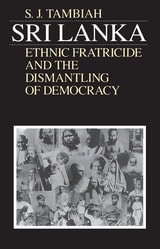
Sri Lanka--Ethnic Fratricide and the Dismantling of Democracy
Stanley Jeyaraja Tambiah
University of Chicago Press, 1986
"In this concise, informative, lucidly written book, scrupulously documented and well indexed, [Tambiah] trains his dispassionate anthropologist's eye on the tangled roots of an urgent, present-day problem in the passionate hope that enlightenment, understanding, and a generous spirit of compromise may yet be able to prevail."—Merle Rubin, Christian Science Monitor
"An incredibly rich and balanced analysis of the crisis. It is exemplary in highlighting the general complexities of ethnic crises in long-lived societies carrying a burden of historical memories."—Amita Shastri, Journal of Asian Studies
"Tambiah makes an eloquent case for pluralist democracy in a country abundantly endowed with excuses to abandon such an approach to politics."—Donald L. Horowitz, New Republic
"An excellent and thought-provoking book, for anyone who cares about Sri Lanka."—Paul Sieghart, Los Angeles Times Book Review

St Peter-On-The-Wall
Landscape and Heritage on the Essex CoastEdited by Johanna Dale
University College London, 2023
The Chapel of St Peter-on-the-Wall, built on the ruins of a Roman fort, dates from the mid-seventh century and is one of the oldest largely intact churches in England. It stands in splendid isolation on the shoreline at the mouth of the Blackwater Estuary in Essex, where the land meets and interpenetrates with the sea and the sky. This book brings together contributors from across the arts, humanities, and social sciences to uncover the premodern contexts and modern resonances of this medieval building and its landscape setting. In analyzing the significance of the chapel and surrounding landscape over more than a thousand years, this collection additionally contributes to wider debates about the relationship between space and place, and particularly the interfaces between both medieval and modern cultures and also heritage and the natural environment.

St. Augustine's Bones
A MicrohistoryHarold Samuel Stone
University of Massachusetts Press, 2002
In 1695, workers in Pavia, Italy, chanced upon a collection of bones in the crypt of the Cathedral of San Pietro in Ciel d'Oro. The workers later testified that they had seen the name of St. Augustine written in charcoal on the surface of the casket they had uncovered. Yet by the time of the official inquest, all traces of the writing had disappeared.
Rich with new insights into urban literacy and conceptions of reading, this book explores the controversy that ensued over the alleged discovery of Augustine's bones. Manuscripts, broadsides, pamphlets—even whole books—were devoted to proving or disproving the authenticity of the remains. Although these works were addressed to members of the clergy, they were also intended for the general reading public in Pavia, Milan, and Venice. Their dissemination helped create a temporary public sphere in which the merits of the case were examined in a spirit of free debate.
A reexamination of the dispute over St. Augustine's bones illuminates aspects of Catholic spirituality in Northern Italy during the late seventeenth and early eighteenth centuries. It also reveals the different ways in which Catholic scholars, local religious leaders, and the papal administration sought to influence and direct local popular religious belief and practices. Although the controversy was officially resolved by the papacy in 1728, the debate over the relics of San Pietro continued into the twentieth century.
By combining methods developed in the burgeoning field of the history of the book with the tools of cultural analysis, Harold Samuel Stone not only recovers the stories surrounding St. Augustine's bones, but also reconstructs the mental world of those who read or heard them.
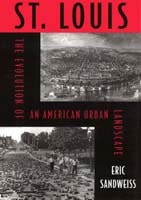
St. Louis
Evolution Of American Urban LandscapeERIC SANDWEISS
Temple University Press, 2001
In this book, Eric Sandweiss scrutinizes the everyday landscape -- streets, houses, neighborhoods, and public buildings -- as it evolved in a classic American city. Bringing to life the spaces that most of us pass without noticing, he reveals how the processes of dividing, trading, improving, and dwelling upon land are acts that reflect and shape social relations. From its origins as a French colonial settlement in the eighteenth century to the present day, St. Louis offers a story not just about how our past is diagrammed in brick and asphalt, but also about the American city's continuing viability as a place where the balance of individual rights and collective responsibilities can be debated, demonstrated and adjusted for generations to come.
Stability and Change in Guale Indian Pottery, A.D. 1300-1702
Rebecca Saunders
University of Alabama Press, 2000
Through a comprehensive study of changing pottery attributes, Saunders documents the clash of Spanish and Native American cultures in the 16th-century southeastern United States.
By studying the ceramic traditions of the Guale Indians, Rebecca Saunders provides evidence of change in Native American lifeways from prehistory through European contact and the end of the Mission period. The Guale were among the first southeastern groups to come into contact with Spanish and French colonists, and they adapted various strategies in order to ensure their own social survival. That adaptation is reflected, Saunders shows, in the changing attributes of pottery recovered on archaeological sites on the coasts of Georgia and Florida.
Saunders traces the evolution of Guale pottery from the late prehistoric Irene phase through the Mission period at the three archaeological sites. She uses both technological and stylistic attributes to monitor change, paying particular attention to changes in execution and frequency of the filfot cross—a stylized cross that is a symbol of Guale cosmology. The frequency of this symbol in different ceramic components, according to Saunders, is a measure of change in the worldview of the missionized Guale. Although the symbol abruptly changed after the first Spanish contact, it showed remarkable stability through the Mission period, suggesting that traditional craft training and production remained strong despite high mortality rates and frequent relocation.
Only after 1684, when the Guale were relocated to Amelia Island in present-day Florida, did the use of the cross motif decline, suggesting that the Guale who remained in Spanish territory may have conceived of their place in the cosmos differently from their forebears or their contemporaries who fled to the interior.
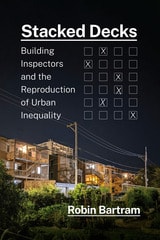
Stacked Decks
Building Inspectors and the Reproduction of Urban InequalityRobin Bartram
University of Chicago Press, 2022
Though we rarely see them at work, building inspectors have the power to significantly shape our lives through their discretionary decisions. The building inspectors of Chicago are at the heart of sociologist Robin Bartram’s analysis of how individuals impact—or attempt to impact—housing inequality. In Stacked Decks, she reveals surprising patterns in the judgment calls inspectors make when deciding whom to cite for building code violations. These predominantly white, male inspectors largely recognize that they work within an unequal housing landscape that systematically disadvantages poor people and people of color through redlining, property taxes, and city spending that favor wealthy neighborhoods. Stacked Decks illustrates the uphill battle inspectors face when trying to change a housing system that works against those with the fewest resources.
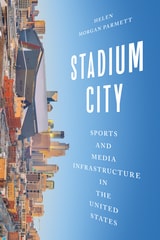
Stadium City
Sports and Media Infrastructure in the United StatesHelen Morgan Parmett
University of Illinois Press, 2025
Stage Blood
Vampires of the 19th Century StageRoxana Stuart
University of Wisconsin Press, 1994

Staged News
The Federal Theatre Project’s Living Newspapers in New YorkJordana Cox
University of Massachusetts Press, 2023
Finalist for the 2023 Frank Luther Mott - Kappa Tau Alpha Journalism and Mass Communication Research Award
In 1935, a group of journalists and theater artists embarked on an unusual collaboration. With funds from the Federal Theatre Project (FTP), a Depression-era employment initiative established by President Roosevelt’s New Deal, they set out to produce news for the theatrical stage. Over the next four years, the New York–based team created six productions, known as the Living Newspapers. Covering a variety of public issues that included affordable housing, the plight of Dust Bowl farmers, the Tennessee Valley Authority, and labor law, Living Newspaper productions would reach hundreds of thousands of spectators and inspire adaptations across the country.
Staged News interprets the Living Newspaper’s process and repertoire amid journalists’ changing conceptions of their profession. Jordana Cox spotlights marginalized “newsmakers,” particularly Black artists, who challenged the parameters of public knowledge and assumptions surrounding newsworthiness. This timely analysis reveals how a vital theatrical form sprouted from a changing news landscape and reimagined what journalism could do for people seeking democratic change.
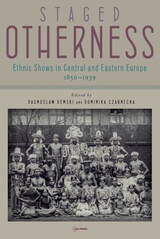
Staged Otherness
Ethnic Shows in Central and Eastern Europe, 1850–1939Dagnoslaw Demski
Central European University Press, 2022
The cultural phenomenon of exhibiting non-European people in front of the European audiences in the 19th and 20th century was concentrated in the metropolises in the western part of the continent. Nevertheless, traveling ethnic troupes and temporary exhibitions of non-European humans took place also in territories located to the east of the Oder river and Austria. The contributors to this edited volume present practices of ethnographic shows in Russia, Poland, Czechia, Slovenia, Hungary, Germany, Romania, and Austria and discuss the reactions of local audiences. The essays offer critical arguments to rethink narratives of cultural encounters in the context of ethnic shows. By demonstrating the many ways in which the western models and customs were reshaped, developed, and contested in Central and Eastern European contexts, the authors argue that the dominant way of characterizing these performances as “human zoos” is too narrow.
The contributors had to tackle the difficult task of finding traces other than faint copies of official press releases by the tour organizers. The original source material was drawn from local archives, museums, and newspapers of the discussed period. A unique feature of the volume is the rich amount of images that complement every single case study of ethnic shows.
Stages of Life
Transcultural Performance and Identity in U.S. Latina TheaterAlberto Sandoval-Sánchez
University of Arizona Press, 2001
This is the first in-depth study of the entire corpus of Latina theater, based on close readings of works both published and in manuscript. It considers a large body of productions and performances, including works by such internationally known authors as Dolores Prida, Cherríe Moraga, and Janis Astor del Valle.
Applying feminist and postcolonial theory as well as theories of transculturation, Sandoval-Sánchez and Sternbach show how, despite cultural differences among Latinas, their works share a common poetics by building upon the politics of representation, identity, and location. In addition to covering theater, this study also shows that solo performance has its own history, properties, structure, and poetics. It examines performances of Carmelita Tropicana, Monica Palacios, and Marga Gomez—artists whose hybrid identities as Latina lesbians constitute living examples of transculturation in the making—to show how solo performance has roots in and digresses from more traditional modes of theater. With their Latina heritage as a unifying link, these women reflect common traits, patterns, dramatic structures, and properties that overcome regional differences. Stages of Life reads these eclectic cultural productions as a unified body of work that contributes to the formation of Latina identity in America today.

Stagestruck
Theater, AIDS, and the Marketing of Gay AmericaSarah Schulman
Duke University Press, 1998
Closely recounting her discovery of the ways in which Rent took materials from her own novel, Schulman takes us on her riveting and infuriating journey through the power structures of New York theater and media, a journey she pursued to seek legal restitution and make her voice heard. Then, to provide a cultural context for the emergence of Rent—which Schulman experienced first-hand as a weekly theater critic for the New York Press at the time of Rent’s premiere—she reveals in rich detail the off- and off-off-Broadway theater scene of the time. She argues that these often neglected works and performances provide more nuanced and accurate depictions of the lives of gay men, Latinos, blacks, lesbians and people with AIDS than popular works seen in full houses on Broadway stages. Schulman brings her discussion full circle with an incisive look at how gay and lesbian culture has become rapidly commodified, not only by mainstream theater productions such as Rent but also by its reduction into a mere demographic made palatable for niche marketing. Ultimately, Schulman argues, American art and culture has made acceptable a representation of “the homosexual” that undermines, if not completely erases, the actual experiences of people who continue to suffer from discrimination or disease. Stagestruck’s message is sure to incite discussion and raise the level of debate about cultural politics in America today.