Results by title
3576 books match the query 'American' and 241 start with s
Signifying Without Specifying
Racial Discourse in the Age of ObamaLi, Stephanie
Rutgers University Press, 2011
On the campaign trail, Barack Obama faced a difficult task—rallying African American voters while resisting his opponents’ attempts to frame him as “too black” to govern the nation as a whole. Obama’s solution was to employ what Toni Morrison calls “race-specific, race-free language,” avoiding open discussions of racial issues while using terms and references that carried a specific cultural resonance for African American voters.
Stephanie Li argues that American politicians and writers are using a new kind of language to speak about race. Challenging the notion that we have moved into a “post-racial” era, she suggests that we are in an uneasy moment where American public discourse demands that race be seen, but not heard. Analyzing contemporary political speech with nuanced readings of works by such authors as Toni Morrison, Jhumpa Lahiri, and Colson Whitehead, Li investigates how Americans of color have negotiated these tensions, inventing new ways to signal racial affiliations without violating taboos against open discussions of race.
Signs of the Americas
A Poetics of Pictography, Hieroglyphs, and KhipuEdgar Garcia
University of Chicago Press, 2020
Garcia tells the story of the present life of these sign-systems, examining the contemporary impact they have had on poetry, prose, visual art, legal philosophy, political activism, and environmental thinking. In doing so, he brings together a wide range of indigenous and non-indigenous authors and artists of the Americas, from Aztec priests and Amazonian shamans to Simon Ortiz, Gerald Vizenor, Jaime de Angulo, Charles Olson, Cy Twombly, Gloria Anzaldúa, William Burroughs, Louise Erdrich, Cecilia Vicuña, and many others. From these sources, Garcia depicts the culture of a modern, interconnected hemisphere, revealing that while these “signs of the Americas” have suffered expropriation, misuse, and mistranslation, they have also created their own systems of knowing and being. These indigenous systems help us to rethink categories of race, gender, nationalism, and history. Producing a new way of thinking about our interconnected hemisphere, this ambitious, energizing book redefines what constitutes a “world” in world literature.
Silences
Martha Ronk
Omnidawn, 2019
These poems endeavor to give a much-deserved voice to silence, addressing the power of what is not seen. While silence remains perpetually out of reach, Ronk invites us to follow the language that creeps up to its edges. The poems in this collection form an inquiry that moves through the presence of silence and reveals insights into the character of the visual art in which it lives.
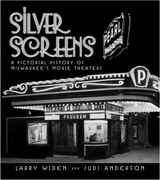
Silver Screens
A Pictorial History of Milwaukee's Movie TheatersLarry Widen
Wisconsin Historical Society Press, 2007
Silver Screens traces the rich history of Milwaukee's movie theaters, from 1890s nickelodeons to the grand palaces of the Roaring Twenties to the shopping mall outlets of today. And the story doesn't end there: in the past two decades, the revival of interest in preservation and restoration of theaters has confirmed that there's still life in these beloved old structures. With the publication of Silver Screens, authors Larry Widen and Judi Anderson help ensure that our old theaters, those being restored and those long since vanished, will remain forever embedded in our collective memory.
In this revised edition of their book Milwaukee Movie Palaces, the authors present new findings on film innovations, drive-in theaters, projection booths, movie promotions, noted theater personalities, recent restoration efforts, and much more. Illuminated with more than a hundred photographs, including many never before published, Silver Screens is a stunning tribute to the legacy of the movie theater.
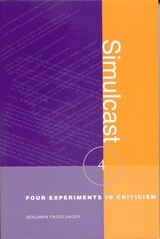
Simulcast
Four Experiments in CriticismBenjamin Friedlander
University of Alabama Press, 2004
A provocative overview of avant-garde American poetry of the past 25 years that raises important questions about the practice of criticism.
Simulcast offers long overdue, highly opinionated, and penetrating examinations of a flourishing movement in American letters by one of its most perceptive practitioners. The four “experiments” in literary criticism gathered in this volume vary in style and point of view. Taken together, they reassess the fundamental relationship between poetry and criticism.
“The Anti-Hegemony Project” is a satire, employing the rhetoric of journalism and the colloquial exchanges of online fan groups to analyze one of the earliest appearances of a poetry community on the World Wide Web: the “Poetics List” maintained at the State University of New York, Buffalo. “Poe’s Poetics and Selected Essays” is a collection of polemical essays on subjects ranging from modernism to language poetry. The third experiment, “The Literati of San Francisco,” is a detailed portrait of the figures and ideas at the heart of an important literary scene a decade after language poetry’s inception. The final essay, “A Short History of Language Poetry,” provides a less polemical, more sober and even-handed analysis of that movement from its origins to the present and its prospects for the future.
These critical interventions and essays are important studies of an evolving poetic field, but they also represent an evolution in criticism itself. Friedlander’s unorthodox methodology is to create a critical text by rewriting prior examples of criticism, among them Jean Wahl’s A Short History of Existentialism and Edgar Allan Poe’s "Literati of New York City." The resulting critiques are themselves a kind of poetry. They explore the issues of style versus substance, artifice versus authenticity, and plausibility versus truth, while the shifts in perspective call into question the authority of any one critical account.
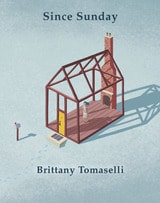
Since Sunday
Brittany Tomaselli
Omnidawn, 2019
Through wit, vulnerability, and rich lyrical language, Tomaselli invites us to walk with her through loss and on to a persistent process of discovery. The poems chronicle a cultivation of awe, unearthing a fresh faith rooted in the present realness of everyday experiences. Stripped of the orthodoxy that both grew and crushed her, she reconstructs a new core of trust for herself. Here we learn with the poet to seek celebration in daily life and to foster a sense of beauty from the mundane.
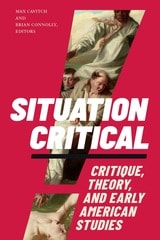
Situation Critical
Critique, Theory, and Early American StudiesMax Cavitch and Brian Connolly, editors
Duke University Press, 2024
Contributors. Max Cavitch, Brian Connolly, Matthew Crow, John J. Garcia, Christopher Looby, Michael Meranze, Mark J. Miller, Justine S. Murison, Britt Rusert, Ana Schwartz, Joan W. Scott, Jordan Alexander Stein

Six American Poets from Emily Dickinson to the Present
An IntroductionAllen Tate
University of Minnesota Press, 1969

Six Plays for Children
By Aurand Harris
University of Texas Press, 1977
Six Plays for Children by Aurand Harris brings together a variety of dramatic forms that have enormously enriched the literature of children's theatre in this country and around the world. These works by this respected children's theatre playwright show Harris's great versatility: in the commedia dell'arte of Androcles and the Lion; the musical melodrama Rags to Riches; the sober, absurd comedy Punch and Judy; the realistic historical drama Steal Away Home; the farce Peck's Bad Boy; and the musical review Yankee Doodle. Each of the six plays exhibits a vital theatricality which is sure to win a child's attention and response.
Editor Coleman A. Jennings traces Harris's development as a playwright in a biographical study based on interviews with Harris. This enlightening section treats Harris's philosophy and teaching methods, as well as his creative process.

Sixteen Modern American Authors
A Survey of Research and CriticismJackson R. Bryer, ed.
Duke University Press, 1973
Sixteen Modern American Authors
A Survey of Research and Criticism since 1972Jackson R. Bryer, ed.
Duke University Press, 1989
“Students of modern American literature have for some years turned to Fifteen Modern American Authors (1969) as an indispensable guide to significant scholarship and criticism about twentieth-century American writers. In its new form—Sixteenth Modern American Authors—it will continue to be indispensable. If it is not a desk-book for all Americanists, it is a book to be kept in the forefront of the bibliographical compartment of their brains.”—American Studies
Sketches of Alabama
Mary Duffee, edited by Jane Porter Nabers and Virginia Pounds Brown
University of Alabama Press, 1970
Rediscover the spirit, stories, and landscapes of Alabama through a timeless collection of observations and historical reflections.
In Sketches of Alabama, Mary Duffee offers a richly detailed portrait of a state shaped by diverse communities, enduring traditions, and a deeply rooted cultural identity. Through a series of engaging sketches, Duffee captures the essence of Alabama’s towns, people, and everyday life, preserving moments that might otherwise be lost to time.
Blending historical insight with narrative charm, this collection explores the character of Alabama from multiple perspectives—rural and urban, past and present. Readers encounter vivid depictions of local customs, notable figures, and the evolving social fabric of the region. Duffee’s work not only chronicles the state’s development but also reflects the broader story of the American South, illuminating its complexities, resilience, and sense of place.
This collection contains typescripts of some of Mary Gordon Duffee's Iron Age columns "Sketches of Alabama," manuscripts of seven of Duffee's poems, a typed biographical sketch of Duffee, undated, and Duffee's obituary from the Birmingham Age-Herald. Ideal for students, historians, and general readers alike, Sketches of Alabama serves as both a literary work and a cultural record. Its accessible style makes it an excellent introduction to Alabama’s heritage, while its thoughtful observations reward those seeking deeper understanding of Southern history and identity.
Whether you are drawn to regional storytelling, historical narrative, or the rich traditions of the Deep South, this work offers a compelling journey into Alabama’s past—one sketch at a time.
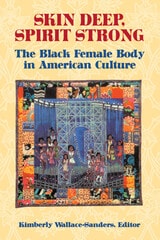
Skin Deep, Spirit Strong
The Black Female Body in American CultureKimberly Wallace-Sanders, Editor
University of Michigan Press, 2002
The collection blends original and classic essays to reveal the interconnections among art, literature, public policy, the history of medicine, and theories about sexuality with regard to bodies that are both black and female. Contributors include Rachel Adams, Elizabeth Alexander, Lisa Collins, Bridgette Davis, Lisa E.Farrington, Anne Fausto-Sterling, Beverly Guy-Sheftall, Evelynn Hammonds, Terri Kapsalis, Jennifer L. Morgan, Siobhan B. Somerville, Kimberly Wallace-Sanders, Carla Williams, and Doris Witt.
Skin Deep, Spirit Strong: The Black Female Body in American Culture will appeal to both the academic reader attempting to integrate race into discussion about the female body and to the general reader curious about the history of black female representation.
Kimberly Wallace-Sanders is Assistant Professor, Graduate Institute of Liberal Arts and Institute of Women's Studies, Emory University.
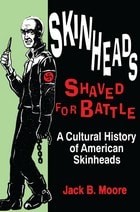
Skinheads Shaved For Battle
A Cultural History of American SkinheadsJack Moore
University of Wisconsin Press, 1993
This book describes who American skinheads are, how they have developed within larger youth group scenes, their ideas and activities, the role of music in their formation and development, how they have been perceived by the media in America, and what damage they have done in American society. Jack B. Moore focuses on the cultural history of this group in America during the 1980s and suggests that while they were originally a minor distraction on the punk scene, they have grown into a dangerous and far more politically engaged source of hate thought and crime.
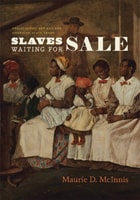
Slaves Waiting for Sale
Abolitionist Art and the American Slave TradeMaurie D. McInnis
University of Chicago Press, 2011
In 1853, Eyre Crowe, a young British artist, visited a slave auction in Richmond, Virginia. Harrowed by what he witnessed, he captured the scene in sketches that he would later develop into a series of illustrations and paintings, including the culminating painting, Slaves Waiting for Sale, Richmond, Virginia.
Sleep Fictions
Rest and Its Deprivations in Progressive-Era LiteratureHannah L. Huber
University of Illinois Press, 2023
A turn-of-the-century influx of new technologies and the enormous impact of the electric light transformed not only individual sleeping habits but the ways American culture conceived and valued sleep. Hannah L. Huber analyzes the works of Henry James, Edith Wharton, Charles Chesnutt, and Charlotte Perkins Gilman to examine the literary response to the period’s obsession with wakefulness. As these writers blurred the separation of public and private space, their characters faced exhaustion in a modern world that permeated every moment of their lives with artificial light, traffic noise, and the social pressure to remain active at all hours. The implacable cultural clock and constant stress over physical limitations had an even greater impact on marginalized figures. Huber pays particular attention to how these writers rebutted Americans’ confidence in the body’s ability to conquer sleep with vivid portraits of the devastating consequences of sleep disruption and deprivation.
The author also provides a website and text visualization tool that offers readers an interdisciplinary, deconstructed analysis of the book’s primary texts. The website can be found at: https://sleepfictions.org/sleep/scalar/index
Sleeping with the Moon
Colleen J. McElroy
University of Illinois Press, 2007
PEN Oakland National Literary Award, 2008
Colleen J. McElroy's poetry shoots for the moon, and takes it in, too, in one way after another. The collection’s award-winning poems animate women’s experiences of sex, shopping, and dancing, while offering telling insight into the struggles and silver lining of lust, love, illness, and aging. Rich with vivid imagery and candid storytelling, Sleeping with the Moon takes readers on moonlit adventures under the night sky, through the barroom’s smoky haze, and under the covers....Beware: such delicate
sights have driven more than one woman to despair
instead she watched him breathe-- relishing
for a moment that secret space where night
grows soft and the moon’s detumescence forgives--
and where if this jeweled light holds they might
strip themselves of years if only for one night
--from “In Praise of Older Women”
Slips of the Mind
Poetry as ForgettingJennifer Soong
University of Chicago Press, 2025
In Slips of the Mind, poet and critic Jennifer Soong turns away from forgetting’s long-standing associations with suppression, privation, and error to argue that the absence or failure of memory has often functioned as a generative creative principle. Exploring forgetting not as the mere rejection of a literary past or a form of negative poetics, Soong puts to the test its very aesthetic meaning. What new structures, forms of desires, styles, and long and short feelings do lapses in time allow? What is oblivion’s relationship to composition? And how does the twentieth-century poet come to figure as the quintessential embodiment of such questions?
Soong uncovers forgetting’s influence on Gertrude Stein, Lyn Hejinian, Tan Lin, Harryette Mullen, Lissa Wolsak, and New York School poets John Ashbery, James Schuyler, Bernadette Mayer, and Ted Berrigan, among others. She reveals that forgetting’s shapeshifting produces differences in poetic genre, interest, and degrees of intentionality—and that such malleability is part of forgetting’s nature. Most provocatively, Soong shows how losing track of things, leaving them behind, or finding them already gone resists overdetermination and causality in the name of surprise, as poets leverage forgetting in order to replace identity with style. Slips of the Mind is the kind of literary criticism that will reward all readers of modern and contemporary poetry.
Slow Trains Overhead
Chicago Poems and StoriesReginald Gibbons
University of Chicago Press, 2010
Few people writing today could successfully combine an intimate knowledge of Chicago with a poet’s eye, and capture what it’s really like to live in this remarkable city. Embracing a striking variety of human experience—a chance encounter with a veteran on Belmont Avenue, the grimy majesty of the downtown El tracks, domestic violence in a North Side brownstone, the wide-eyed wonder of new arrivals at O’Hare, and much more—these new and selected poems and stories by Reginald Gibbons celebrate the heady mix of elation and despair that is city life. With Slow Trains Overhead, he has rendered a living portrait of Chicago as luminously detailed and powerful as those of Nelson Algren and Carl Sandburg.
Gibbons takes the reader from museums and neighborhood life to tense proceedings in Juvenile Court, from comically noir-tinged scenes at a store on Clark Street to midnight immigrants at a gas station on Western Avenue, and from a child's piggybank to nature in urban spaces. For Gibbons, the city’s people, places, and historical reverberations are a compelling human array of the everyday and the extraordinary, of poverty and beauty, of the experience of being one among many. Penned by one of its most prominent writers, Slow Trains Overhead evokes and commemorates human life in a great city.
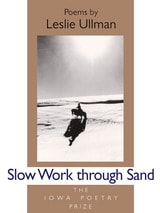
Slow Work Through Sand
Leslie Ullman
University of Iowa Press, 1998
For a number of years, Leslie Ullman has lived in the Southwest, on cultivated land, in the company of horses and with access to uncultivated desert. The seasons and conditions of this starkly appealing land have found their way into the poet and her work. In her poems there always seems to be someone who is making herself over from scratch. Ullman creates origins for herself in nature, in solitude, in animals, and of course through those aspects of human relationships that teach important lessons.
Since winning the prestigious Yale Younger Poets Award in 1979, Ullman has manifested her love of language as both writer and teacher. As she remembers from her youthful summers in a Wisconsin lake lodge: “Sometimes the words I read were the tap of rain on the roof or the fire snapping in its great stone bed, but mostly they bloomed as the sound of the lake, a mantra against the weathered dock.” She writes that her book may be trying to validate the “history of women”—the title of one of the poems—just as “men's history has always validated hugely and by implication the way we use language and the way history has been taught.”Hers is not a defensive or an angry intention, however, but an exciting one. Slow Work through Sand attempts simply to make visible “the dance a woman's life is, not apart from other dances, but as a valid dance among dances.”
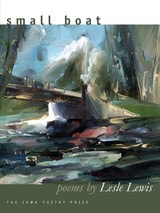
Small Boat
Lesle Lewis
University of Iowa Press, 2003
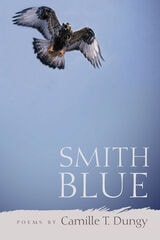
Smith Blue
Camille T. Dungy
Southern Illinois University Press, 2011
In Smith Blue, Camille T. Dungy offers a survival guide for the modern heart as she takes on twenty-first-century questions of love, loss, and nature. From a myriad of lenses, these poems examine the human capability for perseverance in the wake of heartbreak; the loss of beloved heroes and landscapes; and our determination in the face of everyday struggles. Dungy explores the dual nature of our presence on the planet, juxtaposing the devastation caused by human habitation with our own vulnerability to the capricious whims of our environment. In doing so, she reveals with fury and tenderness the countless ways in which we both create and are victims of catastrophe.
This searing collection delves into the most intimate transformations wrought by our ever-shifting personal, cultural, and physical terrains, each fraught with both disillusionment and hope. In the end, Dungy demonstrates how we are all intertwined, regardless of race or species, living and loving as best we are able in the shadows of both man-made and natural follies.
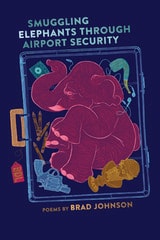
Smuggling Elephants through Airport Security
Brad Johnson
Michigan State University Press, 2020
Soft Canons
American Women WritersKaren L. Kilcup
University of Iowa Press, 1999

Softly Undercover
Hanae Jonas
The Ohio State University Press, 2024
Soldiers Once and Still
Ernest Hemingway, James Salter, and Tim O'BrienAlex Vernon
University of Iowa Press, 2007
Hemingway, Salter, and O’Brien form the core of Soldiers Once and Still because each represents a different warring generation of twentieth-century America: World War I with Hemingway, World War II and Korea with Salter, and Vietnam with O’Brien. Each author also represents a different literary voice of the twentieth century, from modern to mid-century to postmodern, and each presents a different battlefield experience: Hemingway as noncombatant, Salter as air force fighter pilot, and O’Brien as army grunt.
War’s pervasive influence on the individual means that, for veterans-turned-writers like Hemingway, Salter, and O’Brien, the war experience infiltrates their entire body of writing—their works can be seen not only as war literature but also as veterans’ literature. As such, their entire postwar oeuvre, regardless of whether an individual work explicitly addresses the war or the military, is open to Vernon’s exploration of war, society, gender, and literary history.
Vernon’s own experiences as a soldier, a veteran, a writer, and a critic inform this enlightening critique of American literature, offering students and scholars of American literature and war studies an invaluable tool for understanding war’s effects on the veteran writer and his society.
Soluble Fish
Mary Jo Firth Gillett
Southern Illinois University Press, 2007
Soluble Fish transports readers to a place of discovery, exploring issues of borders, familial and love relationships, and other aspects of being human. Mary Jo Firth Gillett layers her poems in rich metaphor as she searches for meaning in everyday life. Contemplating a range of topics from teaching poetry to watching her father filet a fish, Gillett’s humorous and playful collection celebrates language and life.
Solving For X
PoemsRobert B. Shaw
Ohio University Press, 2002
In Solving for X, his award-winning collection of new poems, Robert B. Shaw probes the familiar and encounters the unexpected; in the apparently random he discerns a hidden order. Throughout, Shaw ponders the human frailties and strengths that continue to characterize us, with glances at the stresses of these millennial times that now test our mettle and jar our complacency. Often touched with humor, his perceptions are grounded in devoted observation of the changing world.
As in his previous collections, Shaw in these poems unites conversational vigor with finely crafted metrical lines. Final judge Rachel Hadas says it best: “Solving for X is droll and puzzled, elegiac and satirical in equal measure. Shaw’s attention alights on a variety of more and less tangible things—a seed catalog, a shirt, a bad book, a request for a letter of recommendation, an irritating colleagues’s death—which his masterfully packed lines then proceed to light up with deliberate and unforgettable authority.”
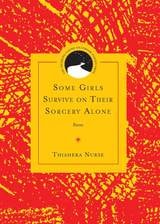
Some Girls Survive on Their Sorcery Alone
PoemsThiahera Nurse
Northwestern University Press, 2019
Some Girls Survive on Their Sorcery Alone sees Renisha McBride, Sandra Bland, Korrynn Gaines, and others not as ornamental nor does the book attempt to canonize the dead women as saints. The poems see them as they are: play-cousins, home-girls, the mirror. Line to line, there is an obsession with keeping all of the women in the poems safe and perhaps resurrectable. The black girl who is alive here lives to switch her waistline to a reggae beat. She is in the middle of the dance floor with a suicide note in her purse as a means of warding off bad juju. Always, she is chasing joy head-on, at warp speed.
Some Girls Survive on Their Sorcery Alone is a celebration that the black girl will always dance, in the church basement, a grandmother’s funeral repast—she dances until she hits the floor, in her joy . . . and her grief.

Some Jazz a While
Collected PoemsMiller Williams
University of Illinois Press, 1999
Some Jazz a While, the eagerly anticipated collected poems of one of America's best-loved poets, gathers Miller Williams's most representative work and adds some new pieces as well.
This generous collection welcomes newcomers as well as longtime admirers of Williams's trademark style: a compact and straightforward language, a masterful command of form, and an unsentimental approach to his subject matter. Williams treats the mundane interchanges, the lingering uncertainties, the missed opportunities, and the familiar sense of loss that mark daily life with the surgeon's deft touch.
An American original, Miller Williams involves the reader's emotions and imagination with an effective illusion of plain talk, continually rediscovering what is vital and musical in the language we speak and by which we imagine.
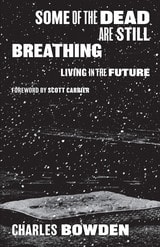
Some of the Dead Are Still Breathing
Living in the FutureBy Charles Bowden
University of Texas Press, 2018
The third book in Charles Bowden’s “accidental trilogy” that began with Blood Orchid and Blues for Cannibals, Some of the Dead Are Still Breathing attempts to resolve the overarching question: “How can a person live a moral life in a culture of death?” As humanity moves further into the twenty-first century, Bowden continues to interrogate our roles in creating the ravaged landscapes and accumulated death that still surround us, as well as his own childhood isolation, his lust for alcohol and women, and his waning hope for a future. We witness post-Katrina New Orleans and terrorist-bombed Bali; we encounter our shared actions with the animal world and the desirous need for consumption; we see the clash and erosion of our physical and figurative borders, the savagery of our own civilization. A man of his time and out of time, Bowden seeks acceptance and a will to endure what may lie ahead.
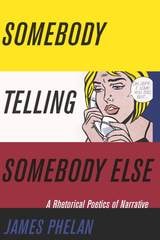
Somebody Telling Somebody Else
A Rhetorical Poetics of NarrativeJames Phelan
The Ohio State University Press, 2017
In doing so, he offers new readings of a wide range of narratives from Jane Austen’s Pride and Prejudice to Joan Didion’s The Year of Magical Thinking, from Joseph Conrad’s Lord Jim to George V. Higgins’s The Friends of Eddie Coyle, from Franz Kafka’s “Das Urteil” to Toni Morrison’s “Recitatif,” from David Small’s Stitches to Jhumpa Lahiri’s “Third and Final Continent,” from John O’Hara’s “Appearances” to Ian McEwan’s Enduring Love. Phelan contends that the standard view of narrative as a synthesis of story and discourse is inadequate to handle the complexities of narrative communication, and he demonstrates the greater explanatory power of his rhetorical view. Furthermore, Phelan gives new prominence to the presence and activity of the “somebody else,” as he shows that an audience’s unfolding responses to a narrative often influence its very construction.

Someone Shot My Book
Julie Carr
University of Michigan Press, 2018
Carr’s essays push past familiar boundaries between the personal/confessional and experimental/conceptual strains in American poetry. Pressing philosophical inquiries into the nature of gender, motherhood, fear, the body, and violence up against readings of twentieth- and twenty-first-century poets, she asks us to consider the political and affective work of poetry in a range of contexts. Carr reports on her own practices, examining her concerns for research and narrative against her investment in lyric, as well as her history as a dancer and her work as curator and publisher. Carr’s breadth of inquiry moves well beyond the page, yet remains grounded in languages possibilities.
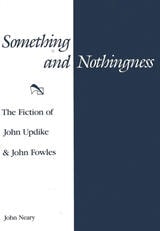
Something and Nothingness
The Fiction of John Updike and John FowlesJohn Neary
Southern Illinois University Press, 1992
John Neary shows that the theological dichotomy of via negativa (which posits the authentic experience of God as absence, darkness, silence) and via affirmativa (which emphasizes presence, images, and the sounds of the earth) is an overlooked key to examining and comparing the works of John Fowles and John Updike.
Drawing on his extensive knowledge of both Christian and secular existentialism within the modern theology of Barth and Levinas and the contemporary critical theory of Derrida and J. Hillis Miller, Neary demonstrates the ultimate affinity of these authors who at first appear such opposites. He makes clear that Fowles’s postmodernist, metafictional experiments reflect the stark existentialism of Camus and Sartre while Updike’s social realism recalls Kierkegaard’s empirical faith in a generous God within a kind of Christian deconstructionism.
Neary’s perception of uncanny similarities between the two authors—whose respective careers are marked by a series of novels that structurally and thematically parallel each other—and the authors’ shared long-term interest in existentialism and theology support both his critical comparison and his argument that neither author is "philosophically more sophisticated nor aesthetically more daring."
Somewhere in Space
Talvikki Ansel
The Ohio State University Press, 2015

Song for Uncle Tom, Tonto, and Mr. Moto
Poetry and IdentityDavid Mura
University of Michigan Press, 2002
Mura's writings recently have been at the center of various debates concerning race and literary standards. In this book, he argues the need for a more complicated and diverse set of literary standards than the canon has previously allowed, an opening up to the many voices that are "great within us." He contends that, when placed against a gathering awareness of a world literature, particularly in the so-called Third World, the boundaries of the traditional Anglo-American canon and its present-day proponents like Harold Bloom come to be seen as too narrow and parochial, reenacting the "tribal" label that many throw now at the advocates of multiculturalism.
Beyond its theoretical underpinnings, Song for Uncle Tom, Tonto, and Mr. Moto charts the wayward course of Mura's own development as a poet. In three interviews, Mura provides readings of his own work and discusses various issues of technique and form.
David Mura is a poet, memoirist, essayist, playwright, writer of fiction, performance artist, and literary critic. He is author of The Colors of Desire, After We Lost Our Way, and Turning Japanese: Memoirs of a Sansei.
Song of Myself
With a Complete CommentaryWalt Whitman
University of Iowa Press, 2016

Songlines in Michaeltree
NEW AND COLLECTED POEMSMichael S. Harper
University of Illinois Press, 2000
Hailed by critics as a distinctive and powerful presence in contemporary American poetry, Michael S. Harper is an artist and a truth teller who tempers his astonishing technical virtuosity with a compassionate and healing vision. A keen observer and a potent commentator, Harper calls a complacent society vigorously to account while cradling the wounded and remembering the lost.
Calling Harper "one of the finest poets of our time . . . [and] one of the most human and humane,"
George Cuomo of the San Francisco Examiner and Chronicle observed, "Harper's poetry has drawn its vitality from the incredible energy of his language and the honesty of his perceptions." Songlines in Michaeltree is a magnificent celebration of Harper's continuing, unstinting gifts.
Sound Fury
PoemsMark Levine
University of Iowa Press, 2022
Sound and Form in Modern Poetry
Second EditionHarvey Gross and Robert McDowell
University of Michigan Press, 1996
Poet, critic, and editor Robert McDowell has updated this classic text in the light of the poetic and critical developments of the last three decades. Segments on Dickinson, Robinson, Frost, Jeffers, and Lowell, among other poets, have been greatly expanded, and Ashbery, Creeley, Ginsberg, Hall, Kees, Kumin, Levertov, Levine, O'Hara, Plath, Rich, Simpson, and Wilbur added, among others. The epilogue discusses a new generation of poets whose works will likely be read well into the next century-- among others, Thomas M. Disch, Rita Dove, Dana Gioia, Emily Grosholz, Mark Jarman, Molly Peacock, Gjertrud Schnackenberg, Timothy Steele, Mary Swander, and Marilyn Nelson Waniek.
Over the last ten years, the most inspiring topic of conversation and argument among poets and their readers has been the resurgence of narrative and traditional forms. The new Sound and Form in Modern Poetry is a seminal text in this discussion, examining not only this movement but all of the important developments (Dadaism, Surrealism, Imagism, Language Poetry, and the Confessional School) that have defined our poetry in the twentieth century and have set the stage for poetry's continued life in the twenty-first. The original Sound and Form in Modern Poetry enjoyed extensive classroom use as a text; the revised version promises to be even more accessible, and more essential, for years to come.
The late Harvey Gross was Professor of Comparative Literature, State University of New York at Stony Brook.
Robert McDowell is publisher and editor of Story Line Press, and is also poet, critic, translator, fiction writer, and essayist.
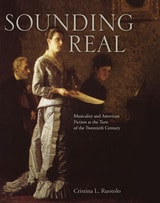
Sounding Real
Musicality and American Fiction at the Turn of the Twentieth CenturyCristina L. Ruotolo
University of Alabama Press, 2013

South by Southwest
Katherine Anne Porter and the Burden of Texas HistoryJanis P. Stout
University of Alabama Press, 2013
An interdisciplinary study of Katherine Anne Porter’s troubled relationship to her Texas origins and southern roots, South by Southwest offers a fresh look at this ever-relevant author.
Today, more than thirty years after her death, Katherine Anne Porter remains a fascinating figure. Critics and biographers have portrayed her as a strikingly glamorous woman whose photographs appeared in society magazines. They have emphasized, of course, her writing— particularly the novel Ship of Fools, which was made into an award-winning film, and her collection Pale Horse, Pale Rider, which cemented her role as a significant and original literary modernist. They have highlighted her dramatic, sad, and fragmented personal life. Few, however, have addressed her uneasy relationship to her childhood in rural Texas.
Janis P. Stout argues that throughout Porter’s life she remained preoccupied with the twin conundrums of how she felt about being a woman and how she felt about her Texas origins. Her construction of herself as a beautiful but unhappy southerner sprung from a plantation aristocracy of reduced fortunes meant she construed Texas as the Old South. The Texas Porter knew and re-created in her fiction had been settled by southerners like her grandparents, who brought slaves with them. As she wrote of this Texas, she also enhanced and mythologized it, exaggerating its beauty, fertility, and gracious ways as much as the disaffection that drove her to leave. Her feelings toward Texas ran to both extremes, and she was never able to reconcile them.
Stout examines the author and her works within the historical and cultural context from which she emerged. In particular, Stout emphasizes four main themes in the history of Texas that she believes are of the greatest importance in understanding Porter: its geography and border location (expressed in Porter’s lifelong fascination with marginality, indeterminacy, and escape); its violence (the brutality of her first marriage as well as the lawlessness that pervaded her hometown); its racism (lynchings were prevalent throughout her upbringing); and its marginalization of women (Stout draws a connection between Porter’s references to the burning sun and oppressive heat of Texas and her life with her first husband).
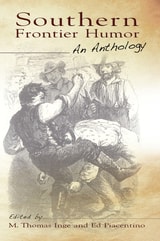
Southern Frontier Humor
An AnthologyEdited by M. Thomas Inge & Ed Piacentino
University of Missouri Press, 2010
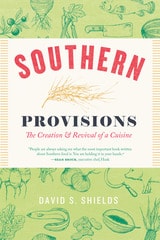
Southern Provisions
The Creation and Revival of a CuisineDavid S. Shields
University of Chicago Press, 2015
Shields’s turf is the southern Lowcountry, from the peanut patches of Wilmington, North Carolina to the sugarcane fields of the Georgia Sea Islands and the citrus groves of Amelia Island, Florida. He takes us on a historical excursion to this region, drawing connections among plants, farms, growers, seed brokers, vendors, cooks, and consumers over time. Shields begins by looking at how professional chefs during the nineteenth century set standards of taste that elevated southern cooking to the level of cuisine. He then turns to the role of food markets in creating demand for ingredients and enabling conversation between producers and preparers. Next, his focus shifts to the field, showing how the key ingredients—rice, sugarcane, sorghum, benne, cottonseed, peanuts, and citrus—emerged and went on to play a significant role in commerce and consumption. Shields concludes with a look at the challenges of reclaiming both farming and cooking traditions.
From Carolina Gold rice to white flint corn, the ingredients of authentic southern cooking are returning to fields and dinner plates, and with Shields as our guide, we can satisfy our hunger both for the most flavorful regional dishes and their history.
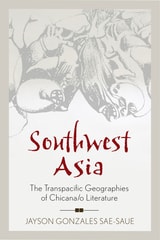
Southwest Asia
The Transpacific Geographies of Chicana/o LiteratureJayson Gonzales Sae-Saue
Rutgers University Press, 2016

Sovereign Erotics
A Collection of Two-Spirit LiteratureEdited by Qwo-Li Driskill, Daniel Heath Justice, Deborah Miranda, and Lisa Tatonetti
University of Arizona Press, 2011
This landmark collection strives to reflect the complexity of identities within Native Gay, Lesbian, Bisexual, Transgender, Queer, and Two-Spirit (GLBTQ2) communities. Gathering together the work of established writers and talented new voices, this anthology spans genres (fiction, nonfiction, poetry, and essay) and themes (memory, history, sexuality, indigeneity, friendship, family, love, and loss) and represents a watershed moment in Native American and Indigenous literatures, Queer studies, and the intersections between the two.
Collaboratively, the pieces in Sovereign Erotics demonstrate not only the radical diversity among the voices of today’s Indigenous GLBTQ2 writers but also the beauty, strength, and resilience of Indigenous GLBTQ2 people in the twenty-first century.
Contributors: Indira Allegra, Louise Esme Cruz, Paula Gunn Allen, Qwo-Li Driskill, Laura Furlan, Janice Gould, Carrie House, Daniel Heath Justice, Maurice Kenny, Michael Koby, M. Carmen Lane, Jaynie Lara, Chip Livingston, Luna Maia, Janet McAdams, Deborah Miranda, Daniel David Moses, D. M. O’Brien, Malea Powell, Cheryl Savageau, Kim Shuck, Sarah Tsigeyu Sharp, James Thomas Stevens, Dan Taulapapa McMullin, William Raymond Taylor, Joel Waters, and Craig Womack

Sovereignty
A PlayMary Kathryn Nagle
Northwestern University Press, 2020
A powerful meditation of the echoes of history and the never-ending struggle for sovereignty
Sovereignty unfolds over two parallel timelines. In present-day Oklahoma, a young Cherokee lawyer, Sarah Ridge Polson, and her colleague Jim Ross defend the inherent jurisdiction of Cherokee Nation in the U.S. Supreme Court when a non-Indian defendant challenges the Nation’s authority to prosecute non-Indian perpetrators of domestic violence. Their collaboration is juxtaposed with scenes from 1835, when Cherokee Nation was eight hundred miles to the east in the southern Appalachians. That year, Sarah’s and Jim’s ancestors, historic Cherokee rivals, were bitterly divided over a proposed treaty with the administration of Andrew Jackson, the Treaty of New Echota, which led to the nation’s removal to Oklahoma on the infamous Trail of Tears.
A direct descendant of nineteenth-century Cherokee leaders John Ridge and Major Ridge, Mary Kathryn Nagle has penned a play that twists and turns from violent outbursts to healing monologues, illuminating a provocative double meaning for the sovereignty of both tribal territory and women’s bodies. Taking as its point of departure the story of one lawyer’s passionate defense of the rights of her people to prosecute non-natives who commit crimes on reservations, Sovereignty opens up into an expansive exploration of the circular continuity of history, human memory, and the power of human relationships.
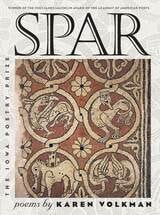
Spar
Karen Volkman
University of Iowa Press, 2002

Speaking of Furniture
Conversations with 14 American MastersWarren Eames Johnson
The Artist Book Foundation, 2013
Speaking of Furniture: Conversations with 14 American Masters is a fresh, stimulating, and in-depth examination of the modus operandi of 14 accomplished—and diverse—furniture makers. An engaging history of studio furniture, this colorful, informative study includes engaging conversations with James Krenov, Wendell Castle, Jere Osgood, Judy Kensley McKie, David Ebner, Richard Scott Newman, Hank Gilpin, Alphonse Mattia, John Dunnigan, Wendy Maruyama, James Schriber, Timothy S. Philbrick, Michael Hurwitz, and Thomas Hucker. The insightful interviews illuminate how these creative and gifted craftspeople arrived professionally and what their craft means to them individually.
In his enlightening foreword, Edward S. Cook, Jr. maps out the background of the studio furniture movement. Author and furniture maker Roger Holmes offers an insider's perspective on the art and craft of producing exquisite contemporary furniture in his conversational introduction and maintains, "Art or craft, this is very personal work." This elegant presentation skillfully sheds light on the thought processes and techniques of a celebrated and exceptional gathering of studio furniture makers who are as unique as they are stellar. As sculptor and furniture designer Wendell Castle remarks, "What I admired was that... fine art and craft were the same thing."
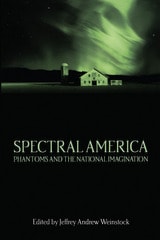
Spectral America
Phantoms and the National ImaginationEdited by Jeffrey Andrew Weinstock
University of Wisconsin Press, 2004
Spectral America asserts that ghosts, whether in oral tradition, literature, or such modern forms as cinema have always been constructions embedded in specific historical contexts and invoked for explicit purposes, often political in nature. The essays address the role of "spectral evidence" during the Salem witch trials, the Puritan belief in good spirits, the convergence of American Spiritualism and technological development in the nineteenth century, the use of the supernatural as a tool of political critique in twentieth-century magic realism, and the "ghosting" of persons living with AIDS. They also discuss ghostly themes in the work of Ambrose Bierce, Edith Wharton, Gloria Naylor, and Stephen King.