Results by title
1882 books match the query 'Criticism and interpretation' and 147 start with s
Something and Nothingness
The Fiction of John Updike and John FowlesJohn Neary
Southern Illinois University Press, 1992
John Neary shows that the theological dichotomy of via negativa (which posits the authentic experience of God as absence, darkness, silence) and via affirmativa (which emphasizes presence, images, and the sounds of the earth) is an overlooked key to examining and comparing the works of John Fowles and John Updike.
Drawing on his extensive knowledge of both Christian and secular existentialism within the modern theology of Barth and Levinas and the contemporary critical theory of Derrida and J. Hillis Miller, Neary demonstrates the ultimate affinity of these authors who at first appear such opposites. He makes clear that Fowles’s postmodernist, metafictional experiments reflect the stark existentialism of Camus and Sartre while Updike’s social realism recalls Kierkegaard’s empirical faith in a generous God within a kind of Christian deconstructionism.
Neary’s perception of uncanny similarities between the two authors—whose respective careers are marked by a series of novels that structurally and thematically parallel each other—and the authors’ shared long-term interest in existentialism and theology support both his critical comparison and his argument that neither author is "philosophically more sophisticated nor aesthetically more daring."
Son of Andalusia
The Lyrical Landscapes of Federico Garcia LorcaC. Brian Morris
Vanderbilt University Press, 1997
Andalusia was the central feature and influence in the life and writings of the twentieth-century author, musician, and artist, Federico Garcia Lorca. Rooted in his native region, which both captivated and shaped him, Lorca maintained that "The better a writer learns how to interpret the landscape, the greater the artist he will be." Blessed with an acute historical sense of a region where the past is both present and enduring, Lorca proved himself sensitive and articulate enough to interpret "the emotion of the landscape" in all of his creative work.
For Lorca, Andalusia was a landscape not only of place but of people. Through exhaustive research and painstaking readings in a wide range of anthologies of Andalusian folk culture and collections of popular verse, author C. Brian Morris reveals how Lorca transformed and veiled real people and real places in his poetry and drama. Exploring subjects ranging from medieval ballads to flower and plant lore, he further investigates the relationship between Lorca and the writings of other Andalusian-born authors, as well as traditional Andalusian poetry and song. Juxtaposing this material with well-chosen quotations from Lorca's works, Morris provides myriad examples of analogy and reminiscence that will inform and enlighten both general readers and Lorca specialists.
Sor Juana
Or, the Persistence of PopIlan Stavans
University of Arizona Press, 2018
Sor Juana: Or, the Persistence of Pop encapsulates the life, times, and legacy of Sor Juana. In this immersive work, essayist Ilan Stavans provides a biographical and meditative picture of the ways in which popular perceptions of her life and body of work both shape and reflect modern Latinx culture.
Sounds Beyond
Arvo Pärt and the 1970s Soviet UndergroundKevin C. Karnes
University of Chicago Press, 2021
In Sounds Beyond, Kevin C. Karnes studies the interconnected alternative music and art scenes in the USSR during the second half of the 1970s, revealing the audacious origins of some of Estonian composer Arvo Pärt’s most famous music. Karnes shows how Pärt’s work was created within a vital yet forgotten culture of collective experimentation, the Soviet underground.
Mining archives and oral history from across the former USSR, Sounds Beyond carefully situates modes of creative experimentation within their late socialist contexts. In documenting Pärt’s work, Karnes reveals the rich creative culture that thrived covertly in the USSR and the network of figures that made underground performances possible: students, audio engineers, sympathetic administrators, star performers, and aspiring DJs. Sounds Beyond advances a new understanding of Pärt’s music as an expression of the aesthetic and religious commitments shared, nurtured, and celebrated by many in Soviet underground circles. At the same time, this story attests to the lasting power of Pärt’s music. Dislodging the mythology of the solitary creative genius, Karnes shows that Pärt’s work would be impossible without community.
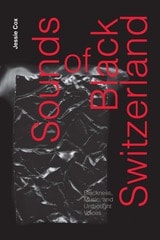
Sounds of Black Switzerland
Blackness, Music, and Unthought VoicesJessie Cox
Duke University Press, 2025
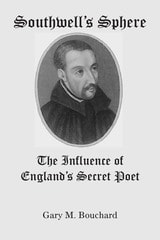
Southwell's Sphere
The Influence of England's Secret PoetGary M. Bouchard
St. Augustine's Press, 2016
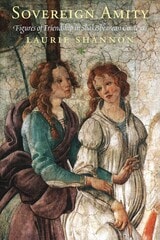
Sovereign Amity
Figures of Friendship in Shakespearean ContextsLaurie Shannon
University of Chicago Press, 2001
Shannon demonstrates that the likeness of sex and station urged in friendship enabled a civic parity not present in other social forms. Early modern friendship was nothing less than a utopian political discourse. It preceded the advent of liberal thought, and it made its case in the terms of gender, eroticism, counsel, and kingship. To show the power of friendship in early modernity, Shannon ranges widely among translations of classical essays; the works of Elizabeth I, Montaigne, Donne, and Bacon; and popular literature, to focus finally on the plays of Shakespeare. Her study will interest scholars of literature, history, gender, sexuality, and political thought, and anyone interested in a general account of the English Renaissance.
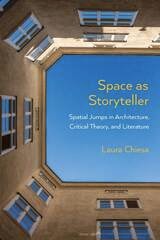
Space as Storyteller
Spatial Jumps in Architecture, Critical Theory, and LiteratureLaura Chiesa
Northwestern University Press, 2016
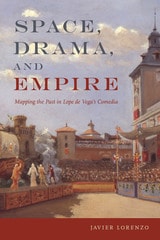
Space, Drama, and Empire
Mapping the Past in Lope de Vega's ComediaJavier Lorenzo
Bucknell University Press, 2023
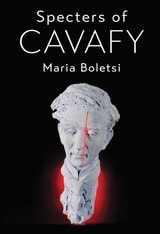
Specters of Cavafy
Maria Boletsi
University of Michigan Press, 2024
Winner of the European Society of Modern Greek Studies Best Monograph Award
The Greek Alexandrian poet C. P. Cavafy (1863–1933) has been recognized as a central figure in European modernism and world literature. His poetry explored the conditions for animating the past and making lost worlds or people haunt the present. Yet he also described himself as “a poet of the future generations.” Indeed, his writings address concerns and desires that permeate the twentieth and twenty-first centuries. How does poetry concerned with the past, memory, loss, and death, carry futurity? How does it haunt, and how is it haunted by, future presents?
Specters of Cavafy broaches these questions by proposing spectral poetics as a novel approach to Cavafy’s work. Drawing from theorizations of specters and haunting, it develops spectrality as a lens for revisiting Cavafy’s poetry and prose, fiction and nonfiction, as well as his poetry’s bearing on our present. By examining Cavafy’s spectral poetics, the book’s first part shows how conjurations work in his writings, and how the spectral permeates the entanglement of modernity and haunting, and of irony and affect. The second part traces the afterlives of specific poems in the Western imagination since the 1990s, in Egypt’s history of debt and colonization, and in Greece during the country’s recent debt crisis. Beyond its original contribution to Cavafy studies, the book proposes tools and modes of reading that are broadly applicable in literary and cultural studies.
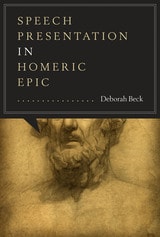
Speech Presentation in Homeric Epic
By Deborah Beck
University of Texas Press, 2012
The Iliad and the Odyssey are emotional powerhouses largely because of their extensive use of direct speech. Yet this characteristic of the Homeric epics has led scholars to underplay the poems’ use of non-direct speech, the importance of speech represented by characters, and the overall sophistication of Homeric narrative as measured by its approach to speech representation. In this pathfinding study by contrast, Deborah Beck undertakes the first systematic examination of all the speeches presented in the Homeric poems to show that Homeric speech presentation is a unified system that includes both direct quotation and non-direct modes of speech presentation.
Drawing on the fields of narratology and linguistics, Beck demonstrates that the Iliad and the Odyssey represent speech in a broader and more nuanced manner than has been perceived before, enabling us to reevaluate our understanding of supposedly “modern” techniques of speech representation and to refine our idea of where Homeric poetry belongs in the history of Western literature. She also broadens ideas of narratology by connecting them more strongly with relevant areas of linguistics, as she uses both to examine the full range of speech representational strategies in the Homeric poems. Through this in-depth analysis of how speech is represented in the Homeric poems, Beck seeks to make both the process of their composition and the resulting poems themselves seem more accessible, despite pervasive uncertainties about how and when the poems were put together.
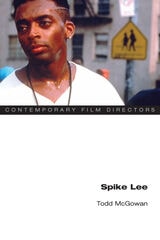
Spike Lee
Tom McGowan
University of Illinois Press, 2014
Since the release of Do the Right Thing in 1989, Spike Lee has established himself as a cinematic icon. Lee's mostly independent films garner popular audiences while at the same time engaging in substantial political and social commentary. He is arguably the most accomplished African American filmmaker in cinematic history, and his breakthrough paved the way for the success of many other African Americans in film.
In this first single-author scholarly examination of Spike Lee's oeuvre, Todd McGowan shows how Lee's films, from She's Gotta Have It through Red Hook Summer, address crucial social issues such as racism, paranoia, and economic exploitation in a formally inventive manner. McGowan argues that Lee uses excess in his films to intervene in issues of philosophy, politics, and art. McGowan contends that it is impossible to watch a Spike Lee film in the way that one watches a typical Hollywood film. By forcing observers to recognize their unconscious enjoyment of violence, paranoia, racism, sexism, and oppression, Lee's films prod spectators to see differently and to confront their own excess. In the process, his films reveal what is at stake in desire, interpersonal relations, work, and artistic creation itself.
Spinoza and the Politics of Renaturalization
Hasana Sharp
University of Chicago Press, 2011

Spirit of Australia
The Crime Fiction of Arthur W. UpfieldUniversity of Wisconsin Press, 1988
Library of Congress subject headings for this publication:
Upfield, Arthur William, -- 1888-1964 -- Criticism and interpretation.
Detective and mystery stories, Australian -- History and criticism.
Bonaparte, Napoleon, Inspector (Fictitious character)
National characteristics, Australian, in literature.
Australia -- In literature.
Police in literature.
Crime in literature.