Results by title
3388 books match the query 'Fiction' and 233 start with s
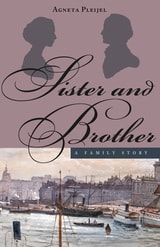
Sister and Brother
A Family StoryAgneta Pleijel
Gallaudet University Press, 2018
Helena showed early musical talent and, trained by her father, was a gifted singer. She lived in Paris for a time and enjoyed popular success. She fell in love with a musician but was plunged into despair when he died from cholera. Her father persuaded her to give up singing and marry a cold industrialist, who was one of the wealthiest men in Sweden, in order to provide financial support for the family. Helena struggled in the loveless marriage and battled depression throughout her life.
Despite their disparate lives, Albert and Helena faced similar struggles with communication, autonomy, and self-determination. Albert’s story traces the development of his own sense of identity as well as the development of Swedish Deaf culture, while Helena’s life reflects the silencing and oppression endured by women. In Sister and Brother, Pleijel’s literary treatment of their lives sheds light on the cultural and social norms that shaped the experiences of deaf people and women in the 19th century.
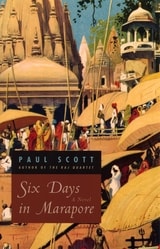
Six Days in Marapore
A NovelPaul Scott
University of Chicago Press, 1953
In this swiftly paced and lyrical novel about British expatriates at the time of Indian independence, Paul Scott grapples with the themes of race, possession, and history that dominate all four novels of his masterpiece, The Raj Quartet, especially The Jewel in the Crown. As always, Scott fills his book with vivid characters: the seductive, bigoted war widow; the sophisticated, wily Hindu politician; and the athletic young American who only gradually begins to understand the legacy of pain and hatred veiling the woman he has come to rescue. Set against the backdrop of a nation in violent transition—a climate of exhilaration and shifting loyalties—Six Days in Marapore unfolds amidst the possibility of reconciliation, freedom, and healing.
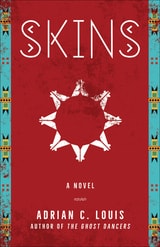
Skins
A NovelAdrian C. Louis
University of Nevada Press, 2022
It’s the early 1990s and Rudy Yellow Shirt and his brother, Mogie, are living on the Pine Ridge Reservation in South Dakota, home of the legendary Oglala Sioux warrior Crazy Horse. Both Vietnam veterans, the men struggle with daily life on the rez. Rudy, a criminal investigator with the Pine Ridge Public Safety Department, must frequently arrest his neighbors and friends, including his brother, who has become a rez wino.
But when Rudy falls and hits his head on a rock while pursuing a suspected murderer, Iktome the trickster enters his brain. Iktome restores Rudy’s youthful sexual vigor—long-lost to years of taking high blood pressure pills—and ignites his desire for political revenge via an alter ego, the “Avenging Warrior.” As the Avenging Warrior, Rudy takes direct action to punish local criminals. In a violent act, he torches the local liquor store, nearly burning Mogie alive while he is hiding on the store’s roof, plotting to steal booze. Although the brothers reconcile before Mogie dies, he leaves the Avenging Warrior with one final mission: go to Mount Rushmore and blow the nose off George Washington’s face.
Louis’s critically acclaimed novel was made into a movie in 2002, directed by Chris Eyre.
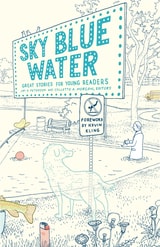
Sky Blue Water
Great Stories for Young ReadersJay D. Peterson
University of Minnesota Press, 2016
A one-of-a-kind collection of short stories for adolescent readers that celebrates Minnesota’s vibrant storytelling tradition—now in paperback
From the Dakota people who first inhabited the state to its generations of immigrants and today’s residents, Minnesota has long had a vibrant and unique storytelling tradition. A rich and often under appreciated part of this tradition is youth storytelling—a movement of which Minnesota is a national forerunner. Here, for the first time, two of the state’s beloved independent booksellers collect a wide array of short stories for young readers that pay homage to Minnesota's diverse cultures and stunning landscapes.
Sky Blue Water celebrates young adult and intermediate fiction from some of Minnesota’s most beloved and award-winning authors to emerging talents and many more. With each turn of the page, every young reader will find a poignant and relatable story: tales of discovering hidden truths about one’s family, dealing with a difficult bully, and falling for the new kid who dresses like a cowboy, as well as settings from Rainy Lake to Lake Calhoun and time periods from Prohibition to the present day. Featuring primarily never-published stories, this anthology beautifully captures the essence of a Minnesota adolescence in twenty short stories and poems. Sky Blue Water features a Q&A between Minnesota classrooms and the contributing authors as well as curriculum materials for families, teachers, and students.
This collection embodies passion for fostering literacy in young readers. A portion of the proceeds from Sky Blue Water will go to the Mid-Continent Oceanographic Institute, a Twin Cities organization offering free tutoring and writing assistance for students ages six to eighteen.
Contributors: William Alexander; Swati Avasthi; Kelly Barnhill; Mary Casanova; John Coy; Kirstin Cronn-Mills; Anika Fajardo; Shannon Gibney; Pete Hautman; Lynne Jonell; Kevin Kling; Margi Preus; Marcie Rendon; Kurtis Scaletta; Julie Schumacher; Joyce Sidman; Phuoc Thi Minh Tran; Anne Ursu; Sarah Warren; Stephanie Watson; Kao Kalia Yang.

Skylark
Dezso Kosztolányi
Central European University Press, 1996
A masterpiece of twentieth-century Hungarian fiction, Kosztolányi's Skylark is a classic portrait of provincial life in the Austro-Hungarian monarchy. Set in the autumn of 1899, it focuses on one extraordinary week in the otherwise uneventful lives of an elderly Hungarian couple. Their ugly spinster daughter, nicknamed Skylark, has left them for an unprecedented holiday with relatives in the country. At first, the couple, whose entire existence revolves around their daughter, are devastated by her absence. Slowly, however, they rediscover the delights and diversions of small-town life, finally reaching the shocking conclusion that their daughter is a burden to them.
In this beautifully written tale Kosztolányi turns family sentiment on its head with an irony that is as telling now as it was nearly seventy years ago.
Slater Orchard
An EtymologyDarcie Dennigan
University of Alabama Press, 2019
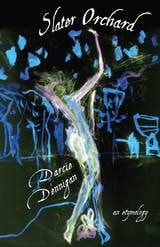
In Slater Orchard, a cleaning woman navigates a half-imaginary world ravaged by industrial waste and pollution. As she labors to grow pear trees in a dumpster, appearances unravel around and within her, and the orchard becomes a burial ground. We begin to question both the reliability of the narrator and of consensual reality.
With sharp wit and precise diction, Darcie Dennigan calls on and works in the lineage of great modernist women, from Clarice Lispector to Marie Redonnet. Slater Orchard is thoroughly contemporary in its themes, however, evincing dire questions of rampant capitalism and climate change that are rapidly changing our world and the exigencies of living in it.
Slayground
A Parker NovelRichard Stark
University of Chicago Press, 2010
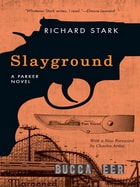
What would you do if you were trapped in an abandoned amusement park full of gunmen trying to kill you? If you were Parker, you'd simply set to work . . .
Richard Stark's Parker novels are the hardest of hard-boiled, classic crime novels where the heists are huge, the body counts are high, and the bad guys usually win.
The Parker novels have been a huge influence on countless writers and filmmakers, including Quentin Tarantino, Stephen King, George Pelecanos, Colson Whitehead, Lucy Sante, John Banville, and many more. Their stripped-down language and hard-as-nails amorality create an unforgettable world where the next score could be the big one, but your next mistake could also be your last. There's nothing else like them.
The hunter becomes prey, as a heist goes sour and Parker finds himself trapped in a shuttered amusement park, besieged by a bevy of local mobsters, in Slayground. There are no exits from Fun Island. Outnumbered and outgunned, Parker can’t afford a single miscalculation. He’s low on bullets and making it out alive is a long shot—but, as anyone who’s crossed his path knows, no one is better at playing higher stakes with shorter odds.
The wildest of all Parker novels, Slayground offers nonstop action, shuddering suspense, and jaw-dropping surprises.

Sleep Tight Satellite
StoriesCarol Guess
Tupelo Press, 2023
Sleepaway
A NovelKevin Prufer
Acre Books, 2024
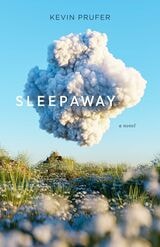
It’s 1984, and the invisible mists are falling, mists that cause people to slip into dreamless slumber—sleeps from which most, but not all, awaken. Those who do wake live in fear of the next mist, and the next, each a little longer and more dangerous than the last.
Alternating between the perspectives of a kleptomaniac waitress named Cora and her twelve-year-old friend Glass, Sleepaway depicts a small-town America turned alarming. This is a place where loved ones are lost to a state between life and death; where denial, delusion, and desperation take hold of those remaining; where dealers of the antisleep drug Eight Track disappear into shadows, and a murderous wannabe kingpin hunts for victims.
As civilization is shaved away one sleep storm at a time, people struggle to go on, making and losing allies and discovering new strengths and weaknesses. Cora sets out on an ill-fated road trip hoping to reclaim her sister’s love, only to discover a more powerful bond than blood. Glass, having lost his only parent to one of the first mists, searches for a stability he has never had and may never achieve. All the while, buildings rise outside town to cope with the mounting number of sleepers. Some see them as hospitals, others as repositories, and yet soon the air around them fills with ash.
An allegory for post-pandemic America, Sleepaway grapples with questions concerning friendship, race, and family amid the horror of inexplicable, arbitrary annihilation.
Sleepaway
A NovelKevin Prufer
Acre Books, 2024
It’s 1984, and the invisible mists are falling, mists that cause people to slip into dreamless slumber—sleeps from which most, but not all, awaken. Those who do wake live in fear of the next mist, and the next, each a little longer and more dangerous than the last.
Alternating between the perspectives of a kleptomaniac waitress named Cora and her twelve-year-old friend Glass, Sleepaway depicts a small-town America turned alarming. This is a place where loved ones are lost to a state between life and death; where denial, delusion, and desperation take hold of those remaining; where dealers of the antisleep drug Eight Track disappear into shadows, and a murderous wannabe kingpin hunts for victims.
As civilization is shaved away one sleep storm at a time, people struggle to go on, making and losing allies and discovering new strengths and weaknesses. Cora sets out on an ill-fated road trip hoping to reclaim her sister’s love, only to discover a more powerful bond than blood. Glass, having lost his only parent to one of the first mists, searches for a stability he has never had and may never achieve. All the while, buildings rise outside town to cope with the mounting number of sleepers. Some see them as hospitals, others as repositories, and yet soon the air around them fills with ash.
An allegory for post-pandemic America, Sleepaway grapples with questions concerning friendship, race, and family amid the horror of inexplicable, arbitrary annihilation.
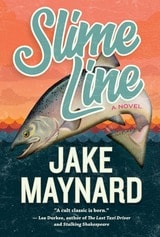
Slime Line
A NovelJake Maynard
West Virginia University Press, 2024
In the wake of his father’s death, Garrett Deaver washes up at a salmon processing plant in his dad’s old stomping grounds of Alaska. There, he renames himself Beaver—because just like a beaver, he’s “an industrious motherfucker”— and vows to become a supervisor at Klak Fancy Salmon, LLC. But moving up within the industry’s seasonal underclass is anything but simple, and soon he finds himself with real, and imagined, enemies at the plant. As amphetamines scramble his sense of reality, and secrets about his father’s life are revealed, the job he’d hoped would bring him salvation threatens to leave him broke, alone, and—maybe even literally—underwater.

Slouching Towards Kalamazoo
A NovelPeter De Vries
University of Chicago Press, 2005
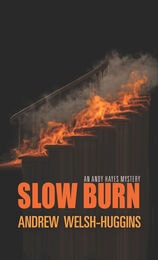
Slow Burn
An Andy Hayes MysteryAndrew Welsh-Huggins
Ohio University Press, 2015
Almost two years have passed since Aaron Custer supposedly set a fire at a house in Columbus that killed three college students, including the young woman with whom he had argued just hours before. Prosecutors had an ironclad case against Custer, a convicted firebug whose fingerprints were found on the lighter that started the blaze and who quickly pleaded guilty to avoid the death penalty.Private investigator and fallen Ohio State football star Andy Hayes is skeptical when Custer’s grandmother asks him to reopen the investigation by finding a mysterious witness who may have seen the real culprit that night. Andy’s doubts fade as he uncovers a tangle of motives for the victims’ deaths, implicating the state’s natural gas fracking boom, drug dealers, and more. But to delve deeper, Andy must once again make amends with his past. TV reporter Suzanne Gregory, a former fiancée, has more information on the Orton Avenue fire than any journalist in town, but asking for her help means reopening old wounds—just as Andy has embarked on a new relationship he’s determined not to screw up. As Andy follows Custer’s trail down ever-darker paths, he must revisit his past and decide whether he can afford to forfeit his future.
Author and reviewer Bill Osinski called Fourth Down and Out, the first of the Andy Hayes mysteries, “A tall, frosty stein of Middle-American noir, backed with a healthy shot of wry.” In this second installment, Andrew Welsh-Huggins draws on real events and current affairs to bring his city to life—warts and all.
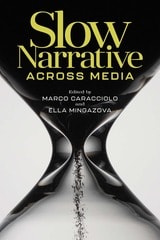
Slow Narrative across Media
Edited by Marco Caracciolo and Ella Mingazova
The Ohio State University Press, 2024
Slowness is frequently seen as a response to modernity’s cult of speed and efficiency, and its influence in contemporary culture can be felt in artistic trends such as “slow cinema” or “slow TV.” Despite the popularity of these labels, however, slowness remains undertheorized in contemporary narrative scholarship. What makes a narrative slow, and what conceptual and analytical tools are best suited to account for this slowness? Is slowness a feature of certain narratives, an experiential response to these narratives, or both? How is narrative slowness related to the pace and rhythm of plot, and how does it carry cultural significance?
Slow Narrative across Media illuminates the concept of slow narrative and demonstrates how it manifests across media forms: from short stories to novel cycles, to comics, to music, to experimental film. Led by editors Marco Caracciolo and Ella Mingazova, contributors draw on cognitive and rhetorical approaches to narrative as well as on econarratology to bring into focus both the media-specific ways in which narrative evokes slowness and the usefulness of a transmedial approach to this phenomenon.
Contributors:
Jan Baetens, Raphaël Baroni, Lars Bernaerts, Marco Caracciolo, Karin Kukkonen, Ella Mingazova, Peggy Phelan, Greice Schneider, Roy Sommer, Carolien Van Nerom, Gary Weissman
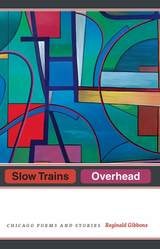
Slow Trains Overhead
Chicago Poems and StoriesReginald Gibbons
University of Chicago Press, 2010
Few people writing today could successfully combine an intimate knowledge of Chicago with a poet’s eye, and capture what it’s really like to live in this remarkable city. Embracing a striking variety of human experience—a chance encounter with a veteran on Belmont Avenue, the grimy majesty of the downtown El tracks, domestic violence in a North Side brownstone, the wide-eyed wonder of new arrivals at O’Hare, and much more—these new and selected poems and stories by Reginald Gibbons celebrate the heady mix of elation and despair that is city life. With Slow Trains Overhead, he has rendered a living portrait of Chicago as luminously detailed and powerful as those of Nelson Algren and Carl Sandburg.
Gibbons takes the reader from museums and neighborhood life to tense proceedings in Juvenile Court, from comically noir-tinged scenes at a store on Clark Street to midnight immigrants at a gas station on Western Avenue, and from a child's piggybank to nature in urban spaces. For Gibbons, the city’s people, places, and historical reverberations are a compelling human array of the everyday and the extraordinary, of poverty and beauty, of the experience of being one among many. Penned by one of its most prominent writers, Slow Trains Overhead evokes and commemorates human life in a great city.
Slut Lullabies
StoriesGina Frangello, Rebecca Makkai
Northwestern University Press, 2026
Through beauty, horror, humor, and chaos, Gina Frangello’s electric stories mine the human experience. A gay Latino man whose pious relatives are boycotting his commitment ceremony becomes caught up in hypocrisy and splendor when his lover’s Waspy mother hires a glitzy wedding coordinator. A desperate teen “seduces” her teacher in order to blackmail him into funding her young stepmother’s escape from their violent home. A wife turns to infidelity and drugs to distract her from chronic pain following an accident. A teenage boy attempts atonement in Amsterdam after having exploited and betrayed his naive girlfriend at home. A socialite must confront her dark past as her husband’s deteriorating illness erodes both her bank account and social standing.
Intimate and raw, this new edition of Frangello’s short fiction includes two previously unpublished stories. A foreword by Rebecca Makkai explains how Frangello’s incendiary work has opened the door for writing about deeply flawed and fascinating women.
Small Bird Tell Me
Stories Of Greek ImmigrantsHelen Papanikolas
Ohio University Press, 1994
Small Craft Warnings
StoriesKate Braverman
University of Nevada Press, 1998
Small Rocks Rising
(A Novel)Susan Lang
University of Nevada Press, 2002
Smiling in the Darkness
Adelaide Freitas, Translated by Katharine F. Baker, with Bobby J. Chamberlain, Reinaldo F. Silva, and Emanuel Melo
Tagus Press, 2020
Many people of Portuguese descent take pride in claiming that the word “saudade” is untranslatable. In reality, we come close with a melding of bittersweet nostalgia, bone-deep longing, and an endless yearning for what one can never have again—or indeed may never have had. Adelaide Freitas dipped her pen in saudade to tell of family separation and bonds that never loosen. In her authentic Azorean voice, she recounts the immigrant experience and centrifugal impulses that force people apart in spite of their desperation to cling to one another. In their sensitive rendering, the translators have captured the nuances of Freitas's novel Smiling in the Darkness, with special care for those who have her native language in their heritage and heartfelt saudade for its loss.
Snakehunter
Chuck Kinder
West Virginia University Press, 2018
First published in 1973, this debut novel is the deeply moving coming-of-age story of Speer Whitfield, whose recollection of his upbringing and his large, remarkable, and often peculiar family evokes the forces that set the path for a boy’s growth into manhood in 1940s Appalachia.
Snapping Lines
Jack Lopez
University of Arizona Press, 2001
A couple searches for a lost dog along the beach because the dog is more important than their relationship . . .
A drunken man picks up a girl hitchhiker and remembers what it once felt like to have feelings for someone else . . .
What does it mean to be male in a world in which old borders no longer exist? How can a man have a relationship if he doesn't even know who he is—and what better way to find out than by committing to a woman? Snapping Lines brings familiar and new stories together in a collection that explores the lives of loners searching for love. Jack Lopez writes about people who have adopted a stoical indifference to a world in which they always seem to find themselves on the losing end. These stories explore Latino male identity and the forces that shape it: friends, family, and lovers; culture, place, and relationships. They focus on men—often working men in the building trades—who construct their lives through their work and live in perpetual limbo because they don't know who they are. Men who stumble onto the relationships they need almost by accident. Men who try to control their relationships but fail.
Written in spare, electric language and energized by memorable scenes, these stories enlighten as much as they entertain. When you have read Snapping Lines, you will come to see the faces of strangers in new and familiar ways.
Snapshots
Alain Robbe-Grillet
Northwestern University Press, 1995
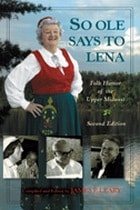
So Ole Says to Lena
Folk Humor of the Upper MidwestCompiled and edited by James P. Leary
University of Wisconsin Press, 2002
In the land of beer, cheese, and muskies—where the polka is danced and winter is unending and where Lutherans and Catholics predominate—everybody is ethnic, the politics are clean, and the humor is plentiful. This collection includes jokes, humorous anecdotes, and tall tales from ethnic groups (Woodland Indians, French, Cornish, Germans, Irish, Scandinavians, Finns, and Poles) and working folk (loggers, miners, farmers, townsfolk, hunters, and fishers). Dig into the rich cultural context supplied by the notes and photographs, or just laugh at the hundreds of jokes gathered at small-town cafes, farm tables, job sites, and church suppers. This second edition includes an afterword and indexes of motifs and tale types.
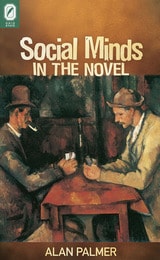
Social Minds in the Novel
Alan Palmer
The Ohio State University Press, 2010
Social Minds in the Novel is the highly readable sequel to Alan Palmer’s award-winning and much-acclaimed Fictional Minds. Here he argues that because of its undue emphasis on the inner, introspective, private, solitary, and individual mind, literary theory tells only part of the story of how characters in novels think. In addition to this internalist view, Palmer persuasively advocates an externalist perspective on the outer, active, public, social, and embodied mind. His analysis reveals, for example, that a good deal of fictional thought is intermental— joint, group, shared, or collective.
Social Minds in the NovelSocial minds are not of marginal interest; they are central to our understanding of fictional storyworlds. The purpose of this groundbreaking and important book is to put the complex and fascinating relationship between social and individual minds at the heart of narrative theory. The book will be of interest to scholars in narrative theory, cognitive poetics or stylistics, cognitive approaches to literature, philosophy of mind, social psychology, and the nineteenth-century novel.
focuses primarily on the epistemological and ethical debate in the nineteenth-century novel about the extent of our knowledge of the workings of other minds and the purposes to which this knowledge should be put. Palmer’s illuminating approach is pursued through skillful and provocative readings of Bleak House, Middlemarch, and Persuasion, and, in addition, Evelyn Waugh’s Men at Arms and Ian McEwan’s Enduring Love.
Society for the Prevention of Cruelty to Animals
A Humorous – Insofar as That Is Possible – Novella from the GhettoJ. R. Pick
Karolinum Press, 2018
Tony suffers from tuberculosis, and, lying in his hospital bed one day, he decides to set up an animal welfare organization. Even though no animals are permitted in the camp, he is determined to find just one creature he can care for and protect—and his determination is contagious. A group of older boys, including Tony’s best friend, Ernie, aid him in his quest. Soon they’re joined by Tony’s mother—and her coterie of boyfriends. Eventually, they find Tony his pet: a mouse, which he names and carefully guards in a box hidden beneath his bed. But in the fall of 1944, the transports to Auschwitz begin.
As moving as it is irreverent, Pick’s novella draws on the two years he spent imprisoned in Terezín in his late teens. With cutting black humor, he shines a light on both the absurdities and injustices of the Nazi-run Jewish ghetto, using his literary artistry to portray in stunning shorthand an experience of the Holocaust that pure histories could never convey.

Sofia Petrovna
Lydia Chukovskaya
Northwestern University Press, 1989
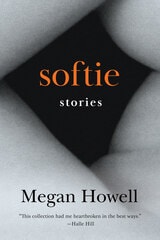
Softie
StoriesMegan Howell
West Virginia University Press, 2024
2025 PEN America Finalist, Robert W. Bingham Prize for Debut Short Story Collection
2025 National Book Award Honoree, "5 Under 35"
2025 Gold Medal, Independent Publishing Book Awards (IPPY): Short Fiction
In beautifully melancholy stories of magical realism, the women and girls in Softie transform their bodies and test their sanity, trying to find meaning in the loneliest of places.A former child star haunted by a past she can't remember. An Afro-French girl with an obsession for ear lobes. A loner whose only friend is hiding a terrible, otherworldly secret. Each of these stories shares situations that are sometimes fantastical, sometimes commonplace, but always strange. From a Corsican vacation town in its off-season to hospital rooms and a seedy hotel suite in Chicago, experience the every day come fully untethered from reality.

Solitaire of Love
Cristina Peri Rossi
Duke University Press, 2000
Tracing the course of a relationship as it evolves into uncompromising self-destruction, the narrator of Solitaire of Love becomes addicted to his own passion and to the body of his beloved. Erotic, romantic love becomes bewitchment, producing a heightened state where time is measured in the rhythms of a chosen body and pride becomes subservient to obsession. The specifics of this other body trump any claim to ordinary existence for the narrator, as sex becomes a kind of idolatrous slavery and love becomes a mechanism for self-immolation. As in Peri Rossi’s other works, an ambiguous sense of gender and sexuality arise from her uniquely experimental prose and mystically erotic logic. Language is subsumed into this process as a way to bear witness, to transfix and capture the love object. The limbo of obsession, as described by Peri Rossi, creates an infantilizing brand of loneliness, broken by flashes of joy, insight, fury, and fear.
This novel was originally published in Spanish in 1988.

Solitary
Maurizio Torchio
Seagull Books, 2018
Solitudes
Goffredo Parise
Northwestern University Press, 1998
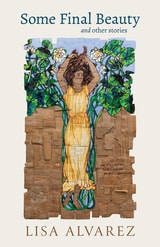
Some Final Beauty and Other Stories
Lisa Alvarez
University of Nevada Press, 2025
From the vibrant streets of Southern California to the arid Nevada Nuclear Test Site, these thematically linked stories explore self-discovery, rebellion, and solidarity as complex personalities and values meet at the intersection of art, love, relationships, activism, and identity. A Mexican American returns from WWII to encounter Paul Robeson. A Spanish Civil War veteran befriends a recovering addict. Young 1980s female activists take to the streets. A big-city Latino mayor discovers the limits of ambition. A grieving aunt confronts her dead niece’s toxic lover.
Both the author and her characters interrogate finality while insisting on the beauty of everyday human engagement, often steeped in Hispanic culture, and stubbornly demanding joyful civic participation. Alvarez constructs more than a sharp, empathetic and funny sociological survey of experiences. She crafts a chronicle of lives lived with purpose, resilience, and the hope of a better future.
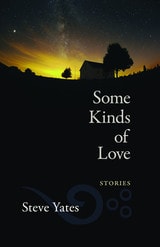
Some Kinds of Love
StoriesSteve Yates
University of Massachusetts Press, 2013
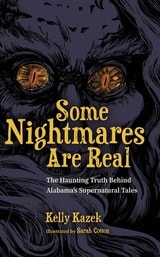
Some Nightmares Are Real
The Haunting Truth Behind Alabama’s Supernatural Talesby Kelly Kazek, illustrated by Sarah Cotton
University of Alabama Press, 2024
Southern writer and folklorist Kelly Kazek’s collection of eerie and enigmatic Alabama ghost stories
Dark secrets lurk beneath the sleepy surface of Alabama. Ghosts and grisly creatures haunt the towns and forests. In the great Southern ghost-story tradition, famed Alabama storyteller Kelly Kazek weaves a gothic tapestry of ten stories drawn from real people and legendary creatures, cursed places, and harrowing events.
Each story or legend takes readers to a different place in Alabama. Read about the bestial Wolf Woman who terrified Mobilians in the haunted old port city. In the northern city of Huntsville, visit the Dead Children’s Playground in gloomy Maple Hill Cemetery. In Jacksonville, feel the cold grip of the Old Mill Witch, rumored to protect the workers at the rickety cotton yarn mill. Hear about the mysterious green light that drifts along the Alabama River in the Black Belt hamlet of Gee’s Bend and learn about the role the Gee’s Bend Ferry played in the Civil Rights Movement.
Unlike most ghost-story collections, Some Nightmares Are Real includes an appendix of facts, historical resources, and information about how to visit the locations. These contemporary stories embrace a beloved Southern folkloric tradition for a new generation of young readers. The tales will terrify and ensnare ghost-story lovers of all ages. So settle in, pull the covers up tight, and maybe turn on the light, because the truth is: Some Nightmares Are Real.
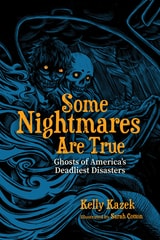
Some Nightmares Are True
Ghosts of America's Deadliest Disastersby Kelly Kazek, illustrated by Sarah Cotton
University of Alabama Press, 2025
Digging up the eerie aftermath of America’s deadliest disasters—where ghost stories take root, history lingers in the shadows, and the past refuses to stay buried.
In this haunting follow-up to Some Nightmares Are Real: The Haunting Truth Behind Alabama’s Supernatural Tales, journalist and storyteller Kelly Kazek investigates supernatural folklore grounded in historical catastrophe. This time, she ventures far beyond Alabama, unearthing the eerie legends born from their aftermath of nine of America’s most infamous disasters. From the strangling suffocation of the Boston Molasses Flood and the terror of Galveston’s notorious Great Storm, to flames blasting from the Triangle Shirtwaist Factory disaster, Some Nightmares Are True examines ghost stories that have haunted communities long after the news headlines stopped.
Each spooky story blends vivid storytelling with meticulous research, connecting real events to the ghostly lore they inspired. Kazek explores not just the moment of disaster, but how grief, resilience, and remembrance shape the way stories live on—through newspaper archives, folklore, and generations of retelling.
With both wry Southern sensibility and journalistic rigor, Kazek explores how moments of tragedy like the Dixie Tornado Outbreak in Alabama, the capsizing of the SS Eastland in Chicago, and the haunting aftermath of the Schoolchildren’s Blizzard in Nebraska leave lasting imprints on generational memory. These sites of devastation become more than historical footnotes; they transform into hallowed grounds where grief lingers, legends remain, and the line between fact and folklore dissolves.
For ghost hunters, or simply those brave enough to follow their curiosity into learning more about the stories’ historical facts, Kazek has compiled a robust appendix that provides context, source materials, and location details, making this a perfect pick to toss in the car for that late-night road trip adventure. But remember, Some Nightmares Are True.

Some People Let You Down
Mike Alberti
University of North Texas Press, 2020
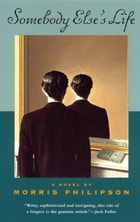
Somebody Else's Life
A NovelMorris Philipson
University of Chicago Press, 2000
"We move inside Cooper's chilly satisfaction as he and his lover-accomplice bring off one trick after another in the identity switching necessary to their scam. . . . And we're also brought close to the pain and rage . . . of the women whom Cooper (incorrigible to the end) deceives."—Benjamin DeMott, New York Times Book Review
"An authentic and ingenious account of the ingeniously counterfeit in art and in life."—D. J. Enright
"This offbeat romp intrigues with its ironic probing of life values at the same time that it provides lively entertainment."—Kirkus Reviews
"An extended and absorbing mediation on the loss of integrity."—Chicago Sun-Times
"Witty, sophisticated and intriguing, this tale of a forger is the genuine article: an example of the art of suspense and the suspense of art."—Jack Fuller
"An entertainingly mordant psychological thriller."—Washington Times Magazine
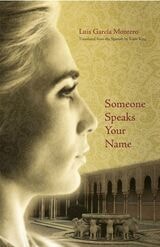
Someone Speaks Your Name
Luis García Montero
Swan Isle Press, 2022
It’s the summer of 1963 and León Egea, a cocky nineteen-year-old student and aspiring author, has just finished his first year studying literature at the University of Granada and is starting a summer job as an encyclopedia salesman. León, infuriated by the injustices in Spanish society under the Franco dictatorship, comes to find that literature can speak the truth when the reality is clouded.
In this coming-of-age novel by renowned Spanish writer Luis García Montero, León discovers that, under the repressive Franco dictatorship, people, places, and events are not always what they seem. But literature, words, and names open paths to discovery, both personal and political. Through lyrical fast-paced narrative, Someone Speaks Your Name explores literature as a foundation for understanding human relationships, national character, discrete differences between right and wrong, and for pursuing the path forward. As León’s professor tells him: “Learning to write is learning to see.”
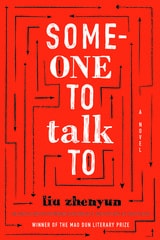
Someone to Talk To
A NovelLiu Zhenyun
Duke University Press, 2018
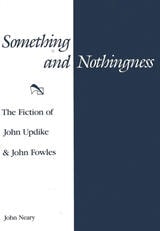
Something and Nothingness
The Fiction of John Updike and John FowlesJohn Neary
Southern Illinois University Press, 1992
John Neary shows that the theological dichotomy of via negativa (which posits the authentic experience of God as absence, darkness, silence) and via affirmativa (which emphasizes presence, images, and the sounds of the earth) is an overlooked key to examining and comparing the works of John Fowles and John Updike.
Drawing on his extensive knowledge of both Christian and secular existentialism within the modern theology of Barth and Levinas and the contemporary critical theory of Derrida and J. Hillis Miller, Neary demonstrates the ultimate affinity of these authors who at first appear such opposites. He makes clear that Fowles’s postmodernist, metafictional experiments reflect the stark existentialism of Camus and Sartre while Updike’s social realism recalls Kierkegaard’s empirical faith in a generous God within a kind of Christian deconstructionism.
Neary’s perception of uncanny similarities between the two authors—whose respective careers are marked by a series of novels that structurally and thematically parallel each other—and the authors’ shared long-term interest in existentialism and theology support both his critical comparison and his argument that neither author is "philosophically more sophisticated nor aesthetically more daring."
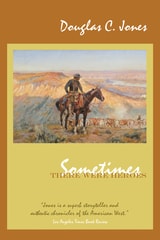
Sometimes There Were Heroes
Douglas C. Jones
University of Arkansas Press, 2005
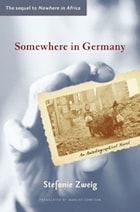
Somewhere in Germany
A NovelStefanie Zweig, Translated by Marlies Comjean
University of Wisconsin Press, 2006
In Frankfurt, Regina matures into a woman and, though her parents want her to marry an upstanding Jewish man, her love life progresses in its own idiosyncratic fashion. She develops a passion for art and journalism and begins her professional career at a Frankfurt newspaper. Walter at last finds professional success as a lawyer, but never quite adjusts to life in Frankfurt, recalling with nostalgia his childhood in Upper Silesia and his years in Africa. Only his son Max truly finds what Walter had hoped for: a new homeland in Germany.
Although the Redlichs receive kindness from strangers, they also learn anti-Semitism still prevails in post-Nazi Germany. They partake in the West German “economic miracle” with their own home, a second-hand car, and the discovery of television, but young Max’s discovery of the Holocaust revives long-buried memories. Rich in memorable moments and characters, this novel portrays the reality of postwar German society in vivid and candid detail.

Somewhere
A NovelBy Paloma Vidal, translated by Jordan B. Jones
Amherst College Press, 2026

Somos Tejanas!
Chicana Identity and Culture in TexasEdited by Jody A. Marín and Norma E. Cantú
University of Texas Press, 2025
2026 Outstanding Book Award for Non-Fiction, National Association for Chicana and Chicano Studies (NACCS) Tejas Foco
2026 Silver Medal for the Dolores Huerta Best Cultural & Community Themed Book – English, Conference on Latin American History (CLAH)
An expansive volume on Tejana identity and Tejanidad told through personal narratives, poetry, and essays.
Being Tejanx is different than just being from Texas. Being Tejanx means you are a border subject. Being Tejanx means living in and from a certain history of oppression, possibility, activism, and cultural-linguistic hybridity arising within the US-Mexico borderland that is home. And being Tejanx means something in particular if you are a woman.
In ¡Somos Tejanas!, editors Norma E. Cantú and Jody A. Marín assemble contemporary Tejanx writers who provide firsthand accounts of their experience of identity, enriching the field of Tejanx studies through an encounter with gender and sexuality. The contributions, including personal and scholarly essays, poems, criticism, and artworks, explore the heterogeneity of Tejana identity and the sociopolitical movements, stories, dances, music, and athletic feats that mark Tejanidad. Authors contemplate the history and memory of segregation in Texas, the struggles of surviving the unnatural disaster and blackouts of 2021 amid the global pandemic of COVID-19, and the drug-war violence and ever-tightening immigration restrictions that strangle a transborder way of life shared by millions. An unrepentant act of expression from women under attack by state policymakers, this collection dispels the silence imposed by colonial erasure.
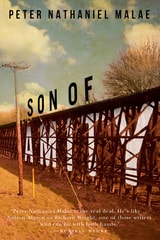
Son of Amity
Peter Nathaniel Malae
Oregon State University Press, 2018
Determined to escape the past, these characters find themselves sharing the same torn-down house, bordering tweaker poverty and bucolic wine country. Violence and penance, family and legacy, recidivism and post-traumatic stress disorder linger with the heavy rain of desperation. At the center of this storm is five-year old Benji, whose wide-eyed energy and openhearted faith could show all of them how to still be saved.
In this unforgettable tale, award-winning author Peter Nathaniel Malae explores the depths of human pain and trauma with genuine cultural authority. Son of Amity is a novel whose voices cry out with truth and vulnerability, never betraying that slight tilt toward hope needed to make the long, hard trek to tomorrow.
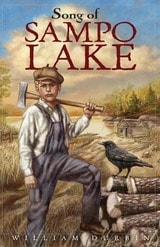
Song of Sampo Lake
William Durbin
University of Minnesota Press, 2011
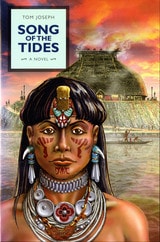
Song of Tides
Tom Joseph
University of Alabama Press, 2008
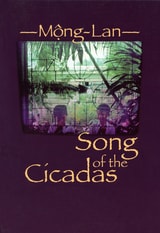
Song of the Cicadas
Anne Mong-Lan Pham
University of Massachusetts Press, 2001

Sophocles II
Ajax, The Women of Trachis, Electra, Philoctetes, The TrackersEdited by Mark Griffith, Glenn W. Most, David Grene, and Richmond Lattimore
University of Chicago Press, 2013
Sophocles II contains the plays “Ajax,” translated by John Moore; “The Women of Trachis,” translated by Michael Jameson; “Electra,” translated by David Grene; “Philoctetes,” translated by David Grene; and “The Trackers,” translated by Mark Griffith.
Many years ago, the University of Chicago Press undertook a momentous project: a new translation of the Greek tragedies that would be the ultimate resource for teachers, students, and readers. They succeeded. Under the expert management of eminent classicists David Grene and Richmond Lattimore, those translations combined accuracy, poetic immediacy, and clarity of presentation to render the surviving masterpieces of Aeschylus, Sophocles, and Euripides in an English so lively and compelling that they remain the standard translations. The updated third editions of these classic works were designed to ensure that our Greek tragedies remain the leading English-language versions throughout the twenty-first century.
In this highly anticipated third edition, Mark Griffith and Glenn W. Most have carefully updated the translations to bring them even closer to the ancient Greek while retaining the vibrancy for which our English versions are famous. This edition also includes brand-new translations of Euripides’ Medea, The Children of Heracles, Andromache, and Iphigenia among the Taurians, fragments of lost plays by Aeschylus, and the surviving portion of Sophocles’s satyr-drama The Trackers. New introductions for each play offer essential information about its first production, plot, and reception in antiquity and beyond. In addition, each volume includes an introduction to the life and work of its tragedian, as well as notes addressing textual uncertainties and a glossary of names and places mentioned in the plays.
In addition to the new content, the volumes have been reorganized both within and between volumes to reflect the most up-to-date scholarship on the order in which the plays were originally written. The result is a set of handsome paperbacks destined to introduce new generations of readers to these foundational works of Western drama, art, and life.

Sound of Holding Your Breath
StoriesNatalie Sypolt
West Virginia University Press, 2018
The residents of The Sound of Holding Your Breath could be neighbors, sharing the same familiar landscapes of twenty-first-century Appalachia—lake and forest, bridge and church, cemetery and garden, diner and hair salon. They could be your neighbors—average, workaday, each struggling with secrets and losses, entrenched in navigating the complex requirements of family in all its forms.
Yet tragedy and violence challenge these unassuming lives: A teenage boy is drawn to his sister’s husband, an EMT searching the lake for a body. A brother, a family, and a community fail to confront the implications of a missing girl. A pregnant widow spends Thanksgiving with her deceased husband’s family. Siblings grapple with the death of their sister-in-law at the hands of their brother. And in the title story, the shame of rape ruptures more than a decade later.
Accidents and deaths, cons and cover-ups, abuse and returning veterans—Natalie Sypolt’s characters wrestle with who they are during the most trying situations of their lives.