Results by title
4127 books match the query 'Science' and 313 start with s

Scientific Knowledge
A Sociological AnalysisBarry Barnes, David Bloor, and John Henry
University of Chicago Press, 1996
The authors, all noted for their contributions to science studies, have organized this book so that each chapter examines a key step in the process of doing science. Using case studies from cognitive science, physics, and biology to illustrate their descriptions and applications of the social study of science, they show how this approach provides a crucial perspective on how science is actually done.
Scientific Knowledge will be of interest not only to those engaged in science studies, but also to anyone interested in the practice of science.

Scientific Papers of Arthur Holly Compton
X-Ray and Other StudiesArthur Holly Compton
University of Chicago Press, 1974
During the years when Compton was an active leader in X-ray research, he made many notable contributions which are reflected in the papers presented here. He was the first to prove several important optical properties of X-rays, including scattering, complete polarization, and total reflection. He was also the first, with his student R. L. Doan, to use ruled gratings for the production of X-ray spectra.
Professor Compton's greatest discovery, for which he was awarded a Nobel Prize in 1927, was the Compton Effect. This was the outgrowth of experiments he had initiated during a year at Cambridge in 1919-20. He did the major portion of these experiments at Washington University in St. Louis during the period 1920-24. His work demonstrated that in the scattering of X-rays by electrons, the radiation behaves like corpuscles, and that the interaction between the X-ray corpuscles and the electrons in the scatter is completely described by the principles of the conservation of energy and momentum for the collisions of particles.
In his introduction, Professor Shankland gives a historical account of the papers, narrates Professor Compton's early scientific career, and shows how he arrived at a quantum explanation of the Compton scattering after eliminating all classical explanations.
Scientific Perspectivism
Ronald N. Giere
University of Chicago Press, 2006
Many people assume that the claims of scientists are objective truths. But historians, sociologists, and philosophers of science have long argued that scientific claims reflect the particular historical, cultural, and social context in which those claims were made. The nature of scientific knowledge is not absolute because it is influenced by the practice and perspective of human agents. Scientific Perspectivism argues that the acts of observing and theorizing are both perspectival, and this nature makes scientific knowledge contingent, as Thomas Kuhn theorized forty years ago.
Using the example of color vision in humans to illustrate how his theory of “perspectivism” works, Ronald N. Giere argues that colors do not actually exist in objects; rather, color is the result of an interaction between aspects of the world and the human visual system. Giere extends this argument into a general interpretation of human perception and, more controversially, to scientific observation, conjecturing that the output of scientific instruments is perspectival. Furthermore, complex scientific principles—such as Maxwell’s equations describing the behavior of both the electric and magnetic fields—make no claims about the world, but models based on those principles can be used to make claims about specific aspects of the world.
Offering a solution to the most contentious debate in the philosophy of science over the past thirty years, Scientific Perspectivism will be of interest to anyone involved in the study of science.
Scientific Pluralism
Stephen H. Kellert
University of Minnesota Press, 2006
Scientific Practice
Theories and Stories of Doing PhysicsEdited by Jed Z. Buchwald
University of Chicago Press, 1995
This book examines small-scale experiment in physics, in particular the relation between theory and practice. The contributors focus on interactions among the people, materials, and ideas involved in experiments—factors that have been relatively neglected in science studies.
The first half of the book is primarily philosophical, with contributions from Andrew Pickering, Peter Galison, Hans Radder, Brian Baigrie, and Yves Gingras. Among the issues they address are the resources deployed by theoreticians and experimenters, the boundaries that constrain theory and practice, the limits of objectivity, the reproducibility of results, and the intentions of researchers. The second half is devoted to historical case studies in the practice of physics from the early nineteenth to the early twentieth century. These chapters address failed as well as successful experimental work ranging from Victorian astronomy through Hertz's investigation of cathode rays to Trouton's attempt to harness the ether. Contributors to this section are Jed Z. Buchwald, Giora Hon, Margaret Morrison, Simon Schaffer, and Andrew Warwick.
With a lucid introduction by Ian Hacking, and original articles by noted scholars in the history and philosophy of science, this book is poised to become a significant source on the nature of small-scale experiment in physics.
Scientific Style and Format
The CSE Manual for Authors, Editors, and Publishers, Eighth EditionCouncil of Science Editors
University of Chicago Press, 2014

Scientific Theories
C. Wade Savage
University of Minnesota Press, 1990
Scrutinizing Feminist Epistemology
An Examination of Gender in SciencePinnick, Cassandra
Rutgers University Press, 2003
This volume presents the first systematic evaluation of a feminist epistemology of sciences’ power to transform both the practice of science and our society. Unlike existing critiques, this book questions the fundamental feminist suggestion that purging science of alleged male biases will advance the cause of both science and by extension, social justice.
The book is divided into four sections: the strange status of feminist epistemology, testing feminist claims about scientific practice, philosophical and political critiques of feminist epistemology, and future prospects of feminist epistemology. Each of the essays¾most of which are original to this text¾ directly confronts the very idea that there could be a feminist epistemology or philosophy of science. Rather than attempting to deal in detail with all of the philosophical views that fall under the general rubric of feminist epistemology, the contributors focus on positions that provide the most influential perspectives on science. Not all of the authors agree amongst themselves, of course, but each submits feminist theories to careful scrutiny. Scrutinizing Feminist Epistemology provides a timely, well-rounded, and much needed examination of the role of gender in scientific research.
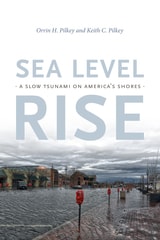
Sea Level Rise
A Slow Tsunami on America's ShoresOrrin H. Pilkey and Keith C. Pilkey
Duke University Press, 2019
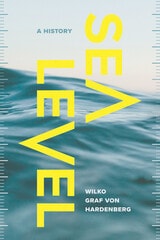
Sea Level
A HistoryWilko Graf von Hardenberg
University of Chicago Press, 2024
News reports warn of rising sea levels spurred by climate change. Waters inch ever higher, disrupting delicate ecosystems and threatening island and coastal communities. The baseline for these measurements—sea level—may seem unremarkable, a long-familiar zero point for altitude. But as Wilko Graf von Hardenberg reveals, the history of defining and measuring sea level is intertwined with national ambitions, commercial concerns, and shifting relationships between people and the ocean.
Sea Level provides a detailed and innovative account of how mean sea level was first defined, how it became the prime reference point for surveying and cartography, and how it emerged as a powerful mark of humanity’s impact on the earth. With Hardenberg as our guide, we traverse the muddy spaces of Venice and Amsterdam, the coasts of the Baltic Sea, the Panama and Suez canals, and the Himalayan foothills. Born out of Enlightenment studies of physics and quantification, sea level became key to state-sponsored public works, colonial expansion, Cold War development of satellite technologies, and recognizing the climate crisis. Mean sea level, Hardenberg reveals, is not a natural occurrence—it has always been contingent, the product of people, places, politics, and evolving technologies. As global warming transforms the globe, Hardenberg reminds us that a holistic understanding of the ocean and its changes requires a multiplicity of reference points.
A fascinating story that revises our assumptions about land and ocean alike, Sea Level calls for a more nuanced understanding of this baseline, one that allows for new methods and interpretations as we navigate an era of unstable seas.
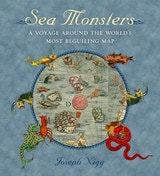
Sea Monsters
A Voyage around the World's Most Beguiling MapJoseph Nigg
University of Chicago Press, 2013
Nearly two meters wide in total, the map’s nine wood-block panels comprise the largest and first realistic portrayal of Northern Europe. But in addition to these important geographic elements, Magnus’s map goes beyond cartography to scenes both domestic and mystic. Close to shore, Magnus shows humans interacting with common sea life—boats struggling to stay afloat, merchants trading, children swimming, and fisherman pulling lines. But from the offshore deeps rise some of the most magical and terrifying sea creatures imaginable at the time or thereafter—like sea swine, whales as large as islands, and the Kraken. In this book, Nigg provides a thorough tour of the map’s cartographic details, as well as a colorful look at its unusual pictorial and imaginative elements. He draws on Magnus’s own text to further describe and illuminate the inventive scenes and to flesh out the stories of the monsters.
Sea Monsters is a stunning tour of a world that still holds many secrets for us land dwellers, who will forever be fascinated by reports of giant squid and the real-life creatures of the deep that have proven to be as bizarre and otherworldly as we have imagined for centuries. It is a gorgeous guide for enthusiasts of maps, monsters, and the mythic.
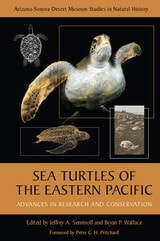
Sea Turtles of the Eastern Pacific
Advances in Research and ConservationEdited by Jeffrey A. Seminoff and Bryan P. Wallace; Foreword by Peter C. H. Pritchard
University of Arizona Press, 2012
Sea turtles are flagship species for the world's oceans. They traverse international boundaries during their migrations, serve as vehicles for marine nutrients to terrestrial habitats, and embody the often tenuous relationship between human action and ecosystem health. The East Pacific Ocean is home to some of the most dynamic marine ecosystems, and the most unique sea turtles. Marine biodiversity within this massive ocean region abounds in mangrove estuaries, seagrass pastures, coral reefs, the open ocean, and many other habitats, with sea turtles often the most conspicuous species present. The distinctive traits of the Eastern Pacific have resulted in the smallest leatherbacks, a singular morph of the green turtle, dark and steeply domed olive ridleys, and the most cryptic hawksbills on the planet. Only now are we beginning to understand how these varieties have evolved.
However, the oceanographic conditions that make this an epicenter of sea turtle activity also promote massive artisanal and industrial fishing efforts that, coupled with illegal harvesting of eggs and turtles, have led to declines of several turtle populations in the region. The essays and stories in Sea Turtles of the Eastern Pacific describe for the first time the history of this exploitation, as well as recent sea turtle conservation initiatives and scientific research in the region. The first third of the book considers the biology of the turtles, focusing on general overviews of current ecological management challenges facing the turtles' survival. The second third treats issues of marine policy related to turtle conservation. In conclusion, the book offers six compelling stories of conservation success. By the end, readers will have gained a in-depth view not only of these magnificent creatures, but also the people involved in research and conservation efforts in one of the most remarkable regions of our planet.
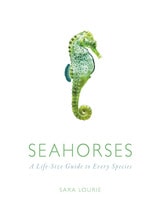
Seahorses
A Life-Size Guide to Every SpeciesSara A. Lourie
University of Chicago Press, 2016
Seahorses celebrates the remarkable variety of seahorse species as well as their exquisiteness. 57 species, including seadragons and pipefish, are presented in lush, life-size photographs alongside descriptive drawings, and each entry includes detailed and up-to-date information on natural history and conservation. Sara Lourie, a foremost expert on seahorse taxonomy, presents captivating stories of species that range from less than an inch to over a foot in height, while highlighting recent discoveries and ecological concerns. Accessibly written, but comprehensive in scope, this book will be a stunning and invaluable reference on seahorse evolution, biology, habitat, and behavior.
Masters of camouflage and rarely seen, seahorses continue to be a fascinating subject of active research. This visually rich and informative book is certain to become the authoritative guide to these charming and unusual wonders of the sea, beloved at aquariums the world over.
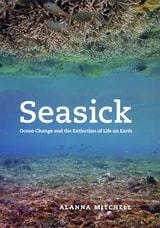
Seasick
Ocean Change and the Extinction of Life on EarthAlanna Mitchell
University of Chicago Press, 2009
We have long lorded over the ocean. But only recently have we become aware of the myriad life-forms beneath its waves. We now know that this delicate ecosystem is our life-support system; it regulates the earth’s temperatures and climate and comprises 99 percent of living space on earth. So when we change the chemistry of the whole ocean system, as we are now, life as we know it is threatened.
In Seasick, veteran science journalist Alanna Mitchell dives beneath the surface of the world’s oceans to give readers a sense of how this watery realm can be managed and preserved, and with it life on earth. Each chapter features a different group of researchers who introduce readers to the importance of ocean currents, the building of coral structures, or the effects of acidification. With Mitchell at the helm, readers submerge 3,000 feet to gather sea sponges that may contribute to cancer care, see firsthand the lava lamp–like dead zone covering 17,000 square kilometers in the Gulf of Mexico, and witness the simultaneous spawning of corals under a full moon in Panama.
The first book to look at the planetary environmental crisis through the lens of the global ocean, Seasick takes the reader on an emotional journey through a hidden realm of the planet and urges conservation and reverence for the fount from which all life on earth sprang.
Seaweeds of the Northwest Atlantic
Arthur C. Mathieson
University of Massachusetts Press, 2017
The introductory chapter provides a historical review of seaweed studies as well as a description of 15 geographical sites designated in the text. Three chapters on the green, brown, and red alga include more than 256 genera, 510 species, 10 subspecies, 21 varieties, and 14 forms. New taxonomic combinations and descriptions of several previously undescribed taxa are also included in the text. The modern classification reviews molecular as well as reproductive, morphological, and biological data. The work represents more than forty years of research on Northwest Atlantic seaweeds and will aid researchers throughout the Northeast and Southwest Atlantic coasts. The authors detail the taxonomy, morphology, cytology, and name derivation of various taxonomic entities, as well as the ecology and distribution patterns of over 555 taxa. The text includes keys to genera and species, a glossary, and sources of further information.
Seaweeds of the Southeastern United States
Cape Hatteras to Cape CanaveralCraig W. Schneider and Richard B. Searles
Duke University Press, 1991
The southeastern Atlantic coast is home to 334 species of seaweed flora. The greatest diversity occurs along the North Carolina coast between Cape Lookout and Cape Fear. With the exception of a few additional species south of Cape Fear, there is not a marked change in the flora until the more tropical waters and seaweeds of southern Florida. The barrier island system of the region and the enclosed shallow water sounds extend the miles of shoreline available for study.
This book, the product of a twenty-year collaboration, is the first comprehensive guide to appear in over seventy years and includes the addition of nearly one hundred species to the region, including twenty-five described by the authors.
Seaweeds
Edible, Available, and SustainableOle G. Mouritsen
University of Chicago Press, 2013
Second Growth
The Promise of Tropical Forest Regeneration in an Age of DeforestationRobin L. Chazdon
University of Chicago Press, 2014
Even as human activities result in extensive fragmentation and deforestation, tropical forests demonstrate a great capacity for natural and human-aided regeneration. Although these damaged landscapes can take centuries to regain the characteristics of old growth, Chazdon shows here that regenerating—or second-growth—forests are vital, dynamic reservoirs of biodiversity and environmental services. What is more, they always have been.
With chapters on the roles these forests play in carbon and nutrient cycling, sustaining biodiversity, providing timber and non-timber products, and integrated agriculture, Second Growth not only offers a thorough and wide-ranging overview of successional and restoration pathways, but also underscores the need to conserve, and further study, regenerating tropical forests in an attempt to inspire a new age of local and global stewardship.
Second Nature
An Environmental History of New EnglandRichard W. Judd
University of Massachusetts Press, 2014
Winner of the 2014 New England Historical Association's James P. Hanlan Book Award
Bounded by the St. Lawrence Valley to the north, Lake Champlain to the west, and the Gulf of Maine to the east, New England may be the most cohesive region in the United States, with a long and richly recorded history. In this book, Richard W. Judd explores the mix of ecological process and human activity that shaped that history over the past 12,000 years. He traces a succession of cultures through New England's changing postglacial environment down to the 1600s, when the arrival of Europeans interrupted this coevolution of nature and culture.
A long period of tension and warfare, inflected by a variety of environmental problems, opened the way for frontier expansion. This in turn culminated in a unique landscape of forest, farm, and village that has become the embodiment of what Judd calls “second nature”—culturally modified landscapes that have superseded a more pristine “first nature.”
In the early 1800s changes in farm production and industrial process transformed central New England, while burgeoning markets at the geographical margins brought rapid expansion in fishing and logging activities. Although industrialization and urbanization severed connections to the natural world, the dominant cultural expression of the age, Romanticism, provided new ways of appreciating nature in the White Mountains and Maine woods. Spurred by these Romantic images and by a long tradition of local resource management, New England gained an early start in rural and urban conservation.
In the 1970s environmentalists, inspired by a widespread appreciation for regional second-nature landscapes, moved quickly from battling pollution and preserving wild lands to sheltering farms, villages, and woodlands from intrusive development. These campaigns, uniquely suited to the region's land-use history, ecology, and culture, were a fitting capstone to the environmental history of New England.

Secret Science
Spanish Cosmography and the New WorldMaría M. Portuondo
University of Chicago Press, 2009
The discovery of the New World raised many questions for early modern scientists: What did these lands contain? Where did they lie in relation to Europe? Who lived there, and what were their inhabitants like? Imperial expansion necessitated changes in the way scientific knowledge was gathered, and Spanish cosmographers in particular were charged with turning their observations of the New World into a body of knowledge that could be used for governing the largest empire the world had ever known.
As María M. Portuondo here shows, this cosmographic knowledge had considerable strategic, defensive, and monetary value that royal scientists were charged with safeguarding from foreign and internal enemies. Cosmography was thus a secret science, but despite the limited dissemination of this body of knowledge, royal cosmographers applied alternative epistemologies and new methodologies that changed the discipline, and, in the process, how Europeans understood the natural world.

Secrets of the Greatest Snow on Earth, Second Edition
Weather, Climate Change, and Finding Deep Powder in Utah's Wasatch Mountains and Around the WorldJim Steenburgh
Utah State University Press, 2023
Utah has long claimed to have the greatest snow on Earth—the state itself has even trademarked the phrase. In Secrets of the Greatest Snow on Earth, Jim Steenburgh investigates Wasatch weather, exposing the myths, explaining the reality, and revealing how and why Utah’s powder lives up to its reputation. Steenburgh also examines ski and snowboard regions beyond Utah, providing a meteorological guide to mountain weather and snow climates around the world.
Chapters explore mountain weather, avalanches and snow safety, historical accounts of weather events and snow conditions, and the basics of climate and weather forecasting. In this second edition, Steenburgh explains what creates the best snow for skiing and snowboarding using accurate and accessible language and 150 color photographs and illustrations, making Secrets of the Greatest Snow on Earth a helpful tool for planning vacations and staying safe during mountain adventures.
This edition is updated with two new chapters covering microclimates and climate change in greater depth. Steenburgh addresses the declining snowpack and the future of snow across the western United States, as well as the declining snow and ice in several regions of the world—the European Alps in particular. Snowriders, weather enthusiasts, meteorologists, students of snow science, and anyone who dreams of deep powder and bluebird skies will want to get their gloves on this new edition of Secrets of the Greatest Snow on Earth.
Praise for the first edition:
“Everything you always wanted to know about how snow forms and how to follow forecasts so you see
how much an”d where is in the book. It’s a must-have for any fan of snow, sure to get you excited about
winter, and give you a bevy of conversation topics for the chairlift ride.”
—Utah Adventure Journal
“For backcountry enthusiasts that find themselves infatuated with weather patterns, snow-water
equivalents, microclimates, and Utah, this book is a dream come true.”
—The Backcountry Skiing Blog
“Steenburgh shares a career’s worth of knowledge in this book. His love of both snow science and skiing
is obvious, and he adds humor and personality to the scientific discussion.”
—First Tracks!! Online Skiing Magazine
“When it comes to snow, the details—both small- and large-scale—do matter. If we all observed our
surroundings with as much curiosity and enthusiasm as Steenburgh, the world could be a much better-
tended place.”
—American Scientist

Secrets of the Greatest Snow on Earth
Weather, Climate Change, and Finding Deep Powder in Utah's Wasatch Mountains and around the WorldJim Steenburgh
Utah State University Press, 2014
Chapters explore mountain weather, avalanches and snow safety, historical accounts of weather events and snow conditions, and the basics of climate and weather forecasting. Steenburgh explains what creates the best snow for skiing and snowboarding in accurate and accessible language and illustrates his points with 150 color photographs, making Secrets of the Greatest Snow on Earth a helpful tool for planning vacations and staying safe during mountain adventures. Snowriders, weather enthusiasts, meteorologists, students of snow science, and anyone who dreams of deep powder and bluebird skies will want to get their gloves on Secrets of the Greatest Snow on Earth.
Watch Book Trailer!(Special thanks to Ski Utah)

Secrets of the Snout
The Dog’s Incredible NoseFrank Rosell
University of Chicago Press, 2018
With 300 million receptors to our mere 5 million, a dog’s nose is estimated to be between 100,000 and 100 million times more sensitive than a human’s. No wonder, then, that our nasally inferior species has sought to unleash the prodigious power of canine shnozzes. Rosell here takes us for a walk with a pack of superhero sniffers including Tutta, a dog with a fine nose for fine wine; the pet-finder pooch AJ; search-and-rescue dog Barry; the hunting dog Balder; the police dogs Rasko and Trixxi; the warfare dog Lisa; the cancer detection dog Jack; Tucker, who scents floating killer whale feces; and even Elvis, who can smell when you’re ovulating. With each dog, Rosell turns his nose to the evolution of the unique olfactory systems involved, which odors dogs detect, and how they do it.
A celebration of how the canine sense for scents works—and works for us—Secrets of the Snout will have dog lovers, trainers, and researchers alike all howling with delight. Exploring this most pointed of canine wonders, Rosell reveals the often surprising ways in which dogs are bettering our world, one nose at a time.
Secrets of the Universe
How We Discovered the CosmosPaul Murdin
University of Chicago Press, 2009
Discoveries in astronomy challenge our fundamental ideas about the universe. Where the astronomers of antiquity once spoke of fixed stars, we now speak of whirling galaxies and giant supernovae. Where we once thought Earth was the center of the universe, we now see it as a small planet among millions of other planetary systems, any number of which could also hold life. These dramatic shifts in our perspective hinge on thousands of individual discoveries: moments when it became clear to someone that some part of the universe—whether a planet or a supermassive black hole—was not as it once seemed.
Secrets of the Universe invites us to participate in these moments of revelation and wonder as scientists first experienced them. Renowned astronomer Paul Murdin here provides an ambitious and exciting overview of astronomy, conveying for newcomers and aficionados alike the most important discoveries of this science and introducing the many people who made them. Lavishly illustrated with more than 400 color images, the book outlines in seventy episodes what humankind has learned about the cosmos—and what scientists around the world are poised to learn in the coming decades. Arranged by types of discovery, it also provides an overarching narrative throughout that explains how the earliest ideas of the cosmos evolved into the cutting-edge astronomy we know today. Along the way, Murdin never forgets that science is a human endeavor, and that every discovery was the result of inspiration, hard work, or luck—usually all three.
The first section of Secrets explores discoveries made before the advent of the telescope, from stars and constellations to the position of our own sun. The second considers discoveries made within our own solar system, from the phases of Venus and the moons of Jupiter to the comets and asteroids at its distant frontier. The next section delves into discoveries of the dynamic universe, like gravitation, relativity, pulsars, and black holes. A fourth examines discoveries made within our own galaxy, from interstellar nebulae and supernovae to Cepheid variable stars and extrasolar planets. Next Murdin turns to discoveries made within the deepest recesses of the universe, like quasars, supermassive black holes, and gamma ray bursters. In the end, Murdin unveils where astronomy still teeters on the edge of discovery, considering dark matter and alien life.

Sedges
CarexRobert H. Mohlenbrock. Illustrated by Paul Nelson
Southern Illinois University Press, 1999
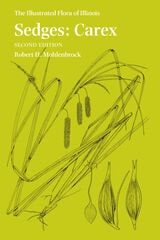
Unique in several respects, Carex is by far the most numerous genus of plants in Illinois. Because of the vast number of species, the similarity of many of the species, and the relatively small size of the critical reproductive structures, the members of this genus are extremely confusing to identify. This book, with its detailed descriptions, key, and precise illustrations, should aid the interested person in the identification of these plants.
Since more than three-fourths of the species of Carex in Illinois are inhabitants of wetlands, an understanding of the genus is critical for those working in wetlands. Amateur and professional botanists will find the information extremely valuable, as well as environmental and conservation groups, garden clubs, farm bureaus, home extension groups, scout organizations, and school libraries. Persons working in natural areas programs and in rare and endangered species programs and those working on environmental impact assessments and wildlife management projects will also find the information pertinent.
Sedges
CarexRobert H. Mohlenbrock
Southern Illinois University Press, 2011
Since the volume’s original publication in 1999, thirty-four additional species of plants have been recognized in Illinois. Some are discoveries from recent field work, some are from more thorough searches of herbaria, and others are from different taxonomic philosophies.
For each species of Carex in Illinois, there is a full illustration showing the habit of the plant and close-ups of various vegetative and reproductive structures that are crucial for the identification of the individual species. There is also a complete description of each species as well as a detailed discussion of the nomenclature and habitats. Range maps show the county distribution of each species in Illinois. A new and detailed key is provided for identification of the species.
Sedges
Cyperus to ScleriaRobert H. Mohlenbrock
Southern Illinois University Press, 2001
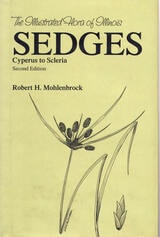
This second edition of Sedges: Cyperus to Scleria brings up to date the identification of species of sedges in Illinois (except Carex) since publication of the first edition in 1976.
During the intervening years, several additions to the sedge flora of Illinois have been made, and many new distributional records have been added. Also, a large number of nomenclatural changes have taken place, resulting in several alterations of scientific names. New illustrations have been provided for all of the additions.
In his introductory material, Robert H. Mohlenbrock discusses the morphology of sedges and the habitats where they can be found. Although the semitechnical keys and descriptions are familiar to experienced botanists, he has simplified them as much as possible to accommodate the novice in sedge identification. He has also included a new key to the sedges and to each genus in which additional species have been added.
For each species, Mohlenbrock has provided a description, statement of habitat and range, Illinois distribution map, discussion, synonymy, and line illustrations showing its diagnostic features. Sedges: Cyperus to Scleria contains 128 illustrations.
Seed Testing
Principles and PracticesSabry G. Elias
Michigan State University Press, 2012
An essential reference for students, seed technologists, researchers, and seed industry personnel, this comprehensive guide outlines the most widely performed modern seed quality tests, explores the principles behind them, the history of seed testing, why seeds are tested and when, and sampling, sub-sampling, seed laboratory management, accreditation, and seed quality assurance programs. The authors describe statistical applications to seed testing and tolerances, and they provide a detailed morphological and structural description of seed formation and development. The book examines the testing of genetic traits and transgenic seeds, including DNA and protein genetic purity tests, and cultivar purity identification for conventional seeds. In addition to the most common seed purity and viability tests, tests for seed and seedling vigor, seed-borne diseases and seed moisture determination are also discussed.

Seeds of Occupation, Seeds of Possibility
The Agrochemical-GMO Industry in Hawai‘iAndrea Noelani Brower
West Virginia University Press, 2022
Hawaiʻi is a primary site for development of herbicide-resistant corn seed and, until recently, was host to more experimental field trials of genetically engineered crops than anywhere else in the world. It is also a node of powerful resistance. While documentaries and popular news stories have profiled the biotech seed industry in Hawaiʻi, Seeds of Occupation, Seeds of Possibility is the first book to detail the social and historical conditions by which the chemical-seed oligopoly came to occupy the most geographically isolated islands in the world and made the soils of Hawaiʻi the epicenter of agrochemical and agricultural biotechnology testing.
Andrea Brower, an activist-scholar from Hawaiʻi, examines the consequences related to genetically engineered seed development for Hawaiʻi’s people and the social movement that has risen in response. With insights beyond the islands, Seeds of Occupation, Seeds of Possibility illuminates why visions for a radically better world must be expanded by intersectional and systemically oriented movements.
Seeds of Resistance, Seeds of Hope
Place and Agency in the Conservation of BiodiversityEdited by Virginia D. Nazarea, Robert E. Rhoades, and Jenna E. Andrews-Swann
University of Arizona Press, 2013
This broad collection brings to the table a bag full of tools from anthropology, sociology, genetics, plant breeding, education, advocacy, and social activism. By design, multiple voices are included. They cross or straddle disciplinary, generational, national, and political borders. Contributors demonstrate the importance of cultural memory in the persistence of traditional or heirloom crops, as well as the agency exhibited by displaced and persecuted peoples in place-making and reconstructing nostalgic landscapes (including gardens from their homelands). Contributions explore local initiatives to save native and older seeds, the use of modern technologies to conserve heirloom plants, the bioconservation efforts of indigenous people, and how genetically modified organisms (GMOs) have been successfully combated. Together they explore the conservation of biodiversity at different scales, from different perspectives, and with different theoretical and methodological approaches. Collectively, they demonstrate that there is reason for hope.
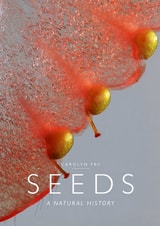
Seeds
A Natural HistoryCarolyn Fry
University of Chicago Press, 2016
With Seeds, Carolyn Fry offers a celebration of these vital but unassuming packages of life. She begins with a sweeping tour through human history, designed to help us understand why we should appreciate and respect these floral parcels. Wheat, corn, and rice, she reminds us, supply the foundations of meals eaten by people around the world. Countless medicines, oils, clothing materials, and building supplies are available only because of the versatility and variety of seed-bearing plants. Fry then provides a comprehensive history of the evolution of seeds, explaining the myriad ways that they have adapted, survived, and thrived across the globe. Delving deeper into the science of seeds, she reveals the fascinating processes of dormancy, reproduction, germination, and dispersal, and showcases the estimable work conservationists are doing today to gather and bank seeds in order to prevent species from going extinct.
Enriched by a stunning array of full-color images, Seeds offers a comprehensive exploration of some of the most enduring and essential players in the natural world.
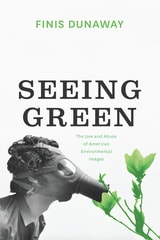
Seeing Green
The Use and Abuse of American Environmental ImagesFinis Dunaway
University of Chicago Press, 2015
Finis Dunaway closes that gap with Seeing Green. Considering a wide array of images—including pictures in popular magazines, television news, advertisements, cartoons, films, and political posters—he shows how popular environmentalism has been entwined with mass media spectacles of crisis. Beginning with radioactive fallout and pesticides during the 1960s and ending with global warming today, he focuses on key moments in which media images provoked environmental anxiety but also prescribed limited forms of action. Moreover, he shows how the media have blamed individual consumers for environmental degradation and thus deflected attention from corporate and government responsibility. Ultimately, Dunaway argues, iconic images have impeded efforts to realize—or even imagine—sustainable visions of the future.
Generously illustrated, this innovative book will appeal to anyone interested in the history of environmentalism or in the power of the media to shape our politics and public life.
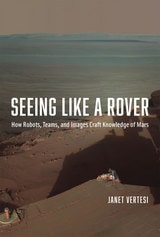
Seeing Like a Rover
How Robots, Teams, and Images Craft Knowledge of MarsJanet Vertesi
University of Chicago Press, 2015
With Seeing Like a Rover, Janet Vertesi takes us behind the scenes to reveal the work that goes into creating our knowledge of Mars. Every photograph that the Rovers take, she shows, must be processed, manipulated, and interpreted—and all that comes after team members negotiate with each other about what they should even be taking photographs of in the first place. Vertesi’s account of the inspiringly successful Rover project reveals science in action, a world where digital processing uncovers scientific truths, where images are used to craft consensus, and where team members develop an uncanny intimacy with the sensory apparatus of a robot that is millions of miles away. Ultimately, Vertesi shows, every image taken by the Mars Rovers is not merely a picture of Mars—it’s a portrait of the whole Rover team, as well.
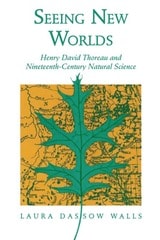
Seeing New Worlds
Henry David Thoreau and Nineteenth-Century Natural ScienceLaura Dassow Walls
University of Wisconsin Press, 1995
Thoreau was a poet, a naturalist, a major American writer. Was he also a scientist? He was, Laura Dassow Walls suggests. Her book, the first to consider Thoreau as a serious and committed scientist, will change the way we understand his accomplishment and the place of science in American culture.
Walls reveals that the scientific texts of Thoreau’s day deeply influenced his best work, from Walden to the Journal to the late natural history essays. Here we see how, just when literature and science were splitting into the “two cultures” we know now, Thoreau attempted to heal the growing rift. Walls shows how his commitment to Alexander von Humboldt’s scientific approach resulted in not only his “marriage” of poetry and science but also his distinctively patterned nature studies. In the first critical study of his “The Dispersion of Seeds” since its publication in 1993, she exposes evidence that Thoreau was using Darwinian modes of reasoning years before the appearance of Origin of Species.
This book offers a powerful argument against the critical tradition that opposes a dry, mechanistic science to a warm, “organic” Romanticism. Instead, Thoreau’s experience reveals the complex interaction between Romanticism and the dynamic, law-seeking science of its day. Drawing on recent work in the theory and philosophy of science as well as literary history and theory, Seeing New Worlds bridges today’s “two cultures” in hopes of stimulating a fuller consideration of representations of nature.

Seeking Asylum
Human Smuggling and Bureaucracy at the BorderAlison Mountz
University of Minnesota Press, 2010
Seizing the Means of Reproduction
Entanglements of Feminism, Health, and TechnoscienceM. Murphy
Duke University Press, 2012
Murphy traces the transnational circulation of cheap, do-it-yourself health interventions, highlighting the uneasy links between economic logics, new forms of racialized governance, U.S. imperialism, family planning, and the rise of NGOs. In the twenty-first century, feminist health projects have followed complex and discomforting itineraries. The practices and ideologies of alternative health projects have found their way into World Bank guidelines, state policies, and commodified research. While the particular moment of U.S. feminism in the shadow of Cold War and postcolonialism has passed, its dynamics continue to inform the ways that health is governed and politicized today.
Selected Papers of Robert S. Mulliken
Robert S. Mulliken
University of Chicago Press, 1975
Included in the volume are essays of general as well as scientific interest; they are grouped under thematic headings. Part I contains those papers which are of historical significance. An autobiographical piece by Dr. Mulliken offers a glimpse of the many famous people whom he has known. Also reprinted is the text of his Nobel Prize acceptance speech. At the end is a list of his students and other co-workers, and a complete bibliography of his papers.
Part II includes Mulliken's work on band spectra and chemistry as well as his research on the assignment of quantum numbers for electrons in molecules. Part III surveys the author's early work on the bonding power of electrons and the method of molecular orbitals. Included is a discussion of the structure and spectra of a number of important types of molecules. The papers in part IV focus on the intensities of electronic transitions in molecular spectra. This incorporates Mulliken's work on charge transfer and the halogen molecule spectra.
The problems addressed in part V center on the spectra and structure of polyatomic molecules. Reprinted here is a report which Mulliken prepared on notation for polyatomic molecules. Part VI is devoted to the problem of hyperconjugation. These papers develop and apply the concept of hyperconjugation and explore its relation to the concept of conjugation. The last part offers some of the most important papers from the author's postwar publications. The central focus is on molecular orbital theory, the area in which Mulliken's Nobel-winning discoveries were made.
Selected Papers, Volume 1
Stellar Structure and Stellar AtmospheresS. Chandrasekhar
University of Chicago Press, 1989
Chandrasekhar has selected papers that trace the development of his ideas and that present aspects of his work not fully covered in the books he has periodically published to summarize his research in each area.
Volume 1, Stellar Structure and Stellar Atmospheres, covers primarily the period 1930-40 and includes early papers on the theory of white dwarfs. In the Preface, Chandrasekhar explains the criteria for selection and provides historical background. Each subsequent volume will include a foreword by an authority on the topics covered.
Selected Papers, Volume 2
Radiative Transfer and Negative Ion of HydrogenS. Chandrasekhar
University of Chicago Press, 1989
Chandrasekhar has selected papers that trace the development of his ideas and that present aspects of his work not fully covered in the books he has periodically published to summarize his research in each area.
Volume 2 covers primarily the period 1940-50 and includes papers on the theory of radiative transfer and on the physics and astrophysics of the negative ion of hydrogen. Of particular note are Chandrasekhar's Gibbs Lecture to the American Mathematical Society in 1946 and his "Personal Account" presented at a conference at Erevan in the U.S.S.R. in 1981. A foreword by T. W. Mullikin, a distinguished scholar in the area of radiative transfer, and an author's note provide a historical context for the papers.
Selected Papers, Volume 3
Stochastic, Statistical, and Hydromagnetic Problems in Physics and AstronomyS. Chandrasekhar
University of Chicago Press, 1989
Chandrasekhar has selected papers that trace the development of his ideas and that present aspects of his work not fully covered in the books he has periodically published to summarize his research in each area.
This volume is divided into four sections. The first, on dynamical friction and Brownian motion, includes papers written after Chandrasekhar published his 1942 monograph Principles of Stellar Dynamics. Also in this section is "Stochastic Problems in Physics and Astronomy," one of the most cited papers in the physics literature, as well as papers written jointly with John von Neumann that have been given impetus to recent research. As Chandrasekhar notes, the papers in the second section, on statistical problems in astronomy, were influenced by Ambartsumian's analysis of brightness in the Milky Way. A third section on the statistical theory of turbulence addresses issues still unresolved in fluid dynamics, and the last section is devoted to hydromagnetic problems in astrophysics that are not discussed in Chandrasekhar's monographs.
Selected Papers, Volume 4
Plasma Physics, Hydrodynamic and Hydromagnetic Stability, and Applications of the Tensor-Virial TheoremS. Chandrasekhar
University of Chicago Press, 1989
Chandrasekhar has selected papers that trace the development of his ideas and that present aspects of his work not fully covered in the books he has periodically published to summarize his research in each area.
Volume 4 has three parts. The first, on plasma physics, includes joint work with A. N. Kaufman and K. M. Watson on the stability of the pinch, as well as a paper on Chandrasekhar's own approach to the topic of adiabatic invariants. Part 2 includes work with specific scientific applications of hydrodynamic and hydromagnetic stability not covered in his monograph on the subject. The final part contains Chandrasekhar's papers on the scientific applications of the tensor-virial theorem, in which he restores to its proper place Riemann's neglected work with ellipsoidal figures.
Selected Papers, Volume 5
Relativistic AstrophysicsS. Chandrasekhar
University of Chicago Press, 1990
Chandrasekhar has selected papers that trace the development of his ideas and that present aspects of his work not fully covered in the books he has periodically published to summarize his research in each area.
Volume 5 covers all of Chandrasekhar's contributions to the general theory of relativity and relativity's astrophysical applications (except his research on black holes and colliding gravitational waves, which is covered in Volume 6). The major topics include the influence of general relativity on the pulsations and stability of stars; the back reaction of gravitational waves on their sources; and post-Newtonian approximations to general relativity and their astrophysical applications. In addition to research papers, the volume includes two 1972 lectures in which Chandrasekhar assessed the past, present, and future of relativistic astrophysics. The foreword by astrophysicist Kip S. Thorne is an absorbing, brief history of the field since 1961, capturing the atmosphere of the early research and clarifying Chandrasekhar's dominant role in it.
Chandrasekhar has never written a monograph synthesizing his research in relativistic astrophysics, and therefore this volume of his papers serves as a summary of that work for students and more senior researchers.
Selected Papers, Volume 6
The Mathematical Theory of Black Holes and of Colliding Plane WavesS. Chandrasekhar
University of Chicago Press, 1991
Chandrasekhar has selected papers that trace the development of his ideas and that present aspects of his work not fully covered in the books he has periodically published to summarize his research in each area.
Selected Papers, Volume 7
The Non-Radial Oscillations of Stars in General Relativity and Other WritingsS. Chandrasekhar
University of Chicago Press, 1997
world through the eyes of one of the twentieth century's most brilliant
and sensitive scientists. Conceived by Chandrasekhar as a supplement to
his Selected Papers, this volume begins with eight papers he
wrote with Valeria Ferrari on the non-radial oscillations of stars. It
then explores some of the themes addressed in Truth and Beauty,
with meditations on the aesthetics of science and the world it examines.
Highlights include: "The Series Paintings of Claude Monet and the
Landscape of General Relativity," "The Perception of Beauty and the
Pursuit of Science," "On Reading Newton's Principia at Age Past
Eighty," and personal recollections of Indira Gandhi, Jawaharlal Nehru,
and others.
Selected Papers, Volume 7 paints a picture of Chandra's universe,
filled with stars and galaxies, but with space for poetics, paintings,
and politics.
The late S. Chandrasekhar was best known for his discovery of the upper
limit to the mass of a white dwarf star, for which he received the Nobel
Prize in Physics in 1983. He was the author of many books, including
The Mathematical Theory of Black Holes and, most recently,
Newton's Principia for the Common Reader.
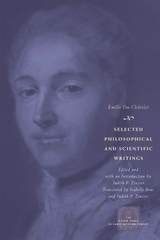
Selected Philosophical and Scientific Writings
Emilie Du Châtelet
University of Chicago Press, 2009
Though most historians remember her as the mistress of Voltaire, Emilie Du Châtelet (1706–49) was an accomplished writer in her own right, who published multiple editions of her scientific writings during her lifetime, as well as a translation of Newton’s Principia Mathematica that is still the standard edition of that work in French. Had she been a man, her reputation as a member of the eighteenth-century French intellectual elite would have been assured.
In the 1970s, feminist historians of science began the slow work of recovering Du Châtelet’s writings and her contributions to history and philosophy. For this edition, Judith P. Zinsser has selected key sections from Du Châtelet’s published and unpublished works, as well as related correspondence, part of her little-known critique of the Old and New Testaments, and a treatise on happiness that is a refreshingly uncensored piece of autobiography—making all of them available for the first time in English. The resulting volume will recover Châtelet’s place in the pantheon of French letters and culture.
Selected Writings of Richard McKeon
Volume One: Philosophy, Science, and CultureRichard McKeon
University of Chicago Press, 1998
Philosophy, Science, and Culture covers topics that range from philosophic semantics to the processes of the sciences to the forms of human rights. This collection makes McKeon's mission as a philosopher unmistakable. He characterized himself as a philosophic pluralist; he was an American philosopher in the tradition of the pragmatists, one whose philosophy subtly resonates with C. S. Peirce and John Dewey. McKeon also explored the themes of deconstructionism and other late-twentieth-century philosophies decades before their popular emergence—but, in generating a matrix of possibilities for productive debate, he avoided both relativism and the entrapments of dogmatism.
An important collection of his writings, this series will establish Richard McKeon as one of the foremost philosophers of the twentieth century.
Richard McKeon (1900-1985) taught philosophy at the University of Chicago from 1935 to 1973, and at the time of his death had published eleven books and 158 articles on an extraordinary array of topics and cultures. Among his many national and international distinctions, he was awarded the highest honor of the American Philosophical Association when he was invited to give the Paul Carus Lectures in New York in 1965.
Selections from The Distribution and Abundance of Animals
H. G. Andrewartha and L. C. Birch
University of Chicago Press, 1982

Self-Defense
A Myth-Busting Guide to Immune HealthDaniel M. Davis
University of Chicago Press, 2025
A world-renowned scientist offers a much-needed analysis of what it takes to have good immune health—helping readers navigate what can really help, what is a complete myth, and why.
Does orange juice help ward off colds? And how does our age affect our ability to recover from one? When it comes to immunity, are we really what we eat? Or how much we eat? We are surrounded by big questions and big claims about enhancing our immune systems, so how do we tell the fiction from the facts? And, ultimately, what can we do to reduce our chances of getting sick?
World-leading immunologist Daniel M. Davis offers answers in this authoritative, highly accessible, myth-busting guide to the effects of stress, age, exercise, weight, nutrition, sleep, vaccines, and mental health on our immune health. Taking us to the cutting edge of immunology research and explaining both what we know and how we know it, Self-Defense helps readers spot phony claims and make informed choices. Davis shows us that everyone’s immune system is entirely unique, and that’s why we should be wary of one-size-fits-all “cures.” We learn how exercise, for example, has all sorts of different, even opposing, short- and long-term effects on our immune health. And while our gut microbes are vitally important, it’s unlikely that yogurt drinks can really boost your immune system to stop you getting ill.
An eye-opening window into some of the astonishing possibilities for the future, when it comes to distinguishing bogus and beneficial health claims about everything from vitamin D to inflammation and cancer therapies, Davis’s book may be your best self-defense.

Self-Defense
A Myth-Busting Guide to Immune HealthDaniel M. Davis
University of Chicago Press, 2025
A world-renowned scientist offers a much-needed analysis of what it takes to have good immune health—helping readers navigate what can really help, what is a complete myth, and why.
Does orange juice help ward off colds? And how does our age affect our ability to recover from one? When it comes to immunity, are we really what we eat? Or how much we eat? We are surrounded by big questions and big claims about enhancing our immune systems, so how do we tell the fiction from the facts? And, ultimately, what can we do to reduce our chances of getting sick?
World-leading immunologist Daniel M. Davis offers answers in this authoritative, highly accessible, myth-busting guide to the effects of stress, age, exercise, weight, nutrition, sleep, vaccines, and mental health on our immune health. Taking us to the cutting edge of immunology research and explaining both what we know and how we know it, Self-Defense helps readers spot phony claims and make informed choices. Davis shows us that everyone’s immune system is entirely unique, and that’s why we should be wary of one-size-fits-all “cures.” We learn how exercise, for example, has all sorts of different, even opposing, short- and long-term effects on our immune health. And while our gut microbes are vitally important, it’s unlikely that yogurt drinks can really boost your immune system to stop you getting ill.
An eye-opening window into some of the astonishing possibilities for the future, when it comes to distinguishing bogus and beneficial health claims about everything from vitamin D to inflammation and cancer therapies, Davis’s book may be your best self-defense.
Self-Organization and Dissipative Structures
Applications in the Physical and Social SciencesEdited by William C. Schieve and Peter M. Allen
University of Texas Press, 1982
The contributions to this volume attempt to apply different aspects of Ilya Prigogine's Nobel-prize-winning work on dissipative structures to nonchemical systems as a way of linking the natural and social sciences. They address both the mathematical methods for description of pattern and form as they evolve in biological systems and the mechanisms of the evolution of social systems, containing many variables responding to subjective, qualitative stimuli.
The mathematical modeling of human systems, especially those far from thermodynamic equilibrium, must involve both chance and determinism, aspects both quantitative and qualitative. Such systems (and the physical states of matter which they resemble) are referred to as self-organized or dissipative structures in order to emphasize their dependence on the flows of matter and energy to and from their surroundings. Some such systems evolve along lines of inevitable change, but there occur instances of choice, or bifurcation, when chance is an important factor in the qualitative modification of structure. Such systems suggest that evolution is not a system moving toward equilibrium but instead is one which most aptly evokes the patterns of the living world.
The volume is truly interdisciplinary and should appeal to researchers in both the physical and social sciences. Based on a workshop on dissipative structures held in 1978 at the University of Texas, contributors include Prigogine, A. G. Wilson, Andre de Palma, D. Kahn, J. L. Deneubourgh, J. W. Stucki, Richard N. Adams, and Erick Jantsch.
The papers presented include Allen, "Self-Organization in the Urban System"; Robert Herman, "Remarks on Traffic Flow Theories and the Characterization of Traffic in Cities"; W. H. Zurek and Schieve, "Nucleation Paradigm: Survival Threshold in Population Dynamics"; De Palma et al., "Boolean Equations with Temporal Delays"; Nicholas Georgescu-Roegin, "Energy Analysis and Technology Assessment"; Magoroh Maruyama, "Four Different Causal Meta-types in Biological and Social Sciences"; and Jantsch, "From Self-Reference to Self-Transcendence: The Evolution of Self-Organization Dynamics."